Showing posts with label led zeppelin. Show all posts

Friday, October 10, 2025

Robert Plant 16: Saving Grace

The 21st century has seen Robert Plant boldly walking his own path. Generally he’s found a collective of eager players, usually unknowns, and together they’ve worked up arrangements of arcane songs old and new. It’s more about interpretation and feeling than creation, and it’s kept him very happy.

Saving Grace is also the name of the outfit that recorded it; vocalist Suzi Dian gets prominent billing alongside the title, and rightfully so, given her pristine pipes. The sound is somewhere between Band Of Joy and his collaborations with Alison Krauss, and the key participants on those albums are acknowledged here. Some of the song choices are right in line with what he strove for on Dreamland. Where applicable, a song’s history in the Roud, Laws, or Child indexes are detailed.

To wit, “Chevrolet” was first recorded under another title by Memphis Minnie a century earlier, but we’re guessing Robert was most familiar with Donovan’s version as “Hey Gyp (Dig The Slowness)”. There’s more of a sinister undertone here, as there is on the ancient “As I Roved Out”. We have to smile at the line about “The green, green grass/Trampled under foot”, especially considering the album’s release was preceded by an EP of vintage live Zeppelin tracks from Physical Graffiti. Things lighten for the hippie vibe of “It’s A Beautiful Day Today” by Robert’s beloved Moby Grape, and proof that the band is a democracy comes when Matt Worley sings the lead on Blind Willie Johnson’s “Soul Of A Man”. The lovely “Ticket Taker” comes from Americana band The Low Anthem, with only its occasionally modern references giving away its modern composition.

Robert takes the lead on “I Never Will Marry”, despite the female point of view, with rich harmonies behind him. Suzy takes center stage on the next two: “Higher Rock”, a modern gospel stomper by Martha Scanlan (who’d appeared on T Bone Burnett’s soundtrack to Cold Mountain); and Sarah Siskind’s “Too Far From You”, a soulful country weeper that got its previous widest exposure on the Nashville TV show. The volume goes way up again for “Everybody’s Song”, Robert’s third career cover from Low’s The Great Destroyer. The traditional “Gospel Plough” provides a somber conclusion to the journey; in the distance after the fade we hear echoes of “Chevrolet”, bringing us full circle.

Saving Grace is another enjoyable chapter in the journey Robert Plant had been pursuing for sixty years. Hopefully he’ll get to keep traveling, and we’ll hear more from his worthy companions too.

Robert Plant Saving Grace With Suzy Dian (2025)—

Friday, December 3, 2021

Robert Plant 15: Raise The Roof

Following the astounding success of their first collaboration, one would expect Robert Plant and Alison Krauss to continue to mine that field. Allegedly, a few sessions in the wake of their Grammy awards yielded nothing, so they left it alone for dozen years or so before trying again. Suddenly, Raise The Roof appeared, with T Bone Burnett back in the producer’s chair and most of the same players in the studio as last time. Yet, whereas Raising Sand had a quality that made it sound like it came from another planet, this one seems a little more conventional. The singers still have a lovely blend, but there aren’t as many harmonies as before.

It starts well; “Quattro” is a suitably spooky tune by the desert noir band Calexico, and it suits them. Another Everlys song gets attention, but this time “The Price Of Love” is slowed down and mournful. The wonderful “Go Your Way” comes from obscure British folkie Anne Briggs, who indirectly inspired a song Jimmy Page stole for the first Zeppelin album, so a debt is slightly paid. Allen Toussaint’s “Trouble With My Lover” is taken very quietly by Alison, while “Searching For My Love” is handled by Robert in near-full voice. “Can’t Let Go” repeats the “Gone, Gone, Gone” formula from the first album, and it’s still a winner.

“It Don’t Bother Me” grows from a seed to something very powerful; this one was written by Scottish folk legend Bert Jansch (who wrote the aforementioned arrangement stolen by Jimmy Page, further sharing the wealth). “You Led Me To The Wrong” is an Appalachian plaint featuring not Alison on fiddle, and “Last Kind Words Blues” would evoke the same mountain. “High And Lonesome” was written by Robert and T-Bone, and sounds more like the last few Plant albums. It’s a little ordinary, but far surpassed by Alison singing “Going Where The Lonely Go”. We won’t be the first to tell you the album should have ended there, but instead they tack on “Somebody Was Watching Over Me”, which is grating, frankly. (Target customers got two extra tracks, a sweet cover of Hank Williams’ “My Heart Would Know” and the funkier “You Can’t Rule Me” by Lucinda Williams—no relation).

We’re sure this will grow on us with time, but we were silly to expect Raise The Roof to contain the exact same magic. Still, recommended.

Robert Plant | Alison Krauss Raise The Roof (2021)—3

Friday, October 9, 2020

Robert Plant 14: Digging Deep

Although the term has seemingly outgrown the technology whence it was derived, the celebrity podcast has become a valuable promotional tool in the music industry, particularly when related to archival releases. Robert Plant was an early adopter with his Digging Deep series, wherein he told wide-ranging stories about a handful of songs from his catalog, prodded by an eager interviewer. Some of these were included on a box set of vinyl 45s, resequenced from 16 original singles, which appeared in late 2019, and included some actual radio hits.

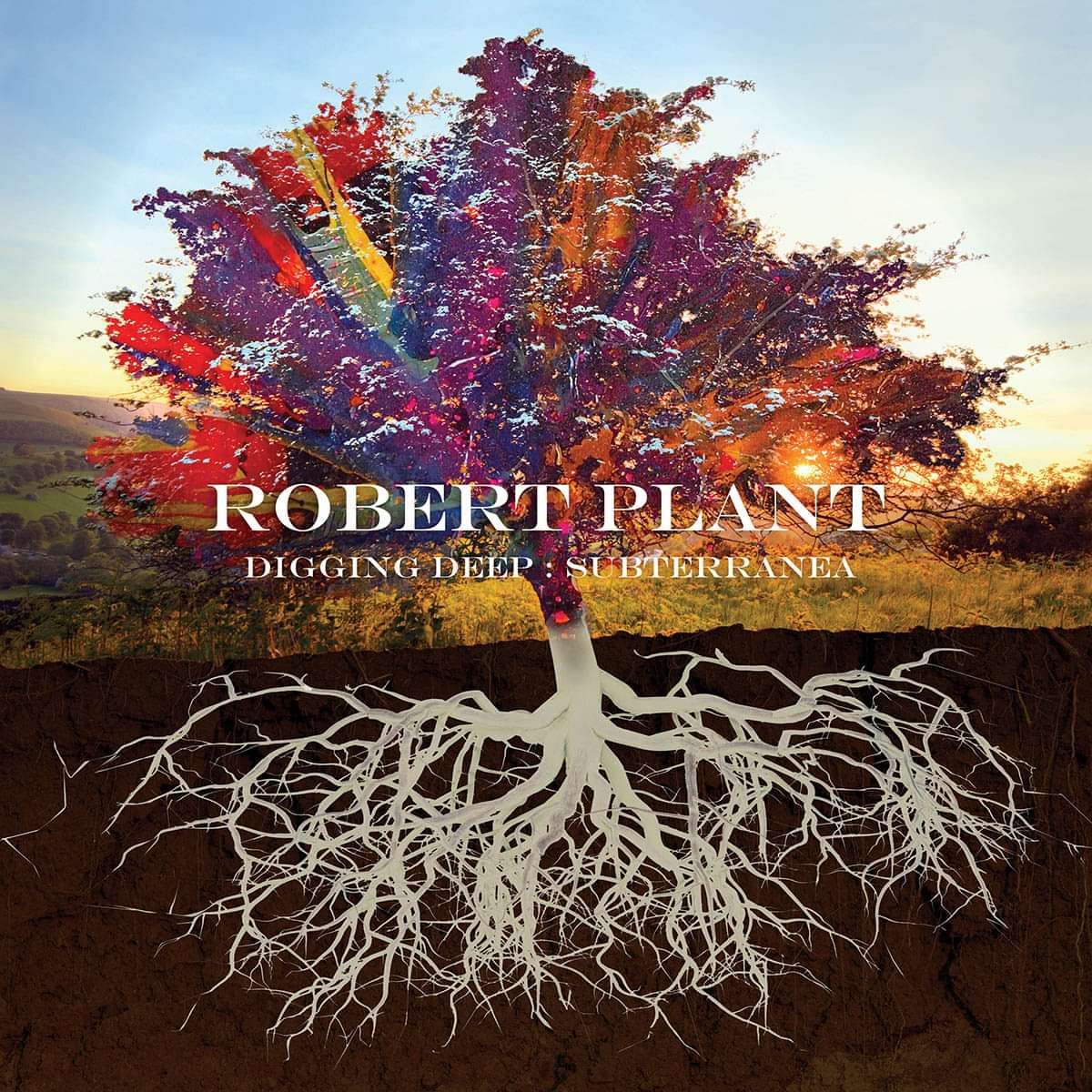
The following fall brought forth Digging Deep: Subterranea, a much cheaper two-CD set that only shared a few tracks with the vinyl box. Like the equally sprawling Sixty-Six To Timbuktu, it’s designed to present Robert as an innovative wanderer outside of the golden god image cultivated with Led Zeppelin. Out of thirty tracks, only seven are repeated from that set. Each of his solo albums are touched on, nearly democratically, but there’s nothing from the Honeydrippers EP or his Grammy®-winning collaboration with Alison Krauss. However, Shaken ‘N Stirred is completely ignored. The often-overlooked (especially by us) Band Of Joy and Fate Of Nations get the most love. The latter is obviously very important to him, and while “I Believe” and “29 Palms” aren’t exactly deep cuts, “Great Spirit” appears in its acoustic mix, which was a bonus track to the 2007 rerelease of the album. In this context, we can see how that album was very much a transition from synth-tinged radio rock to the sounds he’d embrace in this century, were it not for that little side trip with Jimmy Page in the mid- to late ‘90s (also not mentioned here).

While that earlier compilation included a full disc worth of rarities, Digging Deep: Subterranea offers only three previously unreleased tracks, all presumably recent recordings, scattered throughout the non-chronological track order. “Nothing Takes The Place Of You” is a wonderful slow burner originally written and recorded by Toussaint McCall (we never heard of him either). “Charlie Patton Highway (Turn It Up Part 1)” reworks a tune from lullaby and… The Ceaseless Roar and is supposedly a preview of his next full album project; as befits the title, it’s more of a detuned blues than an exotic world jaunt. Finally, “Too Much Alike” is a jaunty duet with Patty Griffin, and the lyrical content will only fuel further wonder about the level of their collaboration.

As the subtitle leaves open the possibility of other volumes, Digging Deep isn’t a hits collection per se, but serves to celebrate his full catalog. Perhaps some of those overlooked albums will be given more appreciation as a result.

Robert Plant Digging Deep: Subterranea (2020)—

Friday, October 20, 2017

Robert Plant 13: Carry Fire

His hair may be too long and his face ever more creased, but fifty years into his commercial career Robert Plant sounds very comfortable with his voice, his instrument. Carry Fire continues with the palette set by lullaby and… The Ceaseless Roar, his previous solo album, except that the rhythms here are not as overtly exotic, and the breadth of material not as wide.

“The May Queen” was the first preview track, and it’s fairly circular, finally breaking out in the wordless chorus. “New World…” would have been a stronger choice, as it has a driving tempo and therefore more energy. But despite its slower pace, “Season’s Song” moves like a boat on the sea, and it’s a keeper. Towards the end of “Dance With Me Tonight”, right alongside the sound of a heraldic horn, his voice finally emerges an octave higher than it’s been all album, and one can’t help but smile at its familiarity. It’s a good setup for “Carving Up The World Again”, a protest song with a tribal beat and better chorus. He’s been political before, so it’s not that big a deal, but it’s not his strong suit, and that makes “A Way With Words” something of a relief.

These ears aren’t especially wowed by the balance of the album. The exotic influences return on the title track, by way of more overt loops; it improves as it builds. “Bones Of Saints” ups the tempo to a rock level again, getting a lot of steam out of the “no, no, no” chorus. He lets out a few good yells near the end, but “Keep It Hid” remains tense and restrained. “Bluebirds Over The Mountain” is a wholly original reading of the rockabilly classic, sung as a duet with Chrissie Hynde of all people, and ending with some more great yells. Finally, “Heaven Sent” ends the album very, very slowly, and fades just as it gets interesting.

The previous album was so fresh and interesting that Carry Fire is already at a deficit for fair comparison. But it too reveals its strengths the more it sinks in, and he’s onto something.

Robert Plant and the Sensational Space Shifters Carry Fire (2017)—3

Tuesday, September 23, 2014

Robert Plant 12: Lullaby And The Ceaseless Roar

Whether by design of Page or his own doing, in the midst of yet another Led Zeppelin catalog overhaul came a new Robert Plant album of mostly original material. With the unwieldy title of lullaby and… The Ceaseless Roar, he and his evolving band of eclectics, now called the Sensational Space Shifters, work within that processed, “spacey” sound picture, heavy on drones and exotic acoustic instruments. Like Peter Gabriel, back when he made albums, these unique sounds combine to sound familiar. They sound like music.

It begins with, no surprise here, a new interpretation of an old folk song, in this case “Little Maggie”, in an afro-beat style. “Rainbow” starts with a similar feel, but turns into an actual song, which helps. “Pocketful Of Golden” dares to begin with “and if the sun refused to shine” and hearkens back to “In The Mood”, for a very commercial sound. With its tribal beat, lush strings and vocals in another language (Arabic? No! Welsh!), the haunting “Embrace Another Fall” conjures images of misty green landscapes. Throw in the mention of a “shire” and it could well be from the soundtrack to a Peter Jackson movie. The NPR stream compared “Turn It Up” to U2’s “Bad”, and we can’t figure out where the hell they got that idea; rather, it’s a celebration of the American South on an album that mostly avoids that. And for the first time ever, Robert sings a solo voice and piano ballad in “A Stolen Kiss”, with some subtle guitar and bass atmospherics, approaching a spiritual at some points and 21st century Bowie at others.

“Somebody There” is a conventional rock song, complete with guitar solo, and possibly the best track on the album. “Poor Howard” updates another blues song, somewhere between Appalachia and the Sahara, with a great reference to “four little kids who’ll drive me crazy”. Speaking of borrowings, “House Of Love” takes one lyric from his own song with Jimmy Page and builds it into a much more accessible song with a galloping rhythm. Between “Up On The Hollow Hill” (with the baffling subtitle “Understanding Arthur”, unless that’s the once and future king) and the closing “Little Maggie” alternate with African vocals, the album ends tensely but well prepared for another spin.

We’ve said this before, but Robert is certainly aging well, on the ears, anyway. His hushed, intimate yet inimitable delivery suggests the lullaby, but even the heavier songs don’t convey a ceaseless roar, and that’s fine. The album is a comfortable listen for fall, and one of his better efforts.

Robert Plant and the Sensational Space Shifters lullaby and… The Ceaseless Roar (2014)—

Monday, February 11, 2013

Led Zeppelin 14: Celebration Day

It took a concert in tribute to Ahmet Ertegun for the unthinkable to happen: a live reunion of Led Zeppelin. Despite the teasers over the years—Live Aid, the hideous Atlantic Records 40th Anniversary performance, the Rock & Roll Hall of Fame induction—this was the first and, most likely, only time the surviving members played a full set since John Bonham’s death.

Perhaps not to compete with Robert Plant’s solo career, then riding high on his Alison Krauss collaboration, it only took five years to prepare the release of Celebration Day—which sadly, doesn’t include a performance of the song of that title—on CD, DVD and Blu-Ray. The audio version only includes a few edits of dialogue; some overdubbing supposedly took place, and there is a ProTools credit in the booklet, but considering all the mistakes Jimmy left in, it’s hard to call foul. Most of the songs are taken down a full step to accommodate Robert’s voice, so while they do sound different, they still sound like them—particularly when he goes for one of those high notes and hits it. Besides, it’s not like he’d been sitting in a box since the last Page/Plant tour, as the moderate success and general quality of his albums since then have shown.

Beginning appropriately with “Good Times Bad Times”, the band plows through the tune, Jason Bonham adding a few backing vocals here and there. “Ramble On” follows, a song never played in its entirety by the band before, and here incorporating a quote from “What Is And What Should Never Be” at the end. The solo intro to “Black Dog” gets a huge roar from the crowd, as does Plant’s “good evening” at the end. “In My Time Of Dying” is played to nearly the length of the album version, right down to the “oh my Jesus” pleas, starting low and gaining power. Another surprise comes with “For Your Life”, never played live either. “Trampled Under Foot” and “Nobody’s Fault But Mine” continue the blues trawl, and “No Quarter” turns the spotlight somewhat to John Paul Jones, the quietest, most patient and musically accomplished band member—the glue, if you will.

“Since I’ve Been Loving You” gets a good reading, followed by a nicely experimental “Dazed And Confused”, complete with violin bow. Probably because they couldn’t get away without doing it, the doubleneck is strapped on for a somewhat restrained “Stairway To Heaven” (thankfully, the audience is not asked if they remember laughter) and stays for “The Song Remains The Same”. A nod to Jason Bonham leads into “Misty Mountain Hop”, and “Kashmir” is reclaimed from Puff Daddy, though we kinda wish they’d used a real Mellotron. The first encore is “Whole Lotta Love”, then thanks and appreciation for Ahmet set up “Rock And Roll”, one of their simplest songs, but probably the one “obvious” one they’d yet to do. There’s an excellent tease at the end to set up that final drum solo.

It’s a great finish, because throughout the two-hour show, Jason Bonham pounds away. He was, after all, the biggest Zeppelin fan on that stage, having studied his dad’s technique through the albums and bootlegs, and a long way from the mulleted lout that surfaced in the hair metal era. He’d played in previous Zep reunions, but this was the first time he did a complete show, and he’s flawless. As is obvious from the film, the other three adore the kid.

Anybody who’s into the show might as well spring for the video, as it includes some of the inter-song chat cut out of the CD version. Jones hasn’t aged a day, Plant should have tied his hair back, and Page stopped dyeing his (Paul McCartney, take note), looking like a wizened master. Because they played so well—and it’s an occasion highly unlikely to happen again—Celebration Day is a worthy bookend to the Zeppelin saga. They played as well as ever, with no gimmicks; just fingers, feet, arms and voice.

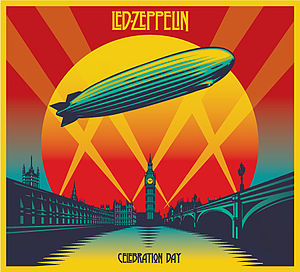
Led Zeppelin Celebration Day (2012)—4

Monday, October 10, 2011

Robert Plant 11: Band Of Joy

Never one to go for a surefire cash cow, Robert didn’t push a second collaboration with Alison Krauss, but kept his interest in Americana fresh with an album named after one of his pre-Zeppelin bands. Band Of Joy even keeps his old Es Paranza imprint afloat; has anyone else had that label? Such luminaries as Patty Griffin and Buddy Miller round out the band for a sound closer to Dreamland than Raising Sand.

For the most part, he’s content to reinterpret other people’s material here, starting with Los Lobos’ “Angel Dance” and an older Richard Thompson songsong, “House Of Cards”. “Central Two-O-Nine” continues the Americana fascination, but while it’s credited as an original, it sounds awfully derivative. There are two, count ‘em, two songs by Minnesota slowcore pioneers Low—“Silver Rider” features Patty cooing just like Alison might have, and “Monkey” is even more brooding and scary. “You Can’t Buy My Love” has a nice Merseybeat guitar part in between all the drums, which makes sense since the song dates from about 1964, while “Falling In Love Again” manages to straddle country, gospel and doo-wop.

“The Only Sound That Matters” is a recent tune by the defunct Dallas band Milton Mapes, and good for Robert for finding it. If somebody’s watching out for Townes Van Zandt’s estate, they’ll likely be pleased by the rendition of “Harm’s Swift Way” here. The balance of the tracks are new arrangements of traditional songs, and with titles to match: “Cindy I’ll Marry You Someday” and “Satan Your Kingdom Must Come Down” are fairly swampy, but “Even This Shall Pass Away” is given a trip-hop treatment.

Once again Robert made a decent album, and even got critical kudos for it. Band Of Joy isn’t remotely annoying, but it doesn’t exactly leap out of the speakers. It can be enjoyed, and filed.

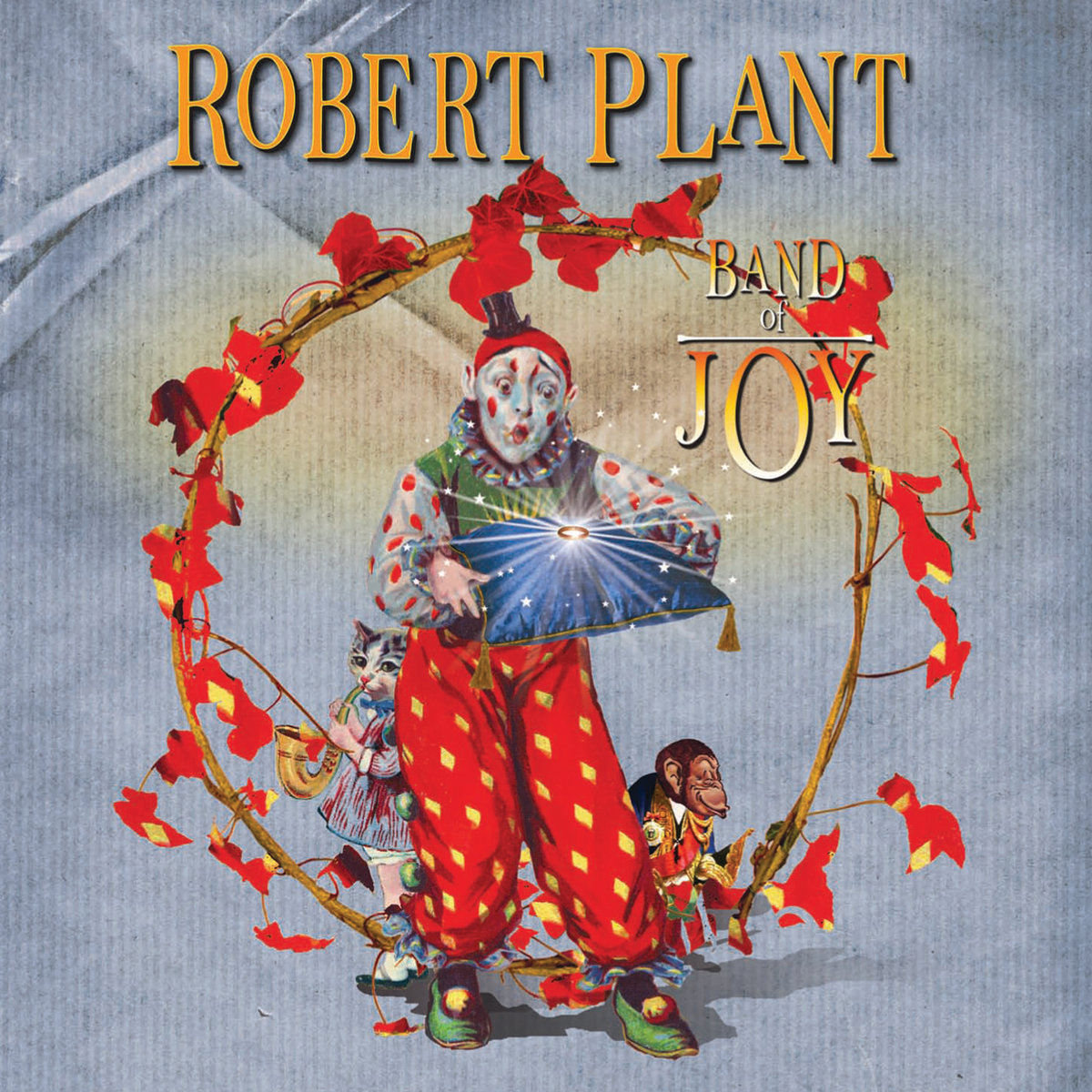
Robert Plant Band Of Joy (2010)—3

Monday, September 26, 2011

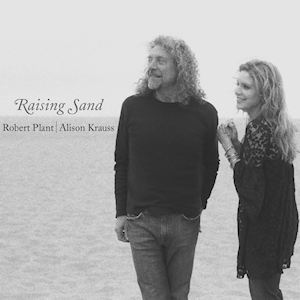
Robert Plant 10: Raising Sand

To the astonishment of everyone, Robert Plant managed his biggest critical success in years—if not ever—for his collaboration with Alison Krauss on Raising Sand. Much of the success can be attributed to hip roots music producer T Bone Burnett, who’d already sold millions and got a Grammy for his work on the O Brother, Where Art Thou? soundtrack. The sound sits somewhere between that, a Daniel Lanois production, and a Tom Waits album, and not just from using some of the same musicians.

Alison Krauss has one of the sweetest, clearest voices in music, not to mention that she’s a cute as a box full of buttons. She’s also a great fiddle player, which takes a back seat to the songs. The selections run the gamut from bluegrass standards to newer folk nuggets. One exception, amazingly, is “Please Read The Letter”, a song first heard on the Page/Plant album and here taken at a much more contemplative pace. “Trampled Rose” is a more recent Waits tune, and “Sister Rosetta Goes Before Us” sounds like one, but it was written by Sam Phillips, the former Mrs. Burnett. (Alison nails both.) Her gender-bent take on “Let Your Loss Be Your Lesson” shows a hot R&B streak.

Two Gene Clark songs come from the second Dillard & Clark album, and they’re exceptional, though we can do without yet another version of “Fortune Teller”. The track that got the most exposure was the chugging “Gone Gone Gone (Done Me Wrong)”, which sounded the most like something like Robert might have sung earlier in his solo career. Most of the songs are duets, starting with “Rich Woman”, and they blend nicely. “Stick With Me Baby” is another tender one.

What’s especially impressive is the development of Robert’s voice as he’s aged. For a tangential comparison, consider the recent sounds of Bob Dylan, who finally stopped yelling like he did through most of the ‘80s and got more comfortable in the lower register. That kept his voice from getting worse until just recently. Robert’s done that too; he doesn’t go for the high notes at all, and instead has made the most of the notes he can reach. His near-whispered take on Townes Van Zandt’s “Nothin’”, for instance, is well matched to the stark horror of the arrangement.

Raising Sand is the culmination of his work since the turn of the century, immersing himself in older folk and country songs and reinterpreting them in fresh ways. Not only did it win five Grammys, but it kept him interested in doing absolutely anything besides heeding the inevitable calls for a Zeppelin reunion. It’s a special album; not about to replace the band that spawned him, and far from embarrassment.

Robert Plant | Alison Krauss Raising Sand (2007)—4

Monday, April 4, 2011

Robert Plant 9: Mighty Rearranger

Not content to look back, Robert continued working with a permutation of his most recent backing band, now dubbed the Strange Sensation. Together, they conceived Mighty Rearranger, a set of new original songs following the same themes of the sate of the world while exploring exotic and traditional sounds.

The album is pleasant, certainly, but like much of his solo work, doesn’t always resonate past the initial listen. “Another Tribe” sets something of a mood, but the first single, “Shine It All Around” tries too hard with its boomy drums and isolated guitar solo. (A remix, included as a hidden track, downplays both, but at the expense of the actual song.) Despite the pointed title, “Freedom Fries” struggles under an impossible meter—and cribs an entire couplet from Don McLean—while “Tin Pan Valley” understates his determination to move forward via an imperceptible melody until the middle raveup section. One standout track, finally, is his own song called “All The King’s Horses”, a gentle acoustic number more satisfying than the one by The Firm. We originally said “The Enchanter” fails to truly deliver on its title, but several years of hindsight have shown it to be a fine harbinger of later, better albums.

By the time “Takamba” comes around, the Mideastern touches become more welcome, but are interrupted by loud interludes, making one wish he could have worked without the electrics. But with its juxtaposition of those foreign instruments and blues references, “Somebody Knocking” delivers the desired feel much better. In between, “Dancing In Heaven” is more straightforward, with open-tuned acoustic and nicely layered harmonies, even if the lead guitar sounds a lot like Page. “Let The Four Winds Blow” is a step in the right direction, but the title track is just more of the same. Whatever finale it was supposed to provide is augmented by “Brother Ray”, a short, seemingly impromptu duet with barrelhouse piano. (The hidden remix of “Shine It All Around” was included on the later remastered CD with two other unnecessary remixes of album tracks, plus the blues pastiche “Red, White And Blue” and the more straightforward “All The Money In The World”.)

Despite its best intentions, Mighty Rearranger is unfortunately another Robert Plant album that sounds fine when it’s on, but not guaranteed to stay in the player for more than one go-through. At least he could hardly be accused of embarrassing himself or his legacy.

Robert Plant and the Strange Sensation Mighty Rearranger (2005)—
2007 remastered CD: same as 2005, plus 4 extra tracks

Wednesday, February 16, 2011

Robert Plant 8: Sixty Six To Timbuktu

Dreamland got more critical acclaim than huge sales, but was enough of a hit (in Europe) for Robert to compile his first solo career retrospective. Sixty Six To Timbuktu was a two-CD set, the first concentrating on hits and near-hits, while the second compiled pre-fame tracks, soundtrack contributions, rarities and more.

The average listener would be happy enough with the first disc, except that it ignores Pictures Of Eleven completely, and only includes “Big Log” from The Principle Of Moments. That means no “Burning Down One Side” or “In The Mood”. But a whopping five cuts from Fate Of Nations and a few from Dreamland mingle nicely with the likes of “Sea Of Love”, “Tall Cool One” and “Ship Of Fools”. Obviously, he’s going more for feel than ego.

His detailed liner notes, affectionate to both his journey and everyone he met along the way, help illustrate the choices on the second disc. This isn’t a mopping-up of all his rarities—“Far Post” would have been a great inclusion, though “Dirt In A Hole” from the international versions of Dreamland is welcome—but it does cover a wide swath of sounds as suggested by the title. Beginning with a handful of pre-Zeppelin recordings, including covers of “You Better Run”, “For What It’s Worth” and “Hey Joe” (the latter two in a band with young John Bonham on drums), we get to hear the development of his voice. Then it jumps ahead to the ‘80s and the so-called Phil Collins era, with a few oldies recorded for soundtracks and the big thing of the ‘90s, the tribute album. A couple of the experiments that led up to his late-‘80s sound help add to the story, for better or worse. After getting rockabilly out of his system, he took these opportunities to explore his interest in world music and several tracks related to Moby Grape and/or Skip Spence.

This is the stuff that he’s really proud of, and you can tell by his delivery. The thing is, the man has such a great voice, you can almost forgive the dated experiments for things like “21 Years” or “Life Begin Again” with the Afro Celt Sound System, where it’s just him and a backing. A long way from the 18-year-old kid doing covers, and pointedly away from the guy in the women’s blouses singing with Led Zeppelin.

So Sixty Six To Timbuktu is hardly a hits collection, and destined to only be of interest to diehard fans. And with about two-and-a-half hours to take in, it’s unlikely that either disc will stay in the rotation more than, say, the albums that spawned some of the hits. (To drive that particular point home, the Nine Lives box set arrived a couple years later, collecting each of his solo albums, including The Honeydrippers EP, each with bonus tracks, as well a DVD.)

Robert Plant Sixty Six To Timbuktu (2003)—3

Monday, January 24, 2011

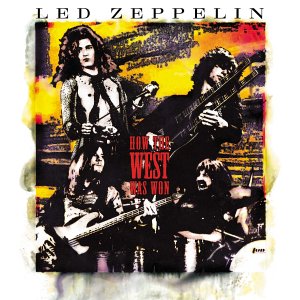
Led Zeppelin 13: How The West Was Won

Ever since The Song Remains The Same soundtrack was released, Jimmy Page had talked about possibly putting together a live album that he felt would better represent the band in concert. But for the longest time, there were only those 1973 performances, one song on Coda and one on the box set to demonstrate the band’s live show. Then, BBC Sessions filled in the gaps bigtime with recordings from 1969 and 1971.

Perhaps due to the daunting task of going through so many different tapes—as the plethora of bootlegs covering the band’s career certainly attests—Page decided to limit such an overview to filmed performances to make up a deluxe retrospective DVD package. While mixing the sound for those, he came across two shows recorded on the 1972 American tour, just after they’d finished recording Houses Of The Holy. The result was How The West Was Won.

While both shows are sourced over three CDs, the sequencing results in a much more enjoyable listening experience than The Song Remains The Same had. Starting with “LA Drone” as a kind of fanfare, the band kicks into “Immigrant Song” and doesn’t let up. “Stairway To Heaven” hadn’t worn out its welcome yet, and the acoustic songs that close the first disc are both intimate and fun. The second disc is dominated by a mammoth “Dazed And Confused”, which includes substantial explorations of “Walter’s Walk” and “The Crunge”, and a lengthy “Moby Dick”. “Whole Lotta Love” with an R&B medley starts the third disc, but three shorter songs end the proceedings.

How The West Was Won is a wonderful album, and a very pleasant surprise, if sparsely packaged, but a nice surprise (along with the DVD, which is just as essential for fanatics). The band sounds in mostly good spirits throughout, and sound especially enthusiastic about the new songs that would eventually appear on Houses Of The Holy the following year. Best of all, Page and Bonham had yet to be debilitated by the drugs and alcohol that affected later tours. If this is the only archival live recording Page will authorize, it will do just fine. (When the album was remastered and re-released 15 years later following the studio album expansions, two minutes of “Hello Mary Lou” from the “Whole Lotta Love” medley had been excised, likely because the historically stingy Page didn’t want to pay royalties.)

Led Zeppelin How The West Was Won (2003)—4

Friday, October 22, 2010

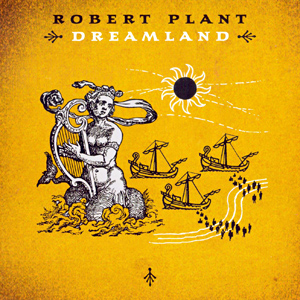
Robert Plant 7: Dreamland

While his old partner cashed in on his legacy with the help of the Black Crowes and the “artist” then known as Puff Daddy, Robert Plant took a different look back. He put together an evolving group of musicians, first dubbed the Priory of Brion, then renamed The Strange Sensation. With a basic rock sound embellished by a hurdy-gurdy and other exotic instruments, they played a few small shows consisting primarily of covers—basically, Plant’s favorite songs from his hippie days, by such writers as Tim Buckley, Arthur Lee, Moby Grape and Jesse Colin Young, with a few blues numbers thrown in for good measure.

He had so much fun singing these psychedelic folk songs—a genre he clearly adores, as demonstrated by his version of Tim Hardin’s “If I Were A Carpenter” on his last solo album—that his next album would eventually evolve. Dreamland is again, mostly covers, but taken in such a way that they are unique. It also helped that they were mostly obscure. For example, of all the Dylan songs people would pick up, would you expect “One More Cup Of Coffee”? Jesse Colin Young’s “Get Together” is probably on an oldies station right now, but “Darkness, Darkness” isn’t as well known except to White Stripes fans. Tim Rose’s “Morning Dew” was a staple of the coffeehouses and big with Deadheads, though Tim Buckley’s “Song To The Siren” would most likely be familiar to fans of The Monkees and/or tangentially via Jeff Buckley. (Robert’s version is as lovely as they get.)

The few original songs are credited to the entire band, and follow the folk blues tradition of recycling songs like “Fixin’ To Die” and “Win My Train Fare Home”. “Last Time I Saw Her” and “Red Dress” are about as “out there” as this album approaches, with the musicians getting a chance to let loose and experiment. The only real dud is “Hey Joe”, which goes out of its way not to sound like Hendrix, Love, The Byrds or even The Leaves, except for the two times the familiar chromatic riff is played. It helps that it’s followed by the finale of “Skip’s Song”, a lesser-known Moby Grape track with welcome female backing vocals in the middle. (Overseas, the album added the original “Dirt In A Hole”, which was included on the remaster along with an annoying remix of “Last Time I Saw Her”.)

Dreamland is a sneaky little album, and not recommended if you’re looking for the bombast commonly associated with Led Zeppelin or even Plant’s first few solo albums. If it gets people to explore some of the sources of the material, then his job his done. Best of all, it gave him confidence for how he wanted his career to continue. By looking back, he still found a way to look forward.

Robert Plant Dreamland (2002)—
2007 remastered CD: same as 2002, plus 2 extra tracks

Sunday, October 17, 2010

Jimmy Page 4: Live At The Greek

Clearly, without Robert Plant, Jimmy Page was at loose ends. Following their most recent short-lived collaboration, he took Puff Daddy’s money so the “rap genius” could write new words to the “Kashmir” backing track for a movie soundtrack. Then he hooked up with the Black Crowes for a brief and eventually truncated tour wherein they played mostly Zeppelin songs with a few blues standards and some Crowes songs as well. The matchup, while promising, was doomed; Chris Robinson’s ego got in the way of his gratitude, but even stupider, Rich Robinson snubbed Jimmy’s offer of riffs and ideas to collaborate on new songs. (Drummer Steve Gorman left the band soon afterwards, and his account of the Page experience is as astonishing as it is maddening.)

Nonetheless, selections from two of the LA shows were released rather quickly as one of the first “on-demand” Internet offerings, then given wider distribution as a double-CD via the TVT label. Subtitled Excess All Areas in its first incarnation, Live At The Greek is notable in that it focuses more on the deep cuts than greatest hits. There’s no “Stairway” or “Kashmir”, but healthy dollops from Physical Graffiti and unexpected choices like “Hey Hey What Can I Do” and “Your Time Is Gonna Come”. Blues covers include tunes by B.B. King, Jimmy Rogers, Elmore James, the Jeff Beck Group arrangement of “Shapes Of Things”, and most surprisingly, Fleetwood Mac’s “Oh Well”. For a guy who says he was never really into Robert Plant’s vocals or lyrics, Chris Robinson certainly did his homework. Jimmy was definitely having fun, and with two extra guitarists and a keyboard player onstage, the sound is certainly filled in. (25 years later, the album was expanded to three discs to encompass a complete show or at least its equivalent, now including the Crowes staples that were left off the original album for licensing reasons, three further LZ songs, and five songs from a soundcheck—one of which is mostly them working out the harmonized guitar parts in “Ten Years Gone”, followed by a ten-minute jam.)

We want Jimmy to be happy, of course, so it’s a shame that his talents hadn’t resulted in more than a handful of albums with new music since Zeppelin disbanded. Being stuck playing in his own cover band may have brought in some cash, but what did it do for his creativity?

Jimmy Page & The Black Crowes Live At The Greek (2000)—3
2025 expanded reissue: same as 2000, plus 16 extra tracks

Saturday, October 16, 2010

John Paul Jones: Zooma and Thunderthief

He was the quietest member of Led Zeppelin, but arguably the most talented. John Paul Jones had already spent the first part of his career as a session rat when he joined Zeppelin on bass and keyboards, and having spent much of that band’s tenure in the shadows of the other three, it wasn’t all that surprising that he didn’t pursue a high-profile solo “career” after the band was finished. Some session work here, some arranging there, but it seems he got the most notice anytime Page and Plant did something together, with or without him.

It wasn’t until the turn of the century that he finally released proper albums under his own name. By then he had hooked up with Robert Fripp’s Discipline Global Mobile operation, which still strives to put the composer and performer first. Indeed, the first two tracks on 1999’s Zooma sound very much in line with that decade’s version of King Crimson, and not just because Trey Gunn is in the credits. The majority of the instrumentation comes from the man whose name is on the spine, via basses of multiple string quantities, lap steel guitars, mandolas and keyboards. (Of the two credited drummers, one is modern session rat Denny Fongheiser, and the other is Pete Thomas, best known from Elvis Costello’s Attractions.) Of the nine tracks, most could qualify as prog, all extremely toe-tapping, with some quieter atmospherics for variety. He even brings in members of the London Symphony Orchestra for one track. The listener will find him or herself looking at the credits to discover that more often than not, it’s Jonesy himself playing the screaming lead.

A tour supporting Zooma (opening up for Crimson) meant he needed to find a band, so he hooked with the rhythm section of a Celtic prog band, including the bass player from Kajagoogoo. They contributed somewhat to The Thunderthief, which begins very much in the Zooma mode, even featuring a guitar solo from Robert Fripp. The first sign that it’s not the same album comes on the title track, where he actually sings. (News flash: this is not a talent kept criminally under wraps all these years.) He also chooses to warble the lyric on “Ice Fishing At Night”, which sometimes overpowers the otherwise haunting “No Quarter”-like piano. Similarly the toothless soccer hooligan delivery on “Angry Angry” is worth skipping, particularly as it leads to a lovely interpretation of the Appalachian standard “Down The River To Pray”. He plays a lot more mandolin in general on this album, providing a wider palette of sound.

For whatever reason, he hasn’t released a third album, seemingly content to collaborate with others, in different genres. As it is, Zooma and The Thunderthief remain enjoyable listens for diehard Zeppelin fans—and certainly Crimson fans—and are at least as enjoyable as some of the stuff Page and Plant did on their own.

John Paul Jones Zooma (1999)—3
John Paul Jones
The Thunderthief (2001)—3

Monday, October 11, 2010

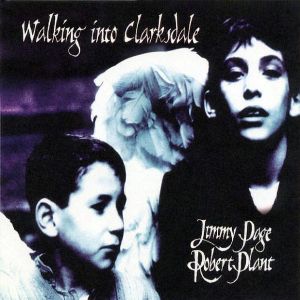
Jimmy Page & Robert Plant 2: Walking Into Clarksdale

A mere three years after their “unplugged” show Page and Plant went into Abbey Road Studio, of all places, with Plant’s rhythm section and came out with twelve songs—recorded by hardcore legend Steve Albini, a man who never allowed himself to be credited as “producer”—that were as good as anything either had done since Bonham died. Walking Into Clarksdale has a nice dry sound, delivered by voice, guitar, bass and drums, with only occasional strings. Just as it should be. (In an odd coincidence, the bass player’s surname happens to be Jones.)

“Shining In The Light” starts with a nice sloppy acoustic flourish (more of a slashing, actually) then kicks in with drums and a Mellotron. Add a few electric touches and it’s a good start. “When The World Was Young” has all kinds of light and shade touches and a good driving beat. “Upon A Golden Horse” offers the first Arabic influence, in the vocals and the strings. Anything called “Blue Train” will always have Coltrane connections, but this is an excellent collaboration of colors, complete with a fantastic solo wherein Page gets his fingers stuck between the strings but manages to fight his way out in time. “Please Read The Letter” uses the low end of Plant’s range very well; he even harmonizes expertly with himself, but could he have imagined redoing it with Alison Krauss ten years later? The first single, “Most High”, ends the first half and is one of the weaker tracks, likely included to remind the skeptics of “Kashmir”.

The rest of the album covers ground just as wide, without ever sounding like a retread. “Heart In Your Hand” is a moody one, with a well-paced guitar solo followed by the broken leg shuffle of the title track. “Burning Up” should further please fans of Physical Graffiti. “When I Was A Child” takes the mood down again, building tension and breaking it up through repeated references to being a soldier. Before things get too quiet, “House Of Love” and “Sons Of Freedom” bring on the boogie and keep it loud. (Japan got a bonus track, the derivative “Whiskey From The Glass”, while another excellent song, the spooky “The Window”, was only issued as a B-side and may now be lost forever.)

To their credit, Walking Into Clarksdale was never marketed as a Zeppelin album, and presented as a collaboration between the two stars and the two supporters. They sound really into it, Plant discovering new places to take his voice and Page working well off his friend’s influence. They toured behind the album, and promptly went their separate ways, again.

Jimmy Page & Robert Plant Walking Into Clarksdale (1998)—4

Friday, September 24, 2010

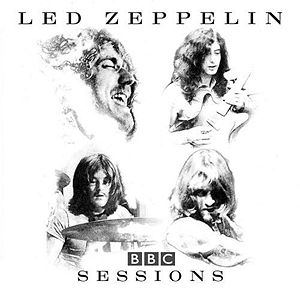
Led Zeppelin 12: BBC Sessions

In the ‘90s it had become de rigueur for bands—particularly those from the ‘60s—to dig up tapes of their old BBC radio appearances for a cash cow CD. They were always live performances, less polished than album sessions, and often sported unique songs that weren’t available otherwise. Starting after the success of the Beatles’ BBC set, there was talk in the industry that other similar sets would be released through a single distributor. Luckily, in the more popular cases (the Beatles, The Who, David Bowie) the artists themselves, along with their own labels, got directly involved, generally resulting in a better produced, more personal package.

Several existing hours of Zeppelin’s appearances on the BBC have floated around on illicit collections; two-and-a-half of those hours were included on this collection. All of the first disc comes from various 1969 sessions, some of which occurred within a few weeks or even days of each other. Several songs from their debut are replayed and extended, showing more debt to various blues artists. The rarities stand out: “The Girl I Love She Got Long Wavy Hair” features the riff that was later used to bookend “Moby Dick” and some howling lyrics, while “Somethin’ Else” is a chaotic piano-driven version of the Eddie Cochran classic, and is tons of fun. The disc closes with the majority of the excellent Playhouse Theater show whence “White Summer/Black Mountain Side” on the first box set came.

Disc two delivers the bulk of a 1971 show from the Paris Theater, just before the release of Zoso. Right away you can hear how their set had changed in two years. This was one of the first-ever live performances of “Stairway”; non-collectors will notice that “Black Dog” uses its live intro taken from “Out On The Tiles”. There’s a lovely acoustic pairing of “Going To California” and “That’s The Way”, “Dazed And Confused” is now over 18 minutes with a bow section, and an extended “Whole Lotta Love” touches on several blues and rockabilly tunes.

On its initial release, BBC Sessions was an essential if long-overdue addition to the Zeppelin canon, providing an excellent glimpse of their earlier live shows. Of course there were some exclusions that some people complained over, but both discs were packed pretty full, and the compilers were pretty sure five versions of “Communication Breakdown” would have been more redundant than the three they did include. They still felt fine about repeating “Traveling Riverside Blues” from the 1990 box, but not “White Summer”. But such quibbles pale while the album’s playing.

Much of this was rectified when, after the rapid-fire expansion of the entire Zeppelin catalog, The Complete BBC Sessions added a third disc to the original two. Now the title was truly accurate, save a few snippets from some of the longer medleys shaved to keep from having to pay too much on royalties outside the band. These additions complete both the Playhouse Theater and Paris Theater shows, adding those missing versions of “Communication Breakdown”, two more of “What Is And What Should Never Be”, an 11-minute “Dazed And Confused”, and yes, even “White Summer”. Just to prove they weren’t kidding, there’s even a “missing” 1969 session only preserved on a crappy tape that features the otherwise unreleased “Sunshine Woman”, a neat piano-driven prototype of “The Girl I Love” and “Travelling Riverside Blues”. Due to a noticeable static whine, those tracks end the set for maximum overall listenability; with a little creativity, the home user can create a truly chronological set that puts the first four sessions on one disc, the complete Playhouse Theater on the next, and the Paris Theater show spread across two more. Or you just can be happy Jimmy put it out at all.

Led Zeppelin BBC Sessions (1997)—4
2016 The Complete BBC Sessions: same as 1997, plus 9 extra tracks

Wednesday, September 22, 2010

Jimmy Page & Robert Plant 1: No Quarter

Jimmy’s recent musical gamble paid off big time. Basically, Plant gave in to the stalemate, taking Page’s actions to mean that if Robert didn’t sing with him again, Page would just keep recording with David Coverdale. Still, it was a surprise to hear that the two were teaming up for an MTV unplugged show, and it wouldn’t be just a one-off gig.

Being 1994, of course, it wasn’t strictly unplugged anymore. No Quarter: Unledded took the songs the two liked most and extended them to include more overt Celtic and Arabic touches. While having Jimmy around was certainly a plus, Plant was definitely calling the shots. The musicians consisted of his touring band, plus a variety of symphonic and Egyptian players. “Nobody’s Fault But Mine” is transformed from a heavy blues to a hurdy-gurdy driven lament, and the “title track” is purely acoustic, devoid of any of John Paul Jones’s influence. “The Battle Of Evermore”, “Since I’ve Been Loving You” and “Kashmir” get full orchestral treatments, while “Four Sticks” and “Friends” are expanded to the Eastern sound both envisioned.

A couple of new tunes were recorded live on location in the streets of Marrakesh; “City Don’t Cry” makes the most of traditional Moroccan instruments, and Page turns it up to 11 for “Yallah” while the locals scratch their heads. The best new song, “Wonderful One”, was a descendant of “The Rain Song” and the DADGAD tuning, and left one hoping for more new music like it.

No Quarter: Unledded was a success, but was released the same day as another long-awaited reunion, that of the Eagles, whose own album ended up selling about eight million more copies. One person who might have gotten a kick out of such competition would be John Paul Jones, who famously thanked the other two for remembering his phone number when they were inducted into the Rock & Roll Hall Of Fame the following year.

Ten years after its original release, the show appeared on DVD, accompanied by a rejigged version of the album. The track previously known as “Yallah” was retitled “The Truth Explodes”, while the international-only track “Wah Wah” was included, as was “The Rain Song” for the first time. Several tracks were edited from their original length, and “Thank You” was removed completely. (The DVD also includes the onetime B-sides “What Is And What Should Never Be” and “When The Levee Breaks”, neither of which had been on either CD.)

Jimmy Page & Robert Plant No Quarter: Unledded (1994)—
2004 reissue: same as 1994, plus 2 extra tracks (and minus 1 track)

Tuesday, September 21, 2010

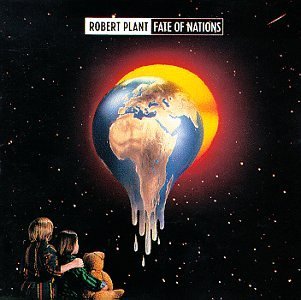
Robert Plant 6: Fate Of Nations

While Jimmy Page was off playing with David Coverdale, Robert Plant was busy treading his own path. Because of the timing, Fate Of Nations does offer something of a response to that project. But this was already Robert’s sixth full-length solo album, and repeats the cycle already established: put together a band, record and tour behind two albums, then fracture it on the third. Most of his recent recruits are here, but fight for space with other collaborators, while the production is shared with Chris Hughes, best known for his work with Adam And The Ants and Tears For Fears.

The album finds him looking back to the Arabian influences he’d skirted since Zeppelin, while lyrical concerns about the state of the planet (reflected in the artwork) hearken back to the “hippie music” he’d sung before them. It’s a more introspective album than we’d come to expect, but that’s not immediately apparent. “Calling To You” distills “Kashmir” into a 6/4 stomp, and a distinctive violin solo from Nigel Kennedy. “Down To The Sea” is a little more mystical, and “Come Into My Life” only catches fire when Richard Thompson takes one of his iconic solos. And there’s “I Believe”, a movingly intense song that’s an unspoken tribute to his son Karac, who died at the height of Zeppelin’s fame (and quite possibly the biggest reason why he’s always been on the fence about reviving the band). “29 Palms” is an actual radio-friendly love song, of all things, his first and last one for a while. “Memory Song (Hello Hello)” returns to the Mideast for three pounding minutes until an actual modulation occurs.

The most striking departure is a cover of Tim Hardin’s “If I Were A Carpenter”, with vintage string arrangement, Coral sitars and other echoes of the time. If anything, it foreshadows his work in the next century. That mood is blasted away by “Promised Land”, a pale rejig of “When The Levee Breaks”. “The Greatest Gift” is another moody love song, with a prominent string arrangement and a chorus that sounds familiar. “Great Spirit” wanders along, just as “Network News” ends the program with a lot of clatter. These songs were obviously very important to him, as they’re the only ones that had lyrics in the packaging, but social commentary is not why we listen to Robert Plant.

But while there’s nothing wrong with Fate Of Nations, it just didn’t excite. It was also likely the first album he made with CDs in mind, without considering where the sides might start and end. Therefore many of the songs are way too long, so pruning it down from an hour to a more concise 40-45 minutes would have been a big help. (The eventual bonus tracks were a mixed bag. “Colours Of A Shade” was originally unique to the UK, and welcome here, while a Delta blues-style “acoustic mix” of “Great Spirit” is as revealing as the “Dark Moon” collaboration with Ranier Ptacek. “Rollercoaster” sports the Manchester beat, but it’s still catchy, and “8:05” is an acoustic cover of a Moby Grape tune.)

If there’s a lesson to be learned from his post-Zeppelin career, it’s the value of a foil, or a steady collaboratorIf there’s a lesson to be learned from his post-Zeppelin career, it’s the value of a foil, or a steady collaborator, who can provide the right levels of camaraderie and contrast. Fans could be forgiven for hoping Page and Plant would just get it over with and do something together already.

Robert Plant Fate Of Nations (1993)—
2007 remastered CD: same as 1993, plus 5 extra tracks

Monday, September 20, 2010

Jimmy Page 3: Coverdale Page

Things were quiet on the Zeppelin front for a few years, until what sounded like a really bad rumor came true: Page had recorded an entire album with David Coverdale of Whitesnake. Even more frightening was the result that Coverdale•Page turned out to be pretty good. Coverdale took a rougher, more “Axl” approach for his singing, and Page came up with new riffs in a production style that hadn’t aged yet.

We need to say this again—the album’s pretty good. “Shake My Tree” and “Pride And Joy” sport classic Page riffs and solos. “Take Me For A Little While” may veer close to power balladry, but the guitars more than make up for it. Throughout, Jimmy plays more “sober” than ever, if that’s a fair description. A decent solo rises from the mix here and there; “Absolution Blues”, despite having the most tenuous connection to the blues, gives him a good couple of minutes to layer on some “scary sounds” for the intro. “Easy Does It”, “Over Now” and about half of the over-long “Don’t Leave Me This Way” also balance their contrasts well.

It’s easy to forget that Coverdale was already a veteran, having sung with Deep Purple in the mid-‘70s. Whitesnake wasn’t much more than an obscure joke until the hair metal era posed the singer as another Plant clone. Besides, it’s not like Page hooked up with Bret Michaels or the guy from Kingdom Come. Both singer and guitarist get equal billing in the writing credits, but it’s easy to blame David for some of the rhymes. “Feeling Hot” is a little silly and “Waiting On You” admittedly “classic” Whitesnake; “Take A Look At Yourself” isn’t too far removed from the type of thing Aerosmith had been doing of late. Such a thing might be expected when the “John Kalodner: John Kalodner” credit appears in the booklet. “Whisper A Prayer For The Dying” would have really pissed off Robert Plant, with all the yelling over lifts from “Kashmir”.

Coverdale•Page is one of the more satisfying offshoots in the Zeppelin canon, if people could just overlook the simple fact that David Coverdale was singing over a rhythm section featuring the drummer from Heart (and Montrose) and the bass player from Miami Sound Machine. The lyrics are printed in full in the booklet, unfortunately, but the tunes are just plain catchy so we don’t pay attention to those anyway. Even today.

Coverdale•Page Coverdale•Page (1993)—3

Friday, September 3, 2010

Led Zeppelin 11: Box Sets

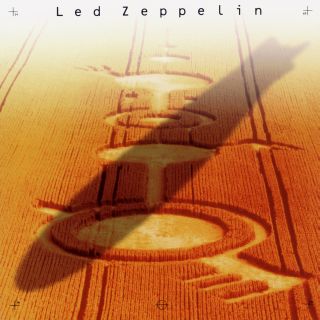
One of the most commercially successful box sets of the era was released to great fanfare in the fall of 1990, simply titled Led Zeppelin. Rather than being a chronological overview loaded with rarities, the four CDs included 54 songs, only four of which could be considered rare.

Recorded for the BBC around the same time as the second album, “Traveling Riverside Blues” is pretty faithful to the Robert Johnson original, even though it pulls lyrics from others of his songs. “White Summer/Black Mountain Side”, recorded a few days later, is a live performance of Page solo on his Danelectro with some help in the middle from Bonham. (“White Summer” was originally recorded for the Yardbirds, and is an uncredited arrangement of the traditional “She Moved Through The Fair” in his special DADGAD tuning, which was also used in “Kashmir” and “Midnight Moonlight”.) “Hey Hey What Can I Do” should have been included on Coda, since it was actually a band-approved B-side for “Immigrant Song”, loaded with acoustic guitars and mandolins and sporting a happy singalong chorus. Before being overplayed on the radio, it was a fun rarity. “Moby Dick/Bonzo’s Montreux” is a special edit that rather deftly combines the two tracks, and is actually pretty entertaining listening.

Jimmy had, however, remastered the music, having been unsatisfied with the initial 1987 CD versions of the albums, which were done without his involvement. So while the box didn’t exactly break any ground, it did give fans a reason to get a CD player.

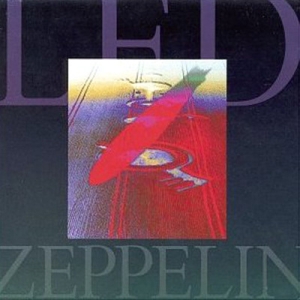
The balance of the tracks not included in the first box were included on the two-CD Boxed Set 2, which appeared in 1993 with one new track. “Baby Come On Home” was a long lost outtake from the first album, originally titled “Tribute To Bert Berns”, with lots of piano, organ and Leslie guitar under layered harmonies. It would have been a worthy inclusion to that album, or at least a B-side, yet was obviously left off to better emphasize the band’s particular brand of light and shade.

The CDs were sequenced completely out of any order, but still make for a good shuffled listen, even with “Moby Dick” and “Bonzo’s Montreux” included in their original guises. With such Classic Rock radio hits as “Good Times Bad Times” and “Living Loving Maid” here, it’s clear the songs are good enough to avoid being considered sub-par simply because they weren’t on the first box. (Around the same time, another box appeared. The Complete Studio Recordings offered all the albums in their original sequencing on ten discs, with the bonuses from the other two Box Sets added onto the end of the Coda disc. Nice of them.)

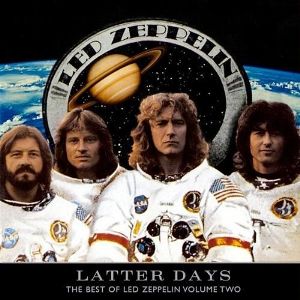
Despite insistence that it would never happen, two “best-of” collections finally appeared late in the century. Early Days and Latter Days included all the hits on a CD each, with pleasant packaging, nice photos and multimedia content. (While neither is definitive, they do a nice job and are handy for novices who should probably buy all the albums anyway.) They were eventually packaged together to give consumers a more complete set. And a decade later, another double-disc set appeared, to coincide with the band’s iTunes debut. With a few different tracks from the previous collection, Mothership merely underscores that if you like the band, you might as well spring for the whole catalog.

Led Zeppelin Led Zeppelin (1990)—
Led Zeppelin Boxed Set 2 (1993)—
Led Zeppelin
Early Days: The Best Of Led Zeppelin Volume One (1999)—4
Led Zeppelin
Latter Days: The Best Of Led Zeppelin Volume Two (2000)—4
Led Zeppelin
Mothership (2007)—4