Showing posts with label ben folds. Show all posts

Friday, July 18, 2025

Ben Folds 17: Live With The NSO

Throughout his career, Ben Folds has worked with orchestras whenever he could, in the studio as well as in public. His performance with the West Australian Symphony Orchestra was released on DVD in 2005, followed twelve years later by a Record Store Day release on vinyl only. When he assumed the post of artistic director at the Kennedy Center in 2017, he helped pioneer a series of collaborations with the National Symphony Orchestra and pop artists as a public service.

Perhaps seeing the political writing on the wall, Folds performed a concert of his own with the outfit in 2024, which was then released on the NSO’s own label the following 4th of July, about five months after he resigned in the wake of the second Trump presidency. Only his third live album not tied to a video release, Live With The National Symphony Orchestra is designed to spotlight the players, the extra vocalists, and the arrangements of the music, so we don’t hear much interaction with the audience at all.

He was still ostensibly promoting What Matters Most, and the first three songs come from that album, and actually surpass the studio versions. Despite staying mostly on one chord, “Effington” is even more intricate with percussion everywhere, so the changes are more noticeable. “The Luckiest” is as sweet as ever, and “Capable Of Anything” gets more fleshed out than its original smaller group arrangement. The Tall Heights duo adds a wonderful harmonic counterpoint to “Still Fighting It”, then Regina Spektor comes out to sing her part on “You Don’t Know Me”. (Maybe it was the venue, but Ben lets the audience sing the profane line in the bridge, and they do, heartily.) “Landed” has a more lugubrious arrangement than the Paul Buckmaster version that snuck out a while back, while “Still”, the ballad from the Over The Hedge soundtrack, gets a sumptuous reading.

It makes for a nice closer, but the streaming version contains four more songs that could easily have fit onto the CD, or a third side of an LP. “Cologne” gets a chuckle for the line about the astronaut killing her boyfriend, “Moments” gets a nice version with Tall Heights again, he gives an aside in “Gracie” to remind the audience how old that little girl is now, and the audience seems to know how to accompany “Not The Same”.

Ben Folds Live With The National Symphony Orchestra (2025)—

Friday, December 6, 2024

Ben Folds 16: Sleigher

For the longest time, Ben Folds had exactly two Christmas songs in his catalog: “Lonely Christmas Eve” from the live-action film version of How The Grinch Stole Christmas, and the profane “Bizarre Christmas Incident”, written for said film when all he knew about the project was that it was to be a comedy about Christmas directed by Ron Howard and starring Jim Carrey. (We don’t count “Brick” for the same reason that Die Hard is not a Christmas movie.) Still, we always suspected that the king of piano snark would be sentimental around the holidays, and he finally got to explore it with an album cleverly titled Sleigher, which mixes originals with three covers.

We still can’t find the melody of “Little Drummer Bolero”—it doesn’t sound like the “pa rum-pum pum pum” song—but it’s a lovely instrumental. “Sleepwalking Through Christmas” has just a twinge of melancholy, but it’s not as lonesome nor as touching as “Me And Maurice” (the pair is even depicted in the cover cartoon, complete with “full green bag of shame”). “Christmas Time Rhyme” does a nice job of stringing together images from the perspective of kids of all ages, with just one eff-bomb. Another instrumental, “Waiting For Snow” is brief but still pretty.

“We Could Have This” finally inserts some romance and the promise of a happy future, sung as a duet with the mildly chirpy Lindsey Kraft. The most obvious and least daring tune is “The Christmas Song”, as his rendition of chestnuts roasting is accompanied by guitar, piano, and harmonica. He heard Burt Bacharach’s “The Bell That Couldn’t Jingle” (with lyrics by the same guy who wrote the lyrics for “Speak Softly Love” from The Godfather and other movie themes) from a Herb Alpert album, and it’s very evocative of that style, but “Xmas Aye Eye” (as in AI) is a complete shift, grating electro-pop with lyrics provided by ChatGPT and peppered with sound effects. Finally, “You Don’t Have To Be A Santa Claus” is all Mills Brothers, and good advice any day.

At just under 35 minutes, Sleigher certainly doesn’t wear out its welcome, even if the harmonica does. But given the beauty of the instrumentals, we would certainly welcome more tracks like that. Maybe next year.

Ben Folds Sleigher (2024)—3

Friday, July 7, 2023

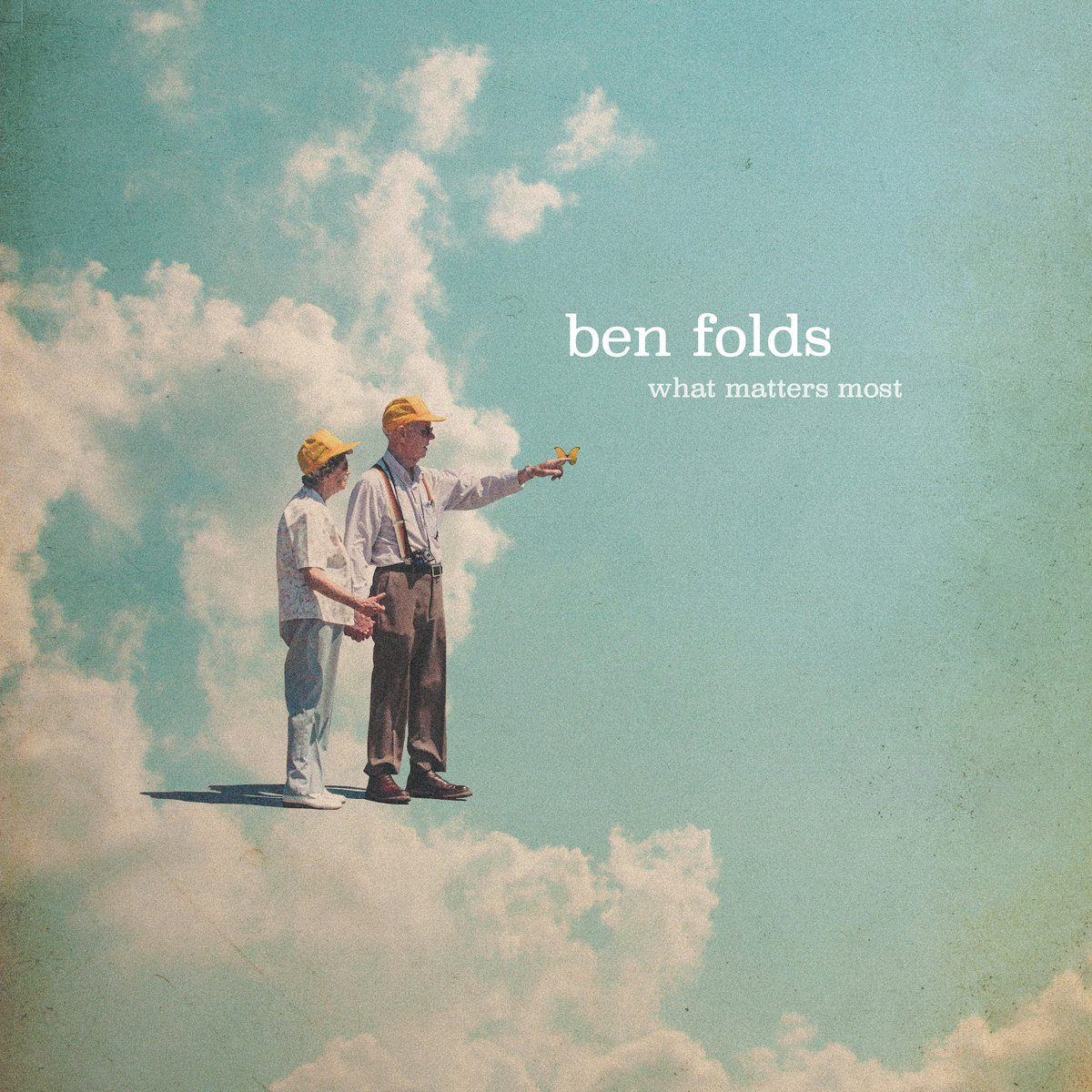
Ben Folds 15: What Matters Most

Since we last heard from Ben Folds, he kept busy, just not in the new music category. He used his powers for good, working with orchestras and schools. He wrote a memoir that focused on the nature of creativity, which led to the launch, during the Covid pandemic, of a podcast discussing creativity further with guests in the entertainment and scientific fields. He used the situation of having to shelter in place to post the occasional video and home concert stream. Somewhere in there he also got married for a fifth time, and eventually came up with enough songs to constitute a new album.

The overall style of What Matters Most is ‘70s pop, with mostly simple instruments and tons of melody, but still sounding fresh. The subject matter is mostly adult-oriented, meaning mature, and reflective of recent times. (Sadly, his one-off song “2020”, which hilariously and profanely summed up life during the pandemic, is not included.)

An extended sequenced keyboard part opens “But Wait, There’s More”, which can’t help but reflect life with Covid, but works as a meditation on the passage of time in general, with lots of wonderful layered harmonies chanting the title repeatedly. “Clouds With Ellipses” is a pretty little piece on the same theme, with YouTube sensation dodie [sic] providing the harmonies here. “Exhausting Lover” is the requisite “naughty” track, this time about a salacious encounter with a younger, shall we say adventurous lady. For his sake we really hope it’s not based on a true story, especially since the track itself is so good. “Fragile” brings the mood back to more serious territory, with a monologue about a narcissistic abuser, with a subtle string section and gentle viola solo. While it may not be strictly classical, the accompaniment to “Kristine From The 7th Grade” is rather stately, while the subject matter will be all too familiar to people who’ve had to cut off contact with Trumpers and science deniers in recent years.

“Back To Anonymous” works on two levels; it’s a realization from a celebrity that’s not necessarily a household name, but it also reflects how face masks brought people to common ground again during Covid. The uncharacteristically jangly “Winslow Gardens” goes back to the beginning of lockdown, and we like to think the odd meter reflects the general unsettledness that had descended in 2020. Following a purposely deceptive prelude, the breakup tale in “Paddleboard Breakup” is incredibly vivid, right down to the weather, with chords that barely modulate over a tempo that ticks like a time bomb, and the twist at the end makes it all even more excruciating. A strident piano opens the title track, which deals with the finality of certain kinds of loss, which “Moments” doubles down to remind us to appreciate what we have while we can. A collaboration with the electronic folk duo Tall Heights, it interestingly recalls his cover of “Such Great Heights” by the Postal Service. (A limited edition expanded CD included three extra tracks: “Happy Clapper”, which sounds like it was inspired by the drum machine effect; another breakup song in “Why Did You Tell Me Everything” that had us hoping against hope that his most recent marriage wasn’t in trouble; and a piano-based interpretation of Roger Miller’s “A Million Years Or So”.)

There seem to be a lot of knotted eyebrows throughout What Matters Most, but we called it a mature album, and it is. The melodies are compelling and haunting, the album is well crafted overall, and various little moments emerge over time to illuminate everything else.

Ben Folds What Matters Most (2023)—

Friday, September 18, 2015

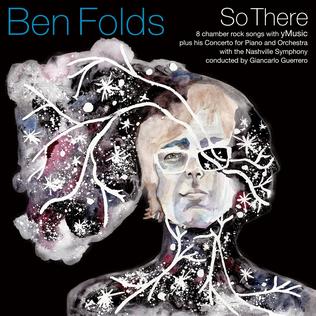
Ben Folds 14: So There

String accompaniments have been features of every Ben Folds album, going back to his first with the Five. So it shouldn’t be a surprise that each of the new songs on So There are all accompanied by an ensemble called yMusic, who provide strings, wind and brass accordingly.

With one exception, most of the songs are opaque lyrically, with an overlying effect of melancholy, even on the upbeat ones. “Capable Of Anything” can’t decide if it’s an apology, a rejoinder or a pep talk, and we’re dying to know who inspired the molasses-slow “Not A Fan”. The title track is the most complex, with its lightning piano runs and extended bridge. “Long Way To Go” is a completed version of a snippet dating back to the fake leak of Way To Normal, and the backing to “Phone In A Pool” sounds like something he’s written before. There’s an odd juxtaposition of references in “Yes Man”, which mentions both “click and drag” and a Fotomat; something the amateur photographer in Ben likely meant intentionally. Of course, Mr. Locker Room returns for “F10-D-A” (“with a big fat D… C what it’s like to B”), which is musically interesting, but the joke doesn’t survive the first verse. “I’m Not The Man”, written with actress and former paramour Alicia Witt, is another sad song in a string of several.

That’s just half of the album, and a setup for his very first completed “Concerto For Piano & Orchestra”. Commissioned and performed by the Nashville Symphony, this three-movement piece sounds very American to these ears, and anything with a prominent piano is going to be compared to “Rhapsody In Blue” anyway. Unlike other “rockers do classical” pieces, such as by Paul McCartney, Elvis Costello or Joe Jackson, this piece doesn’t try to marry the genre, nor is it obvious that it’s written by someone without a classical background. So for that, it works.

The listener is left thinking of such low-key conclusions as “Boxing”, “Evaporated” and “The Luckiest”—all nice songs, but an album full of them needs variety. So There lacks a really standout hook, but at least he’s not repeating himself. Too much.

Ben Folds So There (2015)—3

Friday, July 12, 2013

Ben Folds 13: Live

Not long after their reunion failed to set anything outside the hearts of diehard fans afire, Ben Folds Five continued their tradition of stopgap souvenirs with their (but not his) first live album. Live is taken from the tour supporting The Sound Of The Life Of The Mind; four of that album’s songs appear here, fitting well with the grab bag of older songs. (“Do It Anyway”, for example, transcends its irritating studio version by revealing itself as an expansion of the opening number from Jesus Christ Superstar.)

The album is compiled from several different shows, leaning heavily on San Francisco’s Warfield Theater, so the track selection seems almost random. Songs from their ‘90s heyday get plenty of response, and the boys play all with enthusiasm (“Narcolepsy” is extended to nine and a half minutes with a lengthy jazz odyssey). If there’s a dud, that would be “One Chord Blues/Billie’s Bounce”, yet another variation on “Rock This Bitch”. However, “Landed”, the only original here from the “solo” years, is a wonderful performance.

Mostly it’s a straight trio performance, with only one discernable appearance of a non-piano keyboard. And the piano isn’t so much attacked, as before (except on the closing “Song For The Dumped”); instead Ben throws his energy into wildly inventive explorations, proving that they’re more than a potty-mouthed novelty act. Or so it would seem from the performances sampled here.

Ben Folds Five Live (2013)—3

Wednesday, June 26, 2013

Ben Folds 12: The Sound Of The Life Of The Mind

It remains to be explained what exactly differentiates a Ben Folds Five album from a Ben Folds solo album, other than the rhythm section. Each of his “solo” albums has been based around the piano with snarky lyrics, snappy drums, distorto bass and harmonies aplenty. So perhaps it’s a good thing that The Sound Of The Life Of The Mind is not a complete retread back to the juvenile wisecracks that irritated haters so much about the Five. This album is slightly more contemplative—dare we say “mature”—to match the growth over the last decade (Way To Normal notwithstanding). Every now and then he leaps on the opportunity to use a naughty word, but it’s more of a rarity than a rule.

The album was initially funded via crowdsourcing; hence the packaging includes two booklets full of the names of everyone who apparently helped contribute to the cause. These take the place of lyrics, forcing the listener to decipher the lyrics without prompting. That’s not always easy to do, since not everything is as blatant as “Erase Me”, which blasts out of the speakers with full power, and uses some clever metaphors to describe a breakup, which should be fairly familiar ground for the guy by now. “Michael Praytor, Five Years Later” would appear to be one of those direct-hit character assassinations, but unlike earlier exercises, it doesn’t seem like the subject is meant to be ridiculed. The first great song comes from drummer Darren Jessee; “Sky High” wafts in on a layer of wordless harmonies, and is a perfect example of their softer side. The title track is a leftover from the project Ben did with novelist Nick Hornby, and it sounds like that album (even if it is a portrait of writer and occasional voice artiste Sarah Vowell). It gets a big heavy attack of an arrangement, balanced by the monologue by Frank Sinatra’s valet in “On Being Frank” (we hear a few hints of “Wandering”, from those EPs and one Kevin Smith movie).

“Draw A Crowd” sums up his career somewhat (“if you can’t draw a crowd, draw dicks on the wall”) in an acknowledgement that his talent is often heard or ignored through his cleverness. For the most annoying track on the album, “Do It Anyway” is something of a motivational speech about personal choice, and how it changes over time. “Hold That Thought” presents another relationship in doubt, nicely colored by an organ at all the right moments. What sounds like a frank admission of disappointment in dead parent in “Away When You Were Here” is tempered by the fact that Ben’s dad is still alive, but it only shows his capabilities at crafting characters. “Thank You For Breaking My Heart” is predominantly quiet piano, with a couple of well-timed bursts of rhythm, but it mostly presents a haunting melody only a few steps away from “Still” from the Over The Hedge soundtrack. It does fill a similar role to the closers of previous BFF albums, so there’s that.

The Sound Of The Life Of The Mind doesn’t so much pick up where The Unauthorized Biography Of Reinhold Messner left off as it continues the Ben Folds story in general. If the other two guys are happy to follow the guy whose name is in the title, maybe this won’t be the last we hear from the Five. Considering that every other rhythm section he’s had has done what they did, what’s the problem?

Ben Folds Five The Sound Of The Life Of The Mind (2012)—3

Wednesday, August 29, 2012

Ben Folds 11: The Best Imitation Of Myself

A busy fifteen years in the music business brought Ben Folds to a place where either he or his erstwhile label decided to put together a compilation of hits and favorites. The Best Imitation Of Myself is packed with some of the more obvious choices from his solo career, while being sure to include key signpoints from Ben Folds Five. To make it more interesting, a few oddities provide a different perspective. “Brick”—track one, fittingly—appears in its “radio edit”, and “Landed” includes a lush string arrangement by Paul Buckmaster to cement its debt to Elton John. “Smoke” is a performance with the West Australia Symphony Orchestra. “Gracie”, his song for his daughter, is nicely positioned next to an extended-intro mix of “Still Fighting It”, his song for his son. But then there’s “You Don’t Know Me”, his one hit that everybody seems to like except us. The big news was a brand new Ben Folds Five track, the moody and melancholy “House”. It’s hardly brilliant, but its internal theme of not going back into the past would backfire once they decided to keep going.

Of course, one disc of hits wasn’t going to be enough for this guy, or his fans. Therefore, The Best Imitation Of Myself appeared as both a single disc and as an expanded package containing a disc each devoted to live tracks and rarities. Everything is nicely annotated with liner notes and key information for us geeks who like reading such things while we listen.

The live disc is arranged chronologically, which is nice, as it provides an aural glimpse of what the Five was like on stage. As wacky as they could be on their albums, their concerts gave each of their songs a shot of chaotic energy (or energetic chaos, take your pick). Piano stools would be thrown, songs would be made up, and anything went. It’s a noticeable difference when the switch to “a man and a piano” takes over for the solo years, and you can hear how the addition of a band eventually pushed him back toward the gimmicks that keep his shows interesting. Most of the songs stay close to the album versions without being redundant, but there’s also his boy-band knockoff “Girl” and a performance of “Not The Same” with the audience singing the three-part choral harmony. And we’d love to know what George Michael thinks of the duet with Rufus Wainwright on “Careless Whisper”.

The rarities disc includes unreleased demos and tracks, as well as a couple of soundtrack contributions, a track from the never-released fourth Ben Folds Five album and two more new songs from the reunited Five. The focus is predominantly on his songwriting process, with such comedic departures as the wonderfully crude “The Secret Life Of Morgan Davis” and covers like “Bitches Ain’t Shit” and Ke$ha’s “Sleazy”.

There’s a lot to take in here, but that was just the beginning. With so many things having piled up over the years, he concurrently offered up Fifty Five Vault for digital download, with 32 of the 56 tracks (no, that’s not a misprint) previously unreleased. Three hours of potentially new music is daunting on its own, but consider this: what if your favorite artist began offering up music this way?

Ben Folds The Best Imitation Of Myself: A Retrospective (2011)—

Monday, March 19, 2012

Ben Folds 10: Lonely Avenue

Outside of the usual promotion for his previous, disappointing album, Ben seemed more interested in new projects. His interest in college a cappella groups led to his stint as a judge on a televised talent show series, and the stopgap in the form of University A Cappella!, wherein songs from his catalog were interpreted by fourteen college groups. (He added two performances of his own.)

A more adventurous departure came with his full collaboration with British author Nick Hornby, whose books Juliet, Naked and High Fidelity (the latter even better than the John Cusack film based on it) are must-reads for any record-collecting obsessive. For Lonely Avenue, Nick wrote the words and Ben wrote the music, communicating via e-mail. The results were then recorded by Ben with help from his band. Paul Buckmaster contributes several string arrangements, paving a further path from Elton John.

The best songs tend to be the pretty ones, or at least where he’s not trying to be too clever. “A Working Day” is a brief one-man-band that sounds too much like Way To Normal, but at least it’s over quickly. Then it’s a visit to a terminal spouse at a hospital—not an uncommon destination for a Ben Folds album. “Levi Johnston’s Blues” was dated even before it was recorded, and seems to exist solely to give Ben another excuse to exercise his patented potty mouth. The thing is, the chorus is kinda catchy. Equally catchy, despite itself is the tribute to “Doc Pomus”, wherein our unlikely duo pinpoints their ideal comparison of the type of songwriting team to which they aspire. “Your Dogs” uses the animal in another Folds song title, in another glimpse at the travails of modern suburbia, while “Practical Amanda” turns out to be a thank-you note for the yin a spouse provides the narrator’s yang.

The rest of the album is strong for the duration. The most developed story (and arrangement) might be “Claire’s Ninth”; much like the character studies from Rockin’ The Suburbs, it’s an excellent glimpse inside the effects of divorce and estrangement—subjects these guys know and cover well. “Password” puts the age-old conundrum of jealousy and perceived infidelity squarely in the present, with a distinctly ‘70s slow jam arrangement to nudge the plot along. “From Above” was a good choice for a lead single, a tense yet infectious reflection on relationships that never happened. The momentum carries through the crush a “teenage poetry nerd” has for “Saskia Hamilton”, before the grand finale of “Belinda”. This brilliant song looks at any singer-songwriter who had a huge hit with a song written for someone he hasn’t been with in years, but still has to sing the song onstage (think Billy Joel, Eric Clapton, or Ben anytime someone requests “The Luckiest”). The music for the imaginary song is perfect, and we struggle to feel sorry for the guy—just like a character from a Nick Hornby novel. Just make sure to stop the disc before it actually ends, as there’s a minute of silence before a surprise snippet from an outtake version obliterates the arrangement.

Lonely Avenue see-saws between being good and very good. Ultimately it’s not fair to criticize the subject matter, since again, Ben only supplied the music. It’s still a step in the right direction, and suggests that at the very least, his musical ear will always triumph over his lyrical shortcomings.

Ben Folds/Nick Hornby Lonely Avenue (2010)—

Monday, January 2, 2012

Ben Folds 9: Way To Normal

Ben Folds’ detractors have easy targets for their criticism. He’s either too snarky or wimpy for their tastes; yet at the same time, anyone who hoped he’d do more “funny songs” as he did on the first album by the Five would have a field day with Way To Normal. And those detractors would have plenty of reasons to say “I told you so.”

The opening track, “Hiroshima (B B B Benny Hit His Head)” gets its genesis from an actual falling-down-onstage incident, and outside of the obvious Elton John reference in the title and arrangement, it’s also musically close to “Landed”, which is a better song, and less of a made-up novelty like this. Maybe “Dr. Yang” was the guy who tended to him after the fact, but it’s hard to follow without lyrics. “The Frown Song” makes two wacky sounding songs in a row (because someone bought a Moog) and we’re still waiting for the album to start. The first single, “You Don’t Know Me”, is something of a duet with sensitive breathy female artist du jour Regina Spektor, with an annoying video to match. The “Before Cologne” interlude, however, is just lovely, and we wish there was both more of it, and more like it. “Cologne” itself is sad and pretty.

“Errant Dog” pretty much deflates the somber mood, though it does sounds like a Ben Folds Five outtake. “Free Coffee” is based around the sound of Altoids on piano strings, and that’s the most interesting thing to say about it. There’s an annoying spoken “prelude” to the next track, which only conjures images of The Love Guru. Luckily it’s indexed before the song proper, which explains how the “Bitch Went Nuts”. The high-school vocabulary notwithstanding, the choruses are great. Similarly, “Brainwascht” is a little better than the other “wacky” songs thus far. “Effington” would inspire an album full of college a cappella songs, stemming from the “Please Please Me” cop at the start. The final word comes in “Kylie From Connecticut”, a vague portrait of a failed marriage and a pretty depressing way to go out.

Maybe this was a defiant riposte to the news that he was on his third divorce and fourth wife, but that only put the Songs For Silverman in sharper hindsight. As it is, he takes much too long between albums than fans would prefer, and with Way To Normal he should have worked a little longer on the quality. Most of the songs seem jokey for the sake of being vulgar, and while we like cheap laffs as much as anyone, these don’t work. Coming on the heels of Supersunnyspeedgraphic, The LP, it was even more of a disappointment. What made matters worse is that he purposely leaked “fake” versions of some of the songs before the album’s proper release, most of which were better than the real thing. (Of course, that only torpedoes the argument that he needs time to ensure better output.)

Perhaps to boost interest in the album—or even an acknowledgement that it wasn’t that good—the following year Ben put out an expanded version under the title Stems And Seeds. One disc featured downloadable files of the Way To Normal songs for people to remix in such programs as GarageBand, while the other included an already rejigged version of the album, plus the leaked fakes. If you don’t mind buying the album twice, that’s the way to go, if only because it’s easier than trying to dig up the tracks online.

Ben Folds Way To Normal (2008)—2
Ben Folds
Stems And Seeds (2009)—3

Wednesday, December 7, 2011

Ben Folds 8: Supersunnyspeedgraphic

Way back in the lull following the live album, Ben started issuing a series of five-song CD EPs available via direct mail order or digital download, in the spirit of how bands used to put out singles. These were said to be contenders for what would eventually be his next album, but while a few would soon get regular rotation on stage, only one would turn up on his next real album.

Of the three, the first EP is still the most satisfying. Speed Graphic kicks off with a fantastic cover of “In Between Days”, to the point where we think an whole album’s worth of “Ben Plays The Cure” could make that band’s catalog more palatable. “Give Judy My Notice” appears in a piano-and-voice version that’s just as nice as the one that made it to Songs For Silverman. “Protection” has a jazzy, Steely Dan feel; this escalates for “Dog”, mostly notable for the phone conversation with his wife at the end of the song. And “Wandering” is likely to be on anyone’s list of sappy Folds favorites.

Sunny 16 arrived on schedule a few months later. This time the cover was “Songs Of Love” by the Divine Comedy, and the other songs were, well, okay. “There’s Always Someone Cooler Than You” is the upbeat snide song; “You’ve Got To Learn To Live With What You Are” goes for Elton John territory; “All You Can Eat” puts a four-letter word in the chorus for shock effect; and “Rock Star” combines elements of all three.

It was almost a year before Super D completed the trilogy, and it’s the weakest of the series. Maybe the extra time convinced him to save the good stuff for the album proper, so this was merely the leftovers? Two covers frame the set: a faithful recreation of “Get Your Hands Off My Woman” by glam-rockers The Darkness, and a two-year-old live version of “Them That Got” by Ray Charles. “Kalamazoo” wanders along until a “disco string section” interrupts the middle, “Adelaide” seems an odd tribute to the city, while “Rent A Cop” is an obvious joke song.

After finishing the promotion for Silverman, it was time for another stopgap. He did come through somewhat on the original promise by compiling a sampler from the EPs, with the incentive that most were remixed and/or augmented slightly. From the fifteen contenders, Supersunnyspeedgraphic, The LP includes two songs from Speed Graphic, four from Sunny 16 and three from Super D. In addition, one song from his collaboration with Ben Lee and Ben Kweller, a track from his soundtrack to Over The Hedge and best of all, his uniquely melodic cover of Dr. Dre’s “Bitches Ain’t Shit” round out the set. (He did not, however, include anything from 2005’s Songs For Goldfish, a collection of live tracks and oddities released via the same channels as the EPs.) It’s still geared towards diehard fans anyway, most of whom were more excited about a real followup album. And then they could tread water while the next distraction came along.

Footnote: Supersunnyspeedgraphic was “promoted” by the first live concert streamed on the Myspace social network, released the following year on DVD and a dozen years later as a CD. Much of the humor is lost without the visuals, and he triggers the same effect from his new old-school synth far too many times. An interlude by cross-dressing comedian Titler is a distraction, but the all-request format does dig deep into his repertoire. (Five songs from an iTunes-exclusive performance fill up the space.)

Ben Folds Speed Graphic (2003)—4
Ben Folds
Sunny 16 (2003)—3
Ben Folds
Super D (2004)—
Ben Folds
Songs For Goldfish (2005)—3
Ben Folds
Supersunnyspeedgraphic, The LP (2006)—3
Ben Folds
Live At Myspace (2019)—3

Monday, November 7, 2011

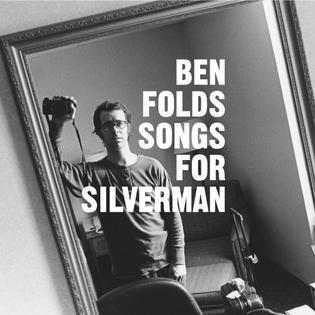
Ben Folds 7: Songs For Silverman

It was a longish time before his second solo album. There had been a few EPs (which we’ll get to soon enough), a live album and a project for William Shatner, but a real Ben Folds album gained the stature of a grand statement in its absence. To make things even wackier, there was a core band of bass and drums on every track. So why had the Five disbanded if that was Ben’s preferred sound?

Most of the Songs For Silverman veer towards the more serious side, as opposed to the snarky geek rock that had been his hallmark for the previous decade. He gets most of the comedy out of the way early; “Bastard” might have been a self-portrait, if not a more biting portrait of Stan from the last album. Its trips through various time signatures keep you guessing. “You To Thank” is another biting portrait, this time of a marriage that perhaps shouldn’t have been celebrated. A trip through America’s heartland inspired “Jesusland”, which he soon performed with an “arena rock” arrangement on tour, but that only distracted from the song’s message, as wonderful as the sound was. The Elton John homage “Landed” is a good barometer for the sound of this album; one of his best songs, it’s basically a phone call from someone who’s just escaped a stifling relationship. Before things get too heavy, he sings “Gracie” for his daughter, a charming lullabye with a childlike hook.

The anti-love songs continue with “Trusted”, a blunt portrait of division, and “Give Judy My Notice”, a gorgeous kiss-off. “Late” is a tribute to recently deceased songwriter Elliot Smith, and works only because of that knowledge. The remainder of the album is dedicated to some very vague songs, thick with possibility of interpretation. “Sentimental Guy” is a slight self-portrait (maybe) and “Time” gets a boost from lovely harmonies, including the voice of one Al Yankovic. The big enigma is “Prison Food”, with lyrics presumably about another impending breakup without illuminating the title; here the harmonies on the bridge resemble those of Pink Floyd (thanks to his British drummer).

Songs For Silverman takes a while to sink in, and as good as some of the individual tracks are, it does work best as a whole. Hindsight has explained a lot, as despite the loving dedication and photos of the woman, Ben was on the verge of divorcing his third(!) wife. This knowledge only makes the subject matter more uncomfortable to consider, but it’s doubtful he was trying to make his own Blood On The Tracks or Here, My Dear.

Ben Folds Songs For Silverman (2005)—

Friday, October 28, 2011

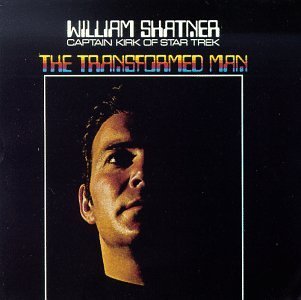
William Shatner: The Transformed Man and Has Been

There are several theories as to how it happened, but whatever the real story, William Shatner did indeed record an album at the height of Star Trek’s original prime-time run. Unlike other TV stars, he didn’t attempt to sing on the album, instead using his theater-trained voice to recite words over a not-so-hip backing. (By contrast, Leonard Nimoy put out five albums in the late ‘60s, and sang on each one of them.)

Shatner intended The Transformed Man to explain a journey of sorts, illustrated by juxtapositions of poetry and Shakespeare soliloquys with modern pop lyrics. The theater pieces are pompous enough, but he sounds a little drunk on “It Was A Very Good Year” and “How Insensitive”, and downright crazed on “Lucy In The Sky With Diamonds” and “Mr. Tambourine Man” (still the greatest-ever version of that song, if only for the final three seconds).

The album wasn’t a hit in the slightest, but gained notoriety over the years as an example of what ego and possible proximity to hallucinogenics can achieve. Once Rhino Records included a couple of tracks on their first Golden Throats album of actors singing badly, it was plucked from obscurity, much to its creator’s chagrin.

So is it really a bad album? That’s a matter of opinion. We feel that it belongs in the “so bad it’s good” category, and used to enjoy playing it on late nights at the CD store to see what customers would stay and who would leave. (The same experiment was performed using Bob Dylan, Neil Young and Frank Zappa.)

Once Bill decided to embrace his camp status, he started making the rounds of snarky comedy shows working his monologue magic, and used his status as the Priceline spokesman to do a series of ads in a faux-coffeehouse setting with Ben Folds in the band behind him. When he was approached by a Rhino offshoot to do another album, Shatner turned the tables by not only agreeing, but embracing the chance to make a sequel of sorts.

Has Been once again features the man on the microphone, but speaking mostly his own words. Ben Folds produced the album, wrote the music, and fostered the other selections—like the opening track, a hilarious cover of Pulp’s “Common People” that turns into a duet with Joe Jackson halfway through. Brad Paisley stopped writing songs about fishing long enough to contribute “Real”, a profound meditation on public image. And novelist Nick Hornby provided the lyric for the melancholy “That’s Me Trying”, one side of a conversation with an estranged daughter with choruses filled out by Folds and Aimee Mann.

In fact, most of Shatner’s lyrics reflect his thoughts about aging and his own fame, particularly on “It Hasn’t Happened Yet”, “You’ll Have Time” and the goofy title track. A trio of songs about romance follow the harrowing “What Have You Done?”, wherein he recounts discovering his wife’s drowned corpse in their swimming pool. “I Can’t Get Behind That”, a rant shouted with Henry Rollins, provides excellent comic relief.

Half of Has Been is great, and the rest not so, but where else can you hear Joe Jackson, Aimee Mann, Henry Rollins and Bill Shatner in the same place? Best of all, it gives the man a chance to rise above the caricatures and actually move the listener.

William Shatner The Transformed Man (1968)—3
William Shatner
Has Been (2004)—3

Friday, September 16, 2011

Ben Folds 6: Ben Folds Live

Whether he’s playing with a band or on his own, every Ben Folds concert offers something different from the previous performance. His encyclopedic knowledge of his own catalog, as well as others, means every setlist is a coin toss, and his love for new and old cheese can lead to any number of improvisations.

So when he puts out a live album culled from a variety of concerts, the selection can almost seem arbitrary, leading one to suspect such a move as being merely financial while he takes his sweet time between new studio albums. But fans should have plenty to appreciate with the simply titled Ben Folds Live, beginning with the sly distortion of his first band’s first album title in the artwork, and continuing with the cover photo itself (documented in a hilarious clip on the accompanying DVD).

It’s just him and a piano, but such is his style that he’s still able to make the rockier songs move. And since the audiences are all devoted fans, it’s easy enough for them to pick up his instructions to emulate some of the arrangements, like the horns on “Army” and the harmonies on “Not The Same”. (The guy from Cake even walks on to add his part to “Fred Jones Part 2”, just like on the album.)

A few rarities are included, like the rarely heard “Silver Street” and the jokey B-side about B-sides, “One Down”. His debt to Elton John is paid on a faithful “Tiny Dancer”, while “Philosophy” is extended to incorporate all kinds of themes for the coda, including Dick Dale’s surf classic “Miserlou”, which the crowd likely knew from watching Pulp Fiction.

As enjoyable as it is for fans, there’s still something incomplete about Ben Folds Live. It’s best illustrated by the inclusion of “Rock This Bitch”, which is kind of his own “Drums In Space” improvisation, and which has been different every time he’s done it. So how could he possibly pick one?

Ben Folds Ben Folds Live (2002)—3

Monday, August 29, 2011

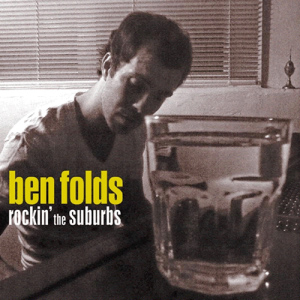
Ben Folds 5: Rockin’ The Suburbs

The Five had disbanded a year earlier (though you could tell on their last album they were getting bored) so fans anxiously awaited Ben’s grand statement of independence. In its place we got Rockin’ The Suburbs, an album full of tracks that could well have been recorded by the band. Tellingly, he plays the bulk of the instruments, including drums, distorto bass and some guitar.

If there was anything new in his approach since the band stopped, it was a preponderance of songs written in the third person starting from the titles. “Annie Waits” is a lonely spinster of the “Eleanor Rigby”/“Another Day” school, but “Zak And Sara” takes a wacky trip in time to predict the musical horrors that will follow. The first great song comes in “Still Fighting It”, an imagined conversation between father and son that remains both effective and futile. “Gone” is another rousing kiss-off to a former paramour. “Fred Jones Part 2” is an amazingly touching portrait of a reluctant retiree, and fans would have recognized this particular character from a song on Whatever And Ever Amen. The flipside comes on “The Ascent Of Stan”, a look at a person who hasn’t aged as gracefully.

With each track his musical depth grows and grows, as evidenced on “Losing Lisa”, a remarkably insightful glimpse at the end of a relationship that’s eclipsed by the song that follows. “Carrying Cathy” takes a couple of verses to paint a picture of a somewhat needy person, before detouring into an impressionistic bridge colored by just enough strings over a wordless chorus. The song expertly drops out to accompany a vivid image of people “carrying a box through the rain”, fulfilling the threat of the song’s title. Then it’s a trip (pun intended) to the aftermath of a party in “Not The Same”, which would provide some of the world’s better audience participation over the years. The title track nicely skewers the current state of white rap, and we’d like to think it’s one reason why Fred Durst doesn’t sell anymore. “Fired” is an odd one; it appears to be a rant from an angry boss, but ends as if it was merely an excuse to write a song based around the final twelve-letter obscenity. But in keeping with his M.O., he gives the last word to tenderness in “The Luckiest”, a wedding song for the 21st century.

Arguably, the best songs on Rockin’ The Suburbs are the depressing ones, much to the dismay of those who liked the funny ones better. He gave himself a tough line to walk, stuck between the role of a compelling songwriter with a musical comedian. But as ever, no matter what his songs make you think, they also tap your toes.

Ben Folds Rockin’ The Suburbs (2001)—

Monday, August 15, 2011

Ben Folds 4: The Unauthorized Biography Of Reinhold Messner

It’s always tough when a band that’s built its reputation on wackiness puts out material that’s anything less than hilarious. The Unauthorized Biography Of Reinhold Messner certainly sounded like the Five all the way through, but its grandiose presentation suggested they were trying to tell some kind of dark, impenetrable story that flew right over our heads.

“Narcolepsy” opens with a fanfare lasting nearly a minute and a half, before paring back to the basic melody for the song to actually start. “Don’t Change Your Plans” allegedly had a lengthy intro of its own that was lopped off at the mixing stage. If that’s the case it would be great to hear what we’re missing, because the song that’s left is a sadly exquisite look at (again) the end of a relationship, complete with another Bacharachian bridge. By the time “Mess” comes in, the protagonist of this particular rock opera is coming off as somewhat of a jerk, despite the tasty electric piano bridge. “Magic”, written by drummer Darren Jessee, is a melancholy farewell to either an ex or the recently deceased, juxtaposed by the interior monologue in “Hospital Song”.

Things finally pick up with “Army”, an easy crowd favorite due to its snotty, cursing lyrics and do-it-yourself horn section. A reference to a redneck past provides a strange foreshadowing of the song of the same name, wherein more skewering of modern pop culture is shackled to a noisy, pounding arrangement. “Your Most Valuable Possession” sets an answering machine tape to a jazz backing. More reminiscences from an unreliable narrator make up “Regrets”, which rotates around the same changes until the three-minute mark where Wings meets the Flaming Lips. Speaking of odd influences, “Jane” owes a little something to Steely Dan before turning into another mellow Ben Folds Five song. The finale comes in “Lullabye”, a dream constructed so well you can almost see the credits rolling on the imaginary screen.

The Unauthorized Biography Of Reinhold Messner is certainly a daring album, and it has its moments, but it falls off halfway on its journey to becoming something truly important. As the band’s last album, it wasn’t the best swan song either.

Ben Folds Five The Unauthorized Biography Of Reinhold Messner (1999)—3

Monday, August 8, 2011

Ben Folds 3: Naked Baby Photos

The band’s original label decided to cash in as best they could on the sudden if moderate success of Whatever And Ever Amen with what amounted to a rarities collection. Granted, there were various live tracks and B-sides already stockpiled, but the timing was about as questionable as the dance remix albums earlier in the decade from Paula Abdul and Milli Vanilli. Chances are, though, the band would have loved to be in such company. (Ben even went so far as to write up some notes for the package.)

Naked Baby Photos is split between studio and live material, and both angles run from the sublime to the ridiculous. Three outtakes from the first album—the poignant “Eddie Walker”, the jaunty “Tom And Mary” and the acoustic guitar-driven “Emaline”, which is what kept it in the can—sit alongside the homemade single version of “Jackson Cannery” that got them signed. Then there’s “For Those Of Ya’ll Who Wear Fanny Packs”, a six-minute jam that skewers funk and hip-hop, and is only slightly funny the first time through.

The live half offers straight covers from the debut, plus a version of the ever-evolving “Song For The Dumped” and a lovely cover of “Twin Falls” by Built To Spill. But there are also two near-metal pastiches that were, again, probably more fun at the time for the people involved.

That said, Naked Baby Photos served as a decent stopgap while the band prepared their next real album. And their increasingly rabid fan base was happy to buy anything they put out. Anyone else would be advised to stay away. (Footnote: Recorded around the same time was a band performance on the PBS series Sessions At West 54th, which was subsequently released in full on DVD, and finally appearing twenty years later as a standalone CD. The first two albums are liberally sampled, along with “Theme From ‘Dr. Pyser’” and the Flaming Lips’ “She Don’t Use Jelly”.)

Ben Folds Five Naked Baby Photos (1998)—3
Ben Folds Five
The Complete Sessions At West 54th (2018)—

Monday, August 1, 2011

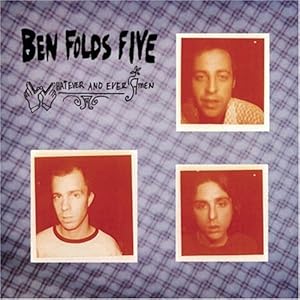
Ben Folds 2: Whatever And Ever Amen

Major-label support meant that the second album from the Ben Folds Five got a little more attention, but the music scene wasn’t about to embrace a piano-driven trio no matter how fuzzy the bass was. Still, the boys stepped up to the plate with Whatever And Ever Amen. The album boasted even more intellectually biting lyrics alongside some quieter moments, and even managed a hit with “Brick”, a song that gives chills on the first listen, and will still do so even after one realizes that the song’s about accompanying your girlfriend to an abortion clinic.

“One Angry Dwarf And 200 Solemn Faces” is a wonderful riposte of a one-time bullied geek enjoying his “fame”. Unfortunately, “Fair” takes a little too much time with the same chords and lyrics to highlight the boys’ harmonies. The somber “Brick” is defused by “Song For The Dumped” with its adamant “give me my money back” chorus. “Selfless, Cold And Composed” has a jazzy Bacharach feel and nice string accents, but again, takes too long. But all is well when the ode to “Kate” gallops into the speakers.

The second half of the album straddles heaviness and silliness. “Smoke” wanders around a 3/4 meter under a melodica, while the unrelated “Cigarette” is almost a Tom Waits pastiche, with its lonesome barroom piano and ironic plotline. “Steven’s Last Night In Town” is a hilarious portrait of a guest who stays too long, embellished by members of the Klezmatics. The attitude continues on with “Battle Of Who Could Care Less”, sealing his status as spokesman for jaded twentysomethings. The final two songs—“Missing The War” and “Evaporated”—get very quiet and a little sad, despite occasional dynamic punctuations from the band.

Alternately hilarious and poignant, Whatever And Ever Amen was a strong follow-up that took a while to catch on to the masses. When it did, it would become the band’s biggest hit. A later expanded version restored some of the audio-verité elements that had disappeared from all but the first pressings, along with a hilarious hidden track. And of course, there were a few bonuses in the form of B-sides like the instrumental “Theme From ‘Dr. Pyser’”, a faithful cover of “Video Killed The Radio Star” and the wonderful “Air”, written for the inexplicable big-budget Godzilla movie.

Ben Folds Five Whatever And Ever Amen (1997)—
2005 expanded, remastered CD: same as 1997, plus 7 extra tracks

Wednesday, July 20, 2011

Ben Folds 1: Ben Folds Five

Ben Folds is a strangely divisive performer—it seems people either love or hate him. His particular brand of geek-rock can be grating to naysayers, but his supporters are positively devoted to his pop craftsmanship in the tradition of early Elton John and Billy Joel through Joe Jackson and even Todd Rundgren.

He first got notice as the leader of the Ben Folds Five, a trio consisting of simply piano, distorted bass and drums with vocals and killer harmonies. (The joke in the band name was enough to either pull in or repel the curious.) Those who delved into their eponymous debut found a stellar pop gem with more hooks than your grandfather’s tackle box.

“Jackson Cannery” leads the pounding charge through a few dynamic changes to show the band’s chops, taken to an even higher level on “Philosophy”. The headbanging “Julianne” is one of the funnier songs to namecheck Axl Rose, nicely punctuated by flying dishes. “Where’s Summer B?” and “Alice Childress” are vivid portraits of the people in your neighborhood, particularly if you’re a twentysomething. His trademark sarcasm and skewering of pop culture first rears its head on “Underground”, which predicted the emo scene by about five years. At the same time, hearing “Video” today only shows how much MTV has changed.

Further eccentric characters emerge on “Sports & Wine” and particularly “Uncle Walter”; surely everybody knows an old codger who holds forth from the comfort of his easy chair? The best song on the album is “Best Imitation Of Myself”, with its poetic lyric and fantastic arrangement, and its sentiment is taken to a nastier level on “The Last Polka”, a blistering look at the end of a relationship, soon to be another Ben Folds trademark. But the most surprising moment is saved for last. It’s not until the repeat of the chorus of “Boxing” that the song is revealed to be an imaginary conversation between a former pugilist and Howard Cosell, and with the simple statement “boxing’s been good to me, Howard”, it’s not difficult to think of the shell of Muhammed Ali.

Ben Folds Five was released on an offshoot of the “indie” Caroline label, and it got enough attention to leapfrog them to a major label. But they were already paying their dues on the road, whipping sparse audiences into laughter while throwing piano stools at the keys.

Ben Folds Five Ben Folds Five (1995)—4