Showing posts with label 2015. Show all posts

Tuesday, August 25, 2026

Todd Rundgren 36: Global and Runddans

Suddenly and seemingly prolific, Todd Rundgren found himself with another stack of songs recorded all by himself. Sticking with the one-word titles, Global presented another state-of-the-world address, with varying results. But if you’re hoping to hear guitars, you’re out of luck, as it’s entirely electronic, outside the vocals.

While “Evrybody” begins with an exhortation for listeners to clap their hands, it’s more a plea for unity of the human race than a mindless singalong. After a synth intro, “Flesh & Blood” is along the same theme, right down to the techno beat, with the phonetically correct lyrics printed in the booklet. “Rise” might as well have been one of his early ‘80s experiments, as it’s right in line with that sound, but without many lyrics. “Holyland” makes up the verbal deficit, with another grand intro, an unfortunate tribal chant, and an unexpected message in the chorus. “Blind” is a slow burner that skewers those who choose religion over science, with a solo by longtime sax man Bobby Strickland. While “Earth Mother” is intended to celebrate female pioneers, the performance borders on parody.

From its single bleating note throughout, “Global Nation” starts in the nightclub and stays there, Autotune and all. “Soothe” would be the album’s big ballad, and ripe for covering by anyone hoping for a hit. In “Terra Firma” he compares himself to Christopher Columbus and astronauts, but still turns it into something of a love song. “Fate” uses the gambling analogy to demonstrate how we’re screwing up the planet, while “Skyscraper” takes the ivory tower metaphor to castigate those who take their wealth for granted. (That doesn’t include estates on Hawaii, apparently. Also, Kasim Sulton is credited, presumably on vocals.) “This Island Earth” sums up the whole album in one song, albeit with fluctuating tempo, and makes one think he could have written just the one song instead of an album full. (The digital version of the album ends with “Technopolis”, something of a Japanese TV theme song, and the only place where a guitar is heard.)
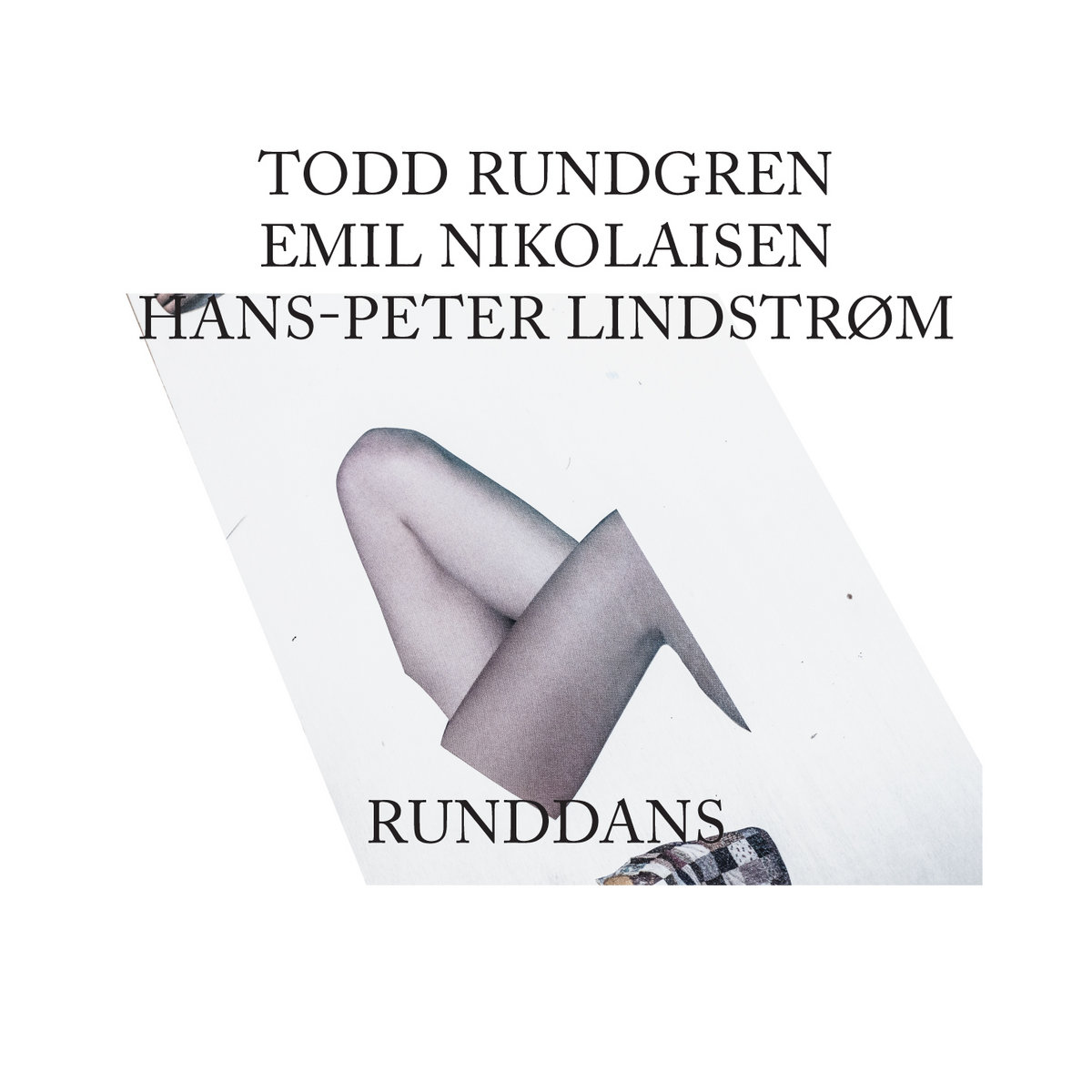
Whether or not Global delivered, fans had another album to devour, provided they didn’t mind paying import prices. Runddans was a collaboration with a pair of Norwegian musicians who were born around the time of the first Utopia album, and indeed, the first several minutes sound like side two of Initiation. “Solus” is some wordless vocalizing over a ticking beat, then “Put Your Arms Around Me” becomes the first thing approaching a pop song, complete with guitar solo. (Another track is indexed and titled for another guitar solo.) Themes come and go, echoes of things like “The Spark Of Life” emerge, and the overall effect is that of a bunch of guys who really like playing in the studio doing exactly that. We even get to hear a phone conversation discussing the work in progress; that too is remixed and treated. Have at it.

Todd Rundgren Global (2015)—
Todd Rundgren/Emil Nikolaisen/Hans-Peter Lindstrøm
Runddans (2015)—2

Tuesday, November 18, 2025

Marshall Crenshaw 14: The EP Collection

Like a lot of artists of his generation, Marshall Crenshaw saw the writing on the wall—or lack of it—in the second decade of the new century, and decided his music would be served best going directly to his fan base. So in 2012, he launched what would become an ongoing series of 10-inch vinyl EPs, crowdsourced and sold via his website. Each consisted of a new song serving as the title track, a cover, and a unique version of something in his catalog, either rerecorded or live.

Six EPs were released over a four-year period, which didn’t suggest prolific creativity, and there’s something of a darkness pervading the new songs. “I Don’t See You Laughing Now” sounds like the vocal’s been AutoTuned, but it’s got one catchy chorus. A highlight is “Stranger And Stranger”, which sports a prominent vibraphone that eventually blends with the rest of the backing. The moody “Driving And Dreaming” is very evocative of a late-night ride; like the rest of the originals, it was written with alt-folkie Dan Bern, with whom he worked on the Walk Hard soundtrack. “Red Wine” is the most developed track, with a full band arrangement and accordion. While it seems to be based on simple if forced rhymes, the undertones of “Move Now” are extremely dark, particularly in the current political situation. “Grab The Next Train” has similar forebodings, but seems to be more focused on a failed relationship.

The remakes weren’t all that radical, but the guy loved making records, so his covers have plenty of feeling. His voice is an improvement on Jeff Lynne’s on the Move’s “No Time”, while still retaining the psychedelic elements, just as “(They Long To Be) Close To You” is straight and sweet, right down to the horn solo. The Coral sitars he adds to James McMurtry’s “Right Here Now” are an unexpected touch, but then his heart is definitely in the ‘60s, as demonstrated by “Never To Be Forgotten” by the Bobby Fuller Four, John Sebastian’s “Didn’t Wanna Have To Do It” for the Lovin’ Spoonful, and “Made My Bed, Gonna Lie In It”, a great hidden gem by the Easybeats.

Once the series was done, much of the music was made available on a wider scale. #392: The EP Collection collected each of the new songs (sequenced in reverse release order) followed by the covers, with bonus tracks: a live version of the Everly Brothers’ “Man With Money” and a demo of “Front Page News”. (At some point, the individual EPs were downloadable from Amazon and iTunes, usually offering another live track, making things even more confusing for completists.)

Ten years later, thanks to a new deal with Yep Roc, he took the opportunity to remix and rerelease the music. This time, From The Hellhole shuffled the contents of the previous version for a more diverse program. However, it dropped “Right Here Now” and the previous bonus tracks, and instead added a 1991 demo of “Walkin’ Around” and covers of Rare Earth’s “I Just Want To Celebrate” and Todd Rundgren’s “Couldn’t I Just Tell You”, a song that was basically made for him. Still, as a summation of the relatively little music he’s been creating, it’s good to have.

Marshall Crenshaw #392: The EP Collection (2015)—3
Marshall Crenshaw
From The Hellhole (2025)—3

Tuesday, February 27, 2024

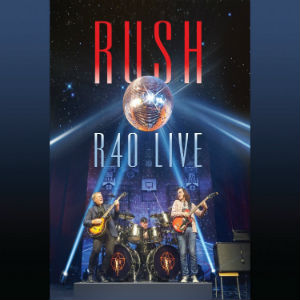
Rush 27: R40 Live

Their fortieth year as a band was celebrated with a North American tour, resulting in Rush’s eleventh live album. R40 Live was another three-CD package, also made available with or as a DVD or Blu-ray set; this would be preferred by most fans who would not only appreciate seeing their idols—and their antics—up close, but also get the various comedic films shown as interludes throughout in high resolution.

After “The World Is… The World Is”, a montage of 26 iconic Rush riffs compiled to accompany the opening video, the first disc more or less travels backwards in time from Clockwork Angels to Signals, but skipping three ‘80s albums. (This might not have been the smartest idea, as Geddy Lee ends up forced to sing at higher registers as the show progresses.) The second set relies on the old faithfuls and epics from Moving Pictures and Permanent Waves, followed by excerpts from “Cygnus X-1” in shuffled order, staying on A Farewell To Kings for “Closer To The Heart” and “Xanadu”, and finishing with a 12-minute condensation of “2112”. The encores combined “Lakeside Park” with “Anthem” and “What You’re Doing” with “Working Man”, ending with a tag of their early “Garden Road”, which never made it to an album.

To fill up the third disc, various performances from throughout the tour not played at these shows were included, to provide as complete a chronicle as possible. Performed live for the first time ever on this tour, “Losing It” appears twice: once with original violinist Ben Mink, and again with Jonathan Dinklage of the Clockwork Angels String Ensemble from the last show of the tour.

Naturally everything is impeccably played, two drum solos are indexed, and there’s enough variety from the last few live albums to keep it from sounding too redundant. Again, the visual aspect of the show is key, as the stage setup goes from the steampunk setup at the start through the washing machines to the Marshall stacks, ending with amps atop wooden chairs. Even Geddy switched to his old basses and smaller keyboards as the need fit.

Following this tour, finding himself increasingly beset by physical limitations, Neil Peart decided he’d had it. The other two agreed. Rush would never perform as a band, live or in the studio, again.

Rush R40 Live (2015)—

Tuesday, April 12, 2022

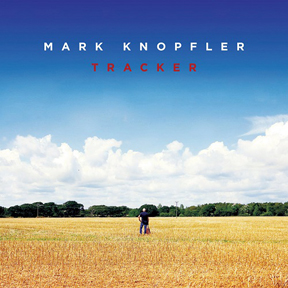
Mark Knopfler 11: Tracker

The listener’s contract with a favorite artist is that we must follow their trail, even if the artist doesn’t excite us as much anymore. We know what to expect from a Mark Knopfler album, but we keep listening in case something wows us. It’s happened with other people, but Tracker fills his end of the bargain by being competent.

“Laughs And Jokes And Drinks And Smokes” threatens jazz before being overtaken by Irish folk, and as has become usual, the lyrics—this time a reverie about a time long past—don’t meld with the backing. A much more effective reminiscence is “Basil”, which details his early job at a newspaper in the company of a poet who clearly wished he was elsewhere. “River Towns” is slow and ordinary, except that the saxophone reminds us of Clarence Clemons at his most restrained; think “Secret Garden”. A highlight is “Skydiver”, which clops along for a while, but manages to soar when the extra harmony from Ruth Moody kicks in, and especially when the chords change slightly towards the end. “Mighty Man” fades in like a foggy Irish ballad, and sports Chieftains-style chanting on the chorus, but the incessantly handclap rhythm of “Broken Bones” will make you feel as if your own palms hurt. Besides, the pseudo-funk arrangement wasn’t much better on “Another Brick In The Wall (Part 2)”.

Ms. Moody features again on “Long Cool Girl”, one of his stronger love songs, but “Lights Of Taormina” sounds like we’ve heard it before. That said, we do smile when he rhymes the title with “if anyone has seen her.” “Silver Eagle” is a lulling reverie from a musician on the road that manages to build despite its simplicity. “Beryl” pays tribute to another obscure writer, but the cheesy organ seems an extremely odd touch, and while the rockin’ beat is a nice change, it merely takes up space. It’s a particularly strange palate-cleanser before “Wherever I Go”, a gorgeous duet with Ms. Moody with unnecessary sax solos.

As had become common, an hour-long album wasn’t enough to contain all his creativity, so various bonus tracks appeared in a variety of territories and permutations. These include the bluegrass-tinged “.38 Special”, the truck driver’s monologue in “My Heart Has Never Changed”, the traditional-sounding “Heart Of Oak” and “Time Will End All Sorrow” (both superior to many songs on the album), and “Oklahoma Ponies”, which begins with a welcome blast of feedback. The best is “Terminal Of Tribute To”, one of the more intricate songs he’s done in years, and a caustic portrait of a never-was—worse than a has-been—stuck on the cover band treadmill. Could this be a snipe at former Dire Straits bandmates on the tribute band circuit, as one of our intrepid correspondents has pointed out? Either way, this definitely should have made the main album.

What can we say about this album that we haven’t said already? Tracker is not offensive, and it would be a lot better if he cut some of the tracks. Quantity is not always quality, but at last he’s got a level that’s maintained. If anything, we’re going to keep our ears out for Ruth Moody, so thanks for that.

Mark Knopfler Tracker (2015)—3

Friday, June 11, 2021

Van Morrison 43: Duets

The all-star duets album had its peak in the ‘90s, when the likes of Elton John and Frank Sinatra crossed genres and generations to expand their sales footprints. So it’s surprising when someone like Van Morrison makes such a clear commercial move, and that he did it this late in his career.

Both the cover and the title of Duets: Re-working The Catalogue make the intention clear, but this is not a grab for a renaissance a la Carlos Santana or Ray Charles. These are all takes on deep cuts from throughout his catalog, and all his own compositions. The lesser-known songs work better than the “hits”; “Real Real Gone” sounds exactly like the original, except that Michael BublĂ© enunciates half of it.

For the most part he sticks with likeminded veteran performers, such as Bobby Womack, Mavis Staples, and Natalie Cole, who’s known for possibly one duet too many. George Benson sings and plays welcome guitar on “Higher Than The World”, and “Whatever Happened to P.J. Proby?” features none other than the song’s subject. “Fire In The Belly” has some good repartee with Steve Winwood and Chris Farlowe does his best Ray Charles on “Born To Sing”. “Get On With The Show” sounds like Otis Day & The Knights, but he and Georgie Fame mix well per usual. You can skip the last track, wherein Van and Taj Mahal try to out-scat and stutter each other, but we actually get hear Van laugh at the end.

From the younger crowd, Joss Stone ably tackles “Wild Honey”, we’ve never heard of Clare Teal or Gregory Porter. Shana Morrison sounds better singing with her dad than solo on “Rough God Goes Riding”, but we’re rather partial to “Streets Of Arklow” with Mick Hucknall.

As duets albums go, Re-working The Catalogue could have been a lot worse, and maybe, just maybe, somebody dug through the back catalog to contrast and compare after hearing these. Maybe.

Van Morrison Duets: Re-working The Catalogue (2015)—3

Tuesday, July 2, 2019

Van Morrison 39: The Great Recession

While Van Morrison is very interested in the music of the past, that doesn’t include his own past. As evidenced by his prolific if not stellar release schedule over recent years, he’s more concerned with creating than revisiting. So it’s rare indeed when anything comes out of the vaults, yet in the space of one year, three separate yet hardly distinct collections were released, each with a different angle, and none definitive.

At The Movies, helpfully subtitled “Soundtrack Hits”, was designed to appeal to people who only know “Baby Please Don’t Go” from Good Morning Vietnam or “Have I Told You Lately” and “Someone Like You” from any number of rom-coms. The badly researched liner notes made a point of calling out how many times Martin Scorsese used Van’s music in his films, from the terrific performance of “Caravan” from The Last Waltz through the definitive version of “Wonderful Remark” to, strangely enough, his rendition of “Comfortably Numb” with members of The Band from Roger Waters’ 1990 all-star staging of The Wall in Berlin. A live version of “Moondance” with overdubbed vocals and an alternate of “Brown Eyed Girl” were dangled as rarities, but there were enough Van standards to make it all listenable.

Going on two decades since the first two Best Of collections, Van himself compiled a third volume covering those heavily plowed but not exactly fertile years. The Best Of Van Morrison Volume 3 wasn’t just a double CD, but was loaded with about a dozen duets, certain to woo those consumers excited by Ray Charles, Tom Jones, John Lee Hooker, and B.B. King, to name a few. That means you also get a lot of Brian Kennedy, and way more covers than originals. Those collaborations also up the ante for everyone who already bought each of the albums, as many come from other artists’ albums, various artists sets, obscure CD singles, and whatnot.

Then, after trying to convince us that the least exciting span of his career needed two discs to encapsulate, a re-signing with PolyGram dictated that a single disc should somehow sum up four decades. Still On Top—The Greatest Hits repeated ten tracks from At The Movies while replicating about half of the first Best Of. Four songs were picked seemingly at random from Best Of Volume 3, yet a grave disservice was rectified by the inclusion of “Wavelength” and “Tore Down A La Rimbaud”. (Overseas, Still On Top was issued as a double CD, the second disc being equally as satisfying and maddening as the first. Another limited edition added a third disc of worthy selections and head-scratchers.)

So we’re not saying that the recession of 2007 was a result of such shelf-stuffing, but today these collections are basically moot. Because labels don’t like to leave anything alone, once Sony got their hands on Van’s catalog in 2015 they felt compelled to put out their own double-disc overview. The Essential Van Morrison starts with “Gloria” and goes on to cover the ‘60s and ‘70s fairly well, hitting on all the big albums but choosing “Hungry For Your Love” over “Wavelength”. “Cleaning Windows” comes from the Belfast Opera House album, and everybody likes “Caravan” from The Last Waltz, but “Spanish Rose”? Disc two manages to speed through the better part of three decades in the same time, skipping No Guru, No Method, No Teacher but still touching most of the albums from this century.

Van Morrison At The Movies—Soundtrack Hits (2007)—3
Van Morrison
The Best Of Van Morrison Volume 3 (2007)—3
Van Morrison
Still On Top—The Greatest Hits (2007)—
Van Morrison
The Essential Van Morrison (2015)—

Tuesday, March 8, 2016

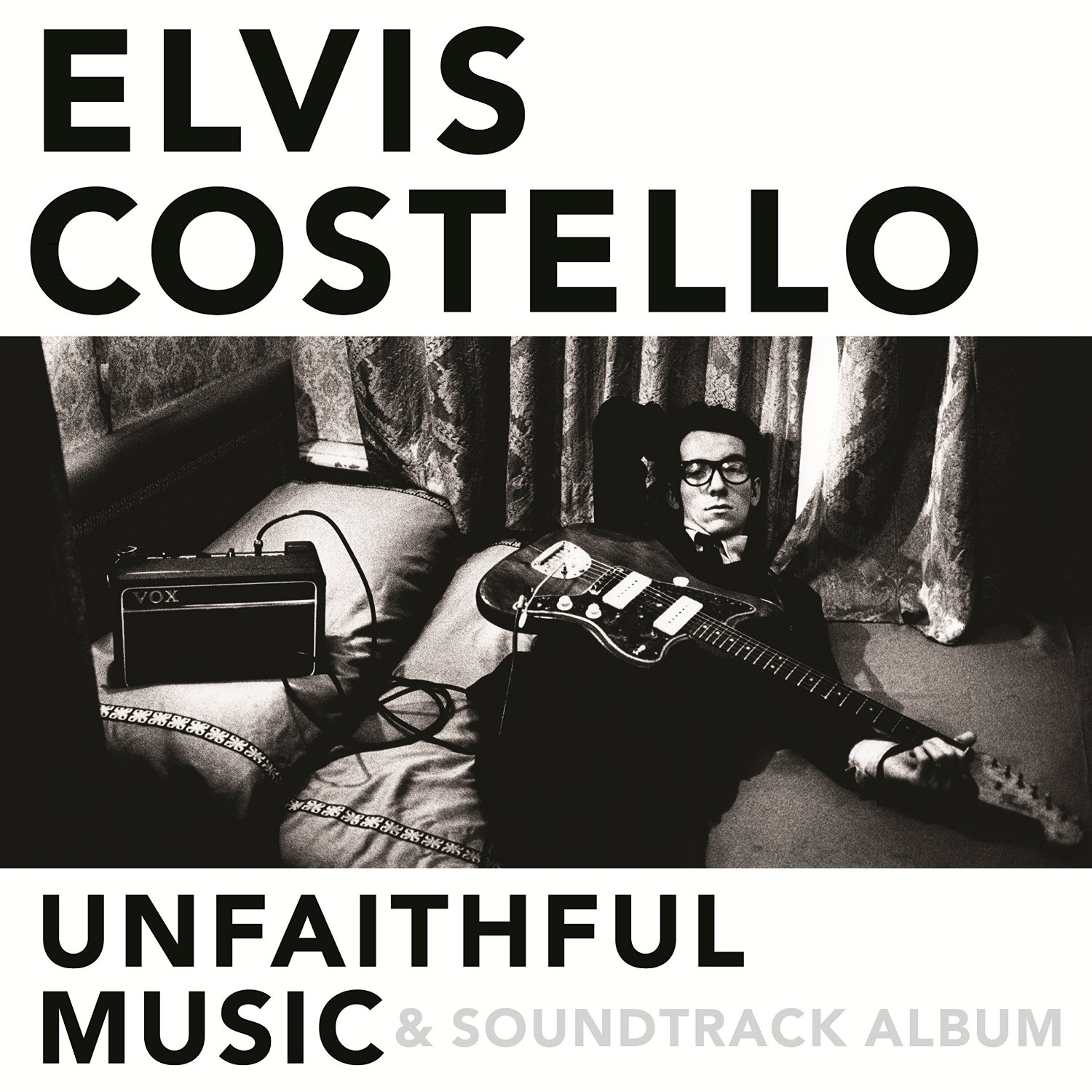
Elvis Costello 33: Unfaithful Music

Fans who’ve devoured his liner notes, interviews and magazine articles over the years know that Elvis Costello doesn’t always let the truth get in the way of a good story. For example, the manor of opulent decadence depicted in “Man Out Of Time” has been said to have been inspired by the stand-in for Buckingham Palace in the Beatles’ Help!, the house where the Profumo affair occurred, and in Unfaithful Music & Disappearing Ink, his official autobiography, the location where he filmed the promo clip for “Good Year For The Roses”. He admits such embellishment elsewhere, such as how his anecdote about himself, his parents, and the cat all took notice the first time “Penny Lane” played on the radio. (His parents had already split up by then, and they no longer had a cat.)

Still, Unfaithful Music & Disappearing Ink is an engrossing read, diverting from chronology just when you think it’s going to stay linear. Moving around from era to era actually works, using stories about his father’s musical career and his grandparents’ wartime travails to spur other memories and accounts. While he insists that he was never a confessional songwriter, and he doesn’t explain the genesis of all of his most famous songs, key lines do pop up in unexpected places, and when he explains how a cashier at a grocery store inspired “Alison”, you believe it.

The author himself narrates the unabridged audiobook, breaking into accents or impersonations when the text calls for it. While often accused of being pretentious or glib, even by his own fans, it is sometimes heartbreaking to hear him recount his own infidelities, weaknesses, and failures, as well as those of his father, just as his excitement over discovering a wonderful record in his youth and encountering musical heroes in his adulthood is real. Much of his early image is ascribed to a character he found himself playing, thinking that “bad” behavior would cause people to leave him alone to do his work. In the end, only the sales charts left him alone, and he spent the second decade or so of his fame immersed in self-loathing and recrimination for the damage he did to his first wife and their son. Having survived all that and still allowed to make music, he seems grateful for his family and friends, and slings very few arrows at any remaining grudges.

A narrative that references so many songs demands a musical companion, and some stalwart individuals have gone so far as to curate Spotify playlists that cover every band and artist mentioned. The author wisely compiled a two-CD set, Unfaithful Music & Soundtrack Album, that touches on many of the compositions discussed in the book. As it includes most of those hit songs from earlier best-ofs, it could be considered a rehash of Girls Girls Girls, the Costello-curated double disc from 1989 that pulled in tracks from his first decade with the Attractions. This one isn’t quite as random chronologically, but it does sample nearly every one of his albums, with only a few alternates to deviate from the typical. Those of us purchasing yet another disc with “Alison” and “Watching The Detectives” will shoot right to the end of the second disc for “April 5th”, a surprising collaboration with Roseanne Cash and Kris Kristofferson, and “I Can’t Turn It Off”, a demo from 1975 with lyrics that would end up in “Watch Your Step” and “Sulky Girl”. A hidden track features so-called “Sketches” from the memoir, anecdotes about Paul McCartney, Lou Adler, and the Royal Albert Hall left out of the manuscript. But as Costello compilations go, this one has more purpose than most others. And of the songs chosen, there’s nary a clunker to be skipped.

Elvis Costello Unfaithful Music & Soundtrack Album (2015)—4

Friday, January 15, 2016

Bob Dylan 60: The Cutting Edge

Nearly a generation after it began, Bob Dylan’s Bootleg Series continued to answer the dreams of fans, while adding to their nightmares. For the third year in a row, the compilers confounded all expectations, upping the ante each time.

In the annals of rock, the 18 months of creativity that resulted in Bringing It All Back Home, Highway 61 Revisited and Blonde On Blonde (as well as, by extension, the performance still referred to as the Albert Hall concert) are paralleled by few other artists. Outtakes from those albums have already been highlights of previous Bootleg Series installments, but now, in an astounding prequel to the complete Basement Tapes, and following three different “anniversary” or “copyright extension” collections, only with a lot more fanfare and easier availability, every recorded note of Dylan’s studio sessions in 1965 and 1966 has been presented to any discerning fan with six hundred bucks to spare. (Knowing full well that 18 CDs of multiple takes are too much for lots of people, there’s a six-CD distillation that still includes the complete evolution of “Like A Rolling Stone”, and a two-CD sampler that whittles 19 hours of tape down to two and a half.)

Unlike the Beatles, or Brian Wilson, who were busy pioneering their own recording techniques on different continents and coasts, Bob viewed the studio as another performance. Every song was recorded live, whether by himself or a room full of musicians. The lyrics would even change slightly, sometimes to match the dynamics of the song in progress. Overdubs or inserts were minimal, so whenever a take broke down, they started from the top. It becomes apparent why many takes were passed over for the ones that made the final cut, and the listener is often frustrated by hearing musicians from fifty years ago not quite getting the sound Bob hears in his head, and we’ve had imprinted on our brains.

That said, when the pistons were firing, Bob could work quickly. Bringing It All Back Home was recorded in three days, most of the first scrapped for later takes, often because they sound too much like Another Side Of Bob Dylan, which he was trying to get past. Two fine outtakes reappear here—“I’ll Keep It With Mine” and “Farewell Angelina”—and we hear his growing impatience with producer Tom Wilson. Amazingly, the false start of “Bob Dylan’s 115th Dream” comes from day one, and tacked onto a band take from a day later. (And while Bob does laugh, the hooting we hear is Wilson.) He was also coming to grips with having a band trying to keep up with him; earlier stabs at “Mr. Tambourine Man” involve a drummer. Much time was spent on “If You Gotta Go, Go Now” in a bid for a pop hit, wisely left off the album.

Once paired with new producer Bob Johnston for Highway 61 Revisited, he was a little more productive, and that album was recorded in three chunks of sessions. He never did figure out what to do with “Sitting On A Barbed Wire Fence”, which always sounded like a pale copy of “Outlaw Blues”, but at least he found the germs of other lyrics in it. It’s nice to hear “Queen Jane Approximately” before the guitar went out of tune, and fun to hear everybody crack up at the first use of the police whistle on “Highway 61 Revisited”. We get to experience “Desolation Row” as it passes through several rock arrangements, any of which are worthy of the final product.

The guys soon known as The Band were part of the first sessions for Blonde On Blonde, where things like “Jet Pilot” and “I Wanna Be Your Lover” were begun and abandoned. A couple of rocky “Visions Of Johanna” attempts still have promise, but a frustrating day spent on “She’s Your Lover Now” pretty much guaranteed why Bob never went back to it (though a few piano-based rehearsals predict the arrangement of “Dear Landlord”). Only Robbie Robertson was brought to Nashville, where local guys (directed by Al Kooper, or so he’d have us believe) helped whip the rest into place. Even that wasn’t easy going, as too many misfires on “Leopard-Skin Pill-Box Hat” prove, particularly the ones with the knock-knock-car horn-“who’s there” intro. Even “I’ll Keep It With Mine” was still in the running at this point, but ignored once “Sad-Eyed Lady Of The Lowlands” arose. Amazingly, six of the album’s 14 songs were nailed in the final 25-hour session.

The final disc of the massive set is devoted to hotel room recordings, as depicted in D.A. Pennebaker films of the time; the segments from 1966 are fascinating, with Bob finding his way through song ideas with Robbie. And those who bought the big package got an added bonus via download: 50th Anniversary Collection 1965 presented another 15 hours of music in the form of ten acoustic concerts, four partially electric concerts (including Levon Helm on drums before he bailed) and other performances. The two-CD “best of” will leave you wanting more, so the six-CD set just might fill the average appetite.

Bob Dylan The Cutting Edge 1965-1966: The Bootleg Series Vol. 12 (2015)—4

Friday, January 1, 2016

Jam 10: Box Sets

The rise of Britpop in the ‘90s got some people thinking about The Jam, at least in the UK, where Paul Weller was still somewhat popular. This was also an era when box sets abounded, and one arrived just in time for the band’s 20th anniversary.

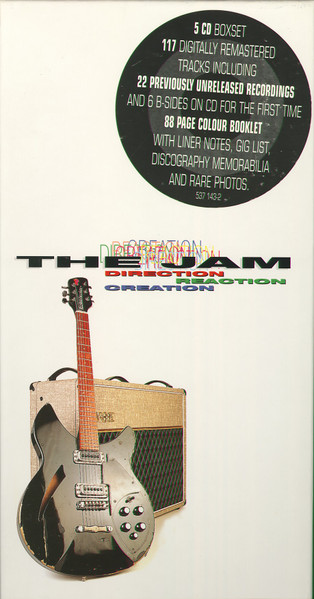
Direction Reaction Creation crams their entire studio output onto four discs, with a fifth CD full of unreleased material. The first four discs are sequenced in rough chronological order by release date, so any singles released ahead of time throws off the flow of some of the albums proper. Still, the set just has to begin with both sides of the “In The City” single, and you can’t complain when their first two albums fit onto the first disc, along with the rare “Carnaby Street” B-side.

Disc two presents the build-up and aftermath of All Mod Cons. We can hear the growing pains in the B-sides “Aunties And Uncles (Impulsive Youths)”, “Innocent Man” and “The Night”, before they hit their stride with a string of excellent singles. This disc ends with “The Eton Rifles” (and its B-side, “See-Saw”), which takes something away from disc three, devoted to the remainder of Setting Sons and Sound Affects—plus, hello hooray, “Liza Radley”. That’s three strong discs in a row, and since we’re one of those who didn’t love The Gift, disc four doesn’t get as much play, particularly with the 12-inch single version of “Precious” taking up six precious minutes, and the un-Jam-like covers issued as B-sides.

All of disc five is previously unreleased, so you still have to hold onto Extras. Most of this disc are studio demos of songs recorded better later, though a “So Sad About Us” that predated the first album is pretty tight. “Worlds Apart” and “Walking In Heaven’s Sunshine” are otherwise unheard tracks, “Rain” a carbon copy of the Beatles’ track, “Dead End Street” a piano rendition of the Kinks song, and another demo of “A Solid Bond In Your Heart” provides an up conclusion.

Being limited to studio material, Direction Reaction Creation does miss out on a few alternate single mixes, as well as a few of the live tracks issued as B-sides. Some of the off compilations included these, but it was 18 years before the other half of the picture was filled in. Fire And Skill presented six complete concert appearance, from each of the years from 1977 through 1982—four in London, one in Reading, and one all the way up in Newcastle.

Some of the tracks have already appeared on Dig The New Breed or Live Jam, but such canonical repetition can be forgiven. Three B-sides came from the 1977 show, so it’s good to have “Bricks And Mortar” (pronounced “moe-uh” each of the three times it appears in the set, one of which segues into “Batman Theme”) and their covers of “Back In My Arms Again” and “Sweet Soul Music” in context.

The first voice you hear is that of John Weller, Paul’s dear departed dad who roadied for the band and introduced every gig. Particularly through the first five shows, the band is tight, democratic and gracious. A horn section creeps in on the fifth, providing a transition to the keyboards and backup singers added for their final shows. The Wembley gig, one of several from the last days of the band, was recorded well, but the guitar and bass are off pitch with each other—one of the pitfalls of playing arenas instead of theaters or clubs.

Sure, some songs appear in multiple renditions (some as many as three and two in four), and the title had already been used in the ‘90s for a tribute album, but Fire And Skill is a worthy, and long overdue bookend to this terrific band’s career. In the absence of a reunion, it will stand. (Two years later, the 1977 box offered the first two albums plus “All Around The World” and “Carnaby Street” remastered on two short discs, 25 minutes of demos—six of eleven unreleased, the other five also on the first box—on another, previously released John Peel sessions plus an unreleased concert on another, and a DVD of promo clips and TV appearances. And a bunch of prints, possibly to justify two discs of music spread across four.)

The Jam Direction Reaction Creation (1997)—4
The Jam
Fire And Skill (2015)—4
The Jam
1977 (2017)—

Friday, November 20, 2015

Neil Young 51: Bluenote Café

The ‘80s are usually dismissed as Neil Young’s lost years, in which he spent much of his musical time chasing trends or avoiding them, while still immersed in technology. Most of the resulting albums were underwhelming, with otherwise decent songs at the mercy of questionable production.

The Bluenotes phase confused people, and not only because he chose a band name that was both affiliated with somebody else, and not exactly a somebody known for guitar-based blues with slick horns. Neil changed the band’s name to Ten Men Workin’, after the first song on This Note’s For You, and while the rhythm section would return a few times in the future, the album remains unique in the catalog.

But as he’s proven before, it’s all one song, and hindsight has been very kind to some of his less successful experiments. In a rare case of revisionism, the band now called Bluenote CafĂ© is celebrated with its own installment in his Archives Performance Series, and a double disc to boot. Where the album was a challenge, Bluenote CafĂ© presents two and a half hours of music in two sets, giving plenty of room for the band to stretch, and the songs to breathe.

The music comes from three stages of the Bluenotes era—a couple of shows when Crazy Horse was augmented with a horn section, a club tour with the established band on the album’s release, and then a shed tour later in the summer. In addition to most of This Note’s For You, several songs make their first album appearance, and a few other rarities help round out the picture. “Welcome To The Big Room” is something of a theme song, in a band that had several. “Don't Take Your Love Away From Me” translates well from the Shocking Pinks, “Hello Lonely Woman” is given a jolt of energy compared the pre-fame demo, and “Soul Of A Woman” is otherwise similar to the one on A Treasure but for the horns. A true highlight of the first set is “Bad News Comes To Town”, a terrific soul burner that uses the extra players as part of the dressing.

“I’m Goin’” was buried on the B-side of “Ten Men Workin’”; though this is a later recording, it’s still a one-chord song with the same horn parts, but plenty of guitar. “Ordinary People” sounds much better in this context, with Ben (or Poncho) yelling along instead of Neil’s overdubbed asides. “Crime In The City” (not to be confused with “Life In the City”) adds a little more edge than the one that made it to Freedom, with different but not all of the verses from the song’s original epic length. Here’s it’s followed by “Crime Of The Heart”, a fairly simple idea with more complicated chords than Neil usually plays. “Doghouse” is pretty stupid, but that didn’t stop Pegi from covering it a few years ago. “Fool For Your Love” is tighter than the Road Rock version, yet still sterile.

In the encore section, exactly two songs come from previous albums: “On The Way Home”, with the horns playing the arrangement from the Buffalo Springfield recording, and “Tonight’s The Night”, stretched to 20 minutes but still managing to be the best performance of the song above the rest.

People who chronicle this stuff will tell you that there is more music from this era to be heard, and maybe a future Archives box will have more. For now, Bluenote CafĂ© helps to prove that Neil’s best work of the decade was on stage. And just as with A Treasure, it helps whet the appetite for further installments.

Neil Young and Bluenote CafĂ© Bluenote CafĂ© (2015)—

Friday, November 13, 2015

David Bowie 37: Five Years

Every couple of years it seemed somebody would come up with another reason to remaster some element of the David Bowie catalog, sometimes as part of an anniversary, or sometimes just because. This time, it appears the people in charge wanted to streamline things somewhat, and thus began the third major overhaul of what we’ll call the RCA catalog.

Five Years is a handy title for a set that covers the initial trajectory of Bowie stardom, starting from the Space Oddity album through Pin Ups, which bade farewell to the Spiders From Mars. Six albums are presented in their original sleeves and sequences, complete with replica labels and inner sleeves, with all but Ziggy Stardust and Aladdin Sane getting modern sonic overhauls. A nice book includes new notes and reproductions of contemporary reviews and ads, and somebody felt it necessary to include the Ziggy Stardust album a second time, in its 2003 mix by original co-producer Ken Scott, which most fans apparently hated. (The alternate cover art nicely credits Rick Wakeman and Dana Gillespie for their contributions to “It Ain’t Easy” for the first time.)

Because they were both official albums, Live Santa Monica ‘72 and the Ziggy concert soundtrack fill in the picture further. While similar in setlist, they show the difference nine months made; the earlier show leaned more on Hunky Dory since Aladdin Sane was still in progress, while by the time he got to the Hammersmith Odeon, he’d become a sensation. (Personally, the earlier show is a little more intimate, and less flashy, but just as powerful when the band is playing full speed.)

Because the albums didn’t tell the whole story, two extra discs dubbed Re:Call 1 helped to mop up many of the period’s standalone singles, B-sides, and single edits. They’re in chronological order, making it easy to track the progress from “Space Oddity” through such alternates as “The Prettiest Star” with Marc Bolan, the Arnold Corns versions of two Ziggy songs, and both versions of “John, I’m Only Dancing” and “Holy Holy”. Nothing recorded before 1969 is included, and a handful of songs from the same period that had been bonus tracks on the Ryko CDs and/or other anniversary reissues are MIA, to more gnashing of teeth.

What helps, of course, is that these albums were so good to begin with. This era is one that most Bowie fans agree brought out some incredible music, and that fact becomes even more astonishing when it’s all heard together. Unless one has everything already, it’s a great place to start.

David Bowie Five Years 1969-1973 (2015)—4

Tuesday, November 3, 2015

Keith Richards 4: Crosseyed Heart

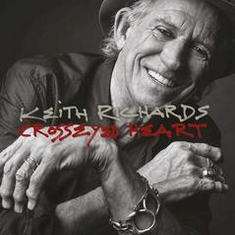
Decades after the mid-‘80s derailment and subsequent realigning of the Stones, both Mick and Keith have kept their solo output minimal. But on the four studio albums plus the handful of new songs stuck onto anniversary compilations, Keith’s lead vocals have generally been the standouts, and the songs that have endured. Being allowed a regular outlet likely tempered his need to record on his own, but perhaps the Stones’ reliance on older material played live to cash in on whatever anniversary they were celebrating inspired him to call Steve Jordan and reunite the X-Pensive Winos.

However, while a Keith vocal is generally a welcome respite from Mick, Crosseyed Heart doesn’t prove that all Keith, all the time is the answer. Cut down to maybe ten songs, the album would be much stronger.

The title track is an engaging snippet of acoustic blues, right down to its charming conclusion. “Heartstopper” and “Trouble” pile in like you hoped they would. “Robbed Blind” is something of a country weeper, complete with pedal steel and Keith himself on piano. (We checked the credits, thinking it just had to be somebody else.) “Nothing On Me” could be a single in another era, though the lead guitar going throughout should have been pulled back a bit. He goes all out reggae on a cover of “Love Overdue”, giving up a lyrical influence for “All About You” in the process. Late saxman Bobby Keys is featured on “Blues In The Morning”, a great blast of Chuck Berry via Chicago, while “Illusion” gets a surprise lift from Norah Jones. Towards the end of the album, “Substantial Damage” bubbles with funk and “Lover’s Plea” melds reggae and soul.

That leaves “Amnesia”, “Suspicious” and “Something For Nothing”—good, but not up to the level of their brothers. Likewise, “Just A Gift” is one slow song too many. While he avoids the clichĂ© of closing with “Goodnight Irene”, this albeit pleasant rendition doesn’t add much to the song’s history.

Again, most of Crosseyed Heart is enjoyable, and if it scares Mick into rocking out again, then maybe we haven’t heard the last of the Stones. And since there’s no better place to mention it, even a casual listen to what passes for country music these days reveals a debt to Keith’s riffs. Whether it’s a guy with a twang or a blonde with a yodel, today’s country sounds like either a Stones ripoff or pancakes and sausage.

Keith Richards Crosseyed Heart (2015)—3

Friday, October 23, 2015

Joe Jackson 19: Fast Forward

Never too far from a concept, Fast Forward presents Joe Jackson in four different cities, represented by four songs each, recorded by a unique band in each, originally envisioned as four EPs but approximating four sides. For the most part, the location is moot, since there’s only the occasional arrangement unique to Amsterdam or Berlin that wouldn’t work in New Orleans or New York.

New York was the birthplace of Night And Day and Body And Soul, and echoes of those albums can be detected in this section. Bill Frisell and the great Graham Maby feature in here, the title track and “If It Wasn’t For You” both nice examples of pop-rock. Something of a departure comes in his reworking of Television’s “See No Evil”, which turns the riff on itself and gives Frisell a chance to stretch. “Kings Of The City” brings it back to a cool Steely Dan vibe.

It’s a seamless jump to Amsterdam, where he’s joined by a drummer, a keyboard player and some strings. “A Little Smile” is excellent pop, but a 14-year-old kid sings the first verse on “Far Away”, presumably due to Joe’s addiction to guest vocalists, making an already unsettling song more uncomfortable. “So You Say” doesn’t provide much uplift, but moments of “Poor Thing” in between the horns do.

Berlin brought us Rain, so luckily the only track suggesting oom-pah music and Joel Grey is his translation of “Good Bye Jonny”. Or maybe the ECM-flavored intro of “If I Could See Your Face” counts too, but that goes on to a more sinister rock sound complete with F-bomb. “Junkie Diva” suggests the death of Amy Winehouse, without mentioning her directly, while “The Blue Time” is a pretty, seductive ballad.

Rock drums resurface in New Orleans, right away on the alternately galloping and driving “Neon Rain”. “Satellite” seems to stop and start, while “Keep On Dreaming” sports horns, mostly sounding like side three of Big World. And it takes a lot of grapes to end an album with a song called “Ode To Joy”, much less quote the melody, but as far as his finales go, it’s a good one.

Fast Forward is a long album, and there are certainly tracks over which one might feel compelled to fast-forward. But better he writes straightforward songs (for him) than laboring over a Broadway show, pseudo or otherwise.

Joe Jackson Fast Forward (2015)—3

Tuesday, October 20, 2015

David Gilmour 4: Rattle That Lock

Having put the band to bed, anything David Gilmour does under his own name will likely never enjoy any wider audience than Pink Floyd fans. That’s probably fine with him, as evidence by most of his quotes in the interviews given to promote Rattle That Lock. However, those concerned that he got all the Floyd out of his system with The Endless River needn’t be concerned.

Now that he’s truly on his own, he relies on wife Polly Samson for most of his lyrics, but he also knows people come to hear his guitar. “5 A.M.” is something of an instrumental overture, just like every album he’s put out since 1987. It sets a classic mood, unfortunately jarred awake by the title track, which bases its hook on a jingle used in the French railway system. (No, really.) It’s a little too funky for this album, but no worse than “Blue Light”. “Faces Of Stone” revives the Dylanesque strum that Roger Waters used all over his solo albums, and that unfortunate calliope that always sounds like a scary carnival came to town. “A Boat Lies Waiting” is something of a tribute to Richard Wright, using what sounds like one of his piano themes, and a snippet of his own voice before the song proper begins. Harmonies by David Crosby and Graham Nash add to the etherealness, if that’s a word. A tempo returns for “Dancing Right In Front Of Me”, not quite jazzy enough to be jazz, and too gloomy to be jaunty. An inspection of the credits reveals the man himself on piano, and a nice job too.

His son plays piano on “In Any Tongue”, another near dirge elevated by every chorus. “Beauty” continues the general tone with an upbeat instrumental featuring his trademark slide guitar, and very different from what comes next. After the hint of jazz in the first half, “The Girl In The Yellow Dress” is the sound of a small combo in a smoky club, with Jools Holland on piano and Robert Wyatt on cornet. A churchy organ and a choir open “Today”, but a groove interrupts and provides a more rocking tune. Finally, “And Then…” brings the album full circle, with a different arrangement of the opening track, ending with the sound of a crackling fire.

As might be expected, Rattle That Lock improves with familiarity, but that also shows what time has done to his voice. It’s not just the high notes he can’t hit; the rasp suggests a melancholy only hinted at on his last solo album. It’s not a masterpiece, and far from, but at 69 years old, we should be so lucky to still have him.

Just as he did a decade before, a massive tour followed the release of the album, and then a live CD/DVD or Blu-ray combo followed in several permutations. The big gimmick this time was a live performance in Pompeii, in front of an actual audience as opposed to the empty theater, where Pink Floyd had filmed a concert 45 years before. Once again the set leans on the newest album, with a smattering of Floyd epics, and despite some repetition it’s a generally different setlist than the last go-round. (“The Great Gig In The Sky”, included in tribute to Richard Wright, has three vocalists to make up for the one on the record, and it doesn’t work.) People who care about such things will note the inclusion of hired guns Greg Phillinganes and Chuck Leavell on keyboards; Davis is also in slightly stronger voice throughout than he was on the album.

David Gilmour Rattle That Lock (2015)—3
David Gilmour
Live At Pompeii (2017)—3

Tuesday, October 13, 2015

Beach Boys 29: Love & Mercy

One of the better musical films of recent years was Love & Mercy, which purported to tell of the romance between Brian Wilson and his current wife, against the backdrop of the power struggle between Brian’s demons and Dr. Eugene Landy (played with typically bewigged yelling by Paul Giamatti, who’s made a career out of wearing wigs and yelling), juxtaposed with flashbacks to the Pet Sounds era.

The role of Brian was split between young Paul Dano, whose bowl cut helped accentuate the fragility, and John Cusack, who doesn’t really look like Brian but manages to command attention. (We predict that one day he’ll get all the quirky roles that Bill Murray is mastering now.) Much like I’m Not There, which split seven perceived facets of Bob Dylan’s personality between seven actors, it’s best to appreciate the film for capturing the mood and setting of the ‘60s and ‘80s. Besides, most people going into the theater likely knew the ending anyway.

To that end, the recreations of the studio sessions were said to be highly accurate, and the actors chosen to play the other Beach Boys were also believable, both in their befuddlement over Brian’s condition and Mike Love’s frustration at his cousin’s quirkiness. And we have no trouble watching Elizabeth Banks do anything.

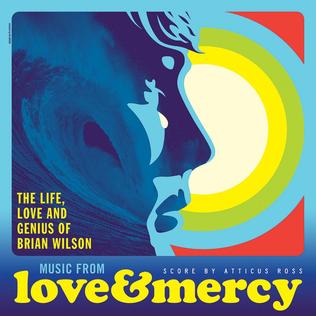
So while it’s not really a Beach Boys movie, the eventual soundtrack album had to include music originally credited to them, and it does, but there’s more. The score can be best described as an ambient mashup; composer Atticus Ross weaves in elements of dozens of Beach Boys tracks sourced from the original master tapes to paint a sonic mural of Brian’s head. While often illustrating edgy scenes, the effect is more hypnotic than unsettling (except when some dialogue creeps in).

If anything, the inclusion of the well-known recordings of “Don’t Worry Baby”, “God Only Knows”, and “Good Vibrations” distract from the effect of the score. However, Paul Dano’s hesitant rendition of “God Only Knows” and the live recording of the real Brian Wilson singing the song from which the film took its title (both depicted in the film) provide context and closure, respectively. We don’t even mind “One Kind Of Love”, a song from Brian’s most recent solo album, which works as accompaniment to the closing credits.

Just as most viewers were already Beach Boys fans, they probably also have the music that the film shows being created. This album makes a nice bonus feature on the music’s history, and the magic of programmable CD players and iTunes playlists can isolate the new montages.

Atticus Ross Music From Love & Mercy: The Life, Love And Genius Of Brian Wilson (2015)—3

Friday, September 18, 2015

Ben Folds 14: So There

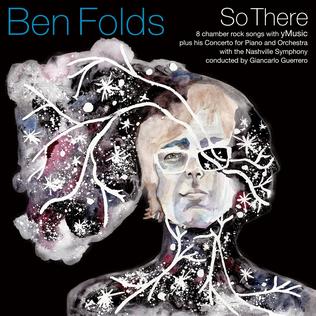
String accompaniments have been features of every Ben Folds album, going back to his first with the Five. So it shouldn’t be a surprise that each of the new songs on So There are all accompanied by an ensemble called yMusic, who provide strings, wind and brass accordingly.

With one exception, most of the songs are opaque lyrically, with an overlying effect of melancholy, even on the upbeat ones. “Capable Of Anything” can’t decide if it’s an apology, a rejoinder or a pep talk, and we’re dying to know who inspired the molasses-slow “Not A Fan”. The title track is the most complex, with its lightning piano runs and extended bridge. “Long Way To Go” is a completed version of a snippet dating back to the fake leak of Way To Normal, and the backing to “Phone In A Pool” sounds like something he’s written before. There’s an odd juxtaposition of references in “Yes Man”, which mentions both “click and drag” and a Fotomat; something the amateur photographer in Ben likely meant intentionally. Of course, Mr. Locker Room returns for “F10-D-A” (“with a big fat D… C what it’s like to B”), which is musically interesting, but the joke doesn’t survive the first verse. “I’m Not The Man”, written with actress and former paramour Alicia Witt, is another sad song in a string of several.

That’s just half of the album, and a setup for his very first completed “Concerto For Piano & Orchestra”. Commissioned and performed by the Nashville Symphony, this three-movement piece sounds very American to these ears, and anything with a prominent piano is going to be compared to “Rhapsody In Blue” anyway. Unlike other “rockers do classical” pieces, such as by Paul McCartney, Elvis Costello or Joe Jackson, this piece doesn’t try to marry the genre, nor is it obvious that it’s written by someone without a classical background. So for that, it works.

The listener is left thinking of such low-key conclusions as “Boxing”, “Evaporated” and “The Luckiest”—all nice songs, but an album full of them needs variety. So There lacks a really standout hook, but at least he’s not repeating himself. Too much.

Ben Folds So There (2015)—3

Tuesday, July 21, 2015

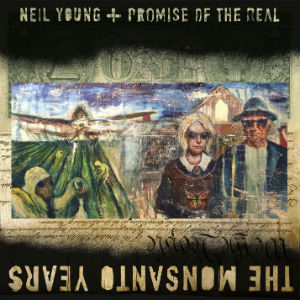
Neil Young 50: The Monsanto Years

Without fail, Neil managed to find things to do instead of releasing the next big box installment of his Archives. Between writing books and chasing his other hobbies, he was still writing songs, recording them and releasing them. But once he gets obsessed with something, we’re going to hear about it, such as when he’s extended his concern for the family farmer into contempt for corporate greed in general. Ecological concerns are nothing new for him, nor is naming names (“Ohio”, anyone?), but in his life phase as a cranky old man he’s focused on complaining.

On the surface, The Monsanto Years looks like another concept album nobody asked for, like Living With War or Fork In The Road. Whatever the subject matter, it’s only going to work if the music can rise to the occasion. For the most part, the album does. His co-conspirators this time are Promise Of The Real, a combo featuring two of Willie Nelson’s sons, who provide a sloppy, Crazy Horse-style backing. (Think Mirror Ball, which was recorded with Pearl Jam, but with more musical variety.) Lukas Nelson takes most of the lead guitar breaks, and he’s definitely been influenced by his frontman, while brother Micah occasionally puts a bow to the neck of his own Gibson.

Wisely, the album starts with a more universal message in “A New Day For Love”, followed by the Harvest Moon-style strum of “Wolf Moon”. Neil’s voice is more cracked than ever, trying to hit notes he’ll never get. “People Want To Hear About Love” acknowledges the resistance he’ll likely face for these songs, and here’s where the brand names start to pile up. “Big Box” doesn’t feel like eight minutes here, balanced as it is with cool changes and a few hooks.

“A Rock Star Bucks A Coffee Shop” is a happily stupid stomp with a whistled theme, while “Workin’ Man” comes from another part of the same barn. “Rules Of Change” breaks up the tirade with some welcome poetic metaphors, Neil harmonizing against his own creaky voice. “Monsanto Years” is played in two keys, both too high for Neil to sing, and this is likely where dissenting ears will have had enough. Which would be their loss, as “If I Don’t Know” closes the program with a more personal, less political rumination, framing the album nicely.

The best thing about The Monsanto Years is the band, who support him ably, but one gets the impression they’re pretty tickled to be smoking weed with their grandpa. Neil’s stable of go-to musicians had been fighting losing battles with mortality lately, and while we’re still waiting for our phone to ring, it’s good that he’s looking for a musical spark outside of his norm. However, a little condensing, time to polish, and much less repetition would have helped keep it from being written off as another distraction.

Neil Young + Promise Of The Real The Monsanto Years (2015)—

Friday, July 10, 2015

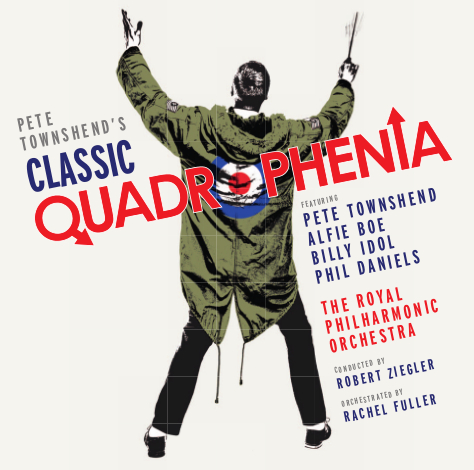
Pete Townshend 14: Classic Quadrophenia and Truancy

Back in 1972, The Who’s Tommy album was re-recorded and staged in an orchestral arrangement with an all-star cast. By the time it was recorded a third time with a different cast for the film, Pete Townshend had already spent 18 months putting together the band’s second released opera, Quadrophenia. While it never had the mainstream profile that Tommy has perpetuated, no thanks in part to the first work’s eventual Broadway success, Quadrophenia is the album that resonates more with Who freaks, and likely reminds its author less of his own troubled childhood.

Still, there’s plenty of gold in those hills, and as the band learned once they started performing it again in the ‘90s, technology has enabled them to recreate the album live on stage. Now that he lives with a classical arranger, it was easy for Pete to spearhead an orchestral version of the album.

Pete Townshend’s Classic Quadrophenia (the composer having fallen to Paul McCartney’s tendency to put his own name within the title of a piece) is faithful to the original recording, except that there are no electric guitars, bass or drums. The elaborate synthesizer parts have been replicated and expanded by the orchestra and choir, and Jimmy’s lead vocal is tackled by one Alfie Boe, an operatic tenor (born the year the album first came out) who’s obviously studied Roger Daltrey’s parts closely. Pete himself sings the part of The Godfather, careful not to try the high note on “stutter”, while Phil Daniels, who played Jimmy in the film, appears twice in lines attributed to the dad. And Billy Idol, who was in the all-star performances in 1996, shows up four times as the Ace Face slash Bell Boy.

As the album was deemed “ineligible” for the classical charts, it will remain to be seen if this new incarnation will be anyone introduction to the music, and where that may lead. If you like the original, you won’t hate this, but you’ll likely play the original several times before even thinking about throwing this on.

Shortly thereafter, in advance of another threatened solo catalog overhaul, Pete released his second “hits” album, only two decades after the first one (and one decade after a double-disc anthology) and a period of time in which he released virtually no new solo material. Truancy runs chronologically and repeats about half of the original set, ignoring some fan favorites and the one “new” song included then. While some of the substitutions are debatable, any Pete album called “very best of” that doesn’t have “Slit Skirts” is false advertising, plain and simple. That said, the songs are pretty great, with the Scoop version of “You Came Back” a surprising inclusion. But the key selling point is the two new—yes, brand new—songs designed to entice the gullible. “Guantanamo” is further proof that he needn’t be political to be musically entertaining, and “How Can I Help You”, with its opening motif reminiscent of “Cut My Hair”, is suitably empathetic, and the kind of thing we wish he’d get off his duff and do more of already.

Pete Townshend Pete Townshend’s Classic Quadrophenia (2015)—3
Pete Townshend
Truancy: The Very Best Of Pete Townshend (2015)—

Friday, March 27, 2015

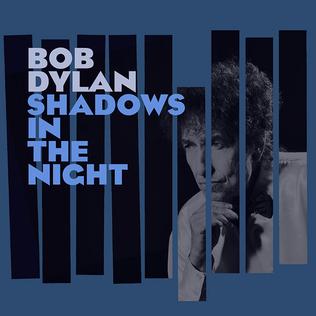
Bob Dylan 59: Shadows In The Night

Just when we think we’ve reached saturation on established artists reinterpreting the Great American Songbook, here comes another. The easy go-to concept for Shadows In The Night is that it’s Bob Dylan singing Frank Sinatra. While these songs are certainly associated with Frank, it’s safe to assume Bob’s familiar with other versions. However, a comparison to Frank’s recordings proves that those arrangements are the ones that Bob’s band labored to replicate to scale.

Seeing as Frank co-wrote “I’m A Fool To Want You”—and it’s still considered to be an ode to Ava Gardner—there’s no escaping the connotation. Here, with the barest echo of brass in the back of the mix, it’s a close cousin to the lovelorn music of Time Out Of Mind. The same goes for the weariness in “The Night We Called It A Day”, but the theme switches for “Stay With Me”, which, despite the assumption of the title, is actually something of a hymn. He sounds shakiest here, but still believable. “Autumn Leaves” is one of the shorter tracks, the bulk of it devoted to the intro, and you can just hear the guitar mimicking the wind in between the lines of the first verse. “Why Try To Change Me Now” effectively sums up his entire career, delivered with more of a shrug than a sob.

Familiarity with such oft-heard chestnuts can only inspire comparisons, so it’s hard to approach tracks like “Some Enchanted Evening” and “What’ll I Do” with complete objectivity. Let’s just say that the middle-eight of the latter should have been phrased a little tighter than he has. “Full Moon And Empty Arms” is the oldest song here, adapted from a Rachmaninoff melody, and some of those off notes are actually part of the original, proving his ear is spot on. “Where Are You?” was the title track of a Sinatra album that included three others of the songs here, and again, Bob nails it. Saving the best for last, “That Lucky Old Sun” is more associated with Ray Charles, or at least is was when Bob first started playing it three decades ago with Tom Petty and the Heartbreakers. Without the Queens of Rhythm, it’s even better here.

As noted, the band is terrific throughout Shadows In The Night, and Bob wisely doesn’t strain his voice past the point of tolerance. Recorded at Capitol Studios (the host, coincidentally or not, of such recent albums as Paul McCartney’s standards set, Neil Young’s orchestral experiment, and those updated Basement Tapes) with just a few mikes, you can hear his wheezy breath between the occasional verses. Most reports agreed that these weren’t the only songs recorded during the sessions, suggesting—dare we dream—the possibility of a sequel. One should always expect a curveball when Dylan’s on the mound.

Bob Dylan Shadows In The Night (2015)—