Showing posts with label bob weir. Show all posts

Tuesday, June 27, 2023

Bob Weir 4: Bobby & The Midnites

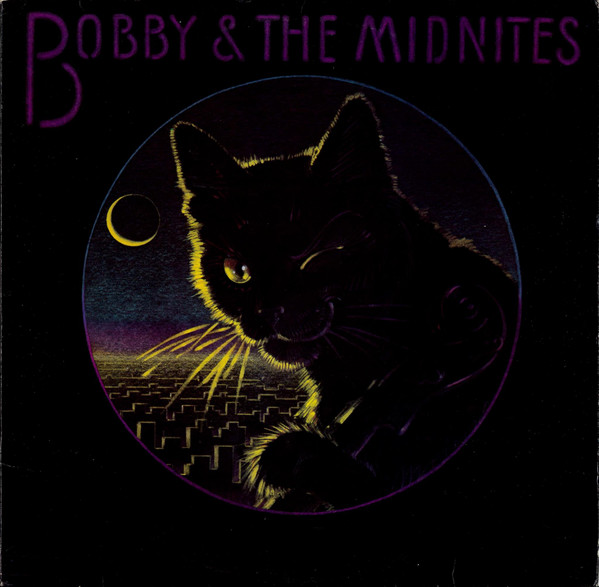
Always the poppiest of the Dead, Bob Weir took advantage of another break between albums to work with a side project to explore that tendency. Along with onetime Kingfisher Matt Kelly and new Dead boy Brent Mydland, he recruited Alphonso Johnson and Billy Cobham, both veterans of fusion outfits, and one Bobby Cochran, who’d been in a recent incarnation of Steppenwolf and happened to be the nephew of Eddie Cochran. While the label of their first album was careful to state “featuring Bob Weir”, it was credited to Bobby & The Midnites.

The music is more straightahead rock—and faster—than most Dead albums, and Billy sure knows how to hit cymbals. “Haze” is a fun boogie from the start with a nice chant from the band. Bob uses his Dylanesque yelling-singing hybrid on “Too Many Losers”, but much more tunefully. “Far Away” has some cool chords but descends into an easier singalong, with lots of space for Brent to explore his Hammond B-3. There’s a sharp left turn on the reggae cover “Book Of Rules”, and “Me, Without You” is typical early-‘80s tense rock fodder. “Josephine” is mostly a vehicle for Matt and Brent while Bob expresses his desire to “rock and roll with you”, then “(I Want To) Fly Away” crams a lot of ideas in, never sure if it’s jazz, rock, or reggae. “Carry Me” is the requisite pretty one, though the choruses have more power that just can’t be contained. For crowd-pleasers, “Festival” sure is a sneaky Jimmy Buffett knock-off.

Bobby & The Midnites was easily the most enjoyable Weir album since his first, which was basically a Dead album anyway. Although it didn’t light up the charts, the band was never more than a way to kill time between Dead tours, and it took three years for a follow-up. By the time of Where The Beat Meets The Street, Kelly and Mydland were otherwise detained, Kenny Gradney of Little Feat replaced Alphonso, a keyboard player who doubled on sax came in, and Jeff “Skunk” Baxter was brought on as producer. Bob took a back seat in the writing and singing categories, resulting in an extremely generic ‘80s soundtrack to a movie we’d never want to see. “(I Want To Live In) America” wouldn’t impress even the most diehard Rambo fan, and “Rock In The ‘80s” is even worse.

Most of the songs were covers, or at least by outside writers; why else would Bob sing about some girl who needs a “Lifeguard”? The techno remake of Marvin Gaye’s “Ain’t That Peculiar” was particularly execrable considered he’d been shot to death by his own father just that year. “Thunder & Lightning” might be better without the atmospheric intro, and “Falling” is half-decent, possibly due to John Barlow’s lyrics, but he was also partly responsible for “America”, along with the guy who played Beef in Phantom Of The Paradise, as well as the dangerous groupie portrait of “Gloria Monday”.

Whatever he’d hoped to achieve with this band was shot to hell in three short years; luckily he still had his day job. Not surprisingly, none of the songs on either album were ever played live by the Dead.

Bobby & The Midnites Bobby & The Midnites (1981)—3
Bobby & The Midnites
Where The Beat Meets The Street (1984)—

Tuesday, October 5, 2021

Bob Weir 3: Heaven Help The Fool

The Dead’s deal with Arista Records allowed members to do solo albums, and Bob Weir was the first to bite. Where his first solo project involved the rest of the band anyway, it seems he had a different vision for Heaven Help The Fool. This time, the musicians included schlockmeister David Foster, Tom Scott, Waddy Wachtel, two guys from Toto, Bill Champlin on his way to ‘80s Chicago, and the guy who played drums in Journey after they booted Steve Smith. Do the math, and you get L.A. smooth.

That’s the prevailing sound from the start. “Bombs Away” is catchy, but there are far too many singers and saxophones in the way of the tune. If “Easy To Slip” sounds like a step in the right direction, keep in mind it’s a Little Feat cover, and that’s Elton John’s rhythm section holding it down. “Salt Lake City” is about as inspiring as the Beach Boys song of the same title, and it didn’t work for them either. Besides, he’s already a little old to be talking about all the pretty Mormon girls he’d like to see there. (As with all the songs that weren’t covers, John Barlow is the lyricist, so blame him.) “Shade Of Grey” moves through what sounds like several keys from verse to chorus, and musically surpasses the gang vocals on every “out in the streets”.

Maybe we’re just dim, but we can’t tell whether the title track is boasting or a warning. And maybe we’re suckers for mush, but “This Time Tomorrow” is a heartbreaker, even with the lush strings. However, in six short years Marvin Gaye could actually roll in his grave in reaction to the limp arrangement of “I’ll Be Doggone”. That makes the generic arena rock of “Wrong Way Feelin’” a relief.

There’s nothing wrong with Heaven Help The Fool except that it’s a departure from the Dead brand. One suspects that given his druthers, Bobby would have preferred a career like Boz Scaggs or Dan Fogelberg had attained by this time, and gladly worked with producer Keith Olsen forever. But for extremely rare occasions, none of these songs would make it to Dead setlists, which is telling.

Bob Weir Heaven Help The Fool (1978)—2

Friday, September 25, 2020

Bob Weir 2: Kingfish

While Jerry Garcia played with a whole pile of people in and out of the Dead during their live hiatus, Bob Weir stuck mostly with a local bar band called Kingfish, fronted by occasional Dead collaborator Matthew Kelly and New Riders of the Purple Sage refugee Dave Torbert. Their eponymous debut came out on the Dead’s Round Records imprint, which was reserved for side projects such as these.

The big shot got to kick off the album, and both “Lazy Lightning” and “Supplication” would find their ways into Dead sets in the future, sometimes in tandem, sometimes not. Bobby also sings lead on “Home To Dixie” and the Marty Robbins outlaw ballad “Big Iron”, later covered by Johnny Cash in the Rick Rubin era. He also anchors the reggae gospel reading of “Bye And Bye”, a Joseph Spence arrangement of the beloved hymn “We’ll Understand It Better By And By”.

In between, the success of the album depends on your tolerance of mid-‘70s country rock. We hear echoes of the Starland Vocal Band with a better guitar player. A few tracks stand out, such as “Asia Minor”, one of a few songs brought forward from an earlier Kelly-Torbert project, and sporting some of the skip-time elements of earlier Dead.

Bob would be back with the Dead soon enough, leaving Kingfish to endure on their own. Matt Kelly would reappear throughout the Dead story from time to time, but outside of this album and a couple live releases, the band’s connection is merely tangential.

Kingfish Kingfish (1976)—3

Friday, October 27, 2017

Bob Weir 1: Ace

Of the Grateful Dead’s front men, Bob Weir was always the most basic musically. His songs had a tendency toward good-time boogie, with no rampant experimental characteristics. It was a good balance for a live show, since the songs were simple enough to learn, but as the only selections on an album, things can get a little dull. Unless, of course, you love to boogie.

Ace is a Bob Weir solo in name only, as the basic band on every track is the Grateful Dead; moreover, it serves as the premiere of new keyboards guy Keith Godchaux, along with his wife Donna on backing vocals. “Greatest Story Ever Told” leaps out of the gate with a war whoop and exactly the type of rhythm Deadheads live for. Thanks to lyrics by Robert Hunter, the story is interesting. “Black-Throated Wind” has a different sound thanks to lyrics from Weir’s friend John Barlow, the stumbly meter, and prominent horn section, but “Walk In The Sunshine” is just plain dippy even for him. “Playing In The Band” had already appeared on the “Skull & Roses” album; here it’s nearly twice as long and more intricate, thanks to the competent piano.

The true hidden gem of the album is “Looks Like Rain”, with its perfectly heartbroken vocal, a complementary pedal steel from Jerry, and a string arrangement of all things. It’s a wonder this hasn’t been covered by more people. It could be because its effect is flattened by the goofy mariachi horns on “Mexicali Blues”—a decent saloon tune, but oh, that incessant “da-dat-dat”. “One More Saturday Night” would also be a band staple; here’s it’s just more boogie in the mode set by “Greatest Story”. With its multi-faceted lyrics and possible interpretations, “Cassidy” makes for a very effective closer.

Take the best parts of Ace and shuffle them with the vocal highlights from Garcia’s solo album from earlier in the year, and you’d have a pretty strong ’72 Dead studio album. Instead, indulgence reigned the day, even for these guys. As it is, there’s enough good on it to outweigh the rest, so it works. (A half-century later, Bob celebrated Ace’s 50th anniversary with two shows where he and his current band played the album in its entirety; one of these was included on the bonus disc of the deluxe reissue.)

Bob Weir Ace (1972)—3
2023 50th Anniversary Deluxe Edition: same as 1972, plus 9 extra tracks