Showing posts with label clash. Show all posts

Friday, August 1, 2025

Clash 9: From Here To Eternity and Shea Stadium

While the Clash’s recorded legacy had been preserved on their albums and a growing number of compilations, their prowess as a live band couldn’t be as easily experienced before YouTube. That finally changed with From Here To Eternity, an hour-long sampler cherrypicked from five years’ worth of professional recordings. (It also worked as a setup for the first grand remastering of the catalog the following year.)

The music moves chronologically through their history, but while the performances themselves are often from different years, the album has an excellent flow, even between drummers. Three of the tracks are alternate mixes (and allegedly overdubbed) of music already heard in the Rude Boy film, and three others come from their legendary 1981 residency at Bonds in New York City. The energy stays up, up, up from the beginning, letting up at the fade after “I Fought The Law”, setting up “London Calling” and “Armagideon Time”, the latter helped out by Mickey Gallagher and Mikey Dread. Paul and Joe swap instruments on “The Guns Of Brixton”, to enable the former to sing while the latter covers his bass part. By that time their music was more hit-oriented, and the audience reaction reflects that. The packaging also included quotes from appreciative fans, along with dubious recording data. If anything, the program should have been twice as long. The streaming version added two songs at the end, which wasn’t enough.

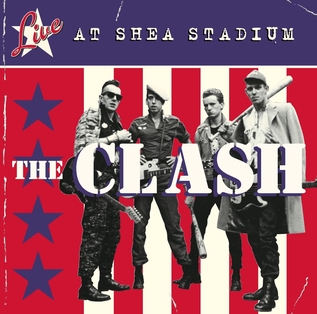
Just one song was included from Shea Stadium, during their stint on the Who’s first farewell tour, and it only took about a decade for their set to be further commemorated. (Even the Who themselves sat on their recordings until 2015.) Beginning with associate Kosmo Vinyl baiting the crowd, they plow into their set, and while there were reports of booing throughout the tour, and asides by Joe about people talking in the audience, the crowd sounds engaged throughout. The band holds themselves well in such a large venue, with no dead air, and only a few acts of defiance, like cutting into “The Magnificent Seven” for a detour through “Armagideon Time” (which sounds like it’s in a major key) then back into “The Magnificent Seven”. Songs are played from every album, but only two came from the one they were ostensibly promoting; “Rock The Casbah” manages to work without the piano, and “Should I Stay Or Should I Go” was used as the official video back then. The echo effects prevalent throughout the set are on full for “I Fought The Law”, and they leave the stage, never to play New York again. To date, this is the only CD containing a full set by the band, which is a crime, frankly.

The Clash From Here To Eternity Live (1999)—4
The Clash
Live At Shea Stadium (2008)—

Friday, March 8, 2024

Clash 8: Story Of The Clash

Maybe it’s just us, but the distance between 1983 and 1988 seems a lot wider than other five-year spans within decades. So when it came out, the double-LP retrospective The Story Of The Clash, Vol. 1 seemed like an overdue look back to a much different time. The back cover nicely noted the release dates of each track, while the gatefold liner notes in miniscule print by one Albert Transom (aka Joe Strummer) bordered on stream of consciousness without really illuminating the music. (The UK version of the album had custom labels with each member’s face on a different side, while the US were stuck with stock Epic labels.)

The chronology seems to go backward, but still has something of a logic to it. Anyone who only knew Combat Rock might have been thrown by the near-disco opener in “The Magnificent Seven” before getting to the songs they already knew. Another funk-dub hybrid, “This Is Radio Clash”, makes its first album appearance, and “Armagideon Time” is nicely given a bigger platform. Side two further explores the pop-leaning side, via such favorites as “Train In Vain” and “I Fought The Law”, but also curveballs like “The Guns Of Brixton” and “Bankrobber”.

The other two sides of the album are mostly devoted to the first two albums and the earliest punk singles; of course, some of those had been included on the American version of the first album, so they weren’t as rare for us. (Also, “Capitol Radio” is the original UK EP version with the interview snippet at the top.) But for a jump to “London Calling” and “Spanish Bombs”, the set ends well on “Police And Thieves”.

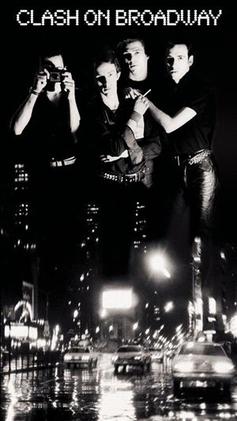
Naturally, anybody would say that four sides of Clash music would leave something out—only two tracks from Sandinista!?—but a Volume 2 never happened. Instead, once everybody started getting a box set, the Clash did too. Clash On Broadway was designed for CD as opposed to vinyl or cassette, and therefore at three discs had than double the capacity of Story Of The Clash.

Along with all the key albums, singles, and B-sides, box sets had to have rarities. Disc one delivers with demos of “Janie Jones” and “Career Opportunities” produced by Guy Stevens, and live versions of “English Civil War” and “I Fought The Law”. American consumers would have appreciated the songs from the first UK album, which hadn’t made it to CD yet. Disc two is dominated by Give ‘Em Enough Rope (plus the decent outtake “One Emotion”) and London Calling, while the third disc features a live “Lightning Strikes (Not Once But Twice)”, a soulful cover of “Every Little Bit Hurts”, the outtake “Midnight To Stevens”, and the unedited take of “Straight To Hell”. While not listed anywhere, “Street Parade” ends the set.

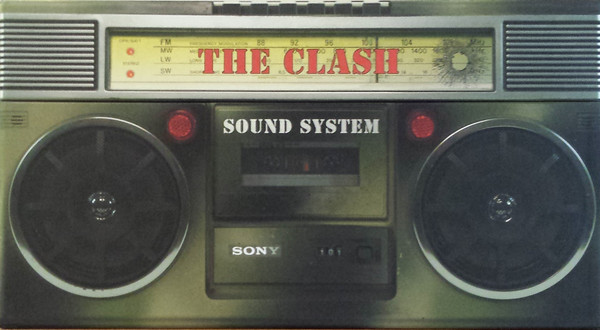
In the 21st century, box sets were expected to include absolutely everything if consumers were going to buy them again. Sound System—cleverly designed like a boom box—offered the first five albums on eight discs, plus two discs mopping up singles, B-sides, and outtakes, rounded out by alternate mixes of Combat Rock material. Another disc had nine early demos and six live songs from the Lyceum in 1978. Even with all that, only six of the rarities from Clash On Broadway were included in the set, making that first box a keeper.

Sound System also contained a DVD and piles of ephemera, which made the eight-disc 5 Album Studio Set, designed like a road case, a cheaper option. Or you could spring for the newly curated, less obvious The Clash Hits Back two-disc set, which was derived from a 1982 gig setlist, and we’d be interested in hearing the actual gig. It was also 20 minutes shorter than 2003’s more chronological The Essential Clash, which happened to be the only one of these compilations to include anything from Cut The Crap.

The Clash The Story Of The Clash, Vol. 1 (1988)—4
The Clash
Clash On Broadway (1991)—4
The Clash
The Essential Clash (2003)—
The Clash
Sound System (2013)—
The Clash
The Clash Hits Back (2013)—

Tuesday, October 24, 2023

Big Audio Dynamite 2: No. 10, Upping Street

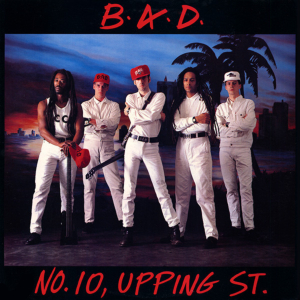
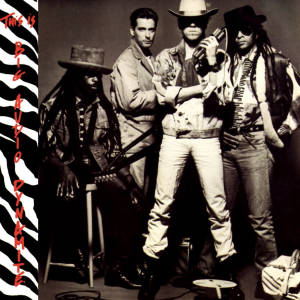
Mick Jones clearly came out ahead of Joe Strummer after the Clash, and didn’t stop to rest. The second Big Audio Dynamite album followed almost exactly a year after the first, and sported an interesting name in the coproducer and occasional songwriting category: Joe Strummer. (Somebody else compared this to John Lennon producing Wings.) But as if the title of No. 10, Upping Street wasn’t obscure enough, the “most illinest B-boy” pose on the front cover would likely have turned away casual record store browsers.

Once again the combo attempts to cross genres, from synth-pop to rap. “C’mon Every Beatbox” channels Eddie Cochran through a rockin’ dance track, Mick’s vocals well supported by Don Letts. “Beyond The Pale” is the clear winner here, a Strummer-Jones track with a tuneful melody, piano in the mix, and a wonderful guitar solo. Apparently it’s drawn from his own family history, so clearly it meant a lot to him. “Limbo The Law” ups the tempo with a drum machine on high speed that detracts from the melody; likewise, “Sambadrome” is based around a canned beat, with some bass and piano, and a lot of samples in Spanish (sorry, our bad, they’re Portuguese and shame on us for assuming).

“V. Thirteen” is tuneful with a big guitar sound and a good choice for the second single—the Strummer-Jones team again—but it doesn’t quite get the singalong quality of a “Train In Vain” or “Should I Stay Or Should I Go”. Don Letts sings “Ticket”, with a delivery that modern ears sounds like Roy Kent, except for the motormouth toasting. “Hollywood Boulevard” namedrops a lot of old icons of screen and page, but it’s more stream of consciousness than anything coherent. “Dial A Hitman” is tuneful, with that canned harmonica from “Medicine Show”, except that it devolves into a “film excerpt” performed by Matt Dillon and Laurence Fishburne that isn’t as funny after you’ve heard it once. Finally, “Sightsee M.C.!” is more straight rap, loaded with samples and triggers.

The American cassette sported two extra tracks, one on the end of each side: “Ice Cold Killer” was a remix of “Limbo The Law”, peppered with “say hello to my little friend” samples from Scarface, while “The Big V” is an instrumental version of “V. Thirteen”, with the vocal melody played on guitar. These were tacked to the end of the CD, but after the “Badrock City” remix of “C’mon Every Beatbox” became a dance hit, it was added to the cassette and CDs too.

While No. 10, Upping Street is more consistent across the board than the first album, it doesn’t really stand out as much as that one did. The world simply wasn’t ready for this kind of hybrid.

Big Audio Dynamite No. 10, Upping Street (1986)—3

Friday, June 9, 2023

Clash 7: Cut The Crap

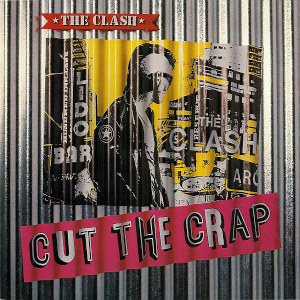
It’s never a good sign when you have to hire two guitar players to replace the guy you just fired, but that’s exactly what the Clash did after abandoning Mick Jones to Big Audio Dynamite. While Joe Strummer and Paul Simonon allegedly wanted to get back to their straightahead punk roots, the evidence given on Cut The Crap showed them to be more aligned with Mick’s new band. Sure, there are guitars everywhere, but the drums are programmed and overly robotic. We know now that manager Bernie Rhodes took control of the production and lyrics, and while Paul’s in the photos, he’s not on the album at all. Rather, any bass not made by a synthesizer—and there are an awful lot of dated keyboards on this album—come from Norman Watt-Roy, who already filled in on Sandinista!

Speaking of which, the busy effects-filled mix of “Dictator”—with chatter in both channels—recalls the more non-musical moments of that album, to the point where one can’t hear the words, chords, or melody (except for those of the synth horns). The chanted gang vocals, which are all over this album, don’t help, and proof they did the opposite of the album title’s suggestion. “Dirty Punk” has some elements of their earliest songs, but comes off instead as a Clash parody, whereas the raison d’ĂȘtre of “We Are The Clash” isn’t very convincing either; in fact, Joe rolls his first R just like Johnny Rotten used to. “Are You Red…Y” would be a half-decent new wave number if it were recorded by anyone else, like Sigue Sigue Sputnik or somebody like that. “Cool Under Heat” sports enough acoustic guitar and martial energy to be interesting, but for those damn chant vocals. Also, the conga is way too loud. Similarly, “Movers And Shakers” starts with potential, but is lost to a really stupid synth line fighting against the chanting in the chorus.

“This Is England” begins with what sounds like the auto-rhythm button on your average 1985 Casio keyboard, and would actually kinda work if it was the only out-there song on the album. “Three Card Trick” brings back some of the reggae from earlier in the decade, but is nowhere as convincing as those homages were. Just when you think the album might be improving, more video game effects and an unintelligible conversation preface yet another chanted chorus on “Play To Win”—but it’s soon apparent that the choruses are only distractions from the atmosphere in said preface. The inane “Fingerpoppin’” wants you to dance, which makes sense considering the track wants to emulate “You Spin Me Round (Like A Record)”, and what’s with the growled chorus? “North And South” is sung by one of the new guitarists, whose voice is neither as strong nor as distinctive as Joe’s or Mick’s, but again, might work on somebody else’s album since it’s got a nice melody. And frankly, “Life Is Wild” follows the template of eight other songs here so closely that it doesn’t stand out except for the silence that follows.

Cut The Crap was the Clash in name only, and we would be tempted to call it a Joe Strummer solo album if he hadn’t denounced it himself upon release. It didn’t help that it came out the same week as This Is Big Audio Dynamite, an album that is a masterpiece in comparison. At this point Strummer had seemed to squander everything he’d worked for, with an album title that was all too apt. The new combo was supposedly pretty ferocious onstage, and even when they were busking, but any proof remains only on bootlegs, just as there might be a good album in here somewhere, which we’ll never know. For the most part, it has been absent from most compilations and retrospectives, although a mid-price European reissue CD included the “Do It Now” B-side, while “Sex Mad Roar” remains MIA in the digital era.

The Clash Cut The Crap (1985)—2

Tuesday, June 6, 2023

Big Audio Dynamite 1: This Is Big Audio Dynamite

Five years seems to be the standard shelf life for a lot of bands, and just like the Jam, who’d emerged at around the same time, the Clash as we knew them didn’t last past 1982. Mick Jones wanted to get more into hip-hop, and Joe Strummer and Paul Simonon didn’t, so they bounced him. After a short stint with General Public—an offshoot of the similarly splintered (English) Beat—Mick recruited a new rhythm section, though the drums were primarily electronic, a keyboard player, and filmmaker buddy Don Letts (as seen on the cover of Black Market Clash) to provide vocals and sound effects via the then-burgeoning practice known as sampling. The new combo was dubbed Big Audio Dynamite, occasionally called Bad; This Is Big Audio Dynamite was their rather blatant statement of purpose.

The opening “Medicine Show” sets the pace, toe-tapping and melodic with intertwined guitar parts fighting for space between the samples from spaghetti westerns. (Joe and Paul appeared in the song’s rather ridiculous video, so any hard feelings must have disappeared by then.) “Sony” isn’t as successful, mostly bringing to mind the anarchic beatbox experiments on Sandinista!, but it doesn’t matter once “E=MC2” kicks in. Now we can hear it as a rock-rap hybrid ahead of what Run-DMC did with “Walk This Way”, but back then it was an infectious litany of pop culture imagery delivered a la Chris Difford in Squeeze’s “Cool For Cats”. The samples from Performance show Mick Jones stretching his Keith Richards fixation all the way to Mick Jagger. “The Bottom Line” is another perfectly simple track, with just a few riffs around the same root note and a singable chorus. That said, “I’m gonna take you to part two” is more effective ending an album or cassette side than in the middle of a CD.

Frankly, part two isn’t as exciting, and mostly slower in tempo, but still works. Considering the time, it’s easy to assume that “A Party” refers to apartheid, though the lyrics aren’t overt. Don Letts’ Jamaican-tinged are most audible here, toasting near the end. “Sudden Impact!” is directly descended from “The Magnificent Seven” and “Radio Clash”, and maybe Blondie’s “Rapture”, but without as much percolating bass. “Stone Thames” is loaded with cartoony sound effects, and once you realize the title can be stretched to refer to Rock Hudson, the references to a certain disease related to sex start to make more sense. “Bad” is almost as noisy, and gives equal time to Letts in the verses.

The gauntlet was definitely thrown. While it’s definitely a leap from the Clash, what sells the album is Mick’s familiar vocal approach, used so well in his old band’s poppier moments. Many of the lyrics are delivered at rap speed, with the addition of self-harmonies, which makes it all more musical. He was certainly trying to do something different, as evidenced by the even dancier remixes—some even more tuneful than the album mixes—that make up most of the bonus disc in the expanded edition, released 25 years later. (The balance includes the underwhelming outtake “Electric Vandal” and two contemporary B-sides.)

Big Audio Dynamite This Is Big Audio Dynamite (1985)—3
2010 Legacy Edition: same as 1985, plus 12 extra tracks

Tuesday, January 31, 2023

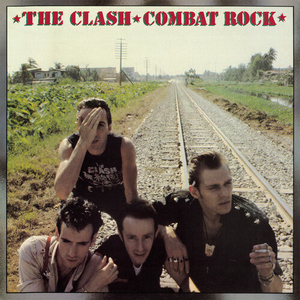
Clash 6: Combat Rock

The late 1980 release of Sandinista! gave the Clash something to coast on, to the point where their next album wasn’t released until the spring of 1982. Combat Rock would be the band’s biggest album, but a commercial peak they ultimately couldn’t sustain, much less survive.

Joe Strummer begins the attack right away on “Know Your Rights” (“all three of ‘em”), as relentless as it is minimal. (This was the album’s first single in England, wisely not tried in America.) “Car Jamming” is a strange hodgepodge, somewhere between the sunny pop of “Hitsville U.K.”—complete with Ellen Foley in the chorus again—and rap poetry. It’s too slow to dance too, but too uptempo not to. Two Clash classics follow back to back, and likely the reasons why the album sold so well: “Should I Stay Or Should I Go” is a trash masterpiece from Mick Jones, from its scraped intro to the double-time choruses with our favorite part, the echoed backing in Spanish; “Rock The Casbah” is even more iconic, especially considering that the entire track save the guitars, vocals, and lyrics was all courtesy of drummer Topper Headon—even the piano! While it begins with a wonderful ska-influenced intro, “Red Angel Dragnet” is further proof that Paul Simonon couldn’t carry a tune if he was handcuffed to it. What’s more, band associate Kosmo Vinyl interrupts halfway through to growl some of Travis Bickle’s monologues from Taxi Driver. In the context of the album, it makes “Straight To Hell” all the more striking, with its tribal drums competing with the guitar effects and Joe’s pointed political lyrics. Vietnam was still a sore subject in America then, and he pulls no punches.

Side two continues more in the vein of the experiments on Sandinista!, and not always in a good way. Those who enjoyed the dance aspects of the last album might have enjoyed “Overpowered By Funk”, at least up until the mic is turned over to graffiti artist Futura 2000 for a less-than-assertive rap. “Atom Tan” has some nicely vocal interplay between Strummer and Jones, but the white-on-black lyric sheet is needed to decipher the imagery. “Sean Flynn” takes us back to Vietnam for a track named after a photojournalist who disappeared outside Saigon in 1970. There’s a song in here, but the dominant atmospherics make it more of an art installation. “Ghetto Defendant” is much in the same vein, except that it features recitations by special guest Allen Ginsberg, which distract from Joe’s decent vocal. “Inoculated City” is catchy if inscrutable, but the simple beat and toilet clean commercial sample predict Mick Jones’ future. It’s a distraction before the lounge jazz of “Death Is A Star” wherein Joe recites poetry for a change. Lord knows if any of the kids who bought the album for the singles made it through this side more than once.

Combat Rock was planned as a double album—the band’s third multi-disc set—except that legendary producer Glyn Johns was brought in to mix the tracks and rein in Mick Jones in the process. The legend of the unreleased Rat Patrol From Fort Bragg endured for decades, with no solid sequence ever confirmed, until various B-sides were identified as leftovers in this century, and other outtakes were included on box sets. Then, the 40th anniversary of the album brought an expanded version called Combat Rock + The People’s Hall that included another hour’s worth of extra material of varying interest.

If these tracks had been part of the original double album, it’s arguable that it might not have been as big a hit. To wit, “Outside Bonds” is four minutes of audio-veritĂ© captured outside the New York City nightclub where the band had an extended residency. “Futura 2000” is alternate mix of a rap single by the auteur, with the band’s backing. Mikey Dread is featured on “Radio One”, which had been the B-side to “Hitsville U.K.”, whereas “He Who Dares Or Is Tired” sounds like a dub version of “Hitsville” itself. “Radio Clash”, “First Night Back In London”, and “Long Time Jerk” were B-sides already collected on Super Black Market Clash and the Sound System box. Five other outtakes had already been in the Sound System box as well, including “Midnight To Stevens” (a tribute to the producer of London Calling), an extended, more musical “Sean Flynn”, and an alternate “Know Your Rights”. (A mildly entertaining two-song EP featuring the English Beat’s Ranking Roger toasting over “Rock The Casbah” and “Red Angel Dragnet” was released separately around the same time; these would have certainly been welcome in the main set.)

The Clash Combat Rock (1982)—3
2022 Combat Rock + The People’s Hall Special Edition: same as 1982, plus 12 extra tracks

Friday, August 12, 2022

Clash 5: Sandinista!

The one word that is common to just about every review of this album is “mess”. And it’s true: the fourth album by the Clash is a sloppy, sprawling mess. Without a Guy Stevens to throw chairs at them, they produced themselves, and instead threw just about everything they could find into the mix, from recordings in London, New York, and Jamaica. Having made friends with various of Ian Dury’s Blockheads, they were invited to contribute. Joe Strummer’s old busking partner Tymon Dogg brought his violin, and Mick Jones was dating Ellen Foley from “Paradise By The Dashboard Light”, so she was around too. (The band would go on to back her up on her next album.) The year before they’d convinced Epic to release London Calling as two records crammed into one sleeve, so they did the same with this album, and then some: six sides full of sound, if not necessarily music. London Calling ran just over an hour; Sandinista! is over twice that length.

During that year reggae and dub had made big impressions on the band, and while disco may have sucked, rap was appealing. That makes “The Magnificent Seven” so startling, with beats straight from Grandmaster Flash and a bubbling Chic bass line. (Norman Watt-Roy of the Blockheads is responsible for this and some of the funkier bass lines throughout the album; Paul Simonon does play, but not as loudly nor as proficiently.) Some dreamy keyboards and a Motown beat bring in “Hitsville U.K.”, which barely sounds like a Clash song since Ellen Foley’s vocals are mixed louder than Mick’s. Joe turns the blues song “Junco Partner” inside out to a wacky reggae backing, then Topper Headon takes his first lead vocal on “Ivan Meets G.I. Joe”, an upbeat track dominated by what sounds like the Space Invaders and Pac-Man arcade games at top volume. “The Leader” is the shortest song in the entire set, with some good rockabilly that actually sounds like the band for a change. It’s over before you know it, and is nudged aside by “Something About England”, which sounds like half of a big production, as if they loaded up the multitracks and forgot to raise the faders on the rhythm section for the first minute or so. There’s a strong lyric in there, but you can’t hear it.

Side two starts with another track unlike anything they’d done before. “Rebel Waltz” sports an intricately picked guitar line before a harpsichord(!) and other keyboards fill in under it—another strong tune distracted by the mix. Whatever gravitas it’s supposed to impart isn’t helped by “Look Here”, a Mose Allison tune mostly played straight but, again, smothered with atonal touches. With “The Crooked Beat”, Paul gets to follow up the threat laid down by “The Guns Of Brixton” on an even longer song layered in percussion devoid of meter or tempo. (In foreshadowing, the latter half of the track is basically a dub version. Stay tuned; we’ll explain.) Guitars return on “Somebody Got Murdered”, a starkly matter-of-fact statement heavily laden with futility. “One More Time” is a decent fusion of rock and reggae, but you have to juggle Joe’s fake accent with the highly nasal toasting from Mikey Dread. We fade to silence, and then we’re treated to “One More Dub”, an experiment that works.

After an aircheck of Joe calling into progressive New York radio station WBAI, “Lightning Strikes (Not Once But Twice)” is something of a retread of “The Magnificent Seven” but not as slick. It ends abruptly for “Up In Heaven (Not Only Here)”, which sounds like the Clash again, to take over. There’s an extended ending where the song begins to fade under some feedback, then comes back in before fading for good. “Corner Soul” is another one lost to a busy mix and even more Ellen Foley, but mixed lower. A tape of a street huckster opens and closes the otherwise steel drum-fueled “Let’s Go Crazy”, but the more obviously dub-influenced “If Music Could Talk” is an improvement. Then things go completely off the rails for “The Sound Of Sinners”, a completely unexpected gospel rave-up with Topper adding a nice harmony. There’s even a benediction of sorts at the end.

With that setup, side four almost sounds like where the album (or another one) should start, as the guitar siren of “Police On My Back” makes you think the Clash you’ve been used to have returned after all, but surprise! Eddy Grant wrote this song, before he rocked on down to Electric Avenue. “Midnight Log” is another brief one in the vein of “The Leader”, while “The Equaliser” is a mostly dub track of double length that sounds like it’s missing the main context. “The Call Up” was the danceable first single, an anti-draft protest that still takes up a lot of space. Its sentiment is continued in “Washington Bullets”, which gives the album its title and skewers every country that subscribes to the military industrial complex. In a poor mixing choice, the organ is absolutely pinned at the end of the track. “Broadway” could be Strummer’s Sinatra moment, or at least a prediction of the Replacements’ “Nightclub Jitters”, but the mix is too crazy, and just to make things interesting, the last minute is given over to Mickey Gallagher’s daughter’s rendition of “The Guns Of Brixton”. By now anyone would be justified in calling this the band’s White Album.

The Clash-ness continues at the top of side five on “Lose This Skin”, except that it’s written and caterwauled by Tymon Dogg, whose sawing violin predicts the Waterboys. Some clever helicopter effects via guitar open the extremely melodic “Charlie Don’t Surf”. It’s one of the better tracks here, but by now it’s clear they were struggling to fill six sides, as “Mensforth Hill” runs “Something About England” backwards, with posed dialogue on top. (Again, White Album.) After that “Junkie Slip” sounds like another one that should’ve been a B-side, and while “Kingston Advice” has promise, it’s literally torpedoed throughout by video game noises. Similar sound effects are used like percussion on “Street Parade”, which deserves better.

Side six is either loved or hated, considering that most of it recycles what’s come before. But first we have “Version City”, which opens with the sound of a sample from Mattel’s version of the Mellotron winding up under an unctuous announcer, a bad omen for how the rest of an otherwise decent song is treated. “Living In Fame” is a dub version of “If Music Could Talk” sung by Mikey Dread, but then the sample and announcer come in again and “Silicon On Sapphire” layers a conversation between computers (this is not a joke) over the track for “Washington Bullets”. “Version Pardner” takes us all the way back to “Junco Partner” on side one, and isn’t as jarring, but it’s just as random. Mickey Gallagher’s sons get into the act, singing “Career Opportunities” from the first album over a sprightly harpsichord-led arrangement. And where else can we go with a mellow instrumental of “Police & Thieves” (or maybe “If Music Could Talk”?) called “Shepherds Delight”, possibly due the bleating interjections, that suddenly switches to a slowed-down tape of a car driving off?

There’s nothing pointedly awful on Sandinista!—surely “Mensforth Hill” would have its supporters. Even the dub versions on side six would have made decent B-sides, and then people would be clamoring for them. Still, trying to shave the album to a stellar single disc is near-impossible. Call it the results of a busy year, and take time to see what rises to the top. If anything, the dub experiments heard on B-sides and Black Market Clash will not only make more sense, but improve in stature.

The Clash Sandinista! (1980)—3

Friday, April 1, 2022

Clash 4: Black Market Clash

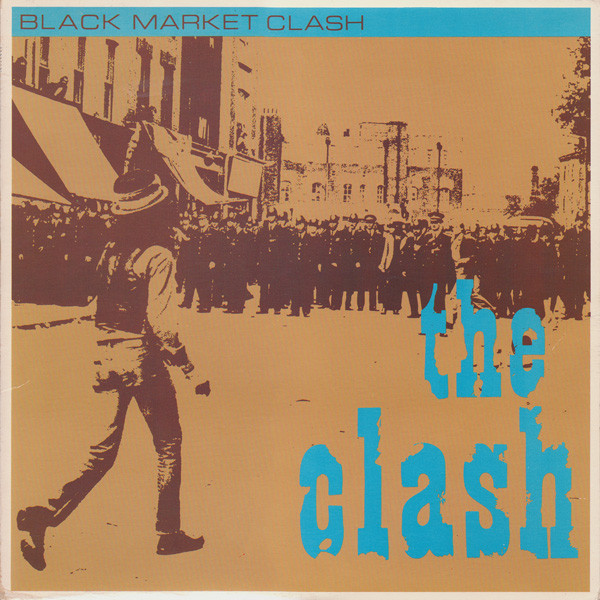
Thanks to the differences between UK and US releases, plus a number of songs exclusive to singles and EPs, the Clash had amassed a pile of unalbumized tracks that Epic Records was only happy to compile. Black Market Clash appeared in the short-lived 10-inch “Nu-Disk” format, but still ran almost as long as each of their first two albums had (in the UK anyway).

With its familiar slashing chords, “Capital Radio One” was especially rare, having been included on a giveaway single. Mick Jones sings “The Prisoner” a B-side from the Give ‘Em Enough Rope era, with muddy production to match. “Pressure Drop” is an extremely enjoyable cover of the Toots and the Maytals song, which makes for an odd transition back to the angry punk of “Cheat” from the UK version of the first album. The relatively early B-side “City Of The Dead” sports prominent organ and an unexpected smooth sax part by the soon-to-be-ubiquitous Gary Barnacle, who also features on the otherwise unreleased cover of “Time Is Tight”, the Booker T. & the MG’s tune. (At the time, many listeners would recognize this from the Blues Brothers’ cover.)

Side two provides a glimpse into the band’s descent into reggae culture, which would be even more overt on their next album. “Bankrobber” was the band’s newest single in the UK, featuring production work by Jamaican pioneer Mikey Dread; here it appears in an extended mix with a “Robber Dub” coda. More successful is “Armagideon Time”, a cover of a fairly recent reggae hit that had been the B-side of “London Calling” overseas. Here it’s followed by “Justice Tonight/Kick It Over” a dub version of the song running seven minutes.

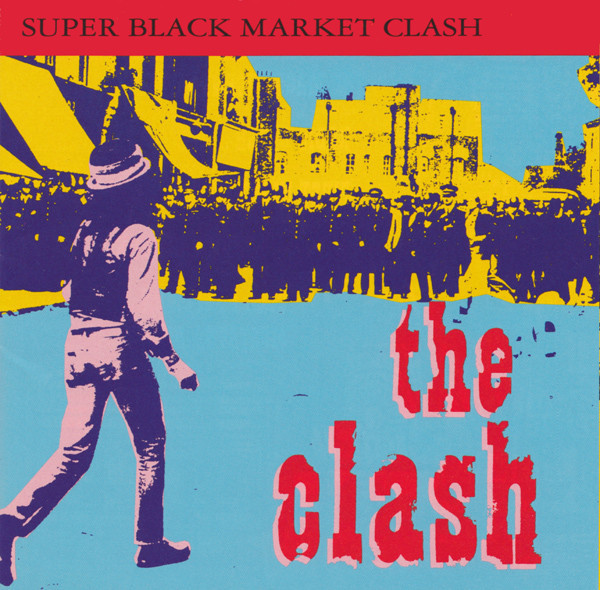
As with most grab-bags, Black Market Clash is a little disjointed, but the songs make it worth it. In the digital era, the band had already been anthologized on a two-record set as well as a box set, so a simple CD transfer of the album wouldn’t have sufficed. Rather, Super Black Market Clash (clever!) presented a vast expansion of the original, for a more comprehensive (though not complete) rarities collection. To cut down on duplication from those other compilations, “Capitol Radio One”, “Cheat”, “Bankrobber”, and “Armagideon Time” were dropped. Meanwhile, “Pressure Drop” was a different mix, “Justice Tonight/Kick It Over” was extended another two minutes, and “Robber Dub” was also more complete. (The set was also issued on vinyl as three 10-inch discs—clever again!—with four extra songs from the UK version of the debut filling up the first side: “Protex Blue”, “Deny”, “48 Hours”, and the reinsertion of “Cheat”.)

The new set opens with “1977”, the classic B-side of their first single with its bold declaration of “no Elvis, Beatles, or Rolling Stones.” “Listen” was previously sampled on that “Capital Radio” single, used as the bed of an interview; here’s it’s the full track but still instrumental. “Jail Guitar Doors” is repeated from the US version of the first album, followed by some of the repeats from the original set. Then there’s “1–2 Crush On You”, a surprising homage to sixties pop, with its allusions to “Wooly Bully” and “Twist And Shout”. Three songs from 1979’s The Cost Of Living E.P. follow: the misleadingly tuneful “Groovy Times” with its harmonica and acoustic guitar touches; the mildly soul-influenced “Gates Of The West”; and the “Capital Radio Two” re-recording. Sadly, the advertisement for the EP, which originally closed side two, is absent.

Following the lengthy dub tracks from the original set, the set moves to collecting material that postdated it, and since most of those are also dub versions, the sequencing is logical. These include “The Cool Out” (a danceable dub version of “The Call Up”), “The Magnificent Dance” (which piles completely arrhythmic bongos on the disco track for “The Magnificent Seven”), “Radio Clash” (the nearly identical B-side version of that single), and “Mustapha Dance” (an enjoyable rejig of “Rock The Casbah”). In between, “Stop The World” was a rare B-side with little musical quality, while “First Night Back In London” and “Cool Confusion” were outtakes from the double album that was shaved down for Combat Rock and “Long Time Jerk” also dates from the that period.

Where Black Market Clash made a nice stopgap in 1980, Super Black Market Clash becomes more of an afterthought. But listeners already following the band’s catalog knew that Clash B-sides were just as good as their album tracks. Clearly this band had plenty to say, and most of it was worth hearing.

The Clash Black Market Clash (1980)—
The Clash
Super Black Market Clash (1993)—

Tuesday, September 21, 2021

Clash 3: London Calling

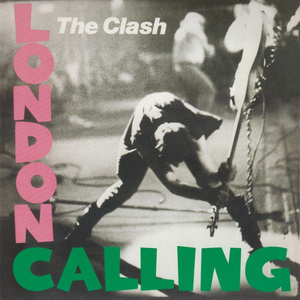
First of all, it’s got a great cover. Aping the lettering from one of the first Elvis Presley LPs, the image is that of Paul Simonon destroying his Fender Precision bass on stage. This would be just one hint at the scope of music to be heard on London Calling. Stylistically, it’s all over the map, with nods to rockabilly, ska beats and even big ballads throughout its four sides—a far cry from the punk rush of the first two Clash albums, and most of the singles in between. Part of the credit could go to producer Guy Stevens, whose work on Island Records and with Mott The Hoople a decade earlier still resounds.

That’s not to say they’d gone soft in the slightest. If you’re looking for power and commentary, the title track kicks it off for you, a virtual siren of doom. The first cover of several on the album is “Brand New Cadillac”, a rockabilly favorite that’s another great showcase for Joe Strummer’s voice. (C’mon, how can you beat “Baby baby drove up in a Cadillac/I said ‘Jesus Christ, where’d you get that Cadillac?”) Things turn down for “Jimmy Jazz”, which isn’t jazz save a couple chords and a sax solo, but it’s the first time we learned how the Brits pronounce the last letter of the alphabet. “Hateful” speeds up the Bo Diddley beat and adds a catchy melody, and given the reliance on covers, “Rudie Can’t Fail” is especially surprising for its authentic ska arrangement. Plus, we like Joe’s exhortation to Mick Jones: “Sing, Michael, sing!”

“Spanish Bombs” is one of the catchier tunes about the Spanish Civil War, nicely layered with subtle acoustic guitars, organ, and octave harmonies. A personal favorite is “The Right Profile”, a horn-driven portrait of beleaguered actor Montgomery Clift, with one of the greatest lyrics of all time, which we’ve transcribed directly from the sleeve: “Arrrghhhgorra buh bhuh do arrrrgggghhhhnnnn!!!!...” While Joe wrote it, he must have known Mick was the best conduit for “Lost In The Supermarket”, so simple and somehow fragile. That feeling is wiped aside by the more urgent “Clampdown”, with an organ part we think is courtesy of Mickey Gallagher from Ian Dury’s Blockheads. For a real departure, Paul Simonon sings his own dark and brooding composition, “The Guns Of Brixton”. His voice is all but tuneless, but it works.

To keep everyone guessing, “Wrong ‘Em Boyo” begins as a cover of the ancient “Stagger Lee” before switching tempo and key and everything to the reggae tune of the actual title. “Death Or Glory” gets an awful lot of action out of its three chords, weaving well in and out of choruses and verses, showing their grasp of dynamics. (This would be a good place to praise drummer Topper Headon, who handles every tempo and style they throw at him.) Though it goes by too fast to understand most of the words, “Koka Kola” carefully avoids copyright infringement while putting a new spin on the phrase “coke adds life”. The only song on the album credited as written by the whole band, “The Card Cheat” pulls in Phil Spector’s magnificent Wall of Sound and mariachi horns for another tale of an outlaw’s demise.

Despite the misplaced apostrophe, “Lover’s Rock” is poppy and fun, with lots of wacky percussion things poking in and out of the mix. Another one that needs the lyric sheet to decipher, “Four Horsemen” presents the band themselves as the mythical figures of the title, and is poignant today given their limited time together. “I’m Not Down” is more wonderfully hook-laden pop, whereas “Revolution Rock” is another reverent reggae cover that would prove highly influential to Californian white kids generation later.

Possibly the album’s most famous song isn’t listed on the cover, label, or lyric sheet. More to the point, “Train In Vain” is the tune everyone thinks of as “Stand By Me” and was originally hidden at the end of Side 4. It was added so late in the process that some of the stickers only counted 18 tracks and not 19, but if you looked carefully at the runout groove on that side, you could see “TRACK 5 IS TRAIN IN VAIN” etched there. Even later cassettes and CDs didn’t mention it.

Released on the cusp of a new decade, London Calling firmly established the band as important, and turned the punk scene on its ear. Perhaps it could have been shaved from two LPs to one, but what would you leave out? If you’re going to have just one Clash album, this would probably be the one to choose; besides being solid start to finish, it was priced well, at least until the digital era. So after much ruminating, we’ve awarded it the rating below.

The album was nicely upgraded for its silver anniversary, with not only a DVD and liner notes but a bonus disc full of pre-album rehearsals, including several songs (and covers) that would make the album proper, plus a surprising take on a reggae cover of Bob Dylan’s relatively obscure “The Man In Me”. (Later reissues replicated the album on two CDs, despite previously fitting on one.)

The Clash London Calling (1979)—5
2004 25th Anniversary Legacy Edition: same as 1979, plus 21 extra tracks (and DVD)

Tuesday, June 1, 2021

Clash 2: Give ‘Em Enough Rope

The highly anticipated second album by the Clash was the first to be officially released in the United States, and it does seem to take a more American approach. While still recorded in London, the producer of choice was Sandy Pearlman, best known then for masterminding Blue Oyster Cult. His approach on Give ‘Em Enough Rope was to bury the vocals, which dilutes whatever message the band was trying to express, but also results in an album best played and enjoyed loud.

Indeed, “Safe European Home” leaps from the speakers, and seamlessly segues from rock to reggae for the foreshadowing at the end, as Joe Strummer intones variations on the phrase “Rudie can’t fail.” “English Civil War” tries a little hard to be militant, based as it is around “When Johnny Comes Marching Home”, but “Tommy Gun” sports a terrific arrangement, with the guitars all power chords and new drummer Topper Headon imitating the bursts of ammunition. “Julie’s In The Drug Squad” is a goof on pub rock, with BOC’s Allen Lanier dancing around the piano. Paul Simonon had been practicing the bass, which is to the fore of the mix on “Last Gang In Town”.

“Guns On The Roof” cops the “I Can’t Explain” riff but throws enough harmonics and dynamics behind it for you to forget the steal. On “Drug-Stabbing Time” you really are hearing a saxophone, contributed by Stan Bronstein of Elephant’s Memory. Mick Jones doesn’t get a lead vocal until “Stay Free”, but it’s a good one, a wistful message to a missed childhood friend, wherever he or she may be now. “Cheapskates” is a little sludgy, more interesting for Mick’s lead lines weaving throughout. “That’s No Way To Spend Your Youth” was the American title given to “All The Young Punks (New Boots And Contracts)”, and the mix doesn’t do it any favors except for stamping your feet along.

While not as bold a statement as their debut—whichever one you heard first—Give ‘Em Enough Rope still delivers, satisfying the fans they’d started piling up. They were already proving they weren’t a bunch of tone-deaf punks, and were already evolving.

The Clash Give ‘Em Enough Rope (1978)—3

Friday, January 1, 2021

Clash 1: The Clash

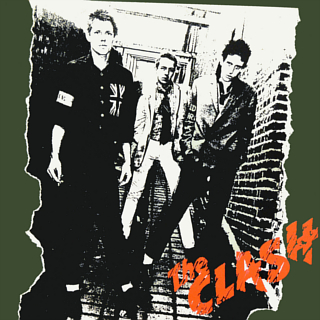
Possibly the best and certainly one of the smartest bands of the original punk era was the Clash. Besides looking good, they had the chops to back up their lyrics, most of which began as indictments of contemporary society. But they didn’t happen organically; Joe Strummer was the chosen name of a former folkie who called himself Woody, and Mick Jones was an unabashed Stones fan, right down to his Keith Richard style. Every punk band needed an incompetent bass player, and Paul Simonon—who just reeked of cool—learned his instrument while they were recording their eponymous debut. (Drummer Terry Chimes quit before the album was released; he’s credited as “Tory Crimes” on the sleeve.)

The energy starts immediately on side one, with “Janie Jones” establishing Joe Strummer’s voice. “Remote Control” is sung nearly unison with Mick Jones, but it’s the power chords you notice. “I’m So Bored With The U.S.A.” fits the Sex Pistols mode, but cleverly changes key for the chorus. Speaking of clever, “White Riot” is a different recording of their first single, the lyrics going by so fast the social comment isn’t clear. “Hate And War” presents some of the power pop The Jam were trafficking in, while these ears hear “Deny” as a clear influence on the Pistols’ “Liar”. Former band member Keith Levene gets co-writing credit on “What’s My Name”; he would go on to join the former Johnny Rotten in PiL. And despite the title, “London’s Burning” mostly complains about traffic congestion.

“Career Opportunities” gets back to the concern of standard employment, with the armed forces as a lousy choice. “Cheat” amps up the anger with a lot of four-letter words and oddly flanged guitars, while “Protex Blue” is a sensitive recount of buying condoms. Just to show how well they stood out from the rest, their cover of the reggae hit “Police & Thieves” runs for six minutes, shows how far Paul Simonon had come on the bass, and points to their future. “48 Hours” goes by fairly quickly, and “Garageland” is a rather melodic riposte to those who questioned their talent.

Despite racking up huge sales as an import, The Clash wasn’t officially released in America until after the band’s second album. Even then, Epic had to tamper with it, rejigging the lineup, dropping five tracks, and adding six, some of which were recorded after that second album. The recent “Clash City Rockers” single now kicks off the very different side one, sending “Janie Jones” to start side two. In a perverse move, “Remote Control” is followed by “Complete Control”, written as an angry response to record company interference. The original single version of “White Riot” is followed by the more recent “(White Man In) Hammersmith Palais”, another excellent exercise in reggae. Their cover of Bobby Fuller’s “I Fought The Law” would become even bigger than the original, and “Jail Guitar Doors” demonstrates Joe’s knowledge of rock trivia, at least when it came to drug use.

The changes make the US release of The Clash slightly more musically diverse than the mostly straight punk of the UK version, but even with the repetition, both are key. When the catalog was remastered in 2000, both versions were reissued on CD; today, the UK version has become the worldwide standard.

The Clash The Clash (1977)—
The Clash
The Clash (US version) (1979)—