Showing posts with label 2019. Show all posts

Friday, November 8, 2024

Graham Nash 9: Live

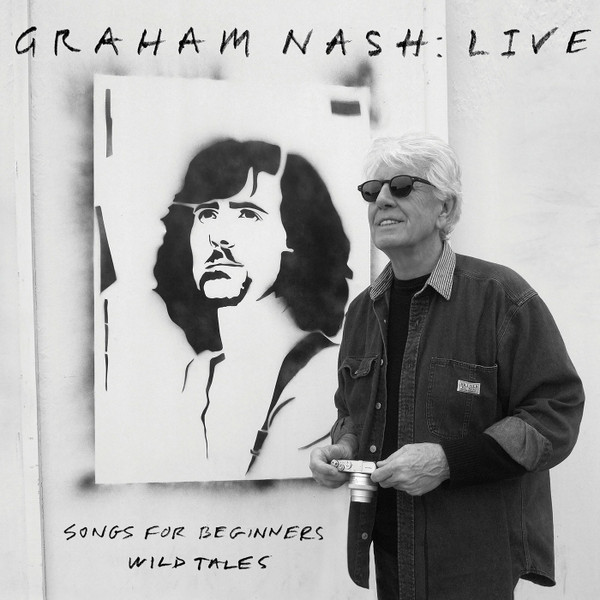
Graham Nash clearly has no qualms about revisiting his catalog to any extent, and in 2019 he undertook a tour wherein his excellent band performed his first two solo albums track by track, in order. Four years later, Live: Songs For Beginners/Wild Tales was culled from four shows, and delivers exactly what the title promises. Outside of a brief greeting before each section, we just hear them play the songs.

The band clearly did their homework, as many of the songs are in much lower keys than they were on the original records, but he’s still in good voice. “Sleep Song” hasn’t aged well, but “There’s Only One” gets a good response for the sax solos and choir. The second half drags a bit, mostly because Wild Tales wasn’t as good as Songs For Beginners, and even the band can’t save it, though Shane Fontayne does a nice job of copping David Lindley’s original licks. The Nixon soundbites in “Grave Concern” have been replaced by Trump rants, and that five-letter word makes it into some of the other songs where the opportunity rises.

Overall the performances are warm and cozy, but as an album they only underscore that the real excitement was likely best experienced in person. Yet we’re always happy to be reminded how good some of his stuff was, and still is.

Graham Nash Live: Songs For Beginners/Wild Tales (2022)—3

Tuesday, July 30, 2024

Van Morrison 49: Three Chords And The Truth

The seemingly relentless progression of Van Morrison albums could be tough to follow, especially when they weren’t always worth hearing. And when he names an album after a phrase many people associate with Bono—even though he didn’t coin it—we deserve to be wary. But Three Chords And The Truth did offer more than three chords, and presented mostly original compositions as well as a similar typographical approach to his most recent collection that wasn’t all covers.

His weather-related titles usually mean a profound meditation, and “March Winds In February” is a lovely start. Of course “Fame Will Eat Your Soul” retreads other familiar territory, this time abetted by Bill Medley, who shows his age. While not the smartest display of sequencing, “Dark Night Of The Soul” is more like it, a good song as well as performance. “In Search Of Grace” seems tossed off, and “Nobody In Charge” is more complaining, but at least he plays a fine sax solo on that one. He continues to brood on “You Don’t Understand” for six annoyed minutes, and we get it already, making the more succinct “Read Between The Lines” easier to digest.

“Does Love Conquer All?” isn’t the only question he asks in that song, but they’re good questions. “Early Days” celebrates the music of his youth lyrically and instrumentally, but he still finds time to whine about today’s music. “If We Wait For Mountains” is another collaboration with occasional lyricist Don Black, and he’s usually a good influence. The good feeling pervades into “Up On Broadway”, an almost gentle wish. While it doesn’t say much, the title track sparkles, and even “Bags Under My Eyes” provides a more wry take on weariness complete with a yodel at the end. And he actually has the decency to credit “Days Gone By”—a lengthy rewrite of “Auld Lang Syne”—as a traditional composition.

When Three Chords And The Truth is good, it’s very good. But he wasn’t likely to start editing himself now.

Van Morrison Three Chords And The Truth (2019)—3

Friday, June 28, 2024

Peter Gabriel 14: Rated PG and Flotsam And Jetsam

Nearly two decades into the 21st century, Peter Gabriel was still touring occasionally, and releasing the occasional one-off track, but there was no sign of new album. And for someone who was always on the cutting edge of technology and interaction, he was one of the longest holdouts among musicians of his stature to allow his music on streaming services, specifically Spotify. (Money does talk, after all.) When he did finally relent, the floodgates opened, kind of.

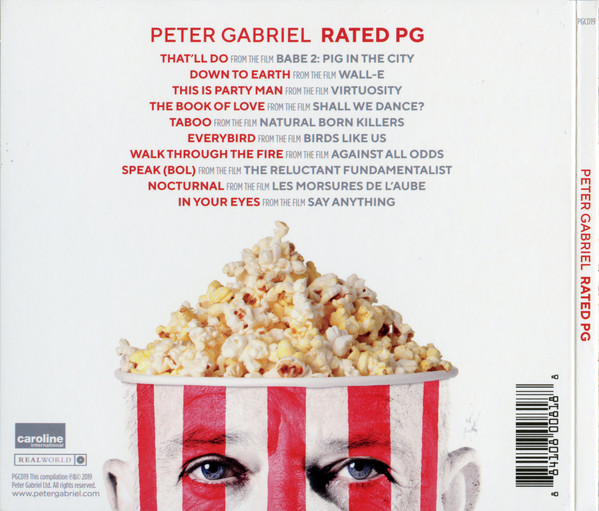
By this time he’d racked up more than an album’s worth of songs that had been featured on movie soundtracks, so Rated PG was a very inspired compilation, with a clever title and hilarious artwork to match. It was first released as a picture disc for a Record Store Day, but eventually made it to streaming and CD. It doesn’t include every song he wrote or supplied for a soundtrack, but it does collect some worthwhile rarities.

In the time since Up he had become a father again, but his contribution to a Babe sequel predated that. “That’ll Do” was written by Randy Newman but thankfully sung by Peter with instrumental help from Paddy Maloney of the Chieftains and the Black Dyke Mills (brass) Band. Ten years later, the more upbeat “Down To Earth” was a collaboration with composer Thomas Newman for WALL-E. Then there’s the more archetypal “This Is Party Man”, an alternate version of a track used in Virtuosity, credited as a co-write with Tori Amos, but we’re not sure exactly how. “The Book Of Love” of course was a springboard for the Scratch My Back project, and it’s still lovely, but it’s followed by “Taboo”, written with and sung by Nusrat Fateh Ali Khan from the Natural Born Killers soundtrack.

“Everybird” was the most recent track here, a sweetly melancholy track for an obscure animated film, then it’s all the way back to 1984 for “Walk Through The Fire”, which was overshadowed on the Against All Odds soundtrack by the title track, which was a smash hit by Phil Collins. (Then again, nobody paid attention to the song Mike Rutherford contributed.) “Speak (Bol)” is from a more recent political thriller, and has some anthemic qualities, as well as vocals in Urdu sung by Atif Aslam, while “Nocturnal” is from an even more obscure French film. It’s a moody, not necessarily dark track, though the lyrics suggest otherwise. Perhaps as a sop to those who want something familiar, “In Your Eyes” closes the set in an alternate mix—not the same one from the Say Anything soundtrack, but incorporating elements from other versions.

Despite being all over the place genre-wise, Rated PG holds together well, though it certainly could have been more comprehensive. This was addressed in a big way in late 2019 by Flotsam And Jetsam, a digital-only compilation running nearly six hours. Despite not being a physical release, it was separated into three “discs”, the first of which would fit on a single CD if they sold one. It begins with his cover of “Strawberry Fields Forever” from a very strange film, then continues through B-sides mostly presenting intriguing alternate versions of tracks from his first four solo albums, as well as such rarities as “Teddy Bear”, “Soft Dog”, “Across The River”, and “Here Comes The Flood” in German.

Each of the other “discs” exceeds two hours. The second covers the period bookended by So and Us; most of these tracks are remixes, which can get repetitive and tedious, but then there are highlights like “Quiet Steam”, “Don’t Break This Rhythm”, and “Curtains”. The last segment covers a 22-year period, dominated at first by tribute album appearances and other soundtrack contributions, then by remixes from Up. Yet it closes with new material of sorts: two completed mixes of the So-era work in progress “Courage”; the standalone single “I’m Amazing”, inspired by Muhammed Ali and released in tribute after the man’s death; and “The Veil”, written for Oliver Stone’s biopic of Edward Snowden.

There were still some missing pieces, like his songs from the Gremlins and Philadelphia soundtracks, but at least everything sounded good. Despite the demand, it likely wouldn’t have been the most lucrative set, so people can skip around when streaming, or cherrypick to their hearts’ content via Bandcamp.

Peter Gabriel Rated PG (2019)—3
Peter Gabriel
Flotsam And Jetsam (2019)—
Current CD availability: none; streaming only
Friday, August 26, 2022

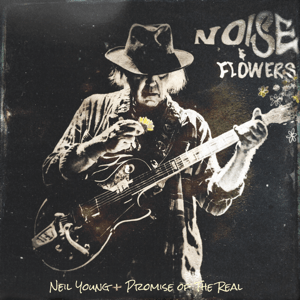
Neil Young 66: Noise & Flowers

Even while working with a rejuvenated Crazy Horse, Neil Young has utilized the services of the band Promise Of The Real for much of the 2010s. Noise & Flowers is their fifth album together, and the second live collection. Unlike the concept-laden Earth, this one’s delivered straight.

The theme is mortality, being that the tour that spawned this album took place immediately following the funeral of Neil’s manager and most consistent ally, Elliot Roberts, to whom the music is dedicated. More to the point, the band is made of players younger than each of Neil’s children; most of the music predates them too. The combination of the Covid pandemic and the sheer volume of music Neil’s been trying to put out in recent years meant this particular collection waited three years for a release, which is probably why it’s been denoted as #21 in the Archives Performance Series.

The sound is cavernous, thanks to the patented Volume Dealers production. The piano comes through the mix, but so do the congas. The crowd goes nuts for the obvious hits, even when the music teeters considerably throughout the ten-minute “Rockin’ In The Free World”—listen for the a slam against “an orange Lucifer using this song again”—but these ears like hearing such relative rarities as “Field Of Opportunity”, “Alabama”, and “I’ve Been Waiting For You”. The band is supportive on thrashers like “Throw Your Hatred Down”, but tend to rush on softer numbers like “From Hank To Hendrix”. No songs from Colorado, which was already in the can and months away from release, are included.

Again, there are plenty of pickup bands around the world who know his songs inside out and can play them as well as the Horse. For Neil, it’s about feel. And if Elliot approves, so do we. (As has been his wont, there is a matching DVD with all the performances on film. It’s very jarring to see Neil with a band that exudes such energy—he hasn’t had a bass player that animated since he played with Pearl Jam.)

Neil Young + Promise Of The Real Noise & Flowers (2022)—3

Tuesday, May 3, 2022

Chrissie Hynde 3: Valve Bone Woe

If anyone’s read this far, they know the high esteem in which we hold Chrissie Hynde as a singer. In addition to her own songs, she’s proven a deft interpreter of others’ music since the first Pretenders album. Her first all-covers album has the design of a classic jazz vocal album, but while some of the selections on Valve Bone Woe fall into that category, she’s also brave enough to add songs outside the Great American Songbook.

Nancy Wilson’s “How Glad I Am” is taken fairly straight, until the slightly discordant fade, which sets up the trip-hoppy effects that derail the Beach Boys’ “Caroline, No”, otherwise taken in a torch style. “I’m A Fool To Want You” and “I Get Along Without You Very Well” are more reverent treatments, and she seems to only wail along with the trumpet on “Meditation On A Pair Of Wire Cutters” by Charles Mingus. One might expect her to tackle an Astrud Gilberto vocal, but instead she goes for the earlier Jobim composition “Once I Loved”. Meanwhile, her “Wild Is The Wind” follows closer to David Bowie’s version than that of Nina Simone or Johnny Mathis. (She does the bridge just once, preferring an extended ending that will make you nostalgic for Portishead.)

Trip-hop effects also color “You Don’t Know What Love Is”, and while we’re intrigued anytime someone covers Nick Drake, Bred Mehldau set the bar for “River Man”. Still, the ending nicely segues to “Absent Minded Me”, which she heard from either Julie London or Barbra Streisand, although this is also taken over by factory sounds by the close. We can’t hear her anywhere on Coltrane’s “Naima”, which also gets the effects treatment, but luckily “Hello, Young Lovers” isn’t too ornate. She tackles an obscure Kinks song for the first time in decades, but the already bossa nova “No Return” could have stayed out of the rainforest, especially when the traffic jam runs through it. “Que Reste-t-il De Nos Amours?” shows she can still slay us in French, but we did not need a minute of sampled dialogue from a French film. Maybe we’d feel different had we learned the language.

As should be clear, Valve Bone Woe is best when it’s not so busy. Even her voice can’t compete with all the treatments; co-producer Marius de Vries is likely to blame for those. That said, she still knows how to pick ‘em.

Chrissie Hynde With The Valve Bone Woe Ensemble Valve Bone Woe (2019)—3

Friday, February 18, 2022

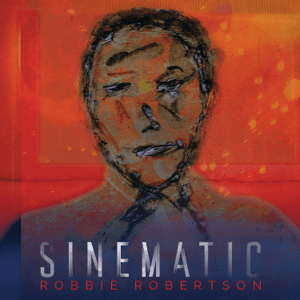
Robbie Robertson 7: Sinematic

Much of Robbie Robertson’s career of late has been remastering the classic Band albums for each 50th anniversary, and film work whenever Martin Scorsese calls him. For only his second solo album of the 21st century, the good news about Sinematic is that he seemed to have gotten triphop out of his system. But while he’s accepted that his voice has one trick, the half-spoken, half-leered approach doesn’t always sustain, especially since he’s given up melodies. (He fancies himself a painter, too, as depicted in the artwork crammed into the deluxe limited vinyl version of the album.)

Guest vocals feature continually, so he can rest his throat. Heard widely in the Scorsese film The Irishman, “I Hear You Paint Houses” is sung as a near-duet with Van Morrison, Robbie apparently not caring that his voice is the palest comparison to Richard Manuel’s. “Once Were Brothers” also happens to the title of Robbie’s latest retelling of the Band saga, this time for a documentary; here he’s joined by Citizen Cope. “Dead End Kid” smolders nicely, but takes off once Glen Hansard (famous from musical films The Commitments and Once) adds his counterpoint vocals. “Hardwired” also sports a promising intro, but descends into a one-chord riff. “Walk In Beauty Way” features the cooing voice of Laura Satterfield, niece of Rita Coolidge, and Robbie responds nicely in his verses when he’s not sounding lecherous. Beginning with a riff based on “Smokestack Lightning”, “Let Love Reign” has a chorus hook right out of Fleetwood Mac, and not the blues version of the band, and uses Hansard less effectively. The shout-out to John Lennon is oddly placed too.

“Shanghai Blues” returns to gangster territory with questionable lyrics, but “Wandering Souls” is a, yes, cinematic instrumental that shows how well he and Daniel Lanois were suited for each other. In many ways, it has us wishing more of the music was strictly instrumental. More criminal activity pervades “Street Serenade”, but it’s a more interesting track overall. Unfortunately, Howie B shows up to put his burbling synths and vocal grunts on “The Shadow”, a not-very-mysterious celebration of the old-time radio crimefighter. “Beautiful Madness” also starts as a decent track, but he puts way too much emphasis on his ordinary lyrics, though some swagger returns on “Praying For Rain”, with a little of the spirit of Storyville. “Remembrance” is the other song included from the credits of The Irishman, and features Derek Trucks on guitar in duet with Frédéric Yonnet’s harmonica.

There is a cohesion throughout Sinematic, and it’s a sonically lush album. It’s just too bad he’s singing all over it. Any of these tracks would be a highlight on another singer’s record.

Robbie Robertson Sinematic (2019)—

Tuesday, April 28, 2020

Sting 15: My Songs

No, dammit. Just… no.

Apparently “enhancing” his music with orchestral touches wasn’t enough for one lifetime. Determined as ever to sound contemporary, My Songs is an attempt by Sting to bring his catalog up into the here and now. That means remixing old tracks, both solo and with the Police, or rerecording them. In the latter instance, “Demolition Man” gets yet another makeover, this time with lots of screaming guitars. But in the case of practically everything else here, the differences between the originals and these versions aren’t apparent outside the vocal. There’s nothing radical or inventive in the arrangements. The feeling the listener gets while enduring this ego exercise is a new appreciation of the album title, as expressed by a three-year-old. (“MY songs! MY fire engine! MY toys! MINE!”)

Rerecording one’s old albums is a common practice among legacy artists who wish to create higher royalties than those granted by the labels that owns the originals. But Sting has been on the same label for his entire career, so that excuse doesn’t apply here. Nor does this particular lord of the manor need the extra euros. If you loved the original versions, stick with them. They won’t waste your time. (Following the tour of the same name, a special edition of the so-called “critically acclaimed” album—according to the press release; a Google search found zero instances of any positive acclaim—added a bonus disc of live versions, which merely add the sound of a rapturous crowd.)

Sting My Songs (2019)—2

Friday, April 17, 2020

Pink Floyd 20: The Later Years

Having thoroughly mined the band’s early progress for a massive multi-volume audio-visual package, David Gilmour and Nick Mason continued loading up shelves with a set that concentrated on the period of Pink Floyd that pointedly did not involve any participation from Roger Waters. Rather than being all-inclusive, The Later Years attempts to reframe the fruits of this critically divisive period.

Right away the set immediately acknowledges the shortcomings of the Momentary Lapse Of Reason album by presenting a brand new mix, incorporating keyboard parts developed by Richard Wright whilst on the lengthy tour that followed the album’s release. Moreover, Nick went back and re-recorded several drum parts, replacing some of the electronics used on the original, and some of the parts played by session people that weren’t him. While the mix removes a good deal of the mid-‘80s sheen that made us wince back then, and we do hear musical touches that weren’t obvious before, it doesn’t change the fact that the songs weren’t very good to begin with. (That said, we never had a problem with “One Slip”, so the new version of that is nice to hear.)

Two discs are devoted to a greatly expanded Delicate Sound Of Thunder, incorporating songs left off that album’s original release, slotted in place to present the full set of the tour. Some songs were extended, and others remixed. While interesting for completeness’ sake, you probably had to be there to appreciate it all. (The original VHS counterpart of Delicate Sound Of Thunder was also expanded and included on Blu-ray and DVD, as was the Pulse video; apparently there was no desire to include Pulse in the CD portion.)

Another disc is devoted to the band’s complete closing set at 1990’s Knebworth Festival, which capped their lengthy tour, fully available for the first time. This was released on its own a couple years later; at less than an hour, it sticks to the hits, with only “Sorrow” played from the album they were still promoting. Then-twenty-year-old phenom Candy Dulfer plays sax on two songs, and “Run Like Hell” is audibly dotted by the fireworks display.

Five live tracks released as B-sides in 1988 and 1994 kick off a disc otherwise devoted to music from the planning stages of The Division Bell. These are apparently the original recordings, as opposed to the remixed and embellished material that made up The Endless River, with titles like “Blues 1” and “Rick’s Theme”. “Marooned Jam” and the early version of “High Hopes” will sound familiar, while “Nervana” was included on the deluxe editions of that “posthumous” album.

As before, the CDs are only part of the whole presentation. In addition to the aforementioned concert films, Blu-rays and DVDs include surround and high-res mixes of the updated Momentary Lapse, Division Bell, and the 1994 recordings, as well as footage from Knebworth and a show performed in the Grand Canal of Venice, various music videos, the films projected on screens during the shows, and other clips of varying interested. And of course there’s a book and a couple of 45s and memorabilia and such.

Also as before, a single-disc teaser offered a potpourri of selections from the set. The Later Years (1987-2019) differed in artwork and the appendage of years in the title, and gave equal time to songs from Knebworth, the expanded Delicate Sound, the updated Momentary Lapse, and the 1994 recordings. (There is a bonus in the form of a tour rehearsal of “Lost For Words”, taken from one of the Blu-ray/DVD portions.)

The Later Years is arguably not as essential as much of The Early Years, and certainly not on par with the expanded versions of The Dark Side Of The Moon and Wish You Were Here, but considering that a generation of Floyd fans were baptized in this incarnation, it does provide closure. Sure, the overall tone is a little defensive, but the boys should be commended for wiping away some of the muck that had developed over the decades.

Pink Floyd The Later Years (2019)—3
Pink Floyd
The Later Years (1987-2019) (2019)—3
Pink Floyd
Live At Knebworth 1990 (2021)—3

Friday, December 13, 2019

Who 28: WHO

Thirteen years isn’t that much of a stretch between studio albums when their previous gap was nearly twice that. Yet Pete Townshend and Roger Daltrey have been steadily performing as the Who for that duration, and that they managed to agree on songs for a new album is unexpected. Roger called the songs their “best since Quadrophenia.” Considering that this is only their sixth album since then, and one of them was The Who By Numbers, that opinion should be taken as literally as anything Pete spouts only to contradict in his next interview. However, when Uncut magazine agrees with that assessment, it’s best to go in with an open mind.

The album is simply called WHO (yes, rendered in all caps), with nostalgic and iconic artwork by Peter Blake. Pete wrote all the songs, save one by brother Simon and a co-write based on a track he found on SoundCloud. As per his M.O., he painstakingly recorded his demos at great expense, then he brought them to the studio for replication by regulars Zak Starkey and Pino Palladino (as well as such session rats as Joey Waronker and Benmont Tench). Then Roger added his lead vocals on all but one, miles away from everybody else. It should be noted that Roger sounds terrific, particularly over power chords.

There really isn’t a theme to the album, but many of the songs deal with the type of topics you’d expect a well-read septuagenarian concerned with world issues and the power of music to ponder. “All This Music Must Fade” addresses the futility of it all right off the bat, closing with a profane dismissal by Pete, and “I Don’t Wanna Be Wise” confronts the fact that some of the band did indeed die before they got old. In between, “Ball And Chain” is a re-recording of “Guantanamo” from Pete’s recent hits album; Roger must’ve loved it since he really digs into it here. “Detour”, despite alluding to an early name of the band, is a clumsy call for compassion, as is the more tender yet maudlin “Beads On One String”. Killer chorus, though. “Hero Ground Zero” is directly related to Pete’s novel The Age Of Anxiety, which concerns such topics as sex scandals, music nobody understands, and a concert that portends some kind of transformation or doom.

As anthemic as that one is, “Street Song” is even more passionate, inspired by a fire that destroyed a London tower block. Pete takes over for the decidedly adult contemporary “I’ll Be Back”, which could be a love song to either his current partner or even Meher Baba; the harmonica sounds very much like longtime sideman Peter Hope-Evans, though the liner notes say otherwise. Simon Townshend’s “Break The News” is more like ‘90s rock, but Roger per usual gives it his all. “Rockin’ In Rage” returns us to the quandary of aging and relevance, while “She Rocked My World” is extremely low-key, almost Latin, and sounds unfinished.

It’s a strange way to end the album, but diehard Who freaks would have purchased at least one version of the album with three extra tracks, all sung by Pete, and they’re a strange handful. “This Gun Will Misfire” addresses gun control; “Got Nothing To Prove” is an actual mid-'60s demo given a Ted Astley-type orchestral overdub that sounds like the theme to a TV Western; “Danny And My Ponies” is a portrait of a homeless guy who still exudes enough pride to make the narrator feel humbled. (The Japanese market got an extra vintage demo called “Sand”.)

WHO is good, but not classic. Musically it sounds like an expansion of It’s Hard without the dated production. Many tracks begin with one of those circular keyboard things familiar from “Baba O’Riley”, but lots of their songs have done that. Lyrics would have been nice, and what’s with the Autotune? It’s been used ironically by others, but Pete seems to embrace it here on the sparing but glaring occasions that it pops up. Overall, it’s more satisfying than Endless Wire, if a little frustrating, and still better than McCartney’s last album.

Not even a year after its release, the band tried to recoup losses incurred by the COVID-19 pandemic’s effect on the performing arts industry by release a deluxe edition of the album. It included none of the bonuses from the original release, added an unnecessary remix of “Beads On One String” at the end of the disc, and included selections from a predominantly acoustic performance from February 2020 on a bonus disc. It’s entertaining, but doesn’t justify buying the album again.

The Who WHO (2019)—3
2020 Deluxe Edition: same as 2019, plus 9 extra tracks

Tuesday, December 3, 2019

David Bowie 43: Conversation Piece

If the previous few years had been any indication, the time was ripe for the next massive chronological Bowie box set. Instead, to celebrate the 50th anniversary of the “Space Oddity” single and subsequent album, the Bowie estate began releasing a series of vinyl-only sets of mostly unheard acoustic demo versions of songs, not all of which were familiar. Spying Through A Keyhole and Clareville Grove Demos were each issued as box sets of 7-inch 45rpm singles where they could easily have filled out a single LP, while The ‘Mercury’ Demos did just that.

The music spans 1968 through 1969, when Bowie was trying to finalize songs that would go on his second album, following the less-than-astounding reception for his first. The Keyhole songs are intriguing as they appear to be completely solo, sometimes overdubbing himself on guitar and percussion, with an arrival for an early version of “Space Oddity” with then-musical partner John Hutchinson. At this point he was still finding his way, aping different styles, from the nursery pop of “Mother Grey” to the more theatrical “Goodbye Threepenny Joe”. “Love All Around” is more successful, and there are two versions of “Angel Angel Grubby Face” to compare.

The Clareville Grove and Mercury material are all “Bowie & Hutch” folk duo recordings, the latter set specifically intended for the A&R man at that label. In addition to the familiar “Space Oddity” demo, highlights include two versions of “Lover To The Dawn”, which would turn into “Cygnet Committee”, Lesley Duncan’s “Love Song”, a year before Elton John released his version, and two versions of the very Simon & Garfunkel-inspired “Life Is A Circus” written by one Roger Bunn. “Janine” sports a cringey cop from “Hey Jude”, thankfully dropped by the time the album would be recorded.

Being culled from various sources and taping sessions, there was much repetition, particularly in “Space Oddity” itself. The repetition only amped up when the sets were eventually issued on CD, as part of the Conversation Piece box. This set basically served as a prequel to the Five Years box, and tried to cram in everything from the period leading up to what we now know as the Space Oddity album, with only a few overlaps.

To start, Spying Through A Keyhole and Clareville Grove Demos were fleshed out with eight further unreleased performances to fill a single disc. “April’s Tooth Of Gold” is wordy but Kinky, as is “Reverend Raymond Brown” which rocks but is just too busy. The overtly Dylanesque “Jerusalem” and especially “Hole In The Ground”, which wouldn’t see an official recording until the next century, are nice surprises. And we can be glad he never pursued more “kids” songs like “When I’m Five”, which appears three times throughout the box. (Meanwhile, The ‘Mercury’ Demos got its own disc, running only 42 minutes.)

A third disc mixed two complete BBC sessions, which had previously been spread across previous deluxe editions and whatnot, with various odd singles and studio outtakes, including the rejected single that backed “In The Heat Of The Morning” with “London Bye, Ta-Ta”. A fourth disc included a new remaster of the original 1969 mix of the second David Bowie album, a.k.a. Space Oddity, and some alternate mixes. A fifth disc sported Tony Visconti’s updated 2019 mix of the same album, which was also released separately; here it added the new mix of the single version of “Wild Eyed Boy From Freecloud”, plus the apparently necessary upgrade of “Ragazzo Solo, Ragazza Sola”—a.k.a. “Space Oddity” with different lyrics in Italian.

It’s been suggested that the reasoning for this release is more along the lines of any “copyright extension” practices than any merit beyond historical. It’s more of a prequel than anything else, and deserves its own entry rather than being crammed into the context of the Space Oddity album. So we did.

David Bowie Conversation Piece (2019)—3

Friday, November 15, 2019

Bob Dylan 65: Travelin’ Thru

The ongoing Bob Dylan Bootleg Series project has resulted in volumes designed to be as revelatory as they are historically important. The fifteenth such release certainly illuminates a legendary collaboration, but it doesn’t necessarily rewrite history.

Travelin’ Thru goes in depth into the creation of John Wesley Harding and Nashville Skyline, two albums that were so unlike what Bob had done before, as well as what his perceived rock ‘n roll peers had accomplished. They’re also albums that, for the most part, have never been plundered by bootleggers, so the anticipation for hearing outtakes for the first time runs high. The first disc in the set devotes the equivalent of an album side’s worth of alternates from each of these albums, but unfortunately there are no “HOLY CRAP” moments among the selections. The lone unheard song, “Western Road”, isn’t much more than an uninspired 12-bar repeating the same clichés about going to Chicago. There are some takes tried in alternate tempos, but nothing that will have the listener thinking it should have been released instead of what was. (The compilers admit to the dearth of multiple takes, partially because they allegedly just weren’t different, but mostly because the tapes themselves have been missing for decades. We can’t blame the Universal fire for this one, much as we’d like to.)

The packaging for Travelin’ Thru prominently trumpets “featuring Johnny Cash” throughout, as the bulk of the set is dedicated to the session of duets that yielded the version of “Girl From The North Country” that opens Nashville Skyline. Unfortunately, little else reaches that level of sublimity, the majority of the summit spent running through what they can recall of various songs while Johnny’s band, which included Carl Perkins, gamely plays along and navigates the hairpin key changes. Johnny comes off better throughout, as their voices don’t quite mesh with Bob in full “Lay Lady Lay” croon, and he barely harmonizes more than singing a single note against Johnny’s melody. A few tunes could have had potential had they worked on them, but it’s hard to say whether they thought it would be worth it. One stab deserving attention is the real-time mashup of “Don’t Think Twice, It’s Alright” and “Understand Your Man”, each man singing a verse from either song simultaneously. We could get excited about finally hearing Bob sing “Wanted Man”, but they spend most of the take trying to remember the words and making up new ones. Clearly they enjoyed each other’s company, and Bob even appeared on the debut episode of ABC-TV’s The Johnny Cash Show, performing “I Threw It All Away” and the almost-a-single “Living The Blues” and duetting with Johnny on “Girl From The North Country”. (All three are included here.)

To fill out a set that could easily fit on two discs instead of three, we get two further outtakes from Self Portrait, both Cash songs: “Ring Of Fire” gets a slick treatment and “Folsom Prison Blues” speeds up into a jam. Along the same lines are a handful of songs from a documentary about bluegrass legend Earl Scruggs, including the Scruggs Family arrangement of “Nashville Skyline Rag” and Bob’s half-remembered “To Be Alone With You”. Recorded amidst the New Morning sessions, his voice has returned to its familiar rasp.

When you count the various copyright collections that emerged over the last decade or so, Travelin’ Thru effectively fills in the remaining gaps on the first decade of Bob’s career. (In fact, keen-eyed collectors would have scooped up the highly limited 50th Anniversary Collection 1969, which offered two discs’ worth of further outtakes from that year—mostly unfinished takes, and a few more duets, but notably the otherwise unheard “Running”.) This one will be welcomed by Dylan obsessives, and everybody loves Johnny Cash. But it’s also nice to have an installment in the series that doesn’t break the bank. And no “Spanish Is The Loving Tongue”!

Bob Dylan Travelin’ Thru 1967-1969: The Bootleg Series Vol. 15 (2019)—3
Bob Dylan
50th Anniversary Collection 1969 (2019)—

Friday, November 1, 2019

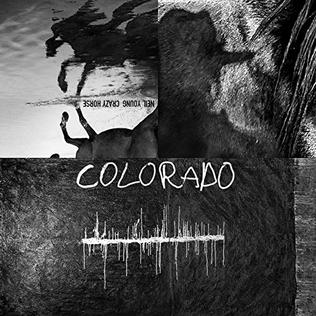
Neil Young 59: Colorado

For half a century, the connotation of Neil Young playing with Crazy Horse inspires the immediate aural image of a plodding electric assault, and with lots of evidence to support that. But the fuzz of “Like A Hurricane”, Ragged Glory, and Psychedelic Pill belies the lower dynamics that Neil has brought out of the guys, such as “Lotta Love”, “Running Dry”, “Oh Lonesome Me”, and countless other tunes with Billy Talbot on bass and/or Ralph Molina on drums. Take also Tonight’s The Night, recorded with that rhythm section and trading guitar and piano duties with Nils Lofgren, who was in Crazy Horse for their debut Neil-less album.

Now that Poncho Sampedro is semi-retired, Nils came back to support Neil and the other two for a few shows, which led to an album. Colorado was recorded in that state, with oxygen tanks on hand to help them adjust to the higher climate, and while many of Neil’s recent quirks are still in place—harangues about the same political issue in consecutive tracks, singing far above his range, yelling tunelessly when he hasn’t bothered to write a melody, as he does on most of the loud ones—the album holds together better than any of the last handful, simply because it offers variety and repels assumptions.

With a blast of harmonica, “Think Of Me” is a jaunty acoustic strum that sounds more like Prairie Wind than Crazy Horse until the harmonies kick in. This promising start is followed by the sludge of “She Showed Me Love”, which ponders the fate of Mother Nature in the hands of “old white guys” and “young folks”. It’s long enough to begin with, but then plods away for another seven minutes of jamming and repeats of the title on top of the six it took to get there. As the only lengthy track on the album, it seems odd that this was the one groove given such an honor.

That’s basically the template for the album: softer songs alternating with loud ones. “Olden Days”, about losing touch with friends for various reasons, sports a nice little riff echoed by the voice and piano (uncredited, though it’s probably Nils), but it seems to be over awfully quickly. Then it’s back to doom, as “Help Me Lose My Mind” alternates an agitated verse with a more inspired chorus change (musically, anyway). The sad little metaphor of “Green Is Blue” is effective, and in case you missed the point, “Shut It Down” pounds it into your head. “Milky Way” was the first track streamed to the public, and while its first-take demo quality underwhelmed then, it works much better in this context. Plus, with its tension being more quiet than loud, it provides welcome contrast.

The charming “Eternity” not only revives earlier lyric ideas, such as a house of love and a train of love, but it also features the tapdancing skills of Nils Lofgren (“click, clack, clickety clack” indeed). Set to a tune we can’t put our finger on, “Rainbow Of Colors” is another attempt at an alternate national anthem, in that it offers a positive message instead of just saying why the other side is wrong. One might think the album would end there, but “I Do” is a tender love song that takes us out very gently, along the lines of “Music Arcade” and “Without Rings”. (Those who bought the vinyl—or paid the subscription—got a bonus in the form of the moody but moving “Truth Kills”, plus a live solo electric “Rainbow Of Colors”.)

Many of Neil’s albums this century have been difficult to absorb; part of that can be ascribed to the loss of producer David Briggs in 1995. Now the death of longtime manager Elliot Roberts, to whom Colorado is dedicated, will likely affect Neil in ways he can’t fathom. We predict this album will have staying power, and those who say it’s not a Crazy Horse album need to revisit Sleeps With Angels.

Neil Young With Crazy Horse Colorado (2019)—3

Friday, July 19, 2019

Paul McCartney 36: Amoeba Gig

Sir Paul has hardly gone into retirement in his advancing years, dedicating lots of time to tours in concentrated chunks, occasionally releasing new material, and revisiting his own catalog at a snail’s pace in direct opposition to what many fans feel he should be doing with it. Where other artists his age have been more organized about how they re-sell their own albums, Paul has gone at it at random, even eschewing vault peeks for straight vinyl releases in different colors. Granted, some of those vinyl releases didn’t come out that way in the first place, but seeing as how a 21st-century vinyl reissue is listed at triple what it would have been originally, there’s gold in them thar hills.

So it was surprising indeed that in a promotion that included multicolored vinyl reissues of Wings Over America, Choba B CCCP, and Paul Is Live—each a “live” release from a different decade—he chose to expand a release that had only been available as a four-song EP. Amoeba’s Secret was recorded at an in-store appearance as part of the promotion for Memory Almost Full, released first as a 12-inch and two years later on CD, then expanded to 12 tracks on the extremely limited Live In Los Angeles freebie CD, and to 14 via his own website. Now dubbed Amoeba Gig, the complete show finally became available on CD; the vinyl got a bonus “Coming Up” from a soundcheck.

So with all that, is the show any good? Oh yes. Such a small venue makes for a nice clean sound, and considering that this is the best band he’s ever employed on his own, the playing is excellent and the recreations masterful. (However, Paul “Wix” Wickens is not to be heard, his place taken by one David Arch.) As for the album he was ostensibly promoting, what became the usual staples are in evidence. “Only Mama Knows” and “Dance Tonight” appear early on, “That Was Me” is extracted from the middle of the “suite”, and “Nod Your Head” is an odd setup for a powerful “House Of Wax”.

The crowd goes nuts for the oldies, of course. The first surprise is “I’ll Follow The Sun”, fleshed out a bit with drums, keyboards, and goofy trick endings, while “The Long And Winding Road” still employs the (albeit toned-down) string arrangement he supposedly loathed. A well-traveled anecdote about “She Loves You” is a wide tangent to “I’ve Got A Feeling”, which has an extended guitar duel for a coda, followed by a blast through “Matchbox”. (Ringo was in the house, but not on the stage, sadly.) His timeworn fakeout of “Baby Face” before “Hey Jude” is about as spontaneous as his exhortations over the last four minutes, but you’d have to have a heart of stone not to be moved when he chokes up during “Here Today”.

Particularly following the hype and ballyhoo surrounding the overrated Egypt Station and its numerous repackagings, Amoeba Gig presents a nice little snapshot of Paul’s live capabilities. It’s also not as time-consuming as Back In The U.S., Good Evening New York City, or the various concert DVDs from other tours of the period.

Paul McCartney Amoeba Gig (2019)—3

Friday, July 5, 2019

Bruce Springsteen 26: Western Stars

Even in this modern age, Bruce Springsteen has managed to keep any new album under wraps until it’s been delivered to the label. Yet no sooner had he announced Western Stars—a low-key set of songs he said was inspired Southern California, Jimmy Webb, Glen Campbell, that sort of thing—than he seemed to disown it, promising a new album with the E Street Band ere long. Outside of Patti, none of those guys are here, save some of the more recent backup singers and horn players, many veterans of the Seeger Sessions era, though David Sancious, of all people, plays on two tracks.

The album was developed slowly over the better part of eight years, during which he got distracted by expanded reissues, an autobiography, a Broadway residency, a couple of tours, and two other albums. The cover art is fitting, as most of the songs indeed express an overall feeling of the open plains. (What is it with these Jersey boys and cowboys, anyway?) The music is also embellished by strings, some real, some synthesized. The tone is set with “Hitch Hikin’”, which is about just that, the strings evoking a Copland sweep. Unless it’s not clear, the next track identifies him as “The Wayfarer”, who’s even more aimless than the guy in the first track, assuming he was actually headed somewhere. The next fella is standing still, waiting for his gal coming in on the “Tucson Train”, and the ending suggests she actually arrives. The title track cleverly suggests both an astronomical description as well as anonymous actors who used to work in the movies when cowboy films were all the rage. Meanwhile, those of us of a certain age know exactly what that “little blue pill” does. Two tracks later, “Drive Fast (The Stuntman)” seems to cover the same theme, though it’s not clear whether the guy works in the industry or is just a lifelong daredevil, but it’s a much better song with surprising key changes; this is the album’s turning point. (In between is the clunker “Sleepy Joe’s Café”, a borderline party song for a catalog that already has too many of them.)

Indeed, the second half of the album is much stronger, where each arrangement really adds to the drama in its prescribed story. The guy who’s been “Chasin’ Wild Horses”, like others here, has been doing that as both his job and by nature. It shares a melodic hook with his Beach Boys homages of a decade earlier, but that big Western sound is brought out on “Sundown”, with its banjo and baritone guitars and yearning lyrics familiar to Wichita linemen and denizens of Galveston and Phoenix. While very brief, “Somewhere North Of Nashville” explores a different kind of has-been, this time a songwriter. The sparse arrangement is a nice departure from the rest. While it seems about as simple, “Stones” finds an excellent lyrical turn and dresses up the few chords very well, and this is one that will endure. Great as it is, “There Goes My Miracle” almost succeeds as the big anthem, but the canned drums throughout the track, and especially on the second verse, leap out of the retro mood he’d been so set on. “Hello Sunshine” brings the prairie sound back; this was the first track the masses heard, and everybody noticed its similarity to “Everybody’s Talkin’”, and Bruce should know the difference between homage and mimicry. Besides, there’s been a lot of sunshine, sunrises, sundowns, and sun in general on this album, putting his skill at sequencing into question. It probably should have gone closer to the beginning, particularly since “Moonlight Motel” could only go at the end of the album. Here the drifter has landed in a town with nothing going on but memories of the one he let get away. (There’s a lot of heartache in these songs.)

Western Stars is a nice album, and succeeds despite itself. The narrators are dusty men, older but certainly wiser and even more hopeful than the guys we met on Nebraska. Many fans loved it right away, while in a surprising departure, Rolling Stone awarded it only four stars. Chances are it’s a grower, more so than the albums he did put out while marinating on this one.

Only four months after the album’s release, a film co-directed by Bruce presented the album in a live format, complete with commentary, that was supposed to suffice for an actual tour. The soundtrack was duly released as Western Stars—Songs From The Film. We haven’t noticed any differences from the album versions, but because it’s treated as a performance it just might have the edge. Plus, only here can you find his unique performance of “Rhinestone Cowboy”, which was the biggest song in the country the week Born To Run came out. Naturally, Rolling Stone raved about it.

Bruce Springsteen Western Stars (2019)—3

Tuesday, June 11, 2019

Neil Young 58: Tuscaloosa

Among his many threats and yet-to-be-realized intentions, Neil Young had dangled the idea of an album called Time Fades Away II, compiled from the first part of the tour that spawned the ragged live album of the original name. Ten years after that bombshell revelation, Tuscaloosa presented most of a show that fulfilled that concept. More so, even; unlike Time Fades Away, which concentrated on new material, this set offers more of what the crowd was likely expecting to hear.

After two tunes played solo and sung flat for even him, the band joins to fill in the sound behind his acoustic, concentrating on the hit Harvest album. Halfway through the program, with no warning, “Time Fades Away” explodes into the speakers, turning up the energy considerably. “Lookout Joe” is introduced as a song for returning vets, and sounds very much like the version came out two years later. “New Mama” appears in its loud incarnation, thank goodness, and for the first time we hear a slight resemblance to “Last Dance”. “Alabama” fits very well with the “new” songs, and “Don’t Be Denied” is still trying to find its arrangement. Frustratingly, the album ends on a fade.

Tuscaloosa is more for diehard fans than casual listeners, and it’s no substitute for Time Fades Away, yet we’re happy to have it. At less than an hour, it seems short; a few songs were left off the release due to repetition or supposedly subpar performances, which goes against Neil’s stated “warts and all” goal of the Archives. (“The Loner” was said to have been out of tune, but based on the evidence eventually allowed to stream on his site, it sounds terrific.) Folks following along in release order may tire of songs that were also on the previous Archives Performance Series release, but the guy only had a handful of albums out at the time. And as he also points out, in 2019 he is the only surviving member of the band, so it’s a tribute to them, too.

Neil Young & Stray Gators Tuscaloosa (2019)—3

Friday, May 3, 2019

Rolling Stones 51: Honk

The initial excuse for yet another Stones compilation in a non-anniversary year was that it was supposed to tie in with an American tour. Which was then postponed due to Mick needing an emergency medical procedure. (We predicted a Viagra-related issue, which has yet to be confirmed.) This didn’t stop the promo machine from pushing the “new” set in the slightest. Honk might actually make sense as a title were “Honky Tonk Woman” actually included anywhere, but it’s not. And that’s just one of several omissions that, despite what the ads say, disprove the claim that the set offers “the very best” of the Stones.

Honk concentrates on the band from 1971 on, so we get tracks that have already been compiled on Made In The Shade, Rewind, Jump Back, Forty Licks (including “Don’t Stop”), and GRRR!, and fear not, they didn’t forget “Brown Sugar” or “Wild Horses”. Granted, this is the first single-CD compilation they’ve offered in 25 years, but considering the small handful of new albums since then, it’s rather pointless.

But—and this is a big but—the deluxe three-disc version mines those recent decades even further, including both of the new songs from GRRR!, three unnecessary repeats from Blue & Lonesome, “Saint Of Me” instead of “Anybody Seen My Baby?” (presumably to skip paying k.d. lang any royalties), two too many choices from A Bigger Bang, and for some reason, “Dancing With Mr. D.” The already-frenzied PR spin suggests we’re supposed to be most excited about performances from the last handful of tours, featuring guest appearances from Dave Grohl, Ed Sheeran, Florence without her Machine, and Brad Paisley. This is the only portion of the album featuring music from the ‘60s, but you probably had to be there. Everything’s recorded well, with Chuck Leavell and Charlie Watts prominent in the mix. Might as well play it loud.

A year after Honk’s release, the world was in the midst of the Covid lockdown, and suddenly the Stones reappeared with a brand new song. “Living In A Ghost Town” is a dark, mildly funky number with lyrics reflecting the world situation. With even less fanfare, it was added as the lead track to streaming versions of the Honk deluxe edition, which shuffled the sequence further.

Rolling Stones Honk (2019)—

Tuesday, March 12, 2019

Tom Petty 23: The Best Of Everything

An American Treasure nicely presented another side of Tom Petty’s well-traveled catalog, so the announcement of a comprehensive double-disc collection with two “new” songs so soon after seemed a tad crass. While the MCA portion of his history had already been anthologized on a single CD, as well as a double and even in a box set, this would be the first time anything from Wildflowers on had been compiled in any way. Thankfully, the powers that be gave the new box time to be appreciated, and delayed The Best Of Everything till the following spring.

Rather than running strictly chronologically, the sequence jumps from year to year to prove it’s all part of the same soup. It repeats everything from the 1993 hits collection, with the exception of “Something In The Air”, adding only “Stop Draggin’ My Heart Around” with Stevie Nicks (which replaced it on later versions of the set) and “Southern Accents”. (Were it up to us, we’d’ve tried to squeeze in “A Woman In Love” and “Change Of Heart”.)

As for the Warner years, every studio album is covered, including his solo outings and both Mudcrutch albums. Wildflowers offers three tracks, though there could easily be more, and She’s The One is well represented by the hit version of “Walls” and the quieter “Angel Dream”. “Room At The Top” is the best choice from Echo, as is “Dreamville” from The Last DJ; that title track is a given. “I Should Have Known It” is the obvious go-to from Mojo, but two from Highway Companion is pushing it. “American Dream Plan B” is here because something had to come from Hypnotic Eye, especially since three songs—all good—come from the second Mudcrutch album, and just one from the first.

The two new tracks aren’t exactly buried treasure. The “title track”, which had already appeared in an alternate mix on An American Treasure, ends the first disc in a version that includes a second verse chopped out before making it to Southern Accents. The second disc closes with “For Real”, something of a statement of purpose that ties in with the music business themes of The Last DJ, which is roughly when it was written. Oddly enough, it was recorded during sessions to add a song to his previous double-CD anthology…

Overall, The Best Of Everything delivers what it promises. While the so-called second half of his career may not have been as prolific or gifted as the hungry years, hearing some of those songs in this context does them a big favor, just as hearing the earlier stuff in something other than the usual order breathes life into them as well. And for that it’s recommended, especially for those who’ve held out on getting a Petty collection until now.

Tom Petty and the Heartbreakers The Best Of Everything (2019)—4

Friday, January 25, 2019

Joe Jackson 20: Fool

He’s always been somewhat defiant, but few artists with the experience of Joe Jackson would release a new album three weeks into the calendar year, historically one of the slowest stretches of the retail season. But he does what he wants, whether anybody likes it or not.

While his previous release was something of “I’ve got enough songs for an album,” Fool keeps it truly simple: eight songs, four per side, recorded quickly after woodshedding them on a summer tour, recorded after the last stop (in Boise) of all places. It’s short enough to get one’s head around, but substantial. There is a recurring theme if you want one, but Fool is really just a collection of strong songs. There’s plenty of piano, plus the indispensable Graham Maby on bass. The guitarist and drummer, who have been touring with him for a few years, carry enough of the vibe of the original Joe Jackson Band while also handling the quieter stuff deftly. Even after making records for 40 years, he can be forgiven for repeating himself, but at least he has the good taste to revisit his better tunes and influences; listen for echoes of XTC, Steely Dan, and even the Beatles.

With an ominous rumble, “Big Black Cloud” balances doom-and-gloom lyrics with a plea for salvation in the choruses, over heavy piano and drums, with some power chords. “Fabulously Absolute” manages to combine punk, new wave, and catchy pop in the arrangement, with sarcastic verses and great transitions. Take a moment to listen to the high-speed syncopated guitar-and-bass combo in the break. “Dave” is a portrait of an average Joe (pun intended, we’ll explain shortly) with a “mind like a sieve” and a “head like a brick” who goes about his simple day, not caring much past his breakfast and pointless job. The chorus basically ponders whether, compared to those of us who wring our hands over the big issues and striving beyond our grasp, Dave may be better off. We also wonder whether the protagonist’s name is intentional, being that the auteur’s given name is actually David. Things travel to near-smooth jazz territory on “Strange Land”, but the piece, lyrics and music and all, rises above that simple label for a gorgeous meditation.

Things pick up for “Friend Better”, which revisits yet again his old favorite “The In Crowd” by Ramsey Lewis, backed by a drumbeat straight off of Blaze Of Glory. The title track is a hodgepodge of styles, with a faux-Mideastern motif, Shakespearean quotes, detours into samba, and shouted lyrics like its counterpart on side one. We’d like to read some further autobiography into “32 Kisses”, a pensive yet wistful look back at a relationship from a mature perspective, choosing to concentrating on the smaller, happier details. It’s a lowkey setup for “Alchemy”, the long closer that approaches lounge territory but still sounds just like him. And if you think about it, it describes what he does for a living.

There’s a lot that sounds familiar here, in the comfortable sense of the word. Fool is his best album since the excellent Rain, and a much more logical follow-up than that Duke Ellington experiment was. The sequence is wonderfully paced, and the sides really do mirror each other somewhat, reinforcing the comedy and tragedy theme in the artwork. Sometimes it’s best to keep it simple.

Joe Jackson Fool (2019)—4