Friday, May 30, 2008

Beatles 14: Yellow Submarine

Despite minimal acting contributions from the band, the animated Yellow Submarine film was a rousing success, and would indoctrinate new Beatle fans for years to come via television reruns. Naturally, there was a soundtrack album, but those looking for all the songs from the film (culled from several earlier albums and singles) on a single disc would have to wait until 1999.

The album was identical on both shores (with the exception of some front cover text and the back cover notes) and followed the US soundtrack tradition by including George Martin’s orchestral score, which took up the whole of side two. This was his most successful yet, with clever musical twists recalling specific scenes; “Pepperland” is an especially lovely melody in its own right, while “March Of The Meanies” is suitably suspenseful.

Side one offers only the four new songs from the movie, with the title song and “All You Need Is Love” as bookends. It’s something of a booby prize for George, the cacophonous “Only A Northern Song” having been bumped from Sgt. Pepper and the psychedelic jam “It’s All Too Much” not even considered for Magical Mystery Tour. “All Together Now” is another simple but fun one from Paul, while “Hey Bulldog”, recorded while they were filming a promotional clip for “Lady Madonna”, gives John a chance to rock.

The LP was released intact on CD twenty years later on the same day as the White Album CD, leaving many fans scratching their heads as to why the four new songs weren’t simply postponed for inclusion on Past Masters, but more on that later. (A five-song EP—with the four new songs plus “Across The Universe”, of all things—was sequenced for release in early 1969, then cancelled.) It remains one of the least popular Beatles CDs.

When the film underwent a major visual overhaul to coincide with its 30th anniversary, the advertising wizards decided to prepare a companion album that would include every song from the film. Yellow Submarine Songtrack was very well received, if strangely sequenced. Overall, the sound is beefier and nicely complements the brilliant colors of the restored video. Having been restored to its proper place in the film, “Hey Bulldog” was the emphasis track, and was even promoted with re-edited footage from the old “Lady Madonna” promo clip to sync with the recording. A new mix of the title track brings out more sound effects and John’s responses on the last verse.

At only 45 minutes, the feeling remains that there should have been more here; for instance, “It’s All Too Much” is still missing the extra verse heard only in the movie. And even though the film includes a five-second snippet of harmony rehearsal for “Think For Yourself” as well as the intro from “Love You To”, that doesn’t quite justify the inclusion of both here as complete songs. (The same could be said for “Baby You’re A Rich Man”, which was truncated in the film, but we like it anyway.)

The Beatles Yellow Submarine (1969)—3
The Beatles
Yellow Submarine Songtrack (1999)—4

Wednesday, May 28, 2008

George Harrison 1: Wonderwall Music and Electronic Sound

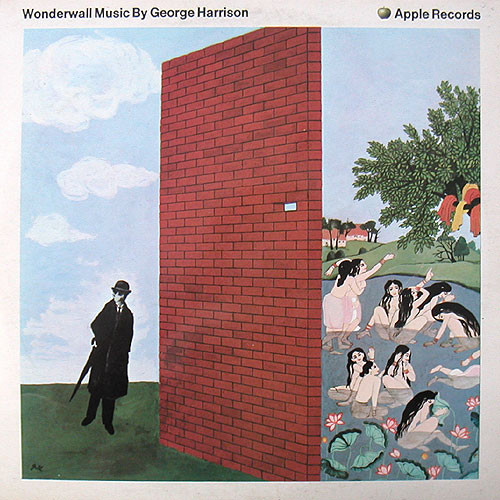
Not counting Paul’s soundtrack to The Family Way, which was largely facilitated by George Martin, George Harrison was the first Beatle to put out a solo album. (He was also the first Beatle to utilize the Apple label as an outlet for his extracurricular work.) Wonderwall Music was released in late 1968, and Electronic Sound followed in May 1969 on the short-lived Zapple label. They are perfect examples of albums no one would care about if George’s name wasn’t on the cover.

The soundtrack to a film that, again, got attention mostly from George’s involvement, Wonderwall Music consists of music played by lots of people besides George, and most likely not even specifically composed by him. But to his credit, he took the opportunity to present a collection of Indian music (much like Peter Gabriel would do twenty years later) along with some more standard rock fare with trippy psychedelic overtones that meshes neatly with the fake ragas. Among the standout rock tracks is “Red Lady Too”, which is based around some faux-baroque piano arpeggios. “Skiing” most likely features Eric Clapton, while “Party Seacombe” has a pleasant groove, with processed voices. “Drilling A Home” has echoes of Harrison fave George Formby, with a trad-jazz loop that had been part of an early mix of “Flying” from Magical Mystery Tour. “Wonderwall To Be Here” has a mournful melody that now bears a resemblance to King Crimson’s “Epitaph”, while “Dream Scene” is a montage that suggests George may have had more in common with “Revolution 9” than he’d like to admit. (One of the drummers used throughout the album is Ringo; see if you can pick him out.)

As a whole it’s not altogether unpleasant, if one can handle the occasional solo by that violin that sounds like a sick cat. We like the album a lot, but it’s not for everybody. (When reissued in the first Apple CD rollout, it included glowing liner notes by Derek Taylor, which, like most of his latter-day writings, are a pretty strong advertisement not to take acid. The 2014 edition added three tracks: “Almost Shankara”, an outtake from the India sessions; “In The First Place”, the George-produced single by the Remo Four lost and then included with the DVD of Wonderwall; and most tantalizingly, the original backing track for “The Inner Light”.)

While Wonderwall Music seems to have remained in George’s heart throughout the years, he barely mentioned Electronic Sound since its first appearance. One reason could be that one whole side was supposedly an extemporaneous performance by Bernie Krause, only to be credited to George (sound familiar?). Or perhaps it was always intended to be disposable. Musically, there’s not much here at all. There are some sinister sounds, jarring swooshes and the occasional flatulent outburst throughout both sides; in time the average Moog user would use these effects sparingly rather than try to sustain a full-length album with them.

Electronic Sound is often asterisked on lists as “for completists only”, and justifiably so. It was quietly reissued on CD in 1996, but only in Europe, and not for long. The Apple Years box set would bring it back worldwide, but 45 years after the fact. Luckily, back in the present day, George’s next solo release — his real solo debut — was a much better portrait of his potential.

George Harrison Wonderwall Music (1968)—
2014 Apple Years reissue: same as 1968, plus 3 extra tracks
George Harrison Electronic Sound (1969)—1

Monday, May 26, 2008

Beatles 13: The White Album

The Beatles stayed relatively quiet musically throughout 1968 while being constantly in the news. The year saw exactly two singles plus one double album appear, and Capitol fought the temptation to collect some of the loose ends onto an LP. (Of course, the Magical Mystery Tour album had taken care of the bulk of the recent leftovers.)

At this point in their career the boys were teeming with ideas, and had the pull to cram as much music as they wanted onto wax—in this case, a two-record set in a plain white cover simply titled The Beatles, which was immediately informally dubbed the White Album. If they had the nerve, they could have put out a three-record set, and it would have sold. As it is, one of the ongoing arguments among Beatlemaniacs is how to create the perfect single-disc version of the White Album.

One reason is that there’s so much to choose from, and most of it is really, really good. They’re still using lots of studio tricks, but they’d just come back from India with thirty songs that had been constructed on acoustic guitars. Most of the performances are straightforward rock ‘n roll songs, and the rest are pretty mature ideas from a bunch of kids with nothing but time.

Even with all the music to choose from, the boys took care to sequence the album well. Neither John nor Paul gets more than two songs in a row, George gets a song on each side—and they’re all excellent—and even Ringo appears twice, one of which being a song he wrote all by himself. (He managed to accomplish this even having quit the band for a few weeks during the sessions.) They also put all the song titles with animals on the same side. Yet despite the wide range of styles, genres, and attitudes, plus the isolationist method each used to craft their songs, the album still makes a cohesive whole. (Also, by this time there weren’t any differences between the American and British versions, except for some cosmetic touches in the factory-stamped packaging, which included lovely individual color shots of the boys, plus a fascinating collage of a poster with all the album’s lyrics—save one track—on the other side.)

We fly in with the Beach Boys pastiche of “Back In The U.S.S.R”, slip over to check on “Dear Prudence”, and are jolted into reality with the mythological baiting of “Glass Onion”. “Ob-La-Di, Ob-La-Da” is fun despite itself, while Paul turns it upside down for “Wild Honey Pie”. John provides a twisted nursery rhyme worthy of his books in “The Continuing Story Of Bungalow Bill”, and George shines with “While My Guitar Gently Weeps”. “Happiness Is A Warm Gun” rocks out side one.

“Martha My Dear” isn’t really about Paul’s dog, but “I’m So Tired” is a clever sequel for a guy who used to be only sleeping. “Blackbird” presents a folk allegory before the classical counterpart in George’s “Piggies”, and “Rocky Raccoon” continues the animal theme, kinda. Ringo finally finishes the song he’d started at least five years earlier in “Don’t Pass Me By”, whereas Paul took way less time for “Why Don’t We Do It In The Road?” “I Will” is sweet and simple, but John’s tribute to his mother (and Yoko) in “Julia” is the true gem.

Just in case you forgot what a good band this is, “Birthday” and “Yer Blues” positively scorch. “Mother Nature’s Son” is something of a respite before the clanging bell and upside-down rhythm in “Everybody’s Got Something To Hide Except Me And My Monkey”. “Sexy Sadie” offers up some dirty doo-wop, but “Helter Skelter” sets everything on fire, just so George’s purposely quiet “Long, Long, Long” can calm things down.

A version of “Revolution” markedly different from that summer’s B-side takes some of the edge off it, and “Honey Pie” is not at all like the preview on side one. “Savoy Truffle” is George’s sax-filled tribute to chocolate and dental bills, and “Cry Baby Cry” is John’s final nod to Lewis Carroll. A spooky snippet from Paul leads into an overheard conversation and a voice chanting “number nine” for eight nightmarish minutes dubbed “Revolution 9”, which finally fade away so Ringo can sing the lullaby of “Good Night”, since nobody else possibly could.

Revolver is the ultimate desert island CD, but if you can bring an album, you could make a persuasive argument in choosing the White Album. It doesn’t get five stars, since too many people would have a justifiable beef over “Revolution 9”. “Birthday” has also worn out its welcome over the years. Would it really be better as a single album? Maybe. But Paul said it best: “It’s the bloody Beatles White Album, shut up.” Okay then.

But how about this: Dear Prudence - Glass Onion - While My Guitar Gently Weeps - Martha My Dear - I’m So Tired - Blackbird - Piggies - Don’t Pass Me By; Yer Blues - Mother Nature’s Son - Sexy Sadie - Helter Skelter - Honey Pie - Cry Baby Cry - I Will. Those are the current Everybody’s Dummy contenders for a single-disc, 45-minute White Album (with “Ob-La-Di, Ob-La-Da” backed with “Long, Long, Long” for the concurrent single). And it’s never easy.

A limited CD package that merely replicated the cardboard packaging of the album, with top-loading pockets for the inner sleeves, photos, and poster, was released for the album’s 30th anniversary. But two decades later, a year after Sgt. Pepper was extravagantly expanded for its own 50th anniversary, the White Album got similar lush treatment, starting with a fresh mix. The cheap version added a bonus disc of the so-called “Esher demos”, 27 songs recorded on acoustic guitars and percussion at George’s house the week before the album sessions started, including some that would be held over for future projects. Non-fanatics might have heard some of these on Anthology 3, but here they all were in best-ever sound, albeit arranged in the eventual album order.

That was all well and good, but a mere trifle compared to the Deluxe Edition, which came in the form of a gorgeous hardcover book—numbered, of course—with a Blu-ray disc with the requisite 5.1 surround mixes and even the mono mix, and wonder of wonders, three more CDs of session outtakes, most never even bootlegged. These traveled the whole length of the project, beginning with the ten-minute take of “Revolution 1” that would become the basis of that track as well as “Revolution 9”. We get to hear works-in-progress of most of the album, as well as “Hey Jude” and “Revolution”, early versions of “Good Night” with guitar and harmonies, more of the sequence that led to “I Will” and the “Can You Take Me Back” snippet, 13 minutes of “Helter Skelter”, a surprising jam on “Let It Be”, and most of all, audio evidence of all four guys actually enjoying themselves and each other. For balance, the set closes with peeks at “The Inner Light”, “Lady Madonna”, and “Across The Universe”, helping to present a wider picture of the band in 1968.

Naturally, this is only the tip of what was recorded, as the book tantalizingly details other takes, and the compilers were careful not to repeat too much from Anthology 3. There are those who will not die happy if they don’t hear the 27-minute version of “Helter Skelter”, and some video material would have been nice, but now that one of the most famous double albums has been tripled in size, it’s moot.

The Beatles The Beatles (1968)—
2018 50th Anniversary Edition: same as 1968, plus 27 extra tracks (Deluxe Edition adds another 50 tracks plus Blu-ray)

Friday, May 23, 2008

Elvis Costello 6: Trust

Trust followed a period of doubt, disenchantment, and introspection (not to be his last) that was only slightly reflected in the lyrics. Elvis wrote some of the songs on piano—which pervades throughout the album—and pulled a few from his teenage notebooks. The words are more oblique than ever, and many struggle to fit inside the measures. His voice is a little deeper, and a little weary. It’s still a terrific album.

There are a lot of “big numbers” here. “Clubland” was the current single, and opens the proceedings on a slightly sinister tone. “Lovers Walk” and “Strict Time” turn the New Orleans sound of the Meters upside down while spitting out wordplay; in between “You’ll Never Be A Man” makes one sigh with relief that such bile is directed at someone else, and “Pretty Words” features the most economical overuse of crash cymbals on any rock album. “Luxembourg” hurtles by at top speed to the point of gibberish, but the more clockwork “Watch Your Step” manages to succeed despite being a weaker variation on “Secondary Modern” (from Get Happy!!).

They’re all solid songs with unique arrangements, but the prize goes to “New Lace Sleeves”, easily one of Elvis’s best songs and one of the Attractions’ best performances in the entire catalog, from Pete Thomas’s drums to Steve Nieve’s piano, organ, and melodica, while Bruce Thomas keeps it simple on the bass. “From A Whisper To A Scream” features Glenn Tilbrook of Squeeze (whose East Side Story Elvis and engineer Roger Bechirian had produced around this time) on dueling vocals, and “Different Finger” works yet another country-western trope in a clear hint to his next move. “White Knuckles” is starkly worded but powerfully performed, culminating in an unlikely singalong over the fade. Nobody expected “Shot With His Own Gun”, a hypnotic murder mystery without a discernable plot, sung solely to Steve’s grand piano, then we get more pub rock as “Fish ‘N Chip Paper” bemoans the degradation of society. The solo finale, “Big Sister’s Clothes”, is a disguised attack on Margaret Thatcher—also not to be his last—recorded alone, backwards accordion and all, to the point where the sleeve reads “Nick Lowe not to blame for this one”.

As good as the original album is, the Rykodisc reissue made it even better with an excellent selection of bonus tracks, all but one of which were also included on the later Rhino version. Either is essential for the inclusion of such gems as the B-sides “Black Sails In The Sunset” (wrongly faded on Ryko, restored on Rhino) and “Big Sister” (a ska version of the album closer), the work in progress “Twenty-Five To Twelve”, and even Elvis’s own fabulous version of Steve’s “Sad About Girls”, one of the better songs from the Attractions’ “solo” album from a year earlier. “Weeper’s Dream” is a brief instrumental sketch, while “Love For Sale” and “Gloomy Sunday” show his fascination with the Great American Songbook.

While the Rhino version did not carry over the excellent demo for “Seconds Of Pleasure”, it did include the one for “Boy With A Problem”, and even added an instrumental of “The Long Honeymoon”, giving a preview to his next album but one. The alternate takes are generally revealing; “Clubland” is slower and more hesitant, and doesn’t have the overt steal from “Rhapsody In Blue”, but you can still hear how “On Broadway” would fit in. “From A Whisper To A Scream” certainly benefitted from Glenn Tilbrook’s contribution. “Big Sister” is taken even slower, angrier, and probably drunker, following a fun bash through Larry Williams’ “Slow Down”. There’s even a remake of “Hoover Factory” for some reason. It would have been tough to improve on the Ryko CD, but Rhino came through.

Elvis Costello & The Attractions Trust (1981)—5
1994 Rykodisc: same as 1981, plus 9 extra tracks
2003 Rhino: same as 1981, plus 17 extra tracks

Wednesday, May 21, 2008

Beatles 12: Magical Mystery Tour

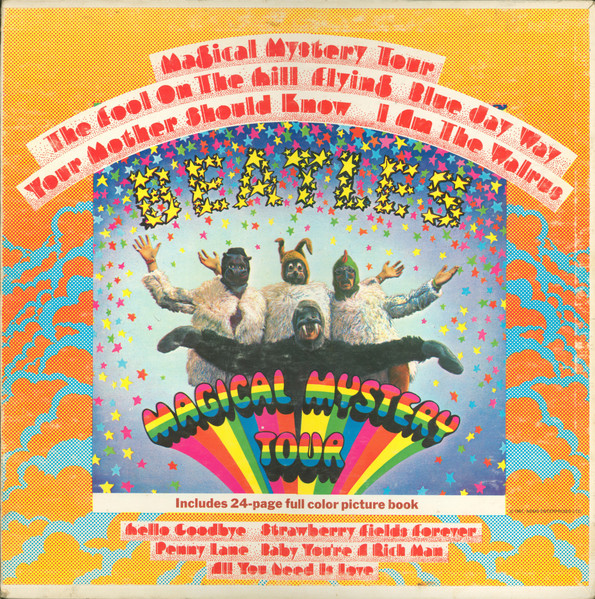
The soundtrack to a TV film initially slammed as indulgent, Magical Mystery Tour was issued in the UK as a deluxe double-EP set complete with psychedelic booklet. EPs have long been popular merchandise with a distinct demographic in Britain, but the few tries Capitol had made with the format failed completely. Americans liked 45s, and happily bought full-length albums with all the hits, especially with the quality of Beatles music. So this time, Capitol took all six tracks from the British set and added five extraneous singles sides from the year, making for a very cohesive album. The title track, like “Strawberry Fields Forever” and “Penny Lane”, had been started during the Sgt. Pepper sessions, so all the disparate songs from a very productive year fit well into the fuzzy, trippy mix.

One thing that pervades this album is fun. With the possible exception of “Strawberry Fields” and George’s “Blue Jay Way”, all the tracks deliver a sense of warped playfulness, for possibly the last time in their career. (Considering it was all for a project Paul alone seemed excited about, that says something for their camaraderie.) John delivers some of his more creative work, with “I Am The Walrus”, “Baby You’re A Rich Man”, “All You Need Is Love”, and the masterful “Strawberry Fields”—all compact classics—while Paul indulges his silly side, with “Hello Goodbye”, “The Fool On The Hill”, “Your Mother Should Know”, and “Penny Lane”. Even the simple instrumental “Flying” fits with the rest of the program.

For once it could not be argued that Capitol was onto something. The expanded LP was a concept that worked so well it was eventually released officially in the UK after years of import sales, and even issued in other countries preferring the LP format. It was also included in the late-‘80s CD rollout, and remains in the official Apple-approved catalog today. If you enjoy Sgt. Pepper, you need Magical Mystery Tour; together they give you everything else the boys did in 1967. And chances are, it will enjoy more spins in your CD player than its big brother. (As for the film itself, let’s just say it’s got its moments.)

The Beatles Magical Mystery Tour (1967)—5

Monday, May 19, 2008

Neil Young 1: Neil Young

Having developed a taste for the studio while working with Buffalo Springfield, Neil Young threw himself into his first real solo album (as opposed to simply writing and producing his own songs for Springfield albums). Neil Young has a lot of elements that would reappear down the road, but mostly shows he hadn’t figured out his own sound yet. His voice, in particular, is hesitant, almost trying to croon.

The album opens with “The Emperor Of Wyoming”, a country instrumental with lush strings. “The Loner” has scarier strings, and introduces the distorto-compressed guitar sound that permeates the rest of the album. “If I Could Have Her Tonight” starts nicely, and is almost immediately blown out the door by the urgency of “I’ve Been Waiting For You”. To this day “The Old Laughing Lady” is hard to hear and slow as molasses, features female vocals and strings that make one want to sleep with the lights or the TV on.

Side two kicks off with another instrumental (“String Quartet From Whiskey Boot Hill”) that Neil didn’t even write, for a song he hadn’t finished. It somehow flows nicely into “Here We Are In The Years”, an early meditation on ecology undermined by his unsure vocal. “What Did You Do To My Life?” sounds a lot like the other songs on this album, and is followed by the superior “I’ve Loved Her So Long”. After all these short tunes, “The Last Trip To Tulsa” still gets points for being what it is: a solo acoustic performance with lyrics too weird to be considered surreal. At nine minutes it takes up a good chunk of time and the imagery doesn’t make a lot of sense, but it’s still kinda funny, and the extreme strumming keeps you from tuning out. And then it just ends.

Neil Young is not his worst album, but it would be far from his best. Even he knew it, and matters weren’t helped when the first pressings were subjected to an experimental mastering process that was intended to make it more easily compatible with both stereo and mono outputs, that still being a thing in those days. That gave him an excuse to remix it, but ultimately it’s not the sound that let him down. Yet for all its tentativity, the songs have endured, and he would continue to play them over the decades, honing them into arrangements more true to himself.

Neil Young Neil Young (1968)—3

Friday, May 16, 2008

Elvis Costello 5: Taking Liberties

With the differences between American and British versions of his first three albums, plus several B-sides and EP tracks taking up space in the import racks, Elvis had amassed more than enough for a “rarities” compilation. The UK version (Ten Bloody Marys & Ten How’s Your Fathers) was initially released only on cassette, but Columbia in the US put a little more interest into the Taking Liberties LP. Each boasted twenty songs—just like Get Happy!! And of course, the albums were different: Ten Bloody Marys sported the three singles added to the US albums (“Watching The Detectives”, “Radio, Radio”, “Peace, Love And Understanding”), while Taking Liberties includes “Night Rally”, “(I Don’t Want To Go To) Chelsea”, and “Sunday’s Best”. Well, two out of three ain’t bad.

Both albums included detailed discographical liner notes, right down to catalog numbers, as to the origin of the tracks, but Taking Liberties had a glowing endorsement on the back cover by Columbia’s A&R guy, much like Don Kirshner used to do for the Monkees. It also sported customized retro labels, which must have delighted Elvis no end.

Some of the songs made it all too clear why they’d been left off albums, but those who hadn’t been chasing down singles and imports had several new favorites to smile about. “Clean Money” is a revved-up template for “Love For Tender”, and feature the now-rare Attractions harmonies. “Girls Talk” had already been a hit for Dave Edmunds, and would soon be covered by Linda Ronstadt, along with “Talking In The Dark”. “Radio Sweetheart” was one of his first B-sides, and along with “Stranger In The House” gives hints of a Nashville influence that would resurface all too soon. Along the same lines, “Black And White World” is a low-key demo, wiped away by the snotty rock of “Big Tears” (with Mick Jones of the Clash on lead guitar). The aching “Just A Memory”, written for Dusty Springfield, shows his sensitive side, and the alternate take of “Clowntime Is Over”, which cuts the pace in half, is arguably as good as the standard version.

Van McCoy’s “Getting Mighty Crowded”, which Elvis either knew from Betty Everett or the Alan Price Set, would have been extraneous on Get Happy!!, and here sets up the odd portrait in “Hoover Factory”. But then there’s “Tiny Steps” a B-side similar to “Big Tears” but just as solid. The impenetrable “Dr. Luther’s Assistant” is just plain ugly, a one man band trifle, as is the closing “Ghost Train”, but “Crawling To The U.S.A.” and “Wednesday Week” are more great performances from the Attractions. His brief solo “My Funny Valentine” is as surprising as it is lovely.

While obviously not as strong a set as any of the first four albums, anyone would be happy to have leftovers of this quality. Once the catalog had been standardized with the first expanded reissues, Taking Liberties (and Ten Bloody Marys) went out of print, but the seventeen common songs could all be found on various Rykodisc and Rhino versions of My Aim Is True, This Year’s Model, Armed Forces, and Get Happy!! (The later Deluxe Editions of the first three include some of these tracks as well.) The six swapped songs from the first three albums are on their respective CDs.

Elvis Costello Taking Liberties (1980)—3
Current CD availability: none; download/stream only