Showing posts with label 1992. Show all posts

Friday, May 22, 2026

Grateful Dead 23: Two From The Vault

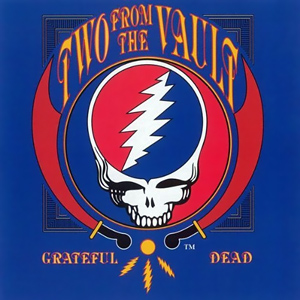
The curators of the Grateful Dead’s archives were always mindful, knowing that their audience was somewhat particular. Rather than just throw any show out on the market, even if it had already been shared and dubbed on countless tapes, whatever they released needed to be important or unique. So it was in the case of the second installment of the From The Vault series.

At the time, this 1968 show was the earliest one they’d yet officially released, on top of being one of the few professional recordings from that year. Amazingly, some of the band wasn’t thrilled with the tapes back in the day, and even used them as a reason to justify firing Pigpen and Bob Weir for not keeping up with the others musically. Luckily for this supposedly less-than-dynamic duo, they would be reinstated soon enough, and ‘90s technology enabled us all to hear what the dissenters couldn’t then.

Pigpen was still a focal point onstage, so they open with a 16-minute “Good Morning Little Schoolgirl”. But then the suites start to flow: “Dark Star” into “St. Stephen” and “The Eleven”, slowing down for “Death Don’t Have No Mercy”. None of these were on either of their two albums, and could have filled up an album on their own. After a new seconds to regroup (and change CDs for the listener) they head right into “That’s It For The Other One” and “New Potato Caboose”, both twice their album length, followed by 17 minutes of “Turn On Your Love Light”. The crowd’s begging for more, so they get “Morning Dew”, which builds until the power is cut.

Two From The Vault certainly makes a nice companion to Live/Dead, unless you didn’t like that album to begin with. It portended well for the future of the series, except that further excavations would emerge under another banner, leaving this one all but abandoned. (Three songs—totaling 34 minutes—from the night before appeared on the first expansion of Anthem Of The Sun, and eventually comprised the bonus disc in Rhino’s expansion of this album fifteen years after its original release.)

Grateful Dead Two From The Vault (1992)—
2007 reissue: same as 1992, plus 3 extra tracks

Friday, June 6, 2025

Elton John 27: Greatest Hits Volume III

The live album notwithstanding, 1987 was Elton John’s first year without new material since his first album. But thanks to the label switch, he still had product in the racks. Somehow Geffen was able to license two tracks that were on MCA, which is how a third volume of so-called greatest hits happened, ten years after the last one, and mere months after Live In Australia came out.

Side one is indisputably strong, proof that even his lesser albums had great songs. It’s hard to argue with this lineup: “I Guess That’s Why They Call It The Blues”; “Mama Can’t Buy You Love”; “Little Jeannie”; “Sad Songs”; “I’m Still Standing”; “Empty Garden”. We’d like to say the same for side two, but these particular hits just aren’t as strong. Much as we like “Kiss The Bride” and “Blue Eyes”, “Heartache All Over The World” is just too fluffy, and “Too Low For Zero” hadn’t even charted as a single. “Nikita” belongs here, of course, but “Wrap Her Up” was likely included due to the presence of George Michael, then riding high with Faith.

Only five years later his catalog was standardized worldwide, with everything in the US reverting to MCA (even though Geffen was part of MCA by this time anyway). Because of licensing and whatnot, songs on the second hits album had been switched, but that meant that “Sorry Seems To Be The Hardest Word” and “Don’t Go Breaking My Heart” were now selling points on the revamped Greatest Hits 1976-1986. Best of all, those songs replaced “Heartache” and “Too Low For Zero” figuratively and literally, and the set even added “Who Wears These Shoes?”

The sequence was different from the Geffen album, shuffling the “new” songs on side one of the cassette—there was no LP version, being 1992—and going chronologically for side two. Geeks like us also appreciated the copious track information, including players and even recording dates. While the cover photo reflected the year of release and not the material, it’s still a strong collection, and preferred to its first incarnation.

Elton John Elton John’s Greatest Hits Volume III 1979-1987 (1987)—3
Elton John
Greatest Hits 1976-1986 (1992)—

Friday, April 11, 2025

Izzy Stradlin: Ju Ju Hounds

After fourteen or so years of putting up with Axl Rose, Izzy Stradlin had had it, and left Guns N’ Roses shortly after the Use Your Illusion albums came out. While the band stumbled around the world promoting the albums, Izzy quietly put together a band of his own, tapping Rick Richards of the Georgia Satellites on lead guitar, journeyman bass player Jimmy Ashhurst, and respected drummer Charlie Quintana. MTV News aired the first preview of the band, playing a song highlighting his raspy voice that strangely would not be included on the full-length Izzy Stradlin and the Ju Ju Hounds album.

While there are some nods to punk and reggae, the Stones and the Faces are the clear influence here, and not just because Ian McLagan plays organ on half the album. “Somebody Knockin’” and “Cuttin’ The Rug” aren’t that far removed from the new Keith Richards album, whereas “Train Tracks” is dominated by heavy slide. “Time Gone By” and “How Will It Go” lean on acoustics and mandolins for a more rootsy sound, but the clear highlight of the album is the single “Shuffle It All”, opening with a cool bass line that runs through much of six minutes. Too bad we can’t make out most of the lyrics. “Bucket O’ Trouble” is near speed metal that Axl might have enjoyed if he bothered to listen to it, while “Pressure Drop” is given a revved-up treatment faster than even the Clash, with a half-time coda that’s slower than the Specials. The cover of Ron Wood’s “Take A Look At The Guy”, with the auteur himself yelling along, serves only to make Izzy’s own voice sound that much more melodic, but it does extend the moody ending, which was faded on the original. Nicky Hopkins and the Waters Sisters are brought in for the sleepy ballad “Come On Now Inside” that closes the album. (Stuck at the end is a hidden track called “Morning Tea”, which is mostly two minutes of tribal drums with some melodic feedback low in the mix.)

Despite good reviews and whatever momentum GN’R had, the album got somewhat lost in an industry being dominated by grunge and in between Black Crowes albums. While the band did tour behind it, Izzy cancelled a bunch of dates because, well, he just didn’t like touring anymore. Six years would go by before he released a follow-up and was dropped from the label, and since the turn of the century he’s released further albums, usually via iTunes, and joined up with the evolving Guns N’ Roses on fleeting occasions, always leaving as abruptly as he’d emerged. Wherever he is now, he’s probably enjoying the peace and quiet.

Izzy Stradlin and the Ju Ju Hounds Izzy Stradlin and the Ju Ju Hounds (1992)—3

Tuesday, June 4, 2024

Thomas Dolby 4: Astronauts & Heretics

The ‘80s were already a distant memory by the time hair metal gave way to grunge, so where did that leave an innovator such as Thomas Dolby? Most recently he had made a cameo as the schoolmaster in Roger Waters’ all-star staging of The Wall in Berlin, which he actually pulled off. Meanwhile, on Astronauts & Heretics he continued concocting accessible, quirky pop colored by synthesizers but not dominated by them.

“I Love You Goodbye” takes us to the bayou—literally, with not only Cajun legends Michael Doucet and Wayne Toups on the track, but swampy percussion and sound effects. It’s a wonderful musical blend that unfortunately doesn’t permeate the album, but it’s a terrific way to start, and at least it doesn’t wear out its welcome. Two fairly short songs follow; “Cruel”, basically a duet with Eddi Reader, is a much softer change of pace, then Michael Doucet’s fiddle (and some of that percussion) returns to color the jaunty “Silk Pyjamas”. “I Live In A Suitcase” sounds most like his Flat Earth period, if a little more contemporary-sounding.

As long as we’re looking back, the clattery “Eastern Bloc” is pointedly designated as “Sequel To Europa And The Pirate Twins, 1981”, which is obvious in the second verse. It’s a throwback, but not a retread, particularly with Eddie Van Halen on lead guitar. Eddie also plays on “Close But No Cigar”, but we wonder how much the overt Beatle sample cost to procure. It relies a little too much on the title for the lyrical content, but it leads in well to the slightly retro “That’s Why People Fall In Love”, this one featuring harmonies from Ofra Haza. The mood turns way down for “Neon Sisters”, prefaced by a dramatic dedication, and featuring a few members of Siouxsie’s Banshees. Given the times, it’s not clear whether the subject of the song succumbed to AIDS or addiction, but it’s haunting nonetheless. We’ve had a lot of pop so far, and then “Beauty Of A Dream” provides a timeless conclusion, with the added pleasure of both Bob Weir and Jerry Garcia on the track.

The album’s bookends make Astronauts & Heretics a pleasant surprise. It’s pretty catchy, with his past wackiness completely toned down. One gets the idea that he was more concerned in making an album he wanted to make, stocked with his wish list of collaborators. He then pointedly stayed away from courting the pop charts to further explore to possibilities of music in the computer industry. Which made perfect sense.

Thomas Dolby Astronauts & Heretics (1992)—3

Friday, May 24, 2024

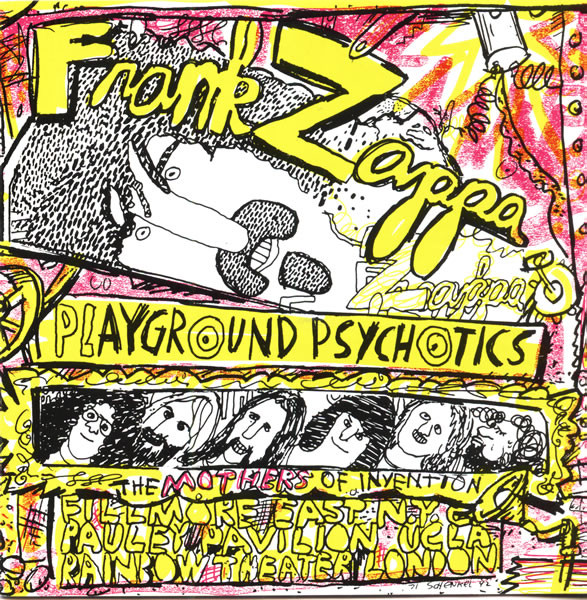
Frank Zappa 52: Playground Psychotics

After preparing and releasing twelve hours of music collated from his entire career, Frank’s next big project was dedicated to the Flo & Eddie era of the band. Playground Psychotics combined field recordings with concert excerpts to provide a widescreen portrait of what he called “A Typical Day On The Road”.

Each disc starts with several minutes of indexed dialogue captured by his trusty portable tape recorder, capturing the band and roadies in conversation on planes, in hotels, and backstage. One segment is an interview with the manager of the hotel where the infamous “mud shark incident” took place. “Diptheria Blues” is a dressing room jam featuring Aynsley Dunbar on whiskey bottle. Much of the humor, onstage and off, is clearly visual, so lovers of in-jokes and bathroom humor will be in heaven. Things get truly nutty when we get to hear tape recordings featuring playbacks of recording captured on other band members’ tape recorders, culminating in the closing segment on disc two. Some of this was excerpted from the videotape The True Story Of 200 Motels, briefly documenting the cause and result of Jeff Simmons quitting the band, not wanting to be fodder for Frank’s thesis at the expense of his musicianship.

The musical excerpts are far more interesting, with further songs from the Rainbow Theater show that ended with Frank being knocked off stage, which we don’t get to hear here. While the Pauley Pavilion is listed as another source, the only music heard from that show is a short “Divan” segment of what would become “Sofa”. Instead, much of the music comes from the Fillmore stint, including older songs and a thirty-minute “Billy The Mountain” (cobbled together from two shows) that’s actually listenable. One of the key selling points of this album outside the Zappa faithful is an alternate mix (and edit) of what Beatle fans knew as side four of John & Yoko’s Some Time In New York City, documenting their guest appearance with the Mothers. Despite being given such new song titles as “Aaawk” and “A Small Eternity With Yoko Ono”, “Well” is still the only segment of true musical appeal.

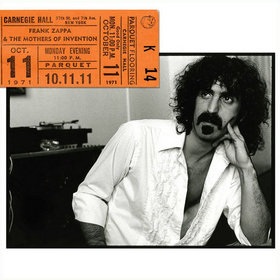
Because of the anthropological approach, Playground Psychotics will be mostly of interest to fanatics who can stomach Flo & Eddie. While cramming several months of material into two CDs is no small feat, a larger context was certainly needed. Sure enough, the band’s two sets at Carnegie Hall in October 1971 were released in a four-CD package forty years later, in decent-sounding mono and including a performance by the doo-wop combo and support act The Persuasions. (Carnegie Hall was reissued a little over eight years later as a three-disc set that omitted the Persuasions segment.) Hearing the transitions and dynamics as played shows just how hot the band was, but you also have to endure the vocalists’ attempts at humor. “Magdalena” is even more repulsive here, and 15 minutes are devoted to “The Mud Shark”. There’s a more complete “Divan” suite (including “Stick It Out”, eight years before Joe’s Garage) with lots of four-letter words in English and German. Beyond that, “King Kong” runs a half an hour to accommodate solos—though it abandons the 3/8 meter after the first minute or so—and “Billy The Mountain” is now up to 47 minutes.

That was all well and good, but connoisseurs would be even more sated ten years after that by The Mothers 1971. This eight-CD set encompassed all four unedited Fillmore sets (including John & Yoko, unexpurgated) and the complete Rainbow show, with another sixteen songs from Scranton and Harrisburg in between to present a sort of virtual concert. With so many repeats of the material, “Billy The Mountain” emerges as a major if silly work, and we can almost start to appreciate the musicality of the “Shove It Right In” suite; it’s just too bad that the lyrics are so puerile. If you want to hear a ribald take on “My Boyfriend’s Back”, here’s your chance. Turns out Don Preston only played on the encores at the Fillmore, which certainly helped cool Frank’s otherwise petulant mood. Don’s fully on board at the Rainbow, leading the opening “Zanti Serenade”, extended for another ten minutes here. “Wonderful Wino” is still in the set, and the encore was “I Want To Hold Your Hand”, after which we can actually hear Frank hitting the concrete floor.

Frank Zappa/The Mothers Playground Psychotics (1992)—2
Frank Zappa & The Mothers Of Invention
Carnegie Hall (2011)—
The Mothers
The Mothers 1971 (2022)—

Friday, March 1, 2024

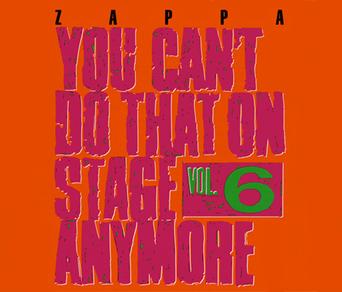
Frank Zappa 51: You Can’t Do That On Stage Anymore Vol. 6

The sprawling You Can’t Do That On Stage Anymore series presented the good, the bad, and the ugly throughout years of performances. This is thoroughly demonstrated on the first disc in this final volume, which deals explicitly with “the topic of sex (safe and otherwise)”.

Of course, it wasn’t enough to write songs about sex; Frank wanted to talk about it too, so several monologues and raps on the topic dot the disc. That said, “The M.O.I. Anti-Smut Loyalty Oath” from 1970 is a mildly humorous statement in the wake of Jim Morrison’s obscenity trial. “The Poodle Lecture”, spoken over the “Stink-Foot” rhythm, kinda fits into the theme, as a setup for “Dirty Love”. Less successful are “The Madison Panty-Sniffing Festival”, which is exactly what it sounds like, and “Lonely Person Devices”, which sets up “Ms. Pinky”. His diatribe about Peter Frampton’s “I’m In You” is less necessary when “I Have Been In You” appears twenty minutes later, bookended by improvs on “The Torture Never Stops” with a very loud sex tape over the PA. It’s back to the Fillmore with Flo & Eddie for “Shove It Right In”, the extended groupie suite from side two of 200 Motels, and admittedly rocks. “Wind Up Workin’ In A Gas Station” is notable for the vocal work by the onetime Bianca Thornton, and the 1984 run from “Dinah-Moe-Humm” to “Muffin Man” is mostly good.

The second disc is mostly more musical, with such highlights as the complicated “Thirteen” with L. Shankar on electric violin; he returns a half-hour later for “Take Your Clothes Off When You Dance”. Patrick O’Hearn’s “Lobster Girl” bass solo nicely seques into “Black Napkins” with the 1976 horn section that unfortunately jars to 1984 for the guitar solo. (“The Illinois Enema Bandit” was cobbled from at least six sources.) Even “Catholic Girls” and “Crew Slut” are generally played more for dexterity than laughs. Breaking up the flow is an operatic monologue by Lisa Popeil, who sang on “Teen-age Prostitute”. “Lonesome Cowboy Nando” combines a 1988 performance full of in-jokes with one from 1971 with Jimmy Carl Black, which leads into the “200 Motels Finale” from the same show. The disc, and the series, ends with a “Strictly Genteel” from 1981.

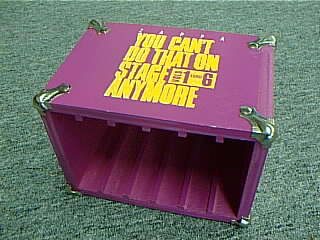
So after twelve CDs’ worth of music, what have we learned? Well, as much as he insisted that “Touring Can Make You Crazy”, he was a guy determined to have a good time, all the time. He worked his bands and when they rose to the occasion, they were stellar. The fact that he could edit sections from multiple performances is just as much of a testimony to his ear as to the tightness of the bands—even if he insisted the edits were necessary due to the bands’ ongoing inability to play the stuff correctly. If anything, the series fostered a new generation of Zappa scholars, who would continue to dissect these and other live recordings over the years. Those who collected all six volumes could even procure a road case to keep them in.

Frank Zappa You Can’t Do That On Stage Anymore Vol. 6 (1992)—2

Friday, October 20, 2023

Frank Zappa 50: You Can’t Do That On Stage Anymore Vol. 5

Frank knew full well that there were people who preferred the ‘60s version of his music, as heard on the first handful of albums credited to the Mothers of Invention. As something of a sop to those people, almost begrudgingly, he devoted the first disc of the fifth volume of the You Can’t Do That On Stage Anymore series entirely to performances by “the original Mothers”.

The set starts promisingly with “The Downtown Talent Scout”, an otherwise unreleased blues complaint from the Freak Out! era. “Charles Ives” is a vamp heard on Trout Mask Replica and some CDs of Weasels Ripped My Flesh. “Here Lies Love” is a cover sung by Lowell George, one of several tracks here that commemorate his brief period in the band. It’s that much preferred to the playlet of “German Lunch” or “Chocolate Halvah”, wherein he competed with Roy Estrada to see who can whine the loudest. Roy is one of the featured performers on “Right There”, as he replicates the vocal stylings of a woman captured on tape some time previously in another band member’s hotel room, while the band plays interjections and the tape itself is played back. These and such segments as “Proto-Minimalism” likely best illustrate the sentiment of the title, as much of the improvised music heard loses something without the visual aspect, so we can’t see the various dance routines undertaken while the more accomplished members play Frank’s sophisticated charts, nor understand his conducting that changed tempos or prompted various outbursts. The field recordings from the tour bus and backstage also smack of “you had to be there”. Certainly more interesting are recreations of Frank’s early soundtrack music, plus segments that would be incorporated into “The Little House I Used To Live In”. “Baked Bean Boogie”, “No Waiting For The Peanuts To Dissolve”, and even “Underground Freak-Out Music” feature excerpts from recognizable tunes like “King Kong” and “Trouble Every Day”. An alternate studio version of “My Guitar Wants To Kill Your Mama” is included, but it’s an edit of what had been the actual single.

Everything on disc two was recorded in the summer of 1982, when the band sported Ray White on most of the lead vocals and Steve Vai on “stunt guitar”. Most of the music comes from a concert in Geneva that was cut short because the crowd kept throwing things at the stage, as documented on the last track. Before that, we get decent versions of “Easy Meat”, the rare “Dead Girls Of London”, “What’s New In Baltimore”, “Mōggio”, and “RDNZL”. “Shall We Take Ourselves Seriously?” is a brief but intricate swing tune based around yet another in-joke. “Dancin’ Fool” is raced through as if Frank had a bus to catch—or maybe just dodging flying objects—and “Advanced Romance” just doesn’t sound right when anyone other than Captain Beefheart sings it. “A Pound For A Brown On The Bus” is a little too slick, but this and “The Black Page #2” are good guitar workouts.

Vol. 5 is definitely for the converted only. Weasels Ripped My Flesh is a much better representation of what disc one tries to do, and disc two is just okay, so they don’t really fit together. Still, there was a lot more where all this came from.

Frank Zappa You Can’t Do That On Stage Anymore Vol. 5 (1992)—

Friday, August 19, 2022

Jayhawks 3: Hollywood Town Hall

The discography clearly states that Hollywood Town Hall was the Jayhawks’ third album, but it was also the first one designed as an album rather than collecting various demos. And given the backing of the Def American label, with Rick Rubin’s right-hand man George Drakoulias producing, this was most people’s first exposure to the band.

And what an excellent place to start. We originally described “Waiting For The Sun” with the suggestion to “imagine Buffalo Springfield if fronted by Carly Simon.” No? Decades later we realize we were taken in by the keening harmonies and fuzzy yet crisp guitars. Meanwhile, special guest Benmont Tench is having a ball on piano and organ, so clearly, if this album hadn’t happened, Tom Petty wouldn’t have written “Mary Jane’s Last Dance”. A blast of harmonica heralds “Crowded In The Wings”, with more choice close harmonies, but it’s that major change before the chorus and the major-seventh touch four bars later that push it over the top. The dramatic intro “Clouds” tries too hard, but a little guitar lick smooths it over and brings in another solid verse-chorus combo, though we still think “Diamonds” is a better title. “Two Angels” is repeated from the last album, and it’s a very similar performance, except that it’s Nicky Hopkins on piano. On “Take Me With You (When You Go)”, those harmonies circle all over the place, but then they go unison for the perfectly simple chorus. Years passed before we realized how slow the tempo is, but that leaves plenty of room for the guitar solo and closing feedback.

“Sister Cry” introduces two other Jayhawks motifs—the competing choruses with simultaneously different lyrics, and trying to figure out which part Mark Olson is singing and which is Gary Louris. It takes a large pair of stones to begin a song with “you came and you gave without taking”, but that’s just what “Settled Down Like Rain” does. “Wichita” isn’t much more than two chords and a riff plus a chorus, with inscrutable lyrics on top, but it gives Gary another chance to wail. Just as mysterious is “Nevada, California”, another slow one, with plenty of room for ache and Gary’s Clarence White-influenced bending. We’d like to find this place too. (The liner notes from fellow musician Joe Hardy reference this song, and are worth reading.) A remake of “Martin’s Song” has a lot more bite and energy than its previous take for a terrific closer.

Hollywood Town Hall puts it all together—tasty folk-rock guitars, close harmonies, and good songwriting. The overall feel is of a band rocking out in a room, but of course that wasn’t the whole story. When the album was reissued and expanded, George Drakoulias supplied new notes telling the genesis of the album, starting with how he signed them by hearing Blue Earth on hold. When the band didn’t gel immediately in the studio, Charley Drayton (most famous from the X-pensive Winos) came in on drums, and helped them lay down the backing tracks, complete with one broken toe. Then all the parts were painstakingly crafted and added, ending with the vocals. (Benmont and Nicky were also added after the fact.) They fooled everyone.

At any rate, the sound of the band was a lot tighter, yet still faithful to their influences. As for the bonus tracks on the reissue, the three outtakes from the wonderfully titled Scrapple promotional EP are welcome for completeness’ sake; “Leave No Gold” has some striking twists and turns, “Keith & Quentin” is more country than the rest of the album, and “Up Above My Head” is rock gospel that would have slowed it down the wrong way. The previously unissued “Warm River” is a further fine example of the Olson/Louris blend, and “Mother Trust You Walk To The Store” provides further mythology. All just prove how well constructed the original album was.

The Jayhawks Hollywood Town Hall (1992)—4
2011 reissue: same as 1992, plus 5 extra tracks

Tuesday, August 3, 2021

Talking Heads 11: Sand In The Vaseline

With the band all but done, the time was right for a Talking Heads compilation. Sand In The Vaseline, helpfully subtitled Popular Favorites 1976-1992, presented a comprehensive overview over two CDs. Commentary from all four band members—yes, even David Byrne—adds occasional insight, while detailed musician credits for each track show how much help they had over the years.

It’s a nicely paced set, showing the band’s steady development from quirky punks to experimental groove masters. After two early demos, the “Love -> Buildings On Fire” single, and the B-side to “Psycho Killer”, the program democratically samples from each of the band’s albums, along with two live versions from Stop Making Sense that, frankly, make sense. The set ends with four “new” songs, all very modern and danceable: “Sax And Violins”, which had snuck out on a movie soundtrack the year before; “Gangster Of Love”, which combines a drum track from 1980 with music from 1987, newly finished for this set; “Lifetime Piling Up”, another leftover from Naked; and “Popsicle”, from 1982.

That was fine for most people, but the record industry has often been about repackaging. A decade later, just after the band’s induction into the Rock and Roll Hall of Fame, the Once In A Lifetime box set expanded the catalog overview to three discs, with the extra draw in the inclusion of a DVD that expanded their Storytelling Giant VHS compilation of music videos. With the added space they went a little deeper into each album, going so far as to included eight tracks from the first two albums. As for rare material, three of the four early tracks and two of the later tracks from Sand In The Vaseline were repeated, while some alternate mixes were scattered throughout. Along with “A Clean Break” from the then-out-of-print The Name Of This Band Is Talking Heads, the Naked leftover “In Asking Land”, which would evolve into “Carnival Eyes” on Rei Momo, makes it necessary for collectors. (A year after that, The Best Of Talking Heads attempted to distill the legacy down to a single disc, opening with “Love -> Buildings On Fire”, making a few substitutions that weren’t on Sand In The Vaseline, and eschewing live versions.)

Talking Heads Sand In The Vaseline: Popular Favorites 1976-1992 (1992)—4
Talking Heads
Once In A Lifetime (2003)—
Talking Heads
The Best Of Talking Heads (2004)—4

Tuesday, April 13, 2021

David Byrne 4: The Forest and Uh-Oh

One of the perks of having your own record label in the ‘90s—especially if it was distributed by the Warner Communications empire—was that you could pretty much put out any old album you wanted, regardless of genre or sales potential. David Byrne was still a viable name back then, so some people may have expected something quirky and catchy from him. (Besides, Talking Heads weren’t officially done as a band anyway, not that Jerry Harrison or Tom Tom Club were moving units on their own.)

So 1991’s official follow-up to the quirky and yes, catchy Rei Momo was naturally another ambitious piece tied to a Robert Wilson theater project. We’ve read several online descriptions and reviews of The Forest, and none strike us as anything we’d want to sit through, but the music, which is predominantly orchestral, has a cinematic grandeur about it. (Considering that it was arranged and conducted by the legendary Jimmie Haskell, that would be expected.) In fact, the few occasions where vocals are heard detract from the whole.

By the end of the year the other Heads announced that since David had left they’d basically broken up, which might have given Uh-Oh some publicity, particularly since it was an album of college radio-friendly songs. There are some remnants of the Latin sounds from Rei Momo, but overall it sounds more like his previous band, and just as angry as he was on Naked. (Some familiar names appear among the backup singers and horn section, plus the bass player is none other than the legendary George Porter Jr. from the Meters.)

“Now I’m Your Mom” would be a clever song about gender identity, but it’s punctured the instant the title is stated in a jokey falsetto; “Girls On My Mind” is both more straightforward and more fun. “Something Ain’t Right” is a herky-jerky expression of anger toward God, whereas the narrator of “She’s Mad” seems to be the object of spousal abuse from his wife. “Hanging Upside Down” is sung from the point of view of a teenage mall rat, but the empty lifestyle is belied by the music. That’s not the case with “A Walk In The Dark”, which conjures monsters under the bed and other spooky specters but with something of a Buster Poindexter attitude.

“Twistin’ In The Wind” cleverly opens with a musical joke, but that’s abandoned for a series of disconnected couplets. “The Cowboy Mambo (Hey Lookit Me Now)” conjures neither cowboy music nor much of a mambo, but it breaks the record for the most times “shit” is intoned in one of the album’s tracks. He’s not the first guy to write a song called “Monkey Man”, but this one is described by a soldier fresh from battle and likely suffering PTSD. “A Million Miles Away” is also a well-used title, but it’s more universal in its “take this job and shove it” sentiment. “Tiny Town” is a cute plea for unity, and forgotten by the time “Somebody” explores the struggle of women of color. Or so he says.

Not that anyone noticed, but Uh-Oh was easily the most accessible album David Byrne had put out since Little Creatures. Fans of the less challenging Heads albums would be pleased.

David Byrne The Forest (1991)—3
David Byrne
Uh-Oh (1992)—3

Tuesday, October 20, 2020

Jeff Beck 13: Frankie’s House and Crazy Legs

All of a sudden Jeff Beck was busier than he’d been in years, and his record label happily pushed out anything he gave them. Who knows if they expected major returns, because what they got wasn’t exactly commercial, even a year or so apart.

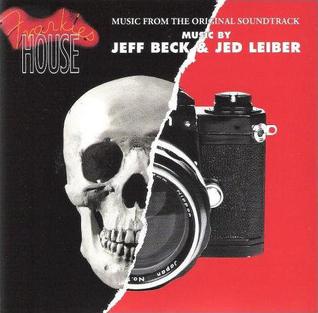
First up was Frankie’s House, the soundtrack to a British miniseries about a photojournalist in Vietnam, which explains some of the stereotypically Southeast Asian elements on some of the more atmospheric tracks. Beck is credited with merely guitars, while one Jed Lieber (whose father was the partner of Stoller) handles keyboards, which we assume includes all the drum programming. So basically, Jed provides the framework, and Beck does his thing. (“Cathouse” quotes from “Rice Pudding”, if you listen closely enough.) For overall listenability it helps that there are no vocals, but the curveball in the form of an instrumental cover of the old blues nugget “Hi-Heel Sneakers” is a little jarring.

However, that track actually provides a bridge to Beck’s other big project, a tribute to Gene Vincent’s guitarist Cliff Gallup. For this vanity exercise he teamed up with a retro combo called the Big Town Playboys, who might have been able to cash in on the Swingers fad a few years later if some of the members hadn’t defected to Portishead by then. Fans of the Stray Cats would dig the influence displayed here, though there’s a certain sameness to the program that doesn’t really vary until “Blues Stay Away From Me”, two tracks from the end. Notably absent is “Be-Bop-A-Lula”.

And with that, Jeff Beck limited himself to the occasional guest spot for the rest of the decade.

Jeff Beck & Jed Leiber Music From The Original Soundtrack Frankie’s House (1992)—3
Jeff Beck & The Big Town Playboys
Crazy Legs (1993)—3

Friday, August 7, 2020

Prince 14: Love Symbol

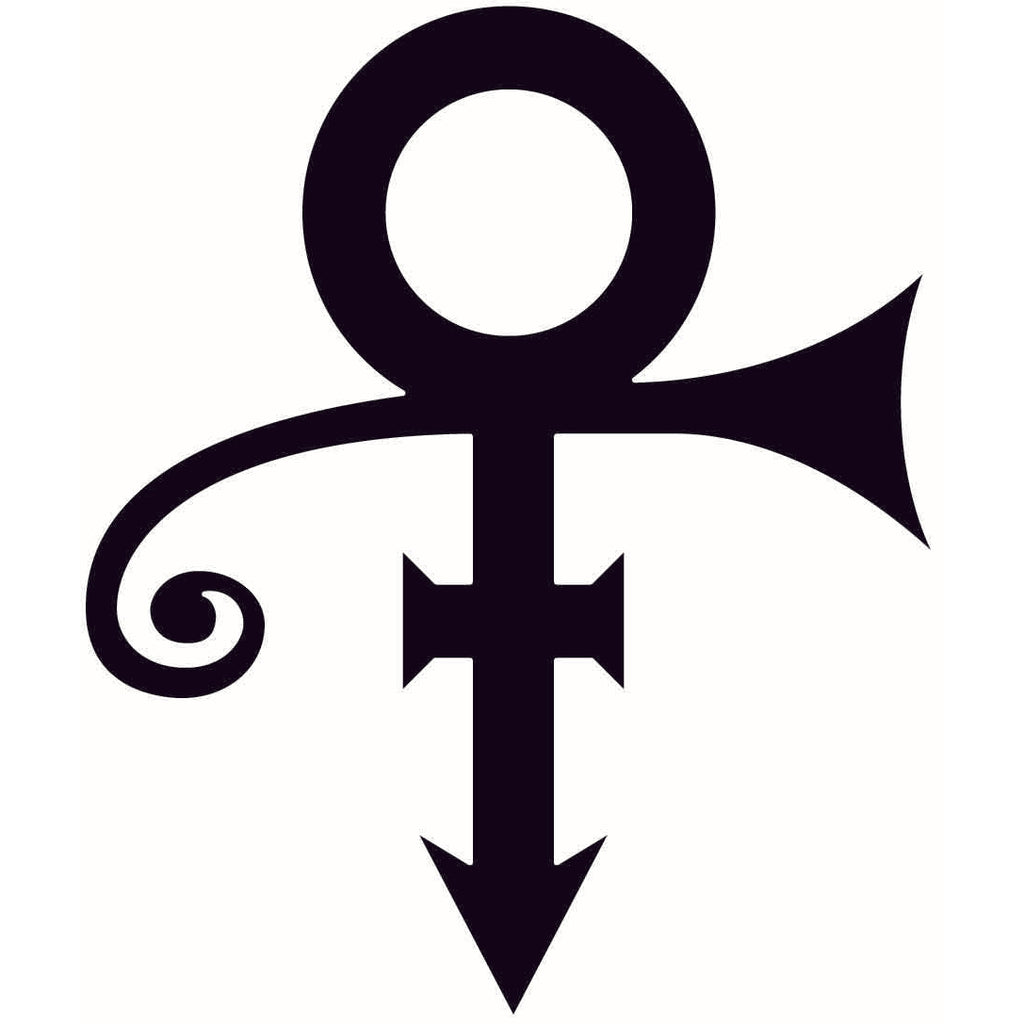
Those who hadn’t been paying attention might not have noticed that Prince had kept up the same rate of output for the better part of a decade at this point, and that doesn’t include all the songs he gave other people and left off his albums. Diamonds And Pearls still had legs when news came of his next album, this one officially titled with an unpronounceable rune. This artsy combination of the traditional symbols for male and female wasn’t such a surprise for the guy, but it made it very difficult to talk about the album. Anyplace the label couldn’t use the graphic itself (which had been supplied to all press outlets), the album was referred to as Symbol. Over the years, this changed to Love Symbol, as that’s how Prince had copyrighted the image. When he changed his name to the same squiggle as a protest the following year, the symbol had become larger than the album itself.

And what about that album? Well, it’s very much a continuation of the modern R&B of which the New Power Generation was capable. The first two songs were the first two singles; “My Name Is Prince” is an unconvincing gangsta rap and “Sexy MF” seems to exist only to put a hook to that particular twelve-letter word. “Love 2 The 9’s” begins more like the early soul of his first albums, until the rap break. “The Morning Papers” is finally a decent ballad, complete with guitar solo. “The Max” is mostly a listenable hybrid, though good ol’ Tony M. gets to punctuate each chorus with a rap. “Blue Light” mixes funk with reggae fairly well, but “Eye Wanna Melt With U” (that first word being an eye symbol, of course) is mostly tossed off. You’re better off skipping ahead to the ultra-smooth “Sweet Baby”.

We were hoping “The Continental” would somehow evoke Christopher Walken’s recurring character on Saturday Night Live, but instead it’s a loud track with a rap by Carmen Electra, a protégée he’d already dumped for Mayte Garcia. “Damn U” is another sultry ballad, then like clockwork we’re back to the high-energy funk of “Arrogance”, a relatively brief track that leads right to the dueling raps in “The Flow”. Catchy with a mildly Eastern motif, “7” brings back the finger cymbals we thought he misplaced after Around The World In A Day. “And God Created Woman” is such an obvious candidate for a Prince title we’re surprised it took him this long; the song itself is nothing much. “3 Chains O’Gold” has all the hallmarks of a grand epic, and apparently it was designed that way; more about that below. The guitar work is great, but the ending is just a little too Hollywood. The actual finale of the album is given over to “The Sacrifice Of Victor” another rap hybrid in falsetto that drops various hints about his childhood in the lyrics. (He since stated for the record that “Victor” is not the translation of the squiggle that served as the album title, so there.)

One odd feature of the album is the two dialogue segues, featuring actress Kirstie Alley (then starring on the final season of Cheers) as a befuddled reporter trying to get answers out of our hero. Nowadays they just seem silly, but apparently these bits were supposed to play a larger part of the album, which at one point encompassed a “funk opera” (our words) of sorts entailing those mythical chains of gold. (We haven’t heard any of the bootlegs of the working versions, nor have we seen the full-length 3 Chains O’Gold film, and we don’t plan to.)

Yet the biggest obstacle to Love Symbol is its length, amounting to a CD packed to the gills. There’s just too much music here. Prince had always had more material than he knew what to do with, and now that vinyl wasn’t anyone’s priority, he could load up an album to capacity. That doesn’t always translate to quality—after all, Sign "☮" The Times had been reduced from three records—and this album is hardly in the same league. It sold okay, of course, thanks to the singles.

Prince & The New Power Generation o|+> (1992)—2

Friday, October 18, 2019

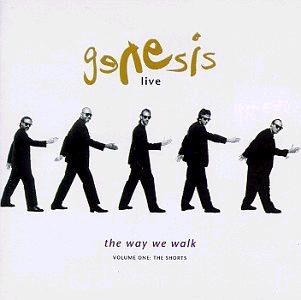
Genesis 17: The Way We Walk

Maybe they knew this would be the last big tour for a while, as Genesis took the opportunity to glut the marketplace with not one, but two live albums culled from their big tour supporting We Can’t Dance. Playing on the video and chorus for “I Can’t Dance”, both volumes were titled The Way We Walk, and were sequenced thematically.

Volume One: The Shorts was released first, in time for the holiday buying season, and concentrated on the hit singles, some recorded on the Invisible Touch tour. Outside of Phil Collins’ evangelist impression on “Jesus He Knows Me”, F-bomb in “Invisible Touch”, and gargling through “I Can’t Dance”, there’s no real difference from the studio versions, except that stalwart supporting players Daryl Stuermer and Chester Thompson are on hand to fill out the sound. (Nice of the boys to include them on the cover, though.) It helped that none of the songs had been repeated from earlier live albums, but that also meant that your enjoyment depended on whether you liked the ‘80s version of Genesis.

If you didn’t, maybe you were more excited by Volume Two: The Longs, which arrived a few months later with no intention of going gold. This set was devoted to their lengthy epics, mostly focusing on instrumental interplay. “Old Medley” begins with “Dance On A Volcano” before weaving tunes from the Peter Gabriel era over 15 minutes, then teasing the crowd with random lines from the likes of “That’s All”, “Your Own Special Way”, “Follow You, Follow Me” and, sadly, “Illegal Alien”. (Earlier tours had similar medleys, wherein Phil would even sprinkle a Mike + The Mechanics tune and “You Can’t Hurry Love”.)

Four tracks exceed ten minutes; “Drum Duet”, thankfully, is “only” six. Even in this context the newer pieces stick out, though the “Home By The Sea” suite does well, as does “Domino”, begrudgingly. The two epics from We Can’t Dance don’t gain any stature but don’t lose any either.

Genesis The Way We Walk Volume One: The Shorts (1992)—3
Genesis
The Way We Walk Volume Two: The Longs (1993)—3

Friday, October 4, 2019

Peter Gabriel 9: Us

While fans were accustomed to Peter Gabriel’s slow release pace and interest in world music, they were clamoring for the true follow-up to So. With Us, chock full of songs built on hooks, they got it.

He’d written about relationships before, of course, but what made this album so different was that each of the songs (well, nine of them, anyway) overtly dealt with topics like communication, desire and sex. He was in a crossroads; having finally divorced from his wife, he had also found himself in the tabloids when he was seen in the company of the fetching Rosanna Arquette.

The opening fanfare of “Come Talk To Me” sounds like bagpipes, with galloping drums accompanying a plea, a demand for attention, it’s hard to ignore him. Things turn down though, first for the straightforward “Love To Be Loved”, then for “Blood Of Eden”, which musically sounds akin to “Don’t Give Up”, only this time the voice of hope is provided by Sinead O’Connor. The horn-heavy “Sledgehammer” sound returns on “Steam”, and while it’s not explicitly about the physical act, there’s a horniness to it. “Only Us” uses a variety of conflicting meters to disguise the song’s true rhythm, but it doesn’t really settle in.

“Washing Of The Water” is lyrically and musically reminiscent of spirituals, and its feel certainly conveys the desire to be cleansed, to start anew. (Indeed, some of it sounds influenced by “Bread And Wine”, the closing track on Passion.) The mood is truly jarred by “Digging In The Dirt”. Here the emotions touched on via therapy are exposed to the raw, culminating in the sinister “don’t talk back” sections before the choruses. “Fourteen Black Paintings” begins as another throwback to the Passion album, with its tense ambience and use of Mideastern instruments, but its simple lyrics rather recall “We Do What We’re Told”. But to revive the attention of anyone who left the room to get popcorn, “Kiss That Frog” provides an uptempo come-on, with all the hallmarks of vintage soul, and little subtlety in the lyrics. But he saves the best for last. “Secret World” gears up steadily on an almost machine-like beat, and brings in a vocal that’s tired, resigned yet proud of the state of his relationship. It’s not clear whether the people in the song are going to stay together or separate, but that’s what makes it universal. Chills arrive at the whispered “shh—listen” near the end.

Us is a heavier listen than So, but the overall strength endures and reveals itself over time, just as the composer revealed himself in the songs. While Daniel Lanois (again) helped bring Peter’s ideas into the ‘90s, older fans likely enjoyed the touches that reminded them of the Peter Gabriel of a decade before.

Peter Gabriel Us (1992)—

Friday, May 4, 2018

Smiths 9: Reissues! Repackages!

If you’ve been keeping score, you will have deduced that the Smiths catalog consisted of four LPs, a pile of singles and radio sessions that were reshuffled on three separate compilations, and one live album, all released within a relatively brief five-year period. Yet the earnest reissuing and repackaging of their output began shortly after Morrissey’s delayed “comeback”, and things still got left out, even with the repetition.

1992 brought a decent pair of CDs, the similarly but not uniformly titled Best…I and …Best II (both of which spawned singles to promote them). The first volume concentrated mostly on songs that had been singles, while the second added a few album tracks for a slightly deeper focus. Neither was chronological, but together presented many of their best-known cuts for what would have been a solid double album. A little over two years later, Singles repeated many of the tunes on a single disc lasting an hour, but often in their longer album mixes, and including one album track that had been a single but wasn’t on the previous volumes. (Confused yet?)

In the new millennium, The Very Best Of The Smiths crammed 23 tracks onto a single disc, with only two songs that hadn’t been on the 1992 discs, one of which had yet to be regurgitated thusly. The band was more directly involved with 2008’s The Sound Of The Smiths, with Johnny Marr going so far as to supervise the mastering. It also had 23 tracks, in mostly chronological order, but without exactly duplicating Very Best. More interesting to collectors was the deluxe edition, which added several of the B-sides already familiar from previous compilations, along with several rare B-sides that hadn’t made it to any album to date.

But then vinyl came back into vogue, so in 2011, Johnny Marr remastered the catalog so Complete could present all the albums all together in one package for anyone who wanted to start from scratch. However, the title was incorrect. The CD set offered the four studio albums, the three compilations, and the one live album, leaving several of those stray B-sides out. And with all the overlapping between those three compilations, some tracks appeared more than once. For even more repetition, the deluxe set offered (along with the eight albums on LP and CD) vinyl replicas of 25 singles rife with duplication, with some of those otherwise unavailable tracks shoehorned in between. And we’re not even going to touch the deviation in mixes.

For all the fleecing, each of the above compilations does present hefty servings of the band’s best work, so each is musically valid. The first two volumes are the most satisfying of the choices, while Complete allows the new fan to get most everything in one shot, provided he or she can handle the repeats.

The Smiths Best…I (1992)—4
The Smiths
…Best II (1992)—4
The Smiths
Singles (1995)—4
The Smiths
The Very Best Of The Smiths (2001)—4
The Smiths
The Sound Of The Smiths (2008)—
The Smiths
Complete (2011)—

Tuesday, January 2, 2018

Morrissey 4: Your Arsenal

Just like it did with the Smiths, it took Morrissey three albums (and one compilation) to reach a level of something approaching greatness. Your Arsenal was produced by Mick Ronson—an icon to any kid raised on Bowie and Mott The Hoople—and mostly bathes Moz in a glorious meld of glam and rockabilly, to be expected from guys with pompadours.

“You’re Gonna Need Someone On Your Side” and “Glamorous Glue” are wonderfully trashy stompers, the former bringing to mind “Brand New Cadillac” and the latter echoing parts of “Sheila Take A Bow”, both in good ways. “We’ll Let You Know” is based around softer arpeggios and acoustic rhythm, but there’s a tension and discord underneath that threatens to overpower it—fittingly, for a song that seems to forgive the football hooligan culture. If that doesn’t raise enough eyebrows, “The National Front Disco” straddles a defense of a kid who joins a racist movement with the suggestion that it’s just a trendy thing to do. After that too builds and builds, “Certain People I Know” sits somewhere between skiffle and music hall—a simple sounding song, but with lots of layers that belie the simplicity.

Possibly the closest relative to his old band, “We Hate It When Our Friends Become Successful” is a hilarious portrait of musical envy well known to bands from the local to the international level. “You’re The One For Me, Fatty” doesn’t say much besides that, but it’s such a happy and sweet tune it doesn’t need to. Not until “Seasick, Yet Still Docked” does he go back to his morose persona; it’s actually welcome by now. A long transition involving a ticking clock and a radio stuck between German and French stations eventually finds “I Know It’s Gonna Happen Someday”, which does have a few musical nods to “Rock & Roll Suicide” off Ziggy Stardust. (Bowie himself liked the song so much recorded it for his own next album.) It’s enough of a big ending, but instead we close with “Tomorrow”, which starts in a three but continues in four before going back to three and a tack piano sequence that reminds us of “Asleep”.

Your Arsenal is very good because it not only sounds good, but the songs are also good. There isn’t a throwaway here, he keeps the whining to a minimum, and he also remembered to show off his humor. It truly takes skill to sound this effortless.

He took the band on tour, and selections from two shows were released everywhere except the U.S. as Beethoven Was Deaf the following year. Most of the songs from the album were performed as expected, though “The National Front Disco” gained a cacophonous coda. The rest of the set was pulled from his solo catalog; “Sister I’m A Poet” got a rockabilly update. The band is best when it rocks, though the crowds eat up the slow ones too. And only 31 years later the album was reissued with a new cover, and for the first time here. Yay.

Morrissey Your Arsenal (1992)—
Morrissey
Beethoven Was Deaf (1993)—3

Friday, November 24, 2017

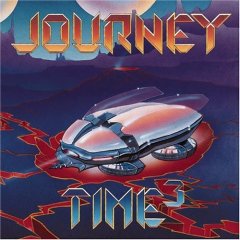
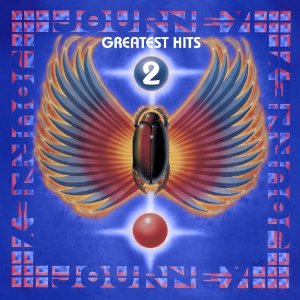
Journey 9: Greatest Hits and Time3

While no formal announcement was made, Journey was done, and the label wisely put together a hits compilation. Greatest Hits was fairly comprehensive, focusing solely on the Steve Perry era, leaning heavily on the Jonathan Cain era, and sticking with the ear candy. In addition to all the singles from the albums, what we used to call side one is framed by “Only The Young” and “Ask The Lonely”, putting them right along side their albumized brothers. Beyond that, the sequence is a grab bag, but at least they save “Be Good To Yourself” for last so you can skip it entirely. Wikipedia tells us, and they’re never wrong, that it’s among the most successful compilation titles by anyone ever, and most of those sales racked up before it was repackaged 18 years on with an extra track.

Since every band got its own box set in the ‘90s, Journey’s turn came right on schedule. The oddly titled Time3 mostly got it right by starting at the very beginning, with a full half-hour of music from the borderline fusion period before Steve Perry came along. To prove the point, a failed track called “Velvet Curtain” is duct-taped onto the completed “Feeling That Way” to show how he transformed it. There aren’t a lot of rarities here, outside of a few B-sides and live tracks since added to reissues of the albums, and some unfinished ideas from the mid-‘80s era. Some of the bigger hits appear in live incarnations, so despite the selection of deeper album cuts, it’s not the definitive Journey package for someone who just wants one title on the shelf.

At the turn of the century, the new trend was the double-disc “Essential” anthology, which was an excuse to regurgitate a hits collection with some deeper cuts. The Essential Journey did just that, basically replicating the Greatest Hits sequence with only a little variety on disc one, with a questionable choice filling up the second. It would be another ten years before Greatest Hits 2 finally offered a decent (and decently priced) companion. In addition to more stuff from the Cain era (and big points for including “Suzanne”) and the FM radio hits and album tracks that stood out on the box set, segues like “Good Morning Girl” into “Stay Awhile” and “Feeling That Way” into “Anytime” were preserved. (We’d’ve dumped “Walks Like A Lady” and “When I Think Of You” for “Natural Thing” and “Edge Of The Blade”, but once again, the phone did not ring.)

Journey Greatest Hits (1988)—4
2006 CD reissue: same as 1988, plus 1 extra track
Journey Time3 (1992)—3
Journey
The Essential Journey (2001)—
Journey
Greatest Hits 2 (2011)—4

Friday, February 17, 2017

Chris Bell: I Am The Cosmos

In addition to the cult around Big Star, a similarly rabid one has developed around Chris Bell, who started the band and left it to Alex Chilton when megastardom didn’t come his way. Besides having an inarguable gift for songwriting, he was also fascinated with the recording process, and had the support of his family, who just wanted to see the kid happy.

He spent the years after leaving Big Star continually honing a small handful of songs, even getting to work on them outside of Memphis with the help of engineer Geoff Emerick, best known for his work with the Beatles. He would release exactly one single before fatally crashing his car into a utility pole at the unfortunate age of 27.

But those two songs made a small impact in their own way. “I Am The Cosmos” is a majestic anthem of heartbreak, with a great guitar solo to match, and a killer fade where the repeated couplet goes from “I’d really like to see you again” to “I never want to see you again”. “You And Your Sister” is very much a flipside, but not a B-side; this tender acoustic love song fits right along “Thirteen” from #1 Record, and even has Alex Chilton on harmonies.

These songs would be covered by the likes of the Posies and This Mortal Coil, and when Rykodisc began their Big Star blitz in 1992, to the label’s credit, they simultaneously released a full CD of post-Big Star recordings by Chris Bell. I Am The Cosmos is not a “lost album”, but a collection of several stabs in the studio over a few years nicely arranged into the equivalent of an LP. Some songs appear twice, in different mixes or different recordings (“Get Away” and “I Don’t Know” are basically the same song, and give the yearning “Speed Of Sound” its basic structure, though it’s not as obvious at first) and the three versions of “You And Your Sister”—the single, a solo recording and a “country version”—don’t seem like overkill.

For the most part, these songs are classic ‘70s-era power pop. “Make A Scene” has one of those rhythms that defies tapping along correctly, and the aforementioned “Get Away” and “I Don’t Know” just plain sizzle. “There Was A Light” and “I Got Kinda Lost” were Chilton-Bell songs he took when he left the band, preserved here with Andy Hummel and Jody Stephens in the rhythm section, and “Get Away” even features Alex on guitar and Jody on drums.

Part of his mythology entailed his struggles with spirituality, making “Look Up” less vague than the more foreboding “Better Save Yourself”. “Fight At The Table” has a simple structure but a raucous arrangement and burbling synth, while “Though I Know She Lies”, one of his last recordings, is suitably sad.

His material was limited, and his strangled voice can be a bit much, but I Am The Cosmos is a worthy inclusion to the Big Star oeuvre, and certainly deserves to be there as much as Third does. When the rights to the band’s recordings shifted to the Rhino, I Am The Cosmos got the expanded treatment via their Handmade sidearm. This edition slightly rejigged the first 12 songs from the Ryko set on one CD, and packed a second with variations and sundry, such as the “extended alternate version” of the title track that didn’t fade before the killer couplet mentioned above. (Also, “Get Away” on the main disc still has its pyrotechnic drum effects, but also has some reverbed mumbles cluttering up the chorus.) Because they didn’t use up all the early stuff for their box set, this disc begins with some pre-Big Star tunes in their Icewater and Rock City incarnations, ending with an acoustic experiment deflated in the last seconds.

Once the Omnivore label went even deeper (and better) with their Big Star project, this album that never really existed got a second double-disc treatment. They’d already designated the pre-Big Star material to its own compilation, so this set relies mostly on alternate takes and mixes of the original “album that never really existed”, ten of which are previously unreleased. Granted, some of these mixes are modern, to highlight different aspects of the sound scape, but since he was such an incurable studio rat it’s interesting to hear all the elements.

Chris Bell I Am The Cosmos (1992)—3
2009 Rhino Handmade Deluxe Edition: same as 1992, plus 13 extra tracks (and minus 1 track)
2017 Omnivore Deluxe Edition: same as 1992, plus 20 extra tracks
Tuesday, January 12, 2016

Tears For Fears 4: Tears Roll Down

It’s a little presumptuous for a band with only three albums to put out a hits collection, and even more so when one of the songs on said collection is brand new, not having even earned its stripes as a hit. But in the case of Tears For Fears, the hits from those three albums were so good that they sound great together.

Tears Roll Down (Greatest Hits 82-92) shuffles five songs from Songs From The Big Chair and three from the other two very well. The earliest songs don’t arrive until halfway through, but they fit just fine. “Mother’s Talk” is our least favorite single here, and ending with “Advice For The Young At Heart” makes it all kinda depressing, but “Laid So Low (Tears Roll Down)”, that one new song, gives lyrics to an earlier, instrumental B-side, and provides something of a link to the band’s future.

This was not the only hits collection, as the band’s association with PolyGram worldwide meant that the millennium would ensure several repackagings of the same pile of songs at budget prices and higher. Tears Roll Down itself reappeared in other ways overseas: in tandem with a DVD of their videos plus another disc of lesser hit singles, and in a two-disc version that added eleven remixes. But in summing up the fruits of the band’s first decade, this simple hour of ‘80s pop is satisfying.

Tears For Fears Tears Roll Down (Greatest Hits 82-92) (1992)—4

Tuesday, December 1, 2015

Morphine 1: Good

If you listened to certain radio stations in 1988, you might have heard a smoky blues tune called “I Think She Likes Me” by a band called Treat Her Right. Their self-titled album didn’t catch much fire, and listening it today one can only occasionally hear hints of where singer/songwriter Mark Sandman would end up. Once he developed a style of playing a two-stringed bass with a slide and hooked up with saxophone player Dana Colley, there emerged a sound perfectly described by their moniker: Morphine.

Where Treat Her Right also had two singers, guitars and harmonica, Morphine stripped everything down to bass, sax and drums. Sandman was also the only singer, giving the project a more unified sound, as demonstrated on their first album, Good. Each song sneaks along a groove, simple yet full, and certainly toe-tapping, while the lyrics stay stark and fitting the setting. Even “The Saddest Song” sounds upbeat for music of this level. The raucous voodoo stomp of “You Speak My Language” moves through gibberish into the noir atmosphere of “You Look Like Rain”, the latter a cool stroll worthy of early Tom Waits. Dana Colley even gets an instrumental all to himself.

Good isn’t Morphine’s best album, but it’s a fine start. They would only improve from here.

Morphine Good (1992)—3