Showing posts with label 1987. Show all posts

Tuesday, February 24, 2026

Guided By Voices 2: Devil Between My Toes

A big deal is made in the Guided By Voices narrative about Devil Between My Toes being their first full-length album, but at just over half an hour it’s a mere eight minutes longer than their EP. Still, Robert Pollard had already decided he’d concentrate on being more of a recording band than a performing band, and also took the bold step of including recordings in a “professional” studio alongside tapes compiled in his basement.

The R.E.M. jangle is still in place on “Old Battery”, with its punning chorus of “die hard”, and also “Discussing Wallace Chambers”, which may not have been inspired by the football player but still provides a springboard for a lyrical journey. “Cyclops” is another signpost, as it begins with an arpeggiated guitar part over open strings, something of a GBV trademark. A primitive drum machine drives “Crux”, which eventually includes some dueling riffs but no vocals, an idea in search of a song. “A Portrait Destroyed By Fire” is the anomaly here, as it runs over five minutes. A dark proto-metal dirge with buried vocals before the verses kick in, it’s mostly notable for being the first appearance of one Tobin Sprout, who would become a valuable collaborator and creative foil, to say the least. The side closes with “3 Year Old Man”, a simple exercise for tremolo guitar.

“Dog’s Out” is a more blatant attempt to write something catchy and singalongable, and for that it succeeds, but “A Proud And Booming Industry”, for all its potential as a classic Pollard song title, is more riff-noodling. “Hank’s Little Fingers” wants to be a pop song, and it’s kinda cute in that way. The song has distinct choruses, nicely melded at the end, but again it’s followed by an indulgent guitar instrumental in “Artboat”. And it’s back to the straight college rock of “Hey Hey Spaceman”, complete with happy cries of “let’s go” somehow rising above a dense, muddied mix. “The Tumblers” stands out for its almost tribal rhythm instead of the usual four-on-the-floor beat, though the lyrics are again, buried. “Bread Alone” is yet another instrumental, but this time it’s two acoustic guitars. But for some kind of horn blast grafted onto the beginning, “Captain’s Dead” has the hallmarks of a GBV classic, with crazy tempo, furious strumming, melody, and harmonies. It truly points the way for them.

Devil Between My Toes wouldn’t get wider exposure until it was repackaged in the Box box, but which time the band (or least Pollard) had become iconic. It remains of interest only to completists, and a reminder than they were just one of thousands of bands making records in their home towns across the country.

Guided By Voices Devil Between My Toes (1987)—2½

Friday, June 6, 2025

Elton John 27: Greatest Hits Volume III

The live album notwithstanding, 1987 was Elton John’s first year without new material since his first album. But thanks to the label switch, he still had product in the racks. Somehow Geffen was able to license two tracks that were on MCA, which is how a third volume of so-called greatest hits happened, ten years after the last one, and mere months after Live In Australia came out.

Side one is indisputably strong, proof that even his lesser albums had great songs. It’s hard to argue with this lineup: “I Guess That’s Why They Call It The Blues”; “Mama Can’t Buy You Love”; “Little Jeannie”; “Sad Songs”; “I’m Still Standing”; “Empty Garden”. We’d like to say the same for side two, but these particular hits just aren’t as strong. Much as we like “Kiss The Bride” and “Blue Eyes”, “Heartache All Over The World” is just too fluffy, and “Too Low For Zero” hadn’t even charted as a single. “Nikita” belongs here, of course, but “Wrap Her Up” was likely included due to the presence of George Michael, then riding high with Faith.

Only five years later his catalog was standardized worldwide, with everything in the US reverting to MCA (even though Geffen was part of MCA by this time anyway). Because of licensing and whatnot, songs on the second hits album had been switched, but that meant that “Sorry Seems To Be The Hardest Word” and “Don’t Go Breaking My Heart” were now selling points on the revamped Greatest Hits 1976-1986. Best of all, those songs replaced “Heartache” and “Too Low For Zero” figuratively and literally, and the set even added “Who Wears These Shoes?”

The sequence was different from the Geffen album, shuffling the “new” songs on side one of the cassette—there was no LP version, being 1992—and going chronologically for side two. Geeks like us also appreciated the copious track information, including players and even recording dates. While the cover photo reflected the year of release and not the material, it’s still a strong collection, and preferred to its first incarnation.

Elton John Elton John’s Greatest Hits Volume III 1979-1987 (1987)—3
Elton John
Greatest Hits 1976-1986 (1992)—3½

Friday, January 10, 2025

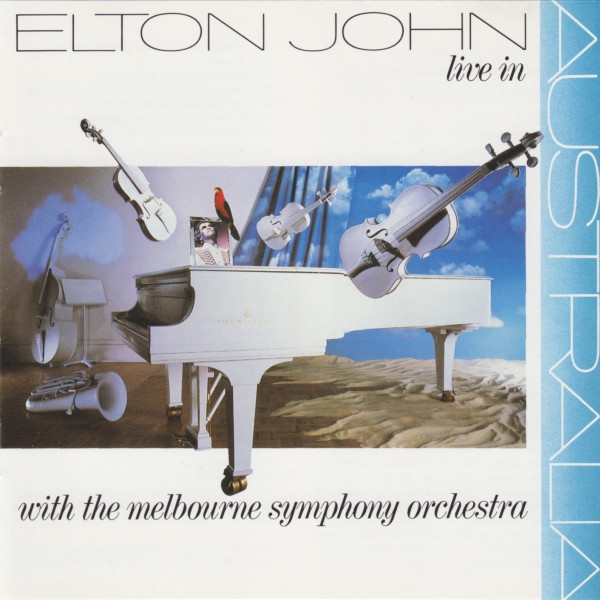
Elton John 26: Live In Australia

Elton’s 1986 tour of Australia followed almost immediately on the world tour he’d started the year before, which was initially in support of Ice On Fire but went on to attempt to put some life into Leather Jackets. What was different about the leg down under was the approach: 26 performances were spread throughout five venues, and each featured his band in the first half, then Elton performed accompanied by the Melbourne Symphony Orchestra while bedecked in powdered wig, beauty mark, and colonial costume a la Mozart.

Such an event was just screaming to be documented, and the following year a live album highlighting the orchestral portion appeared, alongside a home video with selections from both halves. In the US, the album was pointedly released on MCA, signaling that he too had had it with being on Geffen. (A few songs weren’t included, partially due to the then-limited capacity of a CD.)

From the start he sounds raspy; indeed he would have throat surgery immediately after the tour. But it’s an adventurous program, beginning with three deep cuts from his second, eponymous album. The grand spectacle of “Tonight” is followed by the more recognizable “Sorry Seems To Be The Hardest Word” from the same album. “The King Must Die” goes back to the second album, and does the more rocking “Take Me To The Pilot”, and by now he’s really enjoying himself. The band nicely balances the orchestra on “Tiny Dancer”.

“Have Mercy On The Criminal” was one of Elton’s personal favorites, he says, specifically because of the original Paul Buckmaster arrangement, fleshed out here but still with plenty of space for Davey Johnstone to solo. “Madman Across The Water” has power but not enough menace for our taste, but the surprise hit single was “Candle In The Wind”, performed by Elton solo with some keyboard help (plus vintage Marilyn Monroe footage in the video). This would become the song’s go-to version for the next ten years. “Burn Down The Mission” gets a little derailed at the end with backing vocalists chanting “burn it down,” but “Your Song” is treated a little more respectfully. While “Saturday Night’s Alright For Fighting” was the standard closer, here it’s omitted and replaced by “Don’t Let The Sun Go Down On Me”.

After the embarrassment that was Leather Jackets, Elton was back, so to speak. He’d insist he was never away, but Live In Australia was still a nice reminder of what he could do as well as what he had done, and managed to please long-suffering fans along with new converts.

Elton John Live In Australia With The Melbourne Symphony Orchestra (1987)—3

Tuesday, June 18, 2024

Jane’s Addiction 1: Jane’s Addiction

Straddling the hair metal and grunge scenes as the ‘80s turned into the ‘90s, Jane’s Addiction was one of the more striking bands of the era. Dominated as they were by banshee-voiced and self-styled artist slash poet Perry Farrell, it was easy to forget that the other three members were musicians as tight and inventive as their competition.

But before they went platinum they had to start somewhere, and their self-titled debut on a tiny L.A. label has never gone out of print. Co-produced by the guy who would go on to bring the Beach Boys catalog into the digital age, it was mostly recorded live at the Roxy, and copiously overdubbed.

With a drum break already patented by Pete Thomas, “Trip Away” explodes into being, providing a steady barrage of funk until an unexpected detour into a moodier middle section that leads right back into the main riff. Guitarist Dave Navarro makes his mark here. The bass intro by Eric Avery on “Whores” provides another band template of sorts, both in structure and profanity. The tempo seems a little wonky at the start of “Pigs In Zen”—not something we would expect of Stephen Perkins—but it finds its way and its dynamics, at least until Perry starts shouting his favorite four-letter word. “1%” is a protest song, not that you could tell from the buried lyrics, and the onslaught subsides for the overly romantic “I Would For You”.

Even in those days, the band played acoustic sets as well as electric ones, and “My Time” provides a catchy transition to side two. It’s even got a harmonica. “Jane Says” manages to stay interesting despite having only two chords, but this is far from the song’s best rendition. Any young band has to play covers, and their take on Lou Reed’s “Rock & Roll” is both reverent and fresh, segueing seamlessly into “Sympathy” (as in “For The Devil”). “Chip Away” provides a bookend of sorts, but consists mostly of jungle drumming and vocal effects.

Chances are most owners of this album came to it well after the fact, and considering their limited catalog, it would be cherished. But the band weren’t there yet, though it wouldn’t be long.

Jane’s Addiction Jane’s Addiction (1987)—3

Tuesday, January 30, 2024

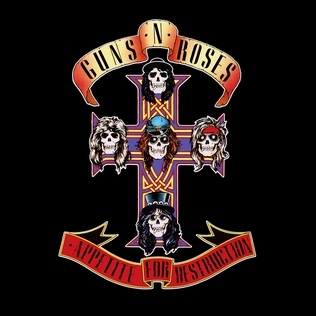
Guns N’ Roses 1: Appetite For Destruction

Maybe it’s because of our age, but the early ‘80s and late ‘80s sometimes seem very far apart from each other in memory. A glance at MTV playlists demonstrates the chasm: the early part of the decade was dominated by new wave until Michael Jackson took over, and the other half was all hip-hop and hair metal. The latter appealed to dirty young men, as all of a sudden cleavage had made a comeback, after years of being hidden under bulky sweaters.

Because MTV’s rotation model relied on oversaturation, those of us who weren’t connoisseurs quickly came to hate most of the hair metal bands, starting with Poison and Bon Jovi, but there was definitely something about those Guns N’ Roses guys. For one, although they had teased hair and tattoos and played loud, it seemed like they were cut more from the Aerosmith cloth than Mötley Crüe or even Van Halen. Their music was more intricate than the usual power chords, and the lead guitarist was skilled but not strictly a pyrotechnic shredder. Going by the non de plume of Slash, it was apt. His top hat and curls made a good counterpart for the banshee of a lead vocalist, who called himself W. Axl Rose, soon to be familiar solely by the singular Axl. The other guitarist, Izzy Stradlin, usually looked like he couldn’t decide if he was Mick or Keith, bass player Duff McKagan resembled a doughier male version of Kelly Bundy, and drummer Steven Adler sat at the back but swung a lot more than he got credit for.

Appetite For Destruction shows much of their musical breadth, beginning with the undeniable swagger of “Welcome To The Jungle”, the first single and soon-to-be inescapable video. After a lot of yowling, Axl works on his lower range for “It’s So Easy”, but storms through the Def Leppard interlude for a profane kiss-off. “Nightrain” loads up the riffs and solos for a toe-tappin’ ode to drinkin’. “Out Ta Get Me” isn’t much more than a riff and a hook to hang F-bombs on, while “Mr. Brownstone” goes out of its way not to glorify smack. Yowza, indeed. While the third one released, “Paradise City” ended up being the first single to come out after the album had already started to sell, and soon became a radio anthem despite or because of its six-plus-minute length.

After a dark Aerosmith-like intro, “My Michelle” is apparently a true story about another lost little L.A. girl, and there’s even more cowbell on the almost sensitive “Think About You”; it’s even got acoustic guitars. But these tentative approaches to love songs have nothing on “Sweet Child O’ Mine”. Constructed as a mini-suite, it’s got (another) one of those classic riffs pinning it, even a bass solo of sorts on the intro, and was helped along by a video that garnered more widespread appeal. The speed-punk “You’re Crazy” ups the energy as well as the attitude, which “Anything Goes” tries to sustain, but is mostly a showcase for Slash’s talk box, until the tempo switch at the end. Finally, “Rocket Queen” is another mini-suite that couldn’t get played on the radio, as the middle section includes audio-verité of actual sexual congress. That said, each of the bookends are solid tunes on their own.

While it took the better part of a year to get noticed, Appetite For Destruction basically ensured that GN’R would be ubiquitous on the radio and TV, as well as in the press for the next three years. While their saga would take various twists and hit new valleys, this is where their legend started, and it remains an impressive debut.

The album was natural candidate for expansion for its 30th anniversary in multiple configurations, and they went all out. The bonus disc in the Deluxe Edition included all of the tracks from the Lies album but one, replaced by an acoustic trial of “Move To The City” and an earlier “Jumpin’ Jack Flash”, but the key addition is “Shadow Of Your Love”, an outtake from the original Live ?!*@ Like A Suicide EP that had been a B-side, but MIA until now. Five songs from the “1986 Sound City Sessions” show the band having the arrangements down, while three live tracks from London—including covers of “Knockin’ On Heaven’s Door” and AC/DC’s “Whole Lotta Rosie”—mop up tracks from out-of-print singles and EPs. Along with a pile of photos, ticket replicas, and even temporary tattoos, the Super Deluxe Edition added two more discs to encompass even more of the Sound City Sessions, including a shrill “Heartbreak Hotel”, an early take of “Back Off Bitch”, a few unfinished sketches, some spirited acoustic takes, and two versions of an epic called “November Rain”. (The piano-based take is just as long as the final product, while the one built around acoustic guitar sounds way too much like “I Don’t Want To Talk About It”.) For those who needed more, the $1000 Locked N’ Loaded Edition added everything on vinyl, plus a cassette of a 1985 demo session hidden amidst reams of even more ephemera.

Guns N’ Roses Appetite For Destruction (1987)—4
2018 Deluxe Edition: same as 1987, plus 18 extra tracks (Super Deluxe Edition adds another 21 tracks plus Blu-ray)

Friday, November 24, 2023

Grateful Dead 19: In The Dark

By the time the Dead released another studio album, it was their first in seven years. However, they had toured consistently in that period, which both allowed them to slowly hone new material as well as grow their appeal as a live draw. Soon the younger brothers and sisters of the original Deadheads were catching shows and trading tapes with the same fervor. By the time In The Dark came out, the pump was primed. They even made videos for three of the songs, increasing the exposure. (Also, pop culture was suddenly very nostalgic for the hippie scene of the late ‘60s, what with the whole 20th anniversary of Sgt. Pepper and so forth.)

They also learned their lessons from their last few studio albums, and chose to record this one live in an empty auditorium, then spending little time fixing and overdubbing before mixing and completing. The result is a strong set that doesn’t have any dated production sheen outside of whatever keyboard effects they were using that year. They had to reason to try to sound contemporary, and fully embraced their advanced years in the lyrics.

After rumbling into motion, “Touch Of Grey” tackles the statement of purpose immediately, with a playful lyric that doesn’t try to be poetic or overly profound, and that’s what sold the album. “Hell In A Bucket” is a wordy, bawdy Weir/Barlow kissoff that gives Jerry plenty of room to stretch, and you can dance to it too. “When Push Comes To Shove” is a basic shuffle boogie that loads up the imagery to convey a simple statement (that being “you’re afraid of love”, of course), and the sneaky blues of “West L.A. Fadeaway” caps a strong side.

Brent Mydland was still the new guy, and his “Tons Of Steel” is in the “woman as a train” metaphor, with appropriate opening effects, that’s about as subtle as a chainsaw. Bobby loads up other metaphors in the state-of-the-world address in “Throwing Stones”, for a strong two-fer. Finally, “Black Muddy River” is an elegant embrace of the inevitable that’s far from sappy or morose.

Perhaps in a nod to the preferred format for most Dead collections in those days, the cassette version of In The Dark included a bonus track at the end of side one, which bumped “West L.A. Fadeaway” to the middle of side two, making it much longer than side one. At any rate, “My Brother Esau” is heavy on Biblical and Vietnam War connotations, and a song even Bobby himself professes to not comprehend. (It was also the B-side for the “Touch Of Grey” single. By the time of the expanded reissue, it was programmed after the album proper, bolstered by two earlier outtakes and two contemporary rehearsals of album tracks, plus a live “Throwing Stones” from their summer tour with Bob Dylan.)

In The Dark was a blessing and a curse for the band and their fans, who suddenly had to deal with an onslaught of affluent kids harshing their mellows, crowding the parking lots, and generally acting uncool. But everybody already liked the songs, and weren’t likely to get sick of them anytime soon.

Grateful Dead In The Dark (1987)—3½
1987 cassette: same as 1986, plus 1 extra track
2006 expanded CD: same as cassette, plus 5 extra tracks

Tuesday, May 2, 2023

Bryan Ferry 7: Bête Noire

Seeing as he still had some traction on the charts, Bryan Ferry kept his solo career going in the latter half of the ‘80s. Bête Noire is more of the post-Avalon template, but even with Madonna’s producer Patrick Leonard on board, it’s mostly more of the same. Seven guitarists are credited, along with three bassists, three drummers, percussion, saxes, and backing vocals, all combined into a generic, sterile program.

The three singles are still the best tracks. “Limbo” leads off well, and “Kiss And Tell” uses the clever pun of a typewriter to inspire the beat. “The Right Stuff” got most of the attention, being based on a Smiths instrumental and featuring Johnny Marr himself on guitar.

Beyond that, these are danceable grooves with barely discernable lyrics, and that’s really it. We could swear he sings “open your heart” in the choruses of “Day For Night”, which should please anyone who already wore out their cassettes of True Blue. “Zamba” closes the first half moodily for an okay change of pace, and “The Name Of The Game” has a decent chorus (with shades of “Live To Tell”) but “Seven Deadly Sins” begins with that canned chime common to so many Taco Bell commercials.

There was a time when “style over substance” wouldn’t be an insult for the voice and face of Roxy Music, but Bête Noire misses the mark. He must have known it, as five years would pass until his next album. (The album did have its fans, who would have been delighted when almost four decades later a deluxe edition added a bonus disc with multiple dance remixes of the three singles, plus an instrumental of the title track.)

Bryan Ferry Bête Noire (1987)—2½
2025 Deluxe Edition: same as 1987, plus 12 extra tracks

Tuesday, February 12, 2019

Prince 9: Sign “O” The Times

Considering that he was never remotely suspected of using cocaine or amphetamines, Prince was a particularly prolific musician. By the time Parade and Under The Cherry Moon came out, he was already on his way to having another album ready. Not just another album; first there was the double Dream Factory, plus the vari-sped Camille, which were somewhat combined into the triple Crystal Ball. Eventually, sixteen tracks were spread across two records, released as Sign "☮" The Times, credited to Prince alone, having disbanded the Revolution the previous fall. Most of his work thus far had been completely solo works anyway, and while the Revolution does appear on a live track recorded the year before, pretty much everything else save the horns and some vocals are all him. (He also had time to record two LPs’ worth of funky smooth jazz under the Madhouse moniker.)

Released ahead of the album, everybody called the infectious title track “minimalist” and it is, based around a simple stock drum pattern, with a few bass runs and lots of bluesy guitar. It’s probably also the last time anybody referred to heroin as “horse”. Lest anyone think he was leaving the funk behind, “Play In The Sunshine” is an upbeat distillation of “1999” and “Delirious”, then—“Shut up already! Damn!”—“Housequake” is an even nastier groove, and pretty funny to boot. (His voice is sped up a tad here, and credited to “Camille” on other instances too.) “The Ballad Of Dorothy Parker” keeps up the funk, and manages to slip in a Joni Mitchell reference halfway through. This is where the album starts to get what people call “eclectic”, and we’re pretty sure it has nothing to do with the legendary wit of the same name.

The meaning of “It” shouldn’t be too hard to figure out, but there’s something about that raspy vocal that cracks us up. The very surreal “Starfish And Coffee” becomes less so when one learns it’s an account of Susannah (and Wendy) Melvoin’s grade school classmates, eventually given a charming reading on a mid-‘90s reboot of The Muppet Show. The horn-infused “Slow Love” fits its title just fine, a Hey Love-style jam with minimal falsetto, and things pick up again on “Hot Thing”. “Forever In My Life” could be called a departure, wherein he expresses a desire for long-term commitment over some subtle yet tasty acoustic guitar.

The idea is swatted away with the surprising hit in the form of “U Got The Look”, basically a duet with Sheena Easton, who had a hit a few years earlier with “Sugar Walls”, and definitely Prince’s type. Here’s where “Camille” truly stands out, seeming to get squeakier with every line. “She” apparently sings “If I Was Your Girlfriend” too, making the pronouns and perspective dizzying. “Strange Relationship” seems like a rearrangement of the same tune, but with a more straightforward structure and no monologue. The extremely catchy “I Could Never Take The Place Of Your Man” was already a terrific single, with its “nah-nah-nah-nah” vocals predicting “November Rain”; on the album it’s extended by about three minutes with a tempo shift and guitar solos before reverting to the original theme.

Despite being only two chords over one bass note, “The Cross” builds from its simple strum to a driving grunge that Lenny Kravitz would eventually cop for three full albums. Suddenly we’re transported back to Paris the previous summer for “It’s Gonna Be A Beautiful Night” with the expanded Revolution, reviving the “oh-wee-oh” Wizard Of Oz chant last heard in “Jungle Love”. Finally, “Adore” says goodnight with another horn-driven slow jam, with about four or five vocal parts weaving in and out of each other at all octaves.

Because the four sides’ worth offer a lot to ingest, Sign "☮" The Times takes a lot of time to appreciate. That said, it’s diverse, a lot of fun, and better than 1999. Pare it down to a single, and it would be even better, but what would you leave off? Besides ending his golden era, it mostly signified the end of the Revolution, and we miss them. (He didn’t tour America behind it, but did release a concert-style film, which did about as well as his previous film, but is worth checking out if you can find it.)

The eventual posthumous expanded version of the album presented a wealth of material for fans and scholars. While the Deluxe Edition merely added all the pertinent single mixes, B-sides, and 12-inch mixes, the behemoth Super Deluxe Edition offered another three discs of tracks from the vault, detailing the progress of the album through all its configurations, finally revealing legendary outtakes, and (of course) adding some stuff that wasn’t part of the soup at all, such as a track with Miles Davis and several songs demoed for pre-comeback Bonnie Raitt. (Two further CDs documented a live show from June 1987, and a DVD presented a New Year’s Eve concert from the newly completed Paisley Park Studios.) While we can’t reconstruct each of the unreleased albums from these contents alone, we can still marvel at his productivity and explorations, and lament the loss of the Revolution—Wendy and Lisa in particular. We’ll even go so far as to say the record company was right, and Sign "☮" The Times was better as a double album than the triple he presented them.

Prince Sign "☮" The Times (1987)—4
2020 Deluxe Edition: same as 1987, plus 13 extra tracks (Super Deluxe Edition adds another 53 tracks, plus DVD)

Friday, January 11, 2019

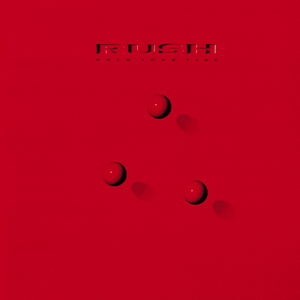
Rush 14: Hold Your Fire

After a dozen years and albums developing their sound, Rush had found something of a formula in the mid-‘80s, along with consistent commercial success. Hold Your Fire was very much in the mold of Power Windows, from its general sound and embrace of technology, and while that may have been fine for the kids who snapped it up, the bigger picture tells a different story.

“Force Ten” is a dynamic opener, the wind metaphor taking over and driving most of the feel, Geddy Lee’s bass chords and vocals particularly top-notch. It’s proof that they could write a catchy chorus now and then, underscored by the excellent construction of the next tune. “Time Stand Still” has one of their trademark circular riffs over a sneaky time signature, but what most people remember about the track is that it features the voice of Aimee Mann, then still of ‘Til Tuesday. Her contribution was so key they had to incorporate her face into the onstage visuals.

And from there it gets a little generic, even for them. The arrangements are tight, the playing distinct and expert, and even Geddy’s voice sounds warmer than ever, but the songs don’t leap from the speakers. “Open Secrets” actually approaches the topic of communication between romantic partners but they might as well still be talking about trees or snow dogs given the instrumental approach. Bizarrely, “Second Nature” uses a quieter, soulful approach (for them) to address the topic of the environment, and “Prime Mover” does that quiet-loud-quiet-loud thing through most of the song, which again is catchy, but sounds a lot like the songs on the last album.

“I don’t wanna face the killer instinct,” Geddy wails after an ominous intro, and the theme of “Lock And Key” is set. The music is more interesting than the lyrics. We can’t say the same for “Mission”, which was one of their most accessible songs at the time, and one that now seems to be a prime candidate for a hair metal power ballad. “Turn The Page” has aged better, despite what sound like canned horns, and frankly a lot better than the Bob Seger song of the same name, but not as easy to dance to. The band themselves have disowned “Tai Shan” since its release, and for good reason. It’s one thing to write a song influenced by a trip to China, but using Southeast Asian melodies in the era of The Karate Kid is cringeworthy. And using that damn whistle synth patch a year after everyone else did was just sloppy research. “High Water” is a good closer, even if it is a little too derivative of “Mystic Rhythms” and ends abruptly.

Hold Your Fire was the band’s longest studio album to date, and while ten tracks certainly gave value for the money, maybe they shouldn’t have. Still, it’s a competent album, and not “bad” in the least; it’s just not very exciting. They had gotten comfortable, and were letting the machines do their experimenting for them.

Rush Hold Your Fire (1987)—3

Friday, April 28, 2017

Marshall Crenshaw 4: Mary Jean & 9 Others

In 1987, it wasn’t enough to write catchy songs and record them well. John Mellencamp had the “heartland sound” pretty much sown up, hair metal was creeping in, and record buyers were fairly selective in their nostalgia. One of the bigger movie hits that summer was the Richie Valens biopic La Bamba, which brought Los Lobos their biggest hit. Meanwhile, in the same film, Marshall Crenshaw played the role of Buddy Holly, which translated to little public interest in his fourth album, in shops around the same time.

Mary Jean & 9 Others is a suitably retro title, but makes the mistake of not putting the actual name of the potential hit single in the title. Still, This Is Easy & 9 Others mightn’t have grabbed many eyes on the shelf either, given the poorly lit photo on the cover, which depicts Marshall with brother Bob (back on drums) and the high-stacked hair of Graham Maby, on loan from Joe Jackson’s band. “This Is Easy” remains a great tune, and would eventually be used as the title of a turn-of-the-century best-of.

Given that fantastic start, much of the album follows his established template of catchy melodies, simple chords (save the occasional major-seventh), rockabilly rhythms and hooky choruses. One unfortunate sidestep is “This Street”, with its processed guitars and electronic drums, sounding much like a demo. He was no slouch at recording demos, but this one simply doesn’t fit the sound of the album. “They Never Will Know”, which closes the set, is more of a slow dance, but not too slow.

“Calling Out For Love (At Crying Time)” and “Somebody’s Crying” may have a word in common, but are both standouts. The closest thing what could be called the album’s title track is certainly toe-tappin’, but pales slightly in comparison to “For Her Love” (which it closely resembles structure-wise) from his second album. In the tradition of obscure covers, this album’s contribution is a subtly rocking “Steel Strings”, from former Plimsoul Peter Case’s critically acclaimed solo debut the year before.

That track tops five minutes, and most of the songs on Mary Jean & 9 Others are over four; perhaps with only ten songs in his arsenal he was hesitant to shorten them, lest the album seem too short. In an alternate universe, his version of “Cryin’, Waitin’, Hopin’” from the La Bamba soundtrack might have joined the other “Crying” songs to entice consumers, but we should hope that in any alternate universe, he’s sold more records than he has in this one.

Marshall Crenshaw Mary Jean & 9 Others (1987)—3

Tuesday, September 6, 2016

Replacements 6: Pleased To Meet Me

Officially down to three members, The Replacements ended up in Ardent Studios, birthplace of the Big Star albums Paul Westerberg loved so much, with producer Jim Dickinson, who’d worked on Third and also played piano with the Stones. Dickinson’s ability to get music out of substance-addled musicians, plus his early adoption of digital recording technology, made Pleased To Meet Me a strong, if short album.

Side one is nearly perfect: “I.O.U.” is a powerful opening kissoff; “Alex Chilton” pays loving tribute to the man of the title (who himself appears later on the album); “I Don’t Know” is a hilarious call-and-response summation of the relationship between the band and everyone in the industry who tried to help them; “Nightclub Jitters” shows the more “adult” side of Westerberg with a faux-cocktail jazz backing; and finally “The Ledge”, a truly harrowing monologue by a boy contemplating suicide, continuing for a full minute after we apparently hear the fatal leap.

Side two goes through some throwaway rock that torpedoes further perfection, but the cold opening of “Never Mind” is an excellent development in Westerberg’s education in making records of good songs. “Valentine” is just that, and exactly the kind that a girl crushing on him would love to receive. “Shooting Dirty Pool” stomps through the mix with some admittedly clever lyrics, and “Red Red Wine” is little more than a mushmouthed paean to the beverage, but they’re forgiven for what comes next. “Skyway” is tender, acoustic, heartbreaking and infectious, and a great setup for “Can’t Hardly Wait”. Westerberg had been trying to perfect this song for two years, constantly fiddling with the lyrics, but that classic riff is unquestionable. Apparently it wasn’t his idea to add horns or the strings, but by setting it into posterity, the song was finished for him, and that’s the version that has become one of the band’s most beloved tracks.

Because the tunes are so good, Pleased To Meet Me seems longer than 33 minutes, and there’s more than that added to the updated CD. Along with noisy B-sides like “Election Day”, “Tossin’ And Turnin’” and “Route 66” (as well as Chris Mars crooning a cover of “Cool Water”), we get a few band demos of songs that would go unreleased or retooled. “Photo” combines the better elements of “Shooting Dirty Pool” and “Red Red Wine”, while the anti-TV “Kick It In” deserves further attention. Alternate versions of “Alex Chilton” and “Can’t Hardly Wait” provide some archaeology, but overall, it’s one of the few expanded CDs that really does deliver value.

Yet a decade later, once the Mats’ legacy started getting more love from Rhino, Pleased To Meet Me was the second of their albums to receive a plus-sized overhaul. The Deluxe Edition sported a new remaster of the original album, bolstered by six familiar tracks from singles. Even more demos, some including Bob Stinson before he was bounced from the band, make up a second disc, while a third disc of rough mixes and outtakes includes some otherwise unknown Westerberg songs along with five rarities previously curated. (The rough mixes, which include both eventual album tracks and castoffs, are also included on a vinyl disc, just because Rhino felt like it.) It’s intriguing to hear some early candidates that were discarded once the final lineup was decided, like the wonderful “Kick It In”, though three mixes of “Birthday Gal” is a bit much. Most fascinating are a handful of Tommy Stinson originals, each of which shows promise, even if none of the verses seem to rhyme in any of them. And Paul really loved “I Can Help”.

The Replacements Pleased To Meet Me (1987)—4
2008 CD reissue: same as 1987, plus 11 extra tracks
2020 Deluxe Edition: “same” as 2008, plus 27 extra tracks

Friday, May 13, 2016

Pretenders 5: The Singles

Chrissie Hynde was a student of pop music first and foremost, and in the decade in which she finally made her mark on the music business, singles were still important in the UK, and had made something of a resurgence in the US. So even after the debacle that was Get Close, the brand still had legs, so a hits album made sense.

The Singles offers just that, a chronological ride through the band’s most recognizable songs, starting with “Stop Your Sobbing” before the first album, moving through the run-up to the second, the intermediate statement of “Back On The Chain Gang” before the return of the third, and finally the most worthy selections from the fourth. As an added bonus for those who already owned these songs in some format, “Day After Day” appears in its single mix (with a fade instead of the plane-crash ending) and Chrissie’s recent duet on UB40’s cover of “I Got You Babe” closes the set.

Taken together, all of the songs on The Singles flow well, from ballad to rocker to punk to soul, despite being played by different bands. And anything that gives the consumer reason to avoid Get Close is a good thing.

Pretenders The Singles (1987)—4

Friday, March 4, 2016

Robbie Robertson 1: Robbie Robertson

For the first few years after he left The Band and seeing himself on the big screen, Robbie Robertson plunged whole-heartedly into the world of cinema. While he failed to become a matinee idol, his friendship with Martin Scorsese meant he was tapped to organize the music for films like Raging Bull, The Color Of Money and King Of Comedy, featuring Van Morrison’s excellent delivery of “Wonderful Remark”. His former Band-mates, save Levon, often helped with these recordings, so hearing Rick and Richard’s voices plus Garth’s keyboards made them special. (“The Best Of Everything”, from Tom Petty’s Southern Accents, was another notable production in this period.)

Robbie wouldn’t have been any band’s choice for a lead vocalist, so the idea of a solo album on which he sang all the songs raised eyebrows everywhere. But in a masterstroke of timing, he hooked up with Daniel Lanois, and his eponymous solo debut arrived in the wake of the multiplatinum success of Peter Gabriel’s So and U2’s The Joshua Tree. Robbie Robertson also tapped most of the musicians—and the two singers—involved with both albums, making the listening experience familiar.

“Fallen Angel” burbles up slowly, a lovely tribute to he recently departed Richard Manuel. Peter Gabriel sings the harmony parts on the chorus that Richard himself might have sung had he lived to do so. The first single was “Showdown At Big Sky”, with all-star contributions only on the level of the BoDeans, but enough of an apocalyptic echo of “Red Rain” to sound great on the radio. “Broken Arrow” could’ve been another Richard song, and would soon be covered by Rod Stewart. But a lot of kids likely bought the album on the basis of “Sweet Fire Of Love”, wherein Robbie trades vocal lines with Bono over a U2 backing.

One track that wore out its novelty pretty quickly was “American Roulette”, which references the demises of James Dean, Elvis Presley and Marilyn Monroe with clumsy metaphors and references. “Somewhere Down The Crazy River” is also an acquired taste, with its overly dramatic narration, counterpoints from Sammy BoDean, and a video in which Robbie got to paw Maria McKee. “Hell’s Half Acre” is lyrically slight but a good rocker, while the noir-storytelling “Sonny Got Caught In The Moonlight” is redeemed by Rick Danko. And U2 returns to help him bang out “Testimony” with a Gil Evans horn section for a rousing conclusion.

As we’ve seen and heard too many times, an all-star cast doesn’t always guarantee quality, but somehow Robbie’s ragged voice matched the lyrics he certainly wrote himself without dispute, and the swampy production on Robbie Robertson still sounds fitting all this time later. Back then, it seemed like quite a comeback. (A later repackage added two tracks—his own remake of “Christmas Must Be Tonight” for the Scrooged soundtrack and an overly gospel remix of “Testimony”.)

Robbie Robertson Robbie Robertson (1987)—4

Tuesday, August 11, 2015

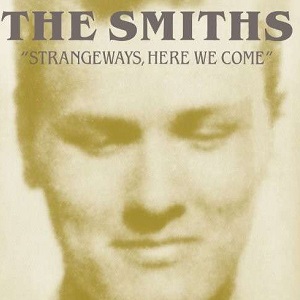
Smiths 7: Strangeways, Here We Come

Lots of bands break up for stupid reasons, and most of them involve lack of communication, miscommunication, or somebody’s ego. While the end of the Smiths wasn’t as dramatic as that of the Beatles, which had lots of factors, or even Aerosmith, who really did argue over spilt milk, if Morrissey had only let Johnny Marr take some (very much earned) time off, they might have had a better epitaph than Strangeways, Here We Come.

The songwriters consider it their best work, and it’s pointless to dispute an opinion, but it’s not one we share. The best songs are in the middle, so before you get there you must navigate the baroqueness of “A Rush And A Push And The Land Is Ours”, which has no guitars on it. They do return on “I Started Something I Couldn’t Finish”, which also repeats a growling “rrr” from the track before. “Death Of A Disco Dancer” starts well, with a White Album groove and even a developed Morrissey melody, but the last three minutes escalate into a pointless jam that could have been faded earlier. But on an already short album, the two-minute perfection of “Girlfriend In A Coma” stands out, particularly because the narrator is not the usual Morrissey fop. That guy returns on “Stop Me If You Think You’ve Heard This One Before”, another classic should’ve-been-the-first-single with great guitars and slightly, only slightly dated keyboard tinkles.

While it wasn’t their longest title, “Last Night I Dreamt That Somebody Loved Me” is just begging to be ridiculed, but that would show ignorance of its magnitude. Beginning with a lengthy piano dirge over what sounds like a soccer riot, it gives way to an even more sweeping main section, showing Marr at his orchestral best. For wordplay, “Unhappy Birthday” doesn’t quite live up to its title, but it’s an awfully sour lyric against a sprightly 12-string gallop. That’s good, because the bile is not spared on “Paint A Vulgar Picture”, a diatribe against the continual exploitation of pop idols, though the “Reissue! Repackage!” lines are hollow considering the compilations the band released in its lifetime and since. Besides repeating a motif from side one, “Death At One’s Elbow” is an undercooked rockabilly strum that should have waited to be a B-side, but since most of their B-sides were better than their album tracks… well, never mind. The fitting finale, and their best album ender save compilations, is “I Won’t Share You”, which says much more about the Morrissey-Marr relationship than either would admit.

While it wasn’t planned that way, Strangeways, Here We Come was indeed the last Smiths album, and they were over almost as soon as they began. It’s too bad, because it didn’t have to end like this, and although the experimentation here doesn’t always work, it does show promise for whatever they might have done next. Or not. The momentum they’d built over the past couple of years had to run out sometime.

The Smiths Strangeways, Here We Come (1987)—3½

Tuesday, June 16, 2015

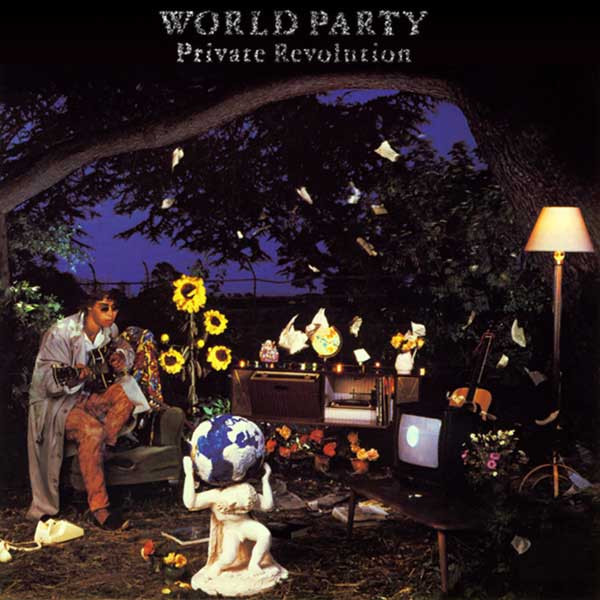
World Party 1: Private Revolution

If Karl Wallinger had done nothing but play keyboards on “The Whole Of The Moon” by the Waterboys, he would still be respected around these parts. However, he learned fairly quickly that he wouldn’t be able to collaborate with Mike Scott on his own terms, so he recorded something of his own one-man band project called World Party, which turned into a real live Pinocchio when he had a worldwide hit.

“Ship Of Fools”—subtitled in some places as “Save Me From Tomorrow”, after the hook in the chorus—was an infectious surprise in the darkening winter months of 1986 to 1987, a strolling piano sub-boogie with a vocal that sounded like Jagger channeling Dylan. It was one of the better developed tracks on Private Revolution, which spilled his other obvious influence, that of the recently de-Revolutioned Prince. Drum machines had only progressed so far at that point, and that dated sound colors both the title track and “Making Love (To The World)”. The blatant homage is mostly out of the way with those, so the lengthy follow-up single “All Come True” delivers more mystery in only a few chords. “Dance Of The Hoppy Lads” is a brief instrumental before the smooth soul of “It Can Be Beautiful (Sometimes)”.

Dylan dominates side two, from the outright parody of “The Ballad Of The Little Man” to the straight cover of “All I Really Want To Do”. In between is the countryish “Hawaiian Island World”, notable now mostly for the debut backing vocals (and one scream) by one Sinead O’Connor. The song “World Party” likely came before the band had a name, with a chorus borrowed from the Beatles. Finally, “It’s All Mine” lopes through an ecological lament, but only if you’re paying attention to the lyrics.

Private Revolution would sound better today if it were produced better, but that’s assuming that more sophisticated instruments wouldn’t subtract from the charm. It would have been easy to expect this to be a one-hit wonder, and maybe he’s faded into the background, but Karl Wallinger would have a lot more to offer, in his own sweet time.

World Party Private Revolution (1987)—3½

Friday, April 24, 2015

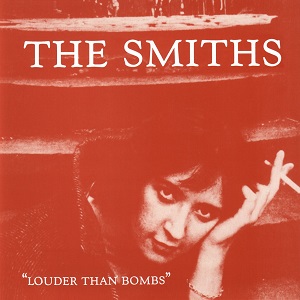
Smiths 6: Louder Than Bombs

As good as it is, The World Won’t Listen doesn’t quite provide the breadth of Louder Than Bombs, the Smiths compilation released in the US only a month later. This two-record set (or single cassette/CD) served basically the same purpose of mopping up extra tracks, but had the advantage of adding a few more recent recordings, and further muddied the shelves by including several songs already on Hatful Of Hollow.

Designed as a listening experience rather than a definitive history, Louder Than Bombs is chronologically jumbled, but sequenced very well—side one presents the most recent recordings, while side four is an exercise in dynamics, starting from “Hand In Glove” again down to “Asleep”. The 13 or so songs repeated from The World Won’t Listen are scattered throughout, in between earlier singles and B-sides not on any US albums (“William”, “Please Please Please”, “Heaven Knows”, “Girl Afraid”, to name a few).

Even with all the repetition, several songs can be considered “new”. The big production of the suggestive “Sheila Take A Bow” was the most recent single; its B-sides, both taken from a BBC session, were the only recordings of “Is It Really So Strange?”, a comical Morrissey travelogue, and the unfortunate “Sweet And Tender Hooligan”, whose lyric strains to keep up with the music. “Back To The Old House” and “These Things Take Time” appear in their studio, non-BBC incarnations; the former pales while the latter prevails. Slightly different mixes of “Stretch Out And Wait” and “You Just Haven’t Earned It Yet, Baby” further ensured purchase on both sides of the pond.

As a more comprehensive overview of non-album tracks covering the Smiths’ career to date, Louder Than Bombs does somewhat negate the need for The World Won't Listen, and makes Hatful Of Hollow more for absolute completists, but then those people would miss out on the BBC versions of “Reel Around The Fountain” and “Back To The Old House”. Now that all three albums are considered part of the canon, there’s no easy answer, and future Smiths collections wouldn't help streamline things any. Nevertheless, with 24 songs in 73 minutes, Louder Than Bombs is as enjoyable for longtime fans as it is for newcomers.

The Smiths Louder Than Bombs (1987)—4

Tuesday, April 21, 2015

Smiths 5: The World Won't Listen

With two fingers up to those who either had all the band’s singles or didn’t like the band anyway, The Smiths compiled another music-crammed LP of hits and otherwise. The World Won’t Listen was basically a sequel to Hatful Of Hollow, but while that album at least offered alternate tracks in the form of BBC performances, this one stuck to the band’s own releases, and ended up repeating four album tracks that were also singles, so fans now had at least three versions of the same song(s) in their racks.

But, as we’ve asserted, the band’s singles were as good as (if not better than) the albums, so this is hardly a mopping-up of leftovers. Two terrific singles from the previous summer start off the collection. “Panic” urges the populace to “burn down the disco” while making sure to “hang the DJ”, and “Ask” is a simple, sunny song with shimmering acoustic guitars and even backing vocals by Kirsty Maccoll. “London” is a surprising blast of punk, while “Shakespeare’s Sister” gallops along under a frenetic piano. “Shoplifters Of The World Unite” repeats the Bo Diddley beat of “How Soon Is Now?” with little of the excitement. In between, “Bigmouth Strikes Again”, “There Is A Light That Never Goes Out”, and “The Boy With The Thorn In His Side”, all from The Queen Is Dead, keep the quality high.

Side two is nearly all B-sides, and somewhat subdued musically. “Asleep” is a solid departure, a waltz on piano with wind effects and a music box coda of “Auld Lang Syne”, lying just this side of a suicide note. “Unloveable” is a typical Morrissey lyric, heavy on repetition and short on subtlety, but as quotable as it is lovable (“I wear black on the outside because black is how I feel on the inside”, for instance). “Half A Person” is a bit more toe-tapping but just as mopey. “Stretch Out And Wait” is another predominantly acoustic strum that pales as a close copy of “That Joke Isn’t Funny Anymore”, from Meat Is Murder. But instead of the fake ending, it’s followed by “Oscillate Wildly”, a striking piano-led instrumental that ups the tempo to meet “You Just Haven’t Earned It Yet, Baby”, a completely new song that was this close to being their newest single. A reggae rhythm begins “Rubber Ring”, but luckily abandoned for a more straightforward arrangement to match a lyric that tries to bridge (and meld) singer and fan. (Later reissues included the rare instrumental “Money Changes Everything”, which likely caught Bryan Ferry’s ear, and the hideous cover of a song called “Golden Lights”, in a most un-Smiths-like arrangement that sounds exactly like the kind of insipid ‘80s pop we thought the band was actively trying to eradicate.)

For kids who’d been immersed in The Queen Is Dead since June, here were more songs to save their lives. Being a Smiths release with heretofore unavailable tracks in the US, The World Won’t Listen did brisk business as an import, until another release stirred the pot further.

The Smiths The World Won’t Listen (1987)—4

Friday, March 21, 2014

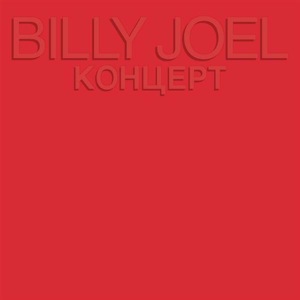
Billy Joel 14: Kohuept

After The Bridge, Billy Joel was about as American as apple pie, blue jeans and baseball. Somehow he took his tour to post-glasnost Soviet Union, which his label commemorated with a live album, a two-record set short enough to fit on one CD. (Technically, the album’s title is Kontsert, which is phonetic Russian, but we boorish Americans have no respect for other cultures, so to us, the Russian alphabet appeared to spell Kohuept, which was easy to ridicule as Kaput. And of course, the cover was bright red.)

The set opens with a Russian folk song sung a cappella, before plowing through “Angry Young Man”. “Honesty” is played solo, sounding very much like the classical piece it began as. Billy came to build bridges and educate, so he offers a lengthy explanation before “Goodnight Saigon”, made lengthier by the translator. “Stiletto” makes a surprising appearance, being more of a deep cut than even a radio hit. A bigger band fleshes out the jazz sentiments of “Big Man On Mulberry Street”, but his Ray Charles impression on “Baby Grand” comes out more parody than homage. Similarly, on “An Innocent Man” he apes the growls of Ben E. King while ceding the high notes to a backup singer.

From there it’s pretty much all hits, until the obligatory cover of “Back In The U.S.S.R.” He does strap on an inaudible guitar for “A Matter Of Trust”, and ends the show with a solo acoustic version of “The Times They Are A-Changin’”. By then he sounds exhausted.

The album was recorded at the end of a long tour, and his voice isn’t always up to the task. But for a long time, this was the only official souvenir of his longtime band playing the big hits, Songs In The Attic being a live album with a twist. Many years later, in the era of the deluxe package, the album was expanded, with a new title, and now ran the equivalent of a full show. The first half now sounds completely different with the addition of “Ballad Of Billy The Kid” (completely with an introductory explanation that includes the theme from The Magnificent Seven), “She’s Always A Woman”, and “Scenes From An Italian Restaurant”. A snippet of the doo-wop chestnut “What’s Your Name” precedes “The Longest Time”. More hits a scattered throughout the second half, and the disc closes with rehearsal recordings. (Sadly but predictably, footage of him throwing a tantrum during one performance of “Sometimes A Fantasy” was not included.)

Since he seemingly stopped writing songs, the only “new” Billy Joel albums have been of the live variety. This upgrade is arguably more entertaining, as it comes from the height of his career, rather than the motions of the oldies circuit. Liberty DeVitto was his best drummer anyway.

Billy Joel КОНЦЕРТ (1987)—3
2014 A Matter Of Trust: The Bridge To Russia: same as 1987, plus 11 extra tracks

Wednesday, September 18, 2013

Bruce Springsteen 9: Tunnel Of Love

People who’d jumped on the red, white and blue bandwagon in the wake of Born In The U.S.A. might have been surprised by Bruce’s next album. While he swore up and down that it was not autobiographical, Tunnel Of Love was certainly influenced by his recent marriage. Even though the lyrics were still arguably about the trials and tribulations of the workin’ man, these dealt more with emotional matters last heard on The River.

The songs were composed and recorded in the same fashion as Nebraska, but access to better equipment made it easy to imagine that whatever he crafted in his garage might suffice as product one day. The E Street Band made the roll call on the sleeve, but their contributions to the album were minimal; in fact, there wasn’t even a Clarence Clemons solo anywhere.

Those fearing another stark Son of Nebraska would have been calmed by “Ain’t Got You”, a one-chord Bo Diddley knock-off that shakes the cobwebs off pretty well. “Tougher Than The Rest” introduces the keyboards that bed most of the tracks, and along with “All That Heaven Will Allow” provides a pair of would-be classics. Then, as several besotted critics noted at the time, the roof falls in. While “The River” famously included a plot twist that would be too racy for prime time TV, “Spare Parts” is even more explicit about Bobby and Janey’s situation. Despite the production, it’s a very bleak song, though the chorus, which provides the title, is little more than a placeholder. “Cautious Man” could well be a character from Nebraska, only this fellow’s demons are far from psychotic. And if it ever becomes tradition for a groom to dance with his own father at a wedding reception, “Walk Like A Man” would be the ideal choice for the song.

Side one has its moments, for certain, but side two is stacked with the hits that make the album a keeper. The title track, supposedly the last song recorded for the project, sums up the theme of the album with an excellent metaphor, along with an excellent swirling arrangement and a terrific wordless bridge. (As a further portent, Patti Scialfa howls along with the rides in the background.) “Two Faces” addresses the dichotomy hinted at in “Cautious Man”, but in a more creative way, culminating in a gloriously cheesy organ solo. And while those same suspended chords that started in “My Hometown” and popped up whenever he touched a synthesizer are still here, “Brilliant Disguise” is one of his best, most concise songs, with an excellent hook and garbled lyrics that inspire all kinds of interpretation (not least of which, “the wee wee hours” still suggests what gets every man with an aging prostate out of bed in the middle of the night). “One Step Up” builds from blues clichés (“woke up this morning”, “bird on a wire”) and uses another as its hook, but it’s still a haunting little tune, and one of his more understated singles. After all the doubt that has gone before, “When You’re Alone” comes off as something of a threat, but the devotion of “Valentine’s Day” leaves us thinking that this marriage can yet be saved.

In the tri-state area, anything he did was news, and frankly, this was the first album of his non-believers like us actually enjoyed—mostly because it didn’t sound like Born In The U.S.A., and because so many of the bandwagon jumpers seemed to be averse to it. Still, it was a hit, helped along by the usual videos. A decent drum machine (for the time) made the songs radio-friendly, but those same drums and keyboards unfortunately box some of the tracks into an ‘80s straightjacket. That aside, the songs are excellent, and go a long way to proving that he wasn’t just the denim-clad cartoon with a bandana that had captured the world’s attention just a short time before.

Bruce Springsteen Tunnel Of Love (1987)—4

Monday, September 16, 2013

Van Morrison 20: Poetic Champions Compose

And on he went, like clockwork. Poetic Champions Compose expands on the dreamy feel of the last album, but edging closer toward what was being called New Age. There’s another prominent touch—sax. Van plays a lot of alto sax here, particularly on the three instrumentals that start each side and end the second. (Bryter Layter anyone?)

The opener, “Spanish Steps”, is absolutely stunning, even if you didn’t know it was him playing. Basically a lush slow jazz in a minor key, it’s very melodic, even through the sped-up section in the middle. “The Mystery” picks up that familiar melody from “Country Fair”, adding a swirling string arrangement for an Irish feel. Even better is “Queen Of The Slipstream”, whoever that is. Once again the strings threaten to take over the track, which probably kept it off radio, but it follows the tradition of the Caledonia Soul Orchestra, and even gives the album its title. “I Forgot That Love Existed” is built around a bubbling bass line, with the synthesizers making the band sound larger than it is. That and a new arrangement of the traditional spiritual “Sometimes I Feel Like A Motherless Child” take up space, but the former is redeemed by, again, his sax.

“Celtic Excavation” begins side two with a vaguely Oriental melody, but soon follows into another lush instrumental, setting up “Someone Like You”, a song that launched a million rom-com soundtracks. “Alan Watts Blues” more than namechecks that modern philosopher, and is catchy enough to overcome the obscurity in the lyrics. Just as snappy and obscure is “Give Me My Rapture”. A little sax noodling leads into “Did Ye Get Healed”, soon slathered in a Bacharach-style arrangement with horns and ladies’ vocals. It twirls around into another well-placed sax solo, then quiets itself to the end where a woman with a distinct brogue asks the musical question of the title. Finally, “Allow Me” gives the spotlight to trumpet and piano to follow Van’s own theme.

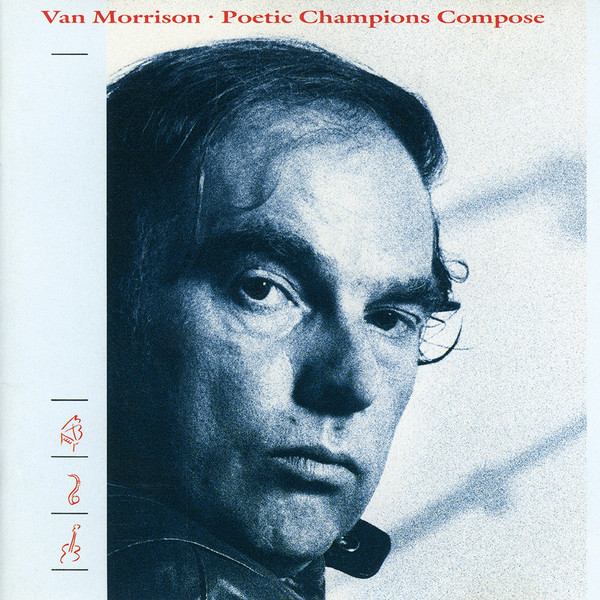
Normally we’re not big fans of saxophones, but when it’s used well, as it is all over Poetic Champions Compose, it does serve to add color rather than ketchup. While it’s not as consistent as his previous album was wonderful, it’s still a nice, inoffensive album. And of course, the cover photo of the grumpiest man in the world is just plain priceless.

Van Morrison Poetic Champions Compose (1987)—3½