Showing posts with label rem. Show all posts

Friday, January 5, 2024

Micky Dolenz: Sings Nesmith and R.E.M.

Throughout the original TV series, it was apparent that Micky Dolenz and Mike (as he was known then) Nesmith were the Frick and Frack of the Monkees, playing on the assumed telepathic partnership of John and Paul in the Beatle legend. Even then, Micky was a champion of Nesmith’s songs, and it wasn’t until Nez returned to touring with the Monkees in the 2010s that Micky’s exhortations got more regular and wider broadcast. By that time, family scion Christian Nesmith, who’d already been a veteran of touring outfits ranging from Air Supply to King’s X, was the musical director for Monkees’ live show. This continued when Micky and Nez were the only surviving members, and could finally call their schtick “The Mike & Micky Show”.

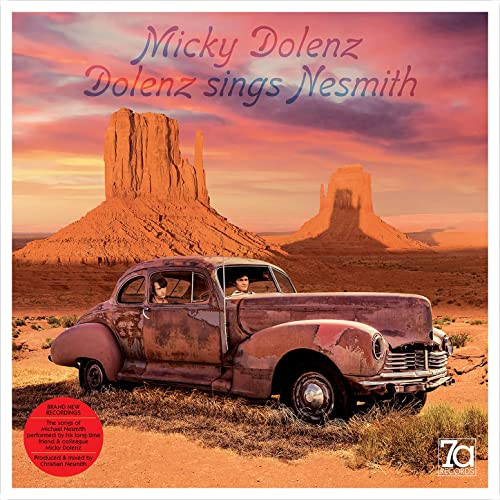
As with everything else in the music world, Covid put touring on hold, but since Micky had never been lazy and loved to sing, he decided to do his own spin on the Nilsson Sings Newman album by applying the concept (and cover design) to his buddy’s catalog, and corralled Christian to arrange it all. The resultant Dolenz Sings Nesmith accomplishes its thesis, relying mostly on songs outside the Monkees catalog. Many of those songs were originally released in Nashville country arrangements, which makes the templates fairly straightforward, but even the familiar ones are taken in less obvious manners.

“Carlisle Wheeling” includes everything but the kitchen sink, encompassing the original approach with arty touches. “Different Drum” is very daring, as the first-ever hit version put Linda Ronstadt on the map, but this one is done fairly straight. A deep cut on Instant Replay, “Don’t Wait For Me” is here presented with a simple picked acoustic accompaniment. The more obscure “Keep On” and “Marie’s Theme” are showcases for Christian’s keyboards, but still work. “Nine Times Blue” and “Little Red Rider” were both attempted by Nesmith with the Monkees before getting paired on the first First National Band album; here Micky takes the same approach, singing the former with a piano and rocking up the latter following the built-in key change.

“Tomorrow And Me” takes the tumblin’ tumbleweeds of the original to a more futuristic desert, pushing his voice to the upper limits of his senior range. Unfortunately, we didn’t need another version of “Circle Sky”, especially after it was redone once already, and certainly not with a faux-raga treatment. Similarly, “Tapioca Tundra” appears to be set on Mars, but still encouraging Micky’s vaudeville schtick. Much better is “Propinquity”, demoed by Nez for the first album and turned here into a stomper with an appealing banjo part. “Only Bound” is still spacey, and nicely segues into a snippet of “You Are My One”, a quarter of the length of Nez’s original jazz odyssey and filtered through Brian Wilson.

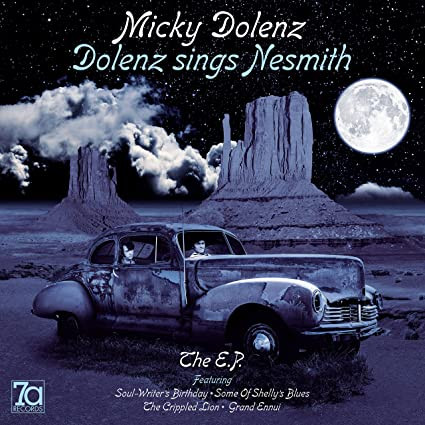
Nesmith died that December, and a month later Dolenz released Dolenz Sings Nesmith – The EP, containing four more songs from the sessions. The given highlight was “Soul-Writer’s Birthday”, a previously unreleased composition that shares the guitar accents with “Salesman” but otherwise isn’t much. “Some Of Shelly’s Blues” and “Grand Ennui” (the latter a bonus track on the main album’s CD) are taken country, while “The Crippled Lion” becomes a big ballad.

Dolenz Sings Nesmith is ultimately a vanity project, but it does reinforce what an inventive writer Michael Nesmith was, melodically and lyrically. As most of his post-Monkees catalog is slowly becoming available again, the curious would be well rewarded to go back to the sources.
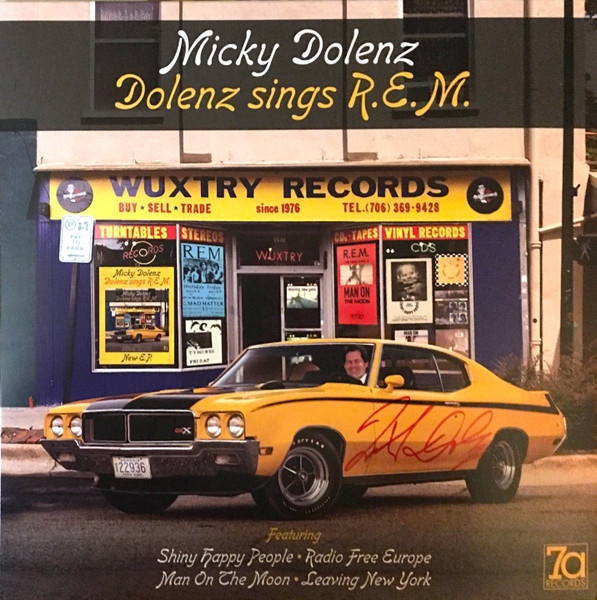
After those were given time to marinate, another project that was about as expected and double take-inducing as Pat Boone covering Ozzy Osbourne or Paul Anka doing “Mr. Brightside”. Dolenz Sings R.E.M. was tackled the same way as the Nesmith album, featuring new arrangements of four songs mostly performed by Christian. With “Shiny Happy People” the performers actually managed to make one of the shortest shelf-life R.E.M. songs into a thing of beauty. The waltz intro and interludes are retained, and Micky’s sister Coco gets to sing the Kate Pierson part. “Radio Free Europe” and “Man In The Moon” are perhaps too iconic to be re-interpreted, but “Leaving New York” is positively gorgeous. The R.E.M. boys loved it; perhaps this could be fleshed out into a full-length.

Micky Dolenz Dolenz Sings Nesmith (2021)—3
Micky Dolenz
Dolenz Sings Nesmith – The EP (2022)—3
Micky Dolenz
Dolenz Sings R.E.M. (2023)—3

Friday, October 26, 2018

R.E.M. 23: At The BBC

With seemingly hours of shows in their vaults, R.E.M. took a simpler route for an archival release, once again in a year without an album’s 25th anniversary. R.E.M. At The BBC spews up a box of eight CDs’ worth of material (plus a DVD) culled from the band’s British radio appearances. These were all live performances, both as a four-piece as well as the expanded ensembles of later years.

Fans of the classic lineup with Bill Berry will have to be content with an hour or so from a 1984 concert that sounds like they’re playing at the other end of a tunnel and includes songs that weren’t on albums yet (“Hyena” being a particular train wreck), part of a 1991 appearance that’s very similar to their Unplugged set, plus a full performance from 1995 that includes songs that would end up on New Adventures In Hi-Fi. Everything else comes from post-Up, after Bill retired. (Granted, several of their upgraded albums include live performances from the earlier period.)

That’s not to say the later stuff isn’t of the same quality; it’s tough not to get caught up in the crowd’s excitement at Glastonbury in 1999, Thom Yorke’s Patti Smith impression on “E-Bow The Letter”, or any deep cut given a passionate treatment. Yet while the selections come from different years, the listener may tire of multiple renditions of “Losing My Religion”, “Man On The Moon”, “The Apologist”, “Walk Unafraid” and the like. Rare songs are few; there’s “Fretless” and “Love Is All Around” from 1991, and a cover of “Munich” by the Editors from 2008. Yet for the price—$80 for the set, or $25 for a two-disc distillation—it’s a pretty good deal. And it makes a strong argument for their prowess as a solid live band.

R.E.M. R.E.M. At The BBC (2018)—3

Tuesday, June 10, 2014

R.E.M. 22: Unplugged

In a year that saw no 25th anniversary of an album that could be expanded, the corporation once known as R.E.M. found an unexpected way to comb the vaults and throw a bone to their still-mourning fans. First issued as a Record Store Day vinyl exclusive, Unplugged 1991 & 2001—The Complete Sessions presents the band, as well as MTV, at two distinct junctures in their histories.

The 1991 appearance was a big deal when the band had just released Out Of Time but weren’t undergoing a massive tour for it. But they were already darlings of MTV, which was arguably at the height of its influence on the music industry. The Unplugged franchise had already spawned a handful of companion albums, but had yet to win Grammys.

And of course, it’s not strictly unplugged by definition, for while Bill Berry gamely taps his bongos, Mike Mills stays mostly ensconced behind an organ; he does come forward to warble the Troggs’ “Love Is All Around”, one of the few pop songs Michael Stipe appears to have heard before. Still, the forum fits the six songs from the album they were promoting, which had plenty of acoustic touches to begin with. As a bonus for those fans who’d been hoarding their cassette-next-to-the-VCR copies all these years, five more songs from the taping appear at the end of the first disc, including the B-sides “Fretless” and “Rotary Eleven”.

Ten years later, the band’s stock had waned considerably, as had that of the channel no longer devoted to “music television”. Perhaps not able to convince VH-1 to do it, they returned to MTV to promote Reveal, their second album without Bill. The three guys who would augment them for the rest of their career fill in all the extra space ably on a set mostly culled from material they’d written since the first Unplugged show. (Interestingly, the “unbroadcast” portion is almost entirely from Reveal, which should be telling. And what’s with the “unabetted” comment appearing in two different places? Bad editing!) Much of their music in that period—as demonstrated by “Electrolite”, “Daysleeper”, “At My Most Beautiful”—was more acoustic-based anyway, and didn’t necessarily involve drums, making Bill’s absence less noticeable. But how is it that Bob Dylan doesn’t get credit for the verse of “Like A Rolling Stone” stuck at the end of “Country Feedback”?

An official R.E.M. Unplugged album should be welcome to fans, and certainly to those who need to be reminded how important those guys were at one time. It also has us wondering what else they’ll dig up, and how soon.

R.E.M. Unplugged 1991 & 2001—The Complete Sessions (2014)—

Friday, February 15, 2013

R.E.M. 21: Part Lies Part Heart Part Truth Part Garbage

The somewhat surprising announcement of R.E.M.’s pending disbandment was met with a variety of reactions from people who thrive on such things. In general, it was viewed as understandable, if not exactly inevitable. It had been years, decades since they’d been that self-contained unit of four guys battling against the mainstream. Even without their original drummer, the three remaining founders had flung themselves to opposite parts of the country, so that getting together to record, much less tour, took a lot of logistics.

But there had been clues, so we couldn’t say it was a complete surprise. Their last album was the first since Fables Of The Reconstruction to include any photographic representation of the band members on the front cover, and more to the point, Stipe was depicted as waving goodbye. They also didn’t tour behind the album, and waited six months to announce the end of the band in conjunction with a career-spanning double-CD hits collection. (They were, after all, businessmen.)

Part Lies Part Heart Part Truth Part Garbage 1982-2011 attempts to cover all the bases, giving more or less equal time to each of their albums. The liner notes graphically detail the sources of each track (complete with the typography from said sources) with brief gushing paragraphs from various members about why they love the songs so much. Some of the selections are obvious, having already appeared on one or two previous compilations, but where the hell are “Cant Get There From Here” and “Drive”? Surely “New Test Leper”, “Get Up”, or one of the Collapse Into Now songs could have been moved for those.

There isn’t much in the way of rarities, with the exception of the three new tracks, none of which are very exciting. “A Month Of Sundays” is said to be in the style of Pylon, but it’s no “Crazy”. “We All Go Back To Where We Belong” has something of a late-‘60s pop arrangement with Bacharach horns, while “Hallelujah” is even more lush, adding scary strings, making a weird end to their career.

As an in-depth overview, Part Lies Part Heart delivers, but it’s highly unlikely that anybody who cares about the band wouldn’t have the catalog already. They never had casual fans; you were all in or all out. Future generations will likely rip songs for their own mixes, or download a track at a time.

R.E.M. Part Lies Part Heart Part Truth Part Garbage 1982-2011 (2011)—4

Monday, February 4, 2013

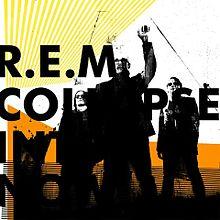
R.E.M. 20: Collapse Into Now

Accelerate was such a refreshing return to form—and a surprising one—that it was hoped R.E.M. could keep it up for their next album. For the most part, Collapse Into Now does continue the quality, even if some of the tracks sound too familiar from certain elements of their catalog.

“Discoverer” is a strong opener, a churning rocker along the lines of “Turn You Inside Out”. “All The Best” follows the Lifes Rich Pageant/Green pattern of having a heavy rocker for track two. Lines like “It’s just like me to overstay my welcome” still raise an eyebrow. With its acoustic backing and “hey” lyrics, “Überlin” begins like a retread of “Drive”, but surpasses that supposition by the time the bird noises kick in. Speaking of similarities, “Oh My Heart” seems like something of sequel to “Houston” filtered through “Swan Swan H”. Much was made of Eddie Vedder’s contribution to “It Happened Today”, but he’s easy to miss, unless you’re listening really closely to the second half of the song, a wordless singalong that’s more stirring than the first half. (The band made the song available for free amateur remixing via such software as Garage Band, which provided interesting insight into how they built the sounds of the track.) “Every Day Is Yours To Win” is nice and dreamy for a change.

“Mine Smell Like Honey” is a great driving track, but the title still has us convinced he's talking about his farts. Another welcome lull comes with “Walk It Back”, before things turn up again on “Alligator Aviator Autopilot Antimatter”. This is a toetapper despite the hideous title and vocal-heavy mix, plus unnecessary special guest Peaches. “That Someone Is You” brings back the classic sound from their first albums, albeit with much more direct lyrics, but unfortunately ends before it has time to sink in. Anything called “Me, Marlon Brando, Marlon Brando And I” is going to remind music snobs of Neil Young’s “Pocahontas”, but the song itself is much better than that, another haunting meditation. “Blue”—the only track without its lyrics printed—is mostly a rewrite of “Country Feedback”, and featuring Stipe heroine Patti Smith serving the same function she did on “E-Bow The Letter”, but manages to be even more in the way. However, the reprise of “Discoverer” tacked at the end makes for a wonderful finish, giving the suggestion of a closed circle.

R.E.M. seemed more interesting when you couldn’t understand the words; now that they’re up front and printed on the sleeve, their shortcomings are immediately obvious. But if it only took thirty years for them to start repeating themselves, they were at least ahead of the game. While it doesn’t quite hold together, Collapse Into Now isn’t bad, even for them. And while their best work still seemed to be behind them, that they could manage to tease their fans is a testament to their talent. It almost gave us hope that they would do it again.

R.E.M. Collapse Into Now (2011)—3

Monday, November 19, 2012

R.E.M. 19: Live At The Olympia

It’s fairly odd that only two years after their first-ever live album—with only one studio album in between—that R.E.M. would release another. Lest we think they were turning into the Rolling Stones, Live At The Olympia isn’t your typical post-tour souvenir. These two CDs are culled from the series of “live rehearsals” the boys—the three main members, plus drums and another guitar—played in Dublin as they were preparing for the album that would become Accelerate.

Of course, the performances didn’t consist solely of all-new, untried material; the bulk of the CD—two-thirds from the Bill Berry years—provides fresh takes on some of the deeper recesses of their catalog. Ecstatic fans in the audience (and now, listening on their player of choice) are treated to six songs from Reckoning, five from Fables and all but one from the Chronic Town EP. Only Green, Out Of Time and Up go unrepresented. But they’re not carbon copies either—there’s energy behind each song, whether introduced by Stipe with an anecdote or described lovingly in Peter Buck’s liner notes. The sharp-eared will notice a changed family dynamic, with “Gardening At Night” played at the request of longtime advisor Bertis Downs, while all references to “Jefferson” have been removed from “Little America”.

Of course, it’s an album for fans, so while there’s no need to into detail for each old song, a few other details are worth mentioning. “Harborcoat” makes it most of the way unscathed, until the tuneless harmonica sets up a purposely sloppy ending. “Circus Envy” is even a lot of fun, more so than surrounded by all the noise on Monster. And whose idea was it to revive “Romance”?

Considering the songs that did end up on Accelerate, it’s interesting to consider the other surviving contenders. “Staring Down The Barrel Of The Middle Distance”, fine as it is, wouldn’t have added anything to the album, and “Disguised” turns out to be a an early version of “Supernatural Superserious”, somehow not as tight as the recorded version. The slow and sad “On The Fly” comes from the same cloth as “Country Feedback”, but a little more melodic. There’s a middle interlude that threatens to go somewhere else entirely, but instead folds back to the song. It’s a hidden gem all right, but would have been out of place on the album they completed.

Live At The Olympia ends up a nice little surprise, with 39 songs filling up two-and-a-half hours of music, it’s a preferred listen to the other live album. It also provides a nice setup for the live recordings they’d begun including in the anniversary editions of their back catalog.

R.E.M. Live At The Olympia (2009)—

Sunday, October 14, 2012

R.E.M. 18: Accelerate

It actually happened—for the first time since the start of the creative decline that coincided with Michael Stipe shaving his head, R.E.M. produced an album that encouraged repeat listens. Accelerate sounds like them again, rocking like Lifes Rich Pageant and the better parts of Green—and nothing like the muddy glam of Monster. This was the R.E.M. we’d been waiting for since that misfire, still clogging the used bins nationwide.

Having decided shorter is better, the band keeps it simple here, with eleven songs coming in at under 35 minutes. These songs don’t meander, and barely give you time to catch your breath before the next one kicks in. “Living Well Is The Best Revenge” fires out of the speakers, Stipe sounding good and pissed off—at haters, perhaps? “Man-Sized Wreath” is especially reminiscent of Pageant with its guitar attack, “Taxman” bass and drums that actually sound like the much-missed Bill Berry. “Supernatural Superserious” was an iffy choice for a lead single, but it comes off more solid when heard within the sequence. Guitars drive these songs, as opposed to the keyboards from the last few albums. Although “Hollow Man” starts with piano and threatens to slow things down, it soon accelerates (sorry) smoothly to an urgent rocker, like Pearl Jam filtered through R.E.M., of all things. “Houston” has what sounds like a distorted organ, but it’s mostly an effect used on a song likely about the aftermath of Hurricane Katrina. The title track begins with one of those great atonal Peter Buck riffs, before turning into an urgent rocker akin to ‘90s Rush (and that’s meant in a good way).

“Until The Day Is Done” rivals their best acoustic moments, and delivers their meditative side much more effectively than anything on their last three albums. Most of the words on the album are jumbled, which is good, since close listens haven’t always proved to be rewarding. Stipe does sprinkle political statements throughout the tracks, and it’s tough to listen to “Mr. Richards” without thinking of Cosmo Kramer. “Sing For The Submarine” could have used a little more ambiguity too. But overall it’s about feel, with the top speed of “Horse To Water”, ending with the Blur-like “woo-hoo” interjections on “I’m Gonna DJ”—a song previewed on the previous year’s live album, and luckily overcomes any potential of being this album’s “Shiny Happy People” or “Stand”.

The original version of this review ended thusly: “Time will tell if this album has staying power, but for now, it’s great to have them back.” We stand by that statement. Accelerate is an excellent return to form, and their best effort since Automatic For The People. So there.

R.E.M. Accelerate (2008)—

Wednesday, August 15, 2012

R.E.M. 17: Live

R.E.M.’s commercial status was at its lowest since the band began, and maybe they were okay with that. Like Pearl Jam, whose own bell curve of success was pretty swift, world domination wasn’t as important as making records on their own terms, confident that the “true fans” would stick around.

That said, there’s something just a little defiant about R.E.M. Live. A fairly straight reproduction of the final show from a tour leg promoting their most recent dud of an album two years earlier, it’s unique for being their first by-the-book live album. (It was also recorded in Dublin, where, at the time of Live’s release, they had just finished a few shows trying out new material. Obviously, the city holds a special place for them.)

Since Bill Berry’s retirement, the other three took to touring with a drummer and two additional members who could swap guitars and keyboards, allowing Mike Mills to concentrate on bass and harmonies. But besides being strict hired guns and not full-fledged band members, they don’t get in the way, merely filling out the sound where necessary. That’s demonstrated very well on the songs from Around The Sun, which are performed better onstage than they were for the album.

Two decades’ worth of material means they could cherry-pick from throughout their career. Oddly only one song each appears from Up and Reveal. Everything is played fairly straight, even “Drive”, here in its album arrangement as opposed to the heavier “road” version. Even if you’re sick of “Everybody Hurts”, which runs over six minutes here, it’s still pretty cool to hear the crowd singing along with every note. They do the same for “The Great Beyond”, proving just how loyal that fan base was. Mike Mills’ lead vocal on “(Don’t Go Back To) Rockville” shows that his strengths lie in harmony. The one rarity for the time was “I’m Gonna DJ”, exuding tons of fun.

R.E.M. Live is for fans only, but packaged for value with a DVD of the same show. The second disc is shorter than the first, but research shows that it consists of (most of) the encore portion, and thus leans on the hits. People not fond of the band will have a field day mocking the Stipe image on the cover, but that merely reinforces the defiant attitude the band came to exhibit.

R.E.M. R.E.M. Live (2007)—3

Wednesday, July 11, 2012

R.E.M. 16: And I Feel Fine

It’s not clear why it happened when it did, but another R.E.M. collection appeared in 2006. With the bulky title And I Feel Fine… The Best Of The I.R.S. Years 1982-1987, it appeared to be something of a part one to the Warner-era set from 2003. Like that set, it was available two ways. The single-disc version is basically an expansion of Eponymous, adding some deep cuts to the standard versions of all the tracks (and dropping “Romance”).

Naturally, the fans had to spring for the double-disc version, heavy on rarities, with a few genuine outtakes and live versions. Alternates of “Gardening At Night”, “Just A Touch”, “Hyena” and “Swan Swan H” had already floated in and out of circulation, while vintage takes of “Bad Day” and “All The Right Friends” appear to contrast the later Berry-less recordings on the Warner set. “Mystery To Me” was likely never finished due to its resemblance to both “Radio Free Europe” and The Jam’s “All Mod Cons”. Both sides of the original “Radio Free Europe”/“Sitting Still” single add additional perspective. Each of the boys also chose a personal favorite from their catalog: “Pilgrimage” (Mike), “These Days” (Bill), “Disturbance At The Heron House” (Peter) and “Time After Time” (Stipe), plus “King Of Birds”, apparently a strong contender for disc one. Each is annotated with liner notes by all four original band members, and much more enlightening than the gushy paragraphs contributed by “legendary” critic Anthony DeCurtis.

And I Feel Fine appeared on Capitol Records, but this wasn’t their first stab at an R.E.M. compilation. Back in 1997, after they acquired the rights to the I.R.S. catalog, the label put out a series of odd digipack artist collections to celebrate EMI’s centennial. In The Attic was incorrectly subtitled “Alternative Recordings 1985-1989”, and served up a smattering of B-sides and sundry. Two had already appeared on Dead Letter Office, and another two were on Eponymous; the rest were live versions, the pointless “radio edit” of “Cant Get There From Here”, a true rarity in “Tired Of Singing Trouble” and a wonderful “medley” of “Time After Time” and “So. Central Rain”, with a few lines from Peter Gabriel’s “Red Rain”. As many of these were not included on And I Feel Fine, the R.E.M. catalog begins to get a tad unwieldy. An expanded Dead Letter Office would be an excellent place to stash these, but that’s not likely to happen.

R.E.M. And I Feel Fine… The Best Of The I.R.S. Years 1982-1987 (2006)—4

Wednesday, June 27, 2012

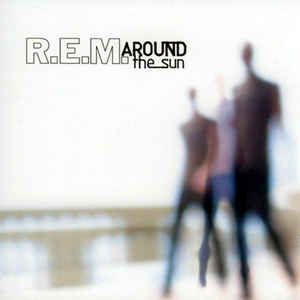
R.E.M. 15: Around The Sun

Michael Stipe has always been the most arty member of R.E.M., so it was likely his idea to take the bold step of streaming their next album on a social media site before it hit stores—not something that many mainstream bands were doing at the time. It brought the band some publicity, but it probably also had to do with why Around The Sun was not a big seller. Not because people were stealing it online, but because the album isn’t very good.

If anything, the album is just plain ordinary. The very first two tracks are incredibly similar to the point of identity theft; “Leaving New York” got the push in a post-9/11 world, though “Electron Blue” has more bursts from Peter Buck. “The Outsiders”, aka the one with the unnecessary rap by Q-Tip, stands out for that reason alone, and that’s not meant in a good way. There’s no denying how pretty “Make It All Okay” is, and “Final Straw” revives the autumnal acoustic sound for a not-so-subtle political statement, which continues on the very sleepy “I Wanted To Be Wrong”.

“Wanderlust”, with its jaunty British music hall-type of rhythm, has potential to wake things up, but they confuse your toes with a dropped-beat meter. “Boy In The Well” and “High Speed Train” are slow and similar songs both in dire need of bite, but each containing a killer chorus; surely they could have been combined. In between is “Aftermath”, a decent tune washed with those strings they’ve used too much already. “The Worst Joke Ever” stretches a metaphor way too far, befitting the title, but preventing the album from picking up any speed. “The Ascent Of Man” doesn’t either, but somehow the “yeah yeah” chorus works. Then an already too-long album coasts to a close with the title track.

Around The Sun is of a creature with most of their post-Automatic For The People output, in that we desperately want to like it more than we do, but we can’t. Although they’d certainly started to lose their way before Bill Berry left, it was beginning to seem as if he made the wise move. Once upon a time a new R.E.M. was a cause for celebration, and every fan remembers not only the first one they didn’t buy on street date, but the mixed emotions at that tradition having been broken. Why had they been so important to us, anyway?

R.E.M. Around The Sun (2004)—2

Wednesday, May 16, 2012

R.E.M. 14: In Time

Halfway through recording their next album, somebody must have noticed that R.E.M. had been around for twenty years, fifteen of which were spent on the label where they enjoyed their biggest success. So why not compile a hits collection covering those seven albums, with a few extras thrown in?

In Time: The Best Of R.E.M. 1988-2003 contains all the obvious favorites from that period, sequenced for feel instead of chronology, so that some of the less omnipresent hits get as much attention. To underscore this, “Shiny Happy People” is not included, to nobody’s chagrin. “The Great Beyond”, the single from their soundtrack to the Andy Kaufman biopic, appears as the second track, right after “Man In The Moon”, which gave that film its title. “Bad Day” (the original blueprint for “It’s The End Of The World As We Know It”) is revived and refined, given a new level of meaning in the wake of the War on Terror. “All The Right Friends” was another decades-old song, newly recorded for a questionable Tom Cruise movie. “Animal” is completely new, sounding like a distillation of the Monster album through the synth effects of Up and Reveal. The closing grouping of “Everybody Hurts”, “At My Most Beautiful” and “Nightswimming” presents the band at their most gentle.

Of course, any self-respecting R.E.M. fans would only justify picking up this hits collection if they went for the limited-edition double disc, which added an hour’s worth of B-sides and rarities. Some of these are welcome, like the acoustic take of “Pop Song 89”, a live electric “Drive” and the haunting “Fretless”, an Out Of Time outtake featuring Kate Pierson on harmonies. Of the latter (and the less exciting “It’s A Free World, Baby”, which is half a good song), Peter Buck says in the liner notes that he can’t imagine how it was left aside. “Revolution” got a lot of stage time when they wrote it, but was ultimately excluded from New Adventures In Hi-Fi, while a strikingly different arrangement of “Leave” is miles away from the noisy one on that album. A lengthy live take of “Country Feedback” will please fans of the song as much as it will irritate detractors.

As odds ‘n sods collections go, it’s no Dead Letter Office, which is understandable considering the period whence these castoffs emerged. As for the hits portion of In Time, it’s a decent overview, but unfortunately underscores the band’s increasing lack of importance, paradoxically enough.

R.E.M. In Time: The Best Of R.E.M. 1988-2003 (2003)—

Wednesday, April 11, 2012

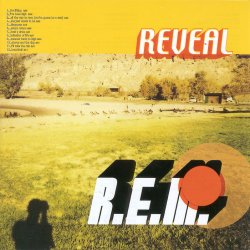
R.E.M. 13: Reveal

In the ‘80s R.E.M. could be counted on for a new album every 12 months or so. Then they started taking their sweet time, and frankly, it’s just not satisfying to wait two-plus years for an album that’s not very good. That, unfortunately, was the case with Reveal, their second album without longtime drummer Bill Berry. Here they continue the sonic experimentation of Up, but the novelty’s worn thin.

Keyboards and drum machines abound, particularly on “The Lifting”, “All The Way To Reno” and “Beachball”, with kitschy instrumental and percussion effects right out of the Burt Bacharach playbook. Stipe’s ignorance of pop music history prevented him from realized he’d lifted the melody of “She Just Wants To Be” from a Turtles song.

Still, there are a few tracks with potential, and they come right in the middle of the album. “Saturn Return” would stand out with a little more dynamics on either side of it (and if No Doubt hadn’t referenced the same concept in an album title a year earlier). “Beat A Drum” comes from the same basic mold of “At My Most Beautiful”, resting on a pretty melody and good ol’ Mike Mills on piano. “Imitation Of Life” was the first single, dressed up with a classic strum and mumbled lyrics. “Chorus And The Ring” features enough of the old mystery until the synths overpower it. “I’ll Take The Rain” has a wonderful chorus, but uses up too much of its six minutes to get there.

A lot of work certainly went into Reveal. But too many of the songs sound alike to be distinguished from one another, falling right into a longtime complaint of their detractors. It also makes two albums in a row that don’t rock for the most part, something else we used to be able to rely on. Perhaps, just like their counterparts in U2, they’d become accustomed to selling records to people who bought them out of habit.

R.E.M. Reveal (2001)—

Wednesday, January 11, 2012

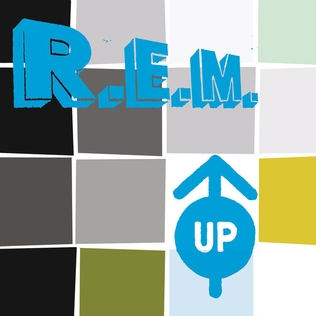
R.E.M. 12: Up

The boys of R.E.M. didn’t quite make it to their alleged goal of breaking up at the stroke of midnight on the millennium, as drummer Bill Berry quit before they got there. He left on the condition that doing so wouldn’t break up the band, so it was with heavy hearts and not a small amount of pressure that the remaining trio forged ahead with the recording of a new album. And when it’s time to change, you’ve got to rearrange, so they parted with co-producer Scott Litt after ten years and six albums. They even tried to simplify, going back to the one-word title. The packaging also included full lyrics for the first time ever on an R.E.M. album. (Up arrived with the blessing of Peter Gabriel, who was planning to use the same title for his own album, which wouldn’t surface for another four years.)

Knowing full well that whatever they did next would be under intense scrutiny, they went out of their way not to sound like themselves, relying on lots of wacky sounding (for R.E.M.) keyboards, using primitive old-school synthesizers and programmed drums. Up is full of contradictions, from the hopeful yet unfulfilled prophecy of the album title to the reliance on “old” sounds in order to sound “new”. This is immediately evident on the opener, the very Eno-esque “Airportman”. “Lotus” sounds more like standard R.E.M., with an electric piano for a New Adventures In Hi-Fi vibe. “Suspicion” is long but not boring, which is a plus. One of the most talked about songs was “Hope”, built around a distorted riff that could be described as Eno-esque (we really are going to try to stop using that term) and a lyrical/melodic structure borrowed from Leonard Cohen’s “Suzanne”, with subject matter that seems to entail a hospital. The highlight of the album is “At My Most Beautiful”, their first and best Beach Boys homage, built around a lovely Mike Mills piano piece. The melody isn’t much—another cousin of “Hairshirt”, “Radio Song”, and “Nightswimming”—but the moment where the harmonies make their chromatic lift proves that they have indeed found a way to make us smile.

Unfortunately the album starts to slide from there. “The Apologist” sports an okay organ part and a nice Coral sitar effect, but the “I’m sorry/so sorry” chorus was done better on Reckoning, and the closing “goodbye” just sounds wrong in the middle of the album. “Sad Professor” adds more guitar for something of a step up and “You’re In The Air” has a nice string part, but by now listeners would be excused for falling asleep. “Walk Unafraid” is a rewrite of both “The Apologist” and “Bang And Blame”, and should have been honed into one better track.

However, “Why Not Smile” gains momentum nicely over harpsichord, and Peter gets to layer a bunch of guitars, for a better display of the album’s potential. “Daysleeper” is a slow “Midnight Cowboy”, but Stipe’s lyrics work best when they’re not so literal. “Diminished” seems a more developed “Country Feedback”, but that’s probably just the pedal steel. A fragment of Stipe singing “I’m Not Over You” on acoustic is unlisted but included in the lyrics. The unsettling “Parakeet” snakes around a haunting prepared piano, and “Falls To Climb” returns the canned Eno-esque synth sound, very sterile and cold. (We really did try, honest.)

Up was a step in the right direction, with their most memorable melodies in a good while. At first listen it seemed an improvement over the autopilot of the last couple of albums, but the novelty wears off pretty quickly. (It’s tough when your first four albums are great, because when you put out something that’s merely “good”, that translates as “not great”.) Low-key but not as autumnal as Automatic For The People, it ultimately makes you want to go back and try to decipher what Bill brought to the table, because he is missed. Maybe he might have helped them cut it down to under an hour, for instance. We recommend chopping out the middle four songs, for a shorter, if not necessarily superior listen.

The 25th Anniversary Edition included a bonus CD containing a live performance, presented as a rehearsal, recorded for an appearance on the onetime hit TV show Party Of Five with the expanded six-man lineup and a very chatty Stipe. Oddly, the performance of “At My Most Beautiful” used on the show is not included, but he does stumble through a solo performance of “I’m Not Over You”, explaining how he kinda stole it from Smashing Pumpkins’ “Disarm”. (A pricier edition added a Blu-ray disc with the requisite hi-res audio, plus some videos.)

R.E.M. Up (1998)—3
2023 25th Anniversary Edition: same as 1998, plus 12 extra tracks (Deluxe adds Blu-ray)

Monday, December 12, 2011

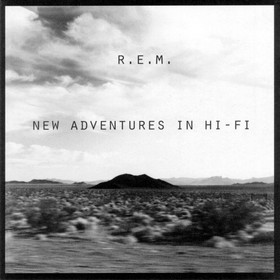
R.E.M. 11: New Adventures In Hi-Fi

The band undertook a massive tour in support of their worst album to date, during which three of the four members had to be hospitalized, none of whom were Peter Buck. Still, having enjoyed a long absence for a once heavy-traveled combo, they made the most of their time by recording new songs in dressing rooms and at soundchecks. This method had been deployed in the past to some success by Jackson Browne and Lou Reed, but for New Adventures In Hi-Fi, which arrived just short of a year after Monster, the band was quick to cite hipper references like Radiohead and Neil Young’s Time Fades Away.

At just over an hour, it’s too long for a single album, and too short for a double, suggesting that it should have been trimmed by about a third. The opening track, “How The West Was Won And Where It Got Us” doesn’t live up to its title, and how could it? “The Wake-Up Bomb” returns to the glam sound of Monster, “New Test Leper” doesn’t catch hold, and “Undertow” is a noisy jam with lyrics. “E-Bow The Letter” gets its title from the gizmo Peter Buck uses to get the drone sound on his guitar, and a big deal was made by having their idol Patti Smith bleat over the chorus. Despite its melancholy intro, “Leave” is driven by a persistent siren that wears out its welcome as soon as the vocal starts. Unfortunately, it goes for another six minutes, until you’re sick of the riff too.

Things improve slightly on the second half of the album, beginning with “Departure”. One of the first good tracks, it’s also one of the few songs on the album that evokes the feeling of a band on tour, with its expansive riffing and backing vocals taken from “Me In Honey”, and a chorus not too far removed from one of the extended hooks in ELO’s “Do Ya”. “Bittersweet Me” is also very well developed, and made for a good single, even though people weren’t buying those anymore. Like everything else here, “Be Mine” ends up going a little too long, but rumbles around its basic format with enough muffled vocals to be enticing. “Binky The Doormat” has something of a circus sound to it, fitting for a song supposedly inspired by the movie Shakes The Clown. The “choruses” get louder, with a nice balance of Stipe mumbling his words and Mills repeating “go away”. They’d had some decent instrumentals on their albums in the past, but “Zither” should have been left as a B-side. “So Fast, So Numb” seems to be more finger-pointing at either the slacker generation or celebrity casualties, and “Low Desert” brings us back to the water-treading of the first part of the album. At least we end on a high point, with the familiar piano sound of “Electrolite”.

New Adventures In Hi-Fi was a valiant effort to start and finish an album quickly, but it’s hardly a triumph. Besides being too long as a whole, half of the tracks break the five-minute mark. Many of the songs sound unfinished, as if Stipe spewed a bunch of lyrics on top of existing jams after the fact. That might have worked for R.E.M. at one time, but it doesn’t always here. However, they were starting to remember how they used to make records, but we had no way of knowing we’d suspect their best work was behind them.

Since much of the album was recorded live anyway, the eventual expanded edition simply added every track that had been what we still call B-sides from the CD singles, including the surf instrumental “Tricycle”, covers of “Wichita Lineman”, Richard Thompson’s “Wall Of Death”, and the Troggs’ “Love Is All Around” (a perennial Mike Mills favorite), alternate versions of some album tracks, and a few songs that had been parsed out for movie soundtracks. (A more expensive version was housed in a book-style package with a Blu-ray featuring audio-visual extras.)

R.E.M. New Adventures in Hi-Fi (1996)—
2021 25th Anniversary Edition: same as 1996, plus 13 extra tracks (Deluxe adds Blu-ray)

Monday, October 31, 2011

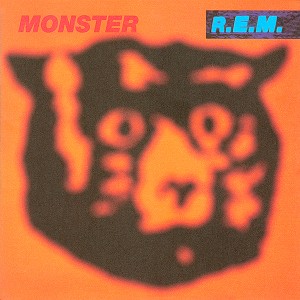
R.E.M. 10: Monster

Their audience was growing up, and that sometimes means things get left behind. Looking back we really do think that R.E.M.’s rot set in when Michael Stipe started shaving his head—sometime between the last video filmed for Automatic For The People and the first video filmed for its highly anticipated and ultimately disappointing follow-up.

Full disclosure: the first thing we heard from this album was catching the last few seconds of “What’s The Frequency, Kenneth?” on MTV, back when they used to play music videos in between Rocking the Vote and Real World marathons. The thing is, we didn’t know it was R.E.M; we saw the bald guy and just assumed it was Midnight Oil.

It was, and still is a pretty good tune, complete with garbled lyrics and a backwards guitar solo. It certainly rocks, setting the tone for the rest of the album. Monster is a striking contrast to its mostly acoustic predecessor, and it’s been suggested that the deaths of friends Kurt Cobain and River Phoenix fueled the anger that inspired them to turn up the volume. Whatever the truth is, the album is an assault, and it hurts.

The same tremolo guitar continues throughout the album, starting with “Crush With Eyeliner” and its unfortunate cameo by Thurston Moore, itself a gesture that if you don’t get it, you’re just not cool. “King Of Comedy” sputters along with a monotonic vocal and flat drumming. “I Don’t Sleep, I Dream” sounds like a work in progress, with typical arpeggios and a lack of melody. “Star 69” is a step in the right direction, a straight-ahead punk rocker with a title that too many people get, lessening any mystery. Critics pointed to “Strange Currencies” as a relative of “Everybody Hurts”, which is lazy. It appears to be something of a love song.

The same can be said for “Tongue”, sung in an unfortunate falsetto over piano and organ. It wanders along before finally petering out. “Bang And Blame” is the bastard child of “Losing My Religion” and “Orange Crush”, which is probably why it’s catchy. (Actually, we wouldn’t mind hearing more of the snippet that appears before the next song, “I Took Your Name”, which sounds too much like everything else on the album.) “Let Me In” is supposed to be the Cobain tribute, but relies on pure loudness and no drums. “Circus Envy” might benefit from a mix that reduces the snottiness quotient on the guitars, and “You” is a decent closer (they were always good at those) but again, the pulsating fuzz is a distraction.

We’re not alone in our disdain of Monster; you can find several duplicate copies of it in any used CD rack. We have tried to like this album and have failed miserably. It’s possible that these songs would stand out better if they weren’t all on the same album; taken all together they make a noisy mess. There are people who still stand behind this album, but we can’t.

This conundrum was addressed for the album’s 25th anniversary by pairing the original Monster mix with a brand new remix by producer Scott Litt. For the most part, the album is an easier listen, with a lot of the abrasion sanded off. Some of the overhauls are striking; Thurston Moore is way down the mix on “Crush With Eyeliner”, “Strange Currencies” has room to breathe, “Let Me In” is stripped of all reverb. Overall, the mix helps the songs stand out on their own; the lyrics are discernible and the drums sound terrific. However, it doesn’t make us dislike the album less. (The Deluxe Edition added a complete Chicago show from 1995 dotted by off-key vocals on two discs, a Blu-ray with the album in hi-res and surround plus the Road Movie concert film and all the music videos, and a disc of demos of ideas that didn’t make it to the final lineup of the album. Many of these are instrumental and sound very promising, somewhere between the jangle of Reckoning and the open sound of Lifes Rich Pageant, busting the mythology that they began the sessions armed with distortion pedals. That the ideas went unused—with the exception of one song finished ten years later and another four years after that—is just as frustrating as the album that resulted.)

R.E.M. Monster (1994)—2
2019 25th Anniversary Edition: same as 1994, plus 12 extra tracks (Deluxe adds another 40 tracks and Blu-ray)

Friday, October 7, 2011

R.E.M. 9: Automatic For The People

It arrived on one of those crisp October days, without a hint of Indian summer in the air. It was still exciting to hear a new album by a band you liked, especially one as unpredictable as R.E.M. Not only we were pretty happy it came relatively quickly after their last one—one of the plusses of not touring—but Automatic For The People delivered a listening experience that nicely contrasted the huge pop sound that made Out Of Time so ubiquitous.

“Drive” had already made it to the radio, with its menacing acoustic-with-strings echo of the previous album. And we still couldn’t understand a damn word he was saying. “Try Not To Breathe” sets the mortality theme, lifted a hair by the goofiness in “The Sidewinder Sleeps Tonite”. “Everybody Hurts” wore out its welcome pretty quick, though the video and its nod to the recent film Falling Down (itself a nod to the more obscure film The Swimmer) is still a great visual artifact. “New Orleans Instrumental No. 1” is suitably daring yet slight, and an odd choice for the middle of the side, but “Sweetness Follows” ends the first half on a pretty and elegant note.

“Monty Got A Raw Deal” starts side two in a somewhat reminiscent echo of “Drive” on side one; it’s supposed to be about Montgomery Clift, whom the Clash had already covered in “The Right Profile”. “Ignoreland” crashes through with its Neil Young tuning and angry diatribe against the Bush regime (which would be gone within a month, thanks in part to Stipe and his friends on MTV). This song has unfortunately not been any less relevant over the years. “Star Me Kitten” is built around the same vocals-as-machine effect as “I’m Not In Love” by 10cc. “Man In The Moon” follows, a tribute to a “comedian” not everyone thinks was funny since he’d first done the Mighty Mouse gag about 17 years earlier, but it’s still pretty catchy. “Nightswimming” still haunts, even for those who haven’t gone skinnydipping at any hour. It evokes a memory of summers long gone, and the carefree nights of youth. “Find The River” brings it all to a close with lyrics alternately hopeful and hopeless. (“I have got to find the river!” we’d declare emphatically as we listened to it for the fifth straight time on the bar jukebox.)

As autumn descended and the year drew to a close, Automatic For The People became a pleasant comfort. Little did we know it would be their last great album. It’s also the one we’ve listened to most when preparing for whatever the next album would be. While not above their first four, it’s still a remarkable collection of music. (Kurt Cobain said he’d wanted to record an album with the same acoustic approach. Instead, he shot himself. We still wonder what that album would have sounded like had he completed it.) Again, this was their last great album, and we might as well consider it their last album. It would have been a good way to go out.

Most pundits held the album in high regard years later on the occasion of its 25th anniversary, boosting the hype for the expanded editions. The cheaper double disc added their sole live performance from that year—and it’s excellent—captured approximately six weeks after the album’s release. Several of these tracks had been farmed out on various CD singles, so having it all in one place in sequence is more than welcome. The deluxe version added the usual visual component and a Blu-ray disc, plus another CD full of demos for the album, some of which were the basis for the finished songs. While many of the given song titles seem obscure at first glance, without being a complete spoiler the listener will hear working versions of the songs on the album, with only a few completely unreleased ideas. “Mike’s Pop Song” is a full-fledged Mike Mills composition, while “Devil Rides Backwards” is a curious set of lyrics even sleepier than the rest of the album. Another track of interest is “Photograph”, in a version before Natalie Merchant added her vocals for a various artists comp.

R.E.M. Automatic For The People (1992)—
2017 25th Anniversary Edition: same as 1992, plus 13 extra tracks (Deluxe adds another 20 tracks and Blu-ray)

Friday, September 23, 2011

R.E.M. 8: Out Of Time

After their longest absence yet, Out Of Time sent R.E.M. thoroughly in to the stratosphere. It still had its weird moments, but concentrated more on straight pop with lighter touches—like chamber string arrangements—to truly appeal to the masses.

That’s not to suggest it would be confused with anything else on the pop charts. The very first sound we hear is KRS-One’s spoken intro to “Radio Song”, which blasts the current state of the broadcast medium. The song alternates between a standard arpeggiated section and a funky organ-based rant, with more KRS-One. The striking first single was “Losing My Religion”, and it’s easier to maintain one’s interest by continually embellishing it with different lyrics (“It’s bigger than you and you’re not that big… that’s me in the bathroom, that’s me in the driveway… consider this, consider this a divorce… every waking hour I’m flossing my bicuspids, brushing my incisors… I thought I heard you sing, I tawt I taw a puddy tat…”) “Low” provides the old swampy R.E.M. sound, though we still scratch our heads to the repeated lines about “love”. Contemporary interviews said this was their first album that dealt with the topic of romantic relationships, but if that’s the case, what the hell was Reckoning about? Anyway, “Near Wild Heaven” brings back the sunshine on a song led by Mike Mills; one can’t see Stipe contributing much to this beyond the “ba-ba-ba-bah-bah-bah” chorus. The nearly instrumental “Endgame” resembles nothing too far removed from “please stand by” music on PBS.

Even the band never wants to hear “Shiny Happy People” again. This album’s equivalent to “Stand”, it has been only slightly redeemed by Sesame Street’s revision. “Belong” is an extended jam started on the last tour, a distant cousin of “Superman” giving Stipe a reason to think he could recite his poetry without having to worry about melody. “Half A World Away” reprises the organ and mandolins in something of a retread of “Losing My Religion”. Mike Mills takes the lead again on “Texarkana”, which sports a strong resemblance to latter-day Moody Blues. “Country Feedback” is one of those songs that divides people, and rightfully so. It’s a simple four-chord sequence, repeated with distortion and feedback, layered with pedal steel guitar and Stipe’s stream-of-consciousness vocals, the latter of which would become a growing trend. Our favorite is still “Me In Honey”, a simple strum with a catchy beat, Kate Pierson’s moaning counterpart and an unresolved lyric about a life choice. With all their talk of “progression”, this song is classic R.E.M. just like we want them: guitar, bass and drums with vocals.

As with anything that became hugely popular in the early ‘90s, familiarity has lessened Out Of Time’s excitement over the past two decades (good Lord), but boy, did it sound great when it came out. The boys also didn’t tour behind it, so we were left to scramble to watch any TV appearances, which probably heightened the excitement. These days it seems a little too sunny, and we can forgive that. It didn’t emerge in the friendliest of atmospheres.

It was another one of those albums that made us feel very old once its 25th Anniversary Edition came out. The bonus disc was filled up with what the packaging called demos, but are better described as early versions, mostly without lyrics. That means two more versions of “Losing My Religion”, “Shiny Happy People”, “Near Wild Heaven”, and “Texarkana” (one of which has Stipe singing a completely different set of lyrics) and three of “Radio Song” (one of which has Bill Berry singing the other parts). There is one otherwise unfinished “rocker”, but slightly more interesting, and less tedious, is the expensive package, which adds most of their appearance on the Mountain Stage radio show plus the obligatory 5.1 surround mixes and video artifacts.

R.E.M. Out Of Time (1991)—
2016 25th Anniversary Edition: same as 1991, plus 19 extra tracks (Deluxe adds another 15 tracks and Blu-ray)

Monday, September 12, 2011

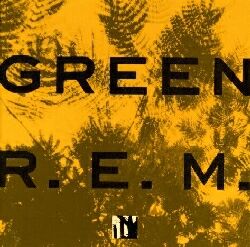
R.E.M. 7: Green

It was a fleeting, fascinating time when your favorite band would put out a new album, an eternal year after the last one, and full of anticipation at “what’ll they sound like this time?” you’d sit listening to it over and over again, digesting it, trying to figure where it fit in the pantheon of all that had gone before.

Particularly after the water-treading that was U2’s Rattle & Hum, this was what it was like to experience Green, the new R.E.M. album, released on Election Day 1988 on the verge of the third term of the Reagan administration. It was a big deal for the band, having graduated to Warner Bros. while retaining the producer from their last album. (Not to be outdone, their previous label put out the Eponymous “hits” collection a month in advance, complete with such rarities as the original indie single version of “Radio Free Europe”, a couple of alternate takes and a song used in a movie nobody saw but this commentator, though he’d be happy to be proved otherwise.)

Despite their growing accessibility, there was still a mystery about R.E.M., and as it was becoming easier to understand the words coming out of Stipe’s mouth, it was also easier to concoct wacky theories about their meaning. For the first few months of owning Green we were convinced that it was a concept album sung from the point of view of a disabled and/or retarded child, which only sounded dumber the more we expounded on it. But think about it: “Pop Song 89” is a collection of simple statements, followed by “Get Up”, an escape from dreaming complete with a musical box interlude. “You Are The Everything”—the first overt use of mandolin on an R.E.M. album—looks back to simpler times when you could stretch out in the back seat of a car. The near-nursery rhyme “Stand” would soon become everyone’s least favorite song. Stipe held “World Leader Pretend”, a view of war from a little green army men perspective, to be so important that he actually printed the lyrics in the packaging. And once you get to the competing vocals in “The Wrong Child”, it’s a little unsettling.

“Orange Crush” wasn’t the best choice for lead single, and its title doesn’t help; basically it’s a more mercenary approach to “World Leader Pretend”. Things get really loud on “Turn You Inside Out”, with Mike Mills yelling his harmony in the background. The real standout is “Hairshirt”, one of the band’s prettiest and simplest yet most baffling songs. “I Remember California” follows a doom-laden riff through a foreboding premonition of the end times. It’s the last song listed on the back of the CD case, but wait! Didn’t we see the number 11 on the disc itself, next to a blank space and a time listing? Why yes, there’s another song on the album. Based around the most basic of drum beats—played by Peter Buck, as Bill Berry insisted that it was impossible “to play that stupidly for that long”—the song is listed at the band’s website as “Untitled”, but copyrighted as “11”. It incorporates more intertwined lyrics, and one of the most tender benedictions ever, suitable for all formal occasions: “I made a list of things to say/But all I want to say/All I really want to say is/Hold her and keep him strong/While I’m away from here.”

Familiarity ate away at Green’s luster over time, and the ubiquity of the hits tends to keep it on the shelf. But when taken down for a spin, the better parts still emerge, and it’s hard to believe that it was so long ago. At the same time, it’s easy to see where they’d take themselves over the next few years.

First, however, they toured, and most of a concert from Greensboro—conveniently enough for the packaging—makes up the bonus disc in the 25th Anniversary Deluxe Edition (a further five issued as a Record Store Day vinyl exclusive). The band is tight and driven, showing that the new songs were made for the stage, but maybe it’s the months on the road that make some of the backing vocals a little rusty. He’s not credited anywhere, but Peter Holsapple did add some voice and instrumentation on that tour, so maybe we can blame him. Still, his presence makes it possible for them to play “Perfect Circle”. Also, to show they hadn’t been resting, we even get sneak previews in the form of “Belong” and “Low”.

R.E.M. Eponymous (1988)—4
R.E.M.
Green (1988)—
2013 25th Anniversary Deluxe Edition: same as 1988, plus 21 extra tracks

Wednesday, August 31, 2011

R.E.M. 6: Document

Right on schedule, back when bands put a new album every twelve months, R.E.M. emerged with a closer bid for superstardom, while preserving a love for wacky sounds. Document is a progression like everything else, with a bright and accessible rock sound, slightly more confident vocals and tantalizing lyrics, when you could understand them.

Their determination is established on “Finest Worksong”, which manages to rock on a single chord for most of the verses. Then it’s a dip into politics for “Welcome To The Occupation”, which likely escaped understanding even more than “Exhuming McCarthy”, complete with the legendary testimony mixed into the bridge. “Disturbance At The Heron House” isn’t the first song to compare humans to animals. A little comic relief comes on a cover of Wire’s “Strange”, another song that could be one of their own. The album’s most unlikely hit remains “It’s The End Of The World As We Know It (And I Feel Fine)”, still a great title and a great performance.

Then again, “The One I Love” shouldn’t have been as successful as it was, given to its repetition and easily confused sentiment. “Fireplace” is an off-kilter waltz, but not as jarring as “Lightnin’ Hopkins”, which could be described as U2’s October filtered through Georgia. “King Of Birds”, lush with exotic acoustic touches, is a lovely song, before the feedback and doom of “Oddfellows Local 151”, which gives Stipe another reason to work “fire” into a lyric.

Document doesn’t sound as unique today, given its familiarity and rash of imitators. In many ways, this is where some of their fickle fans began to think of them as sellouts. (They were still great in concert, as demonstrated by the Dutch performance included in the 25th Anniversary package, pointedly devoid of any heretofore-unrecorded songs or covers, despite “So. Central Rain” having previously been included in the “Time After Time Etc.” medley on a few compilations.) But it’s easy to be spoiled when your favorite band puts out an album every year. All these years later, with plenty of hindsight, it truly does evoke the fall of ’87, as the psychedelic nostalgia of the summer gave way to nervousness about the Reagan administration. For all of its volume, its anger is filtered through its weirdness.

R.E.M. Document (1987)—
2012 25th Anniversary Edition: same as 1987, plus 20 extra tracks

Wednesday, August 24, 2011

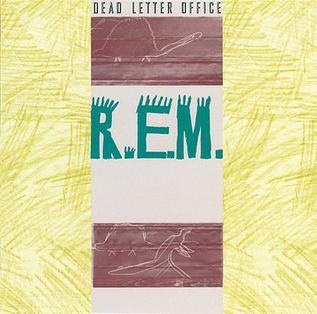
R.E.M. 5: Dead Letter Office

R.E.M.’s fans could have easily contained their first four albums on two Maxell 90-minute tapes, with room for the various other songs that had crept out on B-sides. All of a sudden, the band made their searches a lot easier with Dead Letter Office, a collection of such rarities. Such a thing wasn’t as common for an active band, but this group, record store geeks all, would have certainly been familiar with similar compilations by Elvis Costello and The Clash. And despite Peter Buck’s self-deprecating liner notes, it’s a highly cohesive album.

Said liner notes make the point that a B-side tends to be a dumping ground for half-assed performances captured on tape that wouldn’t fit on an album. So like any other band, R.E.M. recorded their share of covers in the early days. Three of them were Velvet Underground songs, and their mostly acoustic takes on “There She Goes Again”, “Pale Blue Eyes”, and “Femme Fatale” might have turned the unsuspecting on to that band. “Crazy” was borrowed from the Athens band Pylon, though it could easily have been an original. Their take on Aerosmith’s “Toys In The Attic” is a hoot, but in a different way from the drunken stab at “King Of The Road”, which apparently none of the band knew all the way through.

Of the songs they did write, perhaps they might not have fit onto the albums, but they still are of quality. Especially entertaining is “Voice Of Harold”, a legendary early take of “Seven Chinese Brothers” sung using the words from the back cover of an obscure gospel album. “Burning Down” and “Ages Of You” may be rewrites of the same song, but each would be fun to hear live. “Burning Hell” matches a plodding riff with a strangled vocal that spews such gems as “women got legs, men got pants/you got the picnic, I got the ants”. A few instrumentals show off the band’s tightness, and even “Bandwagon”, another reaction to constant touring, manages to charm.

The album wasn’t a huge commercial hit, but it was never meant to be. But in a very smart move, the CD version included as a bonus the entire Chronic Town EP from 1982, which to date was only available on LP or cassette. It makes a nice inclusion, and really does enhance the collection. The five songs are a little more tentative than what would comprise Murmur, the standout being “Gardening At Night”. While overlooked in the band’s 25th Anniversary archival program, Chronic Town could certainly anchor a strong second disc for an update of Dead Letter Office, with the addition of the remaining handful of live takes and other rarities from those early days. But they didn’t, and phooey on them for leaving money on the table.

R.E.M. Dead Letter Office (1987)—4
1987 CD: same as above, plus 5 extra tracks