Showing posts with label crowded house. Show all posts

Tuesday, September 23, 2025

Crowded House 9: Gravity Stairs

The most recent lineup of Crowded House stayed intact for a second album in a row. But while the cover of Gravity Stairs emulates that of Revolver, the Beatlesque pop of nearly forty years earlier has long since mutated into the Finn family brand. The hooks are there, but they’re usually buried in atmosphere.

“Magic Piano” is another tentative beginning, a love song to the joy of playing that breaks open for the chorus. “Life’s Imitation” (retitled “Teenage Summer” for the streaming editions) also has a catchy chorus, but the repetitive lyrics make the song seem unfinished, despite the production. Liam Finn is responsible for “The Howl”—his lyrics are more impressionistic than Dad’s—and we’re getting steadily closer to rock. “All That I Can Ever Own” is another love song, this time to family, with the perspective of age, and somewhat obscured amid a very busy mix. “Oh Hi” is equally herky-jerky, but as it was inspired by and intended to benefit an African education charity, it’s fine. If the harmony on the Neapolitan-inspired “Some Greater Plan (For Claire)” sounds familiar, it should, because it’s Tim Finn. Once again, it’s related to the healing power of music.

“Black Water, White Circle” comes from another dreamy place, perhaps somewhere on open water. If anything sounds like Crowded House of an earlier decade, it’s the electric guitars dominating “Blurry Grass”, written with Elroy, who provides a nice little drum break. The energy stays up for “I Can’t Keep Up With You”, an apt title for a song loaded with electronic flourishes that once again hide the decent song in there. Most of these layers are peeled away by the end of the track, which makes a nice segue into the fingerpicked backing for “Thirsty”. It’s even nicer once “Night Song” starts, beginning as something of a lullaby but chases tangents down effects and time signatures, with the sort of disembodied voices that jar you awake when you’re trying to go to sleep.

Gravity Stairs is certainly of a piece, so it’s successful as an album, but we’ve always depended on Neil Finn to give us tunes we can hum. As we’ve said too many times, the production takes away from the enjoyment of close listening, and we shouldn’t have to work so hard for the songs to stick. A lot of people had their hands on the mixing board, making for a more democratic vision than a unified one. We still like it.

Crowded House Gravity Stairs (2024)—3

Tuesday, March 25, 2025

Crowded House 8: Dreamers Are Waiting

After ten years on his own and with others, Neil Finn decided the time was ripe to revive Crowded House. Again. Along with stalwart bass player and cover designer Nick Seymour, the other residents this time were his sons Liam and Elroy, who’d proved their worth with their dad as well as on their own. In another link to the past, Mitchell Froom was brought in as an official member on keyboards; the production on Dreamers Are Waiting is credited to the band as a collective, but his boomy tendencies still prevail.

“Bad Times Good” lopes along with a mild island feel in 5/4 time for a tense yet tentative opener, then “Playing With Fire” has shades of lockdown in the lyrics and more edginess in the instrumentation. There’s a direct segue to the moody, wacky “To The Island”, but “Sweet Tooth”, with its scratchy rhythm guitars, finally sounds closer to the band of old. “Whatever You Want” keeps the electricity on, and it’s clear the younger Finns like odd meters, but “Show Me The Way” is another one that sounds like it takes place under water, or at least floating on it.

It takes a certain amount of quirk to place a title like “Goodnight Everyone” smack dab in the middle, but there we are, still bobbing on the waves. “Too Good For This World” works a lot of avian imagery and metaphors into a message entailing flight and escape, just as the downer lyrics in “Start Of Something” belie the sunny melody. “Real Life Woman” offers comfort in familiarity and not sounding like everything else here, particularly towards the end where the band breaks out of its straightjacket. “Love Isn’t Hard At All” provides even more relief, even it does incorporate the music most of us know as the Tetris theme. We’re surely not the first ones to notice that the chorus of “Deeper Down” sounds like more recent McCartney, and that’s not a bad thing at all.

But the sum is greater than the parts, and even if Crowded House is now more a brand name than a statement of purpose, Dreamers Are Waiting follows logically along Neil Finn’s trajectory. As with the last revamp, any further activity should not be considered guaranteed. Folks hoping for a return to the sound of the original lineup will be disappointed, but those who’ve kept up should be pleased.

Crowded House Dreamers Are Waiting (2021)—3

Tuesday, April 11, 2023

Neil Finn 5: Pajama Club and Goin’ Your Way

Empty nest syndrome is apparently a universal thing, as Neil Finn discovered when his kids were grown. With more time and space than they knew what to do with, he and his wife Sharon decided to make some music. He played drums for the first time ever, and she played bass. Fellow Kiwi Sean Donnelly was brought in to add keyboards and beats, and Pajama Club was born.

The music on their eponymous (and to date, only) album is predominantly electronic, more along the lines of the experiments of Neil’s first solo album as well as the lo-fi atmosphere of the first Finn Brothers album. His voice is welcome when it’s heard, and Sharon can carry a tune as well, but it’s not always easy to find the songs amid the mix. That said, “TNT For 2” sounds most like standard Finn, “Go Kart” is goofy fun, and the chorus of “Can’t Put It Down Until It Ends” reveals a song crying out for a straight arrangement.

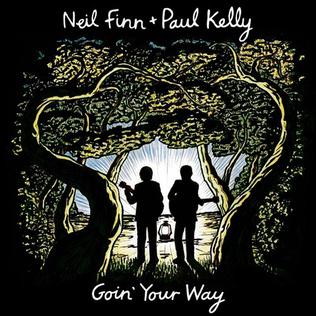
The following year, Neil embarked on a collaboration of sorts with Australian singer-songwriter Paul Kelly, who’d never really caught on in America with his band the Messengers, but was beloved at home. This mutual admiration society resulted in a tour wherein they performed each other’s songs, sometimes swapping vocals, backed by a band including Paul’s nephew Dan on guitar, Neil’s son Elroy on drums, and a bass player not related to any of them. Goin’ Your Way presents a Sydney performance, and it’s both a wonderful retrospective of Crowded House and Neil solo, plus a few Split Enz songs, as well as a nice intro to Paul Kelly’s work. The two-hour set is capped by a fun stomp through Buddy Holly’s “Words Of Love” and a subdued “Moon River”, which gives the album its title.

Pajama Club Pajama Club (2011)—
Neil Finn + Paul Kelly
Goin’ Your Way (2012)—

Friday, August 15, 2014

Crowded House 7: Intriguer

The second Crowded House album of the 21st century was another one in name only. While Intriguer does feature the core quartet established by the previous album (and tour) on all tracks, it’s still more in the style of Neil Finn’s solo work, hermetically sealed and lacking the wackiness that made their ‘80s work so addictive.

“Saturday Sun” is terrific, and the best track to start the album. The verses and choruses are equally catchy, and slightly akin to some of the better U2 tracks from this century. Things gradually revert from there. Both “Archer’s Arrows” and “Amsterdam” plod along between their inevitably catchy choruses. “Either Side Of The World” is toe-tapping yet soft, and just when you think the song’s over it goes to outer space for a minute and returns for a reprise of sorts. “Falling Dove” is a pleasant, pensive strum, but there are already too many of those on the album.

The second half is just as tentative, beginning with “Isolation”. This features Neil’s wife Sharon on a few verses, and switches abruptly to a chaotic finish. That makes a good setup for “Twice If You’re Lucky”, a highly welcome pop anthem, and the straight-ahead simplicity of “Inside Out”. “Even If” returns to the melancholy musing, while “Elephants” gets its spacy feel from guest Greg Leisz on pedal steel. (iTunes purchasers got the option of a deluxe edition with “Turn It Around” as a slightly snappier finale, along with a pile of videos. That song was included in the eventual Deluxe Edition, along with some live tracks, including the excellent “The Only Way To Go Is Forwards”, demos, alternates, and B-sides.)

The general consensus on Intriguer is that repeat listens are ultimately rewarding, and that is true, but wouldn’t you rather not have to live with something until the point where you can appreciate it? Its relative brevity at 40 minutes does help with the familiarity. We were even shocked to find ourselves wishing brother Tim had been included for some counterpoint. Its place in the Crowded House canon is iffy, but at least it doesn’t take anything away from those first few poppy gems.

Crowded House Intriguer (2010)—3
2016 Deluxe Edition: same as 2010, plus 16 extra tracks

Friday, May 16, 2014

Crowded House 6: Time On Earth

Ten years after Crowded House’s final performance, Farewell To The World was released on CD and DVD, presenting the concert in its emotional entirety. To add to the PR, a new album by the reconstituted band was in the works, and arrived as promised.

Despite the presence of bassist Nick Seymour and latter-day member Mark Hart, Time On Earth is really Crowded House in name only, since the songs started out for a Neil Finn solo album. It’s also missing a lot of the quirkiness (and harmonies) that made the first four CH albums so archetypal. (The press, tour and artwork spotlit their new drummer, but he’s not even on half the album.)

Sadness permeates the album, from the tempo to the lyrics. Something’s missing, or more to the point, someone. Paul Hester was such a lovable clown for the band, and perhaps it’s a cliché to say that it wasn’t enough to keep him around. It’s tough to hear “English Trees” and “You Are The One To Make Me Cry” without getting depressed. The very quiet “A Sigh” comes immediately before the tense “Silent House”, originally written with and recorded by the Dixie Chicks. “Transit Lounge” is distracted by a foreign voice suggesting the same, with an “ethereal” woman’s voice helping out elsewhere.

There are a few tracks that will get the toes tapping in a familiar way: “Don’t Stop Now”, familiar enough for a single; “Even A Child”, written with Johnny Marr; the classic-sounding “She Called Up” and its teasing hook; “Say That Again” and its jumpy meter. “Pour Le Monde” is a nice cross of the Lennon and McCartney piano styles, with an orchestral part that reflects the better elements of the last Finn Brothers album. Thankfully, the French title is only decoration. “Walked Her Way Down” travels from a moody piano piece to an infectious track. “People Are Like Suns” is a final slow song on an album with too many of them, but becomes a good place to end.

For all its schizophrenia, perhaps the worst thing we can say about Time On Earth is that it’s too long—an ironic statement considering the title. It’s pleasant background music, and while it could be said that Crowded House was “back”, they were hardly “better than ever”. (The eventual Deluxe Edition was bolstered with a pile of home and studio demos, plus some contemporary B-sides that also sound more like Neil Finn solo than the House.)

Crowded House Time On Earth (2007)—
2016 Deluxe Edition: same as 2007, plus 13 extra tracks

Friday, December 28, 2012

Finn Brothers 2: Everyone Is Here

After Crowded House disbanded, Neil Finn hadn’t disappeared, but neither had he made much of a dent in a music industry not very interested in his brand of pop perfection. It also didn’t help that the albums he recorded under his own name weren’t immediately as catchy as what had made him rich (assuming he was).

Since he still had something of a cult following, they were likely very excited indeed when his next project turned out to be a Finn Brothers album. And rightfully so. Following the okay results of Woodface and Finn a decade earlier, Everyone Is Here wisely avoided the “two guys in a room” approach and instead incorporated studio musicians and actual producers (one of whom was Mitchell Froom, which wasn’t obvious from the sound, thankfully). It’s a straightforward pop album, without any real experimentations, if a little somber at times, but that’s okay too.

It comes off nice and strong from the start, with the close harmonies of “Won’t Give In” and the “don’t give up” message of “Nothing Wrong With You”. The album flows right along, with melodies that seem like they’ve been in the air forever; they’re that comfortable. “Luckiest Man Alive” is a little mawkish lyrically, but boy, is it catchy.The messages in the lyrics aren’t always clear, as in “Edible Flowers” and “All God’s Children”, but the more upbeat tracks, like “Part Of Me, Part Of You”, “Anything Can Happen”, and even “Homesick”, will stick in your head.

Everyone Is Here may have been a safe move, but it was also the most satisfying new album from Neil Finn in about ten years. Naturally, it didn’t dent too many American charts, despite a few songs being played on a few episodes of Scrubs. Because it was the style at the time, it was reissued only a few months later in a so-called “special edition” with a bonus DVD and extra tracks—some of which were relics from the original version of the album, produced by Tony Visconti and subsequently rejigged—and the boys faithfully toured to support it. However, any momentum built up was threatened that March, when Crowded House drummer Paul Hester took his own life.

The Finn Brothers Everyone Is Here (2004)—3

Sunday, November 11, 2012

Neil Finn 3: 7 Worlds Collide

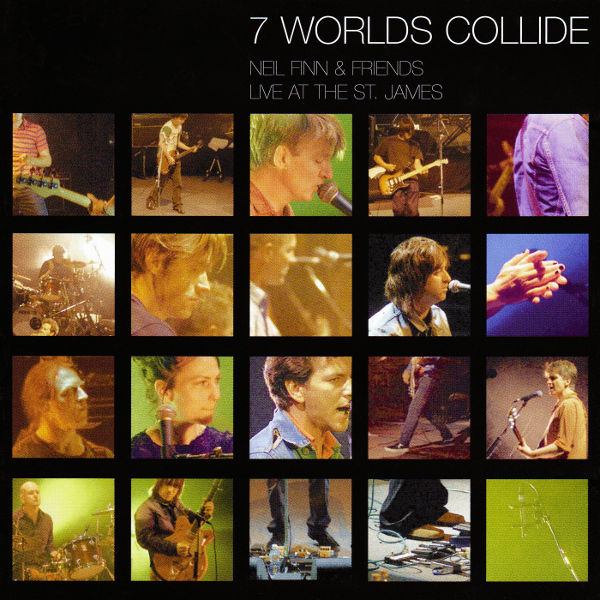
To promote the all-but-U.S. release of his second solo album, Neil Finn played a weeklong residency at a theater in Auckland, New Zealand with a band that included two members of Radiohead and other special guests, sometimes trading each other’s songs. The highlights were compiled on 7 Worlds Collide. (The DVD version added even more selections, and provides key visual clues to what’s going on.)

A few of the One Nil tracks make the program, while “Loose Tongue” from his first solo album is nicely translated to the stage. Johnny Marr emerges from years of session work to sing his own “Down On The Corner”, and Neil returns the favor by ably tackling The Smiths’ “There Is A Light That Never Goes Out”. Multi-instrumentalist Lisa Germano takes a rare spotlight on the transfixing “Paper Doll” before harmonizing nicely on “Turn And Run”. It wouldn’t be a show without Tim Finn, and the two perform not only a few from their one collaboration album to date, but preview “Edible Flowers” from the next one. Eddie Vedder reveals himself to be a huge Split Enz fan, taking lead vocals on “Take A Walk”, “Stuff And Nonsense”, and “I See Red”, the latter yelled over a band fronted by Neil’s son Liam (more on him later). The band also backs him on “Parting Ways” from the most recent Pearl Jam album. For Crowded House fans, “Weather With You” and “Don’t Dream It’s Over” close the set.

7 Worlds Collide isn’t the last time Neil would collaborate with surprisingly likeminded musicians, but it is an unexpected surprise. One suspects it may have helped pave the way for the emergence of One All in the U.S. the following year.

Neil Finn & Friends 7 Worlds Collide (2001)—

Friday, October 12, 2012

Crowded House 5: Recurring Dream and Afterglow

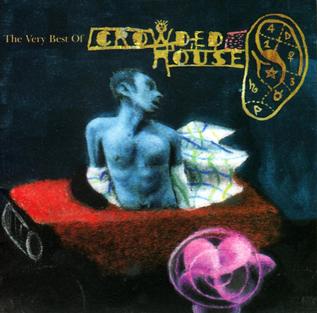
After ten years, four albums, and the addition and subtraction of new and old members, Crowded House called it quits with a farewell concert and a hits collection. Recurring Dream shuffled four tracks from each of the albums, all of which were actually singles somewhere in the world. Being the ‘90s, three new tracks were included, and unfortunately, none suggested that the band was leaving potential untapped. “Not The Girl You Think You Are” and “Instinct” rumble along, exposing the hole drummer Paul Hester left when he’d quit the band a few years before. “Everything Is Good For You” is a little better, but hardly as exciting as the actual hits.

Those underwhelming new tracks notwithstanding, it’s still an excellent introduction to the band. After all, “Don’t Dream It’s Over” still belongs on any list of classic 20th century pop music, along with “I’ve Got You Under My Skin”, “Yesterday” and so forth. (More exciting to fans overseas was the “Special Edition”, which added an entertaining live disc compiled from several shows. The water was muddied somewhat some 14 years later with the pointedly titled The Very Very Best Of Crowded House, which duplicated all but five tracks from Recurring Dream, replacing those with the execrable “Chocolate Cake”, two more songs from Together Alone, and two others from the current century.)

Right in line with the dwindling interest the American public showed in the band over the years, it should be of little surprise that an outtakes collection (of sorts) was released by the end of the century. Afterglow offers mostly unreleased songs spanning their career, from “Recurring Dream” (which predates the debut, and explains the title of the hits album) to “Help Is Coming”, a gloomy but enticing song from the never-finished fifth album.

They’re not all hidden gems; “My Telly’s Gone Bung” is a jokey Paul Hester song that would have worked best as a B-side. By the same token, “I Love You Dawn” and “Lester”, despite their tunefulness, are too personal (the former about Neil Finn’s wife, the latter about his dog) to have fit within an album sequence. Still, those are just a handful of songs included here that were early contenders for Woodface before that album merged with a Finn Brothers project. A clean mix of “Private Universe” without the percussive effects helps reveal that song’s qualities; two other refugees from the Together Alone era (“I Am In Love” and “You Can Touch”) are nice surprises as well.

Only after ingesting the four individual albums should Afterglow be tackled, but chances are it will be worth it. It too was included as part of the pantheon when the Deluxe Editions came out, rather than its contents being farmed out to the bonus discs for the studio albums. The three new songs from Recurring Dream appear on this bonus disc, along with demos for each. Further songs from the band’s last days appear, signifying a “different” band, even more so from Together Alone, and closer to the jarring sound of Neil’s eventual solo album.

Crowded House Recurring Dream: The Very Best Of Crowded House (1996)—
Crowded House Afterglow (2000)—
2016 Deluxe Edition: same as 2000, plus 14 extra tracks
Crowded House The Very Very Best Of Crowded House (2010)—

Monday, May 28, 2012

Finn Brothers 1: Finn

An album that nobody noticed when it came out was the first real debut of the Finn Brothers. Despite having worked together in Split Enz, it was a long time before they were allowed to be left on their own to create. (Their previous attempt to do so ended up mutating into the third Crowded House album, with mixed results.)

For Finn, the two of them worked together and only together. With the exception of the bass on one track, every noise we hear comes from them, be it guitar, keyboard or drum. It’s the drums that stand out, since neither of the Brothers is about to get tapped to fill in on the kit for any band needing same any time soon.

Finn is the sound of them in a room, bouncing ideas off one another. For the most part it sounds exactly like that, one guy playing and the other reacting. Neil, with the sweeter voice, takes most of the leads, while Tim is right behind in well-mixed harmony. The sound is a little too consistent, so many of the songs sound very similar production-wise, though “Only Talking Sense”, “Eyes Of The World”, and “Mood Swinging Man” are undeniably ca. The first real departure is “Last Day In June”, credited to Neil alone, based around a piano and not sounding too far away from early mournful Elton John. “Suffer Never”, which follows, sports a mean lead guitar line borrowed from Daniel Lanois. “Angels Heap” is exactly the kind of tunesmithing we’ve come to expect from these boys, and that lasts even through less comforting tracks like “Where Is My Soul”. Every now and then what sounds like island percussion sneaks in, making the album even more of an ode to New Zealand than Together Alone. The lilting “Paradise (Wherever You Are)” bleeds into “Kiss The Road Of Rarotonga”, which sounds like it was partially recorded at a small club, with bad drums to match.

Until its US release (under the title Finn Brothers) the album was only here available as a pricey import. Still, it’s nice and quirky enough to please fans of Crowded House, and put a few pennies in the pockets of brother Tim, who hadn’t seen anything approaching his little brother’s success.

Finn Finn (1995)—3

Friday, March 23, 2012

Crowded House 4: Together Alone

Having a fourth member around to help with guitars and keyboards must have appealed to the boys, as their fourth album added Mark Hart as a full contributor. Together Alone was released worldwide in the fall of 1993, but didn’t appear in the US until January 1994, when it was promptly ignored by anyone who hadn’t already bought the import. Mitchell Froom is nowhere to be found, refreshingly. Consequently, the songs aren’t as quirky, and provide more space for the sounds to fill.

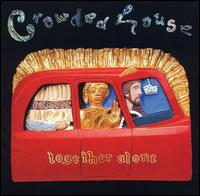
“Kare Kare” would be a dreamy soundscape of the beach near where they created the album, if not for the drums. Much more insistent is “In My Command” is more insistent, with an edgy verse but more “classic” chorus. “Nails In My Feet” sounds a lot like “Catherine Wheels” towards the end of the album, and revives some of the angst from Temple Of Low Men. There’s a relentless rocker in “Black & White Boy” that makes it infectious, despite the vagueness of the lyrics—allegedly it’s about Neil’s dog, is all—and the rhythm turning up on “Skin Feeling” later on. The slow-burning “Fingers Of Love”, with its Leslie-effect guitar, slows things down again, while the folky “Pineapple Head” is just plain charming and ambiguous. “Locked Out” was the first single, another terrific pop song and most likely given its greatest exposure by its inclusion on the Reality Bites soundtrack.

A lengthy detour to native surroundings threatens to stop the album cold, however. “Private Universe” opens with what sounds like traffic leaving a city, ending up at the seashore surrounded by log drummers. Even though “Walking On The Spot” is another slow one, it’s so lovely, even if it is about marital strife, and the accordion doesn’t even ruin it. It’s a sneaky prelude to “Distant Sun”, the best song on the album, and one of the best constructed songs Neil Finn has ever written. It doesn’t break any rules, relying on those familiar C-shape chords in the usually changes, but arranged in such a way—maybe it’s the familiarity—that fits like a pair of old jeans. As mentioned, “Catherine Wheels” sounds a little too familiar, but the subtle harmony by brother Tim edges it along its deceptive length. Paul Hester is thrown a bone with “Skin Feeling”, and then the log drummers return, with a Maori choir in tow, for the title track.

Despite the repetition, Together Alone delivers enough variety and familiarity to make it a strong entry in the Crowded House pantheon. As nobody in America cared, despite a record company push promised in the pages of Billboard, that might have had something to do with why the whole business ground to a halt.

As with most Deluxe Editions of albums we like a lot, the one for Together Alone has a lot to live up to. A small handful of demos show songs that were arguably improved for the release, while the so-called “Zen mix” of “Locked Out” fits very well with the near-ambient B-side “Zen Roxy”. It also has four otherwise unknown but promising songs, four from the studio and two live, the latter so new we get to hear Neil Finn calling out the chord changes. (On the main album, the title track ends with applause, which is nice.)

Crowded House Together Alone (1994)—4
2016 Deluxe Edition: same as 1994, plus 14 extra tracks

Monday, February 20, 2012

Crowded House 3: Woodface

On a break from Crowded House, Neil Finn began recording a few songs with his brother (and former bandmate in Split Enz) Tim. When the time came to do another Crowded House album, those sessions didn’t go as well, so some of the Finn Brothers songs were brought into the sequence. Tim came along for the ride, so the House was very Crowded indeed.

Woodface sports fourteen tracks and runs for 48 minutes, for something of an overstuffed listening experience. The splendor of such potential classics as “It’s Only Natural” and “Weather With You” has to compete with the brothers’ harmonizing. It’s toned back a bit on “Fall At Your Feet” and “Four Seasons In One Day”, giving the songs more room to breathe. “Tall Trees” and “There Goes God” feature a prominent canned harmonica, and the dated lyrical references in “Chocolate Cake” prove that this is one band that needn’t be topical.

There is an attempt to be democratic; Tim’s solo take of “All I Ask” is given a lush Sinatra arrangement, and Paul Hester’s “Italian Plastic” would soon become a live favorite. (He also gets credit for the hidden track “I’m Still Here”, deflating the yearning of “How Will You Go”.) But we miss the simple charm of the boys working as a unit, as they reach beyond producer Mitchell Froom to ten other listed “additional musicians”.

Woodface is best taken in small pieces, as there’s just something redundant about the album. It was a worldwide smash, except in the US, where it still got decent reviews, with the apparent exception of this one. Therefore it is with full expectation of charges of blasphemy, treason and worse that we say it’s just okay, and we have never played it twice in a row. (The Deluxe Edition will be lots of fun for those who do adore this album, the demos run the gamut from the Finn brothers’ sessions to the Tim-less band. They also get two more songs from the pre-Tim sessions, the “complete” version of “I’m Still Here”, and the legendary B-side “The Burglar’s Song”, co-written with the then-seven-year-old Liam Finn, which goes into a medley of House songs and a Ramones cover.)

Crowded House Woodface (1991)—3
2016 Deluxe Edition: same as 1991, plus 21 extra tracks

Friday, January 20, 2012

Crowded House 2: Temple Of Low Men

The first album by Crowded House deservedly brought singer/songwriter Neil Finn more sales and airplay than anything he’d done with Split Enz. The pressure was on for their follow-up, and the demands common to The Difficult Second Album tower over Temple Of Low Men. He gets right to the heart of the matter on “Mansion In The Slums”, ruminating on the double-edged sword of “success” and its enticements.

The songs fall generally in a minor key, suggesting personal turmoil, particularly on “I Feel Possessed” and “Into Temptation”. (While Neil has now been married to his wife Sharon going on thirty years, perhaps there was some “straying”, shall we say, during his trips around the globe.) Similarly, the sample of someone whispering “I need you… forgive me” at the start of “Kill Eye” only adds to the aural freakshow in the song.

The soaring “When You Come” (despite the suggestive title) and “Never Be The Same” boast aching hooks and fantastic harmonies, taken to an even greater level on the beaten determination to “Love This Life”. The mildly rockabilly “Sister Madly” sports a guitar solo by Richard Thompson in between wordplay designed to confound (“Sister madly waking up the dead/Systematically stepping on my head”). “In The Lowlands” seems to rise out of a rainstorm, with the narrator trying to reach a safe haven from wherever he is. All of which dovetails nicely with “Better Be Home Soon”, rewarding the patient listener with a melody, harmony and organ solo that earn the label “Classic Crowded House”.

With its explorations on temptation, guilt and insecurity, Temple Of Lo Mein (as we like to call it) has a much darker mood all around than the sunny singles from the debut, and could easily repel the casual listener. But that’s unfortunate, as they’d miss out on some great material. At ten tracks and only the slightest extra color from producer Mitchell Froom, it’s a compact gem. The album was not a commercial success, save perhaps “Better Be Home Soon”, and it didn’t help when the band had to make videos for the likes of “Into Temptation”, which pitted Neil’s earnest lyrics against Paul and Nick clowning in the background.

The Deluxe Edition includes a variety of demos of songs-in-progress (this time the sneak peek is for “Whispers And Moans”, which would transform somewhat before showing up on the next album). Half of the disc is devoted to live recordings, some of which had made onto B-sides. Three Byrds classics performed with Roger McGuinn put the band in a much more complimentary light than the guy they’re backing; the interplay amongst the trio, during and between songs, show just how much fun they must have been to see onstage.

Crowded House Temple Of Low Men (1988)—4
2016 Deluxe Edition: same as 1988, plus 21 extra tracks

Monday, January 9, 2012

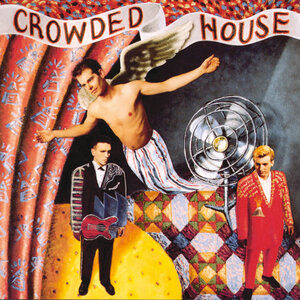
Crowded House 1: Crowded House

As ABBA was to Sweden, so Split Enz was to New Zealand, but without the multi-millions. Most Americans would have heard of the band thanks to MTV, when such songs as “I Got You”, “One Step Ahead” and “History Never Repeats” were in heavy rotation. (In fact, the honors for first-ever MTV world premiere video went to the band’s “Six Months In A Leaky Boat”.) These songs were written and sung by the band’s junior member Neil Finn, and when the band finally split, he formed a new one with a couple of Australians. That was Crowded House, who saw even greater success than their quirkier forefathers, but precious little in the US of A past their first album.

Neil’s pop sensibilities came across as tuneful as McCartney’s, if slightly more neurotic. Crowded House was arguably his show, but he fully relied on the harmonies and humor of Nick Seymour and Paul Hester in the rhythm section. Those who saw the band live insist that their concerts were just plain fun.

Their albums were another matter. With producer Mitchell Froom adding his brand of keyboards to the mix, the band’s style always seemed just a little outside what sold records in America. Their eponymous debut didn’t sell at all until the fourth single release, the exquisite ballad “Don’t Dream It’s Over”, one of the greatest songs of the 20th century. Its simple chords and “hey now” hook gave them a #2 single, and finally convinced people to check out the whole album.

Side one is terrific. “World Where You Live” and “Mean To Me” eventually got airplay, while “Now We’re Getting Somewhere” and “Love You ‘Til The Day I Die” offered two sides of romance with some humor. (We’re pretty sure that’s Paul shrieking the count-in to the latter.) Side two begins with “Something So Strong”, the next big single supported by another wacky video, but the rest of the album isn’t quite as, well, strong. Part of its effectiveness can be ascribed to the times, when glossy synths and horn sections were used to decorate scenery that could have better stood on its own. We’re still not sure why someone’s aunt lies in a “Hole In The River”, though we’re pretty sure that’s not why we should roll back the “Tombstone”. “That’s What I Call Love” has a lot of production for something that would have been a B-side in another time.

But money talks, and the album sold enough copies to keep their record label interested for a follow-up. However, as an album, Crowded House may not be their best. But as a collection of singles, it more than delivers. (The current 11-song CD is slightly different from the original 10-track American release, which for some reason moved “Mean To Me” down to the fourth song on the first side; it was the opener elsewhere. Also, a remake of “I Walk Away” from the last Enz album appeared in place of “Can’t Carry On”.)

Three decades later, the Deluxe Edition of the album proved just how well crafted the songs were by the time the record was mastered, by including a bonus disc full of writing demos and band demos, both detailing how some of those hooks found their way to other songs, and just how wincingly ‘80s the album might have turned out. (To wit, the wacky arrangement of “Walking On The Spot”, a gorgeous song from their fourth album, truly jars the time-space continuum.) There even a few live recordings from the era before they decided on the band name, of songs that never made it to albums proper.

Crowded House Crowded House (1986)—3
2016 Deluxe Edition: same as 1986, plus 17 extra tracks