Showing posts with label frank zappa. Show all posts

Friday, July 3, 2026

Frank Zappa 58: Läther

As we’ve learned from the various reissues and forensic work done by scholars, Frank Zappa loved to edit and re-edit. One prime legendary example was the saga of Läther. Pronounced “leather”, this was a four-record (eight vinyl sides) box set that Frank said he delivered as a complete unit to the label, only for them to reject it, whereupon he re-sequenced them into the albums released as Zappa In New York, Studio Tan, Sleep Dirt, and Orchestral Favorites. In actuality, he delivered those four albums in one batch, but the label didn’t want to shell out for all of them, whereupon he then converted them into the box format for another label, which was also quashed. In the end, the four albums were released individually over the space of a year or so, and well after the tracks were originally recorded.

The legend of Läther persisted for a couple of decades for a number of reasons. For one, at the height of the dispute, Frank appeared on an LA radio station and played the whole thing, resulting in various bootlegged copies that circulated. But fanatics soon discovered that while most of the songs did appear on those official albums, many of the mixes and edits were different, there was music that was exclusive to the box, and a Lumpy Gravy-style conversation, mostly between bass player Patrick O’Hearn and drummer Terry Bozzio, along with other percussive blasts from the past, appeared between tracks as “grout”, which was also heard throughout Sheik Yerbouti and other later albums.

So it was a nice surprise when the estate officially released the album as a three-CD through their arrangement with Rykodisc two decades after it was first mooted. And while it’s a lot for anyone to ingest, it’s still a better way to hear the music than as they appeared on those four albums, even though those had material that was not on Läther. Confused yet?

A snippet of the “leather conversation” heralds “Regyptian Strut” in its original mix, not with the replaced drums from the Sleep Dirt CD, for a great start. “Naval Aviation In Art?” provides a nice interlude before an earlier version of “A Little Green Rosetta”, which is just Frank singing the familiar melody over a tack piano, switching sharply to the guitar solo one day known as “Ship Ahoy”. That eventually becomes “Duck Duck Goose”, 45 seconds of another solo over “Whole Lotta Love” that’s engulfed by more conversation and other grout from the archives. “Down In De Dew” is a reconstituted snippet of a jam with Jim Gordon from the Apostrophe sessions, and “For The Young Sophisticate”, the first real “song” on the side, is an earlier version of similar vintage, and pretty good until Ricky Lancelotti’s vocals.

That would have been a pretty strong first side, but then it gets a little more, shall we say, challenging. “Trying To Grow A Chin” and “Broken Hearts Are For Assholes” are even more obnoxious versions than the ones on Sheik Yerbouti, followed by “The Illinois Enema Bandit”, complete with Don Pardo’s narration. What would become side two of Studio Tan is next, and aren’t any more exciting in this context; after “Lemme Take You To The Beach” the focus is more instrumental, through “Revised Music For Guitar & Low Budget Orchestra” and “RDNZL”.

What would have been side four is made up of Zappa In New York tracks, kinda. “Honey, Don’t You Want A Man Like Me?” is a different edit, including some jousting with a heckler; “The Black Page” is the musical portion after the drum solo; “Big Leg Emma” is pretty much the same; “Punky’s Whips” is the edit from the original LP before the label axed it. Continuing the balance of ridiculous to less so, “Flambé” is a shorter edit and different spelling without the later vocals, then some entertaining grout is the bridge to “The Purple Lagoon”, the same as side four of New York. “Pedro’s Dowry” and “Duke Of Orchestral Prunes” are from Orchestral Favorites, surrounding the title track (a gratefully better title for “I Promise Not To Come In Your Mouth”) and “Spider Of Destiny”, again without the later overdubs.

In the home stretch there’s a slightly edited “Filthy Habits”, its fusion grandiosity followed by a minute of grout that somehow leads to a slightly edited “Titties & Beer” that still retains its puerility. A few minutes of noodling are chopped off the beginning of “The Ocean Is The Ultimate Solution”, so than most of the track features the full band. The final side was given over to “The Adventures Of Greggery Peccary” with mild cosmetic differences; while it actually works better ending a journey than starting one, it’s still an acquired taste.

So all in all there are some strong sides’ worth of music here, predominantly when there are no vocals. While each of the original four releases made sense in their own buckets, Frank did a remarkable job of sequencing this material into a different perspective. And yes, we like the grout.

The original Rykodisc release included four bonus tracks at the end of disc three, containing 16 more minutes of music, bracketed by more grout and some of Frank’s announcements from that radio show. “Regyptian Strut (1993)” is an alternate mix with different drums, while “Time Is Money” is merely the original track from Sleep Dirt without the added vocals. More interesting was “Leather Goods”, a longer excerpt of the solo that spawned “Duck Duck Goose”, and “Revenge Of The Knick Knack People”, an excerpt from a collage featuring snorks and percussion by the original Mothers, edited and sped up. (Some of this would end up as grout elsewhere.) None of these were included on the 2012 reissue, which still spread what was left across three discs, and also used different artwork.

Frank Zappa Läther (1996)—3

Friday, March 20, 2026

Frank Zappa 57: The Lost Episodes

Another project Frank was working on his final years was a further attempt to present the pre-history and evolution of his music and obsessions. The You Can’t Do That On Stage Anymore series only scratched the surface of what he’d been sitting on, and outside of a few stray tracks, didn’t even begin to encompass studio work. The Lost Episodes was the first of several “audio documentaries” that would emerge over the coming decades, distilled from some of the multidisc retrospectives he’d threatened since the late ‘60s. (Sequels were promised and forgotten at the turn of the century, but the vault-digging continues to this day.)

Being mostly chronological, it’s designed to tell a story, starting from the oldest recordings in his vault. After a brief intro about one of his early bands, it begins at the beginning with “Lost In A Whirlpool”, sung by the future Captain Beefheart. Kenny and Ronnie of “Let’s Make The Water Turn Black” fame provide context for that song, and then we seesaw between his early attempts at classical and film scoring, and his earliest recording studio projects. Highlights include takes of Mothers music later heard on Freak Out and Ruben & The Jets, the Captain singing lines from a comic book over a blues riff for “Tiger Roach”, and the one-man doo-wop parody “Charva”. Engineer Dick Kunc sets up a series of recordings of the Mothers in New York City, including arrangements of the sea chanties “Wedding Dress Song” and “Handsome Cabin Boy”, excerpts from a visit by the police that almost made it to Uncle Meat, and the soundtrack for a cough drop commercial. Beefheart returns for a couple of humorous monologues and another original collaboration in “Alley Cat”, then it’s right into the ‘70s for some familiar songs. Ricky Lancelotti shrieks his way through “Wonderful Wino”, and we hear the first versions of “RDNZL” and “Inca Roads”, the latter without lyrics yet. We go back to the Hot Rats sessions for “Lil’ Clanton Shuffle” with Sugarcane Harris, leap ahead for the 1980 single version of “I Don’t Wanna Get Drafted”, and end with a glorious 12-minute alternate take of “Sharleena” that surpasses the original, with Sugarcane and Frank trading solos and Ian Underwood being amazing.

The Lost Episodes is a very listenable disc overall, particularly as it provides context for that elusive conceptual continuity before the internet made it easy to explain all the references. While the earlier field recordings are of historical interest only, the music stands out, and the humor even lands most of the time.

Frank Zappa The Lost Episodes (1996)—3½

Friday, December 19, 2025

Frank Zappa 56: Strictly Commercial

How could anyone anthologize Frank Zappa’s career with a single disc? Well, since Rykodisc had the rights and the estate’s permission, they tried in 1995. Strictly Commercial purported to be “The Best Of Frank Zappa”, and as it opens with “Peaches In Regalia”, the single version of “Don’t Eat The Yellow Snow” (which incorporated part of “Nanook Rubs It”, and “Dancin’ Fool”, it’s a good start. But then from there it becomes something of a grab bag, democratically hitting as many albums as possible, staying mostly upbeat, but with some head-scratching choices, like “Sexual Harassment In The Workplace”, finally hitting “Montana”, “Valley Girl”, and “Muffin Man” towards the end.

But Ryko also knew that wouldn’t suffice, and followed this up less than two years later not once but twice. Have I Offended Someone? was a collection of his more sexually and racially controversial lyrics, curated by Frank himself, and in many cases remixed. The other draws for people who already had this (in addition to two songs already on Strictly Commercial) were a live version of “Dumb All Over” and a longer “Dinah-Moe-Humm”. Ralph Steadman cover art and liner notes by Ed Sanders of the Fugs doubled down on the attitude of defiance.

Then, to further prove his artistic worth to naysayers, Strictly Genteel offered “a ‘classical’ introduction” to his more, shall we say, serious work. Along with the expected selections from albums like Orchestral Favorites, The Yellow Shark, and even Francesco Zappa, tracks from Uncle Meat, Hot Rats, and other rock albums were able to provide something of a picture of the man’s compositional style.

But even then Ryko wasn’t done. Hoping to provide value to someone, Cheap Thrills was a budget-priced collection of tracks people already had, mostly live versions, bookended by dialogue from 200 Motels with “The Mudshark Interview” from Playground Psychotics as a centerpiece. A year later Son Of Cheep Thrills was even more random, though the choices were arguably better. (The personal mixtape concept kept going in 2002, with two volumes of Zappa Picks, one chosen by Jon Fishman of Phish, and the other by Larry LaLonde of Primus.)

By this time the estate had already began to undertake their own archival reissues, the waters of which had already been tested in 1996 with Frank Zappa Plays The Music Of Frank Zappa. Packaged in a leatherette case with a replica mustache and soul patch on the front, this “memorial tribute” compiled by Dweezil celebrated Frank’s three favorites of his guitar compositions by presenting the earliest (at the time) known live recordings of each, paired with their standard album versions. Thus “Black Napkins” has a snotty introduction, and “Zoot Allures” is the 16-minute performance that begat “Ship Ahoy”, but “Watermelon In Easter Hay” doesn’t have the grandeur of its best-known version, which unfortunately still has the Central Scrutinizer whispering over the top. (Yet Dweezil found a way to add a “good night” from some concert at the end.) “Merely A Blues In A” breaks up the program in the middle with a lengthy jam from a Paris concert.

In 2012 the estate licensed themselves a new deal to reissue the Zappa catalog worldwide, and since it was an election year, that was a reason to unveil Understanding America, another Frank-curated compilation from back in the day that never got past initial production. Loosely based on the concept of skewering American culture, this two-disc set begins heavy on the first three Mothers Of Invention albums, touches on the ‘70s, then goes whole hog into the ‘80s, the centerpiece of the second disc being a 25-minute expansion of “Porn Wars”.

Four years later, ZAPPAtite served up what were said to be his “tastiest tracks” on a single disc. Although separated into “appetizers”, “entrées” and “dessert”, it merely reshuffled half of Strictly Commercial and 52-pickupped the rest. Even decades later, it only underscores the fact that summing up Frank with anything but his individually albums is not only futile, but just silly.

Frank Zappa Strictly Commercial: The Best Of Frank Zappa (1995)—3
Frank Zappa
Frank Zappa Plays The Music Of Frank Zappa: A Memorial Tribute (1996)—3½
Frank Zappa
Have I Offended Someone? (1997)—2½
Frank Zappa
Strictly Genteel: A “Classical” Introduction To Frank Zappa (1997)—3½
Frank Zappa
Cheap Thrills (1998)—2½
Frank Zappa
Son Of Cheep Thrills (1999)—3
Frank Zappa
Understanding America (2012)—2½
Frank Zappa
ZAPPAtite (Frank Zappa’s Tastiest Tracks) (2016)—3

Friday, July 25, 2025

Frank Zappa 55: Civilization Phaze III

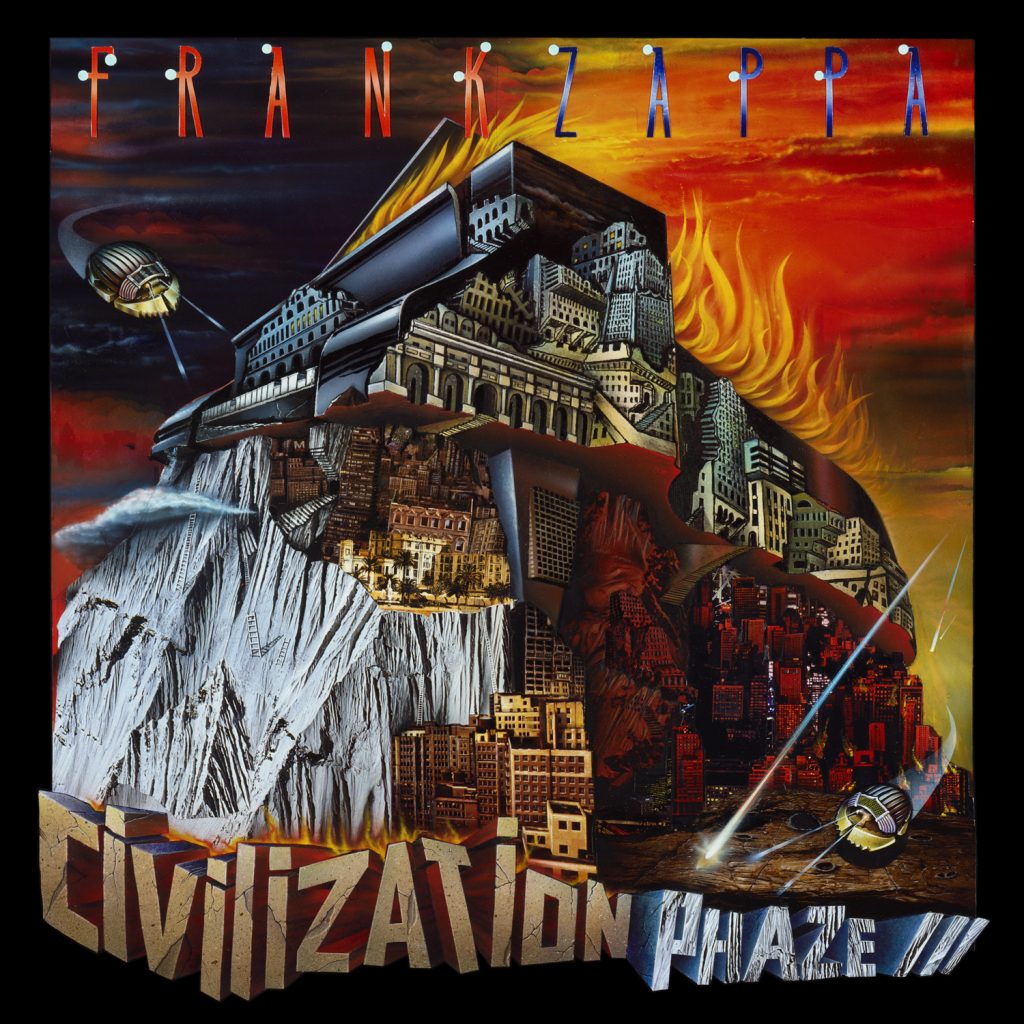
Everything Frank Zappa did, in his mind, was of great cultural significance, and the final project he completed before his death in 1993 was no different. Civilization Phaze III collected various compositions either realized on the Synclavier (because his road bands couldn’t tackle them) or performed by Ensemble Modern (because they really, really tried), interspersed with further dialogue recorded inside a piano in 1967 for the Lumpy Gravy album as well new dialogue recorded inside a different piano in 1991. He viewed the completed work as an opera or ballet, but based on the stage directions, it’s hard to imagine such a thing being staged, much less rehearsed or performed to satisfaction.

There will be those who will think the idea of connecting conversations that took place a quarter century apart is some kind of conceptual feat; we maintain that the snippets match up only because that’s how Frank edited them that day. There’s more discussion of pigs and ponies, from both eras, though most of the later dialogue only appears on the second disc. There, members of Ensemble Modern speak in languages other than English to add tension on the part of actor Michael Rapaport (who was dating Moon Zappa at the time of recording).

The music itself is very much in line with Frank’s orchestral tendencies, sometimes merely suggested by the dialogue that precedes or overlaps with it. Those can be entertaining, but things like “Reagan At Bitburg”, which commemorates that president’s visit to cemetery of Nazi criminals, suggest more significance. This one was realized on the Synclavier, and is able emulate an orchestra as well as what used to have to be played back sped up. (Clearly, he loved hearing his music without having to have actual people play it.) The spooky “Buffalo Voice” and “Get A Life” are very evocative of parts of Lumpy Gravy, or at least “The Chrome-Plated Megaphone Of Destiny”. “N-Lite”, divided into six unmarked parts, takes up the last eighteen minutes of the first disc. It sounds a lot like everything else, except for the occasional sample of gurgling or gargling, and a few areas where a piano is prominent. “A Pig With Wings” manages to cross the sound of a harp with piano strings being plucked for a feel somewhere between Japanese and flamenco. “Dio Fa” (itself the title of another unrealized Zappa masterwork) is dominated by samples of Tuvan throat singers (a feature of another interest Frank didn’t live to explore further). Fifteen of the last twenty minutes on disc two are taken up by “Beat The Reaper”—which has consistent rain in the background while Frank noodles on the Synclavier—followed by “Waffenspiel”, a collage of sound effects.

The album was released directly through Zappa’s own mail-order company, in a deluxe cardboard package with libretto. At two discs and running nearly two hours, rapt attention is required, and the mind does wander, even without said libretto. Yet Civilization Phaze III is held up by those who know such things as Frank’s crowning achievement, and a fine example of 20th century classical; indeed, orchestras have since tried to take some of this music on. We’ll have to take their word for it.

Frank Zappa Civilization Phaze III (1994)—2

Friday, February 7, 2025

Frank Zappa 54: The Yellow Shark

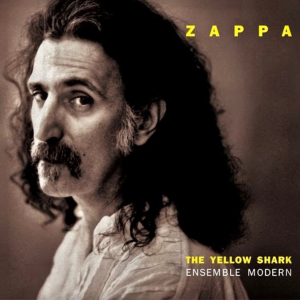
Throughout his entire career, all Frank Zappa wanted was to work with a collective that was not only capable of playing his more sophisticated musical pieces, but enthusiastic about doing so, and willing to help finance them to fruition. In 1991, he found one in Ensemble Modern, a Frankfurt-based outfit that dove into the challenge. Compositions old and new were arranged and tweaked, culminating in a series of concerts entitled The Yellow Shark. An album culled from these shows was released one month before Zappa succumbed to prostate cancer.

As his classical-type albums go, it’s enjoyable unless you don’t like classical-type albums. Following a brief introduction by the composer (who was too sick to do much of the actual conducting) they go into “Dog Breath Variations” and “Uncle Meat”, both also familiar from previous orchestral excursions. “Outrage At Valdez” was written for a Jacques Cousteau documentary about the Exxon oil spill in 1989, and is suitably grave; along the same lines, two different pieces called “Times Beach” refer to a different chemical emergency that affected ordinary folks. One of the more daring pieces is “The Girl In The Magnesium Dress”, originally composed and played on the Synclavier but here executed by actual people who could replicate the sound of cats running up and down piano keyboards and vibraphones simultaneously. “Ruth Is Sleeping” had a similar birth, but is slightly more musical. “Be-Bop Tango” gets a chance to breathe without the choreographed distractions of the Roxy era.

The four movements from “None Of The Above”, a string quartet originally written for and performed by the Kronos Quartet, appear in a different order than supposedly written, and aren’t immediately melodic. Because he never wrote a skit he didn’t want to perform, this album has two. “Food Gathering In Post-Industrial America, 1992” is recited by a female viola player, punctuated by the sounds of mechanical sewage; then the federal customs form is the basis for “Welcome To The United States”, read in a thick German accent with comical vocal and instrumental responses from the band. (“Louie Louie” makes an appearance.) It’s followed by “Pound For A Brown” and “Exercise #4”, another Uncle Meat refugee. Despite its title—derived from an early version that used only the white keys on the piano—“Get Whitey” is very melodic and almost pretty. Finally, “G-Spot Tornado” is another Synclavier piece newly arranged, and it’s excellent. Still, it would be nice to have something after the nearly two-minute standing ovation at the end.

The Yellow Shark would not be the last major work he completed before his death, but it certainly got a lot of attention. For several years his estates teased a sequel of sorts; when Everything Is Healing Nicely finally appeared, it turned out to be something of an “audio documentary” of the ensemble’s earliest rehearsals and experiments with him. Moreso than The Yellow Shark, it’s generally for completists, beginning as it does with “Library Card”, mostly recited in German with Lumpy Gravy-style accompaniment. (“Master Ringo” and “Wonderful Tattoo” use a genital piercing enthusiast magazine for their lyric sources.) Luckily, the rest is a lot less silly.

“This Is A Test” is a brief experiment that deserved to be further developed, while “Jolly Good Fellow” is a conducted improvisation that plays on that familiar melody. “Roland’s Big Event/Strat Vindaloo” is a clarinet solo followed by Frank duetting on guitar with L. Shankar. “T’Murshi Duween” is a Roxy-era piece that usually followed “Penguin In Bondage” and would have been very well received at the shows. The appropriately titled “Nap Time” is based around the Alpine horn while two Japanese poems are recited quietly in the background. “9/8 Objects” features more L. Shankar, and “Naked City” is something of a guitar concerto (not played by Frank). “Whitey (Prototype)” is a brief rehearsal, while “None Of The Above (Revised & Previsited)” juxtaposes a rehearsal with live performance. “Amnerika Goes Home” also comes from the concerts, being an arrangement of a Synclavier piece used as bedding on Thing-Fish.

Between the two albums there is some very enjoyable music showing another side of Frank, but one must endure some of his more idiosyncratic tendencies to get to them. It’s a shame the collaboration didn’t get to go further.

Zappa/Ensemble Modern The Yellow Shark (1993)—3
Zappa
Everything Is Healing Nicely (1999)—3

Friday, September 13, 2024

Frank Zappa 53: Ahead Of Their Time

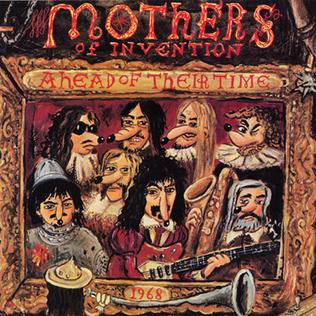
Back in 1968, once the Mothers of Invention included trained individuals—or at least people who could read increasingly intricate music—Frank Zappa began introducing more complicated, almost classical pieces in the band’s sets. Some of this he called chamber music that he wrote himself, some were arrangements of Stravinsky and Zappa idol Edgard Varèse. Either to appeal to the less adept members of the band or with the excuse that audiences needed things dumbed down, silly skits involving scripts and in-jokes would accompany these performances.

Two such performances at London’s Festival Hall included contributions from an actual orchestra alongside the Mothers. Excerpts from the “dramatic” portion emerged in the ‘80s, and the visuals were included as part of the perennially incomplete Uncle Meat film (on VHS), but the shows appeared in more or less a complete form as Ahead Of Their Time.

Because the audio can’t adequately demonstrate the dramatic portion, the first half of the disc is an acquired taste. Much of the music would end up incorporated into “Bogus Pomp”, while the content detailing struggle between “serious music” and its opposite would recur in 200 Motels. Luckily, the guys sound into it, so it’s not too tedious.

The political rarity “Agency Man” is followed by the dramatic “Epilogue”, and the remainder of the disc is pretty much non-stop Mothers rock ‘n roll. “King Kong” eventually segues into “Help, I’m A Rock” and “Transylvania Boogie”, “Pound For A Brown” begets “Sleeping In A Jar”, and the “Orange County Lumber Truck” suite is heard nearly complete, and more than the excerpt already used on Weasels Ripped My Flesh. Being abridged to fit on a single disc, it’s a shame that to date the album hasn’t been expanded to provide at least the equivalent of a full set.

Nearly thirty years went by before the era was revisited. The inaugural release of the Road Tapes series presented a concert in a Vancouver hockey arena (a.k.a. “the local electric icebox”) two months before the Festival Hall show. Obviously there’s no play to perform, so they start right in with improvisations; others dot the setlist. Along with material also heard at the London show, this performance includes a piece introduced as “Shortly” and said to be released on an upcoming album; the music is better known now as “Holiday In Berlin”, and said album was reduced to two records from three, and without this piece. Other highlights include the first album appearance of the doo-wop parody “Oh, In The Sky” and their arrangement of “Octandre” by Varèse. Thanks to some apparently exhaustive restoration work by Vaultmeister Joe Travers, the mono sound is excellent.

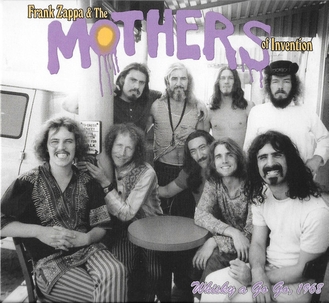
A little over a decade later, another relic from the era emerged. Whisky A Go Go, 1968 was recorded about a month before the Vancouver gig, and just before Ray Collins quit the band for the fourth and last time. The reason for this lengthy occasion was the intention of getting decent live performances from the nine-piece band on tape for future purposes that didn’t exactly develop.

A ten-minute improvisation leads perversely into “America Drinks And Goes Home”. Self-styled impresario (and accused sexual predator) Kim Fowley is brought up help shriek his way through “My Boyfriend’s Back”, followed by the original response of “[I’m Gonna] Bust His Head” and a lengthy “Tiny Sick Tears Jam”. Another improvisation goes into “Status Back Baby”, followed by some doo-wop, original and otherwise. “King Kong” is indexed as two parts, the second of which stops halfway through so the GTO’s [sic] can yell along with “Getting To Know You” and the Bugs Bunny Show theme. (Other guests on the evening included affiliated acts Alice Cooper and Wild Man Fischer; some of the Turtles were supposedly in the audience in a bit of foreshadowing.)

“The Duke” is played twice so they could get a decent usable take; this would eventually form part of “The Little House I Used To Live In”, but here’s it’s mostly Frank soloing over drums. Then there’s “Khaki Sack”, a more structured R&B jam that would be properly recorded in 1970 and shelved for half a century. “The Whip” and “Whisky Chouflée” run together for twenty minutes of mostly one-chord jamming, and the “world premiere” of “Brown Shoes Don’t Make It” for the first time on stage leads into an extended shuffle on the main theme and further improvisation.

In the end, only one segment from the evening was released at the time (“God Bless America” on Uncle Meat), though at least two other songs were mixed by Frank; one snippet made it to YCDTOSA #5, and more finally emerged on 2021’s Zappa documentary soundtrack. As the first full-length concert made available with Ray singing (save a few Beat The Boots), it’s about time.

Zappa/Mothers Ahead Of Their Time (1993)—3
Frank Zappa
Road Tapes, Venue #1 (2012)—3½
Frank Zappa & The Mothers Of Invention
Whisky A Go Go, 1968 (2024)—3

Friday, May 24, 2024

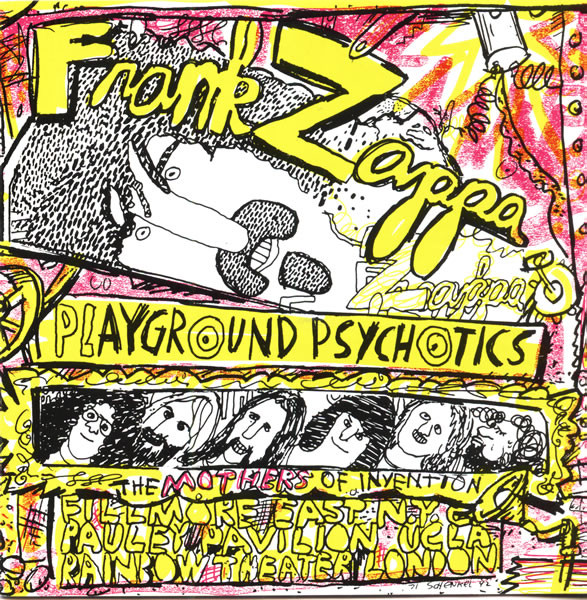
Frank Zappa 52: Playground Psychotics

After preparing and releasing twelve hours of music collated from his entire career, Frank’s next big project was dedicated to the Flo & Eddie era of the band. Playground Psychotics combined field recordings with concert excerpts to provide a widescreen portrait of what he called “A Typical Day On The Road”.

Each disc starts with several minutes of indexed dialogue captured by his trusty portable tape recorder, capturing the band and roadies in conversation on planes, in hotels, and backstage. One segment is an interview with the manager of the hotel where the infamous “mud shark incident” took place. “Diptheria Blues” is a dressing room jam featuring Aynsley Dunbar on whiskey bottle. Much of the humor, onstage and off, is clearly visual, so lovers of in-jokes and bathroom humor will be in heaven. Things get truly nutty when we get to hear tape recordings featuring playbacks of recording captured on other band members’ tape recorders, culminating in the closing segment on disc two. Some of this was excerpted from the videotape The True Story Of 200 Motels, briefly documenting the cause and result of Jeff Simmons quitting the band, not wanting to be fodder for Frank’s thesis at the expense of his musicianship.

The musical excerpts are far more interesting, with further songs from the Rainbow Theater show that ended with Frank being knocked off stage, which we don’t get to hear here. While the Pauley Pavilion is listed as another source, the only music heard from that show is a short “Divan” segment of what would become “Sofa”. Instead, much of the music comes from the Fillmore stint, including older songs and a thirty-minute “Billy The Mountain” (cobbled together from two shows) that’s actually listenable. One of the key selling points of this album outside the Zappa faithful is an alternate mix (and edit) of what Beatle fans knew as side four of John & Yoko’s Some Time In New York City, documenting their guest appearance with the Mothers. Despite being given such new song titles as “Aaawk” and “A Small Eternity With Yoko Ono”, “Well” is still the only segment of true musical appeal.

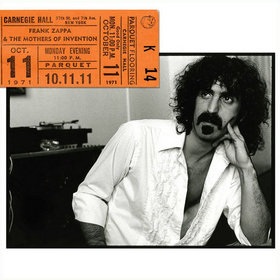
Because of the anthropological approach, Playground Psychotics will be mostly of interest to fanatics who can stomach Flo & Eddie. While cramming several months of material into two CDs is no small feat, a larger context was certainly needed. Sure enough, the band’s two sets at Carnegie Hall in October 1971 were released in a four-CD package forty years later, in decent-sounding mono and including a performance by the doo-wop combo and support act The Persuasions. (Carnegie Hall was reissued a little over eight years later as a three-disc set that omitted the Persuasions segment.) Hearing the transitions and dynamics as played shows just how hot the band was, but you also have to endure the vocalists’ attempts at humor. “Magdalena” is even more repulsive here, and 15 minutes are devoted to “The Mud Shark”. There’s a more complete “Divan” suite (including “Stick It Out”, eight years before Joe’s Garage) with lots of four-letter words in English and German. Beyond that, “King Kong” runs a half an hour to accommodate solos—though it abandons the 3/8 meter after the first minute or so—and “Billy The Mountain” is now up to 47 minutes.

That was all well and good, but connoisseurs would be even more sated ten years after that by The Mothers 1971. This eight-CD set encompassed all four unedited Fillmore sets (including John & Yoko, unexpurgated) and the complete Rainbow show, with another sixteen songs from Scranton and Harrisburg in between to present a sort of virtual concert. With so many repeats of the material, “Billy The Mountain” emerges as a major if silly work, and we can almost start to appreciate the musicality of the “Shove It Right In” suite; it’s just too bad that the lyrics are so puerile. If you want to hear a ribald take on “My Boyfriend’s Back”, here’s your chance. Turns out Don Preston only played on the encores at the Fillmore, which certainly helped cool Frank’s otherwise petulant mood. Don’s fully on board at the Rainbow, leading the opening “Zanti Serenade”, extended for another ten minutes here. “Wonderful Wino” is still in the set, and the encore was “I Want To Hold Your Hand”, after which we can actually hear Frank hitting the concrete floor.

Frank Zappa/The Mothers Playground Psychotics (1992)—2
Frank Zappa & The Mothers Of Invention
Carnegie Hall (2011)—2½
The Mothers
The Mothers 1971 (2022)—2½

Friday, March 1, 2024

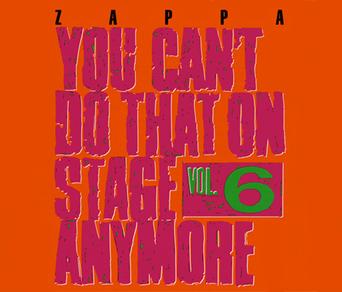
Frank Zappa 51: You Can’t Do That On Stage Anymore Vol. 6

The sprawling You Can’t Do That On Stage Anymore series presented the good, the bad, and the ugly throughout years of performances. This is thoroughly demonstrated on the first disc in this final volume, which deals explicitly with “the topic of sex (safe and otherwise)”.

Of course, it wasn’t enough to write songs about sex; Frank wanted to talk about it too, so several monologues and raps on the topic dot the disc. That said, “The M.O.I. Anti-Smut Loyalty Oath” from 1970 is a mildly humorous statement in the wake of Jim Morrison’s obscenity trial. “The Poodle Lecture”, spoken over the “Stink-Foot” rhythm, kinda fits into the theme, as a setup for “Dirty Love”. Less successful are “The Madison Panty-Sniffing Festival”, which is exactly what it sounds like, and “Lonely Person Devices”, which sets up “Ms. Pinky”. His diatribe about Peter Frampton’s “I’m In You” is less necessary when “I Have Been In You” appears twenty minutes later, bookended by improvs on “The Torture Never Stops” with a very loud sex tape over the PA. It’s back to the Fillmore with Flo & Eddie for “Shove It Right In”, the extended groupie suite from side two of 200 Motels, and admittedly rocks. “Wind Up Workin’ In A Gas Station” is notable for the vocal work by the onetime Bianca Thornton, and the 1984 run from “Dinah-Moe-Humm” to “Muffin Man” is mostly good.

The second disc is mostly more musical, with such highlights as the complicated “Thirteen” with L. Shankar on electric violin; he returns a half-hour later for “Take Your Clothes Off When You Dance”. Patrick O’Hearn’s “Lobster Girl” bass solo nicely seques into “Black Napkins” with the 1976 horn section that unfortunately jars to 1984 for the guitar solo. (“The Illinois Enema Bandit” was cobbled from at least six sources.) Even “Catholic Girls” and “Crew Slut” are generally played more for dexterity than laughs. Breaking up the flow is an operatic monologue by Lisa Popeil, who sang on “Teen-age Prostitute”. “Lonesome Cowboy Nando” combines a 1988 performance full of in-jokes with one from 1971 with Jimmy Carl Black, which leads into the “200 Motels Finale” from the same show. The disc, and the series, ends with a “Strictly Genteel” from 1981.

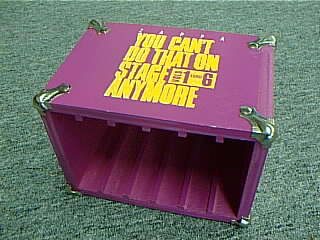
So after twelve CDs’ worth of music, what have we learned? Well, as much as he insisted that “Touring Can Make You Crazy”, he was a guy determined to have a good time, all the time. He worked his bands and when they rose to the occasion, they were stellar. The fact that he could edit sections from multiple performances is just as much of a testimony to his ear as to the tightness of the bands—even if he insisted the edits were necessary due to the bands’ ongoing inability to play the stuff correctly. If anything, the series fostered a new generation of Zappa scholars, who would continue to dissect these and other live recordings over the years. Those who collected all six volumes could even procure a road case to keep them in.

Frank Zappa You Can’t Do That On Stage Anymore Vol. 6 (1992)—2

Friday, October 20, 2023

Frank Zappa 50: You Can’t Do That On Stage Anymore Vol. 5

Frank knew full well that there were people who preferred the ‘60s version of his music, as heard on the first handful of albums credited to the Mothers of Invention. As something of a sop to those people, almost begrudgingly, he devoted the first disc of the fifth volume of the You Can’t Do That On Stage Anymore series entirely to performances by “the original Mothers”.

The set starts promisingly with “The Downtown Talent Scout”, an otherwise unreleased blues complaint from the Freak Out! era. “Charles Ives” is a vamp heard on Trout Mask Replica and some CDs of Weasels Ripped My Flesh. “Here Lies Love” is a cover sung by Lowell George, one of several tracks here that commemorate his brief period in the band. It’s that much preferred to the playlet of “German Lunch” or “Chocolate Halvah”, wherein he competed with Roy Estrada to see who can whine the loudest. Roy is one of the featured performers on “Right There”, as he replicates the vocal stylings of a woman captured on tape some time previously in another band member’s hotel room, while the band plays interjections and the tape itself is played back. These and such segments as “Proto-Minimalism” likely best illustrate the sentiment of the title, as much of the improvised music heard loses something without the visual aspect, so we can’t see the various dance routines undertaken while the more accomplished members play Frank’s sophisticated charts, nor understand his conducting that changed tempos or prompted various outbursts. The field recordings from the tour bus and backstage also smack of “you had to be there”. Certainly more interesting are recreations of Frank’s early soundtrack music, plus segments that would be incorporated into “The Little House I Used To Live In”. “Baked Bean Boogie”, “No Waiting For The Peanuts To Dissolve”, and even “Underground Freak-Out Music” feature excerpts from recognizable tunes like “King Kong” and “Trouble Every Day”. An alternate studio version of “My Guitar Wants To Kill Your Mama” is included, but it’s an edit of what had been the actual single.

Everything on disc two was recorded in the summer of 1982, when the band sported Ray White on most of the lead vocals and Steve Vai on “stunt guitar”. Most of the music comes from a concert in Geneva that was cut short because the crowd kept throwing things at the stage, as documented on the last track. Before that, we get decent versions of “Easy Meat”, the rare “Dead Girls Of London”, “What’s New In Baltimore”, “Mōggio”, and “RDNZL”. “Shall We Take Ourselves Seriously?” is a brief but intricate swing tune based around yet another in-joke. “Dancin’ Fool” is raced through as if Frank had a bus to catch—or maybe just dodging flying objects—and “Advanced Romance” just doesn’t sound right when anyone other than Captain Beefheart sings it. “A Pound For A Brown On The Bus” is a little too slick, but this and “The Black Page #2” are good guitar workouts.

Vol. 5 is definitely for the converted only. Weasels Ripped My Flesh is a much better representation of what disc one tries to do, and disc two is just okay, so they don’t really fit together. Still, there was a lot more where all this came from.

Frank Zappa You Can’t Do That On Stage Anymore Vol. 5 (1992)—2½

Friday, May 19, 2023

Frank Zappa 49: You Can’t Do That On Stage Anymore Vol. 4

By volume four of the You Can’t Do That On Stage Anymore series, Frank seemed content to let the music stand, as the liner notes consist only of technical info about each track, and no other commentary. Other than most of the music coming from 1984 shows, there’s no overlying theme tying everything together.

On disc one, there’s a nice stretch from “My Guitar Wants To Kill Your Mama” through “Willie The Pimp” into “Montana”, though the latter jumps between 1984 and 1973. “Brown Moses” and “The Evil Prince” are more musical and less provocative than they are on Thing-Fish, but not necessarily improved; the guitar solo is the best part of the latter. “Let’s Move To Cleveland Solos” is limited to just that, beginning with a five seconds in 1973 then forward to 1984 with a guest appearance by sax man Archie Shepp. This jazz odyssey switches to a percussive improvisation from 1969 dubbed “You Call That Music?”, before we travel to 1982 for the synths of “Pound For A Brown Solos”. “Take Me Out Of The Ball Game” is performed in Spain with Ike Willis and Walt Fowler impersonating Atlanta Braves announcers and other clichés common to modern baseball. The big historical highlight is the first known version of “The Torture Never Stops”, sung by Captain Beefheart.

Disc two undercuts much of the musical content with attempts at humor, such as the cataloguing of objects used in “Stevie’s Spanking”, the Jim Morrison spoof from the reliable Factory in the Bronx in 1969 of “Tiny Sick Tears”, and seven minutes of nose-picking discussion traversing two tracks from 1974. Perhaps in internal commentary, “Are You Upset?” is a confrontation with an angry Fillmore East attendee in 1969 who didn’t appreciate the improv. This provides a transition to the six brief doo-wop covers that fill up the balance of the disc.

Most of Vol. 4 is devoted to music and soloing, so it would be a decent sampler for folks starting out, though the jokes may deter them from going further. Those seeking even more only had to wait a month after this volume was unleashed when Frank started selling his own bootlegs in an attempt to cut into the profits of the underground. Beat The Boots! offered a box of CDs (also sold separately) that replicated the artwork and generally atrocious sound of eight bootleg albums selected from the previous years. A second volume of seven titles followed a year later, and another six discs’ worth made up the third “volume”, released for download in 2009.

Frank Zappa You Can’t Do That On Stage Anymore Vol. 4 (1991)—3

Friday, January 20, 2023

Frank Zappa 48: Best Band and Jazz Noise

Frank spent the first two years of the ‘90s visiting formerly Communist countries and overseeing the CD debuts of several catalog items. Then the summer of 1991 brought forth not one but two double-CDs dedicated to performances by the 1988 band, referred to directly in the title of the first set.

The Best Band You Never Heard In Your Life was likely the more accessible of the two for most people, consisting of more familiar songs plus comedic threads. Despite being cobbled from multiple locations, the first disc is presented much like a standard set, with something of an intro amid “Heavy Duty Judy”. Mike Keneally gets to hone his Johnny Cash impression, not only on “Ring Of Fire” but several songs after. A variety of old favorites make way for a reggae arrangement of Ravel’s “Bolero” with a now-customary quote from “My Sharona”, and four songs from One Size Fits All close the disc.

The second disc sports some interesting covers, beginning with robotic stabs at both “Purple Haze” and “Sunshine Of Your Love” from a soundcheck. “When Irish Eyes Are Smiling” (performed on St. Patrick’s Day) segues into the theme from The Godfather before a “comedy” monologue in the guise of a Southern televangelist. Several lyrical changes ridiculing Jimmy Swaggart dot the next handful of songs, and the first part of “The Torture Never Stops” incorporates several classic TV show themes. The highlight of the album, and certainly the tour, was their arrangement of “Stairway To Heaven”, taken at a reggae pace, which switches to ska for the guitar solo, played note for note in unison by the horn section, then to the original’s tempo for the finale. (Not included, allegedly for copyright reasons, was the band’s “Beatles Medley”, which put new words, mostly about Swaggart, to the original melodies and arrangements of “Norwegian Wood”, “Lucy In The Sky With Diamonds”, and “Strawberry Fields Forever”. One such performance would finally surface on Zappa ’88: The Last U.S. Show in 2021.)

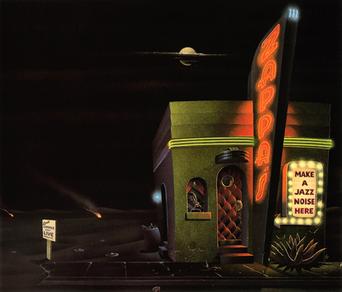
Make A Jazz Noise Here gets its title from an aside in “Big Swifty” that includes quotes from several classical pieces. As a whole it’s more concerned with instrumentals, solos, and improvisation, but he made sure to include an opening “Stinkfoot” to talk more about Jimmy Swaggart. A long piece combining various chunks from “Pound For A Brown” featuring manipulated samples gives way thankfully to the “Orange County Lumber Truck Medley” into “Theme From Lumpy Gravy”. A lengthy “King Kong” is given the reggae treatment, with a monologue from Bruce Fowler about prehistoric fish and Congressional samples breaking up the solos, that degenerates into a free-for-all titled “Star Wars Won’t Work”.

The second disc is devoted to more noodling for fans of the more adventurous material of the previous decade, including “The Black Page”, “Dupree’s Paradise” (much shorter than on the Helsinki album), and “Sinister Footwear”, with a couple of detours into brief performances of pieces by Bartok and Stravinsky. We suspect “Stevie’s Spanking” was included simply because Mr. Vai had been more visible in the hair metal tape racks, but it’s an opportunity for Frank to shred, as he also does on “Alien Orifice”, “Cruisin’ For Burgers”, and “Advance Romance”. “Strictly Genteel” provides, as always, a nice finale.

If you like the other releases by the 1988 band, Make A Jazz Noise Here does complete the set, but it’s much more indulgent and geared towards musos and other geeks. Its rating therefore reflects its necessity.

Frank Zappa The Best Band You Never Heard In Your Life (1991)—3
Frank Zappa
Make A Jazz Noise Here (1991)—2½

Tuesday, September 6, 2022

Frank Zappa 47: You Can’t Do That On Stage Anymore Vol. 3

The third of six projected volumes in the You Can’t Do That On Stage Anymore series returns to the grab bag style of the first. It’s not completely random, but it’s really of interest for fans only.

Disc one focuses on the 1984 band, which had a tendency towards reggae rhythms and had been represented in the racks solely on Does Humor Belong In Music?, which wasn’t available worldwide. Nowadays that disc is preferred, but there are some unique moments here, including 15-year-old Dweezil soloing on “Sharleena”, an extended jam on “Owner Of A Lonely Heart”, and “Drowning Witch” pieced together from three shows from 1984 and one from 1982. In-jokes abound, inspired by game shows and Ron Popeil gadget commercials, but we always like hearing Ike and Frank crack each other up throughout “Bobby Brown” and “Joe’s Garage”. Some “new” songs appear: “Ride My Face To Chicago” is a chance to solo, “Carol, You Fool” pits doo-wop against a reggae beat (which this band tended to fall back on to its detriment), and “Chana In De Bushwop” features lyrics from the mind of four-year-old Diva Zappa.

Disc two offers more variety era-wise, beginning with the original Roxy performances of “Dickie’s Such An Asshole”. A Terry Bozzio drum solo leads into an early performance of “Zoot Allures” that unfortunately switches to a guitar solo six years later over, yes, reggae. A chunk of the side two suite of You Are What You Is comes from an MTV concert in 1981, and the start of “Cocaine Decisions” from 1984 is edited onto a 1982 performance in a Sicilian soccer stadium during a riot, as depicted on the back cover of The Man From Utopia. Still trying to play through the tear gas, they segue into the unfortunately titled “Nig Biz”. For some reason 24 minutes is devoted to a confusing medley of “King Kong” compiled from three 1982 concerts, with a seven-minute detour into the Rainbow show in 1971 where he was knocked off the stage, all in different tempos. For further conceptual continuity, there is a reference to a poem read during “Don’t Eat The Yellow Snow” on Volume 1.

Frank Zappa You Can’t Do That On Stage Anymore Vol. 3 (1989)—3

Friday, April 29, 2022

Frank Zappa 46: Broadway The Hard Way

In 1988, Frank Zappa assembled a band that was arguably his most accomplished for what was supposed to be a lengthy worldwide tour. The 12-person band, including a full horn section, made it through an East Coast leg and a few months in Europe with a repertoire in the dozens before a petty mutiny imploded the project, and that was that.

Naturally, Frank had recorded all the gigs, and used his suddenly free time to compile a few albums from the gigs that had actually been played. Broadway The Hard Way was the first of these, and concentrated heavily on the new songs that had debuted. Considering the timeframe, the lyrical content and subsequent asides focused on two pet peeves: the activities of the Reagan administration and the hypocritical hijinks of such televangelists as Jimmy Swaggart.

The album originally appeared two ways—a two-sided program on LP and cassette, and an extended, rejigged sequence on CD. Both started with the same three songs, all new. “Elvis Has Just Left The Building” is sung by new guitarist Mike Keneally this side of a Johnny Cash impression, punctuated by accents from Ike Willis and a pretty good imitation of Sam Kinison screaming. “Planet Of The Baritone Women” is misogyny directed at Wall Street in an old European style, whereas “Any Kind Of Pain” almost approaches adult contemporary in its sax solos and chorus; Frank takes a solo here.

On the LP and cassette, the balance of side one was filled by “Jesus Thinks You’re A Jerk”, which was the last song before intermission. This is a highly intricate song in structure and harmony, mostly dealing with televangelists Jim Bakker (who went to prison for embezzlement) and Pat Robertson (who was running for president that year) but touching on the NRA and the KKK along the way. A fan named Eric Buxton, who’d been following the tour, is brought up to read a Twilight Zone-style monologue before the music becomes more adult contemporary again.

Side two of the LP and cassette begin with Frank explaining the concept of a form of prison food called “confinement loaf”, which is referred to throughout “Dickie’s Such An Asshole”, which follows, and elsewhere on the album. However, the CD omits this detail, so it goes straight from “Any Kind Of Pain” to “Dickie’s Such An Asshole”, matching the LP and cassette sequence again.

So anyway, “Dickie’s Such An Asshole” dated from the Roxy era when the Watergate hearings were threatening to take down Nixon; clearly Frank saw parallels between that scandal and the Iran-Contra affair from the year before. “When The Lie’s So Big” continues to lambaste Republicans, with clever inserts and quotes from the horn section, then “Rhymin’ Man” turns its ridicule to the Rev. Jesse Jackson, who was also running for president that year. This time the Johnny Cash voice is more overt. “Promiscuous” is rapped by Ike Willis about then-Surgeon General C. Everett Koop (whom Frank felt resembled Cap’n Crunch via his uniform and facial hair) and the theme from the TV show The Untouchables allows Ike to do a Robert Stack impression while skewering figures in Iran-Contra.

The LP and cassette end there, but the CD has another half an hour of music. “Why Don’t You Like Me?” rearranges “Tell Me You Love Me” with new words about Michael Jackson, sung by Robert Martin in a bad impersonation. “Bacon Fat” is an old R&B tune with new lyrics about confinement loaf, while the jazz instrumental “Stolen Moments” becomes a prelude for special guest Sting to come onstage and sing “Murder By Numbers” (which, he explains, was denounced by Jimmy Swaggart). “Jezebel Boy” asks why vice squads don’t round up male prostitutes with the zeal they apply to females. After some entertaining sound effects, it’s a thematic switch to “Outside Now”, and Frank gets to solo again, as he does also on “Hot-Plate Heaven At The Green Hotel”. That leads thematically to a rewrite of “What Kind Of Girl?” focusing on Swaggart’s reported adventures with prostitutes. There’s a quote from “Strawberry Fields Forever” halfway through, which is this album’s only nod to an extended “Beatles Medley” played throughout the tour, with further parody lyrics devoted to the torrid subject. The CD ends with “Jesus Thinks You’re A Jerk”, complete with the intermission announcement and exhortation to vote.

Considering that most of the songs are cobbled together from multiple performances—sometimes as few as two but usually five or as many as ten, and back and forth within a track—it’s a testament to Frank’s editing skill that Broadway The Hard Way flows like a single show. Further performances would appear in the You Can’t Do That On Stage Anymore series, as well as on two double-CD sets we’ll get to, but then there was a twenty-year wait before Zappa ’88: The Last U.S. Show presented the band’s final performance in Frank’s homeland, complete with the Beatle rewrites. Even there, the references are as dated as his pink shirt and jacket.

Frank Zappa Broadway The Hard Way (1988)—3
1989 Rykodisc CD: same as 1988, plus 8 extra tracks

Tuesday, October 19, 2021

Frank Zappa 45: The Helsinki Concert

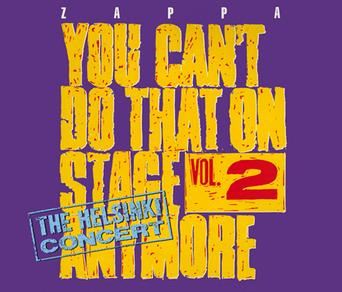
Right after the Frankensteinian assembly of the first volume in Frank’s You Can’t Do That On Stage Anymore series, the second volume was devoted to exactly one band’s performance at exactly one gig (although evidence has emerged that there were actually two shows, but still). This is basically the Roxy & Elsewhere band, but with only one horn player and one drummer, in this case Chester Thompson. Napoleon Murphy Brock and George Duke enjoy a lot of onstage repartee; the inside joke of this particular show revolves around the word “tush”, as well as Suzi Quatro, who was also touring Finland at the time. Also, Ruth Underwood shows her incredible percussion chops throughout.

We prefer the arrangement of “Village Of The Sun” from Roxy to the version they race through here, but there’s no question that the band is tight. While a good chunk of the repertoire comes from that album, they also played songs that were yet to be released, including “RDNZL” and “Approximate” (another chance for Frank to include a tap-dancing sequence near the start, annoyingly). Part of the guitar solo for “Inca Roads” was edited into the track released on One Size Fits All. “Pygmy Twylte” gets a longer guitar solo before devolving into “Room Service”, a rockin’ groove that turns into something of a sub-Flo and Eddie routine about hotel food and groupies. After an “Idiot Bastard Son” interlude, there’s a dizzying transition into “Cheepnis”.

“Dupree’s Paradise” appears in a 24-minute “rock band” arrangement, as opposed to the chamber music score, but first we must endure further routines and in-jokes regarding their manager’s wife theft of hotel towels. These are forgotten once the drum solo and percussion duet take over, though the duck calls leave something to be desired. This manages to segue into a performance of “Satumaa”, a “Finnish tango” apparently familiar to most of the crowd. “T’Mershi Duween” is another early rarity, moving neatly through “The Dog Meat Variations” and “Uncle Meat”.

Perhaps the most historic aspect of this show is the baffling request for the Allman Brothers’ “Whipping Post” just before “Montana”. Frank duly includes “Whipping Post” references throughout the song, and indeed a cover would be a Zappa concert staple come the ‘80s. A detour into “Big Swifty” provides the finale.

As with the first volume, this set is best appreciated by aficionados, and while some of the sequences become tiresome, it’s still a decent representation of one of Frank’s more celebrated bands. That might actually make it a good place to start.

Frank Zappa You Can’t Do That On Stage Anymore Vol. 2: The Helsinki Concert (1988)—3

Friday, July 9, 2021

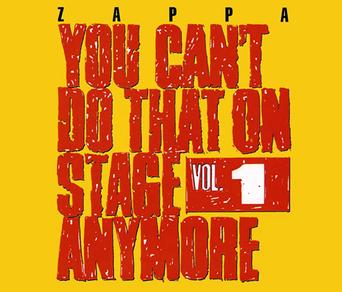
Frank Zappa 44: You Can’t Do That On Stage Anymore Vol. 1

Ever since the original Mothers of Invention lineup disbanded, Frank Zappa would occasionally refer to a large-scale anthology he was planning. Burnt Weeny Sandwich and Weasels Ripped My Flesh were teasers of sorts, but barely scratched the surface. Said to encompass anywhere from three to twelve records, the contents of these sets were to be compiled from various sources, from early club dates to later tours, to provide a better representation of what the band could do, and how songs and ideas developed.

It wasn’t until 1988, and his association with the very game Rykodisc label, that he was able to begin to realize the concept. The notes inside the first volume (of six) of You Can’t Do That On Stage Anymore stated the purpose: previously unreleased material, predominantly live, spanning two decades with no regard to chronology. Certain “legendary” concerts were sampled liberally, and sometimes he’d even edit a performance from one period onto one or more of the same song from another or more. Each two-CD set was annotated with comprehensive notes regarding the players, the date, the location, the equipment used, and any asides pertinent to enlighten the listener of any necessary context. (As the series went on, the asides became fewer and far between. Also, various websites and sources have since corrected any factual errors for him.)

Because he was loath to discredit anything he did, we have to take Frank’s word that the music he chose for this series is worth hearing. He liked the idea of having all his bands on the same virtual stage, so that means Flo & Eddie are heard alongside Napoleon Murphy Brock and Ike Willis, Steve Vai is contrasted with Ruth Underwood, and so forth. For the most part, the transitions are seamless, and not as anachronistic as it could otherwise be.

The first volume sets the tone, bookended by two different versions of “Sofa”, several years apart. Conceptual continuity is further explored in several ways, from the in-jokes that weave through different songs to the two renditions of “Louie Louie”—one with improvised lyrics about Ruth, the other a more literal arrangement of “Plastic People”. “The Mammy Anthem” is heard before lyrics were applied to it; “Babette”, something of a counterpart to “Sharleena”, is a rarity from the mid-‘70s, and the original Mothers are nicely represented by the “Orange County Lumber Truck” suite, albeit split into two parts on different discs, and a cover of Bing Crosby’s “Sweet Leilani”.

These sets are designed for completists, not newbies, so they’re best appreciated after sizable exposure to the catalog. Yet, they are enlightening and worthy of revisits as more of the larger picture is filled in. Future volumes would attempt different theses than the all-encompassing thrust of the first, and will be discussed accordingly.

Frank Zappa You Can’t Do That On Stage Anymore, Vol. 1 (1988)—3

Friday, March 12, 2021

Frank Zappa 43: Guitar

An extremely busy release schedule over a period of five years saw several Zappa albums appear on CD for the first time, along with over a dozen new titles. Some were distributed via his own Barking Pumpkin label, but the most elaborate releases came through his arrangement with Rykodisc.

The first such release was Guitar, something of a sequel to 1981’s Shut Up 'N Play Yer Guitar volumes. The premise was basically the same, being guitar solos excerpted from different live performances of about sixteen songs, mostly recorded in 1982 and 1984. Unlike the earlier version, there is no “grout” offered in the way of dialogue snippets, so it’s mostly just an onslaught of fancy fretwork. Given the popularity of hair metal and such virtuosi on the scene like Joe Satriani and Zappa alumnus Steve Vai, its release was somewhat timely.

The sameness of the material—usually the band vamping on one chord, sometimes over a reggae beat, sometimes over a prerecorded loop, while Frank lets loose—makes Guitar a connoisseur’s choice. (For example, “Republicans” and “Canadian Customs” are similar, but not identical, being that they’re both solos from “Let’s Move To Cleveland”, from different dates.) The synthesizers and electronic drums also date the material, taking some of the human element out of the listening experience. Once again, we’re not going to attempt to dissect each of the tracks, though a few stand out, such as the opening “Sexual Harassment In The Workplace”, which is an actual song with melody and structure, and “Outside Now”, which puts the solo back in its original context. The crowd is very happy to hear “Watermelon In Easter Hay”, if only for half of its album length.

The track titles are sometimes arbitrary (“Do Not Pass Go”), topical (“Jim & Tammy’s Upper Room”), or humorous (“Things That Look Like Meat”) but others are more obvious in their derivation. “For Duane” comes from a performance of “Whipping Post”; “In-A-Gadda-Stravinsky” begins with bassist Scott Thunes playing a certain Iron Butterfly riff while Frank quotes from “Rite Of Spring”; “It Ain’t Necessarily The Saint James Infirmary” quotes from both of those standards.

Again, having a constant onslaught of soloing isn’t everyone’s idea of easy listening. While the CD version added another 50 minutes of music—and another carrot for fans to make the switch from vinyl—the two-record set had different segues due to fewer tracks, and was separated into more palatable chunks of 20 minutes apiece. For those who wanted more songs, and interaction between everybody on those stages, they didn’t have to wait long.

Frank Zappa Guitar (1988)—3

Tuesday, October 27, 2020

Frank Zappa 42: Jazz From Hell

One of the things Frank liked about the Synclavier was its ability to perform whatever he programmed into it the way it was written. (Not having to deal with temperamental human musicians was probably just as key.) He and his tireless assistants painstakingly uploaded samples of a wide variety of sounds to make up the “instruments” throughout Jazz From Hell; indeed, none of these purely digital compositions were performed live by any of his bands, save one.

If the ultra-lush “Night School” sounds like a TV show theme, it could be because Frank had pitched an alternative news program to various disinterested networks around this time. It’s one of the more accessible pieces here, as the rest of the program follows the more “modern” compositions he’d been dabbling in on his own, such as in the furious rhythms in “The Beltway Bandits”. “While You Were Art II” is a transcription of a guitar solo, here punctuated by horn sounds that remind us of Uncle Meat and vibraphone effects that have us missing Ruth Underwood. The title track doesn’t seem any more hellish than the rest of the album, nor does it stand out much.

Despite being all instrumental, Jazz From Hell still received a parental advisory sticker in some markets, likely due to the title but not the harmless content of “G-Spot Tornado”. Despite its very dated atmosphere, it’s very mainstream-sounding, with a wiping effect akin to the scratching that was prevalent in rap and hip-hop. The wiping continues at a much slower pace on “Damp Ankles”, which evokes a cartoon factory. A guitar solo from 1982, dubbed “St. Etienne” from a performance in that French city, breaks up the monotony somewhat. While it starts slow, the fretwork gets frenetic by the end for a smooth transition to “Massaggio Galore”, featuring processed samples of the voices of various Zappa offspring.

As with his other instrumental excursions of the ‘80s, one’s enjoyment of Jazz From Hell will depend on one’s tolerance of computerized music. Just to show how nutty the music biz was in those days, this album garnered Frank his first Grammy® award—for Best Rock Instrumental Performance—and the only one in his lifetime. (Naturally, he disdained the gesture.)

Frank Zappa Jazz From Hell (1986)—3

Friday, July 17, 2020

Frank Zappa 41: Does Humor Belong In Music?

This album is another one in Frank’s catalog with a confusing history, but since here is the best place to cover it, we will. Not to be confused with the home video release of the same name and vintage, Does Humor Belong In Music? is a compilation of live performances by the 1984 band, released only in Europe and exclusively on the brand spanking new CD format in January 1986.

A faithful “Zoot Allures” segues neatly into “Tinsel-Town Rebellion”, which punctuates its derision of current music with highly pertinent musical quotes from the likes of the Scorpions, Culture Club, and Kajagoogoo. “Trouble Every Day” and “Penguin In Bondage” were both revived, this time to give Frank space for an extended solo in the middle of each. “Hot-Plate Heaven At The Green Hotel” is a complaint about the failure of trickle-down economics, but only if you listen to the lyrics; otherwise it’s another glorious guitar solo.

“What’s New In Baltimore?” has gained (some) vocals since its debut onstage, as well as a repeated section that resembles Leo Sayer’s “When I Need You”. “The Cock-Sucker’s Ball” is a blatant celebration of bad language that goes into an almost unrecognizable “WPLJ”. These are very brief detours before “Let’s Move To Cleveland”, a lengthy instrumental that went by several titles before settling on this one. Outside of the main melody, which surfaces repeatedly, this is a vehicle for a piano solo, a drum solo, and of course a guitar solo. Speaking of which, “Whipping Post” was the last song from the last show of the tour, done more straight than their previous reggae version, and features 15-year-old Dweezil Zappa on lead guitar.

The 1984 shows would be mined for future archival releases, but for now this was a satisfactory glimpse of Zappa live, especially as he wouldn’t tour again for another three years. Some of the synth effects and electronic drums sound understandably dated, but the tightness of the band overall is to be marveled. (Does Humor Belong In Music? didn’t get a proper worldwide release, including in America, until 1995 as part of Rykodisc’s massive catalog revisit. This time it sported new self-referential artwork by Cal Schenkel; for the 2012 re-reissue the original cover was mostly restored.)

Frank Zappa Does Humor Belong In Music? (1986)—3

Tuesday, March 10, 2020

Frank Zappa 40: Mothers Of Prevention

The actions of a few Senators’ wives gave Frank his biggest public exposure since the “Valley Girl” single. Appalled that these women were using their privileged access to possible legislation that would censor musicians, and its proximity to a proposed home-taping tax, he put on a nice suit and testified before the Senate (alongside John Denver and Dee Snider) to point the finger of shame at everyone involved. He wasn’t touring anyway, so the fight against the PMRC gave him something to do. (Besides, he’d been labeling his albums himself already.)

It remains unknown whether the album titled Frank Zappa Meets The Mothers Of Prevention would have appeared in this or any format, but it did, and that was the context. Much of the album is instrumental, with the sampling capabilities of the Synclavier (his current pet noisemaker) to the fore.

Side one is a mishmash. “We’re Turning Again” is mildly melodic, but mostly notable for quoting various classic rock songs by the (mostly dead) singers they lampoon, perpetuating the Cass Elliot ham sandwich rumor, and Ike Willis’ impressions of Walter Cronkite, Bob Dylan, and Thing-Fish. The instrumental “Alien Orifice” has a mild TV cop show theme mood, but at least it’s got a decent guitar solo, sorely lacking on this album. “Yo Cats” is a lounge jazz tirade against schooled musicians, again crooned by Ike, while “What’s New In Baltimore?” is a more enjoyable instrumental, with a lengthy guitar solo, once again resembling the closing theme to Saturday Night Live.

Side two is bookended by two Synclavier instrumentals of mild interest, “Little Beige Sambo” and “Aerobics In Bondage”. In between is the centerpiece of the album, “Porn Wars”. Here various soundbites of the Senators from the PMRC hearing are quoted, sampled, ridiculed, and interspersed with Synclavier music, snippets of the people in the piano from Lumpy Gravy and yet another appearance by Thing-Fish. Outside of Frank’s voice, the one that truly stands out today is that of Al Gore; we had no idea he’d be vice president within ten years, and almost president in fifteen. A couple Senators sound like Foghorn Leghorn, and one goes to far as to allege Frank’s Constitutional ignorance without letting him reply that, in fact, he’d always gotten top marks in his high school civics class.

Not wanting to bore overseas listeners with the silly antics of the American government, the album was released elsewhere in a “European version” that dropped “Porn Wars” in favor of three exclusive tracks. Two of these were tacked onto the following year’s CD in the U.S., which also rejigged the sequence slightly. “I Don’t Even Care” features Johnny “Guitar” Watson yelling over a live jam, while “One Man, One Vote” is another Synclavier piece. (The third track finally appeared when the album was reissued in the 1995 catalog overhaul, and it’s remained there ever since. “H.R. 2911” was named after the home taping bill Frank suspected was tied up with all the PMRC business, and consists of some of the Synclavier music heard under “Porn Wars”, with lots of snorks as percussion.)

From a musical standpoint, Frank Zappa Meets The Mothers Of Prevention is mildly interesting but not essential. For students of history, his testimony is in the public record, can be watched online, and can also be read in The Real Frank Zappa Book. He continued to toy with the material at home, of course. Compiled in 1989 but not released for 23 years, the Understanding America compilation included “Porn Wars Deluxe”, twice the length of the original version thanks to the inclusion of musical excerpts from the Zappa catalog and even more Senatorial soundbites. 2010’s “Congress Shall Make No Law…” presented his full Senate testimony as well as a later appearance before Maryland state legislature, broken up by Synclavier music and samples of his nephew burping. (The Synclavier music came from another project that wasn’t fully realized in his lifetime, released in 2011 with two “bonus” tracks as Feeding The Monkies At Ma Maison. And some of that had appeared in edited form on Civilization Phaze III. When it was reissued a few years later on vinyl and streaming, the bonus tracks weren’t included, so…)

Meanwhile, the record industry did indeed adopt a generic “parental advisory—explicit lyrics” label that was soon widely lampooned and kept certain albums out of Wal-Mart, while making it easier for kids to find albums sure to piss off their elders. And yet somehow, some way, the world kept turning.

Frank Zappa Frank Zappa Meets The Mothers Of Prevention (1985)—2
1986 Rykodisc CD: same as 1985, plus 2 extra tracks
1995 Rykodisc CD: same as 1986, plus 1 extra track

Friday, November 8, 2019

Frank Zappa 39: Thing-Fish

Over a period of three months, Frank released four distinct albums, each unique and challenging in its own way. Outside of Them Or Us, none could really be called a rock album, and the two instrumental releases would take some getting used to. But Thing-Fish would divide listeners most of all.

This was not the first musical Frank had envisioned, but of all his earlier grand designs, this came closest to realization. It was a bold idea: at a time when AIDS was barely beginning to register on the mainstream public consciousness, Frank expanded his opinion that the disease was the result of a government-sponsored scientific experiment to the extent that in addition to making people very sick and killing them, the effects would also lead to mutations of cartoonish extremities based on ongoing stereotypes.

Of course, any idea worth doing is worth overdoing, so Frank took this scenario and packaged it as a three-record set purporting to be the original cast recording of the opus intended for the Broadway stage. The cover depicts the title character and narrator, whose name is based on a character from the Amos ‘n Andy radio and TV show, with an oversized potato-shaped head and cartoonish duck lips, in conversation with one of the chorus members, known as the Mammy Nuns, all of whom are described as dressed like Aunt Jemima from the syrup packaging of the same name. (Really, we’re not making this up.)

The plot begins, as all Broadway shows do, with Thing-Fish (voiced by Ike Willis) explaining how the experiments of the Evil Prince led to their current condition. The proceedings soon turn into a play-within-a-play, as a yuppie couple named Harry and Rhonda (played by Terry and Dale Bozzio, who’d left the Zappa fold to form Missing Persons) wander into the theater expecting something like Cats. Much like what happened when the Mothers of Invention had a theater residency in 1967, Harry and Rhonda are assimilated into the action and subjected to various psychological horrors. For example, we meet Harry-As-A-Boy (given a genuinely hilarious gee-whiz delivery by the second Bob Harris to play with Zappa), who explains that women’s liberation turned Harry gay, disguised by the yuppie drive to succeed at all costs. Meanwhile, Rhonda is shown to have evolved from an actual blow-up doll to a ruthless feminist businesswoman. Their inevitable disgust for and at each other culminates in side five’s “Briefcase Boogie”, wherein Rhonda has sexual congress with said object, described in full four-letter detail. (The Broadway show never happened, but a simple search online makes it relatively easy to find a pictorial from Hustler magazine that provides visuals. This is also absolutely true.)

Much of the music on Thing-Fish is obscured by dialog, but for the most part, the “songs” are previously released Zappa tracks given new context with the overlaid commentary (for example, “The ‘Torchum’ Never Stops” in an extended mix of the Zoot Allures track). “No Not Now” appears twice, once with new vocals by Ike, and again as the finale, played backwards with the new title “Won Ton On”. The music that isn’t recycled is mostly performed on the Synclavier, which also provides the computerized vocals by the Crab-Grass Baby, the horrifying offspring of Harry’s depraved televangelist father and, apparently, Rhonda in her inflatable incarnation. As for new “songs”, “He’s So Gay”, a twisted mélange of doo-wop and upbeat synth pop, would have fit perfectly on the other ‘80s “rock” albums. “Brown Moses” is supposed to be the commentary by that character (described as resembling Uncle Ben from the rice box), portrayed by Johnny “Guitar” Watson. “Wistful Wit A Fist-Full” is a stereotypically Broadway showcase for piano and voice, in this case delivered by the remorseful Evil Prince in the style of Al Jolson. (Also, there are zero guitar solos on any of the six sides.)

Much as with 200 Motels and Joe’s Garage, this is an angry album, full of black humor, blanket indictments, and uncomfortable truths. It is not an easy listen, and while the libretto helps explain the action better than the dialog, one must actually hear Thing-Fish’s intonation to understand some of the purposely mangled language. Thing-Fish is hardly the first play to depict sexual activity, deviant or otherwise, but even after something like Spring Awakening became a sensation, we really can’t see how Frank really thought something like this would ever be staged per his script. Even if it was, critics would lambaste it and the Tonys would ignore it, which Frank would only flog as proof of ongoing censorship and the inability of the average American to understand his genius.

Frank Zappa Thing-Fish (Original Cast Recording) (1984)—1½