Showing posts with label 1997. Show all posts

Tuesday, May 5, 2026

Morrissey 8: Maladjusted

In the early days of the Internet, various chat groups were dedicated to generating fake Morrissey song titles. His album titles weren’t so easy to concoct, but Maladjusted would be a good one if he hadn’t thought of it himself. Considering how all over place the songs are arrangement-wise, it’s fitting.

The title track is a bold opener, with pounding drums and feedbacky guitar from the Oasis album due out in a few weeks. He was due for a big anthemic-sounding single, and “Alma Matters” comes through on that score. “Ambitious Outsiders” is pinned to a somber synth orchestra arrangement that doesn’t make us want to decipher the lyrics any. Most people will hear the chords of Radiohead’s “Creep” in “Trouble Loves Me”, it’s actually very close to a song of a similar, shorter title from a Jayhawks album earlier that year. That aside, it’s very well arranged. The tale told in “Papa Jack” is open to lots of interpretation, none of which seem to match the soaring guitar parts over the second half.

“Ammunition” is similar musically to the other rockers, but stands out for being a song of confidence, even self-acceptance. “Wide To Receive” is a little dreamier and mopier, especially when the repeats of the first word of the title sound like “why, why, why, why”. “Roy’s Keen” would be a decent crowd chant to honor a Manchester United player of note, but the verses honor a guy who cleans windows for a living, so we’re at a loss. “He Cried” could be another one of those fake song titles, but it’s another catchy one reminiscent of older melodies. As good as the album’s going, it screeches to a complete halt with “Sorrow Will Come In The End”, wherein he recites a monologue of revenge over another faux-orchestrated backing. It would be unbearable even if it hadn’t been directed at the Smiths drummer who sued him and Johnny Marr over royalties, to the point where it was dropped from the UK release. Best to skip ahead to “Satan Has Rejected My Soul”, which is far catchier.

The band is the same as the last album, just as Steve Lillywhite produced it, so the sound throughout Maladjusted crackles. Yet twelve years later, he chose to reissue and repackage it with a new cover (as he also did with the one that came before it). In this case, the track list was dramatically shuffled and overhauled, going so far as to remove “Roy’s Keen” and “Papa Jack”. But beyond that, the new sequence flows better, even with the added tracks, all of which were contemporary B-sides, each excellent save the too-long and too-serious “This Is Not Your Country”. “Satan Rejected My Soul” was swapped with the worldwide reinstatement “Sorrow Will Come In The End”, making it easier for the listener to avoid that one altogether.

Morrissey Maladjusted (1997)—3
2009 Expanded Edition: same as 1997, plus 6 extra tracks (and minus 2)

Friday, January 23, 2026

Jane’s Addiction 4: Kettle Whistle

Despite fragmenting in 1991, Jane’s Addiction never really went away. Perry Farrell and Stephen Perkins formed Porno For Pyros, while Dave Navarro and Eric Avery emerged in Deconstruction, which didn’t sell as well, plus Eric didn’t want to tour. Navarro ended up in Red Hot Chili Peppers for a well-publicized couple of years, which is one reason why that band’s Flea came on board to play bass when Jane’s reunited for the cleverly dubbed Relapse tour. The occasion was promoted by something of a rarities collection: Kettle Whistle served up a CD full of demos, outtakes, live versions, and some new music, somewhat haphazardly sequenced.

The opening title track was apparently a tune that had been around for years, but not properly recorded until now. It’s more on the spacey side than most of their catalog, sounding more like Peter Gabriel than Led Zeppelin. But it’s also more musical than the noisy “So What!”, which has an obnoxious vocal over a fairly standard funk pattern, and they let Flea play trumpet again. “My Cat’s Name Is Maceo” is a fairly literal lyric over a simple riff, and somehow they got Maceo Parker himself to toot along for part of it, either in 1987 or 1997, we’re not sure which. The moody strum of “Slow Divers” is described as an outtake from their self-titled live album, with some posthumous additions, and would have been a very odd if not unwelcome departure had it appeared back then. “City” is nothing more than a Perry-and-Navarro tune recorded for the soundtrack of their Soul Kiss video.

The alternate versions of familiar tunes aren’t very illuminating, and only prove that they’d yet to figure out how to harness the power the final masters would deliver. Yet the live versions are excellent, and we’re still amazed how they could make something as basic as “Jane Says” stay interesting for six minutes. Four (out-of-sequence) songs from the Hollywood Palladium show how tight they were, though we could do without Perry’s “monologue” before “Three Days”.

Even if Kettle Whistle wasn’t stellar, the kids who had the other three albums were happy to have something else to put into the rotation, and they weren’t buying Porno For Pyros. For them alone, it did the trick.

Jane’s Addiction Kettle Whistle (1997)—3

Tuesday, July 4, 2023

Jayhawks 5: Sound Of Lies

From the beginning, and for many, Mark Olson was the key songwriter in the Jayhawks, and Gary Louris was his indispensable foil. But after four albums, two of which had major label push, the rat race got to be too much for Olson, and he left the band to devote time to his wife, the singer-songwriter Victoria Williams, who was struggling with multiple sclerosis. Louris, bassist Marc Perlman, and newer members Karen Grotberg and Tim O’Reagan wanted to keep going, so they did.

As the story goes, they lost a key singer-songwriter and much of their twang, but they gained a band in the process, leaving us with Sound Of Lies, a much more eclectic collection than their previous efforts. The artwork is dominated by Louris’ distinctive glasses, and he wrote most of the songs on his own, each of which drips with despair even when paired with the sunniest melodies. But there are plenty of harmonies, thanks to Karen and Tim, and the addition of Kraig Johnson on rhythm guitar and Jessy Greene on violin keeps the sound full.

Side one is strong from start to finish. Karen’s piano is the first sound we hear, and will continue, along with her sweet voice. “The Man Who Loved Life” seems to emerge from a position of defeat, with contradictory turns of phrase and battle-torn imagery. It pulls back as often as it tries to get loud, while “Think About It” totally gives in to the urge, Gary’s wah-wah pedal on full distorto. “Trouble” shares some chords and feel with “Creep” and “The Air That I Breathe” while being country enough to stand on its own. The twang endures for “It’s Up To You”, one of the few songs on the album that points fingers rather than loathes one’s self. That is not the case with the absolutely heartbreaking plaints of “Stick In The Mud”, while “Big Star” turns the volume back up to blast the music biz while resigning itself to it.

Things slide a little to the left for the second half, beginning with the bongwater effects on “Poor Little Fish” and the gothic mystery of “Sixteen Down”. The phased guitars and wistful melody of “Haywire” help keep the mood this side of cheerful, with a nicely arranged middle section for dynamics. Contrast that with the driving menace of “Dying On The Vine” and the repeated “scared of you” hook, especially the late key change. Drummer Tim contributes “Bottomless Cup”, and just because it’s stuck next to last doesn’t mean it should be skipped, because it’s a solid, yearning keeper, especially since the title track is so quiet.

A little less country and lot more rock, Sound Of Lies proved the reports of their demise were thankfully exaggerated. It’s also on the long side, yet still flows. Strong as it was, it didn’t exactly burn up any charts, but remains a hidden gem truly worthy of attention. (The eventual Expanded Edition added two contemporary B-sides—the mildly funky “I Hear You Cry”, which Marc wrote, and the droning “Sleepyhead”—and three outtakes, including the “Kirby’s Tune” jam and alternates of “It’s Up To You” and the title track.)

The Jayhawks Sound Of Lies (1997)—
2014 Expanded Edition: same as 1997, plus 5 extra tracks

Friday, December 2, 2022

Tom Petty 24: Live At The Fillmore

The Heartbreakers were always a solid band for any occasion, not just when playing Tom Petty’s songs. Mike Campbell and Benmont Tench in particular kept busy over the years doing sessions, and once they got Steve Ferrone on drums, they were even more well-rounded.
After twenty years in the business Tom was looking for something other than the usual record-release-tour cycle, and also wanted to give the band a common purpose following a stretch including two solo albums with varying contributions from the stalwarts. A residency at San Francisco’s Fillmore Auditorium gave them a chance to be something of a house band at the venue, and they took it as an opportunity to stretch. Songs compiled from the last six shows of the stand make up the contents of Live At The Fillmore – 1997. (A two-disc version was made available for some reason, even though anyone who would want that would be happy to splurge for the four-disc version, and not just for the replica patch, pass, and picks.)

Six performances are repeated from the Live Anthology set (and one was on An American Treasure, and two more were on the Wildflowers expansion) but there are about fifty others, and most of them are covers. Chuck Berry’s “Around And Around” opens the set, and he appears on disc four in a Stones inspired mini-set of “Satisfaction”, “It’s All Over Now”, and “Johnny B. Goode”, which incorporates verses from “Bye Bye Johnny”; “Time Is On My Side” gets an airing too. Little Richard is represented by “Rip It Up” and the Everlys’ arrangement of “Lucille”, while J.J. Cale is a surprising touchstone on three songs, including “Call Me The Breeze”. A quick run through “You Are My Sunshine” (which Tom says he “learned at camp”) prefaces “Ain’t No Sunshine”. Benmont gets to shine on two Booker T classics (“Hip Hug-Her” and “Green Onions”) and Mike shows off his surf roots via the Goldfinger theme and the Ventures’ arrangement of “Slaughter On Tenth Avenue”. Even utility man Scott Thurston gets to howl the bluegrass nugget “Little Maggie”. Howie Epstein is thanked, definitely playing bass, and probably harmonizing.

Disc three is the shortest and oddest, beginning with four Byrds songs backing Roger McGuinn and ending with three blues standards sung by John Lee Hooker with his personal lead guitarist. (He thanks Tom by name but clearly doesn’t know those of any Heartbreakers. Meanwhile, Carl Perkins is pictured in the booklet but is not heard on the album, sadly.) Due to the ages of the members, ‘50s and ‘60s tunes loom large throughout; the high-speed delivery of Ricky Nelson’s wordy “Waitin’ In School” is particularly impressive, and who doesn’t like an obscure Zombies single? And while Steve is a swingin’ drummer, we’ll always miss Stan Lynch’s bite on things like “You Really Got Me” and “Gloria”.

The shows were an excuse not to be stuck playing only the hits, but several are included. “The Wild One, Forever”, “Even The Losers”, and “California” get more acoustic readings. “The Date I Had With That Ugly Old Homecoming Queen” is an otherwise unknown song based around a snaky Campbell riff, and a request for the obscure B-side “Heartbreakers Beach Party” is honored once they remember how to play it. They even dust off “On The Street” from the first Mudcrutch demo tape, recorded in 1973 in Benmont’s parents’ living room.

The Petty estate has done (mostly) a decent job with his legacy, though they’re probably still sitting on a warehouse full of Wildflowers-themed candles and Xmas ornaments. Live At The Fillmore shows a side of the band not captured in the studio, and is a nice way to spend four hours with the Heartbreakers, mostly sequenced so it can be enjoyed a disc at a time.

Tom Petty & The Heartbreakers Live At The Fillmore – 1997 (2022)—

Tuesday, June 21, 2022

Todd Rundgren 28: With A Twist

So this was kinda cute. Anyone wishing Todd would do an album like one of his old classics was greeted with a collection of older songs freshly re-recorded lounge/exotica-style with his usual studio cronies. He even insisted With A Twist... was not a gag in the liner notes, alongside a photo of him standing shirtless in a large body of water.

The songs are still recognizable, but rearranged from top to bottom to highlight the ensemble. Some of the differences are striking: “I Saw The Light” plays with the meter so it sometimes feels like it’s missing a beat; “Can We Still Be Friends” gets a sax solo; “It Wouldn’t Have Made Any Difference” uses the bossa-nova setting common on any number of keyboards. “Love Is The Answer” is far from anthemic, and “Hello It’s Me” is just plain creepy. Along with a remake of “Never Never Land” from Peter Pan and Marvin Gaye’s “I Want You”, less obvious choices of his own compositions—“Influenza”, “Mated”, “Fidelity”—sound closest to their soft origins, but none more so than “A Dream Goes On Forever”.

There’s a sameness throughout the album that wears out the concept pretty quickly, but the album actually works. Anyone hearing these songs for the very first time may have a better shot at enjoying them, because they were good songs to begin with. But none surpass the original recordings.

Todd Rundgren With A Twist... (1997)—3

Tuesday, May 18, 2021

David Bowie 44: Brilliant Live Adventures

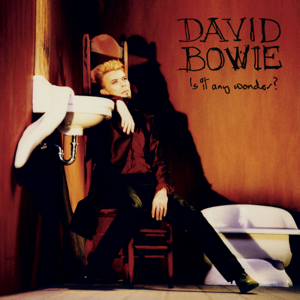
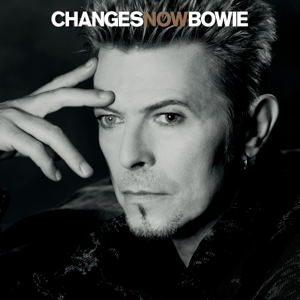
Perhaps killing more time while fans waited for the next box set in the chronology, the Bowie estate spent part of 2000 tidying up the aisle in the vaults dedicated to the ‘90s. First came two odd mini-albums. Is It Any Wonder? consisted of three Earthling outtakes—remakes of the Tin Machine tracks “Baby Universal” and “I Can’t Read”, and the quasi-instrumental “Nuts”—plus a new arrangement of “Stay”, the rarity “Fun” (both from the tour rehearsals), and an Eno remix of a re-recording of “The Man Who Sold The World” from the Outside sessions that had snuck out as a B-side. The more straightforward Changesnowbowie offered predominantly acoustic-based arrangements of mostly early ’70s songs—the outliers being “Shopping For Girls” and “Repetition”—recorded specifically for the BBC to celebrate his 50th birthday.

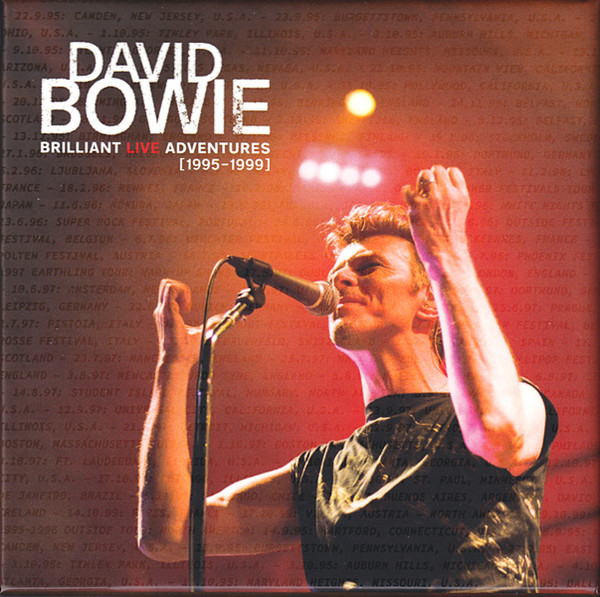
These were mere precursors to a curious program entailing the release of six live albums that would be made available individually, on CD and vinyl, for the purpose of being collected in a slipcase labeled Brilliant Live Adventures (1995-1999). These releases basically offered two glimpses each from three tours, supporting the Outside, Earthling, and ‘hours…’ albums in turn. “Glimpses” is the key word here, as one is a compilation from various shows, and two of the concerts are abridged, perhaps to fit on one disc. It was an ambitious program, to be sure, considering that the release schedule was sporadic and the quantities were limited, plus the general chaos resulting from the worldwide COVID pandemic threw even more wrenches into the works. But each title was uniquely packaged and designed, and looked as good as they sounded.

Along with such stellar players as Reeves Gabrels, Carlos Alomar, a fully reinstated Mike Garson, Zach Alford on drums, and the, frankly, brilliant addition of Gail Ann Dorsey on bass and vocals, the Outside tour was supported by Nine Inch Nails, their set melding into Bowie’s. However, none of their onstage collaborations appear on either Ouvrez Le Chien or No Trendy Réchauffé. Yet along with new arrangements of deep cuts, the songs from the album he was supporting translated much better to the stage. (The latter disc, recorded two months after the former—which adds two songs from the latter as bonus tracks for some reason—was a shorter set from a festival environment, with some different songs as well, including a strong “Jump They Say” and two performances of “Hallo Spaceboy”.)

The Earthling tour was stripped back to just Gabrels, Garson, Alford, and Dorsey, yet the keyboards and sequencers made everything sound big and full, if processed and programmed, and a little too close—rather, identical to the album. LiveAndWell.com was originally given away to website subscribers in 1999 and compiled from a handful of shows, concentrating on material from Outside and Earthling. Some editions included a bonus disc of remixes; this incarnation got new artwork and added the radical reinterpretations of “Pallas Athena” and “V-2 Schneider”, credited to “Tao Jones Index” when first released. By contrast, Look At The Moon! presented a full show on two discs (or three LPs). As with its brother, some of the rearrangements are repeated from the previous tour, but there are some new surprises, such as “Fame”, “Fashion”, and even a cover of Laurie Anderson’s “O Superman” sung by Gail Ann. Also, “The Jean Genie” starts acoustically, and is prefaced with a snippet of “Driftin’ Blues” for some reason.

1999’s much shorter tour—exactly nine shows, if you count the VH1 Storytellers appearance—was notable for Helmet’s Page Hamilton on lead guitar, following the abrupt departure of Reeves Gabrels. Sterling Campbell was also swapped in on drums, Mark Plati played guitars, and two women added breathy backing vocals. As befit the album he was promoting, the approach to the set was less frenetic and mostly softer, yet still energetic. The shows here are similar but not exactly identical; selections from Something In The Air had already been B-sides, while At The Kit Kat Klub was a small exclusive show recorded a month later and simultaneously webcast, which was spanking new and generally bug-prone technology at the time.

Taken all together, it’s six hours of music with a lot of repeats. Even with that, he was both busy and unpredictable throughout the latter half of the ‘90s. Collectors have to have them all, but luckily it’s possible to pick and choose. (Look At The Moon! gets a slight edge for length and variety.)

David Bowie Is It Any Wonder? (2020)—
David Bowie
Changesnowbowie (2020)—3
David Bowie
Ouvrez Le Chien (Live Dallas 95) (2020)—3
David Bowie
No Trendy Réchauffé (Live Birmingham 95) (2020)—3
David Bowie
LiveAndWell.com (2021)—3
David Bowie
Look At The Moon! (Live Phoenix Festival 97) (2021)—3
David Bowie
Something In The Air (Live Paris 99) (2021)—3
David Bowie
David Bowie At The Kit Kat Klub (Live New York 99) (2021)—3

Friday, February 12, 2021

Doors 11: Box Set

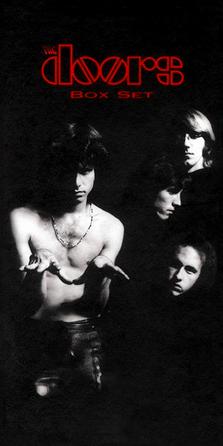
Seeing as most bands were commemorated with box sets by the end of the century, it made sense that the Doors would get their own as well. With six studio albums to cherry-pick, they did their fans a solid by concentrating on rare material for three of the four discs in the imaginatively titled Box Set.

The first and third discs focus on a sprawling pile of live recordings and studio outtakes, sequenced without regard to chronology or source. Seeing as the thrust of the set was to highlight Jim Morrison’s “genius” and “fearlessness”, such a random approach makes sense. The set begins, appropriately, with “Five To One” from the infamous Miami concert that got Jim arrested for, among other things, calling the audience a bunch of “f—king idiots”. This is followed by a “jazz” version of “Queen Of The Highway” for an exercise in extremes, and from there it’s a chaotic bounce back and forth through a six-year stretch. Their earliest demos, before Robbie Krieger joined, are scattered throughout, are notable for Ray Manzarek playing piano a la Ramsey Lewis on songs that would eventually become band staples. (“Go Insane” is the exception, and would have been in popular rotation on the Dr. Demento show.)

The real draw on these discs would be the variety of unreleased songs and sketches, from both stage and studio, most frankly better off unreleased in the first place. For example, “Rock Is Dead” is a 16-minute edit of an hour-long jam the boys put on tape after getting smashed at a Mexican restaurant near the studio. “I Will Never Be Untrue” is something of an Otis Redding homage, Robbie doing his best Steve Cropper imitation. “Black Train Song” finds them wandering through “People Get Ready”, “Mystery Train”, and “Crossroads” via a tune called “Away In India” while teenyboppers scream for “Hello I Love You”. Most surprising to these ears is their arrangement of “Albinoni’s Adagio In G Minor”, supposedly with actual strings overdubbed on the spot.

Just to keep it confusing, the third disc begins with “Hello To The Cities”, which combines an Ed Sullivan introduction with Jim purposely greeting an audience with shout-outs to other cites than the one they’re in. “Break On Through” from the Isle of Wight in 1970—one of their last performances—is marred by Ray’s doubling of Jim’s vocal, then we go to Vancouver for sloppy versions of “Rock Me” and “Money” with Albert King sitting in. “Someday Soon” was designed to deflate blissful hippies with a reminder of their mortality, just as “Mental Floss” and the brief “Adolph Hitler” joke (“still alive… I slept with her last night”) are supposed to be provocative. “Orange County Suite” is nice, even though it combines a tape of Jim singing his poetry with modern backing from the other three. This follows “Tightrope Ride”, the only selection from the Jim-less portion of the catalog.

In between, a disc of recordings from the band’s stand at the Felt Forum in early 1970 presents something of a companion to the Absolutely Live album. A few songs from the then-new Morrison Hotel give way to a full performance of “Celebration Of The Lizard”, then a blues detour takes us through “Crawling King Snake” a year before its appearance on an album, ill-advised takes on “Money” and “Gloria”, plus a rambling extemporization credited as “Poontang Blues/Build Me A Woman/Sunday Trucker”. An 18-minute extension on “The End” closes the disc. Even when Jim’s pitch wavers, and it does, the band is tight throughout.

The fourth disc, of “band favorites”, offers five tracks chosen by each of the three surviving members. Obvious tracks like “Light My Fire” and “Riders On The Storm” sit alongside such deep cuts as “Shaman’s Blues” and “Yes, The River Knows”. It’s fairly evenly split between the six albums, though Strange Days is represented the most.

Box Set wouldn’t be the only doorstop unleashed to commemorate the band, of course. Two years later, The Complete Studio Recordings presented the first six albums, supported by none of the B-sides or post-Jim releases, but did include a disc called Essential Rarities culled from the Box Set. (This was released as a standalone disc a year after that, touting the rare track “Woman Is A Devil”, which was merely an excerpt from “Rock Is Dead”.) 2006’s Perception served up remastered versions as well as surround mixes of each of the same albums with their 40th anniversary bonus tracks; five years later, A Collection consisted of just those albums in replica sleeves, with no bonus tracks. And in 2025, the standard six were repackaged again, this time in Atmos and hi-res mixes on six Blu-ray discs as Immersed. (Of more interest to connoisseurs would be the ongoing Bright Midnight series of official bootlegs, which we’re not even to attempt to catalog.)

The Doors Box Set (1997)—3

Friday, June 5, 2020

Genesis 18: Calling All Stations

Few bands that have achieved success with one lead singer go on to find success with another after the first one leaves, for whatever reason. AC/DC did it after Bon Scott, Pink Floyd kinda did it after Syd Barrett, and Genesis did it after Peter Gabriel. So once Phil Collins went solo for good, Genesis founding members Tony Banks and Mike Rutherford intended to carry on, and why wouldn’t they.

This time, however, they were replacing a singer who also happened to be their drummer, and an active collaborator for over two decades. The new singer would have to be pretty damn impressive to keep these guys in gold records and sold-out shows; a drummer wasn’t as important, as they’d used Chester Thompson to supplement Phil on tour for years. Virtual unknown Ray Wilson was certainly competent in the vocal department, but that’s about all he brought to the table as evidenced by Calling All Stations. (Two drummers were used throughout the album.)

Part of what helped Genesis move forward after Gabriel left was their existing brand: the music still sounded like the Genesis of recent years, and Phil had not only contributed vocals to earlier songs, but was able to get into the spirit of the melodies, if not the characters. By 1997 the Genesis sound had become most synonymous with him, to the point where keyboards and guitars weren’t as prominent as before. Furthermore, Banks’ multiple solo projects were sales duds, and any success Mike + The Mechanics had was usually down to whoever was singing, especially if it was Paul Carrack.

Without looking at the label of the CD, would anybody know this was Tony Banks and Mike Rutherford? Worse, would someone think this was the new album by the band that still called itself Bad Company, but sounded nothing like the lineup with Paul Rodgers? That’s what makes Calling All Stations so inessential. There’s nothing embarrassing about it, except maybe the rhythms on ill-advised first single “Congo”, or the baffling “Alien Afternoon”. “Small Talk” is pretty dopey, though “The Dividing Line” sounds enough like recent Genesis until the vocals start.

As usual for the time, the album is way too long. The new lineup toured Europe and promptly called it quits. Calling All Stations is still in print, and we thought it had not been part of any reissue or expansion program, but it turns out we were mistaken.

Genesis Calling All Stations (1997)—2

Friday, May 22, 2020

Paul Simon 14: The Capeman

After the period of relatively high activity that began with Graceland, it had been a long time since a new album of songs from Paul Simon. And when one did arrive, it wasn’t exactly what people expected.

It turned out he’d been very busy for most of the ‘90s working on a Broadway musical, which took both a lot of work and a lot of money. He soon learned the hard way that neither of those factors would guarantee success. The Capeman was based on the life of a convicted murderer who dominated New York City headlines in the late ‘50s, partially because of his youth and partially because of his Puerto Rican heritage. Simon’s approach to creating this grand work was unorthodox, and he didn’t make too many friends in the process. When the show debuted, it was lambasted, but the writing was already on the wall when people heard the album designed to preview and promote it.

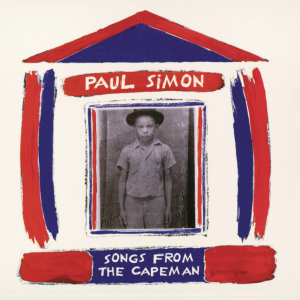
Songs From The Capeman is credited to Paul Simon alone, but many of the vocals are handled by the actors and actresses in the play, to the point where one forgets who wrote everything. Marc Anthony and Ruben Blades appear here and there, yet he himself sings “Born In Puerto Rico”, which is hard to believe even as a character because of his by-now familiar voice. (José Feliciano sings the version added as a bonus track the following century, and it’s better.)

The album demands attention, since the lyrics (or libretto) is very important to the story at hand. It would help if the story were linear, but it’s not. It’s easy to slip into the background, and then some spurt of profanity or stereotypical patois will leap from the speakers, and we worry about its effect on impressionable children. That happens a lot in “Adios Hermanos”; loading up your opening track with f-bombs isn’t likely to appeal to a more conservative fan base. Dialogue from archival interviews is intended to add gravitas, but merely muddies the process.

Musically it’s not bad; we’re in no position to judge the authenticity of the Latin heritage and style, but this is mostly balanced throughout by a wonderful smattering of doo-wop. “Quality” balances two doo-wop styles, the solo croon and the girl-group chorus, quite well, and better than the dual personality of “Bernadette”. “Virgil”, sung from the point of view of a prison guard, sounds like a hokey Western gunfight. “Killer Wants To Go To College” is a decent tune with too much plot, even split into two parts. “Trailways Bus” will only have one yearning to hitchhike from Saginaw with a pack of cigarettes and Mrs. Wagner’s pies. The finest moment could be “Can I Forgive Him”, set up as a conversation between the Capeman’s mother and those of the murder victims, and sung by himself to the accompaniment of his acoustic guitar.

The Capeman was an interesting concept, but ultimately the Songs From The Capeman are bound to the show. While moments of clarity shine through, it’s a vanity project, and not really worth the trouble. The expanded version from this century would have been an excellent opportunity to illuminate any part of the story, but merely adds the Feliciano track mentioned above, along with another schizophrenic doo-wop track in “Shoplifting Clothes” and an unfinished demo of “Can I Forgive Him”. Clearly, he’s moved on.

Paul Simon Songs From The Capeman (1997)—2
2004 CD reissue: same as 1997, plus 3 extra tracks

Tuesday, February 4, 2020

Simon & Garfunkel 7: Old Friends

As they only had five albums, it had been easy for people to amass the Simon & Garfunkel catalog for years, particularly when most of the albums were available at the budget “Nice Price” tier. That didn’t stop the label from putting them all in a box called Collected Works; this 1981 release came with no frills but the music, although the eventual CD version cut it down to three discs by doubling up the first two pairs while adding a booklet of lyrics.

By the mid-‘90s the archival box set had been well established, so they were due, and Old Friends managed to outdo Paul’s skimpy offering of a few years before. Besides having a perfect title, this three-disc set served up music from their first Columbia sessions all the way to their last shows in the ‘60s, ending fittingly with “My Little Town”. For the most part, the music is presented chronologically, generally by recording date, which sometimes better reflects when certain singles appeared months before they were included on albums.

A lovely demo of “Bleecker Street” begins the set, followed by seven songs from the first album. Eight songs from the second are well spaced, so the single version of “The Sound Of Silence” doesn’t come too soon after the LP version. “Homeward Bound” was from those sessions, and it precedes their great take on Jackson C. Frank’s “Blues Run The Game”. Eight songs from Parsley, Sage lead into “A Hazy Shade Of Winter” and “At The Zoo” in place as singles. Five selections from a 1967 Lincoln Center concert provide new perspectives on oft-heard tracks, plus a harmonized rendition of “A Church Is Burning” from Paul’s then-obscure solo album and even “Red Rubber Ball”, which had topped the charts the year before by the Cyrkle. The trawl through what would become Bookends continues with “Fakin’ It” and its rare B-side, “You Don’t Know Where Your Interest Lies”. For some reason they recorded a couple of Christmas carols around this time; both end the second disc. Three songs from a 1968 concert include an earlier live recording of “Bye Bye Love”, followed by the rest of Bridge Over Troubled Water in order of recording. The duo’s demo of “Feuilles-O” appears, but not the notorious “Cuba Si, Nixon No”. Two performances from Carnegie Hall, these from late in 1969, include a medley of “Hey Schoolgirl” and “Black Slacks”, followed by “That Silver Haired Daddy Of Mine”.

As with most boxes of this ilk, Old Friends delivers a lot, but leaves the listener wanting more, such as the handful of album tracks not included. A few years later, The Columbia Studio Recordings expanded on the original idea of Collected Works by bolstering each of the albums with bonus tracks, repeating some (but not all) from the Old Friends set. (The expanded albums were all made available individually as well.)

Simon & Garfunkel Old Friends (1997)—
Simon & Garfunkel
The Columbia Studio Recordings (1964-1970) (2001)—4

Friday, November 30, 2018

Toad The Wet Sprocket 6: Coil

Even if a band was immensely popular in the ‘90s, that didn’t always dictate that every album would be a blockbuster. We blame the radio; the same week a band like Live, Soul Asylum, the Cranberries, and yes, even Pearl Jam would release a new album, stations were still playing the heavy-rotation hits from the last one or the one before. Gone were the days of free-form FM radio when a new album by a big band was an event, and every song got heard at least once.

Like most alterna-rockers, Toad The Wet Sprocket never professed to desiring superstardom, which isn’t exactly a lie. Having seen what fame could do to rock icons, any aspirant would tread carefully toward such a goal, but at the same time, the nature of record contracts dictated that a band would either make piles of money or end up owing the label the same amount, so a hit was always preferable. And while Dulcinea wasn’t exponentially more successful than Fear, they managed to hold onto their old fans and maintain a level of success that would allow for another album. (In Light Syrup kept them fresh in the racks, too.)

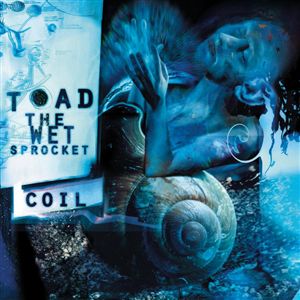
With its twisted, David Fincher-esque artwork and deep colors, Coil is often called a “dark” album, and it is, but it’s no less happy-go-lucky than any of their others. Overall it’s more direct, more assured, certainly louder, less precious, though Glen Phillips was certainly still performing barefoot.

That acoustic strumming so beloved by Dave Matthews and so many other bands of the time underpins “Whatever I Fear”, though the lead vocal (and Todd Nichols’ harmonies on the chorus) are pure Toad. Just as pure Toad is first single “Come Down”, which has two of the band’s favorite title words as well as a killer chorus and hooks aplenty, neither of which guaranteed airplay on an already confused platform. “Rings” has chordal qualities that recall their earlier albums, except that they’re played a lot harder, and it would seem the words are sung from the point of view of a tree? “Dam Would Break” offers more of that earnest acoustic strumming so iconic of the bands who didn’t play grunge in the era of the same, plus a neat metaphor and wordless chorus. Todd gets to shred to his heart’s content on “Desire”, the closest they get to “funky”, or even “dirty”, and while “Don’t Fade” starts and ends quietly (comparatively, for this album) there’s still a ton of aggression in the band’s delivery.

“Little Man Big Man” presents a basic summary of human nature, and possibly the nature of warfare, in a catchy, low-key structure with clever use of acoustics. Another should-have-been-classic, “Throw It All Away” is one of those songs that sounds like so many others, but in a good way. It’s uplifting, has great harmonies, and sends a seemingly simple message to go along with the basic chords. The feeling is short-lived, as “Amnesia” turns up the volume (and anger) again over the Holocaust and other genocides. “Little Buddha” is an odd one; in addition to its Van Dyke Parks string arrangement, it takes a long time to say very little, the crux of which is “life is suffering, tee-hee, ha-ha.” Which makes “Crazy Life”, sung by Todd, a nice addition. It’s here in a slightly remixed form than its original appearance on the Empire Records soundtrack, which beat In Light Syrup to the shelves by a month, and while it would fit thematically on that album, it provides a certain sunlight here. It’s also a good setup for the wistful benediction of “All Things In Time”, which also ensures that another favorite title word is included.

The louder, harder Toad as displayed on Coil may have put a few fans off, but it’s still a logical progression. For newcomers, it helped separate them from “nice” bands like Hootie & The Blowfish, but as far as the charts were concerned, they were both in the same pile of CDs headed for the used bin.

Toad The Wet Sprocket Coil (1997)—

Friday, June 29, 2018

Replacements 9: All For Nothing

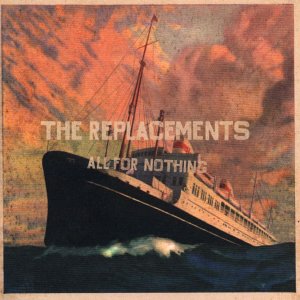
For years, rumors of a comprehensive set of outtakes from the Replacements’ time on the Twin/Tone label was said to be in the works, along with a rumor that such a thing couldn’t happen because Paul Westerberg stole the masters and dumped them all in one of Minnesota’s thousand lakes. Whatever the true story, fans got something of a gift with All For Nothing/Nothing For All, a double-CD set that offered four songs from each of the Sire albums on one disc, and 18 rare or unreleased tracks on the other. The cover art, seemingly depicting a sinking ship, was apt, along with the photos of the boys destroying one of their unfortunate rented vans throughout the booklet and images of beer mugs and urinals on the discs themselves.

The “hits” disc, a mix of rockers and sensitive ones, is fine, though everyone will have their own favorites that were left out. The second disc offers nuggets that would please even hardcore collectors. Some had already been B-sides, and others have since been appended to reissues of the albums themselves, but the selection and chronological sequencing make for a decent album’s worth of tunes. Highlights include: an earlier version of “Can’t Hardly Wait”; the brief but blatant “Beer For Breakfast”; vocal and writing debuts from Chris Mars (“All He Wants To Do Is Fish”) and Tommy Stinson (“Satellite”); “Date To Church” with Tom Waits; a sleazy take on “Cruella De Ville” from a Disney compilation; “Like A Rolling Pin”, a hoarse parody of a certain Bob Dylan song supposedly committed to posterity in the presence of the man himself; and their definitive crash through The Only Ones’ “Another Girl, Another Planet”. Stay tuned for the unlisted track at the end, a hilarious alternate version of “I Don’t Know”. (Also exciting for the mid-‘90s, these were enhanced CDs, with two music videos on each, accessible via the CD drive on computers. High tech!)

About a decade later, Rhino managed to grab the rights to the band’s Twin/Tone albums, and celebrated with a new compilation. Don't You Know Who I Think I Was? purported to offer “the best of the Replacements”, and the eight songs from the pre-Tim albums are excellent choices. (They even sound better.) All but six tracks from disc one of All For Nothing distill that period well, but the real cheese here are the two new recordings, the grand studio reunion of Paul, Tommy, and Chris (who didn’t play drums but sang, so they still count). Both “Message To The Boys” and “Pool & Dive” aren’t exactly lost classics, but drummer of choice Josh Freese, whom Paul had used on a solo album and Tommy knew from Guns N’ Roses, gets the wallop down to ensure the vibe is there.

The Replacements All For Nothing/Nothing For All (1997)—4
The Replacements Don't You Know Who I Think I Was?: The Best Of The Replacements (2006)—4

Tuesday, December 27, 2016

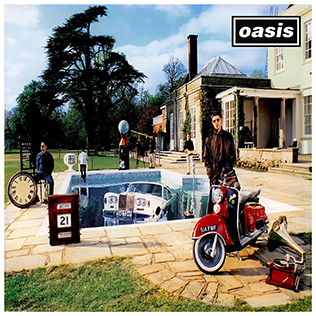
Oasis 3: Be Here Now

All of a sudden, and mostly because Blur hadn’t swatted them out of the way at home or in the US, Oasis was the biggest band in the world. Those accolades fueled the hubris necessitating the news flash that they weren’t the Beatles. Hell, they weren’t even the Jam, even after cozying up to and getting endorsements from the similarly coiffed mod icons, and ticking off the surviving Fabs in the process. They remained, however, five of the luckiest guys in the world led by the whims of a cokehead with a marginal talent for recycling old riffs and lyrics.

Whereas (What’s The Story) Morning Glory? was, and remains, a highly catchy collection of pop songs, the much-anticipated Be Here Now still tries patience. Most of the songs are over six minutes long, and thanks to the uniform mixing—all distorted guitars and crash cymbals with feedback hum, extended endings and too much tambourine—it takes more listens than most can stand before individual songs stand out under Liam Gallagher’s whine. Only their third album, and it’s already a sad game to discern which of their own songs they’d begun to rewrite.

Yet, it’s a long time to get to even that point. “D’You Know What I Mean?” has the attitude but none of the substance of the debut, and after seven minutes it finally gives way to “My Big Mouth”—an apt title for the Gallagher brothers, to be sure, and a lame rewrite of the previous album’s title track. Noel comes to the fore on “Magic Pie”, something of a timely recapture of the Revolver era and a good distillation of the better moments of the album, but again, who in the hell besides these guys in those days thought seven-minute tracks were a good idea, with or without crash cymbals and feedback? Even Noel yells “shut up!” right before one of the final extended free-form fades.

That’s three tracks, and the listener has already sacrificed 20 valuable minutes of existence. We’ve yet to hear anything as catchy—or, ironically, as anthemic, given the length—of anything from the first two albums. That almost comes with “Stand By Me”, a lazy title and a pale remake of “Live Forever” and “Married With Children” from the first album, but goes far too long to make its point. “I Hope, I Think, I Know” is welcome given its four-minute brevity, but it’s still buried beneath a barrage of sound, and the same approach sinks “The Girl In The Dirty Shirt”, which insists on ending with a pointless electric piano vamp.

These songs are all in the same tempo, with that damn tambourine driving it along, so by the time “Fade In-Out” kicks in, nobody cares, even after it finally changes chords. Here also is when they decide to placate those with short attention spans by tossing up “Don’t Go Away”, a mope worthy of anything else in the decade, and the album’s high point. Had the album started there, the title track would have been a welcome groove, but by now it’s just more indulgence, with a stupid slide whistle to boot. By the time we’re almost at the end of this very long album, we get the Beatlesque plea in “All Around The World”, complete with Liam’s unique pronunciation of “shine”. That goes on for nine minutes, and it would be a good place to end the album, but we still have to be told that “It’s Gettin’ Better (Man!!)”, over a groove that doesn’t sound any different from the previous hour. Just to make sure, they tack on another two minutes of “All Around The World” to let everyone know just how artistic they were.

Back then, when we really, really wanted to like this album, we said, “It will be interesting to see where these guys are in five years, assuming they’re still around.” And despite all its problems, we still want to like Be Here Now. But boy, did they fall off the tram. The band’s attempts to come off confident only end up wary, as if they knew everybody else had figured them out. Why else would they have a tambourine cover everything up for 71 minutes?

Two decades on people are still defending this album, and they shouldn’t. Naturally, it had to be reissued with bonus discs, which did at least unearth some decent (if still too long) Noel-sung B-sides in “The Fame”, “Flashbax”, and “Going Nowhere”. Acoustic takes of songs like “Stand By Me” show their obvious sources, inescapable appeal, Noel’s limited strumming ability, and the blend the brothers could create when they weren’t slapping each other around. We even get an acoustic busk of “Setting Sun”, the acid-house Chemical Brothers track that had Noel singing lead. But there’s also an entire disc of Noel’s one-man band demos of the songs that became the album, all of which portend the horror to come, and certainly the length. Had they been released back then, they might have aged better than the album itself.

Oasis Be Here Now (1997)—
2016 Deluxe Edition: same as 1997, plus 28 extra tracks

Tuesday, November 22, 2016

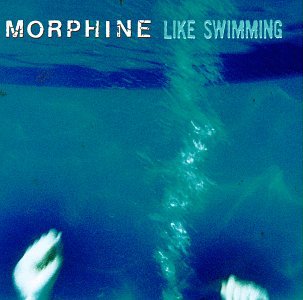
Morphine 4: Like Swimming

Morphine made a big-label jump in time for their next album, but there’s very little on Like Swimming that deviates from their norm. There is, however, variety from track to track, so the listener can’t get too comfortable.

A lovely snippet called “Lilah” opens the album, plowed aside by “Potion”. “I Know You (Pt. III)”, following on from the two on Good, is very much in their comfort zone. That could almost be said for “Early To Bed” and its noir sentiments, except for the keyboard blasts straight off a Prince album. “Wishing Well” is all slide bass and layered sax, and the title track has a nice touch in the way of a fingerpicked acoustic down in the mix. The fuzz comes out on “Murder For The Money”, switching between Velvet Underground grunge and Morphine groove, and from here the music really begins to seesaw.

The most eerily poignant track is “French Fries W/Pepper”, a clever autobiography that predicts where he’ll be in a few years’ time (hopefully drinking red wine and eating the delicacy in the title). “Empty Box” is a mystery involving the mail, but not in a Velvet Underground way. The backing in “Eleven O’Clock” is crazily insistent, and still matching the barest of lyrics, then it’s back down to the usual mood for “Hanging On A Curtain”, with the barest Mellotron cello. With its electronic backing, “Swing It Low” sounds like nothing else on the album; as it turns out, it was taken from a Sandman solo project.

Like Swimming may have been set up to rake in that Spielberg-backed money, but there’s no real standout along the lines of the last two albums. That said, sometimes there’s no shame in preaching to the converted.

Morphine Like Swimming (1997)—3

Friday, October 7, 2016

Pat DiNizio: Songs And Sounds

Given the declining excitement about anything new from the Smithereens, Pat DiNizio made a surprising detour into solo territory. Its faux-jazz packaging, complete with pretentious liner notes, didn’t help any, but those who looked closer could see that Songs And Sounds was recorded with the bass player from the Stranglers, a drummer who’d worked with Jeff Beck and Lou Reed, and a horn player for extra color.

The opening “Where Am I Going?” comes from an old Bernard Herrmann movie score, and its lugubrious sound would confound listeners into thinking he’d turned into Mark Eitzel from American Music Club. But it’s a false alarm, as the next track, and most everything that follows, could easily be a Smithereens track. It’s all there: melody, chord changes, toe-tapping beats. Perhaps some different faces in the studio were just the shot in the arm he needed.

The lyrics are still what we’d expect from the sad sack of Scotch Plains, given the lovelorn content of “No Love Lost” and “A World Apart”. “124 MPH” has a boomy demo quality for a difference, while “Today It’s You” is almost nasty. Contemporary reviews compared his delivery to the mature Elvis Costello, and similarities can be heard on that track and even the lullaby for “Liza” (though she’d probably sleep better if he strummed the acoustic a little more quietly).

Most of Songs And Sounds is slower than punk speed, which isn’t that big a deal, except that it makes the closing cover of “I’d Rather Have The Blues” more of a downer, the studio-verité excerpt hidden at the end notwithstanding. Naturally, the album made no impact on the charts, but it’s still worth discovering.

Pat DiNizio Songs And Sounds (1997)—3

Friday, June 17, 2016

World Party 4: Egyptology

One of the bigger movie soundtracks of 1994 was the one for Reality Bites, which mostly put Lisa Loeb on the map. But tucked away in the first half was a new song by World Party. Casual listeners might have overlooked it, because “When You Come Back To Me” is very much a sonic homage to David Bowie’s “Young Americans”. (A piano-driven cover of “All The Young Dudes” was on the Clueless soundtrack the following year.)

Karl Wallinger hadn’t overtly aped Bowie before, or at least not to this level, and the song was not included on the next World Party album. Still mostly a one-man-band affair, Egyptology was put together over a four-year period, during which Wallinger’s mother died and he was dropped from his label. The label that did pick him up was folded into another shortly after the album’s release, so it never really got a chance to succeed on its own.

The usual sounds are here: Jagger-style vocals, Dylanesque rhymes, Beatlesque arrangements, a little funk. A live drummer is used on most of the album, which is a big help; the ones he plays himself have improved, as have the machines used to make the rest. More than anything, however, the songs are strong, and not merely experiments in genre.

Normally, “It Is Time” would be another argument for the prosecution that a list is not a song, but it’s just so catchy. “Beautiful Dream” balances two hooks very well, and while “Call Me Up” sounds like it was mostly written while the tape rolled, the detour about “those bits in the middle” is very clever. “Vanity Fair” seems to evoke mid-‘60s chamber pop in a cautionary tale about who knows what, but the big production is pulled out for “She’s The One”. It may or may not have been intended for the movie that ended up with a Tom Petty soundtrack, but it sure comes off like a big anthem. Amazingly, Robbie Williams made it into a hit a few years later, which is likely how Andy Williams came to hear of it. A layered “Swingle Singers” vocal arrangement sets up “Curse Of The Mummy’s Tomb”, a torrent of angry rhymes over almost as angry soloing, and a requiem for the late Mrs. Wallinger. The anger gives over to sorrow in “Hercules”, faded up in progress, more soloing over major-sevenths and minor-sevenths on piano and string synth and appropriately sloppy drums.

The balance of the album doesn’t seem to be designed as deep, but still delivers. “Love Is Best” continues the melancholy mood, and “Rolling Off A Log” continues the faux-baroque stylings of “Vanity Fair” with a reprise of the earlier vocal interlude. “Strange Groove” was likely the title of the track before it got lyrics, and while slight, doesn’t get too dull. “The Whole Of The Night” takes an idea from the Bowie textbook, that of welcoming aliens to our planet, but we can’t place the musical influence. “Piece Of Mind” is another excuse for a jam, just as “This World” revives ‘80s synth horns and aspects of “Love Street” from Goodbye Jumbo, which is fine with us. The album has to end with “Always”, another groove but one that repeatedly insists “I gotta go”.

Egyptology is an hour well spent with solid, enjoyable tunes and a lot of hooks. Besides being one of Wallinger’s better albums, it was also one of the better albums in a year full of good ones. Grab it if you can find it.

World Party Egyptology (1997)—4

Tuesday, March 1, 2016

Van Morrison 31: The Healing Game

Nobody was expecting Van Morrison to take any big leaps outside his comfort zone, and people barely had time to learn to love one of his ‘90s albums until another one came out. The first few seconds of The Healing Game show promise; midtempo music in the easy jazz/new-age style he’d been treading in for years. His usual rotating set of supporting players help deliver more meditations on youth and God disguised as songs about ancient highways and golden autumn days.

“Rough God Goes Riding” is that first track, with good lyrics, backup singers that don’t overwhelm, and a well-constructed horn chart. But halfway through “Fire In The Belly” comes the sinker, in the form of Brian Kennedy, who either wasn’t allowed to read the lyrics before the take or figured to stick with his approach on echoing Van’s words a phrase behind. “This Weight” stays in the same smooth area, with that melodic hook in the chorus borrowed from “Here Comes The Knight”, “Inarticulate Speech Of The Heart No. 1” and “Stepping Out Queen”. While not at long as the first two songs, there really wasn’t any need to repeat the one chorus line a cappella anywhere that’s not in front of an audience. Speaking of one-track minds, “Waiting Game” is a better duet with Kennedy, but this time Katie Kissoon is tasked with repeating each line. There’s even a moment where he forgets to take the harmonica out of his mouth before singing. “Piper At The Gates Of Dawn” is the first real keeper, nicely colored by Paddy Moloney on pipes and flute (and for all you Floyd fans, it too takes inspiration from The Wind In The Willows).

It’s not until “Burning Ground” that the drummer’s allowed to use the whole kit again, but lest you think it’s another “Wavelength”, you’ve got to endure repetitive verses and a spoken section as baffling as it is convincing. It’s too bad, because the chorus, simple as it is, is catchy. “It Once Was My Life” has some of his old bark, but if you’ve ever heard the vocal arrangement on Iggy Pop’s “Success”, you’d rather take this off and put that on. It’s too bad, because this has potential, and with a tweaked arrangement (and fewer party noises) it could be one of his more memorable tunes. The same can be said for “Sometimes We Cry”, on par with his late-‘80s love songs, “If You Love Me”, which is awfully close to doo-wop, and the title track, which even incorporates “shoo-be-doo-wop” accents before a big, grand ending; all need to lose those backing vocals.

Van obviously put a lot of time into this album, and certainly the lyrics, and his voice is particularly engaged, so it can’t be completely written off. But while there may be people who adore The Healing Game, these ears can’t treat it as wallpaper, since too many moments refuse to be ignored.

Those adorers would be pleased about the eventual Deluxe Edition, which adds five B-sides to the main album, as well as a disc of “sessions and collaborations”—the former mostly absent of Brian Kennedy, and the latter with the likes of John Lee Hooker, Carl Perkins, and Lonnie Donegan, some of which had been out before. A third disc presents all it can fit of his 1997 appearance at the Montreux Jazz Festival, including Brian Kennedy.

Van Morrison The Healing Game (1997)—
2008 CD reissue: same as 1997, plus 1 extra track
2019 Deluxe Edition: same as 2008, plus 33 extra tracks

Friday, January 1, 2016

Jam 10: Box Sets

The rise of Britpop in the ‘90s got some people thinking about The Jam, at least in the UK, where Paul Weller was still somewhat popular. This was also an era when box sets abounded, and one arrived just in time for the band’s 20th anniversary.

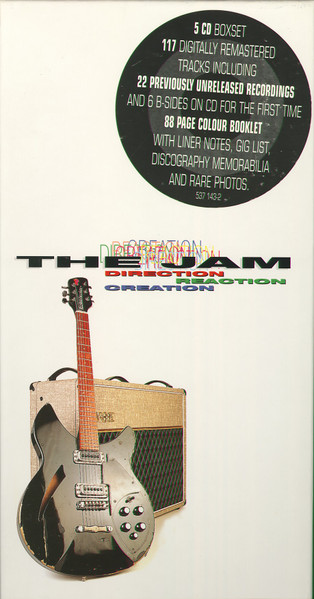
Direction Reaction Creation crams their entire studio output onto four discs, with a fifth CD full of unreleased material. The first four discs are sequenced in rough chronological order by release date, so any singles released ahead of time throws off the flow of some of the albums proper. Still, the set just has to begin with both sides of the “In The City” single, and you can’t complain when their first two albums fit onto the first disc, along with the rare “Carnaby Street” B-side.

Disc two presents the build-up and aftermath of All Mod Cons. We can hear the growing pains in the B-sides “Aunties And Uncles (Impulsive Youths)”, “Innocent Man” and “The Night”, before they hit their stride with a string of excellent singles. This disc ends with “The Eton Rifles” (and its B-side, “See-Saw”), which takes something away from disc three, devoted to the remainder of Setting Sons and Sound Affects—plus, hello hooray, “Liza Radley”. That’s three strong discs in a row, and since we’re one of those who didn’t love The Gift, disc four doesn’t get as much play, particularly with the 12-inch single version of “Precious” taking up six precious minutes, and the un-Jam-like covers issued as B-sides.

All of disc five is previously unreleased, so you still have to hold onto Extras. Most of this disc are studio demos of songs recorded better later, though a “So Sad About Us” that predated the first album is pretty tight. “Worlds Apart” and “Walking In Heaven’s Sunshine” are otherwise unheard tracks, “Rain” a carbon copy of the Beatles’ track, “Dead End Street” a piano rendition of the Kinks song, and another demo of “A Solid Bond In Your Heart” provides an up conclusion.

Being limited to studio material, Direction Reaction Creation does miss out on a few alternate single mixes, as well as a few of the live tracks issued as B-sides. Some of the off compilations included these, but it was 18 years before the other half of the picture was filled in. Fire And Skill presented six complete concert appearance, from each of the years from 1977 through 1982—four in London, one in Reading, and one all the way up in Newcastle.

Some of the tracks have already appeared on Dig The New Breed or Live Jam, but such canonical repetition can be forgiven. Three B-sides came from the 1977 show, so it’s good to have “Bricks And Mortar” (pronounced “moe-uh” each of the three times it appears in the set, one of which segues into “Batman Theme”) and their covers of “Back In My Arms Again” and “Sweet Soul Music” in context.

The first voice you hear is that of John Weller, Paul’s dear departed dad who roadied for the band and introduced every gig. Particularly through the first five shows, the band is tight, democratic and gracious. A horn section creeps in on the fifth, providing a transition to the keyboards and backup singers added for their final shows. The Wembley gig, one of several from the last days of the band, was recorded well, but the guitar and bass are off pitch with each other—one of the pitfalls of playing arenas instead of theaters or clubs.

Sure, some songs appear in multiple renditions (some as many as three and two in four), and the title had already been used in the ‘90s for a tribute album, but Fire And Skill is a worthy, and long overdue bookend to this terrific band’s career. In the absence of a reunion, it will stand. (Two years later, the 1977 box offered the first two albums plus “All Around The World” and “Carnaby Street” remastered on two short discs, 25 minutes of demos—six of eleven unreleased, the other five also on the first box—on another, previously released John Peel sessions plus an unreleased concert on another, and a DVD of promo clips and TV appearances. And a bunch of prints, possibly to justify two discs of music spread across four.)

The Jam Direction Reaction Creation (1997)—4
The Jam
Fire And Skill (2015)—4
The Jam
1977 (2017)—

Tuesday, September 2, 2014

Billy Joel 17: Greatest Hits Vol. III

Seemingly retired from the pop scene, the final Billy Joel release of the ‘90s was a compilation. Being a single-disc sequel to the double set from 1985, it got the imaginative title of Greatest Hits Vol. III, cleverly allowing Sony to repackage both together in a box with a fourth “music and conversation” disc. But anyway.

Two of the songs (“Keeping The Faith” and “An Innocent Man”) predate the previous hits collection, but as they were actual hits, we’ll allow it. But the rest of the program isn’t as obvious. We move chronologically through the three studio albums yet to be anthologized, with eyebrow raisers like “Baby Grand” and “Leningrad” among the more expected radio fodder. “Shameless” is included, most likely as a nod to the Garth Brooks version. Similarly, we suspect “The Downeaster ‘Alexa’”, “And So It Goes”, and “Lullabye (Goodnight, My Angel)” made the cut for more personal or sentimental reasons than commercial ones. (Really, would you call any song that missed the top 40 a “hit”?)

The album did offer something new to fans who already had the albums: three new songs, all covers, all on the slow side. “To Make You Feel My Love” was the debut of a new Dylan song, a whole month ahead of Bob’s own version, complete with harmonica solo. (And of course, Garth Brooks had to go ahead and record his own version the following year.) “Hey Girl” is a Goffin/King tune, given a lush blue-eyed soul arrangement. Finally, “Light As The Breeze” recasts a Leonard Cohen song as an R&B showstopper, investing it with way more melody than Leonard could’ve.

If anything, Greatest Hits Vol. III proves that even if Billy Joel didn’t write any more songs himself, he could easily build a cash cow out of covers. (Hey, it worked for Rod Stewart and Barry Manilow, to name two.) That he hasn’t done so is a big point in the integrity column. We know now that those last three albums basically happened because he was caught up in the industry machine, which took him away from his family. He didn’t have the same fire to succeed, since he already had, but personal struggles combined with comparable financial ruin kept him on the road much longer than he would have liked. So we can cut the guy some slack.

Billy Joel Greatest Hits Vol. III (1997)—3

Friday, October 25, 2013

Jimi Hendrix 20: South Saturn Delta

While First Rays Of The New Rising Sun attempted to present the final word on Jimi’s last work, that wasn’t to say the family was finished with theirs. As had happened in the previous decades, a handful of albums presented rare or unreleased material, culled from a multitude of sessions with all of his bands, in order to portray him as a well-rounded musician.

The first of these was South Saturn Delta, taking its name from a jazzy instrumental, complete with horn section. It’s a bold choice to make it a centerpiece, but apt when taken alongside the odd selection of alternates and outtakes. “Angel” appears twice, once in a studio jam with Mitch Mitchell labeled “Little Wing”, and then again in a more precise home demo. An alternate mix of “All Along The Watchtower” supposedly features Brian Jones more prominently, but nothing stands out as being revelatory. (His appreciation for John Wesley Harding is demonstrated further on a funky trial of “Drifter’s Escape”.) In the plus column, “Here He Comes (Lover Man)” is an expansion of his amped-up arrangement of “Rock Me Baby” as heard at Monterey, and while it’s apparently a composite of four takes, it’s still six minutes of fun. “Power Of Soul” and “Message To The Universe” present studio versions of Band Of Gypsys tunes, the former rescued from its Crash Landing alteration. Even more surprising is “Midnight Lightning”, a completely solo take.

At its best, South Saturn Delta helps to mop up some of the stray tracks from Rainbow Bridge and War Heroes, providing a new home for such nuggets as “Look Over Yonder”, “Pali Gap”, “Tax Free”, and “Midnight”, plus the nutty B-side “The Stars That Play With Laughing Sam’s Dice”. So it’s a decent companion to First Rays, which had only come out six months before. And half of the album is basically the original Experience, adding to the diversity. While schizophrenic, it’s nice to have, and stayed in print when the distribution rights changed yet again.

Jimi Hendrix South Saturn Delta (1997)—4