Showing posts with label ringo starr. Show all posts

Tuesday, August 4, 2026

Ringo Starr 13: Vertical Man

Just like Paul McCartney, Ringo Starr had more time on his hands in the wake of the Beatles Anthology promotion wave, so why not do any album? While Vertical Man was still something of an all-star project, he took a more active role in the songwriting, co-writing all but two tracks, playing drums throughout and even some other instruments. His right-hand for the proceedings was Mark Hudson, who’d graduated from a Beatlemaniac in a band with his brothers on Saturday morning TV to become something of a hit songwriter and producer. Besides playing and writing for the album, he added lots of backing vocals and harmonies that had listeners checking the credits to see who was singing. The results were probably his most consistent album in, well, decades.

“One” is power pop filtered through country, thanks to Jeff “Skunk” Baxter on pedal steel, which sounds enough like George Harrison among the 12-strings. Paul provides harmonies as well as bass on the enjoyable “What In The… World”, returning the favor from Ringo’s help with Flaming Pie. But then “Mindfield” puts Ringo’s voice through a speaker for a wacky effect and comes this close to being rap. Joe Walsh’s solo is suitably loud, and the explosion at the end is stupid. The wistful “King Of Broken Hearts” also resembles George Harrison to warrant lovely guitar parts weaved through, with subtle strings and even Mellotron to help it along. Two tracks later, the title track has a “When We Was Fab” vibe and Hudson quirks to be yet another Beatlesque knockoff that’s starting to push its luck. (Ozzy Osbourne sings on this one.) But in between there’s “Love Me Do”. While his reasons for remaking it are understandable—he was relegated to tambourine for the Beatles’ original single—it’s extraneous, notable only for Steven Tyler on harmonica, who likely found his way there via Hudson. Nobody needed another version of Dobie Gray’s “Drift Away” either, and Steven Tyler’s vocal was nixed by his label, so his part was replaced by Tom Petty. Alanis Morissette’s contribution stood, and if you listen close you can hear Rose of the Family Stone in there somewhere.

Alanis and Paul sing along with “I Was Walkin’”, and Steve Cropper adds a guitar solo, so the mid-‘70s vibe is mostly charming until the unnecessary “sleep” sequence. and “La De Da” is also mostly harmless, even after five minutes, with roughly three dozen friends singing along the chorus, and they wisely kept Paul up in the mix. “Without Understanding” is one of his more convincing rock songs, though the operatic opening is odd, and we suppose the reference to “good vibrations” was reason enough to get Brian Wilson to add a bunch of layered vocals. The modern rockabilly of “I’ll Be Fine Anywhere” gets a boost from another Harrison solo, and it’s a good lead-in to the slap-back percussion of “Puppet”. To keep it in the family, George Martin provided the string arrangement for “I Am Yours”, a very sweet tribute to Mrs. Starkey.

Those who bought the album at Best Buy got a bonus disc with three extra songs, all somewhat country. For some reason “Mr. Doubleitup” ends with a lounge instrumental of “With A Little Help From My Friends”), while “Sometimes” and “Good News” were a little more straightforward, with an accent on humor. At a time when Garth Brooks, Shania Twain, and their ilk were selling millions, it’s anyone’s guess whether these should have gotten wider distribution.

Ringo went into overdrive promoting the album, with the biggest appearance arguably on VH1 Storytellers, that channel’s variation on the “unplugged” special. Along with the ubiquitous Hudson, the band included Joe Walsh, Simon Kirke, Jack Blades of Night Ranger. He actually had a hand in writing most of the songs in the set, so his anecdotes about them are pertinent as well as enjoyable—even the ones you’ve heard before. He even played piano to start “Don’t Pass Me By”. A CD of the performance was released four months after Vertical Man, and did worse on the charts.

Ringo Starr Vertical Man (1998)—3
Ringo Starr
VH1 Storytellers (1998)—3

Monday, June 28, 2010

George Harrison 15: Concert For George

A year to the day after George died, his “guitarist-in-law” Eric Clapton collaborated with Olivia and Dhani Harrison to put together a star-studded tribute concert. The obvious parallel would be made to the Concert For Bangla Desh, as many of the friends who’d helped out with that project were on hand to do it again here.

The first half hour—taking up all of disc one—is devoted to Indian music, mostly composed by Ravi Shankar, performed by an orchestra and choir led by Ravi’s daughter Anoushka. An interlude of “The Inner Light” sung by Jeff Lynne fits very well, while the final section includes acoustic extrapolations by Eric. It’s mesmerizing. (Not included on the CD, but presented in full on the DVD, was the intermission, featuring “Sit On My Face” and “The Lumberjack Song” performed by most of Monty Python in full singing-waiter and Mountie costumes. Without question, George would have loved it.)

The rock portion of the show provides heartfelt renditions of several George songs, mostly performed faithfully to the original recordings. Jeff, Eric, Gary Brooker and the little-known-to-Americans Joe Brown trade off on vocals before the big stars come in. Tom Petty and the Heartbreakers do “Taxman” and “I Need You”, and bring Dhani and Jeff up for “Handle With Care”. Billy Preston does “Isn’t It A Pity”, then Ringo comes out to sing “Honey Don’t” and “Photograph” before introducing Paul McCartney.

Paul’s choices are intriguing, as they mostly come from the Get Back period. His ukulele arrangement of “Something” dovetails not seamlessly into the standard version, led by a Clapton solo. And his heartfelt rendition of “All Things Must Pass” is a stunner, considering how many times George tried to get the Beatles to learn it, only to be met with indifference. He sits at the piano to back up Eric on “While My Guitar Gently Weeps”, before letting Billy take over with “My Sweet Lord”. Everyone crowds onstage for “Wah-Wah” (with Klaus Voormann on bass!) and then Joe Brown brings his ukulele out one last time.

While a straight tribute album, George’s voice comes through every moment of this concert. The choice of songs also shows how much his lesser-known tracks meant to his friends. To get the full experience, watch the DVD—the love all these people had for the guy permeates every shot. There are several angles taken of drummers Jim Keltner, Henry Spinetti and Ringo working as one. And with handsome Dhani strumming away on an acoustic throughout, it’s not easy to be unmoved.

Concert For George (2003)—4

Saturday, October 24, 2009

Ringo Starr 12: Time Takes Time

Not that anybody noticed, but Ringo Starr hadn’t put out a new album in over decade, give or take. But in the ‘90s he was freshly sober, playing sessions here and there, and had just come off a very successful tour with his All-Starr Band. (The final nights of the tour were even compiled onto a live album released by Rykodisc.) So when Private Music—yet another label that didn’t hold onto him, or last without him—signed him to do an album, he asked a few famous friends, including current hot producers Jeff Lynne and Don Was, to helm some sessions. The resultant Time Takes Time managed to sound cohesive, given the disparate players and songs contributed. What helped is that he wrote a few of them himself, and even played drums again.

With its chiming 12-string guitars, “Weight Of The World” is a comfortable opener and single, though Andy Sturmer and Roger Manning of Jellyfish are mixed a little too high in the backing vocals. (They also appeared prominently in the song’s video, which also featured Ringo’s trademark dance moves.) Along with two guys from the Knack, they also dominate “Don’t Know A Thing About Love”, co-written by Stan Lynch of the Heartbreakers, which has a very Harrisonian slide guitar part. “Don’t Go Where The Road Don’t Go” is one of the ones Ringo helped write, with a nice callback to “It Don’t Come Easy” and a pretty rockin’ cello throughout, but Jeff Lynne has once again turned one of the greatest drummers into a snare-heavy click track. Despite the Beatlesque title, “Golden Blunders” was borrowed from the first Posies album, and he does a nice job with it, but “All In The Name Of Love” is generic pop, mostly notable for the vocal arrangements by Mark Hudson, from whom we’ll hear a lot more soon.

“After All These Years” has some rockabilly touches as befits a sentimental look back, but it’s a one-man Jeff Lynne production but for Ringo. The Jellyfish boys contributed the Rubber Soul pastiche “I Don’t Believe You”, though it ends up sounding like the Rutles. Ringo’s not usually known for social commentary, but somehow he felt compelled to write about “Runaways”; unfortunately his delivery doesn’t have enough gravitas, and the audio-verité effects don’t help the cause any, making it seem like the theme song to a hit TV show popular with teens. It wouldn’t be the ‘90s unless Diane Warren contributed a song, and “In A Heartbeat” notable for Brian Wilson going “dit-dit-dit” among the Knack and Jellyfish singers. “What Goes Around” combines the best elements of all that’s gone before, and is somehow stretched to almost six minutes.

One really wants to like Time Takes Time, if only because Paul and George were having hits around the same time. But while it’s a competent album for the era, Ringo’s personality can’t quite carry the material. So he concentrated on further tours with incarnations of his All-Starr Band. (These would spawn even more live albums, which we will not be covering in this forum.)

Ringo Starr Time Takes Time (1992)—2½

Tuesday, September 29, 2009

Ringo Starr 11: Starr Struck

In 1989 Ringo Starr emerged clean and sober, and ready to launch his first of countless All-Starr Band tours. This was a complete nostalgia trip, as there was no new album to promote. However, the Rhino label was still honing their licensing skills, and managed to cobble a compilation from his post-Apple work. Not only had this stuff been out of print for a while, but it included tracks from Old Wave, making their first appearance in the U.S. They even used the original cover design for Can’t Fight Lightning. Although Starr Struck (clever title, that) didn’t have many hit singles to collect, the compilers wisely made sure to include songs that had input from the other Beatles. (The CD version added four more tracks throughout the program, including a fourth selection from Old Wave.)

“Wrack My Brain” is an excellent way to start, and “In My Car” didn’t sound that dated yet, but “Cookin’ (In The Kitchen Of Love)” still might be the dumbest song John Lennon ever gave anyone. That where the album starts to sag quality-wise, though they do try to keep things upbeat through “I Keep Forgettin’” (which should have been at least a minute shorter), “Hard Times”, and “Hey Baby”. While here it comes before “A Dose Of Rock ‘N Roll”, which has it as a tag, and starts side two, it’s still an odd sequence. (The CD at least had McCartney’s “Attention” in between them.) “Private Property” completes the Fab trifecta, and “Can She Do It Like She Dances” is even more obnoxious here. “Heart On My Sleeve”, “Sure To Fall”, and “She’s About A Mover” are fine, but don’t establish Ringo as a master interpreter.

There weren’t any hype-heavy liner notes, except for the detailed recording information for each track that we expect from Rhino. Since some of the participants were also on tour with Ringo that summer, Starr Struck was a nice tie-in. But it didn’t make the music any better. Once his albums started appearing on CD and he (presumably) retained the rights, Starr Struck went out of print, and eventually the three arguably best songs—“Wrack My Brain”, “A Dose Of Rock ‘N Roll”, and “Hey Baby”—were deservedly included on 2007’s more encompassing Photograph compilation.

Ringo Starr Starr Struck: Best Of Ringo Starr, Vol. 2 (1989)—2½
Current CD availability: none

Thursday, April 9, 2009

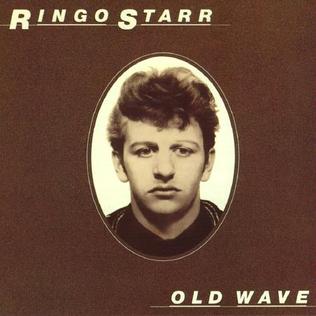
Ringo Starr 10: Old Wave

Movie roles may not have been coming his way, but Ringo Starr knew he could still make music, so he did. Rather than do the grab-bag all-star route that didn’t help Stop And Smell The Roses, he decided to keep it simple and let Joe Walsh, doing fine without the Eagles, handle the production. They even wrote most of the songs together, and Ringo played most of the drums. But such was his diminished importance to the music world that Old Wave was released in no markets larger than Canada and Germany. It’s too bad, because the album was well-made (in the house he bought from John Lennon with the studio built to record Imagine) and didn’t try to sound contemporary, but just rock like we knew he could. Yet the quest to maintain an album’s worth of tunes remained an uphill one.

“In My Car” is charming despite itself, and “Hopeless” has some appreciated aw-shucks humor, driven by Gary Brooker’s piano; Chris Stainton is also in residence. His personality continues on “Alibi”, featuring Mo Foster’s fretless bass, though “Be My Baby” has a little too much of Joe’s trademark talkbox all over it, and goes a little long. Of course it wouldn’t be a Ringo album without an oldie or two, and the first one is the Sir Douglas Quintet’s “She’s About A Mover”, wherein he’s backed by the 11-piece Hollywood Rock and Roll Revue, featuring Freebo on tuba.

The Lieber-Stoller rarity “I Keep Forgettin’” starts the next side; Ringo hams it up and adds unique percussion alongside Ray Cooper. We do wonder if this version inspired David Bowie to do his own version a year later. “Picture Show Life” is a curious one, contributed by Elton John’s and Queen’s manager, but the “Hollywood is tough” lyrics suits Ringo’s solo brand. Even though it’s slathered with synthesizers simulating an orchestra, “As Far As We Can Go” is a lovely piano ballad left over from an earlier recording project. The obligatory jam session is “Everybody’s In A Hurry But Me”, an instrumental featuring Eric Clapton and John Entwistle (not long after Joe Walsh had produced his own album). “Going Down” is more musically interesting, but just as sparing on the lyrics.

Save for imports and bootlegs, Old Wave wouldn’t get anything close to worldwide attention for another ten years, when it got a reissue, complete with detailed liner notes and a bonus track in the original recording of “As Far As We Can Go”. But that didn’t help at all back in 1983. Fortunately for Ringo, he was spending a lot of time with Paul McCartney on his projects in the meantime; unfortunately, those projects were Pipes Of Peace and Give My Regards To Broad Street. His own stock wouldn’t rise again for a few years yet either.

Ringo Starr Old Wave (1983)—2½
1994 Right Stuff reissue: same as 1983, plus 1 extra track

Thursday, February 19, 2009

Ringo Starr 9: Stop And Smell The Roses

After limping through the end of one decade, Ringo was determined to start the ‘80s on a high. First, he took a starring role in the unfortunate prehistoric comedy Caveman, which did have the indisputable bonus of introducing him to actress Barbara Bach, to whom he is still married to this day. Then he set to reviving his recording career just like he did in 1973: by asking his former bandmates and a few other famous friends for help. (John’s murder meant only two other ex-Beatles would be involved in the finished product.) He even played the drums on every track.

By the time the album was ready, the label that put out Ringo’s last album lost interest, so he ended up on another new imprint that happened to be founded by the guy behind Casablanca Records. Even they forced him to change a few songs (just as what had happened to George) as well as the original title of Can’t Fight Lightning before Stop And Smell The Roses finally appeared to much fanfare.

Paul’s first contribution, the inoffensive if tossed-off “Private Property”, opens the album, with lots of sax from Howie Casey and Linda on harmonies. (Of course, by the time the album came out Wings had been disbanded. Adding insult to injury, Laurence Juber’s name was misspelled three times.) It’s immediately bettered by George’s “Wrack My Brain”, goofy enough for Ringo but grumpy enough for its auteur; it was also the first single, promoted by a video that continued his fascination with monster movies. Harry Nilsson could have used a boost himself at this time, but “Drumming Is My Madness” doesn’t do either of them any favors, and why is there a flute solo? “Attention” is another piano-based Paul knock-off that’s good enough for Ringo, but Nilsson’s “Stop And Take The Time To Smell The Roses” somehow manages to succeed, even as a co-write. (This too got a goofy video to match the nutty sound effects on the track itself.)

“Dead Giveaway” is a collaboration with Ron Wood that could use more balls, even with the presence of two of the Crusaders; still, this is one occasion where Ringo sings better than his co-writer. But who knew Woody could play sax? It wouldn’t be a Ringo album without at least one oldie, and “You Belong To Me” (aka “see the pyramids across [sic] the Nile”) is George’s other production here, taken at a “You’re Sixteen” pace. Carl Perkins’ “Sure To Fall (In Love With You)” was a favorite of Paul’s, who produced this pure country version with copious harmonies and prominent pedal steel. Stephen Stills showed up to contribute “You’ve Got A Nice Way”, which might have made helped improve one of his own albums, but it doesn’t work for this singer. And not only was there no need to remake “Back Off Boogaloo” disco-style, but Nilsson felt compelled to overdub a bunch of lines from other songs a la his version of “You Can’t Do That”. Even more confusing is that it begins with the riff from “It Don’t Come Easy”.

In addition to the promo clips, which got the occasional airing on the new MTV cable channel, Ringo got Paul to collaborate with him on a baffling short film called The Cooler, which not very many people saw or understood, even though it utilized Paul’s productions from the album. Despite all the push and Beatle involvement, the public at large did not take the time to Stop And Smell The Roses. While it was definitely an improvement over the last few, only diehard fans were sticking around, even for the half-hour it took to hear it.

But by the end of the decade, bootlegs had started appearing with outtakes from the sessions, somewhat stoking the legend of a lost Ringo album. The compilers of its first official CD release were kind enough to include detailed liner notes about the creation of the album, as well as the rejected songs among the bonus tracks. Honestly, they’re not that bad; “Wake Up” and the admittedly plodding “You Can’t Fight Lightning” are Ringo originals produced by Stills and McCartney respectively, while “Brandy” is a nice version of the O’Jays song produced with Ron Wood. Stills brought “Red And Black Blues” to the sessions, but it was never considered for any version of the album. A rough mix of “Stop And Take The Time To Smell The Roses” and two minutes of Ringo reading gun control PSAs don’t add much. But at least they spelled Laurence Juber’s name right.

Ringo Starr Stop And Smell The Roses (1981)—2½
1994 Right Stuff reissue: same as 1981, plus 6 extra tracks

Tuesday, December 23, 2008

Ringo Starr 8: Bad Boy

In America, Ringo Starr was on a new record label, but they offered him a tie-in TV special, so maybe that was why barely seven months had passed before another album followed. Vini Poncia was in charge, and each band member was credited under pseudonyms, despite including Dr. John, Jimmy Webb, and Dee Murray from Elton John’s band. Beyond that, Bad Boy did not sport superstar input, nor did it sell. Nor was it very good.

Most of the album was recycled songs other people had already recorded, though “Who Needs A Heart” was one of two tunes written by Ringo and Vini. It’s fairly generic, but if Ringo had an established sound, this is it. The title track is not a cover of the Beatles cover, but another sad-sack lament of even earlier vintage, sunk further by Ringo’s insistence on singing “boy-yoy-yoy-yoy-yoy-yoy” every time. “Lipstick Traces (On A Cigarette)” is best known for being the A-side of “Fortune Teller”, both written by Allen Toussaint for Benny Spellman. “Heart On My Sleeve” had already been covered by Bryan Ferry, but it doesn’t exactly stand out. And while the contemporary remake of “Where Did Our Love Go” isn’t exactly disco, it’s still awful.

“Hard Times” continues the Ringo-by-numbers template, while “Tonight” came from a recent Small Faces reunion album (which also did not sell) and beats the tagline into the ground. “Monkey See—Monkey Do” was courtesy of schlock jazz man Michael Franks, but we should be relieved Ringo didn’t try tackle “Popsicle Toes”. “Old Time Relovin’” was the other Starkey-Poncia opus, and it has some pleasant changes and touches throughout, but it there’s a clever turn of phrase in the title, we can’t figure it out. Finally, “A Man Like Me” was a mild rewrite of a song from a children’s album written by Donald Pleasance, of all people, wherein Ringo had voiced and sung the main character of Scouse The Mouse. It’s actually kinda sweet, if syrupy.

It could be assumed that the glass of brandy on the cover tells us all we need to know. Bad Boy was about as exciting as its predecessor, and equally ignored. The TV special didn’t help a whit, being a mildly star-studded retelling of The Prince And The Pauper, mostly notable for a cameo by George Harrison. His new perm was about as ill-advised as what he was tasked with narrating.

Ringo Starr Bad Boy (1978)—2

Sunday, December 21, 2008

Ringo Starr 7: Ringo The 4th

The regal title was supposed to be punny—this was Ringo’s fourth album of modern material, suggesting that Sentimental Journey and Beaucoups Of Blues (and of course, Blast From Your Past) didn’t count. But Ringo The 4th was actually a departure, as he eschewed the all-star (read: ex-Beatle or related) help and let producer Arif Mardin run the proceedings. There are still tons of top-line session players, though he did play the drums, augmented by Steve Gadd. He even co-wrote six of the songs with buddy Vini Poncia. But it was 1977, and that’s how we got a disco album.

“Drowning In The Sea Of Love”, a six-year-old hit for Joe Simon, gets the Philly soul approach, with the backing vocalists mixed as high as Ringo. They also dominate “Tango All Night”, which was actually released as a single in Argentina; when he intones “I-yi-yi,” you’ll be inclined to agree with the sentiment. “Wings” is one of the originals, and while it kinda rocks, we wonder whether Paul McCartney’s band had any influence on the title. His mopey delivery is just too much for “Gave It All Up”, a litany of life’s disappointments that somehow still has a happy ending. The line about sitting “with a couple of beers” is unfortunately believable, and the coda sports a motif stolen from a Bee Gees song from the year before. “Out On The Streets” manages to pick up the pace, but it’s still faceless, up until the very odd closing rap.

He gives his all for “Can She Do It Like She Dances”, but it’s still embarrassing to endure. While “Sneaking Sally Through The Alley” has nothing on Robert Palmer’s version, it actually fits Ringo okay, again, until he starts extemporizing over the fade. “It’s No Secret” is an inoffensive slice of yacht rock, and “Gypsies In Flight” is an even slower variation on the same melody. Finally, “Simple Love Song” wouldn’t be so bad if it didn’t sound so much like “Philadelphia Freedom”.

Truly, if Ringo was his best album, Ringo The 4th is barely 25% as good, or as successful. It’s a faceless album, with none of his personality, and that used to go a long way. His cachet was sinking fast, and the label didn’t pick up his option. And to think only three years before he was the hottest ex-Beatle on the charts.

Ringo Starr Ringo The 4th (1977)—2

Sunday, December 14, 2008

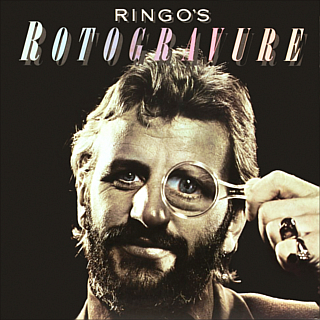
Ringo Starr 6: Ringo’s Rotogravure

The end of the Apple label didn’t keep Ringo out of the studio for long. Taking a hint from George, he launched the Ring O’ Records imprint, which even featured a clever logo, to wean and promote new talent. But he himself preferred to sign new deals with majors instead—Atlantic in America and Polydor everywhere else—and recorded Ringo’s Rotogravure with his all-star buddies in a matter of weeks.

After a promisingly raucous blast of energy, “A Dose Of Rock ‘N Roll” limps into place with a lot of Peter Frampton wah-wah. There’s a clever quote of Bruce Channel’s “Hey Baby” at the end, but then the next track is a full-fledged cover of the tune. By now Paul McCartney was a hot ticket again, yet “Pure Gold” is hardly one of his hidden treasures. He and Linda add superfluous backing vocals, but the highlight of the track is Klaus Voormann’s bass playing. A song that does work is Ringo’s own “Cryin’”, written naturally with Vini Poncia, and sounding like an excellent distillation of Beaucoups Of Blues. (Sneaky Pete Kleinow also makes his second appearance on a solo Beatle album.) Producer Arif Mardin’s touch is most obvious on the slightly disco-fied “You Don’t Know Me At All”.

“Cookin’ (In The Kitchen Of Love)” is notable for being the only new Lennon composition (and performance) released in the second half of the ‘70s, and it’s positively flimsy. Still, we like hearing his “two thee fo” before the coda. George was represented by “I’ll Still Love You”, a slightly syrupy but still pretty ballad that dated from 1970. (He was apparently not happy with either the mix or Lon Von Eaton’s guitar solos, and added another lawsuit to the intra-Beatle pile.) Meanwhile, Eric Clapton donated the leftover “This Be Called A Song” as well as his noodling throughout, fighting for space in the mix with steel drums. As if that exotic sound wasn’t enough, a mariachi band features on “Las Brisas”, which Ringo wrote with then-paramour Nancy Andrews. “Lady Gaye” is curious, being co-written with one Clifford T. Ward, who’d had a mild hit somewhere with an unrelated song called “Gaye” and had another song called “Birmingham”, which was the musical inspiration for this. All in all, a lot of work for a piece of fluff. For no apparent reason other than to stretch the album further past a half-hour, a closing 90-second ramble called “Spooky Weirdness” isn’t exactly false advertising, but it’s also unnecessary.

Just as Goodnight Vienna wasn’t as good as Ringo, so does Ringo’s Rotogravure suffer from the Xeroxing. It wasn’t enough for Ringo to get by on his personality, and without decent songs he was lost, no matter how many of his famous friends contributed their talents.

Ringo Starr Ringo’s Rotogravure (1976)—2½

Tuesday, December 9, 2008

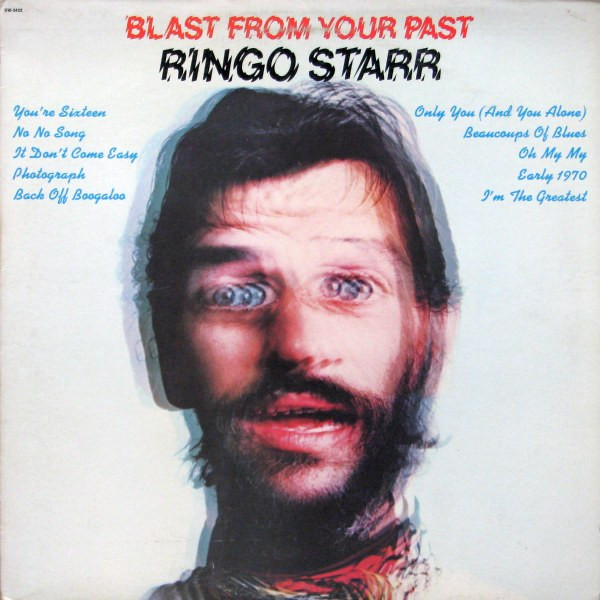
Ringo Starr 5: Blast From Your Past

Just as John saw out his Apple contract with a hits collection, so did Ringo. After all, he had a lot of hits, and some hadn’t even been on albums—yet.

Blast From Your Past is pretty solid, starting with “You’re Sixteen” and “No No Song”. “It Don’t Come Easy” sports a terrific George Harrison production, and if you listen closely you can hear the backup singers chant “Hare Krishna” under the guitar solo. “Photograph” is the perfect follow-up, right before the noisy, goofy, and still impenetrable “Back Off Boogaloo”, which may or may not be about Paul.

Side two starts oddly, with “Only You”, a song we never remember hearing on the radio ever despite it hitting #6 on the charts. “Beaucoups Of Blues” was an American single as well, and the best song from that album. “Oh My My” was indeed all over the radio in those days, and somebody did the right thing by including “Early 1970”, the B-side to “It Don’t Comes Easy” which presents a fairly accurate State of the Beatles address that year. Finally, “I’m The Greatest” should have been a hit, or at least a single, and works just as well as a closer as it did an opener on Ringo.

If you really couldn’t live without any Ringo albums in your collection, Blast From Your Past would do just fine, though it was just over half an hour long to begin with. Even the packaging stood out, with a bright red apple on both labels and full lyrics on the inner sleeve. However, the originally standalone singles have since been added as bonus tracks to two of the albums when they were released on CD, making this less worth the dough or effort. But everything on this album was eventually included in 2007’s more expansive Photograph, which purported to be “The Very Best Of Ringo Starr”, bolstered by “Snookeroo” and “Goodnight Vienna” from that album and a further handful of tracks from three decades’ worth of his post-Apple albums. Liner notes attempted to provide info about who played what, along with Ringo’s commentary on each track, whether he remembered anything about them or not. (It was also released in a set with a DVD containing promo videos of six songs, and one rare commercial.) Only collectors need grab 2014’s Icon collection, part of Universal Music’s ongoing series of generally unnecessary compilations.

Ringo Starr Blast From Your Past (1975)—3½
Ringo Starr
Photograph: The Very Best Of Ringo Starr (2007)—3

Thursday, November 6, 2008

Ringo Starr 4: Goodnight Vienna

Since it worked last time, Ringo stayed in L.A. with Richard Perry and put together another album relying on the kindness of his friends. Goodnight Vienna brings together some of the same drinking buddies, plus some new ones. (Pointedly absent are Paul and George, the latter most likely because he had strayed into an affair with Ringo’s wife.)

John is slightly more prominent again, beginning with his voice and piano on the title track, which he wrote specifically for the project. It’s not the best tune, with the stumbly tempo and switch to the accordion between every other verse. Ringo does a decent job with “Occapella”, a relatively obscure Allen Toussaint tune that had been around for a while. “Oo-Wee” is one of two songs written with new buddy Vini Poncia, but it’s not much more than a slower and less frantic “Devil Woman”, and mostly notable for Dr. John on piano. Roger Miller’s “Husbands And Wives” is made even mopier by Ringo’s delivery, but “Snookeroo” is an Elton John/Bernie Taupin track made to order, with James Newton Howard on synth but Robbie Robertson on guitar over the Klaus Voormann and Jim Keltner rhythm section.

“All By Myself” is the other Poncia track with Dr. John on most of it, and that’s Richard Perry contributing the jokey bass voice, but Ringo is solely responsible for the mostly harmless “Call Me”, though he’s nearly pushed aside but the backing vocalists. The hit we remember is “No-No Song”, a near-novelty song about sobriety made all the more hilarious because he really did enjoy all the things the track claimed he eschewed, with Harry Nilsson humming along without any irony. But the first single was his cover of the Platters’ “Only You”, suggested by John and very much a blueprint for his own version of “Stand By Me”. The simple yet still lush “Easy For Me” gives Harry a piece of the proceeds, but the pointless reprise of the title track doesn’t do much more than supply brief farewell disguised as a “stay tuned” message.

Those hit singles helped, but even then it was clear Goodnight Vienna simply doesn’t hold as well together as the last one. It’s harmless, and nice to hear once in a while, but not necessarily twice. (Perhaps because somebody didn’t want to overload the Ringo CD at further expense to this album, some anachronistic bonuses were included on the reissue: the noisy 1972 single “Back Off Boogaloo”; its inscrutable B-side, “Blindman”, meant to accompany the hideous film of the same name; and the extended edit of “Six O’Clock” from the 8-track of the Ringo album, featuring another 90 seconds of McCartney music.)

Ringo Starr Goodnight Vienna (1974)—3
1992 CD reissue: same as 1974, plus 3 extra tracks

Tuesday, October 21, 2008

Ringo Starr 3: Ringo

Following two long shots in 1970, Ringo limited himself to the occasional session between small parts in films for the better part of two years. He did release two singles, both of which were mid-wifed by George Harrison, but it wasn’t until early 1973 that he aimed again for the top of the pop charts. With Ringo, he was finally getting somewhere: a Richard Perry production that lived up to the support underneath, with help from the ex-Beatles (and all their solo studio friends, like Billy Preston, Nicky Hopkins, Jim Keltner, and Klaus Voormann), most of The Band, Marc Bolan, Harry Nilsson, Jack Nitzsche, and anyone else who happened to be in LA that week. The album spawned several hits, as the songs were finally worthy of an ex-Beatle.

The perfect opener came from John Lennon, and it’s the closest we got to a reunion in his lifetime, with George and Billy on the track too. “I’m The Greatest” would have sounded pompous in his mouth, but Ringo gives it precisely the ironic reading it needs. “Have You Seen My Baby” (or “Hold On”, according to the label) was from an older Randy Newman album, but it’s smacked aside by “Photograph”, co-written with George and possibly the greatest solo Beatles single ever. George himself contributed the jaunty “Sunshine Life For Me (Sail Away Raymond)”, where the backing is provided by everyone in The Band save Richard Manuel, plus David Bromberg on banjo and the other fiddle. The rockabilly favorite “You’re Sixteen” was another chart-topper, with a prominent Nicky Hopkins piano, Nilsson on several backing vocals, and Paul McCartney on “mouth sax”.

That’s a fairly solid album side, and side two starts strong with the guilty-pleasure infectious “Oh My My”, written by Ringo with new collaborator Vini Poncia and another hit single. However, he takes sole credit for “Step Lightly”, which is little more than an excuse to tap-dance. McCartney donated “Six O’Clock”, a lush production that’s musically and instrumentally better than just about everything on Red Rose Speedway. The synthesizer solo is still charming, and it’s nice to hear Paul singing with him again. Even Linda doesn’t get in the way. Unfortunately, “Devil Woman” is just plain noisy, and not to be confused with the Cliff Richard hit a few years away. (There’s even a reference to Sexy Sadie halfway through.) The big closer “You And Me (Babe)” is credited to George—those are definitely his chords—and Mal Evans, but it’s not very interesting until Ringo’s monologue thanking everybody.

The packaging for Ringo was also elaborate, from the Sgt. Pepper-style cover to the scary illustrated booklet and custom labels. All together, an extravaganza that proved Ringo could carry an album on his own, provided he had the right help. He would repeat the template over the coming decades, even using the all-star format for countless tours in the years that didn’t have an album to promote. (The CD adds to the value by including 1971’s “It Don’t Come Easy”, his second-greatest single, along with its flipside, the topical lament “Early 1970”, and “Photograph”’s B-side “Down And Out” for the completist.)

Ringo Starr Ringo (1973)—3½
1991 CD reissue: same as 1973, plus 3 extra tracks

Friday, August 15, 2008

George Harrison 3: The Concert For Bangla Desh

At this point folks had good reason to wonder if all of George’s albums would be issued as three-LP boxed sets. In his defense, it’s not all him being pompous, for the six-sided format works very well presenting the music from this historic show in concise chunks that make sense. This unexpurgated, real-time document spotlights all of the performers from the evening.

The Concert For Bangla Desh starts with the anticipatory sound of the crowd, followed by somebody singing “on with the show” opera-style. As soon as the mumble builds to a roar we know George has appeared. After quietly thanking the audience and preparing them for Ravi Shankar’s set, Ravi himself lays down the rules for paying attention to Indian music. The 26 minutes that follow build slowly and deliberately to a rapturous finish, and as essential listening as anything else in the box.

Side two kicks off the rock portion with a fast-paced “Wah-Wah”, followed by “My Sweet Lord” and “Awaiting On You All” missing some of the words. Billy Preston showboats us out with “That’s The Way God Planned It”, which is easier to listen to than it is to watch. Ringo gets big cheers for getting most of the way through “It Don’t Come Easy”, and George lets Leon Russell take a verse of “Beware Of Darkness”. The band is introduced one by one, followed by a blistering Eric Clapton guitar solo on “While My Guitar Gently Weeps”. Leon tries to turn the place into his very own juke joint with a narcissistic mutation of “Jumpin’ Jack Flash” and “Youngblood”, redeemed by a gentle “Here Comes The Sun” with Badfinger’s Pete Ham on second acoustic.

Side five is a big deal for a lot of people, as it consists of Bob Dylan sounding just like he did before he went electric, helped out by George, Ringo and Leon. That leaves a very short side six: “Something” gets a tender reading, leaving “Bangla Desh” itself to close out the show. And no one seems to know what the deal is with that gibberish at the very end.

A full-fledged tour behind All Things Must Pass would have been appreciated, especially considering the aplomb with which the assembled managed to treat the material on short notice. So it’s great to have this album as a souvenir. Despite the altruistic intentions, the album went through the usual record company wrangling before its initial release, and again when it came out on CD. When the film arrived on DVD in 2005, the album was remastered and reissued with a new cover, with the afternoon performance of Dylan’s “Love Minus Zero/No Limit” added as a bonus track.

George was batting a thousand at this rate, gaining a reputation as both a generous and savvy bandleader. We could only hope it would last.

George Harrison & Friends The Concert For Bangla Desh (1971)—4
2005 reissue: same as 1971, plus 1 extra track

Tuesday, July 8, 2008

Ringo Starr 2: Beaucoups Of Blues

A cursory listen to Ringo’s solo spots on Beatle albums might suggest a slight bias toward country music. With nothing else to do in the middle of 1970, he indulged his love of the genre by hooking up with pedal steel legend Pete Drake (most famous to rock fans for his work on Nashville Skyline and All Things Must Pass) to record Beaucoups Of Blues with the cream of Nashville’s studio cats in support. Some of these luminaries included Charlie Daniels, Ben Keith, Jerry Reed, and Charlie McCoy, plus the Jordanaires, who harmonized throughout. The only drummer listed is D.J. Fontana, unless Ringo’s in there somewhere; most reports say he didn’t touch a pair of sticks during the sessions.

It’s not a half-bad album for its genre, his lonesome voice supported by not too much syrup, and constantly betraying his Scouse roots. Unlike last time, these weren’t all golden hits; every song was brand new, and conveniently administered through Drake’s own publishing company. Once again the opening track is the title track, and probably the best choice for a single. “Love Don’t Last Long” isn’t as maudlin as Bobby Goldsboro’s “Honey”, which it resembles, but it delivers the same heartache as “Without Her”, “I’d Be Talking All The Time”, and “Waiting”. He nicely tackles the key changes on “I Wouldn’t Have You Any Other Way”, a sweet duet with one Jeanie Kendall, then all of 16 years. Titles like “Fastest Growing Heartache In The West”, “Loser’s Lounge”, “Wine, Women And Loud Happy Songs”, and “$15 Draw” (which refers to the “boot” rather than the trunk of a car) are novelties, not designed for any museum. “Woman Of The Night” might have been a hit if the message weren’t so mixed, but the real surprise is “Silent Homecoming”, which could almost be a Vietnam War protest.

Given the low-key approach and how it was recorded, Beaucoups Of Blues has aged pretty well. But as we’ve said before, would anyone care were it not for that name on the spine? (The CD gets bonus points for including “Coochy Coochy”, Ringo’s one-chord exercise that was a contemporary B-side, but it’s also a head-scratcher for adding the pointless “Nashville Jam”, except that he might actually be playing drums on it.)

Ringo Starr Beaucoups Of Blues (1970)—3
1995 CD reissue: same as 1970, plus 2 extra tracks

Thursday, June 26, 2008

Ringo Starr 1: Sentimental Journey

For the first fourteen or so years of this forum, our sole entry for Ringo Starr’s solo work began thusly:

It’s high time we address a major conundrum of such a chronicle as this: How does one explore the solo careers of the Beatles while excluding Ringo? Easy, says Everybody’s Dummy. Impossible, says everyone else who’s undertaken such an assignment. But let’s be reasonable here; very little Ringo did after 1969 stands up with the efforts of the three songwriting Beatles, and the little that did usually had the help of one of those Beatles, and probably George. So to be fair, here’s a look at Ringo’s Apple output. There’s little need to go further.

But because we like to educate, illuminate, and encompass as well as entertain, the self-styled luckiest man in showbiz is getting more complete treatment, starting here. His post-Beatles career may not be as stellar as the others’, but he still put in his time, and he deserves better than a single post. (Besides, we’ve typed more words on lesser figures, and way worse albums.)

As the future of the band was in doubt come late 1969, Ringo was justifiably concerned as to how he’d spend his time henceforth. Acting was a possibility but not a given, and unlike the other three he didn’t do much songwriting, and didn’t have a backlog of tunes waiting to be heard. So he turned to a pet project he’d considered from time to time.

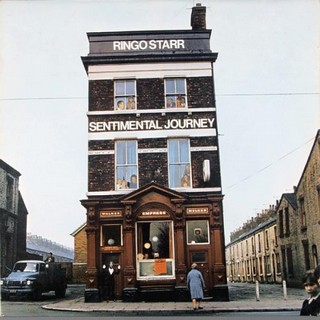
Sentimental Journey was a collection of old standards, the type of songs his mother and stepfather used to enjoy singing at gatherings and at the pub depicted on the cover. Each track was arranged big band-style by a different musician, from buddies like Klaus Voormann and Maurice Gibb to more known entities as George Martin and Quincy Jones. Some are straightforward, some are horribly dated, and most sound like the fare one would hear on any TV variety show of the time. And each one was sung by Ringo, as only he could. He didn’t even have to play the drums.

The title track is fairly indicative of the album as a whole, and re-establishes his “aw, shucks” brand. (The arranger was Richard Perry, who will loom large in the near future.) It’s also the highlight of both sides, as the schtick wears thin. His first pitch limitations are all over “Night And Day”, double-tracked on “Blue, Turning Grey Over You” and the banjo-laden “Bye Bye Blackbird”. McCartney is listed as the arranger for “Stardust”, but it’s more likely George Martin, who also did “Dream”. “Whispering Grass” is mostly harmless, but “Have I Told You Lately That I Love You” is the absolute pits. The rest of the tracks aren’t really worth discussing, except that they’re not quite as bad as that.

Without realizing it, Sentimental Journey proved Ringo was a trendsetter, being the first rock star to go the standards route one day trod by Linda Ronstadt, Rod Stewart, and Bob Dylan; even Paul McCartney wouldn’t do his own take for forty years. But at the very least, it’s a vanity album, something he could have given his mother for her birthday rather than foist on the public during a busy Beatle release schedule. The question remains: how often did she listen to it, assuming she did?

Ringo Starr Sentimental Journey (1970)—1½