Showing posts with label 1967. Show all posts

Tuesday, March 31, 2026

Nico 1: Chelsea Girl

Even before she was appended to the Velvet Underground, Nico had been trying to make it in showbiz. Her blonde beauty and cheekbones had already emblazoned album covers and got her into movies, but the girl just wanted to sing. Her husky timber would be an acquired taste, but she exuded enough cool to open a few doors.

Once the band’s first album had been released, producer Tom Wilson took to the task of establishing her as a chanteuse. She’d already been doing solo shows at the same East Village venue that Andy Warhol had already turned into a nightclub, and where she was accompanied by a rotating cast of guitarists, including the guys from the Velvets, Tim Buckley, Tim Hardin, and a kid we’ll reveal shortly. She built a repertoire, which Wilson recorded in the folk style, then promptly slathered in chamber-pop arrangements nothing like the album she’d just finished, and which she insisted she hated. (Interestingly—to us, anyway—the arranger would work on Van Morrison’s Astral Weeks a year later.)

The aforementioned kid was named Jackson Browne, and while his own career would take another five years to really start, he plays on most of Chelsea Girl, and two of the three songs he’d written for the album open it. “The Fairest Of The Seasons” is lovely little reverie, and the strings don’t get too much in the way, but the future classic “These Days” would be bettered by others. “Little Sister” is credited to Lou Reed and John Cale, but the see-sawing organ and airy lyrics suggest mostly the work of the latter. Only his name is on the tense, Gothic “Winter Song”, which comes off as a faster minor-key variation with more polysyllabic words. Folks who were with her so far might not have appreciated “It Was A Pleasure Then”, wherein she sings a haunting, almost Gregorian melody over Reed and Cale’s tapped guitars and burst of feedback for eight minutes. Only the absence of drums keeps it from being a full-on Velvets track.

Another contender, and almost as long, is “Chelsea Girls”, written after the fact for Warhol’s experimental 3½-hour split-screen film experience. Eight nursery rhyme-style verses document the sad lives of the denizens, each culminating in a mournful chorus of sorts. She wasn’t the first person to record Dylan’s “I’ll Keep It With Mine”, but like Judy Collins she insisted he’d written it explicitly for her, and sources say he did. “Somewhere There’s A Feather” is another very sweet Jackson Browne song to which he never returned, while “Wrap Your Troubles In Dreams” was one of Lou’s earliest songs. At five minutes it tends to drag, and the constantly fluttering flute has the effect of a buzzing fly, causing the listener to swat the air with the album sleeve. “Eulogy To Lenny Bruce” is Tim Hardin’s tribute to the comedian who’d died the previous summer, and a little too specific about their shared addiction to be universal.

Chelsea Girl is one of those “iconic” albums that people seem to revere, but we always suspected it was more due to the fascination with her image and mythology. The arrangements are a little precious, and many of the songs have a sameness to them that take a lot of listens to distinguish. And you’ll either really, really like her voice, or find the accent and pitch problems to be too much to handle. Still, it’s since become part of the Velvet Underground story as a whole, having been included with its stepsiblings in various box sets and expanded reissues.

Nico Chelsea Girl (1967)—

Friday, September 27, 2024

Robyn Hitchcock 35: Vacations In The Past

Some of his album sleeves over the years had boasted the occasional surreal short story, but not until he passed the age of 70 did Robyn Hitchcock endeavor to write a memoir. Composed entirely on his iPhone in the wee hours, 1967: How I Got There And Why I Never Left is an engrossing look back a formative year in his life, shaped by his entry into boarding school and the music that dominated the year.

It was only natural that a companion album would materialize, and one did. Recorded much like his other post-Covid work, 1967: Vacations In The Past was pieced together over the wires with the aid of frequent collaborator Charlie Francis, and featuring contributions from fellow Soft Boy Kimberley Rew and prominent but not overused sitar by Kelley Stoltz. It’s predominantly acoustic with only the occasional bongo for percussion and, with one exception, all covers.

He begins “A Whiter Shade Of Pale” in a lower register, then adding an octave harmony on the second verse, but “Itchycoo Park” is just as jaunty as the original. “Burning Of The Midnight Lamp” is particularly striking without any electricity, but it’s still got wah-wah. The Move’s “I Can Hear The Grass Grow” is nice and trippy, but then there’s Scott McKenzie’s “San Francisco (Be Sure To Wear Flowers In Your Hair)”, a moldy oldie if there ever was one. Trite as it may be to Americans, it must have meant something to that impressionable British boy an ocean and a contintent way, but we can’t condemn anyone for their guilty pleasures. Anyway, it’s wholly redeemed by “Waterloo Sunset”, a song that’s nearly impossible to ruin, and he doesn’t.

A Syd Barrett song should be no surprise, and he tackles “See Emily Play” nearly solo but for Kimberley’s slide effects. Tomorrow’s original recording of “My White Bicycle”—besides being the first appearance by Steve Howe—was loaded with backwards instruments, and there are just enough of those effects here to keep the production faithful. “No Face, No Name, No Number” has long been a personal favorite, but while the most obscure track might be the Incredible String Band’s “Way Back In The 1960s”, it’s also the one that sounds the most like him. The title track is the lone original, and sounds like it could have been recorded at any time over the previous 40 years. It’s a wonderful bit of music, complete with references to tentacles and whatnot, that the cover of “A Day In The Life” is anticlimactic. He’d played this live many times over the years, and while this recording doesn’t attempt to replicate the original, it still gets a busy mix, with a backwards loop we can’t discern over the final sustained piano chord that doesn’t dissipate but stops.

As he said on Robyn Sings, 2002’s compilation of Dylan covers, he didn’t write these songs, but they wrote him. His deft playing style and wide-eyed approach resonates throughout, and illuminates the rest of his catalog in the process.

Robyn Hitchcock 1967: Vacations In The Past (2024)—

Friday, September 3, 2021

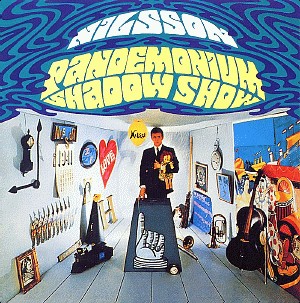
Nilsson 2: Pandemonium Shadow Show

This is where the legend of Harry Nilsson really begins, and mostly by a fluke. Beatles insider Derek Taylor heard one of its songs on the radio while doing publicity in California, told his old bosses about it, and soon they were trumpeting “Nilsson” as their favorite band. Coming so soon after their previous endorsement of the Monkees, who’d already recorded some of his songs, it kinda makes sense.

Still, that kind of advance hype doesn’t make Pandemonium Shadow Show the type of album everyone has to own. While gifted with a versatile voice, and a grasp of olde American musical styles, one gets a distinct “inside joke” vibe from it. Most of his originals are delivered in a cross between “vo-de-oh-doe” vaudeville—right down to the constant scat vocal breaks—and the circus element that ties in with the title. Even “She Sang Hymns Out Of Tune”, which he didn’t write, sounds like it should be accompanying someone on flying trapeze, while “Freckles” dates back to 1919.

The songs are catchy, yet hardly cliché. “Ten Little Indians” recasts the nursery rhyme with Ten Commandments connotations in a brass-heavy track, and “1941” is a bold, unforgiving autobiography. “Cuddly Toy” would get exposure on TV in the Monkees’ rendition, just as “Without Her” would be covered by everyone from Glen Campbell to Blood, Sweat & Tears. “Sleep Late, My Lady Friend” is a nice diversion, with its Bacharach-style bridges. “There Will Never Be” is near-Latin pop in a maddening 5/4 time signature, while “It’s Been So Long” evokes Pet Sounds-era Beach Boys as well as the Fab Four—who figure prominently in the grooves, too. “You Can’t Do That” is indeed a cover of their tune, delivered straight except for the backing vocals, which sing over a dozen Beatle song titles into the mix. If that wasn’t enough, his version of “She’s Leaving Home” was recorded just days after the original record came out. The grand finale is “River Deep—Mountain High”, the previous year’s flop by Ike & Tina Turner, and Harry’s version is very close to (former mentor) Phil Spector’s original production, but with more bongos.

Lots of people love Pandemonium Shadow Show. Again, that doesn’t guarantee everyone will. We’re not even sure if we like it—we never liked Davy Jones’ soft-shoe routines on The Monkees either. There’s a lot of sameness, and many of the songs blend together, and not conceptually either. Proceed with caution.

Nilsson Pandemonium Shadow Show (1967)—

Tuesday, February 16, 2021

Simon & Garfunkel 8: Live 1967 & 1969

With a concise catalog and outtakes already mined, how else could Columbia capitalize on Simon & Garfunkel in the 21st century? The answer was so head-slappingly obvious it’s a wonder it took so long: live albums from the archives. Two sets were eventually released, both stepping far up sonically from the bootlegs that had circulated through the decades.

Live From New York City, 1967 expanded on the Lincoln Center peek-in from the Old Friends box, leaving “Red Rubber Ball” as an exclusive to that set. It’s just Artie and Paul onstage, with none of the anonymous session polish, and nearly every song gets something of an explanatory introduction, adding to the intimacy. Most of the set would be familiar to anyone who had the albums, plus “A Hazy Shade Of Winter” was the current hit single. The future B-side “You Don’t Know Where Your Interest Lies” is something of a surprise, as it hadn’t been finished yet, and “A Church Is Burning” would only be known to those who tracked down Paul’s elusive solo debut. (He switches between six-string and 12-string acoustic guitars depending on the tune, plus you can hear his affected British accent even on the straight intros.)

First released as a Starbucks exclusive, Live 1969 was compiled from a handful of concerts from the autumn of that year. Nicely sequenced, it begins with the boys playing by themselves, joined seven songs in by Wrecking Crew legends Fred Carter, Jr on guitar, Joe Osborn on bass, Larry Knechtel on keys, and Hal Blaine on drums. In addition to adding variety in the song selection, in this case the boys sound energized with a band behind them, and adapt well.

Several remarks are made throughout regarding the album they say they’re trying to finish, and four of those new songs are premiered here, including a stunning performance of “Bridge Over Troubled Water”. The crowd welcomes “The Boxer”, the newest song they knew, which here sports the extra verse familiar to us now from the 1982 reunion, replacing the instrumental break from the studio version. The album closes as it began, with only the duo onstage, including an efficiently arranged “Old Friends/Bookends”. (It has since been determined that the versions of “For Emily, Whenever I May Find Her” and “Kathy’s Song” are the same lovely ones that appeared on Greatest Hits, while “That Silver-Haired Daddy Of Mine” is not the same one as on Old Friends. The entire set was eventually included in the 40th anniversary edition of Bridge Over Troubled Water, which was of course the album in progress when the shows originally took place.)

Simon & Garfunkel Live From New York City, 1967 (2002)—
Simon & Garfunkel
Live 1969 (2009)—4

Tuesday, October 3, 2017

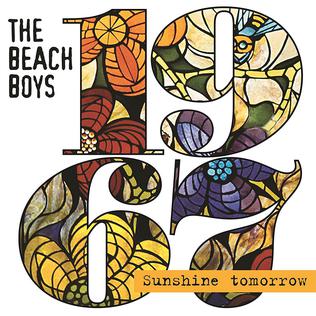
Beach Boys 30: Sunshine Tomorrow

As we don’t claim to have any legal authority or expertise, please forgive some simplification. There’s this 50-year copyright rule, wherein forgotten or buried recordings by certain bands must be claimed and/or released under threat of slipping into public domain. Like other bands and artists of their heritage, the Beach Boys catalog department took advantage of streaming trends and began quietly issuing digital albums in order to beat that pesky rule. Starting in 2013, every December or so (sometimes earlier) a title would appear offering a bounty of vault tracks from the Boys. The Big Beat 1963 consisted mostly of Brian Wilson songwriting demos, while the following year brought forth session highlights and something of an expansion on Beach Boys Concert. After the Uncovered And Unplugged edition of Party!, and Pet Sounds and Smile having already been mined for deluxe box sets, a chunk of the next copyright extension release was actually pressed onto CDs.

Whoever was in charge knew which albums were getting the most revisionist-theory love, so 1967—Sunshine Tomorrow picked up more or less where the Smile box left off, but rejigged the chronology. The first disc is devoted to Wild Honey, which some folks say is superior, beginning with the first-ever true stereo mix of this very short album (save “Mama Says”, which is still in mono). The album still sounds very thin, especially the drums, but here it’s followed by a couple dozen session outtakes and some contemporary live tracks, though “Aren’t You Glad” comes from a 1970 concert. The second disc jumps back several months to reveal 18 minutes of session highlights from its predecessor, the labored but laconic Smiley Smile. But they truly bury the lede by including the first official release of the notorious unreleased Lei’d In Hawaii album.

This project was originally designed to re-establish the band as a force to be reckoned with in the wake of the Summer of Love. Smiley Smile was about to be released, so they went to Hawaii to record a live album, with Brian in tow for his first full live appearances with the band since the end of 1964 (and his last for another few years). The concerts didn’t go so well, and neither did the live-in-the-studio sessions that happened in an attempt to make up the difference. Wild Honey was then quickly recorded, and released only three months after Smiley Smile.

What would have been Lei’d In Hawaii combined the later studio recordings with a few songs from rehearsals for the live show. It’s a strange mix of old and new material, beginning with a nearly tongue-in-cheek introduction before a faithful cover of the Box Tops’ “The Letter” that just grinds to a halt. Brian’s electric organ unfortunately dominates the songs, which are frankly inert, including a changed perspective on the retitled “Help You, Rhonda” and a cover of the Mindbenders’ “Game Of Love” that suffers from tempo troubles. At least their harmonies on “Surfer Girl” are still impeccable; those voices help Bruce sing “With A Little Help From My Friends”, and we hear a Smile influence on “Their Hearts Were Full Of Spring”.

Allegedly, an audience was supposed to be overdubbed for the final mix, and we’re not sure that would have helped. The handful of tracks included from the actual concerts sounds pretty limp, though some girls are screaming anyway; Mike Love is as obnoxious as ever. The set ends, thankfully, with a return to the studio, with a repeat of the late-1967 tape of Brian trying to play and sing “Surf’s Up” solo at the piano, followed by an a capella mix of “Surfer Girl”.

Sunshine Tomorrow is pointedly for completists, but some thought was clearly put into it. It’s a smart move to start the program with the more focused music of the period, as opposed to the fractured material that made up the previous album and the aborted Hawaii experiment. Plus, we can better discern Brian’s involvement throughout, with his voice and keyboards prominent in the outtakes. (Two more compilations were made available digitally by the year’s end to further cause salivation. Sunshine Tomorrow 2: The Studio Sessions offered another disc’s worth of work-in-progress material and isolated elements from all three albums, while the six-hour Live Sunshine included seven complete concerts from the era, including each of the doomed Hawaii shows.)

The Beach Boys 1967—Sunshine Tomorrow (2017)—

Tuesday, April 4, 2017

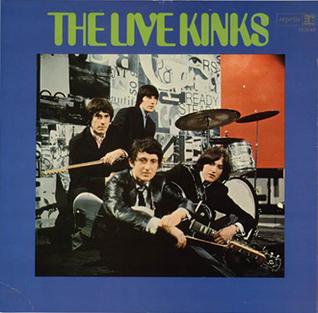
Kinks 8: Live Kinks

For various reasons, mostly bureaucratic, the Kinks didn’t tour America for most of the ‘60s. They were, however, shackled to the theater circuit all over the UK and other countries, where they appeared on bills with six other bands and played for about half an hour a show. One of these shows was recorded and released in the U.S. under the title The Live Kinks, and the following year elsewhere as Live At Kelvin Hall (that being the venue in Glasgow where it was recorded) and with a better cover.

As was the norm, what listeners heard on their hi-fis most likely included recordings made far away from Kelvin Hall and the screaming audience that overpowers the mix. The set, while a bit sluggish, presents competent reproductions of hit singles and recent album tracks, the only real rarity being a medley that finds its way from “Milk Cow Blues” through the Batman theme to “Tired Of Waiting For You” and back to “Milk Cow Blues”. Dreamy Dave Davies gets to sing lead on two songs, and he and Ray try to engage the crowd (who know the words to “Sunny Afternoon” and can be heard singing “Happy Birthday” at one point, but we don’t to whom). The band doesn’t sound terrible, and there’s probably a great performance buried under the audience noise. But it was just another day for the Kinks, who by all accounts were more occupied that month with a new song of Ray’s called “Waterloo Sunset”.

While other Kinks albums have been lavishly repackaged with each reissue, this one has only gotten as deluxe as having both mono and stereo mixes on one CD, with the international title and cover. Each reissue has also correctly listed the first track as “Till The End Of The Day”, whereas the original LP wrongly had it as “All Day And All Of The Night”.

The Kinks The Live Kinks (1967)—3

Tuesday, June 23, 2015

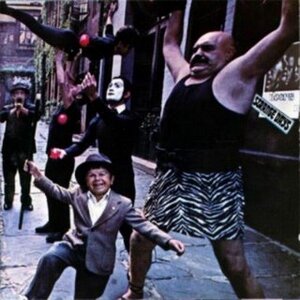
Doors 2: Strange Days

Less than nine months after the release of their debut, which still had legs, the second Doors album appeared. Strange Days follows the same formula as the first album, being instrumentally similar, and concluding with another lengthy, show-stopping epic. (The cover did try to make a departure, using a motley collection of street performers and freaks cavorting in an alley, while a tiny poster of the band with the album title is tucked in on the edge. Clever.)

The title track has enough “strangeness” to make it an effective and disorienting opener, setting a tone of darkness for the next 35 minutes. Robbie is credited with writing “You’re Lost Little Girl”, built as it is on his intricate guitar parts, and nothing special in the way of lyrics. “Love Me Two Times” is also credited to Robbie, as he likely came up with the riff; again, the lyrics aren’t much, but there’s a harpsichord in place of the organ for variety. “Unhappy Girl” is dominated by loopy slide and backwards effects, over before you know it. Jim was very proud of “Horse Latitudes”, a frightening piece of poetry backed by discordant sounds of the band, making the return of the loopy slide on “Moonlight Drive” something of a comfort.

“People Are Strange” is another catchy single despite its depressing message, and helped by the tricky ending. The insistent “My Eyes Have Seen You” is contradictorily followed by the moodier “I Can’t See Your Face In My Mind”, both fairly slight in comparison to “When The Music’s Over”. While not as pointedly provocative as “The End”, it still features many oft-repeated Morrison couplets and good dynamic contributions from the band, making it as much of a group performance as a showcase for Jim’s prose. And assuming you can stand the sound of the organ, a better song.

As with most sophomore albums following a classic debut, Strange Days had to catch up to a lot, but there are and were enough songs in their repertoire to keep it consistent. They were still able to concentrate on the music without the distractions that would soon take over their celebrity.

Even today the album lives in the shadow of its older brother. Much was made of the 50th Anniversary Deluxe Edition upon its release, even though all it contained was the original stereo mix on one CD and the original mono mix on the other. The alternate takes of “People Are Strange” and “Love Me Two Times”, which were added to the 40th Anniversary reissue, were not included.

The Doors Strange Days (1967)—
2007 40th Anniversary Edition: same as 1967, plus 2 extra tracks
2017 50th Anniversary Edition: same as 1967, plus 10 extra tracks

Friday, May 1, 2015

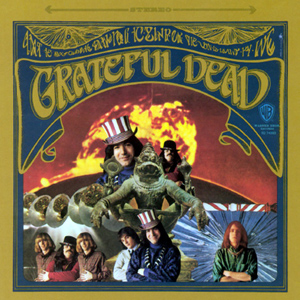
Grateful Dead 1: The Grateful Dead

The official Grateful Dead catalog consists of 13 studio albums, with almost as many live albums and a couple of compilations released concurrently through 1995. Even before Jerry Garcia died that year, they’d already begun issuing live albums from the thousands of concerts already taped and traded by their rabid following, and to date there have been well over 100 different live titles made available for physical purchase on CD, and/or streaming or download.

Navigating those waters without previous experience is nearly impossible, considering that they average about six “new” releases a year, with no chronological framework, and will likely keep doing so as long as people are around to buy them. A true Deadhead has to have everything, and that includes the original catalog described in the first line above. Many of those people have long since ingested those albums (no pun intended, but we’ll take it anyway), and by the band’s renaissance in the mid-‘80s, the cassette was the general platform for listening, being portable with room for a joint or a tab in the case too. The quality of a traded bootleg would vary, but the official albums provide a consistency for a framework, and that’s where we’re going to start. (Should an archival release supplement a previously existing document, we’ll mention that. After all, we’re here to help.)

Their self-titled debut is very much a product of its time, a psychedelic boogie jam mixing up blues, bluegrass, folk and rock ‘n roll, some genres more obvious than others. At this point they were a quintet, including members credited as Bill the Drummer, Pigpen, and Jerry “Captain Trips” Garcia. A cheesy organ is as prominent as guitar, and the man who’d write most of their lyrics has yet to make the scene; most of the songs are covers, and they’d continue to lean on those and more for the rest of their career. Still, many elements of their sound are clearly in place, particularly the vocals and Phil Lesh’s distinctive bass.

“The Golden Road (To Unlimited Devotion)” should immediately conjure images of tie-dye and swirling dresses; very much a pop song, it ends on a chord of dissonance. Teenage Bob Weir takes over for Jesse Fuller’s “Beat It On Down The Line”, while Pigpen growls “Good Morning Little School Girl”. “Cold Rain And Snow” stands out for its spiraling guitar and organ lines, much better than the gallop through “Sitting On Top Of The World”. Garcia gets solo credit for writing “Cream Puff War”, with verses that sound to these ears like Arthur Lee.

“Morning Dew” was covered by a lot of people, and this is pretty much the standard arrangement, though Jerry gets just as worked up as anyone. “New, New Minglewood Blues” brings back the swirling blues, while “Viola Lee Blues” comes closest to the Dead their fans would come to love, starting with a simple blues structure, jamming on it for ten minutes, escalating in speed and slowing down for a resolution.

In the larger context, The Grateful Dead can easily be described as embryonic, if only because they hadn’t figured out how to translate their live sound to the studio. Most of the songs would remain staples of their shows, so it’s a good place to start. (The expanded CD, first released as part of a box set, restores some tracks to their unedited lengths and adds outtakes, an edit of “Viola Lee Blues” and a 23-minute live version of same. The 50th Anniversary Deluxe Edition bolstered the original album with most of a previously unreleased concert from July 1966, plus four more songs from the next night.)

The Grateful Dead The Grateful Dead (1967)—3
2003 CD reissue: same as 1967, plus 6 extra tracks
2017 50th Anniversary Deluxe Edition: same as 1967, plus 17 extra tracks

Tuesday, March 24, 2015

Doors 1: The Doors

Depending on whom you ask, The Doors were either one of the most unique bands of the second half of the ‘60s or an overrated band whose inexplicable posthumous success warped reality to support the first half of the sentence. How you feel about it will be dictated by whether you consider Jim Morrison to be a true poet, visionary and modern-day shaman or a drunken blowhard whose “poetry” was about as deep as your bathtub, and if you’re not bothered by Ray Manzarek seemingly never changing the tone settings on his organ.

We could go on, and we might, but whatever your opinion, that’s the sound, and any deep bass croon accompanied by staccato organ will invite comparisons to The Doors. It helps if the singer is good-looking, as Jim undoubtedly was at the time of the first album. Created after a solid year of gigging in the clubs, the songs on The Doors, for good or bad, present the band in if not its best then its purest light. A few hit singles helped, too.

So many of the songs have become radio staples that it’s hard to believe something like “Break On Through (To The Other Side)” was a flop when it debuted. All these years later the band’s riding of the “I Wish You Would” riff for two and a half minutes is part of the national fabric. “Soul Kitchen” and “Twentieth Century Fox” are pretty much the same song, though the latter gets points for the title and guitar solo. In between is “The Crystal Ship”, one of Jim’s better attempts at singing a melody on an album full of shouting over a small handful of notes. Ray’s piano nicely overpowers the organ here. “Alabama Song (Whisky Bar)” transports us to Oktoberfest before the big one, the inescapable “Light My Fire”. (Meanwhile, it’s interesting how nobody ever seems to complain about drummer John Densmore or guitarist Robbie Krieger. While we’re at it, it’s not all Ray’s left hand on bass; an actual Fender is played here and there by Larry Knechtel, and kudos to him, as ever.)

Side two seems slight at first. “Back Door Man” puts a twist on standard blues with a suggestive lyric that still makes junior high school boys snicker. “I Looked At You” is the one track that never gets played on the radio, because it’s not very good, and “End Of The Night” leans on lots of vibrato to convey spookiness. “Take It As It Comes” isn’t Jim’s best use of poetry, but he was saving that for “The End”. Possibly the most ridiculed song in their catalog, it’s still an excellent example of the band’s dynamic capabilities, and a thorn in the side of labelmate Arthur Lee. Once you get over the “shock” of the Oedipal section, feel free to read meaning into the imagery of the blue bus, the west being the best, riding the snake to the lake and so forth. Then you can wonder whether being the son of one of the highest ranking officials in the U.S. Navy had any bearing on Jim’s poetry. (Likely not.)

One of this writer’s dear friends served a tour of duty in Vietnam, and says that unlike what various movies would have you believe, nobody in the jungle liked the Doors. Nobody. So he really didn’t get how the band got as big as they did ten to fifteen years after the fact, and would likely agree that the first album has everything you’ll love and hate about the band. The version of The Doors you can buy (or stream) today not only adds three outtakes of two songs that would eventually make their way to future albums, but sports uncensored versions of two songs. The bridge of “Break On Through” no longer repeats “she get” but “she gets high”, and various F-bombs have been restored to “The End”. Hooray. (The original edits were used for the album’s 50th Anniversary Edition, which included both the stereo and mono mixes of the album, plus a disc containing live versions of eight of the album’s songs from a performance at San Francisco’s Matrix club from 1967, in better quality than the official bootleg version of the show released ten years earlier.)

The Doors The Doors (1967)—4
2007 40th Anniversary Edition: same as 1967, plus 3 extra tracks
2017 50th Anniversary Edition: same as 1967, plus 19 extra tracks

Friday, March 6, 2015

Yardbirds 4: Greatest Hits

American labels knew how to recycle product in the ‘60s, and since a few months had gone by since the last album, Epic decided to release a greatest hits set by the Yardbirds. It’s only half an hour long, as were a lot of albums back then, but it really does cover their hits to date. It includes two songs from the first album, four songs from Having A Rave-Up, and only “Over Under Sideways Down” from that album. New to LP in the states were the previous year’s stellar single “Shapes Of Things” and its B-side “New York City Blues” (which opens with the same riff Jimmy Page would cop for “You Shook Me”, adding insult to Jeff Beck’s injury, but we’re getting ahead of ourselves), plus “Happenings Ten Years Time Ago”, which means the album includes performances by all three of the band’s soon-to-be-legendary lead guitarists.

Three years later, once each of those lead guitarists had become household names in households that listened to FM radio, Epic issued a double album with the inspired title Featuring Performances By Jeff Beck, Eric Clapton, Jimmy Page. With 20 songs coming in at just under an hour, it repeated nothing from the hits album—which had covered pretty much all of the songs that qualified as actual hits—and scrambled deep tracks from all the American albums in no understandable sequence, seesawing from blues to experimental. Several paragraphs of liner notes bemoaned the band’s commercial failures, but didn’t bother to detail which albums begat which songs, nor which of the performances featured which guitarist, even though each had an instrumental all to themselves. The bizarre cover art was typical of the era, and the same designer would get to work on another related project ere long.

Both of these compilations would go out of print by the end of the ‘70s, and because the masters were owned by different managers depending on who produced what, licensing would continue to be wonky, and shoddy rehashes abounded overseas. Then, in 1986, the Rhino made good on their original brief to restore music to the masses with a hits collection with the hopeful title of Volume One. This set concentrated on the Giorgio Gomelsky era, with began with Clapton and covered the first two American albums, including two further tracks from Five Live Yardbirds. It did a fine job of presenting them as blues interpreters, but the contents predated some of Beck’s innovations.

While a second volume never materialized, Rhino did score a coup in the new century with Ultimate! This was another apt title, as it crammed two CDs full of just about everything, starting with their first demos, through four tracks from Five Live Yardbirds, most of the three American albums, and all key singles and B-sides, plus a rare Italian single and three fey Keith Relf solo sides. Attention to detail ensured liner notes and comprehensive discographical information, including recording dates, locations, and even engineers; who knew Eddy Offord, Roy Halee, and even Bones Howe taped this band?

This, too, is out of print, but luckily in the digital era it’s possible to stream most of the music. The original albums are out there, along with various grey-area live performances. And of course, the BBC. After scoring the rights to Roger The Engineer, Warner Archives followed another ‘90s catalog trend with the 1997 release of BBC Sessions for the first time in the US after a few years floating around elsewhere. This set presented 26 tracks from the Beck and Page eras, complete with interview snippets from the usual clipped-voiced deejays and a few tunes that never made it to wax. This too became scarce, until 2024 brought The Ultimate Live At The BBC—they sure like that adjective—box of four discs.

The Yardbirds The Yardbirds’ Greatest Hits (1967)—4
The Yardbirds
Featuring Performances By Jeff Beck, Eric Clapton, Jimmy Page (1970)—
The Yardbirds
Greatest Hits, Volume One (1964-1966) (1986)—
The Yardbirds
Ultimate! (2001)—4
Current CD availability: none

Friday, February 13, 2015

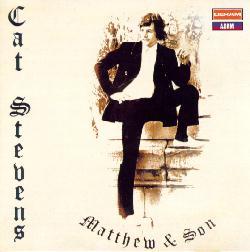
Cat Stevens 1: Cat’s Cradle

Navigating the history of Cat Stevens is a tricky prospect, considering that there are at least three stages of his career, even if people only know of one, and many have since written him off as a Muslim extremist. And even though he’s known as Yusuf now, once upon a time he was a Swinging London kid of Greek and Swedish descent who changed his name to the catchier Cat Stevens and wrote his own songs. Clad in a velvet jacket and ruffled shirt, his first album is chock full of dated chamber pop, the like of which had been foisted upon records by David Bowie, Genesis, the Bee Gees, and dozens of others.

The title track of Matthew & Son is a catchy tirade against the corporate culture, notable today for a middle eight borrowed by Tears For Fears on “Mad World”. Something of a chauvinistic novelty song, “I Love My Dog” was his first single, bettered by the pure pop of “Here Comes My Baby”, which gained new life thirty years ahead on the Rushmore soundtrack. That’s three decent songs in a row, to which the rest of the album pales, starting with the cringing bossa nova of “Bring Another Bottle”. The simple sentiment of “I Found A Love” is tarnished by the corny music hall of “I See A Road”.

His latest single starts side two, and the revenge fantasy “I’m Gonna Get Me A Gun” is one reason why Yusuf wouldn’t play his old songs for a while. The B-side, “School Is Out”, is just too literal; “Baby Get Your Head Screwed On” is always good advice, but that’s going to be tough as she “kissed [her] psychiatrist”. “When I Speak To The Flowers” doesn’t get far past its hippie position, and is about as repetitive as “Hummingbird”. While a little naïve, “Lady” is at least a sweet paean. (Naturally, the American version wasn’t identical to the British original, but the CD era has brought all the disparate contents together, including “Portobello Road”, which sounds most like the ‘70s troubadour we’d come to appreciate.)

The music machine required singers to deliver product on schedule, and his next album arrived at the end of the year. New Masters beefed up the arrangements and made them even more heavy-handed. It didn’t work, as besides being short of decent material (with one major exception), his voice is simply too harsh and bleating to pass him off as a pop idol.

“Kitty” begins pleasantly sounding like the streets of Paris, but the chorus is just a little too urgent, with a backing that undoubtedly inspired “Sky High” by Jigsaw. “I’m So Sleepy” will likely inspire same, and the churning rhythm of “Northern Wind” isn’t the most inviting sea voyage. “The Laughing Apple” is an attempt at a fairy tale worthy of Leonard Nimoy’s singing career. “Smash Your Heart” is comparatively restrained, but don’t be fooled by the title of “Moonstone”, overtaken as it is by horns-a-go-go.

The one song that redeems the album is “The First Cut Is The Deepest”, as good a pop song as any, as Rod Stewart, Sheryl Crow and others would prove. It’s more convincing than the tinkling harpsichord in “I’m Gonna Be King” or the trifling “Ceylon City” and its mysterious duet partner. One would think “Blackness Of The Night” wouldn’t be as jaunty as it is, just as the rustic setting of “Come On Baby (Shift That Log)” (he’d also like her to “wash that dog”) doesn’t invite the horn section that barges in anyway. And as before, “I Love Them All” is a snappy ending with a vague message. (This sequence was the same on both sides of the pond, but later reissues added some failed singles from the same period to complete the picture, some more overwrought than others.)

One almost wonders whether the albums would sound better without the decorations. Both would be repeatedly repackaged in the decade to follow, most notoriously on Cat’s Cradle (cue rimshot), which selected five songs from both albums, seemingly at random, except for beginning with the first three tracks from Matthew & Son and putting “First Cut” at the start of side two. Likely they seduced the odd unsuspecting fan, who would only recognize the voice the label hoped to exploit. More than likely, it’s one reason why so many Internet lyric sites mistakenly credit him for “Cat’s In The Cradle” by Harry Chapin.

Cat Stevens Matthew & Son (1967)—2
Cat Stevens
New Masters (1967)—2

Friday, December 26, 2014

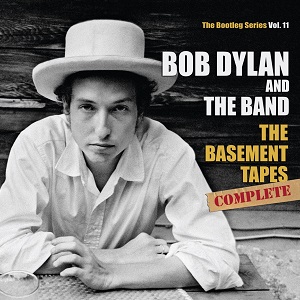
Bob Dylan 57: Basement Tapes Complete

Only a year after one of its finest installments, Bob Dylan’s occasional Bootleg Series maintained its quality by revisiting one of the most beloved and mysterious eras of his career. Volume 11 served up two discs of unadorned recordings, alternates and true rarities from the series of sessions known as the Basement Tapes, in excellent sound, with no after-the-fact overdubbing and no Band-only tracks. And to beat that, a deluxe edition offered everything captured in those sessions with Bob present, 139 tracks in mostly chronological order. (The timing was particularly apt, as the project was revealed and released right around the time of another album involving long-lost lyrics.)

For those seeking only a taster, The Basement Tapes Raw is two hours of arguable highlights, focusing on completed songs and less on the “jam” aspect of the sessions. Here, finally, in one tidy package are some truly legendary tracks in pristine sound. Neither “Silent Weekend” nor “Get Your Rocks Off” seems finished, but Dylan’s laughter on the latter makes it worth the listen. The first take of “You Ain’t Goin’ Nowhere” sports a truly surreal batch of alternate lyrics, while take two of “Too Much Of Nothing” is more straightforward than the chromatic experiment that made the 1975 album. The amateurish trombone all over “Don’t Ya Tell Henry” makes it clear why it was left alone till now. “Sign On The Cross” manages to stay mesmerizing over seven slow minutes, and “All You Have To Do Is Dream” has the potential of a wonderful pop song, whatever “floor birds” are. And while “I’m Not There” made its legal debut in 2007, it’s great to have this fascinating tune back alongside its brothers (including the close cousin “I’m Alright”).

The armchair Dylanologist has to have everything, and The Basement Tapes Complete does offer hours of listening pleasure, though not everything deserves more than one play. A 12-string acoustic guitar is hard to get into tune in the first place, much less when it’s being strummed by someone for whom pitch is already elusive. The compilers did do us a favor by putting the “least listenable” of the tracks on the sixth disc; besides not being recorded as well, with a particularly distorted electric piano guiding the way, there’s little hidden treasure here. Also, these were a bunch of guys in their 20s, basically playing hooky, so some of the goofiness doesn’t translate. But when they do catch fire, its wonders to behold.

There’s already been a lucrative cottage industry based around picking these sessions apart, and many of the mysteries will never be solved—mostly because nobody was anal enough to note dates, times, locations, who was playing what, etc. Some insist that “Garth’s order” isn’t to be trusted, but there is some structure to it, as successive performances are heard to go increasingly off rails. We can also hear where the focus switched from playing whatever struck to trying to arrange brand new songs. Having multiple takes of several songs will inspire further argument as to which is “best”. (And to think “Tiny Montgomery”, of all things, was the earliest track considered worth selling, appearing a whole disc away from the next one, “Million Dollar Bash”. From there, he doesn’t let up until disc five.)

The mystique of the sessions remains, mostly because it’s still not clear why all this was preserved on tape in the first place. Remakes of “One Too Many Mornings”, “It Ain’t Me Babe” and “Blowin’ In the Wind” suggest possible preparations for a stage performance. His Nashville Skyline voice surfaces a few times. The preponderance of country & western covers puts Self Portrait in yet another light, and makes Robbie Robertson look especially petty for claiming that it was The Band who “taught” Dylan all this music, instead of the other way around. How come he never went back to “One Man’s Loss”, “Lock Your Door” or “Wild Wolf”? Was it all recorded before John Wesley Harding? And what the hell was his fascination with “Spanish Is The Loving Tongue”, anyway?

We can be thankful that this weary world can finally hold not only a completed Beach Boys Smile CD, but a Basement Tapes collection that surpasses even the most revered bootlegs. Now fans had a very wide bridge from Blonde On Blonde to John Wesley Harding, and it only took 47 years.

Bob Dylan & The Band The Basement Tapes Complete: The Bootleg Series Vol. 11 (2014)—4

Wednesday, August 21, 2013

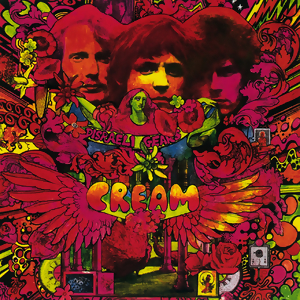
Cream 2: Disraeli Gears

Like any hungry band, Cream gigged a lot, and managed to build up enough material for another album. Disraeli Gears is arguably their most popular album, as it features many of their most famous songs—any of which are likely playing on the radio as you read this.

Eric Clapton was getting the courage to sing more, as heard on “Strange Brew”, but even more prominently in duet with Jack Bruce on “Sunshine Of Your Love”, one of the most iconic riffs ever. But a more important influence on the band would be engineer Felix Pappalardi, who managed to contribute songs (and eventually instruments) to the mix, starting with “World Of Pain”, the motif of which would be borrowed 27 years later by Elvis Costello, of all people. “Dance The Night Away” is dominated by two 12-string guitars, played in a style Jimmy Page must have heard while with the Yardbirds. The nearly plodding “Blue Condition” marks the vocal debut of Ginger Baker, whose pitchless delivery reminds one of Syd Barrett, though his pronunciation “through” as “froo” is endearing.

Jack’s voice dominates side two, which starts with the one-two punch of “Tales Of Brave Ulysses” and “SWLABR”. They’re two of the funniest songs in rock, and we’re not so sure that was intentional. Part of it comes from Bruce’s near-histrionic delivery (“comin' to me with that soulful look on your FA-A-A-A-CE”; “her NAME is AF-ro-DIE-TEE”,), the rest from the lyrics. They’re also very catchy, musically, “Ulysses” sporting a chord sequence that will re-appear, and soon. The “up” feel is soon enveloped in the mist that is “We’re Going Wrong”. It’s a very moody song, played with such tension and mystery that when the blues comes back for “Outside Woman Blues”, it’s like coming up for air. (It’s credited as an arrangement of somebody else’s song, which we’d love to hear to confirm whether Eric added “whilst” himself—making it the consummate British blues recording.) Despite some excellent guitar, “Take It Back” suffers from distracting harmonica and party sounds, but its off-kilter effect makes a logical transition to “Mother’s Lament”, a silly traditional song sung in thick Cockney three-part harmony.

Some would say Disraeli Gears is their best album; as ever, one’s enjoyment will be tempered by how sick they are of those radio staples. The interplay between the three is incredible, and entirely in synch, with nobody dominating. (The drums are still mixed to one channel, which was the style at the time.) Even if you never need to hear the hits again, there’s enough buried in between to grab your attention. (The eventual deluxe expansion offered the album in mono and stereo, but shortchanged fans with demos and BBC sessions that had already been released, the only rarity being “Blue Condition” sung by Clapton, in both mono and stereo.)

Cream Disraeli Gears (1967)—4
2004 Deluxe Edition: same as 1967, plus 29 extra tracks

Friday, August 9, 2013

Cream 1: Fresh Cream

These days Eric Clapton is the most famous member, but Cream started out as a compact democracy. The original power trio, they had Clapton on guitar (naturally) delivering the blues angle, rounded out by two jazz pedigreed guys in Ginger Baker on drums and Jack Bruce on bass, vocals, harmonica and whatever else he could touch.

Bruce was the dominant singer in the band, established on Fresh Cream, seeing as Clapton wasn’t as confident in his vocals at the start. Besides being able to carry a tune while playing the bass, Bruce’s keening baritone lent itself to layered harmonies, as displayed on “N.S.U.” and “Sweet Wine”, both of which could be called psychedelic before the fact. “Sleepy Time Time” and “Dreaming” come from more of a music hall tradition, which likely appealed to manager Robert Stigwood. All together, they deliver a diverse menu of styles. (Just to keep things confusing, the original US LP began with “I Feel Free”, their first hit single, and omitted “Spoonful”, which ended the first side. In their homeland, the opposite was the case. The CD you can buy today includes both, thankfully, being essential to the album.)

Side two provides something of a blues primer, being mostly hepped-up arrangements of songs every London R&B band should have memorized by then. “Cat’s Squirrel” is a suspended-fourth riff as old as the hills, and just plain fun. Clapton sings a rather polite lead on Robert Johnson’s ragtimey “Four Until Late”, which is wiped aside by a furious “Rollin’ And Tumblin’”. “I’m So Glad”, an extremely simple Skip James song, rises above its simplicity via a neat descending intro, compact guitar solo and dynamic drums. Those drums dominate the last song on the album, as “Toad” begins with a jam on E, followed by a definitely musical drum solo that would become a template, for better for worse, for drummers of all levels of skill.

It’s a terrific debut, economical and powerful. The one nitpicky thing that holds back enjoyment of the album—besides the bomber jackets on the cover—is its extreme stereo separation, with the basic backing track (instruments) in one channel and the vocals on the other. That makes some tracks sound like one of your speakers isn’t working, and after seemingly every other album had received some kind of expanded edition, Fresh Cream had to wait until its fiftieth anniversary had passed before this was rectified. The Super Deluxe Edition presented the original British sequence in both mono and stereo, each on its own disc bolstered by singles and alternate mixes. A third disc added a pile of outtakes and BBC sessions, while a Blu-ray disc included the US mix (plus “Spoonful”, their first single “Wrapping Paper”, and “The Coffee Song”, a rarity released against their wishes in Scandinavia) in both mono and stereo, in high resolution.

Cream Fresh Cream (1967)—4
2017 Super Deluxe Edition: same as 1967, plus 52 extra tracks (and Blu-ray)

Sunday, May 12, 2013

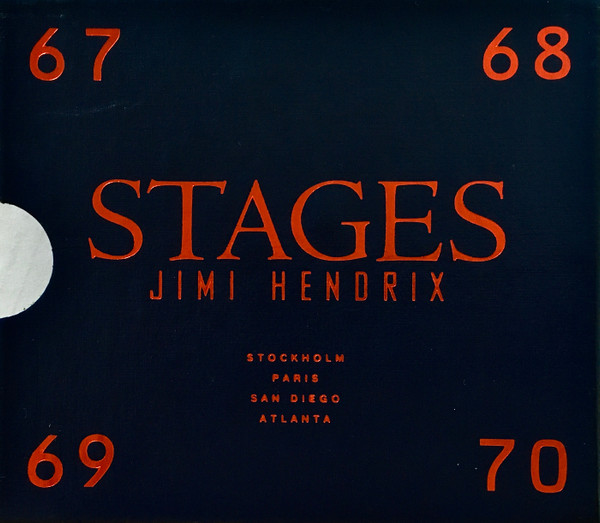
Jimi Hendrix 15: Stages

Each of Jimi Hendrix’s live appearances was unique, providing different and evolving interpretations of his songs, giving both the casual collector and diehard chronicler a lot to explore. In fact, there are so many officially available CDs of individual concerts that we hesitate to dive in here, but dive we must.

A year after the Lifelines box tested the waters (and fans’ patience), Stages presented four concerts, one each from 1967 through 1970, on four CDs. All but the last featured the original Experience; Billy Cox had replaced Noel Redding on the rhythm section next to Mitch Mitchell in the final year. But even with “Purple Haze” and “Fire” showing up at all four shows, they’re not the same at all.

The first show is also the shortest, coming from a Swedish radio broadcast in front of a polite audience. After a warmup of “Sgt. Pepper’s Lonely Hearts Club Band”, they plow through the familiar songs and singles from the first album, as well as the new single “Burning Of The Midnight Lamp”. (For some reason the songs appear out of order, even though everything played is included.) “I Don’t Live Today” had only just started being played live, and they have fun with it. Jimi sounds tired, but that could be due to a larger concert played the night before. Because Stages went out of print along with Lifelines after only a few years, this show was mostly lost officially, and had to wait three decades until 2025’s Bold As Love set brought it back in context.

Less than five months later, the band was in Paris, and Jimi was tired of playing just the hits. Just like he did at Monterey, he opens with a slightly extended “Killin’ Floor”, but follows it with nine minutes of exploration through “Catfish Blues”, leaving room for a Mitch drum solo. He does treat the crowd to “Foxey Lady”, with Noel happily adding the breathy “foxey” accents, and he gets to play guitar on “Red House”. After nine minutes of “Driving South”, it’s back to the more familiar “Wind Cries Mary”, “Fire”, a reverent if off-pitch “Little Wing”, and a six-minute “Purple Haze”. Throughout, he sounds playful, and his fretwork soars. (This show was reissued on the estate’s “official bootleg” label, bolstered by three songs from another show two months and a continent away, on Live in Paris & Ottawa 1968 in 2008.)

An already-plundered San Diego show made up the third disc. “Red House” had already appeared on Hendrix In The West—four more songs were included on the 2011 upgrade—and “I Don’t Live Today” had also been farmed out to The Jimi Hendrix Concerts and other compilations over the years. As it was only a month after the Los Angeles show that had appeared in Lifelines and was eventually released on its own, that’s the only discernable reason why this hasn’t had a separate rerelease. (Yet.) That’s too bad, because it’s an excellent show that deserves to be heard in full, and in order. Highlights include an 11-minute “Spanish Castle Magic” with a detour into “Sunshine Of Your Love”, the aforementioned “Red House” and “I Don’t Live Today”, and ten minutes of “Voodoo Child”. Even the opening “Intro Riffs” over a rowdy crowd have charm.

A lot of changes happened in the year between Noel quitting and the band’s appearance at the Atlanta Pop Festival the following Fourth of July, which is excerpted out of order on the fourth disc. Some of this had already appeared on 1986’s Johnny B. Goode “mini-LP” shuffled with performances from the oft-plundered Berkeley concert, both sources of which were also used to fill out the inaccurately titled Band Of Gypsys 2 a few months later. The 2015 release of Freedom: Atlanta Pop Festival presented the entire concert (save the final aborted song) as performed, necessitating two CDs, and that’s the way to hear it.

Rather than ease into the set, they bash through “Fire” right away, Mitch playing especially busily and Billy keeping up as best he can through questionable meters. They keep the pace going with “Lover Man”, which sports a quote from “Flight Of The Bumblebee” in the solo. Overall the show is kinda wobbly, possibly because of the scorching summer weather, but he’s enough of a professional to work with it; “Red House” slows things down enough to get everybody back in sync, as does a lengthy “Hear My Train A Comin’” a couple songs later. Being the 4th of July, he hints at “Star-Spangled Banner” before “Purple Haze”, then delivers a full rendition during the encore. He does play some of the hits, but the most interesting thing about this show in context is the new material, which had yet to be released in studio form: “Room Full Of Mirrors”, “Freedom”, and “Straight Ahead”. It might not have been his best show, but 1970 was fairly well documented with live recordings, and others will be assessed in context.

Jimi Hendrix Stages (1991)—3
Current availability: none
Jimi Hendrix Experience Freedom: Atlanta Pop Festival (2015)—3

Friday, April 5, 2013

Jimi Hendrix 11: Jimi Plays Monterey

The occasional vault plundering of the Hendrix legacy continued somewhat randomly into the ‘80s. Then somebody decided that “digital remastering” would be a big deal, which led to the first of several stabs at definitive CD versions of the original studio LPs, plus the Kiss The Sky compilation. But the smartest move in years was an expansion of something that had already been out, kind of.

Just before he died, Reprise split an LP of so-called Historic Performances Recorded At The Monterey International Pop Festival between a side of Jimi backed with Otis Redding’s set—both being highlights of that particular festival. It only took another 16 years for Jimi’s complete set to appear in its entirety. Jimi Plays Monterey was billed as a soundtrack, accompanying the commercial video tape of the same show. The visuals are recommended to illustrate the sounds, since some of the aural and physical pyrotechnics can get lost in the mix.

It helps that it’s an excellent set. He hadn’t released so much as a single in the States yet, and only offered a few songs that would appear here on Are You Experienced. Of his own songs, “Foxy Lady”, “Hey Joe”, “Wind Cries Mary” and “Purple Haze” would be standards soon enough, while “Can You See Me” was only on the British version of the album. Instead, he opens with a burning take on “Killing Floor”, does a detour with “Like A Rolling Stone”, re-arranges “Rock Me Baby”, and sacrifices his guitar to “Wild Thing” (following a detour through “Strangers In The Night”). Throughout the set, he banters with the audience and plays up to his now-assumed spacey reputation.

In the pantheon, Jimi Plays Monterey made a logical bookend opposite Band Of Gypsys with the three studio albums in the middle. When Rhino put out their box set devoted to the festival for its 25th anniversary, all nine songs were included. Fifteen years after that, the Estate reissued the album again, this time crediting it to The Jimi Hendrix Experience, and reinstating not only some of the dialogue, but Brian Jones’s complete introduction.

Jimi Hendrix Jimi Plays Monterey Original Motion Picture Sound Track (1986)—4

Sunday, December 30, 2012

Billy Joel 1: The Hassles and Attila

Billy Joel causes arguments like few other musicians of his or any generation. For some he’s a pompous hack, while others hail him as a terrific songwriter and live performer. For those of us who grew up near New York City, he seemed almost as ubiquitous on the radio as Springsteen, even though it took him a while to become a household name. And even though his last album of songs came out decades ago, an all-star benefit at Madison Square Garden isn’t complete unless he comes out to play songs loaded with local references.

As he’d say, he was a classically trained pianist who loved rock ‘n roll, and many of his melodies started out as instrumental pieces grounded solidly in classical piano. That’s one reason why his attempts to rock aren’t as convincing as when he emulates pieces by 18th-century longhairs. With the benefit of hindsight, we consider him a guilty pleasure, with all the meaning both of those words suggest.

But everyone’s gotta start somewhere, and in his case it was the Hassles, a Long Island combo equally influenced by tristate heroes the Rascals and Vanilla Fudge, to the point where they tried to meld soul with psychedelia. Their first album is dominated by radical, not always successful covers, and more Hammond organ than would be heard throughout his solo career. There are some originals, like the decent “Every Step I Take (Every Move I Make)” and the Sam & Dave-style “I Can Tell”, both of which showcase his voice better than the soul shouting he tries elsewhere.

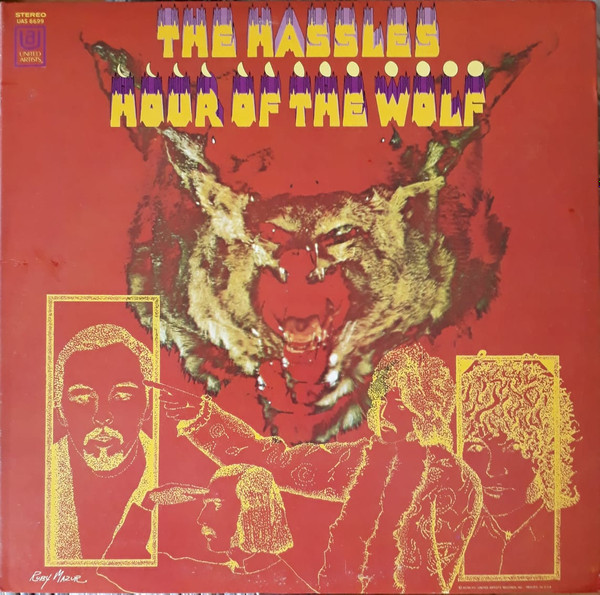
The Hassles was expanded on CD in time for its 25th anniversary (with bonus tracks in the form of earlier studio recordings), but that was not the case for their second album, since lost to time and YouTube. Billy took over the songwriting for Hour Of The Wolf, still very much of its time. “Country Boy” turns into a Dead-type jam that fades very quickly, and several tracks try to be twee and poetic, but the 12-minute title track is just plain laughable. The lyrics are bad enough, but the drum solo is preceded by the band making the wolf sound effects themselves. At least his piano solo hints at future efforts, despite its pomposity and the maniacal laughter that follows and drowns out the guitar solo. The band is certainly competent, and somebody took the time to orchestrate arrangements, but the material just isn’t there.

That was it for the Hassles, but not for their singer and drummer. Attila saw Billy going all-out on the Hammond organ, sending it through amps and wah-wah pedals to make it sound like Led Zeppelin, accompanied only by drummer Jon Small in an imitation of what Lee Michaels was doing with Frosty in those days. The band name was bad enough, but they went all out by wearing furs like actual Huns, and were photographed inside a meat locker for their only album cover.

Billy is not nor ever was Robert Plant, so his mewling throughout the albums is just plain embarrassing. “Wonder Woman”, “Rollin’ Home”, and “Holy Moses” may well have inspired Wolfmother, while “Tear This Castle Down” sounds like bad Deep Purple. “California Flash” is an attempt at ironic humor in its portrait of a gimmicky singer, and “Revenge Is Sweet” predicts his petulant attitude once he actually did make it. He gives his throat a break with the mostly jazzy instrumentals closing each side: the “Godzilla” segment of “Amplifier Fire” gets points for the name seven years before Blue Öyster Cult got around to writing their song about the same subject, which are lost with “March Of The Huns”, and “Brain Invasion” is more of the same.

Attila is far from the worst album ever made, but we’ll guess that this album is what got the Hammond organ out of his system for good. His ongoing discomfort about this being out there is well founded, yet there’s no denying he had chops.

The Hassles The Hassles (1967)—
1992 expanded reissue: same as 1967, plus 8 extra tracks
The Hassles Hour Of The Wolf (1969)—2
Current availability: none
Attila Attila (1970)—2
Current availability: none

Tuesday, December 25, 2012

Holiday Special #4: Festival Of Carols In Brass

A holiday tradition in the New York Metropolitan area for many years was The Yule Log. Every night on Christmas Eve (and again on Christmas morning) channel 11 would show a looped film of a fireplace with brass fixtures, while a seamless program of what used to be called “beautiful music” played in accompaniment. (The music was simulcast in FM stereo on the station’s radio affiliate—pretty high-tech sh-t in those days.) Even though our house had a working fireplace throughout my youth, stoked to perfection by my dad, we still had the TV tuned in to The Yule Log, with the music blaring from every radio available. A Google search reports that the artists supplied were usually along the lines of the Boston Pops and Percy Faith; we recall a few select vocal pieces, like “The Little Drummer Boy”.

As with many mainstays of one’s childhood, we don’t truly appreciate certain things until they’ve gone missing, and there was an outcry when certain local TV affiliates removed it from their programming. By the ‘90s, enough homes had VCRs anyway, and could easily buy a cheap tape of a fireplace for kitsch purposes, the show having been originally designed for Manhattan apartment dwellers without hearths of their own. But the original was still the best, and after a decade of mismanagement at the station—during which even Beavis and Butt-Head referred to it on one of their holiday episodes—The Yule Log officially returned to the airwaves where it’s remained, albeit only on Christmas morning.

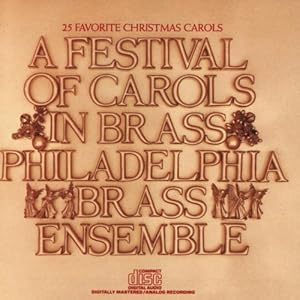
That dark period when it was nowhere to be found didn’t have the convenience of the Internet and digital technology, much less YouTube, so us sentimental types had to rely on our own mind movies to experience The Yule Log and become a kid again. The Mantovani qualities of those old records didn’t always hold up, but one vintage album always managed to set the mood. A Festival Of Carols In Brass by the Philadelphia Brass Ensemble is a perfect soundtrack for a roaring fire above which stockings are hung with care. The epitome of simplicity, it stayed in print through the digital era on a “Nice Price” CD with basic artwork and no credits outside the 25 tracks. The selections are crisp and not at all overbearing, and like any good instrumental collection, just as satisfying to have in the background as for close listening. It always seems to end too quickly, but that’s why CD players have a repeat function.

The Philadelphia Brass Ensemble A Festival Of Carols In Brass (1967)—5

Wednesday, December 12, 2012

Traffic 1: Mr. Fantasy

Steve Winwood has a classic voice and undeniable talent on several instruments. Unfortunately, because he wasted those talents on pop for the better part of fifteen years, a lot of people may only think of him as the “Higher Love” or “Roll With It” guy. Then again, they might not know what to make of Traffic.

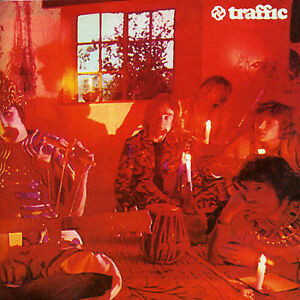
Traffic began as something of a British counterpart to The Band—four guys living in a house deep in the countryside, concocting their own brand of music. It was something of a departure for Winwood, whose R&B belt was now used to decorate more trippy fare. The singles “Paper Sun” and “Hole In My Shoe” are truly psychedelic, built around Dave Mason’s prominent sitar.

The Indian influence is mostly toned down on the band’s first album, which existed in four formats—Mr. Fantasy in the UK, and (initially) Heaven Is In Your Mind in the US, both in unique mono and stereo mixes. The American version gets points for including both of those singles, along with the B-side “Smiling Phases”, among a jumble of tracks from the British LP. The final track, cleverly titled “We’re A Fade, You Missed This”, is merely a reprised snippet from “Paper Sun”. While Everybody’s Dummy tends to concentrate on US releases, in this case, it’s the UK lineup that was not only standard from the ‘80s on, but is actually preferred.

“Heaven Is In Your Mind” opens side one with drastic panning thanks to producer Jimmy Miller. The vocals and drums swap channels with the piano and saxes throughout the track, a groovy little tune. The last minute or so is a jam, with lots of vocal contributions from everyone. That mood continues on “Berkshire Poppies”, which rotates between a nursery piano waltz, a speedy chorus and slower resolve, while the other guys try to distract Winwood’s vocal with raspberries and shouted asides. “House For Everyone” is truly odd, beginning with a wind-up effect edited perfectly into the intro, and a daffy lyric fitting the times. Things finally slow down for the exquisite “No Face, No Name, No Number”, a positively gorgeous ode to a mystery woman, gently played. “Dear Mr. Fantasy” is the song everybody knows, its three-chord structure sparking endless jams in bars around the world.

Jim Capaldi finally takes a lead vocal on “Dealer”, which suggests a drug connection but isn’t. The Indian sound comes back with a vengeance on “Utterly Simple”, complete with a ringing phone in the middle to usher in the obligatory philosophy lesson. “Coloured Rain” gets a churning treatment from the organ, guitar and sax, but “Hope I Never Find Me There” is another Dave Mason nursery rhyme. “Giving To You” is a jazz jam in a march tempo, bookended by loops of Chris Wood babbling. (The mono B-side version actually has an opening verse without the babbling.)

Mr. Fantasy provides at least one classic album side, though the second half does have something to recommend it as well. Overall there’s a cloud of mystery, given that the players likely switched instruments as the mood struck, and what some of us wouldn’t give to be a fly on the wall in that house.

Unfortunately, thanks to the shuffling way back when, no single package currently encompasses everything that was ever part of the album. A relatively recent British CD reissue offered the British stereo with the American mono, while in America, two CDs came out—one that added the singles to the British version, and one that simply added the two songs left off the US stereo, with a couple of rarities. Given the brevity of the original LPs, a double-disc Deluxe Edition—which their current label has done for just about everybody else—could easily contain all four versions, plus extraneous singles from the same period. And of course, if it turns out that some songs had identical mixes, there’s no need to have it four times.

Traffic Mr. Fantasy (1967)—4
2000 CD reissue: same as 1967, plus 5 extra tracks
Traffic Heaven Is In Your Mind (1968)—4
2000 CD reissue: same as 1967, plus 4 extra tracks

Friday, July 13, 2012

Jimi Hendrix 1: Are You Experienced

One of the recurring themes in rock history is that of “what-if?” We’ll never know what John Lennon might have created in the ‘80s, how Jeff Buckley’s second album would have ended up sounding, or if Woody had gone right to the police, this would never have happened.

The brevity of Jimi Hendrix’s career is all the more stunning when one considers the quality and quantity he put forth in the space of four years. His success didn’t exactly happen overnight, but he really was something of a firework, and not in the Katy Perry sense. He burst upon the scene, dazzled everyone around him, and left embers burning and scattered far and wide.

His prowess and technique on the guitar needed a framework to best show it off, as well as songs to heave at the pop charts, and thus laid the foundation for the power trio. Noel Redding was a guitar player relegated to bass, and Mitch Mitchell played drums in a demonstrative yet hardly chaotic style. Both permed their hair to match Jimi’s afro. Together, they really did change the world.

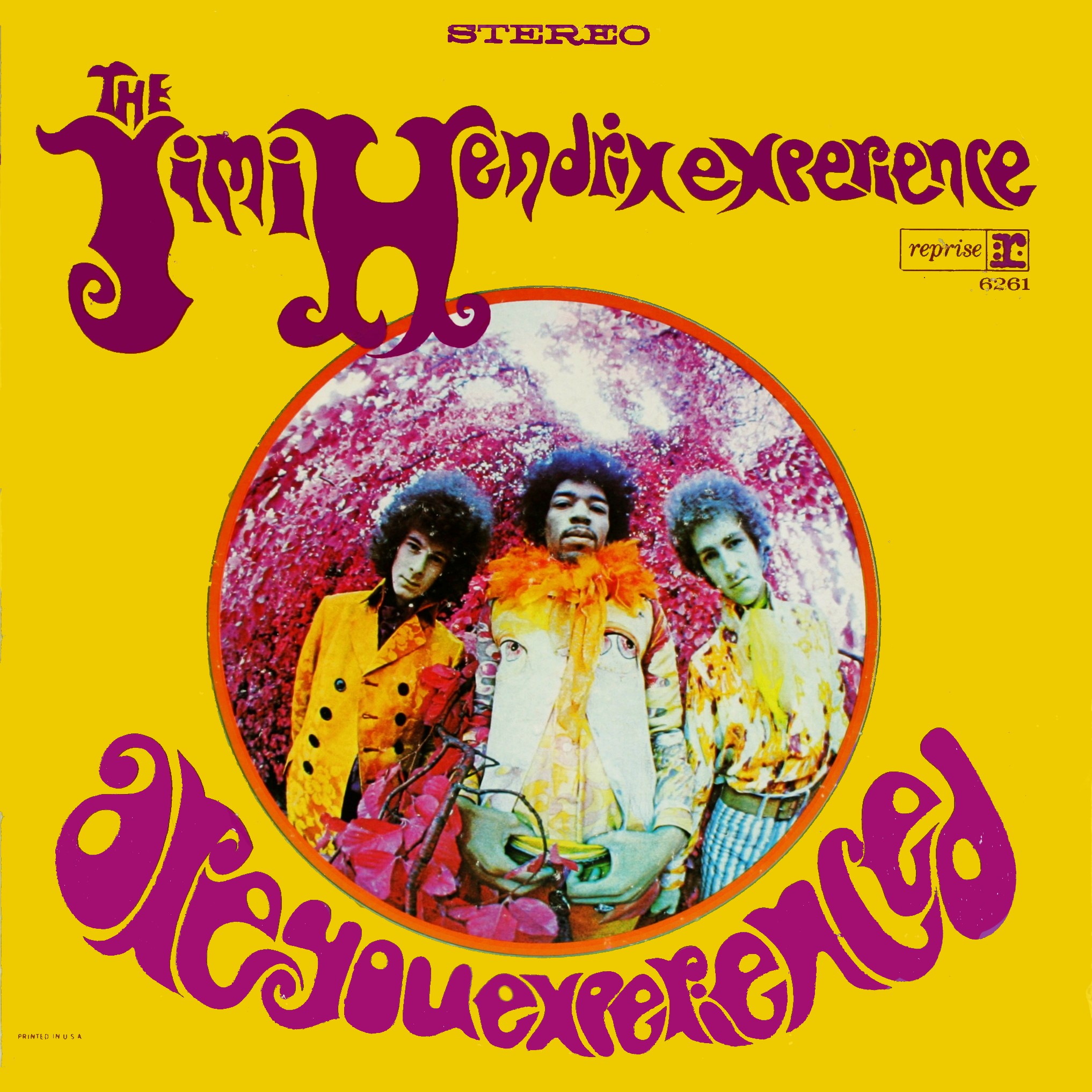
Are You Experienced delivers that package, mixing three-minute pop songs with more non-standard material to demonstrate his incendiary effects. “Purple Haze” manages to combine both, a bent riff under easily misunderstood lyrics. The broken-leg waltz of “Manic Depression” provides another kind of blues, and even worked nicely on an episode of Moonlighting. His “Hey Joe”, which every band covered in those days, is still the best version. “Love Or Confusion” and “May This Be Love” offer pretty sentiments between the fretwork, the latter an early example of his attempt to find that “underwater sound”. “I Don’t Live Today” would become a springboard for drum solos and feedback demonstrations in concert.

Like a lot of his peers, Hendrix loved Dylan, and “The Wind Cries Mary” is one of the less overt imitations of that style. “Fire” and “Foxey Lady” get an extra boost from the band, split up by the extended jazz and tape explorations on “Third Stone From The Sun”. The title track is suitably psychedelic, managing to mix drums and guitars going both forwards and backwards, with that single piano octave clanging away.

Are You Experienced might not be his greatest album, but it’s still pretty amazing, despite how many times you’ve heard “Purple Haze”, “Foxey Lady” and “Fire”. Since it wasn’t recorded that well to begin with, no amount of knob-twiddling will improve its muddy sound. It’s only been remastered about twelve times, making it that much easier to hear him toking on a joint during the guitar solo on “Foxey Lady”.

This is another of those albums that was different in sequence and cover depending on which side of the pond you’re on. The American LP described here replaced three tracks with some of the singles, but luckily the CDs available since 1993 include all the songs from both versions. “Can You See Me” and “Remember” might have been easily forgotten, but “Red House” is an undisputable classic. The picture is completed by three B-sides, the negligible “Highway Chile” and “51st Anniversary”, and the stellar “Stone Free”.

His catalog has undergone some questionable treatment over the decades, but for the most part, Are You Experienced hasn’t been tampered with too much. When the rights were transferred to MCA Records in 1993, it got a brand new cover, with the three singles and B-sides programmed before the British track lineup. Only four years later the family took over the catalog, restoring both album cover and the American sequence followed by the extras (in the US, that is; the one for sale in the UK has the British sequence with the singles at the end). That’s the way it’s stayed, though a 2020 version did present the 12-track American stereo sequence on a CD with an SACD layer containing the mono as well.

The Jimi Hendrix Experience Are You Experienced (1967)—4
1993 and Experience Hendrix reissues: same as 1967, plus 6 extra tracks