Showing posts with label flying burrito bros. Show all posts

Tuesday, January 31, 2017

Flying Burrito Bros 5: Close Up The Honky Tonks and Sleepless Nights

Like any smart label, A&M cashed in on both Gram Parsons’ death as well as the first breakup of the Flying Burrito Brothers with a double-LP compilation. Close Up The Honky Tonks devoted the first half to a side each of selections from Gilded Palace Of Sin and Burrito Deluxe, plus the single “The Train Song”. The second half was all previously unreleased material. Side three was all covers—mostly country, but also the Bee Gees’ “To Love Somebody”—from a session recorded with Gram shortly before Altamont, and side four came from the sessions for the third album: more covers, as well as the lost classic “Did You See”, Sneaky Pete’s workout “Beat The Heat”, and Gene Clark’s “Here Tonight”, the one song recorded the week he was in the band. (This album would be superseded by later Burritos compilations, and many of the rarities made it to 2000’s Hot Burritos! double-CD anthology, along with the first three albums in their entirety.)

Two years later, with Gram’s legend growing, they decided to spotlight their onetime artist with another set compiled from the same source as side three of the last album, giving him top billing and a moody cover shot on Sleepless Nights. These were more country weepers, with the exception of “Honky Tonk Women”, taken even cornier than the Stones’ own “Country Honk” variation. But nine tracks weren’t enough to fill up another album, so they wisely licensed three outtakes from Grievous Angel, all duets with Emmylou Harris. Besides sounding better from being actually produced instead of just recorded, they shine compared to the others, particularly on the title track.

Overall Sleepless Nights is more country than rock, and doesn’t really spotlight the band, who could certainly cook when given the opportunity. If its legacy means anything, the album meant a lot to Elvis Costello, who would mine this and other Gram Parsons performances for the selections on his own Almost Blue five years later.

The Flying Burrito Brothers Close Up The Honky Tonks (1974)—3
Gram Parsons/The Flying Burrito Bros.
Sleepless Nights (1976)—3
The Flying Burrito Brothers
Hot Burritos! The Flying Burrito Brothers Anthology 1969-1972 (2000)—3½
Saturday, August 22, 2015

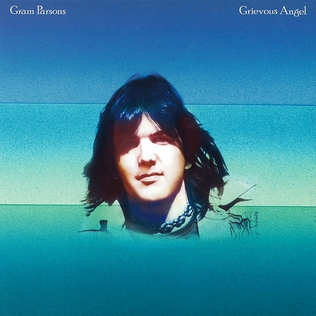
Gram Parsons 2: Grievous Angel

By the time Grievous Angel came out, its auteur was dead, just short of the magical age of 27. This has had a lot to do with Gram Parsons’ hagiographical status, but the key to the album—and its success—is Emmylou Harris, who harmonizes on nearly every track. Having many of the same solid players on board, none of whom were as debilitated by drink and drugs as he was, helped too.

For all its Nashville trappings, “Return Of The Grievous Angel” is not your ordinary country song, loaded with sly imagery and changes. “Hearts On Fire” is another weeper, Emmylou’s control tempering his wavering. The uptempo “I Can’t Dance” has some tasty guitar work but is just a brief tangent. “Brass Buttons” is a lovely sad lament, and “$1000 Wedding” is even more heartbreaking; both are excellent cases for his songwriting.

The atmosphere changes abruptly for “Medley Live From Northern Quebec”, which isn’t a medley at all but “Cash On The Barrelhead” followed by his own “Hickory Wind” with canned crowd noise and fake patter added in, basically used to keep the album over half an hour. “Love Hurts” was tackled a full year before Nazareth got to it, and here it’s milked for all the tears it can wring. “Ooh Las Vegas” is a jaunty rewrite of “Mystery Train” written with Ric Grech and left over from the first album, while “In My Hour Of Darkness”, written with Emmylou is stately and profound, ultimately lifting the album above its older brother.

And that was pretty much it for Gram Parsons, though his music certainly endured. Warner Bros. thoughtfully paired GP with Grievous Angel on a two-fer cassette in the ‘80s, then issued them together on a single CD in 1990, providing excellent value for fans old and new. In 2006, in time for what would have been his 60th birthday, The Complete Reprise Sessions put each album on its own disc with interview snippets afterwards, and added a third disc of alternate takes.

Gram Parsons Grievous Angel (1974)—3½

Monday, June 1, 2015

Gram Parsons 1: GP

Revisionist history will tell you that Gram Parsons was a musical genius not fully appreciated in his time. We weren’t there, so we can’t say for sure, but like most people we had to find out about him after the fact. Still, he did help Roger McGuinn and Chris Hillman find a new direction for the Byrds, then ran off with Hillman to form the Flying Burrito Brothers, and helped found what we now call country rock. However, he also hero-worshipped Keith Richards, musically as well as pharmaceutically, so it took a relative while for him to finally record an album under his own name.

While recorded in Hollywood and not Nashville, GP is a pure country album, with very little of the “rock” sounds that permeated the best Burritos tracks. With Ric Grech of Blind Faith and Traffic as the unlikely producer, the band gathered such pros as James Burton, Glen Hardin, and Ron Tutt from Elvis Presley’s band, Al Perkins and Buddy Emmons switching off on pedal steel, and the ever-popular Byron Berline on fiddle. But the most notable contribution was that of a heretofore unknown singer named Emmylou Harris, who brought out the best in the man who more or less discovered her.

Berline’s fiddle saws away from the very first notes of “Still Feeling Blue”, a Parsons original that sounds like a chestnut. Emmylou gets a nice spotlight on “We’ll Sweep Out The Ashes In The Morning”, but lends more subtle support on “A Song For You”. “Streets Of Baltimore” is another classic weeper about the evils of the big city, balanced nicely by the portrait of “She”, who “sure could sing”.

“That’s All It Took” is another swell duet that’s pretty straightforward, but we can’t say the same for “The New Soft Shoe”, which actually seems to be just as much about footwear as it is a dance move. Ric Grech contributed “Kiss The Children”, which sports a vocal backing borrowed directly from the Jordanaires, while “Cry One More Time” and its ‘50s saxophone comes straight from the second J. Geils Band album, of all places. The simple remorse of “How Much I’ve Lied” is smacked aside by the more obnoxious “Big Mouth Blues”, which is all honky-tonk boogie.

One’s enjoyment of GP will depend on how much likes any kind of country music, whether it’s classic Nashville or today’s sterile conveyor belt products. Whatever your preference or lack thereof, Gram Parsons was not a cookie cutter musician, and that’s why these songs have endured.

Gram Parsons GP (1973)—3

Wednesday, April 1, 2015

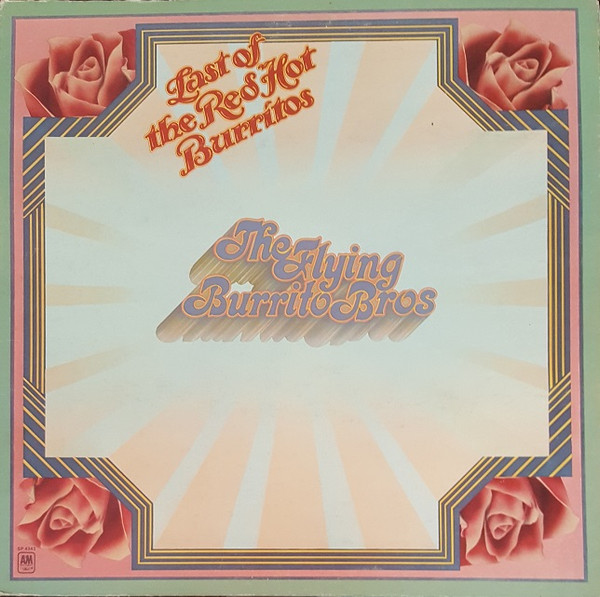
Flying Burrito Bros 4: Last Of The Red Hot Burritos

The Burritos may have been done, but they still had contractual obligations. For a final tour, Chris Hillman brought in Al Perkins on pedal steel and Kenny Wertz on guitar and banjo to replace the departed Sneaky Pete and Bernie Leadon respectively, plus a couple of Wertz’s earlier bandmates, Byron Berline on fiddle and Roger Bush on upright bass. These two would be incremental in the band’s set, as heard on Last Of The Red Hot Burritos.

Released as last gasp after Hillman ran off to Stephen Stills’ Manassas project (bringing Al Perkins with him), the album presents possibly the closest thing to the original spirit of the band, melding country and rock and with a healthy supply of Hillman’s beloved bluegrass. Beginning with a sprightly romp through “Devil In Disguise”, “Six Days On The Road”, and “My Uncle”, they were facing a highly appreciative, raucous crowd. The acoustic, overtly bluegrass portion of the set includes “Dixie Breakdown”, “Don’t Let Your Deal Go Down”, and “Orange Blossom Special”, and is just as well received.

The band rocks again on “Ain’t That A Lot Of Love” and “Don’t Fight It”, which fit right in with the Memphis tracks on their first album, while a swampy take on “High Fashion Queen” is a nice diversion. Chris does a nice job singing “Hot Burrito #2”, to which Perkins thankfully adds some fuzz, and the set ends with the obscure James Carr tune “Losing Game”, which features piano that wasn’t onstage.

Last Of The Red Hot Burritos was elsewhere sweetened before release in the studio, with additional piano as well as guitar to “Orange Blossom Special”. Rick Roberts is a decent singer, but doesn’t have the same harmonic blend with Hillman as Gram Parsons had. The packaging was odd, with a gatefold that features photos of everyone who was ever in the band, and liner notes based around interviews with Gram and Sneaky Pete. It’s still a nice bookend to the band, especially if you ignore the revamped version of the group that would stumble around the late ‘70s and on. (Over the years the Burritos’ legend has only grown, but it would be another four decades before further live documents officially emerged—most notably an “authorized bootleg” from a year before Last Of The Red Hot Burritos when Bernie and Sneaky Pete were still in the band.)

The Flying Burrito Bros. Last Of The Red Hot Burritos (1972)—3
The Flying Burrito Brothers
Authorized Bootleg/Fillmore East, New York, N.Y. – Late Show, November 7, 1970 (2011)—3

Wednesday, December 31, 2014

Flying Burrito Bros 3: The Flying Burrito Bros.

The legend—or cult, if you will—of Gram Parsons has become so pervasive in the past decades that the third album by the Flying Burrito Brothers is often overlooked, and not just by us. This simply self-titled release was recorded after Parsons was bounced from the band, but it does carry over the rest of the lineup from the previous album, with the addition of a young songwriter named Rick Roberts. While unknown at the time, he blended with Chris Hillman’s vision of the band, enough to dominate the songwriting credits on The Flying Burrito Bros.

However, the opening track is a confident take on Merle Haggard’s “White Line Fever”, led by Hillman’s weary but certain voice. The beautifully yearning “Colorado” is enough to establish Roberts as a key addition, and every alt.country band worth its salt should have this in their setlists. Hillman’s “Hand To Mouth” is barely country, but the secret weapon is guest Earl Poole Ball on the piano. “Tried So Hard” is a Gene Clark composition from his first solo album, held over from the week and a half he was in the band, while “Just Can’t Be” is a sneaky, swampy one.

Loyal Byrds always fly home to the Dylan nest, and “To Ramona” starts side two, a barn-dance waltz designed to let Sneaky Pete Kleinow explore the possibilities of his pedal steel. “Four Days Of Rain” is another winner from Roberts, and it’s not until just before the final chorus that you realize the bass plays the same note through the verses. “Can’t You Hear Me Calling” isn’t much musically, but the verses make up for it. “All Alone” works a little harder to be deeper, then Bernie Leadon’s busy banjo carries “Why Are You Crying” for a bluegrass finish over non-standard chords.

Where Burrito Deluxe sounded alternately forced and half-assed, The Flying Burrito Bros. is a solid, enjoyable blend of country rock, and a definitely a progression, if not as inventive as The Gilded Palace Of Sin. Commercially, it didn’t matter. Soon after the album failed to ignite any interest, the band scattered, with Chris Hillman going off to join Stephen Stills in Manassas, Bernie Leadon joining a new band that would be called the Eagles, and Rick Roberts carrying the Burritos brand until starting a new project called Firefall. (The drummer? Erstwhile Byrd and Burrito Michael Clarke.)

The Flying Burrito Bros. The Flying Burrito Bros. (1971)—3

Saturday, July 19, 2014

Stephen Stills 12: Pieces

The outfit Stephen Stills called Manassas had a lot of potential, but had imploded before really reaching it. Stills and main partner Chris Hillman were increasingly distracted by their legacies and other collaborators to sustain it past the year they were together. (These ears felt Hillman was unfairly kept to second fiddle status anyway.)

So in a year when Crosby, Stills & Nash were celebrating their fortieth anniversary (and Graham Nash and Neil Young put out their own box sets), it was nice for Stills to curate a third, lost Manassas album. Pieces presents a deeper glimpse at the band’s potential, touching on all the genres they attempted to cover while they were together. It also gives more though not equal time to Hillman.

Some of these are alternate versions, but not alternate takes per se. “Witching Hour” and “Like A Fox” are absolute gems astoundingly left off the first album; “Sugar Babe” is an excellent improvement on the track from Stills’ second album, whereas “Word Game” is given an unnecessary shuffle. “Fit To Be Tied” would turn into “Shuffle Just As Bad” in a few years, while “My Love Is A Gentle Thing” had already been heard on the CSN box and was started in 1970 and finished in 1975, which doesn’t explain what it’s doing here. “High And Dry” goes from a “bluesman with my guitar” growl to a faster arrangement with what we assume is a canned audience cheering. “I Am My Brother” is Stills alone with his acoustic.

“Lies” is a rockin’ Hillman alternate, while “Love And Satisfy” shows another side of his talent. He likely leads a bluegrass detour through “Panhandle Rag”, “Uncle Pen”, and “Dim Lights, Thick Smoke (And Loud, Loud Music)”, including an alternate of “Do You Remember The Americans”, and including input from sometime Burrito Byron Berline. For contrast, the brief “Tan Sola Y Triste” instrumental fits the Latin side of the band.

Had some of these tracks made it to Down The Road, the band just might have endured longer. Or maybe not. At any rate, it’s a treat to have the material on Pieces available. Its length and quality illuminate its predecessors, and that was the point.

Manassas Pieces (2009)—3

Sunday, July 1, 2012

Stephen Stills 4: Down The Road

The first album under the Manassas name was teeming with music; their follow-up barely cracked a half-hour, putting the eggs-in-one-basket theory to test.

This album has been slammed over the years, and a lot of that has probably been due to Stills being everybody’s least favorite CSNY and the fact that Down The Road wasn’t Manassas (the album, not the band). While Stills continued to be the name on top and the spine, it was still a collaborative effort, with Chris Hillman a key foil, but most of the other guys pushed to the back.

Brief as it is, they can be commended for restraint, as most of the songs aren’t long enough to wear out any welcome, with the possible exception of the two Latin numbers, “Pensamiento” and “Guaguancó de Veró”. Stills’ tendency to emote in Spanish reached maximum tolerance back on “Suite: Judy Blue Eyes”, but he would not be dissuaded.

“Isn’t It About Time” and “Lies” provide a good one-two punch from Stills and Hillman respectively. The first Latin excursion gives way to a nice duet on “So Many Times”, and things don’t come back to that level until “City Junkies” in the middle of side two, despite its misleading title and off-time tambourine near the end.

The best parts of both Manassas albums would easily combine for a solid four-star collection. Instead, Down The Road was a comparative flop and the group split, Hillman taking half the band with him and Stills hovering around the possibility of another CSNY album. Or not.

Stephen Stills — Manassas Down The Road (1973)—3

Monday, June 11, 2012

Stephen Stills 3: Manassas

It should be no surprise that someone of Stephen Stills’ ego would arrive so quickly at the double album. While his name was the biggest, there were several key players collaborating, including Chris Hillman, confusing the Byrds-Buffalo Springfield family tree even further. But he’s definitely in charge, from his name twice on the front cover to his handwritten lyrics on the gigantic poster and the dreamy silhouette on the inner sleeves.

Manassas is the name of the album, as well as a catch-all moniker for the group. Basically Stills combined some of his favorite sidemen and created an album that’s much more in the spirit of playing than production. It’s a large ensemble, all credited on the cover, with several guitarists, two guys who came in with Hillman from the latter-day Flying Burrito Brothers, and the clattery percussion of Joe Lala smacking away. Now Stills could truly embrace all the music he loved, from blues to bluegrass, rock to soul.

Being a double album, each side is denoted as a specific suite. Side one, or “The Raven”, connects five songs without a break, mostly Southern California rockin’ boogie. Song Of Love” has lots of electric piano and dirty slide going from speaker to speaker. “Rock & Roll Crazies” is a little slower, segueing in the second half to “Cuban Bluegrass”, then “Jet Set (Sigh) is even slower than that, owing a bit of a debt to Joe Walsh. If you wanted more cowbell, “Anyway” offers that plus a growled vocal from Joe Lala. Something of a departure arrives at the end of the side with “Both Of Us (Bound To Lose)”, sung by Hillman and Stills over a melody borrowed from Neil Young’s “The Loner”, ending with a salsa jam.

With its country touches, the side dubbed “The Wilderness” must have thrilled Hillman no end, beginning with the bluegrass “Fallen Eagle” hiding an anti-war lyric. Despite the piety, “Jesus Gave Love Away For Free” sounds like one of CSN’s better moments, while the sublime “So Begins The Task” really should have been theirs. “Colorado” also sports some wonderful harmonies, particularly in the unexpected chorus modulation. “Hide It So Deep” is hokey country, complete with twang and a hint of syrup, while “Don’t Look At My Shadow” has something of a shaggy dog quality.

Side three, or “Consider”, is the strongest, beginning with “It Doesn’t Matter”, sung in close harmony and sporting a tasty Stills solo over vibes. “Johnny’s Garden” is a simple appreciation of the simple life (supposedly inspired by the same man who would be the basis of Peter Sellers’ character in Being There), while Hillman had been trying to record the tricky “Bound To Fall” for years. Even the appearance of a Moog here and on “Move Around” works as color without crowding. “How Far” is a standard Stills strum that echoes his first two solo albums. Bill Wyman appears on “The Love Gangster”, and gets co-writing credit. Allegedly he liked hanging around so much that he offered to join the band, which in hindsight was probably just as well.

Side four insists that “Rock & Roll Is Here To Stay”, and who are we to argue? “What To Do” is nearly sunk by the mushmouthed verses (which frankly remind us of McCartney’s “Long Haired Lady” and do not rock) but the chorus is still killer. “Right Now” has all the tension to nicely balance the lopiness of the rest of the album. At eight minutes, “The Treasure” (pointedly subtitled “Take One”) has all the potential to be overblown, but manages to keep churning without flagging, even through the extended coda. And on the closing “Blues Man”, Stills doesn’t dare put himself on the same level of those to whom he’s paying tribute.

As long as it is (over seventy minutes) Manassas provides quite a bit of quality, while cramming in each of Stills’ pet styles. It’s also a nice throwback to a time when an album could be experienced as a set of sides, rather than in one big chunk. On CD (or via stream) the listener isn’t as tasked with flipping and swapping discs, but that’s not to say it rivals, say, Exile On Main St. for an enhanced experience when listening to it all straight through without pause. It could easily have been reduced for a really tight single LP, but excess ruled the day.

Stephen Stills Manassas (1972)—3

Monday, February 6, 2012

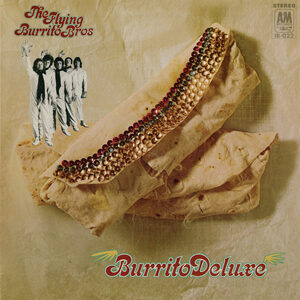
Flying Burrito Bros 2: Burrito Deluxe

For a while there it looked like the Flying Burrito Brothers would be around for a while. They even played at Altamont, thanks to Gram Parsons’ friendship with Keith Richards. (They can be seen for about two minutes in the Gimme Shelter film, right after the naked fat guy, playing “Six Days On The Road” before fights start in the crowd.)

As tight as the first album was, Burrito Deluxe is not as focused, and a little disappointing. Despite Chris Hillman moving back to bass and introducing future Eagle Bernie Leadon on guitar, Parsons didn’t do as much, and the lousy mix obscures the novelty of having fellow former Byrd Michael Clarke on lackluster drums.

There are some okay moments, like the stellar cover of the Stones’ “Wild Horses” released before their version. The other covers are more rote country songs, except for the chaotic stab at “If You Gotta Go”, an obscure Dylan song people started covering around then. At just over a half hour of music, one is left feeling unsatisfied. What made the debut so striking—the originals, the odd R&B transformations—is absent here, so everything sounds very ordinary.

Some people worship every note that Gram Parsons played, so this album is fine for them. True to form, he barely stuck around for the Burritos either; they fired him after Burrito Deluxe, which gave him more time to do smack with Keith Richards, and eventually recorded two of his own albums before succumbing to alcohol and morphine. As for the Burritos, they had two more albums that most notably added a guy who would eventually start Firefall, before sputtering out, then reforming without Hillman and revolving through several other members, including the occasional latter-day Byrd. Nitpickers will likely only care about the first two albums, which are nicely compiled in toto on Sin City: The Very Best Of The Flying Burrito Brothers, alongside three other tracks from the original band.

The Flying Burrito Bros Burrito Deluxe (1970)—2

Monday, November 28, 2011

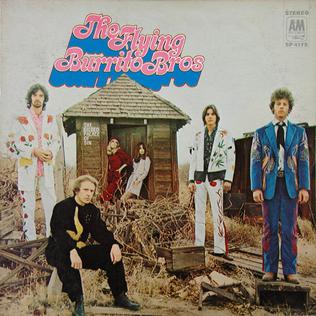
Flying Burrito Bros 1: The Gilded Palace Of Sin

Gram Parsons was only in the “new” Byrds long enough to spearhead the recording of Sweetheart Of The Rodeo. Even before that album was released, he had left the band, soon to be followed by Chris Hillman, and together they formed the Flying Burrito Brothers.

This outfit expanded on the country tendencies of the Byrds by infusing it with a distinct rock sound, best summed up by the fuzz tone used by pedal steel guitarist “Sneeky Pete” Kleinow, which cuts through even the corniest tracks like a saw. On top of it all, Parsons and Hillman croon like the Everly Brothers. This blend appears at the top of The Gilded Palace Of Sin on “Christine’s Tune” (later retitled “Devil In Disguise”).

Their approach to country was anything but orthodox, as even the straighter sounding songs can be deceptive. The wonderfully melodic “Sin City” skewers the LA music scene, while the jaunty “My Uncle” concerns draft evasion while a mandolin trills away. “Wheels” and “Juanita” celebrate, respectively, the open road and the redemption of a teenage girl. “Do You Know How It Feels?” is relatively straight, setting us up for the closing, slightly surreal monologue about a “Hippie Boy”, complete with a chorus of “Peace In The Valley”.

Each side gets its own unique centerpiece as well. On the first, there’s a pair of Memphis R&B covers, “Do Right Woman” and “The Dark End Of The Street”, which had been hits just a few years before and would later feature in The Commitments. Side two has two songs that were apparently written so fast that they barely got titles. “Hot Burrito #1” is a lovelorn lament later claimed by Elvis Costello as “I’m Your Toy”. “Hot Burrito #2” isn’t as easy to sum up except for the insistence on love and the exasperated “Jesus Christ!” at the end of each chorus.

The Gilded Palace Of Sin is one of those albums that gets better with each listen, coming across as so effortless and easy. And as with most things involving Gram Parsons, it wouldn’t last.

The Flying Burrito Bros The Gilded Palace Of Sin (1969)—4