Showing posts with label jethro tull. Show all posts

Tuesday, December 31, 2019

Jethro Tull 15: Bursting Out

Amazingly, Jethro Tull waited a full decade before issuing a live album. Granted, many of their shows in the ‘70s involved multimedia and sight gags, but if they were ever going to do the double live thing, 1978 was calling for it.

Bursting Out covers all the bases, from early blues like “A New Day Yesterday” to the recent folkie stylings on Songs From The Wood and Heavy Horses. Following an introduction by Montreux Jazz Festival founder (and inimitably named) Claude Nobs, Martin Barre kicks into a serrated riff with Ian Anderson’s flute interjections. Cleverly, “No Lullaby” leads into “Sweet Dream” before a few acoustic pieces. From there it’s an excellent display of dynamics, sometimes within a single song. “A New Day Yesterday” devolves into a flute improvisation that quotes “God Rest Ye Merry, Gentlemen” (in May) and turns into “Boureé”. “Thick As A Brick” is distilled down to about 12 minutes, incorporating much more than the edits on the two “hits” albums. An instrumental called “Conundrum” might as well be called “Prelude To Barriemore Barlow’s Drum Solo”, while a side’s worth of Aqualung favorites (saving the best for last, apparently) is split up only by an instrumental called “Quatrain” and the band’s customary reworking of “The Dambusters March”. Ian’s stage announcements throughout are typically cheeky, and occasionally bleeped, likely due to a radio broadcast.

Because of the album’s length, the original American CD omitted “Sweet Dream” and the two instrumentals, despite its availability as a two-CD set elsewhere in the world; this has since been rectified, and a good thing too. Bursting Out is tight and solid, and recommended to fans of any incarnation of the band to date.

While it didn’t seem to be tied into any particular anniversary, 2024’s so-called Inflated Edition of the album included Steven Wilson remixes of both discs, each bolstered by previously unreleased performances and capped by soundcheck takes, as well as his remix of Live At Madison Square Garden 1978, originally released on CD and DVD in 2009. In addition, three DVDs offered the expected multiple hi-res mixes of all the music, plus video of the MSG show.

Jethro Tull Bursting Out (1978)—
2024 Inflated Edition: same as 1978, plus 26 extra tracks (and 3 DVDs)
Tuesday, January 15, 2019

Jethro Tull 14: Heavy Horses

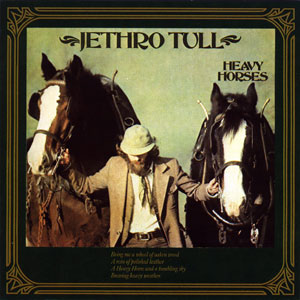
The folkier direction embraced on Songs From The Wood continued wholeheartedly on Jethro Tull’s next studio set. Heavy Horses is a heavily agrarian album, extolling the virtues of various fine steeds and other common barnyard creatures, with two separate songs that refer to mice. Yes, mice.

“…And The Mouse Police Never Sleeps” may seem an odd title, but turns out to be something of a riddle with a simple answer: it’s about a cat. “Acres Wild” is a love song with a mild disco beat, yet manages to comment on the country versus the city; no points for guessing which one Ian Anderson prefers, but at least he assures us that he’ll “make love to you” pretty much anywhere. Martin Barre finally gets to let loose with some riffing on “No Lullaby”, a mostly heavier track along the lines of their most popular sounds. The title is apt, as there’s not a lot of reassurance in this lesson for an infant, who wouldn’t be able to sleep through it anyway, after having been jarred awake by the brief drum solos. “Moths” is a very poetic description of the insects’ seemingly “suicidal quest” around a candle, to precisely trilling mandolins and a string arrangement. “Journeyman” is very interesting musically, with the bass, guitar, and organ in harmony with each other, the cyclical nature of the melodies fitting the treadmill progress and repetition of the figure described.

Side two is virtually devoted the Ian Anderson menagerie, starting with the ode to his dog in “Rover”. (There are a few passages of vibraphone throughout that remind us of Zappa, or at least “Changes” by Yes.) Similarly, “One Brown Mouse” was seemingly spared the wrath of the police in the first track, given lots of devoted attention and wonder from the auteur. The title track is the longest and most ambitious, combining the heavy riffing with intricate strings, multiple tempo changes, occasionally evoking the galloping horses themselves. And while the creature named is actually an inanimate object, it’s only fitting that he takes the time to marvel at the wonder of the “Weathercock”.

Altogether what we have here is a longing for simpler times and traditional pleasures, though there’s no mention of the economic strife of raising crops and such season after season. Heavy Horses is mostly strong, and highly recommended for those who love Songs From The Wood; it might even be better than that album. (For the cleverly appended New Shoes upgrade of the album for its 40th anniversary, the obligatory Steven Wilson remix is supported by various unreleased tracks, plus two CDs covering a May 1978 concert in Switzerland, some of which had already appeared on the Bursting Out live album.)

Jethro Tull Heavy Horses (1978)—3
2003 remastered CD: same as 1978, plus 2 extra tracks
2018 40th Anniversary New Shoes Deluxe Edition: same as 1978, plus 31 extra tracks

Tuesday, February 20, 2018

Jethro Tull 13: Repeat

Less than two years after one Tull “hits” collection, somebody thought it was a good idea to release another. Curiously, most of the tracks on Repeat—subtitled The Best Of Jethro Tull Vol. II—are heavier rockers than the more folk-influenced direction Ian Anderson was currently in. That means there’s a lot of power for FM radio fans, starting with the edit of “Minstrel In The Gallery”, through “Cross Eyed Mary” and “A New Day Yesterday”. “Bourée” quiets things down slightly, making a smooth transition into “Thick As A Brick (Edit #4)”, from halfway into the first side of that album.

Detail-oriented readers will notice that all of these songs predate M.U. While they’d only released two albums since that one, it says a little something about the quality when this set lives that far in the past, if you will. “War Child” and “A Passion Play (Edit #9)” (from the last part of that album) keep it heavy without being overly familiar, and “To Cry You A Song” goes all the way back to Benefit. Only with the title track from Too Old To Rock ‘N’ Roll: Too Young To Die! are we brought up to date. However, fans got something of a bonus in “Glory Row”, a previously unreleased track featuring prominent accordion that has since been added to reissues of—you guessed it—War Child.

Repeat is a decent listen, but the “better” songs were arguably already on its predecessor. That said, those wishing to keep their collections slim would have enjoyed the convenience.

Jethro Tull Repeat—The Best Of Jethro Tull Vol. II (1977)—

Tuesday, September 26, 2017

Jethro Tull 12: Songs From The Wood

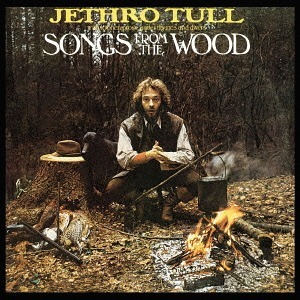
Perhaps taking the title of the previous album to heart, the next phase for Jethro Tull was to fully embrace the English folk music they’d hinted at all along. Songs From The Wood begins with such a statement of purpose in the title track, an immaculate a capella opening, the flute and acoustic come in, and before too long they’re competing for space with the drums and electric and keyboards and arrangement. So it still sounds like Tull, but the lyrics are now more pointedly derived from ancient texts and more older-sounding (at least) couplets.

That’s pretty much the M.O. for the rest of the album. You’d have to read the liner notes to know that “Jack-in-the-Green” is performed entirely by Ian Anderson, suggesting that maybe he didn’t need the band after all. (He also takes complete songwriting and production credit for the album, although lead guitarist Martin Barre and now-fulltime keyboardist David Palmer are mentioned for “additional material”.) “Cup Of Wonder” has some contemporary touches that must have sounded revolutionary for the time, but now place the album squarely in the second half of its decade. After a lengthy, tightly syncopated intro, “Hunting Girl” is a fable either full of double entendre or not, and just seems to take forever to resolve, unless you dig the playing. We will allow that it’s rather daring to include an original Yuletide song on an album released in February, but “Ring Out, Solstice Bells” is just that.

Much of side two runs together, unfortunately. After some pseudo-Switched-On Bach harpsichord, “Velvet Green” traipses around a renaissance fair, but at least adds some scenery changes. “The Whistler” was actually a single, and a favorite for a lot of fans, but they probably really like the flute too. Thankfully it’s brushed aside by the distorted guitar solo that begins “Pibroch (Cap In Hand)” all by itself, sounding closest to “classic” prog Tull. That goes on a while, and then “Fire At Midnight” seems to be a nice quiet ending, but it too gets worked up.

There’s no denying that Songs From The Wood was a good direction for the band to try, and it does have its appeal. But a little goes a long way, and a lot overdoes it. One’s enjoyment of the album, as ever, depends on your preferred dosage of Ian Anderson. (The deluxe anniversary upgrade offers the now-required 5.1 surround mix to highlight the original quad mix, along with two CDs’ worth of live recordings from the subsequent tour. And other stuff.)

Jethro Tull Songs From The Wood (1977)—3
2003 remastered CD: same as 1977, plus 2 extra tracks
2017 The Country Set Deluxe Edition: same as 1977, plus 30 extra tracks (and 2 DVDs)

Tuesday, March 28, 2017

Jethro Tull 11: Too Old To Rock ‘N Roll

Like a few other current bands of the time, Jethro Tull was in the position of being expected to deliver a production with every new album. Part of that pressure came from themselves, but it’s a pretty high order to fill album after album, year after year.

Coined in a period of the 1970s when too many rockers were having trouble dealing with turning 30, Too Old To Rock ‘N’ Roll: Too Young To Die! itself is a clever phrase that would become all too apt as more musicians left the planet. But while one might expect the album to describe the rise and fall of a rock star, the story instead opens on a guy who’s already a has-been, finds his way to another plateau of fame and/or fortune, meets disaster, then emerges into an unknown but not hopeless future. All this is only determined via reading the album’s liner notes, which exist in the form of a comic book-style spread in the gatefold. The protagonist bears a mild resemblance to Ian Anderson, who has long insisted that Ray Lomas is not based at all on him.

We’ll leave others to sort out the concept, its execution and delivery; there was even an attempt at a TV special where actors played out scenes while the band played (now available in a deluxe reissue package). What’s important to us is how it sounds coming through speakers. On that basis, the album’s just fine. It opens with a melody soon to be recognizable halfway through the other side as the title track, and like most everything the band became best known for, exudes baroque pomp. Soon enough the strummed acoustic gives way to heavy electric and staccato flute, with gratefully little of the trendy synthesizers of the day. Ian’s voice is most often treated to that “bathroom echo” sound, which suits him as well as it did John Lennon.

The title track is the best-known song here, but that doesn’t make it the best song period. Hindsight has us thinking that the little classical lines played on strings, mandolins and guitars sound too much like one of Elton John’s parodies of the style, particularly when the chorus kicks into a ‘50s-style raveup for the big climax. (We’ll go further on a limb and compared “The Chequered Flag”, the grand finale, to Elton as well; it’s practically adult contemporary.) The stark and folky “Salamander” and “Bad-Eyed And Loveless” are welcome changes of pace, and “Taxi Grab” has some honking harmonica that recalls the band’s first albums. On songs like those, and even the more complex “Pied Piper”, there’s less of an obvious attempt to be profound, and just to play decent.

Jethro Tull Too Old To Rock ‘N’ Roll: Too Young To Die! (1976)—3
2002 remastered CD: same as 1976, plus 2 extra tracks
2015 TV Special Edition: same as 2002, plus 24 extra tracks (and 2 DVDs)

Tuesday, October 4, 2016

Jethro Tull 10: M.U.

Even if their concepts weren’t grasped by everybody, Jethro Tull had amassed enough familiar songs to fill a hits collection, and that’s exactly what M.U. is. The letters supposedly stand for “musician’s union”, and other letters are used in the back cover’s detailed credits as to who played what and when.

Each of the band’s albums, save the debut and the most recent, is represented, almost all in radio edits, to spotlight the riffing, and taking everything completely out of their album contexts. Side one especially plays just like one of those themed “lunch blocks” deejays used to do, consisting of a handful of songs by a single band. “Thick As A Brick Edit #1” helpfully presents the first three minutes of that album, going right into the animal sounds of “Bungle In The Jungle”.

Side two has a little more variety, with the exotic touches of “Fat Man” hitting the jazzed-up “Living In The Past”. Then “A Passion Play Edit #8” drops us into the middle of the second side of that album, towards the end of Act III, also known as “Overseer Overture”. Years before it became standard for best-of albums, there’s a brand-new track in “Rainbow Blues”, a decent outtake from War Child.

M.U. wouldn’t be Tull’s only hits collection, but it set the benchmark for the rest, and has stayed in print most of these years. Perfectly listenable and immediately recognizable, it says almost nothing about their bigger ideas, and features all the qualities listeners either love or hate about them.

Jethro Tull M.U.—The Best Of Jethro Tull (1976)—

Tuesday, May 10, 2016

Jethro Tull 9: Minstrel In The Gallery

Clearly, the sound that defines Jethro Tull is the rapidly strummed acoustic, powerful bursts of electric, that flute and that voice, with heavy strings and keyboards. It worked on Aqualung and Thick As A Brick, and nobody else was doing it to such commercial success, so the albums that followed those will always be compared, and dare we say, fall short.

Minstrel In The Gallery sports a wonderful cover, and even sets up the title track to suggest we’re in some castle some centuries back. For the first verses, all we hear are Ian Anderson’s voice(s), guitar and flute, all at once, leaving us to wonder where the rest of the band is. But they do arrive, following a flourish, providing all the pow the kids demand. “Cold Wind To Valhalla” begins the same way, building and impressing, with some scary strings and well-syncopated intervals. “Black Satin Dancer” is doubtlessly set in this century, its descending riff of doom escalating the unease until its prettier coda. The sensitive “Requiem” is nicely closes the side, sad strumming and sympathetic strings.

Side two is dominated by a 16-minute suite, but is bookended by two tracks that might as well be part of it. Despite its redundant math, “One White Duck/010=Nothing At All” is another song of lovelorn depression before we get to “Baker St. Muse” proper, which follows the narrator through his day in labeled sections. That’s nothing new to this band, nor is putting Elizabethan folk touches to a lyrical setting that is certainly present-day. When the singer gets out of the way for Martin Barre to lay down a solo, or another section introduces itself, ears prick up. After he’s seemingly locked in the studio, “Grace” is a 37-second coda given lush ornamentation that might have gone better unlisted or left off.

It’s a dangerous business, navigating a dense catalog by a band with such a fervent fan base. If you’re not normally inclined to prog, there simply isn’t enough time in the day to play catch-up forty years after the fact, so while Tull (or more specifically, Ian) obviously put in a lot of time creating and crafting their albums, Minstrel In The Gallery is like much of their catalog in that it won’t get the same amount of play as their earlier albums. “Accessible” doesn’t have to mean “pandering”, and more bands should try it sometime. (The first expanded CD added five tracks previously available on a now-deleted box set; the deluxe 40th anniversary version included three of those, plus other outtakes, a July 1975 concert, and DVDs of the audiophile material.)

Jethro Tull Minstrel In The Gallery (1975)—3
2002 remastered CD: same as 1975, plus 5 extra tracks
2015 La Grande Edition: same as 1975, plus 18 extra tracks (and 2 DVDs)

Friday, December 4, 2015

Jethro Tull 8: War Child

By now, Ian Anderson had given up stretching a concept across two sides and one “song”, not that he didn’t try. War Child would appear to be merely an album of songs, written by him and performed by Jethro Tull, but given all the time he put into the words, there’s got to be some kind of theme here, right?

Unfortunately, the music doesn’t invite the ear to find it. The title track is a mess of sound effects, to underscore what it meant to come of age after the second world war, and too many saxophones. In “Queen And Country”, saxophones, strings and even accordion fight for space in the arrangement; the brief but effective guitar solo hints at how much better the song could be with less ornamentation. English folk (and flute) come to the fore on “Ladies”, floating along until the incongruous ending. “Back-Door Angels” is full of stops and starts, and underscores the band’s reputation to the uninitiated as sinister. The closing section, with its reference to a court jester, is a thematic setup for “Sealion”, which mocks the human race and performers of any kind with equal disdain.

Side two presumably finds Ian enjoying the cup of tea he was offered at the top and bottom of side one, going into a strum that will conjure comparisons to “Thick As A Brick”. “Skating Away On The Thin Ice Of A New Day” is not merely a rewrite, but an actually memorable song that builds and builds. Unfortunately, just as memorable is “Bungle In The Jungle”, which despite a hook of a melody suffers from a contemporary Philly soul arrangement and, frankly, a dopey lyric. This complaint is likely the inspiration for “Only Solitaire”, a brief acoustic piece that skewers rock critics. “The Third Hoorah” is directly related to the title track, but places the action in a switched-on-Elizabethan setting. Finally, “Two Fingers” has some variety, with some terrific guitar parts, but again, we could really do without the sax and accordion.

Each Jethro Tull album demands more patience than the last, and these ears just don’t have it. War Child has its fans and defenders, but there are other places to go if you want the hits. (By now it should be no surprise that the album as released came after failed attempts at a larger project, which was to include a film; some of the outtakes, including “unreleased” carrots from earlier compilations, were included on one remastered CD, and the 40th anniversary brought a whole extra disc with more outtakes, and two DVDs with further archival stuff.)

Jethro Tull War Child (1974)—2
2002 remastered CD: same as 1974, plus 7 extra tracks
2014 Theatre Edition: same as 2002, plus 14 extra tracks (and 2 DVDs)

Tuesday, July 14, 2015

Jethro Tull 7: A Passion Play

Having convinced the world that their last record was an actual concept album and not merely a parody of one, Jethro Tull went whole hog with the formula and concocted one for real. A Passion Play followed the pattern of one song spread across two sides, only interrupted by a fairy tale. And instead of a newspaper, this time the packaging incorporated a program accompanying the alleged four-act stage performance. This helps change the impression that it’s just one song, as each of the acts is described with titles. However, these index points wouldn’t be fully utilized until the more elaborate CD reissues of recent years, so we’re not about to dissect each section with our usual drudgery.

If you listen long enough, read along with the lyrics and decipher the puns in the program, you might be able to follow the protagonist through his funeral, purgatory, limbo, Heaven, Hell and rebirth. Of course, any story on this scale needs music to carry it through, and A Passion Play has a lot to overcome. Having long abandoned blues, even folk takes a back seat to heavier prog, but the omnipresent flute and vocal tone of the auteur make it all too clear who this band is.

Heartbeats begin side one, which was apparently the law in 1973, giving way to an extended instrumental overture of sorts, Ian Anderson having added saxophones to his wind arsenal. The first song proper is mostly acoustic; “There was a rush along the Fulham Road” will be the most commonly repeated phrase throughout the next forty-odd minutes. The music turns harder as the side progresses, escalating through pointedly theatrical affectations, until another “hush along the Fulham Road” heralds a dance that closes the second act, to be interrupted by “The Story Of The Hare Who Lost His Spectacles”, narrated by bass player Jeffrey Hammond-Hammond in a broad, silly accent. (This originally ended side one with a “turn the page” sound effect, continuing on side two.)

The interlude is apparently just that, as the story proper picks up where it left off. The music is acoustic-based, but with an influx of synthesizers, making it heavier. A comparatively pastoral interlude is smacked aside by a trebly treated guitar riff, making things heavy yet again. The dénouement comes very close to the end of side two, and the show’s over.

A Passion Play is the most challenging Tull album yet, and the hardest yet to ingest. As there’s not really any “bad” music here, it’s enjoyable, but it can be exhausting trying to keep up with everything. In its current incarnation, with each of the formerly 22-minute sides split into smaller chunks, it’s a lot easier to revisit sections for familiarity. (The inevitable 21st-century upgrade added an extra disc of the sessions abandoned just before the Passion Play concept came together, plus DVD of surround sound mixes and video commissioned for the tour supporting the album.)

Jethro Tull A Passion Play (1973)—3
2013 An Extended Performance box set: same as 1973, plus 15 extra tracks (and 2 DVDs)

Tuesday, December 9, 2014

Jethro Tull 6: Living In The Past

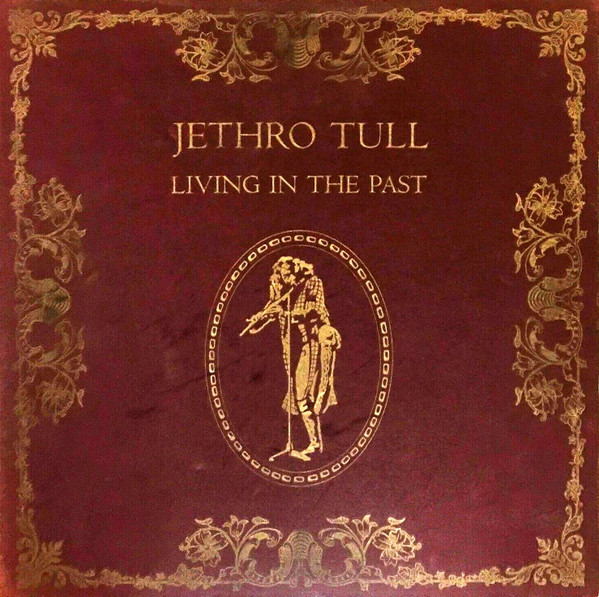
Now that they’d gotten very far away from their roots, it was time for Jethro Tull to look back. Living In The Past first arrived in a thick cardboard package, like old 78s used to, with a booklet of photos showing how the band had changed from album to album. Along with familiar hit singles from the albums, various non-album tracks helped sweep up anything that might have gone missing, and demonstrate their progress—particularly in America, where some songs were making their vinyl debut.

Beginning appropriately with “Song For Jeffrey”, several early singles get wider exposure, from what sounds like an electric mandolin on “Love Story” and the reverent yet cautionary “Christmas Song”. The collection’s title track has since become an FM radio staple, if one can imagine a 5/4 tune with a flute part that quotes from “You Really Got Me” becoming a hit. “Driving Song” is a blues shuffle, and “Bourée” represents the second album.

The sinister “Sweet Dream”, made more unsettling by the trumpets, gives way to the more swinging “Singing All Day”. “Teacher” represents Benefit, while “Witch’s Promise” points to the English folk sound where they were headed next. The Americans could now enjoy the tightly intricate “Alive And Well And Living In” (in place of “Inside”), more so than the celeste-driven “Just Trying To Be”.

What was side three presents two selections from a Carnegie Hall concert, and recorded very cleanly, we might add. “By Kind Permission Of” is a mostly-solo piano medley of familiar classical themes and blues clichés, joined here and there by Ian’s flute, the band coming in at the very end. “Dharma For One” is extended for even more soloing.

Sporting the appetizing image of “the excrement bubbles”, “Wond’ring Again” was a predecessor to “Wond’ring Aloud” from Aqualung; here it’s followed by “Hymn 43” from that album, while the Brits got “Locomotive Breath”, which would have been preferred. The balance of the set presents the Life Is A Long Song EP; the title track, the nostalgic “Up The ‘Pool” and the grateful “Nursie” make it a less labored alternative to the sound of Thick As A Brick, while “Dr. Bogenbroom” and the instrumental “For Later” pick up the pace in between.

Because of the differences between the UK and US lineups, and future attempts to squeeze everything onto a single CD, several editions of Living In The Past have emerged over the years. But whatever the sequence, the first-time listener (guilty) will be pleasantly surprised at the new sounds, the “hits” kept to a minimum. And because it covers the arc of five albums, there’s not a lot of sameness over the two LPs.

Perhaps because many of the tracks would end up appended to expanded editions of the previous albums in the new century, the album was not expanded until 2025, when Still Living In The Past collected most of the original mixes, along with previously released Steven Wilson mixes—as well as some new ones—and the complete Carnegie Hall show excerpted for side three. There’s a lot of repetition, but that’s to be expected in a five-disc package, and that’s not even counting the versions on the Blu-ray disc.

Jethro Tull Living In The Past (1972)—
2025 Still Living In The Past: “same” as 1972, plus 47 extra tracks (and Blu-ray)

Friday, August 22, 2014

Jethro Tull 5: Thick As A Brick

We’ve tried to maintain something of a style and approach here, so when something like Thick As A Brick comes out of the bullpen, it’s a challenge to discuss it in our usual fashion. The reason is the obvious one: the album consists of a single “song” over two sides of an LP.

It’s a pretty clever idea, and presented well: an epic poem penned by a precocious youngster, forming the centerpiece of a local newspaper folded into the record’s packaging (complete with crossword puzzle, obituaries, classified ads, and even a review of the album itself). That alone begs comparisons to Monty Python, but then the band went ahead and set said poem to music, then took it on tour, perpetuating the in-joke to those seeking a concept album.

Taken all together, Thick As A Brick is an archetypal Jethro Tull album, encompassing folk and jazz, bombast and the deflation thereof, but nothing in the way of blues. And to call it a 42-minute song isn’t entirely correct; it’s several themes linked and repeated. One wonders if any of the repeats involved any Bitches Brew-style loop editing.

The beginning states the central theme, a fingerpicked acoustic and flute supporting the vocal, which says, “Really don’t mind if you sit this one out”. Okay then, we’ll just lift the needle, hit the stop button, whatever. But we like this little piece, so we’ll leave it on. Two verses and choruses make the song familiar, setting up the inevitable bridge. Were this a standard rock song, a third verse would follow a solo, but instead the theme reverts to a minor key, there’s a slight fade, and then everything scatters. “See there a son is born,” and he will be again and again.

For the rest of side one the music shifts between heavy riffing like any prog album (which was the idea) and madrigal-type strumming that began the side. The Hammond organ and piano are prominent, so fans of Aqualung will feel right at home. The acoustic guitar is incredibly crisp. And of course, there’s the flute. Lots of flute.

Because it was designed to be heard as two sides, the first half ends with an echo effect on a theme. The second half comes in on a sinister wind, that effected theme peeks through, then the son is born, again, just in time for… the drum solo! This was a nice gesture for Barriemore Barlow, their newest band member, but they throw in some more riffs and muffled conversation to keep the spotlight from shining too brightly. (A phone even rings a few times, which would feature on stage. And the symphony orchestra does show up before time runs out.) The established themes follow and intertwine, marching to the end. Which it does, finally, just as it began.

One thing that leaps out, and we’ve said this before, if not every time we’ve discussed a prog-rock album, is just how tight and precise the band is. The different themes do fit and flow without ever seeming tacked on. Because of this, Thick As A Brick does sustain itself for the entire program, making it a successful concept album. (We’ll also aver that Tubular Bells wouldn’t have happened without it.) That said, it’s easy to tune out unless you’re sitting with the paper in your lap reading along, which is tough to do if you’ve got a cassette or one of the first CDs. The 25th Anniversary CD made the newspaper available again, and added a 1978 live distillation plus a retrospective interview. When the 40th anniversary came around, they stuck with the original two-part sequence, plus a radio ad and various mixes on a DVD. And, of course, the newspaper.

Jethro Tull Thick As A Brick (1972)—3
1997 remastered CD: same as 1972, plus 2 extra tracks
2012 40th Anniversary Edition: same as 1972, plus 1 extra track (and DVD)

Tuesday, April 22, 2014

Jethro Tull 4: Aqualung

And with one of the most distinctive riffs of the decade, Jethro Tull arrives with the sound most often associated with them. Aqualung puts the band squarely in the “heavy” category, thanks to the FM radio staples most often played from the album. For that reason, it’s also likely responsible for why people avoid Jethro Tull.

Side one is subtitled “Aqualung”, for reasons that will soon be apparent. That title track bursts with zero subtlety, perfectly capturing the wretched state of the guy on the cover, slowing down for the hushed acoustic mid-section to give him a little sympathy. (It’s also notable for being the second song we can think of that mentions “snot”, after Love’s “Live And Let Live”.) He’s the first of several portraits, and turns up again in “Cross-Eyed Mary”, another heavy tune disguised by an ornate flute-and-Mellotron intro, with a snotty vocal fitting the tale of a young trollop. Just when we think it’s going to be all loud, three slices of minstrel folk follow: the all-too brief “Cheap Day Return”, which wryly balances the price of stardom with the welfare of one’s parents; the jaunty, surrealistic “Mother Goose”; and the more introspective “Wond’ring Aloud”, with its delivery and subtle strings bringing to mind Cat Stevens, and in a good way. “Up To Me” adds another heavy riff, sung by a lower-class lout accompanied by the sniggers of pub patrons.

Ian Anderson can swear all he wants that it’s not a concept album decrying organized religion, but the gothic typeface, faux-scripture on the back cover, and the fact that side two is called “My God” all combine to suggest that he’s an axe to grind. The lengthy, spooky track of the same name, wanders from acoustic lament to faster riffing, with even a Gregorian-sounding middle section under an archetypal flute solo. “Hymn 43” gets good and loud again, well-constructed and tight little riffs a-plenty. “Slipstream” fills a similar brief role as “Cheap Day Return”, ending nearly as fast as it begins, only with nightmare strings to see it out. The solo piano intro to “Locomotive Breath” is arguably the highlight of the album, the rest of the song being more along the lines of the hapless losers on side one. And “Wind-Up” is aptly titled; it ends the album, builds from quiet to loud, and is used literally in the verse. The first half is almost a conventional, rousing anthem, but once Martin Barre joins in, it’s taken in that heavy direction again before ending quietly.

Besides being one of the more pious records of the era, there’s not much of their early blues sound on Aqualung. This could possibly be because the band members changed yet again: Jeffrey Hammond-Hammond graduated from repeatedly namechecked friend to bass player, and John Evan joined full-time on keyboards, adding prominent piano and organ to the mix. If you only know the tunes from the radio, you’ll be pleasantly surprised at the breadth of styles and moods here. It turns out they weren’t always loud and weird; they just acted that way.

Being one of the band’s bigger albums, it was one of the first to get any kind of anniversary treatment. The 25th anniversary added three BBC recordings, two outtakes and a recent Ian Anderson interview; the 40th anniversary concentrated on outtakes and contemporary EPs, plus surround sound and quad mixes on on DVD and Blu-ray. This was “upgraded” five years later because Steven Wilson didn’t like the mastering.

Jethro Tull Aqualung (1971)—
1996 remastered CD: same as 1971, plus 6 extra tracks
2011 40th Anniversary Special Edition: same as 1971, plus 14 extra tracks (Collector’s Edition adds DVD and Blu-ray)
2016 40th Anniversary Adapted Edition: same as 2011, plus 2 extra tracks (and 2 DVDs)

Tuesday, February 18, 2014

Jethro Tull 3: Benefit

Tull continued to cement their style halfway between “heavy music” and folk on Benefit. There was no elaborate gatefold this time, though the simpler cover does play off the “stand up” concept from before. (They did gain a full-time piano player in John Evan, who ably fills in behind the heavy riffing.)

With a flurry of backwards flutes, “With You There To Help Me” sets the tone, and it’s surprising that this didn’t get more play on the FM stations where we grew up. But it’s “Nothing To Say” that is a true harbinger of the next album, specifically its title track. “Inside” skips along, transplanted from side two on the American LP. (The British version eschewed “Teacher” for a track we’ll cover soon enough.) “Son” begins fairly insistent and heavy, then fades somewhat abruptly, giving way to a folkier interlude before it gets heavy again. “For Michael Collins, Jeffrey And Me” is the second instance on this blog where the third member of the Apollo 11 crew gets a namecheck—this time alongside the third Jeffrey in as many Tull albums. It seems to provide a quieter respite at the end of the side, until the chorus crashes in.

Side two serves up more of the same in “To Cry You A Song”, layered electric guitars in harmony, soon reminiscent of Blind Faith, but with a stop-start verse that is trademark Tull. The flute comes back in full force on “A Time For Everything?” without getting too nutty. As mentioned, the Americans got the single “Teacher” in the middle of side two, and it’s easily the catchiest thing yet heard on a Tull album. (We also wonder if Elvis Costello realizes where he got the hook of “Girls Talk” from.) “Play In Time” is a carrot for headbangers, with lots of tape effects (sped up and backwards, to Frank Zappa’s horror) to add to the feeling of unease. As with side one, we end with a more acoustic reverie. “Sossity; You’re A Woman” has an almost medieval feel, which the lyrics soon betray.

Throughout Benefit the riffing is pretty basic, making many of the songs sound alike, hence our rushed summary. It’s no grand statement—they weren’t at that stage yet—but even its sameness avoids embarrassment.

The expanded CD stuck to the British sequence, and added “Teacher” and other songs of the time. By the time of 2013’s multi-disc expansion, surround-sound guru Steven Wilson was given the reins, and he provided new mixes and various remasters of different mixes of the same handful of songs. This was upgraded for the album’s 50th anniversary with even more bonus tracks, two concerts, and two DVDs.

Jethro Tull Benefit (1970)—3
2001 remastered CD: same as 1970, plus 4 extra tracks
2013 Collector’s Edition: same as 1970, plus 21 extra tracks (and DVD)
2021 50th Anniversary Enhanced Edition: same as plus 26 extra tracks (and 2 DVDs)

Friday, November 15, 2013

Jethro Tull 2: Stand Up

On only their second album, Jethro Tull were already evolving. Where the cover of their first album depicted them as crazy, leering old men, Stand Up was a little more elaborate, from the intricate woodcut motif to the actual pop-up of the band in the gatefold. Records sure were fun once upon a time.

The album’s a little heavier than the debut as well, partially due to the arrival of guitarist Martin Barre, who also played flute and whose louder approach on the frets is different from the pure blues of Mick Abrahams, who left to form Blodwyn Pig. Thus “A New Day Yesterday” sports a powerhouse riff along the lines of what Led Zeppelin and Black Sabbath were starting to do. “Jeffrey Goes To Leicester Square” picks up a character from the first album, this time to the accompaniment of guitars treated to sound Greek. “Bourée” is a jazz arrangement of a Bach melody, mostly featuring the flute and Ian Anderson’s gruntings, but he does step aside for a bass solo. They get closer to their eventual sound on “Back To The Family”, which seesaws between sections of different tempi—a more restrained verse and heavier interludes, setting up the dynamic shift of “Look Into The Sun”, a pleasing slice of electric English folk.

Sticking with the formula, “Nothing Is Easy” kicks off the second side with another onslaught of riffs, guitar versus flute in waltz-time, plus drum explosions and a sure-to-please syncopated ending. The Greek sound returns on “Fat Man”—complete with a bongo solo—and that waltz tempo is back on “We Used To Know”, which starts tentatively then builds into a wild showcase for the wah-wah pedal. “Reasons For Waiting” is just lovely, with the flute sounding more like the type heard on a Traffic album. There’s even a sympathetic string arrangement over the second half. Any soothing feeling is blasted aside by “For A Thousand Mothers”, providing an edgy end, complete with a surprise reprise.

It’s easy to imagine long-haired kids playing air guitar to Stand Up, and it should go without saying that the same kids might have been inspired to mime the flute as well. We said it anyway. It’s a decent follow-up, showing the band amid their quest through the mythical forest to find the ultimate sound. Or something like that.

A later CD added both sides of the “Living In The Past” and “Sweet Dream” singles, as did a three-disc expansion, which also added BBC sessions, radio spots, a previously released 1970 Carnegie Hall show condensed to fit on a single disc, and a DVD with the audio of the same show, unedited. Then Stand Up: The Elevated Edition boasted the now customary Steven Wilson remix, different bonus tracks, and a different concert, along with a DVD.

Jethro Tull Stand Up (1969)—3
2001 remastered CD: same as 1969, plus 4 extra tracks
2010 Collectors Edition: same as 2001, plus 17 extra tracks (and DVD)
2016 The Elevated Edition: same as 1969, plus 22 extra tracks (and DVD)

Monday, November 4, 2013

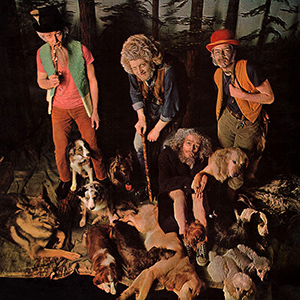
Jethro Tull 1: This Was

Say the name Jethro Tull to the average person, and there’s a good chance his or her mental image will immediately depict a wild-eyed, frizzy-haired guy wearing a codpiece and wielding a flute. But they were more than that, as we’ve come to find. (For one, that guy with the codpiece isn’t named Jethro. Chances are you knew that if you’d read this far, but then again, maybe not.)

They began as many British bands in the late ‘60s did—as a blues band. Tull’s difference was not so much in the power category, but in the jazz influences, most obvious in Ian Anderson’s placement of the flute as the center solo instrument, over the guitar or harmonica. If you’re not a particular fan of the flute, as we haven’t been, that can be enough of a deterrent from going any further with them.

Which would be a shame, because their debut, This Was has a lot to recommend. “My Sunday Feeling” offers up a little Cream volume, and then they take it way down for “Some Day The Sun Won’t Shine For You”, which is basically “Key To The Highway” with new lyrics. A snaky riff underpins “Beggar’s Farm”, and Ian steps aside to let guitarist Mick Abrahams sing on “Move On Alone” (foreshadowing alert!) complete with a sympathetic horn arrangement. Side one ends with “Serenade To A Cuckoo”, a Roland Kirk instrumental that the liner notes helpfully inform us was the first thing Ian learned on his flute. (Well, not that helpfully, printed as they are in neon green text on a bright orange background.)

“Dharma For One” is another jazzy instrumental, although one they wrote themselves. As drum solos go, Clive Bunker is no Ginger Baker, but the guitar has a cool tone. They take a trip to more typical blues with “It’s Breaking Me Up” (complete with harmonica) and yet another version of “Cat’s Squirrel”. “A Song For Jeffrey” is a striking departure from the program, combining blues and skiffle into the sound that would soon become all theirs. With its open ending, the minute or so of “Round” serves as something of a coda.

The title is equally open-ended, one reading being “This Was what we sounded like then, and we’ve moved on”. If that’s the case, so be it; we didn’t expect to enjoy at as much as we did on first listen, and maybe other newbies will have the same experience. Fans knew all along, and they, like the band itself, were on to something.

The Tull catalog has undergone a handful of sonic re-evaluations in the digital era; the initial expanded This Was added three contemporary tracks from singles, while the eventual “40th Anniversary” edition included mono and stereo mixes, a pile of BBC performances, and further singles. Because seemingly every album that came out in 1968 required a 50th Anniversary edition, This Was got one too. This time, in addition to the original mono and stereo mixes and BBC stuff, there’s a new stereo mix of the album and subsequent single, plus some unreleased tracks and further rare cuts. And a DVD with surround mixes and whatnot.

Jethro Tull This Was (1968)—
2001 remastered CD: same as 1968, plus 3 extra tracks
2008 40th Anniversary Collector’s Edition: same as 2001, plus 22 extra tracks
2018 50th Anniversary Edition: same as 2008, plus 21 extra tracks

Wednesday, February 23, 2011

Rolling Stones 37: Rock And Roll Circus

Way back in 1968, around the time of the original release of Beggars Banquet, the Stones decided to promote it with a TV special built around the concept of a variety show, with guest performances and their own mini-concert set. It was then shelved immediately after filming completed, ensuring that Rock And Roll Circus became one of the most legendary unreleased projects of the rock era. (Incidentally, Michael Lindsay-Hogg can claim involvement in two such deals.)

Its legend only grew when one of the performances, the Who playing a fantastic version of “A Quick One”, was included in their 1979 movie The Kids Are Alright. With its status as a notoriously incomplete event, it was particularly surprising when the film (and matching CD) was released intact a good 28 years after the original taping.

It was worth the wait. Rock And Roll Circus is an amazing snapshot in time, showing the Stones at a key place in their development, playing “Jumpin’ Jack Flash” and four songs from Beggars Banquet, and previewing “You Can’t Always Get What You Want”. Even Brian Jones played with enthusiasm, adding some slide guitar despite one hand in a cast. (He’d be dead the following July; indeed the liner notes make mention of all the participants who’d passed on in the interim.) And of course, we always like hearing Nicky Hopkins play piano.

The guests are revealing, as well. Taj Mahal wasn’t well known anywhere yet, and Jethro Tull still sounds like a blues band. Marianne Faithfull sings one song sweetly, and the Who did indeed blow everyone else off the stage with their definitive take on “A Quick One”. The most surprising performance was that of the Dirty Mac, a supergroup involving Eric Clapton, Mitch Mitchell, and Keith Richard (on bass) backing John Lennon for a rendition of “Yer Blues” from the just-released White Album. Unfortunately, the same combo continues playing behind Yoko Ono, in a sloppy jam you’ll be happy to skip.

When it finally came out, Rock And Roll Circus did indeed live up to its hyped legend. One only wishes that the bands could have played more songs, and longer. They did, after all.) But what’s there is what there was, and the program flows nicely on CD. Finally.

Over the years various DVDs offered bonuses in the way of additional footage and multiple angles, but it took another two decades for any further audio to be released. Nothing was added to the main program, but the deluxe expanded package added a second CD with three further Taj Mahal songs and Brian’s introduction of two pieces by classical pianist Julius Katchen (who would beat Brian to the grave by a couple of months due to cancer). Most exciting are three more performances by the Dirty Mac: an alternate take of “Yer Blues”, a long-bootlegged “Warmup Jam”, and even a passable attempt at “Revolution” that breaks down when John says he doesn’t remember what to do for the solo; why he didn’t just ask Nicky Hopkins, who played it, is lost to the ages.

The Rolling Stones Rock And Roll Circus (1996)—4
2019 Deluxe Edition: same as 1968, plus 9 extra tracks