Showing posts with label david gilmour. Show all posts

Friday, September 20, 2024

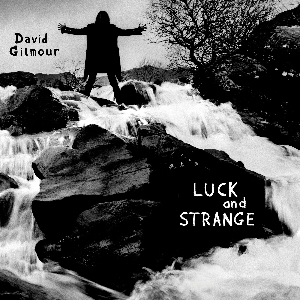
David Gilmour 5: Luck And Strange

Seemingly on something of a nine-year plan, David Gilmour emerged post-pandemic with only his fifth solo album. Luck And Strange apparently came together very quickly, for him, and he’s settled into his older voice, which we feared was on its way out last time. In co-producer Charlie Andrew he gained a foil who kept him on track, and didn’t let him fall back on old habits or tropes. That’s a tall order when the lyric, which focus on the familiar themes of aging and mortality, provided as ever by wife Polly Samson. Some familiar sidemen appear in the credits, and his now-adult children contribute to several tracks, but the biggest surprise is the legendary Steve Gadd drumming on half the album. Orchestra and choirs appear, but not excessively.

“Black Cat” is a haunting instrumental, Gilmour playing his signature tone over Roger Eno’s piano. If anything, it’s too short. The title track stemmed from a jam with Richard Wright a year before his death, and his distinctive electric piano adds all the color. If the verses seem a little simple musically, wait for the choruses and bridge, and daughter Romany’s harmonies are lovely. “The Piper’s Call” begins with a plaintive ukulele strum but soon builds, with another soaring chorus, then almost imperceptibly into a funky stomper with a solid solo taking it out. It’s a stark contrast into “A Single Spark”, which almost seems like a throwback to Beth Orton trip-pop, with some wonderful layers. “Vita Brevis” is all too brief for an instrumental, the title of which translates as “life is short”.

Romany plays the harp on that, and her voice is front and center on “Between Two Points”, a cover of an obscure (to us) song from 1999 originally written and recorded by the Montgolfier Brothers duo. It’s a haunting performance, and her take is exquisite. At this point the relative heaviness of “Dark And Velvet Nights” sticks out, opening with feedback and a bombastic fanfare. He spends a lot of time wailing on this, supported by another throwback in the ‘70s, almost Philly soul strings. Then it’s back to being pensive on “Sings”; after albums full of imagery and near-poetry, it’s striking to hear him sing of such things as “Portobello Road”. (Near the end we hear a snatch of his original hummed sketch for the tune, with his then-toddler son adding encouragement. It’s very sweet.) As “Scattered” crawls in, a Leslied piano recalls the effect on “Echoes”. A more successful version of the ruminating that slowed down Rattle That Lock, it all builds via some crazy cocktail piano to first an acoustic solo then a more archetypal electric one, but he’s wise enough to calm things down for a subdued coda.

As usual, the album was released in various permutations with extra material. The so-called deluxe CD added the one-off, gypsy-flavored single “Yes, I Have Ghosts” from 2020, sung with Romany and originally released on the audiobook of the novel Polly published that year, and the original 14-minute “barn jam” from 2007 with Richard Wright that was the genesis of the title track. (Vinyl and Blu-ray boxes also added two alternate “orchestral” mixes and sometimes a demo of “A Single Spark”.)

Possibly the best thing about Luck And Strange is that it doesn’t pointedly sound like Pink Floyd, yet it sounds completely like David Gilmour. It may not be, as he’s stated, his best work since The Dark Side Of The Moon—he’s certainly had several high points since then—but it is very strong, and perfectly timed for a fall release. Though we still don’t know what Ozzy Osbourne is doing on the cover.
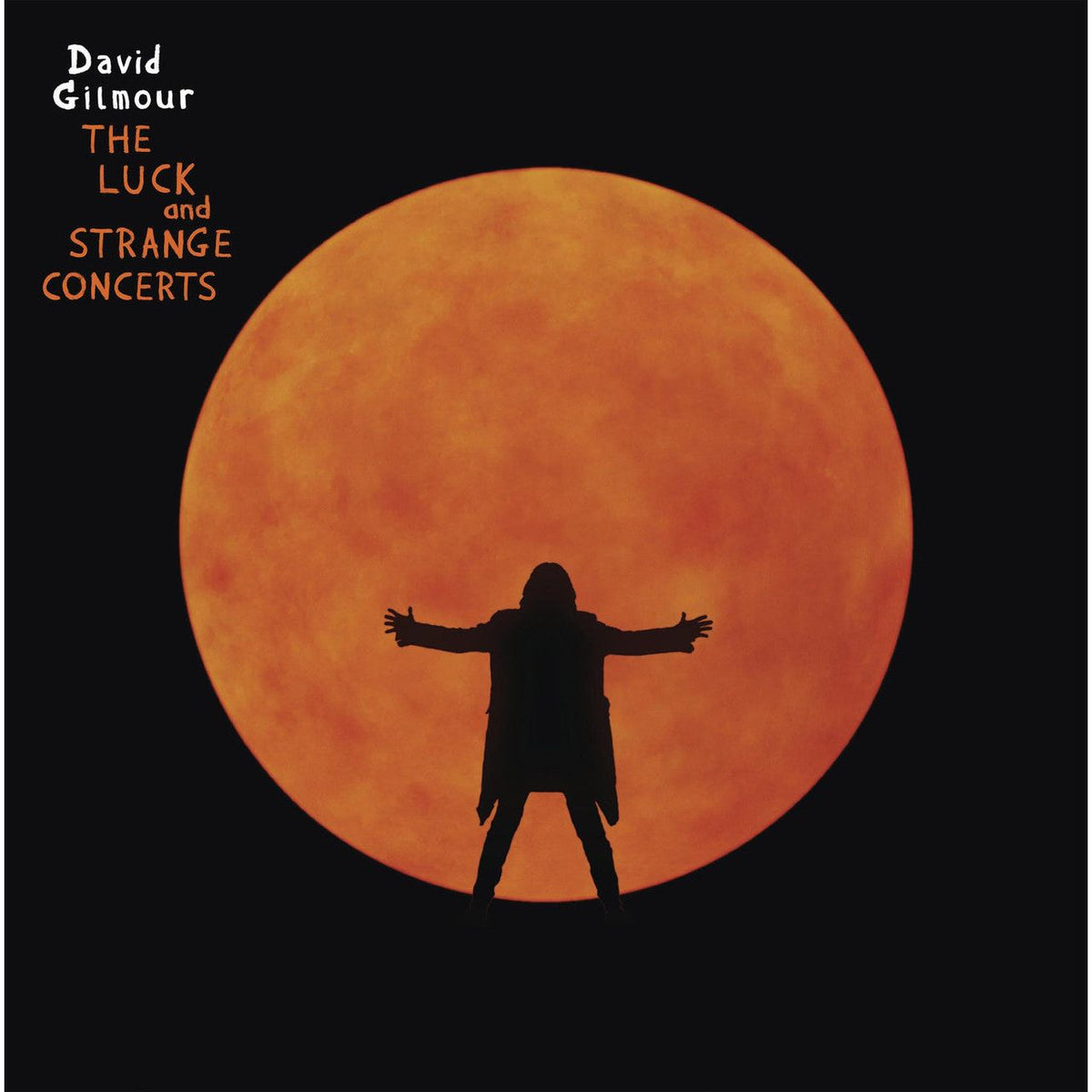
He toured behind the album, kinda, playing residencies in five cities, and just as with the last two, a live album followed. But rather than spotlight a single show, The Luck And Strange Concerts was culled from the entire run. The band is solid as usual, with the stalwart Guy Pratt on bass, Greg Phillinganes on keys, and a few of the supporting players from the album. Romany gets her spotlight on “Between Two Points”, as well as part of the backing vocalists who tackle a subdued “Great Gig In The Sky”. Following the intros of “5 A.M.” and “Black Cat”, the title track kicks off the vocal portion. The “Breathe” into “Time” sequence is back at the top of the set, and the rest of the program goes between songs from the album and the usual cherry-picked oldies from his and the Floyd catalog. Only “A Great Day For Freedom” hadn’t been played on the last tour. David’s in great voice throughout, and taking breaks to play lead helps. (The shows in Rome were filmed and released on DVD and Blu-ray as Live At The Circus Maximus, as well as in a box set that also had the live album on CD and LP. And a book. And postcards. And stickers. And a poster.)

David Gilmour Luck And Strange (2024)—
David Gilmour
The Luck And Strange Concerts (2025)—3

Tuesday, October 20, 2015

David Gilmour 4: Rattle That Lock

Having put the band to bed, anything David Gilmour does under his own name will likely never enjoy any wider audience than Pink Floyd fans. That’s probably fine with him, as evidence by most of his quotes in the interviews given to promote Rattle That Lock. However, those concerned that he got all the Floyd out of his system with The Endless River needn’t be concerned.

Now that he’s truly on his own, he relies on wife Polly Samson for most of his lyrics, but he also knows people come to hear his guitar. “5 A.M.” is something of an instrumental overture, just like every album he’s put out since 1987. It sets a classic mood, unfortunately jarred awake by the title track, which bases its hook on a jingle used in the French railway system. (No, really.) It’s a little too funky for this album, but no worse than “Blue Light”. “Faces Of Stone” revives the Dylanesque strum that Roger Waters used all over his solo albums, and that unfortunate calliope that always sounds like a scary carnival came to town. “A Boat Lies Waiting” is something of a tribute to Richard Wright, using what sounds like one of his piano themes, and a snippet of his own voice before the song proper begins. Harmonies by David Crosby and Graham Nash add to the etherealness, if that’s a word. A tempo returns for “Dancing Right In Front Of Me”, not quite jazzy enough to be jazz, and too gloomy to be jaunty. An inspection of the credits reveals the man himself on piano, and a nice job too.

His son plays piano on “In Any Tongue”, another near dirge elevated by every chorus. “Beauty” continues the general tone with an upbeat instrumental featuring his trademark slide guitar, and very different from what comes next. After the hint of jazz in the first half, “The Girl In The Yellow Dress” is the sound of a small combo in a smoky club, with Jools Holland on piano and Robert Wyatt on cornet. A churchy organ and a choir open “Today”, but a groove interrupts and provides a more rocking tune. Finally, “And Then…” brings the album full circle, with a different arrangement of the opening track, ending with the sound of a crackling fire.

As might be expected, Rattle That Lock improves with familiarity, but that also shows what time has done to his voice. It’s not just the high notes he can’t hit; the rasp suggests a melancholy only hinted at on his last solo album. It’s not a masterpiece, and far from, but at 69 years old, we should be so lucky to still have him.

Just as he did a decade before, a massive tour followed the release of the album, and then a live CD/DVD or Blu-ray combo followed in several permutations. The big gimmick this time was a live performance in Pompeii, in front of an actual audience as opposed to the empty theater, where Pink Floyd had filmed a concert 45 years before. Once again the set leans on the newest album, with a smattering of Floyd epics, and despite some repetition it’s a generally different setlist than the last go-round. (“The Great Gig In The Sky”, included in tribute to Richard Wright, has three vocalists to make up for the one on the record, and it doesn’t work.) People who care about such things will note the inclusion of hired guns Greg Phillinganes and Chuck Leavell on keyboards; Davis is also in slightly stronger voice throughout than he was on the album.

David Gilmour Rattle That Lock (2015)—3
David Gilmour
Live At Pompeii (2017)—3

Friday, April 15, 2011

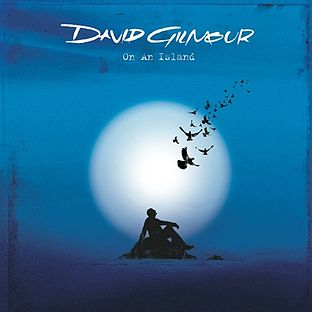
David Gilmour 3: On An Island

After his longest musical silence yet, broken only by the surprise reunion of Pink Floyd with Roger Waters for the Live 8 charity concert, David Gilmour was content to be taken on the strength of his own name again. Such things happen when a guy turns sixty.

On An Island was co-produced with the legendary Chris Thomas, who’d mixed both The Dark Side Of The Moon and The Division Bell (among other things), and Phil Manzanera, a unique guitarist best known for his work with Roxy Music. Richard Wright appears on a few tracks (and indeed, the subsequent tour) but Nick Mason is absent.

Much of the album suggests the feeling of floating downstream, particular on the floating title track, wrapped comfortably within the harmonies of David Crosby and Graham Nash. “Smile” is a pretty little love song, recorded nearly by himself with his wife on some vocals. The most schizophrenic song is “A Pocketful Of Stones”, which begins slowly for about a minute before switching to a poignant piano accompaniment under lyrics that have been suggested to be about either Syd Barrett or George W. Bush. The album even ends in a cycle, with the aptly titled “Where We Start” reprising the mood and feel of the early tracks.

Several instrumentals change the moods as well. “Castellorizon” adds orchestration to another guitar solo, the dreamy “Then I Close My Eyes” is prefaced by the sound of Turkish instruments, and “Red Sky At Night” is not a cover of the hit by The Fixx, but is instead a showcase for Gilmour on saxophone, of all things.

On An Island is pretty, slow and generally quiet, and the attempts to rock don’t; those who purchased the CD at Best Buy would very much have enjoyed the six-minute “Island Jam” included on a bonus CD. But overall it’s a nice if underwhelming album, and at least he didn’t try to disguise it as the return of Pink Floyd, because it wasn’t.

The tour for the album spawned two DVDs, the second of which was also released on CD in a dizzying variety of editions. Like the tour, Live In Gdańsk begins with a suite from Dark Side (of course) before a performance of On An Island in its entirety. A smattering of oldies make up the rest of the program, with a few tributes to Syd, who died that summer, a full-length “Echoes”, and even “Fat Old Sun”. The more elaborate packages included various DVDs with bonus content, some including a bonus performance of “Wots… Uh The Deal”, sure to drain the wallets of the most devout Floyd enthusiasts. As live albums go, it’s enjoyable, unique for the live orchestra on some songs, Dick Parry on occasional saxophone, and Richard Wright on everything, as he himself died the week before the album came out. (Slightly more appealing was the Arnold Layne EP, a live tribute to Syd that featured two versions of the title track, one sung by Rick Wright and the other by David Bowie, plus Gilmour’s acoustic tribute of “Dark Globe”.)

David Gilmour On An Island (2006)—3
David Gilmour
Live In Gdańsk (2008)—3

Wednesday, January 26, 2011

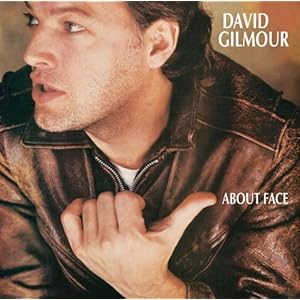
David Gilmour 2: About Face

In the year following the last Floyd album, the band’s two creative leads took their own paths away from the band. Roger Waters recorded his first bona fide solo album, while David Gilmour’s own album was, as would be expected, much more accessible.

About Face is simply a collection of songs that resembled his band’s more radio-friendly moments. A variety of session cats provide the support, and Floydian touches persist, particularly on the intentionally overblown instrumental “Let’s Get Metaphysical”, where his distorto guitar is backed by the National Philharmonic Orchestra. (A glance at the inner sleeve will reveal the words “Fleudian slip” in the margin.)

In general, the songwriting is much more consistent than the alternating vocals and instrumentals of his first solo album. In fact, two tracks feature lyrics by Pete Townshend, just to be on the safe side. “Love On The Air” is almost romantic, with a pretty melody and typically obtuse concept, while “All Lovers Are Deranged” is an all-out rocker.

There’s a good deal of breadth on the album as well. “Murder” takes a plaintive English folk melody and extends it into one of the better songs about the death of John Lennon. Another highlight, “You Know I’m Right”, is a clever slap at Roger that eerily predicts his behavior by a few years. Just to show that Roger wasn’t the only one concerned about war and mortality, “Cruise”, “Near The End” and “Out Of The Blue” consider the futility of life from a variety of angles.

Unfortunately, About Face does suffer from the polish common to many ‘80s albums, particularly on the synth-heavy “Until We Sleep”, and “Blue Light”, which has way too many horns. But as a product, a listenable album that’s worth playing, fans wouldn’t be disappointed.

David Gilmour About Face (1984)—

Wednesday, December 15, 2010

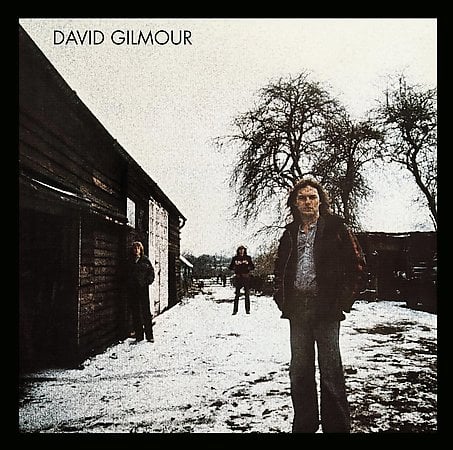
David Gilmour 1: David Gilmour

While Roger Waters stewed over the pitfalls of stadium rock and labored over two very personal potential concept albums, David Gilmour took off with a couple of friends to record his first solo album. Using a core rhythm section along with his own instrumental contributions, the result was a lean, satisfying listen.

David Gilmour sports vocals on six of the nine tunes, with the others showcasing the guitar sound kids have come to love. The opening instrumental “Mihalis” and “Short And Sweet” (written with Roy Harper of “Have A Cigar” fame to Floyd fans) use the same delayed D-strums that would eventually anchor “Run Like Hell”. The best, and most Floydian song, the radio hit “There’s No Way Out Of Here”, wasn’t even written by him, but it’s still pretty killer. “Cry From The Street” is mostly a groove that gives him a chance to stretch outside a Waters lyric—when you can understand what he’s singing—while “So Far Away”, anchored by a piano, is just lovely. The instrumentals “Raise My Rent” and “It’s Deafinitely” [sic] bookend “No Way” to deliver some tougher sounds, while “I Can’t Breathe Anymore” begins quietly enough before exploding into a big finish.

It would be a long time before he considered himself anything of a worthy lyricist, and most of his efforts here aren’t very exciting. That only makes the guitar work more welcome, and on David Gilmour he certainly lets the music do the talking. Without a concept to tie all the tracks together, it’s an underrated album that provides some respite from the more ponderous entries in the Floyd-related catalog. (Also, the current remastered CD and streaming version feature longer edits for most songs, increasing the total playing time by about two minutes.)

David Gilmour David Gilmour (1978)—

Wednesday, June 10, 2009

Pete Townshend 7: Deep End

During the promotion for White City, Pete put together a fairly stellar band dubbed the Deep End for a pair of charity shows at London’s Brixton Academy. A full-length video that’s pretty entertaining was released in early 1986, while a promotional EP was extended into a sparsely packaged official album by year’s end. It’s an odd grabbag of songs and covers, such as “Barefootin’”, “I Put A Spell On You”, and The English Beat’s “Save It For Later”. The crowd goes nuts for the Who songs, but his own version of “After The Fire” (a hit that year for Roger Daltrey) made it essential.

Nearly two decades later Pete released an official bootleg of the complete second show on CD as part of an ongoing series via his website, after which it went out of print, only to be revived two decades after that as part of a box set. It’s still an essential listen. For starters, the album’s original ten tracks work much better in this context. There are a few more trad jazz and R&B covers—including “Harlem Shuffle”, before the Stones got their mitts on it—and Pete even turns the microphone over for two songs to special guest David Gilmour, who sings his own “Blue Light” and “Love On The Air”, which Pete co-wrote. (Granted, he also lets Rabbit Bundrick do a song of his own, but you can always skip that one.) Gilmour’s on fire for duration of the show, making this essential for Floydheads too.

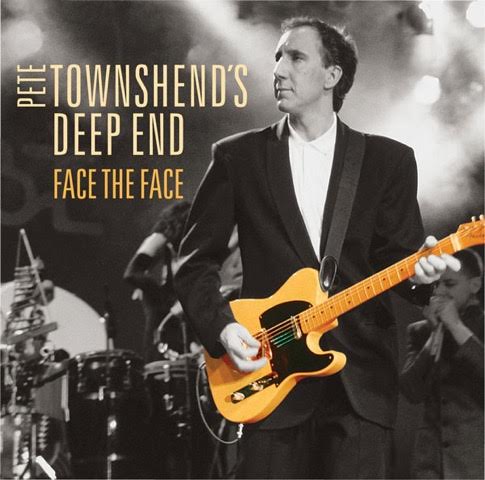
The Deep End performed on just one more occasion—the MIDEM music conference in the south of France a few months after the Brixton shows, and originally broadcast on the German Rockpalast TV show. The Eagle Rock label put out Face The Face, a combination CD and DVD set of the performance some three decades later, with a shorter setlist including three songs not performed at Brixton. Unfortunately, “Hiding Out” is driven by a primitive computer, “Rough Boys” is missing the electric fire of the studio version, and he forgets several words in “Slit Skirts”. The band doesn’t seem as tight, and Pete even seems like he’d less than thrilled to be on the stage. But when it gels, it gels well, and more so with the video counterpart.

Way back then, however, the ten songs on the mini-album were something of a tease, and some of us were saving our pennies in hope that Pete would do a larger-scale tour. At this rate, it seemed, he had a lot more music in him. But looking back, the shows can be seen as something of a peak, since his career was about to plateau, as we shall soon see.

Pete Townshend’s Deep End Live! (1986)—3
2006 remaster: same as 1986, plus 2 extra tracks
Pete Townshend Live > Brixton Academy ‘85 (2004)—4
Pete Townshend’s Deep End Face The Face (2016)—3