Showing posts with label beach boys. Show all posts

Tuesday, September 15, 2026

Beach Boys 6: All Summer Long

By now the Beach Boys were in direct competition with the Beatles, and Brian Wilson was determined to make albums of their quality, even in the chopped-up versions Capitol concocted from the British sequences. More and more he was utilizing members of the Wrecking Crew in the studio along with the Boys themselves. But he still had a brand to maintain, so All Summer Long kept up the image of fun, fun, fun in the sun, sun, sun.

It was also required by law to start an album with a hit single, and with “I Get Around” they had a well-deserved #1 amid some pretty stiff competition that didn’t sport harpsichords. The title track is a slightly better thematic rewrite of “Keep An Eye On Summer”, but it’s so singalongable that you may not notice the marimbas and piccolo solo. “Hushabye” was a cover of a doo-wop tune, and another nice showcase for their harmonies; now we can hear a touch of “Heroes And Villains” in the opening and closing piano. A twist on the car theme comes in “Little Honda”, a paean to the Japan-manufactured motorcycle with a chorus that must have written itself. (We suspect they were gunning for an endorsement, or at least free bikes.) “We’ll Run Away” is a rather simpering tune about kids who really, really wanna get married, but it likely reflected Brian’s own feelings about his girlfriend Marilyn, who was all of 16, and only six months away from becoming the first Mrs. Wilson. Whereas Dennis got namechecked on the last album, “Carl’s Big Chance” lets the youngest Wilson solo over standard changes from a Marvin Gaye song. Frankly, he plays better elsewhere.

For more of a progression, “Wendy” is very unconventional, from its tentative intro, through the Four Seasons-style vocal arrangement, the organ solo, and the throwback in the coda; an arrangement worthy of George Martin. Given the era when it was written, “Do You Remember?” can be heard as a reminder to American fans about the rock ‘n roll pioneers who inspired their British idols. Typical for Brian, it’s barely 90 seconds long, but seems longer. Much more complicated is “Girls On The Beach”, which still recycles phrases from “Surfer Girl” and other dreamy Brian concoctions. “Drive-In” continues the summer theme, and it is kinda funny, though Mike Love is a little too old to be singing about such mischievous antics. “Our Favorite Recording Sessions” is more unfortunate filler, two minutes of chatter without context and blown takes that only serves to set up “Don’t Back Down”. This would be their last song overtly about surfing for some time, but at least the attaboy sentiment is universal, and Brian’s falsetto counterpoint to the main melody is still impressive.

All Summer Long showed that Brian was growing more innovative, but he was still shoehorned into the same old message, and the pressure of touring while keeping up with a release schedule affected the quality. Clearly, he needed more time and space to create.

The associated bonus tracks on the two-fer CD included striking alternate takes of “Little Honda” and “Don’t Back Down”, plus the eye-opening “All Dressed Up For School”. Beyond the “Louie Louie”-style opening, its lyrics were a little too excited about how much the subject of the song had grown up. As this was to remain an outtake, Brian would use the melody for at least two other songs down the road. (Some fifty years later, the streaming-only Keep An Eye On Summer compilation provided further peeks into the sessions for this album and others.)

The Beach Boys All Summer Long (1964)—2½
1990 CD reissue: same as 1964, plus Little Deuce Coupe album and 4 extra tracks
Friday, June 19, 2026

Elton John 31: Two Rooms

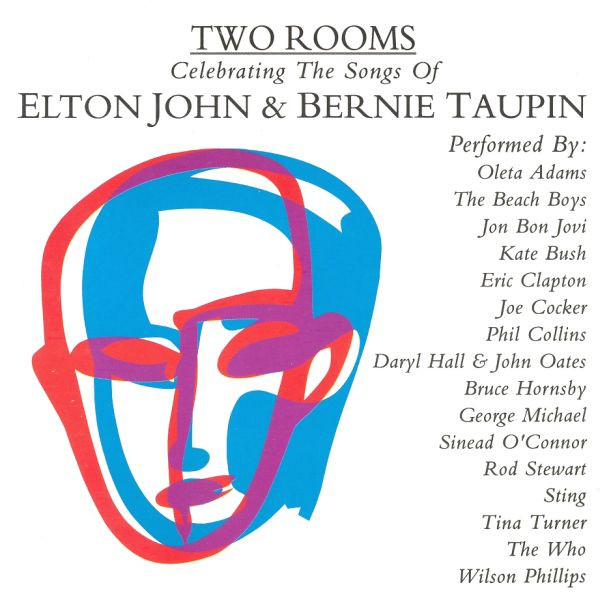
A multi-disc overview was one way for Elton John to assess his career, but he wasn’t done doing that. Along with the box set trend, thematic tribute albums began to be a thing in the ‘90s. Just as with the Grateful Dead the same year, Two Rooms was an all-star compilation “celebrating the songs of Elton John and Bernie Taupin”. Most of the songs were fairly faithful to the original, while still allowing the artists to put their own stamp.

Eric Clapton injects more gospel and a great solo into “Border Song”, then Kate Bush makes “Rocket Man” reggae, albeit with Uillian pipes. Sting’s “Come Down In Time” is a great choice, handled very gently, while the Who plow through “Saturday Night’s Alright For Fighting” with a quote from “Take Me To The Pilot”, just as Elton put “I Can’t Explain” in his version of “Pinball Wizard”. While the photo of the Beach Boys shows Brian Wilson, it’s only Carl, Al Jardine, and Bruce Johnston singing “Crocodile Rock” over a prerecorded track, while Mike Love chimes in with “re-mem-mem, remember-member”. Fittingly, Wilson Phillips (then still popular) follow with “Daniel”. Joe Cocker does a wonderful job belting out “Sorry Seems To Be The Hardest Word”, unfortunately given a boomy arrangement with in-your-face saxophone. Jon Bon Jovi does a band karaoke version of “Levon”; hearing the American pronunciation of “garage”, jars here.

Tina Turner tackles “The Bitch Is Back” for the second time in her career, and nails it, but while “Philadelphia Freedom” is fitting for Hall & Oates, their reading is pretty limp. Twenty years after recording “Country Comfort”, Rod Stewart goes the safe route with a tepid “Your Song”. Oleta Adams, then riding on a hit single, makes “Don’t Let The Sun Go Down On Me” that much more soulful, then Bruce Hornsby takes “Madman Across The Water” to a more gothic place. Sinead O’Connor’s gentle, heartfelt interpretation of “Sacrifice” is possibly the highlight of the album, while Phil Collins’ straight take on “Burn Down The Mission” is mostly notable for Steve Winwood on organ (according to the credits, anyway). George Michael offers a lengthy live “Tonight” with winds and strings, since “Don’t Let The Sun Go Down On Me” had already been claimed; his own duet with Elton on the latter from the same show would be released shortly as a single.

Two Rooms was promoted by a feature-length documentary on VHS, followed by an abridged TV special hosted by Sylvester Stallone of all people. The album wasn’t likely to make new fans for these artists, and like most tribute packages, the novelty wears off quickly. Seventeen years later, the concept would be repeated with a pair of albums with the intent of “reimagining the songs of Elton John & Bernie Taupin”: Revamp sported covers by modern artists ranging from Miley Cyrus and Lady Gaga to the Killers and Queens of the Stone Age, while Restoration was devoted to country artists.

Two Rooms: Celebrating The Songs Of Elton John & Bernie Taupin (1991)—3

Tuesday, May 9, 2023

Beach Boys 32: Sail On Sailor

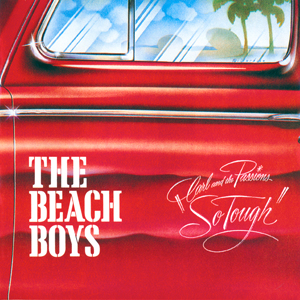
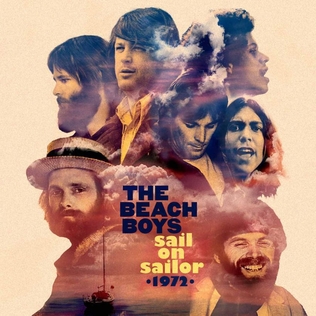
Whether or not the Feel Flows compendium was a critical or commercial success, it was no real surprise that the archivists behind the Beach Boys legacy would follow it up. Named after the best song on both albums, Sail On Sailor: 1972 encompasses the sessions for that year’s Carl And The Passions – “So Tough” and the following year’s Holland. A two-disc version expands both albums with the usual assortment of outtakes, alternate mixes, and live tracks, but that’s a mere shadow of the six-disc version, which devotes two to a Carnegie Hall concert from November of that year.

The show begins with an introduction from manager Jack Rieley, pleading for the enthusiastic crowd not to shout out random requests; he doesn’t explain that doing so will only cause Mike Love to insult them, and he does. (He also takes the occasion of an instrument change to plug transcendental meditation; at another point he predicts that Smile would be out within a year. It wasn’t.) Their set at this point had only a smattering of oldies, with a focus on newer material, which frankly sound better on stage than on records. The new guys, Blondie Chaplin and Ricky Fataar, were definitely key to why the band sounded so good in the studio and onstage at this juncture, and it’s to everyone’s credit that both are prominently depicted on the cover. A second drummer and bass player were also onstage; listen closely and you can hear Tennille singing alongside the Captain! Surfing songs, plus a surprising and driving crash through “Jumpin’ Jack Flash”, bring the show to a close. (The two discs also provide another perspective to 1973’s The Beach Boys In Concert, which was culled from a variety of dates, but doesn’t excuse the inclusion of live performances from later decades elsewhere in the set.)

Relistening to the original albums shows that the boys didn’t have much left in the tank; Brian is all but inaudible on Carl And The Passions, and Holland is still audacious but a mess. Only a few previously unreleased songs are included among the assortment of isolated tracks—which are admittedly, pretty good. A couple from the new guys, including “We Got Love”, which had appeared on In Concert, bolster the Holland portion. An excerpt of a tape of Van Dyke Parks goading Brian into completing “Sail On Sailor” is frustrating but fascinating, just as two takes of the unknown “Out In The Country” have promise; three other Brian sketches are unfinished. Dennis, however, was just gearing up, with his “Carry Me Home” a haunting highlight.

The Beach Boys Sail On Sailor: 1972 (2022)—3

Tuesday, December 7, 2021

Brian Wilson 3: At My Piano

Since breaking free of Eugene Landy’s clutches in the early ‘90s, Brian Wilson managed to create new music—as well as finish old music—and even embark on several tours, supported by several sympathetic musicians dedicated to letting him sing and play. In that time, nine separate solo albums were completed—five albums of new original material, plus tributes to George Gershwin and Disney movies, a Christmas album, and the 2004 incarnation of Smile. Outside of the latter, these adult-contemporary albums didn’t exactly approach genius or break any ground. But as long as he was happy and safe from his demons, that was fine with us.

Each of these projects were usually accompanied by PR activities, press blurbs, the occasional TV interview, and subsequent speculation as to how much he was in control of his own life compared to the protective net around him. That has continued with the release of At My Piano, which purports to be “his classic hits reimagined for solo piano.” Such a description conjures expectations of Brian doing a living room gig, as seen in various YouTube videos posted throughout the Covid lockdowns. His approach there, as it has been for decades, is to pound out chords and basslines rhythm-style, not the New Age approach heard on the album itself. So is it really Brian playing so prettily?

Despite our initial skepticism, we say yes, and it’s lovely. While the playing is more intricate than usual, what likely happened is that he played the chords, then overdubbed the melodies, harmonies, and counterpoints that have become so recognizable over the decades afterwards. In other words, he crafted these tracks just like he crafted all those Beach Boys classics in the first place, only doing the parts by himself rather than with a Gold Star Studio full of the Wrecking Crew. (Of course, if he really is playing all those parts live in one take, even better. But that would mean he has six hands.)

The selections are a mostly predictable grab bag of classics from the band’s heyday, beginning with the prettier ones, like “God Only Knows”, “In My Room”, and “The Warmth Of The Sun”, highlighting just how different these songs were from the standard pop songs of the time. “Wouldn’t It Be Nice”, “You Still Believe In Me”, and “I Just Wasn’t Made For These Times” provide a Pet Sounds transition to “Sketches Of Smile”, a mini-suite incorporating “Our Prayer”, “Heroes And Villains”, and “Wonderful” before a full-fledged “Surf’s Up”. “Friends” is revealed to be something of an Erik Satie homage, while “Mt. Vernon Farewell” is rescued from the suite appended to Holland. Unfortunately, having “Good Vibrations” crash in after that is just wrong.

Despite that, as we said, At My Piano is just lovely, and something about the softness of the performance and the mix make it ideal for the holiday season. Without intending to, Brian Wilson made a Christmas album. Nice of him.

Brian Wilson At My Piano (2021)—4

Friday, September 10, 2021

Beach Boys 31: Feel Flows

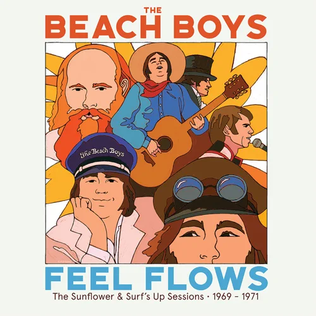
The so-called copyright extension program continued in Beach Boys Land. 2018 brought two digital-only collections from the sessions for Friends and 20/20 respectively, accompanied by the 114-track On Tour: 1968. A comparatively skimpy three-song EP the following year was all that represented 1969, until it was revealed that a larger project was underway. Feel Flows: The Sunflower & Surf’s Up Sessions 1969-1971 not only expanded two very popular albums, but added session outtakes and live versions on the consumer’s choice of a two-disc or five-disc set. (The five-disc version didn’t merely add three more discs to the two-disc version, which picked and chose among its extras from all over the total offered. None of the songs from that EP were included anywhere.)

The live performances that follow each album proper are somewhat confusing, since only a few songs come from the early ‘70s. Two of the songs were originally recorded for Sunflower but not released till 1976, so it makes sense that their live versions date from then, but does anybody really want to hear anything from the ‘80s or ‘90s? More enjoyment comes from the various singles and one-offs from the same period that would have better bolstered the two-fers of these albums that came out in 2000 with zero extras. Granted, those include Brian’s odd mad scientist imitation on the Halloween-themed “My Solution” and the band’s premiere recording of Terry Jacks’ “Seasons In The Sun”, but also such surprises as the aptly titled “Sweet And Bitter”, a brief instrumental of “You Never Give Me Your Money”, and some rare Dennis-penned material, mostly with future The Captain, Daryl Dragon. Various songs that would be redone for future albums or emerge on CD-era compilations fill out the story as well.

Much of the sessions discs for both albums is dedicated to new mixes that focus on the backing tracks plus harmonies. On the best tracks, the tightness of the band is underscored, while the worst show up the dated instrumental choices of the era, usually horns or flutes. (Sunflower included a lot of input from Dragon and the Wrecking Crew; for Surf’s Up they apparently worked on their own.) In all cases, their skill at concocting a vocal blend no matter the track or style is unparalleled. There’s an awful lot for fans here, and it’s not all awful, either.

The Beach Boys Feel Flows: The Sunflower & Surf’s Up Sessions 1969-1971 (2021)—3

Tuesday, October 3, 2017

Beach Boys 30: Sunshine Tomorrow

As we don’t claim to have any legal authority or expertise, please forgive some simplification. There’s this 50-year copyright rule, wherein forgotten or buried recordings by certain bands must be claimed and/or released under threat of slipping into public domain. Like other bands and artists of their heritage, the Beach Boys catalog department took advantage of streaming trends and began quietly issuing digital albums in order to beat that pesky rule. Starting in 2013, every December or so (sometimes earlier) a title would appear offering a bounty of vault tracks from the Boys. The Big Beat 1963 consisted mostly of Brian Wilson songwriting demos, while the following year brought forth session highlights and something of an expansion on Beach Boys Concert. After the Uncovered And Unplugged edition of Party!, and Pet Sounds and Smile having already been mined for deluxe box sets, a chunk of the next copyright extension release was actually pressed onto CDs.

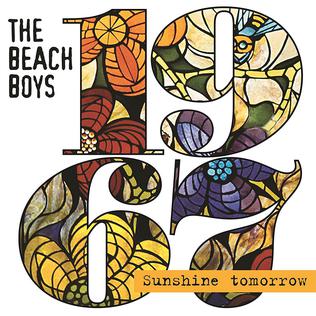
Whoever was in charge knew which albums were getting the most revisionist-theory love, so 1967—Sunshine Tomorrow picked up more or less where the Smile box left off, but rejigged the chronology. The first disc is devoted to Wild Honey, which some folks say is superior, beginning with the first-ever true stereo mix of this very short album (save “Mama Says”, which is still in mono). The album still sounds very thin, especially the drums, but here it’s followed by a couple dozen session outtakes and some contemporary live tracks, though “Aren’t You Glad” comes from a 1970 concert. The second disc jumps back several months to reveal 18 minutes of session highlights from its predecessor, the labored but laconic Smiley Smile. But they truly bury the lede by including the first official release of the notorious unreleased Lei’d In Hawaii album.

This project was originally designed to re-establish the band as a force to be reckoned with in the wake of the Summer of Love. Smiley Smile was about to be released, so they went to Hawaii to record a live album, with Brian in tow for his first full live appearances with the band since the end of 1964 (and his last for another few years). The concerts didn’t go so well, and neither did the live-in-the-studio sessions that happened in an attempt to make up the difference. Wild Honey was then quickly recorded, and released only three months after Smiley Smile.

What would have been Lei’d In Hawaii combined the later studio recordings with a few songs from rehearsals for the live show. It’s a strange mix of old and new material, beginning with a nearly tongue-in-cheek introduction before a faithful cover of the Box Tops’ “The Letter” that just grinds to a halt. Brian’s electric organ unfortunately dominates the songs, which are frankly inert, including a changed perspective on the retitled “Help You, Rhonda” and a cover of the Mindbenders’ “Game Of Love” that suffers from tempo troubles. At least their harmonies on “Surfer Girl” are still impeccable; those voices help Bruce sing “With A Little Help From My Friends”, and we hear a Smile influence on “Their Hearts Were Full Of Spring”.

Allegedly, an audience was supposed to be overdubbed for the final mix, and we’re not sure that would have helped. The handful of tracks included from the actual concerts sounds pretty limp, though some girls are screaming anyway; Mike Love is as obnoxious as ever. The set ends, thankfully, with a return to the studio, with a repeat of the late-1967 tape of Brian trying to play and sing “Surf’s Up” solo at the piano, followed by an a capella mix of “Surfer Girl”.

Sunshine Tomorrow is pointedly for completists, but some thought was clearly put into it. It’s a smart move to start the program with the more focused music of the period, as opposed to the fractured material that made up the previous album and the aborted Hawaii experiment. Plus, we can better discern Brian’s involvement throughout, with his voice and keyboards prominent in the outtakes. (Two more compilations were made available digitally by the year’s end to further cause salivation. Sunshine Tomorrow 2: The Studio Sessions offered another disc’s worth of work-in-progress material and isolated elements from all three albums, while the six-hour Live Sunshine included seven complete concerts from the era, including each of the doomed Hawaii shows.)

The Beach Boys 1967—Sunshine Tomorrow (2017)—2½

Tuesday, October 13, 2015

Beach Boys 29: Love & Mercy

One of the better musical films of recent years was Love & Mercy, which purported to tell of the romance between Brian Wilson and his current wife, against the backdrop of the power struggle between Brian’s demons and Dr. Eugene Landy (played with typically bewigged yelling by Paul Giamatti, who’s made a career out of wearing wigs and yelling), juxtaposed with flashbacks to the Pet Sounds era.

The role of Brian was split between young Paul Dano, whose bowl cut helped accentuate the fragility, and John Cusack, who doesn’t really look like Brian but manages to command attention. (We predict that one day he’ll get all the quirky roles that Bill Murray is mastering now.) Much like I’m Not There, which split seven perceived facets of Bob Dylan’s personality between seven actors, it’s best to appreciate the film for capturing the mood and setting of the ‘60s and ‘80s. Besides, most people going into the theater likely knew the ending anyway.

To that end, the recreations of the studio sessions were said to be highly accurate, and the actors chosen to play the other Beach Boys were also believable, both in their befuddlement over Brian’s condition and Mike Love’s frustration at his cousin’s quirkiness. And we have no trouble watching Elizabeth Banks do anything.

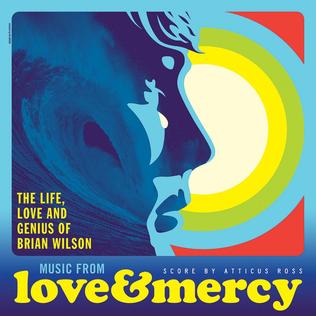
So while it’s not really a Beach Boys movie, the eventual soundtrack album had to include music originally credited to them, and it does, but there’s more. The score can be best described as an ambient mashup; composer Atticus Ross weaves in elements of dozens of Beach Boys tracks sourced from the original master tapes to paint a sonic mural of Brian’s head. While often illustrating edgy scenes, the effect is more hypnotic than unsettling (except when some dialogue creeps in).

If anything, the inclusion of the well-known recordings of “Don’t Worry Baby”, “God Only Knows”, and “Good Vibrations” distract from the effect of the score. However, Paul Dano’s hesitant rendition of “God Only Knows” and the live recording of the real Brian Wilson singing the song from which the film took its title (both depicted in the film) provide context and closure, respectively. We don’t even mind “One Kind Of Love”, a song from Brian’s most recent solo album, which works as accompaniment to the closing credits.

Just as most viewers were already Beach Boys fans, they probably also have the music that the film shows being created. This album makes a nice bonus feature on the music’s history, and the magic of programmable CD players and iTunes playlists can isolate the new montages.

Atticus Ross Music From Love & Mercy: The Life, Love And Genius Of Brian Wilson (2015)—3

Tuesday, March 31, 2015

Beach Boys 28: Made In California

By the 21st century, Brian Wilson had managed to outlive both of his brothers, and kept his distance while two and sometimes three competing acts toured the summer circuit to revive the sound of the Beach Boys. Meanwhile, every few years brought another permutation of the “Good Vibrations” single (in stereo! 5.1 surround! karaoke-style!) or some other anniversary package with rare or new mixes, backing tracks, a cappella mixes and “newly discovered” outtakes. The laughably titled Endless Harmony single disc and the later Hawthorne, CA double-disc set were undoubtedly inspired by the Beatles’ Anthology project, except for the random sequencing and arbitrary inclusion of material from well after the band’s heyday. (Of course, in the time before The Smile Sessions the occasional bone from that era only tantalized and infuriated collectors further.) Then there were the themed packages—Sounds Of Summer, Warmth Of The Sun, Summer Love Songs, Classics Selected By Brian Wilson, ad nauseam—that merely raked through the same patch of sand.

But a fiftieth anniversary is a big deal—just ask the Stones—so only twenty years after their thirtieth anniversary box set, the Beach Boys issued 50 Big Ones on two CDs, and put out a new box set with six CDs, which you’ll notice is one higher than the last one. As they’d recorded precious little material in those two intervening decades, that means the balance is made up of “60 unreleased tracks”. (No points for guessing that this total includes live versions and alternate mixes, some contemporary, some from this century.)

Yet Made In California doesn’t merely inflate the sequence of the previous box. That format has been ignored, they’ve started from scratch, included some songs that weren’t on the first and ignored some that were. So yes, you have to have both, and that’s the law.

The story is still chronological through the first four discs and part of the fifth. Naturally we start with songs about surfing and cars (thanks for “Surfers Rule”, no thanks for “Ballad Of Ole Betsy”), complete with session chatter, and that means Murry Wilson haranguing the kids on how to craft a hit. By the end of the first disc, Brian has started to run the show and write more “mature” music with lyrics to match, and that develops on the disc two; however, the splendor of “California Girls” and “Let Him Run Wild” has to distract from the likes of “Salt Lake City” and “Amusement Parks U.S.A.” Five of the best songs from Pet Sounds set up “Good Vibrations” and a smattering of Smile material, including “Mrs. O’Leary’s Cow”, but using the Smiley Smile version of “Wonderful”.

From there, the value is solely in the ears of the listener, and how one feels about the rest of their career. Disc three starts well with “Darlin’”, to take out the rest of the ‘60s, moving through various album tracks and shoulda-beens unearthed in the ‘90s (“Sail Plane Song”, “Soulful Old Man Sunshine”, f’rinstance) up through “‘Til I Die” and “Surf’s Up”. Disc four covers the ‘70s, and like disc three, also pays more attention to Dennis and Carl than the other box did, but where the hell is “Long Promised Road”?

The first ten tracks on disc five cover 1980 through the present, including two decent outtakes from an unfinished 1995 album and, yes, “Kokomo”. Then it’s a wild stretch through live recordings spanning three decades (nothing from the ‘80s) proving that they could always put on a decent show. And just to stay with the pattern, disc six (“From The Vaults”) offers up even more alternate takes, backing tracks, a cappella mixes, etc. Some of this could be considered historic, like “Where Is She” and the backing track for Glen Campbell’s “Guess I’m Dumb”, and some of it is sad, like “Sherry She Needs Me”, a 1965 backing given an raspy 1976 Brian vocal, or “You’ve Lost That Lovin’ Feeling”. And since they amazingly hadn’t exploited it yet, there are even a few BBC sessions.

There are enough “new” things on Made In California to entice the Wilson obsessive, but one wonders whether such a package would be better served as a standalone collection of goodies as opposed to yet another grab-the-newbies-too career-spanning box with all the hits everybody should have already. And if you’re nervous as to what they’ll do for the 75th anniversary, maybe CDs won’t exist in 2038.

The Beach Boys Made In California (2013)—3½

Friday, February 14, 2014

Beach Boys 27: The Smile Sessions

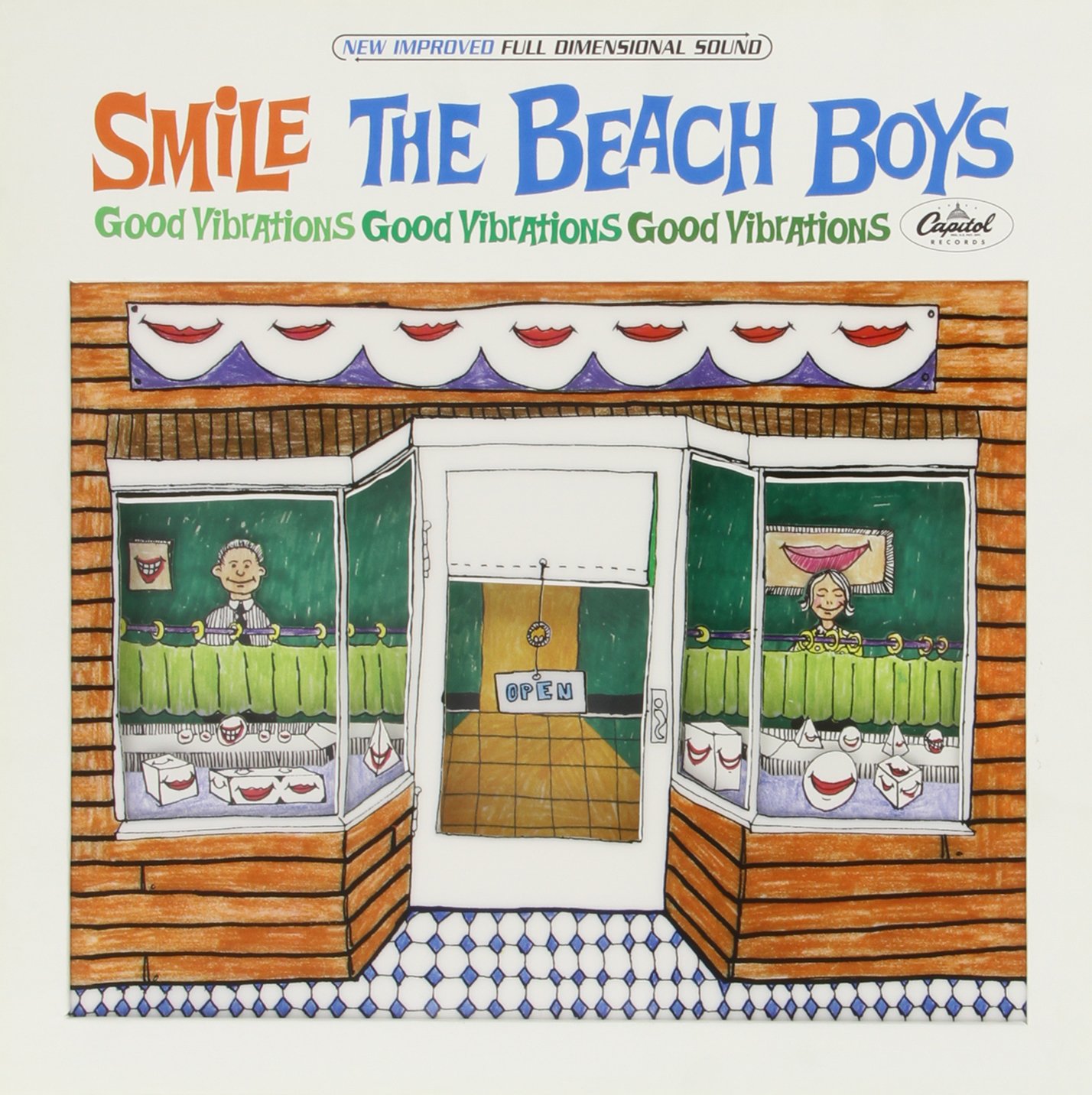
And just like that, only seven years after Brian Wilson’s 2004 incarnation was accepted and adored, the real thing came out—amazingly, with the endorsement of both Mike Love and Al Jardine. The Smile Sessions was made available several ways: a single disc of the final sequence plus bonus tracks; a massive box adding two discs of sessions and a disc each devoted to “Heroes And Villains” and “Good Vibrations” sessions, plus a book, a vinyl version of disc one and a couple of 45s; and a double-disc edition that condenses the four sessions discs down to one bonus disc. (Whew.)

It’s a lot of music to take in, no matter what your level of familiarity. Smile as presented here mostly follows the 2004 sequence, with one slight shift and none of the updated lyrics. The music already included on the Good Vibrations box set re-appears, in even better sound and context.

We begin, appropriately, with the a cappella “Our Prayer”, rescued from 20/20, into an adaptation of the doo wop oldie “Gee” setting up “Heroes And Villains”, which itself moves as expected into “Do You Like Worms” (now subtitled “Roll Plymouth Rock”, its 2004 title). Several short pieces follow: “I’m In Great Shape” is a brief interlude attached to “Barnyard”, which abruptly shifts to “My Only Sunshine” and its introduction via “The Old Master Painter”, ending with a reprise of a “Heroes And Villains” theme. (As already demonstrated on the 1993 box, many of the components of the songs are interchangeable with others, which is how people got confused when piecing together their own versions.) “Cabin Essence” ends the suite in all its glory and splendor.

We move to the compact sweep of “Wonderful”, much better than the Smiley Smile remake. The mostly instrumental “Look” was called “Song For Children” in 2004; here it’s kept simple with some allusions to “Good Vibrations”. Some of the vocalizations reappear in “Child Is Father Of The Man”, which itself is repeated on the fade of “Surf’s Up”, rescued from the album of the same name.

The third, final movement comes closest to providing the apocryphal symphony devoted to the four elements. “I Wanna Be Around” is another oldie taken over by the sound effects of the “Workshop”. “Vega-Tables” always got more attention than it deserved, but at least this mix sounds more complete. “Holiday” presents a nice mental image of a seafaring adventure, nicely melded with “Wind Chimes”. A section previously thought to be part of “Heroes And Villains” is now restored to its rightful place at the start of “Mrs. O’Leary’s Cow”, and now the world can finally hear the “Fire” music that supposedly scared the pants off its own composer. (It actually is fairly unsettling, even if you’ve seen Eddie And The Cruisers.) “I Love To Say Dada” begins with a “water” chant to provide some relief, and it all comes down to “Good Vibrations”, heard here with its original lyrics and some other mix variations.

Which is a good place to make this statement. While Beach Boys experts are justifiably fond of “Good Vibrations”, a whole disc of sessions chronicling its development is overkill for the deluxe box. Yes, it’s a great song, and yes, it would have been included on the album (against Brian’s wishes) had it been completed at the time, but it’s about as essential to Smile as “The Ballad Of John & Yoko” is to Abbey Road. (Also: lots of people insist that the project’s correct title is SMiLE, and that’s how it is all over the graphics, but it’s annoying to type over and over that way so we haven’t.)

With the final sequence totaling 49 minutes, the bonus tracks nicely complement what has gone before. “You’re Welcome” was a B-side and a nice a cappella bookend, while “He Gives Speeches” is the original lyrics to the song that became more famous as “She’s Goin’ Bald”. Further excerpts of “Heroes And Villains” parts prove that sometimes Brian just didn’t know where to stop, but eight minutes devoted to a “Smile Backing Vocals Montage” is an excellent tribute to his long-suffering bandmates.

As with any “lost” album, Smile is not a masterpiece, or a missing link that may have changed the course of the human race had it only been allowed to breathe. But The Smile Sessions is a generous gift, long overdue, and finally in a place where what made it good, and worth hearing, can be appreciated.

The Beach Boys The Smile Sessions (2011)—4

Tuesday, February 11, 2014

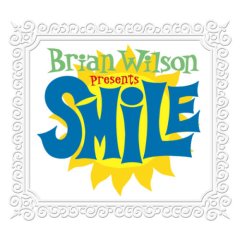
Brian Wilson 2: Smile

Seemingly cured of his demons—enough to remarry and adopt a few kids—Brian Wilson continued his own path through the end of the century, releasing a few solo albums and avoiding any true collaboration with the other Beach Boys. Unlike his first solo album, which was most likely created at pharmaceutical gunpoint but sounded pretty good nonetheless, his new music didn’t rise far above the “that’s nice” accolade. Basically, he was competing with his own past, via the rehaul of the Boys’ catalog and even his own reunion with onetime collaborator Van Dyke Parks.

Parks was part of the Smile project, the famously unfinished masterpiece that was destined to rival the Beatles’ best moments had it only been allowed to breathe, or so we were led to believe. Rumors began to spread around 1988 that all the music intended for it would actually be released; meanwhile, fans not content with the 30 minutes or so included on the box set in 1993 scrambled for anything said to represent the finished product as it stood in 1967.

Listening to these bootlegs, one could completely understand why the project got stalled. The existing pieces were certainly unfinished, and overlapped so much that a strict running order seemed almost arbitrary. Had the album come out back then, the standard thinking—outside of a few renegades who champion notoriously bad albums—would likely be that Smile was an overblown waste of tape. And the Beach Boys legacy wouldn’t be any different today, and Brian would still be a mess.

But it did change. Most people either love or hate the Beach Boys, and everyone hates Mike Love, but anyone who’s taken time to even try to like Pet Sounds can agree that Brian Wilson composed some pretty amazing music that just happened to fit on AM radio. And not only did he emerge from his paranoid shell, he assembled a band of devoted musicians, and went on tour around the turn of the century with them. These guys drove him to begin performing Pet Sounds in its entirety, with technology enabling the studio creation to exist on a stage. That was so well-received that Brian finally consented to “completing” something resembling Smile, with assistance from (surprise surprise) Van Dyke Parks, and performing it live. Critics raved, and then it was recorded in the studio.

Everyone related to the project was careful to say that Brian Wilson Presents Smile is not the real lost album; however, it is a stunning recreation. Comparing the new tracks to the bootlegs, the casual listen might have fooled one’s ears into thinking they’re the original tracks. While Brian’s voice is much shakier, all the elements are there.

That’s a deliberate pun; whatever was supposed to be the “Elements” suite is lost to the microdot. But with the CD format at its disposal, the piece has been separated not into two sides but three movements. It follows much of the bootlegged sequences, beginning with “Our Prayer” and “Heroes And Villains”. Most pundits usually put “Good Vibrations” at the start of “side two”, with the epic “Surf’s Up” at the end; here “Surf’s Up” closes the middle section, while a lyrically rearranged “Good Vibrations” appears as a coda. Some of the most famous outtakes appear, like “You Are My Sunshine”, “Child Is Father To The Man” and even a recreated “Mrs. O’Leary’s Cow” (aka the “Fire” sequence).

It’s still a pretty silly record, with puns that induce more winces than wonder; most of those were added solely for this production. Issued through Nonesuch, it comes in a neat little package with embossed slipcase and booklet. Inevitably, the experience becomes somewhat anticlimactic, but there are a few absolutely gorgeous moments that could rank with the finest 20th century American music, up there with Gershwin, Cole Porter, Aaron Copland and so on.

2004 was a year where the impossible happened, from the Red Sox winning the World Series to Brian Wilson finishing Smile. Naturally, it stoked hopes for an official release of the original recordings, but if that wasn’t gonna happen, at least we’d have this.

Brian Wilson Brian Wilson Presents Smile (2004)—3½

Monday, December 2, 2013

Beach Boys 26: Good Vibrations

After the fans had scooped up the Capitol two-fers, with their collective bounty of bonus tracks, and sprang for the ‘70s reissues, which had no bonuses, was that it for the Beach Boys? Heck no. They needed a box set, and they got one.

With artwork supposed to suggest a surfboard but instead resembled plywood (but still not as hideous as the painting used to decorate the individual jewel boxes), Good Vibrations: Thirty Years Of The Beach Boys served up five discs full of music, including over fifty previously unreleased tracks. As with most box sets covering such a long career, the earliest discs cover the fewest years, leaving the remainder to race through the decades. There could well be somebody thrilled to have “Kokomo” on the same disc as “Sail On Sailor”, but we haven’t met them.

Indeed, due to their productivity and quality, discs one and two cover 1961 through 1966, including all the hits starting from their very first pre-Capitol single, in their original single mixes as opposed to album mixes. Things get really interesting towards the end of the first disc, presenting a slightly compact overview of Brian’s development as a producer and arranger. But a key enticement for buyers was the 30 minutes of Smile-related music on the second disc. Most of this had never been heard in this form, and even at that advanced date the compilers still hadn’t quite figured out where everything was supposed to fit. (It’s not always easy to tell where “Heroes And Villains” stops and “Do You Like Worms” begins; also, what’s called an intro to “H&V” is really the prelude to “Mrs. O’Leary’s Cow”, which people still thought had been destroyed.) Covering the period from “California Girls” through Pet Sounds and just slightly beyond, disc two is likely the one owners play most.

And from there, it’s not quite as dreamy. Disc three valiantly covers up to the Surf’s Up album, choosing some of the more tuneful selections from that period. Disc four jumbles the chronology just a bit to begin with “Sail On Sailor”, and proceeds through the rest of the ‘70s and what there was of the ‘80s to demonstrate what they did after Endless Summer kept them in business. Among the more interesting rarities are Brian’s “Fairy Tale Music” from the Holland bonus EP without the narration, and some samples from the orchestrated solo album he didn’t finish. Finally, the fifth disc, an assortment of session extracts, vocal- or music-only mixes and oddments, lays a foundation for the Pet Sounds Sessions and Smile Sessions sets to come.

As with the entire catalog revamp, the Good Vibrations box is well done and comprehensive. The liner notes very kindly supply what songs came from what albums and when they charted, and even include references to the various compilations that came out in between, making sure geeks like us have everything we need in context. The compilers also worked closely with Brian, who apparently refused to allow “Let Him Run Wild” to be included for reasons known only to him. It may be typical to say, but the Smile material made it worth the purchase, if not essential until the later period got its own best-of CD. Unfortunately, the box didn’t clear out the vaults, either, as further rarities sets added on to the pile, as did another box set 20 years later.

The Beach Boys Good Vibrations: Thirty Years Of The Beach Boys (1993)—3½

Friday, October 11, 2013

Brian Wilson 1: Brian Wilson

At a time when some veterans were stepping out with new material, one of the least likely was Brian Wilson. While he’d contributed, albeit minimally, to the increasingly sporadic Beach Boys albums of recent years, the Rock and Roll Hall of Fame school of fandom was coming around to hail him as a forgotten genius, and one who’d managed to not only survive but overcome the pharmaceutical dependencies that had derailed him. So it was that his first solo album—if you don’t count Pet Sounds, of course—was something of an event, accompanied by a PR push featuring photos of a trim, tan, rested and ready Brian.

Much of Brian Wilson’s success—and the fact that it was even completed—is due to Andy Paley, who did so much work to craft completed tracks around Brian’s ideas. Key producers Russ Titleman and Lenny Waronker helped ensure that the label (Sire, and by extension Warner Bros.) was getting their money’s worth. The original pressing also gave a lot of credit to Eugene Landy, the since-discredited psychologist who exploited his doctor-patient privilege to turn Brian into a petrified kept boy.

Modern recording trends (and Brian’s own attention span) didn’t allow for the contracting of the Wrecking Crew at Gold Star Studios, which had burned down anyway. Instead, Brian was encouraged to create his pocket symphonies using synthesizers and other machines. These days, the pinging effects distract from the melodies, which is too bad, because most of the songs are really good.

“Love And Mercy” would be Brian’s salutation for many years, and it’s a wonderful summation of his fragile innocence and sensitivity to the suffering of others. From that sublime beginning we go to “Walkin’ The Line”, a little throwaway mysteriously co-written with the guy from The Dream Academy and featuring not only the sound of marching feet (get it?) but Terence Trent D’Arby on backing vocals. Much better is “Melt Away”, which melds a sweet melody to an arrangement where every other note is a different chord, both tune and lyrics recalling the low self-esteem of Pet Sounds. Speaking of which, “Baby Let Your Hair Grow Long” updates “Caroline No” with a central message that, as several have pointed out, could be a pep talk to himself. “Little Children” introduces two kids whom the world would soon know as two-thirds of Wilson Phillips, and is over pretty quickly. Another overt family reference is “One For The Boys”, all amazing a cappella, demonstrating that nobody arranges voices like Brian Wilson. “There’s So Many” is a little underdeveloped, more of a record than a song, with too many “spacey” effects covering up what’s missing.

Those wacky space noises are all over “Night Time”, which gets pretty annoying, except during the sections between the incessant choruses. “Let It Shine” gets far enough away from Jeff Lynne’s production for a near-Dion/doo-wop pastiche. It’s a wonderful song, even despite rhyming “fire” with “desire”. With an opening like a music box lullaby, “Meet Me In My Dreams Tonight” is possibly the greatest ripoff of “Santa Claus Is Coming To Town” ever attempted. To prove that he wasn’t all pop of circumstance, the daring “Rio Grande” was the closest we’d get to Smile for some time, with little fragments poking through here and there. It’s not his best extended work, but boy, is it picturesque, particularly in hindsight, evoking images of the old America in his mind.

As good as the album was, it just didn’t fit with what was happening on either AM or FM radio. To add further insult to injury, the band he left behind managed to get their first #1 hit in decades with the truly hideous “Kokomo”, released right around the same time. As the years have gone by, this little album has risked being forgotten, even as interest in the man’s classic creations has been stoked by continual reissues and further solo albums. Thankfully, Rhino gave Brian Wilson the expanded treatment at the turn of the century, adding timely B-sides and even demos, and removing all songwriting credits for Landy.

Brian Wilson Brian Wilson (1988)—4
2000 CD reissue: same as 1988, plus 15 extra tracks

Friday, September 27, 2013

Dennis Wilson: Pacific Ocean Blue

Initially hailed more for his looks than his musical ability, Dennis Wilson was nonetheless a talented individual, overshadowed by his more gifted brothers and loudmouth cousin. He was never the greatest drummer, but Brian always included him in the harmonious vocal blend of whatever he was working on. Before the end of the ‘60s, he’d even started writing songs; to everyone’s surprise, even the spottiest albums had something worth hearing from Dennis.

The boy also loved to party, and before long his voice had taken on a marked rasp; this, however, only made it seem more “soulful” (and not that different from the change Brian’s own voice started to make). During the ‘70s, when all of the official Beach Boys, touring players and all of their friends were fighting for space on the albums, Dennis often saw his songs overlooked for inclusion. So when he completed his solo album, it was as inevitable as it was surprising, seeing as none of the other Beach Boys had tried it first. More to the point, Pacific Ocean Blue holds up much better than what the band was doing around the same time.

Being the decade that it was (and the drugs he was taking) some of the songs venture dangerously near funk. Instead, he’s at his best when he’s found a decent chord sequence, the slower the better. The lyrics aren’t going to be mistaken for the great American novel, but one leaves feeling that his repeated statements of devotion are heartfelt.

“River Song” is a good opener, with some themes his big brother would appreciate. “What’s Wrong” is fairly dopey, but “Moonshine” is lush and loving. Here, as on much of the album, Dennis plays most of the instruments, as he does on the spacey intro to “Friday Night”. “Dreamer” is another “big” production, unfortunately sitting somewhere between “Rock On” and “I’m Alright” from Caddyshack, except for the middle section that channels Brian again. “Thoughts Of You” likely has a lot to why people love this album, a gorgeous meditation over major-sevenths and major-ninths with a stirring minor-key middle.

“Time” floats in on the same musical ideas that drove “Thoughts Of You” until an extended coda right off of a Chicago album. That sound could also apply to “You And I”, a single that may have been just a little too mellow for Top 40. “Pacific Ocean Blues” brings back the funk, but that’s wiped away by “Farewell My Friend”, a eulogy sadly colored by wacky synth effects, and would one day be played at his own funeral. The sadness gives way to the banjos and mandolins of “Rainbows”, leaving “End Of The Show” as an ambiguous closer.

There is a school of thought that considers Pacific Ocean Blue to be some kind of cracked masterpiece, along the lines of Berlin, Skip Spence’s Oar, or other weirdo projects. As anyone who’s read thus far should be able to tell, the masterpiece tag, cracked or otherwise, isn’t readily thrown about here. (If anything, it conjures comparisons with Duff McKagan’s solo album, and that’s not meant to be complimentary to either.) But legends persist and the album was given a couple of new leases on life, first in 1991 with the rollout of the Beach Boys’ ‘70s catalog on CD, then again in 2008 with a deluxe version. In addition to outtakes, a second disc was devoted to the sessions for his unfinished follow-up, one of the songs now enhanced with vocals by Taylor Hawkins, aka the Foo Fighters drummer that wasn’t Dave Grohl.

Dennis Wilson Pacific Ocean Blue (1977)—3
2008 Legacy Edition: same as 1977, plus 21 extra tracks

Sunday, August 25, 2013

Beach Boys 22: Endless Summer

Much like Elvis Presley, the Beach Boys were already a caricature by the time the post baby-boom generation knew who they were. And like Elvis, they deserve better than to be written off in that way.

Those youngsters who’d study the history of rock ‘n roll would learn about how Pet Sounds was their best album, and how the follow-up, Smile, was never completed despite its destiny as music that rivaled the Beatles’ best moments. They undoubtedly would also have found it odd that a band known best from Sunkist orange soda commercials could be spoken of so reverently. This could be reinforced by the popularity of Endless Summer, a well-sequenced compilation of songs about girls, cars, surfing and the beach.

It was a timely set; the band was gaining some of their old acclaim back as an excellent touring outfit, and with the trend started by Sha Na Na, American Graffiti, Grease (the Broadway version), and Happy Days, nostalgia was okay, particularly if it was back to a time of on-the-surface innocence. So it was that one of the most successful albums of 1974 was a compilation of previously released material that was about ten years old at the time. While the Beach Boys may not have been burning up the charts with their current work, their old label, never shy about cashing in, hit pay dirt with Endless Summer.

It doesn’t have every single classic from the early days, but certainly covers most of the period before Brian Wilson took over the studio and the band’s albums became solo projects with the guys singing. There’s a mild progression in chronology, but not so you’d notice. Side one is mostly about surfing, as evidenced in the song titles, including a couple of slow numbers. Side two covers driving and high school, with “In My Room” providing an excellent portrait of the American teenager. Side three gets a touch more sophisticated musically, particularly by the inclusion of “Let Him Run Wild” and “Don’t Worry Baby”, two of Brian’s best productions. Side four is all upbeat singalongs, from “California Girls” to the closing throwback of “All Summer Long”.

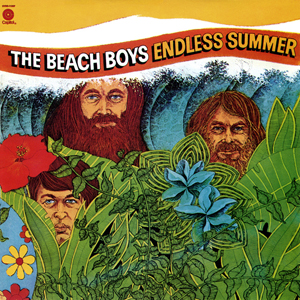
Probably the worst thing we can say about the album is the artwork, as we doubt even the band members themselves would be able to clarify who was who. It evokes a mental image of too much time in the sun, right about the middle of August when the humidity has become unbearable, your skin blistered from sunburn and the pungent stench of Noxzema and Caladryl. Luckily, that goes away when the music starts. Endless Summer follows through on its premise, with 20 songs in under an hour. The CD version would add “Good Vibrations” to the lineup, but by then the racks were glutted with redundant compilations, including the 1975 follow-up Spirit Of America. The album is now out of print, and while there are several “summer”-related Beach Boys titles that include many of the same tracks, the original 2-LP set has proven impossible to beat.

The Beach Boys Endless Summer (1974)—4
1988 CD reissue: same as 1974, plus 1 extra track
Current CD equivalent: none

Monday, July 22, 2013

Beach Boys 20: Holland

Still trying to be relevant and chart-worthy, off the Beach Boys went to the Netherlands to do their first-ever studio recordings outside of California. Holland is another one of those Beach Boys albums held up as a forgotten masterpiece. Well, if they’re going to hold it up, we’re going to take aim at it.

Part of the problem is that they were still trying to wring blood from Brian’s stone. “Sail On Sailor” is worthy of his pen, even with the other hands in its composition. Blondie Chaplin takes the lead vocal on a truly great single. “Steamboat” is apparently a Dennis melody given lyrics by their manager, and is a plodding setup for the three-song “California Saga”. Here is an attempt to evoke the same Americana left abandoned on Smile, and an unlikely collaboration between Mike Love and Al Jardine. “Big Sur” sports a steel guitar and harmonica in waltz time, predicting “Piano Man” somewhat, and is most interesting in its minor sections. That segues into “The Beaks Of Eagles”, a lengthy poem recited over Al’s music, which would be a lot more enjoyable if they’d stuck to the choruses. Finally, “California” provides a more uptempo celebration of their home, with some overt references to “California Girls” and Pet Sounds, and baffling evocations of John Steinbeck and Country Joe & The Fish.

“Trader” is another decent, intricate backing with a dense Jack Rieley lyric foisted upon it; too bad Carl couldn’t have done more with this. A big surprise is “Leaving This Town”, wherein Blondie rises to the occasion again, this time over chords predicting “The Great Gig In The Sky”, split by a middle eight descended from “The Low Spark Of High Heeled Boys”. “Only With You” is a romantic Dennis tune sung by Carl, and it should be no surprise that the very basic lyrics come from Mike. (Well, better him than Rieley, who’d probably choose to mourn a lost falcon or something.) Brian’s final contribution—almost—was “Funky Pretty”, another good track sunk by wince-inducing lyrics mixing astrology and fairy tales.

Something of an explanation for this comes on the six-part suite, “Mount Vernon And Fairway”, included as a bonus 45, and now appended to the end of all CD versions of Holland. Apparently Brian wanted this to be the centerpiece of the album, but he was overruled, and it’s easy to see why. This really is a fairy tale, narrated by Rieley, about a magical kingdom where a lonely prince is both elated and devastated by the music he hears from a magical transistor radio. The music suggests another symphony, as Brian overlays pianos, organs and other keyboards, but Rieley’s delivery is worse than the story he’s narrating, and knowing what we know about Brian now, it comes off as a major cry for psychological help. “Better Get Back In Bed”, indeed.

So Holland’s highlights are provided by the non-Wilsons, seemingly. That’s probably why the ringers they brought in on Carl And The Passions left after the next tour. (More of what they brought to the table would one day be revealed on a comprehensive archival set.) Capitol, their original label, soon released the Endless Summer compilation, which helped sell the band as a nostalgia act, keeping them on the road and out of the studio (for the most) part for a few years. Going forward, their albums would have even less to recommend them, with what few hits coming from the oddest of places. Except, of course, anytime a new compilation reminded listeners of fun in the sun.

The Beach Boys Holland (1973)—2½

Friday, June 21, 2013

Beach Boys 19: Carl And The Passions

Maybe as a recognition that that they weren’t the same band, the next Beach Boys album sported the unwieldy title of Carl And The Passions – “So Tough”—Carl of course being the most stable of the Wilson brothers. Bruce Johnston was ousted, and they brought in Blondie Chaplin and future Rutle Rikki Fataar to boost the guitar and drums respectively. They happened to be decent singers and songwriters to boot, which would help them on record as well as on stage. But their label clearly showed they weren’t completely behind the album by packaging it as a double, with Pet Sounds in the same jacket. It’s too bad, because the album is good enough to stand on its own.

Speaking of which, “You Need A Mess Of Help To Stand Alone” is an unwieldy title that unfortunately fits in the long line of “therapeutic” songs that Brian was obsessed with from about 1967 on, whether it be raw vegetables or jogging, when all he had to do was cut out the pot, pills and cheeseburgers. It’s got something of a “Wild Honey” feel, serving the same purpose to kick off side one. The new guys take over with “Here She Comes”, a generic title of its own, but decent ‘70s rock nonetheless. “He Come Down” has a terrific production, with plenty of soulful piano, Hammond organ and harmonies, but is ultimately another Mike Love advertisement for the Maharishi. But the “classic” Beach Boys sound returns on “Marcella”. This is the one people tend to cite as the best on the album, and while that’s a matter of taste, it does sound the most like a Brian Wilson creation.

The new guys emerge again on “Hold On Dear Brother”, with its prominent pedal steel and confusing time signature taking it far from the brand. Then there’s “Make It Good”, the return of Dennis, his voice already cracked and aged, full of the character for which he’d become a cult figure. It’s more like a lengthy interlude, rising up from nowhere and hanging in the air until it’s over, suddenly. It makes a nice setup for “All This Is That”, another mildly spacey number trading lead vocals between Carl and Mike, then returns the spotlight to Dennis for “Cuddle Up”, a lengthy ballad largely the product of the guy who would one day gain fame as half of Captain & Tennille.

So Carl And The Passions isn’t a bad album at all, since it doesn’t really sound like the stereotypical Beach Boys. It wasn’t an easy album to make, considering that each track sports different producers, eventually giving most of the credit to Carl. (And if eight songs seems short, the eventual session peek proved they didn’t have a lot of other ideas lying around.) Since we hadn’t expected much by now, and having been burned by the unfulfilled hype of its predecessors, it’s a recommended listen. Imagine that.

The Beach Boys Carl And The Passions – “So Tough” (1972)—3

Wednesday, May 22, 2013

Beach Boys 18: Surf’s Up

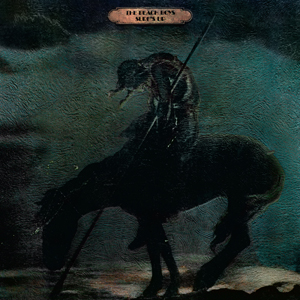
This is one odd little album, nearly sunk by some embarrassingly earnest tracks, and saved by some truly great ones. Surf’s Up gets its title from yet another Smile refugee, this one the haunting centerpiece that was supposed to be the capper of that abandoned album. Its inclusion is welcome, but an odd choice for an album largely “concerned” with ecology. The cover, featuring a rendition of the 19th-century sculpture “The End Of The Trail”, gives the album a link to the American past, and suggests a gravitas we’re still not convinced the band could carry.

The Beach Boys had a new manager who’d managed to finagle his way into their orbit at a time when they weren’t looking too closely at résumés for accuracy. He thought they should be more socially conscious, so that’s why “Don’t Go Near The Water”—an odd sentiment from a bunch of guys who’d spent ten years telling us of the wonders of the beach and surf—starts the program with a lament about pollution. It’s an impressive recording; it’s just too bad the lyrics try too hard. All is nearly redeemed right away with Carl’s wonderful “Long Promised Road”, his first great song, and a terrific match of lyrics and music. But then “Take A Load Off Your Feet” has that same rinkydink approach that sank Smiley Smile, and it’s hard to believe they could really take themselves this seriously. The seesaw goes back for “Disney Girls (1957)”, a suitably nostalgic reverie from Bruce that’s not at all embarrassing. Which can’t be said for “Student Demonstration Time”, a stupid rewrite of “Riot In Cell Block Nine” referencing recent antiwar activity, complete with idiotic sound effects and Mike Love’s voice processed as if it were coming from a megaphone. (You know, for that “realistic” feel.)

“Feel Flows” got some exposure in this century on the Almost Famous movie soundtrack; a mildly psychedelic track, it’s layered in phasing effects and stops for a lengthy free-form jazz flute solo. “Looking At Tomorrow” is helpfully titled “A Welfare Song” as if the bleak lyrics weren’t clear enough. Its bathroom echo effects recall John Lennon, of all people, and its brevity sets up the final three songs of the album, all pointedly credited in whole or in part to Brian. “A Day In The Life Of A Tree” is one of the more bizarre songs, if only because that quivery vocal is provided not by Brian, whom it resembles, but that earth-friendly manager, singing from the point of view of a dying tree. “’Til I Die” continues the virtual wake, gorgeous despite its bleak outlook. This leads up to the unveiling of the title track, embellished from its original, abandoned 1966 incarnation to include some newer touches, and fading grandly, just like “Cabinessence” did two albums prior.

There really is more good than bad on Surf’s Up, although the bad is bad enough to mar the album as a whole. Still, Carl and Brian contributed some of their best work, though Dennis, the recent rising star, is virtually absent. Even Bruce had something worthwhile to say. At the turn of this century, Capitol reissued the album as a two-fer with Sunflower, which again had some people hailing the pair as buried treasure, as they would the big expansion of both fifty years later. Truthfully, the Boys could do a lot worse, and they would.

The Beach Boys Surf’s Up (1971)—3

Wednesday, May 8, 2013

Beach Boys 17: Sunflower

The Beach Boys were never supposed to last as long as they did, and certainly not past the first handful of songs about cars and surfing. But along the way, Brian became a stronger writer, and evolved into the composer that’s so revered today. As for the other guys, they became a “band” by default, much like the Monkees, and there continues to be argument over whether their post-Pet Sounds albums have merit.

Case in point: There is a school of thought that decrees Sunflower, the first Beach Boys album of the ‘70s as well as for a new label, a masterpiece tragically unappreciated in its time. That opinion is not shared here. (Those people likely shelled out for the deluxe set a half-century later that expanded this album and the next.)

The cover features a nice sunny photograph of the six Beach Boys with assorted toddlers, and in Mike Love’s case, a formidable beard. Beneath the track listing on the rear is an exhaustively detailed description of the technology that went into capturing the music. In all, it’s not clear just whom they were hoping to impress.

In a smart move, Brian’s writing is a common thread. “This Whole World” wanders through a labyrinth of changes and a tight Spector arrangement. “Add Some Music To Your Day” is another hymn to the healing powers of music, and while a nice sentiment, it tries too hard. “All I Wanna Do”, simple as it is, is a good period piece.

Dennis contributes four songs, and quite honestly, his slower moody ones ring more true than the rockers. Case in point: “Slip On Through” and “Got To Know The Woman” just seem forced, while “Forever” is a home run, sappy as it is. Carl’s getting more involved too, equally adept at carrying a driving rocker like “It’s About Time” (a full band collaboration with several out-of-tune instruments) as he is with a romantic tune like “Our Sweet Love”, about which the worst we can say is that the chorus lets down the rest of the song.

Bruce Johnston is given nearly equal time here, and the results are mixed. “At My Window” is a trifle of a song about a bird who came to the location in question. “Deirdre” is a strange little love song written with Brian, something of a 4 Seasons number with a slight orchestral arrangement and a stupid trombone part. His showpiece is “Tears In The Morning”, which is excruciating on several levels. First, it rhymes “morning” with “warning”, dropping the letter G in both cases, then the accordion comes in too early before we’re told she moved to Europe. Pretty soon we don’t blame her for leaving, if only so she could miss the pointless atmospheric tag at the end of the track.

Just to confuse things altogether, the final five minutes of the album are given over to “Cool Cool Water”, an impressionistic piece that began in the Smile era and was never really finished, except that Mike Love seemed to get into it enough to contribute lyrics. After all, in an ocean or in a glass, cool water is such a gas.

Sunflower sounds a little dated today, which is understandable. What keeps it from being a classic, no matter what anybody else says, is its random construction. It’s one thing to have a variety of styles, but they have to hang together to make an album. Those heavenly harmonies pop up everywhere, but sometimes the effect is more like somebody else doing a Beach Boys homage than what’s accepted to be the real thing. It just barely gets a passing grade, and only because the melodies do stick.

The Beach Boys Sunflower (1970)—3

Friday, April 26, 2013

Beach Boys 16: 20/20

Not that anyone cared, but the Beach Boys were already up to their twentieth album—including three Best Of collections issued against their will and the notorious Stack-o-Tracks album, which was only about thirty years ahead of the karaoke craze. (Really, if you’re into the non-vocal portions of Beach Boys albums, it’s a terrific set.)

For 20/20, the Boys tried to present something for everyone. “Do It Again” is an excellent retro single, with the upside-down drums leading into a “classic” chorale. (On the album, in a touch of foreshadowing, they added “workshop” sounds from Smile over the fade.) “I Can Hear Music” is also a wonderful track, but it’s a cover of a Phil Spector composition with a nod to his production. Then there’s “Bluebirds Over The Mountain”, which tries to marry a calypso song to something more contemporary, as demonstrated in the closing nightmare strings and occasional guitar screams. It’s an approach better suited to “Be With Me”, another line drive from Dennis Wilson. His newly found magic touch doesn’t quite carry to “All I Want To Do”, screamed by Mike Love, and possibly the first recording by a mainstream band to include a field recording of coitus, simulated or not. “The Nearest Faraway Place” is a lush Brian Wilson instrumental—except that it’s contributed by Bruce Johnston, his onstage replacement.

Perhaps in the spirit of “Sloop John B”, they go all out for “Cotton Fields”, a Leadbelly song that wasn’t any better when Creedence did it a year later. (Personally, we like the rendition John Lennon did on the radio a year before, when he sang of how his mama used to “smash [him] in the cradle”.) “I Went To Sleep” is another list describing Brian Wilson’s day in the style of “Busy Doin’ Nothin’”; it’s mostly a setup for “Time To Get Alone”, which Carl gets to sing and give a little boost. The jaw-dropper on the album is “Never Learn Not To Love”, which the liner notes neglect to mention began as a song by Dennis houseguest Charles Manson. (For what it’s worth, Axl picked a better song for “The Spaghetti Incident?”) As elaborate as that is, the big finish is given over to a couple of Smile refugees. First, there’s “Our Prayer”, a gorgeous Gregorian-style fugue for voice. That is given as a lead-in to “Cabinessence”, possibly the prettiest song from the ill-fated project, leaving another teaser for what could have been.

So there’s a strong start and a strong finish, but everything else in the middle of 20/20—as well as the individual production credits for each song—only reveals just how unfocused the band was. (Pun unintended, but it’s telling that Brian isn’t on the front or back covers, but only in the gatefold, where he’s partially obscured by an eye chart.) Undeterred, they carried on, but not with any less struggle. Proof comes in the bonus tracks to the original, then deleted, then restored two-fer disc of the album (which also included Friends; as with that album, in 2018 I Can Hear Music: The 20/20 Sessions provided a digital-only deep dive with 40 tracks’ worth of alternates and outtakes, including several increasingly shaky Dennis demos, and even a cameo from the Wilsons’ mother). “Break Away” was another flop single that might have done better at another time than the summer of ’69. One clue could be that it was written by their dad. (The 4 Seasons would have nailed this in ’64.) Dennis got the B-side, the intricate if stumbly “Celebrate The News”. “We’re Together Again” has potential, but the brief stab at “Walk On By” and “Ol’ Man River” prefaced by “Swanee River” and will have you wondering where their inspiration went. They hoped to begin the ‘70s with a fresh start. They hoped to begin the ‘70s with a fresh start.

The Beach Boys Stack-o-Tracks (1968)—3
1990 CD reissue: same as 1968, plus Beach Boys’ Party! album and 3 extra tracks
The Beach Boys 20/20 (1969)—2½
1990 CD reissue: same as 1969, plus Friends album and 5 extra tracks

Monday, April 15, 2013

Beach Boys 15: Friends

Despite a dwindling fan base, the Beach Boys were still enough of a legacy outfit to stay on the record company’s schedule. (Besides, said company was still hoping Smile would be finished.) In the meantime, Mike Love got to hang out with the Beatles in India studying meditation. When he came back, he joined the other Boys and completed the surprisingly brief Friends album.

Where the last album had them beefing up the arrangements to approach R&B, here it seems more like they followed the rest of the music world in going back to basics from psychedelia. Brian Wilson was still involved, and it shows, particularly in the mostly instrumental “Passing By”. He has a writing credit on nearly every track, with the exception of those written by Dennis Wilson, of all people. Unfortunately, the drums still sound they’re coming from a speaker in a box, as they do throughout the entire album.

“Meant For You” is something of a prelude, and a lovely one, leading right into the lazy loping title track. “Wake The World” has a similar hammock-swaying feel, punctuated by a tuba on the chorus. The under-produced sound of “Be Here In The Morning”, along with the strained falsetto and background chatter, hearkens back to Smiley Smile, but some of the production touches and especially the Leslie effect on the last chorus show prowess at on experimenting with effects. “When A Man Needs A Woman” is an uninspired title for a song about having kids—continents away from the heroes, villains, and columnated ruins of the year before.

“Anna Lee, The Healer” gets a much more elaborate vocal arrangement than it deserves, but soon our attention turns to Dennis. “Little Bird” sounds like he distilled what he remembered of the Smile sessions into a single track—and indeed, some of “Child Is Father Of The Man” makes it into the mix—but the stark “Be Still” hints at the “dark genius” that he’d be hailed as in the decades after his death. Whatever his demons, they’re not yet as unsettling as the laundry list of distractions Brian details in “Busy Doin’ Nothin’”, and while that’s his wife singing on some of it, we’re sure she didn’t appreciate his including directions to their house. They pull out all the effects out of the closet to paint a sound picture of Hawaii on “Diamond Head” for any surfers still listening. An atonal commercial for “Transcendental Meditation” ends the program, with an actual drum set accompaniment and fuzzy horns.

Even habitual stoners must have been scratching their heads over Friends, just as their longtime fans would have been confused over whether their heroes were still clean-cut and spiffy. There are some excellent moments here, but they’re fleeting, and most of the songs are so short that the better ideas don’t have the space to blossom. It makes it difficult to root for them.

1990’s two-fer CD paired Friends with 20/20, but the only bonus tracks came from sessions for the next album. This was rectified somewhat in 2018 with the digital-only release of Wake The World: The Friends Sessions, which offered a disc’s worth of alternate versions, backing tracks, a cappella mixes, and castoffs, including Brian’s unique solo take on “My Little Red Book” and an instrumental stab at “Rock & Roll Woman”. Even if the songs weren’t there, the boys could still play.

The Beach Boys Friends (1968)—2
1990 CD reissue: same as 1968, plus 20/20 album and 5 extra tracks