Showing posts with label jeff beck. Show all posts

Tuesday, July 25, 2023

Jeff Beck 19: 18

While he was once known as an actor, Johnny Depp has carved out quite a niche for himself as what Mick Jagger would call a starbucker. From owning the nightclub where River Phoenix died to forming the Hollywood Vampires, a supergroup made up of onetime degenerates, he’s been dabbling in music for decades. So it’s no surprise that he’d be enamored with Jeff Beck; the mystery is what Jeff saw in him.

Nonetheless, the heart wants what it wants, and supposedly a mutual fascination with vintage cars led to lots of hanging out together and, as has been known to happen, recording tracks. The first bloom of their partnership came at the height of the Covid pandemic, with a rockin’ cover of John Lennon’s “Isolation”, as timely as it was unexpected. By the time a full album came out, Depp had been tabloid fodder for months due to various ugly lawsuits involving his most recent ex-wife.

This makes 18 that much more of a curious listen, even when you want to take it on the basis of solely the music. The first problem is that he’s not much of a singer, and tries to do just that on 10 out of 13 tracks. Beck’s solo adaptation of Davy Spillane’s “Midnight Walker” sets such a wonderful mood that the industrial whiplash of Killing Joke’s “The Death And Destruction Show” only reminds us why we didn’t like his techno albums very much. Depp does his best Dennis Wilson on a self-pitying cover of “Time”, but follows that with “Sad Motherfuckin’ Parade”, another techno track that at first sounds like the judge’s gag order didn’t take. Then it turns out most of it was lifted from a “poem” written by a Missouri prisoner and collected by a folklorist. Luckily, their versions of “Don’t Talk (Put Your Head On My Shoulder)” and “Caroline, No” from Pet Sounds are instrumental, and lovely, but in between Depp croons “This Is A Song For Miss Hedy Lamarr”, wherein he seems to find a kindred spirit due to her “troubles”.

He lets Jeff do most of the work for Smokey’s “Ooh Baby Baby”, but the falsetto is likely mixed so low for a reason. In the same vein, the carbon-copy backing for Marvin’s “What’s Going On” makes it sound like Jeff’s wailing over a karaoke track coming through a speaker, while Depp is mostly limited to chanting the backing vocals across the room, until he starts throwing in a few lines from the same album’s “What’s Happening Brother” about halfway through. That said, “Venus In Furs” from the first Velvets album almost works, Jeff leaning into the snaky riff and dirty chords, but Depp’s posed decadence is just silly. The Everlys’ “Let It Be Me” starts out very sweetly and mostly stays that way, even with Depp harmonizing with himself with melodies we don’t recognize from the original. In very much the same mood is another song about the “pitfalls of fame”, but’s Janis Ian’s masterful, heartbreaking “Stars”. (We’re betting Depp heard it on an episode of Bojack Horseman.) Still, it’s gorgeous, and makes “Isolation” something of an anti-climax, which we suspect is double in length just so Depp could yell the bridge a second time. At least it gives Jeff more time to wail.

As should be clear, 18 is at its best when Jeff Beck is allowed to shine in the spotlight by himself. Unfortunately, this would be the last album he’d see released in his lifetime, and while he may have been fine with that, he deserved better.

Jeff Beck & Johnny Depp 18 (2022)—2½
Tuesday, March 7, 2023

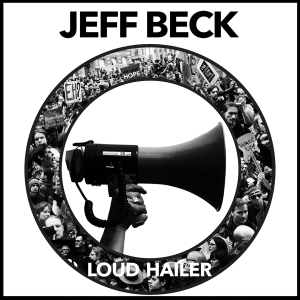
Jeff Beck 18: Loud Hailer

While his is the only name on the cover, spine, and label, Loud Hailer is more of a collaboration than a Jeff Beck album. The vocals and guitar riffs come respectively from Rosie Bones and Carmen Vandenberg of Bones UK, whose producer gets credit here as well. The album is something of a maturation of the electronica experiments from the turn of the century, in that it’s still very processed, but production techniques have caught up so it doesn’t sound totally robotic.

Beyond the mild abrasion throughout, personal enjoyment will likely depend on one’s tolerance of Rosie’s vocals, which lean heavily on an affected cockney approach. Her lyrics mostly focus on social commentary, as shown in such titles as “The Revolution Will Be Televised” and “Scared For The Children”. The soulful “Shame” is a highlight, mostly because she sings more than poses—kudos also for the key change at the end. “Thugs Club” rumbles along until we hit a sly rhythmic echo of “Beck’s Bolero”, and “O.I.L. (Can’t Get Enough Of That Sticky)” is a funky JB’s homage. The closing “Shrine” is the best melding of Rosie’s voice and his guitar. That said, Vandenberg is an accomplished guitarist, and often dominates the tracks; two instrumentals—the slow-burning “Pull It Up” and “Edna”, which is a mere prelude to “The Ballad Of The Jersey Wives”—keep the focus on Beck.

The Bones UK folks have since gone their way, so maybe Loud Hailer was as far as this collaboration could go. It’s still worth a listen.

Jeff Beck Loud Hailer (2016)—3

Tuesday, September 13, 2022

Jeff Beck 17: Emotion & Commotion

After another layoff between albums, Jeff Beck decided to leave techno behind and get back to just playing. Emotion & Commotion combines songs featuring female vocals—thankfully, not the all-star route that made Carlos Santana really rich in this century—with unexpected covers, most accompanied by an orchestra. The focus is on melody.

We see the title is apt, as following his interpretation of Jeff Buckley’s version of Benjamin Britten’s “Corpus Christie Carol”, the “Hammerhead” riff comes tearing through. “Never Alone” is quieter, closer to his ‘80s fusion style underscored by the Steve Lipson and Trevor Horn production. The classic “Over The Rainbow” would be a lovely lullaby except that it’s followed by an “I Put A Spell On You” that sticks mostly to the Screamin’ Jay Hawkins original, with Joss Stone restraining herself just enough.

That ‘80s Trevor Horn sound returns on “Serene”, which wanders through dentist office territory but still lives up to its title, then Imelda May tackles the vocal on Jeff Buckley’s version of Nina Simone’s version of “Lilac Wine”. Lovely as that is, it’s no competition for his treatment of “Nessun Dorma” that to these ears is just as tearjerking as Luciano Pavarotti’s. Vinnie Colaiuta’s complicated rhythms bring in another Joss Stone vocal on “There’s No Other Me”, and we go out on a soft note with “Elegy For Dunkirk”, plucked from the Atonement soundtrack and featuring the classical vocals of one Olivia Safe.

Emotion & Commotion isn’t Jeff Beck’s most innovative album, but it’s a nice listen, and that helps a lot. Truth be told, we kept up with his catalog through all those middling albums just so we could crow about “Nessun Dorma”. We’re going to go listen to it again.

Jeff Beck Emotion & Commotion (2010)—3

Tuesday, April 19, 2022

Jeff Beck 16: Jeff

Determined as ever to follow his own muse, the turn-of-the-century flurry of activity from Jeff Beck culminated with the simply titled Jeff, which followed on from its predecessors in a full-blown embrace of electronica. To his credit, these experiments work, except when they don’t.

It helps that his collaborators include such pioneers as Andy Garcia and David Torn, who dominate “So What” and “Plan B” respectively, but then vocals start to get in the way. “Pork-U-Pine” doesn’t need any input from Saffron of Republica, while “Seasons” should have been left as an orchestral mood piece. By this time we lose patience for “Trouble Man”, built on a pounding drum loop; “Grease Monkey” and “Hot Rod Honeymoon”, both produced by Apollo 440, lean on automotive effects, though the latter has some cute Beach Boys references.

“Line Dancing With Monkeys” is a terrific song title, though the finished product doesn’t suggest any of that. Tony Hymas turns up on “J.B.’s Blues”, which is more moody than bluesy, whereas as “Pay Me No Mind (Jeff Beck Remix)” is almost entirely the work of Me One, from the outfit who once exhorted us to pump up the jam. “My Thing” brings back the woman who yelled all over the Apollo 440 tracks for a rather generic track. Just to completely throw us off, the set closes with a supposedly traditional melody called “Bulgaria” that segues into “Why Lord Oh Why”, another Tony Hymas composition, with the whole suite orchestrated by a guy who once did the same for Black Sabbath.

More than the others, Jeff is recommended if you like techno, but it’s not strictly a guitar showcase. Approach with caution.

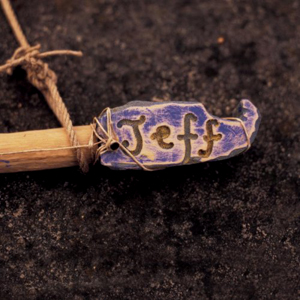
Jeff Beck Jeff (2003)—3

Tuesday, September 7, 2021

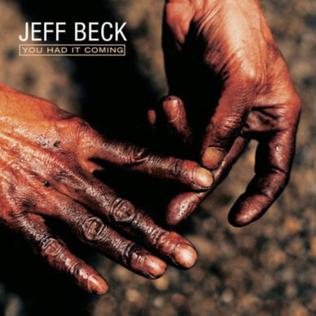
Jeff Beck 15: You Had It Coming

The good news is Jeff Beck fans only had to wait two years for another album. The bad news is the album was You Had It Coming.

The electronic experiments of the last album have taken over, and these ten tracks do their best to replicate the sounds from an automotive garage. For the first time in a while, he takes writing credit for most of the songs, so maybe it was his idea. His distinct tone pokes through the barrage of sound, but such an onslaught can be tiring. The cover of Nitin Sawhney’s “Nadia” starts out very lovely, until the drum ‘n bass accompaniment takes over; the same thing happens to the cool riff on “Rosebud”. Even the perennial “Rollin’ And Tumblin’” is re-interpreted by vocalist Imogen Heap, while drums beat a martial pattern into the mix. Things finally calm down at the end, for “Blackbird”—not a Beatles cover, but Jeff imitating bird calls with programmed responses—which leads into the mysterious and moody “Suspension”.

You Had It Coming had to have been somebody’s cup of tea, because it did win Grammys. What it says about the future of guitar is beyond our scope.

Jeff Beck You Had It Coming (2001)—2

Tuesday, March 23, 2021

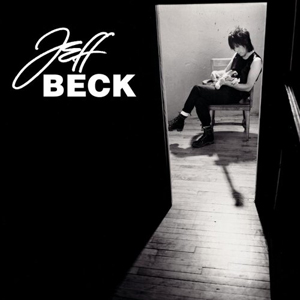
Jeff Beck 14: Who Else

Seemingly content to tinker with his cars, Jeff Beck barely made it out of the 20th century without releasing another album. Largely written by collaborator Tony Hymas, Who Else! ventured further away from the fusion sound of his solo heyday, arriving at a hybrid of styles, some approximating electronica. Amazingly, it works.

From the start of “What Mama Said” (incorporating a soundbite from It’s A Mad, Mad, Mad, Mad World) the heavy processed drums drive the rhythm, over which Beck does his thing. That continues sans sample on “Psycho Same”, then the proceedings slow down for “Brush With The Blues”, which only gets furious in the middle. We can hear a crowd cheering, but it’s not clear if the track was recorded live. “Blast From The East” isn’t very successful, with a dated sound reminiscent of the Miami Vice theme, and “Space For The Papa” isn’t much more than the barest track from him to noodle over for seven minutes.

“Angel (Footsteps)” is an improvement, being that there’s a melody and established mood, and “THX1138” brings back the beats. “Hip-Notica” would also be an occasion for noodling, if not for the off-meter and continuous exploration by Hymas on the organ. “Even Odds” is a noisy Jan Hammer tune nicely donated for the project, but it’s easily surpassed by “Declan”, a lament from Irish music legend Dónal Lunny. It’s a nice transition to the comparatively brief “Another Place”, leaving us to wish the entire album was this relaxing.

Who Else! also introduces guitarist Jennifer Batten to Beck’s pool of talent, after she spent several years toiling alongside Michael Jackson. She’s credited on guitar and guitar synthesizer, but we don’t know enough about the technology to discern when she’s playing. Wherever she is, the album makes for good aural wallpaper, and reestablishes Beck as a craftsman to watch.

Jeff Beck Who Else! (1999)—3

Tuesday, October 20, 2020

Jeff Beck 13: Frankie’s House and Crazy Legs

All of a sudden Jeff Beck was busier than he’d been in years, and his record label happily pushed out anything he gave them. Who knows if they expected major returns, because what they got wasn’t exactly commercial, even a year or so apart.

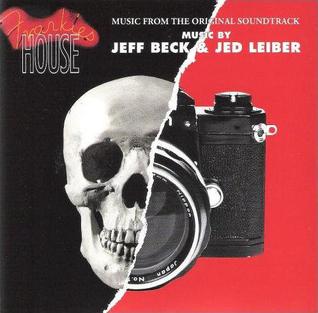
First up was Frankie’s House, the soundtrack to a British miniseries about a photojournalist in Vietnam, which explains some of the stereotypically Southeast Asian elements on some of the more atmospheric tracks. Beck is credited with merely guitars, while one Jed Lieber (whose father was the partner of Stoller) handles keyboards, which we assume includes all the drum programming. So basically, Jed provides the framework, and Beck does his thing. (“Cathouse” quotes from “Rice Pudding”, if you listen closely enough.) For overall listenability it helps that there are no vocals, but the curveball in the form of an instrumental cover of the old blues nugget “Hi-Heel Sneakers” is a little jarring.

However, that track actually provides a bridge to Beck’s other big project, a tribute to Gene Vincent’s guitarist Cliff Gallup. For this vanity exercise he teamed up with a retro combo called the Big Town Playboys, who might have been able to cash in on the Swingers fad a few years later if some of the members hadn’t defected to Portishead by then. Fans of the Stray Cats would dig the influence displayed here, though there’s a certain sameness to the program that doesn’t really vary until “Blues Stay Away From Me”, two tracks from the end. Notably absent is “Be-Bop-A-Lula”.

And with that, Jeff Beck limited himself to the occasional guest spot for the rest of the decade.

Jeff Beck & Jed Leiber Music From The Original Soundtrack Frankie’s House (1992)—3
Jeff Beck & The Big Town Playboys
Crazy Legs (1993)—3

Tuesday, July 7, 2020

Jeff Beck 12: Beckology

Once the ‘90s arrived, everybody who’d been around long enough got the box set treatment. Eric Clapton already had his, so the folks in Columbia’s Legacy reissue department got to work on anthologizing the guitarist in the Yardbirds who’d played on most of their hits. And since Rod Stewart was in a mild career renaissance, it made sense that Jeff Beck was recognized one of the people who helped him on his way. Still, those chapters in his career were only part of the story Beckology told on three discs.

First of all, the packaging was stellar. In the era when box sets measured six by twelve inches or so, to fit in reconfigured record racks alongside the notorious longbox, Beckology was designed to resemble a classic tweed Fender guitar case, complete with the images of handle and hinges on the spines. Inside, the booklet showed a burgundy Stratocaster resting on plush velvet fabric, and the inside cover even showed the impression of the strings and hardware. Somebody in the art department knew what they were doing.

The first disc opens with three rare tracks by the Tridents, his first professional band, then serves up 15 essential Yardbirds sides—a boon for collectors, as this period of the band has been a discographical mess—capped by four live cuts from BBC radio. Fittingly, the disc closes with the “Hi Ho Silver Lining” and “Tally Man” singles, proving that as a lead singer he was an incredible guitarist, and the classic “Beck’s Bolero” B-side.

The second disc covers both Jeff Beck Groups, including something of a rarity in the “Drinking Again” B-side with Rod Stewart, as well as a couple of the more impressive instrumentals from the Bobby Tench incarnation. Beck, Bogert & Appice are represented by “Superstition” from their one album, a nine-minute “Black Cat Moan” from the Japanese live album, a 16-minute live medley of “Blues Deluxe”, “You Shook Me” (with Jeff on vocoder), and “BBA Boogie” that refuses to end, and a decent studio outtake wonderfully titled “Jizz Whizz”.

The third disc dips into the so-called fusion albums of the latter half of the ‘70s, as well as Flash and Guitar Shop, balanced out with various covers issued on such soundtracks as Twins and Porky’s Revenge. His takes on “The Stumble” and “Sleep Walk” are faithful, but the rare “Wild Thing” single is mostly notable for unnecessary key changes.

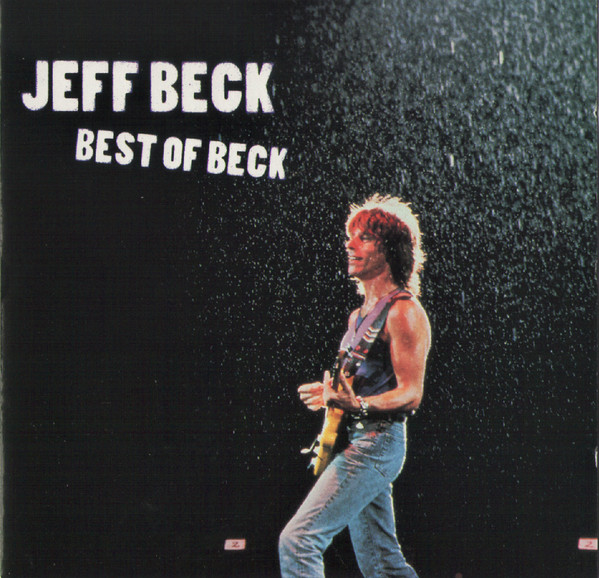
There’s a lot to like on Beckology, and a lot to endure. A few years went by before the label attempted a single-disc compilation, but even Best Of Beck didn’t merely distill the box. With the exception of “Going Down”, the vocal tracks feature Rod Stewart, while the bulk of the set leans on the instrumental side, and wisely. Of the tracks not repeated from the box, “Freeway Jam” appears in its studio incarnation, “Two Rivers” is a substitution from Guitar Shop, while “Scatterbrain” and “Blue Wind” further sample the fusion period. “She’s A Woman” is still as goofy as ever.

Jeff Beck Beckology (1991)—3
Jeff Beck
Best Of Beck (1995)—3½

Tuesday, February 25, 2020

Jeff Beck 11: Guitar Shop

Another long break separated Jeff Beck albums, during which he spent a bit of time tinkering with cars in his home garage. The artwork for Jeff Beck’s Guitar Shop cleverly played on this, while the credits unweildingly and repeatedly touted co-collaborators Tony Hymas on keyboards and Terry Bozzio on drums. In comparison to the high-gloss all-star approach on his last album, the trio format provides a return to form for Beck, who can simply concentrate on playing the guitar while Hymas fills in the blanks.

The title track effectively evokes the sound of a garage without sounding too gimmicky, at least until Terry adds a wacky voiceover honed from years of recording and performing with Frank Zappa. What sounds like a sax is actually a keyboard, showing how far the technology had (finally) come. “Savoy” swings a bit, though we could do without the canned audience cheering. “Behind The Veil” explores a distinct reggae groove, while “Big Block” is fat and funky, with a few surprising chords out of the well-worn E platform. All that makes the slow and pretty “Where Were You” all the more welcome, with only the barest keys under Beck’s melody.

The effect is even more profound on LP, as the tune closes side one, and on those cassette players not equipped with auto-reverse. Otherwise, CD listeners (or streamers today) are sent directly to “Stand On It”, which again sits on one chord before heading off into harmonized territory. “Day At The House” is yet another one-chord funk jam, this time split up by Bozzio’s comments on environmental issues. It’s a sharp left turn to slow jam territory on “Two Rivers”, then back to the high-speed assault of “Sling Shot”.

While not quite the jazz fusion that emerged at the end of the previous decade, Guitar Shop is a wise back-to-basics move for Beck, and a refreshing alternative to the high-speed metal of the period. It’s not supposed to be groundbreaking, and it’s not; mostly it sounds like he was having fun.

Jeff Beck With Terry Bozzio and Tony Hymas Jeff Beck’s Guitar Shop (1989)—3

Friday, October 11, 2019

Jeff Beck 10: Flash

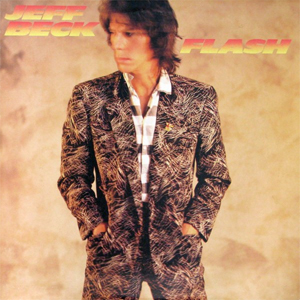
Five years was a long time in the ‘80s, so when Jeff Beck finally got around to recording an album, the music scene had changed dramatically. The cover of Flash is telling; here El Becko is shown wearing a stylish suit, not unlike the blazer Bob Dylan appropriated for the same year’s Empire Burlesque. (Like that album, producer of the moment Arthur Baker adds his sheen as well, dating the album just as severely today.) Nile Rodgers dominates the proceedings, fresh from Mick Jagger’s solo album.

Beck’s guitar is just as adventurous as ever, but on every track, drums boom and synths dominate the bass, bringing to mind “Danger Zone” by Kenny Loggins, which isn’t on the album, and likely wasn’t recorded yet, but you get the idea. The album as a whole resembles so many movie soundtracks of that period.

The big draw was Rod Stewart’s appearance on a cover of “People Get Ready”, which would bring the singer a needed boost, soon to be derailed by “Love Touch”. Most of the rest of the vocals came from the soulful throat of Jimmy Hall, once of Wet Willie, here following the footsteps of Bobby Tench. “Ambitious” is fairly funky, but takes off when Beck takes over. He’s all over “Gets Us All In The End” pretty much from start to finish, a track otherwise tailor-made for Bonnie Tyler, but “Stop, Look And Listen” and “Ecstasy” are ultimately generic vocally. And while anybody would know by now that Beck was no singer, somehow Nile Rodgers felt he should take the mic for “Get Workin’” (punctuated by the stuttering sample best personified by “Rock Me Amadeus”) and “Night After Night”. Luckily for everyone he’s mixed low, and several background singers fill up the cavern of sound.

Interestingly, two instrumentals each come from keyboard players we’ve heard on previous Beck albums. Jan Hammer’s “Escape” manages to employ dynamics over the same metronomic beat. Tony Hymas offers “You Know, We Know”, which starts okay, but soon turns into everything else. The LP and cassette ended there, but certain CD pressings maximized the extra playing time by adding two B-sides. “Nighthawks” is another ordinary Nile Rodgers tune sung by Jimmy Hall, while “Back On The Streets” features the talents of Karen Lawrence, soon to be heard singing the opening theme to the hit TV show Misfits Of Science.

Flash managed to become something of a hit, mostly for the Rod Stewart connection, but also because it fit squarely into radio formats of the time. It’s undeniably catchy, perhaps a guilty pleasure, and at its best when you can concentrate on the guitar, not the dressing. If you can’t, dock the rating a full point.

Jeff Beck Flash (1985)—3

Tuesday, July 16, 2019

Jeff Beck 9: There And Back

The past few years must have tired Jeff Beck out, since it took him all the way to a new decade to finish another album. There And Back furthers his embrace of fusion with rock and funk elements, sans vocals, and finds him somewhat in transition. The album begins with Jan Hammer, then adds Simon Phillips on drums, then replaces Hammer with Tony Hymas on keyboards and Mo Foster on bass.

“Star Cycle” burbles along with the kind of synth figures Jan Hammer would soon bring to the likes of Miami Vice, and he and Beck soon get to dueling. “Too Much To Lose” is a remake of an earlier Hammer tune, with a fairly structured melody, while “You Never Know” gets fairly frenzied after establishing the riff. The highlight of the album is “The Pump”, beginning with a steady throbbing beat and minimal changes, while Beck wails above the newest rhythm section.

“El Becko” (another great title) begins with a flurry of piano that somehow turns into a pompous overture, finally giving way to a more rocking idea. This only puts the return to the overture idea in better context overall. “The Golden Road” returns to the territory of “The Pump” but wanders a bit, while “Space Boogie” is an opportunity to keep up with Simon Phillips while he attacks the kit. There are a few seconds of silence before “The Final Peace” comes in, giving Beck room to stretch over spacey synth chords.

There And Back doesn’t have anything especially groundbreaking, but it makes a nice capper to the trilogy begun on Blow By Blow. As on Wired, the other band members get most of the songwriting credits; maybe that’s why he wouldn’t make another album for five years.

Jeff Beck There And Back (1980)—3

Tuesday, April 2, 2019

Jeff Beck 8: With The Jan Hammer Group Live

This album has been much maligned over the years, likely because it was (at the time of release, anyway) the furthest out Jeff Beck had gone from what people expected of him. While it’s his picture on the cover, since he made the money for the label, Live is double-billed with the Jan Hammer Group, who at this time consisted of all former members of fusion pioneers Mahavishnu Orchestra. Hammer himself had made his impression on Beck all over Wired, while the rhythm section of Fernando Saunders and Tony “Thunder” Smith would one day make Lou Reed very happy. Without question, this is a fusion album, and a true collaboration, Beck’s role being that of the guitarist in the band. Therefore, half the program is given over to material from earlier Hammer albums.

Car horn sound effects not only set up “Freeway Jam”, but recur throughout—a novelty when guitars and synths didn’t commonly make those noises with ease, but mostly annoying today. “Earth (Still Our Only Home)” is funky, but Hammer’s not a vocalist, and the lyrics are unintelligible. Beck takes over the vocoder for “She’s A Woman”, and soon ends up parroting some of Peter Frampton’s clichés from his own live album from the year before. He even exhorts the crowd to “put those hands together” for “Full Moon Boogie”, sung well by Tony Smith with lots of electric violin from Steve Kindler.

Side two has no vocals, thankfully. Crazy space noises open “Darkness/Earth In Search Of A Sun”, moving into a more ambitious groove. “Scatterbrain” translates well to the stage, with the orchestral parts covered by Hammer and Kindler, while the rhythm section travels at the speed of light. “Blue Wind” is an excellent display of precision, and takes a surprising yet apt detour into “Train Kept A-Rollin’”, proving he still had rock in him. And with a “God bless, ya,” they’re gone.

Assuming they’re authentic from the performances, the crowd dug the show, as will anyone into jazz fusion. Therefore it’s recommended, but you’ve been warned.

Jeff Beck With The Jan Hammer Group Live (1977)—3

Tuesday, December 18, 2018

Jeff Beck 7: Wired

Not that he ever repeated himself, but Jeff Beck was smart enough to stick with a decent formula once he found one that worked. Wired builds on the foundation set by Blow By Blow, retaining producer George Martin and Max Middleton on keyboards. A couple of new names—for the time—debut here: Jan Hammer (fresh from the Mahavishnu Orchestra and ECM work, and years away from Miami Vice) on synthesizer and Narada Michael Walden (also recently with Mahavishnu as well as Weather Report, and just as far away from “Freeway Of Love”) on drums and credited for writing four of the songs. Clearly, jazz fusion was the thing, and vocals were out.

“Led Boots” is supposed to be a nod to a certain band named after a zeppelin, but it’s way to busy to have any connection past the title. “Come Dancing” is more of a challenge than an invitation, given the confrontational groove, for most of it, but listeners can marvel at the way the guitar melds with the synth. It’s all pretty funky so far, so it’s wise that he makes his own stamp “Goodbye Pork Pie Hat” by Charles Mingus, in an incredibly reverent yet virtuosic take. If that’s too slow, try to keep up with “Head For Backstage Pass”, wherein he seems to be dueling with himself.

Hammer contributes “Blue Wind”, playing synth as well as drums in a leg-breaking meter, with nice call-and-response between the keys and the stringed instruments. “Sophie” is a tricky one, starting slow and dreamy, but soon working up into a frenzy of syncopation and hot licks. Max Middleton gets center stage on his clavinet for “Play With Me” for even more of the same. Finally, “Love Is Green” is a short, slow ballad for guitar, bass, and piano, its title recalling Beck’s cover from the decade before. While written by Walden, it’s very reminiscent of the quieter Hammer tunes on John Abercrombie’s Timeless album.

Wired has no gimmicks, just playing. It stays pretty far away from rock, and forms a worthy companion to its older brother. It could use a little more variety, and further explorations like “Goodbye Pork Pie Hat” would have been great, but you try telling Jeff Beck what to do.

Jeff Beck Wired (1976)—3

Friday, June 8, 2018

Jeff Beck 6: Blow By Blow

It took him long enough, but Jeff Beck finally figured out that he could record albums without a singer. Blow By Blow was recorded with a young rhythm section and Max Middleton from the second Jeff Beck Group.

The sound is a departure from the heavy rock of earlier Beck albums, leaning more on funk and now sounding more like fusion, beginning with “You Know What I Mean”, a James Brown strut filtered through the new decade. Especially notable on an album produced by George Martin, the Beatles’ “She’s A Woman” gets a nutty approach, with a reggae groove and, to help identify the song, a few lines “sung” through a talkbox effect usually associated with Peter Frampton. It’s a sound that seems to suggest the title of the next track, “Constipated Duck”, which doesn’t sound like one. For such a great title, it’s fairly brief before fading into “Air Blower” (called “AIR Blower” on pre-CD pressings, we assume as a nod to the studio where the album was recorded), an uptempo jam that slows down dramatically towards the end, leading into the extremely jazzy “Scatterbrain”, a furious fusion with tight precision and even a sympathetic string arrangement.

Stevie Wonder dominates the start of side two, first with “Cause We’ve Ended As Lovers” played beautifully and mournfully by Beck, and the highly funky “Thelonius”, with the man himself on clavinet (and more constipated duck sounds). After Max Middleton’s “Freeway Jam”, with its catchy hook and breezy groove, it’s back to a more dramatic sound. “Diamond Dust” is a haunting piece in 5/4, the guitar, piano, and strings complementing each other on a beautiful melody. (Interestingly, the song was written by a guitarist in a band featuring most of the former members of the second Jeff Beck Group.)

It’s not easy to write about an instrumental album, particularly one where the nuances are more abstract. Still, Blow By Blow finally shows Jeff Beck thriving, successfully making his way on his own terms. Not quite jazz, certainly not rock, just Jeff Beck.

Jeff Beck Blow By Blow (1975)—3½

Tuesday, February 6, 2018

Jeff Beck 5: Beck, Bogert & Appice

Vanilla Fudge never had a reputation for subtlety, but something about their rhythm section appealed to Jeff Beck, so after a few false starts he was able to rope in bassist Tim Bogert and drummer Carmine Appice for his latest Jeff Beck Group. Rechristened Beck, Bogert & Appice, they recorded exactly one studio album together.

Part of the appeal of the Americans was their vocal abilities, similar but mostly anonymous, especially after none of the other vocalists Beck tried worked out. Yet he himself takes the microphone for “Black Cat Moan”, a dirty blues courtesy of producer Don Nix. “Lady” has harmonies (and bubbling bass) reminiscent of classic Cream, with a galloping beat that serves it well, starting and stopping on various dimes. The boys get mushy on “Oh To Love You”, with big harmonies, block piano chords, Mellotron, and even a Coral sitar sound. The song shouldn’t work, but it does. “Superstitious” is indeed the Stevie Wonder song, originally written for Beck, here removed of all its funk to bludgeon that classic riff into the runout groove, complete with a drum roll that slows down to nothing.

The ultra-simple “Sweet Sweet Surrender” starts with acoustic guitar of all things, and we can blame Don Nix for the words on this one. (Pretty sure Gregg Alexander heard it too.) “Why Should I Care” has a terrific riff and double-tracked vocal constructed from prime ear candy that must have sounded great on a car radio. The wah-wah comes out for “Lose Myself With You”, which sounds a lot like the previous song but isn’t as good. (Somewhere Tommy Shaw files this away for “Too Much Time On My Hands”.) “Livin’ Alone” is more boogie from the same general cloth that takes way too long to finish, but fans will recognize the Beck-Ola tone. For a smooth closer, Curtis Mayfield’s “I’m So Proud” (also revived later that year by Todd Rundgren) is given a mostly reverent treatment, except for Beck’s ill-conceived idea to use his airplane-taking-off effect right before the big solo.

Beck, Bogert & Appice is a little dumb but still fun, and as with most of Beck’s projects, the group didn’t last. Those seeking even more of what this power trio had to offer could shell out the bucks for a double live album recorded and released only in—where else?—Japan. It’s worth seeking out if you like the talkbox, bass solos, drum solos, singers haranguing audiences about their lack of enthusiasm and moral casualness, and for Beck’s brief rendition of the Beverly Hillbillies theme during “Jeff’s Boogie” (not to be confused with the “Boogie” a side later). “Black Cat Moan” manages to encompass “You Shook Me” and “Blues Deluxe”, while “Plynth” somehow leads to Junior Walker’s “Shotgun”.

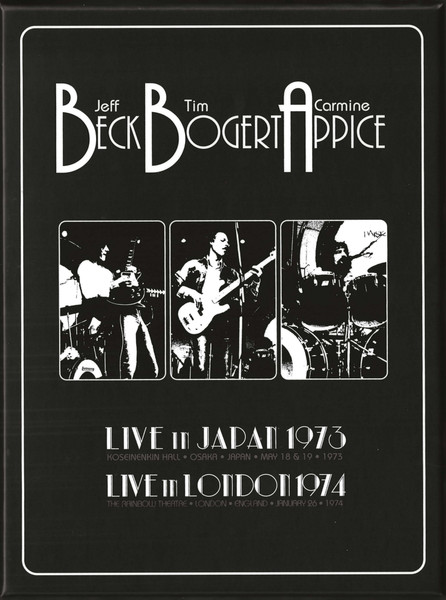
Fifty years on, after Beck and Bogert had passed on, this Japanese album was paired with a set at London’s Rainbow Theatre recorded the following January. Recorded for radio, it’s got a much hotter sound. And besides being a different setlist, it sports several songs that would have gone on their second studio album if they’d gotten around to recording one. The opener, “Satisfied”, is a good riff played confidently, while the sentimentality in “Laughin’ Lady” is derailed by the intro rap, which is too bad. “Solid Lifter” is a heavy instrumental with mild fusion overtones, and a section that quotes Hendrix’s “Third Stone From The Sun”; “Jizz Whizz” has a few Hendrixian elements as well. “Name The Missing Word (Prayin’)” appears to be strongarmed from a Staples Singers album, and “(Get Ready) Your Lovemaker’s Coming Home” needs a little more work lyrically. (The “Blues Deluxe/You Shook Me/Boogie” medley heard on the Beck box set closes the show here, indexed so that the boogie is on its own.) For two and half hours of tight sledge, it delivers.

Beck, Bogert & Appice Beck, Bogert & Appice (1973)—3
Beck, Bogert & Appice
Live In Japan 1973 | Live In London 1974 (2023)—3

Friday, July 14, 2017

Jeff Beck 4: Jeff Beck Group

Jeff managed to keep the same band together for consecutive albums, and perhaps that time spent together helped the next album come together better. Prominently featuring an orange on both front and back covers for some reason, the simply titled Jeff Beck Group was recorded in Memphis with the legendary Steve Cropper producing, which probably also had a lot to do with its cohesion.

For a start, the guitar drives most of the proceedings, whether slide or wah-wah, layered where needed with different effects. When combined with straight piano, it brings to mind some of the high points of Beck-Ola; when it’s an electric piano, we’re reminded that this is Max Middleton. Bob Tench is still the singer, and gets the task of layering his own contributions in startling variations. (The female backup singers are uncredited.)

After the opening swamp boogie “Ice Cream Cakes”, covers dominate, from a boogie-flavored take on “Glad All Over” (the Carl Perkins tune, not the Dave Clark Five smash) that screams for Rod Stewart to the surprisingly soulful rejig of Dylan’s “Tonight I’ll Be Staying Here With You”. The producer didn’t play any guitar, but co-wrote “Sugar Cane” with Beck, which begins promisingly as an instrumental, but soon gains lyrics. However, “I Can’t Give Back The Love I Feel For You” is taken from a Motown torcher to a showcase for Beck with no vocals—and is that a Coral sitar?

Side two simply builds from there. Tench doesn’t do much outside the box on “Going Down”, letting the band plow through a powerful performance of a recent Freddie King hit. The Motown influence continues on “I Gotta Have A Song”, a recent Stevie Wonder album track and B-side, and another harbinger of music to come. “Highways” finds peaks and valleys in unexpected changes, taking several extended solos, while the gorgeous “Definitely Maybe” opens with twin slide leads in harmony, and follows Beck around the neck, frustratingly fading after only five minutes amid an electric piano solo.

Given its tempered emphasis on vocals, Jeff Beck Group is proof that the guitarist didn’t necessarily need a singer in his band, but apparently he wasn’t ready to go all instrumental yet. Nor was he completely thrilled with this incarnation, as he started over with a different rhythm section within months of the album’s release.

Jeff Beck Group Jeff Beck Group (1972)—3

Friday, February 24, 2017

Jeff Beck 3: Rough And Ready

As we’ve pointed out too many times, two years used to be a long time between albums. Jeff Beck was relatively inactive musically between 1969 and 1971, a period in which many of his peers and former bandmates made incredible leaps and bounds, not to mention many albums revered today.

Still of the mind that the only way he could make records was with a singer in his band, he went ahead with an all-new Jeff Beck Group, another five-piece outfit with a more American “boogie” sound. Despite taking songwriting credit for most of the album, the guitar takes a back seat to the rest of the band, particularly singer Bobby Tench, who brings a soulful element to the proceedings. Frankly, his voice is a matter of personal taste.

A track-by-track rundown of Rough And Ready isn’t going to be easy, since the album’s kind of dull. “Got The Feeling” is a predominant gallop with cowbell, not too far removed from Chicago, and not in a good way. Drummer Cozy Powell ably tackles the off-time riff in “Situation”, which is more interesting musically than lyrically. Jeff finds a Leslie speaker and a slide for “Short Business”, which is indeed brief, making way for the instrumental “Max’s Tune”. Originally titled “Raynes Park Blues” and credited to Jeff, the updated title (and songwriter) reflects the work of keyboard player Max Middleton, who’s also pretty tasty throughout the album. Whatever one calls the song, it’s a good exploratory piece—except maybe for the salsa detour near the end—and an early sign of the direction Jeff would eventually take, but not for a while.

The Leslie effect comes back on for “I’ve Been Used”, a decent riff but not much of a song, though there’s some wonderful fuzzy distorted bass from Clive Chaman. “New Ways/Train Train” also crams various riffs into a track with seemingly separate parts, more interesting when it’s just the guitar. Oddly, another long side-ender is worth returning to; “Jody” beings as something of a lament for a lost childhood friend or something, goes into a strange double-time section that would work better as a groove on its own, then finds its way back to the original theme.

Rough And Ready perks up anytime Jeff takes one of his solos, and even the flashy ones fit. Apparently the recording sessions were a tad rushed, and the band sounded better live, which only underscores that this is not the best souvenir.

Jeff Beck Group Rough And Ready (1971)—2½

Friday, October 16, 2015

Jeff Beck 2: Beck-Ola

Still under the managerial thumb of Mickie Most, Jeff Beck wanted his next album to be “heavier” than that last; it’s also possible that he felt threatened by Led Zeppelin’s debut. So he and his Group (with new drummer Tony Newman) went into the studio and banged out a follow-up, which emerged as Beck-Ola.

With two Elvis Presley covers and totaling 30 minutes, the listener cannot be faulted for feeling shortchanged. Luckily, the music makes up for it. Those two Presley songs aren’t straight renditions; “All Shook Up” is turned inside out, while “Jailhouse Rock” packs quite a punch. In between, “Spanish Boots” shows off Rod Stewart as a premier shouter, and “Girl From Mill Valley” is a gorgeous tune by Nicky Hopkins that doesn’t need any words.

Side two is all heavy, with only the slightest shift in dynamics. “Plynth (Water Down The Drain)” beats a riff into the blues, and “The Hangman’s Knee” is a slow stomp through the familiar folk image. More of a marathon is “Rice Pudding”, a collection of riffs and jams on same in and out of 4/4 and 3/4, under several overdubbed guitars, cascading up into a glorious frenzy that cuts out abruptly, as if the tape ran out.

Such an ending only underscores how short the album is, how quickly it was recorded and how little material they had. (Of the bonus tracks on the latest CD, two are alternates of the Presley songs, one is another one of those interminable blues standards everyone did in those days, and “Throw Down A Line” is an attempt at a single, foisted upon them by their manager, with a verse that to these ears sounds like Steve Marriott singing with Dave Mason-era Traffic.) Nonetheless, Beck-Ola is great as long as it’s around. The band itself didn’t last much longer, Rod and Ron Wood heading for drunker pastures and Beck chasing his own ideas of progress. In the heyday of the Maxell tape, this album and its predecessor made a perfect pair, capturing lightning in a bottle before everyone’s catalogs became more complicated.

The Jeff Beck Group Beck-Ola (1969)—3½

Friday, July 3, 2015

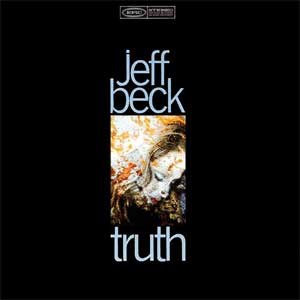
Jeff Beck 1: Truth

Besides being one of the most inventive, uncompromising guitarists of his generation, Jeff Beck is to be commended for having the same hairstyle for fifty years. One need only look at Nigel Tufnel to see the man’s influence.

After parting with the Yardbirds, the young axeman struck out for a solo career, but there was just one problem: he couldn’t sing. This is evident from his first single, the so-goofy-it’s-great “Hi Ho Silver Lining”, a record that included a more enduring B-side. The follow-up, “Tallyman”, wasn’t as embarrassing, nor as good.

Once it was established where his strengths lay, he put together a band that would attempt to set a precedent for a new kind of rock, balancing heaviness and lightness within the same song. A raspy kid named Rod Stewart would be his singer, bringing along Micky Waller on drums, while a chameleon named Ron Wood, already a guitarist on his own, would play bass. This lineup would record “I’ve Been Drinking”—used as the B-side to Beck’s instrumental butchering of the schlock classic “Love Is Blue”—before going on to record an album proper (incidentally, at Abbey Road in the weeks immediately before the Beatles started the White Album).

Truth is a likable hodgepodge of an LP, complete with self-deprecating notes from the man whose name graced the cover. It begins with a slowed down, groovy version of “Shapes Of Things”, which gives both Rod and Jeff a chance to show what they do best. “Let Me Love You” is one of those electric blues standards that everyone has to do at one point or another, while “Morning Dew” was the current folk equivalent, albeit with Jeff mangling the wah-wah pedal while an “unknown Scottish bloke” plays bagpipes. “You Shook Me” would be redone—some would say stolen—by Led Zeppelin a year later, complete with John Paul Jones on organ as he was on the Beck track. Here it’s merely two and a half minutes, grinding to a quick close described as “my guitar being sick”. A more subdued organ, with Keith Moon on tympani, drives a cover of “Ol’ Man River” from Show Boat.

If the listener wasn’t completely confused by now, the solo acoustic “Greensleeves”, precisely finger-picked, shows Jeff to be more than just flash. “Rock My Plimsoul” is another generic blues, better for the guitar than the lyrics. A nice addition is “Beck’s Bolero”, originally the B-side to his first single. Alongside the instrumental melody, we have Jimmy Page strumming an electric 12-string, John Paul Jones playing bass, Nicky Hopkins on piano, and Keith Moon on drums with a terrific howl a minute and a half in. Such catharsis is a memory for most of “Blues Deluxe”, yet another rote blues augmented by obvious added applause effects to give it that “club” feel. Finally, there’s “I Ain’t Superstitious”, a great nasty blues made even more diabolical by being in the key of F, especially difficult for bass players.

The abundance of blues tracks makes Truth less than perfect, but at least they’re spread out for variety, so the album manages to float well above the Mendoza line. Later reissues would pair it with the next Jeff Beck Group album, but today it can be found on its own with a pile of bonus tracks, including all the singles, and earlier versions of some of the album cuts.

Jeff Beck Truth (1968)—4

Friday, March 6, 2015

Yardbirds 4: Greatest Hits

American labels knew how to recycle product in the ‘60s, and since a few months had gone by since the last album, Epic decided to release a greatest hits set by the Yardbirds. It’s only half an hour long, as were a lot of albums back then, but it really does cover their hits to date. It includes two songs from the first album, four songs from Having A Rave-Up, and only “Over Under Sideways Down” from that album. New to LP in the states were the previous year’s stellar single “Shapes Of Things” and its B-side “New York City Blues” (which opens with the same riff Jimmy Page would cop for “You Shook Me”, adding insult to Jeff Beck’s injury, but we’re getting ahead of ourselves), plus “Happenings Ten Years Time Ago”, which means the album includes performances by all three of the band’s soon-to-be-legendary lead guitarists.

Three years later, once each of those lead guitarists had become household names in households that listened to FM radio, Epic issued a double album with the inspired title Featuring Performances By Jeff Beck, Eric Clapton, Jimmy Page. With 20 songs coming in at just under an hour, it repeated nothing from the hits album—which had covered pretty much all of the songs that qualified as actual hits—and scrambled deep tracks from all the American albums in no understandable sequence, seesawing from blues to experimental. Several paragraphs of liner notes bemoaned the band’s commercial failures, but didn’t bother to detail which albums begat which songs, nor which of the performances featured which guitarist, even though each had an instrumental all to themselves. The bizarre cover art was typical of the era, and the same designer would get to work on another related project ere long.

Both of these compilations would go out of print by the end of the ‘70s, and because the masters were owned by different managers depending on who produced what, licensing would continue to be wonky, and shoddy rehashes abounded overseas. Then, in 1986, the Rhino made good on their original brief to restore music to the masses with a hits collection with the hopeful title of Volume One. This set concentrated on the Giorgio Gomelsky era, with began with Clapton and covered the first two American albums, including two further tracks from Five Live Yardbirds. It did a fine job of presenting them as blues interpreters, but the contents predated some of Beck’s innovations.

While a second volume never materialized, Rhino did score a coup in the new century with Ultimate! This was another apt title, as it crammed two CDs full of just about everything, starting with their first demos, through four tracks from Five Live Yardbirds, most of the three American albums, and all key singles and B-sides, plus a rare Italian single and three fey Keith Relf solo sides. Attention to detail ensured liner notes and comprehensive discographical information, including recording dates, locations, and even engineers; who knew Eddy Offord, Roy Halee, and even Bones Howe taped this band?

This, too, is out of print, but luckily in the digital era it’s possible to stream most of the music. The original albums are out there, along with various grey-area live performances. And of course, the BBC. After scoring the rights to Roger The Engineer, Warner Archives followed another ‘90s catalog trend with the 1997 release of BBC Sessions for the first time in the US after a few years floating around elsewhere. This set presented 26 tracks from the Beck and Page eras, complete with interview snippets from the usual clipped-voiced deejays and a few tunes that never made it to wax. This too became scarce, until 2024 brought The Ultimate Live At The BBC—they sure like that adjective—box of four discs.

The Yardbirds The Yardbirds’ Greatest Hits (1967)—4
The Yardbirds
Featuring Performances By Jeff Beck, Eric Clapton, Jimmy Page (1970)—3½
The Yardbirds
Greatest Hits, Volume One (1964-1966) (1986)—3½
The Yardbirds
Ultimate! (2001)—4
Current CD availability: none