Showing posts with label pink floyd. Show all posts

Friday, June 12, 2026

Pink Floyd 22: 8-Tracks

The 8-track tape music format dominated the industry for a few decades. These bulky plastic cartridges split an album’s program into four stereo segments, but they didn’t always match the vinyl sequence, or even the sides. In order to cut down on excess silence and conserve actual tape, songs were often shuffled, many times in baffling combinations. From time to time a rare mix would sneak through, but for the most part, the 8-track’s appeal was more from convenience and mobility than pristine fidelity: cars had players, and portable players were available in a variety of designs. By comparison, the cassette’s smaller size was that much more fragile, and the thin tape could threaten to unwind and stretch if you weren’t careful. Even those took liberties with album sequencing, but that’s not important right now. Eventually people decided it was a lot easier to dub albums and songs from the radio onto a cassette, which was just one of the factors that helped hasten 8-track’s demise.

Like most kings of the high school parking lot, Pink Floyd sold a lot of albums on 8-track, and a new compilation of favorites that likely got a lot of play in that format appeared for no real reason, on the heels of the 50th anniversary of Wish You Were Here and its various expansions. Despite the hyphen, 8-Tracks offered exactly that: eight tracks from the ‘70s sequenced and mixed by Steven Wilson, and something of a mutant cousin of A Collection Of Great Dance Songs.

Like that album, it begins with “One Of These Days”, only this time the wind fades into “Wots… Uh The Deal”—a wonderful song, to be sure, but not the most expected choice for a “hits” album. That’s soon taken over by the coins and cash register of “Money”, this time the original track and not the rerecorded version. “Another Brick In The Wall, Part 2” is also the extended single mix, with the extra bars at the top and with the schoolmaster’s ranting over the end. “Wish You Were Here” begins from the tuned radio, and its wind at the end turns into the ticking clocks of “Time”. The “Breathe” reprise conveniently ends on the same chord that opens “Comfortably Numb”, and that fades into the sheep sounds to preface “Pigs On The Wing”.

And that right there would seem to be the big deal of this album, from the title to the concept. This is the version of the song that appeared on the 8-track version of Animals—both verses, separated by solo played by auxiliary touring guitarist Snowy White. Why this did not appear in 2018 on that album’s sonic and visual overhaul made no sense, but here it is now. Beyond that, everybody who cares already knows these songs, and might even be tired of them.

Pink Floyd 8-Tracks (2026)—3

Friday, May 9, 2025

Pink Floyd 21: At Pompeii

One of the challenges of rock concert films has always been how much to show of the audience. Pink Floyd got around this by being filmed performing a concert in 1971 with no audience. First released the following year, Pink Floyd At Pompeii placed the band within the amphitheater in Pompeii in southern Italy, nearly 1900 years after it had been decimated by Mount Vesuvius, where the handsome and occasionally shirtless musicians played for the cameras, which also followed them as they wandered around desolate hills and smoking craters. It was a big hit on the midnight movie circuits, and required viewing for young stoners off grainy VHS tapes and eventually DVDs.

Of course, as is clear from the film, not every performance depicted was filmed in Pompeii, as signified by Richard Wright’s missing beard and shots of them playing standing on a wooden floor. But to be able to see the band up close and actually playing, as opposed to shadowed figures on a distant stage amidst a light show, along with the added footage of recording The Dark Side Of The Moon and snide commentary in the Abbey Road studio canteen, makes the film worthwhile. They were, after all, a pretty tight band, and masters of dynamics.

Fans will already know that the Early Years box included five of the songs from the film by “mistake”, with “Echoes” presented as a single track instead of being split in half as it was for the film. plus an extra alternate take of “Careful With That Axe, Eugene”. That was nice, but when the original film reels turned up for a full restoration, Steven Wilson was brought in to mix an official CD version. At Pompeii – MCMLXXII offers the live performances as seen in the film, beginning with “Pompeii Intro”, consisting of a simulated heartbeat and droning synthesizer, followed by the first half of “Echoes”, which stops right before the seagulls come in. “Eugene”, “A Saucerful Of Secrets”, and “Set The Controls For The Heart Of The Sun” are improvements on the Ummagumma versions. “One Of These Days” has power, and an instrumental variation on “Seamus” (here titled “Mademoiselle Nobs”, after the dog utilized to howl along) becomes a showcase for David Gilmour on harmonica and Roger Waters playing blues riffs. The second half of “Echoes” provides a good basis for the camera to float away into the sky.

All that totals just over an hour’s worth of music, so the package had a bonus disc including the alternate “Eugene” and the unedited “Saucerful Of Secrets”, which is about two and a half minutes longer. It would have been nice to include “Echoes” as one continuous track, but that might have angered the folks who’d shelled out for that box set.

Pink Floyd At Pompeii – MCMLXXII (2025)—

Friday, September 20, 2024

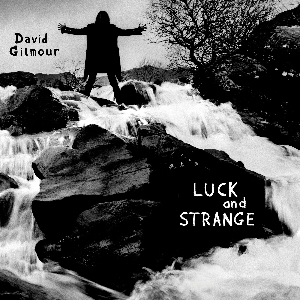
David Gilmour 5: Luck And Strange

Seemingly on something of a nine-year plan, David Gilmour emerged post-pandemic with only his fifth solo album. Luck And Strange apparently came together very quickly, for him, and he’s settled into his older voice, which we feared was on its way out last time. In co-producer Charlie Andrew he gained a foil who kept him on track, and didn’t let him fall back on old habits or tropes. That’s a tall order when the lyric, which focus on the familiar themes of aging and mortality, provided as ever by wife Polly Samson. Some familiar sidemen appear in the credits, and his now-adult children contribute to several tracks, but the biggest surprise is the legendary Steve Gadd drumming on half the album. Orchestra and choirs appear, but not excessively.

“Black Cat” is a haunting instrumental, Gilmour playing his signature tone over Roger Eno’s piano. If anything, it’s too short. The title track stemmed from a jam with Richard Wright a year before his death, and his distinctive electric piano adds all the color. If the verses seem a little simple musically, wait for the choruses and bridge, and daughter Romany’s harmonies are lovely. “The Piper’s Call” begins with a plaintive ukulele strum but soon builds, with another soaring chorus, then almost imperceptibly into a funky stomper with a solid solo taking it out. It’s a stark contrast into “A Single Spark”, which almost seems like a throwback to Beth Orton trip-pop, with some wonderful layers. “Vita Brevis” is all too brief for an instrumental, the title of which translates as “life is short”.

Romany plays the harp on that, and her voice is front and center on “Between Two Points”, a cover of an obscure (to us) song from 1999 originally written and recorded by the Montgolfier Brothers duo. It’s a haunting performance, and her take is exquisite. At this point the relative heaviness of “Dark And Velvet Nights” sticks out, opening with feedback and a bombastic fanfare. He spends a lot of time wailing on this, supported by another throwback in the ‘70s, almost Philly soul strings. Then it’s back to being pensive on “Sings”; after albums full of imagery and near-poetry, it’s striking to hear him sing of such things as “Portobello Road”. (Near the end we hear a snatch of his original hummed sketch for the tune, with his then-toddler son adding encouragement. It’s very sweet.) As “Scattered” crawls in, a Leslied piano recalls the effect on “Echoes”. A more successful version of the ruminating that slowed down Rattle That Lock, it all builds via some crazy cocktail piano to first an acoustic solo then a more archetypal electric one, but he’s wise enough to calm things down for a subdued coda.

As usual, the album was released in various permutations with extra material. The so-called deluxe CD added the one-off, gypsy-flavored single “Yes, I Have Ghosts” from 2020, sung with Romany and originally released on the audiobook of the novel Polly published that year, and the original 14-minute “barn jam” from 2007 with Richard Wright that was the genesis of the title track. (Vinyl and Blu-ray boxes also added two alternate “orchestral” mixes and sometimes a demo of “A Single Spark”.)

Possibly the best thing about Luck And Strange is that it doesn’t pointedly sound like Pink Floyd, yet it sounds completely like David Gilmour. It may not be, as he’s stated, his best work since The Dark Side Of The Moon—he’s certainly had several high points since then—but it is very strong, and perfectly timed for a fall release. Though we still don’t know what Ozzy Osbourne is doing on the cover.

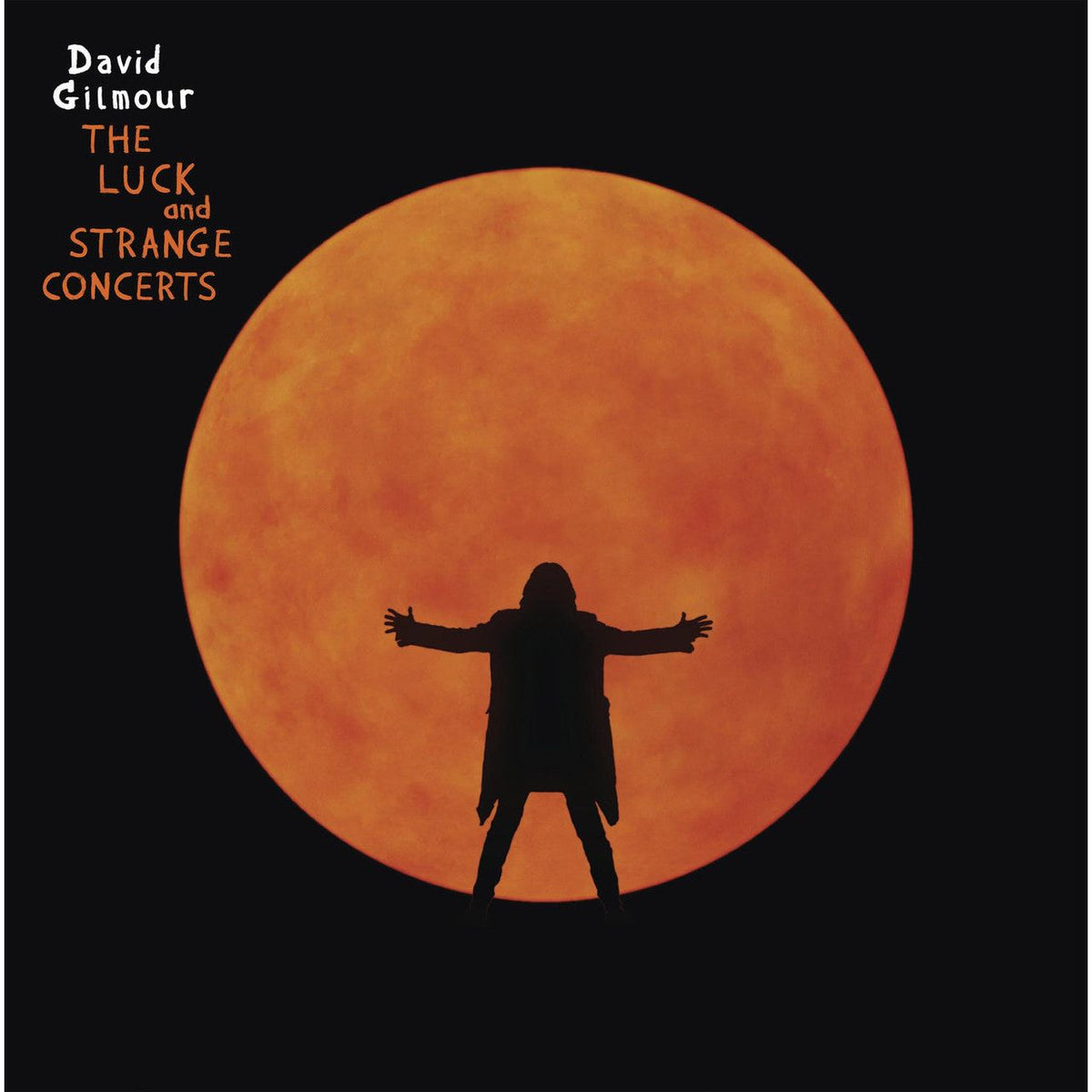
He toured behind the album, kinda, playing residencies in five cities, and just as with the last two, a live album followed. But rather than spotlight a single show, The Luck And Strange Concerts was culled from the entire run. The band is solid as usual, with the stalwart Guy Pratt on bass, Greg Phillinganes on keys, and a few of the supporting players from the album. Romany gets her spotlight on “Between Two Points”, as well as part of the backing vocalists who tackle a subdued “Great Gig In The Sky”. Following the intros of “5 A.M.” and “Black Cat”, the title track kicks off the vocal portion. The “Breathe” into “Time” sequence is back at the top of the set, and the rest of the program goes between songs from the album and the usual cherry-picked oldies from his and the Floyd catalog. Only “A Great Day For Freedom” hadn’t been played on the last tour. David’s in great voice throughout, and taking breaks to play lead helps. (The shows in Rome were filmed and released on DVD and Blu-ray as Live At The Circus Maximus, as well as in a box set that also had the live album on CD and LP. And a book. And postcards. And stickers. And a poster.)

David Gilmour Luck And Strange (2024)—
David Gilmour
The Luck And Strange Concerts (2025)—3

Friday, December 29, 2023

Roger Waters 5: Lockdown Sessions and Dark Side Redux

In the years following his 2017 solo album, Roger Waters took a band on the road for another multimedia extravaganza that incorporated not only the new stuff but classic Floyd as well, and as would be expected. As outspoken as ever, he garnered criticism aplenty for his anti-Israel stance, which overshadowed the anti-Trump imagery in the show. A film and album of the production, both titled Us + Them, did only slightly better than his reworking of Stravinsky’s A Soldier’s Tale.

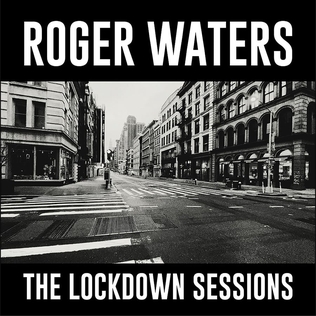
Like most musicians hamstrung by the limitations of the Covid pandemic, he did what he could to keep busy musically, and in his case, that meant rerecording mostly stripped-down arrangements of songs that had been played throughout the tour. Intriguing but inessential, The Lockdown Sessions slows down three songs from The Wall (four actually, as the track called simply “Vera” segues into “Bring The Boys Back Home” to stretch it out for five minutes), two from The Final Cut, and “The Bravery Of Being Out Of Range” from Amused To Death, while keeping the original guitar solos intact. However, the pointedly titled “Comfortably Numb 2022”, eschews both guitar solos, substituting an angry attempted phone call for the first and a backup singer wailing over explosive effects for the fade. For the most part, his voice hovers somewhere between a whisper and an aside; at least he’s not yelling.

The album made a splash only among the faithful, so he decided to make the most of the 50th anniversary of The Dark Side Of The Moon to give that album the same treatment, with the same band, knowing full well that the earth would stop on its axis at the news. The angle this time was to tackle the lyrics of a younger man with the perspective of a near octogenarian, and since he wrote them, he’s certainly allowed.

For the most part, the “reimaginings” are extreme. Effects are pretty much gone, except that chirping birds are everywhere. “Speak To Me” is now an opportunity to recite the lyrics to “Free Four” over that ominous heartbeat. Another couplet from that song is intoned before the verses of “Breathe”, which at least has drums and is more recognizable. “On The Run” retains its robotic pulse, but is dominated by a new monologue soaked in paranoia and madness. It continues over the start of “Time”, where clocks used to be. It slowly plods along, prodded by Hammond organ and swirly cellos, and a woman softly ooh-ing where there used to be a guitar solo. “Great Gig In The Sky” is possibly the most transformed; in keeping with its original theme of mortality, he reads part of a correspondence with the assistant of a cancer-stricken acquaintance that includes an anecdote about a show in Croatia. Clare Torry’s improvised melody is transposed to a quiet synth.

“Money” keeps its 7/4 meter but not the effects; this time the sax and guitar solos are replaced by a surreal narrative about a boxing match. Luckily, “Us And Them” is mostly untampered, though the forced echo in the verses could have been skipped. What used to be the sax solo is now covered by strings and organ. There’s not the smoothest transition to “Any Colour You Like”, which now sounds more than ever like “Breathe”, and features another cryptic piece of prose. He does cleverly preface “Brain Damage” by addressing the “madness” of this re-recording concept, and that and “Eclipse” are taken fairly straight, if subdued. And he acknowledges by name the man who had the last word on the original album while disagreeing that it’s “all dark”.

The Dark Side Of The Moon Redux isn’t awful, but it will hardly replace the original. Nor does it lend itself to repeat listening. But Nick Mason endorsed it, so who are we to argue? Besides, if you want a non-Roger interpretation of the album, there’s always Pulse. (We do, however, like the dog on the cover.)

Roger Waters The Lockdown Sessions (2022)—3
Roger Waters
The Dark Side Of The Moon Redux (2023)—

Friday, October 2, 2020

Nick Mason: Live At The Roundhouse

The Pink Floyd tribute band industry has been thriving for decades now, making room for any number of outfits in addition to such successful franchises as Brit Floyd, The Machine, and The Australian Pink Floyd Show. So it was both surprising and fitting that drummer Nick Mason, of all people, who’s the only man to appear on every Floyd album, would launch a tribute band of sorts.

With the fantastical moniker of Nick Mason’s Saucerful of Secrets, this five-piece combo was formed to celebrate the Floyd of the pre-Dark Side Of The Moon years—basically the music on the various volumes of The Early Years. Most of the songs in their repertoire were not performed at all by the post-1987 Floyd, and some barely made it to the stage at all when they were new. Between the economy of the lineup and the capabilities of modern stage equipment, these versions are as faithful as they are passionate.

Live At The Roundhouse, a combination CD/DVD or Blu-ray set, provides the evidence. On bass is Guy Pratt, who held the same job through the Waters-less years. One of the guitarists is Gary Kemp, best known from Spandau Ballet, of all bands. Both sing lead, and neither attempt to emulate the original vocalist(s). And Nick Mason himself, who’s barely played drums this century and was never really known as the most dynamic player, shows an awful lot of energy.

The songs are paced well, bouncing between some very different albums. “Interstellar Overdrive” is something of an overture, the freakout section incorporating elements of “Embryo” and “The Narrow Way”, going into “Astronomy Domine”. “Lucifer Sam” suffers a bit from Guy Pratt’s wacky asides, but there’s still no beating that riff. (A Sex Pistols reference is somehow shoehorned into “The Nile Song”, too.) Obscured By Clouds finally gets its due, with a few tracks scattered throughout the set. An abridgement of “Atom Heart Mother Suite” is bookended by verses from the starkly acoustic “If”, and “A Saucerful Of Secrets” itself is tackled and conquered. Syd Barrett is not ignored, from all of the early singles to “Bike” and the ultra-rare “Vegetable Man”. “Point Me At The Sky” is the wild card of an encore.

Lots of aging rock stars get pigeonholed into the living tribute act category, and it’s moot whether this set will woo the skeptical. But Live At The Roundhouse is a unique snapshot of an era that often gets overlooked, and even more fun to watch.

Nick Mason’s Saucerful Of Secrets Live At The Roundhouse (2020)—

Friday, April 17, 2020

Pink Floyd 20: The Later Years

Having thoroughly mined the band’s early progress for a massive multi-volume audio-visual package, David Gilmour and Nick Mason continued loading up shelves with a set that concentrated on the period of Pink Floyd that pointedly did not involve any participation from Roger Waters. Rather than being all-inclusive, The Later Years attempts to reframe the fruits of this critically divisive period.

Right away the set immediately acknowledges the shortcomings of the Momentary Lapse Of Reason album by presenting a brand new mix, incorporating keyboard parts developed by Richard Wright whilst on the lengthy tour that followed the album’s release. Moreover, Nick went back and re-recorded several drum parts, replacing some of the electronics used on the original, and some of the parts played by session people that weren’t him. While the mix removes a good deal of the mid-‘80s sheen that made us wince back then, and we do hear musical touches that weren’t obvious before, it doesn’t change the fact that the songs weren’t very good to begin with. (That said, we never had a problem with “One Slip”, so the new version of that is nice to hear.)

Two discs are devoted to a greatly expanded Delicate Sound Of Thunder, incorporating songs left off that album’s original release, slotted in place to present the full set of the tour. Some songs were extended, and others remixed. While interesting for completeness’ sake, you probably had to be there to appreciate it all. (The original VHS counterpart of Delicate Sound Of Thunder was also expanded and included on Blu-ray and DVD, as was the Pulse video; apparently there was no desire to include Pulse in the CD portion.)

Another disc is devoted to the band’s complete closing set at 1990’s Knebworth Festival, which capped their lengthy tour, fully available for the first time. This was released on its own a couple years later; at less than an hour, it sticks to the hits, with only “Sorrow” played from the album they were still promoting. Then-twenty-year-old phenom Candy Dulfer plays sax on two songs, and “Run Like Hell” is audibly dotted by the fireworks display.

Five live tracks released as B-sides in 1988 and 1994 kick off a disc otherwise devoted to music from the planning stages of The Division Bell. These are apparently the original recordings, as opposed to the remixed and embellished material that made up The Endless River, with titles like “Blues 1” and “Rick’s Theme”. “Marooned Jam” and the early version of “High Hopes” will sound familiar, while “Nervana” was included on the deluxe editions of that “posthumous” album.

As before, the CDs are only part of the whole presentation. In addition to the aforementioned concert films, Blu-rays and DVDs include surround and high-res mixes of the updated Momentary Lapse, Division Bell, and the 1994 recordings, as well as footage from Knebworth and a show performed in the Grand Canal of Venice, various music videos, the films projected on screens during the shows, and other clips of varying interested. And of course there’s a book and a couple of 45s and memorabilia and such.

Also as before, a single-disc teaser offered a potpourri of selections from the set. The Later Years (1987-2019) differed in artwork and the appendage of years in the title, and gave equal time to songs from Knebworth, the expanded Delicate Sound, the updated Momentary Lapse, and the 1994 recordings. (There is a bonus in the form of a tour rehearsal of “Lost For Words”, taken from one of the Blu-ray/DVD portions.)

The Later Years is arguably not as essential as much of The Early Years, and certainly not on par with the expanded versions of The Dark Side Of The Moon and Wish You Were Here, but considering that a generation of Floyd fans were baptized in this incarnation, it does provide closure. Sure, the overall tone is a little defensive, but the boys should be commended for wiping away some of the muck that had developed over the decades.

Pink Floyd The Later Years (2019)—3
Pink Floyd
The Later Years (1987-2019) (2019)—3
Pink Floyd
Live At Knebworth 1990 (2021)—3

Friday, December 6, 2019

Roger Waters 4: Is This The Life We Really Want?

Much like a certain character in a Dickens novel, Roger Waters had a change of heart in the 21st century, and began to embrace his former bandmates in public. An actual Pink Floyd reunion for Live 8 in 2005 amazingly did not involve a Fender Precision bass soaring across the stage, and when he took his latest update of The Wall on tour, both Nick Mason and David Gilmour contributed to one London performance.

Still, despite a kinder, gentler Roger, many of the new images and messaging within the staging of The Wall proved he could still be plenty disgusted over world issues, and when he finally got around to a new album after 25 years, it showed. Is This The Life We Really Want? isn’t much different from his other solo albums, except that there are no all-star guests and exactly one guitar solo. While there isn’t a storyline, most of the things that pissed him off on Amused To Death have multiplied, particularly the media and global terrorism. Nigel Godrich, most famous for producing Radiohead and Beck, takes charge here, tethering Roger in much as he did Paul McCartney in 2005. The album still sounds somewhat Floydian, with familiar strings, keyboard flourishes, octave notes on the bass, and so on.

Sound effects like ticking clocks and conversations abound, some not easy to discern in the murk of the mix. The songs are mostly slow and depressing, his voice either gravelly and disgusted or howling with rage. He occasionally lapses into lists instead of lyrics, and did not write a distinct melody for each of the tracks. F-bombs are spat, particularly when railing against Donald Trump.

“When We Were Young” is a “Speak To Me”-style intro, with ticking clocks, a heartbeat pulse, and muffled voices, moving into “Déjà Vu” (a title that doesn’t appear until the end of the tune). It’s a profound rumination on what he’d do if he were God, then if he were a drone, complete with startling effects. A drumbeat that evokes Bowie’s “Five Years” drives “The Last Refugee”, a sad reflection that erupts into the much angrier “Picture That”, with a wonderful rant culminating in “a leader with no [expletive deleted] brains”, all over music that sounds like “Sheep”.

That takes a lot out of him, and a cough that reminds us of the first grunt on “Pigs (Three Different Ones)” heralds “Broken Bones”, a mostly acoustic elegy for Mistress Liberty. The title track maintain tension over several minutes, then detours into a strange monologue in south London accent about ants before ending on what sounds like a patient flatlining. Some “Welcome To The Machine” mechanics continue the same tempo and heighten the tension on “Bird In A Gale”, which is less political but just as bleak. The Bowie beat must be a theme for lost children, as it returns on “The Most Beautiful Girl”, about another victim of random government-sanctioned violence.

As before, a song about an innocent is answered from the point of view of the finger on the trigger, and “Smell The Roses” brings in the funk a la “Have A Cigar” filtered through the second half of “Dogs”. It’s a good way to set up the album’s finale, which is really one song with three titles, and the middle one is just one verse. Taken together, “Wait For Her”, “Oceans Apart”, and “Part Of Me Died” may well be, dare we say, the most beautiful thing he’s ever released. The suite ends with a positive message, but also on an unresolved, minor chord, almost abruptly.

While not an easy listen, the music on Is This The Life We Really Want? is certainly moving, and serves the lyrics, whether or not you understand what he’s talking about. While he’s preaching to his choir, the album is a lot better than it could have been. In other words, it was worth the wait.

Roger Waters Is This The Life We Really Want? (2017)—3

Friday, April 7, 2017

Pink Floyd 19: The Early Years

As they’d promised, each of the volumes (save the bonus mop-up set) in Pink Floyd’s massive The Early Years 1967-1972 box set were made available individually, making it a little easier for fans on a budget to not only acquire the sets, but make time to ingest them. In addition to the music, the DVD and Blu-ray portions of each provide tons of audio-visual material, performance footage and the like, as well as some rare quad mixes and (supposedly) a 5.1 surround mix of Meddle. As we’re all about audio here, that’s what interests us most.

1965-1967: Cambridge St/ation: This is the set for Syd Barrett fanatics, as most of the tunes began in his head. Opening with six tracks recorded at the start of 1965, we can hear the early R&B influence not very well translated by the players, Syd’s voice sounding more like intentional parody. (Roger Waters’ songwriting contribution is certainly intended to be humorous.) All the non-LP single sides are here, along with the alternate of “Matilda Mother”, “Jugband Blues”, the previously unreleased “In The Beechwoods”, and (finally) “Vegetable Man” and “Scream Thy Last Scream”. The second disc is devoted to a live performance in Sweden (historic for hearing Syd in concert; demerits for nearly inaudible vocals) and a half-hour of experimental noodling for an avant-garde film project.

1968: Germin/ation: This transitional period, breaking in David Gilmour, is somewhat limited in unheard music, except to put the two singles and their B-sides in context. There are two incomplete tracks from a mid-summer session, one of which sounds like a prototype for “Cymbaline” but for the wacky time changes, the other a Waters piece that seems to have a nativity influence. The bulk of the disc is made up of two BBC radio appearances, including an early take of “Embryo” and one of six live performances of “Careful With That Axe, Eugene” scattered throughout the audio portions of the volumes.

1969: Dramatis/ation: The band still finding their way, we get some outtakes from the More soundtrack, including a piece called “Hollywood” that bridges the gap from the untitled piece on the 1968 set with “Cymbaline”. The lone studio take of “Embryo” leads to a BBC session featuring a three-minute “Eugene” and songs that would end up on Ummagumma, followed by four tracks recorded live in Amsterdam, heavy on the slow jamming (“Eugene” now ten minutes), light on vocals. A slightly later performance in Amsterdam makes up the second disc; this is the much-bootlegged performance of two suites, The Man and The Journey, that dominated that summer’s tour. Most of the songs were from already-released albums, and bridged with further jamming and sound effects. It’s more historic than groundbreaking, particularly considering David’s failure to hit the high notes on “The Narrow Way”.

1970: Devi/ation: The “Atom Heart Mother” suite took over the sets at this time, and it appears here in three lengthy but discrete versions in reverse chronological order spaced throughout: a band-only live performance in Switzerland; a BBC performance with orchestra and choir; and a “studio runthrough” from before the orchestra and voices had been added. The balance of the first disc is dedicated to the rest of that radio appearance, with another long “Embryo”, another long “Eugene”, another “Green Is The Colour”, and two songs from side two of Atom Heart Mother. Most of the second disc is devoted to outtakes from their work on the Zabriskie Point soundtrack. Predominantly instrumental, a little spacey, the standouts are the Laurel Canyon folkie pastiche “Crumbling Land” and “The Riot Scene”, which is more familiar now as the chords to “Us And Them”.

1971: Reverber/ation: While only five songs, this isn’t the shortest audio installment in the set, but it could be the most solid. Following the “Nothing” work-in-progress excerpt is a full hour-long BBC concert, with lengthy versions of “Embryo” (again, but no kiddie effects) and “Fat Old Sun”, faithful reproductions of “One Of These Days” and “Echoes”, and those wonderful John Peel intros. The band was tight, having shed much of the meandering that dominated the preceding years.

1972: Obfusc/ation: The CD portion of the announced package was to consist solely of the remixed Obscured By Clouds, but thanks to a “mistake”, audio from the fabled filmed performance in Pompeii was included as well. That’s a nice surprise bonus, particularly if you don’t mind two more versions of “Eugene”. In addition to sounding great, it shows how earlier “freeform” jams like “Set The Controls For The Heart Of The Sun” and “Saucerful Of Secrets” still made sense among the newer explorations from Meddle.

In theory, fans could benefit from the piecemeal availability depending on how they feel about certain phases of the band, e.g. pro- or anti-Syd, or a strong preference or hatred for a particular album. Between sound quality and performance, some volumes are simply more palatable than others. Chances are, for most Floyd heads, if they’re in for one, they’re in for all.

Pink Floyd The Early Years 1965-1967: Cambridge St/ation (2017)—3
Pink Floyd
The Early Years 1968: Germin/ation (2017)—3
Pink Floyd
The Early Years 1969: Dramatis/ation (2017)—3
Pink Floyd
The Early Years 1970: Devi/ation (2017)—
Pink Floyd
The Early Years 1971: Reverber/ation (2017)—4
Pink Floyd
The Early Years 1972: Obfusc/ation (2017)—4

Friday, February 10, 2017

Pink Floyd 18: Creation

After grandly expanded versions of three of their biggest albums appeared, diehard Floyd heads wondered whether the same treatment would be given to the rest of the catalog. Wisely, the band knew that the market for a multi-disc version of Saucerful Of Secrets would be limited, they took the possibilities to the extreme. The Early Years 1967-1972 offers eleven CDs of mostly rare material, along with nine DVDs and eight Blu-rays of audio-visual artifacts, all divided into years and uniquely titled along the lines of “/ation”, plus replicas of their first handful of singles and tons of printed materials. (It was supposed to be ten CDs, but a disc of their Pompeii concert was included by mistake, requiring a supplement.)

Naturally, this investment entails $500 the consumer may not have handy; each of the volumes within the set would eventually be available separately eventually, with the exception of the bonus Continu/ation volume, dominated by grainy BBC sessions, a live “Echoes” from 1974, and the movies for which More and Obscured By Clouds were recorded. Of much easier consumption is the two-disc distillation of the music from the set, subtitled Cre/ation. Beginning, as required by law, with “Arnold Layne” and “See Emily Play”, it moves forward, past early singles and radio performances, through recent remasters of some tracks. An alternate version of “Matilda Mother” with different lyrics pays tribute to both Syd Barrett and Richard Wright, just as “Point Me At The Sky” seems to predict “Learning To Fly”. Then there’s “In The Beechwoods”, a wonderful performance of an unreleased Syd tune, sadly without lyrics.

Once Syd was out of the band, we can hear the other guys develop into their spacey image, with some moments to contrast and compare. “Careful With That Axe, Eugene” appears in both its single version and a shorter one live on the BBC, both of similar length. “Embryo” is also heard as a studio track, and again in a ten-minute BBC rendition. “Atom Heart Mother” is laid out in its entirety, without the orchestra or choir. “Grantchester Meadows”, Roger solo on Ummagumma, is performed for the radio with help from David Gilmour and Rick. Several excerpts from the Zabriskie Point soundtrack provide variety, and a precursor to “Us And Them”, while “Nothing, Pt. 14” is merely seven minutes of jamming that would better develop in the completed “Echoes”. The set ends with a few selections from the remastered Obscured By Clouds, but choosing to close with “Stay” seems more a tribute to Rick Wright than a wise finale.

Cre/ation is very much a teaser for the larger product, as it merely touches on the sheer volume of stuff to be found there. At the same time, it does provide an excellent lead-in to the era that began with Dark Side Of The Moon, giving plenty of exposure to Syd and some of the better moments from the albums, albeit in alternate but still tight versions.

Pink Floyd The Early Years 1967-1972: Cre/ation (2016)—4

Tuesday, October 20, 2015

David Gilmour 4: Rattle That Lock

Having put the band to bed, anything David Gilmour does under his own name will likely never enjoy any wider audience than Pink Floyd fans. That’s probably fine with him, as evidence by most of his quotes in the interviews given to promote Rattle That Lock. However, those concerned that he got all the Floyd out of his system with The Endless River needn’t be concerned.

Now that he’s truly on his own, he relies on wife Polly Samson for most of his lyrics, but he also knows people come to hear his guitar. “5 A.M.” is something of an instrumental overture, just like every album he’s put out since 1987. It sets a classic mood, unfortunately jarred awake by the title track, which bases its hook on a jingle used in the French railway system. (No, really.) It’s a little too funky for this album, but no worse than “Blue Light”. “Faces Of Stone” revives the Dylanesque strum that Roger Waters used all over his solo albums, and that unfortunate calliope that always sounds like a scary carnival came to town. “A Boat Lies Waiting” is something of a tribute to Richard Wright, using what sounds like one of his piano themes, and a snippet of his own voice before the song proper begins. Harmonies by David Crosby and Graham Nash add to the etherealness, if that’s a word. A tempo returns for “Dancing Right In Front Of Me”, not quite jazzy enough to be jazz, and too gloomy to be jaunty. An inspection of the credits reveals the man himself on piano, and a nice job too.

His son plays piano on “In Any Tongue”, another near dirge elevated by every chorus. “Beauty” continues the general tone with an upbeat instrumental featuring his trademark slide guitar, and very different from what comes next. After the hint of jazz in the first half, “The Girl In The Yellow Dress” is the sound of a small combo in a smoky club, with Jools Holland on piano and Robert Wyatt on cornet. A churchy organ and a choir open “Today”, but a groove interrupts and provides a more rocking tune. Finally, “And Then…” brings the album full circle, with a different arrangement of the opening track, ending with the sound of a crackling fire.

As might be expected, Rattle That Lock improves with familiarity, but that also shows what time has done to his voice. It’s not just the high notes he can’t hit; the rasp suggests a melancholy only hinted at on his last solo album. It’s not a masterpiece, and far from, but at 69 years old, we should be so lucky to still have him.

Just as he did a decade before, a massive tour followed the release of the album, and then a live CD/DVD or Blu-ray combo followed in several permutations. The big gimmick this time was a live performance in Pompeii, in front of an actual audience as opposed to the empty theater, where Pink Floyd had filmed a concert 45 years before. Once again the set leans on the newest album, with a smattering of Floyd epics, and despite some repetition it’s a generally different setlist than the last go-round. (“The Great Gig In The Sky”, included in tribute to Richard Wright, has three vocalists to make up for the one on the record, and it doesn’t work.) People who care about such things will note the inclusion of hired guns Greg Phillinganes and Chuck Leavell on keyboards; Davis is also in slightly stronger voice throughout than he was on the album.

David Gilmour Rattle That Lock (2015)—3
David Gilmour
Live At Pompeii (2017)—3

Friday, November 21, 2014

Pink Floyd 17: The Endless River

And you thought seven years was a long time between albums? Try twenty. That’s how many had gone by since the last Pink Floyd studio album, and with the passing of Rick Wright it looked like the band was finally done. Sure, Roger Waters took his improved multimedia upgrade of The Wall on the road, and managed to convince Nick Mason and even David Gilmour to show up for a few dates, but new music appeared out of the question.

That changed when Gilmour put off work on a solo album to “finish up” some jams left over from the early stages of the Division Bell sessions. With Nick Mason in tow, The Endless River is a tribute to Wright, an ambient experiment, and likely the last thing ever to be remotely labeled a Pink Floyd album.

Designed as a four-part suite, it’s largely instrumental, many tracks less than two minutes, and moody little pieces they are. “Things Left Unsaid” begins with snippets of conversation in proper Queen’s English, over a few minutes of atmospherics along the lines of “Cluster One”. The aptly titled “It’s What We Do” is built around sounds familiar from Wish You Were Here; a little “Welcome To The Machine” here, some “Shine On You Crazy Diamond” there. “Ebb And Flow” finishes the first section with some heavily panned electric piano and acoustic.

“Sum” conjures images of the racecars Gilmour and Mason adore; that track and “Skins” feature some of the most energetic drumming Nick Mason’s done in decades. The hand of co-producer Youth is noticeable here. The brief “Unsaid”, set up the more majestic “Anisina”, combining the piano bass of “Us And Them” with the swirling strings of “Comfortably Numb” underneath slide guitar, saxophone, and hearty “ooh”s.

A lot of the titles seem tossed off; calling one track “The Lost Art Of Conversation” continues the communication theme of The Division Bell but rings weirdly on an album with no vocals. Similarly, “On Noodle Street” sounds just what it is, a smooth jazz riff. “Night Light” is another nondescript interlude before the ‘80s sound (think more “Blue Light” than “Run Like Hell”) of “Allons-Y”. This piece is bisected by “Autumn ‘68”, a vintage recording of Rick Wright on the glorious Royal Albert Hall organ we wish was longer and less adorned. We didn’t really need more soundbites from Stephen Hawking, but there he is, inevitably, halfway through “Talkin’ Hawkin’”, which is at least musically different from “Keep Talking”. Is that a howl from Dark Side buried in there?

Some of the guitar-less moments resemble sci-fi movie soundtracks, and “Calling”, “Eyes To Pearls”, and “Surfacing” don’t always catch. Then the chimes of Big Ben reappear at the start of “Louder Than Words”, the only song with a vocal on the album and something of a weary summation until the closing solo, ending the album in a minor key. Not much at first, it improves with familiarity. (Despite the insistence that the album was to be treated like a four-sided LP, the deluxe DVD and Blu-ray packages included some extra music, dominated by extended jams on “Wearing The Inside Out” and one rocking track called “Nervana”.)

So while The Endless River isn’t a grand finale, it is something of a conclusion, and a fitting one. In many ways it recalls Rick’s long-forgotten Wet Dream, with its own nautical mood and down tempos. People can and will argue whether this would be more or less valuable in a deluxe anniversary edition of The Division Bell—one of which had appeared earlier in the year, boasting a surround sound mix and a double LP pressing that matched the CD, unlike the original edited LP—but it sure was nice to hear the guys again.

Pink Floyd The Endless River (2014)—3

Friday, April 15, 2011

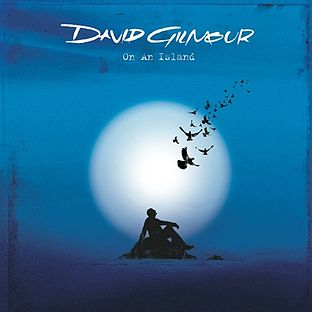
David Gilmour 3: On An Island

After his longest musical silence yet, broken only by the surprise reunion of Pink Floyd with Roger Waters for the Live 8 charity concert, David Gilmour was content to be taken on the strength of his own name again. Such things happen when a guy turns sixty.

On An Island was co-produced with the legendary Chris Thomas, who’d mixed both The Dark Side Of The Moon and The Division Bell (among other things), and Phil Manzanera, a unique guitarist best known for his work with Roxy Music. Richard Wright appears on a few tracks (and indeed, the subsequent tour) but Nick Mason is absent.

Much of the album suggests the feeling of floating downstream, particular on the floating title track, wrapped comfortably within the harmonies of David Crosby and Graham Nash. “Smile” is a pretty little love song, recorded nearly by himself with his wife on some vocals. The most schizophrenic song is “A Pocketful Of Stones”, which begins slowly for about a minute before switching to a poignant piano accompaniment under lyrics that have been suggested to be about either Syd Barrett or George W. Bush. The album even ends in a cycle, with the aptly titled “Where We Start” reprising the mood and feel of the early tracks.

Several instrumentals change the moods as well. “Castellorizon” adds orchestration to another guitar solo, the dreamy “Then I Close My Eyes” is prefaced by the sound of Turkish instruments, and “Red Sky At Night” is not a cover of the hit by The Fixx, but is instead a showcase for Gilmour on saxophone, of all things.

On An Island is pretty, slow and generally quiet, and the attempts to rock don’t; those who purchased the CD at Best Buy would very much have enjoyed the six-minute “Island Jam” included on a bonus CD. But overall it’s a nice if underwhelming album, and at least he didn’t try to disguise it as the return of Pink Floyd, because it wasn’t.

The tour for the album spawned two DVDs, the second of which was also released on CD in a dizzying variety of editions. Like the tour, Live In GdaÅ„sk begins with a suite from Dark Side (of course) before a performance of On An Island in its entirety. A smattering of oldies make up the rest of the program, with a few tributes to Syd, who died that summer, a full-length “Echoes”, and even “Fat Old Sun”. The more elaborate packages included various DVDs with bonus content, some including a bonus performance of “Wots… Uh The Deal”, sure to drain the wallets of the most devout Floyd enthusiasts. As live albums go, it’s enjoyable, unique for the live orchestra on some songs, Dick Parry on occasional saxophone, and Richard Wright on everything, as he himself died the week before the album came out. (Slightly more appealing was the Arnold Layne EP, a live tribute to Syd that featured two versions of the title track, one sung by Rick Wright and the other by David Bowie, plus Gilmour’s acoustic tribute of “Dark Globe”.)

David Gilmour On An Island (2006)—3
David Gilmour
Live In GdaÅ„sk (2008)—3

Wednesday, March 16, 2011

Richard Wright 2: Broken China

One of the best things to come out of the post-Roger version of Pink Floyd was the re-emergence of Rick (as he was going by now) Wright, in the band onstage as well as in the studio, adding those iconic keyboard touches everywhere. “Wearing The Inside Out” was nobody’s favorite track on The Division Bell, but it sure was nice to hear his voice again after being silent for so long. Therefore the idea of a solo album coming so soon after the Pulse live album was certainly appealing.

At least it was until the album came out. Broken China is a dour collection of tracks, half of which have vocals, few of which are upbeat, even the ones with dance rhythms. And for good reason. It was originally intended to be entirely instrumental, but as the overall inspiration was that of a “friend”—later to be revealed as Wright’s wife—being treated for clinical depression, he felt words and vocals would be needed. The musicians are top-notch, of course, with Floyd auxiliaries Anthony Moore (who wrote most of the lyrics, and it turns out the wife’s therapist did some too) and Tim Renwick, plus Dominic Miller, Pino Palladino, Manu Katché, Kate St. John, and a special vocalist on two tracks. When he himself sings, he predicts the 21st century timber of Brian Eno’s voice.

The album is presented in four parts, the first representing childhood, illustrated by a teddy bear with its head nearly torn off. “Breaking Water” is a mostly ambient track used as an introduction, much like the last two Floyd albums. There’s a startling switch to the “Humpty Dance”-style backing track for “Night Of A Thousand Furry Toys”. Moore literally phones in a vocal, and somehow a music box tinkles its way into the mix at the end. The very somber “Hidden Fear” moves into the mechanized sound of “Runaway”, composed solely by Moore, who apparently did the programming.

We move to adolescence, supposedly, which is mostly instrumental. “Unfair Ground” is another ambient transition, but we don’t need that fairground sample (already heard in “Poles Apart”) inserted for some reason. “Satellite” is a lengthy showcase for Tim Renwick, which seems to get edgier and edgier until Rick comes into sing “Woman Of Custom”. The chorus redeems the song, with subliminal harmonies from Pino’s wife, who used to back up Paul Young. “Interlude” is a slow piano piece, and welcome.

Part three apparently involves depression directly, as hinted at by the pointedly eerie “Black Cloud”, and “Far From The Harbour Wall” piles on the sadness with frank lyrics and minimal metaphors. The mostly ambient “Drowning” intensifies it, but Sinéad O’Connor gives voice to “Reaching For The Rail”, sung in first person, with Rick providing sympathetic counterpoint in his own verse and in the last.

The final segment addresses resolution, and there is indeed some relief here. “Blue Room In Venice” is more of an interlude than the verses would suggest, but he’s started to let his voice reach higher notes. “Sweet July” is mildly majestic, with Gilmour-style guitar (no, still not him) and rolling cymbals matching the cavorting dolphin in the booklet. The energy of “Along The Shoreline” can’t help but recall “Run Like Hell”, and we’d like to say it represents a “Breakthrough”, but that’s the title and theme of the final track, a more contemplative but still powerful statement sung by Sinéad. (Six years later, Rick would sing this onstage with Gilmour.) And with that, the album ends.

We haven’t found any documentation as to whether Broken China actually helped anyone suffering from depression, but that’s none of our business. It’s not a Pink Floyd album, so its appeal outside the fanbase is fleeting and limited. We have found its charms; proceed with caution.

Rick Wright Broken China (1996)—3

Wednesday, March 2, 2011

Pink Floyd 16: The Division Bell

Seven years is a long time between albums for anybody, but since the Roger-less Pink Floyd had toured for about two of those years, their follow-up wasn’t that long in coming. But what made The Division Bell a better album was that it was pretty good; designed as a band collaboration with all three members on board—albeit with Gilmour’s wife given several co-writing credits—it has enough of the classic Floyd vibe throughout to make it a worthy successor to their old albums.

It starts, as it should, with a lengthy instrumental to set the mood. “What Do You Want From Me”, driven by an electric piano, doesn’t have to stretch too far to resemble “Have A Cigar” to remind the kids who this band is. The first real surprise is “Poles Apart”, with its spiraling acoustic guitars and smooth steel, marred only by a midsection that visits a carnival midway for some reason. “Marooned” is another instrumental that’s just plain bleak, followed by the recent history lesson of “A Great Day For Freedom” and the redemption of a lush chorus. And Rick Wright gets his first solo vocal in decades on the depressing “Wearing The Inside Out”.

The second half of the album is a little more cheery. “Take It Back” is built around trademark delayed guitar riffs, delivered in a style more akin to U2. There’s something about the way the tempo cuts in half for the last lines of the chorus, setting up for the dreamy intro to “Coming Back To Life”. The cowbell on that track gets maddening after a while, but the solos are classic Gilmour. “Keep Talking” is the most blatant expression to be the theme of the album, a plea for communication, and notable for the computerized appearance of Stephen Hawking. “Lost For Words” brings back the jaunty acoustic, and despite another bridge that travels to a boxing ring, brings the album down to earth with the blunt description of what his “enemies” told him when he asked “to wipe the slate clean”. The finale returns us to Grantchester Meadows amid the tolling of Parliament bells for “High Hopes”, which, despite its morose grandiosity, still yearns for a simpler time.

Naturally, Waters dismissed the album as the sloppy work of imposters, pretenders to his throne, and in some ways, he’s correct. But while it doesn’t reach the same level as the band’s ‘70s peak, The Division Bell—as does, to a much lesser extent, A Momentary Lapse Of Reason—succeeds by capturing some of the Pink Floyd magic that was sadly missing from nearly everything Waters had done since going on his own. Thus, the band gave the people what they want. (Waters, in comparison, tended to tell the people what they want, and pouted when no one agreed with him.)

By spearheading the revival of Pink Floyd, David Gilmour made the smart move. As the guitarist, composer and singer, he was able to sell his solo work via the Pink Floyd label; work that wouldn’t (and didn’t) sell much outside of the core Floyd audience. That’s a shame, as his actual solo albums were just as melodic and commercial as either of the two last Floyd albums, but without the pretension.

But following the release of the obligatory double live album Pulse, which repeated half of Delicate Sound Of Thunder but sported a complete performance of The Dark Side Of The Moon as well as a great take on “Astronomy Domine”, Gilmour must have felt that his mission was accomplished. Outside of continual repackages, it seemed like there was never to be another new Pink Floyd album.

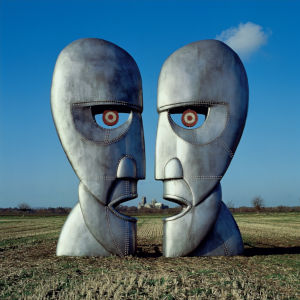
Pink Floyd The Division Bell (1994)—
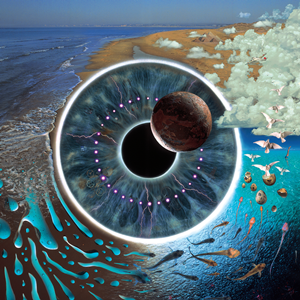
Pink Floyd Pulse (1995)—

Sunday, February 27, 2011

Roger Waters 3: Amused To Death

Undeterred in his quest to strive forward without his former bandmates, Roger Waters first mounted an all-star performance of The Wall in recently liberated Berlin. “All-star” is up to personal preference, with appearances by the Scorpions, Van Morrison, Bryan Adams, Joni Mitchell, Cyndi Lauper, Thomas Dolby, and of course, Jerry Hall.

In the absence of the other guys, he went back to work at an album kicking around since the end of the Radio K.A.O.S. tour. Amused To Death started out as a continuation of that story, but morphed in the process into a more general rumination on the effects of mass media, and how it’s dumbed down society. Without a linear plot to shackle its progress, the listener doesn’t feel forced into trying to follow whatever story is buried between the lines and within the obligatory sound effects. Naturally, war is still front and center of his main complaints, framing the program with an interview with a veteran of the First World War, and mixing in references to recent battles in the Gulf and Tianenmen Square. Throughout we can hear the sound of TV channels changing.

Having already used Eric Clapton, this time he turned to Jeff Beck to have a distinctive lead guitarist in the absence of David Gilmour. (Steve Lukather from Toto shows up too, among other “special guests”.) After the opening montage—including a heartbreaking narration by an old soldier speaking of leaving a comrade to die in no man’s land—“What God Wants” combines pounding drums, a one-note theme and a list-style lyric, but there are a couple of bridges that weave in a decent transition. An abrupt switch to “Perfect Sense Part I” wanders for a while underneath a backwards message—kind of futile when most listeners wouldn’t have a way to decipher it on their cassette or CD players. The vocals make a welcome switch to the soulful voice of P.P. Arnold (reminiscent of “Home” from K.A.O.S.) “Part II” of the song then becomes a setup for a Marv Albert commentary on an oil rig attack, complete with cheering crowd effects, continuing over the “In The Flesh”-style arrangement (booming drums again, and Hammond organ) of “The Bravery Of Being Out Of Range”. “Late Home Tonight” marries an acoustic guitar to chirping bird effects for hardly the first time in a Waters anti-war statement, but the strings are lovely and literally blown away for an even sadder second part. “Too Much Rope” even gets Floydian towards the end, but his delivery works against the novelty of profanity to keep it from being catchy.

“What God Wants Part II” continues the litany of the first part, without much variation; “Part III” has a nod to “Echoes”, then works around the bridges from the first part at a mournful tempo. Don Henley shows up to duet on “Watching TV”, an otherwise excellent attempt to humanize the Chinese massacre that’s undermined by the title and repeated references to the victim having “yellow” and “perfect breasts”. Something of a dark Dire Straits song, “Three Wishes” takes far too long to deliver its theme (surprise! The singer forgot to wish for love) and the vocal effects on the genie’s voice are distracting. “It’s A Miracle” is even slower, wandering for eight minutes before culminating in a rant against Andrew Lloyd Webber. Finally, the title track works in a mood similar to “The Tide Is Turning”, but with a much less hopeful theme.

While not exactly uplifting, Amused To Death is certainly the least annoying of his non-Floyd albums. The thing is, unlike the band he left, he wasn’t able to devise more than a handful of songs with memorable hooks. Also, being designed for the CD format, it’s lengthy at 72 minutes, with individual tracks in the six- to nine-minute range. It could easily have been shorter, but just as Roger insists on singing his own lyrics (P.P. Arnold on “Perfect Sense Part II” notwithstanding) he’s never been his own best editor. It must have irked him no end to see the album only sell a million copies, while the other guys made a mint two years later with The Division Bell. It also must have taken its toll, as for over two decades following this album, he would only release a handful of new songs, concentrating instead on an opera and various restagings of The Wall.

Some 23 years later, at a time when the human condition hadn’t seemed to improve any, a remastered version of the album was released, sporting not only different cover art, but a few sonic tweaks throughout. Where the 1992 CD utilized QSound for what was then state-of-the-art realistic sound reproduction, the ubiquity of 5.1 surround and other advances aimed to even out a very crowded sonic template. To the ordinary ear, the biggest difference was the substitution of the originally planned sample from 2001: A Space Odyssey at the start of “Perfect Sense Part I” that was refused by Stanley Kubrick, replacing the backwards message inserted in response. Jeff Beck fans will also be keen to hear the revamped guitar parts on “The Bravery Of Being Out Of Range”, while Don Henley is a little more audible on his featured track. It’s still a harrowing listen.

Roger Waters Amused To Death (1992)—3

Monday, February 14, 2011

Pink Floyd 15: A Momentary Lapse Of Reason

While preparing his next solo album, Roger Waters declared that Pink Floyd was over, only to watch the bandmates he left behind carry on for another decade with two wildly successful albums and a handful of even more lucrative tours under the same moniker he tried to quash.

He had a point, of course, having felt that the brand had a high standard to upkeep, thanks to his megalomaniacal hold over the concepts driving their most recent albums and tours. But David Gilmour had ideas too, and once he hooked up with Nick Mason to help him record his third solo album, they decided that since Roger had “left the band”, in their view anyway, they were free to keep going. Knowing full well that a new Pink Floyd album would be a better, faster sell, they brought in Wall co-producer Bob Ezrin and orchestrated the conditional return of Rick Wright to help make it happen.

But putting a photo inside the gatefold and rejigging the credits aren’t enough to make A Momentary Lapse Of Reason sound anything like classic Floyd. Nick’s and Rick’s contributions are minimal, with the drums handled by the likes of Jim Keltner and Carmine Appice, and most of the keyboards having been finished by the time Rick came back. (Nick did tackle some of the sound effects, as he had on The Dark Side Of The Moon.)

The opening “Signs Of Life” is a spooky instrumental accompanied by the sound of a boat being rowed. Any calm is blasted away by the hit single “Learning To Fly”, supposedly an allegory for life without Roger but more specifically more literal than that. The canned percussion and keyboards sounded dated even for 1987. “The Dogs Of War” is even muddier, starting with a robotic beat and culminating in a sax solo, in an attempt to remind us of Dark Side and Wish You Were Here. The lyrics aren’t about to convert anyone to pacifism, either. “One Slip” has its moments, thanks to constantly rising melodies and changes, but the video game-like sounds at the beginning don’t fit at all, except to suggest a bomb about to go off. The concern for the state of the world on the slightly better “On The Turning Away” comes closest yet to the Floyd sound, but goes too far by including a mass choir on the final choruses.

The second side isn’t much better. “Yet Another Movie” takes forever to get going, and doesn’t do much when it does except give Gilmour a chance to solo over loud drums. The placeholder instrumental “Round And Around” pretty much does exactly that, but it would have been nicer to have more of that than the jarring “A New Machine”, which is split in two parts for unknown reasons. In the middle comes the lengthy instrumental “Terminal Frost”, which is fine until the saxophones take over. The big finale of “Sorrow” seems to have been written for the sole purpose of playing it in stadiums, starting from the opening guitar, which was actually recorded at top volume in one.

As Roger would ruefully point out, the title alone of A Momentary Lapse Of Reason illustrates what’s wrong with this album. Yet both Floyd-related albums sum up the blandness of the 1987 Classic Rock scene, soon to be overshadowed by hair metal. Perhaps if it had stayed a Gilmour solo album, David wouldn’t have felt so compelled to make it so overblown. But record-buyers didn’t care, and bought the album and concert seats by the millions, leading to the following year’s double live album Delicate Sound Of Thunder, which alternated new songs with predictable Floyd classics played blandly and impeccably by an eleven-piece band.

Some three decades later both albums were revisited as part of a box set, then each was released on its own with new artwork. (Naturally.) Momentary Lapse got a drastic remix, with alternate cover art and Rick Wright better represented in both the credits and the “band photo”, while Delicate Sound was not only remixed, but expanded to better represent an actual concert. Its cover was also rehauled. Their ratings below remain unchanged.

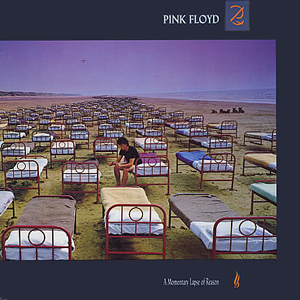
Pink Floyd A Momentary Lapse Of Reason (1987)—2
Pink Floyd
Delicate Sound Of Thunder (1988)—2
2020 Anniversary CD: “same” as 1988, plus 8 extra tracks

Sunday, February 13, 2011

Roger Waters 2: Radio K.A.O.S.

Roger’s biggest complaint (well, one of them, anyway) about the “new” Pink Floyd (read: performing without him) was the quality of the lyrics. While he was always good at coming up with overall concepts, just having a pile of words doesn’t make a song unless there’s music to match. Coming as it did just months before the reconstituted Floyd’s own album, his next Big Idea had barely a chance to compete anyway.

Radio K.A.O.S. tells the story of—surprise surprise!—a traumatized individual cut off from society, not unlike a certain deaf, dumb and blind kid or, say, a jaded rock star who’s built a symbolic wall around himself. This time out, the individual in question is a paraplegic vegetable, albeit one who can communicate via “radio waves” and a speech synthesizer. His concerns about his unemployed brother, Maggie Thatcher’s policies and the silenced Welsh Male Voice Choirs lead him to hack into certain computers to simulate a nuclear war (which you might recall from the movie War Games).

There are various themes running around here, though it’s impossible to take the album without the overarching story. What’s more, “Billy” converses in between the songs with legendary LA DJ Jim Ladd, turning the album into a faux-radio broadcast (much like another Who album). Sometimes the songs are sung by Billy, sometimes they’re about Billy.

The plot is spelled out in the album art, but there’s not enough within the songs to enhance it. That makes the last part of the album so anticlimactic: we know there’s “Four Minutes” until the world explodes, so the song of the same name is merely aural decoration, and not that frightening.

Enough complaints about the non-commerciality of The Pros And Cons Of Hitchhiking must’ve sunk in, because the majority of the songs are delivered in a slick but not wholly sterile contemporary rock style. He even includes the Japanese flute everyone was putting on their albums in those days. Unfortunately, while the songs have a wide variety of chord changes, he still didn’t write any melodies outside of a three-note range, rasping his list-style lyrics like Mark Knopfler with a head cold. “Who Needs Information” is one of the better songs; it’s just too bad that it’s shackled to the story. “Home” has a great middle eight that’s dwarfed by the lazy litany around it. “The Tide Is Turning” does offer something in the way of hope, and in the form of an actual song worth hearing again. (Written in the aftermath of Live Aid, it would also close his restaging of The Wall in Berlin following the unification of Germany.)

One does wonder how this stuff would possibly sound if played by his old band, or if it would be any better. Radio K.A.O.S. was supported by a tour, of course, that included some of the music left off the album for space considerations. One wonders why, since it seemed so important at the time, he hasn’t since bolstered the album with more of the music intended to tell the story. The album his nemeses put out may have been fake Floyd, but Roger’s insistence on working alone took him too far away from a sound that might have helped sell more than a handful of copies. He could only stew over the aftermath when his former partners did much better at the box office.

Roger Waters Radio K.A.O.S. (1987)—2

Thursday, January 27, 2011

Roger Waters 1: The Pros And Cons Of Hitch Hiking

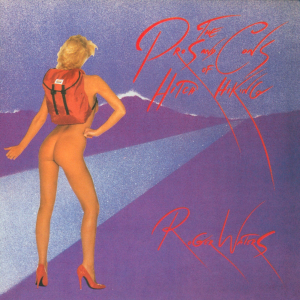
Immediately after unleashing The Final Cut, Roger Waters went back to the studio to record another, even more impenetrable song cycle, originally concocted back before The Wall. What eventually emerged as The Pros And Cons Of Hitch Hiking had been rejected by the other Floyds as “too personal”, and no matter how many times one listens to it, they were right.

At least the concept is intriguing: following the dream/nightmares of a man in the pre-dawn hours, presented in real time, and each of the songs is time-stamped. For roughly 42 minutes Roger muses over the same I-iv motif in 12/8 meter; sound effects and dialogue snippets abound, and if there’s a story in here, it’s not linear. He’s driving with his wife, they pick up a pair of hitchhikers and he attempts intercourse with one of them. His guilt is repaid by an attack by Arab terrorists who assault his wife, so he imagines himself away at Oktoberfest. He makes an attempt to save his marriage by moving out to the country, which soon goes awry. Then poof! He himself is a hitchhiker, eventually realizes that his problems aren’t that different from the rest of humanity, feels better, wakes up scared and is relieved to find his wife sleeping by his side.

With only a few exceptions, it’s one long song. Rolling Stone’s Kurt Loder said it best: “You could count the actual melodies here on Mickey Mouse’s fingers.” The ones that stand out are recycled from “Mother”, “The Final Cut”, “In The Flesh” and “The Fletcher Memorial Home”, and the effect isn’t so much clever self-reference but laziness and lack of inspiration. “Sexual Revolution” attempts to provide a beat, but it turns out this was a Wall reject. He delivers “Go Fishing” so histrionically it’s no wonder she left him in the country. The title track is catchy, but the cryptic references to Yoko Ono, Dick Tracy and Shane only make it seem like another dream. The song everyone likes is “Every Stranger’s Eyes”, which is mostly one of his litany lists, but has enough of a decent backing to make it soar.

At least the album is “Floydian” in its presentation. He uses most of the supporting players from The Final Cut, with the key additions of Eric Clapton (for a Strat tone, and a thumb of the nose to David Gilmour) and David Sanborn, whose squawking sax underscores his discomfort anytime thinks get dark. He took Clapton on the road to present the album and key songs from his past in a multimedia extravaganza. But ultimately, The Pros And Cons Of Hitch Hiking is just plain uncomfortable, leaving the listener in a bad mood and likely to lash out at unsuspecting friends and family. And if anyone can explain what exactly those pros and cons are, we’d love to know.

Roger Waters The Pros And Cons Of Hitch Hiking (1984)—2

Wednesday, January 26, 2011

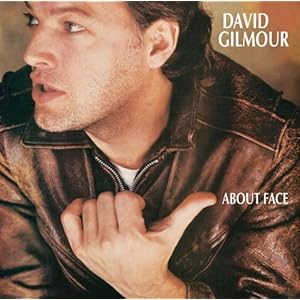
David Gilmour 2: About Face

In the year following the last Floyd album, the band’s two creative leads took their own paths away from the band. Roger Waters recorded his first bona fide solo album, while David Gilmour’s own album was, as would be expected, much more accessible.

About Face is simply a collection of songs that resembled his band’s more radio-friendly moments. A variety of session cats provide the support, and Floydian touches persist, particularly on the intentionally overblown instrumental “Let’s Get Metaphysical”, where his distorto guitar is backed by the National Philharmonic Orchestra. (A glance at the inner sleeve will reveal the words “Fleudian slip” in the margin.)

In general, the songwriting is much more consistent than the alternating vocals and instrumentals of his first solo album. In fact, two tracks feature lyrics by Pete Townshend, just to be on the safe side. “Love On The Air” is almost romantic, with a pretty melody and typically obtuse concept, while “All Lovers Are Deranged” is an all-out rocker.

There’s a good deal of breadth on the album as well. “Murder” takes a plaintive English folk melody and extends it into one of the better songs about the death of John Lennon. Another highlight, “You Know I’m Right”, is a clever slap at Roger that eerily predicts his behavior by a few years. Just to show that Roger wasn’t the only one concerned about war and mortality, “Cruise”, “Near The End” and “Out Of The Blue” consider the futility of life from a variety of angles.

Unfortunately, About Face does suffer from the polish common to many ‘80s albums, particularly on the synth-heavy “Until We Sleep”, and “Blue Light”, which has way too many horns. But as a product, a listenable album that’s worth playing, fans wouldn’t be disappointed.

David Gilmour About Face (1984)—

Wednesday, January 12, 2011

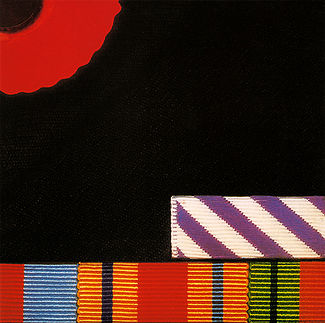
Pink Floyd 14: The Final Cut

Roger’s irritation over the way the film version of The Wall came out was soon trumped by his rage over the Falklands War. The pent-up emotions he had reliving his father’s death in World War II on the big screen had already spilled into the new music he’d provided for the film, which then expanded into a song cycle recorded and released as the next Pink Floyd album.

Or was it? The Final Cut is basically a Waters solo album featuring contributions by David Gilmour and Nick Mason, Rick Wright having been jettisoned as soon as they finished the Wall tour. Much of the music is slow and mournful, as one might expect from a requiem, Roger’s cutting vocals often supported simply by piano, an acoustic guitar and the National Philharmonic Orchestra. But there’s enough Gilmour on guitar scattered throughout to remind you whose name is on the spine of the jacket.

As happened with The Wall, the album uses lots of sound effects to help illustrate the story somewhat. “The Post War Dream” rumbles in over the news on a radio broadcast to indict “Maggie” Thatcher for both starting the war as well as allowing British warships to be built in Japan instead of at home. (Clearly, there’s no pleasing this guy.) “Your Possible Pasts”, “One Of The Few” and “The Hero’s Return” are sung from the point of view of the schoolmaster in The Wall, but that isn’t exactly clear until you’ve seen the promo clips for the album. Once that starts to sink in, it’s easier to appreciate “The Gunner’s Dream”, which documents the final thoughts of a soldier as he’s blown out of the sky. As the last notes fade and follow us into the pub round the corner, “Paranoid Eyes” only underscores the lingering pain.

An excellent demonstration of the sonic details on display comes in “Get Your Filthy Hands Off My Desert”, followed by a near-nursery rhyme, which leads into the horror of “The Fletcher Memorial Home”. In something of a twist on Dylan’s “Masters Of War”, Roger imagines all these corrupt leaders being housed in an old-folks’ home, before subjecting them to Hitler’s Final Solution. Besides being one of the more memorable songs on the album, Gilmour’s solo is suitably wrenching. “Southampton Dock” provides something of an interlude into the title track, wherein Roger talks directly to the audience (or his shrink, as the video would suggest) and suggests that tearing down the wall on the last album didn’t solve any of his neuroses. Then, quite rudely, “Not Now John” interrupts with Gilmour’s only vocal on the album, a hard Floydian rocker from the point of view of factory workers, with wonderfully out-of-place female backing vocals and ending with another Waters list. The comparatively pastoral “Two Suns In The Sunset” imagines the end coming in the form of a nuclear explosion.

The Final Cut is not easy listening in the slightest, dripping as it does with anger and tears, but it would arguably be the last time Roger came up with a concept so accessible while being so personal. Over time the strengths of the album emerge, as do the recurring musical themes that tie the songs together. And even if the other two guys in the band felt like afterthoughts, they certainly gave it their all.

While some may consider it tampering, the current CD version includes “When The Tigers Broke Free” from the film of The Wall inserted in the middle of what used to be side one. The song had finally appeared on the Echoes compilation, but its inclusion on The Final Cut is fitting, as it details the actual events surrounding the death of Roger’s “Daddy” on the beaches of Anzio. While very slow, the lyrics are as matter-of-fact as they are heartbreaking.

Pink Floyd The Final Cut (1983)—4
2004 CD rerelease: same as 1983, plus 1 extra track