Showing posts with label george harrison. Show all posts

Tuesday, March 2, 2021

Bob Dylan 67: 1970

Just before the end of 2020, another one of those highly limited beat-the-deadline copyright releases snuck out and made another three discs’ worth of leftovers from Bob Dylan sessions quite popular on the illegal download sites. The key draw of 50th Anniversary Collection 1970 was the balance of the one day George Harrison spent in the studio with Dylan. That’s probably why the label decided to make the set available to the general public for a much lower price.

Now titled simply 1970, it arrived with George’s involvement emblazoned on the cover, overly gushing liner notes and, save the one New Morning-era image on the back of the booklet, several well-traveled photos from 1969. Normally this would be merely a footnote to the Another Self Portrait volume of the Bootleg Series, except that it offers over three hours of unreleased music, much of which hadn’t been bootlegged. Also, unlike that set, the music is presented strictly chronologically, filling in the development of two separate albums.

Disc one begins with the rest of the work done with David Bromberg and Al Kooper on what would be sent off for overdubs to complete Self Portrait. Along with yet another stab at “Spanish Is The Loving Tongue” (yippee), we get for more tries at “Went To See The Gypsy” and variations on “Alberta”, an “Untitled 1970 Instrumental”, and most revealing of all, the basic track of “Woogie Boogie”, consisting just of Dylan’s piano and Bromberg’s guitar. In between are abandoned tries at “Universal Soldier”, “Come A Little Bit Closer”, and a goofy “Little Moses”.

We jump to May 1, when George arrived, beginning with attempts at nailing down arrangements for “Sign On The Window”, “If Not For You”, and “Time Passes Slowly”, accompanied by Russ Kunkel on drums and yes, the Charlie Daniels on bass. Having seemingly tired of those, they began covering earlier Dylan originals, including “Song To Woody”, “Gates Of Eden”, “Rainy Day Women”, and “I Threw It All Away”. Only “Mama, You Been On My Mind” hadn’t made it to a Dylan album yet. In between, they jam on covers like “Ghost Riders In The Sky”, “Da Doo Ron Ron”, oldies by Sam Cooke, Carl Perkins, and the Everly Brothers, and even “Yesterday”. The day ended more takes of “If Not For You” and “Sign On The Window”. Despite what was reported in the press at the time, this was not exactly a stellar meeting of future Wilbury minds. George gamely strums his Stratocaster and offers some leads, harmonizing when he knows the words, but their collaboration at the Concert for Bangla Desh the following summer was ultimately more satisfying.

A month later, Bob brought back Kooper, Bromberg, Daniels, and Kunkel, plus Ron Cornelius on guitar and some female singers for five dedicated days of recording what would become New Morning. As it turns out, just as much and often more time was spent on covers than the originals that made up the album as released. In addition to three distinct variations on the Cajun chestnut “Alligator Man”, as well as “Jamaica Farewell” and “Long Black Veil”, it’s clear that the likes of “Sarah Jane”, “Lily Of The West”, and “Can’t Help Falling In Love” were not merely one-offs in between “proper” takes, but actually finessed to what would be first shortlisted for New Morning, and officially foisted on the public on the embarrassing Dylan album three years later. There are even two takes of “Tomorrow Is A Long Time”, which he’d yet to try in the studio; frankly, this bluesy approach with the women singing doesn’t work. But we can also hear more new originals take shape, thankfully, and a final session two months later would complete the project.

While it’s nice that the set is more easily attainable by both Dylan and Beatle completists, the historic value of 1970 outweighs its musical merit, and the casual listener will likely find it tedious. Yet throughout all three discs, Bob is engaged with the songs, slipping back and forth between his raspy voice and Nashville Skyline croon. Unless any snippy tirades against the participants were edited out, he sounds like he’s enjoying himself.

Bob Dylan 1970 (2021)—3

Wednesday, May 9, 2012

George Harrison 16: Early Takes

George Harrison’s estate has been relatively protective of his musical legacy, slowly and carefully going through the catalog and keeping bonuses to a minimum. Even his first-ever solo career-spanning compilation, Let It Roll: Songs By George Harrison, wasn’t exactly exhaustive, leaving out key singles in favor of songs from Brainwashed and live versions of Beatle tunes from the Concert For Bangla Desh. (Hence the subtitle “Songs By” as opposed to “Best Of”. It did, however, rescue “I Don’t Want To Do It” and “Cheer Down” from obscurity. And iTunes purchasers were able to download the “earliest demo version” of “Isn’t It A Pity”, dating from early 1969.)

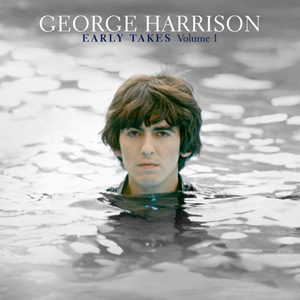
Martin Scorsese’s documentary about George was released on DVD in the UK first, with a bonus CD of unreleased recordings that promptly surfaced on all the file-sharing sites for rabid American fans. When the DVD finally came in the US, the companion CD was made available separately, with the hopeful title of Early Takes Volume 1. At thirty minutes, in a cardboard sleeve with no recording info, it’s a bit chintzy, but at least the ten-dollar price point reflected that.

Seven tracks are embryonic versions of songs from the All Things Must Pass period, only one of which had been bootlegged. Most tantalizing is an acoustic take of “Woman Don’t You Cry For Me”, complete with jawbone, six years before its appearance on Thirty-Three & 1/3. (It’s also odd how some tracks are subtitled “demo” as opposed to “early take”, since many of the “demos” have a band backing. “Behind That Locked Door” is described as a demo, but with the pedal-steel in place, it could be they just stripped down the completed take to acoustic and vocal.) Two covers, Dylan’s “Mama You Been On My Mind” and the Everly Brothers’ “Let It Be Me”, would appear to be of a mid-‘80s vintage, and the final track is a solo demo of “The Light That Has Lighted The World” played lightly on a 12-string.

While we’re not about to attempt to tell Olivia and Dhani Harrison what to do—except strongly recommend they keep Jeff Lynne far away from the tape vault—we’d really hope that if there are further installments following this one, ideally they would be more comprehensive, and annotated. (Heck, we’d handle that last part ourselves for next to nothing.) As it is, Early Takes Volume 1 provides a mere toe in the water, when we know there’s lots more where this came from. George fans are happy to have anything, so keep it coming, please.

George Harrison Let It Roll: Songs By George Harrison (2009)—4
George Harrison
Early Takes Volume 1 (2012)—3

Monday, June 28, 2010

George Harrison 15: Concert For George

A year to the day after George died, his “guitarist-in-law” Eric Clapton collaborated with Olivia and Dhani Harrison to put together a star-studded tribute concert. The obvious parallel would be made to the Concert For Bangla Desh, as many of the friends who’d helped out with that project were on hand to do it again here.

The first half hour—taking up all of disc one—is devoted to Indian music, mostly composed by Ravi Shankar, performed by an orchestra and choir led by Ravi’s daughter Anoushka. An interlude of “The Inner Light” sung by Jeff Lynne fits very well, while the final section includes acoustic extrapolations by Eric. It’s mesmerizing. (Not included on the CD, but presented in full on the DVD, was the intermission, featuring “Sit On My Face” and “The Lumberjack Song” performed by most of Monty Python in full singing-waiter and Mountie costumes. Without question, George would have loved it.)

The rock portion of the show provides heartfelt renditions of several George songs, mostly performed faithfully to the original recordings. Jeff, Eric, Gary Brooker and the little-known-to-Americans Joe Brown trade off on vocals before the big stars come in. Tom Petty and the Heartbreakers do “Taxman” and “I Need You”, and bring Dhani and Jeff up for “Handle With Care”. Billy Preston does “Isn’t It A Pity”, then Ringo comes out to sing “Honey Don’t” and “Photograph” before introducing Paul McCartney.

Paul’s choices are intriguing, as they mostly come from the Get Back period. His ukulele arrangement of “Something” dovetails not seamlessly into the standard version, led by a Clapton solo. And his heartfelt rendition of “All Things Must Pass” is a stunner, considering how many times George tried to get the Beatles to learn it, only to be met with indifference. He sits at the piano to back up Eric on “While My Guitar Gently Weeps”, before letting Billy take over with “My Sweet Lord”. Everyone crowds onstage for “Wah-Wah” (with Klaus Voormann on bass!) and then Joe Brown brings his ukulele out one last time.

While a straight tribute album, George’s voice comes through every moment of this concert. The choice of songs also shows how much his lesser-known tracks meant to his friends. To get the full experience, watch the DVD—the love all these people had for the guy permeates every shot. There are several angles taken of drummers Jim Keltner, Henry Spinetti and Ringo working as one. And with handsome Dhani strumming away on an acoustic throughout, it’s not easy to be unmoved.

Concert For George (2003)—4

Friday, May 7, 2010

George Harrison 14: Brainwashed

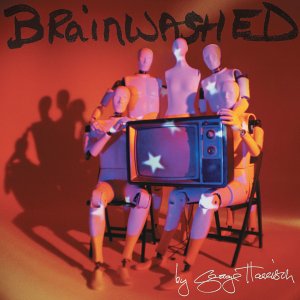
Suddenly we were living in a world with only two Beatles, and one of them was Ringo. While we hadn’t had any new music from George in over ten years, at least he’d been somewhat active. He had performed some of the better numbers at 1992’s Bobfest, and got completely involved with the whole Anthology project. He beat cancer, won an embezzlement suit and even survived a stabbing. And then cancer came back and took him, and he went happily. Thankfully, he was nice enough to prepare an album that said goodbye to us.

He calls for more guitar, and “Any Road” carries us off. This song was previewed on VH1, on an interview they’d sat on until after he’d died, and it’s a gem. “P2 Vatican Blues (Last Saturday Night)” takes a few stabs at organized religion amidst some cryptic lyrics. “Pisces Fish” is really smooth, with a wonderful reference to “Canadian geese crap”. “Looking For My Life” seems like a reaction to the attack, but is actually an affirmation of faith. “Rising Sun” is similar musically to “Pisces Fish” but different enough to be just as good. “Marwa Blues” is a beautiful (and even Grammy-winning) instrumental with lots of weeping guitars and a nod towards “Strawberry Fields” in the middle.

“Stuck Inside A Cloud” was an odd choice for the first single, very reminiscent of his early-’80s sound with lots of electric piano played by son Dhani. “(Can Only) Run So Far” had appeared on an earlier Eric Clapton album, and is probably the weakest track here. “Never Get Over You” hearkens back to the love songs on Extra Texture crossed with the production of Somewhere In England, but stands head and shoulders above those songs. We know George loved the ukulele and old standards, which makes his version of “Between The Devil And The Deep Blue Sea” so charming. “Rocking Chair In Hawaii” is something of a surprise to ccollectors, considering that its seeds came from the All Things Must Pass sessions. All this leads up to the grand finale of the title track, an angry litany of the evils of the 21st century, much like “Save The World” was twenty odd years earlier. There’s a midsection with a reading from some ancient text, then back to the driving verses. What sounds like another detour turns out to be the big finish, a hypnotic chant performed by father and son. And that’s the end.

Brainwashed would be a good album even if George had lived to promote it. Dhani gets most of the kudos for learning from his dad, and he even manages to keep Jeff Lynne in check. All sorts of friends helped out, and it sounds like the sessions, however long a period they covered, were a lot of fun. We can only hope we’ll get more buried gems one day.

George Harrison Brainwashed (2002)—4

Tuesday, March 9, 2010

Bob Dylan 38: 30th Anniversary Concert Celebration

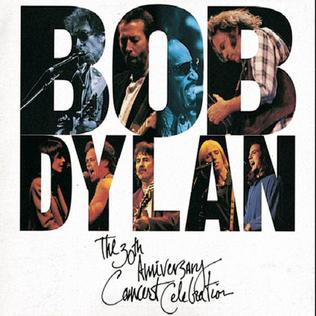
Good As I Been To You got a major promotional push by arriving three weeks after Columbia’s mightily hyped star-studded concert event of the season. Officially titled The 30th Anniversary Concert Celebration, today it’s best known as Bobfest, as dubbed by Neil Young halfway through his solo spot.

It was a nice idea: bring a bunch of old and new artists together to pay tribute to the old bastard, and if they were already Sony artists, all the better. The eventual VHS included most of the pay-per-view feed, but for the LP and CD versions, some moments weren’t included, like George Thorogood doing “Wanted Man”, Sophie B Hawkins’ pointless cover of “I Want You”, and a tune each from Eric Clapton and George Harrison, likely to squeeze it all onto two discs. (We also don’t get to hear Sinead O’Connor being booed offstage into the arms of Kris Kristofferson, adding further insult to her injury.)

The show had its ups and downs, beginning well with John Mellencamp with Al Kooper for “Like A Rolling Stone”, then putting his own Appalachian spin on “Leopard-Skin Pillbox Hat”. Stevie Wonder prefaces “Blowin’ In The Wind” with a spoken intro about the current election, Eddie and Mike from Sony golden boys Pearl Jam do “Masters Of War”, and Tracy Chapman (remember her?) is allowed “The Times They Are A-Changin’”.

The backup band for most of the night was Booker T and the MG’s, augmented by Jim Keltner and G.E. Smith, providing both consistency and familiarity, even when people chose less-than-familiar tunes. Lou Reed’s spit-fueled take on “Foot Of Pride” makes one think the song was written just for him, and Willie Nelson does a nice job on “What Was It You Wanted”. That sets up a string of guys with questionable voices—Kristofferson, Johnny Winter, Ron Wood—before Richie Havens and the Clancy Brothers raise the bar. The heavenly Sony trio of Shawn Colvin, Mary Chapin Carpenter, and Rosanne Cash are placed out of original sequence.

They saved most of the big guns for the second half, and that’s where most of the chills come from. Neil gets more attention for “All Along The Watchtower”, but it’s his version of “Just Like Tom Thumb’s Blues” that really shines. Clapton’s version of “Don’t Think Twice” has a phenomenal solo and George does a terrific “Absolutely Sweet Marie”. The O’Jays manage to trump what’s left of The Band, and then Tom Petty and the Heartbreakers come out to dominate. The gentleness of “License To Kill” gives way to the crowd-baiting of “Rainy Day Women”, and who else could back Roger McGuinn for “Mr. Tambourine Man”?

The man of the hour came out alone for “Song To Woody”, which apparently had sound problems, causing its exclusion. But we do get “It’s Alright, Ma”, and then an astounding “My Back Pages”, where the verses are handled in order by McGuinn, Petty, Neil, Bob, Clapton, and George. An obligatory mass chorus of “Knockin’ On Heaven’s Door” was to end the night, but Bob got the last word by himself with “Girl From The North Country”.

As with most of these affairs, Bobfest has endured as more novelty than notable, particularly considering how he filled the decades since. An upgraded edition for Blu-ray coincided with a reissue of the CD, adding two songs from rehearsals: another blazing Clapton take on “Don’t Think Twice”, and Sinead O’Connor doing the song she was scheduled to do. “I Believe In You” sounds even more fitting today, the lyrics mirroring her own public image.

Bob Dylan The 30th Anniversary Concert Celebration (1993)—3
2014 Remastered Deluxe Edition: same as 1993, plus 2 extra tracks

Monday, November 2, 2009

George Harrison 13: Live In Japan

One of the more baffling questions of the rock era is this: If your best friend ran away with your wife, would you still hang out with him? George’s friendship with Eric Clapton has long been the cause of head-scratching among us plebes. Whether it was respect or the promise of easy cash, somehow Eric managed to talk George into touring the Far East in 1991. Eric supplied the band—the same crew who’d brought him several Grammys for his Unplugged show—and George only had to bring a couple of guitars and his choice of songs.

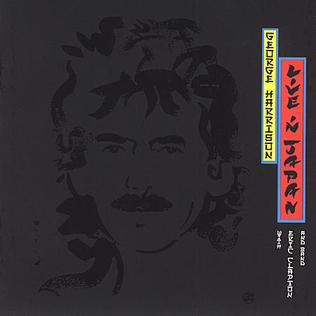
Since George never played any other dates outside that original itinerary, the only souvenir we were allowed was Live In Japan, two discs’ worth of a typical concert from the tour. Interestingly, he plays eight Beatles songs, most of which he’d never played onstage before, with little touches like the recorded count-in for “Taxman” and the missing verse of “Piggies”. The remainder covers all the hits from throughout his solo career, ending with “Roll Over Beethoven”. There were occasional surprises, like “Old Brown Shoe” and “Cheer Down”, but for the most part he goes with songs well inside the vernacular. The songs hold up, and the band plays everything competently, as we’d expect they would.

It’s nice to hear George in a live atmosphere again, and he almost seems to be enjoying himself, even giving the crowd an occasional “arigato”. For the longest time Live In Japan was the closest thing to a career retrospective, and it gave Warners some dough from songs they never owned. (And just to show he cared, the credited producers for the set are Spike and Nelson Wilbury.)

George Harrison Live In Japan (1992)—

Monday, October 12, 2009

Traveling Wilburys 2: Vol. 3

Even though Roy Orbison was gone too soon, the remaining Wilburys were determined to carry on, and they did. The joke here is that rather than trying to follow the success of Volume One with a second installment, they skipped right to the third. (Cue rim shot.) The songs are largely Dylan-centric compositions, and better than the album he’d released a month earlier.

“She’s My Baby” hits the ground running, with over-the-top guitar injections by “bluesman” Gary Moore. “Inside Out” and “The Devil’s Been Busy”—complete with sitar!—are ecological numbers, sandwiching the too-short “If You Belonged To Me”. “7 Deadly Sins” is the only doo-wop number in Dylan’s oeuvre, and it’s a scream. “Poor House” is standard inconsequential Jeff Lynne rockabilly redeemed by George’s guitar.

“Where Were You Last Night?” is more Bob, who steps aside long enough for Tom to recite the wry musical inventory in “Cool Dry Place”. (It, of course, being the natural sequel to “Handle With Care”.) “New Blue Moon” fits the same weird pocket as “Margarita” on the other album, but this one’s funnier. “You Took My Breath Away” is better Petty, and the whole thing comes crashing down with “Wilbury Twist”.

While there may be those who find Vol. 3 as enjoyable as the first, the boys just couldn’t capture lightning in the same bottle. It was too much to expect the same surprising fun, but it didn’t merit the near commercial ignorance the public served it. At least the band had the decency not to try and replace Roy. They even picked new pseudonyms. (The 2007 reissue adds “Nobody’s Child”, which was originally available only on Olivia Harrison’s Romanian Angel Appeal charity album, and a sadly reworked version of “Runaway”, which wasn’t so close to the original Del Shannon version when first released as a B-side. Thanks a lot, Jeff.)

And that was that. While George professed to be a Wilbury till he died, no further recordings by the group have surfaced or much less been rumored.

Traveling Wilburys Vol. 3 (1990)—3
2007 rerelease: same as 1990, plus 2 extra tracks

Wednesday, October 7, 2009

George Harrison 12: Best Of Dark Horse

Cloud Nine had been a moderate hit, and likely carried in the wake of the other Wilburys’ solo successes that year, that this contractual obligation managed to chart. With a straightforward title, Best Of Dark Horse picks up where George’s other hits album left off, more or less. The selections from the five albums in the period are as obvious as they are head-scratching. (Three songs from Gone Troppo? Granted, one of those was only on the CD, but no “Dream Away”? And no “This Song”?)

No Wilburys tracks were included, but as something of an enticement, the album does include three new songs. Of the new songs, “Poor Little Girl” is pretty ordinary, wrapped around a honking sax, and probably a leftover from Cloud Nine. Some of the words over the chorus section deserve a better fate than this. “Cockamamie Business”, another complaint about the music industry, is grumpy without being clever or pertinent. The surprise is “Cheer Down”, co-written with Tom Petty and first heard over the closing credits of Lethal Weapon 2, of all things. It’s a treat. And it would be the last real new song from him for many years.

Best Of Dark Horse was a nice enough collection of some of the better songs from albums that weren’t worth it for the most part, but a little redundant for those of us who already had them. At least the lyric sheet clarified some of the lines in “When We Was Fab” for us. Within a few years it was out of print along with the rest of the Dark Horse catalog, and has stayed that way, leaving “Poor Little Girl” and “Cockamamie Business” all but forgotten to the mists of time. (They were even overlooked in 2004’s Dark Horse Years box set.)

George Harrison Best Of Dark Horse 1976-1989 (1989)—
Current CD availability: none

Friday, September 25, 2009

Traveling Wilburys 1: Volume One

Supergroups have usually sounded so exciting on paper that in these cynical times you have to check the source of info to gather whether the latest superstar meeting is a rumor or a gag. No one—not even George Harrison, Jeff Lynne, Tom Petty, Bob Dylan or Roy Orbison—could have predicted the quality of the first Traveling Wilburys album, especially when “Handle With Care” was so good. The single, originally recorded as a one-off, is three-and-a-half minutes of fun that showcases the best of what each have to offer. And when Bob and Roy get to harmonize on the bridge, it’s a beautiful moment. (This listener practically fell on the floor laughing so hard at how well they made the combination work.)

That was the catalyst, and the boys managed to stretch that sense of fun into nine other tracks for a full LP’s worth of tunes. For the most part, the tracks on Volume One highlight individuals: “Dirty World” is mostly Bob trying to be Prince, with interjections at the end that hint at substance; “Rattled” is mostly Jeff; “Last Night” features Tom; “Not Alone Anymore” is a showcase for Roy that would have fit fine on his upcoming (Lynne-produced) album.

“Congratulations” is all Bob, and better than most of his last couple of albums. “Heading For The Light” is as good as anything George had written, and a really happy tune. The weird “Margarita” features everyone, and that may be the only point of the song. “Tweeter & The Monkey Man” is an odd Springsteen pastiche, again more geared towards Bob. “End Of The Line” conjures images of the video, made after Roy died, and shows George still getting all kinds of mileage out of a D chord.

Volume One is much better than it deserves to be, and still refreshing to hear today. What endures is the sense of warmth, silliness and fun that made the album so special. It sold by the bucket, even to younger listeners who weren’t aware that these guys were in other bands before. It boosted the careers of both Roy and Tom, made Dylan relevant again and gave Jeff license to plaster that drum sound everywhere. (Jim Keltner must be an absolute gentleman for not punching him out.)

Strangely, but not surprising considering all the record companies that had a stake in these five pseudonyms, the album was out of print for quite a while. When it was finally reissued in 2007 as part of a two-CD-plus-DVD set, it included two unreleased bonus tracks from the sessions for the second album: George’s “Maxine” and Bob’s “Like A Ship”.

Traveling Wilburys Volume One (1988)—4
2007 rerelease: same as 1988, plus 2 extra tracks

Wednesday, September 16, 2009

George Harrison 11: Cloud Nine

Nowadays, five years between albums isn’t that big a stretch; in the ‘80s, it seemed like an eternity. But in the year of the first Beatle CDs, twenty years after Sgt. Pepper, surprise! George was recording again, with the guy from ELO, of all people. Suddenly he was everywhere, sporting fashionable stubble and snazzy shirts and jackets.

Given his ‘80s track record, we worried about how the album would sound, but we needn’t have. The very first note of the title track is the slide guitar that we’d been missing, over a slow groove with pseudo-philosophical lyrics. Ringo’s probably playing the drums, which are buried under Jeff Lynne’s production. “That’s What It Takes” is fairly ordinary, but already our toes are tapping, and there’s a definite joy in his voice that continues over the rest of the album. “Fish On The Sand” is a poppy one, with a twangy retro 12-string pushing it along. “Just For Today” is the only remotely religious song, albeit filtered through AA, nice on the first listen, but plodding afterwards. “This Is Love” was co-written with the co-producer, and sounds like it, inoffensive as it is. “When We Was Fab” got all the attention the first time, and rightfully so; it’s still a wonderful homage to the Pepper era and all the nostalgic rage at the time. Jeff finally has an excuse to use Ringo’s “Walrus” drum sound, and George matches his wistful recollections with well-placed Pythonesque humor. New things are revealed on each listen, such as the sitar at the fade and the backing vocals throughout. This one truly redeems the side.

George goes back to his grouchy mode for “Devil’s Radio”, but it’s dressed up in such a rocking sound that he doesn’t seem at all preachy. “Someplace Else” provides a nice change of pace, with a sweet lyric and great guitar lines. “Wreck Of The Hesperus” is the obligatory “I’m not old and washed up” statement, but wrapped in obscure references that don’t intrude on the fun. “Breath Away From Heaven” was a refugee from the previous year’s cinematic adventure with Mr. and Mrs. Sean Penn, and has nice, what-we-used-to-call-Oriental touches to make it interesting. The album closes with “Got My Mind Set On You”, an obscure, maddeningly repetitive cover that amazingly went to #1 on the pop charts. (To these ears, it still sounds like he’s singing, “Look out, I might sit on you.”) Maybe it was the two videos that helped; we preferred the one where “George” puts down his guitar and does a backflip off of his chair.

Like any good icon, George waited until he had something to say before saying it. Cloud Nine was such a nice surprise at the time, especially since we didn’t expect much. As with other albums from that year, some of the production touches have not aged well, but when you tune them out and concentrate on his voice, it’s still worth it. And in a big Beatle year, it was great to know he still cared. It sure was nice to have him around again. Little did we know how much more we’d be hearing from that Jeff Lynne character. (The album got extra-special treatment when reissued in the Dark Horse Years box set, gaining not one but two bonus tracks—the theme tune from Shanghai Surprise and the mostly instrumental “Zig Zag” from the same film.)

George Harrison Cloud Nine (1987)—
2004 Dark Horse Years reissue: same as 1987, plus 2 extra tracks

Wednesday, April 1, 2009

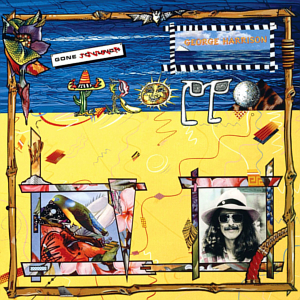
George Harrison 10: Gone Troppo

Another Harrison album came and went with barely any notice. George didn’t care, Warner Bros. didn’t care, and radio didn’t care. Gone Troppo would almost be worth discussing if it were a phenomenally bad record, or surprisingly good. Unfortunately for the consumer, it’s neither.

“Wake Up My Love” was the single, another nod to the contemporary sound of Elton John. It was not a hit, unfortunately, since it’s pleasant enough. “That’s The Way It Goes” is also pleasant, featuring the bass voice of Willie Greene, who also dominates the doo-wop cover “I Really Love You” to the point we can barely hear George. He’d lately been putting odd covers on his LPs, and usually surprised us with his canny choices, but not here. “Greece” is an instrumental that instead sounds unfinished; there’s supposed to be some clever wordplay over the bridges, but the vocals are mixed so low they’re tough to decipher. The title track has a quirky island motif, with a hook that seems very close to that interlude before “Beware My Love” by Wings. Well, at least he doesn’t sound as grumpy.

“Mystical One” has some nice hooks but they just aren’t sharp enough to stick. The same can be said for “Unknown Delight”, but at least this one has some touches reminiscent of the :George Harrison album. “Baby Don’t Run Away” sounds odd coming out of his mouth. This would have had more emotional effect had he finished the song; as it is it seems more like a barely fleshed-out synth demo. “Dream Away” was first heard over the closing credits of the Python-related film Time Bandits. The best part is the chorus, which is always on the verge of meaning something, yet stays just out of grasp. Finally, “Circles” was another orphan from 1968; already one of his most depressing melodies, it’s even more of a dirge here.

And with that, we wouldn’t hear from him again for five full years. Again, there’s nothing wrong with this album. There’s also nothing right with it. Even the cover seemed both patchwork and garish, with an outdated photo on the cover and too much space spent on a thin joke taking up a full side of the inner sleeve. (The tank must really have been empty; while the expanded CD only had a six-minute acoustic demo of “Mystical One” as a bonus, it makes us long for a disc of tracks just like it.) He seemed to be stuck back in his mid-’70s hole, with all the antiseptic qualities of that era. At least, unlike many rock legends, he didn’t bother making a hideous album in 1983 or 1984.

George Harrison Gone Troppo (1982)—2
2004 Dark Horse Years reissue: same as 1982, plus 1 extra track

Wednesday, February 18, 2009

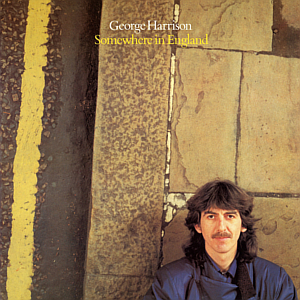
George Harrison 9: Somewhere In England

Just when George seemed to be enjoying himself, things went wrong. First, Warner Bros. rejected his original lineup for his new album, Somewhere In England, saying it wasn’t commercial enough. Then John died. He certainly had a right to be grumpy this time, and as a result, the mood permeates the tone of the finished product, obliterating the good vibes from the last album.

“Blood From A Clone” puts the crux of the argument front and center, with backing that’s supposed to be contemporary. (Hey, they asked for it.) “Unconsciousness Rules” continues the dopey dance idea, with lyrics that skewer the genre. The melody for “Life Itself” brings the first enjoyable track here, but the words aren’t much more than a hymn in the tradition of “It Is He”. With different lyrics and easier meter it could have been a single. “All Those Years Ago” was the first musical statement by any Beatle after December 8th, and it’s pretty direct if a little forced. George pays tribute without suppressing any of his anger so it works. Paul, Linda, and Denny Laine supposedly sing backup, and Ringo’s on drums to keep it all in the family. “Baltimore Oriole” is the first of two old Hoagy Carmichael tunes here; by putting his own stamp on it, it’s surprisingly one of the most enjoyable songs on the album.

“Teardrops” starts off the second side, sounding exactly like Elton John’s early ‘80s stuff. This wasn’t on the first version of the album, leading us to think it was new. The dour words don’t match the tune at all. It seems a little odd to have something this radio-friendly coming from George, especially at this point. “That Which I Have Lost” annoyingly mixes a cowboy melody with a music hall swing, while the words seem to refer to Bob Dylan’s recent Christian conversion. “Writing’s On The Wall” is laid-back and pleasant, yet repetitive and forgettable. Originally the opening track on the original sequence, “Hong Kong Blues” is the lesser Hoagy Carmichael song here, complete with dated racial references. It all finally ends with “Save The World”, where George takes his sermonizing to tell his heathen fans to be nicer to the environment. There are nice passages here that don’t coalesce, along with some hilarious sound effects, and you can just barely hear a track from Wonderwall Music on the fade.

If Warners didn’t like the first version, it’s safe to say they only approved this one to cash in on the post-murder hype. The replaced songs would all officially, if briefly, surface on CDs packaged with expensive leather-bound limited editions of his lyrics, as well as on some B-sides, but sadly, not on the album’s posthumous reissue. (Instead there is an acoustic demo of “Save The World” that shows its intricacy without sparing the message.) But after the quality of the previous album, we were back to wondering why he bothered making records if he couldn’t enjoy the process.

Footnote: in at least one interview before his death, John complained about how George remembered every “two-bit guitar player he’d ever met” in his autobiography I Me Mine, but didn’t spend more than two words on him. George did make sure to include a dedication on the inner sleeve of Somewhere In England, even going so far as to use John’s preferred initials. So there.

George Harrison Somewhere In England (1981)—2
2004 Dark Horse Years reissue: same as 1981, plus 1 extra track

Monday, December 29, 2008

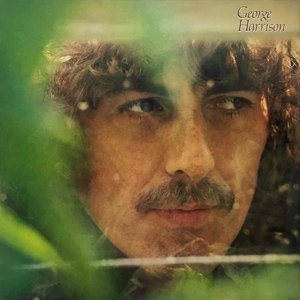
George Harrison 8: George Harrison

Don’t be alarmed by his poodle perm on the cover, disturbing as it is. George Harrison surfaced what seemed like ages after his last album, in an era when only Paul seemed to be worthy of our wallets. It turned out George was worth our time and money this go-round.

The opening notes of “Love Comes To Everyone” are encouraging, and the rest of the song is just as good. There’s lots of guitars, and he found a decent synth sound in Steve Winwood’s Oberheim. A fantastic start. “Not Guilty” is a softer, nearly note-for-note version of one of the more famous Beatles outtakes. Its slow fade at the end sets us up for another rewrite, the slightly successful “Here Comes The Moon”. While nowhere near as universal as its predecessor, it uses a sinuous electric piano bed to support the upside-down acoustic guitar line. On its own, it’s right on target. “Soft-Hearted Hana” starts with the atmosphere of his favorite local pub before leading us on a lysergic trip visa Maui through vaudeville, complete with fluctuating tape speed towards the end of the song. The side closes with the charming “Blow Away”, proving he could really write a hit single when he wanted to. It’s also a very happy song for a change.

A racing car revs up in the left channel and zooms over to the right to start “Faster”, a tribute to his new buddies at Brands Hatch. “Dark Sweet Lady” is a fairly overt song for his new wife, with Hawaiian undercurrents aplenty. “Your Love Is Forever” is just gorgeous all over: an open tuning that doesn’t drone, with melodies and harmonies just packed with real emotion. George has always layered his own backing vocals on his albums, and always in such an unobtrusive manner that they’re often ignored. This is another one of his love songs that could apply to any object you wish. “Soft Touch” may not necessarily be about his young son, but it’s still catchy. The album ends on a strong, upbeat level with “If You Believe”, co-written with Dream Weaver and longtime Harrison session rat Gary Wright.

On its own, it’s not much, but coming after the last few, it has endured. From start to finish George Harrison is an enjoyable listen, and doesn’t embarrass even in the slightest. At the time it didn’t get any respect—it was a really bad hairdo—but it’s certainly aged the best out of any of his mid-to-late ‘70s albums. Overall, it’s a genuinely enjoyable listen, since he seems so content with his current situation. Coming from Paul, this mood would have started to grate. Coming from George, it was a welcome sensation. (25 years later, the only bonus on the expanded CD was an acoustic demo of “Here Comes The Moon”, but it’s lovely.)

George Harrison George Harrison (1979)—
2004 Dark Horse Years reissue: same as 1979, plus 1 extra track

Monday, December 15, 2008

George Harrison 7: Best Of and Thirty-Three & ⅓

Capitol had just begun the repackaging campaign, plus George was on his way to Warner Bros. by way of A&M. So they decided to seize the moment and exploit George’s continuing commercial status. In their minds, The Best Of George Harrison would include Beatles songs so they put seven of them on side one, none of them rare, some already repackaged. Side two includes all of his solo A-sides save “Ding Dong”, though it did include the studio version of “Bangla Desh”. Even Ringo got a full (albeit short) two sides to himself, but he’d actually had more hits. This was obviously just a quick holiday cash-in to compete with his next “real” album.

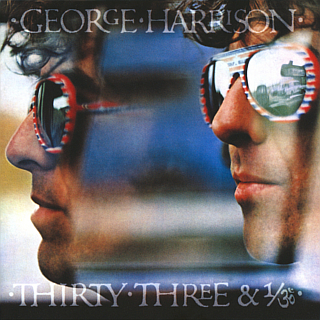
Originally intended to coincide with his 33⅓rd birthday, Thirty-Three & ⅓ was trumpeted at the time as his best album since his first. Today, it’s hard to see why. Granted, the songs are back to a tempo that gets your toes tapping, but several years on it has dated badly, just as Paul’s contemporary disco arrangements have.

“Woman Don’t You Cry For Me” may have been started in 1969, but the recording is all 1976 thump. “Dear One” is a more pleasant hymn, but the synthesizer torpedoes it. “Beautiful Girl” was intended for All Things Must Pass, and gives support for the idea that he really ought to consider the other songs he never finished for that album. “This Song” is one of his best, a fantastic defense of his writing process that, at the time, had been costing him money and leaving him in litigation. Here again is the humor that had been so lacking of late. “See Yourself” also dates from the Maharishi era, but stumbles around too much to be appreciated.

“It’s What You Value” is filled with hooks and a very enthusiastic vocal, but goes nowhere. “True Love” is soaked in what had become George’s trademark sound, but is actually a Cole Porter tune. (In all seriousness, George should be commended for exposing his listeners to all kinds of music they’d otherwise ignore.) “Pure Smokey” is a retread of the last album’s “Ooh Baby”, literally thanking God for Smokey Robinson. “Crackerbox Palace” is the other hit, and a catchy one; the arrangement for once actually enhances the song. (Notice the reference to Young Frankenstein at the end of the chorus before the third verse.) “Learning How To Love You” closes us out, and he finally gets the sound he wanted on the last album right. The jazz chords fit the vocal, and the guitar solo is virtuosic without showboating. But do you really feel like hearing the whole album again?

Besides producing others and helping out friends, George stayed busy for most of the ‘70s, and had let the public hear quite a bit of music. But the promise he seemed to exude when finally allowed to shine on his own six short years earlier seemed to dim. Despite his continued success, his laissez-faire attitude towards the pop business was about to take serious root. (The eventual expanded CD included an extra track in “Tears Of The World”, which was not only written but recorded for—and subsequently rejected from—an album four years in the future. Why it’s here and not on the expansion of that album is anyone’s guess.)

George Harrison The Best Of George Harrison (1976)—4
Current CD availability: none
George Harrison Thirty-Three & ⅓ (1976)—
2004 Dark Horse Years reissue: same as 1976, plus 1 extra track

Friday, December 5, 2008

George Harrison 6: Extra Texture

Arriving barely ten months after the Dark Horse album and tour, it was almost a shock to hear from George so soon. Extra Texture came complete with two grinning photos (one of which was knowingly captioned “OHNOTHIMAGEN”) and a cover designed to resemble the feel of a basketball, suggesting that he was enjoying this cockamamie business after all. However, that’s not the impression one gets listening to the actual album.

Easily, the best track is “You”, left over from the same Ronnie Spector sessions that had spawned “Try Some Buy Some”. This is an incredibly simple song, but it’s so pretty and such a great production it’s a success. (And he knew this too, which is why he added another thirty seconds of it at the start of side two.) From there, it’s straight downhill, hitting tree trunks and rocks along the way. “The Answer’s At The End” is another Frankie Crisp-inspired plea for understanding that is buried, like the rest of the album, underneath a plodding arrangement. “This Guitar (Can’t Keep From Crying)” is the first of his occasional rewrites. It’s very similar to the far superior “While My Guitar Gently Weeps”, but pales in its shadow, being much more forced with a burping Moog bass part borrowed from “Jive Talkin’”. “Ooh Baby (You Know That I Love You)” is an inaudible salute to Smokey Robinson, and while “World Of Stone” aspires to emulate the Spectorisms of All Things Must Pass, it misses widely.

The aforementioned “A Bit More Of You” fades into “Can’t Stop Thinking About You”. Perhaps he was so consumed by the one of whom he was thinking that he couldn’t write better lyrics. “Tired Of Midnight Blue” is a step in the right direction, but its arrangement sounds so much like the rest of the clinkers here that it’s too late. “Grey Cloudy Lies” also can’t get us out of the driveway, so we’re stuck with the in-joke of “His Name Is Legs (Ladies & Gentlemen)”. The protagonist—and guest vocalist—is supposed to be one hilarious fellow, but this does nothing to illustrate it, taking six minutes to boot.

Most of the songs on Extra Texture are upbeat in a smooth soul manner, with a lot of romance on his mind. But outside of “You”, there is little of any lasting value on this collection. He neatly finished off his obligation to Apple, and said goodbye with an eaten-away logo. Despite its occasional subtitle (“Read All About It”), the album doesn’t inspire much interest today. When the Harrison estate finally got around to reissuing it in the next century, the only value-add even they could find was an unreleased re-recording of “This Guitar (Can’t Keep From Crying) produced by the poor man’s Jeff Lynne, Dave Stewart.

George Harrison Extra Texture (1975)—2
2014 Apple Years reissue: same as 1975, plus 1 extra track

Friday, November 7, 2008

George Harrison 5: Dark Horse

“Shaky” is a kind word for this collection, thrown together over three weeks for release a full 18 months after his last album to coincide with a tour for which he was not prepared. Having had such accolades for the Bangla Desh concerts, he took a mutated version of it across America for Thanksgiving. There were several problems with this: having an extended Shankar section in the middle of the set sent most folks to the bathroom; Billy Preston’s afro; Tom Scott; George trying to distract us from his hoarse voice with a rack full of hideous plaid pants.

The Dark Horse album itself, which come out after most of the shows, isn’t all it could have been. A quick glance at the lyrics forebodes of more sermonizing and half-baked Frankie Crisp proverbs. The opening “Hari’s On Tour (Express)” is a forecast of everything that would be wrong with his next batch of albums, but in this case, it’s a sterile instrumental featuring the insipid LA Express wimp-jazz ensemble. The first real song, “Simply Shady”, sounds like George is singing in the bathroom, but it’s just an effect to cover the rasp of his throat. There’s an odd reference to Sexy Sadie, and it’s not a bad tune. “So Sad” is easily the best song on the album, with plenty of 12-string guitars and time changes to fit with his other classics. Even his shot voice can’t torpedo this one. “Bye Bye Love” may well have been assembled during a drunken spree; whatever the reason, its inclusion is ill-advised. It was embarrassing enough to hear John and Paul slapping each other on successive albums, but here was George naming names over his wife running off with Eric Clapton. (Considering those are his future wife’s eyes peeking at us from the label of side two, he’s not winning much sympathy.) “Maya Love” is supposed to be a clever pun but somehow the song refuses to stick, and we’ve tried.

“Ding Dong; Ding Dong” is pretty sour for a Christmas song, though it may have inspired Paul to write a song about his own doorbell. (That would be “Let ‘Em In”. And when you include “(Just Like) Starting Over” and “Sentimental Journey”, you’ve got the concept EP that never was!) “Dark Horse” has some potential, but coming this late in the program, it’s sunk by the vocal. As a single it was a safe choice, sounding very much like the last album. It’s rare to hear George using the first person in this manner. “Far East Man” was written with Ron Wood, with a sarcastic dedication to Frank Sinatra at the start. Had it been recorded by the Stylistics with different words, this could have been a Hey Love soul classic. “It Is ‘He’ (Jai Sri Krishna)” closes it all out with too many flutes and a chant with none of the universal charm that made “My Sweet Lord” so popular.

Much of his late-Beatles backlog had already been recorded, with the exception of some gems that had been demoed in 1970 only to be shelved for upwards of forty years and counting. Why these lifeless songs got preference over more developed material is a mystery he’d refuse to ever answer. Those who’d heard the album he’d just produced so painstakingly for Splinter wondered what went wrong here. Despite several attempts with an open mind, Dark Horse may have actually gotten worse over the years.

The album waited a long time before getting its requisite reissue from the Harrison estate; it dutifully included the B-side “I Don’t Care Anymore”, a truly sullen castoff from the album sessions, which, despite its tone, deserved to be heard again. (An acoustic demo of the album’s title track was the only other bonus.)

George Harrison Dark Horse (1974)—
2014 Apple Years reissue: same as 1974, plus 2 extra tracks

Saturday, November 1, 2008

Splinter: The Place I Love

While Apple Records was originally Paul McCartney’s idea, George Harrison embraced its ethos of promoting worthy artists, signing the likes of Billy Preston, Doris Troy, Ronnie Spector, Ravi Shankar, and yes, the Radha Krishna Temple, and encouraging Badfinger long after Paul left. In the label’s last days he (and Ringo) considered taking it over once Allen Klein was out of the picture, but decided instead to start from scratch with a new label he dubbed Dark Horse.

His first signing—save Ravi—was a duo called Splinter, brought to his attention by Beatles aide-de-camp Mal Evans (who’d also discovered Badfinger, by the way). Most of the songs were written by Bobby Purvis, who harmonized nicely with Bill Elliot, who’d oddly enough sung on the “God Save Us” single with the Elastic Oz Band. George spent the better part of a year working with Splinter at his new home studio, helping them hone their arrangements and bringing in pals like Preston, Klaus Voormann, Gary Wright, Jim Keltner, and others to fill in the instrumentation he didn’t provide himself under such pseudonyms as Hari Georgeson, Jai Raj Harisein, and P. Roducer. His own album, which followed by a few months, would pale in comparison to the quality of The Place I Love.

The opening riff and general arrangement of “Gravy Train” scream ‘70s adult contemporary, but it’s undeniably toe-tapping. For an immediate change of pace, “Drink All Day (Got To Find Your Own Way Home)” has a northern charm, buoyed along by George’s multiple guitars. But for a few mixed references (“sayonara” and “geisha”) we can hear how “China Light” would have appealed to the producer. “Somebody’s City” gets something of a Spector treatment in its big drum sound, a Mel Collins horn arrangement, and unleashed energy on the chorus.

“Costafine Town” is a sweet reverie of home sweet home, with striking clapping effects, just enough accordion, and a terrific key change. It’s an odd lyrical juxtaposition with the title track, which offers the opposite sentiment. George can certainly be heard singing the response vocals on the chorus of “Situation Vacant”, one of the most majestic songs ever written about being unemployed. “Elly-May” is the first love song on the album, dominated by George’s Moog, and “Haven’t Got Time” makes for a gritty closer.

Sadly, the best Splinter song of all wasn’t on the album, which is amazing considering that it had a lot to do with how George heard them in the first place. “Lonely Man” included a verse written by Mal Evans, and made its first appearance over the closing credits of the film Little Malcolm (also George’s first real foray into the movie business). Instead, it was held over for their second album, which was handed to Tom Scott to produce. His horns dominate the slicker sound throughout, and the album is a step down except for “Lonely Man”, which features George, Preston, and Keltner, and remains as poignant and haunting as ever.

None of the Splinter albums were commercial successes, and neither were any other Dark Horse artists except George. But The Place I Love was always better than merely being Beatle-adjacent. The revived Dark Horse label reissued it on vinyl in 2023, and all three albums made it to streaming services soon after.

Splinter The Place I Love (1974)—3

Friday, October 17, 2008

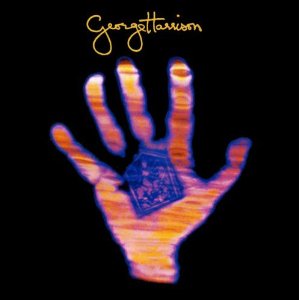
George Harrison 4: Living In The Material World

Coming after two successful three-record sets, George’s new album was a cause for trepidation. Just from looking at the cover of Living In The Material World it was hard to say what was afoot. There was the comfort of familiar names to suggest the music would be up to snuff, but what was the deal with all the lyrical references to the Lord and the Hindu paintings? This is where the river splits.

“Give Me Love (Give Me Peace On Earth)” has trademark slide and acoustic guitars, great harmonies and breathless “om” sections, making for a pleasant single not unlike Dylan’s “I Want You”. “Sue Me Sue You Blues” has a nasty undercurrent, similar to the sounds George and friends gave John for the Imagine LP. Having spent the previous year dealing with Apple and Bangla Desh litigation, his weariness was understandable. “The Light That Has Lighted The World” unfortunately takes that weariness to another level. This is a very pretty song with all the ingredients we’ve come to love him for, but without trying very hard he comes across as holier-than-all. “Don’t Let Me Wait Too Long” should have been a single, and it would have been a smash, even if consumers didn’t catch the ambiguity in the lyrics. “Who Can See It” goes back to Dirgeville, which luckily doesn’t last. The title track is a tad too conceited for a song about humility, but is notable for one of the last appearances of an emotion called humor for a few years. The so-called “big ending” is quite satisfying.

Side two is a little too similar to side four of All Things Must Pass, in that the album’s run out of steam. “The Lord Loves The One (That Loves The Lord)” is too direct for any hymnal, and is about as enjoyable as “I Dig Love”. Why is it that the same sentiments were easier to swallow on the last album? “Be Here Now” is a beautiful exploration over an open tuning, with a worthwhile lesson using honey instead of vinegar. “Try Some Buy Some” was left over from some earlier Phil & Ronnie Spector sessions, with trilling mandolins and tympanis galore. The melody is lovely and the lyrics are stupid. It’s incredibly complicated musically, in an odd key that’s not easy to play on guitar or keyboards. Klaus Voormann’s bass line drives it. “The Day The World Gets ‘Round” chronicles his feelings the morning after the Bangla Desh concerts and, like the closing “That Is All”, sounds too much like the dirges on side one for them to really stand out. He’s starting to get a little petulant, and the last song doesn’t ease it any.

While Living In The Material World doesn’t quite have all the ingredients, there’s enough here, especially on the first side, to warrant further listening. Anything would be a letdown after All Things Must Pass, but as this wasn’t a complete departure, it gets two thumbs up. In the battle of the post-Beatles he was a little shaky but still on top, and better off at this juncture than the Other Three.

The 2006 CD reissue improved on the LP by thoughtfully including two of the few rare B-sides from George’s solo career. “Deep Blue” is a loping acoustic number about his mother’s slow death to match the pathos of “Bangla Desh”, for which it had been the flipside. “Miss O’Dell” is another nonsense number, notable for his infectious laughing at the cowbell and Paul’s boyhood telephone number at the end. (2014’s Apple Years reissue included that studio version of “Bangla Desh” as well, as it hadn’t turned up anywhere else.)

When the album’s 50th anniversary came ‘round, it didn’t quite get the fanfare of its older brother, but deluxe packages were prepared. The basic double-disc presented a remaster of the album with disc of early or stripped-down takes plus a new mix of “Miss O’Dell”, while the limited (and pricey) Super Deluxe Edition added an exclusive extra in “Sunshine Life For Me” from the Ringo sessions but with George singing and billed with The Band. (The track was kindly included on streaming platforms.) All the music was also included on vinyl and Blu-ray for multiple hi-res mixes—plus a 45 with “Sunshine Life For Me” on one side and an instrumental on the flip—with a snazzy book and booklet giving insights to the creation of the album. No demos, previously released or otherwise, were included anywhere. It’s not easy living in the material world, but that wasn’t George’s problem anymore.

George Harrison Living In The Material World (1973)—
2006 CD reissue: same as 1973, plus 2 extra tracks
2014 Apple Years reissue: same as 2006, plus 1 extra track
2024 50th Anniversary Edition: same as 1973, plus 12 extra tracks (Super Deluxe adds 1 track plus Blu-ray)

Friday, August 15, 2008

George Harrison 3: The Concert For Bangla Desh

At this point folks had good reason to wonder if all of George’s albums would be issued as three-LP boxed sets. In his defense, it’s not all him being pompous, for the six-sided format works very well presenting the music from this historic show in concise chunks that make sense. This unexpurgated, real-time document spotlights all of the performers from the evening.

The Concert For Bangla Desh starts with the anticipatory sound of the crowd, followed by somebody singing “on with the show” opera-style. As soon as the mumble builds to a roar we know George has appeared. After quietly thanking the audience and preparing them for Ravi Shankar’s set, Ravi himself lays down the rules for paying attention to Indian music. The 26 minutes that follow build slowly and deliberately to a rapturous finish, and as essential listening as anything else in the box.

Side two kicks off the rock portion with a fast-paced “Wah-Wah”, followed by “My Sweet Lord” and “Awaiting On You All” missing some of the words. Billy Preston showboats us out with “That’s The Way God Planned It”, which is easier to listen to than it is to watch. Ringo gets big cheers for getting most of the way through “It Don’t Come Easy”, and George lets Leon Russell take a verse of “Beware Of Darkness”. The band is introduced one by one, followed by a blistering Eric Clapton guitar solo on “While My Guitar Gently Weeps”. Leon tries to turn the place into his very own juke joint with a narcissistic mutation of “Jumpin’ Jack Flash” and “Youngblood”, redeemed by a gentle “Here Comes The Sun” with Badfinger’s Pete Ham on second acoustic.

Side five is a big deal for a lot of people, as it consists of Bob Dylan sounding just like he did before he went electric, helped out by George, Ringo and Leon. That leaves a very short side six: “Something” gets a tender reading, leaving “Bangla Desh” itself to close out the show. And no one seems to know what the deal is with that gibberish at the very end.

A full-fledged tour behind All Things Must Pass would have been appreciated, especially considering the aplomb with which the assembled managed to treat the material on short notice. So it’s great to have this album as a souvenir. Despite the altruistic intentions, the album went through the usual record company wrangling before its initial release, and again when it came out on CD. When the film arrived on DVD in 2005, the album was remastered and reissued with a new cover, with the afternoon performance of Dylan’s “Love Minus Zero/No Limit” added as a bonus track.

George was batting a thousand at this rate, gaining a reputation as both a generous and savvy bandleader. We could only hope it would last.

George Harrison & Friends The Concert For Bangla Desh (1971)—4
2005 reissue: same as 1971, plus 1 extra track

Monday, July 14, 2008

George Harrison 2: All Things Must Pass

For his first real solo album, George came bursting out of the gate with a multi-record boxed set to prove to the world that his talents hadn’t been realized to their utmost potential. Granted, one of the three discs consists of pretty simple instrumentals, but compared to the down-home qualities of the other three’s 1970 solo output, All Things Must Pass is a natural progression from the sophistication of Abbey Road. And, after having been kept on a short leash for John’s concurrent album, Phil Spector got his big chance to really go nuts with a Beatle in the studio.

Oddly enough, despite George’s status as the “mystical one” who dragged everyone to India, the strongest musical tone throughout is country-and-western. Looking at the credits on the inside cover of the box we see such names as Bob Dylan and Pete Drake, and the first notes suggest a Nashville influence. The sultry “I’d Have You Anytime” welcomes us in with lyrical help from Dylan, deep in his own Nashville phase. “My Sweet Lord” follows, the first really overt religious number in George’s repertoire. It would not be his last. “Wah-Wah” was allegedly written the day he walked out of the Get Back sessions; while he’d explained that the title is a euphemism for a headache, it’s also the effect pedal we hear near the start of the song. It’s a great tune, with all those guitars chiming along, horns blaring, and what sounds like a car driving off at the very end. “Isn’t It A Pity” closes this perfect album side, starting so gently and carrying us away with the slightest variations on the same chords.

“What Is Life” is another classic; when he wants to, he can praise the Lord without being preachy and still get played on the radio. His version is still the best of “If Not For You”, as the arrangement is much more delicate than Dylan’s or anyone else’s. “Behind That Locked Door” is very country on the surface, but is a sweet love song to a sad friend. “Let It Down” is 1970 Rock done correctly without being dated. He’d tried this with the Beatles, but John and Paul either couldn’t or wouldn’t learn it, and it’s their loss. “Run Of The Mill” gently takes us out of the second side, with his usual jumpy time changes. Another great end to another great side.

“Beware Of Darkness” rises like the sunrise, and is just as invigorating. The guitar solo really shines, underneath that haunting arrangement. “Apple Scruffs” is fairly Dylanesque, and not just because of the harmonica. As grumpy as George could be, it’s clear he did appreciate some of the attention from his fans. “The Ballad Of Sir Frankie Crisp (Let It Roll)” has the most pointless lyrics so far, but the simple chords and the piano work every time. “Awaiting On You All” is a fairly rousing Christian rock number that couldn’t possibly offend an atheist. And while the title track may seem as timely as that year’s headlines, it’s simply an homage to his new friends in The Band.

With three sides in a row resulting in a full hour of great music, we can almost forgive the less exciting remainder. Well, almost; “I Dig Love” just plain stinks, and it’s surprising that Lenny Kravitz hasn’t stolen it yet, as it’s right up his THC-clogged alley. “Art Of Dying” brings us back with its nasty riffing and nightmare strings, but another, inferior version of “Isn’t It A Pity” serves no purpose. “Hear Me Lord” ends the side oddly, with its uncertainty a striking contrast to the happy God songs on the other sides. (This was also shown to the Beatles, and it’s not surprising to know they weren’t impressed with the words. But it’s still a pretty powerful song.)

After all that, he’s somewhat justified in showing off with his buddies on the “Apple Jam” disc. “Out Of The Blue” is kicked open in progress, and while it’s the longest jam it’s still the best. “It’s Johnny’s Birthday” provides some long overdue humor, going right into “Plug Me In”. “I Remember Jeep” has some synthesizer whoops and beeps scattered across it, while “Thanks For The Pepperoni” gets its inspiration from the Chuck Berry riff.

The rest of George’s solo career had to live up to this strong start. All Things Must Pass has only gained more sentimental value, and a worthy investment for anyone who has all the Beatle albums yet is tentative about leaping into the murky waters of their solo careers.

The original CD issue had the first (and best) three sides on one disc, with the rest on the other. The 2001 reissue (and the 2014 Apple Years edition) modified this and beefed it up a bit: the first disc has sides one and two plus new bonus tracks, and the second has sides three and four plus “Apple Jam” in what was supposedly the original sequence before it was shuffled to fit on the LP better. Of the bonuses, the best one is the hokey but sweet “I Live For You”. This is just one of the tunes he’d sat on during the end of the Beatles, and would have been appreciated more in 1970 than “I Dig Love” or the second “Isn’t It A Pity”. “Beware Of Darkness” and “Let It Down” are acoustic demos, with a little modern sweetening in the case of the latter. The backing track for “What Is Life” shows off more mariachi trumpet that was thankfully wiped from the final mix, and “My Sweet Lord (2000)” is no replacement for the original.

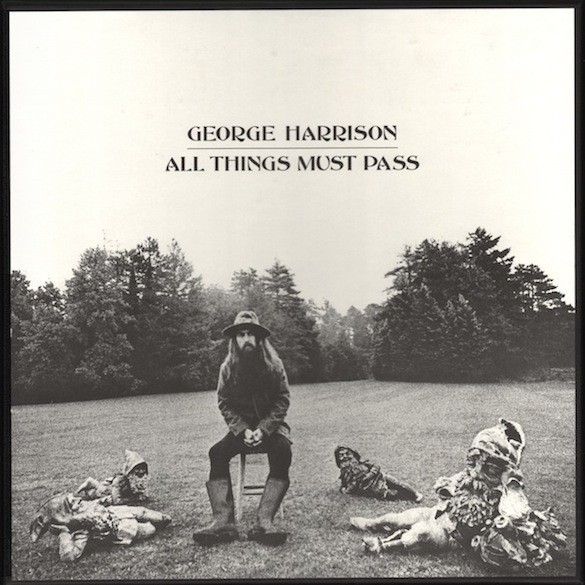
While slightly delayed by the COVID-19 pandemic, the Harrison Estate approved a deluxe overhaul of the album for its golden anniversary. Dhani Harrison supervised a modern remix of the album, pulling down some of the walls of sound and bringing out George’s voice in most places. Once again, sides one and two made up one CD, while the other four sides (in the original order) filled a second. A third disc was devoted to a day’s worth of demos recorded with Ringo and Klaus Voormann—some of which sound more like early takes with a lot more musicians involved—while a fourth replicated the Beware Of Abkco! bootleg of solo demos recorded the day after. Among the tracks left in the fabled bullpen: the Elvis pastiche “Going Down To Golders Green”; “Dehra Dun” and “Sour Milk Sea” from early 1968; “Window Window” from 1969; the sublime lament “Nowhere To Go”; Dylan’s “I Don’t Want To Do It”; and future LP track “Beautiful Girl”. A fifth disc of “session outtakes and jams”—which was included as the third disc in the cheaper of the expanded editions—provided some variety on familiar songs. (Fans who’d benefitted from the material world could have sprung for an “uber box” that also included more detailed session notes, a copy of a pamphlet by one of George’s gurus, a bookmark carved out of one of George’s trees, and scale replicas of the gnomes on the cover.)

George Harrison All Things Must Pass (1970)—
2001 remaster: same as 1970, plus 5 extra tracks
2021 50th Anniversary Edition: “same” as 1970, plus 17 extra tracks (Super Deluxe adds another 30 tracks)