Showing posts with label 1981. Show all posts

Friday, April 10, 2026

Yes 13: Yesshows and Classic Yes

While Yes was in a state of limbo, somewhat, they still owed the label some product. This conundrum was addressed in the usual way, first with their second live album. Yesshows was taken from recordings at five locations over the last three tours with Jon Anderson, yet still works as an entity to itself.

The finale from Stravinsky’s Firebird Suite is the opening fanfare as the band takes the stage for “Parallels”. Steve Howe does an awful lot of noodling through “Time And A Word”, the only earlier song here, having been revived in the wake of Yesterdays as part of a medley of earlier songs, not included here. Instead there’s a sharp but effective edit into “Going For The One”. Side two was devoted to “The Gates Of Delirium”, when Patrick Moraz was still in the band and Rick Wakeman wasn’t, and it translates well to the stage, particularly the transition from the solos into “Soon”.

Jon helpfully explains the impetus for “Don’t Kill The Whale”, after which he thanks various crew members over an against-type band jam and actually says “Don’t put that funk in mah face.” “Ritual” (again with Moraz) had to be split between sides on vinyl, and is now all one track. Chris Squire gets a decent bass solo, but the Tuvan-style throat singing during the percussion freakout is almost laughable, making the final “Nous Sommes Du Soleil” section a big relief. There’s a sloppy edit before “Wonderous Stories”, but Chris adds nice harmonies.

Outside of the devoted, Yesshows was always something of a stepsibling to Yessongs, and didn’t make it to CD outside of Japan until the ‘90s. Also, it was only a double album, as a triple album wasn’t going to fly in 1980, but it least it didn’t repeat selections.

Two such candidates for the album did appear a little over a year later, kind of. Some editions of the Classic Yes compilation included a bonus 45 consisting of live 1978 recordings of “Roundabout” and “All Good People”. (The cassette added a song to the end of each side, while the eventual CD had both at the end of the disc.) The album itself was sufficient as an overview of a now-defunct band, concentrating on some of their longer yet popular pieces, most of which were established radio staples. “Heart Of The Sunrise” is a surprising opener, jumping ahead to “Wondrous Stories” then back to “Yours Is No Disgrace”. “Starship Trooper” feeds into “Long Distance Runaround” and “The Fish”, and “And You And I” sums up the final Bruford trilogy. Plus it had another Roger Dean cover to underscore its place in the canon. And with that, the band’s label contract was fulfilled.

Yes Yesshows (1980)—3
Yes
Classic Yes (1981)—

Friday, January 3, 2025

Queen 11: Greatest Hits

At the start of the ‘80s, Queen was still huge, the Flash Gordon soundtrack notwithstanding. As they had more than enough for a greatest hits album, their label went ahead and released not just one, but different sequences in different countries, depeding on what qualified. And here’s where it gets confusing.

In the US, side one began with “Another One Bites The Dust”, having been so huge here, before going back to “Bohemian Rhapsody”, which opened the set practically everywhere else. “Crazy Little Thing Called Love” brought it current again, then it was back to “Killer Queen”. “Fat Bottom Girls” and “Bicycle Race” are still in the wrong order to these ears, but the real draw was “Under Pressure”, the brand new (and stellar) collaboration with David Bowie. After the one-two punch of “We Will Rock You” and “We Are The Champions” starting side two, the single version of “Flash” doesn’t sell that album very well, but “Somebody To Love” and “You’re My Best Friend” are always welcome. The single version of “Keep Yourself Alive” is still a kicker, though “Play The Game” is still kinda underwhelming. The packaging was not elaborate but still nice, with custom labels and an inner sleeve that helpfully said what songs came from what albums.

Eleven years later, after Freddie had died, their American distribution changed, and Wayne’s World revived interest in the band, the label wanted a companion to the previous year’s Classic Queen, which mostly focused on the later years of the band but still included “Bohemian Rhapsody”, “Under Pressure”, and “Keep Yourself Alive”. So the updated Greatest Hits repeated and reshuffled the rest of the first one (save “Flash”) and included songs that were on the British version of the first hits album, such as “Don’t Stop Me Now”, “Save Me”, and “Now I’m Here”, but also threw in “Body Language” and “I Want To Break Free”. The older additions were welcome, but the three songs stuck on the other album were missed. (New cover art underscored that this was not the original 1981 sequence.)

It wasn’t until 2004 that the original UK sequence was released in America, with three odd extras: “I’m In Love With My Car”, and two songs from that year’s release of their 1982 Hollywood Bowl concert. But for those of us who loved that first US hits album, there’s always Spotify.

Queen Greatest Hits (1981)—4
Queen
Greatest Hits (1992)—4
Current CD availability: none

Friday, December 15, 2023

Kiss 13: Music From The Elder

Having seen their sales plummet over the past few years, Kiss was still determined to keep going. They found a new drummer in Eric Carr, who was immediately saddled with a “fox” persona for his makeup. They started working on songs at Ace’s house, and put in a call to Bob Ezrin, who’d produced Destroyer and was currently riding the wave of success from Pink Floyd’s The Wall. Apparently it was his idea for them to make a concept album, and given Gene’s fascination with Marvel Comics and the like, they agreed. (“They” meaning Gene and Paul; Ace was overruled, and Eric had no say.) Music From “The Elder” was promoted as songs for a movie yet to be written, much less filmed.

It was a departure, all right; the stark cover art screamed medieval sorcery, and no pictures of the band appeared anywhere, save the logo. Inside the gatefold what appears to be excerpts from some scripture talk of some ancient race that walks among mortals seeking worthy applicants to their sacred order, and how a caretaker named Morpheus (no, really) will deliver a boy to fulfill the task. (Pretty big leap from Love Gun, huh?) Inner sleeves varied; some had the lyrics, while others only had the production credits on the clear plastic sleeves PolyGram had started pushing. The back cover credits the appearances of a symphony orchestra, a choir, and three voice actors, including one Christopher Makepeace, best known as the 98-pound weakling protagonists Clifford in My Bodyguard and Rudy in Meatballs. But even the record company was already nervous about how this album would be received, and with no guarantee the film would follow, Mr. Makepeace’s dialogue as “the boy” was not heard on the final product.

“The Oath” crashes out of the speakers, with all the guitars Kiss fans want, and Paul switching between his tough voice on the verses and his falsetto for the choruses. One of the writers is listed as one Tony Powers, and we’ll get to him. “Fanfare” is a brief instrumental with twee flutes and winds, invoking King Arthur’s court or some such locale that kills a minute, then “Just A Boy” attempts to push the story along, with acoustic and electric guitars well arranged. “Dark Light” takes a few bars to get rolling, but it’s clear that Ace isn’t at all vested in the words he’s singing, and we’re not clear which might have been suggested by co-writers Lou Reed or Anton Fig. Plus, Ace, still can’t sing. “Only You” is the only song here written solely by a single member of the band, in this case Gene, and it’s odd to hear the god of thunder sing about someone being the light and the way. The mumbo gets even more jumbo in “Under The Rose”, and by now they seem to be trying to sound like old tourmates Rush. Between the synths and chanted chorus, it’s close to parody. If anything else, this track proves Eric Carr to be a superior drummer, handling the polyrhythms and complicated riffs.

“A World Without Heroes” is based around a lyric suggested, again, by Lou Reed, and while it’s the most commercial-sounding track here, it’s not much better than their pop attempts of the last two albums. The orchestral arrangement, particularly coupled with the guitar solo, is straight out of side three of The Wall. Listeners of a certain age could be forgiven for thinking the eponymous villain in “Mr. Blackwell” is the same designer who used to publish worst-dressed lists, whereas the song itself is pretty much sludge. “Escape From The Island” is an Ace-led instrumental with Eric (and Ezrin on bass) keeping up well that again evokes old Rush, but it’s a mere trifle compared to the overwrought showpiece of “Odyssey”. It was written solely by the aforementioned Tony Powers, and we don’t know why, but Paul gives his all to the vocal and self-harmony to deliver the lyrics, even the ridiculous bridge (“There’s a child in a sundress looking at a rainy sky/There’s a place in the desert where an ocean once danced by”). This song can’t decide if it’s sci-fi or fantasy, and yes, there is a difference. “I” finally brings back the classic Kiss sound, Paul and Gene trading vocals, and the message could actually exist outside of whatever the plot is. Gene even expresses his desire to rock and roll all night at the close. However, not listed on the album is what’s usually referred to as “Finale”, which reprises “Fanfare” with added, unintentionally funny dialogue from two of the actors.

As a prog album, Music From “The Elder” isn’t any worse than anything else, but overall, it’s too silly for even Kiss. The bad outweighs the good, and while it has its defenders, it remains an anomaly in their catalog and their history.

The album was dutifully remastered and reissued in 1997 so fans old and new could get a fresh perspective. The biggest difference was the track sequence, now in the apparent intended order as depicted on the original back cover, and as released in Japan, but which left out “Escape From The Island”. “The Oath” is now stuck in the middle of side two, making the introduction of a slightly longer “Fanfare” even more shocking to the uninitiated. “Odyssey” is pulled to the middle of side one, following “Just A Boy”, and it works better here, as well as nicely setting up “Only You” and “Under The Rose”. “Dark Light” starts side two, and a much better segue to “A World Without Heroes”. Even “The Oath” fits here, leading into “Mr. Blackwell”, bridged by “Escape From The Island” into “I”. (Sadly, none of the other dialogue was restored, and the jury is out as to how that affected Chris Makepeace’s legacy.) This version is an improvement, certainly, just enough to redeem it as something worth hearing. And that’s why it gets the rating below.

Kiss Music From “The Elder” (1981)—3

Tuesday, June 27, 2023

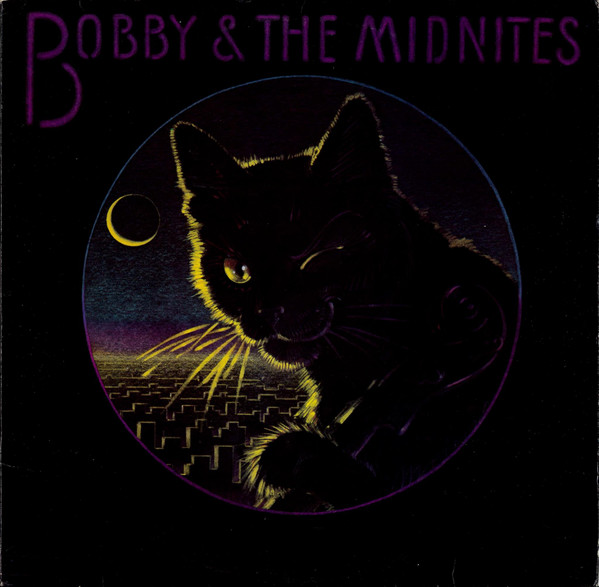
Bob Weir 4: Bobby & The Midnites

Always the poppiest of the Dead, Bob Weir took advantage of another break between albums to work with a side project to explore that tendency. Along with onetime Kingfisher Matt Kelly and new Dead boy Brent Mydland, he recruited Alphonso Johnson and Billy Cobham, both veterans of fusion outfits, and one Bobby Cochran, who’d been in a recent incarnation of Steppenwolf and happened to be the nephew of Eddie Cochran. While the label of their first album was careful to state “featuring Bob Weir”, it was credited to Bobby & The Midnites.

The music is more straightahead rock—and faster—than most Dead albums, and Billy sure knows how to hit cymbals. “Haze” is a fun boogie from the start with a nice chant from the band. Bob uses his Dylanesque yelling-singing hybrid on “Too Many Losers”, but much more tunefully. “Far Away” has some cool chords but descends into an easier singalong, with lots of space for Brent to explore his Hammond B-3. There’s a sharp left turn on the reggae cover “Book Of Rules”, and “Me, Without You” is typical early-‘80s tense rock fodder. “Josephine” is mostly a vehicle for Matt and Brent while Bob expresses his desire to “rock and roll with you”, then “(I Want To) Fly Away” crams a lot of ideas in, never sure if it’s jazz, rock, or reggae. “Carry Me” is the requisite pretty one, though the choruses have more power that just can’t be contained. For crowd-pleasers, “Festival” sure is a sneaky Jimmy Buffett knock-off.

Bobby & The Midnites was easily the most enjoyable Weir album since his first, which was basically a Dead album anyway. Although it didn’t light up the charts, the band was never more than a way to kill time between Dead tours, and it took three years for a follow-up. By the time of Where The Beat Meets The Street, Kelly and Mydland were otherwise detained, Kenny Gradney of Little Feat replaced Alphonso, a keyboard player who doubled on sax came in, and Jeff “Skunk” Baxter was brought on as producer. Bob took a back seat in the writing and singing categories, resulting in an extremely generic ‘80s soundtrack to a movie we’d never want to see. “(I Want To Live In) America” wouldn’t impress even the most diehard Rambo fan, and “Rock In The ‘80s” is even worse.

Most of the songs were covers, or at least by outside writers; why else would Bob sing about some girl who needs a “Lifeguard”? The techno remake of Marvin Gaye’s “Ain’t That Peculiar” was particularly execrable considered he’d been shot to death by his own father just that year. “Thunder & Lightning” might be better without the atmospheric intro, and “Falling” is half-decent, possibly due to John Barlow’s lyrics, but he was also partly responsible for “America”, along with the guy who played Beef in Phantom Of The Paradise, as well as the dangerous groupie portrait of “Gloria Monday”.

Whatever he’d hoped to achieve with this band was shot to hell in three short years; luckily he still had his day job. Not surprisingly, none of the songs on either album were ever played live by the Dead.

Bobby & The Midnites Bobby & The Midnites (1981)—3
Bobby & The Midnites
Where The Beat Meets The Street (1984)—

Tuesday, March 21, 2023

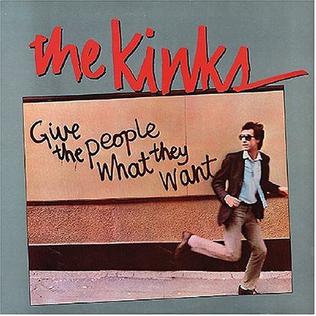
Kinks 26: Give The People What They Want

Ray Davies dove into the ‘80s seemingly ready to act like the Kinks had never experienced any kind of slump. To this day the title Give The People What They Want seems like both an ethos and a punishment, but that’s what he tried to do.

After a blast of static, the guitars begin right away, crunching through “Around The Dial”, which would go on to be an American anthem anytime a DJ moved on to another station. The title track is in the same key and nearly the same tempo, and an indictment of television (which of course we all know is inferior to radio). Following the verse about Lee Harvey Oswald, it seems the album is following if not a concept but a thread, as “Killer’s Eyes” takes an analytical view of a murderer. “Predictable” is a sludgy poke at modern fashion and neuroses, given a comedic and striking (for its time) video treatment, with the disdain taken further on the sneering “Add It Up”, which still sounds like the riff from Blondie’s “Call Me”, and listen for Chrissie Hynde cooing on the chorus breaks.

What really sold the album was “Destroyer”, wherein Ray mashes up “All Day And All Of The Night” and “Lola” to further explore neuroses and makes it work. “Yo-Yo” is a grim glimpse at the end of a marriage given an unfortunate metaphor that’s overused, and “Back To Front” is pounded through the speakers, though some of the snaky riffs are kinda cool. Unfortunately, while “Art Lover” is supposed to be from the point of view of a divorced father missing his kids, his delivery suggests there may be another, more horrible reason why he’s not allowed to see them. The sadness continues on “A Little Bit Of Abuse”, an outside look at a relationship that should end but won’t. The mood finally lifts for “Better Things”, a sincerely generous song of farewell.

The good outweighs the bad here, but there’s still something ordinary about the album. On top of Ray being the only Kink on the cover, it doesn’t take much to notice that Dave Davies doesn’t sing at all on the album, nor does he contribute any songs. Those needing their fixes didn’t have to look far, as he’d finally got a solo deal, putting out two albums in quick succession before Give The People What They Want came out. The first was mostly a one-man-band deal, with title and artwork based on the American catalog number, with lots of riffing and buried vocals, while Glamour was almost as loud, added more keyboards to befit the “futuristic” lyrics, and used one Bob Henrit on drums throughout.

The Kinks Give The People What They Want (1981)—3

Tuesday, February 14, 2023

Grateful Dead 18: Reckoning and Dead Set

In October 1980, the Dead played two major residencies—first at the Warfield Theater in San Francisco, and then at Radio City Music Hall in New York City, with a stop in New Orleans in between. They intended to get a live album out of it, but ended up with so much material that they didn’t know what to leave out. Arista allowed them to put out two distinct albums that year—one focusing on the seated acoustic sets, the other more electric.

Reckoning was the acoustic album, extending the mood of side one of Bear’s Choice across four sides, except there’s no Pigpen and Brent’s playing piano (and harpsichord on “China Doll”). Like that album, the song choices are more laid back, whether their own tunes or covers. These include “The Race Is On”, made famous by George Jones, Jesse Fuller’s “Monkey And The Engineer”, old folk tunes like “Oh Babe It Ain’t No Lie”, “Jack-A-Roe”, and the traditional “On The Road Again”, and repeats of “Dark Hollow” and “Been All Around This World”. “It Must Have Been The Roses”, “To Lay Me Down”, and “Bird Song” had already been claimed as Dead fodder from Jerry’s solo albums and are very welcome here, as was Bob’s “Cassidy”.

The first CD version of the album was for some reason titled For The Faithful… and left off “Oh Babe It Ain’t No Lie” so it would all fit onto a single disc; this was not rectified for 25 years, when the original sequence was restored, along with a full second disc of additional material. Granted, eight of these were songs already on the original, “To Lay Me Down” was a studio rehearsal, and “Deep Elem Blues” (along with “Tom Dooley”) was from two years earlier, but still, this was generous. Of the “new” material, “Iko Iko” would become a staple, Bobby’s “Heaven Help The Fool” (played instrumental) and “Sage And Spirit” (already instrumental) were rare airings; he’d been singing “El Paso” for years.

Four months later, Dead Set was the “electric” album, and while it sported a way cooler cover, it struggled to display the excitement of the band at full throttle. As they hadn’t learned with Steal Your Face, vinyl limitations dictated shorter songs and edits, so the lengthy jams of legend aren’t captured here. In fact, the run from “Rhythm Devils” (aka “Drums”) through “Space” (née “Feedback”) to “Fire On The Mountain” is split between sides.

Plugging in the songs didn’t necessarily make them faster, but there’s a lot more room for soloing. “Samson And Delilah” has the energy but none of the disco trappings, but “Friend Of The Devil” is taken at about one third the original speed. Most of the tunes were staples, as were “Deal” and “Loser” are taken from Jerry’s first solo album and “The Greatest Story Ever Told” from Bobby’s. The only real rarity per se is a slog through “Little Red Rooster”.

As with its sibling, Dead Set was also truncated on CD by omitting “Space”, which was restored when the album was expanded in 2006. The bonus disc consisted of mostly longer performances, which helped make up for the edits left intact on the original album. We get to hear them stretch more; by now Bobby had started singing “C.C. Rider”, plus the band had taken on “Lazy Lightning” and “Supplication” from the Kingfish album. “Shakedown Street” is still a matter of personal taste, but “Not Fade Away” doesn’t need to be so slow for Jerry to wail. Besides, it fades out the disc.

In addition to these albums, a video compilation from the Radio City shows called Dead Ahead was available on VHS (and laserdisc!); this was later reissued on DVD with another 50 minutes of material. Altogether they provided a glimpse at what the band was all about on the cusp of the ‘80s, and the new guy was fitting in pretty well. Beyond that, these would be the last new albums by the Grateful Dead for another six years.

Grateful Dead Reckoning (1981)—
2006 expanded CD: same as 1981, plus 16 extra tracks
Grateful Dead Dead Set (1981)—3
2006 expanded CD: same as 1981, plus 10 extra tracks
     Archival releases of same vintage:
     • Download Series Volume 7 (2005)
     • Dave's Picks Volume 8 (2013)
     • 30 Trips Around The Sun: The Definitive Live Story 1965-1995 (2015)
     • The Warfield, San Francisco, California, October 9 & 10, 1980 (2019)
     • Enjoying The Ride (2025)

Tuesday, September 20, 2022

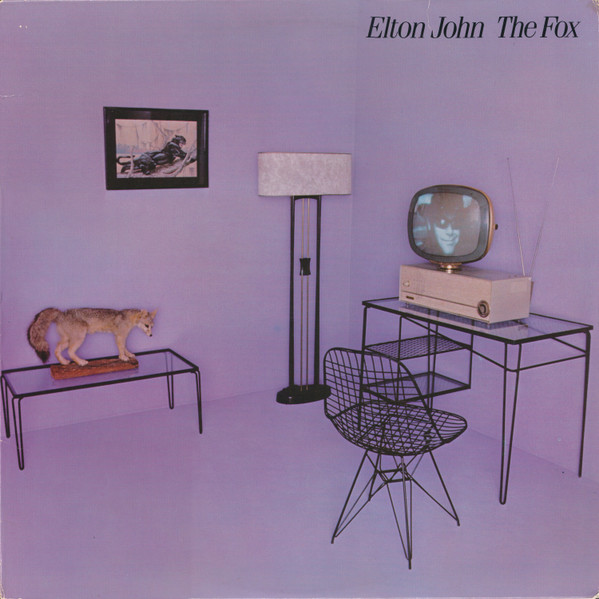
Elton John 20: The Fox

The Geffen label started out by wooing established artists, and after Donna Summer and John Lennon (and Yoko Ono), Elton John was the label’s next release. For several reasons, The Fox was overlooked then, and still seems so today. For starters, David Geffen felt the first batch of songs Elton presented was under par, so several tracks were revived after being left over from the 21 At 33 sessions. Once complete, it wasn’t promoted very well, and those who did buy the album were greeted with a rather disjointed sequence of music that went all over the place, with contributions from multiple lyricists.

“Breaking Down Barriers” is strong beginning, with waterfall piano lines and a defiant vocal over a mildly discofied arrangement that still rocks. “Heart In The Right Place” aims to be even dirtier, with the perpetual guitar solo from Steve Lukather, but the mix buries the vocal under way too much. “Just Like Belgium” sports an inscrutable Bernie Taupin lyric and a throwback ‘70s sound, with a little jangle thrown in and a woman whispering in French, whereas “Nobody Wins” is basically a cover of a song in that language, with new lyrics by Gary Osborne and a distinctly Euro-synth backing. He gets political on the angry “Fascist Faces”, which continues the modern rock sound and brings back the Rev. James Cleveland and his choir for more counterpoint. Elton even takes a piano solo.

His piano is the focus for the first part of side two, in the lushly orchestrated instrumental “Carla/Etude”, which is actually two pieces neatly stuck together. “Fanfare” is a not-brief enough James Newton Howard synth arrangement of the song that follows, and sounds like it belongs to someone else’s album. “Chloe”, the song itself, is a little better, though it sounds like a minor-key retread of “Little Jeannie”. “Heels Of The Wind” is another throwback, musically as well as lyrically via Bernie, but there’s something a little too by-the-numbers about it. That cannot be said for “Elton’s Song”, a heartbreaker written to a lyric by Tom Robinson. While the rarely-seen video makes it plain, this soliloquy of unrequited love is more poignant when heard as intended: from one schoolboy to another. That elegance makes the title track an odd finale, but there is a certain determinism in the track, which features harmonica from Mickey Raphael, soon familiar from his work with Willie Nelson.

The biggest obstacle with The Fox is that it doesn’t know what sort of album it wants to be. It’s one thing to have diverse styles, but when they jar rather than complement, the result is less than successful. As had happened before, the production and arrangements let down the potential of what could be excellent songs.

Elton John The Fox (1981)—

Tuesday, August 17, 2021

Rickie Lee Jones 2: Pirates

In the wake of such one-hit wonders as A Taste Of Honey, Debby Boone, and the Starland Vocal Band, and a year before Christopher Cross, Rickie Lee Jones won the Grammy award for Best New Artist. But as anyone will tell you, an artist puts a lifetime into a first album, and suddenly has to start from scratch for the second. Luckily for her, Warner Bros. was the kind of label that was focused on building catalogs, and was happy to wait until she was ready for her follow-up.

The standard line is that Pirates details the fallout and aftermath of her relationship with Tom Waits, but that insults her as well as the material. Nonetheless, the longing expressed in “We Belong Together” is very real, from the first majestic chords through the cyclic pattern that seems to transcend tempos and time signatures. Steve Gadd is the drummer, and his performance is absolutely stellar. (We still get chills when she harmonizes so closely with herself on “climb upon the rooftop docks” and every other occasion thereafter.) “Living It Up” sports a positively infectious piano melody as it follows Eddie, Louie, and Zero, whom some have suggested are Waits, Chuck E. and Rickie again, but they could be any lost “wild and only ones” looking for something. The middle section switches gears magnificently, culminating in an almost defiant chant of the title, before returning us to the opening piano motif again. For sheer heartbreak, little beats “Skeletons”, wherein a hopeful young couple are on their way to the hospital to have their first child, only for a case of mistaken identity to shatter their dreams. That makes the transition to the finger-snapping hip jazz of “Woody And Dutch On The Slow Train To Peking” so jarring. While it revives the sound people liked so much on the first album, the character isn’t as convincing.

The slick Boz Scaggs-meets-Steely Dan vibe continues on “Pirates (So Long Lonely Avenue)”, but not for long, as the radio-friendly verse turns to the dreamier, aching transition that belongs to the subtitle. There’s a reference to “rainbow sleeves”, which will become more significant in time. A return to the jaunty theme is temporary, and we fade with the slower theme. The ache continues in the lyrics of the otherwise loping “Lucky Guy”, the melody barely hiding the bold admission of her heartbreak after telling the fellow she loves him “when I knew he didn’t care,” and you hope she really will feel better tomorrow. Following another atmospheric intro, “Traces Of The Western Slopes” opens with a verse sung by cohort Sal Bernardi, who sounds enough like Rickie Lee to confuse. (He’s the one harmonizing on the bridge in “Living It Up”, but back to our story, see.) It’s an incredibly ambitious, often impenetrable piece, with peaks and valleys that rival Joni Mitchell’s late-70s work. “The Returns” wafts in like a ballad from a Broadway musical, her voice impossibly high and fragile over the piano, not exactly a lullaby, but a peaceful closer nonetheless.

Having the lyrics printed once again on the back cover helps, not only to discern what she’s singing but to ponder the poetry. For example, is the Bird mentioned in “We Belong Together” the same as the one in “Skeletons”? Is Zero a willing companion or a hoodwinked victim of Eddie and Louie? What the hell is going on on those western slopes? Pirates is certainly more challenging than the debut, but in many ways it’s more rewarding. One can hear her voice and style developing from track to track, and while it doesn’t quite return to the heights of the first three songs, it’s one of those albums that pulls you in. Once again, the Warner Bros. instincts were correct.

Rickie Lee Jones Pirates (1981)—

Friday, December 27, 2019

Journey 11: Greatest Hits Live

Unlike the Eagles, Fleetwood Mac, and other arena bands who reunited in the ‘90s, Journey did not tour to support their reunion album, which pissed off everyone in the band who wasn’t Steve Perry. Holograms hadn’t become an onstage thing yet, so Columbia did the next best thing in their power to cash in while they still could.

Greatest Hits Live cobbled a disc’s worth of live recordings from the Escape and Frontiers tours, effectively presenting a concert document in the form of a sequel to Captured. Some songs are repeated from that album, but Jonathan Cain did his homework and lived up to the challenge of replicating parts he didn’t write. The sequence is very much focused on the hits, but it is faithful to the shows in that “Lights” goes into “Stay Awhile” and “Lovin’, Touchin’, Squeezin’” is dragged out to seven minutes.

The liner notes made a big deal of saying how the tapes were “discovered” by chance and had to be baked before they deteriorated completely, but some of the music had indeed appeared before. This was proven a handful of years later when a complete show from 1981, which got lots of airtime in the early days of MTV, was cleaned up for an official DVD, released with a companion CD that was eventually made available on its own. Live in Houston 1981: The Escape Tour gets a slight edge over its half-brother, being that the sequence is true and Steve’s inter-song “ad-libs” make better sense in context. You also get extended solo showcases from Jonathan, Neal Schon, and Steve Smith. The CD even has something the DVD doesn’t, that being a live version of “Hopelessly In Love (The Party’s Over)”. The cover art isn’t too imaginative, but at least it’s not as baffling as the scary bird lady who adorns Greatest Hits Live.

Journey Greatest Hits Live (1998)—3
Journey
Live in Houston 1981: The Escape Tour (2005)—

Friday, November 23, 2018

David Byrne 1: The Catherine Wheel

In a year that already saw a full-fledged Talking Heads album and a strict collaboration with Brian Eno released, David Byrne upped his autonomy by completing a score for a Twyla Tharp ballet. Not being connoisseurs of the form we aren’t about to make any opinions about the production itself, but the music from The Catherine Wheel is still accessible, in both senses of the word.

In a forward-thinking move, The Complete Score From The Broadway Production Of “The Catherine Wheel” was initially available on cassette, while the LP, being the standard of the time, was about half the length and titled Songs From The Broadway Production Of “The Catherine Wheel”. Leaning more on vocal tracks (read: songs) and contributions from Jerry Harrison and surrogate members Bernie Worrell, Dolette McDonald, Steve Scales, and Adrian Belew, it sounds more like an actual Talking Heads album. “His Wife Refuses” burbles in on a good rhythmic pulse before escalating into a nervous portrait of suburban hell. “What A Day That Was” is probably the best-known track here, due its appearance on a future album, though his voice is just off-pitch here to be grating. “Big Blue Plymouth (Eyes Wide Open)” follows the same groove, but has better vocals, sounds less like a demo, and is more successful. “Poison” and “My Big Hands (Fall Through The Cracks)” are both fairly funky, and welcome his discovery of his “swamp” voice, while “Big Business” (sense a theme here?) manages to sound very European new wave, even with the wonderful clavinet.

A few strictly instrumental pieces balance the album. “Two Soldiers” starts as a wonderfully dramatic theme, but picks up the same rhythm of the previous track to dispel any doom. “The Red House”, with its frenetic percussion and sampled voices, is a close cousin to My Life In The Bush Of Ghosts; “Eggs In A Briar Patch” is a more distant relative, as a more straight backing, and more driven by Brian Eno’s contribution. “Cloud Chamber” isn’t the only ambient piece in recorded history to use metal percussion to convey that image, but is effective, just as “Light Bath” is quiet and soothing.

Once the CD (and now streaming) became the way to go, The Complete Score superseded the LP version, and now provides a more seamless experience, with the addition of several instrumentals. Highlights include “Ade”, a nice poppy collaboration with Eno, “The Blue Flame”, which Peter Gabriel must have heard, “Dense Beasts” into “Five Golden Sections”, and the “Under The Mountain” and “Dinosaur” sequence. “Light Bath” now opens and closes the whole suite, framing it nicely. Again, there might be too much here for people just wanting the tunes, but there’s a good flow, and we have to give him more credit than we had previously.

David Byrne Songs From The Broadway Production Of “The Catherine Wheel” (1981)—3
The Complete Score CD and cassette: same as 1981, plus 22 extra tracks

Tuesday, October 10, 2017

Todd Rundgren 17: Healing

Though he’d dismiss the notion today, Todd Rundgren’s first completely solo album in three years was a reaction to violence, both in his home and in the world. Healing relies more than ever on synthesizers and his own ability to get new sounds out of them while staying true to his songwriting abilities.

Six separate tracks totaling close to half an hour are crammed onto side one, resulting in an experience reminiscent of such experiments as “Treatise On Cosmic Fire” and “In And Out The Shakras We Go”, only with lyrics. “Healer” is a plea for exactly that; “Pulse” layers synths in a sneakily funky way, seeming to build in density with each measure. “Flesh” comes across as mildly evangelical and serious, then the oom-pah silliness of the resentful “Golden Goose” dispels any sense of calm created thus far. An antidote arrives in “Compassion”, his patented brand of blue-eyed soul. “Shine” is almost two songs in one, beginning with a dreamy Todd-and-piano segment that is shunted aside by a jarringly busy arrangement that goes way too long.

Side two is devoted to the three-part “Healing” suite. While they do run together and themes recur, the segments are strong on their own too, it’s a pleasing listening experience, and more effectively conveys his message than side one. The saxophone in “Part I” approaches yacht-rock waters, but never takes over the track. There’s a smooth transition to the softer “Part II”, and while “Part III” is a variation on the opening segment, there’s something a little abstract about it.

The album itself was a self-contained work, and while “Compassion” comes close, there wasn’t a radio-friendly hit single, so he wrote one. “Time Heals” was included — along with its moody B-side, “Tiny Demons” — on a seven-inch stuck inside the sleeve, resembling a 45 but running at 33. The songs have since been appended at the end of every CD reissue of the album, nicely capping an album that appreciates in value.

Todd Rundgren Healing (1981)—3

Tuesday, June 13, 2017

Rush 10: Exit Stage Left

Four studio albums meant it was time for a double live album, and Rush complied, at the height of their game. In addition to another clever theater phrase, Exit… Stage Left bridges the transition from lengthy prog epics to synthesizer-driven music. Most of the music comes from the previous four albums, with the exception of two songs on side two, which was recorded on a tour a year before the rest of the tracks.

Even with the silence between tracks, it holds together as a solid piece, crashing open with “Spirit Of Radio”, jumping on “Red Barchetta” and extending “YYZ” with a three-minute drum solo. The middle of the album provides context for those who came in at either Permanent Waves or Moving Pictures, tossing in the stadium-friendly “Closer To The Heart” and “The Trees”, the latter preceded by an instrumental prelude called “Broon’s Bane”, which got kids working on their fingerpicking. At twelve minutes, “Xanadu” may try patience, or it may send them back to the mall to pick up the earlier albums. It’s back to the hits on side four, with the socko punch of “Freewill” and “Tom Sawyer”, with “La Villa Strangiato” as the grand finale.

Outside of the lengths of some of the tunes, there’s not a lot of difference between the recordings on Exit… Stage Left and the original albums; Rush was never a band that improvised, and the fans didn’t want that anyway. But in the absence of greatest hits, it delivers enough of the experience to keep those kids buying concert tickets, and geared up for the next album.

Rush Exit… Stage Left (1981)—

Friday, May 12, 2017

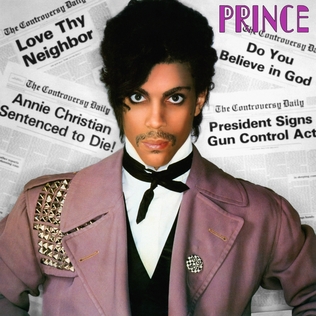
Prince 4: Controversy

From time to time in this forum, we’ve discussed a band slash artist’s “first four”. The debut album proclaims the newcomer, the follow-up restates the thesis, the third album pointedly tries to reinvent a wheel, and in senior year we find out what they’ve learned. The version of the theory applies to Prince, because Controversy is where the brand was firmly established. Deviations followed, certainly, but for anyone playing catch-up, this is the album that sounds most like the Prince that dominated the middle of the decade.

It looks like the same coat from the previous album cover; hopefully he’d changed his drawers for the poster inside. But just as there’s more color in the artwork, the tracks are more filled out, melding even more the styles of funk, rock and new wave. The title track choogles along with several riffs, quiets down for a recital of the Lord’s Prayer, and gets back up with a P-Funk chant, and then we hear that scream for the first time. Similarly, “Sexuality” suggests that the world’s ills can be healed by ignoring our superficial differences and getting busy. To prove his point, “Do Me, Baby” is a lengthy slow jam that culminates in one-sided pillow talk that’s more uncomfortable than arousing, personally.

Side two provides more variety over its five tracks. “Private Joy” is straight-ahead synth-pop ending in a wild feedback-heavy solo that bleeds into and throughout “Ronnie, Talk To Russia”. This lyrical dynamo sports a truly cheesy organ and cheesier machine gun effects, then it’s back to the dance floor for “Let’s Work”, with a particularly tasty pop-and-slap bass. “Annie Christian” is almost no-wave, with a robotic arrangement and non-musical vocals for a parable about the title character being responsible for death and destruction. Finally, “Jack U Off” swings, a dirty song that’s actually fun.

It’s not as strikingly enjoyable as Dirty Mind, but again, Controversy provides a logical progression, and a good setup for what was to come next. Besides, the falsetto was kept to a minimum.

However, it wasn’t the only Prince album out that year. Despite credits saying otherwise, the eponymous debut by The Time was all Prince, completely written and performed by him, save for Morris Day on vocals and occasional drums, plus Dr. Fink on a few synths and Lisa Coleman anytime a woman’s voice is heard. (“After Hi School” was written by guitarist Dez Dickerson, but Prince plays all the instruments.) It’s a danceable album, but still sounds very tossed off. “Girl” and “Oh, Baby” are almost laughable, brokenhearted slow jams with forced vocals by Morris, who really worked best in a visual medium. The best track by far is “Cool”, wherein his personality comes through big time.

The same approach applied to What Time Is It?, recorded and released the following summer while Prince was finishing his next album. “Gigolos Get Lonely Too” is the only slow tune, and Morris has upped his attitude; “Wild And Loose” and “The Walk” even feature humorous dialogues with female conquests. “777-9311” and “The Walk” have a couple of scorching guitar solos, making things more interesting.

Prince Controversy (1981)—3
The Time
The Time (1981)—
The Time
What Time Is It? (1982)—

Tuesday, March 21, 2017

Frank Zappa 31: You Are What You Is

In between tours, Frank installed a state-of-the-art studio in the basement of his house, and proceeded to spent most of his time there. The first album recorded (or at least finished) at the Utility Muffin Research Kitchen was You Are What You Is, four sides of snide commentary on the state of America under the new Reagan regime. (No points for guessing he wasn’t in favor of much of it.)

Picking on dumb kids was old hat for Frank, and “Teen-age Wind” updates it to the era where they’d sniff glue, follow Grateful Dead concerts and even “go to a midnite show of 200 Motels!” And who should turn up in the next track but Jimmy Carl Black in his Lonesome Cowboy Burt guise, claiming to be “Harder Than Your Husband” (“to get along with”). As a country pastiche it’s far too complicated chord-wise. “Doreen” is basically a doo-wop song sped up and translated to a hard rock arrangement; one wonders if a “straight” version exists. “Goblin Girl” used to get occasional radio play around Halloween, but if any program directors listened to the actual lyrics they might have thought twice. The end of the track has some bits of “Doreen” layered on top, with some “pachuco” references from old Mothers albums, then it’s a quick cut to “Theme From The 3rd Movement Of Sinister Footwear”, a complicated guitar solo subsequently overdubbed.

Side two is a suite of sorts, beginning as another satire along the lines of “Dancin’ Fool” but takes a tragic turn before ending with more irreverence. “Society Pages” describes a doyen of suburbia, whose son would grow up to proclaim, “I’m A Beautiful Guy”. The Greek chorus reminds him that “Beauty Knows No Pain”, but he’s preoccupied with “Charlie’s Enormous Mouth”. Modeled on the woman from a one-time perfume commercial who also shovels a certain substance into her similarly oversized nose, leading to her premature demise and interment, where her vapid friends stand around asking “Any Downers?” (It’s too bad, as it’s a good riff.) Somehow Frank manages to tie this to a celebration of the “Conehead”, as seen on Saturday Night Live.

The title track got some attention when its video was glimpsed on an episode of Beavis & Butthead—the original clip wouldn’t have been aired back in the day, given its depiction of Reagan in an electric chair and lyrics about “white” guys trying to be “black” and vice versa. Somehow this leads into “Mudd Club”, already immortalized by Talking Heads, played in a style hemispheres away than the music normally associated with the place. Somehow he decides that this would be a good place to lambaste the church (and the government) in “The Meek Shall Inherit Nothing”—a great track on its own—which continues on “Dumb All Over”, an extended rap in a mild Central Scrutinizer voice.

Even his concept couldn’t be contained on one side, so we get more of that final chant at the top of “Heavenly Bank Account”, which predicts a decades’ worth of crooked televangelists. Somehow this leads to a portrait of a “Suicide Chump”, who wants to end it all but is too scared to. A savior arrives in the form of an overweight girl, of whom the young man quickly tires and threatens to pummel; hence the refrain of “Jumbo Go Away”. “If Only She Woulda” works in the two most common chords from “Light My Fire” as a bridge explaining how the chump’s life got even worse. “Drafted Again” is an adaptation of a Zappa single from the year before, notable now for featuring the vocal stylings of 14-year-old Moon Zappa and six-year-old Ahmet.

Most Zappa fanatics seem to think well of You Are What You Is. These days it sounds very slick, even coming from the days before digital recording took its hold on Frank. Steve Vai is all over the album, providing a distraction from the negativity. Many of the tracks could stand find by themselves, but by insisting on weaving everything together (you know, ‘cos he was such a genius at “conceptual continuity”) they don’t get enough of a chance to breathe. Somehow.

Frank Zappa You Are What You Is (1981)—

Tuesday, January 17, 2017

Genesis 12: Abacab

From here the line between Genesis and Phil Collins really begins to blur, as his solo career brought his voice to a wider audience. On Abacab, his voice is more confident than ever, yet he still feels compelled to play “characters”. And thanks to the hand of engineer Hugh Padgham, the sound crackles throughout.

The title track is still a lot of fun for a song about nothing; even the closing jam, while simple, keeps the attention with the dueling synth and guitar, and crazy seagull effects in the back. “No Reply At All” is an awfully bold departure, for the band anyway, being that it is plastered with the same Earth, Wind & Fire horns that Phil used on his solo albums, to the detriment in the mix of Tony Banks’ organ and Mike Rutherford’s highly impressive bass. (His guitar is equally impressive all over the album.) “Me And Sarah Jane” is another quirky Banks tune, with some echoes of the ‘70s, but wrapping up nicely for the final “choruses”. The real hidden gem here is “Keep It Dark”, which even got a video, telling a grand Genesis sci-fi tale in 6/4.

Side two starts in a similar fashion to side one, with an extended jam of sorts for “Dodo/Lurker”, which somehow encompasses an extinct bird and a submarine. “Who Dunnit?” appears to be an exercise in annoyance, starting with a simple idea then beating it into submission. “Man On The Corner” seems descended from Phil’s demos for his solo album, with a touch of the social commentary he’d pursue later, unless one considers it a view in third person of the poor slob from “Misunderstanding”. “Like It Or Not” fits with Phil’s recent romantic laments, except that Mike wrote it. There’s a wonderfully moody setup for “Another Record”; sadly it doesn’t last for the whole song, which turns into a clever acknowledgement of fleeting stardom (indeed, the song was allegedly left over from Duke) featuring one of the earliest uses of the fake harmonica sound that would become omnipresent throughout the decade.

There are a few long tracks, but no epics; most of the tunes are concise but not throwaways. Abacab is a refreshing look back to the band when they were just this close to becoming true behemoths. There’s something for every fan, and something to piss every fan off.

Genesis Abacab (1981)—

Friday, December 30, 2016

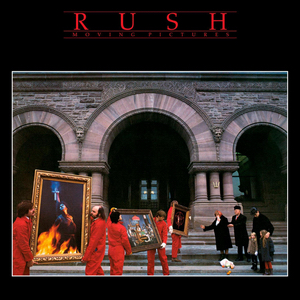
Rush 9: Moving Pictures

The one Rush album everyone can agree on (unless you hate Rush, in which case you should stop reading this entry immediately), Moving Pictures presents the band at perhaps their most creative peak, when the synthesizers became integral to the band’s sound without completely taking it over. The economy of writing laid out on Permanent Waves is even better displayed here, most songs not too long and still meaty enough to be immersive.

This is the album that begins with “Tom Sawyer”, another one of their most recognizable songs, and based mostly on a single drone. Then we have a song about a car, in this case a mispronounced “Red Barchetta”, given an extremely picturesque arrangement that changes gears just like all the best (and worst) songs about cars do. Every teenage guitarist worth his salt just had to master that harmonics riff, being one of the few Alex Lifeson parts that doesn’t require speed to impress. Trainspotters love to explain the significance of “YYZ”, its Morse code tempo giving each of the band members room to show off. A Zeppelinesque hook introduces “Limelight”, practically a pop song and one of Neil Peart’s most personal, ironic, and often misinterpreted lyrics.

It’s such a perfect album side that many spotty youths we know played it way more than the flip, often skipping right to “Witch Hunt” in the middle of side two. It was their loss, which they would all realize once the charms of “The Camera Eye” were allowed to be heard. A two-verse song contrasting and comparing two iconic cities isn’t any literary leap, particularly when the cities in question are Manhattan and London, but they can be a pretty big deal to anyone seeing them for the first time. The verses are almost secondary to the main thrust of the song, with its grandiose swoop and cinematic breadth. Still, at eleven minutes most D&D players would have been more impressed by the sinister undertones and gothic overtones of “Witch Hunt”, and since “Vital Signs” even got airplay on MTV, most of the kids were able to keep up with the backwards reggae beat and tricky stop-time.

Even the band themselves know how large Moving Pictures looms in their legend, going so far as to spotlight it on tour some 30 years after its initial release. There’s nothing silly or embarrassing here, but there is some well-placed humor, both in the music and on the cover. Again, of all their catalog, this is the one album every Rush fan can agree on, and the best entry point.

The 30th anniversary of the album was commemorated with a deluxe edition of the CD packaged with the consumer’s choice of DVD or Blu-ray with 5.1 surround mixes and the original videos for three of the songs. Ten years later, their anniversary editions had become more elaborate, so the Deluxe Edition of Moving Pictures got new artwork plus a full concert from the Toronto stop of the tour, cleverly designated Live In YYZ 1981. Besides being more comprehensive than what would comprise their next live album, it’s essential for the medley towards the end of the set, which begins with a reggae arrangement of “Working Man”. The Super Deluxe Edition added vinyl versions of the album and concert, plus a Blu-ray, book, and ephemera including picks, drumstick, and a red model Barchetta.

Rush Moving Pictures (1981)—4
2021 40th Anniversary Deluxe Edition: same as 1981, plus 19 extra tracks

Friday, October 14, 2016

Frank Zappa 30: Shut Up ‘N Play Yer Guitar

A few albums earlier Frank had stumbled on an easy way to copyright new compositions: merely extracting a guitar solo from a live performance of an established song. A few examples dotted those records, and now he put together three complete albums of assorted instrumental excerpts, separated by Lumpy Gravy-style dialogue. Originally sold individually via mail order, they soon found their way into a nationally distributed collective box. With the exception of a mid-‘90s release that replicated the set on three CDs, Shut Up 'N Play Yer Guitar can be usually found as a two-disc package, all the original music intact.

The package deal is best, since no one “album” is better than another. Given the unifying effect of the contents, and considering that many of the solos come from different performances of a small handful of stage favorites—“Inca Roads” being the most common catalyst—recorded during a four-show London run in February 1979, a track-by-track dissection is futile for our purposes, but we must call out some highlights.

Frank never said he was the greatest guitarist on the planet, but insisted he played his own stuff very well. Many of the solos here are distinctively toned, usually over a two-chord vamp, so he never had to worry much about changing keys or memorizing scales and modes. Things do get interesting when there’s a tricky time signature, as on “five-five-FIVE”, based on 5/8, 5/8 and 5/4. This is particularly refreshing when the band gets stuck in a reggae groove, again on two chords. “Treacherous Cretins” begins with an intriguing electric sitar arpeggio, threatens reggae but luckily gives way to Vinnie Colaiuta’s better drumming. “The Deathless Horsie” follows an extended meter similar to “Watermelon In Easter Hay”, but the real keeper is “Ship Ahoy”, taken from an Osaka performance of “Zoot Allures” a few years earlier. Here his guitar is put through an effect that’s somewhere between a wah-wah and a synth filter, for a terrific sound.

There is humor on the album, and not just what he called each album. “Variations On The Secret Carlos Santana Chord Progression” is an apt title for a vamp on what sounds like “Evil Ways” (or “Oye Como Va”, or “She’s Not There”), and you can’t help but smile at titles like “Gee, I Like Your Pants”, “Pinocchio’s Furniture” and “Soup ‘N Old Clothes”. Sometimes the song title comes from the dialogue snippets, but they’re still very random.

The set arguably drags towards the end, with a full side’s worth of slower music taken from studio improvisations, but taken as a whole, Shut Up 'N Play Yer Guitar goes solidly in the plus column, and should offend absolutely nobody.

Frank Zappa Shut Up 'N Play Yer Guitar (1981)—
Frank Zappa
Shut Up 'N Play Yer Guitar Some More (1981)—
Frank Zappa
Return Of The Son Of Shut Up 'N Play Yer Guitar (1981)—3

Friday, September 16, 2016

Phil Collins 1: Face Value

Some of the songs Phil Collins wrote in the wake of his divorce ended up on the most recent Genesis album, but somehow the demos of the rest were deemed strong enough to form the basis of his first solo album. And considering what Face Value led to, it could be said that said divorce made him millions in the long run. (Not that we’d wish misfortune on anyone, but the man does have his detractors.) While he’d contributed inventive drums to Genesis albums, had done sessions for Brian Eno and even moonlighted in the British fusion band Brand X, from this album forward, he was squarely in the world of pop.

Everybody knows the story behind “In The Air Tonight”, how Phil witnessed a murder, then invited the perpetrator to the front row of one of his concerts, where he told the whole story and instructed the authorities to make the arrest. What people don’t know is that Phil himself was simultaneously apprehended for aiding and abetting a fugitive of justice by not reporting the crime when it happened, and he’s been in prison ever since.

Whatever you want to believe, it’s still a spooky song, with a sound that’s been imitated as a sincere form of flattery, and of course, those gated drums. “This Must Be Love” sounds even more like a demo, in stark contrast to the upbeat jazzy remake of “Behind The Lines”. By ignoring the big fanfare and adding Earth, Wind & Fire’s horn section to follow the melody, we can concentrate more on the lyrics, and choose to play the original again. The crickets that can be heard at the end shouldn’t be considered a critical commentary, but effectively set up the stark tale of farmland woe in “The Roof Is Leaking”, supposedly with Eric Clapton on that dirty dobro. This fades into the excellent instrumental “Droned”, which then morphs into “Hand In Hand”, for which he apparently never wrote words, so they’re substituted by a children’s choir and the horn section. Maybe he realized it was too close to “Follow You, Follow Me”.

The horns are used to much better effect on “I Missed Again”, which was a more obvious choice for a single. We have a weakness for “You Know What I Mean”, consisting solely of piano, lush strings and Phil’s sad vocal, especially since the horns come back on “Thunder And Lightning”, a cloying slice of smooth jazz that nonetheless shows off Daryl Stuermer, who’d graduated from supporting Genesis member onstage to Phil’s main guitarist whenever he was solo. Notice also Phil’s piano composing style, which entails pounding the same single bass note while moving the chords around with the other hand. (Hey, it worked for Graham Nash.) “I’m Not Moving” sounds less produced than some of the other tracks, giving it some well-needed charm, erased by the lounge sax and too-slow pace of “If Leaving Me Is Easy”. Finally, an experiment that shouldn’t work but does is his cover of “Tomorrow Never Knows”, to which he invents a harmony and inserts various loops generated by Daryl Stuermer and the horns. If you listen closely at the fade, he adds two lines from “Over The Rainbow”.

Even though there is a side’s worth of really good music here, Face Value does not earn a passing grade. As songs, they’re fine, but as an album it misses the mark. But nobody cares about what we think, least of all the modern-day consumers who pounced on this record on both sides of the ocean.

As part of a massive reissue campaign called “Take A Look At Me Now”, Phil reissued his solo albums with the expected bonus discs (and unexpectedly, updated cover photos that reflected the name of the campaign). Extra Values is a strangely sequenced grab bag of demos and live versions culled from various decades. If you ever wanted to hear “Misunderstanding” with a horn section, here you go. More interesting is “…And So To F”, a Brand X number well played by the live band. Of the demos, “Misunderstanding” and “Please Don’t Ask” tie the album back to Duke, while an instrumental called “Against All Odds” provides another key to the future.

Phil Collins Face Value (1981)—
2016 “Take A Look At Me Now” edition: same as 1981, plus 12 extra tracks

Tuesday, August 30, 2016

Billy Squier: Don’t Say No

Before conceptual videos became the norm, the most common procedure for a promotional clip was simple: artists would set up their gear on a simulated stage, film would roll, lights would flash, and the process would repeat for a few songs. Sometimes there was an audience (Pat Benatar, 38 Special), and sometimes not (Pete Townshend, the Stones).

MTV debuted less than a year after the deaths of John Lennon and John Bonham, and while these events aren’t connected, it’s safe to say that the video channel started a new era. Among the handful of clips they had at their disposal were a few mimed performances by a shaggy-haired guy named Billy Squier. Not that anything could replace Led Zeppelin, but his tunes combined the wallop of that band’s rhythm section with a Plant-like yowl and even some modern keyboards. They were catchy, sounded great on the radio, and got played on MTV a whole lot. (MTV would also be directly responsible for Billy’s fall from grace, but that was a couple of years away.) Oh, and he played guitar, too, sometimes riffing, mostly chords, but not bad slide.

Like so many of the great albums from this era, Don’t Say No was front-loaded with great songs, so that people rarely flipped over to side two. (If you had them on cassette, you had to rewind. Nobody had figured out how to navigate 8-tracks by then anyway.) The rumble and blast of “In The Dark”, the questionable smut of “The Stroke”, the simple pop in “My Kinda Lover”, the made-for-FM classic “Too Daze Gone”; you could even forgive “You Know What I Like” for being a little stupid. Yes, all those songs are on side one.

But people did move over to side two, where “Lonely Is The Night” borrowed all the elements from “Nobody’s Fault But Mine” that Zeppelin hadn’t stolen themselves. And from there… well, let’s just say it’s not side one. “Whadda You Want From Me” sports a plodding drum part soon copped by Phil Collins, Steve Smith, and everybody else, but a has a decent bridge. The only acoustic ballad doesn’t arrive until “Nobody Knows”, which the lyric sheet says is “dedicated to the life of John Lennon”, but sounds more like a Jeff Lynne melody. Considering the co-producer (known only as Mack) worked on several ELO albums, this isn’t a stretch. That touch is also evident on the chorus of “I Need You”, a template for future, far lesser power ballads. For some reason, just as this song fades, the title track appears mid-take, almost as an afterthought.

Don’t Say No was his second album, and while we’ve never heard his first, and don’t plan to, it still holds up. Call it a guilty pleasure all you want, but just try to get the songs out of your head. Go on, try. (While the album has been reissued a few times in the digital era, none of these included as an obvious bonus track “Christmas Is The Time To Say I Love You”, the mostly unintelligible B-side of “My Kinda Lover”, and still a holiday staple round our way.)

Billy Squier Don’t Say No (1981)—

Friday, June 10, 2016

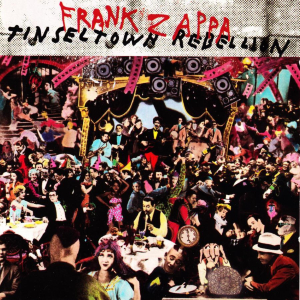
Frank Zappa 29: Tinseltown Rebellion

Another double album, mostly live, Tinseltown Rebellion brings Zappa into the ‘80s with a curious mix of new songs, reworked catalog favorites and you-had-to-be-there onstage tomfoolery. Like most of what follows, the good is mixed in with, and sometimes dominated by, the puerile.

First there’s “Fine Girl”, designed as a possible single for radio play, any chances eradicated by the sexist, borderline racist lyrics. But it’s immediately overshadowed by “Easy Meat”, which is two separate performances sandwiching an orchestral snippet from 1975. The lyrics aren’t much, but the neo-classical instrumental sections (independent of the orchestral snippet) are majestic. “For The Young Sophisticate” is a snappy shuffle, with even a mildly positive message about true love.

It’s a big leap back to the early days of the original Mothers, with straight cops on “Love Of My Life” (featuring some impossibly shrill falsetto vocals) and “Ain’t Got No Heart”. The ubiquitous reggae rhythm returns on a track copyrighted as “Panty Rap”, over which Frank pleads for offerings from the crowd, enticing them with tales of previous entrants, before introducing the band and plowing through “Tell Me You Love Me”. Then we get “Now You See It—Now You Don’t”, five minutes of soloing over another reggae beat, eventually revealed as “King Kong”.

Having not realized the futility of such an exercise on Roxy & Elsewhere, “Dance Contest” presents that particular show’s prospective contestants. Besides wasting space, it presents the average Zappa audience member as a drunken louts, and that’s putting it kindly. “The Blue Light” is a diatribe against empty consumerism, alternately delivered via his lounge croon and his nasal cartoon voice. The title track does much the same, but’s a much more successful rant, this time about punk rock and the emerging new wave genre (mostly because they sold more records than he did). “Pick Me I’m Clean” is another in-joke about groupies, but at least it’s got a solid solo, and Ike Willis is still one of Zappa’s best singers.

Ike also sings “Bamboozled By Love”, a great title with a nasty “Willie The Pimp”-style riff, but ordinary lyrics. Then, because he had a band that could actually play it, “Brown Shoes Don’t Make It”, nearly note for note, line for line. “Peaches III” (so titled because it’s the third released version of “Peaches En Regalia”) isn’t as bizarre as Frank describes in the liner notes, but it does provide a wacky end-of-show goodbye for the album.

Tinseltown Rebellion does hold together as a unit, despite the fact that it was culled from recordings spanning two years, with only some of the same players. (Gearheads take note: Steve Vai makes his debut on this album.) Take out some of the remakes, and the two audience participation segments, and it might be even tighter.

Frank Zappa Tinseltown Rebellion (1981)—3