Showing posts with label doors. Show all posts

Friday, February 12, 2021

Doors 11: Box Set

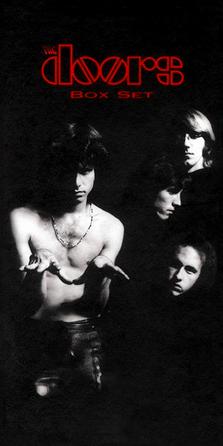
Seeing as most bands were commemorated with box sets by the end of the century, it made sense that the Doors would get their own as well. With six studio albums to cherry-pick, they did their fans a solid by concentrating on rare material for three of the four discs in the imaginatively titled Box Set.

The first and third discs focus on a sprawling pile of live recordings and studio outtakes, sequenced without regard to chronology or source. Seeing as the thrust of the set was to highlight Jim Morrison’s “genius” and “fearlessness”, such a random approach makes sense. The set begins, appropriately, with “Five To One” from the infamous Miami concert that got Jim arrested for, among other things, calling the audience a bunch of “f—king idiots”. This is followed by a “jazz” version of “Queen Of The Highway” for an exercise in extremes, and from there it’s a chaotic bounce back and forth through a six-year stretch. Their earliest demos, before Robbie Krieger joined, are scattered throughout, are notable for Ray Manzarek playing piano a la Ramsey Lewis on songs that would eventually become band staples. (“Go Insane” is the exception, and would have been in popular rotation on the Dr. Demento show.)

The real draw on these discs would be the variety of unreleased songs and sketches, from both stage and studio, most frankly better off unreleased in the first place. For example, “Rock Is Dead” is a 16-minute edit of an hour-long jam the boys put on tape after getting smashed at a Mexican restaurant near the studio. “I Will Never Be Untrue” is something of an Otis Redding homage, Robbie doing his best Steve Cropper imitation. “Black Train Song” finds them wandering through “People Get Ready”, “Mystery Train”, and “Crossroads” via a tune called “Away In India” while teenyboppers scream for “Hello I Love You”. Most surprising to these ears is their arrangement of “Albinoni’s Adagio In G Minor”, supposedly with actual strings overdubbed on the spot.

Just to keep it confusing, the third disc begins with “Hello To The Cities”, which combines an Ed Sullivan introduction with Jim purposely greeting an audience with shout-outs to other cites than the one they’re in. “Break On Through” from the Isle of Wight in 1970—one of their last performances—is marred by Ray’s doubling of Jim’s vocal, then we go to Vancouver for sloppy versions of “Rock Me” and “Money” with Albert King sitting in. “Someday Soon” was designed to deflate blissful hippies with a reminder of their mortality, just as “Mental Floss” and the brief “Adolph Hitler” joke (“still alive… I slept with her last night”) are supposed to be provocative. “Orange County Suite” is nice, even though it combines a tape of Jim singing his poetry with modern backing from the other three. This follows “Tightrope Ride”, the only selection from the Jim-less portion of the catalog.

In between, a disc of recordings from the band’s stand at the Felt Forum in early 1970 presents something of a companion to the Absolutely Live album. A few songs from the then-new Morrison Hotel give way to a full performance of “Celebration Of The Lizard”, then a blues detour takes us through “Crawling King Snake” a year before its appearance on an album, ill-advised takes on “Money” and “Gloria”, plus a rambling extemporization credited as “Poontang Blues/Build Me A Woman/Sunday Trucker”. An 18-minute extension on “The End” closes the disc. Even when Jim’s pitch wavers, and it does, the band is tight throughout.

The fourth disc, of “band favorites”, offers five tracks chosen by each of the three surviving members. Obvious tracks like “Light My Fire” and “Riders On The Storm” sit alongside such deep cuts as “Shaman’s Blues” and “Yes, The River Knows”. It’s fairly evenly split between the six albums, though Strange Days is represented the most.

Box Set wouldn’t be the only doorstop unleashed to commemorate the band, of course. Two years later, The Complete Studio Recordings presented the first six albums, supported by none of the B-sides or post-Jim releases, but did include a disc called Essential Rarities culled from the Box Set. (This was released as a standalone disc a year after that, touting the rare track “Woman Is A Devil”, which was merely an excerpt from “Rock Is Dead”.) 2006’s Perception served up remastered versions as well as surround mixes of each of the same albums with their 40th anniversary bonus tracks; five years later, A Collection consisted of just those albums in replica sleeves, with no bonus tracks. And in 2025, the standard six were repackaged again, this time in Atmos and hi-res mixes on six Blu-ray discs as Immersed. (Of more interest to connoisseurs would be the ongoing Bright Midnight series of official bootlegs, which we’re not even to attempt to catalog.)

The Doors Box Set (1997)—3
Tuesday, May 22, 2018

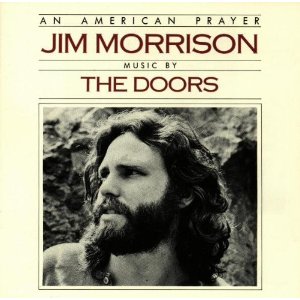
Doors 10: An American Prayer

Jim Morrison always fancied himself a poet, as should be obvious from any of the spoken passages on any Doors album, or the gatefold of Waiting For The Sun. During a few lulls in the band’s schedule, he would record recitations of some of his scribblings sans musical accompaniment, with the idea that an album could be made from them.

So it was that seven years after he (supposedly) shuffled off his drunken coil, the other three members of the band got together to finish that album. Credited to Jim Morrison alone (with “music by The Doors”), An American Prayer is a seamless suite over two album sides of poetry readings, concert clips, old Doors music and newly recorded Doors music. There is a certain cinematic sweep to it—Jim also fancying himself a filmmaker—so the imagery is vivid.

However, as a Doors album it fails, mostly because the music is independent of the words. We’re not about to claim any literary authority to judge the poetry, but suffice it to say high school kids will love the four-letter words, the repeated use of a slang term most women would kill you for uttering, and the “lament” for a part of his own anatomy. Still, for the most part his delivery is calm and cool, only screaming during the handful of concert excerpts. Snippets from “Peace Frog”, “Blue Sunday”, and “The WASP” are used to counterpoint the appropriate recitations; a one-sided telephone conversation about killing a hitchhiker is underscored by “Riders On The Storm”. For some reason, a live version of “Roadhouse Blues” begins side two, marred by his extended scat in the middle and ending with some dialogue baiting a fan over astrology. The new music jars with the old, sounding too contemporary to 1978, and not enough like, well, the Doors. At least the package included a nice booklet of writings and drawings.

Oliver Stone’s version of the band’s history leaned heavily on Jim’s poetry, which undoubtedly led to the album being reissued on CD, with extra tracks. “Babylon Fading” is accompanied by the same Elektra sound effects record used at the end of “Revolution 9”, though “Bird Of Prey” is a brief a cappella couplet with some musical promise. An “extended version” of “Ghost Song” closes the set to focus on the band’s contribution, and underscore why some of us don’t miss disco. Now that “Roadhouse Blues” is available on any number of Doors compilations, this album is less necessary than ever.

Jim Morrison/The Doors An American Prayer (1978)—2
1995 CD reissue: same as 1978, plus 3 extra tracks

Tuesday, January 23, 2018

Doors 9: Weird Scenes Inside The Gold Mine

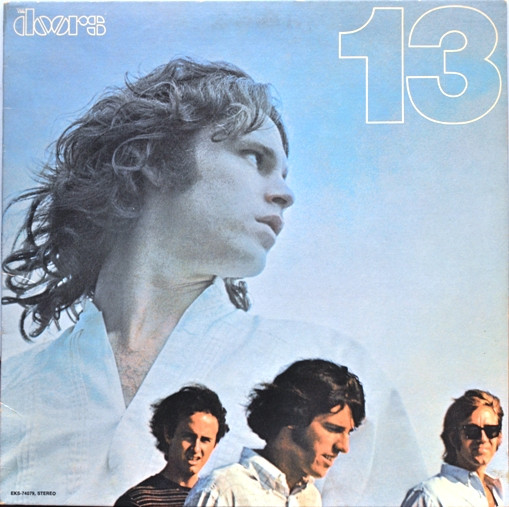
Once the Doors were deemed finished, the powers that be valiantly attempted to preserve Jim Morrison’s legacy in rock. Weird Scenes Inside The Gold Mine presents a sprawling overview of the band’s work over two LPs, crammed to the gills with their biggest radio hits and album tracks. It nicely avoided anything already on 1970’s 13; while an obvious cash-in, that remained the “hit single” companion compilation, particularly if you wanted “Light My Fire”, “Touch Me”, “Hello I Love You”, and so forth without having to buy five albums.

Weird Scenes represents each of the six studio albums, nearly equally, with the shortest shrift given to The Soft Parade. While that title track would have been welcome here, it’s place is perhaps taken by two then-unalbumized B-sides: “Who Scared You” from the Soft Parade era, and “You Need Meat (Don’t Go No Further)”, the flip of “Love Her Madly” featuring the imitable vocal stylings of Ray Manzarek.

Outside 1973’s The Best Of The Doors, which was released exclusively to meet the fleeting demand for quadrophonic sound, Weird Scenes and 13 sufficed. Then two things happened: “The End” was used in Apocalypse Now, and the salacious Morrison biography No One Here Gets Out Alive kindled interest in the band among a generation who missed out on them the first time. Money was to be made, and confusion be damned.

1980’s Greatest Hits supplanted 13 by including two songs from L.A. Woman, but lost points for “Not To Touch The Earth” (the only explicable reason being the “I am the lizard king” lyric). 1985’s Classics went more for album tracks, but the same year’s double LP The Best Of The Doors retread both that and Greatest Hits. The ‘90s brought more interest via Oliver Stone’s movie, the soundtrack of which leaned on the idea of Jim as a poet. Greatest Hits was also expanded slightly for CD with a new cover. The new century started the wave all over again, with another sequence deemed The Best Of The Doors, and two different sets called The Very Best Of The Doors, none of which should be confused with Legacy: The Absolute Best, The Future Starts Here: The Essential Doors Hits, or The Platinum Collection.

Along with the same handful of songs included for the ninth or tenth time, some kind of rarity was always stuck in the middle of these sets to entice repeat consumers. The 2010 documentary When You’re Strange, for example, attempted to undo the myths perpetuated by Oliver Stone, and its companion CD mixed hits, poetry readings, and some live versions. It should also be no surprise that for all but three of these albums, Jim was the only guy depicted on the front cover. And only Singles, available as 20 replica 45s or a two-CD set (or a deluxe version containing a Blu-ray with the 1973 quad Best Of), touched on the music the other three made without him.

Each new set only underscored how solid Weird Scenes was, and remained. At 99 minutes, it was too long for a single CD, but the emergence of Record Store Day as a marketing ploy led to its reissue on vinyl in 2014, as well as a digital version and double-disc set, using the newest remasters and restored vocals. If you must have any, pick that up and 13.

The Doors 13 (1970)—4
The Doors
Weird Scenes Inside The Gold Mine (1972)—4

Friday, September 22, 2017

Doors 8: Other Voices and Full Circle

Jim Morrison was dead: to begin with. There is no doubt whatsoever about that. He wasn’t in hiding, he wasn’t exploring his poetry, and he wasn’t breathing due to the combination of alcohol, heroin, and bathwater in his system. Jim Morrison was as dead as a door-nail.

The band still wanted to play, of course. They’d been working on new material already, having learned to fend for themselves without their lead singer around to drop his pearls of imagery. The last couple of Doors albums proved that, as a musical unit, they were tight and certainly capable. Whether anyone would care about them without the handsome guy in the leather pants out front was another question.

Other bands have rebounded successfully when they had to replace their singer, and the Doors kept it simple by splitting the task between keyboard player Ray Manzarek, who already showed his weakness on Absolutely Live, and guitarist Robbie Krieger, whose best quality is that he didn’t sound like Ray. Both guys couldn’t help but utter echoes of Jim’s swagger and laid-back delivery. Beyond that, all they needed to do was combine their instruments into enough catchy tracks to fill album sides, live shows, and hopefully, their bank accounts.

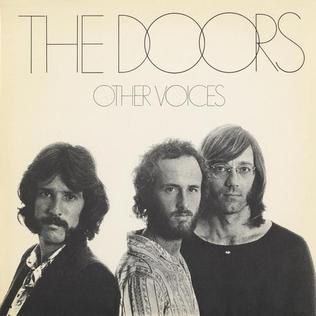
With its stark white cover and band portrait, Other Voices is a bold if indisputable claim, but the album works best when they just play. After a brief psychedelic whirl, “In The Eye Of The Sun” nails a nice swampy groove. “Ships w/Sails” is a sustainable Latin jam (unlike “Hang On To Your Life”), and “Tightrope Ride” is a direct descendant of “L.A. Woman”. “Down On The Farm” sounds the least like the Doors, but it gets distracted trying to change direction. Even the over-long “Wandering Musician” has a great hook for a slow fade. Yet, whatever one’s opinion of Jim’s “poetry”, the guys on their own were not impressive lyricists; “Variety Is The Spice Of Life” and “I’m Horny, I’m Stoned” aren’t about to make it into Bartlett’s Familiar Quotations anytime soon.

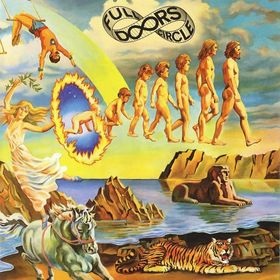
A tour behind the album with a bass player and a second guitarist convinced them they could keep going, and they did. While Other Voices contained songs that Jim could arguably have sung himself, much of Full Circle considers what they might have sounded like had they never met the guy. (Really, would he have ever exhorted a crowd to “Get Up And Dance”?) The ensemble was expanded in the studio, utilizing a lot more percussion, funky backup singers, and Charles Lloyd on sax and flute. His contribution turns “Verdilac” into near-fusion; it’s just too bad there are lyrics. “Good Rockin’ Tonight” is tackled fairly straight, except for the cacophonous piano pounding and Ray’s ill-advised growling at the end. There’s even less excuse for “The Mosquito”, a bipolar track with some great jamming but an embarrassing lyrical hook (“no me moleste mosquito”, and we’re not kidding) that helped the song chart in Spanish-speaking countries. “The Peking King And The New York Queen” tries to hard to be beat poetry, though the combination of the vocals and female additions seems to predict at least one Zappa album.

Both albums remained out of print for a few decades, and were ignored by the organization once Jim’s mythology took over. But in this century, after smaller labels did okay with semi-legitimate reissues, the band made it available for streaming. Then an official re-release paired the albums in a two-CD set, with one bonus track: the 1972 B-side “Treetrunk”. Left off Full Circle because it was “too commercial”, it’s probably the best song in the bunch.

The Doors Other Voices (1971)—3
The Doors
Full Circle (1972)—2½

Friday, March 31, 2017

Doors 7: L.A. Woman

It must have been incredibly frustrating for the members of the Doors who weren’t Jim Morrison and wanted so desperately to be a popular working band. Their erratic frontman was still the focal point, but without his so-called poetry, compounded by the risk of imprisonment over indecency charges, they had limited commercial potential.

They were united, however, in not letting their record company dictate their output, especially after the release of 13, a fairly obvious collection of hit singles. So they continued to hone their craft, building on the simpler collaboration that made Morrison Hotel a step forward. And when they got stuck for ideas, they leaned on the blues. That itself wasn’t such as stretch, as their first album featured “Back Door Man”. The blues are easy to play but tough to master; having only three chords forces the players to be creative with them, and with (usually) two repeated lines before a third response, the lyricist must make the most of the limited space. On L.A. Woman, the best explorations succeed, and the others plod.

A blast of organ-driven funk opens “The Changeling”, with Jim’s grunts and shouts complementing the scowling, bearded face on the album cover. It’s a stark contrast to the straight commercial rock of “Love Her Madly”, one of their better singles, but then it’s back to the generic blues of “Been Down So Long” and “Cars Hiss By My Window”; at least the latter has better lyrics, but the Stones gave up this kind of wandering by their sixth album. The title track, with its multiple parts and shifting speeds, still evokes a feeling of speeding down brightly lit highways at night.

“L’America” manages to approach some of the actual poetic experiments of earlier albums, but still manages to throw in a naughty albeit clever play on words. A wonderful surprise is “Hyacinth House”, with a shimmering guitar, Jim’s inspired delivery, and Hammond organ using the same stops Richard Wright found in Pink Floyd. “Crawling King Snake” is proof that they only had so much in the hopper, but “The WASP (Texas Radio And The Big Beat)” is an excellent meld of his poetry and their interpretation of it. They almost sound like a unit. The best development of the blues format and what the band could actually do comes forth in “Riders On The Storm”, also notable for being one of the few songs that uses rain as a prominent sound effect, yet doesn’t sound like a toilet running.

Knowing what we know now, L.A. Woman becomes a bigger thing than it was, though some have suggested that many of the insiders suspected it would be the band’s last album. As it is, it wasn’t a bad way to go out. The three most-recognized tracks from the album should be enough to entice anyone to buy it, and the added attraction of “Hyacinth House” and “The WASP” will balance out any boredom.

Because people who should don’t pay close enough attention to these things, the album has been reissued twice as a so-called 40th Anniversary Edition: first in 2007 with the other albums, and then again five years later to belatedly celebrate the album itself. The earlier expansion added a previously released, posthumously overdubbed outtake and contemporary B-side, while the later one focused on alternate versions of most of the tracks, plus two other outtakes. Nine years after that, these were joined by yet another expansion, this time adding a previously released demo of “Hyacinth House” and an early version of “Riders Of The Storm” to the album on one disc, and filling up two more discs with previously unreleased alternates and outtakes, making it the fourth copy of L.A. Woman completists must own.

The Doors L.A. Woman (1971)—3
2007 40th Anniversary Edition: same as 1971, plus 2 extra tracks
2012 40th Anniversary Edition: same as 1971, plus 9 extra tracks
2021 50th Anniversary Edition: same as 1971, plus 19 extra tracks

Tuesday, November 8, 2016

Doors 6: Absolutely Live

Having righted the crystal ship somewhat, several shows on the Doors’ tour supporting Morrison Hotel were recorded for potential release, and while no single show emerged as a definitive document, most of a couple of New York appearances were added to some other performances for release as Absolutely Live.

Several tracks made their album debut here, but anyone looking for a lost classic will be disappointed, unless they think everything Jim spouted was poetry. After a lengthy harangue by an emcee who today sounds like a pissed-off Bill Murray, the band kicks into the Bo Diddley standard “Who Do You Love”, which Jim sticks to for the most part, drifting off into occasional “verse”. Then there’s a peculiar medley of “Alabama Song”, “Back Door Man” and “Five To One”, with an interlude called “Love Hides”, which Jim recites while the band vamps. “Build Me A Woman” isn’t much more than a blues, with racy lyrics that probably shouldn’t have made it to the master considering all the legal trouble Jim was already having.

As unreliable as Jim was supposed to be during this time, he seems to be able to get the job done, taking hold of “When The Music’s Over” and only telling the rowdy crowd to “shut up!” once, elaborating on the tense situation with a few in-jokes after they finish the tune. Unfortunately, Ray gets to sing “Close To You”, a Willie Dixon tune that sounds like a Morrison parody. It’s not a good setup for “Universal Mind”, an otherwise unreleased song that pairs some of Jim’s less inspired couplets with a bolero section that was probably sitting around since the first album. The “petition the Lord with prayer” segment of “The Soft Parade” leads not into that song, but “Dead Cats, Dead Rats”, a recitation over the vamp for “Break On Through”, which continues as planned, but has to endure Ray’s backup vocals. (Maybe that’s why it was subtitled “#2” on the vinyl?)

Arguably the real draw for this album is side four, which is mostly devoted to a performance of the notoriously unrealized “Celebration Of The Lizard” suite. Its limitations are apparent; unlike more successful epics like “The End” and “When The Music’s Over”, here the band tried to create music to match Jim’s words, but the sections don’t sync up. (“Not To Touch The Earth” was always annoying, but “Names Of The Kingdom” would be acceptable were it not too derived from “Scarborough Fair”). A long “Soul Kitchen” caps the set, but not without Ray adding his two cents.

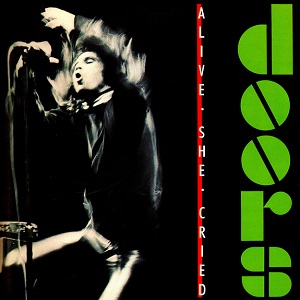
While the band is tight and well-prepared to keep up with their singer’s whims, much of this album’s legacy rests on the fact that they hated the cover, which used an older picture of Jim while pushing the other guys into the background. The album stayed out of print in the digital era until Oliver Stone’s film increased interest in the band. One result was a new double-disc, In Concert, which put most of Absolutely Live on one disc, relegating “Close To You” to the second, along with a few other live tracks that had snuck out over the previous decade and the entirety of 1983’s Alive, She Cried. This particular hodgepodge gathered more material from the same era, along with such oddities as a salacious soundcheck version of Them’s “Gloria”, “Little Red Rooster” with John Sebastian blowing harp, and an early recitation of “The WASP” from a Danish TV show. “Light My Fire” is pretty hot musically, but for Jim’s “Graveyard Poem” after the guitar solo; he also manages to work “Horse Latitudes” into “Moonlight Drive”.

Oddly enough, In Concert eventually went out of print, though Absolutely Live was re-reissued as a standalone CD with completely new cover artwork that still depicted just Jim. Meanwhile, the Doors organization began issuing complete concerts under the Bright Midnight Archives umbrella, so anybody that really has to have these shows can snap them up as fast as their credit cards can swipe.

The Doors Absolutely Live (1970)—3
The Doors
Alive, She Cried (1983)—3
The Doors
In Concert (1991)—3

Tuesday, June 28, 2016

Doors 5: Morrison Hotel

After the relative mess that was The Soft Parade, The Doors remembered what it was like to rock, and the next album came together comparatively quickly. Their mixed feelings about focusing on the most charismatic yet least reliable member of the band is confused further by the title Morrison Hotel used for both side two as well as the whole package. Side one is called “Hard Rock Café”, but such notations seem arbitrary.

Still, “Roadhouse Blues” is a far cry from the pop horns of the last album, and has inspired generations of kids to wake up in the morning and get themselves beer. “Waiting For The Sun” is the delayed title song of that album, and worth the wait. “You Make Me Real” has power, but it’s not very convincing, and it doesn’t help that we hear Jim singing “roll baby roll” over one of the solos. It’s out of the way quickly enough for “Peace Frog”, a rare case where one of Jim’s poems is adapted to a song successfully. This one’s always popular on New Haven classic rock stations, which usually let the song go right into “Blue Sunday”, something of a tender ode. “Ship Of Fools” revives some of the jamming that defined the first album, and the boys can be credited for kicking off this particular song title trend.

The nautical theme continues, somewhat more literally, on “Land Ho!” We’re not the only ones to call this song jaunty, and Jim almost sounds happy on this track. “The Spy”, while a little slow, is also worthy of the first album, musically anyway, and much bluesier. “Queen Of The Highway” provides a bit of a departure, being unconventionally constructed, while “Indian Summer” is apparently a bona fide outtake from that first album, and fits right in. However, “Maggie M’Gill” isn’t much more than a rewrite of “Back Door Man”, and just kinda peters out.

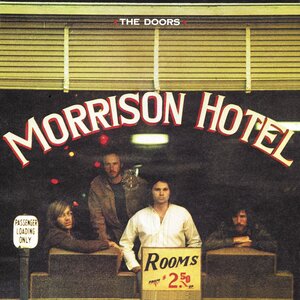
Those classic rock stations haven’t made it any easier, but Morrison Hotel is easily the band’s best work since that debut. Maybe they just had to find the best place to put the so-called recycled material, and a good thing too, because while the 40th Anniversary Edition of the album serves up a lot of extra music, over a half hour of that is devoted to working on “Roadhouse Blues”. (Much more interesting are the lounge jazz takes on “The Spy” and “Queen Of The Highway”; another hour of discarded album takes were included on the bonus disc of the 50th Anniversary Deluxe Edition. Rhino also felt compelled to add the vinyl to that package and jack up the price.) Clearly, there wasn’t a lot in the tank, but they got pretty far on it.

The Doors Morrison Hotel (1970)—3½
2007 40th Anniversary Edition: same as 1970, plus 10 extra tracks
2020 50th Anniversary Deluxe Edition: same as 1970, plus 19 extra tracks

Tuesday, February 23, 2016

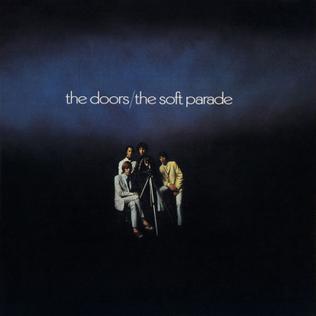
Doors 4: The Soft Parade

The Doors’ fourth album is generally considered to be their worst, but it’s not awful. The Soft Parade has its moments, but it’s also a victim of what passed for accepted production styles of the time.

With an opening blast of brass not so much Stax as the type of thing used by the Monkees or Gary Puckett & The Union Gap, “Tell All The People” puts Jim Morrison in the role of a benevolent prophet, leading the loving multitudes to a better world, which sounds less convincing than it reads. “Touch Me” is the song everybody knows, a single released a few months before the album was completed. We daresay the pop approach works here, despite the bad grammar, maybe because the sax solo is dirty enough to balance out. (It’s also featured in a clip from the Smothers Brothers show aired countless times since then, featuring Jim blowing his cue but recovering, Ray Manzarek “conducting” the horns and strings, and Robbie Kreiger’s glorious black eye.) On “Shaman’s Blues” the band finally sounds like themselves, a rolling waltz with all the classic elements of the previous albums. But then there’s the curious pair of underdeveloped tracks that finish the side. “Do It” begs us to listen to the children and please him all night, and “Easy Ride” can’t decide if it’s poetry or blues.

“Wild Child” gets things back on track with another tribal-based piece, though it ends awfully abruptly. “Running Blue” is a mess; a promising intro chant turns into another horn-heavy verse before a square dance chorus “sung” by Robbie. If this is what inspired Blood, Sweat & Tears, then the blame can be squarely placed. “Wishful Sinful” is a vast improvement, meshing melody, a chamber-pop arrangement and a convincing vocal, but it’s not until the long title track that we get an “epic” along the lines of “The End” or “When The Music’s Over”. Jim first takes on the role of a preacher, asks for sanctuary over classical keyboards, goes to a go-go for a psychedelic parody, skips through a nursery, and finally arrives at the best part of the trip. The main body of the track is both a tight jam and the good kind of jazz, and Jim’s layered vocals are very precise. Though we can’t figure out why anybody would want to whip a horse’s eyes.

As unfocused as The Soft Parade is, those pieces fit together to keep it from being an embarrassment. (We can’t say the same for the gatefold portrait, unfortunately.) The album’s 40th Anniversary Edition gives even more examples of their confusion, in the plodding B-side “Who Scared You”, two versions of “Whisky, Mystics And Men” (both using what sounds like an accordion) and the interminable “Push Push” jam, which is essentially a ripoff of a song by Joe Cuba, “the father of Latin boogaloo”.

The inevitable 50th Anniversary Deluxe Edition presented a remastered version of the album with “Who Scared You” tacked on at the end. The survivors took the bold move of presenting it on its own disc in a “Doors only” mix, with none of the strings or horns. Three tracks include parts recorded by Robbie in this century, but thankfully those are in addition to the stripped-down versions, and not instead. Folks who think Ray Manzarek was a woefully unappreciated blues belter (yes, we know, you can put those hands down now) will likely drool over his takes on “Roadhouse Blues”, “You Need Meat”, and “I’m Your Doctor”, all featuring new parts from the bass player in Stone Temple Pilots. Along with stabs at the “Seminary School” intro for the title track and the “I Am Troubled” prelude added to the 2007 mix, over an hour of the third disc is devoted to the oft-bootlegged epic ramble “Rock Is Dead”, wherein Jim teeters between self-parody and blues clichés while the band jams on the same, with the occasional sound of a Mellotron to add gravitas. There are a few repeated motifs that might have led to something more developed, but here it’s mostly tedious.

The Doors The Soft Parade (1969)—3
2007 40th Anniversary Edition: same as 1969, plus 6 extra tracks
2019 50th Anniversary Deluxe Edition: same as 1969, plus 16 extra tracks

Tuesday, October 27, 2015

Doors 3: Waiting For The Sun

Most of the music on the first two Doors albums had been in the band’s repertoire for a couple of years, so when it came time to record their third, they were tasked with coming up with new material. Consequently, Waiting For The Sun is stuck between pop and the experimental, with varying results.

They did save one ringer from the old days, and despite its similarity to any number of Kinks songs, “Hello I Love You” was an obvious hit. “Love Street” is a lazy, poppy stroll through Laurel Canyon, and something of a red herring for what comes next. Having included an eleven-minute epic on each of the previous albums, Jim Morrison’s next feat was to be the sidelong “Celebration Of The Lizard” suite of poems, as illustrated by the libretto on the inner gatefold. At the time, however, only the section called “Not To Touch The Earth” was completed for the album. The track, which wasn’t worth the trouble, fights against the loopy slide and buzzing organ up until the final declaration, “I am the lizard king”, which is why people talk about it today. “Summer’s Almost Gone” restores the pop sensibility, having been written years before and probably left aside due to its similarity to “The Crystal Ship”. “Wintertime Love” sounds really out of place, and should have been arranged slower and without a harpsichord. While the big epic didn’t happen, “The Unknown Soldier” is a mostly successful attempt at a sound picture, though you’d think they could’ve found a better sound to approximate a gunshot.

Robbie Krieger steps up with a flamenco flourish to begin “Spanish Caravan”, and the rest of the song follows a respectful pace, with a nice fuzzy inversion of the opening theme. “My Wild Love” is a chant destined to try anybody’s patience, making “We Could Be So Good Together” seem an improvement. (Maybe nobody told Robbie his fuzz tone sounded like a kazoo.) “Yes, The River Knows” begins like a lounge ballad, but Jim actually puts some emotion into it. “Five To One” redeems the side, and the album proper; here the dynamics of their lengthy epics are reduced to under five minutes, and shows a respect for economy. Plus, it’s loaded with some of Jim’s better one-liners.

Waiting For The Sun doesn’t have the legs of its predecessors, but they weren’t completely running on fumes yet. (The title track would have to wait to be hatched.) As a hint at what might have been, the expanded CD includes some early stabs at “Not To Touch The Earth”, and two tracks siphoned from various compilations. “Albinoni’s Adagio In G Minor” is a surprisingly faithful interpretation of the baroque piece, while a “work in progress” mix of “Celebration Of The Lizard” runs for 17 minutes, and gives an idea of the music the band concocted for the poems. If anything, Jim’s delivery illustrates why he’s either adored or despised. None of these were included on the so-called 50th Anniversary Deluxe Edition, which merely added a second disc of nine of the album’s tracks in rough mix state, plus five songs from a 1968 Copenhagen concert in questionable sound quality. The early version of “The WASP (Texas Radio And The Big Beat)” is historically interesting, however. (The complete show was issued on its own in 2025.)

The Doors Waiting For The Sun (1968)—3
2007 40th Anniversary Edition: same as 1968, plus 5 extra tracks
2018 50th Anniversary Deluxe Edition: same as 1968, plus 14 extra tracks

Tuesday, June 23, 2015

Doors 2: Strange Days

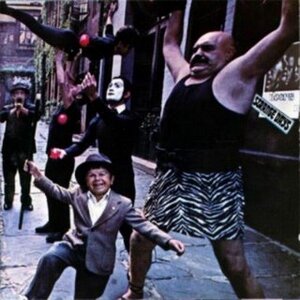
Less than nine months after the release of their debut, which still had legs, the second Doors album appeared. Strange Days follows the same formula as the first album, being instrumentally similar, and concluding with another lengthy, show-stopping epic. (The cover did try to make a departure, using a motley collection of street performers and freaks cavorting in an alley, while a tiny poster of the band with the album title is tucked in on the edge. Clever.)

The title track has enough “strangeness” to make it an effective and disorienting opener, setting a tone of darkness for the next 35 minutes. Robbie is credited with writing “You’re Lost Little Girl”, built as it is on his intricate guitar parts, and nothing special in the way of lyrics. “Love Me Two Times” is also credited to Robbie, as he likely came up with the riff; again, the lyrics aren’t much, but there’s a harpsichord in place of the organ for variety. “Unhappy Girl” is dominated by loopy slide and backwards effects, over before you know it. Jim was very proud of “Horse Latitudes”, a frightening piece of poetry backed by discordant sounds of the band, making the return of the loopy slide on “Moonlight Drive” something of a comfort.

“People Are Strange” is another catchy single despite its depressing message, and helped by the tricky ending. The insistent “My Eyes Have Seen You” is contradictorily followed by the moodier “I Can’t See Your Face In My Mind”, both fairly slight in comparison to “When The Music’s Over”. While not as pointedly provocative as “The End”, it still features many oft-repeated Morrison couplets and good dynamic contributions from the band, making it as much of a group performance as a showcase for Jim’s prose. And assuming you can stand the sound of the organ, a better song.

As with most sophomore albums following a classic debut, Strange Days had to catch up to a lot, but there are and were enough songs in their repertoire to keep it consistent. They were still able to concentrate on the music without the distractions that would soon take over their celebrity.

Even today the album lives in the shadow of its older brother. Much was made of the 50th Anniversary Deluxe Edition upon its release, even though all it contained was the original stereo mix on one CD and the original mono mix on the other. The alternate takes of “People Are Strange” and “Love Me Two Times”, which were added to the 40th Anniversary reissue, were not included.

The Doors Strange Days (1967)—3½
2007 40th Anniversary Edition: same as 1967, plus 2 extra tracks
2017 50th Anniversary Edition: same as 1967, plus 10 extra tracks

Tuesday, March 24, 2015

Doors 1: The Doors

Depending on whom you ask, The Doors were either one of the most unique bands of the second half of the ‘60s or an overrated band whose inexplicable posthumous success warped reality to support the first half of the sentence. How you feel about it will be dictated by whether you consider Jim Morrison to be a true poet, visionary and modern-day shaman or a drunken blowhard whose “poetry” was about as deep as your bathtub, and if you’re not bothered by Ray Manzarek seemingly never changing the tone settings on his organ.

We could go on, and we might, but whatever your opinion, that’s the sound, and any deep bass croon accompanied by staccato organ will invite comparisons to The Doors. It helps if the singer is good-looking, as Jim undoubtedly was at the time of the first album. Created after a solid year of gigging in the clubs, the songs on The Doors, for good or bad, present the band in if not its best then its purest light. A few hit singles helped, too.

So many of the songs have become radio staples that it’s hard to believe something like “Break On Through (To The Other Side)” was a flop when it debuted. All these years later the band’s riding of the “I Wish You Would” riff for two and a half minutes is part of the national fabric. “Soul Kitchen” and “Twentieth Century Fox” are pretty much the same song, though the latter gets points for the title and guitar solo. In between is “The Crystal Ship”, one of Jim’s better attempts at singing a melody on an album full of shouting over a small handful of notes. Ray’s piano nicely overpowers the organ here. “Alabama Song (Whisky Bar)” transports us to Oktoberfest before the big one, the inescapable “Light My Fire”. (Meanwhile, it’s interesting how nobody ever seems to complain about drummer John Densmore or guitarist Robbie Krieger. While we’re at it, it’s not all Ray’s left hand on bass; an actual Fender is played here and there by Larry Knechtel, and kudos to him, as ever.)

Side two seems slight at first. “Back Door Man” puts a twist on standard blues with a suggestive lyric that still makes junior high school boys snicker. “I Looked At You” is the one track that never gets played on the radio, because it’s not very good, and “End Of The Night” leans on lots of vibrato to convey spookiness. “Take It As It Comes” isn’t Jim’s best use of poetry, but he was saving that for “The End”. Possibly the most ridiculed song in their catalog, it’s still an excellent example of the band’s dynamic capabilities, and a thorn in the side of labelmate Arthur Lee. Once you get over the “shock” of the Oedipal section, feel free to read meaning into the imagery of the blue bus, the west being the best, riding the snake to the lake and so forth. Then you can wonder whether being the son of one of the highest ranking officials in the U.S. Navy had any bearing on Jim’s poetry. (Likely not.)

One of this writer’s dear friends served a tour of duty in Vietnam, and says that unlike what various movies would have you believe, nobody in the jungle liked the Doors. Nobody. So he really didn’t get how the band got as big as they did ten to fifteen years after the fact, and would likely agree that the first album has everything you’ll love and hate about the band. The version of The Doors you can buy (or stream) today not only adds three outtakes of two songs that would eventually make their way to future albums, but sports uncensored versions of two songs. The bridge of “Break On Through” no longer repeats “she get” but “she gets high”, and various F-bombs have been restored to “The End”. Hooray. (The original edits were used for the album’s 50th Anniversary Edition, which included both the stereo and mono mixes of the album, plus a disc containing live versions of eight of the album’s songs from a performance at San Francisco’s Matrix club from 1967, in better quality than the official bootleg version of the show released ten years earlier.)

The Doors The Doors (1967)—4
2007 40th Anniversary Edition: same as 1967, plus 3 extra tracks
2017 50th Anniversary Edition: same as 1967, plus 19 extra tracks