Showing posts with label 1984. Show all posts

Friday, February 6, 2026

Style Council 1: My Ever Changing Moods

Anyone who’d listened to the final recordings of the Jam would have noticed that Paul Weller was turning sharply away from the guitar, as well as their punk roots. Once he broke up that band he decided to pursue those passions further, and inaugurated a collective dubbed the Style Council. From here on his main collaborator would be keyboard whiz Mick Talbot, who’d also spent time in mod revival bands (he’d also played piano on the cover of “Heatwave” that closed Setting Sons). Together they would craft very un-mod music, leaning heavily on soul and jazz, using real drums but other synthesized instruments, adding guest players more often than not. Weller even played bass from time to time. Their image was very “European”, flirting with the New Romantic movement both in music and, in Weller’s case, questionable hair styles. Politics often reigned the message in between the beats—just as in The Jam—but for the most part, it was all about getting lost in making music.

Tracks from their first three UK singles (and 12-inches) were selected for the Introducing The Style Council EP, and make for a slightly schizophrenic listen, particularly if you hadn’t heard each single in real time. Each side begins with a nearly seven-minute mix of the brooding “Long Hot Summer”, neither exactly made for dancing. “Headstart For Happiness” is a snappy strum, stripped down to not much more than a demo for guitar and organ. “Speak Like A Child” was their breezy, horn-laden first single, with vocals from protégé Tracie Young, who Jam fans knew from “Beat Surrender”. “The Paris Match” is a truly hidden gem, a soulful reverie for piano and a nice backing, complete with a coda sung in French, while “Mick’s Up” is an instrumental showcase for the other guy over party noises. A lengthy club mix of “Money-Go-Round” updates “Precious” with an anti-Thatcher rant, while liner notes by the mysterious and shortly ubiquitous “Cappuccino Kid” attempted to provide context, or not.

When the full-length Café Bleu album was released in the UK, it further confounded expectations, with side one nearly full of instrumentals and Weller’s voice only heard on two of seven tracks, and somebody else rapping to start side two. Per tradition, the version released in the US as My Ever Changing Moods—on Geffen, of all labels—sported a rejigged lineup with substitutions that tried to balance things but was still just as odd. (It also lacked the color booklet of photos, lyrics, and notes.)

The catchy eponymous hit single starts the album, instead of the lovely vocal-and-piano alternate from later on side one of the UK LP. “The Whole Point Of No Return” is just Weller singing softly over a picked electric guitar, and “Blue Café” is another slow jazz piece for guitar with strings, which sets up a cocktail jazz version of “Paris Match”, sung here by Tracey Thorn of Everything But The Girl. Its suggestive title aside, “Dropping Bombs On The Whitehouse” is simply a bebop excursion with a horn section. They added “A Solid Bond In Your Heart”, another catchy single, to finish the side; a musical cousin of “Beat Surrender”, it came this close to being that band’s last release.

They also moved up the blue-eyed soul of the romantic “You’re The Best Thing”, which was good, because nobody was ready for the rap experiment in “A Gospel”, much less nearly five minutes of it, nor the funk jam of “Strength Of Your Nature”. But the jaunty violin sawing throughout “Here’s One That Got Away” provides something of a break from the overt soul. Dee C. Lee, most recently in Wham!, takes the other vocal on a full band version of “Headstart For Happiness”, and we’ll be hearing a lot more from her. The piano solo “Mick’s Blessings” closes the proceedings, instead of opening them as it did on the UK LP. (Two of its other instrumentals—“Me Ship Came In!” and “Council Meetin’”—were added to the US cassette, one at the end of each side.)

The handful of Americans who still cared about the Jam—even those who came in via such videos as “Town Called Malice” and “Absolute Beginners”—were mostly confused by this new band. Now there was a video depicting the Council men riding bicycles, and they mostly ignored My Ever Changing Moods, which simply doesn’t succeed where the UK version did, however slightly. (The chummy images in the “Long Hot Summer” clip wouldn’t have passed muster in Reagan’s America either.)

Over forty years later, these first releases by the band were gathered and greatly enhanced in a deluxe edition of Café Bleu. The first disc was devoted to an expansion of Introducing, including every single and B-side that predated the album, which is on the second disc. A third disc was devoted to further singles and mixes, a fourth to unreleased tracks ranging from interesting to tedious, and two more to BBC sessions and concerts. Those are interesting, as we can hear how proficient they were live, for the most part, though Weller must’ve loved the geezers doing the “we are the mods” chant during the Chippenham gig. Just the first two discs alone, being chronological, better show Weller’s progression from one band to the next. He was, after all, still a kid who wanted to make music with a guy with serious keyboard chops, and found one in Mick Talbot.

The Style Council Introducing The Style Council (1983)—3
The Style Council
My Ever Changing Moods (1984)—
2026 Café Bleu Special Edition: same as 1984, plus 79 extra tracks

Friday, October 24, 2025

Queen 13: The Works

The lukewarm reaction to Hot Space was enough to suggest that Queen would do well to take a bit of a break after a mostly busy ten years. So Roger Taylor worked on his second solo album, and Brian May released a mini-album called Star Fleet Project, a jam session with the drummer from REO Speedwagon, bassist Phil Chen, and Eddie Van Halen, who proved that he simply could not play the blues. Freddie Mercury started his own solo album, but put it aside for the band to complete The Works.

While they seemed to embrace their established style and turn up the guitars, in a reversal from the last album, synthesizers still figured prominently, right from the opening track and lead single. Yet “Radio Ga Ga” is full of trademark Queen majesty, with soaring vocals and a memorable, catchy chorus. For a song about radio, the video was clever, interspersing scenes from the silent classic Metropolis and showing off John Deacon’s unfortunate mop. (It would also inspire a kid from Manhattan to take a stage name.) Regardless, Brian May’s riffing drives “Tear It Up” over a pounding beat right out of “We Will Rock You”, as if the previous song hadn’t happened. Even earlier triumphs are echoed on “It’s A Hard Life”, which earns the operatic tag even without the Pagliacci melody at the top (think “no more Rice Krispies”). It continues as something of a musical sequel to “Play The Game”, and that’s fine. Speaking of familiar sounds, “Man On The Prowl” is a crazy little thing called rockabilly, only with more Elvis swagger and prominent piano.

Unfortunately, “Machines (Or ‘Back To Humans’)” doesn’t have the balance of vintage and modern that made “Radio Ga Ga” work. It does improve anytime the vocodered vocals are out of the mix, but it’s just too robotic-sounding, even for irony. While it’s in the same tempo, “I Want To Break Free” is best known today for its video, which traumatized homophobic American radio programmers, maybe not so much for Freddie’s getup (with mustache intact) but for Roger’s rather fetching portrayal of a teenage girl. Still, the song, while simple, has rightfully become an anthem. More empowerment, this time against suicide, comes in “Keep Passing The Open Windows”, left over from the band’s brief, unrealized contract to score the film version of The Hotel New Hampshire. It’s that much closer to straight rock, and a good lead-in to the hook-heavy “Hammer To Fall”, one of which reminds us of “Now I’m Here” in a good way. “Muscular” is a good word for this one, and the call-and-response vocals are perfect. From there, “Is This The World We Created…?” is a particularly quiet finale, with just Freddie and Brian.

The Works was a big deal for the band, particularly in America, where they had left Elektra for Capitol, in line with their worldwide EMI contract. The album did okay, but not as well as it should have, especially Stateside.

The first expanded CD added the rockin’ contemporary B-side “I Go Crazy” and 12-inch mixes of “Radio Ga Ga” and “I Want To Break Free”. Only the B-side was included on the second expansion, alongside different mixes of “I Want To Break Free” and “Hammer To Fall”, two songs from Rock In Rio (the closest stop on the tour to the U.S. in this hemisphere), and the holiday single “Thank God It’s Christmas”, which barely dented the charts in the UK in the wake of Band Aid and Frankie Goes To Hollywood, and didn’t chart at all here.

Queen The Works (1984)—3
1991 Hollywood reissue: same as 1984, plus 3 extra tracks
2011 remaster: same as 1984, plus 6 extra tracks

Tuesday, December 17, 2024

Dwight Twilley 5: Jungle

The ‘80s were the best of times for some, and the worst of times for others. Some people successfully embraced new sounds, and others were swallowed by them. Dwight Twilley already knew the guy who invented the Linn drum machine, and he wasn’t so stubborn that he wouldn’t see what synthesizers could do for his career. But while Jungle was something of a hit, it has not aged well.

The dramatic piano intro to “Little Bit Of Love” is a false alarm, as a synth part right out of the Eurythmics playbook drives the rest of the tune. It’s still got a killer chorus, bolstered once again by Susan Cowsill. But people likely bought the album on the basis of “Girls”, which got a lot of play on MTV thanks to its Porky’s-inspired video. (In a clever touch, Carla Olsen lip-synchs the lines Tom Petty actually sang.) “Why You Wanna Break My Heart” is pure ear candy, given new life—and fat royalty checks for its author—a decade later when it was covered for the Wayne’s World soundtrack. “You Can Change It” has a lot of crunch, but the choruses are starting to sound the same; this case, they sound much better in “Cry Baby”.

After a dramatic backwards fade-in “Don’t You Love Her” chugs along inoffensively, whereas “Long Lonely Nights” doesn’t need its minor key synth intro, totally at odds with the rest of the track. Even worse, the title track sounds like a Cars parody until he starts singing. “To Get To You” would be a decent rockabilly track if not for the backing, and the thunderstorm effects are misplaced. The jokey “Max Dog” is silly, but it’s got personality, and it’s welcome, though we don’t know how it took three people to write it.

It’s too bad that “Girls” is still so terrific, as the rest of the album doesn’t live up to it. We blame the era. Indeed, the eventual expanded CD included six outtakes slash demos that were a little more palatable sonically, especially “Forget About It” and superior takes of “Long Lonely Nights”, “You Can Change It”, and “Jungle”.

Dwight Twilley Jungle (1984)—
2024 CD reissue: same as 1984, plus 6 extra tracks

Friday, January 26, 2024

Kinks 28: Word Of Mouth and Return To Waterloo

Word Of Mouth found the still-busy Kinks in a state of transition. Founding drummer Mick Avory only played on three tracks on the album, and would be replaced by Bob Henrit, who’d followed Jim Rodford from Argent, via Dave Davies’ recent solo albums.

There must have been no hard feelings, since Mick appeared in the video for “Do It Again”, the album’s first track and lead single. It fades in on a variation of the opening to “A Hard Day’s Night”, and crackles along like a good Kinks single should. The title track has another wonderfully fuzzy riff and high harmonies from Dave, but “Good Day” sounds like a glorified demo. Still, its message of determination, even in the wake of a starlet’s death, is inspiring. Then Dave surprises us with rare political commentary in his “Living On A Thin Line”, and his mild yobbo phrasing works well with Ray’s occasional answering. Ray himself answers with the punky “Sold Me Out”, an angry comment on the same theme.

Following some synth-based wandering, the main riff on “Massive Reductions” sounds horribly dated today; while the song eventually rocks, the subject matter is starting to wear thin. Dave comes back with the angry (again) “Guilty”, but at least he wasn’t singing about aliens anymore. The wordy “Too Hot” has canned horns and some of the calliope sounds from “Come Dancing” disguising lyrics about the workout craze somehow related to more social commentary. After a lot of energy, “Missing Persons” provides sweet relief despite the sad subject matter. “Summer’s Gone” is almost Stonesy in its tempo and Dave’s licks, but there are some clever Beach Boy touches, and we can’t help thinking it’s about breaking up with Chrissie Hynde. We could say the same about “Going Solo”, but closer inspection shows it’s a parent’s plaint about grown offspring.

Even though Word Of Mouth is no masterpiece, it’s still a decent Kinks album, particularly considering how long they’d been at it. (The only bonus tracks on the expanded reissue 15 years later were extended versions of “Good Day” and “Summer’s Gone”.) If it sounds a little distracted, that’s likely because Ray was busy with yet another attempt at melding music and drama.

Though it had nothing to do with another song, Return To Waterloo was something of a Dennis Potter-influenced rock opera, depicting the dreary point of view and visions of a commuter who may or may not be a serial rapist, broadcast in the UK in late 1984, with limited theatrical showing in the US the following year. It’s a bit pretentious but still riveting, and therefore more successful than Pete Townshend’s White City.

Besides writing and directing it, Ray appears briefly as a subway busker, just like in the “Do It Again” video. A soundtrack album—credited solely to Ray, likely because Dave didn’t (or wouldn’t) play on it—runs just under a half-hour, and shares three songs with Word Of Mouth. (They also happen to be the three songs Mick played on. Meanwhile, “Ladder Of Success” and “The Good Times Are Gone” are in the film but not included on the album, probably because they’re sung by actors.)

Following an atmospheric intro, the title track begins as a busk, but soon detours into uncharacteristic yet effective synths. “Going Solo”, “Missing Persons”, and “Sold Me Out” gain a little more insight in this context, while the remaining tracks not only have promise, but work well without a screenplay. “Lonely Hearts” is a lover’s lament, offset by an advice columnist. One of the last lines is “you are far away”, and then we have “Not Far Away”, a rocker “sung” by a young Tim Roth in the film. The doom prophecy in that tune gets a different perspective in the more somber and stately “Expectations”. The techno-pop “Voices In The Dark” is used over the end credits, and pulls the theme of the film back from a response to Thatcherism towards general existential loneliness.

The Kinks Word Of Mouth (1984)—3
1999 Konk CD reissue: same as 1984, plus 2 extra tracks
Ray Davies Music From The Motion Picture “Return To Waterloo” (1985)—3

Friday, December 8, 2023

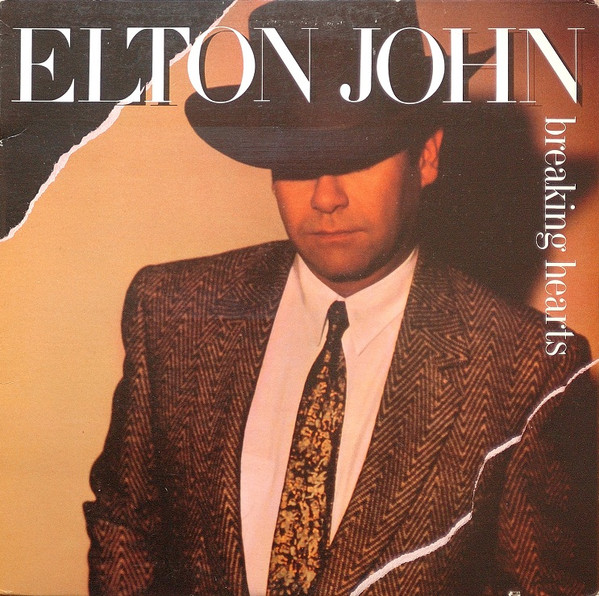
Elton John 23: Breaking Hearts

Proving he knew not to mess too much with success, Elton John plowed ahead with an album that once again kept the classic band intact, with Bernie Taupin providing every lyric, and even getting his own photo on the back cover. But Breaking Hearts wasn’t exactly a throwback, being steeped in contemporary sheen.

For example, while the synth is subtle on the mildly Stonesy “Restless”, the bass is very pronounced, to the point where we don’t care about the overtly political commentary in the lyrics. Bernie was trying to think worldly in those days, as he even slips in a reference to the Berlin Wall as a point of comparison in “Slow Down Georgie (She’s Poison)”, a schizophrenic arrangement equally let down by the character assassination driving the plot. A lot better is “Who Wears These Shoes?”, built around the same Motown rhythm that inspired recent hits by Phil Collins and Billy Joel. The mildly melodramatic title track (which gets the subtitle “Ain’t What It Used To Be”) provides an alternate viewpoint for a change, this time of a womanizing man rather than a slattern; one could almost hear Freddie Mercury crooning this. After a strange ambience, “Li’l ‘Frigerator” is an upbeat rocker back to hating women, with more ‘80s keyboard touches and a surprising sax solo pushed aside by a nice guitar solo.

“Passengers” is a departure of sorts, a catchy chant based on a South African folk song, and actually refers to apartheid. It’s one of the least Elton-sounding songs he’s ever done, and it works. “In Neon” is a sympathetic portrait of a sad woman wishing for fame and fortune, with backing vocal touches that recall earlier cinematic references like “Candle In The Wind”. Keeping the mood slow, the ballad “Burning Buildings” has a lot of dynamics, rising and falling without getting carried away, even a few Beatlesque touches. There’s a nice interlude where the piano doubles the acoustic guitar solo. Another one that shouldn’t work but does is “Did He Shoot Her?”, which is loaded with classic harmonies and combines ‘80s beats with ‘70s sitar, Philly soul with a Jagger vocal, bridging the decades. Speaking of which, “Sad Songs (Say So Much)” rankled us from the first listen as it more or less retreads the music from the Stones’ “Let It Bleed”, save the bridge. (Within a few months, he’d retooled the lyrics for a designer jeans commercial, declaring that “Sasson says so much.” This is absolutely true.)

That song kept him on the radio; he was also in the news after marrying the woman who engineered Breaking Hearts. The producer was the faithful Chris Thomas, who kept the sound fresh for an overall successful product, provided you don’t listen too closely.

Elton John Breaking Hearts (1984)—3

Friday, September 15, 2023

Thomas Dolby 2: The Flat Earth

That pesky hit single was a double-edged sword for Thomas Dolby, as he suddenly felt pigeonholed as something of a novelty act. He was already well into the process of recording his next album, but had to cut it short due to promotional obligations, which didn’t allow him to adjust the schedule for completing it. The way he tells it, The Flat Earth suffered as a result. It certainly feels short, and at 37 minutes, it is.

Somebody else pointed out that where the first album predicted steampunk, here he’s the khaki-panted world traveler. “Dissidents” burbles in, soon joined by scratchy guitars for a pretty funky track about, well, being a dissident writer. The title track begins much the same way, but the rhythm is more subtle, with textures that would soon be equated with mainstream embrace of so-called world music. (This is a good place to call out Kevin Armstrong’s exemplary guitar work throughout the album.) Even more gorgeous is the melancholy “Screen Kiss”, a portrait of a small town girl ruined by the big time. Listen for Matthew Seligman’s wonderful bass playing, very evocative of Jaco Pastorius on Joni Mitchell’s Hejira album.

After a mysterious intro, “White City” sounds more like the last album, with another impenetrable lyric. The barely audible narration by Robyn Hitchcock as “Keith” doesn’t clear anything up, not that we’d expect it would. “Mulu The Rain Forest” suffers from an overuse of effects; the piano and vocal on their own are just plain gorgeous. His cocktail jazz arrangement of “I Scare Myself” sounds so much like him few might have realized it was originally written and recorded by Dan Hicks & His Hot Licks seventeen years before. As something of a reward to the those hoping for more comedy, “Hyperactive!” provides the closest echo of “She Blinded Me With Science”, loaded as it is with wacky voices and voiceovers, matched by a truly twisted video. Still, that’s why we can’t help but chuckle at the trombone whenever it appears, but the song sounds very out of place following what’s gone before.

Those who really paid attention to his first album won’t be too surprised with The Flat Earth. He’s definitely reaching here, looking for new sounds and making the most of available technology. Considering how labored it all its, who knows if more time would have improved it any? (The converted should certainly seek out the 2009 import remaster, which loads up the balance of the CD with off singles, a collaboration with Ryuchi Sakamoto, and soundtrack work, plus a couple of live tracks. Some but not all of these were included in the streaming 40th anniversary edition of the album, which made up the balance with more live tracks and edits for a two-hour program.)

Thomas Dolby The Flat Earth (1984)—3

Tuesday, June 27, 2023

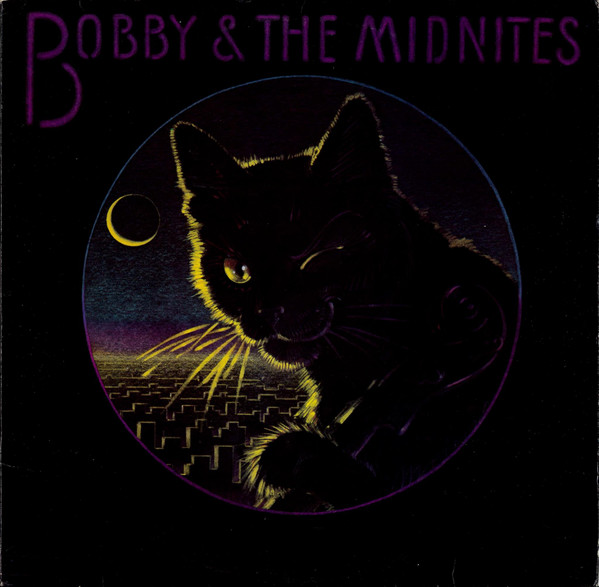
Bob Weir 4: Bobby & The Midnites

Always the poppiest of the Dead, Bob Weir took advantage of another break between albums to work with a side project to explore that tendency. Along with onetime Kingfisher Matt Kelly and new Dead boy Brent Mydland, he recruited Alphonso Johnson and Billy Cobham, both veterans of fusion outfits, and one Bobby Cochran, who’d been in a recent incarnation of Steppenwolf and happened to be the nephew of Eddie Cochran. While the label of their first album was careful to state “featuring Bob Weir”, it was credited to Bobby & The Midnites.

The music is more straightahead rock—and faster—than most Dead albums, and Billy sure knows how to hit cymbals. “Haze” is a fun boogie from the start with a nice chant from the band. Bob uses his Dylanesque yelling-singing hybrid on “Too Many Losers”, but much more tunefully. “Far Away” has some cool chords but descends into an easier singalong, with lots of space for Brent to explore his Hammond B-3. There’s a sharp left turn on the reggae cover “Book Of Rules”, and “Me, Without You” is typical early-‘80s tense rock fodder. “Josephine” is mostly a vehicle for Matt and Brent while Bob expresses his desire to “rock and roll with you”, then “(I Want To) Fly Away” crams a lot of ideas in, never sure if it’s jazz, rock, or reggae. “Carry Me” is the requisite pretty one, though the choruses have more power that just can’t be contained. For crowd-pleasers, “Festival” sure is a sneaky Jimmy Buffett knock-off.

Bobby & The Midnites was easily the most enjoyable Weir album since his first, which was basically a Dead album anyway. Although it didn’t light up the charts, the band was never more than a way to kill time between Dead tours, and it took three years for a follow-up. By the time of Where The Beat Meets The Street, Kelly and Mydland were otherwise detained, Kenny Gradney of Little Feat replaced Alphonso, a keyboard player who doubled on sax came in, and Jeff “Skunk” Baxter was brought on as producer. Bob took a back seat in the writing and singing categories, resulting in an extremely generic ‘80s soundtrack to a movie we’d never want to see. “(I Want To Live In) America” wouldn’t impress even the most diehard Rambo fan, and “Rock In The ‘80s” is even worse.

Most of the songs were covers, or at least by outside writers; why else would Bob sing about some girl who needs a “Lifeguard”? The techno remake of Marvin Gaye’s “Ain’t That Peculiar” was particularly execrable considered he’d been shot to death by his own father just that year. “Thunder & Lightning” might be better without the atmospheric intro, and “Falling” is half-decent, possibly due to John Barlow’s lyrics, but he was also partly responsible for “America”, along with the guy who played Beef in Phantom Of The Paradise, as well as the dangerous groupie portrait of “Gloria Monday”.

Whatever he’d hoped to achieve with this band was shot to hell in three short years; luckily he still had his day job. Not surprisingly, none of the songs on either album were ever played live by the Dead.

Bobby & The Midnites Bobby & The Midnites (1981)—3
Bobby & The Midnites
Where The Beat Meets The Street (1984)—

Tuesday, August 9, 2022

Rickie Lee Jones 4: The Magazine

Her next “real” album took some time, but apparently Rickie Lee Jones found inspiration in Paris, and managed to kick whatever her addictions to record The Magazine. The producer is different, but the sound is still slick, with the reliable Steve Gadd drumming on several tracks and various members of Toto here and there. The big difference is the use of synthesizer, which is subtle, but pronounced in the all-digital recording.

“Prelude To Gravity” is a lovely piano instrumental with light strings, whereas “Gravity” itself crashes in with drums. It’s a very complicated song, with lots of tempo shifts and accents, and poetry we can’t begin to decipher. While it begins like a nursery rhyme, “Juke Box Fury” is more along the lines of her jazz-bo hits. It even has the same hackneyed horn part from her other albums, pinning the choruses, but her vocal blend at the end of each still kills. We’re amazed that “It Must Be Love” wasn’t a hit single, either by her or anybody else, since it’s one of the most perfectly mainstream songs she’d yet written, with just enough of the right ingredients to make it original. “Magazine” recalls the sadder stories from Pirates, and we’re not sure whether the narrator is waiting for a lover or a drug connection.

Those horns return “The Real End”, which seems like a more obvious choice for a single with its simple pre-chorus hook and matter-of-fact cynical lyrics about fleeting romance. There’s a stretch where she layers her own voice like horns, which would have been enough. “Deep Space”, subtitled “An Equestrienne In The Circus Of The Falling Star”, provides another welcome see-saw shift to quiet, especially before “Runaround”, which mentions the “Juke Box Fury”, and sounds like two different songs forced together. The album closes with three pieces called “Rorschachs”. The first is a very European instrumental with trilling guitars and mandolins and a hummed melody called “Theme For The Pope (Marrants D’eau Douce)”, which translates as “sweet water fools”. (There is a version out there sung as a duet with Sal Bernardi—yeah, him again—in French, and seem to describe some lost souls between Memphis and Nashville. We had to look this up, because the lyrics aren’t included on the original vinyl.) “The Unsigned Painting” begins with a lonesome plaint, which is brushed aside by a spoken impressionistic piece. This segues into the more musical “The Weird Beast”, which continues the strange imagery via interlocking vocals.

The album works best when she’s exploring, making the more adult contemporary ear candy seem out of place. The Magazine is impenetrable to be sure, but somehow she makes it all very compelling. The listener wants to understand the songs, and that makes it worthwhile. She’s unique, all right.

Rickie Lee Jones The Magazine (1984)—3

Friday, November 8, 2019

Frank Zappa 39: Thing-Fish

Over a period of three months, Frank released four distinct albums, each unique and challenging in its own way. Outside of Them Or Us, none could really be called a rock album, and the two instrumental releases would take some getting used to. But Thing-Fish would divide listeners most of all.

This was not the first musical Frank had envisioned, but of all his earlier grand designs, this came closest to realization. It was a bold idea: at a time when AIDS was barely beginning to register on the mainstream public consciousness, Frank expanded his opinion that the disease was the result of a government-sponsored scientific experiment to the extent that in addition to making people very sick and killing them, the effects would also lead to mutations of cartoonish extremities based on ongoing stereotypes.

Of course, any idea worth doing is worth overdoing, so Frank took this scenario and packaged it as a three-record set purporting to be the original cast recording of the opus intended for the Broadway stage. The cover depicts the title character and narrator, whose name is based on a character from the Amos ‘n Andy radio and TV show, with an oversized potato-shaped head and cartoonish duck lips, in conversation with one of the chorus members, known as the Mammy Nuns, all of whom are described as dressed like Aunt Jemima from the syrup packaging of the same name. (Really, we’re not making this up.)

The plot begins, as all Broadway shows do, with Thing-Fish (voiced by Ike Willis) explaining how the experiments of the Evil Prince led to their current condition. The proceedings soon turn into a play-within-a-play, as a yuppie couple named Harry and Rhonda (played by Terry and Dale Bozzio, who’d left the Zappa fold to form Missing Persons) wander into the theater expecting something like Cats. Much like what happened when the Mothers of Invention had a theater residency in 1967, Harry and Rhonda are assimilated into the action and subjected to various psychological horrors. For example, we meet Harry-As-A-Boy (given a genuinely hilarious gee-whiz delivery by the second Bob Harris to play with Zappa), who explains that women’s liberation turned Harry gay, disguised by the yuppie drive to succeed at all costs. Meanwhile, Rhonda is shown to have evolved from an actual blow-up doll to a ruthless feminist businesswoman. Their inevitable disgust for and at each other culminates in side five’s “Briefcase Boogie”, wherein Rhonda has sexual congress with said object, described in full four-letter detail. (The Broadway show never happened, but a simple search online makes it relatively easy to find a pictorial from Hustler magazine that provides visuals. This is also absolutely true.)

Much of the music on Thing-Fish is obscured by dialog, but for the most part, the “songs” are previously released Zappa tracks given new context with the overlaid commentary (for example, “The ‘Torchum’ Never Stops” in an extended mix of the Zoot Allures track). “No Not Now” appears twice, once with new vocals by Ike, and again as the finale, played backwards with the new title “Won Ton On”. The music that isn’t recycled is mostly performed on the Synclavier, which also provides the computerized vocals by the Crab-Grass Baby, the horrifying offspring of Harry’s depraved televangelist father and, apparently, Rhonda in her inflatable incarnation. As for new “songs”, “He’s So Gay”, a twisted mélange of doo-wop and upbeat synth pop, would have fit perfectly on the other ‘80s “rock” albums. “Brown Moses” is supposed to be the commentary by that character (described as resembling Uncle Ben from the rice box), portrayed by Johnny “Guitar” Watson. “Wistful Wit A Fist-Full” is a stereotypically Broadway showcase for piano and voice, in this case delivered by the remorseful Evil Prince in the style of Al Jolson. (Also, there are zero guitar solos on any of the six sides.)

Much as with 200 Motels and Joe’s Garage, this is an angry album, full of black humor, blanket indictments, and uncomfortable truths. It is not an easy listen, and while the libretto helps explain the action better than the dialog, one must actually hear Thing-Fish’s intonation to understand some of the purposely mangled language. Thing-Fish is hardly the first play to depict sexual activity, deviant or otherwise, but even after something like Spring Awakening became a sensation, we really can’t see how Frank really thought something like this would ever be staged per his script. Even if it was, critics would lambaste it and the Tonys would ignore it, which Frank would only flog as proof of ongoing censorship and the inability of the average American to understand his genius.

Frank Zappa Thing-Fish (Original Cast Recording) (1984)—

Tuesday, October 8, 2019

Cat Stevens 12: Footsteps in the Dark

After a few years of musical silence, the news emerged that Cat Stevens had changed his name yet again. Now known as Yusuf Islam, he had retired from pop music to devote his life to his family and his faith. Meanwhile, his songs still played on the radio, in all formats, so releasing a second greatest hits compilation wasn’t too much of a stretch.

Despite its subtitle, Footsteps In The Dark is fairly short on actual hits, but it’s still chock full of quality. In a covert admission that the albums since the first hits album hadn’t aged well, the set covers songs throughout the entire ‘70s. As an added bonus, three songs make their album debut.

Side one is nearly flawless, beginning with “The Wind” but veering off course with “(I Never Wanted) To Be A Star”; okay, we get it. “Katmandu” and “Trouble” are rescued from Mona Bone Jakon. In between is the charming “I Want To Live In A Wigwam”, the B-side of “Morning Has Broken”. “On The Road To Find Out” turns out to be just one of the foreshadowings scattered throughout his pop career, while “If You Want To Sing Out, Sing Out”, written for and featured prominently in the film Harold And Maude finally appears for home enjoyment.

The second side hops even wider throughout the decade, from “Where Do The Children Play?” and “How Can I Tell You” to later tunes “The Hurt”, “Daytime” (whence comes the album title), and “Silent Sunlight”. The simple but sweet “Don’t Be Shy” is the other Harold And Maude song here, and for some reason “Father & Son” appears, despite its inclusion on the first hits album.

The CD era would eventually inspire further collections, beginning with Classics Volume 24 (numbered as part of A&M’s 25th Anniversary Classics series), which combined tunes from both hits albums and nicely included “If You Want To Sing Out”. Several different releases purporting to be The Very Best Of Cat Stevens have appeared over the years; the most recent is not chronological, but includes more pop material from the ‘60s and concludes with, yes, “If You Want To Sing Out”. A 2001 box set alternately titled either Cat Stevens or On The Road To Find Out covers his career over four discs, with the requisite outtakes, demos, and live tracks. 2005’s Gold double CD was very comprehensive, going from “Matthew & Son” through Teaser And The Firecat on the first disc alone, and including both Harold And Maude songs. The second disc rushes through the rest of the ‘70s, and even includes a new track recorded by Yusuf Islam himself specifically for this set.

All that said, Footsteps In The Dark is still the best (and cheapest) choice, particularly for “I Want To Live In A Wigwam”. As for Harold And Maude, a handful of limited vinyl-only releases in this century covered the new and previously released Cat Stevens music used in the film, until an official soundtrack was finally released on CD in 2022, adding dialogue and other music from the film.

Cat Stevens Footsteps In The Dark: Greatest Hits Volume Two (1984)—
Cat Stevens
Harold And Maude—Original Motion Picture Soundtrack (2022)—3

Friday, August 30, 2019

Talking Heads 7: Stop Making Sense

Being filmed for a concert documentary would have appealed to art school alumni, so Talking Heads gladly allowed that to happen for Jonathan Demme’s Stop Making Sense. And you can’t have a movie without a soundtrack album, which is how they ended up putting out two live albums in the space of two years.

While the film represents a performance in real time, beginning with David Byrne by himself and gradually adding the other Heads and additional musicians until the stage is full, the album takes a more basic approach, sequenced for listenability. Four songs are included from Speaking In Tongues, which was the album the tour was supporting, and the songs shared with The Name Of This Band are in different arrangements. The result is an excellent intro to the band’s work thus far.

Just as in the film, the album opens with a solo performance (acoustic guitar with beatbox accompaniment) of “Psycho Killer”. The Speaking In Tongues songs follow, and all are excellent versions, if not superior to the studio takes. They’re presented in a jumbled order from the actual setlist, but frankly, starting with “Swamp” and ending with “Girlfriend Is Better” is a fine succession and completes an excellent album side.

Side two’s nothing to sneeze at either. A slightly rearranged “Once In A Lifetime” is just as essential as the studio version, the band truly filling in and enhancing it. “What A Day That Was” would have been new to anyone who hadn’t heard David Byrne’s Catherine Wheel album, and it fits fine here. “Life During Wartime” opens with an unfamiliar keyboard cadence before finding its way to the trademark riff, while “Take Me To The River” pumps up the stark blues of their own version with a little more soul.

Listening to the original LP today, it seems to go by more quickly than 40 minutes, which is understandable, as the more prevalent cassette and CD versions extended all but three of the tracks, for a total of seven minutes; these also sported an alternate mix of “Slippery People”. Just in time for the fifteenth anniversary of the album (and a DVD release of the film), a “Special New Edition” presented all (but two) of the songs as performed in the movie in order, albeit edited to fit on a single CD. It even begins with Byrne’s introduction (“Hi. I got a tape I want to play.”) “Psycho Killer” is now followed by a lovely stripped-down “Heaven” with Tina Weymouth on bass and one of the backup vocalists. The other two emerge for a couple of early songs, and then the stage is full. Along with a couple more tunes from Speaking In Tongues, David is nice enough to step aside for a virtual Tom Tom Club performance of “Genius Of Love”, complete with Chris Frantz’s version of toasting. (Plus, he had to get into that big suit. You know, so he could make his head smaller.)

Those of us who miss Stop Making Sense as we first heard it can simply program our CD players, burn a disc, or make a Spotify playlist. The version now available can certainly be called definitive, but you might as well own the DVD for, well, the full picture. (The fortieth anniversary of the filming was the occasion to finally restore the two songs from the original—“Cities” and a medley of “Big Business”/“I Zimbra”—to the DVD, Blu-ray, and new vinyl pressing, as well as for streaming, and on CD a years later.) It really is a fine film, and everybody looks like they’re having an absolute ball. Even David Byrne seems like he actually appreciates everyone else on stage, to the point of bringing the crew onstage before his exit. What we didn’t know then, of course, was this would be the last evidence of the band onstage, as they never toured as a unit again.

Talking Heads Stop Making Sense (1984)—4
1999 Special New Edition: same as 1984, plus 7 extra tracks
2023 Deluxe Edition: same as 1999, plus 2 extra tracks

Tuesday, August 27, 2019

Todd Rundgren 21: Oblivion, POV & Some Trivia

Since we started this mission, we’ve tried to give equal time to albums good and bad, short and long. The idea is that an artist’s story is told by the albums he, she, or they make, and we’ve tried where possible to approach each entry from the perspective of somebody following along in real time, as each new album emerged. When it comes to certain veterans, however, it can be tough to dredge up anything new to say about people who haven’t necessarily said anything new in decades.

Now, that’s not fair to a guy like Todd Rundgren, who has long explored the boundaries of whatever technology was available at every given moment. But between record companies and his own attention span, he stopped being truly and consistently commercial by the time the ‘80s were underway. Luckily for him, he had plenty of production work, and he also managed to keep Utopia going as an active band while pushing work under his own name.

In the space of a year, Utopia released two studio albums for the indie Passport label. Both albums included songwriting contributions from all four members, and embraced current music technology, like drum machines and synthesizers. Both are slick and loud, both approach political commentary in between love songs, and neither is very good. The Cars may have done it best, but here Utopia comes off like the Tubes.

Oblivion came first, in a none-more-black cover with light embossing that belies the slick contents within. “Itch In My Brain” is no “Hammer In My Heart”, and it’s pushing it to have a song called “Winston Smith Takes It On The Jaw” in 1984. “I Will Wait” has potential, as does “Maybe I Could Change”, even with its quasi-Broadway intro. But of the whole album, “Crybaby” is the real keeper despite everything against it, like the keyboards and the inscrutable video with Willie Wilcox’s rotating motorcycle drumset, but at least it featured Ellen Foley.

POV arrived sporting graphics made up predominantly of windows from the then-mindblowing Macintosh operating system; oh, the memories this brings back for those of us who remember a world before Microsoft. The photos suggest some kind of sci-fi thriller; meanwhile, Todd was sporting one of his worst haircuts, and considering his history at the barber, that’s saying something. “Play This Game” is a terrific opener, but “Style” kills the momentum, and will have the listener looking online for “Jane’s Getting Serious”. “Mated” is half-decent yacht rock, and “Zen Machine” is no “Zen Archer”.

After the band was pretty much done, but before the label collapsed, they released Trivia, which compiled a grab-bag of selections from both Passport albums, along with some fine choices from 1982’s Utopia album that elevate the others. Two new tracks were recorded for extra enticement, “Fix Your Gaze” preferable to “Monument.” (The artwork is so dated it hurts: the front image looks like the work of someone who just bought a computerized graphic design program, while the back capitalizes on the Trivial Pursuit craze.)

A decade later, Rhino had already reissued every Rundgren and Utopia album up to 1982, so when they acquired the rights to the Passport albums, they combined everything on a double-disc set cleverly dubbed Oblivion, POV & Some Trivia. For the cover art, they went with the most photogenic option, as if that did any good. The first disc had Oblivion plus “Fix Your Gaze”, while the other had POV plus “Monument” and the B-side “Man Of Action”. This edition is tough to find, but the two albums now stream from the usual places with the extra tracks.

And that, dear reader, is how we can justify reviewing all these so-so albums in one post.

Utopia Oblivion (1984)—2
Utopia
POV (1985)—2
Utopia
Trivia (1986)—
Utopia
Oblivion, POV & Some Trivia (1996)—2

Friday, August 16, 2019

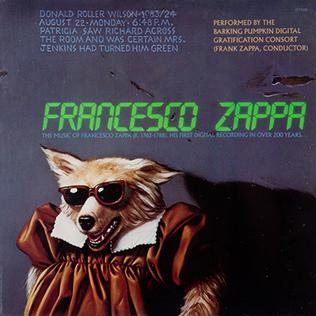
Frank Zappa 38: Francesco Zappa

This wacky record consists of music originally composed in the late 18th-century by a Milanese fellow with the same last name as our Frank. Basically, Frank’s copyist found out about the guy, and Frank wondered what the music sounded like, so they acquired some sheet music of some trio sonatas, and the copyist transferred it to the Synclavier, Frank’s latest composing toy. Then Frank reassigned different sounds to the different parts, so instead of violins and a cello, we’ve got twinkles and tweets and occasional whoops and burps, which one might expect. Sometimes there’s even an approximation of a harpsichord or strings. (But to be clear, all the sounds you hear come from a programmed machine. Which is fine.)

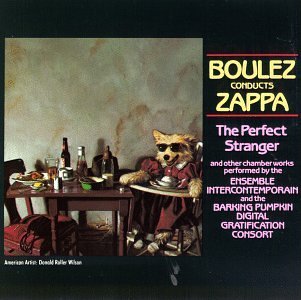
This might all sound like a case of other people doing all the work only for Frank to screw with it and call it his own, but Francesco Zappa is actually quite listenable, toe-tappingly catchy, and very pleasant. It’s chamber music, with no jokes, and no irony, other than the fact that there was once another Zappa writing music not a lot of people got to hear. As hinted at on The Perfect Stranger, the sounds used evoke Switched-On Bach. Plus, there’s that dog again on the cover.

So is this just a vanity project? Probably. Would anyone care about this music if Frank hadn’t made it available? Well, the man really did exist, and other pieces have since been exhumed and recorded by actual classical ensembles. Is it essential? Hardly. Is it historically important? Only in the context of Frank’s journey with the Synclavier. Is it worth hearing? Sure. And there you go.

The Barking Pumpkin Digital Gratification Consort Francesco Zappa (1984)—3

Tuesday, May 7, 2019

Frank Zappa 37: Them Or Us

After a couple of classical detours, Frank came back with another “rock” album, and another double to boot, conveniently released amidst another tour. Them Or Us was compiled from a variety of studio and live sources, edited and juxtaposed, but doesn’t seem to follow any basic theme, except for another dog painting similar to that on The Perfect Stranger.

Once again he opens with a cover of an obscure doo-wop oldie, and once again his vocal delivery suggests “The Closer You Are” is supposed to be a parody, but we know better. “In France” is an extended in-joke sung by Zappa idol Johnny “Guitar” Watson that seems longer than it is. But then there’s “Ya Hozña”, predominantly a demonic-sounding solo overlaid with vocals recorded entirely backwards, to suggest something equally demonic in the wake of the then-current controversy over alleged backward-masking on rock albums. He makes his point, even if it goes on a little long. A little better is a reprise of “Sharleena”, included here to showcase young Dweezil Zappa’s pre-teen guitar prowess.

Side two consists of two lengthy pieces. “Sinister Footwear II” is another part of a longer ballet suite hinted at on You Are What You Is. It does sound rather sinister, with furious drums and guitar, and keyboards that remind us of what Ruth Underwood used to bring to the table. Whatever mood he’s trying to create is elbowed aside by “Truck Driver Divorce”, sung in his obnoxious lounge voice, which thankfully switches back after a minute and a half to another solo recorded live.

Further silliness ensues on side three, beginning with “Stevie’s Spanking”, which details some of the after-show exploits of stunt guitarist Steve Vai, who indeed solos on the track, as does Dweezil again. There’s another detour into the mildly doo-wop “Baby Take Your Teeth Out”, before returning to the jazz fusion of “Marque-son’s Chicken”. “Planet Of My Dreams” is sung in a high register by one-time keyboard player Bob Harris; a segment from yet another unrealized Broadway musical, it fades pretty quickly.

At the top of side four, “Be In My Video” is the closest the album might come to a possible hit single, or at least fodder for the Dr. Demento show, but considering its skewering of MTV culture (and specifically “Let’s Dance”, Frank still miffed that Bowie stole Adrian Belew away) it likely wouldn’t have been appreciated. The title track is another furious solo from a live show, while “Frogs With Dirty Little Lips” brings another Zappa offspring onto wax, somewhat; this time it was young Ahmet who contributed the lyrics. Finally, another cover bookends the set: a mostly reverent live rip through the Allman Brothers’ “Whipping Post”, done reggae stylee for the guitar solos.

Them Or Us is an odd mishmash. Frank had embraced digital recording for its clean sound and editing capabilities, but even modern mastering can’t keep it from sounding sterile today. There’s enough of instrumental interest here, even though there aren’t any “classic” tracks. It would also be the last album of “songs” he’d release in his lifetime.

Frank Zappa Them Or Us (1984)—3

Friday, February 8, 2019

Frank Zappa 36: The Perfect Stranger

Seemingly determined in this stretch of his career to be taken seriously as a composer as opposed to a songwriter, Frank hooked up with renowned conductor Pierre Boulez, who got an orchestra to rehearse, perform, and record another pile of his chamber music pieces. Not to be confused with the Deep Purple album from the same year, The Perfect Stranger was released on Angel, EMI’s classical subsidiary, which must’ve tickled Frank no end.

Heralded by a doorbell, Boulez and the Ensemble InterComtemporain dive into the title track, and wander around for about 12 minutes to illustrate an encounter between a housewife and an industrial vacuum cleaner salesman, the product being one of Frank’s favorite appliances. (By the way, the liner notes call these all “dance pieces”, as if we could imagine the choreography as described therein.) “Naval Aviation In Art?” expands the piece already heard on Orchestral Favorites, downplaying the solo violin but retaining the suspense. They also provide the first official appearance of “Dupree’s Paradise”, an instrumental that had been around since before the Roxy shows, and delivered with little of the jazz overtones heard on other versions, but resolving well.

The other half of the album is performed by what’s called the Barking Pumpkin Digital Gratification Consort, which was actually Frank composing music and performing it using the Synclavier, a computerized system that made classical transcription a zillion times easier and faster, and reproduced it flawlessly. With this machine, Frank’s big beef about being at the mercy of prima donnas and insufficiently skilled musicians was solved. Well, mostly; the Synclavier wasn’t exactly a digital sampler, so music performed on or by it risked sounding canned, much like Switched-On Bach by Wendy Carlos and sundry. That said, “The Girl In The Magnesium Dress” is based around the sound of a vibraphone over electric piano tones, both played at high speed. “Love Story” is more frenetic and brief, sounding more like a bunch of keyboards, while “Outside Now Again” slows down a theme from Joe’s Garage that sounds very close to “Duke Of Prunes”, noodling away on top of it. “Jonestown” closes the album, essentially his aural vision of the horror in Guyana used to comment on religion, organized or not, as a whole. It’s highly disturbing, but effective.

As with his other albums in the classical vein, one’s appreciation for The Perfect Stranger will depend mostly on one’s tolerance for orchestral instruments, and if the absence of vocals and guitar solos is a factor in any way. The addition of the Synclavier makes it very much a historical entry in the canon, as he would continue to both explore its capabilities and release his results.

Boulez Conducts Zappa The Perfect Stranger (1984)—3

Friday, September 7, 2018

Streets Of Fire: Original Soundtrack

The pantheon of rock ‘n roll movies is littered with a handful of great films, from either musical or cinematic standpoints, but mostly dominated by some horrible missteps. Yet, even some of these turkeys have their fans, who enjoy them from a “so bad it’s good” angle. As with albums, what makes a great rock ‘n roll movie is largely a matter of personal humor. Also, the nostalgic value will vary depending on personal experience. Therefore, the following may baffle most readers.

Streets Of Fire was supposed to be Walter Hill’s next blockbuster following 48 Hrs., but despite one hit single, this supposed “rock & roll fable” made no dent at the box office. Not did it take off in heavy cable rotation, even with the star power of Michael Paré, fresh off his iconic lead role in Eddie & The Cruisers, which did manage to gain a following on the smaller screen. Granted, the setting was a little weird—‘50s crossed with ‘80s in a city that appeared to have been built in a basement but still rained a lot—but it had Diane Lane at her jailbait hottest, Rick Moranis in a really bad suit, and Willem Dafoe as a psychopath with a tendency to wear fishing waders without a shirt. We could go on (Bill Paxton! Lee Ving! E.G. Daily! The other cute girl from Too Close For Comfort!) but then we’d never get to the music.

The soundtrack is an odd hodgepodge of styles, right in line with the anachronistic setting of the film itself. The two big production numbers come from the grandiose mind of Jim Steinman, loaded with multisyllabic verses and turns of phrase, pounding drums and percussive pianos, with the usual suspects (Rory Dodd, Roy Bittan, Max Weinberg, etc.) making up the faceless “Fire Inc.” “Nowhere Fast” would be recorded by Meat Loaf that same year, yet “Tonight Is What It Means To Be Young” appears to have been largely ignored, albeit tailor-made for the likes of Bonnie Tyler.

Half the album was produced by Jimmy Iovine, who called in favors from some important friends. “Sorcerer” was written by Stevie Nicks, sung by one Marilyn Martin, who would go on to duet with Phil Collins for another soundtrack and nothing else for a long, long time. (Indeed, it’s not too tough to discern Stevie’s voice in the mix, indicating that this was an outtake from her most recent solo album.) Meanwhile, “Never Be You” is a rare collaboration between Tom Petty and Benmont Tench, sung in the film by Laurie Sargent, but on the album by Maria McKee, not yet known from Lone Justice, except by Benmont, who was infatuated with her. Placing the music directly in the “now” is “Deeper And Deeper”, an occasionally lengthy track by the Fixx (conveniently signed to MCA, which released the soundtrack) used over the end credits.

Part of the plot involved an R&B vocal group, so the mostly a cappella “Countdown To Love” demonstrates their doo-wop prowess, while “I Can Dream About You” is supposed to be their big breakthrough; indeed it made it to #6 in the real world, voiced by the white guy who wrote it. For our money the best tunes here are by the Blasters, with the obscure Leiber-Stoller nugget “One Bad Stud” and their own “Blue Shadows”. (Ry Cooder composed and performed all the incidental music in the film, mostly in the vein of Link Wray’s “Rumble”, and represented only on the album by the rather dull “Hold That Snake”.)

We’re not about to suggest that either film or album deserves an elevated level of respect, but anytime we come across anyone who’s seen Streets Of Fire, much less enjoys it, we feel a sense of brotherhood like no other. At the very least, it’s got enough connections to people with fervent cult followings to be mentioned as a sidebar in their discographies. And just like Tom Cody, we’ll take it wherever we can get it.

Streets Of Fire: Music From The Original Motion Picture Soundtrack (1984)—3

Friday, April 13, 2018

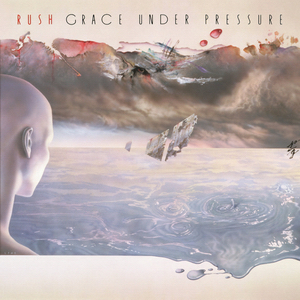
Rush 12: Grace Under Pressure

For much of the band’s career to date, producer Terry Brown loomed large, to the same given, subliminal effect on a record sleeve as a George Martin or an Andrew Loog Oldham. So it was indeed A Big Deal when the next Rush album credited a different name alongside theirs.
Grace Under Pressure arrived at the height of ‘80s silliness, and a glance at the haircuts on the back cover provides proof. Synthesizers were now at the forefront of the mix, alongside guitars that were further than ever from prog. Hindsight has been kinder to the album than we were at the time, enthralled as we still were with Moving Pictures. This new album seemed almost too slick, too shiny; but again, if this was your high school soundtrack, your reaction would have been different.

To their credit, each of the songs does indeed explore, vividly, the concepts of human stress—not in the egomaniacal Dark Side Of The Moon sense, but more what even non-rock stars must endure on a daily basis in so-called modern society. The album starts with a moment of “2112” wind and then “Distant Early Warning” (commencing a worrying trend of not having the title mentioned in the song itself, making it tough to request on the radio) echoes the contemporary nuclear worry prevalent in 1984, yet dares to hint at the notion of a romantic relationship. “Afterimage” goes right to the point, reflecting on a recently deceased friend, and not at all mawkishly; rather, the urgency in the riff conveys anger at what/who was lost. “Red Sector A” is divisive, being as it sports what we’d still call a disco beat, but it’s with paired a compelling lyric, evocative of the Holocaust, which Geddy Lee’s parents survived. “The Enemy Within” is said to be part one of the now-completed “Fear” trilogy, which began two studio albums before, continuing the reggae influence from the second part (and from “Vital Signs”). Each installment is thus less interesting than the last.

A somewhat robotic beat fittingly but annoyingly inaugurates “The Body Electric”, accompanied by percolating bass and more unresolved chords; as with much of the album, the chorus is the best part. “Kid Gloves” has a dizzying, cyclical riff in 5/4 that calms down for the choruses, and reading the lyrics now, they come off as something of a comfort for the confused teen mindset depicted in “Subdivisions”. The edgy “Red Lenses”—listed in lowercase and demonstrative color type in all documentation—is loaded with plays on the word and simple rhymes but doesn’t really stick. Finally, “Between The Wheels” employs a suitably tense synth bed, and while the driving chorus hints at the slimmest chance of perseverance, the message is bleak.

It’s not one of our go-to Rush albums, so we’re always surprised how listenable Grace Under Pressure turns out to be whenever we do throw it on. Still, it’s a long way from the yowls and sorcery of the previous decade, and does show that while the band may no longer be considered progressive, they have progressed.

Interestingly, when the album was expanded a couple years after its 40th anniversary, the package included a brand new mix by none other than Terry Brown on a second disc. Some of the sheen has been removed, and there’s a not necessarily warmer, but certainly darker sound overall. It may not be better, but it is different. Two further discs presented the complete performance already released (in part) on VHS, DVD, and CD as Grace Under Pressure Tour. The audience is still too high in the mix, so they almost sound canned, but the setlist is balanced—Neil Peart’s drum solo is now at the end of “Red Lenses”—and it’s fun to hear Joe Flaherty’s Count Floyd character before “The Weapon”, as part of the complete “Fear” trilogy. (A Blu-ray offered the full video of the concert, along with promo videos and the usual hi-res mixes of the album. And of course, a book, ephemera, and new artwork graced the packaging.)

Rush Grace Under Pressure (1984)—3
2026 Super Deluxe Edition: same as 1984, plus 29 extra tracks

Friday, January 19, 2018

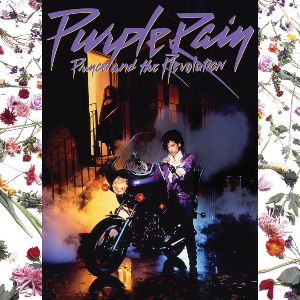
Prince 6: Purple Rain

Of all the musicians to venture into films in that era, or in their careers, Prince seemed highly unlikely. Purple Rain was badly acted even then, but the performance sequences were convincing and enticing, and with the marketing tied into the accompanying album, Prince and the Revolution were suddenly very big deals. (Now we know better, but back then the Revolution were a real band, and they cooked.) Along with Born In The U.S.A.—and “Magic” by the CarsPurple Rain defined the summer of ‘84. A case could be made for The Boss, but only Prince got airplay on all the radio stations, whether Top 40, classic rock, or “urban contemporary”. Most of the songs became hit singles, and part of the common fabric. Quite simply, everybody in America dug him, from the city to suburbia.

And it still holds up today. Three decades on it’s easy enough to make fun of the lyrics to “When Doves Cry”, and even in the title track, but we defy anyone to resist “Let’s Go Crazy”. That crazy “dearly beloved” intro gives way to a track that rocks, mimed so precisely to open the movie. “Take Me With U” introduces the questionable vocal abilities of Apollonia, as well as his fascination with finger cymbals. Following mostly in order, “The Beautiful Ones” was recorded by Prince alone, and quite vivid given its placement in the film. The “Wendy? Yes Lisa” dialogue at the top of “Computer Blue” is what most people remember of the song, which always seemed incomplete, especially when one read the extra lyrics on the inner sleeve. Here again it becomes a setup for “Darling Nikki”, the infamous tune that introduced the world to Tipper Gore, and those of us with record players ruined our needles trying to decipher the backwards message at the end.

“When Doves Cry” was the striking preview to both the film and the album, with a video that acted as a trailer and featured the band, who don’t play on the song, and we’d still love to hear the removed bass line. The rest of the album slightly rejigs the live sequence that closes the movie, albeit with some overdubs. “I Would Die 4 U” sizzles, and “Baby I’m A Star” is bold (and also includes more backwards messages), but the title track absolutely had to end the album. It’s stellar in its simplicity, culminating in that fantastic solo that still rings even after the strange strings take over the end. And we can still hear the audience cheering. (Better yet, seek out the footage of the first-ever performance of the song that became the basis of the album track, with most of the brilliance already there.)

While forever tied to the movie, Purple Rain is not a soundtrack album per se, since you’d have to get the Time’s otherwise dispensable Ice Cream Castle album for “Jungle Love” and “The Bird” (plus, arguably, Apollonia 6’s opus for “Sex Shooter”). Even though Prince was the writer and performer of those tracks, none were included when an expanded edition of the album finally appeared, but it did include a disc of vault items, including the full 12-minute “Computer Blue”, “Father’s Song” (a full recording of the piano piece quoted as the guitar solo in “Computer Blue”), and some other music from the era, although some of what was included dated from after the movie and album were released. An even more expanded set included a full disc of single edits, extended mixes and B-sides, including “Erotic City”, “17 Days”, “Another Lonely Christmas” and “God” (both in its original instrumental “Love Theme From Purple Rain” form and the re-recorded B-side with vocals), as well as a DVD transfer of 1985’s Prince And The Revolution: Live VHS. This eventually got its own release on CD, in a package that included the video on Blu-ray. As nice as it is to hear, some of the longer interludes are best appreciated with the visuals. And yeah, the band was hot.

Prince and the Revolution Purple Rain (1984)—4
2017 Deluxe Edition: same as 1984, plus 11 extra tracks (Deluxe Expanded Edition adds another 15 tracks, plus DVD)
Prince And The Revolution Live (2022)—3

Tuesday, January 10, 2017

Steve Perry 1: Street Talk

When a band has an “iconic” lead singer, the average consumer tends to associate the two interchangeably. So what happens when said singer does a solo album, independent of the band? If you’re Roger Daltrey, you record songs nothing like those the main guy in the band wrote for you, giving yourself an outlet. If you’re Phil Collins, you make a sound nothing like what people expect of the band, but will eventually come to define the band, but we’re getting ahead of ourselves. If you’re Steve Perry, you release Street Talk, heralded by a single that’s not too far off from what people in 1984 associated with the Journey brand.

We say “heralded” in a pointed reference to the self-deflating video for “Oh Sherrie”, which attempted to display Our Hero as just another guy caught in the fabrications of the modern music video treadmill. And it’s a catchy tune, with Waddy Wachtel playing the lead with more of a Southern California tone than Neal Schon’s high-speed Frisco shred. Like most of the rest of the album, it was co-written with a couple of MOR hacks, and proceeds in decidedly unadventurous manner. There’s the Four Tops-inspired rhythms of “I Believe”, the incomprehensible high harmonies on “Go Away”, the Ambrosia rewrite “Foolish Heart”, the by-numbers pop of “It’s Only Love”, Waddy credited again for “rhythm guitar solo”. Mercifully, the excitement over a DX-7 patch sounding like steel drums would soon pass.

The yacht rock continues on “She’s Mine”, but it has enough of the angst left over from the last two Journey albums to sound familiar. Apparently he used it all up, because the rest of side two limps on through empty emoting (“You Should Be Happy”), inexplicable sound effects of children laughing (“Running Alone”) and a barely clever tribute to fallen rock stars and other leaders (“Captured By The Moment”) to “Strung Out”, which is about as catchy as where we came in, and another one where it could be mistaken for his regular band. (While we’re at it, Neal Schon did do a side project around this with the not-yet-Halened Sammy Hagar, spawning two full albums that nobody mistook for Journey.)

Of course, an album doesn’t have to be good to be a hit, and this one did spawn four hit singles, and even helped earn him a solo spot on “We Are The World”. Steve went on to contribute a limp track to the full USA For Africa album, and “If Only For The Moment, Girl” was duly added to a 21st-century repress of Street Talk, alongside the overblown B-side “Don’t Tell Me Why You’re Leaving”, left off the album for good reason, and three demos left over from the band he was in before Journey, and much more palatable even today.

Steve Perry Street Talk (1984)—2
2006 CD reissue: same as 1984, plus 5 extra tracks

Friday, December 25, 2015

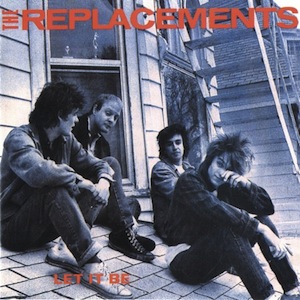
Replacements 4: Let It Be

While we’re hardly qualified to make such a diagnosis, Paul Westerberg is probably bipolar, with each aspect of his personality constantly clashing with the other. This dichotomy is perfectly expressed on the Replacements’ first great album. The front cover of Let It Be shows the band relaxing on the roof of the Stinson family household—a sly reference to a certain lunchtime performance by another band who used the title first—and of all the members, Westerberg is the only one not facing the camera. The graffiti on the back cover only underscores their ambivalence towards playing nice.

With few exceptions, the songs are well-crafted and tuneful, beginning with “I Will Dare”, simple in its delivery (and Peter Buck’s phoned-in solo) but complex in the inclusion of a mandolin, of all things. “Favorite Thing” threatens to reel out of control, but always comes together for hook before the choruses. Similarly, “We’re Comin’ Out” comes closest to their earlier thrash experiments, except that it slows down in the middle for a piano-led snap-along reiteration of the theme before speeding up again. “Tommy Gets His Tonsils Out” continues the hospital theme from the last album, suggested here by a children’s record. The piano comes back to drive “Androgynous”, which would win points solely on the basis of one astute observation (“He might be a father but he sure ain’t a dad”). After the song stumbles to a finish, a cover of “Black Diamond” by Kiss is played straight, but stops before the interminable detuned section.

As good as side one is, side two is nearly perfect. First there’s “Unsatisfied”, an anthem for youth of any decade, shimmering with a 12-string acoustic and inspired bursts of lead guitar. Paul screams “I’m so” over and over, running out of steam before the fade, and in a just world the song never actually ended. “Seen Your Video” is instrumental, and a tight one, before the breakdown and snotty asides about MTV give the band an excuse to burst through again. “Gary’s Got A Boner” is a barely finished rip on the “Cat Scratch Fever” riff, redeemed immeasurably by “Sixteen Blue”. Supposedly written in honor of their bass player, it’s yet another note of sympathy for angst-ridden teens anywhere, with crisp drumming by Chris Mars and another glorious solo over a slow fade. Finally, “Answering Machine” is Paul solo again, railing in favor of old-fashioned communication over a tense guitar and chorus pedals.

Let It Be was even favorably reviewed in Rolling Stone, which likely got the band some more notice. It’s miles ahead of their earlier albums, and as a template for the rest of the decade, remains an excellent place to dive in. When Rhino expanded the album for a reissue, covers ranging from T.Rex’s “20th Century Boy” to “Heartbeat—It’s A Lovebeat” by the DeFranco Family alternated with a couple of alternate takes and the otherwise unreleased “Perfectly Lethal”, which would have fit just fine on the original LP.

These were all included on the eventual deluxe edition, which differed from its four other expanded brothers in that Rhino didn’t cram an LP into the pack and therefore jack up the price further. Those bonus tracks filled up a second disc, along with other alternate versions, another demo of “Answering Machine”, the previously unreleased “Who’s Gonna Take Us Alive” and “Street Girl”, and the live B-side cover of “Hey Good Lookin’”. A third disc presented a bootleg-quality gig a couple months before the album came out, opening with an early version of “Can’t Hardly Wait” and a cover of “Left In The Dark” by the Vertebrats before plowing through a selection of new and older songs. Despite the lousy sound, they’re tight, even through the cover of “Help Me Rhonda” a dozen songs in, and don’t quite get the dual lead on Badco’s “Can’t Get Enough”, but manage to make it through. And of course, they loved playing “Hitchin’ A Ride”.

The Replacements Let It Be (1984)—4
2008 CD reissue: same as 1984, plus 6 extra tracks
2025 Deluxe Edition: same as 2008, plus 35 extra tracks