Showing posts with label 1973. Show all posts

Tuesday, September 22, 2026

Grateful Dead 24: Dick’s Picks Volume One

Only two installments into the Dead’s “From The Vault” series came another release program that actually became an ongoing series that lasted into the next century. Dick’s Picks were named for Dick Latvala, who not only maintained the band’s archive of recordings but constant communication with fans in chat rooms on the emerging internet. The recordings he chose were all good if not pristine, being basic two-track stereo as opposed to multitrack; hence the “caveat emptor” note inside all the releases. The packaging was simple yet clever: the first six used a tape box format for the cover design, which was followed by a flying carpet motif for the next six, then six with tie-dye, six with a lightning bolt, an outlier for #25, five with a postage stamp, and six with a crazy lightshow pattern. The series was supposed to be available only by mail order, though outside the US some volumes could be found at retail. Starting in 2011, the Real Gone label began reissuing them on CD, and some on vinyl for the first time.

So how would a project like this kick off? They chose a December 1973 show—a period that would be revisited on ten subsequent vault digs and counting, as shown below—and it’s, well, okay. Bill was the only drummer, and Donna was off having a baby; in fact, she’s credited alongside the other musicians as “giving birth”. The songs include selections from the new Wake Of The Flood album, with detours to “Big Railroad Blues” and Johnny Cash’s “River”. While there’s certainly a continuity to the album, it’s not the complete show, and songs from the second set are interspersed among songs from the first set, which ends along with disc one with a 20-minute “Playing In The Band” that still omits an alleged bass solo. Disc two picks up the second set from “He’s Gone” into “Truckin’”, which meanders into “Nobody’s Fault But Mine” and meandering jam that finds its way to a couple of minutes of “The Other One” before descending into a feedback-laden drums ‘n space segment. This slows way down for “Stella Blue”, speeding up just a hair to close with Chuck Berry’s “Around And Around”.

Eighteen months went by before a second volume appeared, after which the series continued with a release schedule of three and eventually four a year. It wasn’t until the fifth volume that complete concerts began being released—in sequence, unless a song was missing for whatever reason—once the archivists realized Deadheads would gladly shell out for a three-disc package. Sometimes, to fill in extra disc space, “bonus” tracks would be included from a show in the same period. The occasional two-disc set still happened but #20 was the first of eight sets to contain two shows on four discs; #29 had two shows on six. (By that time the producers had been “flying in” elements of other shows as “patches” to cover missing content and preserve flow.)

Dick curated the first 16 installments, and the series continued for six years after his death with another 20 under the supervision of archivist David Lemieux, who was born a week after American Beauty came out. By that time the Download Series had started, resulting in 13 shows released over the space of a year, then the Road Trips series of tour highlights provided 19 installments over the next four years. In 2012, the Dave’s Picks series began issuing four shows a year, and it’s still going. (The first of these consisted of a show that took place within days of Dick’s Picks Volume Three; the road goes ever on indeed.)

Grateful Dead Dick’s Picks Volume One (1993)—3
     Archival releases of same vintage:
     • Dick’s Picks Volume Fourteen (1999)
     • Dick’s Picks Volume Nineteen (2000)
     • Download Series Volume 8 (2005)
     • Winterland 1973: The Complete Recordings (2008)
     • Road Trips: Vol. 4, No. 3 (2011)
     • Dave’s Picks Volume 5 (2013)
     • 30 Trips Around The Sun: The Definitive Live Story 1965-1995 (2015)
     • Dave’s Picks Volume 38 (2021)
     • Listen To The River: St. Louis ‘71 ‘72 ‘73 (2021)
     • Wake Of The Flood: 50th Anniversary Deluxe Edition (2023)
     • Dave’s Picks Volume 58 (2026)

Friday, April 18, 2025

Nilsson 10: A Little Touch Of Schmilsson In The Night

As a further thumbed nose to mega-stardom, Harry Nilsson decided his next album would consist solely of pop standards from what we now know as the Great American Songbook. The legendary Gordon Jenkins would provide the arrangements, and buddy Derek Taylor would produce, after Richard Perry refused to be involved.

A Little Touch Of Schmilsson In The Night was a labor of love from start to finish. The sessions went very quickly by anyone’s standards (sorry), with Harry singing live in the studio with the orchestra. The gatefold LP packaging included photos of just about everyone in the orchestra, with notes for each song accompanied by old-timey sheet music art. (The album was also dedicated to Frank Wills, the security guard who called the cops during the Watergate break-in.) He even promoted it with a TV special.

Clearly, Harry did his homework, as these are very straight renditions, some complete with usually cast-off introductory sections, and none of his customary multi-tracked vocals. One exception is “It Had To Be You”, which includes a parody verse misleadingly attributed to lyricist Gus Kahn. (False; it was all Harry.) The newest composition was “This Is All I Ask”, written only fifteen years earlier by Jenkins himself. The album opens with a quote from “As Time Goes By”; other quotes crop up here and there as interludes throughout the seamless listen, and a full version of the song closes the program.

Richard Perry was correct in thinking the album would be out of step with the times, as it didn’t burn up the charts. But it’s still a lovely album, and would go on to influence Linda Ronstadt during her Nelson Riddle partnership, as well as Rod Stewart and any other rockers looking to mine the same vault. It’s also the last time his voice would sound so smooth.

Fifteen years later, A Touch More Schmilsson In The Night was released in Germany, consisting of four alternate takes, a couple songs pulled in from a later album, and six outtakes, with blatantly Sinatra-inspired cover art already co-opted by Tom Waits. Those six outtakes were included on the eventual expansion of the original album, rightfully restoring “I’m Always Chasing Rainbows”, “Make Believe”, “Trust In Me”, “It’s Only A Paper Moon”, “Thanks For The Memory”, and the full take of “Over The Rainbow” (after which he requests scotch, water, matches, and heroin) to the canon.

Nilsson A Little Touch Of Schmilsson In The Night (1973)—3½
2006 CD reissue: same as 1973, plus 6 extra tracks

Friday, April 4, 2025

Aerosmith 1: Aerosmith

Easily the ugliest band in rock ‘n roll for many years, Aerosmith started out as a ragtag gang of Stones and Yardbirds disciples. They weren’t immediately anything special, as it would be a long time before their actual musical pedigrees would become apparent. Meanwhile, Joe Perry and Brad Whitford’s guitars interwove and complemented each other, and Tom Hamilton and Joey Kramer locked in as a solid rhythm section to deliver the “stank” singer Steven Tyler—already an accomplished drummer and pianist—insisted on.

Tyler’s voice isn’t quite in place on their eponymous debut, when you can hear it. “Make It” is something of a thesis for the band, with lots of chordal riffs and stock cymbal hits, and the guitars echoing the vocals. “Somebody” is more of a boogie, but not an obvious one. “Dream On” was the insistent single that eventually gave them a hit years after the album was first released. Not quite a power ballad, the combination of guitars playing in unison with an electric harpsichord over Mellotron strings laid something of a mystical framework, and eventually Tyler stops trying to croon and just screams. “One Way Street” has a lot of jazzy chords that make it much more than a “Midnight Rambler” cop, even if it does run long at seven minutes, over which the poor guys had to clap.

“Mama Kin” is the sleeper here, beginning with a few killer riffs for a full minute before the vocal comes in, rhyming “see it” with “shee-it”, and a chorus that extols “sleeping late and smoking tea”. The saxophone is mixed low, and doesn’t spoil it. “Write Me A Letter” keeps the party choogling, and Tyler allows himself to loosen up and explore his upper range. However, “Movin’ Out” proves that he’s no blues man; the drums are all over the place, but the song does improve as it proceeds. And they certainly bring the dirt to “Walkin’ The Dog”, which they probably got off the first Stones album. At least he doesn’t bark.

The production is muddy throughout Aerosmith, and not just in the buried vocals. But while they weren’t quite there, it does give the band a place to build on what they started. “Dream On” and “Mama Kin” were enough to get kids to buy the album, after which it was firmly lodged in countless cars’ 8-track players.

Tyler complained about the mix for years, and it only took 53 years for the album to be upgraded. The “Legendary Edition” offered both a remaster of the album as well as a fresh mix that removes a good deal of sonic grime and includes some pre-take chatter throughout. These of course appeared on separate discs even though they could easily fit on one. A third disc containing a radio broadcast of an early gig—some of which had already appeared on Live! Bootleg—with some session outtakes and jams, including an earlier studio take of “Train Kept A-Rollin’” and the instrumental “Joined At The Hip”, which has elements of what would become “Sweet Emotion”. And if you bought the vinyl package, it came with a pop-up diorama of the cover and a satin jacket.

Aerosmith Aerosmith (1973)—3
2026 Legendary Edition: same as 1973, plus 25 extra tracks

Friday, August 25, 2023

Yes 7: Tales From Topographic Oceans

After releasing a triple live album, how could a band like Yes possibly scale back to something simple like a single LP? Certainly a double album was within their grasp. But to make it worthy of the “epic” tag, Tales From Topographic Oceans consisted of four side-long “songs”, with Jon Anderson’s lyrics and commentary printed in the gatefold to help us along. Or so he hoped. Inspired by a sacred text of sorts, he and the band, but mostly Steve Howe, attempted to encapsulate all of creation in eighty minutes. (There’s a lot to take in here, and since we haven’t spent half a century doing so, we are quite aware that we are likely missing subtleties and not-so-subtleties aplenty.)

“The Revealing Science Of God” is a bold title for anybody, even when subtitled “Dance Of The Dawn”. Jon sings what sounds like the same note for a few lines, which is improved when Chris Squire and then Steve Howe begin to harmonize. This gives way to a nice Rick Wakeman synth riff that’s as simple as it is catchy. “I must have waited all my life for this moment,” Jon sings, which is odd because we thought this was all taking place before the origin of time. There’s a funky break that threatens to take over the proceedings, before a more stately theme comes through, then the riff comes back, and the cycle repeats. This is precisely the type of “padding” that detractors cite as for why this didn’t need to be a double album, especially since the more placid section that arrives is more effective. This has to get funked up too before they go out they way they came in.

“The Remembering”, helpfully subtitled “High The Memory”, begins with some arpeggiated and Leslie’d 12-string that dominates while Jon and Chris Squire chant underneath. It builds slowly and deliberately, eventually adding melody, but not drums for at least six minutes. After a spacey interlude, a completely separate folky section built around the 12-string. This gets rocked up, and alternates with the spacey section. Here we have another suite with a lot of parts that probably should have each been developed on their own, rather than jerry-rigged together, since the sections are all pretty strong. (The word “relayer” figures a lot, possibly predicting their next album.)

Perhaps to make up for being quiet through most of side two, Alan White is given lots of space to display his drumming ingenuity all over “The Ancient”. Percussion dominates, with a lot of distorted, atonal guitar, as befits a piece subtitled “Giants Under The Sun”. It seems to go on for far too long before a vocal comes in, and there’s a lot of stopping and starting to keep you from nodding off. We hear a few more melodic moments, but mostly Steve meanders for several minutes while the percussion keeps trying to beat its way through. Finally there’s an abrupt switch to a nylon-string guitar paired with a vocal, which thankfully silences so Steve can take an extended classical-type solo, which soon descends into a pretty melodic sequence now known as “Leaves Of Green”. This redeems the side, but they still insist on reprising one of the heavy riffs.

“Ritual” boldly begins with the threat of a majestic fanfare, and tries to deliver, but it’s not easy due to the tricky time signature and wordless melody that defies singing along. So they give up, leaving Steve to wander by himself for a while—we even get a quote of the “Close To The Edge” riff—before Jon comes to the realization that that “Nous Sommes Du Soleil”. There’s another decent rocking section about twelve minutes in, albeit reprising that odd time signature and melody at the start of the side. It gets more frenzied until everything stops and the proceedings descend—again—into cacophonous percussion with effects that sound like tapes being sped up and run backwards, until finally it all fades to reveal another peaceful Howe segment with piano accompaniment to restate the thesis of the French subtitle. The whole band shows restraint as the suite comes to a close.

Back in the vinyl days it was easy to get lost in a side at a time, and just keep sending the needle back to the start. That would be the most efficient way to ingest Tales From Topographic Oceans, but even that can be considered a chore. It’s one of those albums that demands attention, because there’s a lot going on for a long time. Also, while they were busy crafting all these sections to fit together, there is a severe dearth of hooks. Did it really need to be this long? It’s not a bad album by any stretch, despite the hype and hindsight backlash, but it is definitely not for everyone.

Thirty years after it was first released, the remastered version restored about two minutes of music to the start of the first track, so now there’s a growing sense of this particular world being created before our ears, and better setting up Jon’s vocal entry, which now seems abrupt in its original context. This addition actually improves the album. They also lopsidedly but understandably put the first three tracks on one disc, and added “studio run-throughs” of sides one and three to the second disc. One jettisoned segment seems to predict the theme from The Rockford Files. Later “definitive editions” offered the usual surround sound re-imaginings in various channels and resolutions.

Ten years after those, a behemoth of a Super Deluxe Edition offered the original album, a new Steven Wilson remix, and his instrumental mix on two CDs each, plus three more discs of single edits and two complete “in-progress” run-throughs. Three further discs were filled with live performances of each of the album tracks from three locations, plus “And You And I” and “Close To The Edge” for variety. (Because of the chronological sequencing and tracks chosen, listeners can hear two versions of “The Ancient” back to back and three days apart to spot the differences.) Because it was from Rhino, a vinyl copy of the original album was also included, and a Blu-ray had all the hi-res mixes. So if you liked the album before, you’d be in heaven. If you didn’t, you’ve got six or seven different opportunities to re-evaluate your assessment.

Yes Tales From Topographic Oceans (1973)—3
2003 remastered CD: same as 1973, plus 2 extra tracks
2016 Definitive Edition DVD: “same” as 1973, plus 2 extra tracks (plus 2 DVDs)
2016 Definitive Edition Blu-ray: “same” as 2003, plus 8 extra tracks (plus Blu-ray)
2026 Super Deluxe Edition: same as 2003, plus 29 extra tracks (plus Blu-ray)

Friday, March 17, 2023

Yes 6: Yessongs

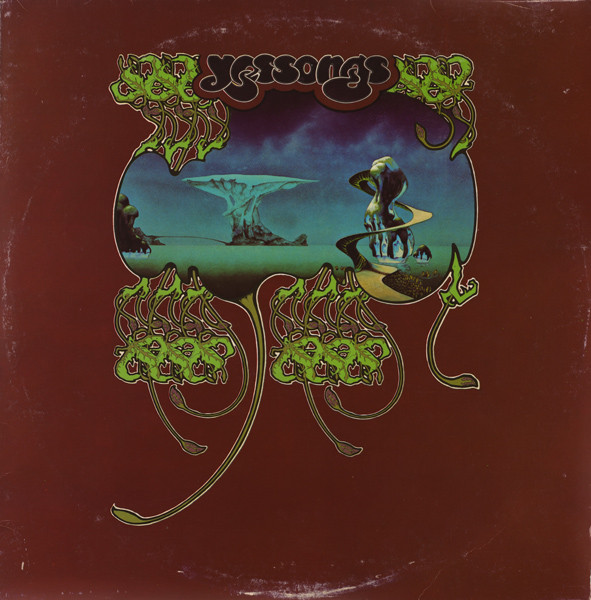
In keeping with the big-ness of prog, when it came time for a live Yes album, a double album wouldn’t do. Yessongs was a three-record set, in a package sporting three Roger Dean landscapes and a booklet full of photos of the band as well as the crew.

Vinyl constraints meant that the order of a basic show was shuffled to fit the six sides. Also, the music was culled from their two most recent tours, and Bill Bruford only appears on the three tracks from the first one. He took off after recording Close To The Edge to find more intricate challenges with King Crimson, whereupon his replacement was one Alan White, most familiar from playing on a few John Lennon and George Harrison records. Would he be able to handle the polyrhythms Bruford left behind?

The album begins with the sound of an expectant crowd clapping through an excerpt from Stravinsky’s The Firebird as the band takes the stage. The music gives way to Rick Wakeman’s Mellotron, and eventually Steve Howe fumbles his way into “Siberian Khatru” (don’t worry, he catches up by the end). Just before “Heart Of The Sunrise” we can hear an audience member yell “louder!” “Perpetual Change” comes from one of the Bruford shows, and is extended for him to take a drum solo. “And You And I” begins not with the harmonics intro from the studio, but a quote from the majestic “Eclipse” section before going back for the vocal. Plus, Steve plays it all on electrics, so something is lost. (Since he gets a solo spot to play “Mood For A Day”, it’s not like he didn’t have an acoustic handy.)

Speaking of solo spots, Jon Anderson warbles alone for a few seconds before introducing Rick, who plays what are listed as “exceprts” from that year’s The Six Wives Of Henry VIII solo album, a multi-keyboard showcase that was neither as prog nor as pretentious as it could have been, the concept notwithstanding. He even throws in a few familiar classical and silent movie quotes to tweak the crowd. Somehow it all works into the intro for “Roundabout”.

“I’ve Seen All Good People” is wisely played to the accompaniment of a trilling acoustic, until the loud section. “Long Distance Runaround” comes from one of the Bruford shows as well, as does “The Fish” that follows, beginning with more noodling from Steve that becomes a basis for Chris Squire to solo, before the band comes in, then they drop out again, then eventually they join again. Altogether this section goes for about nine minutes. “Close To The Edge” takes up all of side five, complete with sound effects, and is still pretty majestic. “Yours Is No Disgrace” seems to start mid-performance with some jamming before the riff starts proper, but they manage to keep the energy going at a galloping pace throughout, through extended sololing, and “Starship Trooper” is delivered fairly close to the record, with the addition of the choral voices from Wakeman’s Mellotron.

If anything, Yessongs proves that the band could tackle their complex material just fine in a live setting. And yeah, the new guy could keep up pretty well too. Fans weren’t thrilled with the occasionally muddy sound of the album—neither was the band nor the producer, for that matter—but they only had to wait 42 years until Progeny: Seven Shows From Seventy-Two delivered on its title, going back to the source tapes for nearly identical Bruford-less setlists across 14 remastered discs. (A two-disc “highlights” package distilled from five of the shows replicates a basic concert for those wanting only a taster. Also, 1975’s Yessongs feature film, which offered a truncated glimpse of one of the shows on the tour, has since made it to DVD and Blu-ray.)

Yes Yessongs (1973)—3
Yes
Progeny: Seven Shows From Seventy-Two (2015)—3
Yes
Progeny: Highlights From Seventy-Two (2015)—3

Friday, June 24, 2022

Eric Clapton 5: Rainbow Concert

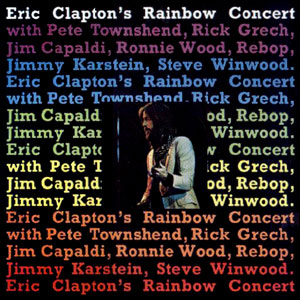
Credit Pete Townshend for trying to get Eric Clapton back to regular work instead of succumbing to his heroin addiction. This entailed assembling an all-star band to back him for a pair of shows at London’s Rainbow Theater. In addition to himself, the other musicians were erstwhile Traffic members Steve Winwood, Jim Capaldi, Rebop Kwaku Baah, and Ric Grech, plus Ron Wood and the elusive Jimmy Karstein. All were prominently listed on the cover of Eric Clapton’s Rainbow Concert, released nine months later by a label that had already been busy recycling Clapton recordings.

All-star concerts are often more notable for who’s playing rather than how well they play, and the six songs here aren’t exactly mind-blowing. After a half-decent “Badge” and a run through the Dominos rarity “Roll It Over”, Stevie sings “Presence Of The Lord.” He takes the lead on Traffic’s “Pearly Queen”, which manages to hold together despite the full stage before galloping to a finish. “After Midnight” is somewhat plodding, but “Little Wing” benefits from the extra players, and they’re mostly in tune. (Reports that several vocals were overdubbed after the fact have not been disproved.)

Coming soon after the Dominos live album, Rainbow Concert wasn’t much more than a cash grab with star power to move it, and so it remained. Following Clapton’s resurgence in the ‘90s, the eventual remastered CD was filled nearly to capacity with further performances from the two shows, reconstructed to approximate a true setlist. Unfortunately, they did so by editing down the songs that were on the original album, which was short to begin with, and leaving out two others from the original night. (Did we really need to hear Townshend ribbing an unamused Capaldi between numbers about an alleged STD?)

That said, the new version is certainly listenable, if not a true document. We hear an emcee introduce “Eric Clapton and the Palpitations,” and they rip right into “Layla”. “Blues Power” and “Key To The Highway” allow for more dueling and noodling, and Stevie nicely takes the high parts on “Bottle Of Red Wine” and “Tell The Truth”. The two drummers can’t cop Jim Gordon’s backwards beat on “Bell Bottom Blues”, but they trade off with Rebop for the middle of “Let It Rain”. All told, it’s better, but not exactly essential.

Eric Clapton Eric Clapton’s Rainbow Concert (1973)—2½
1995 Chronicles remaster: “same” as 1973, plus 8 extra tracks

Tuesday, February 15, 2022

Eric Clapton 4: In Concert

The Layla album was definitely a case of lightning in a bottle. Attempts at a follow-up Derek and the Dominos album didn’t get too far, partially because of various addictions, the absence of Duane Allman, and Clapton’s refusal to keep working with Jim Gordon. Carl Radle went on to work with Leon Russell, and Bobby Whitlock got tired of waiting for Eric to make music with him.

His record company, of course, was happy to keep their golden boy on the racks, starting with 1972’s The History Of Eric Clapton, which compiled a chronological journey through tracks from his days with the Yardbirds, John Mayall, Cream, Blind Faith, Delaney & Bonnie, and the two solo albums. Rarities included the single version of “Tell The Truth” and a jam of same from the Layla sessions, plus off tracks with Jimmy Page, Steve Winwood, and King Curtis.

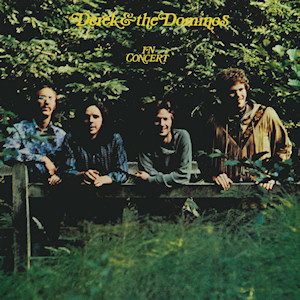
A reissue of “Layla” as a single boosted sales of its parent album, so in the absence of a studio release, a double live album engineered by Eddie Kramer at the Fillmore East in October 1970, just before Layla’s release, became the second Derek and the Dominos album. While it may seem like a quick cash-in, it’s actually a decent record. Without Duane in the room, and in contrast to the crowded stages with Delaney & Bonnie and Joe Cocker’s Mad Dogs & Englishmen, the quartet leans on economy and delivers. They were all pros, after all. Because they can, each track leads to soloing and more soloing; most exceed eight minutes.

An extended drum groove with only the slightest accents from the other band members turns into “Why Does Love Got To Be So Sad”. The extreme stereo separation has Bobby’s vocal and organ on the left and Eric on the right, with Carl and Jim bouncing in the middle, and it’s a crisp mix. “Got To Get Better In A Little While” would have been featured on their second album if they’d finished it, but here it’s a 14-minute boogie with some energetic piano and plenty of wah-wah.

Rather than recycle the Layla album wholesale, the band touches on earlier Clapton showcases. “Let It Rain” cascades for over 17 minutes, though a third of that is the drum solo. The crowd goes wild. “Presence Of The Lord” was sung by Steve Winwood on the Blind Faith album, but Eric strains to reach the notes here. Bobby harmonizes here and there, which helps. “Tell The Truth” doesn’t have the drive of the album version, and much of it is a jam on a single chord, but Bobby is a better vocal foil on “Bottle Of Red Wine”.

“Roll It Over” would have only been known to those who’d found the swiftly deleted single from a few months before; this is a decent performance and worthy of release. “Blues Power” has another moody intro the belies the boogie that follows, but the band navigates the stops and starts well and Eric’s fast chordal riffing propels the tune over the too-long ending. When it finally does, it’s right into the much slower “Have You Ever Loved A Woman” for plenty of fretwork.

In the digital era, the album was mostly ignored, possibly because of Clapton’s own disinterest. But some twenty years after its original release, after Eric had experienced more than a few comebacks along with the runaway success of his Unplugged special and album, his old label compiled an upgrade of sorts as Live At The Fillmore. Six of the songs from In Concert were repeated in a new sequence, interspersed with two tracks repeated from Clapton’s Crossroads box set and five performances appearing for the first time. Different versions of “Why Does Love Got To Be So Sad”, “Tell The Truth”, and “Let It Rain” provide different perspectives, while “Crossroads”, “Key To The Highway”, and “Nobody Knows You When You’re Down And Out” go deeper into the blues. “Little Wing” gains poignancy due to Jimi Hendrix’s death a month before. The liner notes kindly noted which of the two shows used spawned each track, though Anthony DeCurtis should have known how to spell Delaney Bramlett’s first name. Photos from the actual shows are nice too.

Derek & The Dominos In Concert (1973)—3½
Derek and the Dominos
Live At The Fillmore (1994)—3½

Friday, February 5, 2021

Queen 1: Queen

Most successful and, particularly, iconic musical figures have spawned clones. Lots of bands tried to emulate the Beatles, the Stones, Led Zeppelin, and so forth; singers from Frank Sinatra all the way to Madonna inspired imitators. But no other band in history sounds like Queen.

The main reason is the one and only Freddie Mercury, for whom the term “frontman” should be exclusively reserved. It was his voice that perked most people’s ears, plus his onstage presence was positively magnetic. But the other guys weren’t exactly slouches. Brian May built the guitar he played himself, and would eventually get his doctorate in astrophysics to back up his methodical approach to music. He, like drummer Roger Taylor, were excellent singers, and handsome in their own ways, but knew their place in this lineup. John Deacon, the quintessential quiet bass player, didn’t seem to add much beyond bad haircuts, but turned out to be a secret weapon in songwriting.

Their debut album sports some of the aspects that would define their work going forward, even if the distinct Queen sound isn’t there yet. Any band would be proud to have “Keep Yourself Alive” as their opening anthem, full as it is of fretwork, swagger, and energy. “Doing All Right” can’t decide if it’s a campy ballad or prog experiment; the fact that it predates Freddie’s arrival in the band might be the reason, except that the next two tracks sit firmly in fantasyland. “Great King Rat” is an unsavory character out of a nursery rhyme, whose demise is celebrated via a galloping rhythm, while “My Fairy King” begins the experimentation with layered, impossibly high harmonies.

“Liar” is interesting, as it begins with a basic drum solo, a minute or so of riffing on one chord and then another, before the vocal begins its narrative, complete with responses that solidify its genetic connection to a certain bohemian rhapsody down the road. “The Night Comes Down” was written by Brian, but sounds perfectly suited for Freddie; it’s another one where the intro doesn’t seem to point the direction of the track. “Modern Times Rock ‘N’ Roll” is an embarrassing slice of speed metal sung by Roger; luckily it’s over quickly. “Son And Daughter” is slower sludge with enigmatic lyrics that modern ears take as gender-questioning, whereas “Jesus” is much more straightforward, being a scene straight out of the Gospels. In a wonderful instance of foreshadowing, “Seven Seas Of Rhye…” provides a brief instrumental teaser of a song to be completed later.

The band’s albums were grandly reissued and slightly expanded on CD in 1991; Queen’s bonus tracks consisted of the outtake “Mad The Swine”, a later re-recording of “Keep Yourself Alive”, and a modern remix of “Liar”. Of these, only “Mad The Swine” made it to the next round of reissues 20 years later, where it was joined by demos of five album tracks recorded six months before the album sessions proper. (Since the version of “The Night Comes Down” on the album was mixed from the demo, it arguably appears twice.)

A little late for its 50th anniversary, what was now called Queen I was given the Collector’s Edition treatment, with a new remix that inserted “Mad The Swine” in the middle of what was side one and relegated the five demos to their own disc. One disc was devoted to alternate versions, and another to the backing tracks (read: no vocals) for the album plus “Mad The Swine”. Previously released BBC sessions took up another, and the sixth contained nine songs from the previously released Live At The Rainbow ‘74 album, plus two songs from 1976 and two more from an early gig in 1970 when they were still called Smile. (A two-CD version consisted of the remix and sessions discs.)

Queen Queen (1973)—3
1991 Hollywood reissue: same as 1973, plus 3 extra tracks
2011 remaster: same as 1973, plus 6 extra tracks
2024 Collector’s Edition: same as 2011, plus 36 extra tracks

Tuesday, March 17, 2020

Kinks 17: Preservation Act 1

To say that Ray Davies was struggling is an understatement. Ten years into his professional career as a songwriter his work had become a chore, as he toiled away to be both commercial and profound. Plus, having established himself as a storyteller without compare, everything he issued had to have a theme. (Pete Townshend had the same problem, but that’s another story.)

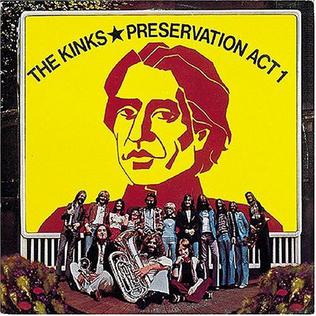
Going back to the well is an iffy prospect for any auteur, so an extended theatrical expansion on the ideas of The Village Green Preservation Society was bound to be a challenge. What’s more, in an era of grand statements versus timetables, 1973’s Preservation opus was released in two parts before being taken on the road as a multimedia extravaganza. Preservation Act 1 was designed to set up the story somewhat, introducing characters and themes. That helps one approach it as just an album unencumbered by a plot yet to be fully revealed, but only just so, as the lyrics point out what characters sing which songs.

A wordless chorale is the basis of “Morning Song”, something of a cartoony intro that dares the listener not to think it’s a parody. “Daylight” is the first proper song, and at least it sounds like the Kinks, even after the now omnipresent brass band comes in to evoke the village green itself. “Sweet Lady Genevieve” is sung by the Tramp, but works as another lovelorn plaint and klassic Kinks too, particularly with brother Dave harmonizing on the title. Unfortunately fittingly, “There’s A Change In The Weather” is where the promise of those tracks dims. This portrait of class struggle is sung by three men in the same vocal tone, starting as a rocker but switching to a brass waltz and crawling through a heavy dirge back to the brass. “Where Are They Now?” and “One Of The Survivors” improve things slightly, the former a lament for Swinging London, angry-young-men playwrights, mods and rockers—basically everything before the summer of Love—while the latter revives the Johnny Thunder character, still on his motorcycle. By now Ray’s rhyming of pop culture icons is wearing thin.

Perhaps the most arcane track to American listeners, “Cricket” is a sermon sung by the Vicar, comparing that oh-so British sport to life. It’s clever, but it’s really to tell whether Ray has any sympathy for these characters. The plot becomes much more apparent on the medley that follows. After the chorus rails against “Money & Corruption” and prays for a savior to lead them, Mr. Black shows up to declare “I Am Your Man”, promising a version of communism that will benefit all (or at least make sure everyone has modern appliances). It would seem that the community had been taken in before, as recounted in “Here Comes Flash”, which begins as a cool riff and Dave singing lead, but soon turns to another cartoon piece, complete with closing faux-classical ending. The Tramp doesn’t seem bothered by any of this, as he’s “Sitting In The Midday Sun”, something of a cross between “Sunny Afternoon” and “Sitting By The Riverside”. In “Demolition” we finally get to hear what makes Mr. Flash so reprehensible: he was the developer who tore down all those lovely old houses to put up tower blocks and destroy the pastoral landscape. Once again, Dave’s solo bits redeem the track.

Again, as Preservation Act 1 was a stopgap to buy time necessary to complete the production, it demands to be heard as a first installment, and not its own entity. A standalone single that served to summarize the story appeared much later. “Preservation” was included as the “prologue” on Rhino’s 1991 double-CD set that contained both acts, and this sequencing was continued on the eventual single CD reissued in the late ‘90s. While a decent rocker and a welcome synopsis, its placement at the start of the program completely throws off the dynamics of the original LP. (The other bonus was the single edit of “One Of The Survivors”, one of the few songs that works on its own.)

The Kinks Preservation Act 1 (1973)—2½
1998 Konk CD reissue: same as 1973, plus 2 extra tracks

Tuesday, November 12, 2019

Kinks 16: The Great Lost Kinks Album

Navigating the Kinks catalog was already a chore in the early ‘70s, given the different releases on either side of the Atlantic. Having recently explored the depths of the vaults with The Kink Kronikles, Reprise (and resident Kinks krusader John Mendelsohn) dangled another carrot in the form of The Great Lost Kinks Album. With a track selection as baffling as its cover art, this album attempted to illuminate some hidden gems, except that the band (read: Ray Davies) didn’t know anything about it till after it was out, and since most of the tracks had already been rejected by the label years before, forced the LP’s deletion. (On top of that, the liner notes even take up several paragraphs slamming the band’s current stage act, which likely didn’t please Ray either.)

Two of the tunes were actually from a truly lost album, the aborted Four More Respected Gentlemen stopgap: “Misty Water” and “Mr. Songbird” (which had already been out on the rare 12-track version of Village Green Preservation Society). With its subtle Mellotron, “Lavender Hill” (not to be confused with the Muswell Hillbillies outtake “Lavender Lane”) is a nice refugee from the Something Else period, as is “Rosemary Rose” with its harpsichord. “Pictures In The Sand” is also from the same era, stuck between vaudeville and “Autumn Almanac”. The trad-jazzy “Till Death Us Do Part” sounds like a TV theme song, and since it was written for a film, that makes sense. Meanwhile, side two is bookended by two similar middle-aged goofs, “When I Turn Off The Living Room Light” and “Where Did My Spring Go?”

A handful of tracks come from another great lost album, that being the never-finished full-length LP Dave Davies was supposedly working on in the wake of his solo singles. “There Is No Life Without Love” and “This Man He Weeps Tonight” were both British B-sides, while the horn-flavored “Groovy Movies” makes its debut here. Dave also sings lead on “I’m Not Like Everybody Else”, rescued from the flipside of the “Sunny Afternoon” single; rumor has it the song was written for Eric Burdon of the Animals, and we believe it. “Plastic Man” was the equally silly A-side to “King Kong”, which was already included on Kronikles, and “The Way Love Used To Be” is the other worthy song from the Percy soundtrack.

As an album, The Great Lost Kinks Album isn’t great by any stretch, but its charms do reveal themselves in time. Original copies are rare and therefore high-priced; luckily, the tracks have since been farmed out to various CDs, predominantly the expanded Village Green and Arthur reissues. So while no single disc replicates it, the tunes are all readily accessible.

The Kinks The Great Lost Kinks Album (1973)—3
Current CD equivalent: none

Friday, June 21, 2019

Roxy Music 3: Stranded

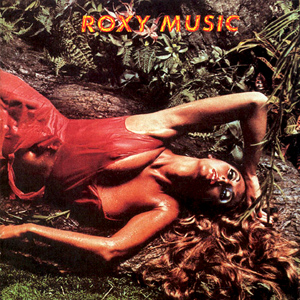
After parting ways with Eno, Roxy Music carried on with another bass player and recruited Eddie Jobson for his skills on violin and wacky synths. Stranded even presented another lovely pinup on the cover to excite teenage crowd. Yet we wonder if they were all working too fast.

“Street Life” rumbles in, sounding a bit like a cousin of “Editions Of You”, so there’s some familiarity, just as “Just Like You” evokes the cocktail party atmosphere, but improves when the band comes in. A quirky modern riff introduces “Amazona”, and somehow the sonics approach the types of noises Eno used to make for them. “Psalm” is given room to breathe, which is good, since it goes from observing someone’s sense of fashion to an actual psalm.

A nice Wall of Sound begins side two with “Serenade”, all the instrumentalists given a canvas to decorate and the melody’s pretty good too. Modern ears can’t help but hear “Courtney Love” when he sings “courtly love”. The doom-ridden “A Song For Europe” is already creepy enough, but then he starts crooning in French over the end. After that, the rave-up beginning of “Mother Of Pearl” is highly welcome, even with the effect of Bryan singing two songs at the same time, and chances are he had been listening to Bowie. But not even a minute and a half in the piece slows dramatically to a three-chord vamp suggesting the “party time” had indeed taken its toll, and it’s back to self-parody. A lengthy a cappella coda repeats until the piano switches to “Sunset”, which is hardly affected at all.

Probably it’s because we like Eno so much, but in opposition to practically every other review we’ve read, Stranded just doesn’t work for us. Roxy Music sounds less like a band than a conveyance for Bryan Ferry, and considering he was also doing solo albums, that’s a disservice to Andy Mackay and Phil Manzanera, although both were allowed to collaborate on the songwriting. Time may change our opinion; watch this space.

Roxy Music Stranded (1973)—2½

Tuesday, June 18, 2019

Bryan Ferry 1: These Foolish Things

Apparently Roxy Music wasn’t broad enough to contain all of Bryan Ferry’s creativity, so first chance he got, he did a solo album. Yet while the cover shot of These Foolish Things presents him as almost contemporary, the cover songs that make up the album itself come off as a broad parody a la the lounge lizard in all his previous photos, as befits a man with a truly twisted idea of scintillating cocktail music.

Yes, these are cover songs, played straight without any wacky effects or funny sounding instruments—unless you count Eddie Jobson’s electric violin. It’s just his croon, backed up by some very enthusiastic women. He runs roughshod through the Top 40 songbooks of the ’50s and ‘60s, touching on everyone from Lieber & Stoller to Goffin & King, Lennon/McCartney to Jagger/Richards, Brian Wilson to Motown. Dylan’s “A Hard Rain’s A-Gonna Fall” is removed from post-nuclear nightmare into a near-clone of “Virginia Plain”. “Don’t Worry Baby” retains the same “Be My Baby” beat as the Beach Boys original, just as “Sympathy For The Devil” doesn’t deviate from the Charlie Watts tattoo. “You Won’t See Me” opens with a busy signal that thankfully doesn’t carry through the entire track. The title track, which dates back to the ‘30s, closes the set with just enough kitsch to fit onto an actual Roxy album.

We suppose that the repertoire presented on These Foolish Things is supposed to be ironic along the lines of Warhol’s soup cans, particularly when he tackles songs usually associated with female singers (“Piece Of My Heart”, “It’s My Party”, “I Love How You Love Me”). Obviously he’s enjoying himself, or he wouldn’t waste his time, much less the listener’s. But truly great covers transcend their originals, and these don’t.

Bryan Ferry These Foolish Things (1973)—2

Tuesday, June 11, 2019

Neil Young 58: Tuscaloosa

Among his many threats and yet-to-be-realized intentions, Neil Young had dangled the idea of an album called Time Fades Away II, compiled from the first part of the tour that spawned the ragged live album of the original name. Ten years after that bombshell revelation, Tuscaloosa presented most of a show that fulfilled that concept. More so, even; unlike Time Fades Away, which concentrated on new material, this set offers more of what the crowd was likely expecting to hear.

After two tunes played solo and sung flat for even him, the band joins to fill in the sound behind his acoustic, concentrating on the hit Harvest album. Halfway through the program, with no warning, “Time Fades Away” explodes into the speakers, turning up the energy considerably. “Lookout Joe” is introduced as a song for returning vets, and sounds very much like the version came out two years later. “New Mama” appears in its loud incarnation, thank goodness, and for the first time we hear a slight resemblance to “Last Dance”. “Alabama” fits very well with the “new” songs, and “Don’t Be Denied” is still trying to find its arrangement. Frustratingly, the album ends on a fade.

Tuscaloosa is more for diehard fans than casual listeners, and it’s no substitute for Time Fades Away, yet we’re happy to have it. At less than an hour, it seems short; a few songs were left off the release due to repetition or supposedly subpar performances, which goes against Neil’s stated “warts and all” goal of the Archives. (“The Loner” was said to have been out of tune, but based on the evidence eventually allowed to stream on his site, it sounds terrific.) Folks following along in release order may tire of songs that were also on the previous Archives Performance Series release, but the guy only had a handful of albums out at the time. And as he also points out, in 2019 he is the only surviving member of the band, so it’s a tribute to them, too.

Neil Young & Stray Gators Tuscaloosa (2019)—3

Friday, June 7, 2019

Nicky Hopkins: The Tin Man Was A Dreamer

The most beloved session pianist of the rock era, Nicky Hopkins continues to be ignored by that large building in Cleveland that has seen fit to memorialize Madonna and her ilk, and that’s simply a crime against humanity. We haven’t been shy about our admiration for him in this forum, as a look at all the entries tagged with his name can attest. He played on most of the early Kinks records, the first Who album and several others in the ‘70s, several Rolling Stones albums and singles and even some tours, and while he contributed to only one Beatles track (that would be him on the bridge in “Revolution”, folks) he was continually tapped for solo albums by each of them. Even Paul got around to using him in the ‘80s.

From time to time he would actually join a band on a full-time basis, which is how he ended up in the Jeff Beck Group; when that imploded he took a chance on Sweet Thursday, which suffered from poor distribution. Having experienced San Francisco, he soon became a key element of albums with Jefferson Airplane (with whom he played at Woodstock), the Steve Miller Band, and Quicksilver Messenger Service; his masterful instrumental “Edward, The Mad Shirt Grinder” closes their Shady Grove album. Jerry Garcia even scored him for one of the many incarnations of his solo band for a time.

Always of fragile health, the excesses common to the ‘70s didn’t agree with him, making full-time touring a non-option. Still, he kept up with the session work, and that’s him you hear on such tracks as Joe Cocker’s “You Are So Beautiful”, “To All The Girls I’ve Loved Before” by Willie Nelson and Julio Iglesias, and of course, Cheech & Chong’s “Basketball Jones”. Once retro became a thing, he was in demand by alt-country bands (e.g. The Jayhawks) and power poppers (e.g. Matthew Sweet), and even hair metal refugees (e.g. Faster Pussycat, Izzy Stradlin). He died in 1994, leaving a legacy we’ve only touched on above, and a giant hole on albums recorded since.

Yet while he could seemingly elevate any recording he contributed to, his own songwriting was fairly limited. While he got writing credit for the occasional track, he managed only a handful of song-based albums under his own name. The most accessible one is 1973’s The Tin Man Was A Dreamer, recorded at Apple Studios with some famous friends helping out, and a listenable mix of straight rock with a few instrumentals.

The brief “Sundown In Mexico” is one such solo exercise, works as a prelude to “Waiting For The Band”, a clever metaphor. “Edward” gets a reprise from its earlier version, played even faster with George Harrison guitars and Bobby Keys on sax for the definitive recording. “Dolly” is a somewhat mawkish tribute to his wife, but it works thanks to the same touches he would soon apply to the Stones’ “Angie”. His voice was fairly weedy on its own, so for an extreme balance he used a hoarse belter named Jerry Williams to bolster some of the more rocking tracks, of which “Speed On” is one.

“The Dreamer” returns to mellow territory, particularly with strings from Elton John’s common arranger Del Newman, while “Banana Anna” goes completely the other direction with Jerry Williams again. “Lawyer’s Lament” is a backhanded compliment over a positively gorgeous backing that deserves better. “Shout It Out” seems to predict Billy Joel, and the double time chorus is always welcome. “Pig’s Boogie” provides a final blast of barrelhouse piano he could play better than anyone.

Outside of all the songs he made better, today there is only one decent biography, and a permanent memorial in the form of a park bench in West London. Nicky Hopkins deserves more than that—his own wing in the Rock and Roll Hall of Fame, for starters—but at least we can hear his music. Throw on The Tin Man Was A Dreamer in between Stones and Who and Lennon and Harrison albums and be thankful.

Nicky Hopkins The Tin Man Was A Dreamer (1973)—3

Tuesday, April 9, 2019

Jerry Garcia 2: Live At Keystone

While you might not think so once considering the evidence of thousands of shared tapes and hundreds of archival CDs, the Grateful Dead did not tour year-round. They actually took the occasional break, and not just to record albums. Jerry Garcia’s best solution for keeping busy during that downtime was merely to play music with other people. Which, of course led to further album releases, as well as shared tapes and archival CDs.

One of his favorite players was Merl Saunders, a Bay Area keyboard player, and when his band (plus Jerry) played a couple nights at Berkeley’s Keystone nightclub, tapes rolled, and a double live album was duly released by Fantasy Records, to which Saunders was signed. Outside of one funky Saunders original (which has gone under numerous titles over the years but usually called “Keepers”) and a freeform group jam, Live At Keystone consists of mildly jazzy extended covers, from “The Harder They Come” to an 18-minute exploration on “My Funny Valentine”. Jerry’s fascination with Bob Dylan shows in versions of “Positively 4th Street” and “It Takes A Lot To Laugh, It Takes A Train To Cry”, both slowed down to a crawl. One of the longest and slowest tracks is “Like A Road Leading Home”, written by Don Nix and Dan Penn, and first recorded by Albert King. It’s also absolutely gorgeous. “That’s All Right Mama” thankfully picks up the pace, and we’ll go on a limb to suggest that some of Saunders’ organ runs throughout the album will have one remembering Pigpen in his prime; the clavinet, not so much.

Due to Jerry’s distinctive voice and fretwork, the album fits with the larger Dead picture, and Fantasy Records has taken full advantage of that. Fifteen years later, once the Dead had become bigger than ever, the label cashed in by issuing Live At Keystone on two separate CDs, each sporting a previously unreleased performance from the original shows. That was joined by Keystone Encores, which offered another hour of music, including the Motown classics “I Second That Emotion” and “How Sweet It Is”. (It was also released as two separate LPs, each with one of the “new” performances added to the main Keystone CDs. Lost yet?) Finally, 2012’s Keystone Companions packed every note from the shows onto four CDs, in order of performance; roughly an hour’s worth of music had not been released several times already, or even once. Also, “Space” from the original LP, while not listed as part of the box, is revealed to be an excerpt from one of the performances of “Merl’s Tune”.

For further research, the sixth installment in the ongoing Garcia Live series presents a three-hour show from a few days before the Keystone run, including further covers like “After Midnight” and “The Night They Drove Old Dixie Down”, and a trumpet player during the second set, whose name has been lost to the mists of time. Further Garcia Live releases have spotlit shows from other stints together. Also, Saunders’ own studio albums often included Jerry somewhere; the Well-Matched best-of presents a sampler of these, as well as music from the Keystone shows.

Merl Saunders, Jerry Garcia, John Kahn, Paul Vitt Live At Keystone (1973)—3
1988 CD: same as 1973, plus 2 extra tracks
Merl Saunders, Jerry Garcia, John Kahn, Paul Vitt Keystone Encores (1988)—3

Tuesday, February 19, 2019

Rod Stewart 5: Sing It Again Rod

Mercury Records was in the midst of its longest drought between Rod Stewart albums, so they made the obvious move of compiling a stopgap. In packaging designed to resemble a very large whiskey glass, Sing It Again Rod was not immediately obvious as a collection of tracks from his previous albums; the inner sleeve even sported photos of Rod posing and preening onstage.

But as they were limited to the albums he did for them, that meant they couldn’t touch anything by the Faces, or even the first two Jeff Beck albums. Still, they had plenty to choose from, going with all of side two of Every Picture Tells A Story, three from the previous year’s Never A Dull Moment, plus two each from the others. While the sequencing is a little odd, the obvious choices are here, but the only rarity is his version of “Pinball Wizard” from the all-star orchestral remake of the Who’s Tommy. Somebody thought “Lost Paraguayos” was preferable rather than to add a B-side, or even the “Oh! No Not My Baby” single that came out a few months later. (These would have to wait until he jumped labels and started selling even more records, with the first of two double albums that regurgitated about two thirds of the material he’d left them.)

As a sampler, Sing It Again Rod does the trick, and makes a fine listen. But those who care to dig deeper should just go ahead and get the originals; somebody else would do a much better cover of “Pinball Wizard” in a couple of years anyway.

Rod Stewart Sing It Again Rod (1973)—3½

Friday, February 15, 2019

Elton John 9: Goodbye Yellow Brick Road

Having recorded several solid albums in a span of time where most artists would be lucky to record even one, it is still astounding that Elton John (and his band, plus lyricist Bernie Taupin and producer Gus Dudgeon) could maintain the pace with a double album. Yet they did; Goodbye Yellow Brick Road is four sides’ worth of catchy tunes, just as one would hope for, covering a variety of styles but all sounding like Elton John. The packaging was pretty classy too, from the clever cover painting to the lyrics and illustrations on the triptych interior.

The daring “Funeral For A Friend/Love Lies Bleeding” suite makes it clear this will not be a simple pop album. Within a few minutes the majestic first half goes from gothic to baroque to opera, all with just a synthesizer (courtesy of engineer David Hentschel, just years away from producing Genesis), piano, and phenomenal guitar. It’s a seamless segue to the rocking second half, where we finally hear vocals, and plenty of them. After eleven minutes it gallops away, destroying towns and villages in its wake. For a complete left turn, “Candle In The Wind” would have remained a simple elegy for Marilyn Monroe, at the time barely dead a decade, but a generation later the song was revised to memorialize a certain princess. These days we’d rather skip to the stomping “Bennie And The Jets”, a terrific snapshot of the glam era, complete with whistling crowds over major seventh chords and slapback echo. And that’s one hell of an album side.

Side two keeps the quality high, starting with the pretty title track and its soaring choruses. “This Song Has No Title” is mostly solo, with just keyboards and vocals, and seems to hearken back to his earlier albums. What’s more, it’s followed by a vibrant reading of the three-year-old B-side “Grey Seal”, which is instantly elevated from curio to classic. “Jamaica Jerk-Off” is the first real clunker here, a genre experiment about as inspired as its title. One of Axl Rose’s favorites, “I’ve Seen That Movie Too” is an improvement, although hindsight shows it’s a precursor to a later hit. It’s a downer to end the side, but there’s two more to go.

Side three is a sneaky sequence, starting almost sweetly, but soon the nasty underbelly of the characters surfaces. The wistful “Sweet Painted Lady” reminds us of The Band, with whom we know Elton was familiar, and Willis Alan Ramsay, of whom he may not have been. The seagulls at the end make an odd transition to “The Ballad Of Danny Bailey” subtitled by the years of a bootlegger’s lifespan. The lyrics are okay, but we gotta admit “the harvest is in” is a clever substitute for “you reap what you sow”, and the extended coda takes the song to a higher level. “Dirty Little Girl” is just plain nasty in an almost funny way, even reflecting the end of “Bennie And The Jets” over the fade. But the tone turns once you’re familiar with “All The Girls Love Alice”, a downright frightening tune about a doomed teenager used up like a dirty little girl.

After all that, side four is comparatively fluffy. “Your Sister Can’t Twist (But She Can Rock ‘N Roll)” sports a cheesy organ part and a roller-rink detour through Palisades Park that Bruce Springsteen would one day take to heart. It pales next to “Saturday Night’s Alright For Fighting”, which out and out rocks. We go back to Hollywood for a tribute to “Roy Rogers”, as if one cinematic icon wasn’t enough, and “Social Disease” continues the Western theme, at least until the saxophone comes in. But then the complicated chord voicings in “Harmony” make a strong case for sticking it out to the end. It might be our absolute favorite Elton song of all.

Many people we respect say Goodbye Yellow Brick Road is his best album, and it is very good, but we can find tracks that would have made better B-sides, than filling out a double LP. Unrelated but still pertinent, its length resulted in its being reissued a number of times in the digital era, first as two CDs, then everything crammed onto one. The 30th anniversary version spread it across two discs again, but added the three B-sides from the album’s singles (which had already been on the expanded Don't Shoot Me I’m Only The Piano Player) plus a remix of “Candle In The Wind” reduced to vocals and acoustic guitar. (This lineup was also released in a set including a DVD with the recent “Classic Albums” documentary.)

Ten years later, another anniversary edition appeared in several sizes. The standard two-disc had the original album on one, with the other split between modern covers of nine of the album’s songs and shuffled “highlights” from a 1973 concert. The super deluxe book-style version included the entire concert on two discs of their own, with the modern covers augmented by the previous edition’s bonus tracks, both sides of his “Step Into Christmas” single, two earlier versions of “Grey Seal” and, for some reason, “Philadelphia Freedom” and “Pinball Wizard” from the following year—all of which were already available on other expansions and compilations. And a DVD presenting a edit of a 1973 documentary about the album.

Elton John Goodbye Yellow Brick Road (1973)—4
2003 30th Anniversary Deluxe Edition: same as 1973, plus 4 extra tracks
2013 40th Anniversary Deluxe Edition: same as 1973, plus 18 extra tracks (Super Deluxe Edition adds another 18 plus DVD)

Tuesday, January 1, 2019

Grateful Dead 10: Wake Of The Flood

Three years had passed and three live albums had appeared since their last studio album, and now that the Grateful Dead had their own record label, they decided to capture their newest material without an audience. Wake Of The Flood is far from the acoustic one-two of 1970, as Pigpen was dead and Keith Godchaux was given free rein on all kinds of keyboards. Donna Godchaux can be heard singing, but she’s still mostly in the background.

“Mississippi Half-Step Uptown Toodeloo” is a fairly low-key start, notable for its saloon piano and especially the prominent fiddle, contributed by bluegrass legend Vassar Clements. Lest we get too carried away, Keith takes his only lead vocal on “Let Me Sing Your Blues Away”. His thin voice is no match for the dated sax that honks all the way through the tune, but at least it’s short. Despite an intriguing intro, “Row Jimmy” just as slow, even for the Dead, but it’s a grower, if you let the song emerge from underneath the phased electric piano and gurgling clavinet. Even lovelier—and yes, slower—is “Stella Blue”, the words given space to breathe alongside the chords.

Side two begins tentatively as well, but the chorus of “Here Comes Sunshine” redeems the lyrics, and never quite gets close to ripping off the Beatles. The tune that sounds most like the Dead is “Eyes Of The World”, slathered with Jerry’s lead guitar dancing in between the vocals and harmonies, setting audiences positively atwirl. Then Bob Weir finally gets a chance to shine, and he does, with the 12-minute “Weather Report Suite”. A pretty “Prelude” leads into “Part 1”, with the pedal steel nicely rolling alongside the organ. The lyrics for this part were written with Eric Andersen, and the overall effect is preferable to “Part 2—Let It Grow” (written with usual Weir collaborator John Barlow), which gets more frantic, punctuated by brass and what sounds like strings. The saxophone comes back for an extended solo, and indeed Martín Fierro would join the band on tour before being relegated to Jerry’s solo bands.

Wake Of The Flood is okay for mid-period Dead, but some of the blandness that affected so many of their contemporaries in the ‘70s is evident here. The eventual expanded CD actually enhances the listen, thanks to a complete solo acoustic “Weather Report Suite” demo, alongside an outtake of “China Doll” and a live “Eyes Of The World” that stretches to 17 minutes. When the fiftieth anniversary of the album came around, however, these were eschewed for home-organ-with-rhythm-box demos of “Eyes Of The World” and “Here Comes Sunshine” added to the disc with the album, and six tracks—running 71 minutes in total—from a November 1973 show on another. It’s fairly sleepy for the first half hour, picking up speed in “Playing In The Band” but unfortunately Donna is singing in a different key. (To be fair, everyone seems off-pitch on “Mississippi Half-Step Uptown Toodeloo”.) And as they did with Workingman’s Dead and American Beauty, this was preceded by the digital-only Wake Of The Flood: The Angel’s Share, which gathered two-and-a-half hours of session outtakes.

Grateful Dead Wake Of The Flood (1973)—3
2006 CD reissue: same as 1973, plus 3 extra tracks
2023 50th Anniversary Deluxe Edition: same as 1973, plus 8 extra tracks

Friday, November 9, 2018

Elton John 8: Don't Shoot Me

So much of Elton John’s music had cinematic tendencies, with stories to tell. Yet despite the cover art and overall design, Don't Shoot Me I’m Only The Piano Player is merely a collection of songs, in so many styles that it’s more like a variety show than a movie. The public didn’t care; they loved the singles and he had another hit.

“Daniel” is one of those hits that today may inspire a lunge to change the station, but it’s still a sweet song; note the electric piano for a change, and trilling acoustics. “Teacher I Need You” has triplet arpeggios that would dominate several Ben Folds albums in thirty years’ time, and a lyric not too far from the teen angst of “Amy” and “I think I’m Gonna Kill Myself”. “Elderberry Wine” and “Midnight Creeper” both boast meaty brass for the intentions of boogie; the former has enough meter changes to have you tripping over your feet, while the latter tries to be tough. In between, however, is “Blues For Baby And Me”. This criminally under-heard tune has all the elements of an Elton John classic: a cascading melody matched by the piano, a romantic lyric, and open-ended mystery. The strings and horns recall Love and “Levon”, and either a Coral sitar or a real one adds unexpected accents.

Despite its borderline disco beginning, “Have Mercy On The Criminal” is a heavy-blues version of the outlaw cowboy music of only a few years before, given more drama by Davey Johnstone’s multi-layered guitars. “I’m Gonna Be A Teenage Idol” is a terrific track, but for the overdone horn arrangement and unconvincing lyric. (For a better slant, think “Don’t Stop Me Now” by Queen.) “Texan Love Song” is a parody of redneck ideology and hardly an homage, an approach that works so much better on “Crocodile Rock”, with its simple progression and infectious singalong la-la chorus tag. It would be a fine ending to the album, but “High Flying Bird”, another poetic Bernie Taupin lyric given a big open treatment, points to certain songs yet to be written or recorded.

As mentioned, Don't Shoot Me I’m Only The Piano Player was a huge hit, and got his 1973 off to a strong start. Even with only two hit singles, it was enough; plus the packaging had lots of pretty pictures in a full-size lyric booklet. Many years later, the reissue added decent value in the form of four B-sides from the era. “Screw You”, “Jack Rabbit”, and “Whenever You’re Ready (We’ll Go Steady Again)” will be of interest to completists, but the key addition is “Skyline Pigeon”, a re-recording of a song from his debut, given a wonderful string arrangement and beautifully understated treatment by the band. A gem, truly.

Elton John Don't Shoot Me I’m Only The Piano Player (1973)—3
1995 CD reissue: same as 1973, plus 4 extra tracks

Tuesday, October 30, 2018

Faces 4: Ooh La La

Even with the changing in attitudes and success, the Faces could still come through with what they did best. While stories are rife with increasing tensions between Rod Stewart and the rest—plus Ronnie Lane wanted to tour in a gypsy caravan—it’s astounding that Ooh La La is as together as it is.

Right away “Silicone Grown” sets up the boogie, a great riff and bash for two chords. Due to its similarity to “Memphis”, “Cindy Incidentally” could pass for the album’s token cover, but works its way up to a different chorus, for a superior tune. Ronnie Lane gets two minutes to shine on “Flags And Banners”, a lovely strum given some fuzz and over too soon, then it’s back to boogie on “My Fault” (Ronnie Wood soloing all the way, natch). The rollicking “Borstal Boys” is the only song we know that features a Klaxon horn, bringing back childhood memories of Cheaper By The Dozen, and not the Steve Martin atrocity. Too bad it doesn’t play through the whole song.

An already short album has an instrumental, “Fly In The Ointment”, kicking off side two, and while it has too many minor chords to be a jam, it’s perhaps a sign of the lack of camaraderie behind the scenes. Still, it’s a good setup for a quieter selection of tunes, beginning with Rod’s tender “If I’m On The Late Side”. The surprising vocal combo of both Ronnies and Ian McLagan propels “Glad And Sorry” to wonderful heights, then “Just Another Honky” has another nice riff swapped between the piano and guitar. The title track caps the album, a lovely conversation between the generations, with a lead vocal by Ronnie Wood, of all people! We can thank modern pop culture for bringing this song into wider exposure, given its appearance in movies and commercials, and we’re not sick of it yet.

Even if they didn’t know it would be their last studio album—and they probably didn’t—Ooh La La manages to be a truly grand finale, expertly sequenced, without a single throwaway. Some things are apparently just too good to last.

Faces Ooh La La (1973)—3½