Showing posts with label 1988. Show all posts

Tuesday, December 2, 2025

Elton John 28: Reg Strikes Back

The comeback started with the live album continued for Elton John, but he wouldn’t call it that. Rather, the title of Reg Strikes Back suggested a pugnacity along the lines of “I’m Still Standing”, and to prove he was serious, the album cover showed several closets full of old costumes and hats, which were presumably among the items soon to be auctioned for charity. Musically it wasn’t much of a departure; Bernie Taupin was on board and Davey Johnstone was still in the band, but Dee Murray and Nigel Olsson were only asked to provide backing vocals.

The arrangement of “Town Of Plenty” proves what part of what decades we’re in, and the mix—with the aforementioned backing vocals up front—obscures the social commentary in the lyrics. (News flash: Elton doesn’t like “the media”.) Then “A Word In Spanish” saunters in reminiscent of “Nikita”; it’s a nice idea, bringing in Bernie’s fascination with movies and romance, but Elton belts out the lyrics where a softer approach would have been more effective. Speaking of throwbacks, “Mona Lisas And Mad Hatters (Part Two)” is a sequel nobody asked for. While its predecessor eloquently celebrates New York City and the vulnerability one can feel there with a tender backing to match, this one gushes over just how awesome it is, presumably for those who can afford it and aren’t worried about getting mugged, atop a brassy R&B track with Freddie Hubbard taking a trumpet solo. But while “I Don’t Wanna Go On With You Like That” is a lot like what we’ve heard so far, it works, even with the limited range of the melody and mildly robotic beat. “Japanese Hands” finds Bernie in love again, but this time on another continent, and with a softer approach and not too heavy on the clichéd Oriental accents.

As with side one, side two also starts with a kiss-off. “Goodbye Marlon Brando” is mostly a list turned into a lyric, fleshed out in the bridges, but it also mostly expands on an idea already started by Tom Petty and Bob Dylan a year before on “Jammin’ Me”. “The Camera Never Lies” is an improvement, a meaty performance and catchy changes throughout, following an accusatory tale. Davey gets credit for helping out with “Heavy Traffic”, a character-heavy study of vice that burbles along over something of a salsa beat that stops and starts with odd frequency. The judgement continues on “Poor Cow”, which unfortunately uses that term as a hook in the chorus, at odds with the disdainful verses. While it makes for a nice finale, “Since God Invented Girls” just seems odd coming out his mouth, even if he was still technically married to his wife. It’s not the first reference to the Beach Boys on the album, underscored by Carl Wilson and Bruce Johnston actually providing harmonies, but it needs a better hook, which starts with the title.

Reg Strikes Back was something of a hit, as he’d intended, and certainly brought him back to a point where he was consistently on the radio—as well as VH-1 if not MTV. In contemporary interviews he boasted about all the piano playing he’d done compared to his recent output, but it still sounds too much of its time. (The expanded reissue added the B-side “Rope Around A Fool”, which could easily have replaced one of the lesser tracks on the album, plus a remix of “Mona Lisas Part Two” and two of “I Don’t Wanna Go On With You Like That”, one of which was labeled “Just Elton And His Piano”, but like the rest of the album, it’s still a digital piano instead of a grand.)

Elton John Reg Strikes Back (1988)—2½
1998 CD reissue: same as 1988, plus 4 extra tracks

Friday, March 21, 2025

Kinks 31: The Road

Perhaps to maximize their investment in the band, their newish labels decided that the second album they’d release in the Kinks’ contract would be a live one, recorded on the tour in support of Think Visual. This could certainly be considered an astute commercial move, but somebody decided it should be titled Live: The Road. While it did lead off with a brand new studio song of the same title, this was only eight years after their previous live album, and of a very similar moniker.

We’ve lost count of how many songs Ray Davies had already written and released concerning the drudgery of touring. But “The Road” does have its charms, beginning wistfully, then picking up speed and giving something of an affectionate history of the band, namedropping here and there, and referencing well-known song titles. At six minutes it crams a lot of ideas in, but it’s not as embarrassing as it could be. And considering the band now consisted of only two original members with three dedicated supporting players, it’s nice to hear Pete Quaife and Mick Avory get mentioned.

From there the album presents a smattering of songs from the ‘80s—with the exception of “Apeman”—recorded not at stadiums but “outdoor pavilions”, which was the size of their draw by then. “Destroyer” features a lot of added asides from Ray, playing with and around the lyrics. Dave gets the spotlight on side two with “Living On A Thin Line”, but the other draw—if you can call it that—for collectors is “It (I Want It)”, a truly strange hodgepodge of styles beginning with Reagan and Gorbachev soundbites and devolving into a diatribe against a consumerist housewife.

Overall, the album is enjoyable but hardly legendary. If it got more people to go to see them live, then mission accomplished. But it didn’t sell, and hit used bins before dropping out of print.

The Kinks Live: The Road (1988)—3

Tuesday, January 14, 2025

Jane’s Addiction 2: Nothing’s Shocking

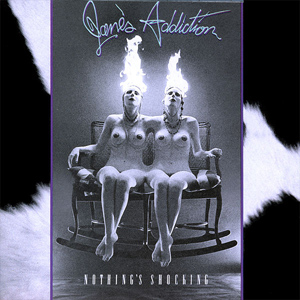
Thanks to a major label deal and a lot of press, Jane’s Addiction broke into mainstream success with Nothing’s Shocking. And right out of the gate, they were controversial, with cover art and lyrics requiring the now ubiquitous parental advisory sticker. That didn’t distract too much from the music, which sported plenty of guitars, electric and acoustic dynamics, and a vocal delivery that garnered more complimentary comparisons than other children of Led Zeppelin at the time.

The album begins, as many of their songs do, with a simple Eric Avery bass riff that barely hints at what’s to follow. A few power chords are hit and held, then drums join to match the rhythm and a melody appears. After some riffs and lyrics consisting of “here we go” and “home”, and that’s “Up The Beach”. An Arthur Lee-style acoustic intro belies the power of “Ocean Size”, and while it does reappear to help the verses breathe, it’s mostly a chance for Perry Farrell to yell in between Dave Navarro’s fretwork. “Had A Dad” is the first real song with non-abstract lyrics, in this case, the grunge generation ongoing absent parent issues. Stephen Perkins gets to explore his kit at the start of “Ted, Just Admit It…”; besides showing their predilection for ellipses, an actual soundbite from Ted Bundy is added to enforce the thesis that sex is violent and provide the album title. The double-time coda takes the tune to the next level. “Standing In The Shower… Thinking” sports a scratchy funk rhythm that would become their trademark.

It’s been something of an aural onslaught, so the dreamier, romantic “Summertime Rolls” provides a welcome change of pace, though it too amplifies for a spell. “Mountain Song” brings back the aggression big time, then to double down on the funk, “Idiots Rule” sports a horn section courtesy of two guys from Fishbone and the Chili Peppers’ Flea playing a very accomplished trumpet. “Jane Says” is upgraded from the first album, given a boost with very melodic steel drums for percussion, and still remains catchy despite, again, two chords. “Thank You Boys” is a snappy goof that serves to close the album, but only on the vinyl. Both cassette and CD got a bonus in a remake of “Pigs In Zen” for another profane rant.

While this summation may not be as descriptive as we like, the music really does speak for itself. Nothing’s Shocking deftly straddled heavy metal and college alternative, making them a band to watch. And for a while, they were. All these years later it still sounds fresh, and free of the trappings of ‘80s production standards. Not bad for a bunch of kids and their older frontman.

Jane’s Addiction Nothing’s Shocking (1988)—4

Friday, May 17, 2024

Guns N’ Roses 2: Lies

By the end of 1988, tapes (and CDs) of Geffen catalog number 24148 sold hourly. It seemed every kid and their older siblings had to have Appetite For Destruction—along with Metallica’s …And Justice For All—and the posters, pins, T-shirts, and stickers sold pretty well too. Soon enough, another Geffen catalog number (24198) was flying out of stores alongside its elder brother. GN’R Lies was something of a stopgap, a glorified EP and initially priced accordingly.

The “live” side ran only 13 minutes, and replicated the now-rare Live ?!*@ Like A Suicide EP from 1986, put out while the band was prepping Appetite. These were actually demos spiced up with canned audience noise, but most young listeners were fooled. “Reckless Life” is pretty snotty, as is the cover of Rose Tattoo’s “Nice Boys”. Somebody’s honking a sax on “Move To The City”, which swamps the swagger of this otherwise lame song, but Aerosmith’s “Mama Kin” is a fairly accurate demonstration of their roots. Axl’s profane intro proves he didn’t understand the song’s lyrics.

The second side of all new acoustic-based tracks put them well ahead of not only the Unplugged trend but the competition, proving they really were musically adept. “Patience” is the first surprise, since pretty much nobody was whistling on songs then, and Axl sang most of it straight, saving the yowl until the coda. “Used To Love Her” is a poorly landed joke, but it’s still catchy as heck, somewhat descended from the Stones’ “Dead Flowers”. The revamp of “You’re Crazy” is startling and very successful, slowed down and funky, but still edgy. “One In A Million” is the tune that pissed off everybody with a conscience, as it railed equally against law enforcement, foreigners, and minorities. It’s got more whistling and some fuzz guitar, and the portions of the song that don’t offend—like the backing track and about half of the lyrics—are actually pretty good. Instead, Axl was all about making statements, and the backlash was such that the song was pointedly left off the deluxe expansions of Appetite For Destruction three decades later, though the song remains available. Not for the last time would Axl torpedo any respect the band garnered.

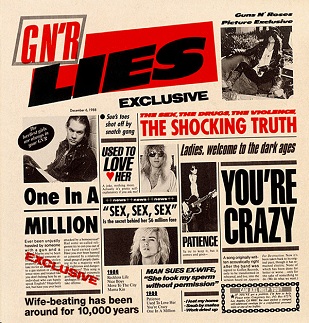
Side two is what makes Lies worth keeping, though the mixed messages in the music as well as all over the tabloid-style cover prevented them from gaining more respect. Yet at this point they pretty much ruled the roost, so much so that every wannabe band made sure to include power ballads on their next albums.

Guns N’ Roses GN’R Lies (1988)—3½

Friday, March 22, 2024

Jerry Garcia 8: Almost Acoustic

Multiplatinum success wasn’t going to slow Jerry Garcia down any, and just because the Dead didn’t have any gigs booked didn’t mean he wasn’t going to play somewhere. For a few months in 1987 and 1988 he did a series of shows with a group that augmented a few members of the Jerry Garcia Band with old friends David Nelson (of New Riders of the Purple Sage) and Sandy Rothman plus a fiddle player. Hence, the Jerry Garcia Acoustic Band.

The repertoire was primarily folk and blues, not as extreme as the bluegrass of Old & In The Way but certainly connected. Almost Acoustic presented a grab bag of tunes recorded during stands in Frisco and L.A. and released on the Dead’s own label for the new generation of Deadheads to snap up for their CD players. These kids would have been familiar with the likes of “Deep Elem Blues” and “I’ve Been All Around This World”, and of course the closing “Ripple”, but they might not have expected the original song about Casey Jones. In the process they would become more familiar with the work of Mississippi John Hurt, Elizabeth Cotten, Jimmie Rodgers, and so forth.

The playing is relaxed and friendly, the crowd noise appreciative but not distracting. Jerry’s voice is a bit rough, but he’d been through a lot lately. Luckily the other pickers sing, and they harmonize well. And if you like this, there’s more where it came from, as seen below.

Jerry Garcia Acoustic Band Almost Acoustic (1988)—3
     Archival releases of same vintage:
     • Pure Jerry: Lunt-Fontanne, NYC, 10/31/87 (2004)
     • Pure Jerry: Lunt-Fontanne, The Best Of The Rest (2004)
     • Ragged But Right (2010)
     • On Broadway: Act One (2015)
     • Electric On The Eel (2019)

Friday, March 8, 2024

Clash 8: Story Of The Clash

Maybe it’s just us, but the distance between 1983 and 1988 seems a lot wider than other five-year spans within decades. So when it came out, the double-LP retrospective The Story Of The Clash, Vol. 1 seemed like an overdue look back to a much different time. The back cover nicely noted the release dates of each track, while the gatefold liner notes in miniscule print by one Albert Transom (aka Joe Strummer) bordered on stream of consciousness without really illuminating the music. (The UK version of the album had custom labels with each member’s face on a different side, while the US were stuck with stock Epic labels.)

The chronology seems to go backward, but still has something of a logic to it. Anyone who only knew Combat Rock might have been thrown by the near-disco opener in “The Magnificent Seven” before getting to the songs they already knew. Another funk-dub hybrid, “This Is Radio Clash”, makes its first album appearance, and “Armagideon Time” is nicely given a bigger platform. Side two further explores the pop-leaning side, via such favorites as “Train In Vain” and “I Fought The Law”, but also curveballs like “The Guns Of Brixton” and “Bankrobber”.

The other two sides of the album are mostly devoted to the first two albums and the earliest punk singles; of course, some of those had been included on the American version of the first album, so they weren’t as rare for us. (Also, “Capitol Radio” is the original UK EP version with the interview snippet at the top.) But for a jump to “London Calling” and “Spanish Bombs”, the set ends well on “Police And Thieves”.

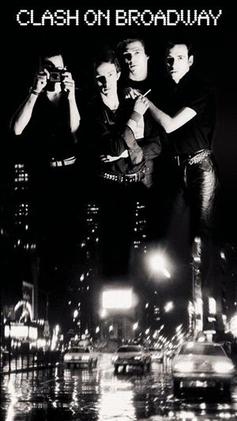
Naturally, anybody would say that four sides of Clash music would leave something out—only two tracks from Sandinista!?—but a Volume 2 never happened. Instead, once everybody started getting a box set, the Clash did too. Clash On Broadway was designed for CD as opposed to vinyl or cassette, and therefore at three discs had than double the capacity of Story Of The Clash.

Along with all the key albums, singles, and B-sides, box sets had to have rarities. Disc one delivers with demos of “Janie Jones” and “Career Opportunities” produced by Guy Stevens, and live versions of “English Civil War” and “I Fought The Law”. American consumers would have appreciated the songs from the first UK album, which hadn’t made it to CD yet. Disc two is dominated by Give ‘Em Enough Rope (plus the decent outtake “One Emotion”) and London Calling, while the third disc features a live “Lightning Strikes (Not Once But Twice)”, a soulful cover of “Every Little Bit Hurts”, the outtake “Midnight To Stevens”, and the unedited take of “Straight To Hell”. While not listed anywhere, “Street Parade” ends the set.

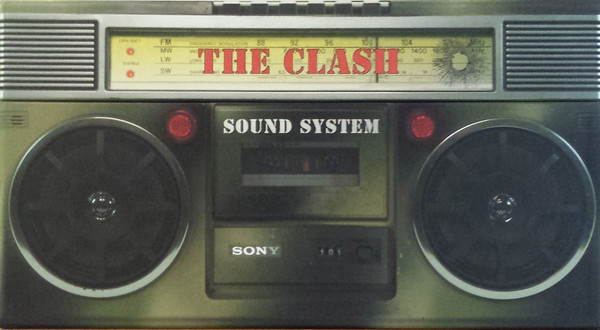
In the 21st century, box sets were expected to include absolutely everything if consumers were going to buy them again. Sound System—cleverly designed like a boom box—offered the first five albums on eight discs, plus two discs mopping up singles, B-sides, and outtakes, rounded out by alternate mixes of Combat Rock material. Another disc had nine early demos and six live songs from the Lyceum in 1978. Even with all that, only six of the rarities from Clash On Broadway were included in the set, making that first box a keeper.

Sound System also contained a DVD and piles of ephemera, which made the eight-disc 5 Album Studio Set, designed like a road case, a cheaper option. Or you could spring for the newly curated, less obvious The Clash Hits Back two-disc set, which was derived from a 1982 gig setlist, and we’d be interested in hearing the actual gig. It was also 20 minutes shorter than 2003’s more chronological The Essential Clash, which happened to be the only one of these compilations to include anything from Cut The Crap.

The Clash The Story Of The Clash, Vol. 1 (1988)—4
The Clash
Clash On Broadway (1991)—4
The Clash
The Essential Clash (2003)—3½
The Clash
Sound System (2013)—3½
The Clash
The Clash Hits Back (2013)—3½

Friday, February 9, 2024

Thomas Dolby 3: Aliens Ate My Buick

Frustrated by his second album’s failure to extend the chart success of the first, Thomas Dolby turned to producing other people and dabbling in soundtrack work. This choice to create art over artifice made plenty of room for the likes of Howard Jones and other folks with wacky haircuts and the latest synths and sequencers. When he did get around to making another album, it was on his terms, recruiting a new band of unknowns and starting from scratch. Aliens Ate My Buick unfortunately followed its elder sibling to be received by indifference, though it deserved better.

“The Key To Her Ferrari” is a complicated sounding jazz parody featuring the distinctive narration of Robin Leach. While definitely a familiar pop culture icon when the album was first released, he was already past his fifteen minutes even then, and newer generations might not get the joke. His own narrated interlude isn’t much better. Luckily, “Airhead” is certainly catchier, though certainly misogynist, which the “explanation” in the final line doesn’t excuse. The lasciviousness continues on “Hot Sauce”, contributed by funk legend George Clinton, sporting a regular “spaghetti western guitar” and salsa interlude, as well as references to Larry Blackmon of Cameo. (Clinton previously employed Dolby on one of his own albums, before joining him, and Lene Lovich, and the Brecker Brothers, on a one-off single called “May The Cube Be With You”. Originally credited to Dolby’s Cube, it’s included here as a bonus track slash afterthought on the CD and cassette.) “Pulp Culture” skewers the L.A. scene, with a groove that would be borrowed by David Bowie in five years for “Black Tie White Noise”.

People still thought of albums in terms of sides in those days, and side two is a little more reserved. “My Brain Is Like A Sieve” is an aw-shucks kind of love song with a mild but not overt Jamaican influence. Either Laura Creamer or Rosie Stone (of Sly & The Family) sings the perfect harmony, but that is Ed Asner saying “murder” for some reason in the middle. The title of “The Ability To Swing” is certainly suggested by the tempo, but the lyrics are more abstract. It was even covered six years later by Patti Austin. In “Budapest By Blimp” we finally have a sumptuous track in line with the travelogues on The Flat Earth. At over eight minutes, with a slight Steely Dan groove and impenetrable lyrics, it’s exactly what this album needs to succeed. (So much so that skipping the bonus track is advised.)

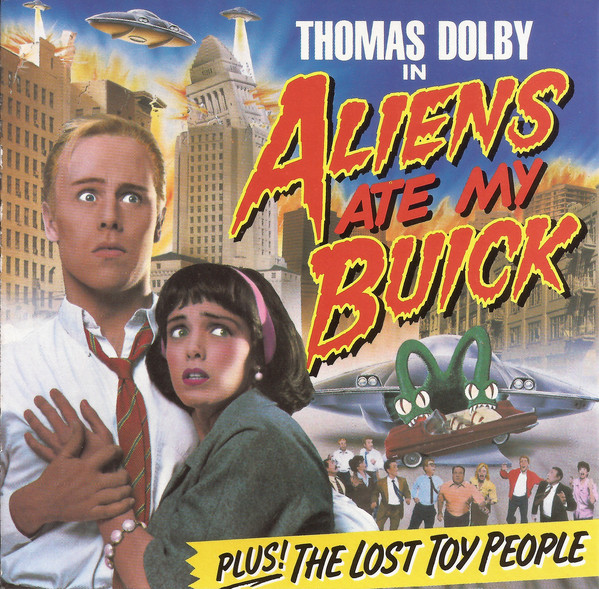
Because his name and the very title of Aliens Ate My Buick still told potential listeners that he was just as wacky as he was on “She Blinded Me With Science”, the album didn’t deliver for those seeking such hilarity, which is their loss. Besides, the title still brings a chuckle, and the back cover is a scream.

Thomas Dolby Aliens Ate My Buick (1988)—3

Friday, January 20, 2023

Frank Zappa 48: Best Band and Jazz Noise

Frank spent the first two years of the ‘90s visiting formerly Communist countries and overseeing the CD debuts of several catalog items. Then the summer of 1991 brought forth not one but two double-CDs dedicated to performances by the 1988 band, referred to directly in the title of the first set.

The Best Band You Never Heard In Your Life was likely the more accessible of the two for most people, consisting of more familiar songs plus comedic threads. Despite being cobbled from multiple locations, the first disc is presented much like a standard set, with something of an intro amid “Heavy Duty Judy”. Mike Keneally gets to hone his Johnny Cash impression, not only on “Ring Of Fire” but several songs after. A variety of old favorites make way for a reggae arrangement of Ravel’s “Bolero” with a now-customary quote from “My Sharona”, and four songs from One Size Fits All close the disc.

The second disc sports some interesting covers, beginning with robotic stabs at both “Purple Haze” and “Sunshine Of Your Love” from a soundcheck. “When Irish Eyes Are Smiling” (performed on St. Patrick’s Day) segues into the theme from The Godfather before a “comedy” monologue in the guise of a Southern televangelist. Several lyrical changes ridiculing Jimmy Swaggart dot the next handful of songs, and the first part of “The Torture Never Stops” incorporates several classic TV show themes. The highlight of the album, and certainly the tour, was their arrangement of “Stairway To Heaven”, taken at a reggae pace, which switches to ska for the guitar solo, played note for note in unison by the horn section, then to the original’s tempo for the finale. (Not included, allegedly for copyright reasons, was the band’s “Beatles Medley”, which put new words, mostly about Swaggart, to the original melodies and arrangements of “Norwegian Wood”, “Lucy In The Sky With Diamonds”, and “Strawberry Fields Forever”. One such performance would finally surface on Zappa ’88: The Last U.S. Show in 2021.)

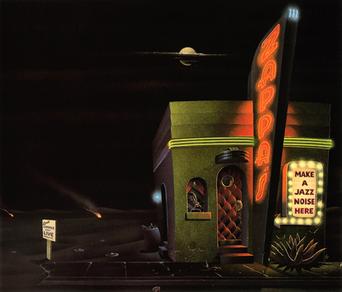
Make A Jazz Noise Here gets its title from an aside in “Big Swifty” that includes quotes from several classical pieces. As a whole it’s more concerned with instrumentals, solos, and improvisation, but he made sure to include an opening “Stinkfoot” to talk more about Jimmy Swaggart. A long piece combining various chunks from “Pound For A Brown” featuring manipulated samples gives way thankfully to the “Orange County Lumber Truck Medley” into “Theme From Lumpy Gravy”. A lengthy “King Kong” is given the reggae treatment, with a monologue from Bruce Fowler about prehistoric fish and Congressional samples breaking up the solos, that degenerates into a free-for-all titled “Star Wars Won’t Work”.

The second disc is devoted to more noodling for fans of the more adventurous material of the previous decade, including “The Black Page”, “Dupree’s Paradise” (much shorter than on the Helsinki album), and “Sinister Footwear”, with a couple of detours into brief performances of pieces by Bartok and Stravinsky. We suspect “Stevie’s Spanking” was included simply because Mr. Vai had been more visible in the hair metal tape racks, but it’s an opportunity for Frank to shred, as he also does on “Alien Orifice”, “Cruisin’ For Burgers”, and “Advance Romance”. “Strictly Genteel” provides, as always, a nice finale.

If you like the other releases by the 1988 band, Make A Jazz Noise Here does complete the set, but it’s much more indulgent and geared towards musos and other geeks. Its rating therefore reflects its necessity.

Frank Zappa The Best Band You Never Heard In Your Life (1991)—3
Frank Zappa
Make A Jazz Noise Here (1991)—2½

Friday, April 29, 2022

Frank Zappa 46: Broadway The Hard Way

In 1988, Frank Zappa assembled a band that was arguably his most accomplished for what was supposed to be a lengthy worldwide tour. The 12-person band, including a full horn section, made it through an East Coast leg and a few months in Europe with a repertoire in the dozens before a petty mutiny imploded the project, and that was that.

Naturally, Frank had recorded all the gigs, and used his suddenly free time to compile a few albums from the gigs that had actually been played. Broadway The Hard Way was the first of these, and concentrated heavily on the new songs that had debuted. Considering the timeframe, the lyrical content and subsequent asides focused on two pet peeves: the activities of the Reagan administration and the hypocritical hijinks of such televangelists as Jimmy Swaggart.

The album originally appeared two ways—a two-sided program on LP and cassette, and an extended, rejigged sequence on CD. Both started with the same three songs, all new. “Elvis Has Just Left The Building” is sung by new guitarist Mike Keneally this side of a Johnny Cash impression, punctuated by accents from Ike Willis and a pretty good imitation of Sam Kinison screaming. “Planet Of The Baritone Women” is misogyny directed at Wall Street in an old European style, whereas “Any Kind Of Pain” almost approaches adult contemporary in its sax solos and chorus; Frank takes a solo here.

On the LP and cassette, the balance of side one was filled by “Jesus Thinks You’re A Jerk”, which was the last song before intermission. This is a highly intricate song in structure and harmony, mostly dealing with televangelists Jim Bakker (who went to prison for embezzlement) and Pat Robertson (who was running for president that year) but touching on the NRA and the KKK along the way. A fan named Eric Buxton, who’d been following the tour, is brought up to read a Twilight Zone-style monologue before the music becomes more adult contemporary again.

Side two of the LP and cassette begin with Frank explaining the concept of a form of prison food called “confinement loaf”, which is referred to throughout “Dickie’s Such An Asshole”, which follows, and elsewhere on the album. However, the CD omits this detail, so it goes straight from “Any Kind Of Pain” to “Dickie’s Such An Asshole”, matching the LP and cassette sequence again.

So anyway, “Dickie’s Such An Asshole” dated from the Roxy era when the Watergate hearings were threatening to take down Nixon; clearly Frank saw parallels between that scandal and the Iran-Contra affair from the year before. “When The Lie’s So Big” continues to lambaste Republicans, with clever inserts and quotes from the horn section, then “Rhymin’ Man” turns its ridicule to the Rev. Jesse Jackson, who was also running for president that year. This time the Johnny Cash voice is more overt. “Promiscuous” is rapped by Ike Willis about then-Surgeon General C. Everett Koop (whom Frank felt resembled Cap’n Crunch via his uniform and facial hair) and the theme from the TV show The Untouchables allows Ike to do a Robert Stack impression while skewering figures in Iran-Contra.

The LP and cassette end there, but the CD has another half an hour of music. “Why Don’t You Like Me?” rearranges “Tell Me You Love Me” with new words about Michael Jackson, sung by Robert Martin in a bad impersonation. “Bacon Fat” is an old R&B tune with new lyrics about confinement loaf, while the jazz instrumental “Stolen Moments” becomes a prelude for special guest Sting to come onstage and sing “Murder By Numbers” (which, he explains, was denounced by Jimmy Swaggart). “Jezebel Boy” asks why vice squads don’t round up male prostitutes with the zeal they apply to females. After some entertaining sound effects, it’s a thematic switch to “Outside Now”, and Frank gets to solo again, as he does also on “Hot-Plate Heaven At The Green Hotel”. That leads thematically to a rewrite of “What Kind Of Girl?” focusing on Swaggart’s reported adventures with prostitutes. There’s a quote from “Strawberry Fields Forever” halfway through, which is this album’s only nod to an extended “Beatles Medley” played throughout the tour, with further parody lyrics devoted to the torrid subject. The CD ends with “Jesus Thinks You’re A Jerk”, complete with the intermission announcement and exhortation to vote.

Considering that most of the songs are cobbled together from multiple performances—sometimes as few as two but usually five or as many as ten, and back and forth within a track—it’s a testament to Frank’s editing skill that Broadway The Hard Way flows like a single show. Further performances would appear in the You Can’t Do That On Stage Anymore series, as well as on two double-CD sets we’ll get to, but then there was a twenty-year wait before Zappa ’88: The Last U.S. Show presented the band’s final performance in Frank’s homeland, complete with the Beatle rewrites. Even there, the references are as dated as his pink shirt and jacket.

Frank Zappa Broadway The Hard Way (1988)—3
1989 Rykodisc CD: same as 1988, plus 8 extra tracks

Tuesday, October 19, 2021

Frank Zappa 45: The Helsinki Concert

Right after the Frankensteinian assembly of the first volume in Frank’s You Can’t Do That On Stage Anymore series, the second volume was devoted to exactly one band’s performance at exactly one gig (although evidence has emerged that there were actually two shows, but still). This is basically the Roxy & Elsewhere band, but with only one horn player and one drummer, in this case Chester Thompson. Napoleon Murphy Brock and George Duke enjoy a lot of onstage repartee; the inside joke of this particular show revolves around the word “tush”, as well as Suzi Quatro, who was also touring Finland at the time. Also, Ruth Underwood shows her incredible percussion chops throughout.

We prefer the arrangement of “Village Of The Sun” from Roxy to the version they race through here, but there’s no question that the band is tight. While a good chunk of the repertoire comes from that album, they also played songs that were yet to be released, including “RDNZL” and “Approximate” (another chance for Frank to include a tap-dancing sequence near the start, annoyingly). Part of the guitar solo for “Inca Roads” was edited into the track released on One Size Fits All. “Pygmy Twylte” gets a longer guitar solo before devolving into “Room Service”, a rockin’ groove that turns into something of a sub-Flo and Eddie routine about hotel food and groupies. After an “Idiot Bastard Son” interlude, there’s a dizzying transition into “Cheepnis”.

“Dupree’s Paradise” appears in a 24-minute “rock band” arrangement, as opposed to the chamber music score, but first we must endure further routines and in-jokes regarding their manager’s wife theft of hotel towels. These are forgotten once the drum solo and percussion duet take over, though the duck calls leave something to be desired. This manages to segue into a performance of “Satumaa”, a “Finnish tango” apparently familiar to most of the crowd. “T’Mershi Duween” is another early rarity, moving neatly through “The Dog Meat Variations” and “Uncle Meat”.

Perhaps the most historic aspect of this show is the baffling request for the Allman Brothers’ “Whipping Post” just before “Montana”. Frank duly includes “Whipping Post” references throughout the song, and indeed a cover would be a Zappa concert staple come the ‘80s. A detour into “Big Swifty” provides the finale.

As with the first volume, this set is best appreciated by aficionados, and while some of the sequences become tiresome, it’s still a decent representation of one of Frank’s more celebrated bands. That might actually make it a good place to start.

Frank Zappa You Can’t Do That On Stage Anymore Vol. 2: The Helsinki Concert (1988)—3

Friday, July 9, 2021

Frank Zappa 44: You Can’t Do That On Stage Anymore Vol. 1

Ever since the original Mothers of Invention lineup disbanded, Frank Zappa would occasionally refer to a large-scale anthology he was planning. Burnt Weeny Sandwich and Weasels Ripped My Flesh were teasers of sorts, but barely scratched the surface. Said to encompass anywhere from three to twelve records, the contents of these sets were to be compiled from various sources, from early club dates to later tours, to provide a better representation of what the band could do, and how songs and ideas developed.

It wasn’t until 1988, and his association with the very game Rykodisc label, that he was able to begin to realize the concept. The notes inside the first volume (of six) of You Can’t Do That On Stage Anymore stated the purpose: previously unreleased material, predominantly live, spanning two decades with no regard to chronology. Certain “legendary” concerts were sampled liberally, and sometimes he’d even edit a performance from one period onto one or more of the same song from another or more. Each two-CD set was annotated with comprehensive notes regarding the players, the date, the location, the equipment used, and any asides pertinent to enlighten the listener of any necessary context. (As the series went on, the asides became fewer and far between. Also, various websites and sources have since corrected any factual errors for him.)

Because he was loath to discredit anything he did, we have to take Frank’s word that the music he chose for this series is worth hearing. He liked the idea of having all his bands on the same virtual stage, so that means Flo & Eddie are heard alongside Napoleon Murphy Brock and Ike Willis, Steve Vai is contrasted with Ruth Underwood, and so forth. For the most part, the transitions are seamless, and not as anachronistic as it could otherwise be.

The first volume sets the tone, bookended by two different versions of “Sofa”, several years apart. Conceptual continuity is further explored in several ways, from the in-jokes that weave through different songs to the two renditions of “Louie Louie”—one with improvised lyrics about Ruth, the other a more literal arrangement of “Plastic People”. “The Mammy Anthem” is heard before lyrics were applied to it; “Babette”, something of a counterpart to “Sharleena”, is a rarity from the mid-‘70s, and the original Mothers are nicely represented by the “Orange County Lumber Truck” suite, albeit split into two parts on different discs, and a cover of Bing Crosby’s “Sweet Leilani”.

These sets are designed for completists, not newbies, so they’re best appreciated after sizable exposure to the catalog. Yet, they are enlightening and worthy of revisits as more of the larger picture is filled in. Future volumes would attempt different theses than the all-encompassing thrust of the first, and will be discussed accordingly.

Frank Zappa You Can’t Do That On Stage Anymore, Vol. 1 (1988)—3

Friday, March 12, 2021

Frank Zappa 43: Guitar

An extremely busy release schedule over a period of five years saw several Zappa albums appear on CD for the first time, along with over a dozen new titles. Some were distributed via his own Barking Pumpkin label, but the most elaborate releases came through his arrangement with Rykodisc.

The first such release was Guitar, something of a sequel to 1981’s Shut Up 'N Play Yer Guitar volumes. The premise was basically the same, being guitar solos excerpted from different live performances of about sixteen songs, mostly recorded in 1982 and 1984. Unlike the earlier version, there is no “grout” offered in the way of dialogue snippets, so it’s mostly just an onslaught of fancy fretwork. Given the popularity of hair metal and such virtuosi on the scene like Joe Satriani and Zappa alumnus Steve Vai, its release was somewhat timely.

The sameness of the material—usually the band vamping on one chord, sometimes over a reggae beat, sometimes over a prerecorded loop, while Frank lets loose—makes Guitar a connoisseur’s choice. (For example, “Republicans” and “Canadian Customs” are similar, but not identical, being that they’re both solos from “Let’s Move To Cleveland”, from different dates.) The synthesizers and electronic drums also date the material, taking some of the human element out of the listening experience. Once again, we’re not going to attempt to dissect each of the tracks, though a few stand out, such as the opening “Sexual Harassment In The Workplace”, which is an actual song with melody and structure, and “Outside Now”, which puts the solo back in its original context. The crowd is very happy to hear “Watermelon In Easter Hay”, if only for half of its album length.

The track titles are sometimes arbitrary (“Do Not Pass Go”), topical (“Jim & Tammy’s Upper Room”), or humorous (“Things That Look Like Meat”) but others are more obvious in their derivation. “For Duane” comes from a performance of “Whipping Post”; “In-A-Gadda-Stravinsky” begins with bassist Scott Thunes playing a certain Iron Butterfly riff while Frank quotes from “Rite Of Spring”; “It Ain’t Necessarily The Saint James Infirmary” quotes from both of those standards.

Again, having a constant onslaught of soloing isn’t everyone’s idea of easy listening. While the CD version added another 50 minutes of music—and another carrot for fans to make the switch from vinyl—the two-record set had different segues due to fewer tracks, and was separated into more palatable chunks of 20 minutes apiece. For those who wanted more songs, and interaction between everybody on those stages, they didn’t have to wait long.

Frank Zappa Guitar (1988)—3

Friday, August 21, 2020

Talking Heads 10: Naked

We remember very well the atmosphere in which this album arrived; the aftermath of a cold winter, and whaddya mean there’s a new Talking Heads album? The few articles about the band that appeared in the wake of True Stories presented a trio generally flummoxed if not stymied by the dictatorial whims of David Byrne, and then the packaging for Naked included a photo of the entire band grinning amidst urban nightlife. Unlike the previous albums, where David Byrne hogged the songwriting, all four members contributed to creating the music. For the most part, however, the band is lost among the extra musicians, totaling in the dozens, throughout the tracks. Overall the mix disguises the message, and it ain’t pretty.

A funky horn section anchors “Blind”, and indeed David sings with more “soul” than ever, but don’t be fooled by the danceability. The horns also drive “Mr. Jones”—impossible to separate from the Dylan connotation—which sounds more like a straightforward Heads tune, but now filtered in the wake of Paul Simon’s mainstream African experiments. (Hindsight now points to the next Byrne project, but we’re getting ahead of ourselves again.) Eric Weisberg’s steel guitar lends a Hawaiian feel to the brassy “Totally Nude”, a celebration of living in the trees, though “Ruby Dear” suggests that paradise might be under threat. This is confirmed in “(Nothing But) Flowers”, a hilarious reversal of the ecological sentiments in “Big Yellow Taxi”, the narrator lamenting how his beloved strip malls have been replaced by fields and trees. Johnny Marr, liberated from the Smiths, shines all over this track.

The album was released in an election year following eight years of Reaganomics, and it shouldn’t be too much of a surprise that the band was disdainful of the state of the nation, and the metaphors in “The Democratic Circus” are barely hidden. The organic sound of the track is jarred by the robotic opening to “The Facts Of Life”, recalling the cold atmosphere of Fear Of Music and taking all the emotion out of procreation. A family bus trip from a child’s point of view appears to be the setting of “Mommy Daddy You And I”, but there’s an undercurrent of fear throughout the narrative. It’s daring to put a similar title next, and the mistrust between the lovers in “Big Daddy” continues the unsettling mood. “Bill” (not included on the LP, where some of the tracks are also shortened) is a similarly dangerous man, but more in the serial killer vein. “Cool Water”, which closes the album, is the most chilling tune here, from its foreboding guitar riff and increasingly tense rhythm. An English horn solo adds to the bleakness, and even the suggestion of relief provided by the title turns to an image of drowning in the very last seconds. (In this century, the feeling of dread is diluted by the addition of “Sax And Violins”, started for the album but only finished in 1991 for inclusion on the star-studded Until The End Of The World movie soundtrack.)

Like most albums that take time to sink in, Naked is possibly the band’s most challenging album. Once the melodies finally take and familiarity reigns, the lyrics show just how dark everything has become, wherever you look. No wonder they didn’t tour behind it.

Talking Heads Naked (1988)—3
1988 cassette and CD: “same” as above, plus 1 extra track
2006 DualDisc: same as 1988 CD, plus 1 extra track

Friday, May 10, 2019

Prince 10: Lovesexy

Along with the “racy” cover art, Lovesexy was notable at the time mostly for what it wasn’t. A set of edgy funk and rap called The Black Album had been scheduled and hurriedly pulled from release the previous December, whereupon Prince just as hurriedly recorded this album in its place. As the legend of the shelved album grew, and what did come out didn’t exactly wow those whose interest had been waning since 1985, Lovesexy was considered something of a flop, and has been somewhat forgotten since, except for the cover, of course. That’s too bad, because listeners will find the music within many of the elements of the better albums in his catalog, as well as a few new buzzwords that would emerge again.

“Eye No” (the first word is actually the symbol of an eye, which we’re not going to bother with) begins with an intriguing new agey mood and the voice of a waif informing us that rain is wet (really) before a horn-filled groove takes over for a party featuring his full band. From there, the only other musicians he uses are Sheila E. on the drums (slammin’), a couple of female vocals, and a couple of horns. “Alphabet St.” was the first single, and another of his simple yet excellent one-man-band opuses. As a single, it stops at the right time, but here on the album, he insists that Cat Glover rap a few verses. The rhythm guitar makes the whole track work. Speaking of guitar, “Glam Slam” combines the occasional Arabian orchestral touches from the last three albums into another toe-tapper underneath his distorted fretwork. A lengthy faux-classical interlude on strings takes up too much time before his ode to “Anna Stesia”, another muse he hopes will bring him closer to God and Jesus.

The chorus and title “Dance On” may suggest a party, but the lyrics are pure social commentary hidden in allegories and puns, while Sheila E. skitters around her kit. The title track would almost seem to recall “1999”, both in tempo and instrumentation, while reminding us once again that rain is wet and alluding to a new power generation. A section with sped-up and slowed-down voices almost seems to poke fun at his image. “When 2 R In Love” is a slow jam rescued from The Black Album, and would have been the least exciting track there too. “I Wish U Heaven” is a much catchier improvement, too short, and has us really missing Wendy and Lisa. As the third single from the flagging album it didn’t catch fire, which is too bad, since it deserves better. Finally, “Positivity” stretches more “we gotta got together” platitudes in a low register over a snaky stroll, stretching out under even more guitar soloing. We go out with the sound of what are probably supposed to be ocean waves but sound more like someone sloshing around a bathtub.

Prince daringly and defiantly programmed the CD version of Lovesexy as a single track, without indexing, so the listener would either have to hear it all at once. In retrospect, this wasn’t a big deal considering those who had the cassette were also subject to two lengthy halves, but in today’s culture of instant gratification, even the version first available for streaming was just the one 45-minute track. Just as he wanted it. Check it out.

Prince Lovesexy (1988)—3

Tuesday, April 9, 2019

Jerry Garcia 2: Live At Keystone

While you might not think so once considering the evidence of thousands of shared tapes and hundreds of archival CDs, the Grateful Dead did not tour year-round. They actually took the occasional break, and not just to record albums. Jerry Garcia’s best solution for keeping busy during that downtime was merely to play music with other people. Which, of course led to further album releases, as well as shared tapes and archival CDs.

One of his favorite players was Merl Saunders, a Bay Area keyboard player, and when his band (plus Jerry) played a couple nights at Berkeley’s Keystone nightclub, tapes rolled, and a double live album was duly released by Fantasy Records, to which Saunders was signed. Outside of one funky Saunders original (which has gone under numerous titles over the years but usually called “Keepers”) and a freeform group jam, Live At Keystone consists of mildly jazzy extended covers, from “The Harder They Come” to an 18-minute exploration on “My Funny Valentine”. Jerry’s fascination with Bob Dylan shows in versions of “Positively 4th Street” and “It Takes A Lot To Laugh, It Takes A Train To Cry”, both slowed down to a crawl. One of the longest and slowest tracks is “Like A Road Leading Home”, written by Don Nix and Dan Penn, and first recorded by Albert King. It’s also absolutely gorgeous. “That’s All Right Mama” thankfully picks up the pace, and we’ll go on a limb to suggest that some of Saunders’ organ runs throughout the album will have one remembering Pigpen in his prime; the clavinet, not so much.

Due to Jerry’s distinctive voice and fretwork, the album fits with the larger Dead picture, and Fantasy Records has taken full advantage of that. Fifteen years later, once the Dead had become bigger than ever, the label cashed in by issuing Live At Keystone on two separate CDs, each sporting a previously unreleased performance from the original shows. That was joined by Keystone Encores, which offered another hour of music, including the Motown classics “I Second That Emotion” and “How Sweet It Is”. (It was also released as two separate LPs, each with one of the “new” performances added to the main Keystone CDs. Lost yet?) Finally, 2012’s Keystone Companions packed every note from the shows onto four CDs, in order of performance; roughly an hour’s worth of music had not been released several times already, or even once. Also, “Space” from the original LP, while not listed as part of the box, is revealed to be an excerpt from one of the performances of “Merl’s Tune”.

For further research, the sixth installment in the ongoing Garcia Live series presents a three-hour show from a few days before the Keystone run, including further covers like “After Midnight” and “The Night They Drove Old Dixie Down”, and a trumpet player during the second set, whose name has been lost to the mists of time. Further Garcia Live releases have spotlit shows from other stints together. Also, Saunders’ own studio albums often included Jerry somewhere; the Well-Matched best-of presents a sampler of these, as well as music from the Keystone shows.

Merl Saunders, Jerry Garcia, John Kahn, Paul Vitt Live At Keystone (1973)—3
1988 CD: same as 1973, plus 2 extra tracks
Merl Saunders, Jerry Garcia, John Kahn, Paul Vitt Keystone Encores (1988)—3

Tuesday, December 11, 2018

Paul Simon 10: Negotiations And Love Songs

His label had to have been relieved by the massive success of Graceland, and knowing the man’s measured pace while creating his next likely masterpiece, Warner Bros. made the commercially wise move to issue a hits compilation. Granted, Paul Simon had only one “hit” from the two albums with the label that weren’t Graceland, so they bolstered Negotiations And Love Songs—helpfully subtitled 1971-1986—with nine selections that were already on his previous hits album plus, oddly, “St. Judy’s Comet”. (We’d also gladly take “I Do It For Your Love” over “Have A Good Time” any hour of any day, but nobody ever asks us.)

That covered the ‘70s, but what of the ‘80s? “Late In The Evening” was the logical choice to represent One-Trick Pony, sparing newcomers the trouble of picking that one up. Three of the better tracks from Hearts And Bones get welcome exposure; “Train In The Distance” even provided the set’s title. “Diamonds On The Soles Of Her Shoes” and “You Can Call Me Al” round out the program. (If you bought the two-LP version of the album, you also got the title track from Graceland.)

For a chronological overview, Negotiations And Love Songs covers the basics, with true highlights from his handful of albums to date, and not sneaking in any live versions of songs better known from his old duo. Also, with Greatest Hits, Etc. now out of print, this was the only place to find “Slip Slidin’ Away”. (If you wanted “Stranded In A Limousine”, for whatever reason, you were out of luck.) And who could resist that dreamy noir portrait of the artist with his fedora cocked at a jaunty angle?

Paul Simon Negotiations And Love Songs 1971-1986 (1988)—4

Friday, November 24, 2017

Journey 9: Greatest Hits and Time3

While no formal announcement was made, Journey was done, and the label wisely put together a hits compilation. Greatest Hits was fairly comprehensive, focusing solely on the Steve Perry era, leaning heavily on the Jonathan Cain era, and sticking with the ear candy. In addition to all the singles from the albums, what we used to call side one is framed by “Only The Young” and “Ask The Lonely”, putting them right along side their albumized brothers. Beyond that, the sequence is a grab bag, but at least they save “Be Good To Yourself” for last so you can skip it entirely. Wikipedia tells us, and they’re never wrong, that it’s among the most successful compilation titles by anyone ever, and most of those sales racked up before it was repackaged 18 years on with an extra track.

Since every band got its own box set in the ‘90s, Journey’s turn came right on schedule. The oddly titled Time3 mostly got it right by starting at the very beginning, with a full half-hour of music from the borderline fusion period before Steve Perry came along. To prove the point, a failed track called “Velvet Curtain” is duct-taped onto the completed “Feeling That Way” to show how he transformed it. There aren’t a lot of rarities here, outside of a few B-sides and live tracks since added to reissues of the albums, and some unfinished ideas from the mid-‘80s era. Some of the bigger hits appear in live incarnations, so despite the selection of deeper album cuts, it’s not the definitive Journey package for someone who just wants one title on the shelf.

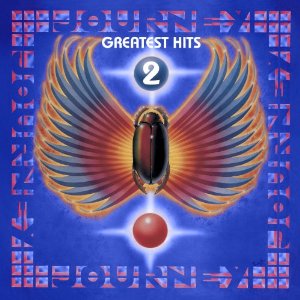
At the turn of the century, the new trend was the double-disc “Essential” anthology, which was an excuse to regurgitate a hits collection with some deeper cuts. The Essential Journey did just that, basically replicating the Greatest Hits sequence with only a little variety on disc one, with a questionable choice filling up the second. It would be another ten years before Greatest Hits 2 finally offered a decent (and decently priced) companion. In addition to more stuff from the Cain era (and big points for including “Suzanne”) and the FM radio hits and album tracks that stood out on the box set, segues like “Good Morning Girl” into “Stay Awhile” and “Feeling That Way” into “Anytime” were preserved. (We’d’ve dumped “Walks Like A Lady” and “When I Think Of You” for “Natural Thing” and “Edge Of The Blade”, but once again, the phone did not ring.)

Journey Greatest Hits (1988)—4
2006 CD reissue: same as 1988, plus 1 extra track
Journey Time3 (1992)—3
Journey
The Essential Journey (2001)—3½
Journey
Greatest Hits 2 (2011)—4

Tuesday, February 28, 2017

Joni Mitchell 15: Chalk Mark In A Rainstorm

The wrong title can curse an album at worst, but it can be just as annoying when it’s used against artist. Roger Waters, for example, had a field day with A Momentary Lapse Of Reason, recorded by the band he thought he’d ended. So what are we to expect from Chalk Mark In A Rainstorm, which suggests something so temporary it might not have happened?

This is Joni still amid in the ‘80s, and all the electronics the decade brought forth. Even as sophisticated as the technology got, it still doesn’t fit her. This is not to suggest that she shouldn’t try, but it’s hard to believe she thought these sounds were worth capturing. Sometimes technology can be a means to an end, but when it dominates, it should be effective. The last album had a somewhat successful experiment involving a cigarette machine; the equivalent here is the bed of recordings from TV ads used to illustrate “The Reoccurring Dream”. It makes the point about empty commercialism, but also has us trying to change the channel.

Yet again she feels the need to employ guest celebrity vocalists, two of whom were on the same label: Peter Gabriel gets to duet on “My Secret Place”, since he’d donated his studio, and Don Henley is prominent on “Snakes And Ladders”. Billy Idol trots out his standard whoops and barks on “Dancin’ Clown”, complete with shredding from Steve Stevens and a shorter, just as uncomfortable cameo from Tom Petty. Iron Eyes Cody contributes the Native American chanting on “Lakota”, despite his likely Italian heritage. Willie Nelson duets on “Cool Water”, an update of the old cowboy song. The lack of original material is another bad sign, as the album ends with “A Bird That Whistles”, a.k.a. her interpretation of “Corrina, Corrina”. Performed on acoustic, with only Wayne Shorter doing bird impressions on the sax, it’s also the best track on the album.

Just as jarring is the fact that the first two tracks were originally written for use in American Anthem, which led the wave of movies about male gymnasts. That partially explains the reference to being “born and raised in New York City” on the otherwise enjoyable “My Secret Place”, and the quest for winning a trophy in “Number One”. Political songs fit better; “The Tea-Leaf Prophecy (Lay Down Your Arms)” considers the possibility of romance during wartime, while “The Beat Of Black Wings” not only gives the album its title but relates a conversation with a shattered Vietnam vet.

The guest stars brought Chalk Mark In A Rainstorm some airplay, but seeing as the album appeared in the racks around the same time as her back catalog was made available on CD—and at the “Super Saver” price point—those would have been a much better investment for new fans diving in.

Joni Mitchell Chalk Mark In A Rainstorm (1988)—2

Friday, March 25, 2016

Smiths 8: Rank

Something of an official epitaph, Rank presents selections from a concert on the Smiths’ last tour, in support of The Queen Is Dead and the singles that followed. Various live performances had appeared as B-sides over the years, but this is the closest thing to a full Smiths concert, before or since.

For the most part, the songs are pretty close to the standard studio versions, save Morrissey’s occasional outbursts and introductions. “Rusholme Ruffians” begins with a verse of “Marie’s The Name (His Latest Flame)”, paying back that musical debt, and “What She Said” is rearranged, using “Rubber Ring” as its frame. The big difference is the addition of Craig Gannon on guitar, to take some of the pressure off Johnny Marr. Above all, Rank shows off the band as a band, and is a testament to that rhythm section, despite all the reports of the bass player still detoxing from heroin in those days.

The setlist is upbeat for dancing, and while “I Know It’s Over” seems to slow things down when it arrives, the power of the song and the performance keep the emotional impact high. It’s even followed by “The Draize Train”, an instrumental otherwise only available as a B-side.

Rank certainly presents the band at an apex; they only played six more shows together as a band, and had even just cut short their American tour due to “exhaustion”. The complete show had been broadcast on the BBC and subsequently bootlegged, making this album ripe for expansion. Don’t bet on it.

The Smiths Rank (1988)—3

Tuesday, December 8, 2015

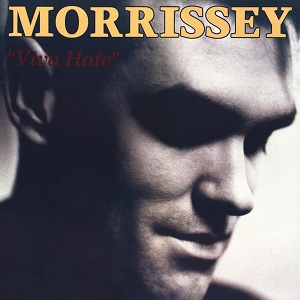
Morrissey 1: Viva Hate

With alacrity if not tenacity, Morrissey emerged as a solo artist hot on the heels of the last Smiths album. Obviously, a voice like his is going to be recognizable, and by drafting Stephen Street, who’d worked the knobs on several Smiths albums, he did manage something of a seamless transition with Viva Hate.

That’s not apparent right away, as guitarist Vini Reilly displays none of the finesse or taste of Johnny Marr; witness the insect infestations all over “Alsatian Cousin” and “I Don’t Mind If You Forget Me”. However, the first singles, “Suedehead” and especially “Everyday Is Like Sunday”, rank with the best moments of his former band. “Bengali In Platforms” and “Dial-A-Cliché” are gentle if obscure, while “Margaret On The Guillotine” is one of the most tender-sounding pieces of hate mail ever, right up to the closing sound effect.

Every track sounds different, which adds variety. Even though “Little Man, What Now?”, “Late Night, Maudlin Street” and “Break Up The Family” have all the percussive elements of demos, they do display a good deal of melody and emotion. Just as melodic and emotional is “Angel, Angel Down We Go Together”, a brief track accompanied by a very tense string arrangement.

Viva Hate kept Moz-heads happy, though Johnny Marr and even the Smiths rhythm section are sorely missed. But even the album isn’t the same as it once was. In this century, Morrissey has seen fit to take reissues and repackages to their furthest potential, changing not only his albums’ covers but also their sequences. In this case, the gorgeous track “The Ordinary Boys” has been replaced by the outtake “Treat Me Like A Human Being”, and “Hairdresser On Fire”, which was only on the American version of the album anyway, is not included. For a man from whom the word “stubborn” is an understatement, it’s just one example of his pathological need to finesse his own legacy and image.

Morrissey Viva Hate (1988)—3
2012 Remastered Special Edition: “same” as 1988, plus 1 extra track (and minus 2 tracks)