Showing posts with label 1974. Show all posts

Friday, October 3, 2025

Nilsson 11: Pussy Cats

An unabashed Beatlemaniac, Harry Nilsson had already managed to get George Harrison and Ringo Starr to play on his albums before he went to L.A. to hang out and get smashed with Ringo and John Lennon during the latter’s so-called “lost weekend” during his separation from Yoko. In John’s own recollection, he and Harry were becoming more notorious for getting thrown out of clubs for drunk and disorderly behavior that he thought they would be better served making an album together. As he had little of his own on standby not already tied up by Phil Spector, he offered to produce Harry, and that’s how Pussy Cats happened. (Harry’s label RCA was persuaded to finance the project with the carrot that John would sign to the label once his Apple contract ended, and so prominently displayed the producer’s name and face on the cover. Spoiler alert: he didn’t.) Harry was so excited by the project that he wrecked his famously versatile voice trying to shout his way through the sessions.

This isn’t immediately apparent on the lush cover of Jimmy Cliff’s “Many Rivers To Cross”, which now sounds more of a template for the album John would eventually complete in a few months, particularly in the melody of the strings inspiring his own “#9 Dream”. We can’t tell if that’s John doubling Harry’s voice on the bridges and later choruses, or just Harry in full rasp. It’s a whiplash jump to Dylan’s “Subterranean Homesick Blues”, a little funkier than the original, but like most tracks on the album, sporting both Ringo and Jim Keltner on drums. (And again, it sounds like John’s next album.) Balladeering Harry is back on the sumptuous “Don’t Forget Me”, which he arranged himself, and in the context of this album is a fitting sentiment as well as its highlight. Despite John’s interjections on the intro, “All My Life” admits to a lifetime of bad behavior, but doesn’t give us any hope that he’ll change anytime soon. “Old Forgotten Soldier” finds him still feeling sorry for himself via a variety of metaphors; thankfully the sound effects of birds and the German solider yelling are faded out after the first verse.

The Drifters’ “Save The Last Dance For Me” gets a similar approach to that of “Many Rivers To Cross”, in that it’s drastically slowed down for maximum pathos, with a piano part sure to remind folks of “Without You”. Tantalizing on paper, “Mucho Mungo/Mt. Elga” is a Lennon/Nilsson writing collaboration to which John contributed the unfinished first half, and Harry added the other, for the album’s nod to an island feel. Another oldie, “Loop De Loop”, tries to let us all in on the party—which clearly has been going on too long—this time with Keith Moon joining Ringo and Keltner on drums, and a damned kids’ chorus yelling along. The eerie strings on “Black Sails” belie the forced pirate puns throughout the lyrics, then it’s back to the party. Just in time to cash in on Happy Days, on “Rock Around The Clock” the three drummers manage to stay on tempo, even in the double-time fade.

Pussy Cats has maintained notoriety for the details of the production, and has since become tagged as something of a cracked masterpiece, which it’s not. Nor is it horrible. It is in keeping with his brand, in that once again he approaches greatness, only to thumb his powdered nose at it. While it may be an unfortunate chapter in his own history, it is key to understanding John’s. (The bonus tracks on the expanded CD weren’t very illuminating. “Down By The Sea” and the drunken skit “The Flying Saucer Song” were session outtakes and would be re-recorded for later albums, as would an earlier take of “Turn Out The Light”. “Save The Last Dance” is performed solo with an electric piano, and is a template for the released version. As the album was also released in a quad mix back then, we’re half expecting a more deluxe upgrade someday to cash in on that.)

Nilsson Pussy Cats (1974)—3
1999 CD reissue: same as 1974, plus 4 extra tracks

Friday, September 5, 2025

Aerosmith 2: Get Your Wings

This was more like it. For Aerosmith’s second album, they were placed under the care of producer Jack Douglas, who’d already worked with Alice Cooper and John Lennon. And while it still offered breadth of style, Get Your Wings came loaded with hooks.

To wit, “Same Old Song And Dance” begins with one of those, made for air guitar or to be actually learned by budding pimply faced axemen. The Brecker brothers, plus Stan Bronstein of Elephant’s Memory, on horns don’t distract from the rock at all. Beginning with what would become a familiar drum pattern, “Lord Of The Thighs” (pretty clever title, that) takes its sweet time for everything to fall into place, including subtle rhythmic piano and guitars playing single sixteenth-note patterns. Steven Tyler has found his swagger, and his voice is mixed up front, unlike on the first album. While the spooky extended intro for “Spaced” is about as contrived as the mildly existential lyrics, they do combine for a hell of a track. Acoustic guitars blend with electrics for “Woman Of The World”, which is very well constructed but doesn’t stick as well the rest of the album. Joe Perry does get in some cool licks over the fade.

At almost half the length, “S.O.S. (Too Bad)” accomplishes what “Woman Of The World” couldn’t, knowing enough to get out of the way when it’s made its point. And a good thing too, because the one-two punch in the middle of the side dominates. First, “Train Kept A-Rollin’” starts with the intro of the Yardbirds version, then settles into trademark Aerosmith stank for two minutes before going into strict Yardbirds tempo. (Douglas brought in audience noise from the Concert for Bangladesh to cover the transitions, and apparently Dick Wagner and Steve Hunter from Lou Reed’s band play the solos.) From there they could only go with a slow one, and wind soon drowns out the fake audience for the doom-and-gloom acoustic intro to “Seasons Of Wither”. There’s excellent doubling of instruments, subtle keyboards (or layered vocals?) on the choruses, and a superior lyric. Then Tyler’s back to being horny on “Pandora’s Box”, which distills the rockers on the album into a decent closer with an extremely complicated ending. (Before that, however, listen for the clever spoonerism on “city slickers”, and even more closely at the start of the track for a clarinet playing “I’m In The Mood For Love” for some reason.)

Get Your Wings nails down the classic Aerosmith sound, and the template they’d follow for the rest of the decade. And for the most part, that’s what they did, and well.

Aerosmith Get Your Wings (1974)—

Tuesday, May 6, 2025

Badfinger 8: Head First

Way back in 1974, they had just completed their excellent Wish You Were Here album, but Badfinger was so burnt out that Pete Ham tried to quit. Threatened with further financial ruin, he was persuaded to stay on for the promotional tour, for which they’d already recruited one Bob Jackson to fill in on keyboards and guitar. Their contract required them to put out yet another album post-haste, so they went back to Apple Studios with Kiss producers Kenny Kerner and Richie Wise, but without Joey Molland, who wasn’t considered as important as Pete to the powers that be to keep him from quitting. They were given exactly two weeks to record the basic tracks.

What was soon dubbed Head First by Tom Evans (as that’s how he saw the band going into the proverbial lion’s mouth) was given a few perfunctory mixes to please the label. But as litigation had already started against the band due to their manager’s criminal activity, the album was effectively dead in the water. To make matters worse, Wish You Were Here was pulled from shelves until everything could be sorted. Mere months later, Pete was dead.

The first mixed sequence of the album shows potential, if well short of genius. “Lay Me Down” is an obvious attempt to write a catchy hit single with a hook, which Pete could easily do, and which he’d done better. Jackson’s “Turn Around” is even heavier rock than Joey used to play, but his lead vocal just doesn’t sound right in this band. Pete comes back strong with “Keep Believing”, one of those pep talks that could also apply to himself, even as it resembles “Apple Of My Eye”. Mike Gibbins stays in a backwoods mode with “Rockin’ Machine”, a very brief statement at just under 90 seconds, then Tom Evans comes in brooding with “Passed Fast”, a bleak slab of rock written and sung with Jackson.

“Saville Row” is an unfinished instrumental, heavy on the type of electronic keyboards that Pete was not known for using, and fades after about a minute. It does work as a prelude to “Moonshine”, a pleasant collaboration between Tom, Mike, and Jackson, with nice layered harmonies and sweet lead guitar. Tom’s real feelings are made clear in the bitter “Rock ‘N’ Roll Contract” and “Hey Mr. Manager”; in between, Mike’s “Back Again” nicely balances acoustic strumming with synth string touches.

Besides being short, Head First is not a happy album; the pressure of having to create material at such a rate had clearly taken its toll, and there’s no way to know whether it would have made any impact on any charts. So there it sat, until four of the songs (Pete’s two gems, plus “Moonshine” and “Passed Fast”) were included on Rhino’s The Best Of Badfinger Volume II some 15 years after the fact.

Once things got more straightened out at the end of the century, Badfinger biographer and champion Dan Matovina was able to arrange the first full release of the album. As the master tapes were missing, one of the rough mixes was used, but despite opening with “Lay Me Down”, the rest of the songs were shuffled for “listenability” purposes. “Saville Row” still led into “Moonshine”, but was cut down to 36 seconds for no stated reason, and ending the album with “Rockin’ Machine” makes it seem like an afterthought. To draw people in, a bonus, even shorter disc contained acoustic demos of unreleased songs, mostly with somber lyrical content: six from Pete (including “Lay Me Down”), three from Mike, and one each from Jackson and Tom.

The original multitracks were finally discovered in time for the album’s 50th anniversary, or at least the anniversary of its recording, so Bob Jackson was able to get it back in circulation again. This freshly mixed version had no extras, but rejigged the order (past “Lay Me Down”) yet again, moving an artificially extended and retitled “Savile Row (2024)” to the end of the program.

As an epilogue to the whole sad saga, Head First is a letdown. But we always like hearing Pete Ham’s music, so it’s good to have. Meanwhile, several CDs worth of his demos are streaming officially, so that will also help keep his memory alive.

Badfinger Head First (2000)—3
2025 50th Anniversary Special Edition: “same” as 2000, minus 11 extra tracks

Friday, June 21, 2024

Paul McCartney 38: One Hand Clapping

In 1974, it was safe to say that Paul McCartney had recaptured the stature that had been lost since he announced he was leaving the Beatles. His fifth album was a smash hit, and he was able to replenish the Wings lineup with lead guitarist Jimmy McCulloch and drummer Geoff Britton with an eye on getting back on the road. Having just recorded the soon-to-be hit single “Junior’s Farm”, and not quite ready to start on the next album, the band went into Abbey Road Studios for a few days to be filmed, in conversation and performing songs destined for their live shows, for a TV special to be titled One Hand Clapping. And like similar projects Paul started in the ‘70s, it was completed and promptly shelved. (For one reason, Geoff Britton barely lasted past the end of the year, given personal conflicts with members not surnamed McCartney.)

As would often happen, the audio and visuals were widely bootlegged over the years. It wasn’t until the second decade of this century that Paul officially released any of it, with some songs parceled out to bonus discs in various Archive Collection reissues, and the full film in grainy quality on the DVD in the 2010 edition of Band On The Run. Fourteen years later, that album was expanded for the umpteenth time for its 50th anniversary with a rough mix of the album in an alternate sequence without orchestrations. Then a few months after that, One Hand Clapping was finally released as an official album, remastered from the original multitracks, without the dialogue that was alternately pompous, drunk, or tedious.

The title track—or theme song, if you will—isn’t much more than a simple jam, but from there, the band goes through some very good selections from the catalog, some of which would soon be making their onstage debuts. “Jet” is always terrific, and “Soily” is very close to how it would sound in 1976. After the strange medley of “C Moon” and “Little Woman Love”, “Maybe I’m Amazed” isn’t there yet, but would always sound better on a grand piano than the electric piano used here. The film only had a snippet of “My Love”; here we get the full take, with orchestra added, Jimmy almost copping his almost-namesake Henry McCullough’s solo. “Bluebird” is slightly more electric, and Howie Casey comes in to play his sax part.

One segment of the film showed Paul in tie and tails playing solo at the (grand) piano; these included brief renditions of “Let’s Love”, which he wrote for Peggy Lee, the otherwise unreleased “All Of You”, and even “I’ll Give You A Ring”, which would emerge as a B-side in 1982. Both “Band On The Run” and “Live And Let Die” get a boost from the overdubbed orchestra, and we should mention somewhere that Linda knows her keyboard parts well. “Nineteen Hundred And Eighty Five” [sic] would not make it to a live setlist until well after that year, but this partially karaoke’d version over the album track is still pretty cool. McCartney favorite “Baby Face”, from the piano segment and with horns added in New Orleans, accompanies what would be the credits if you were watching instead of listening.

Of course there were plenty of other songs recorded during the course of the project, and the second disc of the set includes a pile of those, including some that hadn’t been bootlegged. “Let Me Roll It” would go on to be played on nearly every McCartney tour going forward to this day. “Blue Moon Of Kentucky” was in the Wings set before they had enough of their own songs, and here gives Denny Laine a chance to shine on harmonica. (He also gets to do “Go Now” towards the end of the disc.) “Junior’s Farm” and “Hi, Hi, Hi” each pack a wallop, but “Wild Life” would be thankfully retired.

More bits from Paul’s solo segment include “Power Cut” (of all things) on organ, upcoming B-side “Sally G” on acoustic, the seemingly impromptu “Love My Baby” on celeste, “Let It Be” on harmonium, and a verse each of “The Long And Winding Road” and “Lady Madonna” on piano. Most striking perhaps is a slow, torchy run through “Tomorrow”.

Another portion of the filming had Paul playing acoustic in the garden behind the studio, for a featurette titled The Backyard. This too had been bootlegged, but in the end eleven minutes of the performance were included only on a 7-inch shipped with the vinyl version of the album ordered direct from his official online store. Especially irritating is that there was plenty of room for it—and then some—on the second CD. At any rate, he plays the inscrutable “Blackpool”, “Blackbird”, “Country Dreamer”, and three covers: “Twenty Flight Rock”, and Buddy Holly’s “Peggy Sue” and “I’m Gonna Love You Too”. (This portion was made available for streaming about a month after the album’s release.)

Still, One Hand Clapping is a fascinating look at a brief stage of McCartney’s career. Given the prolonged, inexplicable absence of two later Wings albums from expansion, it makes for a nice tribute to Denny, who died in December 2023. (The album was also dedicated to the memories of Linda, Jimmy, and engineer Geoff Emerick.)

Paul McCartney & Wings One Hand Clapping (2024)—

Friday, January 19, 2024

Yes 8: Relayer

Suddenly Yes was in flux again, in search of a keyboard player. Rick Wakeman was gone, more content to compose, record, and perform Journey To The Centre Of The Earth and The Myths And Legends Of King Arthur And The Knights Of The Round Table over the space of two years because he thought Yes music was getting too fruity. They ended up hiring one Patrick Moraz, who apparently not only copped some of their existing material, but was able to collaborate from the get-go.

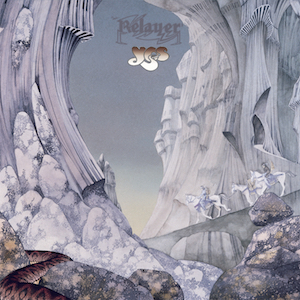
While he does have a distinct style, what he provides Relayer is very much in line with the Wakeman brand to date. It’s a cold album, matching the gray landscapes in the cover art. It’s back to the Close To The Edge template of an epic on one side, and two shorter tracks (albeit nine minutes each) on the other.

“The Gates Of Delirium” is that side one epic, and something of a piece with Tales Of Topographic Oceans. Jon Anderson allegedly wanted to base the whole album on Tolstoy’s War And Peace, but was talked back to just the one track referencing just one battle. It begins with a whirlwind of sound, with a lot of harmonics on guitar, that soon turns into something of a fanfare. When the lyrics arrive, they’re more direct than impressionistic, and darker, as befits impending bloodshed. The bulk of the track is instrumental, with lots of activity and polyrhythms to illustrate the scenery, and Moraz is given plenty of room to stretch. (We even hear what sounds like crowds cheering, but maybe those are merely supposed to be bombs bursting in air. Also, it’s clear the sections have been edited together rather than played straight through, which is fine.) About fifteen minutes in the action finally calms for a more dreamy atmosphere, for lack of a better term. While it’s not notated as such anywhere in the packaging, a piece referred to ever after as “Soon” provides both a finale to the piece as well as a moment of beauty capping a very dense side of music. Hearing this part on its own is nice, but it really is more powerful in the context of the full piece.

Flip over to side two and it’s easy to think you put on a fusion album by mistake, with rippling electric piano, diminished chords right out of Bitches Brew, and panned paradiddles, despite Chris Squire’s distinctive bass. But once the guitar and vocals kick in, “Sound Chaser” is clearly a Yes tune, albeit a frenzied one. Everyone is playing at top speed, yet still well in sync, with Jon and Chris singing on top. About three minutes in the others drop out, leaving Steve Howe to wander around his fretboard towards more pastoral themes and a suitable Jon melody, but the respite is shortlived, bringing back the fusion and discord of the intro. It actually seems to speed up and slow down, punctuated occasionally by a very loud “JAH JAH JAH, CHA-CHA” motif that’s frankly pretty annoying. After all that, “To Be Over” is a breath of fresh air, with a gentle melody played on quiet keyboards, volume pedal guitar and even a sitar; by the middle Howe has added pedal steel as well as his trademark riffing and solos. While still intricate, it's not anywhere near as harsh or jarring as the rest of the album, and doesn’t even seem to take up nine minutes.

Relayer is Yes at their proggiest to date, if you can believe that. It’s not an easy listen, nor very accessible, and requires as much attention as Topographic Oceans did to sink in. The instrumental interplay can be very dense at times, to the detriment of the players, each of whom add a lot when you notice them.

The eventual expanded edition added the single edits of “Soon” and “Sound Chaser”—the former simply that excerpted segment of “The Gates Of Delirium”, the latter the last three minutes of the song and entirely instrumental save the “JAH JAH” chant—plus a “studio runthrough” of “Gates”. Only the two single edits were carried over to the CD of the later “definitive edition”, which sported a modern Steven Wilson mix lacking some overdubs. In addition, runthroughs of not just “Gates” but the entire album were included with new and surround mixes on the DVD and Blu-ray; the latter offered even further mix variations and live material. (The Wilson mixes for this and the previous four studio albums were eventually released on vinyl in a box set, as well as streaming, where the side-long tracks are split into parts, or their stated segments in the case of Close To The Edge. The guy does good work.)

Yes Relayer (1974)—3
2003 remastered CD: same as 1974, plus 3 extra tracks
2014 Definitive Edition: “same” as 1974, plus 2 extra tracks (plus DVD or Blu-ray)

Tuesday, January 17, 2023

Eric Clapton 6: 461 Ocean Boulevard

Seemingly finally off junk for good, Eric Clapton headed back to Florida. With the help of Tom Dowd in the control room, and former Domino Carl Radle bringing in some players from Oklahoma, he managed to complete his second real solo album, named after the address of the house where he was living. With the addition of labelmate Yvonne Elliman from the Jesus Christ Superstar albums, he also established a band that would serve him for the rest of the decade.

Right off the bat, “Motherless Children” recalls the Dominos with a galloping beat, constant organ, and melodic slide for a great starter. He immediately turns things down for the spiritual “Give Me Strength”, and underscores it with a truly wimpy rendition of “Willie And The Hand Jive”. “Get Ready”, co-written and sung with Yvonne Elliman, is an improvement on both, but as the third slow song in a row, it’s easy to overlook. But then its reggae beat is immediately elevated with a cover of “I Shot The Sheriff”, which certainly made more people aware of Bob Marley.

“I Can’t Hold Out” begins with a dirty guitar, but mostly sleepwalks through a standard 12-bar written by either Willie Dixon or Elmore James. “Please Be With Me” is something of a Duane Allman tribute, being written by the leader of Cowboy, who were signed to the Allmans’ label and toured with the band; their original version featured Duane on dobro, which Eric plays here. Even though Jim Carrey co-opted it 25 years later, we’re still a sucker for “Let It Grow”, an incredibly melodic little wonder that slightly modifies “Stairway To Heaven” chord changes into something of a power ballad that showcases multiple guitar tones. Robert Johnson continues to be a touchstone, as “Steady Rollin’ Man” is injected with some funk. George Terry—aka the other guitarist on the album—provides the riff-happy “Mainline Florida” for a catchy finale.

For better or for worse, 461 Ocean Boulevard establishes the Clapton brand going forward: competent, easy listening rock that’s neither challenging nor groundbreaking, steeped in the blues, but still focused in the present. He’s best when he simply plays his guitar; unfortunately he can’t always carry an album. If this is your thing, go forward happily. Personally, we prefer more grit.

Due to a publishing dispute over “Give Me Strength”, that song was pulled from later reprints of the album and replaced with “Better Make It Through Today”, a track from his next album. When 461 was first released on CD, this new sequence was the same, but with “Give Me Strength” stuck at the end. The mid-‘90s remaster finally restored the original 10-track lineup. 2004’s deluxe edition filled out the first disc with some in-studio jams, and added a second disc compiled from London shows at the end of the year, opening with a gospel-tinged version of Charlie Chaplin’s “Smile”. (Further studio outtakes were added to 2013’s Give Me Strength: The ’74/’75 Recordings box set, making both expansions required for completists.)

Eric Clapton 461 Ocean Boulevard (1974)—3
2004 Deluxe Edition: same as 1974, plus 16 extra tracks

Friday, May 13, 2022

Neil Young 64: Citizen Kane Jr. Blues

Eighteen months after they were originally announced, the second, third, and fourth installments in Neil’s Official Bootleg Series finally appeared. Two of these chronicled shows only two days apart, and mined material already on four other archival releases. But most fans were far more excited about a show that should have been part of Archives Vol. II—it even fits chronologically between two of that set’s discs.

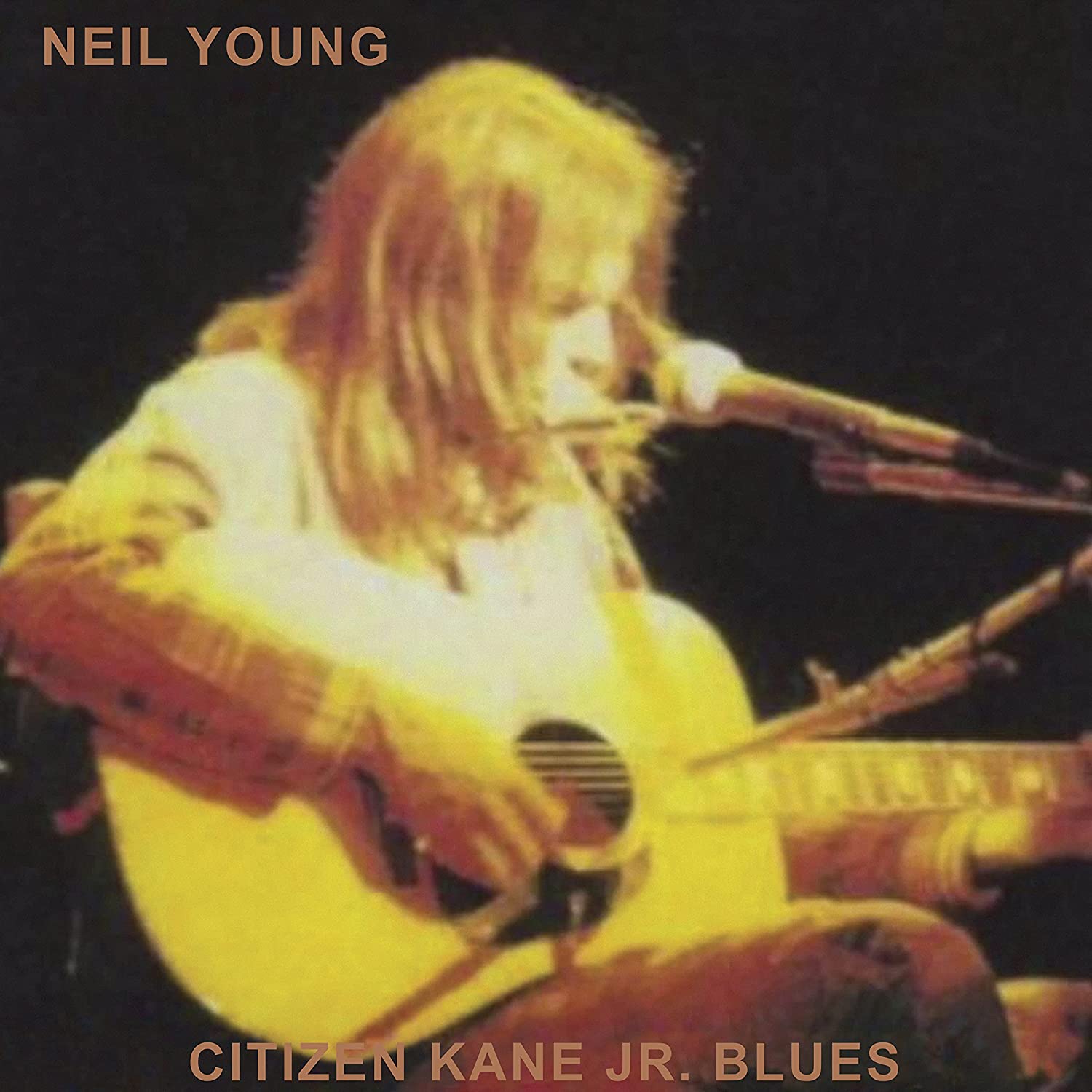
Citizen Kane Jr. Blues was mastered from the original cassette recording of an impromptu set played in the wee hours at New York City’s Bottom Line following a Ry Cooder gig; Leon Redbone was the opener. Neil had just finished recording On The Beach, but would only play four of that album’s songs, and played even further material that had yet to be released, or even recorded in the forms we would get to know them. (The show was edited to fit on two vinyl sides, but Neil does provide a “complete” stream of the album on his site, which runs about ten minutes longer, mostly due to a lengthy monologue before “Motion Pictures” that explains why he hasn’t played “Southern Man” in a while, and discusses “honey slides”, a potent marijuana concoction that allegedly fueled his recent writing and recording.)

After a brief introduction, he introduces a song with a title that gives this boot its title, but would come to be known as “Pushed It Over The End” and a highlight of the upcoming summer’s CSNY tour. Even without the dynamics of the full band, the stop-start arrangement is hypnotic. He introduces “Long May You Run” as a song he wrote about his car, and the audience chuckles throughout. “Greensleeves” is delivered straight, to silence, then he apologetically sets up “Ambulance Blues” for being a “bummer”, but again, they hang on to every line. At the time, only “Helpless” had made it to an album, and the crowd is happy to hear it.

“Revolution Blues” is just as spooky acoustic, and he downplays the down mood of “On The Beach” by opening with a few guitar licks in the style of Stephen Stills. An inebriated-sounding request for “something country-western” prompts “Roll Another Number (For The Road)”, which is appreciated with clapalongs and yee-haws. Even without the full intro “Motion Pictures” is mesmerizing. He offers the crowd a choice between two songs for his last number, but they want to hear both, so they get a lovely “Pardon My Heart” and then “Dance Dance Dance”, a month away from mutating into “Love Is A Rose”.

Basically, if you love this period of Neil, Citizen Kane Jr. Blues is essential. While he’s been all about sound quality, and replicating other bootlegs with pristine tapes from his own Archives, this show is intimate, raw, and seemingly much more spontaneous. Even the stray coughs from the crowd enhance the natural ambience. And it’s from a period that hasn’t been as documented as, say, early 1971. There will never likely be a better-sounding version of this show, and that’s fine.

Neil Young Citizen Kane Jr. Blues (2022)—4

Tuesday, October 19, 2021

Frank Zappa 45: The Helsinki Concert

Right after the Frankensteinian assembly of the first volume in Frank’s You Can’t Do That On Stage Anymore series, the second volume was devoted to exactly one band’s performance at exactly one gig (although evidence has emerged that there were actually two shows, but still). This is basically the Roxy & Elsewhere band, but with only one horn player and one drummer, in this case Chester Thompson. Napoleon Murphy Brock and George Duke enjoy a lot of onstage repartee; the inside joke of this particular show revolves around the word “tush”, as well as Suzi Quatro, who was also touring Finland at the time. Also, Ruth Underwood shows her incredible percussion chops throughout.

We prefer the arrangement of “Village Of The Sun” from Roxy to the version they race through here, but there’s no question that the band is tight. While a good chunk of the repertoire comes from that album, they also played songs that were yet to be released, including “RDNZL” and “Approximate” (another chance for Frank to include a tap-dancing sequence near the start, annoyingly). Part of the guitar solo for “Inca Roads” was edited into the track released on One Size Fits All. “Pygmy Twylte” gets a longer guitar solo before devolving into “Room Service”, a rockin’ groove that turns into something of a sub-Flo and Eddie routine about hotel food and groupies. After an “Idiot Bastard Son” interlude, there’s a dizzying transition into “Cheepnis”.

“Dupree’s Paradise” appears in a 24-minute “rock band” arrangement, as opposed to the chamber music score, but first we must endure further routines and in-jokes regarding their manager’s wife theft of hotel towels. These are forgotten once the drum solo and percussion duet take over, though the duck calls leave something to be desired. This manages to segue into a performance of “Satumaa”, a “Finnish tango” apparently familiar to most of the crowd. “T’Mershi Duween” is another early rarity, moving neatly through “The Dog Meat Variations” and “Uncle Meat”.

Perhaps the most historic aspect of this show is the baffling request for the Allman Brothers’ “Whipping Post” just before “Montana”. Frank duly includes “Whipping Post” references throughout the song, and indeed a cover would be a Zappa concert staple come the ‘80s. A detour into “Big Swifty” provides the finale.

As with the first volume, this set is best appreciated by aficionados, and while some of the sequences become tiresome, it’s still a decent representation of one of Frank’s more celebrated bands. That might actually make it a good place to start.

Frank Zappa You Can’t Do That On Stage Anymore Vol. 2: The Helsinki Concert (1988)—3

Tuesday, September 28, 2021

Queen 3: Sheer Heart Attack

Once upon a time, a young and hungry band would write, record, tour, and repeat. Sometimes this would lead to not one but two brand new albums being released in the space of a calendar year. Those were the days. (Plus, records were cheaper then.)

Sheer Heart Attack finds Queen determined to leave their mark on the music scene, and loudly. But first: remember how the last album with “I Do Like To Be Beside The Seaside”? Well, that’s referenced in the atmospheric intro to “Brighton Rock”, which hides a tale of star-crossed lovers at the seashore in a frantic arrangement. Brian May takes a mostly unaccompanied solo that takes up about three minutes in the middle of the song, setting up a showcase for live appearances; we’re going to assume this is supposed to illustrate their romantic interlude before the twist ending. After all that volume and bombast, the campy “Killer Queen” is a surprise, but one that better signals the band’s sound going forward, with the prominent piano and flanged vocals and guitars. “Tenement Funster” is a dark little recording, wherein Roger Taylor boasts of his rock star coolness (tongue in cheek, thankfully) before an abrupt switch to “Flick Of The Wrist” returns Freddie Mercury to center stage for a portrait of an even more unsavory character. This too goes directly to the next song; here “Lily Of The Valley” appears to be another overwrought ballad in a prog suite, particularly with the reference to “seven seas” and the “king of Rhye”, but’s it’s more clever than that. “Now I’m Here”, with its dizzying time changes and chord changes, plus a reference to Chuck Berry’s “Little Queenie”, brings a fairly adventurous side one to a breathtaking close.

An impossible high note sung by Roger heralds “In The Lap Of The Gods”, which belies its bombastic intro and strangely processes Freddie’s voice to a lower pitch, and frankly, doesn’t go anywhere, limping to a close. A speed-metal template save the harmonies, “Stone Cold Crazy” barrels past in just over two minutes, with two guitar parts chasing each other over the bridge. “Dear Friends” another left turn, and another piano and voice interlude. John Deacon’s acoustic strumming on “Misfire” makes the song sound like any number of Doobie Brothers tunes from the period, but the same cannot be said about “Bring Back That Leroy Brown”, which shares a title and the traits of Jim Croce’s character, but this is a vaudeville sendup with incredible bass work from Deacon and Brian on ukulele. The echoed acoustics and vocals on “She Makes Me” doesn’t quite match the “Stormtrooper In Stilettos” subtitle, though the police sirens and heavy breathing over the end are tough to miss. Finally, “In The Lap Of The Gods… Revisited” merely presents a wholly different song to the one heard at the top of the side, and one more likely to cause audiences to sway and sing along, at least until the explosion at the very end.

There’s a lot going on throughout Sheer Heart Attack, and we suspect its charms truly emerge with time. At any rate, the inclusion of “Killer Queen”, “Now I’m Here”, and “Stone Cold Crazy” alone launch it above the line. (The 1991 expansion of the album added only a modern remix of “Stone Cold Crazy”; this was ignored two decades later, which offered a live “Now I’m Here” from 1975, two tracks from a contemporary BBC session, a fun a cappella mix of “Leroy Brown” that incorporates other instruments only where there are no vocals, and “Gods Revisited” from the 1986 Wembley show.)

Queen Sheer Heart Attack (1974)—3
1991 Hollywood reissue: same as 1974, plus 1 extra track
2011 remaster: same as 1974, plus 5 extra tracks

Friday, June 18, 2021

Queen 2: Queen II

With the imaginatively titled Queen II, Queen attempted to further their image, though they still seemed stuck between Zeppelin-style hard rock and English prog. They’re clearly still finding their way, but not embarrassingly. (As a record or cassette, it was divided into “Side White” and “Side Black”, which wasn’t just an art concept to flesh out the packaging. Mostly it makes it easier to remember which similarly titled epic is on which side.)

The album begins with a stately “Procession” of treated guitars—no synthesizers!—with only a kick drum helping it along before morphing into “Father To Son”, which has that triumphant anthemic feel they were perfecting. “White Queen (As It Began)” follows the maiden-in-the-tower trope without being too cheesy, and builds nicely. Brian May sings “Some Day One Day”, with its “Ramble On” acoustic and electrics, then Roger Taylor offers “The Loser In The End”, still trying out his rock ‘n roll rooster persona. It’s got good crunch and nicely layered guitars, bass, and of course drums, but it’s a style they’d leave behind.

Interestingly, Brian wrote most of the white side, while Freddie Mercury gets sole writing credit for the songs on the black. These seem to be even more inspired by fairy tales and whatnot, and even segue like any good prog side should. “Ogre Battle” takes a while to rumble in before exploding with backwards sounds and heavy, heavy riffing, sounding almost like Black Sabbath before Freddie starts singing. Any gravitas is deflated by the way over-the-top harpsichord on “The Fairy-Feller’s Master Stroke”, not to mention the truly dippy lyrics. “Nevermore”, though brief, provides a good future template, based on piano with stacks of vocals. There’s only a brief pause before “The March Of The Black Queen” incorporates tongue-twisting couplets and several melodies into another harbinger of a certain rhapsody. While it’s not a lyrical fit with what’s come before, “Funny How Love Is” is a perfect, energetic successor. Finally, “Seven Seas Of Rhye” appears as a fully fledged song and without the ellipsis from the first album, bringing a challenging album to a strong finish. (The snatch of “I Do Like To Be Beside The Seaside” stands out strangely, but would also be explained in time.)

The first expansion of Queen II included the ultra-bluesy yet campy B-side “See What A Fool I’ve Been”, plus a remix of “Ogre Battle” and a misguided extended dance mix of “Seven Seas Of Rhye” that pits the vocals against samples from a variety of Queen tracks. Only “See What A Fool I’ve Been” was repeated on the next upgrade, alongside a BBC performance of same plus “Nevermore” from another BBC session, a live “White Queen”, and an instrumental mix of “Seven Seas Of Rhye”. Fifteen years later, the Collector’s Edition included the bonuses from the second expansion, alongside a new mix of the album, and separate discs each dedicated to the instrumental tracks, session extracts, mostly previously available BBC sessions, and selections from a Rainbow Theater show in 1974, which were already released on their own. The set also included the new mix on two discs of colored vinyl—each backed by an etching—and a thick book. (Those seeking a cheaper option could settle for a two-CD package of just the new mix and the outtakes.)

Queen Queen II (1974)—3
1991 Hollywood reissue: same as 1974, plus 3 extra tracks
2011 remaster: same as 1974, plus 5 extra tracks
2026 Collector’s Edition: same as 2011, plus 46 extra tracks

Tuesday, February 9, 2021

Grateful Dead 14: Steal Your Face

Back before quitting the road for a spell, the Dead undertook a few projects to buy time and stay in front of fans. One guaranteed crowd-pleaser was The Grateful Dead Movie, which combined performances from a farewell five-night stand at San Francisco’s Winterland Ballroom with conversations with actual Deadheads plus psychedelic animation. Of course, by the time the film was finished, the band had resumed touring anyway, so to maximize the documentation of the stint, as well as bolster profits for their failing record label, the double live Steal Your Face album was released as a placeholder.

This was the period where the band was using their “Wall of Sound” PA system, a couple hundred speakers that may have sounded fine in person, but wasn’t recorded very well. Also, where previous live albums had ebb, flow, and momentum, this one seemed mostly a grab bag. It was not well-received, nor did it seem the band had much input past playing the songs in the first place. The energy seems subdued, even for them; “Ship Of Fools”, for one, is taken at a funereal pace, making “Beat It On Down The Line” a welcome pick-me-up, even with Donna Godchaux doing her thing. A few R&B and country covers make their first appearances on a Dead LP after having been in their repertoire for a few years; Chuck Berry’s “Promised Land” and “Around And Around” don’t have much life, but “Big River” by Johnny Cash and “El Paso” by Marty Robbins are snappier. Similarly, “solo” tracks like “Sugaree” and “Black Throated Wind” get the full band treatment, and Robert Hunter’s “It Must Have Been The Roses” enjoys another workout.

Despite its relation to the film, Steal Your Face was not the official soundtrack album for their movie, nor was it given much love in their ongoing archival program, getting only a couple of straight CD transfers with no extras. Rather, fans are directed to The Grateful Dead Movie Soundtrack, which offers five discs full of mostly complete performances from the shows, though not all of them, and in a mostly ramshackle order. (It still offers more than the double-DVD reissue of the movie itself.) As for the Wall of Sound era, official band archivists have made several shows available for comparison, as listed below.

Grateful Dead Steal Your Face (1976)—3
     Archival releases of same vintage:
     • Dick’s Picks Volume Seven (1997)
     • Dick’s Picks Volume Twelve (1998)
     • Dick’s Picks Volume Twenty-Four (2002)
     • Dick’s Picks Volume 31 (2004)
     • The Grateful Dead Movie Soundtrack (2005)
     • Road Trips: Vol. 2, No. 3 (2009)
     • Dave’s Picks Volume 2 (2012)
     • Dave’s Picks Volume 9 (2014)
     • Dave’s Picks Volume 13 (2015)
     • 30 Trips Around The Sun: The Definitive Live Story 1965-1995 (2015)
     • Dave’s Picks Volume 17 (2016)
     • Pacific Northwest ‘73-‘74: The Complete Recordings (2018)
     • Pacific Northwest ‘73-‘74: Believe It If You Need It (2018)
     • Dave’s Picks Volume 34 (2020)
     • Dave’s Picks Volume 42 (2022)
     • From The Mars Hotel: 50th Anniversary Deluxe Edition (2024)

Friday, March 20, 2020

Kinks 18: Preservation Act 2

The hollow promise of Preservation Act 1 wasn’t very encouraging, but those still keen to see it through had to wait only about six months until Preservation Act 2 presented the story proper over four sides. This was more of an original cast recording, complete with radio-style announcements appearing here and there to fill in the details. Once again, each of the tracks is sung by a character, with a couple roles taken by a singer outside of the five Kinks. This time it’s even more difficult to enjoy individual songs without thinking of the plot, which is pretty bleak overall.

The first announcement warns listeners of a “people’s army” formed by the upstart communist Mr. Black in order to topple the power of Mr. Flash. “Introduction To Solution” finds the Tramp expanding on the situation, and not very optimistic that things will turn out at all well—a rather unappealing way to start a show. Thankfully, “When A Solution Comes” and “Money Talks” are dark rockers, and fairly decent, too, but another announcement heralds a speech by Mr. Black, delivered as “Shepherds Of The Nation” and basically the platform of what we’d know in a few years as the Moral Majority.

At this point we’ve gone completely into Broadway musical territory, as Mr. Flash defends his status as “Scum Of The Earth”, and one of his toadies talks of his background as a “Second-Hand Car Spiv”; neither are very enjoyable, but at least we hear a subtle reprise of “Here Comes Flash”. “He’s Evil” is presented as a “party political broadcast” by Mr. Black about Mr. Flash, but as it’s presented in the style of warning a woman that a suitor will only break her heart, it’s an improvement. “Mirror Of Love” is sung (by Ray) as Flash’s main squeeze, defending her devotion to him, and another trip to vaudeville. But another announcement tells of a “victory” for Mr. Black that resulted in “casualties”. Cue curtain for intermission.

The Tramp returns to lament that “Nobody Gives” (a damn, that is), recalling the miners’ strike of 1926 and the rise of Hitler, with the idea that neither “side” provided a solution. It’s a long track, but it does rock. “Oh Where Oh Where Is Love” continues the theme, but now it’s sung in a duet with one Maryann Price, most recently of Dan Hicks & His Hot Licks, and doing a passable British accent. Just when you think the album might be improving (again), the most embarrassing track yet in the Kinks’ name arrives. “Flash’s Dream (The Final Elbow)” is a conversation between Flash and his conscience (much like Prince would a decade later on “Temptation”) that’s impossible to take seriously. Having become convinced of his own imminent demise, “Flash’s Confession” continues the nightmare, for him and for us.

“Nothing Lasts Forever” is another duet made for the stage and not a rock album, Ms. Price betraying more of a twang in her vocal. (She’s apparently taken the role Ray sang in “Mirror Of Love”, which is another thing wrong with this album.) We are informed that Mr. Black’s army overthrew Mr. Flash’s regime, and took him prisoner. “Artificial Man” reveals Black’s true aim: he’s engaged an actual mad scientist to create a perfect race of automatons, Ray apparently ignorant that he’d co-opted one of the major plot points of The Rocky Horror Show. Musically it’s about as over the top as anything in Phantom Of The Paradise, and that’s not meant nicely. Ms. Price returns to warble about the Village Green’s transformation into “Scrapheap City”, then we’re informed that the new regime has installed a curfew, food and utility rationing, control over telecommunications, etc. “Salvation Road” is supposedly the theme song of the regime, and while it’s good that it sounds like the Kinks, it’s way too late to save the album.

Preservation Act 2 seems a lot longer than it is, and it is exhausting. Maybe one day we’ll have the gumption to try to siphon the album down to just cool tracks and try to ignore their intended significance, and perhaps program a single two-sided LP out of it. Until then, we really don’t want to visit this particular village green again. (The double Rhino CD didn’t include any extras for the Act 2 portion, but the late ‘90s single CD reissue of the album added two at the end of the program. An alternate recording of “Mirror Of Love” was originally released as a single, and the tuba doesn’t do it any favors. “Slum Kids” was a refugee of the stage show, and represented here in a 1979 performance.)

The Kinks Preservation Act 2 (1974)—2
1998 Konk CD reissue: same as 1974, plus 2 extra tracks

Tuesday, February 18, 2020

Grateful Dead 12: Mars Hotel

Throughout 1973 and 1974 the Dead kept busy both on and off stage, and soon enough had a batch of new songs for another studio album. From The Mars Hotel is a step up from the less-than-awesome Wake Of The Flood, helped by the inclusion of some ready-made Garcia/Hunter classics.

“U.S. Blues” kicks off the proceedings, and a good song for a country already excited for its bicentennial. “China Doll” revives some of the gothic mystery not heard since Aoxomoxoa, and Phil Lesh mostly rises to the occasion with the complex “Unbroken Chain”. (We say “mostly” because Donna Godchaux’s prominent vocals are mixed too high, and the synthesizer contributions from occasional auxiliary band member Ned Lagin can be a little distracting.) “Loose Lucy” is a bit of boogie sure to please crowds.

“Scarlet Begonias” is another good one, often mistitled “might as well try” and “rings on her fingers and bells on her shoes” based on the lyrics. (It also predicts an outfit one day called the Heart Of Gold Band.) Phil returns to the microphone for “Pride Of Cucamonga”, with pedal steel guitar from John McFee, then of Clover and later of the Doobie Brothers. Strangely, Bob Weir takes a back seat to Phil, contributing just one track. The lackluster “Money Money” stumbles through changing time signatures and even quotes the riff from Barrett Strong’s oft-covered “Money”. The best is truly saved for last: “Ship Of Fools” provides a wonderful commentary that could relate to the Nixon administration, today’s headlines, or anyone in a take-this-job-and-shove-it situation.

Even though Donna is given way too much room to wail from time to time, Mars Hotel is one of the better ‘70s Dead albums, and worth grabbing if you don’t want to get the entire catalog. The expanded CD is notable for including wonderful solo acoustic demos of both of Phil’s tunes, an early live stab at “U.S. Blues” before the lyrics were settled, as well as the band’s only live performance of “Let It Rock”, which Jerry played often in his solo bands.

When it was expanded for its 50th anniversary, two different demos (“China Doll” and “Wave That Flag”, aka “U.S. Blues”) were added to the main disc, while most of a pitch-challenged May 1974 show with the piano way high in the mix was included on two more discs. Jerry hasn’t learned the words to “U.S. Blues” yet, Bobby mumbles “The Other One”, and Donna isn’t heard until “Greatest Story Ever Told”, but the set covers familiar tunes from the last two live albums, studio albums, solo albums, and some country favorites. (This expansion was preceded by two months by the digital release of From The Mars Hotel: The Angel’s Share, which offered 82 minutes of alternate takes and mixes of the album’s tracks.)

Grateful Dead From The Mars Hotel (1974)—
2006 expanded CD: same as 1974, plus 7 extra tracks
2024 50th Anniversary Deluxe Edition: same as 1974, plus 24 extra tracks

Friday, January 24, 2020

Kiss 2: Hotter Than Hell

Part of the Casablanca label’s marketing strategy for Kiss entailed constantly having new product on the shelves, so within months of releasing their debut, the band was back at work on a follow-up. Hotter Than Hell was a daring title for 1974, packaged in a cover that for some reason was designed like a Japanese comic book, with titillating photos of the band members in racy situations and a very clever combination of the foursome’s signature makeup. In fact, the sessions went so quickly they didn’t bother finish the songs or mix the album properly, resulting in a record that to this day sounds like absolute sludge.

“Got To Choose” is a competent opener, nicely followed by “Parasite”, based on a nasty speed-metal riff and one of the few untempo tracks here. Then there’s “Goin’ Blind”, which always sounds out of tune, and an unintentionally hilarious, grammatically awkward lyric sung to a 16-year-old girl from a 93-year-old man. (In future live versions, he’d stay 93, but she’d get younger.) The title track needs to be a little faster, but the boys sure know how to write a chorus. The flop first single was “Let Me Go, Rock ‘N Roll”, despite a tasty pile of riffs, and luckily for them they’d rewrite it much better on the next album.

Side two is all about the cowbell, beginning with “All The Way”, another chorus better than the rest of the song. “Watchin’ You” could’ve used a little more development in the lyric department, as could “Mainline”, which makes even less sense, but it’s catchier and features a decent lead vocal from Peter Criss. “Comin’ Home” is an above-average “life on the road is hard” tune, wherein the singer negates all the rejection he’s had through the previous eight tracks. It would have made a better closer that “Strange Ways”, which is mostly notable for Ace’s lead guitar and a less impressive vocal from Peter.

Hotter Than Hell isn’t as immediately striking as the debut, but is almost as funny. Paul Stanley takes something of a back seat, singing lead on only three tracks, compared to Gene Simmons’ five, but the standout performer is Ace, whose lead breaks throughout are distinct and inspired. It’s a good way for fans to kill half an hour, and they’d have another album out soon enough anyway.

Kiss Hotter Than Hell (1974)—3

Friday, October 25, 2019

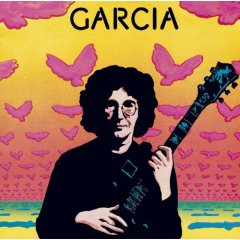
Jerry Garcia 3: Compliments

Jerry Garcia’s second solo album (as opposed to collaboration) was originally titled simply Garcia, but some copies had a sticker above the title reading “Compliments Of”. In order to differentiate it from 1972’s Garcia album, we’re going with the expanded title, as has everyone else over the past 30 years.

Unlike that first Garcia album, which he recorded by himself with only Bill Kreutzmann, this installment features a pile of hired guns, as well as familiar names like Merl Saunders and John Kahn, who supposedly spearheaded the project and suggested several of the tunes. The album follows on from the recent Saunders collaboration, with Jerry playing mostly obscure covers from all over the place. For the most part, they’re fairly dull; “Let It Rock” barely sounds like a Chuck Berry song, and “Let’s Spend The Night Together” is just plain unconvincing. Van Morrison’s early “He Ain’t Give You None” doesn’t go anywhere, and the female backing singers don’t help. There’s something of a New Orleans vibe throughout, but we never had much use for Little Feat either.

From time to time his guitar leaps out of the mix, and it’s welcome. One true highlight is Irving Berlin’s “Russian Lullaby”, which evokes Django Reinhardt, complete with gypsy violin. “Turn On The Bright Lights” is another slow burner with plenty of lead work, but probably could have been faded earlier. We have to admit his Dr. John impression on “What Goes Around” is uncanny. “Mississippi Moon” comes from bluegrass buddy Peter Rowan, about whom more will be heard, while “Midnight Town” is a collaboration between John Kahn and Robert Hunter, and a wonderful ending.

This album grew on us to the point where we increased the initial rating; basically the less familiar you are with the original versions of these songs, the better. (The later expanded version of the album adds another nine covers from the Compliments sessions, some of which would feature in future Garcia bands and shows. There’s also a brief jam called “Cardiac Arrest” that’s livelier than anything else on the album, old or new.)

Jerry Garcia Compliments Of Garcia (1974)—3
2004 expanded CD: same as 1974, plus 10 extra tracks

Tuesday, October 22, 2019

Robert Hunter 1: Tales Of The Great Rum Runners

Outside of the band members themselves, few names are more sacred to Deadheads than that of Robert Hunter. His lyrics first appeared on the band’s second album, and he would contribute more to just about every album after that, usually collaborating with Jerry Garcia but sometimes with Phil Lesh and Mickey Hart. According to one source, he is the only non-performing member of any band that has been inducted into the Rock and Roll Hall of Fame.

He managed to rack up a pile of tunes that hadn’t been recorded by the time the Dead had their own label, and thus Tales Of The Great Rum Runners was his solo debut, albeit with some of the band helping him out. Unfortunately, his voice leaves something to be desired, forced when loud and nervous when quiet. While it does have some of the same weedy qualities as Garcia’s, to the point where one can imagine these as Dead tunes, Jerry could actually hit the notes and carry the tunes. Indeed, “It Must Have Been The Roses” would reappear on a Garcia solo album, and become part of many a Dead set. We can almost hear Jerry singing “That Train”, “Maybe She’s A Bluebird”, and “Children’s Lament”, the latter here with a nostalgic bagpipe background. “Keys To The Rain” is Dylanesque in words and delivery, except for the meter changes and mariachi horns. And as befitting the album title, each side begins with something of a sea chanty, sung a cappella.

Since it’s Robert Hunter, Tales Of The Great Rum Runners is essential for Deadheads, who will enjoy the lyrics and many of the arrangements. But his legacy is better appreciated on other albums. (The album was expanded on the occasion of its 50th anniversary, with six alternate versions of album tracks and ten outtakes, all very much in the same vein of what made it in the first place.)

Robert Hunter Tales Of The Great Rum Runners (1974)—
2024 Deluxe Edition: same as 1974, plus 16 extra tracks

Friday, September 27, 2019

Roxy Music 4: Country Life

Somehow Roxy Music managed to maintain a lineup for two straight albums. Given the evidence on Country Life, we can presume that familiarity with each other worked in their favor.

Side one is easily their best, most consistent side since the debut, while not as startling. “The Thrill Of It All” is yet another classic opener, a simple piano part running through the entire track while the drums pound the pavement. “Three And Nine” brings back the camp and a nod to the ‘50s, with what sounds like French words but aren’t. Then “All I Want Is You” is an excellent wall of guitars, and a return to the sound of “Thrill” without repeating it. Similarly, “Out Of The Blue” rocks just as hard, with plenty of phasing on and off Eddie Jobson’s violin. “If It Takes All Night” sounds like one of Ferry’s perverted covers from his solo albums, though the party rhythm of the track doesn’t mesh with the arrival of “that old ennui”.

In full illustration of what the album listening experience was like back in the days when we had to manually switch between sides, the second half of the album is a different trip. “Bitter Sweet” is a dire little tune, made even more foreboding when the stormtroopers come marching through and the proceedings take a distinctly Germanic tone, even before he sings a verse in that language. A baroque harpsichord leads “Triptych”; strange even for them, the lyrics seem occupied with the Crucifixion and Resurrection. The trashy rock sound returns for “Casanova”, a putdown worthy of Dylan’s nastiness. The party seems to be winding down a la side two of the debut on “A Really Good Time”, but “Prairie Rose”, with its slide guitars and honking saxes, is one of the odder evocations of the state of Texas in the rock ‘n roll era.

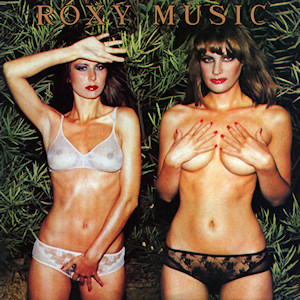
We didn’t expect much from Country Life, after the so-so Stranded and Bryan’s solo experiments, so its quality certainly delivers and gives hope for the future. In fact, the album’s decent enough that they didn’t need the women in the translucent underwear to draw attention to it.

Roxy Music Country Life (1974)—3

Tuesday, September 24, 2019

Bryan Ferry 2: Another Time, Another Place

Just bursting with the need to express himself, Bryan Ferry found time in between Roxy Music albums to record another collection of covers, this time leaning on country music, R&B, and even standards. The tuxedo shot on the cover is at odds with the musical content, just like last time.

And just like last time, the results as heard on Another Time, Another Place are mixed. The beginning of “The ‘In’ Crowd” predicts another hit song down the road, but in this context it sounds like a typical Roxy tune, which is fine. From there, the arrangements vary from song to song. After a winking first verse, he tramples through “Funny How Time Slips Away” and turns “You Are My Sunshine” into a New Orleans funeral. “(What A) Wonderful World” is the Sam Cooke tune, not the one made famous by Louis Armstrong, turned into a calypso cha-cha. His take on “It Ain’t Me Babe” isn’t as horrifying as what he did to “A Hard Rain’s A-Gonna Fall”, but it’s not much better. “Fingerpoppin’” is possibly the least-known track here—at least it is to us—and interchangeable with “Barefootin’” and tunes of that ilk. “Help Me Make It Through The Night” survives a very misplaced key change, but the best is truly saved for last. The title track is a Ferry original, and easily as good as any Roxy tune.

Musically, Another Time, Another Place is fine, provided you have little familiarity with the originals and don’t listen too closely to the words. If anything, it’s a snapshot of a time when labels were willing to put out anything their artists recorded.

Bryan Ferry Another Time, Another Place (1974)—

Friday, September 6, 2019

Kiss 1: Kiss

Stanley Eisen and Eugene Klein were a couple of enterprising young men from Long Island determined to make it big in the music business. What set them apart from their contemporaries was their innate understanding of the power of branding, as well as loyalty to said brand among consumers. (Musical acumen helped, but art wasn’t as big a goal as commercial success.) After dissatisfaction with the progress of their band Wicked Lester, the two vocalists (one on the guitar, the other on bass) methodically searched for and found a lead guitarist and a drummer whom they felt would achieve their vision.

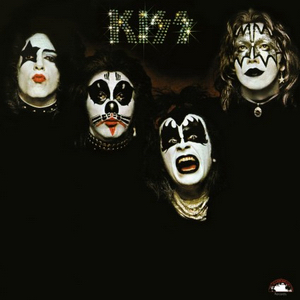
By this time the boys had changed their names to the more rockin’ Paul Stanley and Gene Simmons. Guitarist Paul Frehley gladly went by Ace so there wouldn’t be two Pauls in the band, and drummer Peter Criss had already truncated his surname from Criscuola, so all they needed now—naturally—were personas to go with their carefully manufactured images. The uniform suits and nicknames (the quiet one, the cute one) ascribed to another fab foursome wouldn’t be enough for these guys. Each member of Kiss (sometimes rendered in all caps, but we’re not going to do that) would wear distinctive makeup and costumes befitting their “characters”. Elaborate stage performances with as much pyrotechnics and comic book shock level that could fit into whatever venue they were playing became just as important as the music they made.

And what of the music they made? As demonstrated on their eponymous debut, the emphasis is on heavy riffs, not exactly metal, but harder than glam. (And what makes those riffs so distinctive? The guitars are tuned down a half-step.) The lyrics are basic, easily grasped by any suburban white kid hoping to find a woman who’d give him a deuce, whatever that was, drink cold gin with him, or do it somewhere even less comfortable than the back of a Volkswagen.

Track by track the songs are solid. “Strutter”, “Nothin’ To Lose”, “Firehouse”, “Cold Gin”, “Deuce”, and “100,000 Years” all deliver hooks upon hooks, all in E or A, and while “Let Me Know” isn’t as exciting, a harmonized a cappella breakdown before a raveup and fade is a clever touch. Our personal favorite is the instrumental “Love Theme From Kiss”, which is just a terrific title. “Black Diamond” is the album’s equivalent of an epic, starting with an acoustic intro with a sensitive vocal, plowing through over the riff, slowing down the chords for another Ace solo and ending on a single A chord, repeated and slowed down over two full minutes.

It’s suggested that lengthening this tune, along with adding more silence between tracks, was done to push the album over the half-hour mark. Then, in a rare case of Kiss doing something they didn’t want to do, an oldie called “Kissin’ Time” was given new lyrics and a Kissified arrangement and released as a single in the label’s attempt to boost sales. It’s fairly embarrassing, except for Ace’s solo, which almost justifies its being stuck at the top of side two in all but the album’s first pressings, and it remains there in the CD sequence as well.

Rock ‘n roll is supposed to be fun, and a little stupid, and Kiss fit the bill. The album is simply loaded with catchy tunes, and while it took a while for people to notice, these guys were on their way to notoriety, in all senses of the word.

Kiss Kiss (1974)—4

Tuesday, September 3, 2019

Rod Stewart 6: Smiler

Just as we had to battle preconceptions of Rod Stewart formulated in the wake of “Do Ya Think I’m Sexy” and that ilk, it’s tough to look at Smiler, his last solo album while he was still with the Faces, as better than it is. It was his first album on his own in two years, and frankly, the formula was wearing thin.

“Sweet Little Rock ‘N Roller” is a decent bash through a Chuck Berry tune with Ronnie Wood turned up to ten. (Pointedly, despite appearances by Ian McLagan and Kenney Jones, there are no virtual Faces tracks on this album.) A brief harpsichord piece called “Lochinvar”, and just like similar segues on the last two albums, it introduces a track in the vein of “Maggie May” and “You Wear It Well”, but “Farewell” swings and misses. One of the drummers beats a tattoo into “Sailor”, which also sports a horn section and screaming females in a case of too much ketchup. What begins as a lovely acoustic reverie turns into a crowded medley of “Bring It On Home To Me” and “You Send Me” that’s less of a tribute to Sam Cooke than a ego exercise. Elton John and Bernie Taupin contributed “Let Me Be Your Car” to the proceedings, and Elton even sings on it. He would find better duet partners.

While there’s no question his voice is suited to it, changing the gender of a certain song to “(You Make Me Feel Like A) Natural Man” does nobody any favors. “Dixie Toot” has promise, but belabors the point with the horn section and and a Dixieland band. “Hard Road” is a decent bash but for the bongo drums mixed way up. For some reason we get an acoustic instrumental of “I’ve Grown Accustomed To Her Face”, perhaps as a thematic setup for “Girl From The North Country”. It has a decent arrangement, but is his least successful Dylan cover to date. But the most curious track is “Mine For Me”, donated by Paul and Linda McCartney, which sports a melody very close to another cover Rod would claim very shortly. It’s hard to picture what Paul would have done with this himself, but we’re hoping he’d’ve avoided the steel drums. Sure sounds like Paul harmonizing here, though.

Smiler suffers by comparison with all that has gone before, and at least it attempts to rock most of the time. But we’re starting to sense his more annoying attributes coming forth, and the excesses of the ‘70s tainting otherwise talented individuals.

Rod Stewart Smiler (1974)—