Showing posts with label 1971. Show all posts

Friday, August 14, 2026

John Baldry: It Ain’t Easy

The British blues scene of the early ‘60s was rife with important individuals who may not have become household names, like Alexis Korner, Chris Barber, and Graham Bond. And then there was Long John Baldry, whose early bands were launchpads for Rod Stewart and Elton John. (The latter took half of his stage name from the man, and would immortalize him as “sugar bear” in “Someone Saved My Life Tonight”.) So when both of those guys started to become really famous, they leapt at the chance to produce two albums for him, of which It Ain’t Easy was the better.

Though the session dates overlapped between producers, side one was devoted to the tracks Rod oversaw, beginning with a wonderful little medley. “Intro: Conditional Discharge” is a shaggy dog monologue in Baldry’s mostly proper English voice over Ian Armitt’s piano, leading into the driving “Don’t Try To Lay No Boogie-Woogie On The King Of Rock And Roll”. Micky Waller and Ron Wood, veterans of the Jeff Beck Group as well as Rod’s solo albums, provide the drums and guitar here and the rest of the side. “Black Girl” is country blues via Leadbelly, sung in duet with Maggie Bell, and better known as “In The Pines”, and to Nirvana fans as “Where Did You Sleep Last Night”. (Ron sits this one out, letting Sam Mitchell shine on the dobro.) The title track had already been covered by Three Dog Night, and Bowie would record his own nearly identical version shortly after. “Morning, Morning” is a rockier version of a song from the second Fugs album, coming close to Cat Stevens but with louder drums. It’s a quick segue to Muddy Waters’ “I’m Ready”, for a strong side-closer.

Just as Rod’s half reflected his own current brand and band, so did Elton’s side. Randy Newman’s “Let’s Burn Down The Cornfield” has some of the dark Americana already mined for Tumbleweed Connection. Another connection arrives in “Mr. Rubin”, a sweet piece of social commentary written by Lesley Duncan, whose “Love Song” was covered by Elton on that album, and who would go on to sing on his next album as well. Elton and Bernie Taupin offered up “Rock Me When He’s Gone”, one of the better songs he never released on an album or single of his own, but perfect for Baldry. In a wonderful crossover, “Flying” is the Faces song from their first album with Rod and Ron, here stretched a few more minutes for the vocalists to work the coda.

A year later, they flipped sides for Everything Stops For Tea, which has its moments but simply isn’t as consistent as its elder sibling. Both albums are available for streaming, though It Ain’t Easy includes the bluesy acoustic bonus tracks—as well as an electric “Love In Vain”—that were added to a 2005 reissue in the UK. It deserves to be heard and enjoyed.

John Baldry It Ain’t Easy (1971)

Friday, May 9, 2025

Pink Floyd 21: At Pompeii

One of the challenges of rock concert films has always been how much to show of the audience. Pink Floyd got around this by being filmed performing a concert in 1971 with no audience. First released the following year, Pink Floyd At Pompeii placed the band within the amphitheater in Pompeii in southern Italy, nearly 1900 years after it had been decimated by Mount Vesuvius, where the handsome and occasionally shirtless musicians played for the cameras, which also followed them as they wandered around desolate hills and smoking craters. It was a big hit on the midnight movie circuits, and required viewing for young stoners off grainy VHS tapes and eventually DVDs.

Of course, as is clear from the film, not every performance depicted was filmed in Pompeii, as signified by Richard Wright’s missing beard and shots of them playing standing on a wooden floor. But to be able to see the band up close and actually playing, as opposed to shadowed figures on a distant stage amidst a light show, along with the added footage of recording The Dark Side Of The Moon and snide commentary in the Abbey Road studio canteen, makes the film worthwhile. They were, after all, a pretty tight band, and masters of dynamics.

Fans will already know that the Early Years box included five of the songs from the film by “mistake”, with “Echoes” presented as a single track instead of being split in half as it was for the film. plus an extra alternate take of “Careful With That Axe, Eugene”. That was nice, but when the original film reels turned up for a full restoration, Steven Wilson was brought in to mix an official CD version. At Pompeii – MCMLXXII offers the live performances as seen in the film, beginning with “Pompeii Intro”, consisting of a simulated heartbeat and droning synthesizer, followed by the first half of “Echoes”, which stops right before the seagulls come in. “Eugene”, “A Saucerful Of Secrets”, and “Set The Controls For The Heart Of The Sun” are improvements on the Ummagumma versions. “One Of These Days” has power, and an instrumental variation on “Seamus” (here titled “Mademoiselle Nobs”, after the dog utilized to howl along) becomes a showcase for David Gilmour on harmonica and Roger Waters playing blues riffs. The second half of “Echoes” provides a good basis for the camera to float away into the sky.

All that totals just over an hour’s worth of music, so the package had a bonus disc including the alternate “Eugene” and the unedited “Saucerful Of Secrets”, which is about two and a half minutes longer. It would have been nice to include “Echoes” as one continuous track, but that might have angered the folks who’d shelled out for that box set.

Pink Floyd At Pompeii – MCMLXXII (2025)—

Tuesday, February 25, 2025

Stephen Stills 16: Live At Berkeley

Following the release of his second solo album, Stephen Stills embarked on an ambitious tour that he hoped would not only encompass his musical palate, but further establish him as a singular force with which to be reckoned. Along with four guys who would continue with him in Manassas, another guitarist plus a sax player and the five Memphis Horns filled out the sound even more. Reports say he booked 52 dates, and even he says he handled the pressure of his setlists by getting good and drunk before every show.

Luckily for us, the performances picked from the final two shows on Live At Berkeley 1971 aren’t embarrassing in the least. It also helps that these were theater shows, more intimate and forgiving than the hockey arenas played earlier on the tour. He begins acoustically, where he’s accompanied by Steve Fromholz on guitar and vocals. Proof that CSN wasn’t dead in the water, David Crosby is brought out for “You Don’t Have To Cry” (Fromholz filling in well) and his own “The Lee Shore”. He moves to the piano for a very nice “Sugar Babe” and the now-familiar “49 Bye-Byes/America’s Children” medley, and straps on a banjo for “Know You Got To Run”. The full band comes on for “Bluebird Revisited”, which burns pretty slow compared to Wayne Jackson’s “Lean On Me”. “Cherokee” runs almost ten minutes, plenty of time for the band to cook.

The sound throughout is clear and warm. Considering that it captures a moment in his career before things changed and would change again, this set goes a long way to remind us how good Stills could be when he got out of his own way and just played. One does wonder what they left out.

Stephen Stills Live At Berkeley 1971 (2023)—

Friday, May 24, 2024

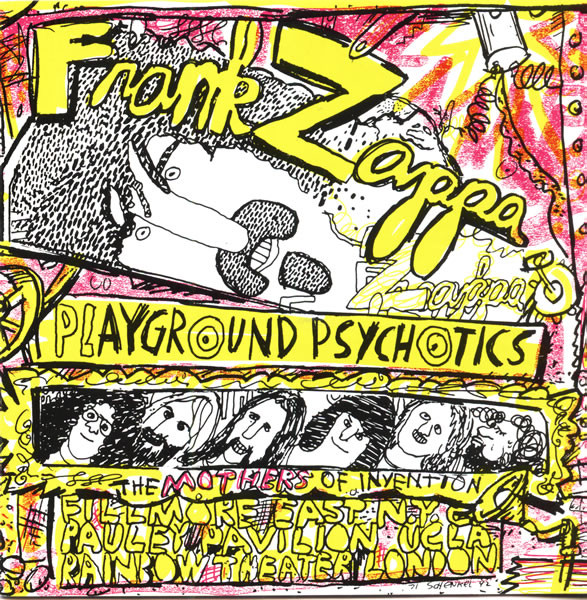
Frank Zappa 52: Playground Psychotics

After preparing and releasing twelve hours of music collated from his entire career, Frank’s next big project was dedicated to the Flo & Eddie era of the band. Playground Psychotics combined field recordings with concert excerpts to provide a widescreen portrait of what he called “A Typical Day On The Road”.

Each disc starts with several minutes of indexed dialogue captured by his trusty portable tape recorder, capturing the band and roadies in conversation on planes, in hotels, and backstage. One segment is an interview with the manager of the hotel where the infamous “mud shark incident” took place. “Diptheria Blues” is a dressing room jam featuring Aynsley Dunbar on whiskey bottle. Much of the humor, onstage and off, is clearly visual, so lovers of in-jokes and bathroom humor will be in heaven. Things get truly nutty when we get to hear tape recordings featuring playbacks of recording captured on other band members’ tape recorders, culminating in the closing segment on disc two. Some of this was excerpted from the videotape The True Story Of 200 Motels, briefly documenting the cause and result of Jeff Simmons quitting the band, not wanting to be fodder for Frank’s thesis at the expense of his musicianship.

The musical excerpts are far more interesting, with further songs from the Rainbow Theater show that ended with Frank being knocked off stage, which we don’t get to hear here. While the Pauley Pavilion is listed as another source, the only music heard from that show is a short “Divan” segment of what would become “Sofa”. Instead, much of the music comes from the Fillmore stint, including older songs and a thirty-minute “Billy The Mountain” (cobbled together from two shows) that’s actually listenable. One of the key selling points of this album outside the Zappa faithful is an alternate mix (and edit) of what Beatle fans knew as side four of John & Yoko’s Some Time In New York City, documenting their guest appearance with the Mothers. Despite being given such new song titles as “Aaawk” and “A Small Eternity With Yoko Ono”, “Well” is still the only segment of true musical appeal.

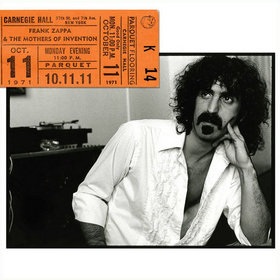
Because of the anthropological approach, Playground Psychotics will be mostly of interest to fanatics who can stomach Flo & Eddie. While cramming several months of material into two CDs is no small feat, a larger context was certainly needed. Sure enough, the band’s two sets at Carnegie Hall in October 1971 were released in a four-CD package forty years later, in decent-sounding mono and including a performance by the doo-wop combo and support act The Persuasions. (Carnegie Hall was reissued a little over eight years later as a three-disc set that omitted the Persuasions segment.) Hearing the transitions and dynamics as played shows just how hot the band was, but you also have to endure the vocalists’ attempts at humor. “Magdalena” is even more repulsive here, and 15 minutes are devoted to “The Mud Shark”. There’s a more complete “Divan” suite (including “Stick It Out”, eight years before Joe’s Garage) with lots of four-letter words in English and German. Beyond that, “King Kong” runs a half an hour to accommodate solos—though it abandons the 3/8 meter after the first minute or so—and “Billy The Mountain” is now up to 47 minutes.

That was all well and good, but connoisseurs would be even more sated ten years after that by The Mothers 1971. This eight-CD set encompassed all four unedited Fillmore sets (including John & Yoko, unexpurgated) and the complete Rainbow show, with another sixteen songs from Scranton and Harrisburg in between to present a sort of virtual concert. With so many repeats of the material, “Billy The Mountain” emerges as a major if silly work, and we can almost start to appreciate the musicality of the “Shove It Right In” suite; it’s just too bad that the lyrics are so puerile. If you want to hear a ribald take on “My Boyfriend’s Back”, here’s your chance. Turns out Don Preston only played on the encores at the Fillmore, which certainly helped cool Frank’s otherwise petulant mood. Don’s fully on board at the Rainbow, leading the opening “Zanti Serenade”, extended for another ten minutes here. “Wonderful Wino” is still in the set, and the encore was “I Want To Hold Your Hand”, after which we can actually hear Frank hitting the concrete floor.

Frank Zappa/The Mothers Playground Psychotics (1992)—2
Frank Zappa & The Mothers Of Invention
Carnegie Hall (2011)—
The Mothers
The Mothers 1971 (2022)—

Tuesday, May 21, 2024

Nilsson 8: Nilsson Schmilsson

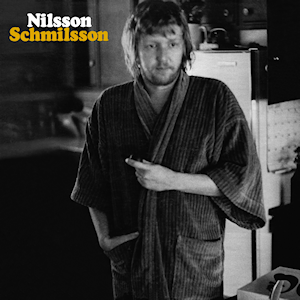
The world was finally ready for Harry Nilsson, and so was he. Hooked up with rising producer Richard Perry, who’d brought Barbra Streisand firmly into the present-day, they decamped to London and recruited such Beatle-centric aces as Jim Gordon, Jim Keltner, Klaus Voormann, and Gary Wright to create Nilsson Schmilsson. The blurry photo of a distinctly non-sexy photo of the bathrobe-clad artiste holding a hash pipe in front of an open refrigerator notwithstanding, this was the pinnacle of his pop journey.

Still, that cover photo nicely sets up the jaunty “Gotta Get Up”, complete with some in-context dreams, before canned car noises continue the story in “Driving Along”, which provides further chance for observation. Despite the optimistic sound of those tracks, a cover of “Early In The Morning”, accompanied by solely by a pawed organ, suggests our hero is stuck somehow. Suddenly it’s hours later and “The Moonbeam Song” has us pondering not only the skies but “bits of crap”. Horns weren’t a new thing on Nilsson albums thus far, but Jim Horn’s soulful arrangement on “Down” is firmly contemporary.

While side one is short, it’s a strong record so far, but side two is where everything goes into the stratosphere. It took Harry’s vision to turn Badfinger’s “Without You” from a middling album track to a soaring plaint, and the template for everyone thereafter. He follows it with the goofy “Coconut”, a song made for the Muppets if there ever was one. Following a sprightly take on Shirley & Lee’s “Let The Good Times Roll”, “Jump Into The Fire” doubles down on the one-chord challenge of “Coconut” for seven minutes, pounding the riff into submission over an audibly detuned bass while Henry Hill watches out for helicopters. The mildly mewling “I’ll Never Leave You” provides a mildly paranoid ending, but when you consider that it was left over from The Point!, it makes more sense.

If anything made Harry a household name, Nilsson Schmilsson was it. But then he had something to live up to, which was an impossible task. Still, he should have been proud of it. (The eventual expanded CD included some interesting bonuses: a “Without You” that’s even more overwrought in Spanish; “Lamaze”, a Smile-sounding track that dissolves into laughter after a recitation; a 1968 take of “Gotta Get Up” still in vaudeville mode; an alternate “Moonbeam”; and two songs that would be reworked on future albums.)

Nilsson Nilsson Schmilsson (1971)—
2004 CD reissue: same as 1971, plus 6 extra tracks

Friday, February 2, 2024

Nilsson 7: Aerial Pandemonium Ballet

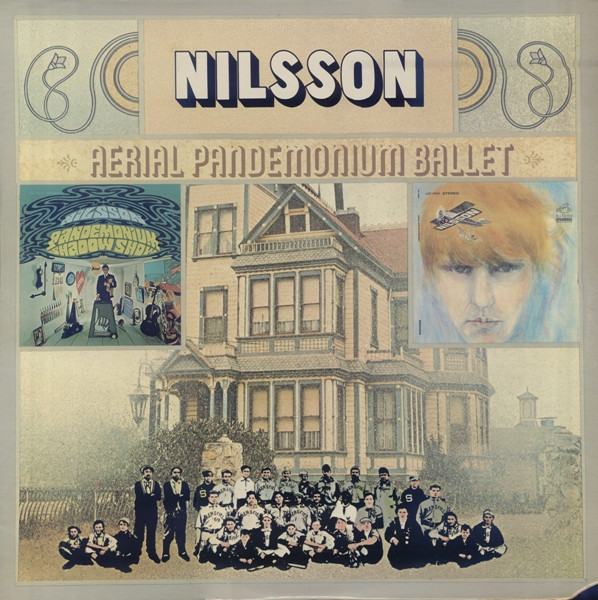
Now that more people knew who Harry Nilsson was, the label wanted to reissue his first two albums. That was mostly fine with him, but being very much a restless who got bored with the same old, he countered with a different idea. Rather than straight reissues of Pandemonium Shadow Show and Aerial Ballet, he reworked selections of both into Aerial Pandemonium Ballet.

People like to say this was the first remix album, to illustrate how ahead of his time Harry was. The fact of the matter is that sweetening an already-released master had been happening for years, such as in the case of the “rock” version of “The Sound Of Silence”; also this wasn’t long after tracks that had only been released in mono had been given stereo mixes months or even years down the road to keep up with audiophile trends. The difference was that Harry was overt about it, to the point that the back cover even helpfully listed what was different about each track (e.g. “slowed down”, “new vocals”, etc.).

Even with all the moderations and modulations, it still runs just under a mere half-hour. Following the familiar intro from the first album, two father songs (“1941” and “Daddy’s Song”) appear back to back. “Mr. Richland’s Favorite Song” now sports a quote from “One” in the middle. “Good Old Desk” makes a nice transition to “Everybody’s Talkin’”, which even sets “Bath” up well.

Side two juxtaposes various love-type songs cleverly. “River Deep–Mountain High” gets a new vocal but keeps the castanets and bongos, the latter of which still feature on “Sleep Late, My Lady Friend”. Thankfully “Don’t Leave Me” and “Without Her” both a tad softer in comparison. “Together” sounds a little jerky, plus it loses a bridge, running even shorter than before and going sharply into “One”. This is also chopped down, and diluted by the tap dance that bookended Aerial Ballet.

Still, Aerial Pandemonium Ballet is a nice way to hear where he started. It can even be argued he selected the best, most enduring tracks from each, and in most cases improved them, so his instincts were spot on. (An expanded version of the album had only one “outtake”: a remix of “You Can’t Do That” that highlights the song’s actual lyrics. The other bonus tracks were from the same period, including early versions of songs that would appear on his next two albums, his party piece cover of “Walk Right Back” that weaves in lyrics from “Cathy’s Clown”, and a faithful cover of John Lennon’s “Isolation”.)

Nilsson Aerial Pandemonium Ballet (1971)—3
2000 CD reissue: same as 1971, plus 5 extra tracks

Tuesday, November 29, 2022

Lou Reed 33: I’m So Free and Words & Music

Neither the labels nor the estate of Lou Reed immediately plundered their vaults for saleable archival material; rather, both waited several years. When “new” music did arrive, there was a similar theme, although different periods in the man’s development as a songwriter were addressed.

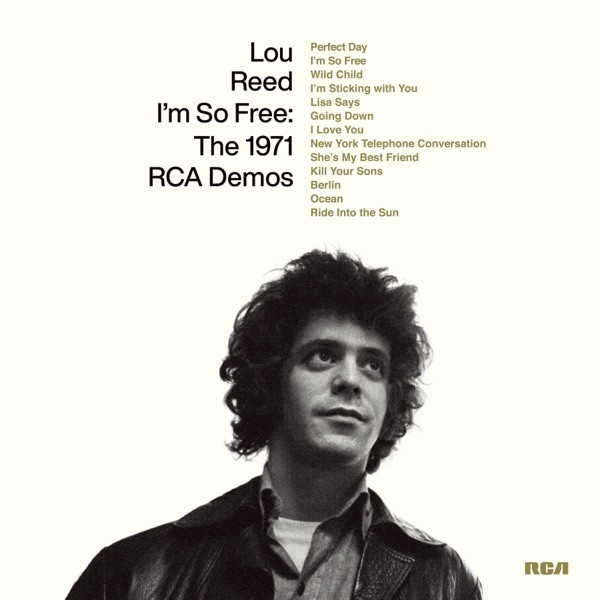
I’m So Free: The 1971 RCA Demos was one of those fifty-year copyright dumps that collectors trawl the file-sharing sites for every December, but then RCA put it out as a Record Store Day exclusive with an eye-catching cover and liner notes, and eventually for streaming with four more songs. These are basic acoustic guitar and vocal run-throughs, recorded professionally, of songs that would be considered for his first solo album. Every song that would appear there is auditioned here, including the leftovers from the last days of the Velvet Underground. We also get previews of later album cuts, including “Perfect Day”, “New York Telephone Conversation”, “Kill Your Sons” (with war-protest lyrics), and “She’s My Best Friend”, as well as a charming “I’m Sticking With You”. Throughout he’s immersed in each performance, laughing at any lyrical flubs, and instructing the engineer where the breaks are and when to fade.

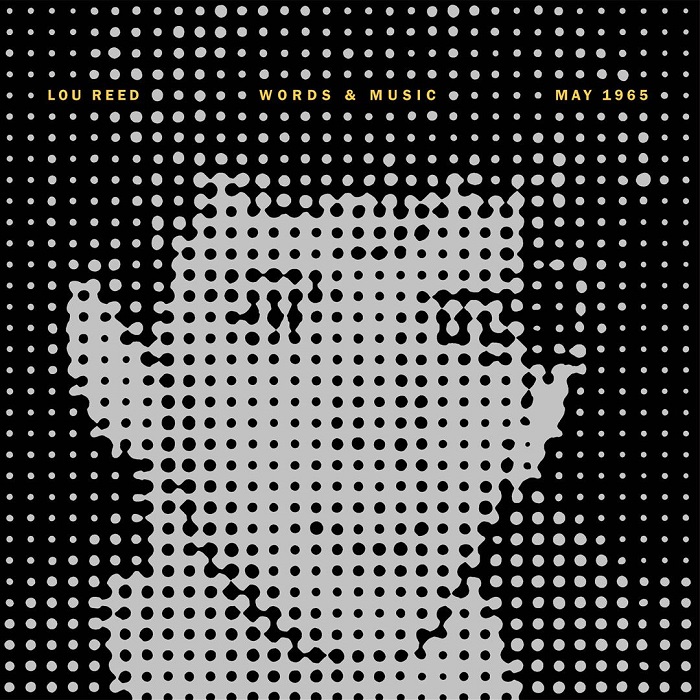
This snapshot of the artist stepping out is particularly interesting when compared to the album that followed soon afterwards. As the first release in the projected Lou Reed Archive Series, Words & Music, May 1965 presented the contents of a demo tape he recorded then mailed himself to preserve its authenticity. Dating from before the recordings heard in the Peel Slowly And See box, he’s still firmly in the thrall of Bob Dylan, from the delivery to the fingerpicking, even on songs we’d get to know via the Velvets. John Cale helps out on several songs, including the immortal “Buttercup Song”, which was teased for decades as “Never Get Emotionally Involved With A Man, Woman, Beast Or Child”, and takes the lead vocal on “Wrap Your Troubles In Dreams”, which features that same maddening single beat on a sarinda as on the box. “Men Of Good Fortune” would be a title he’d use eventually, but not with these words, sung from the point of few of a fair maiden. The other “new” songs are of varying interest, though “Stockpile” has rocking promise. And the early version of “Pale Blue Eyes” is lovely. (As a bonus for some editions of the album, six cuts go even further back, as for as 1958 for his own doo-wop composition “Gee Whiz”, then up to 1963 or 1964 for two Dylan covers—an instrumental “Baby Let Me Follow You Down” and “Don’t Think Twice, It’s All Right” with new words, both with harmonica—plus a run through “Michael, Row The Boat Ashore” and two nondescript blues.)

Together these albums are certainly essential for collectors. For the rest of the world, they actually show a kinder, gentler Lou who just wanted to write catchy songs, rather than the grouch determined to shock and upset.

Lou Reed I’m So Free: The 1971 RCA Demos (2022)—3
Lou Reed
Words & Music, May 1965 (2022)—3

Friday, May 6, 2022

Yes 4: Fragile

Growing up with classic rock radio meant we’ve been prejudiced against not just certain songs, but certain bands. That’s why we think this little forum of ours has been so important; not only can we put certain things we love in context, but we’ve also come around on songs we, frankly, hated with a passion.

Fragile begins with one such culprit, the immortal-despite-our-better-efforts “Roundabout”. Once upon a time we would hear those twelfth-fret harmonics and lunge to change the station as soon as possible. It’s still not our favorite song by any stretch, but time, patience, and the determination to review albums no matter what has allowed us to see why so many Yes fans and fanatics love it so damn much.

The album has something of an apt title, since the band had just bounced Tony Kaye because he didn’t want to venture further than piano and organ. To both replace him and better attain their vision, they convinced Rick Wakeman to give up sessions and bring his arsenal of keyboards into the fold. Under pressure and short on funds, they concocted an album consisting of four mostly long songs, interspersed with “individual ideas” from each band member. Pink Floyd had already tried this, and Emerson, Lake & Palmer would one day get several albums out of the method; the trick is to have such statements fit into a larger collaborative concept (think the White Album or Déjà Vu).

“Roundabout” does indeed start the album, and those beginner harmonics only slightly disguise Chris Squire’s monster bass. Wakeman’s keys come in on the second verse and we start to appreciate just how intricate the tune is. Its structure repeats sections with mild variations, so that it’s never quite over when you think it is. And after all this time, while we’re not sure how mountains would come out of the sky, what else could they possibly do but stand there?

Wakeman gets the first solo spot, a piece called “Cans And Brahms” that reassigns instruments in a symphony to different keyboards and overdubbed. These days it sounds more canned than Brahms, mostly since Switched-On Bach had already blazed the trail. Then Jon Anderson does a vocal round called “We Have Heaven”, which gets pretty busy until a door slams on it and footsteps run away into the wind. (Again, this was two years after Pink Floyd did it.) This brings us to “South Side Of The Sky”. This never got as much radio play as the rest of the album, yet that shouldn’t suggest it’s no good. The first verses have good rocking tension, and Wakeman’s completely solo piano interlude (which likely kept it off the radio) cleverly sets up an extended vocal chorale with good band support before the verses come back again.

Bill Bruford has been fairly constrained thus far, but side two starts with “Five Per Cent For Nothing”, a 35-second burst that really is in 4/4, but syncopated with competing atonal lines from Squire and Steve Howe and a few stabs from Wakeman. It’s a mere prelude to that other song you might be sick of, “Long Distance Runaround”. Here again we can marvel how well the players double each other, and Wakeman appears to be playing a primitive electric piano rather than something more advanced. (The internet tells us that Bruford is playing in 5/8 over the band’s 4/4 in the verses, which explains the off-kilter effect.) It’s deceptively short, ending on a flourish that segues into “The Fish”, which almost always got airplay as a result. This is Chris Squire’s statement, which we’re told is all layered bass parts, but there are drums, some wah-wah, and a chant of the song’s subtitle (“schindleria praematurus”, for all you marine biologists out there). Steve Howe’s solo spot is the longest, the Spanish-classical original “Mood For A Day”. It gets busy but is mostly pastoral, which belies the furious intro of “Heart Of The Sunrise”, wherein everybody gets to blow (in the jazz sense, that is). The track seems to slow down, but then the riffing returns with a vengeance. The vocal doesn’t come in for almost four minutes, for almost another song completely. The interplay increases with precision, until finally the main riff swallows the tune whole. But wait! After a few seconds of silence, a door opens to return us to “We Have Heaven”, already in progress.

Fragile really is better in context as an album than parsed out in a rotation, and despite its fragmented genesis, just plain works. Also, this was the debut of Roger Dean as their go-to album art guy, and his other-worldly ideas fit the music perfectly. More of his designs appear in a booklet that came with initial pressings, featuring the now-customary shots of each band member on stage and with their families. Anderson offers four lines of a poem, while Wakeman offers a dense paragraph of thanks to various individuals, organizations, and a pub.

The initial expanded CD added two timely tracks: the full-length cover of Simon & Garfunkel’s “America”, which will be discussed in a different context, and a rough mix of “Roundabout”. Only the latter was included when the album was reissued in a “definitive edition” with new mixes by Steven Wilson, along with other rough mixes and outtakes. Then nine years after that, a Super Deluxe Edition sported yet another remaster of the album, plus a disc of even newer Steven Wilson mixes of the album and instrumental versions of the songs that weren’t instrumentals originally, a disc with the same bonus tracks from 2003 and 2015 plus single mixes, and further alternates and some live tracks on a fourth. Plus a Blu-ray. And an LP.

Yes Fragile (1971)—4
2003 remastered CD: same as 1971, plus 2 extra tracks
2015 Definitive Edition: “same” as 1971, plus 6 extra tracks (plus DVD or Blu-ray)
2024 Super Deluxe Edition: “same” as 2003, plus 28 extra tracks (plus Blu-ray)

Friday, October 22, 2021

Yes 3: The Yes Album

By titling their third album The Yes Album, one might think Yes were starting fresh. In many ways, they were, shaking off the orchestral embellishments and dependency on covers, and giving new guitarist Steve Howe plenty of room to leave his stamp, and not just on the nine-minute tracks. Engineer Eddy Offord was upgraded to co-producer, helping seal his pedigree as premier prog producer in between Emerson, Lake & Palmer dates.

The stop-start nature of “Yours Is No Disgrace” makes it difficult to get into the song right away, but it does, with a wonderful galloping sequence that screams “anthem”. Things stop for tightly harmonized vocals, which continue over the main theme, continuing in variations. It’s one of their better long-form pieces, setting yet another template for future albums. Jon Anderson’s lyrics are fairly obtuse, per usual. The new kid gets a solo spot, taken from a live performance, with his genre-spanning instrumental “The Clap”. (This has since been amended to omit the definite article, but since that’s how it’s announced, that’s what we call it.) “Starship Trooper” is another long one, this time in labeled parts: “Life Seeker” would be the catchy first section; “Disillusion” is another fast-picked acoustic country detour before a return to the original theme; and, after a windup, “Würm” follows three descending chords while Tony Kaye’s Hammond organ fights for space between dueling guitar solos.

“I’ve Seen All Good People” is announced by the repeated hook of the title, but first there’s the three-chord “Your Move” section, which stretches the chess metaphor but still manages to evoke John Lennon, with “instant karma” in the lyrics and “all we are saying is give peace a chance” mixed low beneath one of the verses. The “All Good People” section revives the hook, first setting up continual guitar solos, then fading over organ chords that modulate a full step with every repeat. “A Venture” is reminiscent of the more complicated songs from the first two albums, but here the musical blend is superior, deftly allowing a jazz piano solo of sorts while Chris Squire’s bass burbles below and Bill Bruford plays his polyrhythms. These time experiments continue on “Perpetual Change”, another long one that takes detours through a nursery rhyme section, but manages to stay tuneful.

By design, The Yes Album has proven to be the prime starting point for the band, and most of the songs have been in fairly solid rotation on Classic Rock radio ever since. If you’re sick of them, blame the radio.

The eventual expanded CD added truncated single mixes of “Your Move” and “Starship Trooper”, plus a studio recording of “Clap” that incorporates elements of “Mood For A Day”, which would show up on the next album. Only the latter was included on the CD portion of the eventual Steven Wilson remix package, along with an extended “A Venture” that winds into freeform cacophony; the single versions were included on the DVD or Blu-ray, depending on which one you bought, along with surround mixes, live versions, and whatnot.

This permutation was somewhat superseded by the eventual Super Deluxe Edition, which celebrated the 52nd birthday of the album. This time a new remaster of the original album was supported by a disc containing the 2014 Wilson remix of the album’s tracks (save “Clap) plus Wilson’s instrumental mixes of same (again save “Clap”, but including the a cappella intro for “All Good People”). A third disc had those previously released singles and outtakes, as well as a previously unreleased take of the “Life Seeker” portion of “Starship Trooper” plus, amazingly for a 1971 release, a mono(!) mix of the album. A fourth disc offered grainy live recordings from both before and after the album was released; they show Steve Howe adept at the band’s earlier material, while a rendition of “Clap” includes direct quotes from “Classical Gas”. A Blu-ray disc included updated hi-res and surround mixes, and because Rhino was behind it all, the new remaster was also included on vinyl, ensuring an inflated list price.

Yes The Yes Album (1971)—
2003 remastered CD: same as 1971, plus 3 extra tracks
2014 Definitive Edition: “same” as 1971, plus 2 extra tracks (plus DVD or Blu-ray)
2023 Super Deluxe Edition: same as 2003, plus 27 extra tracks (plus Blu-ray)

Friday, March 29, 2019

Mary Hopkin 2: Earth Song/Ocean Song

Apple Records was still a going concern that had acts outside of various sparring ex-Beatles, and despite Paul McCartney taking zero interest in what was originally his baby, some of those acts ably carried on. After releasing some singles produced by hitmaker Mickie Most, Mary Hopkin ended up working with Tony Visconti, best known at the time for his work with T.Rex and David Bowie. (She didn’t just work with him; they got married, and that’s why her striking vocal cameo on Bowie’s “Sound And Vision” is credited to Mary Visconti.)

She didn’t like the image Paul concocted for her first album, so for Earth Song/Ocean Song Mary was determined to express her own tastes. Caught up in the English folk scene, she recruited Ralph McTell on acoustic guitar, along with Dave Cousins of the Strawbs on guitar, and Danny Thompson of Pentangle on standup bass, and hand-picked songs both familiar and unrecorded by the likes of McTell, Tom Paxton, and Cat Stevens. With more restrained string arrangements than those on Post Card, the result fits alongside contemporary albums by Nick Drake, and even dare we say the chamber elements of Nico’s Chelsea Girl.

That chamber sound is prominent on “International”, sometimes overshadowing the gently picked guitars but never her voice. “There’s Got To Be More” is an immediate improvement, with strident acoustics, that terrific Danny Thompson bass, and a defiant message in her delivery. There’s a gentle switch to “Silver Birch And Weeping Willow”, dominated by a Kingston Trio-style banjo, before “How Come The Sun” gets an excellent Visconti arrangement, and even phases the vocals on the middle section! The title track (the first half, anyway) rolls along like a leaf in a breeze, eventually landing on the ground.

With a harsh acoustic guitar thrashing unresolved chords, “Martha” fades in side two with a portrait of a neighborhood gossip justifiably ostracized by the community, which of course only compounds the problem. Skittering strings add to the unsettledness. Ralph McTell’s “Streets Of London” is legendary in the UK, and of course Mary’s take is as lovely as any. Cat Stevens’ “The Wind” is probably the most familiar song to Americans, but the arrangement is at first too literal, and then distracts from the simplicity of the original. “Water, Paper And Clay” redeems it, starting with just her lovely voice and building slowly to a pub anthem. “Ocean Song” completes the album, the same chords as “Earth Song” with different words and extended fade for an artful finale.

Mary was proudest of this album, and felt justified to leave the pop circus after its release. Without any real promotion, Earth Song/Ocean Song became easily forgotten until the ‘90s, when Apple finally started their non-Beatle reissue campaign. The initial CD release had no bonus tracks, but the 2010 version added both sides of a contemporary single (the overwrought “Let My Name Be Sorrow” and Ralph McTell’s more staid “Kew Gardens”) along with “When I Am Old One Day”, an outtake from the original LP first heard on a mid-‘90s compilation. (Another B-side, the mildly jaunty “Jefferson”, was included only in the digital download, alongside “Let My Name Be Sorrow” in French and, believe it or not, Japanese.)

Mary Hopkin Earth Song/Ocean Song (1971)—3
2010 CD reissue: same as 1971, plus 3 extra tracks

Tuesday, January 29, 2019

Kinks 13: Muswell Hillbillies

A new worldwide deal with RCA ushered in a new era for the Kinks, and their music evolved somewhat. Muswell Hillbillies returned to familiar themes from Arthur and Village Green Preservation Society, such as hanging on to the “old ways” tooth and claw, somewhat illustrated by the wide angle photo of the pub that wraps the album cover. But now there’s a paranoia, albeit well-founded, of the government’s idea of progress, and it’s likely the auteur didn’t consider the length of his hair, and that of his bandmates, to be a sign of changing times. Instead, there is also a pronounced, if misinformed, view of America as a place where the same greatest generation was better off than their British cousins.

The music is a strange hybrid of country blues with vaudeville, with a few flashes of their “classic” sound. For much of it, only Ray Davies’ voice—itself a mix of his twee and drunken deliveries—makes it clear who the band is; brother Dave contributes neither songs nor lead vocals, but we do get to hear his harmonies and fretwork. John Gosling’s keyboards fill up a lot of space when not competing with a horn section.

Something of an overture to the album, “20th Century Man” takes a while to get going, a driving strum along the lines of “Victoria”, set in its ways as it is in its chords. It finally picks up speed by the end, but fades to the oompah jazz of “Acute Schizophrenia Paranoid Blues”, which stumbles along under New Orleans horns. Perhaps it’s an actual affliction, as the mushmouthed narrator of “Holiday” blurs the reality of whether he’s on vacation or has been sent somewhere to recover. Resistance to change is further stated in the very Kinky “Skin And Bone”, which decries diets that erase “cuddly fat” from the women who lose weight. A touch of accordion gives a European flair to the lament in “Alcohol”, which would end up being a chant of solidarity when performed in front of inebriated concert crowds. It’s an interesting juxtaposition with the next track, wherein the narrator goes to a doctor to cure his multiple ills, only to be told that he suffers from a “Complicated Life”.

“Here Come The People In Grey” spells out the concerns of the fellow on the first side, who equates the effects of urban renewal with being institutionalized. As before, the time-honored panacea is simply to “Have A Cuppa Tea”, which presumably offers more satisfaction than a harry rag, even with the ragtime ending. Another cautionary tale of danger in the big city is told in “Holloway Jail”, where a sweet thing is framed and imprisoned for a crime by a guy she meets. The title of “Oklahoma U.S.A.” may seem to Americans an odd term to use, but in this case it refers to the Broadway musical and film. Despite the sentiment, it’s a lovely song. “Uncle Son” could be another confusing title except that, like a lot of the character studies, it’s based on an actual relative with that name, who (surprise) lived simply and wanted for little else. “Muswell Hillbilly” sums up the themes yet again for anyone who hadn’t picked up on them, but this time it’s in a catchy, familiar format, complete with singalong chorus.

While the political concerns are distinctly British, the constant allusions to America make Muswell Hillbillies more universal, and ultimately it’s a winner. The down side is that ignoring the lyrics makes a lot of the songs, with their simple chords, run together, while the lyrics repeat the same ideas too many times. This is clear with the two outtakes included on the first expanded reissue of the album, “Mountain Woman” using an Appalachian stereotype to illustrate enforced relocation, while “Kentucky Moon” at least acknowledges that the narrator has only the slightest idea what all those mythological American landmarks are really like.

A British deluxe edition included those two, plus some alternates, demos, and BBC radio versions on a bonus disc. A year later, once Sony had grabbed the rights to the catalog, some of those were crammed on the disc after the album proper, while a DVD offered several BBC TV performances from the following year. (One key outtake from the album is “Lavender Lane”, likely left off for self-plagiarism from “Waterloo Sunset” despite spelling out the transition to council estates and tower blocks.)

Just to confuse things further, the album’s 50th anniversary entailed a pairing with their next album in a deluxe CD and LP set, with some of the previous bonus tracks included on the LP but not CD, and the CD (which was also available on its own) including new mixes of two album tracks and the previously unreleased outtake “Travelling With My Band”, which has the Muswell sound but thematically belongs to the next album.

The Kinks Muswell Hillbillies (1971)—3
1998 Konk CD reissue: same as 1971, plus 2 extra tracks
2014 Legacy Edition: same as 1998, plus 7 extra tracks (and DVD)
2022 50th Anniversary Edition: same as 1971, plus 3 extra tracks

Friday, September 21, 2018

Byrds 15: Live 1969 and 1971

If it happened at any other time but the late ‘60s, the Byrds would have ended after David Crosby left the band, and the remaining members would have issued their work under another name—the Sweethearts, perhaps, after the album where things truly changed. Once Chris Hillman bailed, and Roger McGuinn was the only Byrd left, the band we knew only three years before was done anyway. Yet, the band called the Byrds that featured a phenomenal lead guitarist named Clarence White on five albums cannot be so easily discarded. That combo was truly unique for its time, playing both traditional country songs and rock amalgams, well before the Eagles ran with the concept. Granted, the Flying Burrito Brothers were working a similar experiment, but they too suffered from revolving band members.

Today, two different artifacts have become part of the Byrds canon, and both come from the era featuring the group we’re going to call the Sweethearts. Live At The Fillmore — February 1969 compiles highlights from two nights at the Fillmore West, right after Dr. Byrds & Mr. Hyde came out. The sets were heavy on that album and Sweetheart Of The Rodeo, with a few other country covers thrown in alongside a medley of “Turn! Turn! Turn!”, “Mr. Tambourine Man”, and “Eight Miles High”, and ending with “Rock & Roll Star”, “He Was A Friend Of Mine”, and “Chimes Of Freedom”. From the opening “Nashville West”, Clarence wails and Roger keeps out of his way.

The only lineup change until the final Byrds album for Columbia was Skip Battin on bass; that incarnation of the Sweethearts (catchy, isn’t it?) was already represented on the first two sides of (Untitled). By now they didn’t sell records in America, but flourished in the UK. A well-performed set was extracted from Roger’s vaults for Live At Royal Albert Hall 1971, released on the psychedelic-centric Sundazed label, and it’s clear how far they’d come as a live act since the Fillmore show. Just as on (Untitled), they begin with “Lover Of The Bayou”, and move through their older Dylan covers with newer tracks. Things go acoustic to show off Clarence’s prowess there, through a couple of traditional songs and “Mr. Tambourine Man”. (By now Gene Parsons would leave the kit to play banjo, and their road manager covered on percussion.) A lengthy “Eight Miles High” jam has to wait through an extended bass solo for the song itself to emerge. While not on the same level as in the folk-rock era, their vocal blends shine throughout, right through the closing a cappella take on “Amazing Grace”. We even get to hear them called back for several encores.

These two albums nicely complement the studio albums of the period, and show strengths that were sadly lost in the mixes. And anytime we get to hear Clarence White, everybody wins. Both are worth seeking out.

The Byrds Live At The Fillmore — February 1969 (2000)—3
The Byrds
Live At Royal Albert Hall 1971 (2008)—

Tuesday, January 16, 2018

Elton John 6: Madman Across The Water

Elton and Bernie were very busy in 1971, and the third LP was the best of all. The real follow-up to Tumbleweed Connection, Madman Across The Water builds on the American influences without relying on any real theme or concept, save superior, mature songwriting.

Some of his best and certainly highly iconic songs load up side one. Everybody knows “Tiny Dancer” by now, or at least can associate it with the male star of Who’s The Boss. “Levon” is one of the most hauntingly moving songs about very little, other than to remind us that English is possibly the only language where Jesus is not used as a given name. Equally mysterious but less serious is the identity of “Razor Face”, although the wild accordion over the end ties in with the Band influence of the track before. Such a jaunty touch is a fake-out setup for the title track, with its vivid, almost cinematic arrangement matching the implicit horror in the lyrics. We particularly like the backwards effect on the acoustic guitar bridging the two halves. (Compared to the version recorded for Tumbleweed but shelved, they made the wise choice to redo it.)

Side two isn’t as immediately classic, but only because it has a lot to follow. “Indian Sunset” attempts to sum up the plight of the Native American. It’s a lovely production, and a stirring song, but the lyrics are what one might expect from a British kid who watched a lot of cowboy movies growing up. It’s a strange jump to “Holiday Inn”, their contribution to the “rock star on the road” genre, with that wonderful mandolin part. We’re guessing “Rotten Peaches” is the plaint of a man in prison, but the joyful accompaniment is such an odd juxtaposition with the words that it works. Speaking of odd, “All The Nasties” brings the choir heard earlier on the album to the fore, even given their own intro to the “oh my soul” mantra toward the end. (Nick Drake fans note: Robert Kirby was the arranger.) Something of a reaction to critics, its message is reinforced by the comparatively brief and extremely mournful “Goodbye”, which predicts future faux-classical pieces like “Sorry Seems To Be The Hardest Word”.

All together, Madman Across The Water is solid, and we must mention Paul Buckmaster’s wonderful string arrangements throughout. In a fine example of “it is what it is”, there were apparently few outtakes of interest. While most of his other albums from his first decade in the business have been reissued and expanded multiple times, this one remained as it always was: nine songs, and that was it. Amen.

Or it would have been, until the 50th anniversary came around, likely put off a year due to COVID-19. The first-ever expansion of the album added a solo live version of “Indian Sunset” from the 11-17-70 concert, previously released outtakes “Rock Me When He’s Gone” and the title track with Mick Ronson, the single version of “Levon”, and a mix of “Razor Face” extended by about two minutes. The bonus disc consisted of piano demos for all the songs on the album—the title track twice—plus another for “Rock Me When He’s Gone” and the full studio version of the outtake. (The Super Deluxe the audio from a mostly solo BBC appearance, consisting of performances of everything on the album save “All The Nasties” on its own disc, plus video content.)

Elton John Madman Across The Water (1971)—
2022 50th Anniversary Deluxe Edition: same as 1971, plus 16 extra tracks (Super Deluxe Edition adds another 8 tracks plus Blu-ray)

Friday, January 12, 2018

Humble Pie 5: Rockin' The Fillmore

While Humble Pie remained relatively obscure throughout the U.S., somebody had the bright idea to record their residency at New York’s Fillmore East, and then release a double live album from it. (This in a calendar year that already saw similar albums from the Allmans to Zappa.)

But most bands rose to the occasion at the Fillmore, particularly when their diehard fans went to every show, and the Pie truly kick their butts on Performance: Rockin' The Fillmore. Building on the volume of Rock On, which they were supposed to be promoting. Starting with the swapped vocals on “Four Day Creep”, it’s a punishing plow through “I’m Ready” and “Stone Cold Fever”. Every track is loud and most are pretty long, two even taking up a side each—one of those is an incredibly slow but fascinating drag through Dr. John’s “I Walk On Gilded Splinters”, the other an equally muddy “Rollin’ Stone”. Side four picks up the pace, and is given over to two songs usually associated with Ray Charles, “Hallelujah I Love Her So” and the terrific “I Don’t Need No Doctor”.

Mysteries remain about the album, such as why they needed a two-part title, and if they went through all the trouble about including special labels on two of the sides, wouldn’t it have made more sense to have them be photos from the actual show, rather than an outdoor concert somewhere far from the venue being commemorated? Then, over 40 years later, the upstart Omnivore label managed to curate a set of all four shows from this stint, which spelled out which tracks came from which shows. As it turns out, “Stone Cold Fever” was played only the once, and all the sets began with the same four songs, close to the same length, though there was a little stretching on the encores, which varied. Unfortunately, Steve Marriott’s patter didn’t always vary, and the third time he describes “Gilded Splinters” as his favorite boogie isn’t as funny as the first. But if you loved the original album, the complete set is a must.

Humble Pie Performance: Rockin' The Fillmore (1971)—

Tuesday, January 9, 2018

Faces 3: A Nod Is As Good As A Wink

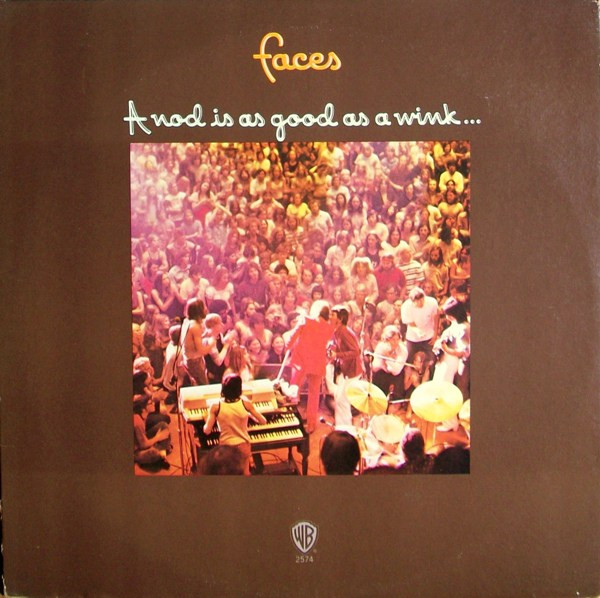
While Every Picture Tells A Story rocks with acoustic instruments, anyone who longed to hear Rod Stewart with some voltage beneath him needed only wait a few months before another Faces album. From its live cover shot and cheeky title, A Nod Is As Good As A Wink... To A Blind Horse, positively crackles.

Yet while Rod swaggers his way through “Miss Judy’s Farm”—just one of the tracks here that refuses to stick to an ABAB rhyme scheme—over those terrific Ian McLagan electric piano licks, Ronnie Lane gets his share of the spotlight too. “You’re So Rude” is a randy slice of afternoon delight, with blasts of organ and sound effects pushing the story along. Lest one think it’s all silly, “Love Lives Here” brings on the heartbreak, and while Mick Jagger would never admit to stealing the mood for “Fool To Cry”, he was wise not to borrow the harpsichord. Ronnie returns for the aftermath of the relationship—in a pub, naturally—on “Last Orders Please”, and whatever sadness Rod had two songs earlier is well gone by the groupie abuse in “Stay With Me”.

Side two begins, out of character, with the melancholy “Debris”. Sung by Ronnie, with Rod helping out on the choruses, what sounds like another sad love song turns out to be memories of his dad. It’s very sweet, but unfortunately followed by a rather tepid rendition of Chuck Berry’s “Memphis” that eventually picks up, but the lead guitar stays stuck in the Leslie speaker. The fun returns on “Too Bad”, another funny tale of Life on the Road that could have taken place earlier in their careers or that week. And fun as “That’s All You Need”, it too doesn’t make sense, from going about remembering an estranged brother, to the guy showing up mid-track for “a cup of coke” and steel drums taking the album to the spindle.

But we don’t listen to Faces albums for deep thoughts, and that’s why A Nod Is As Good As A Wink is just plain fun. Besides, it’s always nice to hear Ronnie Lane break up the monotony, isn’t it?

Faces A Nod Is As Good As A Wink… To A Blind Horse (1971)—

Friday, September 22, 2017

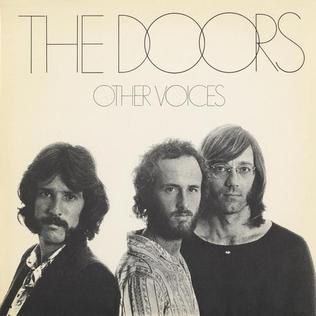
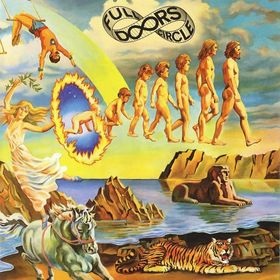
Doors 8: Other Voices and Full Circle

Jim Morrison was dead: to begin with. There is no doubt whatsoever about that. He wasn’t in hiding, he wasn’t exploring his poetry, and he wasn’t breathing due to the combination of alcohol, heroin, and bathwater in his system. Jim Morrison was as dead as a door-nail.

The band still wanted to play, of course. They’d been working on new material already, having learned to fend for themselves without their lead singer around to drop his pearls of imagery. The last couple of Doors albums proved that, as a musical unit, they were tight and certainly capable. Whether anyone would care about them without the handsome guy in the leather pants out front was another question.

Other bands have rebounded successfully when they had to replace their singer, and the Doors kept it simple by splitting the task between keyboard player Ray Manzarek, who already showed his weakness on Absolutely Live, and guitarist Robbie Krieger, whose best quality is that he didn’t sound like Ray. Both guys couldn’t help but utter echoes of Jim’s swagger and laid-back delivery. Beyond that, all they needed to do was combine their instruments into enough catchy tracks to fill album sides, live shows, and hopefully, their bank accounts.

With its stark white cover and band portrait, Other Voices is a bold if indisputable claim, but the album works best when they just play. After a brief psychedelic whirl, “In The Eye Of The Sun” nails a nice swampy groove. “Ships w/Sails” is a sustainable Latin jam (unlike “Hang On To Your Life”), and “Tightrope Ride” is a direct descendant of “L.A. Woman”. “Down On The Farm” sounds the least like the Doors, but it gets distracted trying to change direction. Even the over-long “Wandering Musician” has a great hook for a slow fade. Yet, whatever one’s opinion of Jim’s “poetry”, the guys on their own were not impressive lyricists; “Variety Is The Spice Of Life” and “I’m Horny, I’m Stoned” aren’t about to make it into Bartlett’s Familiar Quotations anytime soon.

A tour behind the album with a bass player and a second guitarist convinced them they could keep going, and they did. While Other Voices contained songs that Jim could arguably have sung himself, much of Full Circle considers what they might have sounded like had they never met the guy. (Really, would he have ever exhorted a crowd to “Get Up And Dance”?) The ensemble was expanded in the studio, utilizing a lot more percussion, funky backup singers, and Charles Lloyd on sax and flute. His contribution turns “Verdilac” into near-fusion; it’s just too bad there are lyrics. “Good Rockin’ Tonight” is tackled fairly straight, except for the cacophonous piano pounding and Ray’s ill-advised growling at the end. There’s even less excuse for “The Mosquito”, a bipolar track with some great jamming but an embarrassing lyrical hook (“no me moleste mosquito”, and we’re not kidding) that helped the song chart in Spanish-speaking countries. “The Peking King And The New York Queen” tries to hard to be beat poetry, though the combination of the vocals and female additions seems to predict at least one Zappa album.

Both albums remained out of print for a few decades, and were ignored by the organization once Jim’s mythology took over. But in this century, after smaller labels did okay with semi-legitimate reissues, the band made it available for streaming. Then an official re-release paired the albums in a two-CD set, with one bonus track: the 1972 B-side “Treetrunk”. Left off Full Circle because it was “too commercial”, it’s probably the best song in the bunch.

The Doors Other Voices (1971)—3
The Doors
Full Circle (1972)—

Friday, September 1, 2017

Elton John 5: 11-17-70

Once upon a time, the promotion rounds for young struggling performers would include live broadcasts on FM radio, whether appearing in the studio next to the DJ, or simulcast from an actual concert. These performances would often lead to widely spread bootlegs, and sometimes became the basis for an official album, thus sending the cash toward the label, or at least in theory.

Elton John was then touring as part of an economical trio, with Dee Murray on bass and Nigel Olsson on drums, and their simple power can be beheld on 11-17-70 (which was the title in America, anyway; other countries swapped the first two numbers depending on how they displayed dates there). The album presents Elton as not yet a superstar; none of the “hits” are here, save a few album tracks that some of the cooler stations had already discovered.

After “Take Me To The Pilot” seemingly opens the show, the crowd chuckles at the a cappella chorus of “Honky Tonk Women” that kicks off that cover. “Sixty Years On” is plenty somber without the strings from the album version, Nigel’s drums covering the tension well. “Can I Put You On” is rescued from the Friends soundtrack, just as “Bad Side Of The Moon” becomes more than a B-side. However, here it’s a setup for an 18-minute medley that begins with “Burn Down The Mission” and manages to find its way through “My Baby Left Me” and “Get Back”.

11-17-70 may not have been planned in a release schedule that was already filling up, but it remains an excellent sample of a time when Elton really did a lot with a little. We maintain that if not for this album, there would be no Ben Folds Five. (The eventual remaster rejigged the order slightly and added a stellar version of “Amoreena”, while a more complete recording of the show appeared as a Record Store Day exclusive on vinyl only. 17-11-70+ put the original running order on one LP, with the other songs from the show on another, including a version of “Indian Sunset” from his yet-to-be-recorded next album.)

Elton John 11-17-70 (1971)—4
1995 CD reissue: same as 1971, plus 1 extra track
2017 17-11-70+ (vinyl only): same as 1995, plus 6 extra tracks

Friday, August 25, 2017

Humble Pie 4: Rock On

Rock On is a fitting title for the fourth Humble Pie album. At this point they’d traveled away from the light-and-shade juxtapositions of the first album, and concentrated on heavier-sounding tunes. That meant a little less Peter Frampton, but he’s still there.

Some kind of law decreed that every band needed a song called “Shine On” in their repertoire, and Frampton delivers here. Shaky Jake returns for a cameo on “Sour Grain”, a pretty ballsy tune that slows down profound near the end, and effect that’s immediately dispelled by the barroom boogie of “79th And Sunset”; per usual Steve Marriott gets in some good rhymes. The first great riff of the album arrives on “Stone Cold Fever”, everybody contributing to the overall feel, and then some, since Marriott couldn’t blow hard and play guitar like that at the same time. It’s an immediate segue to their ultra-slow take on Muddy Waters’ “Rollin’ Stone”, which only encourages tastier fretwork and an inspired (comparative) rave-up.

That only makes “A Song For Jenny” seem even more tender, but the band soon kicks in along with the so-called Soul Sisters (the eternal voices of P.P. Arnold, Doris Troy, and Claudia Lennear). “The Light” isn’t one of Frampton’s better tunes, but he was still ahead of the game. Besides, Greg Ridley’s “Big George” is so dopey it’s fun, and that would indeed be Bobby Keys on sax. The jazzy piano lead-in to “Strange Days” again recalls Traffic of the same era, even with the delay effect of the vocals. A drawn-out ending seems to lead directly to another tune, this time the ‘50s-inspired “Red Neck Jump”, complete with “shoo-waddy” backups.

Developments in due time would lead to this album being just slightly overshadowed, and we’ll get to that. Rock On is good fun, even if it takes a while to get there. Again.

Humble Pie Rock On (1971)—3

Friday, August 18, 2017

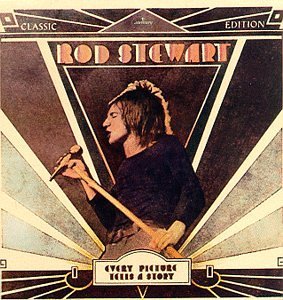
Rod Stewart 3: Every Picture Tells A Story

Every now and then we come across an album that’s been ancient history almost as long as we can remember, the more popular songs being fixtures on the radio before Classic Rock was an actual programmed genre. Its ubiquity prevents us from connecting with it. Then one day, almost without warning, like being slapped across the face with a raw trout, we say, “Ah, now I get it.”

We didn’t ask to be born when we were, nor are we responsible for Rod Stewart becoming increasingly silly over the course of the ‘70s. For some time we wrote off “Maggie May” as simply a too-long song that stole a title and nothing else from a copyrighted snippet on Let It Be. Therefore we can’t say exactly when we realized what a fine album Every Picture Tells A Story is, but it was likely after his MTV Unplugged appearance and album that tried to suggest that he invented that particular trend. (He didn’t.)

Yet the title track absolutely rocks, driven by a determined 12-string acoustic (Ron Wood, of course) and positively pounding drums from good old Micky Waller. Woody adds a few electric leads, but it still takes a long time for the title to be sung, by which time we’ve already been seduced by the occasional harmonies from Miss Maggie Bell. It’s a great start to a solid album side, the rest of which is devoted to covers. “Seems Like A Long Time” was first heard on the same Brewer & Shipley album that gave us “One Toke Over The Line”; it fits him better than them, but sounds very close to Van Morrison’s “Brand New Day” from the same year. A furious dobro kicks off “That’s All Right”, the Elvis song everybody knows, shoehorned for some reason into an Appalachian arrangement of “Amazing Grace”. And despite the similar title two cuts before, “Tomorrow Is A Long Time” is yet another relatively obscure Dylan tune done very nicely.

Before we get to “Maggie May” proper, there’s a brief classical guitar piece called “Henry” that occasionally gets indexed separately depending on which version of the album you have. Frankly, the best part of the song is the trilling mandolins, which get their own moment to shine before sending the song out to the fade, in the days when a five-minute hit single was still a rarity. It’s a good transition to the next track. “Mandolin Wind” doesn’t feature the instrument as prominently until about halfway through, but yet again a track explodes with drums to inspire severe foot-stomping. While not credited as such, “(I Know) I’m Losing You” is a full-fledged Faces performance, and a killer rendition of the Temptations song. (That would be Ronnie Lane helping with the low parts, and Kenney Jones never sounded this good in The Who.) And while he wasn’t the first guy to cover Tim Hardin’s “Reason To Believe”, it’s likely Rod’s is the version everybody knows, and it’s affecting to hear this stud sing about his broken heart.

What is so fascinating about this album is, again, that most of the electric touches, whether guitar or organ, seem to be afterthoughts once the acoustic backing tracks were laid down. We’ve been tough on the guy, but Ron Wood deserves dual credit for everything he contributes to this album. Outside of the multitude of guitars, he also plays most of the bass, mixed unobtrusively. But Every Picture Tells A Story depicts just one man and name on the cover, and he set a bar that, frankly, he’d never hit again.

Rod Stewart Every Picture Tells A Story (1971)—4

Friday, June 2, 2017

Grateful Dead 7: Skull & Roses

In the year following their first live double album, the Dead had recorded and released a pair of LPs that concentrated on succinct songwriting. They learned to use this concentrated approach onstage, where they were now down to five members, with just one drummer. Hence, their next live installment—also a double—reflected less of a lengthy, space jam approach and more of the tight country and blues covers they’d picked up along the way, and indeed made their own, to the point where only obsessives like ourselves know (or care) that other people wrote and recorded them first.

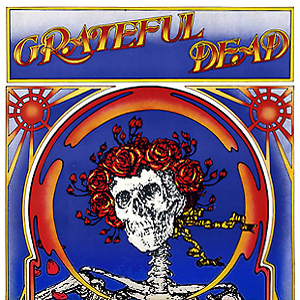
The album simply titled Grateful Dead by the record label has long been referred to by Deadheads (as christened on the inner gatefold) as “Skull & Roses”, due to its artwork and to differentiate it from the eponymous debut. A quick listen to the two similarly titled albums should dispel any confusion, as they almost sound like two different bands. Beginning with the confident gallop of “Bertha”, a Garcia-Hunter original, side one moves to Merle Haggard’s prison lament “Mama Tried” and the jugband revision of “Big Railroad Blues” before ending with the complicated textures and meter of “Playing In The Band”, spotlighting Bob Weir in the music he wrote. Side two is the album’s only concession to psychedelic jamming, being an 18-minute extension of “The Other One”, known previously to record-only fans as the first track from the second album. Keep in mind the first five minutes are devoted to a drum solo.

Side three is all covers: “Me And My Uncle”, written by Papa John Phillips and learned from a Judy Collins album; “Big Boss Man”, which gives Pigpen his moment in the dwindling spotlight; “Me And Bobby McGee”, captured a month after Janis Joplin’s version topped the charts; and the standard “Johnny B. Goode”, which shows just how much of the Dead’s sound came directly from Chuck Berry. Side four is split between another Garcia-Hunter original, the mournful “Wharf Rat”, and the medley of “Not Fade Away” and “Goin’ Down The Road Feeling Bad”, establishing the Bo Diddley beat that they’d use for countless similar medleys over the duration of their career.

If one was so inclined, the “Skull & Roses” album could be shaved down to a single LP highlighting the band’s original compositions. Indeed, “Bertha”, “Playing In The Band” and “Wharf Rat” were sweetened in the studio, predominantly by Garcia buddy Merl Saunders on organ (as well as some unclarified pianist and doubling of the vocals on the latter track). With those on one side and “The Other One” on the other, it would have been a simple sequence, but that would have been at the expense of the covers that, again, loom large in the legend. And indeed, the album as a whole is one of their better sets, with a fresh live sound throughout that concentrates more on the music than the audience. The quick fades, however, can be a little frustrating.

Another double album that could fit on a single CD, the eventual expanded version added two more ‘50s vintage covers and the now-obligatory hidden radio ad. A few later vault releases have mined the era surrounding this album, most notably the four-CD Ladies And Gentlemen… The Grateful Dead, which scans through four of the Fillmore East shows out of the New York dates recorded for what would be the “Skull & Roses” album. (Interestingly, after Workingman’s Dead and American Beauty both used this period for their 50th Anniversary Deluxe Editions, the bonus disc for this album was taken from a Fillmore West show a few months later, but still before the release of the original album.)

Grateful Dead Grateful Dead (1971)—4
2003 CD reissue: same as 1971, plus 3 extra tracks
2021 50th Anniversary Deluxe Edition: same as 1971, plus 10 extra tracks
     Archival releases of same vintage:
     • Ladies And Gentlemen… The Grateful Dead (2000)
     • Dick's Picks Volume 35 (2005)
     • Three From The Vault (2007)
     • Road Trips: Vol. 1, No. 3 (2008)
     • Winterland May 30th 1971 (2012)
     • 30 Trips Around The Sun: The Definitive Live Story 1965-1995 (2015)
     • Workingman’s Dead: 50th Anniversary Deluxe Edition (2020)
     • American Beauty: 50th Anniversary Deluxe Edition (2020)
     • Dave’s Picks Volume 51 (2024)
     • Enjoying The Ride (2025)