Showing posts with label tom petty. Show all posts

Friday, December 2, 2022

Tom Petty 24: Live At The Fillmore

The Heartbreakers were always a solid band for any occasion, not just when playing Tom Petty’s songs. Mike Campbell and Benmont Tench in particular kept busy over the years doing sessions, and once they got Steve Ferrone on drums, they were even more well-rounded.
After twenty years in the business Tom was looking for something other than the usual record-release-tour cycle, and also wanted to give the band a common purpose following a stretch including two solo albums with varying contributions from the stalwarts. A residency at San Francisco’s Fillmore Auditorium gave them a chance to be something of a house band at the venue, and they took it as an opportunity to stretch. Songs compiled from the last six shows of the stand make up the contents of Live At The Fillmore – 1997. (A two-disc version was made available for some reason, even though anyone who would want that would be happy to splurge for the four-disc version, and not just for the replica patch, pass, and picks.)

Six performances are repeated from the Live Anthology set (and one was on An American Treasure, and two more were on the Wildflowers expansion) but there are about fifty others, and most of them are covers. Chuck Berry’s “Around And Around” opens the set, and he appears on disc four in a Stones inspired mini-set of “Satisfaction”, “It’s All Over Now”, and “Johnny B. Goode”, which incorporates verses from “Bye Bye Johnny”; “Time Is On My Side” gets an airing too. Little Richard is represented by “Rip It Up” and the Everlys’ arrangement of “Lucille”, while J.J. Cale is a surprising touchstone on three songs, including “Call Me The Breeze”. A quick run through “You Are My Sunshine” (which Tom says he “learned at camp”) prefaces “Ain’t No Sunshine”. Benmont gets to shine on two Booker T classics (“Hip Hug-Her” and “Green Onions”) and Mike shows off his surf roots via the Goldfinger theme and the Ventures’ arrangement of “Slaughter On Tenth Avenue”. Even utility man Scott Thurston gets to howl the bluegrass nugget “Little Maggie”. Howie Epstein is thanked, definitely playing bass, and probably harmonizing.

Disc three is the shortest and oddest, beginning with four Byrds songs backing Roger McGuinn and ending with three blues standards sung by John Lee Hooker with his personal lead guitarist. (He thanks Tom by name but clearly doesn’t know those of any Heartbreakers. Meanwhile, Carl Perkins is pictured in the booklet but is not heard on the album, sadly.) Due to the ages of the members, ‘50s and ‘60s tunes loom large throughout; the high-speed delivery of Ricky Nelson’s wordy “Waitin’ In School” is particularly impressive, and who doesn’t like an obscure Zombies single? And while Steve is a swingin’ drummer, we’ll always miss Stan Lynch’s bite on things like “You Really Got Me” and “Gloria”.

The shows were an excuse not to be stuck playing only the hits, but several are included. “The Wild One, Forever”, “Even The Losers”, and “California” get more acoustic readings. “The Date I Had With That Ugly Old Homecoming Queen” is an otherwise unknown song based around a snaky Campbell riff, and a request for the obscure B-side “Heartbreakers Beach Party” is honored once they remember how to play it. They even dust off “On The Street” from the first Mudcrutch demo tape, recorded in 1973 in Benmont’s parents’ living room.

The Petty estate has done (mostly) a decent job with his legacy, though they’re probably still sitting on a warehouse full of Wildflowers-themed candles and Xmas ornaments. Live At The Fillmore shows a side of the band not captured in the studio, and is a nice way to spend four hours with the Heartbreakers, mostly sequenced so it can be enjoyed a disc at a time.

Tom Petty & The Heartbreakers Live At The Fillmore – 1997 (2022)—

Tuesday, March 12, 2019

Tom Petty 23: The Best Of Everything

An American Treasure nicely presented another side of Tom Petty’s well-traveled catalog, so the announcement of a comprehensive double-disc collection with two “new” songs so soon after seemed a tad crass. While the MCA portion of his history had already been anthologized on a single CD, as well as a double and even in a box set, this would be the first time anything from Wildflowers on had been compiled in any way. Thankfully, the powers that be gave the new box time to be appreciated, and delayed The Best Of Everything till the following spring.

Rather than running strictly chronologically, the sequence jumps from year to year to prove it’s all part of the same soup. It repeats everything from the 1993 hits collection, with the exception of “Something In The Air”, adding only “Stop Draggin’ My Heart Around” with Stevie Nicks (which replaced it on later versions of the set) and “Southern Accents”. (Were it up to us, we’d’ve tried to squeeze in “A Woman In Love” and “Change Of Heart”.)

As for the Warner years, every studio album is covered, including his solo outings and both Mudcrutch albums. Wildflowers offers three tracks, though there could easily be more, and She’s The One is well represented by the hit version of “Walls” and the quieter “Angel Dream”. “Room At The Top” is the best choice from Echo, as is “Dreamville” from The Last DJ; that title track is a given. “I Should Have Known It” is the obvious go-to from Mojo, but two from Highway Companion is pushing it. “American Dream Plan B” is here because something had to come from Hypnotic Eye, especially since three songs—all good—come from the second Mudcrutch album, and just one from the first.

The two new tracks aren’t exactly buried treasure. The “title track”, which had already appeared in an alternate mix on An American Treasure, ends the first disc in a version that includes a second verse chopped out before making it to Southern Accents. The second disc closes with “For Real”, something of a statement of purpose that ties in with the music business themes of The Last DJ, which is roughly when it was written. Oddly enough, it was recorded during sessions to add a song to his previous double-CD anthology…

Overall, The Best Of Everything delivers what it promises. While the so-called second half of his career may not have been as prolific or gifted as the hungry years, hearing some of those songs in this context does them a big favor, just as hearing the earlier stuff in something other than the usual order breathes life into them as well. And for that it’s recommended, especially for those who’ve held out on getting a Petty collection until now.

Tom Petty and the Heartbreakers The Best Of Everything (2019)—4

Friday, October 5, 2018

Tom Petty 22: An American Treasure

Coming in the middle of a period when it seems lots of major artists were passing along, Tom Petty’s death seemed especially shocking. He’d just finished an anniversary tour celebrating his band’s career as major label product; such a finale seemed about as likely as David Bowie dying right after releasing his final album, or Charles Schulz the morning of the last Peanuts strip.

Even though his output had slowed over recent years, consistent touring—as well as material shared on his satellite radio show, which eventually turned into its own channel—made it clear that there was a plenty of unheard material in his clubhouse, certainly since the Playback set just scratched the surface. Rather than rushing out another hits collection with the same obvious songs, his family and band members wisely waited till the following fourth quarter before unveiling An American Treasure. A true valentine for the fans, these four CDs offer about four hours’ worth of mostly unreleased material, with a handful of previously unknown songs. Even familiar deep cuts from the albums we all know are presented in different mixes, often extended past a fade or buffed of their contemporary sheen. The booklet provides commentary and detailed credits for each track, ensuring that Stan Lynch, Howie Epstein, and even overlooked Mudcrutch member Danny Roberts get their due. And there are no covers here—Tom wrote them all.

Having already mined their concert history for a previous box, the live percentage of the set is lean yet choice. Highlights include stripped-down arrangements of “Even The Losers” and “I Won’t Back Down”, a beefed-up “Saving Grace” with the full band, “Insider” with Stevie Nicks 25 years after the album version and, best of all, Kareem Abdul-Jabbar introducing the band at the fabulous Forum.

The discs are thematically separated between decades, with some wavering of chronology but still linear. The ‘70s disc opens with another take of “Surrender”, which somehow got left off their first three albums, and closes with the soulful Mudcrutch track “Lost In Your Eyes” (complete with uncredited trumpet!), both of which showcase the gargle of a voice Tom had when the journey began, as heard in between. The ‘80s kicks off terrifically: the positively stellar “Keep A Little Soul” would have been the best song on Long After Dark, and still in rotation today if only. “Keeping Me Alive” and “The Apartment Song” are pretty close to the versions on Playback, but still work for the narrative. “Don’t Treat Me Like A Stranger” is rescued from the B-side of “I Won’t Back Down”, just as a full band take of “King Of The Hill” with Roger McGuinn reminds us what a great tune that is. A couple of tracks from Southern Accents are given more authentic, less robotic mixes, while “Walkin’ Through The Fire” is a missing piece of its original concept, and illuminates “My Life/Your World” (not included) somewhat.

The ‘90s were arguably the peak of his popularity, which we know does not always equal “good”. However, this segment brings out some of the overlooked elements of some less-than-perfect albums; the outtakes “Gainesville”, “I Don’t Belong”, and especially “Lonesome Dave” are very worthy of the canon, while an electric “Wake Up Time” proves he made the right choice for the version that closed Wildflowers. The final disc is left to cover this century, when radio and video weren’t promoting his music as much anymore. As much of that latter period leaned on blues for the albums, it’s nice to hear breezy tunes like “You And Me”; “Bus To Tampa Bay” and the alternate “Sins Of My Youth” would have been wonderful side trips on Hypnotic Eye. “Two Men Talking” is redeemed by the wonderful interaction between Benmont Tench and Mike Campbell, the longtime sidemen who co-produced the project. The set ends with the last original song from his last original album: “Hungry No More”, live with Mudcrutch, bringing it all back to the beginning.

An American Treasure is an apt title, for it shows even us jaded types that he never stopped doing what he loved, nor did he stop honing his craft. As wonderful as the music is, we’d rather he was still around.

Tom Petty An American Treasure (2018)—4

Tuesday, May 24, 2016

Tom Petty 21: Mudcrutch 2

In a nearly 40-year career, Tom Petty has released only three so-called solo albums. All three had plenty of input from Mike Campbell, and less so from Benmont Tench, the only Heartbreakers to appear in every version of that band. So what of Mudcrutch, the earlier version of the same guys, now “reunited” for the second time? They’re still no that different from the Heartbreakers, except that there’s another lead guitarist, and Petty makes up half of the rhythm section with a different drummer. Even the handful of songs sung by other people doesn’t make 2 any less of a Tom Petty album.

To begin with, “Trailer” was one of the catalysts that led to the Southern Accents album before he let it go the way of psychedelics and horn sections. It did make it out as a B-side, and was included on the Playback box; 31 years later it’s gained an extra verse, but it’s still the same song, and a good one. “Dreams Of Flying” is classic Heartbreakers except that Randall Marsh doesn’t play fills either. Is that a backwards solo at the end? Slow and mysterious, “Beautiful Blue” gets gentle slide guitar touches and even a nice piano solo during one of the breaks. Something of an unspoken rule is broken by following it with a similar title. At this late date, a band on a major label should also never open a song with “woke up this morning”, but that’s why most bands don’t let the drummer write songs. That lyric aside, “Beautiful World” is undeniably catchy. Tom comes back to sing “I Forgive It All”, one of the prettiest, softest songs he’s done in a while.

The second half of the album alternates between songwriters, and some tracks even segue. Tom Leadon offers up “The Other Side Of The Mountain”, a near-hoedown, with rough harmonies and banjo from bluegrass legend Herb Pedersen. For a switch, “Hope” is a snotty garage rock song, complete with cheesy organ and fuzz guitar. Benmont contributes “Welcome To Hell”, which seesaws between barrelhouse piano and a mildly psychedelic bridge. “Save Your Water” is kinda wordy for Tom, attached to a very Byrdsy backing. (Fun fact: this was the first song Mike Campbell heard Tom sing, back in 1972.) Mike has sung lead on only one album, and now he’s got another in “Victim Of Circumstance”; once again, it might as well be a Petty tune. After an atmospheric transition, “Hungry No More” is the other big number, stretched to over six minutes, but with good harmonies (Herb Pedersen again) and a killer Campbell solo.

2 sounds much more planned than the first Mudcrutch album, and it’s better. It’s also shorter, which helps. Mostly it’s great to hear Petty write and sing breezy songs again.

Mudcrutch 2 (2016)—

Tuesday, August 5, 2014

Tom Petty 20: Hypnotic Eye

With and without his Heartbreakers, Tom Petty has become such a fixture in the pantheon that four years between albums doesn’t seem that much a big deal. Of course, if you’re gonna take that much time, it helps for any new album to be good.

Hypnotic Eye continues on from the middling Mojo, most tracks taken in a rockin’ tempo with solid riffs. If the notes are to be believed, it was recorded in spurts over a three-year period. Advance word and other review call it a return to the so-called classic Heartbreakers sound, which isn’t entirely correct. Rather, the simple drums bring to mind the peppier songs on Full Moon Fever. Still, there is something of a ‘70s vibe, like a lot of other songs on the radio back then. It also clocks in at a compact 45 minutes, just like a record should.

“American Dream Plan B” is a complicated title for a fairly basic rocker based on the “China Grove” hook played backwards. Luckily the chorus adds a little color. Mike Campbell gets co-writing credit for just one track, the groovy boogie of “Fault Lines” “Red River” and “All That You Carry” are both excellent versions of the same song, though we prefer the chorus of the latter; in between is the low-key “Full Grown Boy”, a jazzier mellow blues. The “snarl” that pundits have championed turns up in “Power Drunk”, which does sound like the early stuff.

“Forgotten Man” gallops along over a Bo Diddley riff, and seems to be one of the few songs about relationships, as opposed to the State of the World. Another is “Sins Of My Youth”, which would be mistaken for a Mark Knopfler solo track if not for Tom’s vocal. “U Get Me High” recycles a Wildflowers-era title for a song that should get airplay on stations not scared away by the connotation. “Burnt Out Town” would be the earliest recording here, coming closely off the blues idea of the last album, and Tom using his mushmouthed redneck delivery to its fullest, but not quite meeting the challenge of the rhymes. But the best is saved for last. With its plaintive piano intro, one thinks “Shadow People” will be a grand ballad, but then band comes in, and Tom’s found yet another original way to play the same four chords and keep it fresh. That little guitar part is perfect, and this is probably why people say it sounds retro.

So why isn’t Hypnotic Eye a classic along the lines of Damn The Torpedoes? Two reasons. First, there’s no jangle anywhere, just riffs in a blues scale. Secondly, while Steve Ferrone is more than competent and apparently a prince of a guy, we will always miss what Stan Lynch brought to the mix. (Meanwhile, Scott Thurston’s job seems to be throwing in a harmonica here and there, along with unnoticeable rhythm guitar, yet they still spell his name wrong in the booklet.) Benmont Tench adds more color than he seemed to on the last album; that element, along with Mike Campbell, keeps the band grounded. In all, it’s still toe-tapping enough to merit repeat listens.

Tom Petty & The Heartbreakers Hypnotic Eye (2014)—3

Monday, June 28, 2010

George Harrison 15: Concert For George

A year to the day after George died, his “guitarist-in-law” Eric Clapton collaborated with Olivia and Dhani Harrison to put together a star-studded tribute concert. The obvious parallel would be made to the Concert For Bangla Desh, as many of the friends who’d helped out with that project were on hand to do it again here.

The first half hour—taking up all of disc one—is devoted to Indian music, mostly composed by Ravi Shankar, performed by an orchestra and choir led by Ravi’s daughter Anoushka. An interlude of “The Inner Light” sung by Jeff Lynne fits very well, while the final section includes acoustic extrapolations by Eric. It’s mesmerizing. (Not included on the CD, but presented in full on the DVD, was the intermission, featuring “Sit On My Face” and “The Lumberjack Song” performed by most of Monty Python in full singing-waiter and Mountie costumes. Without question, George would have loved it.)

The rock portion of the show provides heartfelt renditions of several George songs, mostly performed faithfully to the original recordings. Jeff, Eric, Gary Brooker and the little-known-to-Americans Joe Brown trade off on vocals before the big stars come in. Tom Petty and the Heartbreakers do “Taxman” and “I Need You”, and bring Dhani and Jeff up for “Handle With Care”. Billy Preston does “Isn’t It A Pity”, then Ringo comes out to sing “Honey Don’t” and “Photograph” before introducing Paul McCartney.

Paul’s choices are intriguing, as they mostly come from the Get Back period. His ukulele arrangement of “Something” dovetails not seamlessly into the standard version, led by a Clapton solo. And his heartfelt rendition of “All Things Must Pass” is a stunner, considering how many times George tried to get the Beatles to learn it, only to be met with indifference. He sits at the piano to back up Eric on “While My Guitar Gently Weeps”, before letting Billy take over with “My Sweet Lord”. Everyone crowds onstage for “Wah-Wah” (with Klaus Voormann on bass!) and then Joe Brown brings his ukulele out one last time.

While a straight tribute album, George’s voice comes through every moment of this concert. The choice of songs also shows how much his lesser-known tracks meant to his friends. To get the full experience, watch the DVD—the love all these people had for the guy permeates every shot. There are several angles taken of drummers Jim Keltner, Henry Spinetti and Ringo working as one. And with handsome Dhani strumming away on an acoustic throughout, it’s not easy to be unmoved.

Concert For George (2003)—4

Wednesday, June 16, 2010

Tom Petty 19: Mojo

Obviously invigorated by both the Mudcrutch experience and his recent trip through the vaults, Tom decided to take a direct approach for only the second Heartbreakers album since the turn of the century. Mojo sounds like nothing else in his catalog, and that can be taken any way you want.

Right off the bat “Jefferson Jericho Blues” sports a heavy harmonica riff over fairly standard changes. Then “First Flash Of Freedom” delivers chords that wouldn’t sound out of place on an Allman Brothers album, taken to the extreme on the solo section with dueling guitars and organ swells. The soul groove continues on “Running Man’s Bible”, with a classic Petty chorus sure to please concertgoers. “The Trip To Pirate’s Cove” (sadly, not a Hardy Boys homage) is a little more gentle, but still tries to add some mystery early on in the proceedings. Unfortunately, “Candy” isn’t very exciting, with stereotypical blues sentiments repeated over a fairly staid rhythm. “No Reason To Cry” is a definite step up, and a very gentle change of pace.

The volume goes up again on “I Should Have Known It”, an excellent rocker with a snaky riff, pounding drums, a wonderfully snotty vocal and a double-time section. It barely fades away before “U.S. 41” comes in with more country blues. “Takin’ My Time” is pretty plodding until Mike Campbell takes his first solo, and the tightness of the band reveals itself. “Let Yourself Go” borrows the feel of “Spike” from Southern Accents, speeds it up a bit, and throws some different dirt on it.

“Don’t Pull Me Over” has something of a reggae beat, and a fairly direct plea to highway patrolmen, but we wonder when was the last time he would have had to deal with highway patrolmen directly. “Lover’s Touch” brings back something of an Allman vibe, and more of a ‘70s sound frames “High In The Morning”. “Something Good Coming” is quiet, but sounds more like typical Petty. And they end with a bang on “Good Enough”, a minor key waltz anchored by a dramatic guitar and a story about a girl.

Petty said Mojo was written under the influence of old blues records, and for the most part, it shows. The liner notes helpfully detail when each song was recorded and with which instruments. The three heaviest (read: best) tracks are co-written by Mike Campbell, who spends most of the album playing a vintage Les Paul, and it still sounds just like him. The snare doesn’t quite pop enough for our taste; perhaps the vinyl edition has more bite. Ultimately, the album’s a little long, and he’s just not that convincing as a blues man.

Tom Petty and the Heartbreakers Mojo (2010)—

Friday, May 14, 2010

Tom Petty 18: The Live Anthology

“The Heartbreakers have always been a live band first,” states Tom at the start of his notes for this ambitious brick of a set. And it’s true—while their records have been toss-ups, as a functioning, working band, they’re one of the greatest. He may record with other people, or even by himself from time to time, but anytime he’s gone out on the road to promote his latest piece of plastic, he’s always brought the Heartbreakers. Granted, he did tour with Mudcrutch in 2008, but since that had Benmont and Mike, it’s a moot point, since those guys anchor every one of the tracks here. Anyone who saw them back up Bob Dylan in the mid-‘80s knows how well they can handle what’s thrown at them.

The Live Anthology celebrates their thirty-plus years on the road with about four hours’ worth of recordings from all over the place, pointedly out of chronological order. There’s plenty from the early ‘80s with Ron Blair, and nothing from the tour that produced Pack Up The Plantation. (Stevie Nicks does appear, singing backup on a subdued “Learning To Fly”.) The notes in the booklet insist there are no overdubs, and the booklet gives detailed credits for each track, so you know when that’s Stan Lynch drumming or singing backup, or when it’s Steve Ferrone.

Right there we finally realized what had been missing from the puzzle for going on 20 years: Steve doesn’t play fills. Ever. Stan used to, constantly, and while singing harmonies. That’s one reason why those earlier tracks crackle.

While it’s got a few of the hits, most of those are extended versions; the concentration is much heavier on the songs. There are a lot of deep album cuts here, and a few really good originals not available anywhere else—like “Drivin’ Down To Georgia”, which segues right into the moody “Lost Without You”. And to prove his point about their versatility, covers abound, from the Dave Clark Five’s “Anyway You Want It” and Peter Green’s “Oh Well” to “Green Onions” and even “Goldfinger”. Other highlights include the “Hit The Road, Jack” interlude in “Breakdown”, Benmont’s elegant intro to “A Woman In Love”, and an extended version of “Spike” (from one of their tours backing up Dylan) that includes the entertaining background of the song.

In an act of mind-blowing generosity, The Live Anthology lists for about 25 bucks. Or you can splurge for the $100 deluxe version with an extra CD, a DVD and an LP, which truly benefits from the larger packaging and retro-woodcut graphics. Either way, there’s an awful lot to take in. But you’ll leave feeling happy these guys are still around. After all, the Heartbreakers are truly one of the greatest backing bands in the world (runner-up: the Attractions).

Tom Petty & The Heartbreakers The Live Anthology (2009)—4

Tuesday, May 4, 2010

Tom Petty 17: Mudcrutch

Long story short: Mudcrutch presents a “reunion” of the band that got Tom Petty et al to Hollywood in the first place, leading to the formation of the Heartbreakers. The 21st century version of the band was poised as a democracy, but for all intents and purposes, this is still a Tom Petty album. It’s even got Mike Campbell and Benmont Tench along to entice the wary. (It’s unknown whether any of the original Petty compositions on this album date from those early days; the covers were probably regular set fixtures.)

The overall feel is “loose”, a sound directly connected to Clarence White-era Byrds—complete with a faithful cover of “Lover Of The Bayou” and an Appalachian take on “Shady Grove”—and The Flying Burrito Brothers, who famously covered “Six Days On The Road” and for a time featured Bernie Leadon, later of the Eagles and the brother of Tom Leadon, the other guitarist featured here. Two covers, one an instrumental, showcase playing over lyrics, and Benmont even gets to sing one of his own. “Scare Easy” and “The Wrong Thing To Do” could have fit on any Petty album, and “Orphan Of The Storm” is a subtle nod to the Katrina situation. In a pleasant surprise, the most successful track is the nine-minute “Crystal River”, which somehow never drags.

It’s more relaxed than his previous album, a one-man-band project and one of the more underwhelming albums of 2006. Unfortunately, Petty’s voice, which has always been an acquired taste, seems more nasal and tired than ever. Its redneck tone works on some of the character songs, but the yell that carried such classics as Damn The Torpedoes and Hard Promises is sorely missed. What a drag it is getting old. While Petty’s best work may be behind him, he’s still a master of getting so much out of the usual chords, and therefore worth the attention.

Mudcrutch Mudcrutch (2008)—3

Friday, March 26, 2010

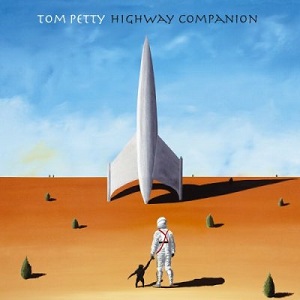
Tom Petty 16: Highway Companion

By now it should be clear that a Tom Petty solo album isn’t going to sound radically different from a Heartbreakers album, but we should still notice that they’re not around. His third such release, Highway Companion, at least restricts the guests to just Mike Campbell on lead guitar (naturally) and returns the producer credit to Jeff Lynne.

Thankfully, it doesn’t sound like a Jeff Lynne production, though with the drums handled by Petty himself—the jury’s still out on if they’re canned or live—it’s a moot point. “Flirting With Time” and “Ankle Deep” are the closest to that hit sound, though our hero’s voice is more off-pitch than ever. The homemade feel of the album is best displayed on “Jack”, which sounds like it took longer to play than to write, but it does have an excellent nod to Love’s “Bummer In The Summer” where the choruses should go. “Night Driver” has an intriguing mood, but it happens two tracks after he’d already threatened to “Turn This Car Around”.

Tom hasn’t been as prolific as he gets older, and we’re starting to think he either works better faster or has run out of new ideas. Unfortunately, there’s nothing that really leaps above the rest. There aren’t any home runs of the like that distinguished even such so-so albums as Long After Dark and Echo. To make matters worse, he’s even recycling his own songs; “Big Weekend” is “Yer So Bad” meets “To Find A Friend”, and “Damaged By Love”, pretty as it is, uses a Byrds song title as an opening line to disguise that he’s rewritten “Walls”.

Highway Companion could have been a lot worse, but it just isn’t memorable. It also wasn’t much of a hit, making the release a year later of a so-called “Special Edition”—two new songs plus demos of two album tracks—more insulting to diehard fans than anything else.

Tom Petty Highway Companion (2006)—2
2007 Special Edition: same as 2006, plus 4 extra tracks

Tuesday, March 9, 2010

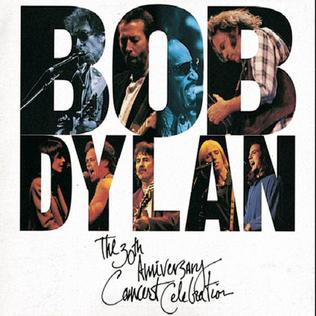
Bob Dylan 38: 30th Anniversary Concert Celebration

Good As I Been To You got a major promotional push by arriving three weeks after Columbia’s mightily hyped star-studded concert event of the season. Officially titled The 30th Anniversary Concert Celebration, today it’s best known as Bobfest, as dubbed by Neil Young halfway through his solo spot.

It was a nice idea: bring a bunch of old and new artists together to pay tribute to the old bastard, and if they were already Sony artists, all the better. The eventual VHS included most of the pay-per-view feed, but for the LP and CD versions, some moments weren’t included, like George Thorogood doing “Wanted Man”, Sophie B Hawkins’ pointless cover of “I Want You”, and a tune each from Eric Clapton and George Harrison, likely to squeeze it all onto two discs. (We also don’t get to hear Sinead O’Connor being booed offstage into the arms of Kris Kristofferson, adding further insult to her injury.)

The show had its ups and downs, beginning well with John Mellencamp with Al Kooper for “Like A Rolling Stone”, then putting his own Appalachian spin on “Leopard-Skin Pillbox Hat”. Stevie Wonder prefaces “Blowin’ In The Wind” with a spoken intro about the current election, Eddie and Mike from Sony golden boys Pearl Jam do “Masters Of War”, and Tracy Chapman (remember her?) is allowed “The Times They Are A-Changin’”.

The backup band for most of the night was Booker T and the MG’s, augmented by Jim Keltner and G.E. Smith, providing both consistency and familiarity, even when people chose less-than-familiar tunes. Lou Reed’s spit-fueled take on “Foot Of Pride” makes one think the song was written just for him, and Willie Nelson does a nice job on “What Was It You Wanted”. That sets up a string of guys with questionable voices—Kristofferson, Johnny Winter, Ron Wood—before Richie Havens and the Clancy Brothers raise the bar. The heavenly Sony trio of Shawn Colvin, Mary Chapin Carpenter, and Rosanne Cash are placed out of original sequence.

They saved most of the big guns for the second half, and that’s where most of the chills come from. Neil gets more attention for “All Along The Watchtower”, but it’s his version of “Just Like Tom Thumb’s Blues” that really shines. Clapton’s version of “Don’t Think Twice” has a phenomenal solo and George does a terrific “Absolutely Sweet Marie”. The O’Jays manage to trump what’s left of The Band, and then Tom Petty and the Heartbreakers come out to dominate. The gentleness of “License To Kill” gives way to the crowd-baiting of “Rainy Day Women”, and who else could back Roger McGuinn for “Mr. Tambourine Man”?

The man of the hour came out alone for “Song To Woody”, which apparently had sound problems, causing its exclusion. But we do get “It’s Alright, Ma”, and then an astounding “My Back Pages”, where the verses are handled in order by McGuinn, Petty, Neil, Bob, Clapton, and George. An obligatory mass chorus of “Knockin’ On Heaven’s Door” was to end the night, but Bob got the last word by himself with “Girl From The North Country”.

As with most of these affairs, Bobfest has endured as more novelty than notable, particularly considering how he filled the decades since. An upgraded edition for Blu-ray coincided with a reissue of the CD, adding two songs from rehearsals: another blazing Clapton take on “Don’t Think Twice”, and Sinead O’Connor doing the song she was scheduled to do. “I Believe In You” sounds even more fitting today, the lyrics mirroring her own public image.

Bob Dylan The 30th Anniversary Concert Celebration (1993)—3
2014 Remastered Deluxe Edition: same as 1993, plus 2 extra tracks

Monday, March 1, 2010

Tom Petty 15: The Last DJ

By the end of the ‘90s, Tom Petty had become an artist of stature, such that he could take his sweet time between releases, to the point where each new album would be inevitably anticlimactic. The Last DJ is called a concept album, a not entirely accurate categorization, due to the suite formed by the first four songs.

The title track is self-explanatory and, with a few exceptions in scattered stations across the country, a sad truth. “Money Becomes King” takes a scary trip through a time warp, contrasting the old hippie ideals with today’s concert experience. “Dreamville” goes into the head of the performer, a melancholy reverie jarred by the ugly nightmare of “Joe”, an amalgam of every record executive who considers artists as objects, and thinks of notes not as musical elements but as financial deals.

The rest of the album flows like radio used to, even between tracks, switching between stations that fade in and out as you drive from state to state. Being something of an elegy for AOR, it’s not out of line to say this is Tom Petty’s Abbey Road (or, if that’s too blasphemous, his Blind Faith), given the approach and sophistication. Listen to tracks like “Lost Children” and “When A Kid Goes Bad” and see if you’re not thinking of 1969. (The understated orchestrations by Jon Brion help too.)

The only real clunker is “The Man Who Loves Women”, an uncharacteristic music hall-style trifle with prominent Lindsay Buckingham backing vocals over the coda. To wash that out of your ears, you can always skip back to the lovely “Like A Diamond”, which indeed shines thanks to Mike Campbell’s leads and Benmont Tench’s gentle keys. “Blue Sunday” evokes ‘70s country rock, though the story of drifters who find each other on the open highway stops as soon as it starts, so much so that the breezy “You And Me” seems play its happy ending. The album’s true finale is “Have Love Will Travel”, a song much better than its title, but he pushes the point with “Can’t Stop The Sun” to remind us that regardless of the apocalypse he describes in that opening suite, he’s going to keep on punching.

With both a darker yet more focused sound than the previous album, The Last DJ wasn’t a big hit. As an effect of both his age and the subject matter, his tired voice consistently scoops the notes. Critics hated it, claiming Petty was biting the hand that fed him, but that wasn’t the point. Despite his fame and wealth, he remains a music fan first and foremost, one who cherishes the history that led him to pursue his career. He knows he’d be nothing without it, and that he’d likely be nothing without the Heartbreakers. Or at least Mike and Benmont. Howie Epstein isn’t mentioned anywhere; he had been fired for chemical issues and would be dead within the year. Bass duties are handled by Tom and Mike, with a reappearance by original Heartbreaker Ron Blair.

Tom Petty & The Heartbreakers The Last DJ (2002)—3

Friday, February 26, 2010

Tom Petty 14: Echo

Once he seemed to have lost Jeff Lynne’s phone number, one could rely on a certain consistency from Tom Petty. Wildflowers and She’s The One took a little while to sink in, but it was clear that Rick Rubin’s production approach was better suited to the Heartbreakers in general. Echo is more of the same from TP and the H’s, and is notable for the first recorded lead vocal by lead guitarist Mike Campbell on the gloriously stupid “I Don’t Want To Fight”. And he’s not a bad singer; no worse than Tom, at any rate.

It’s a pretty long disc that should have been whittled down a bit, yet a handful of tunes stand out as sure-to-be classics. The album starts strong with “Room At The Top”, alternating between pensive musings and edgy guitar and clavinet bursts, but soon begins to meander through less inspired songwriting. (Which, naturally, could be expected from a man going through a divorce and literally living in a shack.) “Free Girl Now” was an attempt at an upbeat single, using the same chords as “You Wreck Me”, but is fairly routine. “Swingin’” starts to turn things around, and “Accused Of Love” is almost sunny. It’s the lengthy but not at all plodding title track that is the masterwork here, a fabulous piece of writing with inspired playing from everyone involved.

“Won’t Last Long” and “Billy The Kid” show a sense of determination, balanced by the pleasantly petulant “This One’s For Me”. A reliance on the same old chords does have its drawbacks, however. “About To Give Out” is a close cousin to Wilco’s “Monday”, and if forced, we can even forgive “No More”, a glaring rip-off of the Stones’ “Salt Of The Earth”. “Counting On You” and “Lonesome Sundown” are inoffensive if derivative, but “Rhino Skin” and “One More Day, One More Night” pad an already tiring album.

Something’s missing from this album; it could be we miss Stan Lynch. Steve Ferrone is a nice guy and a solid drummer, but he doesn’t have Stan’s rambunctious fire on the kit. (He also doesn’t provide harmonies; that job is now taken by default sixth Heartbreaker Scott Thurston, who offers little of value we can discern here.) By reprogramming your CD to ten tracks (1, 6, 7, 8, 3, 13, 10, 11, 12, 5) you get just under forty minutes that would earn a solid four-star rating. You can even throw in track 2 for a little extra. But as an entity all its own, Echo fails to resonate.

Tom Petty and the Heartbreakers Echo (1999)—

Thursday, February 18, 2010

Mike Campbell 1: Blue Stingrays

Surf music received something of a revival in the ‘90s thanks to Quentin Tarantino movies, and while it didn’t enjoy the massive sales windfall of the swing revival, it also didn’t tank as quickly. Bands like Shadowy Men On A Shadowy Planet, Laika & The Cosmonauts, and Man Or Astro-man? were just a few outfits who rode the trend and created new music, while independent labels searched for little-known practitioners from back in the day to reissue.

One such outfit was Blue Stingrays, whose Surf-N-Burn collection came with a mysterious bio and catalog listings for long-lost albums, but just one listen to the CD made it clear that these were not thirty-year-old tapes. In reality, it was a new album by Mike Campbell of Tom Petty’s Heartbreakers, heavy on the twang and whammy bar, with former Heartbreaker Ron Blair on bass and Mudcrutch drummer Randall Marsh. (Benmont Tench is mentioned as being involved as well, but we don’t hear any keyboards; it’s been suggested he ordered the pizza.)

A dropped needle on vinyl opens the album, and party noises are heard throughout “Monsoon”; thankfully they don’t persist, but both reappear on the closing “Super Hero”, which sounds a little like the Mighty Mouse theme. Speaking of which, the theme from Goldfinger had already featured in Petty live sets, and it was something of a surf song already anyway; “Russian Roulette” has a similar secret agent theme quality as well. Every now and then there’s a riff and chord sequence that’s just screaming for a Petty lyric, especially “Brave New World”, and we could swear we’ve heard “Blue Venus” somewhere else before. “Surfer’s Life” and “Zuma Sunset” have distinct Brian Wilson qualities, and help break up the tempo. Fifteen songs in 47 minutes make it longer than most actual surf albums. (Two outtakes from the sessions, the more rockabilly than surf “Grits And Eggs” and “Dawn Patrol”, were released as a 45rpm single in 2021 alongside the album’s reissue on three varieties of limited edition colored vinyl.)

Overall the album is pleasant, but occasionally emulates the period incidental music concocted for the previous year’s hit movie That Thing You Do!; if Mike was in Tom Hanks’ radar he likely wouldn’t have opted to score a movie soundtrack so close to She’s The One. Throughout his time in the Heartbreakers, and despite the occasional session gig, he never dared pursue a solo project, which is why this one was a badly kept secret for such a long time.

Blue Stingrays Surf-N-Burn (1997)—3

Friday, February 5, 2010

Tom Petty 13: She’s The One

In a fantastic case of “whoops, I made an album,” Petty started with a couple of songs for a movie, and managed to stretch it into a full-length cohesive set by adding a couple of odd covers and some leftovers from Wildflowers.

As happens on all good soundtracks, She’s The One features a few variations on themes. The key song here is “Walls”, which appears in a “Circus” arrangement and again in a more straightforward rock version dubbed “No. 3”. Tom Petty is one of those rare individuals who can not only twist those same four chords into such a classic as “Walls”, but even have two different versions on the album both that good. If you’re listening closely enough, you can even hear it in the brief instrumental “Hope On Board”, pretty as it is.
The other major theme is “Angel Dream”, which we hear first in its “No. 4” incarnation, and again in a slightly stripped down “No. 2” take. It provides a tender, almost hopeful flipside to the questioning of “Walls”.

Overall it’s not the sunniest album, outside of the ode to “California”. “Grew Up Fast” and particularly the brief “Hope You Never” are filled with angry remorse, while “Supernatural Radio” and “Hung Up And Overdue” are epic glances into an unknown future. As for the covers, they’re an intriguing pair. On “Change The Locks”, he doesn’t have to stretch too far to sound exactly like Lucinda Williams. And Beck’s little-known “Asshole” goes along with the first verse of “Zero From Outer Space” to guarantee the album won’t be played around young children.

She’s The One is an unjustly overlooked chapter in both his canon and that of the Heartbreakers. And despite a few moments, the songs don’t feature all that much in the movie itself. So we must take it for what it is: a pretty decent Heartbreakers album.

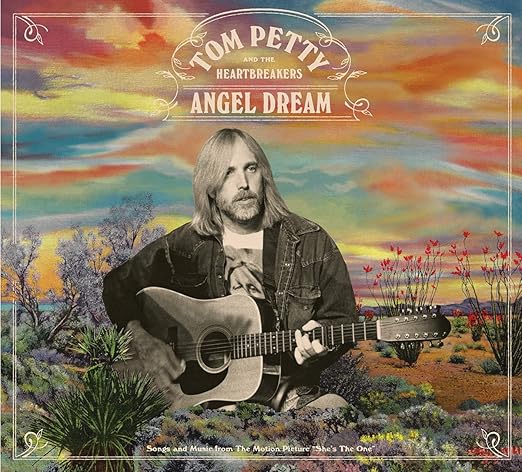
Apparently that wasn’t good enough for the estate, because after expanding the Wildflowers album and reclaiming some of the leftovers used here, somebody decided to “reimagine” the album with less emphasis on its purpose as a soundtrack, and with a new mix by Ryan Ulyate. Angel Dream—still retaining the original title as a subtitle—now begins with the “No. 2” version of its title song, reprised as the instrumental “French Disconnection” as the closer. We only get “Walls (No. 3)”, not the hit “Circus” version, though “Supernatural Radio” is extended by about a minute. “Airport” and “Hope On Board” are gone, but three unreleased songs are supposed to make up the difference. Interestingly, all three date from the 1992-1993 sessions with Stan Lynch, making them further outtakes from Wildflowers and not from the soundtrack period in the slightest. “One Of Life’s Little Mysteries” is an odd vaudeville experiment, and the weary “Thirteen Days” is a J.J. Cale cover, but “105 Degrees” is good fun, cheesy organ and all.

It’s a strikingly different listening experience, especially for those so familiar with the original sequence. Beginning with “Angel Dream” and “Grew Up Fast” makes it darker, and the rest of the sequence seems very random, particularly with not two but three covers in the lineup. Still, the songs stand up. But while new cover art was probably a given, what they used was frankly a swing and a miss.

Tom Petty and the Heartbreakers Songs And Music From The Motion Picture She’s The One (1996)—4
Tom Petty and the Heartbreakers
Angel Dream (2021)—

Wednesday, February 3, 2010

Tom Petty 12: Wildflowers

Tom Petty’s first album for his new label was a solo album, but in name only; Wildflowers features Mike Campbell on every track and Benmont Tench on most of them, with future Heartbreaker Steve Ferrone behind the kit in one hell of an audition. (Howie Epstein shows up here and there too. And so does Ringo!) Working with Rick Rubin suited Petty well, with more natural production that fit his simple style better than the boomy Jeff Lynne sound. Even using only three or four chords, he came up with some great new songs.

When we say great, we’re not kidding: “You Wreck Me” is a fun rocker; “It’s Good To Be King” does Mel Brooks proud; “Honey Bee” rides a basic riff down the white line; “Don’t Fade On Me” is a satisfying trip to the swamp. And if he’d only ever written the gorgeous “Wake Up Time” and nothing else in his long career, he could still be proud.

On top of that, there are ten other tracks to keep you busy. The title track has become a sentimental favorite over the years. “You Don’t Know How It Feels” follows a robotic drumbeat through harmonica breaks and a notorious reference to a joint that is still censored on corporate radio. “Time To Move On” and “Only A Broken Heart” are simple and perfect. “Cabin Down Below” and the horn-flavored “House In The Woods” (which hearkens back to George Harrison’s “Long, Long, Long” via Dylan’s “Sad-Eyed Lady Of The Lowlands”) make for excellent variety, while “Crawling Back To You” sounds something of a sequel to Springsteen’s “Spirit In The Night”. “Hard On Me” and “A Higher Place” sound like other songs we’ve heard before, but we haven’t placed them yet; hence their success.

While it has more of a produced studio vibe than Full Moon Fever—which was largely concocted in a garage—Wildflowers has a warm, comfortable feel throughout that’s not at all dated, unlike his first so-called solo album. Of course, he toured behind the album with the Heartbreakers. After all, who else could do these songs justice?

Even before his death, the album emerged as a critical and fan favorite, high above the rest of his catalog. In the last decade of his life he occasionally spoke of expanding the album to include songs he would’ve had he been allowed to put out a double. After years of teasing, Wildflowers & All The Rest finally emerged at the end of 2020, in several frustrating permutations.

The basic set added a disc of ten candidates for the double, four of which would end up in different mixes or takes on She’s The One. Some of these had never been heard before, like “Something Could Happen”, which features Stan Lynch on drums; unfortunately every reference to him in the liner notes is backhanded. “Leave Virginia Alone” and “Harry Green” suggest he was considering an album of characters a la Southern Accents; frankly, the dark confession of “Confusion Wheel” is more fitting. “Climb That Hill Blues” is a stark acoustic alternate to the familiar arrangement, while “Somewhere Under Heaven” is an early experiment with Mike Campbell before Rick Rubin came on board.

Two of those extras appear as demos, but these aren’t grainy cassette-quality boom box jobs. By this time Tom and Mike both had home studios with decent equipment, so these are all perfectly releaseable. To further the point, the Deluxe Edition added a disc of further solo home demos. Outside of the occasional shuffled verse or bridge, it’s amazing to hear how much of these songs were basically formed before he brought them to other players. (In fact, the original instrumental bridge for “Wildflowers” itself would form the basis for “To Find A Friend”.) A few songs never seemingly made it to the album sessions, such as the lovely “There Goes Angela (Dream Away)”, and “A Feeling Of Peace”, which already sounds very Heartbreakers-like. A tune now named “There’s A Break In The Rain” sports the chorus of what would be “Have Love Will Travel” a decade later.

A fourth disc presented a sprawling assortment of live versions, including songs not the original album, mostly recorded in the 21st century. It’s something of a companion to The Live Anthology, mixed and sequenced seamlessly, where you can only guess the age of the recording from the state of Tom’s voice. We’d’ve preferred the version of “Honey Bee” from Saturday Night Live with Dave Grohl on drums, but “Walls”, “Drivin’ Down To Georgia” (which was recorded after its appearance on that live set), an 11-minute exploration of “It’s Good To Be King”, and even a run through “Girl On LSD” help keep it interesting instead of just the album played faster.

A pricey and limited Super Deluxe Edition, available only via the official website, added another CD worth of leftovers from the sessions, mostly alternate takes, some including Stan on drums. (Kenny Aronoff plays on two tracks, while Ringo helms a version of the title track.) If only for the definitive studio take of “Girl On LSD”, as well as the acoustic B-sides “Only A Broken Heart” and “Cabin Down Below”, some of us would have preferred this disc in the Deluxe Edition over the live disc, even with the repeats from An American Treasure, but but again, nobody ever consults us on these things. Even the galloping “You Saw Me Comin’”, which previews “Don’t Fade On Me” via the similar outtakes on the Playback box, is worth more exposure. An early “House In The Woods” with Stan has a Dead-inspired mid-section that was thankfully jettisoned for the album, but it’s still cool to hear. (As if they listened to us, Finding Wildflowers (Alternate Versions) was a welcome standalone release the following spring. We’re guessing it offset all the unsold Wildflowers-themed candles, Xmas ornaments and whatnot on the online store shelves.)

The culmination of several years of work, Wildflowers & All The Rest is an excellent testament to both the man and the album. Should the estate tackle any other record to dig into, the bar has been set.

Tom Petty Wildflowers (1994)—4
2020 Wildflowers & All The Rest: same as 1994, plus 10 extra tracks (Deluxe Edition adds another 29; Super Deluxe another 15)
Tom Petty Finding Wildflowers (Alternate Versions) (2021)—

Monday, February 1, 2010

Tom Petty 11: Greatest Hits, Playback, Anthology

After he jumped ship to a new label, Petty’s old label felt entitled to put out a hits album. This being the modern age, of course, sixteen tracks fans already loved and owned were accompanied by two brand new ones. One of them, “Mary Jane’s Last Dance”, immediately became a huge hit and radio staple for the next fifteen years and counting. (So much so that the Red Hot Chili Peppers were criticized for the similarity of their “Dani California” to “Mary Jane”; Petty didn’t complain much, since he’d gotten away with copping the feel of “Waiting For The Sun” by the Jayhawks.) The other new song was a cover of Thunderclap Newman’s “Something In The Air”—close enough for a carbon copy.

Greatest Hits covered all the bases, despite the absence of anything from Let Me Up (I’ve Had Enough). It had strong legs for the rest of the century and well into the next one, but when it was reissued in 2008, “Something In The Air” was dropped in favor of “Stop Draggin’ My Heart Around”, the Stevie Nicks single featuring the Heartbreakers.

As Petty continued to have success elsewhere, MCA kept digging for gold on their own property. They really stretched themselves for Playback, a six-CD box set with three discs of album tracks, one disc of B-sides and two discs of outtakes. It was a nice idea; each of the discs comes in a little cardboard album-style sleeve with its own title, while the booklet includes an overview, track notes and individual credits. Splitting the tracks up between the familiar and the not-so keep the flow going, and some of the unheard tracks are pretty entertaining, from early Mudcrutch recordings, alternate takes like the original non-Stevie version of “Stop Draggin’” and a pile of final sessions with Stan Lynch for the Greatest Hits album. But none of the discs were filled to capacity; the three non-rarities discs in Playback could have been cut back to two just fine, a few B-sides were AWOL and even the outtakes discs might have worked better as one.

The idea of two discs of hits must have occurred to somebody in marketing, because at the century’s end appeared Anthology: Through The Years, featuring everything from Greatest Hits except “Something In The Air” and various album tracks that hadn’t made it to the box set. Some of the better selections for the time were “Stop Draggin’” (the Stevie version), “Waiting For Tonight” featuring the Bangles (inexcusably left off Full Moon Fever but included on Playback), and “Surrender”, an old Heartbreakers chestnut not recorded to Petty’s satisfaction until 2000.

So if you want to dive into the catalog, your work’s cut out for you. Start with the Greatest Hits or splurge for the Anthology. But that will only take you up to 1993; it would be a while before any collection covered the period to follow.

Tom Petty & The Heartbreakers Greatest Hits (1993)—4
2008 remastered CD: same as 1993, plus 1 extra track (and minus 1 track)
Tom Petty and the Heartbreakers Playback (1995)—
Tom Petty and the Heartbreakers
Anthology: Through The Years (2000)—4

Wednesday, October 21, 2009

Tom Petty 10: Into The Great Wide Open

As Full Moon Fever was a solo album in name only, Tom Petty’s experience working with Jeff Lynne on that and on two Traveling Wilburys albums obviously led him to think he could bring his new buddy into the studio with the Heartbreakers to write and produce and come out with musical gold. He didn’t realize how crowded those booths could get.

Into The Great Wide Open doesn’t sound enough like a Heartbreakers album to come off all that different from Full Moon Fever, but this could be forgiven if the songs were up to snuff. “Learning To Fly” and “All The Wrong Reasons” are too close to “Free Fallin’” (right down to repeating the same chords throughout) to stand out. The title track commits two big sins: in addition to an ugly star-studded big-budget video that overwhelmed the ugly song, its most clever hook (“a rebel without a clue”) was stolen from Paul Westerberg, who at least had the taste not to use it in a chorus. Then, three tracks later, “All Or Nothin’” repeats the tempo and tone, while using a backwards sequence of the chords.

There are a few bright spots, like the sunny “Kings Highway” (copied three tracks later on “Dark Of The Sun”) and the not-at-all-maudlin “Two Gunslingers”, which rises far above its concept with that catchy break. “Too Good To Be True” is about half of a great song. “You And I Will Meet Again” channels the Byrds through Rubber Soul. “Out In The Cold” is the best rocker, giving Mike Campbell plenty of room to stretch his fingers, but “Makin’ Some Noise” is an unnecessary returning to the “rockin’” songs from his first album. The closer “Built To Last” should get some points for having a unique sound compared to the rest of the album, as throughout, the trademark boxy drum sound the producer insisted on plastering everywhere makes us long for some kind of variety. (Stan Lynch, clearly in the minority here, has never been the gentleman Jim Keltner is, so it’s a wonder Jeff Lynne still has two working legs.)

Into The Great Wide Open was Petty’s last studio album for MCA; now that he was a superstar, he was about to leave them behind for Warner Bros. But his new celebrity status clouded his judgement, both for the production of this album as well as its marketing: while only ten years earlier he wanted to keep record prices down, with this album he consented to have its list price a full dollar above the norm, as befit an artist of his stature. (Then again, he was simply part of the problem. The record business was the only American industry to raise its prices as a result of the ‘90s recession.)

Tom Petty and the Heartbreakers Into The Great Wide Open (1991)—2

Monday, October 12, 2009

Traveling Wilburys 2: Vol. 3

Even though Roy Orbison was gone too soon, the remaining Wilburys were determined to carry on, and they did. The joke here is that rather than trying to follow the success of Volume One with a second installment, they skipped right to the third. (Cue rim shot.) The songs are largely Dylan-centric compositions, and better than the album he’d released a month earlier.

“She’s My Baby” hits the ground running, with over-the-top guitar injections by “bluesman” Gary Moore. “Inside Out” and “The Devil’s Been Busy”—complete with sitar!—are ecological numbers, sandwiching the too-short “If You Belonged To Me”. “7 Deadly Sins” is the only doo-wop number in Dylan’s oeuvre, and it’s a scream. “Poor House” is standard inconsequential Jeff Lynne rockabilly redeemed by George’s guitar.

“Where Were You Last Night?” is more Bob, who steps aside long enough for Tom to recite the wry musical inventory in “Cool Dry Place”. (It, of course, being the natural sequel to “Handle With Care”.) “New Blue Moon” fits the same weird pocket as “Margarita” on the other album, but this one’s funnier. “You Took My Breath Away” is better Petty, and the whole thing comes crashing down with “Wilbury Twist”.

While there may be those who find Vol. 3 as enjoyable as the first, the boys just couldn’t capture lightning in the same bottle. It was too much to expect the same surprising fun, but it didn’t merit the near commercial ignorance the public served it. At least the band had the decency not to try and replace Roy. They even picked new pseudonyms. (The 2007 reissue adds “Nobody’s Child”, which was originally available only on Olivia Harrison’s Romanian Angel Appeal charity album, and a sadly reworked version of “Runaway”, which wasn’t so close to the original Del Shannon version when first released as a B-side. Thanks a lot, Jeff.)

And that was that. While George professed to be a Wilbury till he died, no further recordings by the group have surfaced or much less been rumored.

Traveling Wilburys Vol. 3 (1990)—3
2007 rerelease: same as 1990, plus 2 extra tracks

Wednesday, September 30, 2009

Tom Petty 9: Full Moon Fever

The simpler approach to Let Me Up (I’ve Had Enough) prompted Petty to go even more basic by recording his next album all by himself in Mike Campbell’s garage. Before too long he’d invited various bandmates to contribute here and there, and let the proceedings be guided by a new figure on the scene. The resulting Full Moon Fever was a phenomenal success, finally making him a household name.

It was impossible to escape this album in the summer of ‘89. There was definitely a fresh, driving-with-the-windows-open appeal to “Free Fallin’” the first twelve times you heard it, “I Won’t Back Down” remains a statement of purpose, and “Runnin’ Down A Dream” still works as an insistent rocker. “Yer So Bad” and the incredibly faithful cover of the Byrds’ “Feel A Whole Lot Better” inject a nice ‘60s feel. “Love Is A Long Road” and “A Face In The Crowd” mix up the sound too.

Up through “Depending On You”, “The Apartment Song”, and the extremely gentle “Alright For Now”, it could pass for a Heartbreakers album. Things run out of steam by the end of the second side: “A Mind With A Heart Of Its Own” contributes nothing except telling us his middle name (spoiler alert: it’s Earl) and “Zombie Zoo” is just plain annoying. Of course, the notion of album sides wasn’t as noticeable for CD buyers, who found their own secret message hidden between tracks five and six, where the rest of us had to turn over either our records or tapes to keep listening.

Beyond the radio saturation, albeit highly deserved, what grates today the most is the sound. Outside of Mike, Howie Epstein sings on two tracks, and Benmont Tench adds piano to another; Stan Lynch was obvious in his absence. Most of the instrumental touches come from co-producer Jeff Lynne, fresh off his success with George Harrison and Roy Orbison, and of course the Traveling Wilburys itself was a tangent from these sessions. In addition to being one of the luckiest guys in the business, this man has the uncanny ability to make some of the greatest rock drummers—including but not limited to Ringo and Jim Keltner—sound like the same anonymous machine. After a while that unrelenting “boom-thwack” can wear on one’s nerves. But if you’d come this far in the story, it wasn’t going away anytime soon.

Ultimately it doesn’t matter, because Full Moon Fever sold millions, made Tom the star he would henceforth be, and is ingrained in constant radio rotation today. If you’re not sick of it yet, it’s another good one when the mood strikes.

Tom Petty Full Moon Fever (1989)—3