Showing posts with label coldplay. Show all posts

Friday, April 3, 2015

Coldplay 6: Ghost Stories

Lots of great albums have been recorded in the wake of a writer’s divorce, but this is the first time an album has appeared following a conscious uncoupling. Whether or not they meant it that way, every song on Ghost Stories reads like a guy who’s been dumped. Even if you don’t give a fig about Chris Martin or Gwyneth Paltrow, after a few listens, you begin to understand why she left. A dreamy sound permeates, with a reliance on programmed as opposed to acoustic drums. If we’re going to keep the U2 comparison going, think Zooropa crossed with the Passengers side project, but without the energy; outside of U2, we hear echoes of Tears For Fears and even the voice of Shawn Smith of Brad and Satchel.

Beginning with voices from an astral choir, “Always In My Head” is a melancholy midtempo number, and we only mention that now because most of the tracks will follow that template. It ends abruptly, and switches to the bong-rattling bass in “Magic”, which finally introduces some guitar but mostly sounds like “Numb”. “Ink” pushes the tattoo metaphor way too far in another robotic-sounding track. Despite having an actual melody and chord changes, “True Love” moves along like any other lovelorn ballad with a lyrical steal from “Hallelujah”, until the intentionally dissonant guitar solo throws it off. “Midnight” puts the vocal through a vocoder, sounding more like an Eno effect than a song.

“Another’s Arms” revives the guitar as riff, with a sample of an operatic voice (another idea stolen from U2). On “Oceans” a constant beep likely is used for a sonar effect, but instead suggests a phone not being picked up. Maybe that was the point? With an acoustic guitar it does appear a throwback to the first album, but buries the idea with a lengthy atmospheric collage including canned church bells over the end. That sets up “A Sky Full Of Stars”, which sounds like every cliché dance-floor anthem of the last 20 years. (Thankfully, Rihanna’s not on this album.) Halfway through the beats and effects drop out to heighten the acoustic, and then it flanges back to remix territory. Those not longing for a night at the Roxbury will at least welcome such an upbeat detour. “O” would stand out as a highlight if it weren’t the same tempo and feel of everything else here. It’s admittedly satisfying in its gradual build from a simple piano tinkle (apparently an unlisted title called “Fly On”) to a bigger sound, and easing up just before it threatens to explode. And as has become custom with these guys, there’s a pause and a reprise of the sound heard at the top of Track 1.

Rather than pushing the limits of compact disc technology, Ghost Stories goes by fairly quickly, though Target did get dibs on the “bonus tracks”, two of which are actually uptempo, along with a “Reprise” of “O”. With Chris Martin as their frontman, the other guys are not only anonymous but generic, adding very little to what he’s spewing. Surely one of them would have pointed out that it all sounds alike. Given the rapturous response heard on Ghost Stories Live 2014 released at year’s end, their fans don’t care. They got to hear the album played exactly as released, with no spontaneity or surprises.

Coldplay Ghost Stories (2014)—2
Friday, November 14, 2014

Coldplay 5: Mylo Xyloto

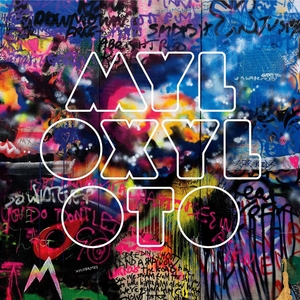
The biggest band on the planet kept going, comfortable with the knowledge that anything they did would be multi-platinum. And so it was with Mylo Xyloto. This time, there’s a concept, something having to do with a futuristic struggle of good vs. evil, not that you’d be able to tell from listening to the album, decoding the lyrics or flipping through the CD booklet.

For the most part, they embrace modern pop, using machine-driven drums and the by-now familiar Chris Martin “whoa-oh-oh” hooks. They seem to have left the circular piano of “Clocks” and its clones behind, in favor of that solitary bass drum that drove “Viva La Vida”. To be arty, a few brief tracks exist only as interludes or introductions, while other tracks end with similar detours.

A key turnoff for anyone not otherwise into current music would be “Princess Of China”, which features the “vocal” stylings of Rihanna. She doesn’t get too much in the way, but after a while, one expects the auto-tune queen, part-time punching bag and lingerie model to show up all over the album, particularly on “Paradise” and “Every Teardrop Is A Waterfall”, or within the canned chipmunk voices on “Charlie Brown”.

But those songs are undeniably catchy, and the listener vacillates between wanting to hate the album and hoping it will become comfortable. “Us Against The World” is played so delicately you’re not convinced of the actual meter, while “Major Minus” is just a little too jarring and clattery. “U.F.O.” sounds like it could be from the first album; it almost comes off as a finale, as does “Up In Flames”, but instead they bookend the Rihanna track. And indeed, the pounding “Don’t Let It Break Your Heart” does work as a sewing-together of whatever’s gone before, more so than “Up With The Birds”.

Mylo Xyloto soars when it wants to, but doesn’t get too experimental. It’s also not as long as it seems. The band seems compelled to make their audience think; for them, it’s not enough to put addresses of human rights organizations and such in the liner notes. At the same time, they make it hard for that same audience (and all the haters) to get lost in the music.

Coldplay Mylo Xyloto (2011)—3

Friday, August 29, 2014

Coldplay 4: Viva La Vida

With the world at their disposal, Coldplay made the smart move with their fourth album, employing Brian Eno as full-fledged producer. Therefore, Viva La Vida Or Death And All His Friends is their Unforgettable Fire, wherein the band attempts to stretch their fans’ expectations with different soundscapes from those that filled their first three albums. (They even changed their font, breaking from the Albertus typeface familiar from The Prisoner.)

Viva La Vida flows like a true album, to be heard in sequence. Ten tracks are listed, but many of them have distinct or even unlisted sections, showing off the variety and keeping the tedium at a minimum. It’s immediately more satisfying than X&Y, and remains so.

Floating in on a soothing loop, “Life In Technicolor” is something of a rousing overture before the darker, mysterious “Cemeteries Of London”. A brief piano piece provides a bridge to “Lost!”, heavy on organ and handclaps but still catchy. In other words, typical Coldplay, but not a retread. “42” is three songs in one, none of which seem to illuminate any kind of Douglas Adams reference. A “Scientist”-like opening section threatens to turn into one of their “big” numbers until giving way to a treated guitar section à la Radiohead, which turns into a more straightforward tune, then reverting to a variation on the opening part. But the feeling stays up on the driving “Lovers In Japan”, which shares its track with the much quieter “Reign Of Love”, treated very much in the manner of Eno.

The most exhilarating moment of the album is unlisted, but “Chinese Sleep Chant” is three minutes of shoe-gazing splendor with muffled vocals that reminds one of Echo and the Bunnymen. Because it arrives at the four-minute mark of “Yes”, children of the digital age will be forced to (gasp!) rewind. Despite its melodic similarity to too many songs from the history of composition, “Viva La Vida” still inspires, its combination of tympani, strings and hammer-on-church-bell providing the big single the band needed to sell the album. “Violet Hill” fades in on a Blue Nile hum, before crashing through topical verses at odds with their “if you love me” tags. A moment of studio verité sets up the lilting “Strawberry Swing”, processed guitar loops dominating tribal drums. Finally, “Death And All His Friends” moves from a quiet piano meditation to a more typical arena rocker, and ending with a lengthy version of the loop that began the album, another hidden song called “The Escapist”.

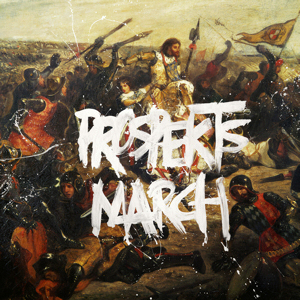
In true U2 style, there were leftovers, which were duly added to a re-release of the album by year’s end. However, in a nice gesture to those who didn’t want to buy the whole thing again, Prospekt's March was made available as a separate, attractively priced EP. More of a supplement than a side three, it underscores how wise they were to make Viva La Vida as compact as it is.
“Life In Technicolor II” appears with lyrics, including the omnipresent phrase “now my feet won’t touch the ground”, which is also the title of the EP’s acoustic closer. “Postcards From Far Away” is 45 seconds of piano (oddly not shoehorned within another track), giving way to the more mainstream “Glass Of Water” and “Rainy Day”, both redeemed by their choruses and tricky rhythms. Somewhat lost in all the energy is the title track, a pretty song tagged at the end with a piece called “Poppyfields”. Two of the tracks are retreads: “Lovers In Japan” is remixed without the “Reign Of Love” section, while “Lost+” answers the prayers of those who thought the album track needed a Jay-Z rap to make it truly exceptional. (For the rest of us, it’s a harbinger of doom. A solo piano version, dubbed “Lost?”, closed the iTunes version of Viva La Vida, and would have been welcome here.)

Coldplay Viva La Vida Or Death And All His Friends (2008)—4
Coldplay
Prospekt's March (2008)—3

Friday, June 6, 2014

Coldplay 3: X&Y

Rather than futz with the formula too much, Coldplay’s third album reinforced the brand, song after song. In fact, the music on X&Y is so consistent that the songs blend together, making it difficult to pin down which of them had that hook you liked. (It also continues the band’s U2 fixation by employing Brian Eno, who wouldn’t have bothered if he hadn’t heard something that intrigued him.)

With a wash of celestial keyboards, “Square One” establishes the pattern of much of the album. Keyboards suggest a spacey theme, a soundtrack to the guys shooting through galaxies in space suits. The song goes in an entirely different direction at the end, but with earnestly empathetic lyrics. This continues on “What If”, wherein the band’s guitarist (pop quiz: anybody know his name offhand?) begins to assert himself, as he will throughout the album. “White Shadows” manages to cross “11 O’Clock Tick Tock” with “Shiny Happy People”, and while we’re at it, “Fix You” is the fourth song in a row with the same basic structure (a plaintive keyboard, a solo vocal) but brings all the pieces together for the Millennial generation’s very own “Everybody Hurts”. “Talk” is catchy, probably because it’s based on a Kraftwerk melody, but the first real winner is the title track, which moves from the pattern with a chorus that almost seems psychedelic, or even Beatlesque.

“Speed Of Sound” rewrites “Clocks” from the last album, just as “A Message” delivers more of the general encouragement. “Low” takes another step away from the norm, with a driving beat that eventually the band gives into, resulting in a glorious explosion of power chords that thrill. That clears the way a bit for “The Hardest Part”, with its almost country feel and infectious piano—so much so that one wonders if it would make a better instrumental, to let the melody breathe a little more. By now the album is starting to get a little long, and while “Swallowed In The Sea” has all the makings of the finale, they save the big finish for “Twisted Logic”, a much better choice for an ending and a decent showcase for Jonny Buckland (answer to quiz in previous paragraph). But even that’s not the end—“Till Kingdom Come” is the requisite hidden track, written in the style of Johnny Cash, and maybe he might have recorded it.

While all this may appear dismissive, there’s no denying that X&Y is enjoyable, as long as you don’t try to get too much out of it. Or, if you’re feeling down and susceptible to pep talks from sensitive Brits, maybe it will pull you out of those doldrums. But if we’re supposed to take them as seriously as they want to be taken, they would need the shakeup that somebody like, say, Brian Eno would provide.

Coldplay X&Y (2005)—3

Friday, February 28, 2014

Coldplay 2: A Rush Of Blood To The Head

Any young band coming off a mildly successful debut album is faced with an immediate quandary for their follow-up: deliver more of the same, and risk charges of redundancy, or stretch out in another direction, and confound the skeptics? More adventurous bands might choose the latter option; Radiohead did and watched it pay off, while Weezer did too, and took a sabbatical in the where-are-they-now file.

Coldplay always comes off as being just as dialed in to what their fans and critics say, while still trying to maintain their integrity as artists of substance. With A Rush Of Blood To The Head, they managed to deliver their stated brand without repeating themselves.

The angry, edgy guitars that begin “Politik” hint at a new direction, and one to make people notice, but that’s a red herring. “In My Place” provides a keening ballad in the tradition of “Yellow”. The edge comes back on “God Put A Smile Upon Your Face”, with a pounding snare and one-note riff that will separate the fans from the pans.

And it pretty much goes from there, from the sensitive yearning of “The Scientist” to the stadium-ready “Clocks”, both built around basic yet insistent piano parts. “Daylight” recycles the pattern of track 3, and the droning “A Whisper” is anything but; meanwhile, “Green Eyes” (written and recorded well before Gwyneth Paltrow became a fixture) revives the folk strums of Parachutes. The piano would gain prominence in their overall sound, without a guitar hero to otherwise hog the spotlight. For example, “Warning Sign” begins as a strum, but is reduced to piano and vocal by its drawn-out end. The title track mixes all of the tricks in their bag so far, leaving a surprising finale with “Amsterdam”, starting quiet and building to a finish that screams second encore.

A Rush Of Blood To The Head appealed to a post-9/11 audience seeking something that at least appeared to have meaning. Arty videos helped, of course, depicting the photogenic frontman emoting, leaving one’s recognition of the rest of the band as spotty as ever. It’s a good toe-tapping, knee-jogging album to have on in the background, even if it doesn’t reveal much with close inspection. Thus, they were slowly on their way to world dominance. (In their quest to be the next U2, the CD booklet included a page full of pleas and websites relating to various world charities.)

Coldplay A Rush Of Blood To The Head (2002)—

Wednesday, December 4, 2013

Coldplay 1: Parachutes

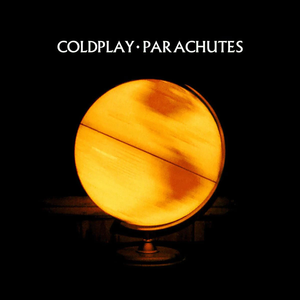
Well before a Seth Rogen movie made them a homophobic punchline, there was a certain “guilty pleasure” aspect to Coldplay. They were a band that wasn’t at all cool to like, yet grew immensely popular with each album. The formula seemed simple enough: combine the angst of Radiohead with the stadium appeal of U2. They weren’t the first to try that in the wake of OK Computer and the absence of a late-‘90s Joshua Tree, but they were able to coast on it for a while.

In fact, much of the backlash on the band seemed to arise after that Seth Rogen movie, as people tried to figure out what was so annoying about the band. Listening to their debut today, it’s clear who the band is, even though singer Chris Martin hadn’t met Gwyneth Paltrow yet, or perched himself at the front of too many stages playing piano, or doomed his bandmates to the same anonymity that befell the members of Matchbox 20, Maroon 5 or Counting Crows that weren’t Rob Thomas, Adam Levine or Adam Duritz, respectively.

What makes Parachutes such a good album—that is, unless, you hate Coldplay—is its simple dedication to songs, played with a minimum of bombast. This isn’t the type of thing you’d expect to hear played by a local band in the corner of a club, but move that scenario to a small theater and it fits better. Clearly, these guys had ambition.

Ultimately, four of the songs were hit singles. Of those, the biggest (and best) were “Yellow”, which is about as loud as they got at this point, and “Trouble”, which would find its way into any number of MTV reality shows to illustrate someone’s unique strain of inner turmoil. “Yellow” in particular demonstrates perfection in simplicity, another case where changes you’ve heard countless times can form something stirring, whatever the hell he’s on about. “Trouble” was enough to keep him writing at the piano, ensuring a decent formula for future hits—best exhibited here in the closing “Everything’s Not Lost”. “Shiver” is an admitted Jeff Buckley homage, but only if you think about it, while “Don’t Panic” (itself re-recorded from an earlier EP) goes by awfully quick.

The album could even be slotted into the folk-rock category of adult alternative, as demonstrated by the slower, moodier “Spies”, “Shiver” and “We Never Change”. One song that seems of its own breed is “High Speed”, which makes sense, since it was one of the earliest songs the band had completed; its placement on the album provides a nice change of mood. And there’s even a “hidden” track, which they’d do again.

This is not meant to convert anyone on the opposite side. We were originally drawn to the band on the basis of “Yellow”—or more specifically, its video—and were very pleased with the rest of the album. And it’s refreshing to throw it on again all these years and generations later to find that it’s still pretty good.

Coldplay Parachutes (2000)—4