Showing posts with label fairport convention. Show all posts

Tuesday, October 7, 2025

Fairport Convention 5: Full House

While the band had found something of a marketable direction, 1970 found Fairport Convention now working not only without Ashley Hutchings—who left to form Steeleye Span, and was replaced on bass by the soon-to-be-legendary Dave Pegg—but also without Sandy Denny—who left to form Fotheringay, and was replaced by nobody, as that was impossible. Full House was therefore a hopeful title, as they continued to imbue folk songs and influences with electricity and a rhythm section. (In keeping with the old-meets-new theme established by the last album, this time the liner notes featured descriptions of allegedly ancient sporting games and the scores achieved.)

Once again they open with something of a call-to-arms (for lack of a better term) in “Walk Awhile”, with rotating vocalists on the verses, guitars balancing Dave Swarbrick’s violin over the tight rhythm section. “Dirty Linen” is another example of the band adapting and medleying traditional reels, and the new guy’s bass parts are virtuosic in their precision. The balance of side one is filled by the slower “Sloth” (rhymes with “growth”), which manages to stay interesting over nine minutes and a wonderful Richard Thompson solo without increasing tempo.

“Sir Patrick Spens” is an old tune about a shipwreck, and another case where the men’s close harmonies have us missing Sandy big time. The nautical theme continues in the opening melody of “Flatback Caper”, another medley, this one dominated by mandolins. Written by Richard and Swarbrick, “Doctor Of Physick” is something of a gothic cautionary tale warning adolescent girls against impure thoughts. Finally, the ancient “Flowers Of The Forest” is dominated by an electric dulcimer for a hypnotic drone.

While Full House is successful, it’s just not the same band without Sandy. Richard started to think so too, as not long after their American tour—later spotlit on the official release Live At The L.A. Troubadour, which was itself later replaced by House Full—he quit too, off to a quirky yet intriguing solo career.

Some early copies of Full House sported a slightly different track listing, which listed one song that had been pulled at the last minute. When the album was upgraded (overseas) in this century, the original sequence was restored, including “Poor Will And The Jolly Hangman”; even Richard himself has agreed that leaving it off in the first place was a mistake, as it provides even more balance to the album as a whole. Bonus tracks included mono and stereo mixes of the standalone single “Now Be Thankful”, as well as its B-side, another medley of reels, this time given an interminable gimmick title.

Fairport Convention Full House (1970)—3

Tuesday, April 22, 2025

Fairport Convention 4: Liege & Lief

For their third album in the space of a calendar year, Fairport Convention had to regroup. First, they needed a drummer to replace the deceased Martin Lamble, and did so with Dave Mattacks, who would go on to have an incredible career behind the kit. Dave Swarbrick, who’d fiddled on the last album, was brought in as a full member, and would be a key part of the sound of Liege & Lief.

It’s been called the first true British folk-rock album, and for good reason. It was woodshed and developed in a communal house, just like Traffic and The Band, with a focus on traditional folk melodies transferred to modern electric instruments. Even the new songs developed by the songwriters in the band sounded like they were centuries old already.

Case in point: “Come All Ye” sets the scene wonderfully, a call to join in the happy stomp, complete with lines about each of the players. “Reynardine” was one of those old songs, here delivered very slowly to prolong the tale of seduction, the instruments droning as best they can. “Matty Groves” is even older, a tale of cuckoldry, revenge, and murder set cheekily to the American melody of “Shady Grove”, building tension until the clever twist ending is revealed, and the pace picks up to a stomp and another showcase for Richard Thompson. The much more soothing “Farewell, Farewell” is a Thompson lyric set to a traditional tune, sung sweetly (like everything else here) by Sandy Denny.

“The Deserter” is a subtle antiwar statement, its ultimate futility answered by an instrumental medley of four reels, electrified and precisely delivered, and seamlessly blended. Sandy comes back to sing the spooky story of “Tam Lin”, its accented execution working well with the Halloween setting. Finally, “Crazy Man Michael” was written by Thompson and Swarbrick, and by most accounts seems to address the survivor’s guilt in the aftermath of the accident that killed Martin Lamble; it’s rather haunting.

Liege & Lief follows on so well from Unhalfbricking, making them a nearly perfect pair. Such was the album’s import overseas that it’s been expanded twice: first with two outtakes added, and five years later in a Deluxe Edition that bolstered those outtakes with a few more, including “The Lady Is A Tramp” and “Fly Me To The Moon”, and several BBC sessions. But the original two-sider is still just fine.

Fairport Convention Liege & Lief (1969)—4

Friday, November 29, 2024

Fairport Convention 3: Unhalfbricking

Like a lot of bands, Fairport Convention truly hit their stride with their third album. On Unhalfbricking they moved much closer to electrified English folk, setting the standard for others to follow. By this time Ian Matthews had left the band, bringing the core members down to five, but the presence of Dave Swarbrick on fiddle and mandolin would lead to his joining full-time, and we’re getting ahead of ourselves again.

As befits an album with a mysterious, meaningless title, it’s opened by the keening electric dulcimers on “Genesis Hall”, a typically brooding Richard Thompson lyric. Bob Dylan would get a chunk of the publishing royalties from this album, as three of his more obscure songs are included, the first being “Si Tu Dois Partir”, a near-jug band rendition of “If You Gotta Go, Go Now” translated into French. The complicated meter of “Autopsy” only enhances the gothic tone of the lyrics, but it’s “A Sailor’s Life” that is the literal and figurative centerpiece. Over eleven minutes this traditional tune begins quietly and builds much like the rolling sea, Sandy Denny sounding every inch of a fair maiden, Thompson tearing off a terrific guitar line against Swarbrick’s violin once let loose. And then the sea is calm again.

The 12-bar “Cajun Woman” is something of a rockin’ palate cleanser, as the tender and wistful “Who Knows Where The Time Goes?” is finally heard in Sandy’s own rendition. Another Dylan obscurity, “Percy’s Song”, gets something of a campfire treatment but for those electric dulcimers and organ, and everyone gets a turn at a verse of “Million Dollar Bash”, back when The Basement Tapes was still a bootleg. (A later British CD added two Dylan-related bonus tracks: an outtake of “Dear Landlord”, plus “Ballad Of Easy Rider”—to which Dylan supposedly contributed one line—that was an outtake from the next album, but included for thematic reasons.)

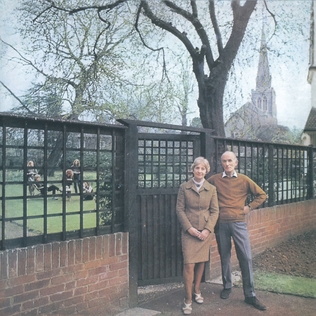
The album’s release was unfortunately clouded by the death of drummer Martin Lamble two months earlier in a van accident while the band was traveling back from a gig. What’s more, while the British cover depicted the band partially concealed behind a fence at Sandy Denny’s parents’ house (they’re the pair in front), for some reason the American label decided to use a clearer snapshot of the band, albeit in the corner of a sleeve dominated by dancing elephants. Nonetheless, the music within is quirky yet solid, garnering the rating below. There’s really not much more we can say about it.

Fairport Convention Unhalfbricking (1969)—4

Friday, June 7, 2024

Fairport Convention 2: What We Did On Our Holidays

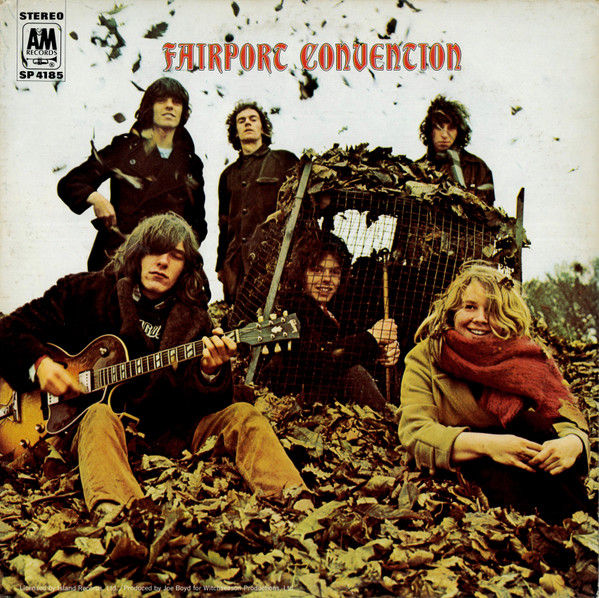
Bands had to work fast in the late ‘60s, often juggling gigs with studio work and revolving members. By the time their first album weas out, Fairport Convention had already shed singer Judy Dyble, replacing her with one Alexandra Denny, and that made all the difference. Known forever as Sandy, she’d already written a song that was covered by Judy Collins, which we’ll get to soon enough. Ian Matthews was still in the band, but it’s Sandy’s presence, via her rich voice, that drove the sound of What We Did On Our Holidays. (This was the first Fairport album released in the U.S., using the cover shown but no title outside the band’s name. For simplicity, we’re using the British title, since that’s how everybody knows it now.)

She makes her mark right off the bat with “Fotheringay”, an original that sounds like it’s been around for centuries. This haunting portrait of Mary, Queen of Scots imprisoned in a castle is sideswiped by the 12-bar blues of “Mr. Lacey”. (The titular character was an eccentric artist, occasional actor, and inventor, whose robots can be heard taking a solo of their own after the guitar break.) Something of happy medium is achieved in the melancholy “Book Song”, which incorporates swirling harmonies, electric guitar, and even sitar. Sandy’s alone with Richard Thompson’s slide guitar somewhere in a field to hum “The Lord Is In This Place… How Dreadful Is This Place”, a lengthy interlude before Ian’s more rocking take on “No Man’s Land”, on which Richard pounds an accordion. Everything truly comes together on Dylan’s “I’ll Keep It With Mine”, which they probably learned from the Judy Collins version, but wonderfully harmonized.

Doing an obscure Joni Mitchell song was a coup, as her own version of “Eastern Rain” wouldn’t emerge for half a century, and those were from her coffeehouse days. Fairport’s arrangement is meteorologically evocative, with sped-up guitars darting in and out of the mix. “Nottamun Town” reclaims the melody Dylan borrowed for “Masters Of War” and gives it a near-raga arrangement for guitar with harmonies. For contrast, there’s the tinkling harpsichord throughout “Tale In Hard Time”, another strong original from Richard. It’s back to the traditional with Sandy’s wonderful reading of “She Moved Through The Fair”, which is a wonderful setup for Richard’s immortal “Meet On The Ledge”. Still sung today at the close of innumerable folk festivals, this contemplation on lost friends, childhood, and the future never fails to stir. It makes Simon Nicol’s closing “End Of A Holiday” instrumental that much more effecting.

While it’s still all over the place, What We Did On Our Holidays is quite the leap from the band’s first album. Things were starting to coalesce, and they were barely out of the gate. (The later expanded CD issued overseas included three bonus tracks: the bluesy B-side “Throwaway Street Puzzle”, Muddy Waters’ “You’re Gonna Need My Help” from a BBC session, and the outtake “Some Sweet Day”.)

Fairport Convention What We Did On Our Holidays (1969)—

Friday, February 16, 2024

Fairport Convention 1: Fairport Convention

Joe Boyd is one of those Zelig-like characters to be found throughout this forum. He witnessed Bob Dylan going electric at Newport, he produced the first singles by Pink Floyd, and he started a production company that would eventually shepherd the likes of Nick Drake into public consciousness. This cachet would get him gigs working with R.E.M. and Robyn Hitchcock, among others. Fairport Convention was another of his early discoveries, and they’ve since gone on to become eponymous with English folk-rock.

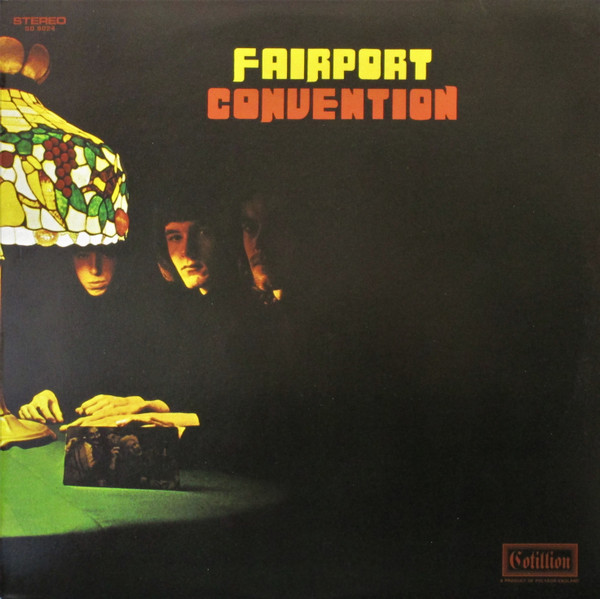
In the beginning they were simply a coterie of like-minded young musicians trying to do something original. With Iain Matthews and Judy Dyble trading vocals, and two guitarists in Richard Thompson and Simon Nicol, they had something of a Jefferson Airplane vibe, but the rhythm section of Tyger Hutchings and Martin Lamble was more reserved. Their eponymous debut is all over the place, mixing esoteric covers with quirky originals.

Emitt Rhodes had yet to go solo and begin enjoying his own cult status when they covered his “Time Will Show The Wiser”, an upbeat psychedelic jam with lots of lead guitar. They were also among the first to get to Joni Mitchell; “I Don’t Know Where I Stand” follows here, while “Chelsea Morning” begins side two. “If (Stomp)” was written by Matthews and Thompson, and has something of a Lovin’ Spoonful jugband feel, while “Decameron”, written by Thompson with two people we’ve never heard of, is a lovely duet. While co-credited to Bob Dylan, “Jack O’Diamonds” is merely a few lines taken from the liner notes of his fourth album set to music by Ben Carruthers, but good on them for including such an obscurity. “Portfolio” is a piano-driven instrumental with some sawing violins from the drummer.

Following a frantic “Chelsea Morning”, “Sun Shade” is another pleasant meditation from the team that brought you “Decameron”. Its eeriness sets up the weirdness of “The Lobster”, featuring autoharps and recorder and incorporating a poem by a 20th century British author. The mildly jazzy “It’s Alright Ma, It’s Only Witchcraft” is another nod to Dylan in name only, but it’s got a decent hook for a chorus. “One Sure Thing” is a melancholy tune borrowed from folk duo Jim & Jean (collectively the inspiration for Mitch & Mickey from A Mighty Wind, and she was allegedly the inspiration for Neil Young’s “Cinnamon Girl”). Another instrumental closes the side; “M.1 Breakdown” is an in-joke in reference to the new British highway, the bluegrass style, it apes, and the way it ends.

While it’s all over the place, what stands out on Fairport Convention outside of the quavery vocals is Richard Thompson’s lead guitar. Only 18 years old, he was already a force with which to be reckoned and worth watching, and certainly hearing.

The album didn’t come out in America until 1970, and on a different label, after three later albums had already been released. Once the catalog was unified, it did appear on CD over here in 1990, but collectors will want to seek out the expanded import (or streaming version) that includes four bonus tracks, including “If I Had A Ribbon Bow” (their first single) and previously unreleased covers of Leonard Cohen’s “Suzanne”, Tim Buckley’s “Morning Glory”, and Mimi & Richard FariƱa’s “Reno, Nevada”, which Matthews would record on one of his own solo albums, and which gets an extended jam here.

Fairport Convention Fairport Convention (1968)—3