Showing posts with label peter gabriel. Show all posts

Friday, February 21, 2025

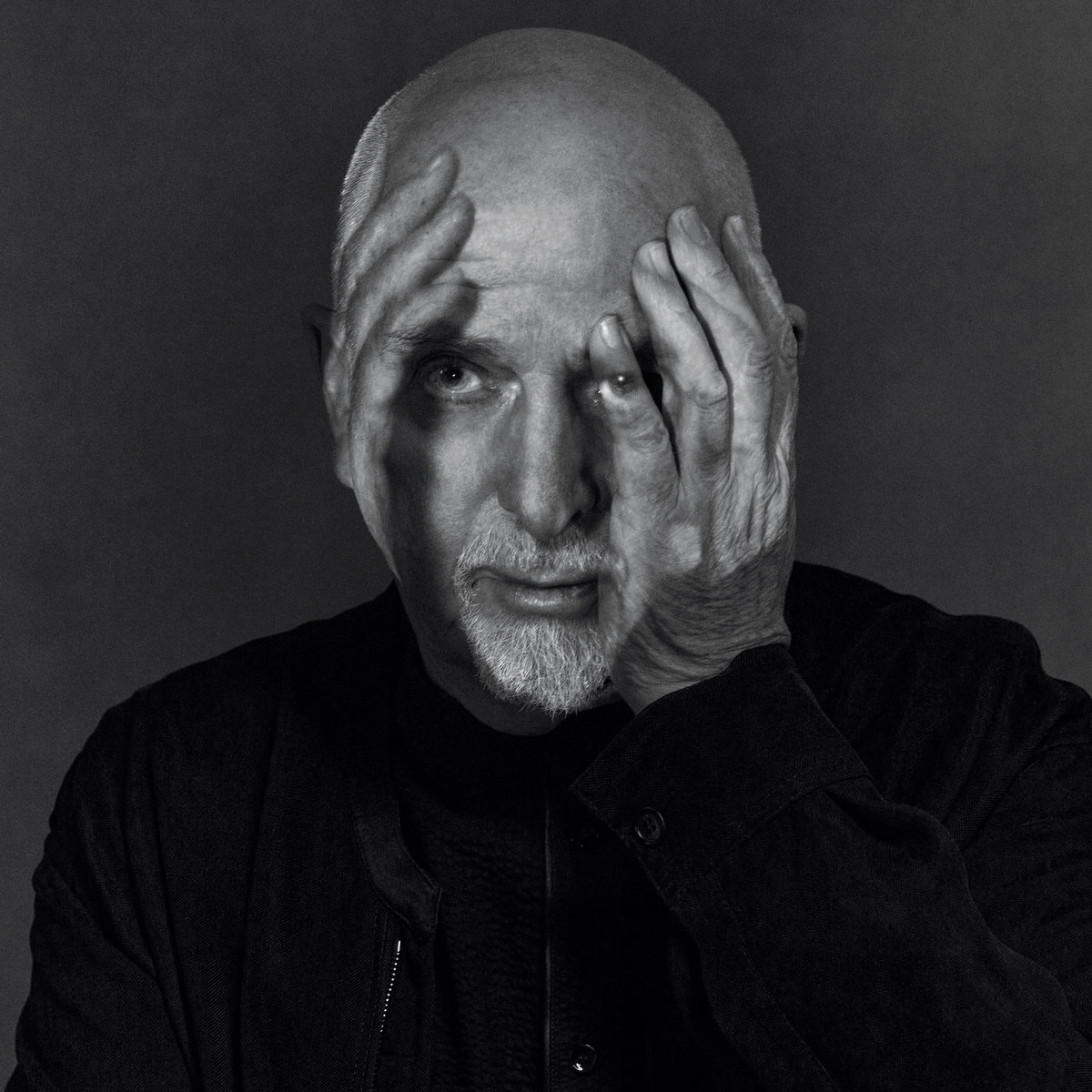
Peter Gabriel 15: i/o

And you thought ten years was a long wait between Peter Gabriel albums! Not long after Up finally appeared, he said he was already working on a follow-up. There began years of speculation and waiting that turned into decades. It wasn’t until early 2023 that, he finally started releasing music that he said would constitute the long-promised i/o, with a tour to match. At the turn of every full moon, a new song would be released via streaming in a variety of “Bright-Side” and “Dark-Side” mixes, while further variations on each were made available to members of his official Full Moon Club. This was a uniquely modern way to release new music that led us old folks to wonder if an album would ever exist in format like we used to know.

As it turned out, and in a demonstration of his pathological indecisiveness, the album did finally appear at the year’s end, in a CD package that included a disc of the songs in each mix. (Each mix was also released in separate vinyl packages, while a Blu-ray offered both mixes plus the “In-Side” Dolby Atmos mix. Or you could get a box set with everything.) All of this was a lot for anyone not the artist to get his or her head around, especially when it came down to the real meat of the issue: the songs themselves.

“Panopticom” has the rare distinction of beginning a Peter Gabriel at volume, rather than mysteriously emerging from silence. It’s set apart by its repeating motif, with a prominent acoustic guitar, even its ideal of a global data resource that becomes more ominous with every passing week. “The Court” addresses the idea of justice, and he makes some interesting rhymes, even if they recall those of “Steam”; the coda is the highlight of the song. “Playing For Time” takes the volume down to just piano and orchestra for the most part, not far removed from “That’ll Do”—an intentional move, so he says, and it’s quite nice. The title track follows on quietly at first, ruminating on connection, getting more energy in the choruses. A collaboration with producer Richard Russell, “Four Kinds Of Horses” is very dark, particularly in its Dark-Side incarnation, a strong contrast to “Road To Joy”, which bubbles along its groove until the abrupt end complete with sound effects (no spoilers here).

“So Much” is a quiet reflection on aging, with a few wince-inducing metaphors, but still heartfelt. We’re still on the fence about “Olive Tree”; no matter the mix, the cheesy horns over the choruses distract from the mood of the verses. Despite its somber tone, underscored by the cello, “Love Can Heal” is a plea of hope, inspired by an assassination, whereas “This Is Home” finds comfort on a more personal level. “And Still” is the longest song on an album already full of contenders. It’s rather unsettling as it progresses, but another cello solo helps raise it out of the murk. (People forget that he’s played the piano for much of his solo career—well, we do, anyway—and it’s rather adept here.) Another grand plea for peace rounds off the album. Building steadily from a seed to a big sound, “Live And Let Live” is a nice idea, of course, but the ears that need to hear it won’t. Maybe if it didn’t take so long to make its point. (The Dark-Side mix adds a whole 25 seconds to the album.)

Even with all that tinkering, there are no timeless classics to be found within any version of i/o. There’s a lot of sameness throughout, both within the album and in echoes of his earlier albums. We find ourselves going back to the quieter, beat-less songs, in either mix, as they seem less derivative of things we’ve heard before. Among the two dozen musicians, core contributors David Rhodes, Tony Levin, and Manu Katché make their mark, so it’s nice to concentrate on them, while Brian Eno contributes to six tracks. It is a simply pleasant album when you’ve got an hour or so to kill. At this rate, we don’t expect he will follow it up with anything remotely major.

Peter Gabriel i/o (2023)—3

Tuesday, September 24, 2024

Genesis 24: BBC Broadcasts

Thirteen years after the last Genesis reunion tour, Phil Collins rejoined his old band for another go around the world. Dubbed The Last Domino?, the shows mixed familiar hits with older (and newer) epics. Phil sang seated in a comfy chair while his son played drums—and pretty well, by all accounts. Daryl Stuermer was still around, and two male backup singers were on hand as well. The tour was promoted by a double-disc compilation, also titled The Last Domino?, that more or less replicated the setlist—including full versions of songs that were excerpted onstage—and could have, once again, been a Spotify playlist. But it included some nice photos from the rehearsals and sent more royalties in the direction of the absent Peter Gabriel and Steve Hackett.

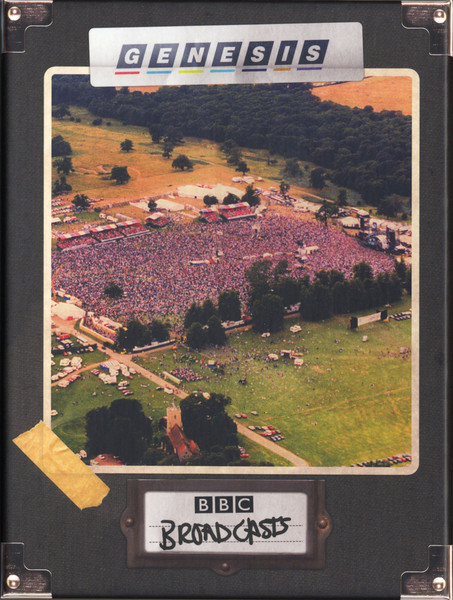
Once again the band had been put to bed, but Tony Banks still found a way to extend their reputation as a live attraction with the surprise release of the five-CD BBC Broadcasts box, covering the band’s career from 1970 to 1998. The package is mostly chronological, but by doing so some sessions are split between discs, which works for streaming, but can be jarring on CD. Also, while it’s five discs long, it doesn’t contain every radio performance by the band through the years—most likely to cut down on repetition, but also because they knew a whole disc from the Ray Wilson era was a non-starter, even at this low price point.

The first disc is the Gabriel era, beginning with three songs from the band’s first BBC studio appearance in 1970, and the same three that were already on the first Archives box. We jump to 1972 with the established Hackett-Collins lineup, with one flashback to the 1971 “Stagnation” that was also on the first Archives box. There’s a good performance of the rare “Twilight Alehouse” B-side, and an encore of “Watcher Of The Skies” from the Lamb tour.

From disc two on everything is in front of an audience, with improved sound, and the long-term live lineup including Daryl Stuermer and Chester Thompson. Five tracks from the 1978 Knebworth Festival—including the transition from “Dance On A Volcano” via “Drum Duet” to “Los Endos”—are followed by most of a 1980 London theater show, which fills the rest of disc two and most of disc three. Despite the occasional voiceover, highlights include the complete “Duke Suite” and the surprise encore of “The Knife”. (The songs omitted from this show were already part of the Knebworth selections. Also, “Follow You, Follow Me” is the same version that’s on Three Sides Live, while “Ripples”, “The Lady Lies”, “Duke’s Travels”, and “Duke’s End” were on Archives #2.)

Most of the well-traveled (since it was already on VHS and DVD) Wembley Stadium show from 1987 straddles discs three (the last two tracks) and four; the balance of the latter is given over to two songs from 1998 with Ray Wilson (who sounds very much like Paul Carrack on “Not About Us”). The fifth disc is devoted entirely to selections from their appearance at the 1992 Knebworth Festival: five songs from We Can’t Dance, with their “Old Medley” in the middle. We’d’ve ended with anything but an eight-minute “I Can’t Dance”, but the crowd seemed to love it.

Again, the sequencing is odd, and the discs aren’t all to capacity; surely some more music from 1978 or 1987 could have nudged the 1998 music to the end of disc five if it was so necessary to include? Quibbles aside, BBC Broadcasts has a lot of deep cuts for the musos and not just the pop fans, and thus provides an exhaustive look at what made the band, in any incarnation, such a draw through the decades.

Genesis The Last Domino? (2021)—3
Genesis
BBC Broadcasts (2023)—

Friday, June 28, 2024

Peter Gabriel 14: Rated PG and Flotsam And Jetsam

Nearly two decades into the 21st century, Peter Gabriel was still touring occasionally, and releasing the occasional one-off track, but there was no sign of new album. And for someone who was always on the cutting edge of technology and interaction, he was one of the longest holdouts among musicians of his stature to allow his music on streaming services, specifically Spotify. (Money does talk, after all.) When he did finally relent, the floodgates opened, kind of.

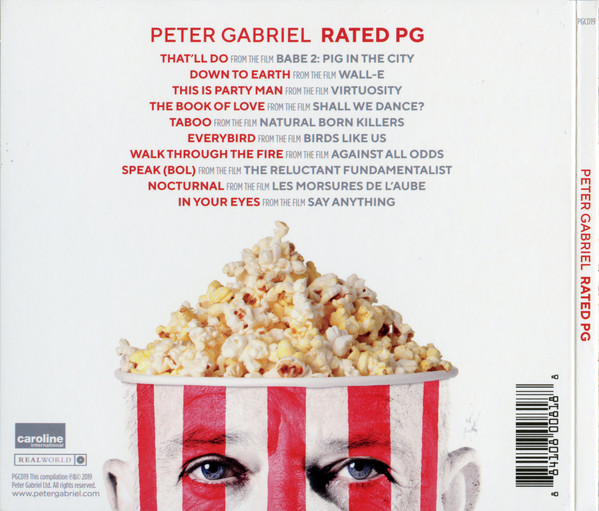
By this time he’d racked up more than an album’s worth of songs that had been featured on movie soundtracks, so Rated PG was a very inspired compilation, with a clever title and hilarious artwork to match. It was first released as a picture disc for a Record Store Day, but eventually made it to streaming and CD. It doesn’t include every song he wrote or supplied for a soundtrack, but it does collect some worthwhile rarities.

In the time since Up he had become a father again, but his contribution to a Babe sequel predated that. “That’ll Do” was written by Randy Newman but thankfully sung by Peter with instrumental help from Paddy Maloney of the Chieftains and the Black Dyke Mills (brass) Band. Ten years later, the more upbeat “Down To Earth” was a collaboration with composer Thomas Newman for WALL-E. Then there’s the more archetypal “This Is Party Man”, an alternate version of a track used in Virtuosity, credited as a co-write with Tori Amos, but we’re not sure exactly how. “The Book Of Love” of course was a springboard for the Scratch My Back project, and it’s still lovely, but it’s followed by “Taboo”, written with and sung by Nusrat Fateh Ali Khan from the Natural Born Killers soundtrack.

“Everybird” was the most recent track here, a sweetly melancholy track for an obscure animated film, then it’s all the way back to 1984 for “Walk Through The Fire”, which was overshadowed on the Against All Odds soundtrack by the title track, which was a smash hit by Phil Collins. (Then again, nobody paid attention to the song Mike Rutherford contributed.) “Speak (Bol)” is from a more recent political thriller, and has some anthemic qualities, as well as vocals in Urdu sung by Atif Aslam, while “Nocturnal” is from an even more obscure French film. It’s a moody, not necessarily dark track, though the lyrics suggest otherwise. Perhaps as a sop to those who want something familiar, “In Your Eyes” closes the set in an alternate mix—not the same one from the Say Anything soundtrack, but incorporating elements from other versions.

Despite being all over the place genre-wise, Rated PG holds together well, though it certainly could have been more comprehensive. This was addressed in a big way in late 2019 by Flotsam And Jetsam, a digital-only compilation running nearly six hours. Despite not being a physical release, it was separated into three “discs”, the first of which would fit on a single CD if they sold one. It begins with his cover of “Strawberry Fields Forever” from a very strange film, then continues through B-sides mostly presenting intriguing alternate versions of tracks from his first four solo albums, as well as such rarities as “Teddy Bear”, “Soft Dog”, “Across The River”, and “Here Comes The Flood” in German.

Each of the other “discs” exceeds two hours. The second covers the period bookended by So and Us; most of these tracks are remixes, which can get repetitive and tedious, but then there are highlights like “Quiet Steam”, “Don’t Break This Rhythm”, and “Curtains”. The last segment covers a 22-year period, dominated at first by tribute album appearances and other soundtrack contributions, then by remixes from Up. Yet it closes with new material of sorts: two completed mixes of the So-era work in progress “Courage”; the standalone single “I’m Amazing”, inspired by Muhammed Ali and released in tribute after the man’s death; and “The Veil”, written for Oliver Stone’s biopic of Edward Snowden.

There were still some missing pieces, like his songs from the Gremlins and Philadelphia soundtracks, but at least everything sounded good. Despite the demand, it likely wouldn’t have been the most lucrative set, so people can skip around when streaming, or cherrypick to their hearts’ content via Bandcamp.

Peter Gabriel Rated PG (2019)—3
Peter Gabriel
Flotsam And Jetsam (2019)—
Current CD availability: none; streaming only

Friday, November 10, 2023

Genesis 23: R-Kive

With Phil Collins supposedly retired and Peter Gabriel happily touring on his own any further Genesis reunions seemed unlikely. But all the principals had been involved with a BBC documentary on their history, so somebody decided an overview of the band was due. The difference this time, however, was that R-Kive democratically included three extracurricular and/or solo tracks each, and not always obvious ones, by each of the five best-known members. (Sorry, Anthony Phillips.)

The first disc focuses on the complicated early material from the Gabriel period, focusing on such epics as “The Knife”, “The Musical Box”, “The Cinema Show”, and “Supper’s Ready”. Then the songs get shorter, but still challenge. The disc is capped by “Ace Of Wands”, a frenetic prog-fusion instrumental from Steve Hackett’s first solo album that features Phil and Mike Rutherford.

Disc two charts the evolution of the band with Phil as lead singer, starting with the gorgeous “Ripples” and “Afterglow”, detouring to “Solsbury Hill”, “Biko”, and a track each from Tony Banks (the poppy “For A While”, on which he plays a competent guitar solo) and Hackett (the tuneful “Every Day”, from his third solo album). It stays somewhat heavy through “Turn It On Again”, “Abacab”, and “Mama” with “In The Air Tonight” in between, then it’s all pop with “That’s All”, “Easy Lover”, and “Silent Running” from Mike + The Mechanics.

The ubiquity of the pop charts continues on disc three with three songs from Invisible Touch, plus “The Living Years”, a.k.a. the other hit by Mike + The Mechanics. “Red Day On Blue Street” comes from a Tony Banks album nobody bought wherein he worked with such vocalists as Marillion’s Fish and, in this case, Nik Kershaw. Three songs from We Can’t Dance are followed by “Over My Shoulder”—another Mike + The Mechanics track that spotlights Paul Carrack—and the title track from Calling All Stations. Nothing appears from So, despite having been endlessly promoted over the previous two years on Gabriel’s tours in support of its anniversary reissue; instead we get “Signal To Noise”. Similarly, of all the Phil songs to choose, somebody picked “Wake Up Call”. Just to give everyone their due, “Nomads” is a flamenco new age hybrid sung by Hackett with Chris Squire on bass, while “Sirens” comes from Banks’ second classical album.

While R-Kive was a nice idea, it was a missed opportunity. Chances are trying to coordinate all the solo Collins and Gabriel hits would have taken a lot of paperwork, but it still seems they felt it necessary to have that equal time for everybody. That third disc is just weird, but that’s roughly where the quality didn’t really keep up with the chronology. By now, anyone with a CD burner or premium Spotify account could make their own compilations, or dig out their old mix tapes. Still, most of the music makes it worth the listen.

Genesis R-Kive (2014)—3

Tuesday, July 11, 2023

Peter Gabriel 13: New Blood

Now things were starting to get a little out of control. Having enjoyed the kudos for Scratch My Back, Peter got the idea to extend the orchestral remake approach to—wait for it—his own songs. This was hardly a new concept, for people as widespread as Sting and Spinal Tap had gone this route, and it was a worrying trend when once-vital performers saw the remake idea as fresh. The fact of the matter was that they simply couldn’t be bothered write a new album’s worth of tunes. Or maybe it’s the fault of the generation who put them on the map, who’d grown up to be wary of anything unfamiliar.

At any rate, and as might be expected, New Blood is exceptionally concocted, with great care given to both the new arrangements and capturing the sound. It’s an album for diehard fans, who will likely get much more out of it than the casual listener. Some of the tracks actually provide a new perspective; “San Jacinto” in particular is given a sweeping arrangement with a chilly piano intro reminiscent of Tubular Bells, and moves smoothly into its own coda. Without its booming drums, “Intruder” is very different, and scarier; “Darkness” is just as unsettling in this format too. Two songs from the OVO project might spur interest in that obscure CD; even though one is an instrumental, and a lovely one at that, the other is a duet with his daughter Melanie.

But much of the album comes off more like background music. Most of “Rhythm Of The Heat” isn’t that different from the song, until the big climax happens, sounding less like a tribal ritual than a movie soundtrack. “In Your Eyes” is much too urgent, and comes off like a stalker. “Red Rain” is given a brass-heavy treatment that misses on the tension, and “Don’t Give Up” is sung with a woman (not his daughter) who trills like a cartoon bird. A “bonus” rendition of “Solsbury Hill” is preceded by five minutes of ambient sound actually recorded on location, which is a great idea if you like listening to wind blowing.

New Blood is certainly harmless, but it’s just a shame that so much time was put into something that still comes off as a distraction. In fact, the disc of the first twelve tracks without any vocals, included in the “special edition”, is almost preferable, as some of the pieces work best that way, like “Mercy Street”; otherwise that song isn’t any more riveting than the original version. (“Blood Of Eden” was a bonus track in this edition as well, and “Signal To Noise” was available for download.)

He had already taken the orchestra on tour supporting Scratch My Back when he started to prepare for the album. The following year’s Live Blood was culled from two nights in London, with selections from the two orchestral albums augmented by arrangements for “The Drop”, “Washing Of The Water” (another nice duet with Melanie), and “Biko”, which is oddly placed in the middle of the program. Despite the occasional bombast, the album is an intimate listen, helped by his occasional commentary.

Peter Gabriel New Blood (2011)—3
Peter Gabriel
Live Blood (2012)—3

Tuesday, March 14, 2023

Peter Gabriel 12: Scratch My Back

The good news was that fans didn’t have to wait another decade for a new Peter Gabriel album. Unfortunately, it wasn’t the long-promised I/O, said to have been derived from the pre-Up period. First, he finally released the Big Blue Ball compilation, derived from several weeks of recording in a fantasy camp scenario in the early ‘90s. Then, he recorded an album of covers, with orchestral backing.

The earliest hint of what would be Scratch My Back came with his version of The Magnetic Fields’ “The Book Of Love”, recorded for a movie nobody saw, but soon became ubiquitous on TV soundtracks. From there he chose songs from established and newer artists, and gave each an impassioned vocal reading over stark arrangements.

By choosing from such a big pool, he risks blasphemy by screwing with songs people already know and love, but may also introduced the uninitiated to music they might have otherwise never heard. The “standards” arguably come first; “Heroes” takes the drums out of the Bowie song, leaving the strings to drive everything, while “Boy In The Bubble” is far removed from Paul Simon’s African groove. He’s about the 80th person to tackle Randy Newman’s “I Think It’s Going To Rain Today”, but interestingly redoes Neil Young’s “Philadelphia”, from the movie soundtrack to which he’d also contributed. However, his interest in deep catalog unearths lesser-known tracks, like Talking Heads’ “Listening Wind” and Lou Reed’s mega-obscure “The Power Of The Heart”. He can thank his kids for exposing him to bands like Elbow, Regina Spektor, Arcade Fire, and Bon Iver, and his takes make us almost want to explore the originals. (A so-called “special edition” added alternate versions of three songs, plus a version of the Kinks’ “Waterloo Sunset”.)

Scratch My Back was supposed to inspire a songwriters’ exchange called And I’ll Scratch Yours (get it?), wherein each of the artist Peter covered would in turn record a version of one of his songs. Not surprisingly, this was easier said than done; only six new recordings appeared, and as iTunes exclusives. Apparently, Radiohead were not pleased with his overhaul of their song. (A completed album, with a few substitutions, finally appeared in late 2013; oddly, it was the veteran performers, like David Byrne, Brian Eno, Lou Reed, and Paul Simon, who made his songs their own, while most of the younger artists stuck far too close to the originals to delivery any unique interpretations.) While his delivery throughout certainly displays his enthusiasm and devotion to this music, one ultimately wishes he could get the same inspiration from his own personal muse, and come up with something as simple and pure.

Peter Gabriel Scratch My Back (2010)—3

Tuesday, January 24, 2023

Genesis 22: Live Over Europe

Following ten years apart, wherein Phil Collins did Disney soundtracks between solo albums and Mike Rutherford and Tony Banks twiddled their thumbs, the most profitable lineup of Genesis reconvened for a reunion tour. Not able to convince Peter Gabriel and Steve Hackett to join, they called back Daryl Steurmer and Chester Thompson for support and off they went. (The documentary detailing the rehearsals and first shows is particularly hilarious when it’s clear Daryl and Chester know their parts far better than the other three know theirs.)

Following the American leg, Live Over Europe 2007 replicated the setlist on two full CDs. Beginning with “Duke’s Intro”, which melds elements of “Behind The Lines” and “Duke’s End”, they move to “Turn It On Again”, which was the handy name of the tour, and proceed through over two hours of expected hit songs (“No Son Of Mine”, “Land Of Confusion”, “I Can’t Dance”, “Invisible Touch”, and the like) as well as more ambitious epics (the complete “Home By The Sea” and “Domino” suites, an “In The Cage Medley”, “Firth Of Fifth” into “I Know What I Like”) and relative deep cuts (“Mama”, “Ripples”). The requisite dual drum solo is called “Conversations With 2 Stools”, named after the objects Phil and Chester beat for the first three minutes, and after a few encores of later hits, the set ends nicely with “The Carpet Crawlers”.

The performances are impeccable, and drawing from several shows ensures competency if not intimacy. The album was a nice enough souvenir, but it was soon to become part of a larger deal.

Being one of those bands audiophiles liked, it made good business sense for Genesis to revisit their catalog in the 21st century by releasing three box sets over a period of 18 months, each dedicated to a distinct period of the band. Each remastered CD was matched with a DVD containing the same studio album in 5.1 surround sound and other audio-visual content, and each set contained a bonus disc—and matching DVD—of “Extra Tracks”, such as B-sides (including “Match Of The Day” and “Me And Virgil”, which were omitted from the Archives #2 box) and other rarities.

A year after the final album box was released, their live legacy was reassessed much the same way, but not exactly. 1973-2007 Live included a CD and 5.1 surround-sound DVD pairing for an expanded Genesis Live, which added five out-of-order tracks from the Lamb tour, but not the fabled “Supper’s Ready” that had snuck out way back when. Seconds Out was also paired with a DVD, while Three Sides Live—in its all-live, no “Paperlate” version—did not get a surround mix. Neither did The Way We Walk, but that combined volume was rejigged to replicate the actual set lists as opposed to “short” and “long”. Also, “Drum Duet” was now called “The Drum Thing”, while “Mama”, “That’s All”, and “In Too Deep”, plus “Turn It On Again” as a bonus, were moved to the end, having been recorded on earlier tours.

A slot in the packaging was included for consumers to store their separately purchased copies of Live Over Europe 2007, which was nice of the designers, but even more exciting was the disc of extra tracks in the form of Live At The Rainbow, recorded in 1973 at the fabled London theater. Some of this was already on the first Archives box, and the jury’s still out as to how much of the vocals were touched up by Peter Gabriel decades later. (The DVD portion includes another 20 minutes of music from the show, sequenced in context. Also, folks gnashing their teeth about no DVDs for two of the albums only had to wait two months for The Movie Box 1981-2007, which contained five DVDs, plus their Behind The Music documentary and an empty slot for the When In Rome DVD from the reunion tour.)

Genesis Live Over Europe 2007 (2007)—3
Genesis
1973-2007 Live (2009)—3

Friday, March 11, 2022

Peter Gabriel 11: Up

After several years of rumors and false confirmations from the man himself, a full ten years passed between new Peter Gabriel albums, a break that spanned the Millennium. In the meantime he’d become very active on the Internet with his own personal website. In person he’d come to resemble none other than Burl Ives, a far leap from the skinny, more hirsute frontman of old.

Note we said “albums”, plural; first there was Long Walk Home, his soundtrack to Rabbit-Proof Fence, a drama about displaced Aboriginal children in the 1930s. While not as familiar and haunting as Birdy, nor as consistently dynamic and striking as Passion, his trademarked textures and touchstones resonated through to his next “real” album, released shortly afterwards.

Up starts promisingly enough with the fiendish “Darkness”—thirty seconds of muted percussion before exploding with a cry of pain or something, moving through sections reminiscent of the eerier tracks on the third and fourth albums. “Growing Up” delivers an upbeat groove but not much in the way of melody; still, he felt it important enough to name the tour after it. The haunting “Sky Blue” is based largely around a piece from Long Walk Home, specifically a repeated refrain sung by the Blind Boys Of Alabama. “No Way Out” has a rhythm reminiscent of “In Your Eyes”, but is nowhere near as catchy. Those fans who’d held onto their copies of the City Of Angels soundtrack from a few years earlier might have appreciated the alternate version of “I Grieve” included here.

The downfall of taking so long on this album meant that “The Barry Williams Show” becomes a weak diatribe against the likes of Jerry Springer, and makes it just as dated as it would have become anyway. (Apparently he wasn’t familiar with the iconic American status of the Brady Bunch actor, and used Shooter McGavin in the disturbing video instead.) “My Head Sounds Like That” sports a gripping but sad backing of piano and brass band, turning things up in the middle. While it’s not the Roxy Music song of the same name, “More Than This” is another attempt at a hit single. More uneasy listening comes in “Signal To Noise”, featuring the wailing, flown-in voice of the late Nusrat Fateh Ali Khan; the tension, albeit compelling, abates for “The Drop”, which is just Peter and the piano.

While Up has its moments, it’s just not that memorable, which is one of the last things we’d ever thought we’d say about a Peter Gabriel album. There’s plenty of promise in these tracks, but not enough songs, most of which pass seven minutes anyway. Perhaps all that time tweaking things in his quest for the perfect sound removed any spark. It also didn’t help that he’s easily distracted, as evidenced by such things as Long Walk Home and the Millennial OVO project (which featured the lovely tribute “Father, Son”). Artists with more obtrusive management might have suggested he make one good album rather than two so-so ones.

But he never wanted to be a superstar, and always strove to make his own music following his own whims. That’s why he’s still got a rabid fan base, who would have been happy to snap up the “official bootlegs” from the tours that followed Up, with each show represented on CDs pressed from the soundboard mixes. For those who missed out, two separate releases would eventually present documents of the band in action. Growing Up Live was the audio of the DVD of the Milan show first released in 2003, while In The Big Room was a much more intimate fan club show performed at the end of the tour in his own studio. Both were digital releases initially before being pressed on vinyl, though only the latter would be available on CD as well.

Peter Gabriel Long Walk Home: Music From The Rabbit-Proof Fence (2002)—
Peter Gabriel
Up (2002)—

Friday, May 21, 2021

Genesis 20: Turn It On Again

Barely a year after Phil Collins had compiled his own hits collection, Genesis got one of their own. Turn It On Again: The Hits sticks very close to that premise, with half of the program devoted to songs from Invisible Touch and We Can’t Dance. (Hey, it says “hits” right in the title, not “best of”.)

The compilers do their best with the space left over, and the first few tracks do provide something of a balance via the “title” track and “Mama”, which, like several selections here, is presented in its radio edit. We get a handful of further songs from the ‘80s, with “Follow You Follow Me” and “I Know What I Like (In Your Wardrobe)” the only selections from the ‘70s. The stillborn “Congo” from Calling All Stations is something of a middle finger, only slightly offset by the one “new” track. “The Carpet Crawlers 1999” is a re-recording including the five members of the “classic” lineup, with Steve Hackett getting to add lots more guitar and Phil prominently harmonizing with Peter Gabriel, before taking over the last verse all his own. (Rumor has it the original plan was to have Ray Wilson sing a verse, but he was no longer in the band when they finally got around to recording, so tough bananas on him.)

Longtime Genesis fans would have had all the original albums anyway, but when Phil Collins returned in 2007 for a reunion tour, Turn It On Again: The Hits was expanded to two discs and subtitled The Tour Edition. This time, after starting with that “title” song, they followed the reverse chronological template of 2004’s three-disc Platinum Collection, going backwards from the We Can’t Dance material, adding “Tell Me Why” from that album for some reason. “Illegal Alien” plus further songs from Abacab filled out the picture, while the second disc did a better job of sampling the ‘70s, with such rarities as “Happy The Man” and two tracks from the Spot The Pigeon EP. It’s still a little light on Peter Gabriel, but again, we’re talking hits here. (“The Carpet Crawlers 1999” closed the first disc, while “Congo” was stuck all the way at the end of the second, after the single edit of “The Knife”.)

Genesis Turn It On Again: The Hits (1999)—
2007 Tour Edition: same as 1999, plus 16 extra tracks

Friday, September 4, 2020

Genesis 19: Archive

With the band all but over, the longtime members of Genesis convened to compile a box set of rarities. Rather than cram all their incarnations into a single sprawling compilation, Genesis Archive 1967-75 wisely concentrated on the Peter Gabriel years. In an eccentric move, but ultimately a method that enhanced the listening experience, the program went backwards, kind of. (We’ll explain.)

The first two discs are devoted to the only professionally recorded live performance of The Lamb Lies Down On Broadway. The sound is terrific, the rhythm section and keyboards tight, and Peter’s occasional song introductions attempt to shed some light on the work’s thick plot. Because many of the songs as originally performed had less-than-stellar vocals due to the costumes he wore onstage, Peter re-recorded an indeterminate portion of the vocals specifically for this set. Steve Hackett allegedly redid some of his guitar parts too. Because (they said) the tape ran out for “It”, that song is included in its studio incarnation with all new vocals.

The third disc begins with five songs from a 1973 concert at London’s Rainbow Theatre—four from Selling England By The Pound, plus “Supper’s Ready”, the latter supposedly with new vocal parts as well. A BBC performance of “Stagnation” with the then-newly recruited Steve Hackett and Phil Collins is excellent. Three rare singles fill the rest of the disc. “Twilight Alehouse”—originally from the Foxtrot era but eventually released as the B-side to “I Know What I Like”—is unsettling in its portrait of an ordinary yet disturbed man (as opposed to fantasy or mythological creature) finding solace in alcohol, but the instrumental break is worth it. The standalone “Happy The Man” single sounds almost like a parody of Cat Stevens (despite the alarming rhyme “like a nun with a gun”). The drastically re-arranged, re-recorded single version of “Watcher Of The Skies” cuts out the entire Mellotron intro, sticks to the verses, and fades on a chant.

The fourth disc is the most challenging, simply because it goes way, way back to when they were just kids starting out, before Steve and Phil. Some of these are more historically than musically interesting; good luck enduring “Let Us Now Make Love” without cringing. A strings-less mix of “In The Wilderness” suggests that a stripped-down version of the debut might be of interest, as are such demos as “Dusk” and “She Is Beautiful”. A few tracks recorded for the BBC and nowhere else are also unique in that Peter shares some vocals with Tony Banks and Anthony Phillips. The bulk of the disc predates the first album, and includes even more straight pop and love songs than anything they’d do until the ‘80s.

Coming at a time when Peter was supposedly hard at work on his next album, the Genesis Archive reminded people who’d given up on the modern version of the band where they’d come from. It didn’t do Phil Collins any favors, unless you listen closely enough to the drums.

Genesis Genesis Archive 1967-75 (1998)—

Friday, April 10, 2020

Peter Gabriel 10: Secret World Live

Having taken his latest album around the world for a typically elaborate tour, Peter recorded its live souvenir in Italy and issued as both an audio and a video release. While Secret World Live might best be enjoyed on a screen, where the songs are enhanced by the silly choreography of David Rhodes and Tony Levin, the album itself provides a nice overview of his most commercially successful era.

Thanks to technology, the band was able to replicate the sound of the records pretty well, but luckily they took several opportunities to stretch. “Steam” takes some time to catch fire, beginning in the more tense arrangement that the faithful would have enjoyed as the B-side “Quiet Steam”. There’s a nice interlude in the middle of the first half that travels from the even rarer “Across The River”, through “Slow Marimbas” (from Birdy!) and into a great jam on “Shaking The Tree”. We never get tired of “Solsbury Hill”, and this version is nice too. “Red Rain” and “Secret World” gain even more power in the live setting, the latter complete with a repeat of the coda. And the average consumer can finally own an extended “In Your Eyes”, stretched to over eleven minutes that never drag. Throughout, then-unknown Paula Cole, yet to wonder where all the cowboys had gone, sings all the requisite female parts and harmonies. Youssou N’Dour must not have been available, so a variety of singers attempt to replicate his wail.

While some writers have equated Secret World Live with “listening to a light show”—likely forgetting that such an insult can only be applied to half-assed Pink Floyd reviews—there’s a charm in the album that will appeal to fans. And who knows—maybe casual fans will enjoy it too.

Peter Gabriel Secret World Live (1994)—

Friday, October 4, 2019

Peter Gabriel 9: Us

While fans were accustomed to Peter Gabriel’s slow release pace and interest in world music, they were clamoring for the true follow-up to So. With Us, chock full of songs built on hooks, they got it.

He’d written about relationships before, of course, but what made this album so different was that each of the songs (well, nine of them, anyway) overtly dealt with topics like communication, desire and sex. He was in a crossroads; having finally divorced from his wife, he had also found himself in the tabloids when he was seen in the company of the fetching Rosanna Arquette.

The opening fanfare of “Come Talk To Me” sounds like bagpipes, with galloping drums accompanying a plea, a demand for attention, it’s hard to ignore him. Things turn down though, first for the straightforward “Love To Be Loved”, then for “Blood Of Eden”, which musically sounds akin to “Don’t Give Up”, only this time the voice of hope is provided by Sinead O’Connor. The horn-heavy “Sledgehammer” sound returns on “Steam”, and while it’s not explicitly about the physical act, there’s a horniness to it. “Only Us” uses a variety of conflicting meters to disguise the song’s true rhythm, but it doesn’t really settle in.

“Washing Of The Water” is lyrically and musically reminiscent of spirituals, and its feel certainly conveys the desire to be cleansed, to start anew. (Indeed, some of it sounds influenced by “Bread And Wine”, the closing track on Passion.) The mood is truly jarred by “Digging In The Dirt”. Here the emotions touched on via therapy are exposed to the raw, culminating in the sinister “don’t talk back” sections before the choruses. “Fourteen Black Paintings” begins as another throwback to the Passion album, with its tense ambience and use of Mideastern instruments, but its simple lyrics rather recall “We Do What We’re Told”. But to revive the attention of anyone who left the room to get popcorn, “Kiss That Frog” provides an uptempo come-on, with all the hallmarks of vintage soul, and little subtlety in the lyrics. But he saves the best for last. “Secret World” gears up steadily on an almost machine-like beat, and brings in a vocal that’s tired, resigned yet proud of the state of his relationship. It’s not clear whether the people in the song are going to stay together or separate, but that’s what makes it universal. Chills arrive at the whispered “shh—listen” near the end.

Us is a heavier listen than So, but the overall strength endures and reveals itself over time, just as the composer revealed himself in the songs. While Daniel Lanois (again) helped bring Peter’s ideas into the ‘90s, older fans likely enjoyed the touches that reminded them of the Peter Gabriel of a decade before.

Peter Gabriel Us (1992)—

Tuesday, July 9, 2019

Peter Gabriel 8: Shaking The Tree

More to keep him in the marketplace than anything else, a Peter Gabriel “greatest hits” album snuck out at the end of 1990. While it was probably mostly the label’s doing, he certainly gave his input, even going so far as to refuse to package it inside the cardboard longbox that was standard in the US at the time. Shaking The Tree became a perennial seller, providing true hits alongside some other curios. (Those who bought the vinyl were shorted four songs, in case you were curious.)

Despite beginning with “Solsbury Hill”, the chronology goes all over the map through the rest of his solo work. Collectors would be slightly interested in the various edits and remixes that were utilized to keep the program at capacity, affecting various selections from the third album, Security and So. Even “Zaar”, from Passion and hardly a big radio request, fits in the flow.

More interesting was the new piano-and-vocal performance of “Here Comes The Flood” that scrapes away all the bombast of the album version to the bare bones, and nicely sets up “Red Rain”. The big draw was the title track, which was actually a remix (with new vocals) of a song from the previous year’s Youssou N’Dour album, which Peter had produced.

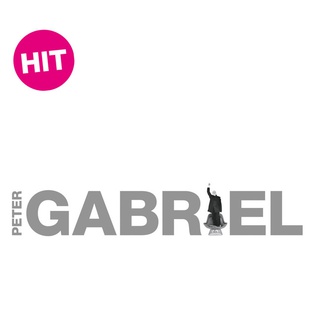
It’s a good sampler, though oddly enough, the one track Shaking The Tree doesn’t have, to worldwide confusion, is “In Your Eyes”, so soon after its exposure in the movie Say Anything. Surely that would have been a better choice than “Mercy Street”? People who really wanted it could just buy So, of course. Or, they could wait until 2003 and pick it up on the double-disc Hit anthology, which sported a few other edits, a couple of soundtrack rarities and songs from the two albums he’d completed in the interim, a different second disc depending on whether you were in the US, UK, or Germany, but no “Shaking The Tree”. (As long as we’re getting ahead of ourselves, Atlantic took the opportunity to cash in with Revisited, a fairly crass repackaging of songs from his first two solo albums, timed to coincide with his next solo album.)

Peter Gabriel Shaking The Tree: Sixteen Golden Greats (1990)—4
Peter Gabriel
Revisited (1992)—3
Peter Gabriel
Hit (2003)—3

Friday, February 1, 2019

Peter Gabriel 7: Passion

True to Gabriel form, the follow-up to his smash hit album was not a commercial endeavor, but another soundtrack to a controversial film, and an album that came out nearly a year after its theater companion. But by giving it the title of Passion, rather than boldly stating it as the soundtrack to The Last Temptation Of Christ, Peter firmly established it as an album on its own. Moreover, he got to explore and promote all kinds of music from Third World countries, adding such luminaries as Nusrat Fateh Ali Khan to the dedicated musicians in his studio and touring bands.

Because of the ambient nature of the album, many of the tracks blend together for a unified listening experience. But some tracks do stand out on their own, and convey a mood not necessarily tethered to Martin Scorsese’s vision. “The Feeling Begins” evokes a windy desert, with a variety of percussion to add tension. The same method is used for the suite of tracks bookended by “Of These, Hope” with “Lazarus Raised” in the middle. “Sandstorm” really does sound like one, and the title track is particularly haunting.

But it’s not all African and Mideastern sounds. “With This Love” is heard twice on the album: once led by an oboe and cor anglais, and again with a choir. Both add a distinctly English touch in the midst of an otherwise geographically accurate musical portrait. Peter’s voice is finally heard on “A Different Drum”, a wordless chant that seems just on the verge of becoming a catchy chorus. “It Is Accomplished”, which accompanies the last seconds of the film as the end credits roll, manages to speak the emotions of triumph and release over an amazingly simple, repetitive melody. (Blasting it from your car speakers even enhances the catharsis of driving away on your last day from a job you hate.)

To best appreciate Passion, it should be approached not as an album but as background music. And like the best of its ilk, it has the power to rise above such a negative label to deliver a riveting listening experience. It’s similar to Birdy in that respect, but on a grander scale.

Peter Gabriel Passion (1989)—

Tuesday, December 4, 2018

Peter Gabriel 6: So

What with his old band suddenly becoming mainstream pop icons—helped along by their ubiquitous drummer—it was both odd yet fitting to find Peter Gabriel competing for pole position at the top of the very same charts. It helped, of course, that So was very accessible; while still chock full of unusual subject matter, its sound was very radio-friendly, thanks in part to co-producer Daniel Lanois. (The handsome cover shot was also a big departure from his previous portraits.)

Production is a big part of the stunning “Red Rain”. While it sports such a big sound, the band still consists of guitar, bass, drums and piano (plus the vocal, once described as a cross between Bruce Springsteen and Elmer Fudd). The song maintains its tension, breaking the ceiling in the brief section before the last chorus, and taking it down to its bare bones gradually to the very end. To call “Sledgehammer” an antidote to the tension is an understatement; this horn-driven ode to pleasure easily made the album a hit, helped by the video. Kate Bush returns for a duet on “Don’t Give Up”, a song pointedly about a man struggling under an economic situation but easily embraced as a universal pick-me-up. “That Voice Again” juxtaposes two musical sections for a rather straightforward song about relationships.

It was the first song on side two, however, that soon became one of the biggest romantic touchstones of the decade. “In Your Eyes” still works as a love song for the ages and for any age, and would be transformed in live performances (boombox not imperative). The spooky “Mercy Street” becomes even more mysterious and unsettling the more one learns about its inspiration, the troubled poet Anne Sexton. Luckily, the hilarious pomposity of “Big Time” brings some daylight back to the proceedings, helped along by yet another amazing video. But “We Do What We’re Told (Milgram’s 37)” revives another disturbing subject, that of the danger of obeying authority. Less clear is what the coda (“One doubt/One voice/One war/One truth/One dream”) has to do with it.

The LP ends there, but the increasing number of consumers who bought the album on cassette or compact disc got an extra in “This Is The Picture (Excellent Birds)”, a collaboration with performance artist Laurie Anderson. But if you buy the CD today, there’s been a further change: “In Your Eyes” has been moved to the end of the program, after “This Is The Picture”, making for a much different finale.

Whatever the “real” track order, the ubiquity of the songs on So hasn’t diluted their quality since they first appeared. Lots of fans discovered Peter Gabriel via this album, and likely dug deeper into his catalog for more. From an economic as well as an artistic standpoint, he couldn’t ask for a better return.

Decades later it’s still his most popular album, and nostalgists cultivated a full wish list for its inevitable commemoration. As he was never one to adhere to calendars, it was only fitting that the 25th anniversary repackaging of So arrived 26 years after its initial release. A three-disc version added a 1987 concert from Athens, while the so-called Immersion Box also added a DVD of that concert, the album on vinyl, a 12-inch disc of three outtakes and, most intriguing of all to people like us, a CD called So DNA that traces each track from initial cassette demo through later incarnations. None of the packages contain any contemporary B-sides or remixes. (In a fascinating exchange with the excellent Super Deluxe Edition website, Peter explained some of his reasoning behind what was and wasn’t included. That site’s review of the DNA disc is essential reading.)

Peter Gabriel So (1986)—
25th Anniversary Deluxe Edition: same as 1986, plus 16 extra tracks (Immersion Box adds another 10 tracks, 2 DVDs, LP, 12")

Tuesday, June 26, 2018

Peter Gabriel 5: Birdy

A hidden gem in his pantheon, Peter Gabriel’s soundtrack for the Alan Parker film Birdy is at the same time one of his least known projects and one of his most satisfying. The movie wasn’t a huge hit, and since Peter’s own snail’s pace work ethic meant that it wasn’t released until well after the film had left theaters, the album has gone largely unnoticed.

The argument could be made that since it consists of what its artist acknowledges as “recycled music with no lyrics”, it’s nothing more than a remix album. But that does it a disservice. True, most of the music originates from various songs from his last two studio albums, but for the most part, various textures are extracted to deliver a completely new atmosphere, resulting in a different effect. The track titles state the most obvious origins, but it’s still fun to pick out some of the more obscure sources.

“Birdy’s Flight” is used to great effect in the film, using a remix of the latter half of “Not One Of Us” for a wonderfully energetic accompaniment. Likewise, “Under Lock And Key” uses themes from “Wallflower”, itself a song about imprisonment, to illustrate the plight of the key character, both in the present and in flashbacks.

Even without seeing the film itself (which brings still another perspective to this music) it’s possible to be transformed to another place by just the music and titles. “At Night”, “Quiet And Alone” and “Slow Water” are ambient yet melodic tracks that show how easily Daniel Lanois was able to go from working with Brian Eno to assisting with this album. “Dressing The Wound” appears to be a non-recycled composition, its gentle piano setting up some trademark wordless vocals. Even “Slow Marimbas” would go on to be a feature in live performances down the road.

Due to its non-rock nature, Birdy is not for the casual listener, but fans of his oeuvre will enjoy it, partially as a stepping stone to his next project, and also as a precursor to his next work on a soundtrack. It’s a wonderful album for contemplation, particularly at night.

Peter Gabriel Birdy: Music From The Film (1985)—4

Tuesday, July 11, 2017

Peter Gabriel 4: Security

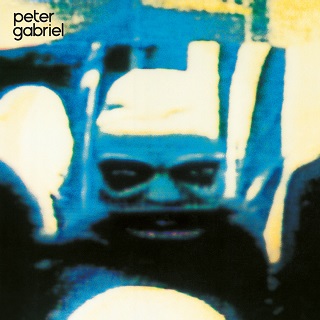
For his fourth solo album, Peter somehow let his new label Geffen (soon to get a reputation for meddling with their artists) release it under the title Security. And thus it has remained, despite still being titled simply Peter Gabriel in the rest of the world. (Plus, German-speaking countries got their own version again, this time in a markedly different mix.)

Oddly enough, while the album was to bring him his greatest commercial success to date, it’s a very challenging listen, and the strange cover photo doesn’t help. Much of this can be put down to his embrace of, for lack of a better term, tribal rhythms on most of the cuts. Indeed, many of the tracks appear to take place in pre-industrial countries. It’s not a coincidence that in the modern rock era, he’s been one of the most vocal and active champions of the genre known collectively as “world music”.

“The Rhythm Of The Heat” is an accurate title for a track that fades in on a pulse, follows an eerie path, and then, as he exclaims, “The rhythm has my soul,” explodes into a frenzy of furious drumming supplied by a dance company from Ghana. The effect can alternately be felt as either unsettling or exhilarating. From there it’s a trip around the Southern Hemisphere to “San Jacinto”, which takes its time building up to the dynamic choruses. “I Have The Touch” is more straightforward, a good example of post-punk alternative music for which he was considered a pioneer. But it’s back to weird territory on “The Family And The Fishing Net”, a thought-provoking song wherein such “primitive” practices as animal sacrifices are compared to Christian wedding traditions, and found to be not all that alien.

What sold the album, of course, was the otherwise impenetrable “Shock The Monkey”, thanks in part to its striking video in heavy rotation on MTV. To this day it’s still incredibly catchy. (The liner notes from the original Geffen CD, in addition to proclaiming it as a “FULL DIGITAL RECORDING”, suggested that the song was an adaptation of classic Motown rhythms. We’d love to know which ad wizard came up with that one.) Another song known more for its visual effect is “Lay Your Hands On Me”, which became a centerpiece of his subsequent tour when Peter would perform a trust fall back into the audience, who would then pass him over their heads as he sang. With its unlikely title, “Wallflower” gets past its initial flute sample (which evokes nothing more compelling as the Karate Kid franchise) to a series of beautiful piano couplets under a lyric that soon reveals to be sympathetic to the plight of political prisoners. At least it ends on an up note with “Kiss Of Life”, jumpy meters and all.

The American tour following Security was soon captured on a double album, playfully titled Plays Live, despite the explicit acknowledgement that various tracks had been embellished in the studio. As would be expected, the setlist is heavy on the most recent albums, with a few from the first two (including “Solsbury Hill” and a wonderful “Humdrum”). Most of the songs are similar to the studio versions, with the exception of a slower “No Self Control”, and there’s an actual rarity in the form of “I Go Swimming”, only available here. (And not really that enticing once you’ve heard it.)

Peter Gabriel Security (1982)—3
Peter Gabriel
Plays Live (1983)—3

Friday, August 5, 2016

Peter Gabriel 3: Melting Face

By now the pattern was set: another album titled Peter Gabriel, on a different label, but with the same lettering and a cover photo that would contribute to the vernacular. (In this case, the kids came to calling it Melting Face or just plain Melt. Some of the more enterprising ones called it Mercury/Geffen, in honor of the two labels who’d released it in America.) Only now it was the ‘80s, and he was ready to move forward as his own man. Having shed the pedestrian rock of his first two albums, the third album embraces his experiments within the song form.

Working with soon-to-be hotshot producer Steve Lillywhite, he even made some of his old collaborators sound new. This is evident from the start of “Intruder”, where Phil Collins discovered the unique “gated” drum sound that would drive every single one of his creations for the next ten years, along with the appearance of the Yamaha electric grand piano that would become synonymous with the Gabriel sound. The song’s dark, claustrophobic lyric matter sets the stage for most of the album, through “No Self Control” and particularly on “I Don’t Remember”. Preceded by a brief, sax-driven instrumental (or prelude) called “Start”, it even works on the dancefloor (even if some of the synth parts remind us of “Run Like Hell”). A stretch of silence calms everything down for “Family Snapshot”, a vivid, harrowing portrait of a political assassin that actually inspires sympathy. “And Through The Wire” manages to lighten the mood somewhat—maybe it’s the cowbell?—with a vague lyric that may or may not be related to the mood of “On The Air”.

With a simple “one, two, one, two, four”, the infectious “Games Without Frontiers” whirrs into motion, thanks to the sustained guitars and drum machine. The silly yet biting lyrics are balanced by the whistling chorus and the sound of Kate Bush intoning the title in French (and not “she’s so funky yeah” as we thought for several years). The theme of isolation returns on the otherwise upbeat “Not One Of Us”. “Lead A Normal Life” is mostly a duet for marimba and piano, split up by wordless vocals and an actual verse that confirms that the song takes place in a mental institution. The grand finale is “Biko”, which can be credited for bringing the issue of apartheid to the minds of otherwise apolitical consumers, as well as Bono. A simple funeral march, the suggestion of bagpipes and African touches make it universal and stirring.

Peter Gabriel more or less found a sound that worked on his third solo album, or at least one that he felt comfortable recreating in some of the more innovative live shows of the next several years. And it was a good thing too, since his old bandmates were starting to become more known on the pop charts, together and by themselves. (It also bears mentioning that he released a special version of the album sung entirely in German. Those who’ve heard it have said that some of the lyrics sound even more menacing in that language.)

Peter Gabriel Peter Gabriel (1980)—

Tuesday, March 15, 2016

Peter Gabriel 2: Scratch

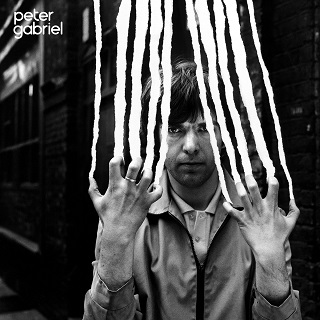
Peter gave his second solo album the same title as his first, with the idea that each new album would be akin to the latest issue of a magazine. Whatever the reason, this particular Peter Gabriel is usually referred to as Scratch or Fingernails, due to—you guessed it—the cover art. (You could even be clever and call it Atlantic to differentiate it from the first one, which was technically on Atco. Yet we digress.)

He kept a few friends from the first album, such as Tony Levin on bass and Larry Fast on synthesizer, but handed the production and collaboration duties over to Robert Fripp (who considered it to be part of a trilogy with his own solo album and a project he was concurrently pursuing with Daryl Hall of all people. And we’re digressing again). Even with the addition of such surprising names as Roy Bittan and Sid McGinnis, Fripp’s influence is pretty apparent throughout, spurring Peter into new areas.

“On The Air” tinkles in on a synth line before exploding into a rocking stomper. An excerpt from a never-realized longform piece, the lyrics effectively express the simultaneous feeling of power and futility of a lone broadcaster. Suddenly “D.I.Y.” interrupts, with its dropped beats and anthem for either punk rock or self-abuse. A swarm of insects introduces “Mother Of Violence”, co-written with his then-wife and delicately sung over tinkling piano and plucked acoustic. “A Wonderful Day In A One-Way World” is just a little too silly, incongruous in the wordplay and steel guitar, the latter of which fits better in the next song. With a mesmerizing mix of menace and lust, “White Shadow” succeeds despite some awful rhymes (“died” and “Kentucky Fried”? Ugh). Beginning with a similar synth wash as “On The Air”, the song travels through slowly rising inflections, anchored by Tony Levin’s wonderfully thudding bass, a few fake horn fanfares and finally a glorious Fripp solo.

Side two starts gently with “Indigo” (transformed from its original live incarnation as “Song Without Words” featuring wacky high-pitched voices), an alternatively melancholy and jaunty meditation on death. It’s followed by “Animal Magic”, which unfortunately demonstrates that he’s just not made for arena rock. Some trademark Frippertronics drive “Exposure”, over a pseudo-disco jam, which manages to stay interesting before “Flotsam And Jetsam” regurgitates some of the feel of “Indigo”, but with some nice Lennon slap-back echo. There’s another stab at a radio sound with the unfortunately dated “Perspective”, but the honking sax is nicely balanced by a completely out-of-place Fripp solo over the bridge. As before, the album closes on a sad note with the heartbreaking “Home Sweet Home”. Here a sax-heavy arrangement reminiscent of a Billy Joel album matches a suburban London lyric bleaker than any Kinks song, leading up to the ironic ending.

This edition of Peter Gabriel is probably best viewed as the parts being greater than the sum. Many of the tracks soar, but as a whole something’s missing. Still, while not as consistent as his first, the album does have, again, charms that reveal themselves with patience, and reward in the process. He would never again work at this speed.

Peter Gabriel Peter Gabriel (1978)—

Friday, June 26, 2015

Peter Gabriel 1: Car

It took him a couple of years—a pattern that would come to define his career—but Peter Gabriel’s first solo album after leaving Genesis was a bold statement, building on the performance art of his Genesis work while embracing different sounds than those to which he’d been previously shackled. Simply titled Peter Gabriel (but often referred to as Car or Rainy Windshield due to the cover art), it was produced by Bob Ezrin, who’d made his bones with Alice Cooper and Lou Reed. It’s a fairly straightforward collection of songs that straddle both whimsy and standard rock, falling into place all over the map.

“Moribund The Burgermeister”, with its keyboards and funny voices, should have satisfied those Genesis fans who longed to see their hero dressed as a flower or wearing a dress with a fox’s head. Once that’s out of the way, the classic “Solsbury Hill” allegorically tells of his decision to go solo. Anchored by acoustic guitars over 7/4 time, even since its inclusion in countless movie trailers the song never fails to exhilarate. With a rousing count-in, “Modern Love” is a straight-ahead rocker—complete with cowbell—saturated in guitars and keyboards to hide the salacious puns in the lyrics. (Its official video, depicting Peter in a fencing outfit, cavorting through what appears to be an abandoned airport, must be seen to be believed.) From there it’s a complete left turn to a barbershop quartet for “Excuse Me”, which turns into a soft-shoe number complete with tuba. The first side ends with the strangely beautiful “Humdrum”, a song that seems to be a showcase for more wordplay but is absolutely majestic from start to finish.

The classic rock sound creeps in on the second half for “Slowburn”, with stately piano and bubbling synth, followed by a screaming lead guitar. The dynamics here are especially effective, and its curious fade is a good setup for “Waiting For The Big One”, something of a big band pastiche. While Frank Sinatra wouldn’t cover it, the stops and starts for the voices to carry out the big ending make it quite a production. Then the London Symphony Orchestra makes their inevitable appearance on “Down The Dolce Vita”, another big number with a jokey wind-up clock section and an allusion to “Auld Lang Syne” buried beneath the mix. The sense of urgency turns to resignation for “Here Comes The Flood”, presented here in an orchestrated arrangement. It’s a misleading song, with apocalyptic overtones, but the suggestion is that we’re doomed to limbo rather than annihilation.

This would be his most mainstream offering for some time, but that’s not to suggest it’s “commercial” in the slightest. Like any masterwork, its jewels are revealed on repeat listens. Whether or not he missed his old band, he was off to a good start.

Peter Gabriel Peter Gabriel (1977)—