Showing posts with label 1975. Show all posts

Tuesday, February 10, 2026

Nilsson 12: Duit On Mon Dei

At this point Harry Nilsson’s career had pretty much spiraled away from him. He was still writing songs, and his record deal meant he could still record with his famous friends, but he’d lost the momentum that had carried him to the middle of the decade. The title of Duit On Mon Dei—which had already appeared on the cover of the Ringo album—not only illustrated the level of humor at hand, but the general attitude.

This already short album begins with an unfinished idea called “Jesus Christ You’re Tall”. Once that’s out of the way, steel drums kick in and don’t let up for the rest of the album. He still sounds raspy on “It’s A Jungle Out There”, which pushes a Tarzan metaphor into social commentary, which was slightly more successful when Randy Newman ripped it off three decades later for the theme song to the TV show Monk, and shame on him. The accompaniment makes more sense for “Down By The Sea”, a sardonic look at retirement. “Kojak Columbo” uses television as an escape, but again, the jokes fall flat. We get a break with another touch of Schmilsson on the lovely “Easier For Me”, but Ringo had already done it the year before in an similar arrangement with the same pathos. Unfortunately the steel drums return on “Turn Out The Light”, and it’s hard to imagine anyone falling asleep to such a lullaby.

Co-written with Klaus Voormann, “Salmon Falls” is another big production, the highlight of the album, and one of the best songs of his career, as long as you can ignore the steel drums over the first minute and a half. “Puget Sound” is another excursion into island music that seems to exist only to set up a reference to “Paper Moon”; this time Van Dyke Parks doodles on a synthesizer to offset the percussion. “What’s Your Sign” is another attempt at a pick-up song, with an overblown arrangement and a wasted guest appearance by Gloria Jones. “Home” might have been a profound statement on the subject if not for the unsympathetic arrangement; the same can be said for “Good For God”, but for his own yowling and the equally drunken-sounding revellers singing along.

As with his other albums, the gatefold of Duit On Mon Dei sported photos of all the people involved with making the album. But as we’ve seen time and again, corralling talent doesn’t automatically guarantee they’ll create fine art. Unless you really, really like steel drums.

Nilsson Duit On Mon Dei (1975)—2
Friday, January 30, 2026

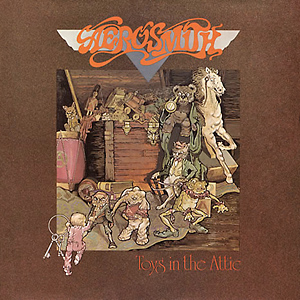
Aerosmith 3: Toys In The Attic

The third time was and is a charm for a lot of bands, and on Toys In The Attic, Aerosmith had definitely figured it out. They had the tunes, they had the chops, and they had a producer who got them, all of which backed up their attitude.

The title track predicts speed metal, and even though there’s only one verse, one pre-chorus, and one chorus, each repeated twice and split up with a one-chord jam that serves as a middle eight, that’s all it needs. “Uncle Salty” is an early piece of social commentary, fifteen years before another song about Janie and a gun, that gets more heartbreaking with every listen. “Adam’s Apple” brings back the strut, giving Tyler’s wordplay plenty to lie on; we can probably credit him for coining the phrase “love at first bite”. But that’s nothing on “Walk This Way”, a motormouth showcase with an unstoppable riff and funky backbeat. In case you didn’t get the humor, “Big Ten Inch Record” shows their jump blues roots as well as their fascination with the Dr. Demento radio show. Even the horn section doesn’t get in the way.

It’s always good to start side two with a hook, and “Sweet Emotion” does just that with its extended intro that turns into a full-fledged riff and two-word chorus. The lyrics are as packed as anything on the album but a little obscure, while “No More No More” delivers more of it, already showing weariness at Life On The Road. It’s got an excellent build before the final chorus, and goes out on another glorious solo, and we’re not sure whose. If there’s a clunker on the album, that would be “Round And Round”, five minutes of sludge credited to Tyler and Whitford only redeemed but the one melodic deviation from the bludgeoning. All is forgiven for “You See Me Crying”, an orchestrated power ballad that comes just this close to being sappy but isn’t.

With two bona fide classics and enough deep cuts to justify the purchase, Toys In The Attic still delivers everything an Aerosmith fan could want. Even if you know the hits, they’re even better in context.

Aerosmith Toys In The Attic (1975)—4

Friday, May 2, 2025

Grateful Dead 22: One From The Vault

Back in 1975, the Grateful Dead had just finished recording their Blues For Allah album, and invited a bunch of radio people from a nearby convention to hear it as part of their promotion. Fifteen or so years later, the existence of a superior recording (as broadcast on the radio soon after) coupled with the novelty of being captured in the midst of their lengthy break from touring made it a good choice to kick off their latest archival series, on their own label. (In solidarity with the environmental movement to eliminate longbox packaging for CDs, the album came in the new digipack style, which made it easy to display on store racks, and prone to scuffs and tearing at home.)

One From The Vault presents the complete show, the band kicking in while Bill Graham is doing his introduction, with the first set (and disc) concentrating mostly on side one of the album, melding in “It Must Have Been The Roses” and “Eyes Of The World”, which incorporates a “Drums” detour. The second set starts with a slowed-down “Around And Around”, closing the first disc as the rest of the show filled the second disc to capacity. Following “Sugaree” and “Big River”, it’s on to side two of Blues For Allah, with another “Drums” detour, “The Other One”, “Goin’ Down The Road Feelin’ Bad”, and “U.S. Blues” before ending with a 20-minute exploration of the title suite, complete with miked crickets, for the only time ever. It’s a good gig musically as well as historically. (Only one other show from this era has officially surfaced, albeit in a limited 80-CD box set: a free concert in conjunction with Jefferson Starship; see below.)

The album was followed into stores a week later by an all-star tribute album distributed by Arista, who were probably wondering when they’d get another Dead album themselves. Deadicated was designed to benefit rainforest and indigenous peoples causes, and featured mostly faithful covers by the likes of Elvis Costello, Cowboy Junkies, Warren Zevon, Indigo Girls, Los Lobos, Dr. John, and new sideman Bruce Hornsby. A few Georgia Satellites and Heartbreakers gang up as the Harshed Mellows to stomp through “U.S. Blues”, and Suzanne Vega manages to create a medley of “China Doll” and “Cassidy”. Dwight Yoakam and Lyle Lovett mildly countrify “Truckin’” and “Friend Of The Devil” respectively; Burning Spear takes “Estimated Prophet” even further into reggae; Midnight Oil matches the mystery of “Wharf Rat”; and Jane’s Addiction makes “Ripple” fairly goofy. All in all, the matchups work and the album flows.

Grateful Dead One From The Vault (1991)—3
     Archival release of same vintage:
     • 30 Trips Around The Sun: The Definitive Live Story 1965-1995 (2015)
     • Blues For Allah: 50th Anniversary Deluxe Edition (2025)
Deadicated: A Tribute To The Grateful Dead (1991)—3½

Tuesday, August 27, 2024

Chris Squire: Fish Out Of Water

Released only weeks after Steve Howe’s solo debut, Chris Squire’s own effort got somewhat lost in the shuffle. Part of the problem was the cover art, which resembled that of the first John Entwistle album. But like Howe’s album, Fish Out Of Water relied on contributions from former cohorts, yet was intended to stand on its own.

His bass was always a key part of Yes compositions, so one needn’t be concerned that the album would be overly dominated by the instrument. Also, his vocal support was also very much part of the band’s brand, so he sounds that much more familiar. Along with Bill Bruford and Patrick Moraz, his main collaborator on the album was one Andrew Pryce Jackman, a pre-Yes bandmate who’d gone on to a career in arranging and conducting. Being recorded when it was, each side is something of a suite, and flows accordingly.

The pipe organ from London’s St. Paul’s Cathedral drives much of the busy “Hold Out Your Hand” along with the bass. An orchestra comes in at the end for a sharp segue into “You By My Side”, a near power ballad for piano with a gravitas similar to that of Zappa’s “Strictly Genteel” until the flute comes in. His vocal blend is nicely constructed too. Another pastoral passage opens “Silently Falling”, with a wandering flute distracting from the verse until the drums come in. A fairly straight section gets more complicated meter-wise to set up a Moraz organ solo that builds to a frenzy before spiraling to stop. A moment of silence allows the piano and voice to come back in, slowly joined by drums and even a couple of stabs of guitar. At its core, it’s a simple motif, but moving.

A funky electric piano appeals to Bruford’s jazz tendencies for “Lucky Seven”, while Mel Collins (also formerly of King Crimson) gets to add saxophones to the groove, and yes, there’s plenty of bass. After the jam peters out, we have another pastoral passage for “Safe (Canon Song)” to grow on over fifteen minutes. Portions of this a very reminiscent of other Yes epics, in the melodies and syncopated pianos, but the orchestra dominates. It’s another track that spirals into a wall of sound as different instruments navigate the odd time signature. But like the best prog, it all comes together rather than sounding like a mess. After the final chord fades, the subdued bass solo provides a coda that somehow matches the pipe organ when we started.

For all its popularity among fans, Fish Out Of Water was ignored for much of the digital era. Unlike Steve Howe’s albums, it was not included in 1994’s Yes catalog revamp, only appearing a decade later on the Wounded Bird label (a home for similar castoffs), followed shortly by an expansion that included one bonus track plus DVD content. In time for what would have been his 70th birthday, it got a new mix by King Crimson’s Jakko Jakszyk, which was issued alongside a remaster of the original mix, plus bonus tracks in the form of single versions of two songs, and both sides of 1981’s “Run With The Fox” Xmas single with Alan White. (A limited edition added DVDs with the expected 5.1 mix and previously released content, plus vinyl versions of the album and singles.)

Chris Squire Fish Out Of Water (1975)—3
2018 Deluxe Edition: same as 1975, plus 9 extra tracks

Friday, August 23, 2024

Steve Howe 1: Beginnings

With the idea that everyone in Yes was teeming with ideas that strained the limits of vinyl, the band went on a brief hiatus so everyone could do a solo album. First out of the gate was Steve Howe, whose Beginnings got a visual boost with a Roger Dean album cover, and utilized longtime band engineer Eddy Offord along with a few ringers like Alan White to handle the handful of instruments he didn’t play himself. Unfortunately, he also insisted on singing.

After some chatter from (presumably) one of his children, lots of strummed acoustics propel “Doors Of Sleep” into place, with a poem by an English suffragist poet sung where the solo should have stayed without competition. “Australia” is even more intricate, and awfully overwrought for what seem to be impressions of touring that continent. After a near-jazz intro, “The Nature Of The Sea” follows some intriguing dynamics, and best of all, it’s all instrumental, supported by members of Gryphon, who’d opened for Yes on recent tours. But for its trilling intro section and vocal sections designed for Jon Anderson, “Lost Symphony” should have stayed that way, drenched as it is in honking saxophones.

The title track is based on a classical guitar piece, given a very twee, faux-baroque arrangement by Patrick Moraz. It would be very nice to hear unadorned. Speaking of faux, “Will O’ The Wisp” has a brief backwards intro nod to “Roundabout” in its own, and some very challenging meters, so there’s potential, but he hits about every sixth note he tries to sing. “Ram” is fun, a snappy pickin’ piece that’s a cousin of “Clap”, overlaid with slide guitar, banjo, and washboard for even more hokiness. “Pleasure Stole The Night” is mildly medieval, but “Break Away From It All” sounds the most like Yes, with harmonies, choogling bass, and particularly Bill Bruford on drums.

As his guitar arguably had a lot to do with the band’s appeal, that should be enough for most fans to give the album the benefit of the doubt. But they’d also likely think Beginnings would have better benefitted from another singer. Apparently pitch wasn’t the concern of anyone involved.

Steve Howe Beginnings (1975)—2

Friday, April 26, 2024

Yes 9: Yesterdays

By now Yes were ready for a break, and who could blame them. While the key members worked on the requisite solo projects, the label bided their time with a compilation. Yesterdays didn’t have to stretch too much for a title, as it was built around tracks mostly from the era of their first two albums, a.k.a. the ones before Steve Howe. The big draw—outside the Roger Dean artwork, and we could do without the kid taking a leak on the back—were the non-album tracks making their first appearance on a Yes LP, and which bookend this one.

“America”, here in its full ten-minute splendor, is a molecular reconstruction of the Simon & Garfunkel album track, incorporating motifs from the unrelated song of the same title from West Side Story (clearly an influence on the band from the beginning). This is the only track here with Howe and Rick Wakeman, who are revved up and restrained, respectively. Of their epics, it’s not their best, but it’s still a good setup for “Looking Around” from the debut, which is itself followed nicely by “Time And A Word”. “Sweet Dreams” interestingly sits in the same side-ending slot as it did on the second album. Unfortunately, side two drags a bit, although “Then”, “Survival”, and “Astral Traveller” are undeniable harbingers of their later developed sound. The orchestrated “Dear Father” was the B-side of “Sweet Dreams” and a good place for it, as the religious hand-wringing doesn’t really suit them.

Yesterdays is redundant in the CD era, as the first two albums have never gone out of print, and the rarities have become standard bonus tracks. But it arguably chose the best tracks to satiate those waiting for the next big statement—or spur new initiates to fill in their racks—while sending some cash Peter Banks’ way.

Yes Yesterdays (1975)—2½

Friday, April 15, 2022

Queen 4: A Night At The Opera

This is approximately where the legend of Queen really begins. Calling the album A Night At The Opera hints at the bombast contained within. Throughout, they deliver.

Furious classical piano arpeggios compete with sinister guitar effects before a tempo change and a sudden choral hit announces “Death On Two Legs”. Subtitled “Dedicated To…”, it’s a nasty riposte to a former manager that’s directly deflated by the Rudy Vallee crooning of “Lazing On A Sunday Afternoon”, playing right into Freddie’s camp. While brief, it leaves room for Brian May’s guitar solo, which sports his signature sound. Roger Taylor again provides unintentional comic relief, this time with the unfortunately sincere “I’m In Love With My Car”. Despite having been used humorously in the closing credits of countless TV shows and films, “You’re My Best Friend” remains a sweet tribute, and above all, catchy as all get-out. (Plus, John Deacon gets his share of the lucrative royalties.) The misleading folkie strum of “‘39” belies the lyrics, which are right out of science fiction; much more typical of the band is the cock rock of “Sweet Lady”. Lest anything the earlier vaudeville tease was just that, “Seaside Rendezvous” is even more produced and even sillier.

They haven’t completely left their prog influences behind, as demonstrated by the content and construction of “The Prophet’s Song”. While impressive, the indulgence of the intricate and echoed a cappella midsection is tempered by their resisting to name it, as Rush and other contemporaries would have done. The harp-like guitar effects at the close of the song nicely meld with the opening of “Love Of My Life”, a gorgeous ballad that also shows off Freddie’s piano prowess. Vaudeville returns yet again, this time courtesy of Brian, for “Good Company”. Though not brief, it’s a stark contrast to what comes next. Even before Wayne’s World wore out its fifteen minutes, “Bohemian Rhapsody” was always worth the listen, and it remains one of the most impressively intricate songs of its time. (Its use of the stereo spectrum is particularly expert.) What could possibly follow that? A Queen-style arrangement of “God Save The Queen”, of course.

Anyone who buys A Night At The Opera on the basis of “Bohemian Rhapsody” or even “You’re My Best Friend” will not be disappointed, particularly since there’s more to the album than those. It’s an excellent gateway to the band. (Two remixes were added to 1991’s expanded reissue; these were ignored for the version twenty years later, which instead offered the contemporary re-recording of “Keep Yourself Alive”, later live versions of “Love Of My Life” (from Live Killers) and “’39”, and new isolated mixes of “You’re My Best Friend”, “I’m In Love With My Car”, and the “operatic” middle section of “Bohemian Rhapsody” to highlight the vocals.)

Queen A Night At The Opera (1975)—3½
1991 Hollywood reissue: same as 1975, plus 2 extra tracks
2011 remaster: same as 1975, plus 6 extra tracks

Tuesday, November 3, 2020

Kinks 20: Schoolboys In Disgrace

Well, at least this one rocks, finally, but Ray Davies still seemed pathologically bent towards concepts. The point of Schoolboys In Disgrace would be that the education system serves only to repress creativity and browbeat the poor little kiddies into kowtowing to authority. And maybe, that’s how ordinary juvenile delinquents turn into full-fledged villains like Mr. Flash, or so the note on the back cover suggests. (The band even dressed the part, in hideous green uniforms that would be bettered by Angus Young, and Ray donning a mask for the headmaster that was equal parts Gabriel-era Genesis and one of Gerald Scarfe’s puppets for The Wall, still four years away.)

Often the album leans on ‘50s parody, reflecting the band’s own ages and the wave of greasy nostalgia sweeping pop culture at the time. “Schooldays” finds Ray looking back wistfully yet again to his younger days, even missing the teachers and textbooks he hated. “Jack The Idiot Dunce” pits a portrait of an object of ridicule living in ignorant bliss against a Jerry Lee Lewis piano. The lengthy “Education” chronicles the journey from primitive man’s quest for basic knowledge to the oversaturated curricula of today’s competitive schools. Unfortunately, it has too many stops and starts, as befits a big production number. The over-the-top basso voice that begins “The First Time We Fall In Love” defies the listener to take it serious, despite its barbed commentary on the pain of young romance.

“I’m In Disgrace” takes a much more specific approach to the same theme, and it’s a much better song, though some of the lyrics suggest a sinister cause for the end of the affair (“It wasn't lust, it wasn't rape/It was just a mistake”). Great guitars though. Whatever shame the disgraced schoolboy feels is confessed to the “Headmaster”, and the anguish only increases as the pleading gets more desperate. The unfeeling response in “The Hard Way” rams the point home. After three straight tracks of solid rock, the gospel R&B of “The Last Assembly” points to such future graduation themes as “It’s So Hard To Say Goodbye To Yesterday” and “Good Riddance”. “No More Looking Back” could well be a prophetic title, as the electric piano at the start and the melded guitars certainly place it squarely in the ‘70s. But the parody returns for the minute-long “Finale”, which reprises the brainwashing message of “Education”.

Thanks to the guitar-centric arrangements, Schoolboys In Disgrace is one of the better Kinks albums of their “theatrical” period, but only if you don’t listen too closely to the story and skip the sillier numbers. Dave Davies can take some of the credit for the sound, which is small compensation since some of the events dramatized within are based on his own teenage misadventures. (Perhaps because they were working so fast to get records on the shelves, and thus lacked outtakes, it’s also that rare Kinks album that hasn’t been enhanced by any reissue.)

The Kinks Schoolboys In Disgrace (1975)—2½

Tuesday, September 1, 2020

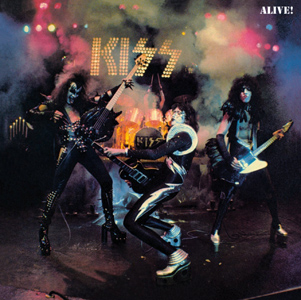
Kiss 4: Alive!

We’ve already alluded to the Casablanca label’s skill at losing money; suffice it to say that the next Kiss album came directly out of an economic strategy. A live album was supposed to be cheaper to record than a studio album, and while the spectacle, pyrotechnics, and other hallmarks of a Kiss concert could only be imagined while listening to a record, Alive! managed to convey all the excitement of actually being there.

Part of the Kiss branding was to deliver the songs onstage exactly as they were pressed onto vinyl, so there’s very little derivation from the gospel on these four sides. “Firehouse” doe gains an annoying siren over the end of the tune and “100,000 Years” is stretched to twelve minutes for a drum solo and several minutes of Paul exhorting and cajoling the crowd, but all the songs were familiar to fans from the three albums they already owned, and nobody complained. (Except Ace Frehley, whose desire to stretch his solos was indulged only on “She”.)

Only after years of rumor did Paul Stanley and Gene Simmons finally admit that while the songs on the album were indeed recorded in concert, much overdubbing afterwards covered all kinds of bugs common to live recording, such as missed notes, microphone placement, and the like. Even the crowd noise was enhanced in places. Besides, Paul’s intros and interjections, which scale the dizzying heights of unintentional hilarity, must be heard to be appreciated, whether in or out of context. (Fifty years later, two of the concerts were released without enhancements as part of a Super Deluxe Edition of Dressed To Kill.)

None of this takes away from the whole, which is that Alive! is still a classic live album, and one of the seminal examples of its era. The packaging is devoted to the cult of the fan, from the kids posing with the homemade banner on the back cover to the handwritten messages in the gatefold (opposite photos of the other fine Kiss albums for your collection). A deluxe eight-page color booklet only underscored just how awesome they were. This was not reproduced in future CD editions, unfortunately, which also continued to offer the program on two discs, despite being short enough to fit on just one. That didn’t happen until the fiftieth anniversary of the album, when—only weeks after that massive expansion of Dressed To Kill—a super deluxe edition packaged it with two other shows used to compile the album on two discs, plus a fourth with rehearsals and excerpts from a third, all of which presented the songs as performed, without overdubs. (A Blu-ray contained the original album in four hi-res mixes.)

Kiss Alive! (1975)—4
2025 50th Anniversary Super Deluxe Edition: same as 1975, plus 40 extra tracks (and Blu-ray)

Friday, July 24, 2020

Kinks 19: A Soap Opera

After several attempts and a handful of concepts, Ray Davies was still somewhat obsessed, shall we say, with meshing his high ideas with the television platform. A Soap Opera is an adaptation of a musical teleplay that actually aired called Starmaker, which presented something of a Twilight Zone-style tale of An Important Rock Star (played by Ray, naturally) who swaps places with an everyman named Norman under the intent of research for his next smash album. This entails sleeping with the man’s wife and going to work at his mundane job. He soon tires of the charade and tries to return to his old lifestyle, but it turns out he’s actually become Norman! Or has he? Does anyone really know? Does it even matter?

The vocals are delivered consistently mockingly by Ray, with overly parodic rock arrangements and intentionally trite strings. Dialogue punctuates each song, including input from the befuddled wife; the listener is forced to read along with the libretto to catch all the extra minutiae. The opening “Everybody’s A Star (Starmaker)” turns the sentiment of “Celluloid Heroes” inside out, and it’s not bad as a single, but then the plot takes over. Frankly, his view of “Ordinary People” who suffer from the “Rush Hour Blues” because they have to work “Nine To Five” is truly condescending, mostly because we don’t think he’s being ironic. It’s no shock that these people go straight to the bar “When Work Is Over”, where the only respite is to “Have Another Drink”; after all, that activity had been one of Ray’s more common themes for several albums going.

“Underneath The Neon Sign” opens side two, and it’s a track that could possibly stand alone outside the story line, though the arrangement could use a lot more delicacy to deliver the emotion. That’s also the problem with “Holiday Romance”, a faux-cabaret detour shoehorned into the plot to act as an escapist daydream. There’s a nice chorus in “You Make It All Worthwhile”, but the rest of the track is derailed by excess pathos and a radio-drama organ (no, really). “Ducks On The Wall” further illustrates the protagonist’s frustration by lashing out at the avian décor, made even more maddening by actual quacking impressions throughout. “(A) Face In The Crowd”, despite the unnecessary parenthetical article, is another existential crisis that might work on its own. Then “You Can’t Stop The Music” moots all that went before, acknowledging “the rock stars of the past” who have since faded to obscurity, but for the immortality of the music they created.

With the exception of an occasional Dave Davies riff, the Kinks are used as sidemen, and the music is cartoonish. A few of the tracks segue well to keep the story moving, but it’s not easy to care about any of these people. All together there are four tracks on this album—the first tracks on each side and the last two numbers—that would work without being shackled to a concept, and that’s not enough. The eventual reissue added a single mix of “Everybody’s A Star”, plus three live performances from the highly staged tour that followed; the band was tight, as were the actors. Ultimately, A Soap Opera is just as trivial as the television genre it apes.

The Kinks A Soap Opera (1975)—2
1998 Konk CD reissue: same as 1975, plus 4 extra tracks

Tuesday, June 23, 2020

Neil Young 60: Homegrown

While some unreleased albums gain notoriety via blurry traded copies, Neil Young is the king of unreleased albums shelved so well that they’ve never been bootlegged. Homegrown was his first legendary secret, scheduled for release in 1975 only to be replaced from the back burner by Tonight’s The Night. Save the handful of tracks that emerged elsewhere, it had never been heard outside his closest circle for 45 long years. With all the delays inherent to his Archives project, the promise that it would be finally released in 2020 seemed almost too good to be true. (Even the COVID-19 pandemic got in the way, pushing its release back a few months while fans sheltered impatiently in place.)

The biggest mystery about the album was this: seeing as Tonight’s The Night was such a dark album, just how much darker was Homegrown, even if Neil said it was a sequel of sorts to Harvest? The answer lies in his biography. Tonight’s The Night eulogized dead friends, while Homegrown eulogizes a dead relationship, with the body still warm and the legacy ongoing in the child Neil and girlfriend Carrie Snodgress shared. It was mostly written and recorded in the aftermath of CSNY’s massive 1974 reunion tour, and yet another aborted album by that crew. Neil was incredibly prolific in this period, the songs coming faster than he could record them, much less release them. His voice throughout Homegrown is weary, and Tim Drummond’s solid but wavering bass reflects the mood wherever he plays.

The first few songs do mirror the Harvest sequence. “Separate Ways” begins already in progress, a lazy lope a la “Out On The Weekend”, but even slower and much more infused with despair than simple melancholy. Having only been heard on bootlegs with the likes of Booker T & the MG’s, it’s great to finally have it in the official canon. “Try” is only slightly jauntier in tempo, with a tack piano and Emmylou Harris, and notoriously uses a phrase attributed to the woman screaming in the rain in “Harvest”. In the “Man Needs A Maid” slot is “Mexico”, a solo piano and voice vignette derived from Joni Mitchell’s prettier moments. “Love Is A Rose” was previously a pleasant trifle on Decade; here the same take, with its bum harmonica note, proves its true home. While not as raucous as the eventual Crazy Horse version, the title track revs slowly up to speed in the spirit of “Are You Ready For The Country?” And then the album goes completely off the rails. “Florida” is a recitation of a surreal dream while he and Ben Keith scrape piano strings and rub wine glass rims at an excruciating pitch. (If it sounds at all familiar, that would be due to the packaging of Tonight’s The Night, where the words were transposed over a replica of the liner notes from On The Beach.) “Kansas” isn’t as surreal, but acknowledges the waking “from a bad dream” over exploratory acoustic strumming. (That the melody sounds a bit like the Hitchhiker version of “Powderfinger” is probably insignificant.)

On the basis of the contents, “We Don’t Smoke It No More” wouldn’t stand up in a court of law, being little more than a slow Jimmy Reed blues with the barest of lyrics but cool lead guitar fighting with harmonica. Perhaps the most surprising departure is “White Line”. Even though its acoustic arrangement was revealed on Songs For Judy, this understated take (recorded at the Who’s studio, by the way, with only Robbie Robertson adding acoustic noodling) seems galaxies away from the loud Crazy Horse rendition that would be taken as standard fifteen years later. Frankly, it’s gorgeous. It nicely sets up the brilliant “Vacancy”, an edgy electric stomp like “World On A String” crossed with “Revolution Blues”, with sometime Band member Stan Szelest working the Wurlitzer electric piano. (Levon Helm is on the album as well.) “Little Wing” cleanses the palate just as it mysteriously opened Hawks & Doves, and an allegedly alternate mix of “Star Of Bethlehem” brings the program to a quiet close.

The benefit of history makes Homegrown as good as it sounds today. Despite being recorded in Nashville and on his ranch with some of the same players, it’s ragged where Harvest was smooth. Its haphazard flow is right in line with the mind of the man who directed Journey Through The Past only a couple of years before. Had it been released as originally planned, it likely would have confused and angered many, only to be debated for decades. It is the natural follow-up to On The Beach, and should be celebrated.

Neil Young Homegrown (2020)—4

Tuesday, June 16, 2020

Grateful Dead 13: Blues For Allah

For too many reasons to document here, the Dead had taken an extended break from live performance—as a unit, anyway. But with their own record label and distribution, they used the studio to experiment, ably blending songs with exploration on Blues For Allah. (Mickey Hart was also back in the fold, having left a few years earlier after his dad ran off with a pile of the band’s money.)

“Help On The Way” exudes a certain mysticism in the guitars and electric piano, going into the intricate jam of “Slipknot!” Before you know it, they’ve found their way to “Franklin’s Tower”, a two-chord slow boogie best known for its “roll away the dew” chorus. “King Solomon’s Marbles” is a two-part instrumental with dizzying time changes; the “Stronger Than Dirt” portion gets its title from the same rhythmic suggestion of the Doors’ “Touch Me”, while “Milkin’ The Turkey” would suggest a bluegrass influence that isn’t there. “The Music Never Stopped” would be a middling Bob Weir trifle, except that it once again features Donna Godchaux prominently, sinking it for these ears.

Side two is even more esoteric. “Crazy Fingers” has a reggae lilt, and plenty of organ, destined to become a live favorite over the last decade of the band’s run. Weir redeems himself with the lovely Bach-flavored instrumental “Sage & Spirit”, featuring a roadie from Quicksilver Messenger Service on flute. Finally, the lengthy title suite is taxing at first, working very hard to evoke the spirit of Egypt. There’s a moment near the end of the opening section where Donna’s counterpoint sounds like the middle of “Brown Shoes Don’t Make It” (the “world of secret hungers” part) but eventually it coalesces, crickets poking through the desert winds (really). A melody develops out of all this, and “into eternity” is chanted with Donna wailing past the point of welcome.

While it’s not usually our thing, Blues For Allah is a successful experiment, breaking barriers as well as new ground for the band. But it still sounds like the Dead, and even without an audience for ambience and feedback, they found a way to create. The expanded version of the album is of interest in that context, adding a bunch of instrumental jams recorded few months before the sessions proper, plus “Hollywood Cantata”, a Robert Hunter lyric for a song that would evolve into “The Music Never Stopped”. These were not included on the 50th Anniversary Deluxe Edition, which added two discs: one had the soundcheck for the concert eventually released as One From The Vault (including two run-throughs of the suite culminating in “Franklin’s Tower”) plus their set from Bill Graham’s SNACK benefit show, and the other consisting of selections from two June 1976 shows in Philadelphia. (A Blu-ray sold exclusively at the band’s site offered the album in four mixes prepared by Steven Wilson: hi-res stereo, instrumental, 5.1 surround, and Atmos. Also, as had become customary, there was a supplemental digital release in Blues For Allah: The Angel’s Share, which offered about 90 minutes’ worth of instrumental “rehearsals”.)

Grateful Dead Blues For Allah (1975)—3
2006 expanded CD: same as 1975, plus 6 extra tracks
2025 50th Anniversary Deluxe Edition: same as 1975, plus 22 extra tracks

Friday, June 12, 2020

Robert Hunter 2: Tiger Rose

Only a year after his first solo album, Robert Hunter had amassed enough lyrics and music for another. Maybe guessing he needed the help, Jerry Garcia took a more active role on Tiger Rose, not just contributing guitar, vocals, and synth, but producing the album. Expatriate Mickey Hart provided the studio and added percussion (as well as drums under a pseudonym); other familiar names included David Grisman, Dave Torbert, Donna Godchaux, Pete Sears, and David Freiberg, the latter two most recently associated with Jefferson Starship. Yet the auteur still did all the singing, for better but mostly worse.

The title track has something of a traditional bayou feel, while “One Thing To Try” packs on the platitudes for a more contemporary sound. “Rose Of Sharon” is very sweet, and we’re surprised that this one hasn’t been covered more; indeed, none of the songs here made it into any Dead set. He yells his way through the shaggy Western saga in “Wild Bill”, and manages to keep up with all the disparate parts of “Dance A Hole”. One of those parts recalls the sea chanteys of his first album, as does “Cruel White Water” with its imagery and metaphors. “Over The Hills” is pleasant adult contemporary pop about the power of music, but “Last Flash Of Rock And Roll” fails at the same effort. “Yellow Moon” is just him strumming and singing with Jerry playing along, so it’s a nice break. Mickey provided the music for “Ariel”, bringing the set to a stately close. (This is another one that could have soared onstage.)

While some of the arrangements are a little dated, the production thin, and the vocalist subpar, Tiger Rose is still a worthy chapter in the Grateful Dead saga. The songs deserved better. Even Hunter himself knew his vocals weren’t his strong suit, so when the album was reissued by Rykodisc in 1989, he took the opportunity to redo them, as well as shuffle the tracklist. Decades later, the album was expanded for its 50th anniversary, using the original sequence and vocals, and adding a bonus disc of alternates.

Robert Hunter Tiger Rose (1975)—2½
2025 Deluxe Edition: same as 1975, plus 9 extra tracks

Tuesday, June 9, 2020

Jerry Garcia 4: Old & In The Way

All the way back in 1973, mere months after jamming with the Merl Saunders Band, Jerry swapped his electric guitar for his trusty old banjo and hooked up with some friends to play pure bluegrass music. Dubbed Old & In The Way after one of the tunes in their repertoire, selections from a live set recorded that October were eventually released on the Grateful Dead’s Round Records subsidiary. It’s remained (mostly) in print ever since, and as a result, Old & In The Way probably did more to expose a new generation to bluegrass than any other album released during the last quadrant of the 20th century.

Of course, these just weren’t your average friends out for a strum. Longtime sideman John Kahn plucks the upright bass, David Grisman is on mandolin, and Peter Rowan handles the guitar and most of the lead singing, as well as writing most of the songs that weren’t already standards. In a move akin to getting Roy Orbison into the Traveling Wilburys, the fiddle is handled by the legendary Vassar Clements. (They have a lot of fun blowing through his “Kissimee Kid”.)

If you’re looking for Dead music, or even anything like Garcia’s other solo projects, you’ll be disappointed, particularly as none of the songs found their way into Dead sets. Instead, this is just damn fun bluegrass. “Midnight Moonlight” and “Panama Red”—both by Rowan—are possibly the best-known songs from the set, with the possible exception of “Wild Horses”, the Stones song taken even further into the woods than the Flying Burrito Brothers had.

While the band wasn’t around for very long, the archives have been kind to those looking for more of the same. A year after Jerry’s death, David Grisman’s Acoustic Disc label issued That High Lonesome Sound, containing further songs from the same night Old & In The Way was recorded, including a wonderful arrangement of “The Great Pretender”, along with songs from a set at the same location the week before. This was followed a year later by Breakdown, presenting a further assortment of tunes, most of which were alternate takes to the songs already on the other two. (Both sets from the October 8 show were released as Live At The Boarding House in 2008; five years later this set was expanded to include both sets from the week before.)

Old & In The Way Old & In The Way (1975)—4
Old & In The Way
That High Lonesome Sound (1996)—3½
Old & In The Way
Breakdown (1997)—3

Tuesday, May 19, 2020

Kiss 3: Dressed To Kill

Casablanca insisted they needed new product to keep sales up and running, so the third Kiss album—their third in this space of little over a year—was recorded quickly with label head Neil Bogart producing. That may have been the smartest move right there, since Dressed To Kill immediately sounds better than the massively muddy Hotter Than Hell. Cool cover, too.

But what about the tunes? They rock, of course. “Room Service” demonstrates Paul Stanley’s skill at stretching a metaphor well past its context. We get that life on the road is tough, and what better way to liven up yet another hotel room with something from the menu, but shouldn’t it be called something else when you’re at the airport or back in your home town? Gene Simmons takes over for the next two, first ragging on a “Two Timer”, then looking for solace with the “Ladies In Waiting”. Ace Frehley wasn’t ready to sing his own songs yet, which is how Peter Criss got to sing “Getaway”, which never once uses the noun form of the expression as stated in the title. If there’s anything that could be considered adventurous, the intricate acoustic intro to “Rock Bottom” would be it, especially since it has absolutely nothing to do with the song proper.

“C’mon And Love Me” sports a laugh-out-loud opening couplet, and a turn of phrase in the second verse that shows how fast they wrote the album, whereas “Anything For My Baby” updates classic ‘60s songwriting to their own template. “She” sports yet another killer riff, and piles on the imagery (“She walks by moonlight… enchanted starlight”) before deflating it (“she takes off her clothes”). There hasn’t been enough cowbell on the album yet, so “Love Her All I Can” serves it up. (Or maybe it’s supposed to sound like a drumstick on an aluminum can?) Allegedly, “Rock And Roll All Nite” was written to order at the last minute, and to their credit, they came up with a winner. If Kiss never did anything past this song, they’d still be remembered for it.

Smart boys do what they’re told, and Dressed To Kill fit the label brief perfectly. Here was another half hour of rockin’ songs for kids to blare in their bedrooms and cars, made to be replicated onstage. And that’s just what they did.

For the album’s fiftieth anniversary, a “super deluxe edition” was compiled for sale via the band’s website. The album still took up thirty minutes on one CD, but another disc was loaded with demos, alternate takes, and instrumental mixes, and three more discs featured two of the original concerts mined for the Alive! album, presented in a fresh Eddie Kramer mix with no overdubs. A Blu-ray disc included the original album in hi-res, surround, and Atmos mixes, plus a couple promo videos.

Kiss Dressed To Kill (1975)—3
2025 50th Anniversary Super Deluxe Edition: same as 1975, plus 55 extra tracks (and Blu-ray)

Friday, March 13, 2020

Elton John 13: Rock Of The Westies

Having felt something of a rut setting in, Elton John fired his longtime rhythm section, replacing them with players from the early days and a couple of Americans found along the way. The sound was bigger but still Elton, as demonstrated on his next album, once again recorded at Caribou in Colorado. Rock Of The Westies is an odd little album, full of strange song titles but plenty of commercial sheen.

The opening “Medley (Yell Help – Wednesday Night – Ugly)” finds him harmonizing with himself over James Newton Howard’s funky clavinet (part of Elton’s new band strategy being that he’d stick to piano). The funk continues on “Dan Dare (Pilot Of The Future)”, which namechecks a sci-fi hero of British comic books amid other garbled lyrics; amazingly, the closing vocal chorale sounds just like Queen. “Island Girl” is the latest attempt to immortalize a woman from an exotic place, musically very interesting given the unconventional bass line. It was the album’s only hit single, unlike “Grow Some Funk Of Your Own”, something of a take on “Gimme Three Steps” and not entirely convincing, or “I Feel Like A Bullet (In The Gun Of Robert Ford)”, which takes Bernie Taupin’s cowboy fixation to the extreme, in an arrangement already perfected in the arrangements on the last album.

The howling guitar and riff at the top of “Street Kids” recalls Bad Company until the congas kick in, and the tricky meter manages to keep it interesting. However, “Hard Luck Story” is fairly pedestrian, with a chorus that sounds flown in from a completely different song than the verses. “Feed Me” is all yacht-rock swagger; these days we want to add “Seymour” to every time he croons the title. But nothing prepares the listener for the bombastic arrangement of “Billy Bones And The White Bird”, which in no way suggests the “ancient mariner” tale hidden in the lyrics. “Check it out,” indeed.

Rock Of The Westies isn’t bad, and not strange enough to be a failed departure. It came out a mere five months after its predecessor, and as a whole suggests that maybe a little more time than that was needed. (The eventual expanded CD included two extras from the album sessions: a low-key take of “Planes”, later covered by the lead singer of the Zombies, and the lovely B-side “Sugar On The Floor”, written by new protégée Kiki Dee, of whom more would be heard and soon.)

Elton John Rock Of The Westies (1975)—3
1996 CD reissue: same as 1975, plus 2 extra tracks

Friday, January 31, 2020

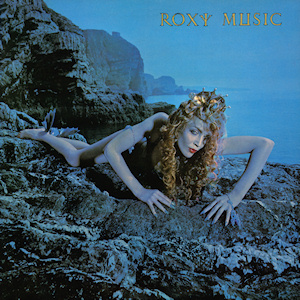
Roxy Music 5: Siren

Roxy Music was fairly established at this point, but they’d also evolved. While they still specialized in skewed takes on standard pop clichés, Siren almost approaches mainstream, but still finds the “future” tag firmly affixed. This is the album with “Love Is The Drug”, and chances are anyone who’s ever heard the band knows them for that song alone. As well they should, with its popping bass and realistic sound effects. Once again, these guys know how to kick off an album.

From there, the album touches on all styles. “End Of The Line” manages to revive the country influence of “If There Is Something” with even more hokey fiddle. “Sentimental Fool” opens with a heavily distorted guitar not unlike labelmate Robert Fripp on a recent Eno album, before laying on the sleaze. “Whirlwind” crashes in, with Phil Manzanera’s frantic strumming reminiscent of a different Eno album, before turning to a standard rocker. Wisely, that strumming reappears only once in the middle of the track and again to close the side.

“She Sells” is a cross between cabaret, funk, and the fiddling soon familiar from Kansas albums, with seemingly a different feel for each section, slowing down and speeding up. “Could It Happen To Me?” is also fairly camp, whereas “Both Ends Burning” nicely uses a bed of synth strings for a wonderfully driving single wherein all the players get to show off. “Nightingale” is another sneaky, with excellent dynamics instead of just pounding the beat into the plastic. Finally, “Just Another High” builds from a simple set of changes to a slow fade for a stately ending.

Siren was more collaborative, Byran Ferry allowing himself to work with musical ideas from Andy Mackay, Phil Manzanera, and even Eddie Jobson. It’s a solid collection of tracks, with nothing that screams to be skipped. It was also easily the band’s best work since the debut, which was too bad, because they were about to take an extended break.

Roxy Music Siren (1975)—3½

Tuesday, January 21, 2020

Rod Stewart 7: Atlantic Crossing

With Atlantic Crossing, Rod Stewart effectively said farewell to his old life as a good-time blues singer and Faces frontman, literally crossing the ocean to relocate in L.A. and sign a fat deal with Warner Bros. While commercial success would follow, his legacy would be tainted with every hit single.

The album was recorded in such hip places as Criteria Studios in Miami and Muscle Shoals, using regulars from the latter studio as well as Booker T and the MG’s. All excellent players, to be sure, but that certain something that the Faces previously brought—as well as the quality of folks like Martin Quittenton and Micky Waller—was missing. The album still combined new originals and clever covers, but was divided between a “fast half” and a “slow half”, which may have been nice depending on your mood, but also underscored the dullness of the tunes. His voice was always raspy, of course, but here it’s lost its personality somewhat.

The fast side offers a handful of self-penned rockers with nothing much to distinguish themselves, although “Alright For An Hour” does change up the beat and “Three Time Loser” finds him “jacking off, reading Playboy on a hot afternoon.” Thanks for the update, Rod. For some reason his cover of Dobie Gray’s “Drift Away” is considered fast, and does split up the side a bit, especially since the slow side is very, very slow. The late Danny Whitten gets a nicer eulogy than a certain Neil Young album via Rod’s slightly syrupy take on “I Don’t Want To Talk About It”, while the Isley Brothers’ “This Old Heart Of Mine” becomes something of an Al Green imitation, even with the MG’s. “It’s Not The Spotlight” and “Still Love You” don’t quite reach the acoustic heights of his first three albums, though “Sailing” would soon become a classic, and rightfully so.

Many years later Rhino put together a deluxe edition of Atlantic Crossing that presented an “alternate version” of the album, consisting mostly of early takes without all the embellishments, but not exactly improving anything by subtraction. Much more interesting are three outtakes with the MG’s, including an anemic take on “Return To Sender” and a very promising version of the Bee Gees’ “To Love Somebody”. Tacked onto the main program is “Skye Boat Song”, a standalone single credited to the Atlantic Crossing Drum & Pipe Band that manages to pay tribute to his homeland while leaving it behind.

Rod Stewart Atlantic Crossing (1975)—2
2009 Deluxe Edition: same as 1975, plus 15 extra tracks

Friday, November 22, 2019

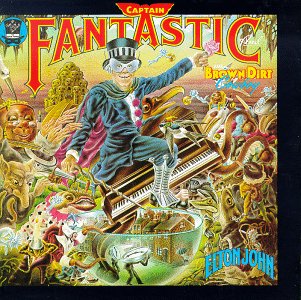
Elton John 12: Captain Fantastic

The man couldn’t stop and wouldn’t stop, and before you knew it, here was a new Elton John album. Having looked back somewhat with the hits album, for their next multiplatinum move Elton and Bernie concocted a concept album intended to evoke their early pre-fame years as struggling songwriters and performers. Captain Fantastic And The Brown Dirt Cowboy even came in another elaborate package with a poster, two booklets of photos and such, and even lyrics to a song that wasn’t on the album because they never finished it.

The title track begins with sounds that recall their Western fantasies of only a few years before, but beyond that brief beginning, the music is mostly contemporary, and not at all evocative of the period when these events were supposedly taking place, no matter what the lyrics convey. Which is fine, of course, and likely helped the album’s sales, but dates the album today. “Tower Of Babel” and “Bitter Fingers” follow the same template—a moody opening referring to snowy pavements and struggles, then a more straightforward backing from the band (most of whom would be sacked before the tour). “Tell Me When The Whistle Blows” is pure Philly soul, with some particularly tasty Davey Johnstone guitar, but it’s a welcome left turn to the classically epic “Someone Saved My Life Tonight”, on some days our absolute favorite Elton John song. At nearly seven minutes, this opus of thanks for being talked out of a doomed marriage was an odd choice for AM radio, but boy, did it sound good.

“(Gotta Get A) Meal Ticket” blasts off side two with a killer riff and more Philly soul, but suddenly we’re in Gilbert & Sullivan territory for the jumpy “Better Off Dead”, and “Writing” is pure yacht rock. Luckily, Elton remembered his better albums and was sure to build up to a big satisfying finale. “We All Fall In Love Sometimes” is mournful for most of it, again sounding mildly derivatively classical. The bridge is in a major key, then the verse reverts to the minor before finding its way back to major key for the resolution. Then without warning, “Curtains” takes over. Slow archetypal Elton chords are decorated by his double-tracked vocal while the band peeks in here and there. There are only two verses, each ending with a simple “oh-oh-oh” motif. On the second, the band finally kicks in completely, right on time for a surprising couplet, surprising in that it is not only directed at the audience, but is delivered in the first person plural, Bernie and Elton together: “And just like us, you must have had a once upon a time.” The “oh-oh-oh” is joined by additional wordless harmonies and parts, somewhat reminiscent of “Don’t Let The Sun Go Down On Me”, bringing everything up to date as the credits roll.

At this point Elton had the Midas touch. Captain Fantastic And The Brown Dirt Cowboy shipped gold and was the first album ever to debut at #1 on the Billboard album charts. It still coheres well as an album, but today’s ears are beginning to detect that the gravy train might not last.

The initial expanded CD added the pertinent singles “Philadelphia Freedom” and “Lucy In The Sky With Diamonds”, along with the B-side “One Day At A Time”, a superior version of a recent Lennon solo track. For the album’s 30th anniversary, the B-side “House Of Cards” was added to these on the one disc, while a second presented the bulk of a 1975 Wembley concert where the album was played in order by his revised and expanded band, followed by “Pinball Wizard” and “Saturday Night’s Alright For Fighting”. Twenty years after that, the 50th Anniversary Edition had a different lineup for the second disc: six original session demos, and seven songs from a 2005 performance of the album.

Elton John Captain Fantastic And The Brown Dirt Cowboy (1975)—3
1995 CD reissue: same as 1975, plus 3 extra tracks
2005 30th Anniversary Deluxe Edition: same as 1995, plus 13 extra tracks
2025 50th Anniversary Edition: same as 1995, plus 14 extra tracks

Friday, June 8, 2018

Jeff Beck 6: Blow By Blow

It took him long enough, but Jeff Beck finally figured out that he could record albums without a singer. Blow By Blow was recorded with a young rhythm section and Max Middleton from the second Jeff Beck Group.

The sound is a departure from the heavy rock of earlier Beck albums, leaning more on funk and now sounding more like fusion, beginning with “You Know What I Mean”, a James Brown strut filtered through the new decade. Especially notable on an album produced by George Martin, the Beatles’ “She’s A Woman” gets a nutty approach, with a reggae groove and, to help identify the song, a few lines “sung” through a talkbox effect usually associated with Peter Frampton. It’s a sound that seems to suggest the title of the next track, “Constipated Duck”, which doesn’t sound like one. For such a great title, it’s fairly brief before fading into “Air Blower” (called “AIR Blower” on pre-CD pressings, we assume as a nod to the studio where the album was recorded), an uptempo jam that slows down dramatically towards the end, leading into the extremely jazzy “Scatterbrain”, a furious fusion with tight precision and even a sympathetic string arrangement.

Stevie Wonder dominates the start of side two, first with “Cause We’ve Ended As Lovers” played beautifully and mournfully by Beck, and the highly funky “Thelonius”, with the man himself on clavinet (and more constipated duck sounds). After Max Middleton’s “Freeway Jam”, with its catchy hook and breezy groove, it’s back to a more dramatic sound. “Diamond Dust” is a haunting piece in 5/4, the guitar, piano, and strings complementing each other on a beautiful melody. (Interestingly, the song was written by a guitarist in a band featuring most of the former members of the second Jeff Beck Group.)

It’s not easy to write about an instrumental album, particularly one where the nuances are more abstract. Still, Blow By Blow finally shows Jeff Beck thriving, successfully making his way on his own terms. Not quite jazz, certainly not rock, just Jeff Beck.

Jeff Beck Blow By Blow (1975)—3½