Showing posts with label 2001. Show all posts

Friday, December 26, 2025

Prince 25: The Rainbow Children

Once in the new century, Prince did a few things. First, he started using his name again. Then he decided to license his new albums rather than signing a longterm label deal he’d one day regret. He also got divorced, and had embarked on a relationship with the woman who’d become his next wife. But perhaps most significantly, he became a full-fledged Jehovah’s Witness.

This last detail wasn’t quite as earth-shattering as, say, Bob Dylan’s religious conversion. After all, Prince had grappled with religion and sex and whatever twain shall meet throughout his previous albums, but this shift would send him on a decidedly more puritan (for lack of a better term until we find one) path. And because he had to be him, his journey would manifest in his new music.

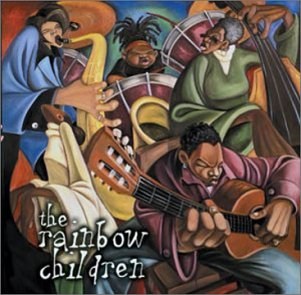
The Rainbow Children is a parable of sorts about good conquering evil, full of imagery, metaphors, questionable viewpoints, and most unfortunately, narration by a processed voice pitched even lower than that of the guy in “Bob George”. But beyond all that, the most striking aspect of the album is the music, which as a whole is unlike anything he’d previously put out under his own name or even symbol. He played everything as usual, with the exception of the drums, horns, and some backing vocals, but the music borders on jazz fusion.

The title track sets up the story with some narration—helpfully transcribed in the included lyrics—but mostly exists for a lengthy guitar exploration, which is fine with us, and modulations of the main vocal theme, which exhorts said Rainbow Children to rise, before switching to a much more subdued theme very reminiscent of late-‘60s Miles Davis. That makes a smooth transition to the just-as-smooth “Muse 2 The Pharaoh”, which begins as something of a love song, but slides over to expound on religious theories. (From here the tracks are shorter, for a while anyway.) “Digital Garden” is almost ambient jazz until he starts singing, and the narration moves the story further. That entails people going door to door a la Jehovah’s Witnesses, so “The Work Pt. 1” extols this via a James Brown workout. “Everywhere” is begun very sweetly by one of his female backup singers before escalating into a joyful number with lots of drums, then the instrumental “The Sensual Hereafter” would appear to be something of a seduction scene, which continues into the apt “Mellow”.

More narration insists that we understand “1+1+1=3” over another funky groove, with a Camille-style voice modulation in the mix. “Deconstruction” is an orchestrated segue leading into “Wedding Feast”, an incredibly silly fanfare right out of The Wizard Of Oz. (See, he still has a sense of humor.) With “She Loves Me 4 Me” we finally get a track that can easily insist outside of the narrative, even if some of the words might rankle the former Mrs. Nelson. From here the tracks get longer again, beginning with “Family Name”, which sports a different kind of computerized narration and other vocals dealing with the history of African Americans and other marginalized minorities, with a Martin Luther King sample for good measure. “The Everlasting Now” is more preaching, but it’s over yet another infectious groove, and not at all tossed-off. And since he likes to have grand finales regardless of the subject matter, “Last December” fills that purpose with a slowish groove and a gospel-tinged chorus, and a very Hendrixian break. Just for good measure, the album fades to silence before returning with an a capella reprise of the final notes.

It’s redundant to say The Rainbow Children is a very personal album for Prince, since they all are. Unfortunately, unless you’ve fully subscribed to his bag, the message can be a bit much. But musically, it’s terrific, especially if you like hearing him play guitar. If only there was a strictly instrumental mix of the album somewhere.

Prince The Rainbow Children (2001)—3

Tuesday, December 13, 2022

They Might Be Giants 11: Mink Car

They had several albums and oddities under their collective belts, and now They Might Be Giants had the cachet of having an original composition as the theme song for a major network television sitcom. However, Americans hoping to find “Boss Of Me” (as heard every week on Malcolm In The Middle) on Mink Car would have been disappointed, as the song was only available on versions overseas.

Instead, listeners got another unpredictable sequence of wildly different songs in almost as many styles, including odes to girls’ hairstyles (“Bangs”), a song about a pop-up disco that uses the music to illustrate its shortcomings (“Man, It’s So Loud In Here”), a Bacharach homage (the title track), a rewrite of a song already heard on a live album (“Another First Kiss”), a remake of a soul tune originally done by Mongo Santamaria and Georgie Fame (“Yeh Yeh”), remakes of songs from the album before (“Older” and “Edith Head”), a decent could-be hit (“Hopeless Deep Despair”), a pile of other songs we don’t have the patience to describe, and one terrific nod to their youth in the Boston suburbs (“Wicked Little Critta”).

Several producers are credited throughout Mink Car, suggesting that it was merely compiled from various sources until they had enough for two sides. While we do like the nutty side of the band, a little focus would’ve helped.

They Might Be Giants Mink Car (2001)—

Friday, July 15, 2022

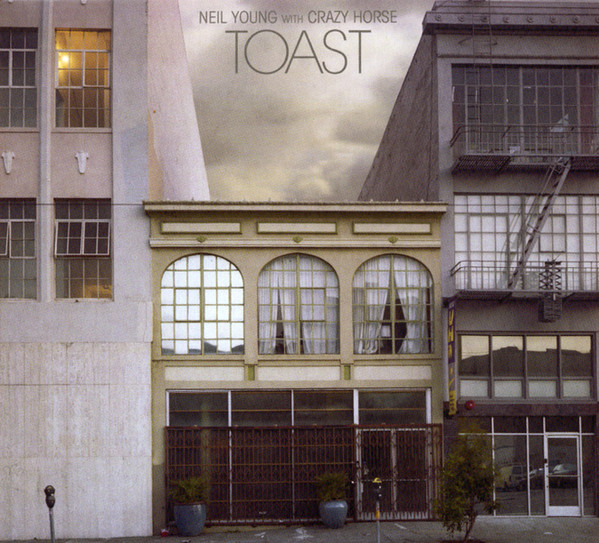
Neil Young 65: Toast

Remarkably, or maybe not, the first two “unreleased” albums Neil Young issued as part of his Archives’ Special Release Series have a similar history. Like Homegrown, Toast was started, abandoned, and then superseded by another album that didn’t directly relate to issues in his personal life. We may never know the full details of the “rough patch” that found Neil living in San Francisco while his wife and kids were back at the ranch, but apparently that experience colored the lyrics and his overall mood. At any rate, he began again with Booker T and the MG’s a few months later, and those sessions resulting in Are You Passionate? the following year.

Crazy Horse is definitely a different band than the MG’s in more ways than one, so one would think Toast (named after the studio where it was recorded) would have a more, shall we say, primitive sound. However, the earlier takes of the songs that made it to Passionate show that their soul-influenced arrangements were well in place before Booker T et al got hold of them. If anything, those tunes recall the Bluenotes, which also started as a Crazy Horse project before Neil replaced the rhythm section.

“Quit” lacks its subtitle, as well as Booker T’s organ, but it’s basically identical to the later take, right down to the female vocals. Knowing what we know now, it’s eerie to hear Pegi singing on it, but it stands out better here, without the sameness of the tracks on Passionate surrounding it. In contrast, “Standing In The Light Of Love” is total grunge, from the pounding riff to Neil’s strangled vocals, and much more what we expect from the Horse. It’s also one of those tracks that, amazingly, had stayed buried all this time, even after being revived in 2014. That said, “Goin’ Home” is still the best song of the batch, though this mix fades the song during the final solo, rather than coming to an abrupt halt, which we always liked. “Timberline” is another one of those legendary lost songs from the era, but this ragged take shows its shortcomings. The sloppiness doesn’t really match the desperation in the narrative about an unemployed logger, which needs more development. (We say this while being quite aware that it’s precisely the kind of track that people love from the Horse.)

A distinct improvement is “Gateway Of Love”, which was teased on the back cover of Passionate and played live with the Horse throughout that summer. It’s the only track we hear that has the “Latin influence” Poncho Sampedro mentioned in interviews about the shelved album; most of that is in the drums, while the bass could go either way. “How Ya Doin’?” is an odd title for what became “Mr. Disappointment”, since that question only surfaced in the later recording. This earlier version is sung in Neil’s natural voice, rather than the low rasp he adopted for the album. “Boom Boom Boom” is the same song as “She’s A Healer”, except that it’s longer and taken just a tad slower. Once again the eventual title features prominently in the lyrics, while the initial title does not. At thirteen minutes it does drag, but the jazzy bridge stands out more, and Tom Bray adds a trumpet, just as he would on the later album. Neil overdubbed a few stabs at a piano, and somebody’s playing the vibes and tapping bongos.

Toast is still unfinished as an album, and likely wouldn’t have wowed us had it come out instead back then. The disparate styles don’t cohere very well, but at least there are more dynamics, so it’s superior to Passionate, and will likely get more spins round our way. Moreover, his voice isn’t as strained here. It’s not as revelatory as Homegrown, and it hasn’t had as many decades of speculation to live up to, but once again we want to hear everything else he’s been sitting on.

Neil Young With Crazy Horse Toast (2022)—3

Tuesday, September 7, 2021

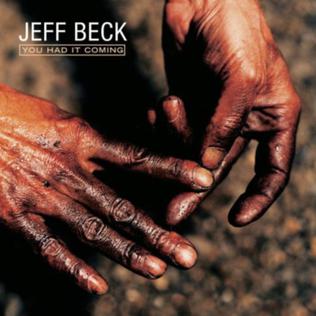
Jeff Beck 15: You Had It Coming

The good news is Jeff Beck fans only had to wait two years for another album. The bad news is the album was You Had It Coming.

The electronic experiments of the last album have taken over, and these ten tracks do their best to replicate the sounds from an automotive garage. For the first time in a while, he takes writing credit for most of the songs, so maybe it was his idea. His distinct tone pokes through the barrage of sound, but such an onslaught can be tiring. The cover of Nitin Sawhney’s “Nadia” starts out very lovely, until the drum ‘n bass accompaniment takes over; the same thing happens to the cool riff on “Rosebud”. Even the perennial “Rollin’ And Tumblin’” is re-interpreted by vocalist Imogen Heap, while drums beat a martial pattern into the mix. Things finally calm down at the end, for “Blackbird”—not a Beatles cover, but Jeff imitating bird calls with programmed responses—which leads into the mysterious and moody “Suspension”.

You Had It Coming had to have been somebody’s cup of tea, because it did win Grammys. What it says about the future of guitar is beyond our scope.

Jeff Beck You Had It Coming (2001)—2

Tuesday, May 5, 2020

Journey 12: Arrival

Fed up with waiting for Steve Perry to pull his head out of his hip operation, Neal Schon remembered that Journey was his band. Jonathan Cain and Ross Valory knew where their money was likely to come from, and after tapping Bad English (and Hardline) drummer Dean Castronovo, they found a competent singer in the form of Steve Augeri, who’d toiled in a handful of not-very-successful bands throughout the ‘90s. The fact that he bore a mild resemblance to Perry was undoubtedly a big plus.

Touring the oldies circuit was the immediate concern, though contributing a song to the blockbuster Armageddon soundtrack album right between two Aerosmith tracks helped in the money department. (Co-written by Jack Blades, “Remember Me” sounded more like Night Ranger.) Two years later, Arrival intended to open a new chapter for the band. They released the album first in Japan, where the melodic rock genre—a.k.a. hair metal without the makeup—was bigger than ever, and whence it was promptly pirated all over Napster. By the time it came out worldwide, a few songs were swapped, and the overly wimpy “I’m Not That Way” was dropped.

There must be people who can quote chapter and verse on all the differences, and we’re not going to. Throughout, Augeri delivers the songs in the same raspy register, though “All The Things” is a distillation of the first Tonic album. He finally shows some emotion in his voice on “Loved By You”, and “Livin’ To Do” could pass for Perry; both songs were co-written by Cain with a country songwriter. “I Got A Reason” sounds like Perry singing with Damn Yankees (surprise: also written with Jack Blades). He sounds like Bryan Adams on the ballads, most of which are interchangeable.

With all that, Arrival is generic yet harmless, and not excruciatingly embarrassing. It is, however, too damn long. Neal throws in a guitar lick as often as the mix will allow him, and lest anyone was still unconvinced they had any balls left, the band released an “experimental” EP initially through their website. Red 13 offered a two-track prog suite, an overblown heavy track, and another more conventional rocker. Most interesting is “Walking Away From The Edge”, a slow burner supposedly co-written with Geoff Tate of Queensrÿche, which has us wondering what might have happened if he’d joined the band instead.

Journey Arrival (2001)—3
Journey
Red 13 (2002)—3

Friday, May 4, 2018

Smiths 9: Reissues! Repackages!

If you’ve been keeping score, you will have deduced that the Smiths catalog consisted of four LPs, a pile of singles and radio sessions that were reshuffled on three separate compilations, and one live album, all released within a relatively brief five-year period. Yet the earnest reissuing and repackaging of their output began shortly after Morrissey’s delayed “comeback”, and things still got left out, even with the repetition.

1992 brought a decent pair of CDs, the similarly but not uniformly titled Best…I and …Best II (both of which spawned singles to promote them). The first volume concentrated mostly on songs that had been singles, while the second added a few album tracks for a slightly deeper focus. Neither was chronological, but together presented many of their best-known cuts for what would have been a solid double album. A little over two years later, Singles repeated many of the tunes on a single disc lasting an hour, but often in their longer album mixes, and including one album track that had been a single but wasn’t on the previous volumes. (Confused yet?)

In the new millennium, The Very Best Of The Smiths crammed 23 tracks onto a single disc, with only two songs that hadn’t been on the 1992 discs, one of which had yet to be regurgitated thusly. The band was more directly involved with 2008’s The Sound Of The Smiths, with Johnny Marr going so far as to supervise the mastering. It also had 23 tracks, in mostly chronological order, but without exactly duplicating Very Best. More interesting to collectors was the deluxe edition, which added several of the B-sides already familiar from previous compilations, along with several rare B-sides that hadn’t made it to any album to date.

But then vinyl came back into vogue, so in 2011, Johnny Marr remastered the catalog so Complete could present all the albums all together in one package for anyone who wanted to start from scratch. However, the title was incorrect. The CD set offered the four studio albums, the three compilations, and the one live album, leaving several of those stray B-sides out. And with all the overlapping between those three compilations, some tracks appeared more than once. For even more repetition, the deluxe set offered (along with the eight albums on LP and CD) vinyl replicas of 25 singles rife with duplication, with some of those otherwise unavailable tracks shoehorned in between. And we’re not even going to touch the deviation in mixes.

For all the fleecing, each of the above compilations does present hefty servings of the band’s best work, so each is musically valid. The first two volumes are the most satisfying of the choices, while Complete allows the new fan to get most everything in one shot, provided he or she can handle the repeats.

The Smiths Best…I (1992)—4
The Smiths
…Best II (1992)—4
The Smiths
Singles (1995)—4
The Smiths
The Very Best Of The Smiths (2001)—4
The Smiths
The Sound Of The Smiths (2008)—
The Smiths
Complete (2011)—

Friday, November 24, 2017

Journey 9: Greatest Hits and Time3

While no formal announcement was made, Journey was done, and the label wisely put together a hits compilation. Greatest Hits was fairly comprehensive, focusing solely on the Steve Perry era, leaning heavily on the Jonathan Cain era, and sticking with the ear candy. In addition to all the singles from the albums, what we used to call side one is framed by “Only The Young” and “Ask The Lonely”, putting them right along side their albumized brothers. Beyond that, the sequence is a grab bag, but at least they save “Be Good To Yourself” for last so you can skip it entirely. Wikipedia tells us, and they’re never wrong, that it’s among the most successful compilation titles by anyone ever, and most of those sales racked up before it was repackaged 18 years on with an extra track.

Since every band got its own box set in the ‘90s, Journey’s turn came right on schedule. The oddly titled Time3 mostly got it right by starting at the very beginning, with a full half-hour of music from the borderline fusion period before Steve Perry came along. To prove the point, a failed track called “Velvet Curtain” is duct-taped onto the completed “Feeling That Way” to show how he transformed it. There aren’t a lot of rarities here, outside of a few B-sides and live tracks since added to reissues of the albums, and some unfinished ideas from the mid-‘80s era. Some of the bigger hits appear in live incarnations, so despite the selection of deeper album cuts, it’s not the definitive Journey package for someone who just wants one title on the shelf.

At the turn of the century, the new trend was the double-disc “Essential” anthology, which was an excuse to regurgitate a hits collection with some deeper cuts. The Essential Journey did just that, basically replicating the Greatest Hits sequence with only a little variety on disc one, with a questionable choice filling up the second. It would be another ten years before Greatest Hits 2 finally offered a decent (and decently priced) companion. In addition to more stuff from the Cain era (and big points for including “Suzanne”) and the FM radio hits and album tracks that stood out on the box set, segues like “Good Morning Girl” into “Stay Awhile” and “Feeling That Way” into “Anytime” were preserved. (We’d’ve dumped “Walks Like A Lady” and “When I Think Of You” for “Natural Thing” and “Edge Of The Blade”, but once again, the phone did not ring.)

Journey Greatest Hits (1988)—4
2006 CD reissue: same as 1988, plus 1 extra track
Journey Time3 (1992)—3
Journey
The Essential Journey (2001)—
Journey
Greatest Hits 2 (2011)—4

Tuesday, January 6, 2015

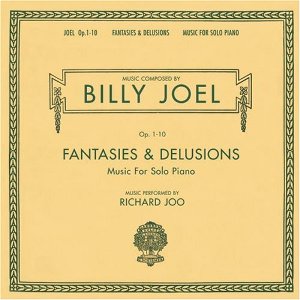
Billy Joel 18: Fantasies & Delusions

This is one of those albums we hesitate to discuss at any length, mostly because, since it’s a classical experiment, we’re in no way schooled enough in the genre to be authoritative. But music means different things to different people, and it helps that Fantasies & Delusions isn’t awful.

This is a suite of solo piano music composed by Billy Joel, apparently so complex that even he himself didn’t feel up to performing it himself. It’s packaged studiously, resembling the cover of sheet music, with only his name in big letters to make it easy to find on shelves, and a photo of himself with pianist Richard Joo on the back.

As solo piano music, it fits nicely in the background, less obtrusive than most classical dabblings by the likes of Paul McCartney or Joe Jackson. It’s very melodic, not at all atonal or avant-garde. Listed as Opuses (Opi?) 1 through 10, presented out of order, most tracks are between seven and eleven minutes, so something like the minute-long “Invention In C Minor” stands out easily. “Air (Dublinesque)”, which closes the album, recalls “And So It Goes” to an extent, before losing itself in an approximation of a jig. Still, considering his knack for a melody, and his tried-and-true method of building songs from simple piano themes, it’s a shame that there aren’t more hummable passages. Of course, were he to release an album of his hits performed a la George Winston, paring the familiar songs back to their roots, he’d likely get slammed for retreading. That said, hearing this music in the context of the classical roots that underpin his grander epics (and even things like “Pressure”) helps to appreciate it.

So while it’s harmless, Fantasies & Delusions is worthy of any collection that also includes recordings by any of the other masters of classical piano performing pieces by any great dead composer. If this provides a gateway to Artur Rubenstein, Vladimir Horowitz, Mitsuko Uchida (the list goes on), then the listener is in for a journey and a half.

Billy Joel Fantasies & Delusions (2001)—3

Tuesday, June 10, 2014

R.E.M. 22: Unplugged

In a year that saw no 25th anniversary of an album that could be expanded, the corporation once known as R.E.M. found an unexpected way to comb the vaults and throw a bone to their still-mourning fans. First issued as a Record Store Day vinyl exclusive, Unplugged 1991 & 2001—The Complete Sessions presents the band, as well as MTV, at two distinct junctures in their histories.

The 1991 appearance was a big deal when the band had just released Out Of Time but weren’t undergoing a massive tour for it. But they were already darlings of MTV, which was arguably at the height of its influence on the music industry. The Unplugged franchise had already spawned a handful of companion albums, but had yet to win Grammys.

And of course, it’s not strictly unplugged by definition, for while Bill Berry gamely taps his bongos, Mike Mills stays mostly ensconced behind an organ; he does come forward to warble the Troggs’ “Love Is All Around”, one of the few pop songs Michael Stipe appears to have heard before. Still, the forum fits the six songs from the album they were promoting, which had plenty of acoustic touches to begin with. As a bonus for those fans who’d been hoarding their cassette-next-to-the-VCR copies all these years, five more songs from the taping appear at the end of the first disc, including the B-sides “Fretless” and “Rotary Eleven”.

Ten years later, the band’s stock had waned considerably, as had that of the channel no longer devoted to “music television”. Perhaps not able to convince VH-1 to do it, they returned to MTV to promote Reveal, their second album without Bill. The three guys who would augment them for the rest of their career fill in all the extra space ably on a set mostly culled from material they’d written since the first Unplugged show. (Interestingly, the “unbroadcast” portion is almost entirely from Reveal, which should be telling. And what’s with the “unabetted” comment appearing in two different places? Bad editing!) Much of their music in that period—as demonstrated by “Electrolite”, “Daysleeper”, “At My Most Beautiful”—was more acoustic-based anyway, and didn’t necessarily involve drums, making Bill’s absence less noticeable. But how is it that Bob Dylan doesn’t get credit for the verse of “Like A Rolling Stone” stuck at the end of “Country Feedback”?

An official R.E.M. Unplugged album should be welcome to fans, and certainly to those who need to be reminded how important those guys were at one time. It also has us wondering what else they’ll dig up, and how soon.

R.E.M. Unplugged 1991 & 2001—The Complete Sessions (2014)—

Saturday, February 1, 2014

David Crosby 4: CPR

In another one of those unlikely stories outside a Lifetime made-for-TV movie, David Crosby needed a liver transplant, and met a kid he likely would have given up for adoption if he hadn’t already ran out on the mother. Not only did young James Raymond bear little resentment towards his deadbeat dad, but he’d spent much of a blissful childhood becoming a rather accomplished musician in his own right. Once this odd couple started spending time together, jam sessions happened, and songs appeared. With the assistance of session rat Jeff Pevar, the easily monikered CPR started playing shows and recording an album.

Even more unlikely, the resultant CPR offers some of Crosby’s best work in literally decades. Relying mostly on Raymond’s musical ideas, which come from places outside his usual toolbox, the lyrics flow without sounding forced or trite. Highlights include “Morrison”, a belated criticism of Oliver Stone’s version of the Doors story. “That House” and “Somehow She Knew” express different kinds of loss and the sorrow they bring. “Rusty And Blue” is fleshed out from his live album, the source of the title “It’s All Coming Back To Me Now”. One PR selling point was “Little Blind Fish”, a CSNY leftover that had snuck out on bootlegs; the similarities are minimal. “Time Is The Final Currency” is a wonderfully understated closer.

Raymond sings the main voice on “One For Every Moment”, with percussion that veers a little close to Stills territory, as well as “Someone Else’s Town”, complete with F-bomb. On his own he sounds like Timothy B. Schmit; with Crosby he provides something of a high Nash counterpoint. The moody “Yesterday’s Child” is the best of his offerings. Throughout, Pevar adds guitar touches worth of Danny Kootch and David Lindley, while a variety of supporting players, some familiar, prop up the back end.

A few years later, following a CSNY reunion album and tour, CPR was back in business with Just Like Gravity. Like the debut, it’s on the long side, but it rocks a little harder, overall. It’s still in the slightly jazzier adult contemporary with New Age touches of the debut, but tunes like “Darkness” use sneaky melodies and non-standard chords to skew off the beaten path. The vocals are also shared more, taking turns on verses, and the kid gets more of a spotlight, taking charge on “Eyes Too Blue” and “Jerusalem”. “Angel Dream” lists Graham Nash as a co-writer, and has something of the moving sweep of “Delta”. Crosby’s voice is still up to the task right off the bat in “Map To Buried Treasure” and elsewhere; the title track is just him and an acoustic, and it’s the sound fans have waited to hear since about 1972.

These albums appeared on a tiny independent label, as did two live recordings, and are tough to find today, but they are streaming. Together they help preserve Crosby’s relevancy as the years go by.

CPR CPR (1998)—3
CPR
Just Like Gravity (2001)—3

Monday, December 3, 2012

Suzanne Vega 6: Songs In Red And Gray

While it’s never nice to take pleasure in someone’s pain, this is a perfect example of a performer’s personal turmoil resulting in superior art. Songs In Red And Gray is her Blood On The Tracks—not that it’s even close to the excellence of that album—in that the songs seem to be directly related to her divorce from Mitchell Froom. To take the attitude of finding good in anything, once he took up with blowsy blonde Ally McBeal fixture Vonda Shepard, at least we could take solace that his muddled approach wouldn’t be ruining her albums anymore.

While the album is certainly folkier than the last couple, some of the production touches she picked up over the past decade are still in evidence. Much of that might be ascribed to producer Rupert Hine, best known in the ‘80s for his work with Tina Turner, The Fixx and Howard Jones. Thankfully, it doesn’t sound like any of them.

“Penitent” is a good starting point, suggesting displacement at a crossroads. The rhythm continues on “Widow’s Walk”, which expertly combines the traditional ballad stance of the widow on the shore with well-placed nautical metaphors. A more obvious touchstone is addressed in “(I’ll Never Be) Your Maggie May”, wherein our heroine insists that any young suitor would be better off chasing somebody else (with most of her male fans likely willing to take a chance on her anyway). Such an affair is picked apart in with surprising sexual reference in the extremely catchy “It Makes Me Wonder”. Irritation turns to sadness for “Soap And Water”, a heartbreaking lullaby of sorts for her daughter (“Daddy's a dark riddle/Mama's a headful of bees/You are my little kite/Carried away in the wayward breeze”). What happened in “Song In Red And Gray” isn’t as clear, but the unsettlement is tangible.

The lesser half of the album is set up by “Last Year’s Troubles”; unfortunately the techno beats in the mix distract from the cleverness in the words. “Priscilla” is a story that means more to her than us, but at least the sonics don’t irritate. That can’t be said of “If I Were A Weapon” (besides being titularly (?) similar to “(If You Were) In My Movie”, a song that wasn’t that good in the first place). The mystery of the sea returns somewhat with “Harbor Song”, describing an enigmatic dream. “Machine Ballerina” sports two basic melodic themes, one of which sounds like a typical Froom keyboard, the other barely displaying the bitterness in the accusation. “Solitaire” is a little too literal, and again, the scratchy mix is a tired gimmick. The album closes with a cover of a song by a Village fixture who ran a songwriting circle; her delivery makes it seem like one of her own.

Songs In Red And Gray is definitely a return to form, albeit tinged with the mixed emotions that inevitably follow a divorce and custody arrangements. Overall there are enough high points to keep the handful of misses from derailing it.

Suzanne Vega Songs In Red And Gray (2001)—

Sunday, November 11, 2012

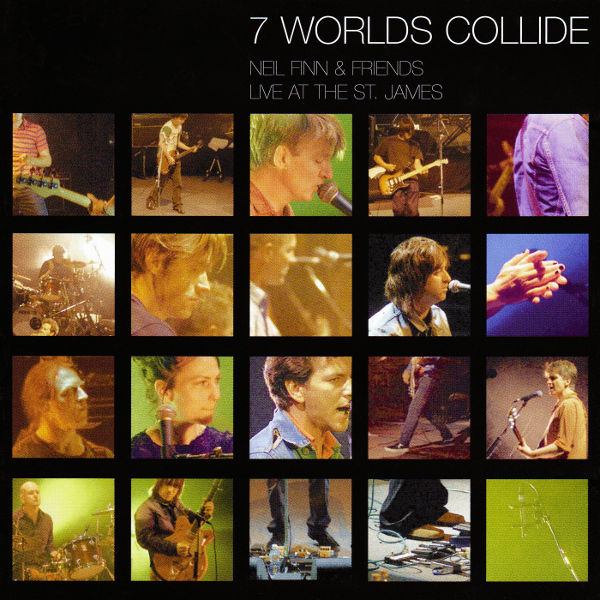
Neil Finn 3: 7 Worlds Collide

To promote the all-but-U.S. release of his second solo album, Neil Finn played a weeklong residency at a theater in Auckland, New Zealand with a band that included two members of Radiohead and other special guests, sometimes trading each other’s songs. The highlights were compiled on 7 Worlds Collide. (The DVD version added even more selections, and provides key visual clues to what’s going on.)

A few of the One Nil tracks make the program, while “Loose Tongue” from his first solo album is nicely translated to the stage. Johnny Marr emerges from years of session work to sing his own “Down On The Corner”, and Neil returns the favor by ably tackling The Smiths’ “There Is A Light That Never Goes Out”. Multi-instrumentalist Lisa Germano takes a rare spotlight on the transfixing “Paper Doll” before harmonizing nicely on “Turn And Run”. It wouldn’t be a show without Tim Finn, and the two perform not only a few from their one collaboration album to date, but preview “Edible Flowers” from the next one. Eddie Vedder reveals himself to be a huge Split Enz fan, taking lead vocals on “Take A Walk”, “Stuff And Nonsense”, and “I See Red”, the latter yelled over a band fronted by Neil’s son Liam (more on him later). The band also backs him on “Parting Ways” from the most recent Pearl Jam album. For Crowded House fans, “Weather With You” and “Don’t Dream It’s Over” close the set.

7 Worlds Collide isn’t the last time Neil would collaborate with surprisingly likeminded musicians, but it is an unexpected surprise. One suspects it may have helped pave the way for the emergence of One All in the U.S. the following year.

Neil Finn & Friends 7 Worlds Collide (2001)—

Saturday, November 10, 2012

Neil Finn 2: One Nil

It’s always sad when an established artist can’t get his or her records distributed in America, but that’s what happened to Neil Finn’s One Nil, despite the presence in the studio of Sheryl Crow, as well as Wendy Melvoin and Lisa Coleman, who also co-wrote some of the songs. The album isn’t as experimental as Try Whistling This, but it’s still not enough for him to merely write the songs; he’s just as concerned with making records, so production peppers the aural landscape.

“The Climber” is a cheerful little number seemingly sung from the point of view of a man stranded in an avalanche, going seamlessly via drum machine into the much more homey “Rest Of The Day Off”. “Hole In The Ice” starts out abrasively, but has another wonderful Neil Finn chorus to redeem it. “Wherever You Are” also appears to be built up from a home demo, and it rolls along inoffensively. “Last To Know” is a nice little strum, but “Don’t Ask Why” is noisy and fairly obnoxious, sticking out of the middle.

The mild prayer “Secret God” is a step in the right direction, sounding more like a band, with those underwater guitars leading to a mysterious ending, but “Turn And Run” is a standout, with Sheryl Crow actually on pitch and suitably mixed. “Elastic Heart” is too muddy and irritating for these ears, redeemed by the superior mix of “Anytime”. With its accordion, “Driving Me Mad” could almost be a Crowded House tune, as could, for that matter, “Into The Sunset”, another chance for the song to exist without too much fuss.

As mentioned, One Nil wasn’t released in the U.S. for over a full year, and when it was, it sported a rejigged lineup and had been retitled One All. Songs were remixed, some gaining a few seconds and others shaved, while “Don’t Ask Why” and “Elastic Heart” were dropped to no great loss, and two new songs were inserted. “Lullaby Requiem” is lovely, though it’s at an odd place in the middle of the album, while “Human Kindness” is more clattery, which we’d blame on the influence of Mitchell Froom. The album still starts and ends with the same tracks, so the new sequence doesn’t enhance or detract from the listening experience; it takes time to grow, and least more people have a chance to hear it.

Neil Finn One Nil (2001)—3
Neil Finn
One All (2002)—3

Wednesday, April 11, 2012

R.E.M. 13: Reveal

In the ‘80s R.E.M. could be counted on for a new album every 12 months or so. Then they started taking their sweet time, and frankly, it’s just not satisfying to wait two-plus years for an album that’s not very good. That, unfortunately, was the case with Reveal, their second album without longtime drummer Bill Berry. Here they continue the sonic experimentation of Up, but the novelty’s worn thin.

Keyboards and drum machines abound, particularly on “The Lifting”, “All The Way To Reno” and “Beachball”, with kitschy instrumental and percussion effects right out of the Burt Bacharach playbook. Stipe’s ignorance of pop music history prevented him from realized he’d lifted the melody of “She Just Wants To Be” from a Turtles song.

Still, there are a few tracks with potential, and they come right in the middle of the album. “Saturn Return” would stand out with a little more dynamics on either side of it (and if No Doubt hadn’t referenced the same concept in an album title a year earlier). “Beat A Drum” comes from the same basic mold of “At My Most Beautiful”, resting on a pretty melody and good ol’ Mike Mills on piano. “Imitation Of Life” was the first single, dressed up with a classic strum and mumbled lyrics. “Chorus And The Ring” features enough of the old mystery until the synths overpower it. “I’ll Take The Rain” has a wonderful chorus, but uses up too much of its six minutes to get there.

A lot of work certainly went into Reveal. But too many of the songs sound alike to be distinguished from one another, falling right into a longtime complaint of their detractors. It also makes two albums in a row that don’t rock for the most part, something else we used to be able to rely on. Perhaps, just like their counterparts in U2, they’d become accustomed to selling records to people who bought them out of habit.

R.E.M. Reveal (2001)—

Monday, August 29, 2011

Ben Folds 5: Rockin’ The Suburbs

The Five had disbanded a year earlier (though you could tell on their last album they were getting bored) so fans anxiously awaited Ben’s grand statement of independence. In its place we got Rockin’ The Suburbs, an album full of tracks that could well have been recorded by the band. Tellingly, he plays the bulk of the instruments, including drums, distorto bass and some guitar.

If there was anything new in his approach since the band stopped, it was a preponderance of songs written in the third person starting from the titles. “Annie Waits” is a lonely spinster of the “Eleanor Rigby”/“Another Day” school, but “Zak And Sara” takes a wacky trip in time to predict the musical horrors that will follow. The first great song comes in “Still Fighting It”, an imagined conversation between father and son that remains both effective and futile. “Gone” is another rousing kiss-off to a former paramour. “Fred Jones Part 2” is an amazingly touching portrait of a reluctant retiree, and fans would have recognized this particular character from a song on Whatever And Ever Amen. The flipside comes on “The Ascent Of Stan”, a look at a person who hasn’t aged as gracefully.

With each track his musical depth grows and grows, as evidenced on “Losing Lisa”, a remarkably insightful glimpse at the end of a relationship that’s eclipsed by the song that follows. “Carrying Cathy” takes a couple of verses to paint a picture of a somewhat needy person, before detouring into an impressionistic bridge colored by just enough strings over a wordless chorus. The song expertly drops out to accompany a vivid image of people “carrying a box through the rain”, fulfilling the threat of the song’s title. Then it’s a trip (pun intended) to the aftermath of a party in “Not The Same”, which would provide some of the world’s better audience participation over the years. The title track nicely skewers the current state of white rap, and we’d like to think it’s one reason why Fred Durst doesn’t sell anymore. “Fired” is an odd one; it appears to be a rant from an angry boss, but ends as if it was merely an excuse to write a song based around the final twelve-letter obscenity. But in keeping with his M.O., he gives the last word to tenderness in “The Luckiest”, a wedding song for the 21st century.

Arguably, the best songs on Rockin’ The Suburbs are the depressing ones, much to the dismay of those who liked the funny ones better. He gave himself a tough line to walk, stuck between the role of a compelling songwriter with a musical comedian. But as ever, no matter what his songs make you think, they also tap your toes.

Ben Folds Rockin’ The Suburbs (2001)—

Monday, April 11, 2011

Mick Jagger 4: Goddess In The Doorway

After a fairly successful renaissance of the Stones for the close of the century, Mick decided it was time for a solo album. For his fourth time out he seemed to have grasped an idea of what would justify a detour from his regular band, but that doesn’t mean he should have bothered. Goddess In The Doorway finds him as obsessed as ever with sounding contemporary, tapping younger talents (we’ll get to those) but still relying on guitar work here and there from the likes of Joe Perry and Pete Townshend.

“Visions Of Paradise” is guilty-pleasure pop, a collaboration with the guy from Matchbox 20, so we’ll blame him for the less convincing parts. Bono is brought in for “Joy”, which relies mostly on two chords with a few diversions, and slathered with a gospel choir for that faux-spiritual feel. Something about “Dancing In The Starlight” sounds like we’ve heard it twice already, but it does have a killer chorus. “God Gave Me Everything” is basically a one-man Lenny Kravitz production with Mick singing, but then it’s followed with the mild modern R&B of “Hide Away”, which Keith might have made more reggae were he allowed to; instead we get Wyclef Jean. “Don’t Call Me Up” is the sensitive ballad with a title that sounds too familiar, and subject matter to match.

Besides being inscrutable, the title track suffers from a edgy pace and Mideastern touches already overused by Sting. “Lucky Day” isn’t too far removed from “Anybody Seen My Baby”; that this dance beat reminds one of a Stones track might define irony if we still knew what that was. “Everybody Getting High” is just plain stupid, as is the hurt posturing in “Gun”. “Too Far Gone” isn’t too bad, except that he opens by stating he doesn’t like nostalgia, then goes on to lament how the modern world has paved over his youth and technology has all but obliterated nature. A decent editor might have helped him get his message straight. “Brand New Set Of Rules” seems to suggest that he’s matured somewhat, on a track that’s better than the lyrics. (Two of his daughters are credited on backup vocals; presumably they’re the ones adding the “ooh-ooh” parts in the middle?) For some reason a “cocktail version” of the title track is hidden at the end, which actually sounds more interesting than the real thing.

This album notoriously got five stars in Rolling Stone magazine, an accolade seriously undermined when you consider it came from the highly suspect “journalistic integrity” of Jann Wenner. Clearly a favor was being paid, because this was hardly the apex of the man’s life’s work. Mick is very good at one thing, and that’s not to say that he’s a one-trick pony, but he’d be better served by trying a real departure from the average if he wants respect outside the Stones. Goddess In The Doorway isn’t embarrassing, but it just doesn’t make it.

Mick Jagger Goddess In The Doorway (2001)—

Saturday, February 12, 2011

Brian Eno 17: Drawn From Life

As might have been predicted from the largely action-devoid pieces he’d dabbled with throughout the ‘90s, Brian Eno wasn’t so much interested in composing music to be merely heard as he was creating the soundtrack to interactive experiences. But by the end of the decade the ambient brand had become an actual thing, with artists like Aphex Twin taking the lead on the charts, and others bringing in beats, of all things, for a new genre known as trip-hop.

His first album of the new century, then, was a collaboration with a German composer (deejay, actually) named J. Peter Schwalm, released on the same Astralwerks label that had been mining the territory he’d discovered. Eno and Schwalm had already collaborated on art installations, as well as an appearance at a museum in Bonn, Germany with Holger Czukay of Can in 1998, released a quarter-century later as Sushi. Roti. Reibekuchen.

But back to the album at hand. Some of the music on Drawn From Life recalls the recent “space jazz” of The Drop; at other times they could be more Music For Films. The percussion certainly keeps it contemporary. Regular collaborator Nell Catchpole adds violin here and there, while Laurie Anderson’s robotic voice fits right in on “Like Pictures #2”, as does somebody named Lynn Gerlach, credited with the disembodied contribution to “Rising Dust”. The original immersive intention of ambient music is reinforced on “Bloom”, where the sound of Eno’s young daughters at the kitchen table can be heard. (A mix without the voices is also included, but it’s redundant.)

Altogether, Drawn From Life is pleasant, mostly harmless, and not at all overbearing. It’s melodic in places, which makes it a little more interesting, but it’s hardly a buried treasure. If you want to chill out, chill out.

Brian Eno & J. Peter Schwalm Drawn From Life (2001)—3

Friday, January 28, 2011

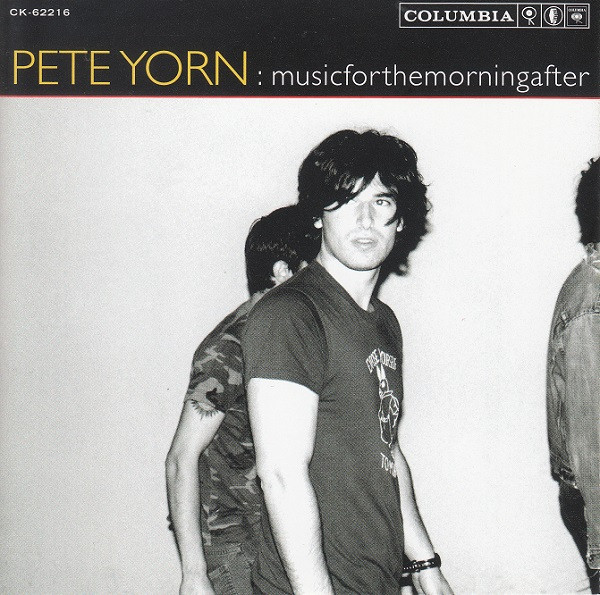
Pete Yorn: Music For The Morning After

Once college alternative stopped being either, it became harder to pigeonhole different bands by a catch-all label. So how can we describe Pete Yorn, a handsome singer-songwriter from New Jersey who doesn’t overtly sound like Bruce Springsteen (or John Bongiovi, for that matter)? It might be mainstream rock, if that existed anymore. He’s not whiny or histrionic enough to be considered emo. In another time he might have been considered to be folk-rock, with a pendulum that swings pretty deep into either camp.

Whatever you want to call him, there’s no denying that Musicforthemorningafter, his debut album, is damn catchy. Largely a one-man band affair, it was recorded with a handful of friends swapping the guitars, basses, drums and keyboards, but without sounding like a homemade job. Real drums mix with programmed sounds for a full spectrum of sound, and each of the tracks is as unique as the typefaces used for the lyrics of each of the songs.

The first three tracks alone deliver a solid beginning: the chugging “Life On A Chain”, “Strange Condition”, which goes through an early key modulation without rushing, and “Just Another” with its achy chorus guaranteed to make the girls swoon. Among the other highlights are the woozy “Lose You”, “On Your Side” (popular for scene changes on any number of MTV reality shows) and the closing “Simonize”, which manages to channel the ghost of Chris Bell, predicting his cover of “I Am The Cosmos” by eight years.

And those are the best ones—we haven’t even mentioned “Murray” or “For Nancy (‘Cos It Already Is)” or “June”. All the tunes are toe-tappingly memorable, with lyrics alternately obtuse and direct, so that to best demonstrate the appeal of this album, you’ll most likely reach for the play button once the silence kicks in at the CD’s end. But of course, there’s a hidden track, so if you’re not careful you could miss it. Or not.

As good as Musicforthemorningafter is, it’s possible he put all his best eggs in that first basket. 2003’s Day I Forgot had its moments, but the third part of the so-called trilogy, Nightcrawler, had nothing to offer outside a faithful cover of Warren Zevon’s “Splendid Isolation”. His subsequent albums have been largely ignored in favor of the collaboration with Scarlett Johansson, who’s a lot easier on the eyes than she is the ears.

A 10th Anniversary Edition of Musicforthemorningafter was released in 2011, with a second disc full of a radio performance and some rarities. These did not include the four covers (two by Springsteen) and the “rock version” of “Strange Condition” over dubbed by Peter Buck and Scott McCaughey included on a limited edition expansion of the album back in the day; they can, however, be heard on the streaming version. But as long as the original can be found in your local used CD bin, there’s really no need to go all out.

Pete Yorn Musicforthemorningafter (2001)—4

Friday, January 21, 2011

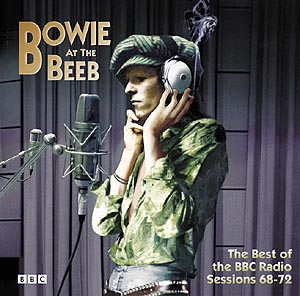
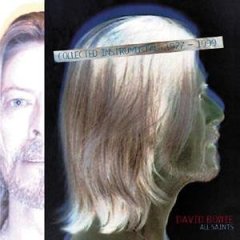
David Bowie 31: Bowie At The Beeb and All Saints

As many artists had seen their old BBC Radio performances repackaged for consumers throughout the ‘90s, Bowie was an obvious candidate for similar treatment, having made several appearances on the station on his way up to discovering himself. A sampler appeared earlier in the decade (right around the time of various issues of the Santa Monica radio simulcast from 1972), but it wasn’t until 2000 when the real thing appeared.

Bowie At The Beeb is an impressive collection, with two full discs offering selections from all his known (and available) radio appearances, starting from the pre-Ziggy era and moving all the way up to the heyday, with only a few omissions for contextual and timing’s sake. (There was a glitch on the first copies, which had the same version of “Ziggy Stardust” included twice; the label thoughtfully sent a single-track CD with the correct version to anyone who e-mailed a request for one.) If anything, it may give people reason to seek out some of those early albums, as well as exposing such early rarities as “Let Me Sleep Beside You”, “Karma Man”, and “In The Heat Of The Morning”. All of the first disc has since been surpassed by more complete recordings included in later archival sets, but that was two decades away.

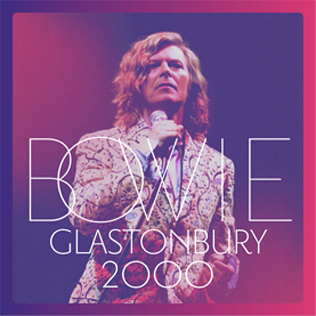
In addition, most of an excellent fan-club performance from 2000 was included as a bonus of sorts in the set’s initial release. With his crackerjack band, here abetted by Earl Slick, helping cover his entire career, and even including some odd choices as “This Is Not America” and “Absolute Beginners”, it puts his work in a new light, even while still promoting ‘hours…’ (It’s also a mildly different set from the set from the two-hour show he performed two days earlier at the Glastonbury Festival, which was released in 2018. He laid on the Cockney accent thick for the crowd, despite a professed bout of laryngitis, and Earl Slick was at this show too, so we get even more material from Station To Station.)

Bowie also took the opportunity of a new century to look back in another way. Having already marketed separate hits collections roughly covering the periods previously summarized by the Changes albums, his more obscure instrumental work was highlighted on All Saints. This interesting idea stemmed from a Christmas gift the man himself gave to friends a few years earlier; while that was a two-disc set, the official version collected the key tracks from Low and “Heroes”, along with surprises from The Buddha Of Suburbia, bonus tracks from the Berlin era, and even one of the movements from the Low Symphony as interpreted by Philip Glass. The result was a disc full of background music, and that’s meant in a good way.

David Bowie Bowie At The Beeb (2000)—
David Bowie
All Saints (2001)—4
David Bowie
Glastonbury 2000 (2018)—3

Monday, January 10, 2011

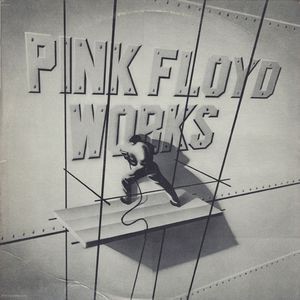
Pink Floyd 13: Great Dance Songs, Works, Echoes

The chronology thus far makes this a good place to discuss the various Pink Floyd collections that have cropped up over the years. For a band who thrived as much as they did in the album format, one could be forgiven for thinking that a “greatest hits” album may not be the easiest thing to compile, but compile they did. And did. And did again.

Following the success of The Wall, the Floyd’s current label decided to put out a hits album of sorts. Cheekily titled A Collection Of Great Dance Songs, it’s something of an arbitrary collection of album tracks that may have been familiar to FM radio listeners. Starting with “One Of These Days” from Meddle, it sports a re-recording of “Money” and the complete “Sheep” from Animals. An excellent edit of “Shine On You Crazy Diamond” covers most of the first half to include all the verses before fading into “Wish You Were Here”. And “Another Brick In The Wall (Part II)” features the clean opening plus the schoolmaster’s coda. Yet despite the alternate mixes, it’s basically a sampler, and not a replacement for the LPs.

Not to be outdone, the band’s former American label soon put out Works, which also begins with “One Of These Days” before traveling back to the Syd days of “See Emily Play” and “Arnold Layne”. “Fearless” and “Free Four” show off their jaunty acoustic side, while “Set The Controls For The Heart Of The Sun” and “Several Species Of Furry Animals” appeal to the freaks. “Brain Damage” and “Eclipse” oddly end the first side, and the true rarity “Embryo” closes the set. That, plus various crossfades and alternate mixes make it interesting for fans, while newcomers will enjoy the earlier, lesser-known tracks.

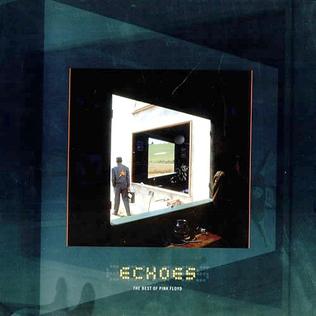
While the band members fought with each other through the nineties, their entry in the box set category was simply Shine On, which offered seven of their thirteen albums to date, plus the exclusive Early Singles, half of which had appeared on Relics. A much better overview of the band came in 2001 with the release of Echoes, offering over two-and-a-half hours of Floyd classics and deep cuts, some edited and/or crossfaded, covering nearly all the bases. Syd is featured on five tracks (as well as opening and closing the set), there are a few cuts from the two post-Roger albums, and there’s even the first CD appearance of “When The Tigers Broke Free” from the film of The Wall.

When the band started reissuing the albums again—and in some cases, expanding them—ten years later, a single-disc best of was commissioned, cheekily titled A Foot In The Door. Naturally it leans heavily on Dark Side, Wish You Were Here and The Wall, plus “See Emily Play” and a track each from the two non-Waters albums. The strangest inclusion is “The Fletcher Memorial Home”; a great song, but hardly a radio-friendly toe-tapper. Of all the compilations, Echoes is still the best place to start. (Of course, you could also go whole hog with either of two box sets of all fourteen studio albums, released only four years apart.)

Pink Floyd A Collection Of Great Dance Songs (1981)—3
Pink Floyd
Works (1983)—4
Pink Floyd
Shine On (1992)—4
Pink Floyd
Echoes: The Best Of Pink Floyd (2001)—4
Pink Floyd
The Best Of Pink Floyd: A Foot In The Door (2011)—