Showing posts with label rush. Show all posts

Tuesday, April 8, 2025

Rush 28: Rush 50

Once Rush retired from touring, they continued to preserve their legacy on the shelves. Roughly each year, another album got repackaged in a 40th anniversary edition with snazzy artwork and ephemera, and expanded with timely live recordings, beginning with 2112 through to Moving Pictures. (The program seemingly ground to a thud with the Signals upgrade, which had no musical extras.) Neil Peart’s death in 2020 put an end to the band for good, but surely they would do something for their 50th anniversary, having already celebrated their 30th and 40th in grand style?

Rush 50 is a career-spanning 50-track box, available in four CDs or seven LPs, each with a hardcover book. (A limited Super Deluxe Edition added a second hardcover book and exclusive lithographs.) Considering how many times their songs have been anthologized over the years, they had to do something to make it special for anyone buying the music again, and they did. The set begins with both sides of their first single making their digital debut: a tepid cover of “Not Fade Away” and the extremely average “You Can’t Fight It”. These songs had long been disowned by the band, and now you can hear why. An alternate “Working Man” precedes two songs from the first album performed at a high school gig, then there is a big difference once Neil’s on the kit with live versions of “Anthem”, the oft-performed-in-those-days “Garden Road”, and a funky interpretation of Larry Williams’ “Bad Boy” with some ridiculous stereo panning during the guitar solo.

From there it’s a pretty orderly stroll through the catalog, basically a song from each studio album and one or two each from the live ones, both the eleven original releases and the 40th anniversary editions. This fills up the second disc and part of the third pretty well, but the next two discs race through three decades. “The Trees” is an alternate version with a different guitar solo, and “One Little Victory” is the remixed version, but everything else is standard. Neil has two indexed drum solos in the set, as well as the extended break in “YYZ” from Exit… Stage Left, but of all the songs to choose from Presto, why “Superconductor”? The journey ends with the “What You're Doing/Working Man/Garden Road” medley, the last eleven minutes from the last-ever Rush concert.

It may not be the best place to start, but Rush 50 does deliver over four hours of solid, representative music—“Superconductor” aside. Fans have to have it, even if they won’t listen to it as much as they would other compilations.

Rush Rush 50 (2025)—4
Tuesday, February 27, 2024

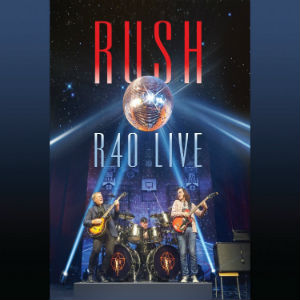
Rush 27: R40 Live

Their fortieth year as a band was celebrated with a North American tour, resulting in Rush’s eleventh live album. R40 Live was another three-CD package, also made available with or as a DVD or Blu-ray set; this would be preferred by most fans who would not only appreciate seeing their idols—and their antics—up close, but also get the various comedic films shown as interludes throughout in high resolution.

After “The World Is… The World Is”, a montage of 26 iconic Rush riffs compiled to accompany the opening video, the first disc more or less travels backwards in time from Clockwork Angels to Signals, but skipping three ‘80s albums. (This might not have been the smartest idea, as Geddy Lee ends up forced to sing at higher registers as the show progresses.) The second set relies on the old faithfuls and epics from Moving Pictures and Permanent Waves, followed by excerpts from “Cygnus X-1” in shuffled order, staying on A Farewell To Kings for “Closer To The Heart” and “Xanadu”, and finishing with a 12-minute condensation of “2112”. The encores combined “Lakeside Park” with “Anthem” and “What You’re Doing” with “Working Man”, ending with a tag of their early “Garden Road”, which never made it to an album.

To fill up the third disc, various performances from throughout the tour not played at these shows were included, to provide as complete a chronicle as possible. Performed live for the first time ever on this tour, “Losing It” appears twice: once with original violinist Ben Mink, and again with Jonathan Dinklage of the Clockwork Angels String Ensemble from the last show of the tour.

Naturally everything is impeccably played, two drum solos are indexed, and there’s enough variety from the last few live albums to keep it from sounding too redundant. Again, the visual aspect of the show is key, as the stage setup goes from the steampunk setup at the start through the washing machines to the Marshall stacks, ending with amps atop wooden chairs. Even Geddy switched to his old basses and smaller keyboards as the need fit.

Following this tour, finding himself increasingly beset by physical limitations, Neil Peart decided he’d had it. The other two agreed. Rush would never perform as a band, live or in the studio, again.

Rush R40 Live (2015)—

Friday, October 13, 2023

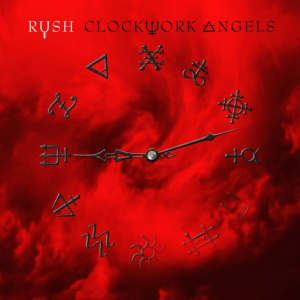
Rush 26: Clockwork Angels

Believe it or else, Clockwork Angels was Rush’s first concept album in the prog tradition. While they had side-long epics and tracks that continued on successive albums, and most of their albums had a basic internal theme, it took them almost forty years to come up with a story to hang an album on. (And even then, the album just had the barest narrative; the full saga would eventually appear as a standalone novel.)

Once again we’re asked to identify with a lone rebel against the accepted norm, as previously depicted in “2112” and “Red Barchetta”, but this time living in a society steeped in “steampunk and alchemy”, and that’s as far as we’re going to try to explain. The story begins with two songs that had already been recorded, released, and promoted on tour while the album was still gestating. “Caravan” has an ominous opening that’s forgotten as soon as the riff and song proper kick in; similarly, “BU2B” has a spooky atmosphere at first, not included on the original single mix, that gives way to more punishing playing. The assault doesn’t let up on the title track, which at least is a little more melodic going into each verse. Guitars are definitely to the fore here, all over “The Anarchist”—apparently the antagonist of the piece, or at least one of them—but here we also better hear the string arrangements that would also feature onstage. “Carnies” starts with yet another nasty riff—Alex Lifeson channeling Leslie West—and continues the percolating mayhem. It’s not until “Halo Effect” where the volume seems to let up, in what begins as an almost acoustic lament but gets revved up with emotion.

Once upon a time a title like “Seven Cities Of Gold” would have received a more mystical treatment, but here it’s all riffing and yelling. That’s why the nearly jangly suspended chords opening “The Wreckers” are such a surprise, making for a very radio-friendly pop tune that turns very dark by the end. “Headlong Flight” combines several dizzying riffs and drums that won’t let up—there’s even a solo of sorts—with references to “Bastille Day” throughout. The much more subdued “BU2B2” is very much the opposite of its predecessor, with a different tempo and accompaniment to match the beaten narration. The heavy rocking “Wish Them Well” takes over right away to answer those questions, and “The Garden” is constructed as a grand, not exactly grandiose finale, relying on the strings and acoustic guitar to set the atmosphere. By the time the piano shows up, and Alex rips out a more restrained but still emotive solo, there is a definite feeling of a journey, and perhaps an arrival.

They took the album on tour, of course, recorded early on for the requisite live album and matching DVD or Blu-ray. Along with popcorn makers added to the back line, a live string ensemble was on stage for the Clockwork Angels segment (which dropped both “BU2B”s but included every other song mostly in album order) and stayed onstage to augment “Dreamline”, “Red Sector A”, “YYZ” (!!), and “Manhattan Project”, the latter a bonus taken from another night. The set was their longest yet, nearly filling three discs; most of the first is derived from material originally recorded in the ‘80s, which they attack faithfully but with something extra. Geddy’s howling continues, and while Alex is credited with backing vocals, some of the harmonies sound canned to these ears. (Each of the discs includes a titled drum solo: “Here It Is!” sits in the middle of “Where’s My Thing?”, “Drumbastica” is part of “Headlong Flight”, which leads to Alex’s “Peke’s Repose” solo, and “The Percussor” is a more electronic-based one with sample triggers fans had come to expect.)

Rush Clockwork Angels (2012)—3
Rush
Clockwork Angels Tour (2013)—3

Friday, April 14, 2023

Rush 25: Time Machine

As their history loomed large and technology advanced, Rush celebrated their 35th anniversary as a band with a variety of looks back, beginning with three archival rehashes. Retrospective III: 1989-2008 notably contained two freshly remixed tracks from Vapor Trails and a recent live recording of “Ghost Of A Chance” alongside a decent mishmash of tunes from the six guitar-heavy albums released during that period. Meanwhile, Working Men was a nice idea with cool artwork, but merely recycled selections from the last three live albums, as apparently Atlantic didn’t have the rights to the first three live albums. Each track fades to silence before the next fades up for a disjointed listening experience. Oddly, most of the songs were at least two decades older than their performances, with only an otherwise unavailable “One Little Victory” as an extra. Certainly more interesting was Grace Under Pressure 1984 Tour, a live album originally released as a bonus in 2006’s Replay X 3 box, which presented three live DVDs converted from VHS, including this one. It presents the band somewhat in transition, being roughly halfway between Exit Stage Left and A Show Of Hands.

Around this time, the acclaimed documentary Beyond The Lighted Stage did a lot to boost their cred in the mainstream. Two years later, taking a break from developing new material, the band embarked on the Time Machine tour, which celebrated the 30th anniversary of the Moving Pictures album with a complete performance of same in the middle of a 2½-hour show. (Geddy also changed his backdrop to working sausage makers, tended by the crew.) And naturally, it became a live album. Time Machine 2011 was pointedly recorded in Cleveland, where the band had made early strides when nobody else cared, and also reminded the Rock and Roll Hall of Fame to stop ignoring the band.

The program begins with a smattering of hits, including “Time Stand Still” with Aimee Mann’s voice triggered from a sample. (There are a lot of samples on the album, from cartoons and cult films, that were probably a lot more entertaining in person or on video.) Two new songs already recorded and pushed to radio, “BU2B” and “Caravan”, preview the upcoming studio album already in progress. While the novelty of hearing our favorite Rush album performed live in its original sequence is appealing, Geddy’s voice isn’t up the task, as he’s begun howling the high notes after decades of tempering his shriek. (This is particularly disappointing in “The Camera Eye”, which hadn’t been played live in nearly 30 years.) Neil’s drum solo appears as its own entity rather than as part of “YYZ”, with harmonics buried in the timber leading to the customary Buddy Rich trigger, and Alex gets a 12-string solo spot called “O’Malley’s Break” that sets up “Closer To The Heart”. The crowd, of course, goes wild.

Rush Retrospective III: 1989-2008 (2009)—
Rush
Grace Under Pressure 1984 Tour (2009)—3
Rush
Working Men (2009)—
Rush
Time Machine 2011: Live In Cleveland (2011)—3

Tuesday, November 22, 2022

Rush 24: Snakes & Arrows

While it wasn’t their longest break between albums, Rush certainly took their time before delivering Snakes & Arrows. Working with a producer who was four when their first album came out, the album is fairly heavy throughout, although Alex Lifeson adds a lot of acoustic guitar to the overall mix, and they indulge themselves as well as the listener with three instrumentals.

The first few bars of “Far Cry” remind us of their earlier prog tracks, but that changes to modern rock before even the vocals kick in. “Armor And Sword” has a big Presto sound with riffing and rhythm Metallica fans would appreciate, while “Workin’ Them Angels” has a mandolin for we believe the first time on a Rush album. “The Larger Bowl” is helpfully subtitled “A Pantoum” which is the rhyme scheme and structure the lyrics follow, and explains the repetition, which is effective. “Spindrift” is an odd one; though we like the “Witch Hunt” atmospherics at the start, the verses don’t seem to work with the choruses. Perhaps these ideas would be better suited in combination with “The Way The Wind Blows” two tracks later. While we can hear some vocals suggesting a melody, “The Main Monkey Business” is instrumental—not as intricate as “YYZ” or “La Villa Strangiato”, but still catchy in a stumble-along way.

After the aforementioned “The Way The Wind Blows”, “Hope” is just Alex on a 12-string for two minutes, providing something of a prelude to “Faithless”, which goes from tense to anthemic with subtle strings. “Bravest Face” is surprising lyrically, as it makes reference to popular songs and even TV shows, but the choruses are an improvement, and Alex plays an unexpectedly jazzy solo. “Good News First” is another rare Neil Peart lyric spoken conversationally, but the message is murky underneath the urgency of the music. The final instrumental, “Malignant Narcissism”, does indeed build on the conceit of those earlier epic epics, with tongues firmly in cheek. It’s a lot of fun. This already long album ends with “We Hold On”, which follows the theme of struggles scattered throughout the previous hour.

They toured behind the album, as would be expected. By now their marketing strategy seemed to have been borrowed from the Rolling Stones, as the following year’s Snakes & Arrows Live was their third live album in five years. Opening with a drawn-out tease on “Limelight”, they plow through old favorites, deep nuggets like “Digital Man”, “Entre Nous”, and “Circumstances”, and most of the new album note for note over the course of two discs that fans will find essential. Alex gets to play more acoustic due a new rig, and Neil’s drum solo follows “Malignant Narcissism”. (Thankfully, while the tour continued after the live album came out, which they were ostensibly now promoting, they didn’t release another live album covering that leg. Also, for those of you following along, Geddy’s side of the stage now included ovens with actively spinning rotisserie chickens.)

Rush Snakes & Arrows (2007)—3
Rush
Snakes & Arrows Live (2008)—3

Tuesday, June 14, 2022

Rush 23: Feedback and R30

Now that they were back at full strength, Rush happily began celebrations for their 30th anniversary as a band. Their first order of business was to release a covers EP. Yes, you read that correctly—one of the bands who always played their own material, to the note, was doing covers.

Most of the eight songs on Feedback come from that period around the Summer of Love that fostered countless garage bands. “Summertime Blues” follows the Blue Cheer template, but with more touches of The Who, who are also represented by “The Seeker”. Two other bands are saluted twice: the Yardbirds with “Heart Full Of Soul” and “Shapes Of Things”, and Buffalo Springfield with a staid “For What It’s Worth” and “Mr. Soul”, which sports a clever quote from “Eight Miles High”. Geddy Lee adds his own harmony to Love’s “Seven And Seven Is”, which repeats the first verse rather than go straight to the explosion. Finally, “Crossroads” is all Cream.

This little album is a labor of love from the band, and will be best appreciated by its fans. Purists who revere the originals but despise Rush should appreciate that Geddy’s vocals are mostly restrained, Alex Lifeson pretty much sticks to the riffs, and Neil Peart doesn’t hit more drums or cymbals than anyone has to.

Four of the songs on Feedback would become regulars on the setlist for the so-called R30 anniversary tour, the Frankfurt stop of which was subsequently documented in a DVD package. The deluxe version included archival content, plus the music on two CDs, with a slightly abridged program that repeats only eight songs from Rush In Rio.

Coming soon after that album may seem like market saturation, but the sound is superior to that set. The opening “R30 Overture” is a nice arrangement of snippets from their early epics, going right into “The Spirit Of Radio”. “Between The Wheels” is a surprise inclusion, and of course we get a banded nine-minute drum solo out of “Mystic Rhythms”. Another unplugged “Resist” leads to an acoustic “Heart Full Of Soul” with Neil’s most understated drums ever. By the end of the show, Geddy has to compensate for some of the high notes. (The visuals add to the experience, especially since vending machines are now visible near the washers and dryers on Geddy’s side of the stage.)

Rush Feedback (2004)—3
Rush
R30: 30th Anniversary World Tour (2005)—3

Friday, December 10, 2021

Rush 22: Vapor Trails

After telling the other members of Rush he was retired, Neil Peart set off on a solo motorcycle trip throughout North and South America. The trip did him good, as he got a book out of the experience, fell in love and remarried, and basically felt refreshed enough to get back behind the kit and try to make music with Alex Lifeson and Geddy Lee again. They took their sweet time, more concerned with impressing each other than any other agenda, though Alex did insist on zero keyboards, to which the others acquiesced. Eventually, Vapor Trails emerged.

Appropriately, “One Little Victory” begins with a furious tattoo of drums, before a metallic Lifeson riff and only the slightest pauses in the manifesto. “Ceiling Unlimited” offers another top-speed riff with deep-thought lyrics; clearly these guys are glad to be back. The title “Ghost Rider” will be familiar to fans from Neil’s book about his bike trip; even without that background, the song urges positivity and perseverance. “Peaceable Kingdom” is another relentless riff, and one that reminds us of Pearl Jam a decade earlier. After all that pounding, “The Stars Look Down” is a bit much, except when the band quiets down a bit and weaves some backwards guitar into the mix. “How It Is” begins with a deceptively delicate arpeggiated guitar but increases in volume on schedule, whereas “Vapor Trail” is a better version of the same recipe.

“Secret Touch” presents another subdued intro that will become something of a chorus, which sounds like we’ve heard it elsewhere on the album already. It took several listens to realize it’s Geddy’s bass driving that little riff. Continuing the meteorological theme, “Earthshine” starts with a riff right outta Kiss, but with more finesse amidst the power, and time changes that band would never attempt. While it’s too heavy to be considered, “Sweet Miracle” is almost sensitive in its sentiment, though we wouldn’t be surprised if a certain plot element from Young Frankenstein wasn’t involved. “Nocturne” is something of a grunge throwback, with the simplest bass part Geddy’s ever written, the basic rhythm, and lyrics about dreams. “Freeze” (listed as Part IV of the “Fear” trilogy!) is one of the more developed songs, working through several sections that provide variety. Finally, “Out Of The Cradle” completes the band’s determination to endure, taking Walt Whitman’s idea of “endlessly rocking” at a literal sense he couldn’t imagine.

As is a common gripe around these parts, Vapor Trails is too long and could have been stronger had they concentrated on fewer songs, but most fans were happy with the general aggressiveness, and that the band was back (and touring). Still, much commentary was dedicated to the overall sound of the album, which was loud, certainly, but also harsh to the point of discomfort—in other words, not the band’s usual quality control, to which they fully copped. Some time later, two of the songs were remixed for inclusion on a compilation, and they went ahead to not only get veteran producer David Bottrill (familiar from Peter Gabriel credits) to remix the entire album, but re-release it in 2013, when it was also included in the box set The Studio Albums 1989-2007 at the expense of the original. (They also brightened the cover, and softened the font inside, too.) In the process, certain mix differences emerged, including a guitar part on “Ceiling Unlimited” and other nuances elsewhere. It’s still too long.

Back then, of course, they promoted the album with the standard mega-tour. Rather than waiting for the usual four-album cycle—and possibly because they wouldn’t have wanted to chance waiting that long—Rush decided to release the audio of the Rio de Janiero stop on the tour supporting Vapor Trails, in front of 40,000 people, separately from the DVD. Rush In Rio presented the complete, nearly three-hour show in order on three CDs, with two extra tracks from elsewhere in the tour tacked on the end. There are a few fun moments—the Simpsons sample at the end of “The Big Money”, the animal sounds scattered throughout “The Trees”, an unplugged “Resist” without drums—but the enthusiasm of the crowd notwithstanding, it’s not as essential as their earlier live sets, which is why we restrict it to this mention. The DVD is preferred, if only because one can see the working washing machines set up on Geddy’s side of the stage. (He’d switched to in-ear monitors, and they needed something to visually balance the mountain of amps that still filled Alex’s side.)

Rush Vapor Trails (2002)—3
Rush
Rush In Rio (2003)—3
Rush
Vapor Trails Remixed (2013)—3

Tuesday, June 8, 2021

Geddy Lee: My Favorite Headache

Following Neil Peart’s self-imposed retirement from music and Rush in particular, Geddy Lee took the opportunity to record a solo album—his first bold departure from the band and brand since appearing on “Take Off” by Bob and Doug MacKenzie.

My Favorite Headache isn’t a radical departure from ‘90s Rush, expect that Geddy wrote all the lyrics and collaborated with fellow Canadian Ben Mink on the music, both writing and performing. (Mink had spent the years since his cameo on Signals by racking up Grammys and kudos with k.d. lang.) Matt Cameron, of Soundgarden and then Pearl Jam, plays the majority of the drums. Still, there’s no mistaking who’s singing, though he’s certainly come a long way from the strangled yowl of a quarter-century before.

The title track burbles with riffing along the lines of Les Claypool in Primus, but this is not a bass-heavy showcase; indeed “The Present Tense” and “Window To The World” sport fairly radio-friendly hooks. “Nothing Is Perfekt” sports both techno touches and an arty string section, plus a piano part in the place of a solo. “Runaway Train” sounds familiar, but keeps it interesting by dropping beats out of the measures.

Geddy had written the occasional lyric before in Rush, yet it’s clear that being Neil Peart’s mouthpiece had an influence on his own approach. That said, “The Angels’ Share” would not have passed the Professor’s muster. “Moving To Bohemia” brings back the burbling bass for an interesting concept (namely, leaving suburbia, utopia, etc.) “Home On The Strange” gets nice and funky, as if he’d been listening to the band Tonic, just as “Slipping” starts as a ballad with a lot of piano and acoustic guitars, then gains tension a la Alice In Chains. Despite its standard rock arrangement, “Still” sounds very much to these ears like a modern Rush song. “Grace To Grace” does too, but seems forced until you realize he’s talking about the Holocaust.

Overall, My Favorite Headache is right in line with the more mainstream tracks from the last handful of Rush albums—the Atlantic years, if you will. It wasn’t a huge seller, suggesting that it was all or nothing for their fans. At the very least, it’s much more enjoyable than Victor.

Geddy Lee My Favorite Headache (2000)—3

Friday, January 8, 2021

Rush 21: Different Stages

It was customary for Rush to follow four studio albums with a live album, but Different Stages was, well, different. First of all, it encompassed three full CDs—the first two devoted to music from the Test For Echo tour, with a few tracks from the Counterparts tour. These were even among the first “enhanced” CDs, providing a multimedia lightshow style program when inserted into certain computers.

Because the band is always so precise, the main indication that this is a live album is due to how loud the audience is mixed throughout the first two discs. There is a suggestion in the notes that some of the tapes may have been “messed with” to make a perfect representation, and Geddy’s growing dependence on sequencers for the keyboards while he’s singing and playing bass sometimes brings up sounds and voices that two hands and two feet simply can’t do themselves. (His detour in the middle of “Driven” is therefore a nice distraction.) Still, the extended jam (!) at the end of “Closer To The Heart” demonstrates that they still knew how to have fun. Most of the tunes on the first disc come from the Atlantic years, with detours to “Limelight” and “The Trees”. Then, they play the “2112” suite in its entirety for the first time onstage in years. The second disc stays in the recent past, save a surprise “Analog Kid”; unfortunately, they keep the rap section of “Roll The Bones”. “Leave That Thing Alone” segues into “The Rhythm Method – 1997”, a drum solo from a different date altogether. Then it’s back to the early ‘80s for a lengthy sequence of “Natural Science”, “The Spirit Of Radio”, “Tom Sawyer”, and “YYZ”.

The third disc goes back two decades to an hour’s worth of music excerpted from a show before a rather appreciative Hammersmith Odeon audience in 1978. It’s a good overview of the early years, the epics limited to “Xanadu” and “Cygnus X-1”. (The entire show would have to wait another two decades, until the 40th Anniversary Edition of A Farewell To Kings.) Get your magnifying glass out for the details in the artwork, where we see a modern-day Geddy scalping tickets, Alex being dragged off in a straitjacket, and Neil silently observing from the balcony.

Per their custom, it’s a good summation of the best aspects of their most recent phase, uneven as it was. As it turns out, this sprawling tour through the band’s history served a larger purpose. Coming in the aftermath of Neil Peart’s daughter’s death in a car accident, followed within a year by his wife’s death from cancer and his subsequent withdrawal from the band, Different Stages didn’t so much close a chapter as present a grand finale for the band.

Rush Different Stages (1998)—

Friday, September 18, 2020

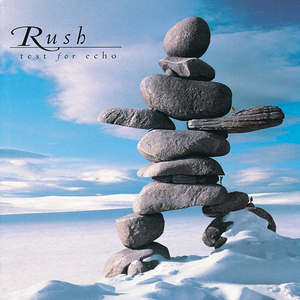
Rush 20: Test For Echo

Three years was the longest hiatus for Rush yet, but once they reconvened for another album, they pretty much picked up where they left off. Test For Echo built on the guitar-centric sound that made Counterparts so refreshing, but missed some subtleties. Maybe Alex Lifeson’s experiments on Victor were still ringing in everyone’s ears.

The title track is a successful groove, nicely balanced between the players, while the lyrics bemoan the barrage of media already starting to affect society in the ‘90s. “Driven” is built upon multiple bass tracks; apparently Geddy Lee felt it was his turn to drive. Several tricky rhythms throw off the listener, who might not realize how few lyrics there actually are. A similar tendency to use a list as the basis for lyrics dogs “Half The World”, which still manages to be catchy, and we hear echoes of Pearl Jam in the arrangement (but definitely not the vocals). “The Color Of Right” is another good mesh of music and lyrics, this time provoking thought over legal terms. “Time And Motion” manages to mix Rush prog with current alt-metal, with a completely anachronistic keyboard throwing a wrench into everything. The social commentary continues on “Totem”, a litany of deities and religious icons, traditional and imagined.

By Neil Peart’s own admission, the lyrics to “Dog Years” were written during a post-celebratory hangover, which could be why he pushes the metaphors and puns as far as possible. (Photos of the boys as children with their new instruments illustrate the words in the CD booklet.) “Virtuality” almost sounds quaint today, decades after a time when the possibilities of the Internet still seemed like science fiction. The album’s sound finally shifts with “Resist”, based around a piano pattern that’s been the hallmark of the Atlantic era thus far along with a pleasing acoustic breakdown. It’s welcome, almost an anthem. “Limbo” is the album’s requisite instrumental, but unlike their previous successes, this seems more like a track that never got vocals, save the disembodied samples and some wordless moaning. (Apparently it was pieced together, Frankenstein-style, from various ideas that had been “in limbo” for some time. And as much as “Rush Limbo” suggests a certain narcissistic radio host, that wasn’t the intention.) With its references to Sisyphus, “Carve Away The Stone” aims to be profound amid more complicated rhythms.

Test For Echo isn’t classic Rush, but it is impressive for coming together as quickly as it did. They would tour, of course, but little did anyone know that they were about to take an even longer break.

Rush Test For Echo (1996)—3

Tuesday, September 15, 2020

Alex Lifeson: Victor

Apparently not happy with Rush as his sole creative outlet, Alex Lifeson spent part of the 1994 and 1995 recording tracks in his home studio, without the other guys. Eventually the results became something of a solo album, which didn’t get much attention outside Rush diehards. Lifeson’s insistence on calling both album and artist “Victor” didn’t do him any favors.

Much of the music is harsh and overly loud. He doesn’t sing, thankfully, though he does provide “spoken word”. The handful of vocals are left to the singer from Canadian band I Mother Earth; another track is sung by cult artist Dalbello, who seesaws between a witchy purr and a Geddy-like yowl. Several musicians, including his son Adrian, assisted on other instruments, and Les Claypool of Primus plays on one track, not that you’d notice.

Four tracks of thrash finally give way to the moody “At The End”, while the more progressive “Strip And Go Naked” provides relief a few tracks later. “Shut Up Shuttin’ Up” is an attempt at humor, as two harpies complain about men over a funk-metal groove. While it should be no surprise that the lyrics don’t reach the lofty heights of Neil Peart, the sexual violence in “Don’t Care” and the title track (albeit an adaptation of a W.H. Auden poem) has us concerned about his psyche.

Victor is a vanity project that certainly has its admirers, but it can be skipped. Meanwhile, Neil occupied himself with an extensive all-star tribute to Buddy Rich, which sold better but was equally tangential to his main outfit.

Victor Victor (1996)—2

Friday, June 26, 2020

Rush 19: Counterparts

As the music industry continued to evolve and expand, Rush remembered what their fans preferred while recording their next album. Having recently toured with the inimitable Primus on the bill, it probably helped having some likeminded musicians encouraging them to be themselves. As it turned out, Counterparts was their best album in years.

The first thing we hear is Neil Peart counting in the band for “Animate”, a solid combination of guitar, bass, and drums, with just enough keyboards underneath to support the track without overwhelming it at all. “Stick It Out” turns the “Limelight” riff inside out in a nasty way, obliterating any memory of synthesizers, at least for the next four minutes. “Cut To The Chase” is another bouquet of riffs topped by a gem of a solo, and stops just before you’re afraid they’ll take another rap detour. It’s overwhelmed by “Nobody’s Hero”, which boldly addresses a victim of the AIDS crisis in the first verse, alludes to a girl’s death in the second, and generally underscores the need to recognize the ordinary person for all his or her strengths before it’s too late—a message Neil Peart would be faced with a few years down the road. “Between Sun & Moon” explores the mysticism of the universe in a poetic lyric over, again, lots of guitars.

Unfortunately, “Alien Shore” is a clumsy lyric, attempting to reconcile differences in gender and race, and then “The Speed Of Love” actually explores that very concept on a highly intellectual level. Then “Double Agent” turns everything upside down, musically and lyrically, dominated by several spoken (NOT rap, thankfully) sections from the mind of a spy. Where else to go but an instrumental, in this case “Leave That Thing Alone”, giving each member a chance to stand out. Another juxtaposition of styles arrives in “Cold Fire”, which pits unlikely riffing against yet another exploration of the nature of romance. Finally, “Everyday Glory” provides something of a closing anthem, encouraging the youth to strive for greatness despite bleak surroundings.

Counterparts proved just how merely tolerable the last handful of albums had been. The misfires in the middle notwithstanding, here was a solid return to form, manna for air guitarists and practitioners of the real thing, and another step towards respect.

Rush Counterparts (1993)—

Tuesday, February 11, 2020

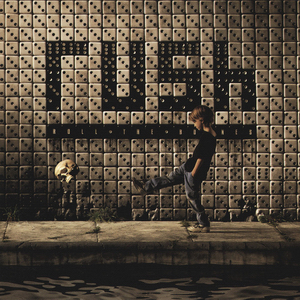
Rush 18: Roll The Bones

It’s safe to say that Rush was a mainstream band now, miles away from their Dungeons & Dragons roots. The cover of Roll The Bones may not intentionally acknowledge that dice-centric pastime, but once again utilizes a multilevel visual pun.

While not as obvious as side one of 2112 or such lengthy epics as “Cygnus X-1”, many of Rush’s albums can be considered concept albums, as there is often a common lyrical theme. On Roll The Bones, the theme is chance, gambling, and the general belief that fate is not pre-determined. “Dreamline” doesn’t directly concern that theme, but it’s a great track for driving, and a suitable anthem for the youth who managed to escape “Subdivisions”. Similarly, “Bravado” continues the “don’t give up” message from “The Pass” for a solid one-two punch.

And then the title track happens. The canned horns used on “Dreamline” are really starting to grate here, and funk isn’t really Rush’s thing. But nothing will prepare you for the rap section in the middle, to the point where even the chorus can’t redeem it. “Face Up” includes some keyboards we thought they’d left behind on Hold Your Fire, but at least it sounds like they’re having fun, even more so on the well-constructed instrumental “Where’s My Thing?”, helpfully subtitled “Part IV, ‘Gangster Of Boats’ Trilogy”.

In acknowledgement that their fans were older—as were they—“The Big Wheel” is the first song that approaches the topic of love and romance since “Tears” on 2112, this time in the form of a mild pep talk. “Ghost Of A Chance” is a more serious look at the topic, nailed to a garage riff and arena-ready solo. In between, “Heresy” considers the fall of the Iron Curtain without being too sappy, though the martial rhythms that open and close the track are a tad cliché. “Neurotica” finds Neil Peart having fun with words, though this time the pep talk is more along the lines of “snap out of it!” A few wacky time signatures help trip up the track. “You Bet Your Life” offers more wordplay, and the album basically ends.

Roll The Bones isn’t a classic out of the gate, but it remains catchy and, dare we say, toe-tapping. Save the title track, it’s easy to ignore, and we mean that in a good way. It might have been their most accessible album to date, filling a niche smack dab in the middle of the decline of hair metal and the rise of grunge.

Rush Roll The Bones (1991)—3

Tuesday, October 15, 2019

Rush 17: Chronicles

Smart labels anthologize the ones who got away, particularly when the ones have continued to thrive elsewhere. While Rush had jumped to Atlantic, Mercury knew that their catalog would continue to sell, particularly in the CD era. Hence, Chronicles neatly summarized the band’s history from start to now, on two discs, democratically sampling each one of their albums; the exception was three songs from Moving Pictures, not two.

In addition to providing an excellent overview that documented the taming of Geddy Lee’s vocal cords, the big draw for fans was the inclusion of the songs that had been left off the original CDs of All The World’s A Stage and Exit… Stage Left. “What You’re Doing” and “A Passage To Bangkok” each appear in sequence to ensure that every album was represented. Moreover, “Mystic Rhythms” was included from A Show Of Hands, and “Show Don’t Tell” provides true closure.

The modes of the times dictated that a double CD was packaged in a clamshell case about an inch thick, but Chronicles was worthy of taking up space on a shelf, and seemingly would always. It stayed in print even after the catalog was remastered in 1997, whereupon Mercury took to anthologizing them again, and not for the last time. Retrospective I: 1974-1980 and Retrospective II: 1981-1987 each repeated ten tracks from either disc of Chronicles and made some very bold additions (“By-Tor”? “The Body Electric”?) while jumbling the chronology and adding zero rarities. (Both volumes were combined into a single slimline package for 2006’s Gold, which reinstated “Working Man” to the dais at the expense of “Something For Nothing”.)

Then in 2003, likely to cash in on the band’s return from hiatus, The Spirit Of Radio was a single disc purporting to present the band’s “greatest hits”, despite the fact that only one of their singles had ever cracked the Billboard Top 40. That said, it again stuck to the timeline and hit all the highlights, with the possible exception of “Force Ten”. (True completists would also want to make room for the two Rush entries in Universal’s head-scratching ICON series. The first was a glorified mix tape that mixed familiar tracks with deep cuts; this was repeated a year later in a second version, along with a disc that sampled all their Mercury live albums.)

Rush Chronicles (1990)—4
Rush
Retrospective I: 1974-1980 (1997)—
Rush
Retrospective II: 1981-1987 (1997)—
Rush
The Spirit Of Radio: Greatest Hits 1974-1987 (2003)—4

Tuesday, July 30, 2019

Rush 16: Presto

Rush had tended to use the quarterly live album as a bookend, suggesting that the band’s next album would be an evolution, a new phase of the band, if you will. In the case of Presto, a marked de-emphasis on synthesizers was accompanied by a brand new contract with Atlantic, which they expected would give it, and the band, a push to the turn of the century.

“Show Don’t Tell” was an ideal intro, being the first track promoting the album, and the opener. Near-flamenco flourishes by every instrument carry understated verses designed to highlight the catchy choruses. “Chain Lightning” doesn’t stand out very much, until the chorus starts to sound too much like that of “Limelight”, and frankly, the pitch-altered “that’s nice” at the end is just odd. The next two songs solidify their role as spokesmen for suburban teens, continuing ideas first begun on “Subdivisions”: “The Pass” concerns teen suicide, pointedly against it, Alex’s little solo adding a feeling of triumph before the futility of “Christ what have you done”, whereas “War Paint” is a little more upbeat, dismantling the ideas of personal image and superficial vanity. “Scars” is built around an insistent African-style rhythm, with more lyrical references to “atmospheric changes”. The title track’s metaphors are a little forced, and Neil’s lyrics seem more self-reflecting than universal.

“Superconductor” is somewhat mindless, but it was designed that way, being a commentary on the disposable pap that always seems to sell millions of copies. Perhaps to prove their point, “Anagram (For Mongo)” doesn’t reference Blazing Saddles further than the title; rather, the wordplay reveals a series of adages, some clever, some forced. Lest we think they’re all about having fun, “Red Tide” crams concern over a variety of contemporary ills (acid rain, AIDS, the ozone layer) into one track, and “Hand Over Fist” extols cooperation over individual isolation. (Plus, the images of rock, scissors, and paper in the packaging inspired debate over which symbol corresponded to which band member.). Finally, “Available Light” starts with a very basic (for them) piano theme, but doubles the speed for the choruses, which culminate in throwbacks to Geddy’s high-pitched wailing.

Presto is a harmless little album, not exactly groundbreaking, but certainly reasserting the brand. All the elements are there, from the heavy riffing and polyrhythms to the literate lyrics and Geddy’s voice. Keyboards are still in there, but they don’t dominate. These days it sounds a little slick, but not as dated as other albums. (As for the cover art, it’s just plain goofy, illustrating the title track with an unconscious allusion to Watership Down.)

Rush Presto (1989)—3

Friday, April 19, 2019

Rush 15: A Show Of Hands

Right on schedule, another set of four Rush albums was followed by a double live album. A Show Of Hands spotlit their most recent tour promoting their most recent album, with a couple of recordings from the previous tour to fill it out. With the exception of “Witch Hunt” and the closing “Closer To The Heart”, all the songs come from those last four albums, so nobody can really complain about repeats.

The band prided themselves on perfectly replicating their records onstage, so there’s not much difference outside a few vocal embellishments and the occasional intro. We can marvel at Geddy Lee’s ability to play bass and sing at the same time, for instance, on “Turn The Page”. Technology allowed them to play the orchestral accompaniment to “Marathon”, as well as import the voice of Aimee Mann for “Time Stand Still”. It’s also possible to enjoy the band’s unique sense of humor, beginning with the Three Stooges theme that opens the album, and Neil Peart’s four-minute drum solo, cheekily titled “The Rhythm Method”. (Keen-eared listeners will recognize some patterns carried over from “YYZ”, but those are forgotten once he starts hitting the MIDI pads.)

As the CD had become standard, A Show Of Hands was the first Rush live album that didn’t have to leave off a track that wouldn’t fit on a shiny silver disc. Of course, the LP and cassette ran the same length anyway, and diehard fans would happily pony up the cash for the companion videotape, which included songs not on the album while omitting some that were.

Rush A Show Of Hands (1989)—3

Friday, January 11, 2019

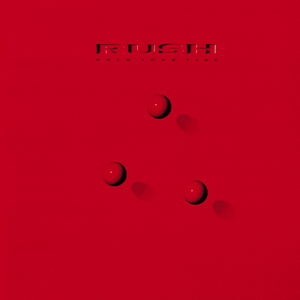
Rush 14: Hold Your Fire

After a dozen years and albums developing their sound, Rush had found something of a formula in the mid-‘80s, along with consistent commercial success. Hold Your Fire was very much in the mold of Power Windows, from its general sound and embrace of technology, and while that may have been fine for the kids who snapped it up, the bigger picture tells a different story.

“Force Ten” is a dynamic opener, the wind metaphor taking over and driving most of the feel, Geddy Lee’s bass chords and vocals particularly top-notch. It’s proof that they could write a catchy chorus now and then, underscored by the excellent construction of the next tune. “Time Stand Still” has one of their trademark circular riffs over a sneaky time signature, but what most people remember about the track is that it features the voice of Aimee Mann, then still of ‘Til Tuesday. Her contribution was so key they had to incorporate her face into the onstage visuals.

And from there it gets a little generic, even for them. The arrangements are tight, the playing distinct and expert, and even Geddy’s voice sounds warmer than ever, but the songs don’t leap from the speakers. “Open Secrets” actually approaches the topic of communication between romantic partners but they might as well still be talking about trees or snow dogs given the instrumental approach. Bizarrely, “Second Nature” uses a quieter, soulful approach (for them) to address the topic of the environment, and “Prime Mover” does that quiet-loud-quiet-loud thing through most of the song, which again is catchy, but sounds a lot like the songs on the last album.

“I don’t wanna face the killer instinct,” Geddy wails after an ominous intro, and the theme of “Lock And Key” is set. The music is more interesting than the lyrics. We can’t say the same for “Mission”, which was one of their most accessible songs at the time, and one that now seems to be a prime candidate for a hair metal power ballad. “Turn The Page” has aged better, despite what sound like canned horns, and frankly a lot better than the Bob Seger song of the same name, but not as easy to dance to. The band themselves have disowned “Tai Shan” since its release, and for good reason. It’s one thing to write a song influenced by a trip to China, but using Southeast Asian melodies in the era of The Karate Kid is cringeworthy. And using that damn whistle synth patch a year after everyone else did was just sloppy research. “High Water” is a good closer, even if it is a little too derivative of “Mystic Rhythms” and ends abruptly.

Hold Your Fire was the band’s longest studio album to date, and while ten tracks certainly gave value for the money, maybe they shouldn’t have. Still, it’s a competent album, and not “bad” in the least; it’s just not very exciting. They had gotten comfortable, and were letting the machines do their experimenting for them.

Rush Hold Your Fire (1987)—3

Tuesday, September 18, 2018

Rush 13: Power Windows

After not too long a break, another Rush album appeared, with another co-producer. Those who thought Grace Under Pressure was too shiny would likely welcome the better balance of guitar and synth on Power Windows. Amazingly, the album even got a semi-positive review in Rolling Stone magazine.

“The Big Money” crashes out of the silence, full of percolating bass and suspended guitar chords, and a mid-section that could almost be mistaken for U2. Lyrically it’s not the most adventurous, but the cyclical patterns make it memorable. “Grand Designs” starts okay but doesn’t break much ground, though we really like that high-speed piano run about halfway through. While it seems a little forced these days, “Manhattan Project” is about the creation of the atomic bomb—a big topic of the era—swinging between a plaintive melody and a more urgent chorus, with a string arrangement by Anne Dudley, best known for her work with Trevor Horn and Art of Noise. “Marathon” is a more upbeat anthem to bring side one to a close, metaphors aplenty, and featuring an actual choir.

Side two doesn’t always catch fire. “Territories” is a pretty blatant (for them) commentary on world politics, stuck to a mildly Eastern rhythm and Far Eastern melodies. “Middletown Dreams” is something of an extension of the suburban setting of “Subdivisions”; the chorus is the best part, and since practically every state in the U.S. has a Middletown, concertgoers could always cheer for theirs. “Emotion Detector” sounds like elements of other songs on the album, so it doesn’t really go anywhere, but at least “Mystic Rhythms” does a better job with “exotic” sounds and would allow Neil to play around his electronic kit onstage.

While they still weren’t exactly mainstream, Power Windows finds the band even further from their prog-metal roots. The down side of the bargain was that their “big arena sound” was making many of their songs sound indistinguishable from each other. And while the sidelong epic seemed to be well in their past, none of the tracks is shorter than five minutes, adding to the density. It works, but only just. And perhaps the only dated thing about the album is the haircut of the kid on the cover, who still looks surprisingly like Anthony Michael Hall.

Rush Power Windows (1985)—3

Friday, April 13, 2018

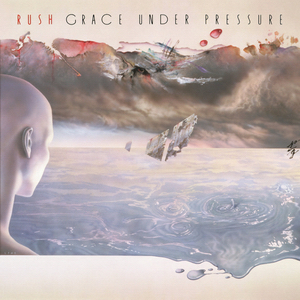
Rush 12: Grace Under Pressure

For much of the band’s career to date, producer Terry Brown loomed large, to the same given, subliminal effect on a record sleeve as a George Martin or an Andrew Loog Oldham. So it was indeed A Big Deal when the next Rush album credited a different name alongside theirs.
Grace Under Pressure arrived at the height of ‘80s silliness, and a glance at the haircuts on the back cover provides proof. Synthesizers were now at the forefront of the mix, alongside guitars that were further than ever from prog. Hindsight has been kinder to the album than we were at the time, enthralled as we still were with Moving Pictures. This new album seemed almost too slick, too shiny; but again, if this was your high school soundtrack, your reaction would have been different.

To their credit, each of the songs does indeed explore, vividly, the concepts of human stress—not in the egomaniacal Dark Side Of The Moon sense, but more what even non-rock stars must endure on a daily basis in so-called modern society. The album starts with a moment of “2112” wind and then “Distant Early Warning” (commencing a worrying trend of not having the title mentioned in the song itself, making it tough to request on the radio) echoes the contemporary nuclear worry prevalent in 1984, yet dares to hint at the notion of a romantic relationship. “Afterimage” goes right to the point, reflecting on a recently deceased friend, and not at all mawkishly; rather, the urgency in the riff conveys anger at what/who was lost. “Red Sector A” is divisive, being as it sports what we’d still call a disco beat, but it’s with paired a compelling lyric, evocative of the Holocaust, which Geddy Lee’s parents survived. “The Enemy Within” is said to be part one of the now-completed “Fear” trilogy, which began two studio albums before, continuing the reggae influence from the second part (and from “Vital Signs”). Each installment is thus less interesting than the last.

A somewhat robotic beat fittingly but annoyingly inaugurates “The Body Electric”, accompanied by percolating bass and more unresolved chords; as with much of the album, the chorus is the best part. “Kid Gloves” has a dizzying, cyclical riff in 5/4 that calms down for the choruses, and reading the lyrics now, they come off as something of a comfort for the confused teen mindset depicted in “Subdivisions”. The edgy “Red Lenses”—listed in lowercase and demonstrative color type in all documentation—is loaded with plays on the word and simple rhymes but doesn’t really stick. Finally, “Between The Wheels” employs a suitably tense synth bed, and while the driving chorus hints at the slimmest chance of perseverance, the message is bleak.

It’s not one of our go-to Rush albums, so we’re always surprised how listenable Grace Under Pressure turns out to be whenever we do throw it on. Still, it’s a long way from the yowls and sorcery of the previous decade, and does show that while the band may no longer be considered progressive, they have progressed.

Interestingly, when the album was expanded a couple years after its 40th anniversary, the package included a brand new mix by none other than Terry Brown on a second disc. Some of the sheen has been removed, and there’s a not necessarily warmer, but certainly darker sound overall. It may not be better, but it is different. Two further discs presented the complete performance already released (in part) on VHS, DVD, and CD as Grace Under Pressure Tour. The audience is still too high in the mix, so they almost sound canned, but the setlist is balanced—Neil Peart’s drum solo is now at the end of “Red Lenses”—and it’s fun to hear Joe Flaherty’s Count Floyd character before “The Weapon”, as part of the complete “Fear” trilogy. (A Blu-ray offered the full video of the concert, along with promo videos and the usual hi-res mixes of the album. And of course, a book, ephemera, and new artwork graced the packaging.)

Rush Grace Under Pressure (1984)—3
2026 Super Deluxe Edition: same as 1984, plus 29 extra tracks

Tuesday, November 7, 2017

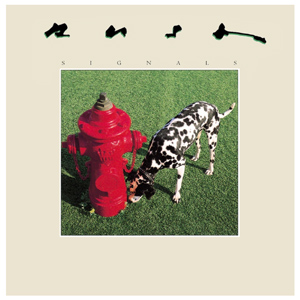
Rush 11: Signals

Each new album increased their popularity, and inducted new Rush fans into the fold. But if there was any doubt that Rush were the patron saints of the high school parking lot, the first track on Signals—released in time for the fall semester—dispelled it.

As with the previous album, a synthesizer dominates, setting a standard for the band’s new next phase. It’s a catchy riff, with nice open suspensions and slight minor modifications, and then the lyrics start. Tying in with the zoning map on the back cover, “Subdivisions” expertly nails the alienation felt by the average North American suburban teenage boy, many of whom may well have been Rush fans. The song doesn’t treat the turmoil as petty or insignificant, nor does it encourage violence or revolution. The band knew their audience, because they remembered what it was like to be that audience.

It’s a good start to the album, which does manage to keep up. “The Analog Kid” is built on a circular guitar riff, and further explores the dreams of a teenage boy, only scratching the surface. “Chemistry” begins with chords reminiscent of their early work, with a little “Vital Signs” thrown in, plus rare lyrical contributions from all three band members that likely would have made some sense to the kids struggling through science class. In contrast with the track earlier, “Digital Man” paints another archetypical portrait, with lots of guitars over a jazzy rhythm.

Reggae influences continue on “The Weapon”, which, while part of the in-progress “Fear” trilogy, isn’t really that scary. As further proof that they knew their fan base, “New World Man” was literally written to fill space, as a measure to keep the cassette sides equal. Besides being one of the better tracks here, it also became something of a hit. A sobering meditation on the loss of creativity, “Losing It” is possibly the least Rush-like track, beginning with synth parts off a Journey album and an electric violin contributed by a guy who would one day be best known for working with k.d. lang. And after years of exploring science fiction in their lyrics, “Countdown” is a factual account of the band’s experience watching the launch of the Columbia space shuttle.

While not as universally appealing as Moving Pictures, Signals provided a worthy follow-up for the growing fan base to wear out in their tape decks. Hindsight shows the worrisome encroachment of synthesizers into the band’s onstage arsenal, but the best songs are still highlights. (Like the previous five studio albums, Signals was subject to expansion for its 40th anniversary. Unlike those albums, the so-called Super Deluxe Edition consisted only of the album on CD and vinyl, hi-res mixes on a Blu-ray, four vinyl singles, a book, and ephemera. In other words, no new material, not even live. And it wasn’t cheap.)

Rush Signals (1982)—