Showing posts with label 2016. Show all posts

Friday, March 15, 2024

Phil Collins 14: The Singles and Plays Well With Others

The “Take A Look At Me Now” series of Phil Collins album reissues was certainly ambitious, and considering how quickly it come to completion, mostly successful. (Your move, Paul McCartney.) However, many of the hit singles that appeared on movie soundtracks over the years were not included near their most obvious albums, and a high volume of B-sides and other oddities were also passed over on the various bonus discs in favor of demos and live versions of often anachronous origin.

But he didn’t make it this far in the biz being a dope. Just in time for his autobiography to hit bookshelves came a compilation—his third—called The Singles. This was available two ways: a three-disc version in chronological order, and an abridged version that shuffled 33 of the songs into one mostly upbeat mix and one mostly slow one. (It also contains everything on …Hits.) Anyone who truly cares will half to have the big set, but considering that half of the third disc is made up of songs from Tarzan and Brother Bear, that makes it easy to skip it.
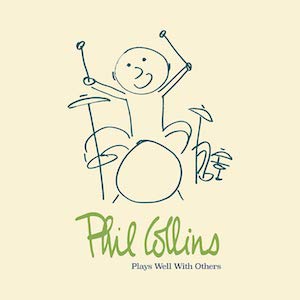
Two years later, an even more ambitious project emerged. Plays Well With Others was a sprawling four-CD set highlighting his guest spots on albums going all the way back to 1969. The first disc goes up to 1982, touching on sessions he did for the likes of John Cale, Brian Eno, Robert Fripp, John Martyn, and Peter Gabriel, his furious side trips with Brand X, and production jobs for Robert Plant and ABBA’s Frida (represented by the smash hit “I Know There’s Something Going On”). The second disc is a little less eclectic, with production work for Eric Clapton, Philip Bailey, and Stephen Bishop, as well as more obvious hits like Howard Jones’ “No One Is To Blame”, Tears For Fears’ “Woman In Chains”, and even “Do They Know It’s Christmas?” by Band Aid. (His version of “Burn Down The Mission” from the Elton John tribute album Two Rooms appears as well.)

By the third disc we’re in the ‘90s, which here is dominated by more John Martyn productions, session work for David Crosby, and his own appearances on soundtracks and tribute albums. “No Son Of Mine” appears here too for some reason. But there is some jazz work, with Quincy Jones and Fourplay. This continues on the fourth disc, which pulls from three decades’ worth of live appearances, but the jazz is tempered by all-star turns from Prince’s Trust concerts and such. For all the trashing he’s gotten over the years, including by this very forum, it’s easy to forget that he was a very inventive drummer in his prime.

A year after that, further strays from the Collins catalog were finally collected, albeit digitally. Other Sides contained 90 minutes of B-sides—including “The Man With The Horn” and several revealing demos—that still should have been parceled out to the proper album reissues, while Remixed Sides ran to two hours’ worth of extended versions to appease anyone who loved 1988’s 12"ers compilation or needed all four versions of “Hang In Long Enough”.

Phil Collins The Singles (2016)—3
Phil Collins
Plays Well With Others (2018)—
Phil Collins
Other Sides (2019)—
Phil Collins
Remixed Sides (2019)—2
Friday, August 18, 2023

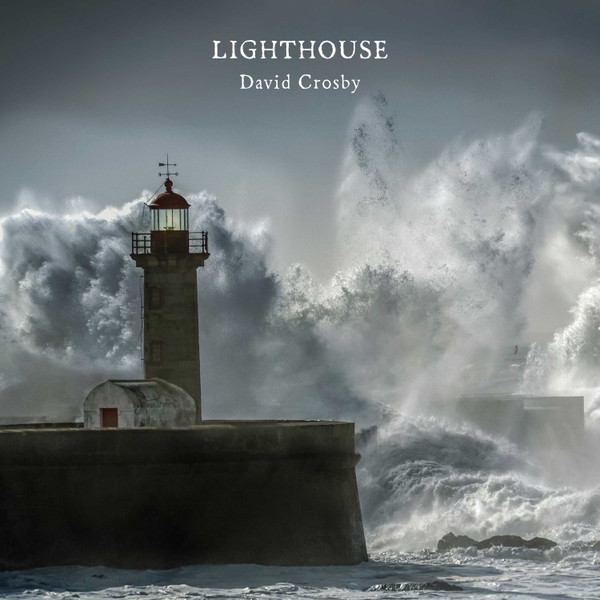
David Crosby 7: Lighthouse

All of a sudden David Crosby was busy musically, which was good for him, since he’d pissed off Nash and Young seemingly for good, and Stills was happy playing with anyone else. Enter one Michael League, who was born right before Crosby went to prison for multiple drug and weapons convictions in the mid-‘80s. Apparently the kid, who was best known for a jazz fusion called Snarky Puppy, wanted to record something fast, so they did. Lighthouse is mostly a collaboration, with Crosby singing everything and playing some guitar, while League adds very unobtrusive guitars and basses. (Surprisingly absent for the first time in decades is James Raymond, who’d been so involved with every other Crosby project of the previous twenty years.)

Overall it’s a very gentle album, beginning with “Things We Do For Love”, which is otherwise about as slight as its title might suggest, but good luck resisting it. “The Us Below” has a comforting, familiar rolling guitar part and rich harmonies pondering our place in the universe. “Drive Out To The Desert” is full of good advice, delivered slowly and deliberately. Musically it’s a prelude to the more percussive “Look In Their Eyes”, which appears to be a plea for the homeless, immigrants, refugees, you name it. He expands the theme on “Somebody Other Than You”, wherein he angrily assails the people who marginalized others in the first place.

League wrote the music for “The City”, which is probably why it doesn’t sound like a Crosby song, but somebody should have noticed the lift from Steely Dan’s “Do It Again”. They’re not the first to write about New York as a woman, and won’t be the last. “Paint You A Picture” is another collaboration with Marc Cohn, who wrote the words but does not play the piano. Spooky as well as haunting, the lyrics are as autumnal as the music. “What Makes It So” combines the rolling approach already heard on the album with more questioning of so-called authority. “By The Light Of Common Day” stands out for one of the female voices who sings with him, one Becca Stevens, who also wrote the music to Crosby’s words.

Lighthouse is another nice album, and at its best when it stays low-key. While we don’t hear the masterpiece other reviewers have, and he certainly sounds older, it was good to know he still had the fire to create.

David Crosby Lighthouse (2016)—3

Tuesday, August 15, 2023

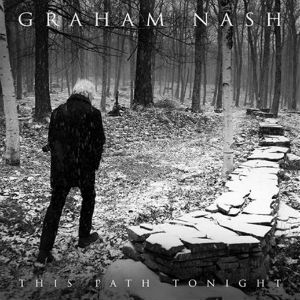
Graham Nash 7: This Path Tonight

One might think Graham Nash was busy curating his past, between CSN-related box sets, printing old photos, and writing a memoir in which he extolled the genius of his partners and his happy existence as a family man. But within a few years, he’d left his wife, took up with a younger woman, and vowed to never work with David Crosby again. He also made his first solo album in fourteen years.

This Path Tonight is notable among his work in that it was written completely in collaboration with another, lesser-known musician. Oddly, that musician was Shane Fontayne, who’d been a large presence on David Crosby’s most recent first-album-in-years. Nonetheless, it was a smart move, as Graham has a tendency to play in a very small sandbox.

The title track and “Myself At Last” cover the same basic metaphorical ground as depicted on the cover (hint: he’s on a lonely road and traveling, traveling, traveling), alternately edgy and contemplative. “Cracks In The City” and “Beneath The Waves” both consider the ongoing struggles humanity in such a cruel world, and to some extent, so does “Fire Down Below”, but it stands out thanks to a vibe more along the lines of his mid-‘70s work. “Another Broken Heart” would seem to be designed to comfort the woman he left, but comes off more berating than sympathetic.

He finally seems to address his future in “Target” with its blatantly phallic imagery of what he’s going to do with his bow and arrow. Then, he looks back at when he “used to be in a band” and music was all anybody needed in “Golden Days”. There’s a sad fake string arrangement here, and that mood continues on “Back Home”, a blunt examination of the end of life, on which “Encore” expands more kindly, touching on passing lovers, friends, and concerts. Only on the digital and download versions of the album does he get political, with the racial charged “Mississippi Burning” and “Watch Out For The Wind”, while “The Last Fall” is another melancholy end-of-relationship tune.

Throughout This Path Tonight, the band is well-placed and the production provides good atmosphere. While it isn’t a masterpiece, it is strikingly fresh in places, making it his most worthwhile solo album since his first.

Graham Nash This Path Tonight (2016)—3

Tuesday, March 7, 2023

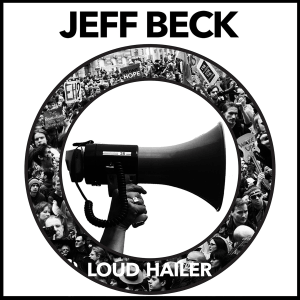
Jeff Beck 18: Loud Hailer

While his is the only name on the cover, spine, and label, Loud Hailer is more of a collaboration than a Jeff Beck album. The vocals and guitar riffs come respectively from Rosie Bones and Carmen Vandenberg of Bones UK, whose producer gets credit here as well. The album is something of a maturation of the electronica experiments from the turn of the century, in that it’s still very processed, but production techniques have caught up so it doesn’t sound totally robotic.

Beyond the mild abrasion throughout, personal enjoyment will likely depend on one’s tolerance of Rosie’s vocals, which lean heavily on an affected cockney approach. Her lyrics mostly focus on social commentary, as shown in such titles as “The Revolution Will Be Televised” and “Scared For The Children”. The soulful “Shame” is a highlight, mostly because she sings more than poses—kudos also for the key change at the end. “Thugs Club” rumbles along until we hit a sly rhythmic echo of “Beck’s Bolero”, and “O.I.L. (Can’t Get Enough Of That Sticky)” is a funky JB’s homage. The closing “Shrine” is the best melding of Rosie’s voice and his guitar. That said, Vandenberg is an accomplished guitarist, and often dominates the tracks; two instrumentals—the slow-burning “Pull It Up” and “Edna”, which is a mere prelude to “The Ballad Of The Jersey Wives”—keep the focus on Beck.

The Bones UK folks have since gone their way, so maybe Loud Hailer was as far as this collaboration could go. It’s still worth a listen.

Jeff Beck Loud Hailer (2016)—3

Friday, July 22, 2022

Paul Simon 18: Stranger To Stranger

For most of his post-Garfunkel career, Paul Simon has painstakingly created songs with the mildest suggestion of a rhythm as touchpoints. In his old age, with the ease and advancements of home recording, he doesn’t have to travel to other countries and observe other cultures for inspiration. He still could, of course; he just doesn’t have to.

Stranger To Stranger sounds like it was assembled on a computer, and we don’t mean that in a bad way. The sound is still fresh and pure, like thanks to the assistance of “his old partner Roy Halee”, which is how the credit actually reads. Many of the tracks involve multiple players and exotic instruments, but it still remains very much a solitary vision.

The first sound we hear is an Indian string instrument that the liner notes tells us sounded like “The Werewolf” to the auteur’s ears, so he wrote a song around it about doom and death. Sound effects abound, and the track is taken over by a gothic horror movie pipe organ by the end, along with more howls. “Wristband” is a very clever song that retains its humor past several listens, and manages to extend the idea of exclusive entry past its premise. “The Clock” is an instrumental built around a simple pulse, with some chimes, and is over too quickly. More complex rhythms and textures drive “Street Angel”, while a waltz of sorts propels the lilting title track. As predicted two tracks earlier, “In A Parade” finds the street angel in a hospital being diagnosed for mental disorders, with beats to match.

The engaging “Proof Of Love” is very reminiscent of his early ‘90s work, and apparently the noted Brazilian influence is why. “In The Garden Of Edie”—again, clever—is another instrumental that isn’t long enough. “The Riverbank” continues the musing on death, but over a mildly funky groove that isn’t down in the slightest. “Cool Papa Bell” would be mostly a tribute to a Negro League baseball legend, but is dominated by a tuba and spends more time reflecting on a certain twelve-letter epithet. The closing “Insomniac’s Lullaby” adds sound effects and Harry Partch instruments to a lovely guitar piece and meditation on sleeplessness. It’s more of a prayer than a lullaby, but it’s effective.

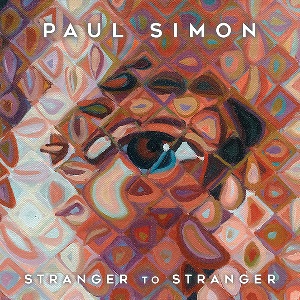
Stranger To Stranger is another winner in a career that’s slowly winding down. From time to time he leans on one of his spoken character voices rather than trying to find a melody, but the solo guitar pieces have us wishing he would do an instrumental album of same. He should also be commended for the album’s digestible length, at just over 37 minutes. (That said, a deluxe edition included a few extra tracks, starting with the exquisitely recorded “Horace And Pete”, the theme song for a Louis C.K. web series, which should have been on the main album. The oldie “Duncan” and “Wristband” come from a well-received performance on A Prairie Home Companion. “Guitar Piece 3” is a spooky interlude, while “New York Is My Home” is a collaboration with Dion DiMucci, also featured in the aforementioned web series.)

Paul Simon Stranger To Stranger (2016)—

Tuesday, July 12, 2022

Brian Eno 23: The Ship

Ambient music and vocal music have been parts of various Eno albums, to be sure, but he’s rarely tried to meld them within the same piece. That changed with The Ship.

The title track is a lengthy meditation on the sinking of the Titanic. The subject is not a new obsession; back in the ‘70s Eno inaugurated his Obscure Records label with a neo-classical piece by Gavin Bryars called, yes, The Sinking Of The Titanic, which built on the idea that the orchestra on board kept playing while the boat sank. This intriguing piece incorporated taped voices and sound effects to approximate the effect of water, and so does Eno’s. After several minutes of setting a mood, he starts singing, slowly, in a very low register, and harmonized. When the voices arrive, they’re either fragmented, too low to discern, or approximate another language, until the piece fades on a repeated “wave after wave”.

The second half of the album is a suite in three parts titled “Fickle Sun”, said to be inspired by the further destruction of the first World War. The first part is almost as long as “The Ship”, but the music isn’t as soothing, with more ominous melodies in the background and the lyric punctuated by distant thuds that approach into loud clanging accompanied by brass. A churchy organ emerges, and the melody changes to a more major key. Soon the voice appears almost alone, with a female voice processed to sound like a telegraph, ending with some strings and more uncertainty. The second part, subtitled “The Hour Is Thin”, is a relatively brief, apparently computer-generated monologue read by the voice of Darth Maul, the live-action Tick, and the flatmate from Shaun Of The Dead over some otherwise pleasant piano plinking we’d prefer to hear alone. The surprising finale is a very reverent cover of the Velvet Underground’s “I’m Set Free”, helped by recent cohorts Jon Hopkins and Leo Abrahams. Whatever this has to do with the Titanic or the war is beyond us, but it’s shimmering and lovely.

Because of its length, The Ship is one of those Eno albums that sounds different every time you listen to it, thanks to all the layers and textures. And that’s probably what he wanted. It’s easy to get lost in.

Brian Eno The Ship (2016)—3

Tuesday, November 2, 2021

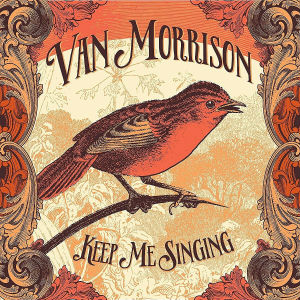
Van Morrison 44: Keep Me Singing

Eight years earlier Van Morrison pledged to keep it simple; now he’s asking whoever’s in charge to Keep Me Singing. Considering how his output had tailed off in that time, it’s a reasonable request.

It’s a slightly schizophrenic album—about half revives the lush sound perfected in the late ‘80s, which he abandoned as soon as it became profitable, while a variety of uptempo tracks attempt to provide variety, but simply seem badly placed. “Let It Rhyme” opens the proceedings with a reiteration of that theme he’s repeated since “Stepping Out Queen”, while the subtle pedal steel guitar gives a nice ambience. “Every Time I See A River” is a collaboration with lyricist of note Don Black, who apparently made his money in movies and theater. We like it anyway, and no, that’s not Georgie Fame on the organ. The title track isn’t very exciting, but “Out In The Cold Again” expresses a rare vulnerability, and “Memory Lane” begins with another out-of-character flourish, this time of strings. Then things go completely off the rails: “The Pen Is Mightier Than The Sword” is a decent groove, but the lyrics sound like a first draft, and completely at odds with what we’ve heard already.

Better you should skip right to “Holy Guardian Angel”, which repeats a bunch of blues clichés but still has a lovely arrangement with nice backing vocals for a change. He probably heard “Share Your Love With Me” from Bobby “Blue” Bland, or even The Band; most likely he ignored the Kenny Rogers cover. The reminiscing continues in “In Tiburon”, wherein his memories and impressions of the Beat scene in San Francisco weave through the verses. The comparatively brief “Look Beyond The Hill” begins as a cool-jazz instrumental, then delivers three quick verses and a middle eight. “Going Down To Bangor” is basically a tourist advertisement for some of the sights in County Down in 12-bar blues, and “Too Late” is strangely attached to a doo-wop tempo. Finally, “Caledonia Swing” is a pure instrumental akin to closing credits.

Had he shaved a few of the uptempo oddities from the running time, this might have been an overdue successor to his No Guru through Enlightenment period. Instead, Keep Me Singing is just another Van Morrison album, to be filed aside the rest.

Van Morrison Keep Me Singing (2016)—3

Friday, September 17, 2021

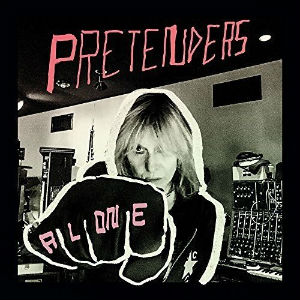
Pretenders 13: Alone

Once again “Pretenders” was presented as an overall brand name rather than a band of consistent members that fans had been following for over three decades. On Alone, Chrissie Hynde is joined by fellow Akronian Dan Auerbach of the Black Keys, who produced and brought along a couple of guys from his side project The Arcs. Therefore, the sound is those distorted retro R&B overtones made popular by the likes of Amy Winehouse and, yes, the Black Keys. And no, Martin Chambers isn’t on the album.

Chrissie is a compelling vocalist and top-notch songwriter whatever her outlet. Were we in charge of marketing, we’d’ve promoted this as a Chrissie & Dan album, as her name would pull in Pretenders diehards, and his would yank in the younger generations. But we’re not, but we still feel compelled to insist that this is not a Pretenders album, nor should it be mistaken for one, despite the advertising. (A later pressing coupled the album with a bonus disc recorded live the following year with the previous version of the Pretenders including, yes, Martin Chambers on drums.)

The title track mixes Lou Reed swagger with a more tuneful chorus, but doesn’t really convince. “Roadie Man” and “Let’s Get Lost” are pointed throwbacks to a pre-punk era, but “Gotta Wait” brings in the stomp. “Never Be Together” is co-written by the guy she worked with on her Stockholm album, plus it’s got Duane Eddy sitting in on guitar. “Chord Lord” turns the sequence of “Lay Lady Lay” inside out nicely, so that’s good.

Acoustic and lowkey, “Blue Eyed Sky” is a welcome change of pace at the halfway point, but while “The Man You Are” also begins acoustic, it’s soon swallowed up by clattery production. The spaghetti western vibe on “One More Day” is too cheesy to work, and the overly whiny “I Hate Myself” isn’t going to win her any sympathy. “Death Is Not Enough” comes from obscure musician Marek Rymaszewski, so she’s still got a head for a hook when she hears one. Finally, “Holy Commotion” would be a much better song if it hadn’t been built around what sounds like a synthesizer preset.

We’d like to say Alone is good for what it is, except that it is NOT a Pretenders album. We will not begrudge Chrissie any desire to experiment, since she’s still one of the baddest rockers out there, and we like our teeth just the way they are.

Pretenders Alone (2016)—2

Tuesday, January 5, 2021

Robbie Robertson 6: Testimony

After Levon Helm died, there were two surviving members of the Band. Garth Hudson never talks to anybody, but Robbie Robertson is always more than happy to tell the tale again. His autobiography, Testimony, was published in 2016, followed by a companion album.

While the book covers his life from birth through The Last Waltz, the album is much less organized, and in many ways unrelated. For one, it begins with a remix of the “title track”, from his 1987 debut solo album. From there it rambles throughout his performing career, throwing in a few early sides with Ronnie Hawkins and Levon & The Hawks, touching on the initial Dylan era with “Obviously 5 Believers” and a live “Rainy Day Women” from 1974. The Band itself is represented by previously released live versions, with the exception of “It Makes No Difference”, “Bessie Smith”, and “Out Of The Blue”—the latter two both rare instances of Robbie singing lead with the group. What’s called a “song sketch” of “Twilight” is pulled from one of the box sets he’d curated, and four further tracks are called from the solo albums.

There are other, better compilations of the Band, and definitive recordings with Dylan; a comprehensive Hawks collection would have been a better soundtrack for the book. It helps that the music is good, even if the thesis is unclear.

Robbie Robertson Testimony (2016)—

Tuesday, April 3, 2018

Bruce Springsteen 24: Chapter And Verse

With a glimpse of mortality following the loss of E Street Band members, and even before he started writing his autobiography, Bruce Springsteen opened his legendary vaults to demonstrate the making of certain key albums in his catalog. Some were also accompanied by live artifacts. He’d already started offering downloads of shows from his most recent tour, but the Bruce Springsteen Archives went further back, selling professionally recorded concerts, complete with aesthetically relevant artwork, from his entire career.

It’s a fairly impressive endeavor, having recently escalated to a new release every month or so, and higher concentration on the previous century. Once his book was published, a companion of sorts was also released. Chapter And Verse doesn’t attempt to condense every musical reference in the pages into an 80-minute program, but it does provide something of a chronological overview, even going back before the fame.

His first band is represented by “Baby I”, a worthy garage rock stomp, and an even louder thrash at “You Can’t Judge A Book By The Cover”. Once he started writing his own songs in the ‘70s, Steel Mill takes over for “He’s Guilty (The Judge Song)”, with a lot of pinched lead guitar and organ; then they evolve into the Bruce Springsteen Band for “Ballad Of Jesse James”, which belies a distinct Van Morrison influence. “Henry Boy” is an awfully busy acoustic demo that predates the first album, and the best parts would form the backbone of “Rosalita” two years down.

“Growin’ Up” is included in the demo version previously heard on Tracks, and from there we go forward with a song per album until this century. The idea seems to be to include the most personally important track from each, and not necessarily the hits. If that’s what you’re looking for, you have other options. This one’s for the diehard fans.

Bruce Springsteen Chapter And Verse (2016)—3

Friday, February 23, 2018

Monkees 9: Good Times!

The latest “new” Monkees album, released to celebrate the 30th anniversary of their 20th anniversary, got kudos for its choice song material, contributed and masterminded by some of the more respected power-pop songwriters of the early 21st century, many of whom learned their craft by listening to Monkees records as kids and, less blatantly, longing for the velvet and velour stage outfits of the Partridge Family. That some of these people had been employed by the Austin Powers franchise should be no surprise.

One defense of the factory ethic is that the Monkees originally relied on Brill Building veterans for their music, from song to record, and while that’s true, it didn’t make a difference once the TV show was over. The four learned how to be a real band, succeeded at it, and promptly worked separately, to increasing indifference. Just like that, they were no longer a band, and without the show, they had no impetus to be, except from a nostalgic point of view.

Here’s the truth, and it will hurt: The Monkees were inessential without the TV show. You can bring any of the participants together in any combination, but they will be even less relevant than they were at the time. (Moreover, they don’t belong in the Rock and Roll Hall of Fame because there was nothing rock ‘n roll about Davy Jones. Sorry, folks.)

Micky and Davy worked together several times throughout the ‘70s, but it wasn’t until the big revival in 1986 that Peter was allowed back in the fold. A new hits collection—the first of many to come—called Then & Now… The Best Of The Monkees sported three “new” songs, sung by Micky and supposedly including Peter somewhere, and then Davy joined in for Pool It! the following year. The music was purely generic ‘80s pop, with all the fake drums and bad keyboards you can imagine. Mike Nesmith was conspicuous in his absence, as was any lasting impression.

Ten years later, Mike took part in the 30th anniversary campaign on the condition that he write and direct their reunion TV special, and that any new album would be written and performed solely by the four of them. Beginning with a re-recorded “Circle Sky”, Justus tried to rock, and was a little better than Pool It!, though the jury’s out as to whether Micky’s ponytail is preferable to his current choice of hats. (The TV special was clever, though. In places.)

After Davy left for that Broadway stage in the sky, the other three continued to celebrate him, Mike even going so far as to insist that the Monkees “were his band. We were his sidemen.” A few reunion tours were easy enough to pull off, but only the absolute rabid would be excited about a new album, recorded half a century after the first. Since some of those rabid ones included power pop devotee Adam Schlesinger (responsible for the music in That Thing You Do!) and his buddies in Fountain of Wayne, here was a chance for a reunion album made from true love and not merely commerce.

Indeed, Good Times! manages to capture enough of the classic vibe, and not just because it relies on vintage unfinished ’60s recordings for some of the material. The title track is an embellished Harry Nilsson demo, “Gotta Give It Time”, “Whatever’s Right”, and “Wasn’t Born To Follow” never got vocals until now, and “Love To Love” uses a 1967 track with a 1969 Davy vocal and backups recorded this century. (It’s his only appearance on the album, a Neil Diamond blender mix of “Little Bit Me” and “Solitary Man”.)

Each of the guys contributes an original, but most of the other tracks come custom-made straight from Rivers Cuomo (Weezer), Andy Partridge (XTC), and even a collaboration between Noel Gallagher (Oasis) and Paul Weller (The Jam). None are very embarrassing, if a little derivative, though the best is probably “Me & Magdalena”, written by Ben Gibbard of Death Cab For Cutie, and wonderfully harmonized by Mike and Micky.

Skeptical as we were, we have to admit Good Times! is worthy of all its good ink thus far received. It’s certainly better than any other “new” product released after the show was cancelled, and goes a long way to reaffirming the Monkees’ justifiable position in rock history. And that should be enough, because they still don’t belong in that building in Cleveland.

Proof that time flies faster when one is older came with the 10th Anniversary Deluxe Edition of the album, now packaged with a second disc consisting of instrumental versions of the album’s songs, plus four bonus tracks that had been farmed out as exclusives to various retailers back then. Along with a delicious, janglier “Version 2” of “Me & Magdalena”, there’s the mildly forgettable “Terrifying”, Peter taking the lead vocal on his brother’s “A Better World”, and Andy Partridge’s “Love’s What I Want”, which features harmonies from Micky’s sister Coco and suitable cheesy organ from Monkees songwriter Bobby Hart. It’s fine on its own, but Micky insists on adding the chorus from “Randy Scouse Git” at the end.

The Monkees Good Times! (2016)—
2026 10th Anniversary Deluxe Edition: same as 2016, plus 17 extra tracks

Friday, September 29, 2017

King Crimson 22: Radical Action

After another lengthy hiatus, and a period where the band’s figurehead stated twice that he was done with performing and touring like he used to, King Crimson became a concert act again in 2014. This incarnation swelled to seven members, three of whom were drummers and set up at the front of the stage. Alongside Robert Fripp, other veterans included stalwart bass and Stick player Tony Levin, drummer Pat Mastelotto, and most remarkably, the return of Mel Collins on sax for the first time since the Red album. Other members found their way in via various Crimson side projects and Fripp-approved tribute acts.

While the shows featured some new material, the setlists relied heavily on material from the “classic” period, now that there were enough people and technology available onstage to recreate those pieces. In keeping with Fripp’s view of concerts as “a hot date with King Crimson”, each was recorded for posterity, and some were issued to the public. Live At The Orpheum presented 41 minutes distilled from two LA shows on that first brief tour, while Live In Toronto was an “official bootleg” of a full show a year later.

The scope of what this incarnation was able to accomplish can be experienced on Radical Action To Unseat The Hold Of Monkey Mind, a three-CD set available with a Blu-ray, and also a version that adds two DVDs. (The audience response is mixed out of the audio, but is discernable on the video.) While it purports to include a version of every song played on the tour, the discs are reorganized into distinct thematic sets. “Mainly Metal” and “Easy Money Shots” go through well executed tracks from the ‘90s-and-later lineups, as well as material that hadn’t been played live since the early ‘70s, with selections from In The Wake Of Poseidon and Islands. “Crimson Classics” features their “greatest hits” from the debut and Red, but that’s not to suggest it’s the go-to, especially since stuff from Larks’ Tongues In Aspic is on the first two.

In addition to the enhanced yet reverent arrangements (“Baby Elephant Walk”, anyone?) there is some “new” music here. The title suite is archetypical Crimson, with angular arpeggios over odd time signatures and Fripp fuzz, part one and part two framing a vocal section called “Meltdown”. And while it does have the word in the title and swaggers along, “Suitable Grounds For The Blues” isn’t about to be covered by Buddy Guy anytime soon. Tony Levin is forward in the mix here, as he is on the “Interlude” that follows. Second guitarist Jakko Jakszyk is also the lead vocalist, and while his polished approach sounds startling on the newer, less familiar tracks and certainly competent on the old favorites, one must remember that Fripp was a big fan of Daryl Hall. Each disc also includes a distinct piece for percussion, proving just how tight a dozen limbs could be.

Despite being both pricey and sprawling, Radical Action... is still a good entry into the world of King Crimson, covering a lot of ground and leaving only the ‘80s stage of the band unrepresented. Come to think of it, most Crimson releases lean on the expensive side, but you also get a lot of content for your dollar. And yes, the guy on the cover is pretty disturbing.

King Crimson Live At The Orpheum (2015)—3
King Crimson
Live In Toronto (2016)—
King Crimson
Radical Action To Unseat The Hold Of Monkey Mind (2016)—

Tuesday, August 29, 2017

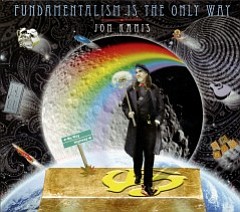
Jon Kanis 2: Fundamentalism Is The Only Way

San Diego-based artist Jon Kanis has kept mighty busy since 2014’s double-whammy of his written anthology Encyclopedia Walking and All-American Mongrel Boy compilation CD. In between keeping up with Everybody’s Dummy (for which we’re extremely grateful), he’s completed yet another album.

Fundamentalism Is The Only Way is a very much a trip, music of multiple genres that demands your attention and a dizzying array of lyrics, loaded with wordplay and significance. Kanis designed the album like a record used to be, with seven tracks a side. Even more so, some vintage synthesizers—and equally vintage-sounding airchecks featuring D.C.-area DJ Cerphe Colwell—plunk the listener back amidst a bygone era. That’s not to suggest the music itself is throwback; for example, “I Love You More Than Words Could Ever Say” may have shades of classic power pop, and the T.Rex stomp of “Empire” is infectious, but the sound is all now.

A pair of instrumentals bookends the set, each starting similarly but both going to lovely places on their own. We particularly like the electric violin that pops up on occasion. Three songs previewed on All-American Mongrel Boy appear here, and fit well into the context of the album’s worldview. Lest you think he thinks too much, “Devil In My Head” is one tight mini-opera at 2:48, and a particular effective setup for the lovely “Make A Wish”.

We mentioned that Fundamentalism Is The Only Way demands the listener’s attention, and that probably is the best way to experience it, liner notes in hand to keep up with the words as fast as he can deliver him, and to marvel at the number of instruments listed for each track, along with details about when each song was written, right down to the minute of conception. Others call it minutiae; we see it as proof that there’s a kindred spirit only a few time zones away.

Jon Kanis Fundamentalism Is The Only Way (2016)—

Friday, August 11, 2017

Suzanne Vega 10: Lover, Beloved

Because we tend to think of popular music as being separate from that designed for the dramatic stage, it’s always a little shocking when we hear of an artist we know from the radio writing a Broadway musical. Unfortunately, ever since Green Day took over the Great White Way, anyone thinks they can do it now.

Suzanne Vega was always more literate than most of her contemporaries, so a one-woman show about author Carson McCullers isn’t too big of a stretch for her writing. Five years after the play debuted, she collected some of the songs she wrote for it on Lover, Beloved: Songs From An Evening With Carson McCullers. Her main collaborator here is Duncan Sheik, who took his particular brand of sensitive pop to great success in this century with big-time musicals like Spring Awakening. Gratefully, there are no show-stopping diva moments on Lover, Beloved, playing instead to Vega’s already established strengths.

That said, the setting dictates that the music be something of a departure. “Carson’s Blues” is a jazzy number with accordion, trombone, and shades of Annie Ross. “New York Is My Destination” has a wonderful piano and clarinet arrangement, but dips every time she ends a verse with an affected “just like me!” (Lou Reed made a career of speaking during his songs; she shouldn’t.) “Instant Of The Hour After” would be familiar to those who picked up one of her Close-Up albums, and its drama is quite welcome here. Strikingly, it’s the most commercial-sounding tune that has the most eyebrow-raising lyrics, as “We Of Me” seems to suggest a romantic or familial triad, while the obsession inherent in “Annemarie” only makes that song that much more powerful.

The prominent banjo on “12 Mortal Men” reminds of recent Tom Waits, fitting for a lyric partially about a chain gang. A timely track considering that Go Set A Watchman had been unleashed only a year before, “Harper Lee” finds the author complaining about her more renowned contemporaries over the vaudeville stagger borrowed from the first track. The title track is another “standard” song, with a pretty melody and gentle nudging, that provides welcome space between the more elaborate settings. To wit: “The Ballad Of Miss Amelia” is something of a mis-fire, distilling one of McCullers’ novellas into a mostly-spoken showpiece complete with a saloon environment. “Carson’s Last Supper” gets back to better surroundings in something of a benediction.

While a little knowledge about the subject’s life and works will certainly illuminate some of the titles and lyrics, Lover, Beloved must stand on its own outside the context of a libretto, and unfortunately, it doesn’t inspire return. As an album it’s shackled to the fate, good or bad, of what sells theater tickets.

Suzanne Vega Lover, Beloved: Songs From An Evening With Carson McCullers (2016)—

Tuesday, July 18, 2017

Bad Company 8: Live 1977 & 1979

As good (or bad) as their records were, Bad Company was also designed to be a live band, and dutifully toured in support of each of those albums. Onstage, Paul Rodgers’ shirtless, hairy magnetism was able to reach the back rows of the arenas, and one only need to see Jason Lee’s character in Almost Famous to get an inkling of the appeal.

For many years, the only BadCo live recordings were of the later incarnations with different members, and the only ones featuring the classic lineup were from this century. That finally changed for a double-disc set that presented two complete-ish shows from the Burnin’ Sky and Desolation Angels tours. As each set relies on the most recent album, there’s surprisingly little overlap. Outside of an indexed drum solo on each disc, the repeats are limited to “Shooting Star”, one of which changes Johnny’s first Beatles song to “Here Comes The Sun”, and “Feel Like Makin’ Love”; both easily the band’s most overplayed songs.

In this context, even the Burnin’ Sky tracks get a little more life on a Texas stage, but you can practically feel the footsteps of the crowd heading to the bathroom during the slower songs. The London show is distinguished by the addition of keyboards, and some really rough harmonies on “Gone, Gone, Gone”. There is a slight detour to a Washington, D.C. show for a rip through the Hendrix version of “Hey Joe”, and interestingly, Mick Ralphs does most of the onstage patter.

Live 1977 & 1979 is a great addition to your shelf if you adore every one of the original six albums and just have to have more. Or, if you’ve seen any of the recent incarnations of the band, with or without Paul Rodgers or the late Boz Burrell, this could remind you what still makes them such a draw today.

Bad Company Live 1977 & 1979 (2016)—3

Friday, March 3, 2017

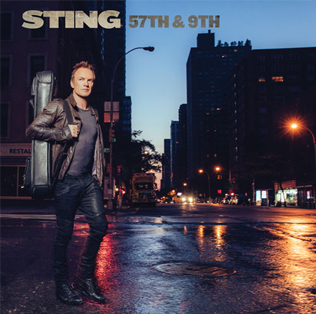
Sting 13: 57th & 9th

Surprise! Sting rocks again! Dreams come true! Prayers are answered!

All this would be cause for celebration if electric guitar and drums permeated throughout 57th & 9th, but they don’t. While they are more prominent for the first time in 20 years, they still take a back seat to his close-miked breathy voice, which in hindsight has been one of the real problems of most of his work in this century.

Case in point: both “50,000” and “Down, Down, Down”—tracks 2 and 3—begin with driving riffs and steady rhythms, but he pulls the plug on the momentum with each verse, only turning it up on the choruses. And the chorus of “Down, Down, Down” is a little too close to that of the opening track, “I Can’t Stop Thinking About You” (which makes reference to “a winter’s night”, which is either coincidence or a particularly snarky reference to a previous album).

If it sounds like we’re picking on the guy, it’s because he should know better. For all his talk of the “spontaneity” that went into this album of “rock ‘n roll”, it still sounds just as labored as his efforts to write a song in 9/8 or in French. While the first three tracks have moments, we have to wait until “One Fine Day” for an effortlessly, thoroughly catchy tune, albeit one about the endangered environment. “Pretty Young Soldier” is musically smooth as well, even if the lyric about a medieval woman enlisting with not-so-ironic results is a little tired.

“Petrol Head” is the one attempt to really Rock, but his delivery works against the labored (and inconsistently mixed) automotive metaphors. Things get really quiet on “Heading South On The Great North Road”, something of an elegy for the departed (along with “50,000”) with only the patient Dominic Miller on guitar. As mentioned elsewhere, “If You Can’t Love Me” does indeed echo some of the jazz touches from his first solo albums, building infectious tension and genuine anguish. The traveling theme continues on “Inshallah”, a refugee’s prayer and a risky move in these contentious times, but that’s what he does. Finally there’s the voice from beyond in “The Empty Chair”, a subtle benediction inspired by death.

Perhaps it’s best to approach 57th & 9th not as a Sting album, but as just an album, with no legacy hanging over it. There are good songs here, and excellent performances. He just needs to redo the vocals.

Sting 57th & 9th (2016)—3

Friday, February 10, 2017

Pink Floyd 18: Creation

After grandly expanded versions of three of their biggest albums appeared, diehard Floyd heads wondered whether the same treatment would be given to the rest of the catalog. Wisely, the band knew that the market for a multi-disc version of Saucerful Of Secrets would be limited, they took the possibilities to the extreme. The Early Years 1967-1972 offers eleven CDs of mostly rare material, along with nine DVDs and eight Blu-rays of audio-visual artifacts, all divided into years and uniquely titled along the lines of “/ation”, plus replicas of their first handful of singles and tons of printed materials. (It was supposed to be ten CDs, but a disc of their Pompeii concert was included by mistake, requiring a supplement.)

Naturally, this investment entails $500 the consumer may not have handy; each of the volumes within the set would eventually be available separately eventually, with the exception of the bonus Continu/ation volume, dominated by grainy BBC sessions, a live “Echoes” from 1974, and the movies for which More and Obscured By Clouds were recorded. Of much easier consumption is the two-disc distillation of the music from the set, subtitled Cre/ation. Beginning, as required by law, with “Arnold Layne” and “See Emily Play”, it moves forward, past early singles and radio performances, through recent remasters of some tracks. An alternate version of “Matilda Mother” with different lyrics pays tribute to both Syd Barrett and Richard Wright, just as “Point Me At The Sky” seems to predict “Learning To Fly”. Then there’s “In The Beechwoods”, a wonderful performance of an unreleased Syd tune, sadly without lyrics.

Once Syd was out of the band, we can hear the other guys develop into their spacey image, with some moments to contrast and compare. “Careful With That Axe, Eugene” appears in both its single version and a shorter one live on the BBC, both of similar length. “Embryo” is also heard as a studio track, and again in a ten-minute BBC rendition. “Atom Heart Mother” is laid out in its entirety, without the orchestra or choir. “Grantchester Meadows”, Roger solo on Ummagumma, is performed for the radio with help from David Gilmour and Rick. Several excerpts from the Zabriskie Point soundtrack provide variety, and a precursor to “Us And Them”, while “Nothing, Pt. 14” is merely seven minutes of jamming that would better develop in the completed “Echoes”. The set ends with a few selections from the remastered Obscured By Clouds, but choosing to close with “Stay” seems more a tribute to Rick Wright than a wise finale.

Cre/ation is very much a teaser for the larger product, as it merely touches on the sheer volume of stuff to be found there. At the same time, it does provide an excellent lead-in to the era that began with Dark Side Of The Moon, giving plenty of exposure to Syd and some of the better moments from the albums, albeit in alternate but still tight versions.

Pink Floyd The Early Years 1967-1972: Cre/ation (2016)—4

Tuesday, February 7, 2017

David Bowie 40: Lazarus

In addition to recording what turned out to be his last album, the other thing David Bowie was working on the year nobody knew he had terminal cancer was a stage musical based on the character he played in the wacky 1976 film The Man Who Fell To Earth. If the liner notes are to be believed, the cast recording for Lazarus took place the morning the world found out he was gone.

The musical becomes something of a Bowie revue, pulling together over a dozen tunes from his career, some well-known (“Changes”, “All The Young Dudes”), some not as much (“It’s No Game”, “This Is Not America”), some more recent (“Valentine’s Day”, the title song), and three previously unheard. There’s a rock combo for the backing, with Bowie saxes, and if you ever wanted to hear the guy from Dexter and the subject of How I Met Your Mother sing Bowie, here’s your chance. Try as they might, the men can’t help but add Bowie inflections to their delivery, while Sophia Anne Caruso’s solo spots are pure Broadway kiddie schmaltz. The newer songs stick to the templates on The Next Day and Blackstar, but some of the older ones get arrangements that aren’t exactly karaoke. (Presumably key to the plot are snippets of Ricky Nelson singing “Hello Mary Lou” and Bowie’s own recording of “Sound And Vision”.)

The big deal here, of course, is Bowie’s own versions of those three new songs, added on a bonus disc along with his rendition of the title song, providing 12 precious additional minutes of music as another kind of farewell (and eventually released as the digital-only No Plan EP on its own to celebrate what would have been his 70th birthday, followed by a physical release some weeks later). “No Plan” is moody and melodramatic; “Killing A Little Time” is edgy and clattery; “When I Met You” is romantic and anthemic. All are up to the quality and spirit of the last two albums, and will likely be dissected over the years to come in the absence of any other recordings from his final years. At least they weren’t tacked onto a “special deluxe” reissue of Blackstar, which would have forced us to buy that album again, and would arguably have messed with its unity. (The rating below is for the new songs, as we’re casting—yeah, we said it—aside the versions redone for the musical.)

Lazarus: Original New York Cast Recording (2016)—3

Friday, December 16, 2016

Neil Young 53: Peace Trail

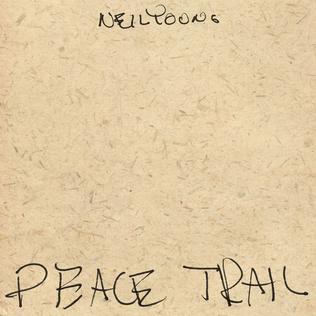
Making albums that by anyone else’s standards would be considered kinda goofy is one thing that keeps Neil Young so interesting after half a century of recording, and it’s also one of his more maddening traits. Peace Trail, written and recorded quickly in a simple trio format, might just be his goofiest project yet. Here we have ten songs, mostly played acoustic, with some electric fuzz and distorted harmonica, to the accompaniment of a muted bass and the inventively percussive Jim Keltner on drums. Sometimes the strumming is straight, while the drums crash around like boxes; other times it’s the song that’s off-kilter. Even the packaging is sloppy, his trademark scribble augmented by a broken typewriter on the back and a standard word processor on the lyrics poster.

The title track has the potential to be a classic, and will likely garner cheers on concerts for years to come. The recording is embellished by his now-trademark pump organ and AutoTuned response vocals. (Used as ironic commentary on Earth, he’s embraced the technology here.) He gives a manifesto of sorts with “Can’t Stop Workin’”, half the length of the previous track but sounding louder, with increasingly dissonant harmonica blasts. “Indian Givers” addresses the 2016 protest of Standing Rock, which was a timely topic on the release date, but now lost among so many other causes. “Show Me” has the potential to be a raucous electric take, being a fairly standard tune, but things get a little more surreal on “Texas Rangers”, which refers not to the baseball team but to law enforcement, delivered in a verse structure with a poetic device (as shown on the lyric sheet poster) that modifies back and forth over a half-step after each verse.

A deceptively straight chord sequence is the setup for “Terrorist Suicide Hang Gliders”, which soon becomes something of a rant by a Tea Party advocate that was misinterpreted by some as an anti-Muslim rant. There’s little to be misinterpreted in “John Oaks”, the saga of a modern Johnny Appleseed type whose attempt to speak at a demonstration turns tragic. One of the least penetrable tracks is “My Pledge”, which comes off like the stream of consciousness of someone stuck outside of time, particularly when lines are echoed and AutoTuned. He apparently didn’t notice that “Glass Accident” uses the melody of “Beautiful Bluebird” for an otherwise pleasant if thin allegory about protecting the planet once we’ve noticed something’s gone awry. But nothing could prepare the listener for “My New Robot”, which begins as a love song, then describes in detail the unpacking of item in the title before literally “powering off”.

Peace Trail simply isn’t as intriguing as it is maddening. The closest comparison we can conjure could be side one of Hawks & Doves, but even that sounds tame compared to this program. Some of the rambling in Greendale is echoed, and those harp solos are right off of Sleeps With Angels. Unfortunately, the overall mood is half-assed, the songs seemingly recorded as fast as he could write them, with no editing. But this was the latest state of the Neil, who’s often been compelled to share his thoughts while they’re fresh and while he still can. He probably should’ve waited, but he’d have something else to say soon enough.

Neil Young Peace Trail (2016)—2

Friday, December 9, 2016

Rolling Stones 49: Blue & Lonesome

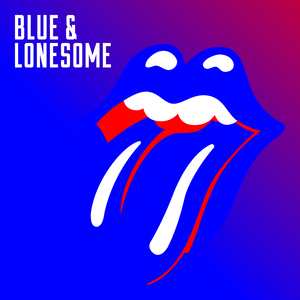
Another constant in the history of the Rolling Stones—post-‘80s, anyway—is that anytime Keith goes out on his own, Mick reels him in to do another Stones album. Why else would they be cutting tracks a full ten years after their last studio full-length? If the liner notes are to be believed, a detour from those recent sessions led to spirited takes on blues covers from their personal libraries, and within three days, they had an album’s worth of tracks, which they then sat on for nearly a full year before releasing them as Blue & Lonesome. (It’s not like it took all that time to design the cover.)

On paper it sounds great: the Stones playing the blues, just like they started out. Some are slow, some are dirty, all have energy; take the spirit of “Black Limousine” from Tattoo You and you get the general feeling. Every now and then there’s an echo of their first albums, just not as tinny. If, again, the liner notes are to be believed, these were all single takes, with no overdubs. And if Mick really managed to nail his vocals in one pass, we owe the guy an apology, since he sounds really good here. (We have no such questions about his harp ability; the kid can blow, even at 72. These guys are now older than the legends they grew up idolizing.)

It’s the four full-time Stones here, with Darryl Jones relegated to the sub-credits for each tune, along with Chuck Leavell and Matt Clifford on various keyboards, and Eric Clapton on two songs wherein you have to really pay attention to pick him out. The song choices are particularly commendable, being mostly lesser-known compositions by either or associated with Little Walter, Howlin’ Wolf, Willie Dixon, Otis Rush, Magic Sam, Jimmy Reed and the like. A track-by-track rundown doesn’t seem necessary, but suffice it to say that the songs don’t all sound alike. “Just Your Fool” is a snappy starter, “Commit A Crime” opens with the familiar drum fill from “Love Is Strong”, and the title track spells out the ampersand. “All Of Your Love” isn’t exactly like the one familiar to Clapton and Aerosmith fans, though “I Can’t Quit You Baby” is likely to start arguments among those who know Zeppelin. While relatively short, “Hoo Doo Blues” plods a bit, but “Little Rain” accomplishes more with its own slow tempo. (Suffice it also to say that Ian Stewart, their original piano player and long-suffering road manager, would’ve loved this album.)

There must be people out there still hoping that the Stones will release another classic album before they’ve all left us, and there are just as many people, if not more, who figure the band has nothing to prove, and wonder why they bother. (Well, besides money.) If we take Blue & Lonesome on the basis for what it is—12 blues covers by one of the best-ever British blues bands—it’s a good album. It’s not embarrassing in the least, nobody’s chasing any contemporary trend, and Charlie’s sounding good tonight, inny?

Rolling Stones Blue & Lonesome (2016)—3