Showing posts with label mick jagger. Show all posts

Sunday, April 15, 2012

Mick Jagger 7: SuperHeavy

Here at Everybody’s Dummy we like to think we’re at least up to date on the musical activities of artists we’ve reviewed in bulk. That’s no excuse for why we remain oblivious to so, so many other things, but somehow this alleged supergroup featuring Mick Jagger completely passed us by. Hands up if you’d heard of—much less heard—SuperHeavy before reading this paragraph. Okay, good to know.

The project may have descended from Mick’s soundtrack to the Alfie remake, which was a collaboration with the mildly parasitic David A. Stewart and featured contributions from British belter Joss Stone. This odd trio got together a few years later with Damian “Jr. Gong” Marley (Bob’s youngest acknowledged offspring) and composer A.R. Rahman, probably most famous for the Slumdog Millionaire soundtrack. The result was an album that mixed trip-hop with Jamaican and Indian influences, which the Los Angeles Times came just short of calling a “cross-cultural trainwreck.” (Rolling Stone loved it, of course.)

We don’t want to begrudge Mick trying to stretch, but reggae was always Keith’s territory. Wisely, he lets Damian rattle off the high-speed toasting, and Joss does most of the overemoting. But he himself is mostly reduced to yelling melodically instead of singing, as displayed on “One Day One Night”. “Energy” certainly displays some Stonesy grit once you get past the synths, but “I Can’t Take It No More” is another socio-political rant from one of the world’s richest men, and a knight to boot, mostly notable for Joss’s opening f-bomb. (She’s more suited to the humanist plea of “World Keeps Turning”, if you like that sort of thing.) “Never Gonna Change” is a country-gospel near-weeper sung all by himself, and he sure gets into enunciating the Sanskrit of “Satyameva Jayathe”.

Those who have to have more would spring for the deluxe edition, which boasts four extra tracks. But overall, SuperHeavy is neither super nor heavy, and that’s probably why they haven’t been heard from since.

SuperHeavy SuperHeavy (2011)—2
Sunday, March 4, 2012

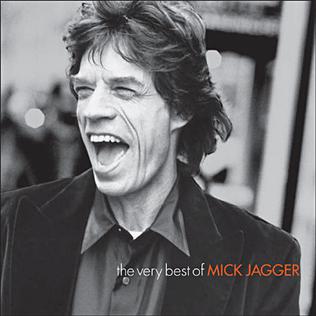
Mick Jagger 6: The Very Best Of Mick Jagger

Still trying to prove that he’s got the biggest set of balls in the business, The Very Best Of Mick Jagger is limited to the man’s less-than-stellar solo career. Granted, Keith’s own strange retrospective would include Stones songs performed live by the X-Pensive Winos, but he didn’t use such a pointed title. The one track here that ranks with the Stones’ best is “Memo From Turner”, his 1970 single from the Performance film, and no, that’s not the Stones playing on it.

That said, it’s a half-decent set, with rockers like “God Gave Me Everything”, “Put Me In The Trash”, and “Don’t Tear Me Up”, but you also have to deal with “Just Another Night”, “Let’s Work”, “Sweet Thing”, and the execrable version of “Dancing In The Street” with David Bowie. “Joy” is probably included because Bono’s on it, just as “Old Habits Die Hard” negates the need for the Alfie soundtrack.

Other rarities are included to entice the weary if not wary. “Charmed Life” was left over from Wandering Spirit, and should have stayed there, but “Checking Up On My Baby” comes from the same period, and a good blues workout. “(You Gotta Walk And) Don’t Look Back” is a duet with Peter Tosh from the latter’s Glimmer Twins-produced Bush Doctor, but the big carrot is the belated appearance of the notorious “Too Many Cooks”. This middling funk tune comes from one of the more sober stretches in John Lennon’s lost weekend, captured halfway through the sessions for a Harry Nilsson album.

So the good outweighs the bad on The Very Best Of Mick Jagger, and whoever decided “Evening Gown” should close the set is an absolute genius. It was also available as a set with a DVD including interviews and some of his videos. But beyond that…

Mick Jagger The Very Best Of Mick Jagger (2007)—

Thursday, June 30, 2011

Mick Jagger 5: Alfie

While it’s easy to forget that there was something of a remake of the film Alfie with Jude Law in the title role, it’s even easier to overlook that the soundtrack was mostly a collaboration between David A. Stewart and Mick Jagger. But there was, and there is, and we listen so you might not have to.

Most of the album centers around two songs: “Old Habits Die Hard” and “Blind Leading The Blind”, both decent mid-tempo tracks that appear in multiple versions. They’re good, but a bit generic, so even the songs that aren’t those two sound pretty much like them. “Let’s Make It Up” mostly limps along, and “Lonely Without You (This Christmas)”, a duet with Joss Stone, is hardly going to top anyone’s go-to yuletide playlist. (She also contributes a remake of the original Bacharach and David title song.) There are a few instrumental grooves over which Mick either doo-doos or blows a harmonica, so perhaps we can be thankful he didn’t try to write words for them.

Alfie is not Primitive Cool II, which is good. To Mick’s credit, there’s nothing very embarrassing about this album, and he wisely steers far away from the one hip-hop track. Ultimately, it’s recommended for any connoisseur of rom-coms starring Jude Law.

Music From The Motion Picture Alfie (2004)—3

Monday, April 11, 2011

Mick Jagger 4: Goddess In The Doorway

After a fairly successful renaissance of the Stones for the close of the century, Mick decided it was time for a solo album. For his fourth time out he seemed to have grasped an idea of what would justify a detour from his regular band, but that doesn’t mean he should have bothered. Goddess In The Doorway finds him as obsessed as ever with sounding contemporary, tapping younger talents (we’ll get to those) but still relying on guitar work here and there from the likes of Joe Perry and Pete Townshend.

“Visions Of Paradise” is guilty-pleasure pop, a collaboration with the guy from Matchbox 20, so we’ll blame him for the less convincing parts. Bono is brought in for “Joy”, which relies mostly on two chords with a few diversions, and slathered with a gospel choir for that faux-spiritual feel. Something about “Dancing In The Starlight” sounds like we’ve heard it twice already, but it does have a killer chorus. “God Gave Me Everything” is basically a one-man Lenny Kravitz production with Mick singing, but then it’s followed with the mild modern R&B of “Hide Away”, which Keith might have made more reggae were he allowed to; instead we get Wyclef Jean. “Don’t Call Me Up” is the sensitive ballad with a title that sounds too familiar, and subject matter to match.

Besides being inscrutable, the title track suffers from a edgy pace and Mideastern touches already overused by Sting. “Lucky Day” isn’t too far removed from “Anybody Seen My Baby”; that this dance beat reminds one of a Stones track might define irony if we still knew what that was. “Everybody Getting High” is just plain stupid, as is the hurt posturing in “Gun”. “Too Far Gone” isn’t too bad, except that he opens by stating he doesn’t like nostalgia, then goes on to lament how the modern world has paved over his youth and technology has all but obliterated nature. A decent editor might have helped him get his message straight. “Brand New Set Of Rules” seems to suggest that he’s matured somewhat, on a track that’s better than the lyrics. (Two of his daughters are credited on backup vocals; presumably they’re the ones adding the “ooh-ooh” parts in the middle?) For some reason a “cocktail version” of the title track is hidden at the end, which actually sounds more interesting than the real thing.

This album notoriously got five stars in Rolling Stone magazine, an accolade seriously undermined when you consider it came from the highly suspect “journalistic integrity” of Jann Wenner. Clearly a favor was being paid, because this was hardly the apex of the man’s life’s work. Mick is very good at one thing, and that’s not to say that he’s a one-trick pony, but he’d be better served by trying a real departure from the average if he wants respect outside the Stones. Goddess In The Doorway isn’t embarrassing, but it just doesn’t make it.

Mick Jagger Goddess In The Doorway (2001)—

Sunday, January 2, 2011

Mick Jagger 3: Wandering Spirit

With everything supposedly hunky dory in Stones land—mostly because we hadn’t heard otherwise—a new Mick Jagger solo album was a little surprising, but not when you consider it came on the heels of a Keith Richards solo album. Plus, given the less-than-legendary legacy of his first two works on his own, anything wrapped in yet another photo of Mick on an unmade bed—shirtless this time—couldn’t bode well.

However, Wandering Spirit defied expectations by being, shall we say, Stonesy. Perhaps we can thank co-producer Rick Rubin for that; most of the tracks involve guitars, bass, drums, and traditional keyboards. “Wired All Night”, “Out Of Focus”, “Don’t Tear Me Up”, “Put Me In The Trash”, “Mother Of A Man” are only missing Keith’s riffing and Charlie’s swing. And the few trips outside genre could hardly be called attempts at sounding contemporary. Even “Sweet Thing”, with its sampled vinyl crackle and falsetto, has enough funk to rock. The title track has a terrific rockabilly feel, updated for shredding. “Hang On To Me Tonight” approaches lonesome country, but it’s bested by far by “Evening Gown”, which should have been a Stones track with Keith harmonies.

In addition, some covers divert from the all-Mick show. “Think” is a revved-up take of a song most might have known from James Brown, while “I’ve Been Lonely For So Long” is a Stax tune given a slight Jamaican feel in the vocal. But given the length of the album, we could have done without “Use Me”, which doesn’t add anything to Bill Withers’ classic original except bring Lenny Kravitz in to take a few verses.

The album’s strong enough to keep you interested all the way through the last two, wholly unexpected tracks. The minor-key “Angel In My Heart” is accompanied by harpsichord and strings, of all things, then he sings “Handsome Molly” in a brogue, with only a fiddle by his side.

He didn’t tour behind it, and there wasn’t any real gimmick to the album, so Wandering Spirit was received well and soon forgotten. It’s too bad, since it remains a strong album—certainly the best one he’d done on his own to date—and deserves wider appreciation.

Mick Jagger Wandering Spirit (1993)—

Sunday, October 10, 2010

Mick Jagger 2: Primitive Cool

While there are those who defend Dirty Work, the last Stones album before their lengthiest hiatus to date, Mick Jagger’s own opinion spoke volumes when he passed on touring to promote it to work on his next, contract-stipulated solo album instead. Primitive Cool appeared in that strange, Stones-less era, and made little commercial or artistic impact.

This time one of the name producers was David A. Stewart of Eurythmics, who was always better in small doses than taking over an entire album (witness Tom Petty’s Southern Accents, Daryl Hall’s 1986 solo album, and the resounding thud of Bob Geldof’s first album after Live Aid). A laundry list of session people fills the credits, including two future members of Living Colour. In a smart move, Jeff Beck handled a lot of the lead guitar, which helps with overall unity. (Mick toured the album down under and in Japan, with up-and-coming guitarist Joe Satriani on board.)

Musically, it’s a step up from She’s The Boss, with more emphasis on guitars and lyrics than funk and grooves. Despite a few slick touches, “Throwaway” is a catchy single, much more than the ill-advised “Let’s Work”. Maybe we can blame Dave Stewart for this one, but Mick should have known better, at a time when the yuppie-greed-is-good ethic was starting to fade. Likewise, he should have recognized that the main riff of “Radio Control” is very similar to Free’s “All Right Now”. “Say You Will” isn’t that complicated (Dave Stewart again) but is still very catchy. The title track comes off much more dramatic than it needs to be, partially due to the arrangement, but it does approach the concept of an aging Mick explaining himself to his much-younger children, some of whom today are old enough to be the parents of his most recent offspring.

Side two is dominated by three songs. Considering how the album was ignored at the time, it’s striking to listen now and discover that he may well have thrown the musical first punches at Keith, with songs like “Kow Tow”, “Shoot Off Your Mouth”, and “Party Doll” painting respectively hurt, nasty, and resigned portraits of a paramour who let him down (Paddy Moloney’s pipes and whistle providing a lovely counterpoint on the latter). In the middle is “Peace For The Wicked”, a baffling dance song with a rock mix that can’t decide what it’s about. The most ambitious track on the album—and again, while Mick’s financial acumen can be described as ambitious, we wouldn’t necessarily say that about his musical contributions—would be the lengthy last track. Beginning with now-dated synths and continuing with those pipes and whistle, “War Baby” would appear to be some kind of cry for world peace. The melody’s okay, but the sound effects kill any good it could do.

Despite its worst efforts, it’s a very listenable album. Yet while it wasn’t obvious that the Stones were virtually done, Primitive Cool didn’t do much to suggest Mick would be just fine on his own. He needed Keith to spur him on, much like Paul McCartney needed someone like John Lennon to keep him in check (and vice versa). And the fans wanted to hear the Stones.

And the cover art? Good Lord, but that’s just awful.

Mick Jagger Primitive Cool (1987)—3

Thursday, September 9, 2010

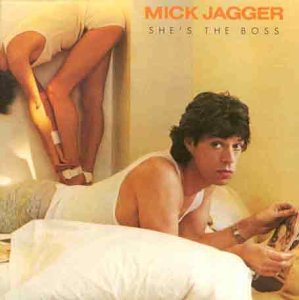
Mick Jagger 1: She’s The Boss

It’s understandable that Bill Wyman would need to stretch his creativity with solo albums, having been demoted to the least appreciated Rolling Stone once Ron Wood became Keith’s fulltime pal. But the idea of a Mick Jagger solo album, after over two decades of being both the voice and key creative consultant of the band, made even less sense. What could he do on his own that he couldn’t accomplish with the band he ran with an iron fist?

The answer lies in a Latin phrase we don’t feel like looking up, but roughly translates to “the question answers itself.” (Okay, we looked it up, and it’s “Res ipsa loquitur.” You’re welcome.) Mick was always interested in contemporary beats, while Keith and Woody were happy to play the same Chuck Berry riffs in between drinks and snorts. Each of the Stones albums so far had something “danceable” on it, but only so much. The new worldwide deal with CBS had the key provision that Mick would be given the opportunity to do solo albums; crafty as he always was, he figured his name would be enough to sell units, and possibly unshackle himself from the band that was becoming an albatross. Attaching his voice to a song credited to the Jacksons, in an attempt to cash in on the phenomenal success of Thriller (not coincidentally, another solo project by someone previously associated publicly with a band he no longer needed) gave him something of a test shot.

Hence, She’s The Boss, which accomplishes the feat of sounding nothing like the Stones save a few lines here and there, since he didn’t change his voice at all. He produced the album with Bill Laswell and Nile Rodgers (who also supplies the loudest guitars not already played by Jeff Beck), both of whom knew a thing a two about being contemporary as well as commercial. Keith gets writing credit on “Lonely At The Top”, one of dozens of songs out at the time that sounded exactly like “Footloose”, but no other Stones are involved at all. “½ A Loaf” tramples a metaphor with dated keyboards, while “Running Out Of Luck” and “Turn The Girl Loose” would have been lesser tracks on any Stones album, the latter particularly with its angry “ladies’ rap” over the fade. “Secrets” and the title track each labor over the same riff with a lot of yelling.

All this time later, the most palatable songs are the ones chosen as singles, and both are on side two. “Just Another Night” and “Lucky In Love” (which is about two minutes too long) could almost pass as Stones songs, if a little poppy. “Hard Woman” is the token ballad, with pretty Paul Buckmaster strings, although it’s not easy to buy Mick as a lovelorn, heartbroken sap this late in his tabloid career.

She’s The Boss isn’t a bad album for a piece of product, but fails as an out-of-expected-genre experiment by not being adventurous enough. However, it wasn’t the most embarrassing thing he released that year. That honor still belongs to his duet with David Bowie on “Dancing In The Street”, thrown together for the Live Aid concert. The song was bad enough; the video made it excruciating. (He also performed “State Of Shock”, that Jacksons collaboration, at the concert in a duet with Tina Turner, but the song itself is inaccessible within the Jagger catalog.)

Mick Jagger She’s The Boss (1985)—2