Showing posts with label 1979. Show all posts

Tuesday, May 28, 2024

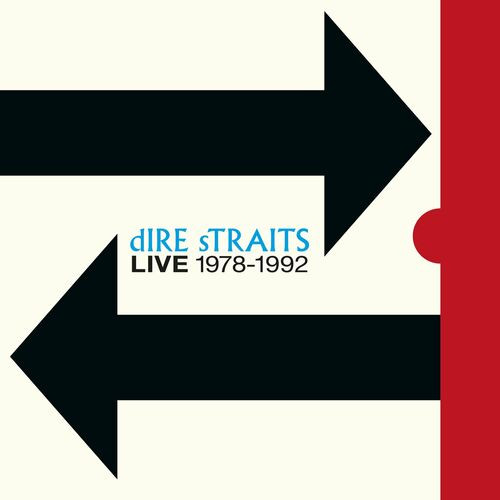
Dire Straits 10: Live 1978-1992

Despite million-dollar offers and the continued longevity of most of the players, Dire Straits has never reformed since the On The Night tour ended in 1993. Since then various members have played together in schizoid tribute bands, and Guy Fletcher has worked regularly with Mark Knopfler, but the auteur was a no-show at their induction into the Rock & Roll Hall of Fame.

The decades since had seen a handful of compilations, but no expanded remasters. Even when the box set The Studio Albums 1978-1991 repackaged the vinyl in 2013, it didn’t include the Twisting By The Pool EP or anything else from the handful of non-album B-sides sitting all alone. The outcry that followed didn’t change the contents of the set any seven years later when the same title was released as a CD set. (Each album was in a simple replica sleeve, each with an insert approximating the inner sleeve with lyrics where applicable.)

Still, the studio albums only told part of the story, so the people in charge of these things had a chance to throw the fans a bone with Live 1978-1992, which collected—and, in some cases, expanded—the band’s official live albums, bolstered by a show from the vault. (The packaging was a little more elaborate than the studio box, with sturdier gatefold replica sleeves and a booklet with photos and a fawning essay.) Alchemy, which was already longer on CD than the cassette and LP, gained three songs to fill nearly two hours. (They did chop a minute of the “Going Home” intro, which was a shame.) On The Night was expanded by an hour to spread across two discs with the addition of seven tracks. The British Encores EP was also included in the box, unnecessarily repeating “Your Latest Trick” and not folding the other three songs into the On The Night discs, where they could have fit.

Live At The BBC was the same as ever—though it did gain about a minute to accommodate a DJ’s introduction of the band members—but the big draw was the first-ever release of Live At The Rainbow, recorded at the legendary London theater at the end of the Communiqué tour. It’s a bigger show than what’s heard on the BBC—not the members, just the size of the room and the ambience—and they seem a little tired, but still engaged.

Luckily, they improve as the set goes on. They play most of the first album and half of the second, and still close to the album arrangements at this juncture; having yet to hire a keyboard player, “Portobello Belle” hasn’t been tarted up yet. Oddly, despite the presence of “Lady Writer” in the set, they’re still playing “What’s The Matter Baby?” The crowd does get to hear early versions of “Les Boys” (prefaced by an almost apologetic intro), “Solid Rock” (not yet there), and most surprisingly and satisfyingly, “Twisting By The Pool” three years early. That last one sets up an encore of four oldies, where they’re joined by Thin Lizzy’s Phil Lynott and Tony de Meur of The Fabulous Poodles.

Dire Straits Live 1978-1992 (2024)—3

Tuesday, November 21, 2023

Queen 8: Live Killers

While their albums were popular, Queen was one of those bands that was best experienced in person. They were a big concert draw around the world, even in countries where English wasn’t the primary language, so when the time came for a live album, they were ready. Being the ‘70s still, and being Queen, Live Killers was a double.

A thunder crack opens the album, and the band soon kicks in with a sped-up rendition of “We Will Rock You”. Freddie actually asks the attendees if they’re ready to rock, then they plow into “Let Me Entertain You”. The introduction to “Death On Two Legs” is bleeped, apparently purposely to avoid a lawsuit from the object of the lyrics. It ends almost abruptly to segue into “Killer Queen”; this too is cut short to switch to “Bicycle Race”, which also is truncated in order for Roger to sing “I’m In Love With My Car”, salvageable due to Brian’s shredding. Things slow way down for “Get Down, Make Love”, complete with nutty interlude, and “You’re My Best Friend” closes the side.

“Now I’m Here” has an interesting intro, as the delay effect used for his voice kicks in before the song starts. After about four minutes the band stops so Freddie can the crowd in a call-and-response, which continues after the band comes back in, and then again towards the end. The crowd, of course, eats it up, going on to cheer the drum break. Rather than continue the illusion of a concert, the album fades to silence before returning with an acoustic “Dreamer’s Ball” and a gentle “Love Of My Life”, with which the crowd also sings along, eventually taking it over. They also cheer the return of the band for a stomp through “‘39”, and then the band plugs back in for “Keep Yourself Alive”.

“Don’t Stop Me Now” isn’t ecstatically received; maybe the audience wasn’t that familiar with it yet. They’re more happy about “Spread Your Wings”, and for singing along with it. “Brighton Rock” is twelve minutes long, mostly to accommodate Brian’s lengthy guitar showpiece and Roger’s phased drums, recommended to fans of Led Zeppelin’s later performances of “Dazed And Confused”.

Side four opens with the crowd chanting “Mustapha”, of which Freddie adds a few lines instead of the expected intro to “Bohemian Rhapsody”. And since there was no way to replicate the middle section onstage, that part from the record itself comes through the speakers until they can finish it themselves. “Tie Your Mother Down” ends with Freddie bidding the crowd good night, fading to silence, and encoring with “Sheer Heart Attack”. After another fade, the familiar beat of “We Will Rock You” signals that song, followed by “We Are The Champions” and their version of “God Save The Queen” played over the PA.

Live Killers is one of the few Queen albums never to be expanded with bonus tracks. Some of it sounds a little too clean for a live recording, and indeed overdubs have been accounted for. Other enterprising souls have also spent a lot of time documenting which tracks came from which shows. But as a representation of the band onstage, it delivers. Which was the point. Besides, their next album wasn’t ready yet.

Queen Live Killers (1979)—3

Friday, February 24, 2023

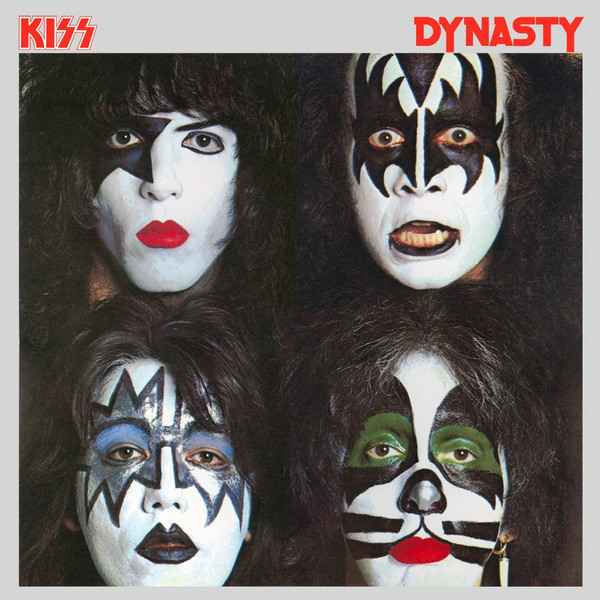
Kiss 11: Dynasty

The solo albums may have cleared the decks for indulgences, but the Kiss boys weren’t united. Sure, the new album attempted to be democratic, so that each of the guys provided a share of the singing and writing. But while Vini Poncia—previously best known as a collaborator with Ringo Starr—was brought in as producer following his work on Peter’s solo album, he also replaced Peter in the studio with Anton Fig—who had beaten the skins on Ace’s album— on all but one song on Dynasty. It had been nearly two years since Kiss put out an album of all new material, and what did they have to show for it? Disco.

This is apparent right away with the thump and mild funk of “I Was Made For Lovin’ You”, which was catchy enough to almost reach the top ten. It’s not a bad song, or record for that matter, just not what people want from Kiss. (In another harbinger of doom, Paul co-wrote the song with Poncia and future schlockmeister-for-hire Desmond Child.) Ace had made his point by putting out the best solo album, so he got to sing three songs, the first being a surprising remake of the Stones’ “2000 Man” filtered through the first Cars album. Disco returns on Paul’s “Sure Know Something”—again, a competent enough pop tune, but lovelorn plaints are all wrong for this band unless Peter’s singing. Speaking of which, he gives us “Dirty Livin’”, which sports a riff that predicts ZZ Top’s Eliminator album, and we’ve checked several sources to make sure it’s him singing on not Paul. Ironically, the lyrics seem to address why exactly he wasn’t deemed up to snuff (ahem) anymore.

Gene finally shows up on side two, proving that he doesn’t understand the dictionary definition of “Charisma” on a track that sounds like a barely augmented demo. Paul’s “Magic Touch” puts more emphasis on rock instead of hitting the charts, and it’s got a few decent hooks. Ace’s “Hard Times” is the second song in a row that sounds like Kiss, but he still shouts more than sings. Gene’s “X-Ray Eyes” sends all kinds of mixed messages about whether and why he wants her back; it might have been better if he’d finished editing the transcript before singing the tune. Yet is it any better than Ace’s snotty “Save Your Love” kiss-off?

At least the album packaging, while not elaborate, still delivered. The cover shot is all hair and makeup, and the custom labels sport the same pose shown on the included fold-out poster. The inner sleeve unfortunately screams colorful disco ball, but the merchandise form includes a contest to win an official Kiss pinball machine. While notable for being the first Kiss album longer than 35 minutes, Dynasty isn’t any fun. It can’t even be called willfully stupid, which each of the previous albums could at least claim. Whatever momentum they had over five very busy years was seemingly gone.

Kiss Dynasty (1979)—2

Tuesday, May 31, 2022

Kinks 24: Low Budget

The spirit and aggression of the punk scene seemingly invigorated rather than scared Ray Davies. With Low Budget, he concocted a set of mostly guitar-oriented songs loaded with hooks, just like the label wanted. There was no concept per se, but certain themes dominated.

“Attitude” sports a riff right off the lone Sex Pistols album, and Ray comes in shouting a snotty vocal, and while the synth wash at the end dates the track, it doesn’t ruin it. Good as that is, “Catch Me Now I’m Falling” is a truly classic track, with serious piano, crunchy riffing, and high harmonies disguising the pro-America sentiment. Curiously, the track runs nearly six minutes on the album, but the similar guitar and sax solos have us wondering if it weren’t artificially extended. A Chuck Berry cop is given the Ramones treatment on “Pressure”, where the ailment is more generalized, but “National Health” speaks more specifically about mental and physical stress with a less frenetic arrangement, with more modern percussion and synth effects. Speaking of which, “(Wish I Could Fly Like) Superman” is one of the more unfortunate results of the disco era. The hideous thump of the rhythm section is surpassed only by “I Was Made For Lovin’ You”, unleashed that same year by Kiss, but at least this works as an (albeit) stupid song, not at all taken seriously by Ray, and abetted handsomely yet under protest by Dave. (The Animals quote is cute too.)

Nobody must’ve told them the title track sounds too close to Joe Walsh’s “Life’s Been Good” for comfort, but it’s still a good track for yelling along. “In A Space” isn’t very exciting, and repetitive to boot, but the sympathy throughout “Little Bit Of Emotion” makes up for it, despite the sax solo. “A Gallon Of Gas” might have been designed to appeal to an American audience, or maybe Ray couldn’t find anything to rhyme with “a liter of petrol”. At any rate, the whining about not being able to fill the tank in his limousine is strange coming so soon after the title track. It lopes along like Zappa’s “Road Ladies”, until the more traditional rock of “Misery” smacks it aside. “Moving Pictures” brings back the disco influence, but more along the lines of what the Stones were doing.

Low Budget would re-establish the band as a relevant force both on FM radio as well as in concert. Those radio hits are reflected in the bonus tracks on the expanded CD, which include extended versions of “Catch Me Now I’m Falling”, “Superman”, and “Gallon Of Gas”, the latter with extra verses in the “your body’s like a car” motif. The album also begins the lengthy tenure of Jim Rodford, fresh from Argent, on bass, but oddly, the only Kink depicted anywhere in the package is Ray.

The Kinks Low Budget (1979)—3
1999 Konk CD reissue: same as 1979, plus 3 extra tracks

Tuesday, November 23, 2021

Bruce Springsteen 28: No Nukes

One of the last gasps of hippie idealism personified by Laurel Canyon musicians occurred in the wake of the “accident” at the Three Mile Island nuclear power plant in 1979. Led by John Hall, known back then as the guy from the band Orleans, Jackson Browne, Bonnie Raitt, Graham Nash, and others coalesced to form Musicians United for Safe Energy, and staged a variety of events in order to raise awareness and money. Five concerts at Madison Square Garden later that year raised more of both, and were the centerpiece of a triple-album set plus a feature film.

Meanwhile, Bruce Springsteen had spent most of the year in the studio toiling and tinkering over what would become his fifth album, and hadn’t done any major shows since New Year’s Day. Naturally, his appearance with the E Street Band at two of the MSG shows, in front of what amounted to his hometown crowd, were big deals, and the excerpts included in the film did a lot to show the rest of the country what the excitement was all about. For Bruce, it was also another spark that started the fire of overt activism that has only grown in his work since then.

Both concerts were released for download and as a CD package via the Bruce Springsteen Archive website in 2018. Three years later, 13 songs compiled from the two shows were remixed and matched with the restored 16mm film footage for a double CD plus DVD or Blu-ray set, unabashedly titled The Legendary 1979 No Nukes Concerts.

From the opening crash of “Prove It All Night”, Bruce and the band attack the set like it stole their lunch money. They were fired up and ready; the occasion of the leader’s 30th birthday might have also added to the intensity. Following “Badlands” and “Promised Land” he takes the mood down to debut “The River”, and goes back to the party with “Sherry Darling”, both from the album in progress. From there, “Thunder Road”, “Jungleland”, “Rosalita”, and “Born To Run” deliver the anthems.

The encore covers are included from both nights: “Stay”, with Jackson Browne and Rosemary Butler, who’d recently made it a hit again, plus Tom Petty; the classic “Detroit Medley”, which actually combined two medleys made famous by Mitch Ryder; Buddy Holly’s “Rave On”, hypercharged; and a ten-minute bash through Gary U.S. Bonds’ “Quarter To Three”. It’s even more compelling on screen, with the mildly pompadoured and sideburned frontman looking his coolest, even when tearing around the stage with his shirttails flying, Steve Van Zandt sporting a beret before he switched to the schmatta, and Clarence “Big Man” Clemons commanding his domain. (Neither audio nor video documentation of Bruce pulling his ex-girlfriend, the photographer Lynn Goldsmith, to the stage and then having her escorted from the building because she ignored his request for no pictures has been included.)

All in all, the No Nukes Concerts provides a good balance and perspective between the five discs from the 1986 box and 2006’s excavation of Hammersmith Odeon London ‘75. “Legendary” is a fitting adjective for this music.

Bruce Springsteen & The E Street Band The Legendary 1979 No Nukes Concerts (2021)—4

Friday, October 15, 2021

Elton John 18: The Thom Bell Sessions and Victim Of Love

As further proof that Elton John was undergoing some kind of identity crisis, the follow-up to his tepidly received A Single Man was a maxi-single of three songs recorded two years earlier. The Thom Bell Sessions were named for the producer in charge, famous for his popular “Philly soul” hits of the time; by the time Elton got to work with him, he’d moved to Seattle.

Elton was happy to merely be the singer on the sessions, letting the producer provide the songs as well as the backing. Indeed, “Three Way Love Affair” benefits from Elton’s warm voice, and while “Mama Can’t Buy You Love” was a catchy hit, it could well have been the Spinners, who actually sing on “Are You Ready For Love”, which runs for eight minutes. Those of us who were thoroughly sick of disco by the summer of ‘79 were dismissive, but today we can agree that the production is indeed impeccable.

A good ten years later, once Elton was slowly regaining commercial acceptance again, The Complete Thom Bell Sessions presented all six songs originally recorded for the project. While false advertising, “Nice And Slow” found Elton and Bernie Taupin collaborating with Bell, and “Country Love Song” wouldn’t be confused for a Tumbleweed Connection outtake. A superior re-recording of “Shine On Through” would open A Simple Man.

But he wasn’t done with disco, nor was he ready to take control in the studio. For his next trick, he hooked up with Pete Bellotte, whom he’d first met in the mid-‘60s and had since gone on to make a mint creating Eurodisco with Giorio Moroder and writing for Donna Summer. That hitmaking approach was applied to Victim Of Love, to which Elton devoted exactly eight hours, which is what it took to apply his vocals to the generic backing tracks. Save the execrable opening cover of “Johnny B. Goode”, the songs were supplied by the producer and his team. Truly shocking are the credits, which include such musicians as Marcus Miller on bass, Keith Forsey on drums a few years before Billy Idol, the ubiquitous Paulinho da Costa on percussion, and even Michael McDonald and Pat Simmons hiding from the Doobie Brothers on the title track. Like most disco albums of the time, there is no break between songs, just the same four-to-the-bar kickdrum thump. The only respite comes with the silence at the end of each side. Even more so than The Thom Bell Sessions, Victim Of Love lacks any of Elton’s personality, and therefore any of his genius or talent.

Elton John The Thom Bell Sessions (1979)—2½
1989 The Complete Thom Bell Sessions: same as 1979, plus 3 extra tracks
Elton John Victim Of Love (1979)—1½

Friday, May 7, 2021

Roxy Music 7: Manifesto

The boys in Roxy Music got their side projects out of their system, and restarted the band without any agenda outside of making music. Gone were the camp affectations and ironic nostalgia; with Manifesto they were all about style and what would soon be called new romantic.

Side one, or the “East Side”, and the title track slowly burble into place underneath a solo by rotating bass player Alan Spenner over a near-disco beat. Bryan Ferry’s lyric is kinda poetic, and the track comes to a surprising finish like, well, a spaceship taking off. “Trash” is right in line with current new wave, thanks to a cheesy organ. “Angel Eyes” would be re-recorded in a more dance vein, but the original album version is a lot more rock, and a lot more fun, honestly. “Still Falls The Rain” is a pleasant trifle, with all the Roxy ingredients in place, while “Stronger Through The Years” has something of a sinister undercurrent, and lots of further input from Alan Spenner.

The “West Side” is a little more direct, or is it? “Ain’t That So” seems to be bouncing in and out of different tempos, throwing out a melodic twist here and there that bucks the simplicity of the chorus, which consists of repetitions of the title. Except for the prominent Andy Mackay saxophone, “My Little Girl” sports harmonies right off the latest Cars album and a snare sound akin to somebody kicking a garbage can. “Dance Away” is an apt portrait of heartache, but it took a remix for the single to rearrange the structure and tighten up the track. Unfortunately, “Cry, Cry, Cry” is meaningless pop, though Phil Manzanera does give his all to his solos. The theme of dancing away heartache returns on “Spin Me Round”, ending the album rather softly.

The title may have been meant to be ironic, since Manifesto isn’t the grand statement their earlier albums seemed to be. They’re merely doing what Roxy Music collectively did well. For other people this might be considered treading water, but in this case it works. (Fun fact: after “Angel Eyes” and “Dance Away” were respectively re-recorded and remixed as singles, the new versions replaced the originals on future pressings of the album, as well as the compact disc. When the CD was remastered in 1999, the original “Angel Eyes” was reinstated, but “Dance Away” was not. Both were sound decisions.)

Roxy Music Manifesto (1979)—3

Tuesday, April 27, 2021

Rickie Lee Jones 1: Rickie Lee Jones

Musician magazine once did a photo essay tracking various styles through the decades, wherein Robert Palmer descended from Bryan Ferry and Richard Harris before him in the guise of the lounge lizard, and Edie Brickell was the latest version of the girl with the beret following Joni Mitchell and Rickie Lee Jones. Chauvinism has long been a feature of the music business, but if we could think of a more clever way to introduce Rickie Lee Jones than the standard elevator pitch, we would, but until then, here’s the deal.

She did indeed wear a beret onstage, and sang in a very unique voice ranging from scat to soprano. Her songs were jazzy and had the familiarity of standards, steeped in beat poetry influences. She also happened to be romantically involved with Tom Waits, then still in his wino troubadour phase. Lenny Waronker swooped in and signed her up to Warner Bros., and produced her eponymous debut with Russ Titelman. Given the era and the caliber of session players involved, Rickie Lee Jones is very much a sophisticated ‘70s pop album, anchored by the smash hit “Chuck E.’s In Love”. That song was all over the radio in 1979, surprising for its verses of hip lingo delivered by a mushmouth. (People liked the twist at the end, despite it being pure fiction.)

The rest of the album is a mix of hep cat jive and more sensitive material, beginning with the reverie “On Saturday Afternoons In 1963”. “Night Train” is not the James Brown song, but one of many in her catalog that long for deliverance via some mode of transportation. Similarly, “Young Blood” isn’t a cover either, but a good companion to “Chuck E.”, with its mid-‘70s Joni arrangement and salsa influences. “Easy Money” had already been recorded by Little Feat’s Lowell George for his one solo album before he died, and we hear a Waits similarity here too. We’re especially taken by “The Last Chance Texaco”, which really works the metaphors related to car trouble and relationships, as she explores both ends of her vocal range and effectively works in the sound of passing cars.

“Danny’s All-Star Joint”, where the jukebox “goes doyt-doyt”, is particularly jazzy and cinematic, and takes us right back to a time of flared plaid slacks and Boz Scaggs records. By a sharp contrast, “Coolsville” is a brooding recollection of lost youth, lost friends, lost innocence. “Weasel And The White Boys Cool” concocts another scenario of characters, this time around a guy named Sal, which happens to be the first name of a future collaborator, but there we are getting ahead of ourselves again. That’s the last of the uptempo tunes, as the torchy “Company” tugs the heartstrings and “After Hours (Twelve Bars Past Goodnight)” leaves her alone by the lamppost.

Her voice is an acquired taste, to be sure, and all the hype surrounding Rickie Lee Jones kept us from paying too much attention for a long time. But her artistry is subtle, and would continue to be so, as we shall see. The rating below may be adjusted again and again until we’re absolutely sure.

Rickie Lee Jones Rickie Lee Jones (1979)—3

Friday, January 1, 2021

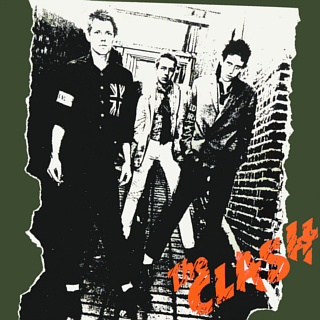
Clash 1: The Clash

Possibly the best and certainly one of the smartest bands of the original punk era was the Clash. Besides looking good, they had the chops to back up their lyrics, most of which began as indictments of contemporary society. But they didn’t happen organically; Joe Strummer was the chosen name of a former folkie who called himself Woody, and Mick Jones was an unabashed Stones fan, right down to his Keith Richard style. Every punk band needed an incompetent bass player, and Paul Simonon—who just reeked of cool—learned his instrument while they were recording their eponymous debut. (Drummer Terry Chimes quit before the album was released; he’s credited as “Tory Crimes” on the sleeve.)

The energy starts immediately on side one, with “Janie Jones” establishing Joe Strummer’s voice. “Remote Control” is sung nearly unison with Mick Jones, but it’s the power chords you notice. “I’m So Bored With The U.S.A.” fits the Sex Pistols mode, but cleverly changes key for the chorus. Speaking of clever, “White Riot” is a different recording of their first single, the lyrics going by so fast the social comment isn’t clear. “Hate And War” presents some of the power pop The Jam were trafficking in, while these ears hear “Deny” as a clear influence on the Pistols’ “Liar”. Former band member Keith Levene gets co-writing credit on “What’s My Name”; he would go on to join the former Johnny Rotten in PiL. And despite the title, “London’s Burning” mostly complains about traffic congestion.

“Career Opportunities” gets back to the concern of standard employment, with the armed forces as a lousy choice. “Cheat” amps up the anger with a lot of four-letter words and oddly flanged guitars, while “Protex Blue” is a sensitive recount of buying condoms. Just to show how well they stood out from the rest, their cover of the reggae hit “Police & Thieves” runs for six minutes, shows how far Paul Simonon had come on the bass, and points to their future. “48 Hours” goes by fairly quickly, and “Garageland” is a rather melodic riposte to those who questioned their talent.

Despite racking up huge sales as an import, The Clash wasn’t officially released in America until after the band’s second album. Even then, Epic had to tamper with it, rejigging the lineup, dropping five tracks, and adding six, some of which were recorded after that second album. The recent “Clash City Rockers” single now kicks off the very different side one, sending “Janie Jones” to start side two. In a perverse move, “Remote Control” is followed by “Complete Control”, written as an angry response to record company interference. The original single version of “White Riot” is followed by the more recent “(White Man In) Hammersmith Palais”, another excellent exercise in reggae. Their cover of Bobby Fuller’s “I Fought The Law” would become even bigger than the original, and “Jail Guitar Doors” demonstrates Joe’s knowledge of rock trivia, at least when it came to drug use.

The changes make the US release of The Clash slightly more musically diverse than the mostly straight punk of the UK version, but even with the repetition, both are key. When the catalog was remastered in 2000, both versions were reissued on CD; today, the UK version has become the worldwide standard.

The Clash The Clash (1977)—3½
The Clash
The Clash (US version) (1979)—3½

Friday, July 31, 2020

Dwight Twilley 3: Twilley

Phil Seymour went his own way, mostly amicably, putting an end to the Dwight Twilley Band, but the man himself simply kept going. Twilley is full of the ear candy that made Sincerely and Twilley Don’t Mind such winners. Bill Pitcock IV is still on board on lead guitar, and one Jim Lewis fills the Seymour role on both bass and drums.

Each of the songs is a Twilley original, and they’re mostly solid. “Out Of My Hands” rivals the Rutles and ELO for a mildly psychedelic Lennon pastiche, and “Nothing’s Ever Gonna Change So Fast” is full of tension and angst. “Runaway” suffers from a mild disco influence, but as long as he was copping the titles of classic oldies, “Standin’ In The Shadow Of Love” sits somewhere between country and western. “Alone In My Room” could easily have fit on Sincerely, and apparently it was of the same vintage.

“Betsy Sue” is a rockabilly pastiche in the same slot as “TV” from the first album, but it’s quickly forgotten thanks to his impeccable Tom Petty impression on “Darlin’” (which also features Phil on harmonies). “I Wanna Make Love To You” is cut from the same cloth, with a girl-group chorus that would never have been allowed to sing those words. “Got You Where I Want You” doesn’t say much, but it’s still catchy, just as “It Takes Alot Of Love” rises above the bad grammar.

Twilley is definitely catchy, but something’s missing. Maybe it was Phil.

Dwight Twilley Twilley (1979)—3
2024 CD reissue: same as 1979, plus 7 extra tracks

Friday, January 5, 2018

Talking Heads 3: Fear Of Music

For their third album, Talking Heads made a conscious effort not to be overly commercial or mainstream, recording quickly with a mobile truck from their rehearsal space, and keeping most of the song titles to a single word. Brian Eno was brought back to produce, and his interests helped them find new sounds and better use for David Byrne’s voice throughout Fear Of Music.

African influences abound on the inspiration for “I Zimbra”, with nonsense lyrics taken from a dada poem. A little slower but just as danceable, “Mind” percolates with ping-ponging guitars and keyboards, wacky bass bursts, and Byrne finding another wacky character to inhibit. We like the Television-style guitars on “Paper”, but “Cities” is even more intense and insistent, with that adhesive “checking it out” hook. But the real hit tune is “Life During Wartime” (better known as “This ain’t no party, this ain’t no disco… I ain’t got time for that now”), which is just plain funky. “Memories Can’t Wait” slows down the funk but lays on the dirt, ending a very strong side one.

High breathy voices are the perfect embellishment for a song called “Air”; we’re assuming Jerry Harrison is playing those fine leads. “Heaven” is reminiscent of Bowie’s first two Berlin albums, and even though some might balk at the less than pious sentiment, we don’t know why this song hasn’t been covered more. From here the album gets a little trying. “Animals” is a decent track, but the lyrics are a little too clever, and the gruff vocals don’t really help. “Electric Guitar” is even more cacophonous, but it’s worth listening for Tina’s wacky bass in the back. Finally, “Drugs” sounds the most like an Eno track, suitably disconcerting and jarring.

Despite their contrarian intentions, Fear Of Music was their most consistent, tight, and accomplished album to date, and incredibly catchy to boot. It was too weird for top 40 radio, but FM radio ate it up, and the songs still sound fresh today. (In a demonstration of their efficiency, the expanded CD includes only one unfinished song, and three early mixes of three others.)

Talking Heads Fear Of Music (1979)—3½
2006 CD reissue: same as 1979, plus 4 extra tracks

Tuesday, July 18, 2017

Bad Company 8: Live 1977 & 1979

As good (or bad) as their records were, Bad Company was also designed to be a live band, and dutifully toured in support of each of those albums. Onstage, Paul Rodgers’ shirtless, hairy magnetism was able to reach the back rows of the arenas, and one only need to see Jason Lee’s character in Almost Famous to get an inkling of the appeal.

For many years, the only BadCo live recordings were of the later incarnations with different members, and the only ones featuring the classic lineup were from this century. That finally changed for a double-disc set that presented two complete-ish shows from the Burnin’ Sky and Desolation Angels tours. As each set relies on the most recent album, there’s surprisingly little overlap. Outside of an indexed drum solo on each disc, the repeats are limited to “Shooting Star”, one of which changes Johnny’s first Beatles song to “Here Comes The Sun”, and “Feel Like Makin’ Love”; both easily the band’s most overplayed songs.

In this context, even the Burnin’ Sky tracks get a little more life on a Texas stage, but you can practically feel the footsteps of the crowd heading to the bathroom during the slower songs. The London show is distinguished by the addition of keyboards, and some really rough harmonies on “Gone, Gone, Gone”. There is a slight detour to a Washington, D.C. show for a rip through the Hendrix version of “Hey Joe”, and interestingly, Mick Ralphs does most of the onstage patter.

Live 1977 & 1979 is a great addition to your shelf if you adore every one of the original six albums and just have to have more. Or, if you’ve seen any of the recent incarnations of the band, with or without Paul Rodgers or the late Boz Burrell, this could remind you what still makes them such a draw today.

Bad Company Live 1977 & 1979 (2016)—3

Tuesday, May 16, 2017

Byrds 13: McGuinn, Clark & Hillman

While nobody really noticed, the influence of the Byrds managed to subtly seep through the music of the ‘70s. Crosby, Stills & Nash carried the torch on the radio and arenas, with Crosby’s old band becoming more of a footnote in his biography. The Eagles certainly picked up some of the harmonic touches, and a band called Firefall, formed from the aftermath of the Flying Burrito Brothers, had some breezy hit singles just this side of yacht rock.

So when Roger McGuinn, Chris Hillman, and Gene Clark decided to collaborate on an album, it less resembled the classic Byrds sound than the open-shirted, mildly discofied trend that was commercially viable in 1979. On paper, it could have been considered as much a Byrds album as anything released under that name after Sweetheart Of The Rodeo, but both the album and the combo were named after the three members. If you’re looking for the Byrds, this isn’t it. If you’re looking for a superstar summit, this is isn’t it either. If you long for the chime of that Rickenbacker 12-string, you’re out of luck.

The first warning sign is on the back cover, listing the Albert brothers as producers, and good ol’ Criteria Studios in Miami—Stephen Stills’ home base and knob twiddlers of choice, for his solo albums as well as the recent CSN reunion. The first sound the listener hears when dropping the needle on side one is a timbale, and sure enough there’s Joe Lala all over the mix, just like on those Stills projects. None of the three guys are credited with playing any instruments, though we can assume each played guitar, on his own songs anyway. None of the songs are credited as collaborations, which is no big deal.

Chris Hillman’s voice came a long way from being stuck in the background, so his spotlights are probably the least excruciating, but again, they sound like Firefall, which was fine for the times, but less so today. “Long Long Time” deserves further evaluation. Who knows what that nightmare intro to “Surrender To Me” is all about, but it’s also the only song none of the guys had a hand in writing. However, he is sorely to blame for “Stopping Traffic” and “Sad Boy”.

Gene Clark was arguably the best songwriter in the band, as displayed on the first two albums, but didn’t have much commercial success on his own. For a guy who was such a pioneer and harbinger of alt.country, “Little Mama”, “Feelin’ Higher”, “Backstage Pass”, and “Release Me Girl” come off as generic, albeit competent adult contemporary. (There should never be a saxophone on anything approaching the Byrds, and fake audiences only ironically.)

Just as with the last get-together, McGuinn isn’t the dominant voice. Though “Don’t You Write Her Off” was the first single, and it’s got a terrific chorus, the verses are only tangentially related to it, and the steel drums are just painful. He’s redeemed by “Bye Bye Baby”, the gentle folk lullaby that ends the album, and easily the truest tribute to the legacy.

McGuinn, Clark & Hillman has its defenders, and we can respect that. Many of the people who bought this album upon release needed something to tide them over while the Eagles took their sweet time on The Long Run. In a perfect world, and in this age of revision, a “less-discofied” version of this album would be a welcome addition to the history.

As for the guys themselves, they were soon down to duo without Gene, who appeared on only his two songs on City, while Chris tried to rock out and Roger dabbled in reggae and started co-writing with his wife. Mere months later, McGuinn-Hillman was dead on arrival, even with Jerry Wexler and Barry Beckett producing for more of an Eagles sound and covers of two songs by Graham Parker. (The pair did co-write two songs themselves.) While Chris would emerge and find success with the Desert Rose Band towards the end of the decade, the ‘80s were virtually Byrd-free.

McGuinn, Clark & Hillman McGuinn, Clark & Hillman (1979)—2
Roger McGuinn and Chris Hillman Featuring Gene Clark
City (1980)—2
McGuinn/Hillman
McGuinn-Hillman (1980)—1½

Tuesday, January 3, 2017

Todd Rundgren 15: Adventures In Utopia

With each album, Utopia got less experimental, but having settled on a steady lineup, they were also more democratic, making them truly separate from Todd Rundgren’s truly solo work. Despite its high-tech design and tie-in with an alleged TV production, Adventures In Utopia is practically mainstream.

“The Road To Utopia” fades in with a hint of space travel, or at least opening credits, but settles into a basic structure. “You Make Me Crazy” could be mistaken for The Cars, and “Second Nature” is even a little disco, but Kasim Sulton got the hit single with “Set Me Free”. At seven minutes, “Caravan” approaches prog, but succeeds on structure and tunefulness, even through the dueling synth and guitar solos.

The mildly overblown “Last Of The New Wave Riders” approaches self-parody, both in performance and lyrical content, and while it seems to be tamed by the low-key intro to “Shot In The Dark”, this too escalates into a Big Number. “The Very Last Time” is another Rundgren kiss-off, balancing between the wistful verses and angry choruses. Then we have “Love Alone”, a cross between Broadway and Queen, with a synth-string backing and a choir of counterparts under the lead vocal. It’s still better than “Rock Love”, another disco tune with a stretched metaphor.

Despite its dated attributes, Adventures In Utopia manages to entertain, with songs that can appeal to more listeners than before. The concept remains elusive.

Utopia Adventures In Utopia (1979)—3

Tuesday, September 13, 2016

Prince 2: Prince

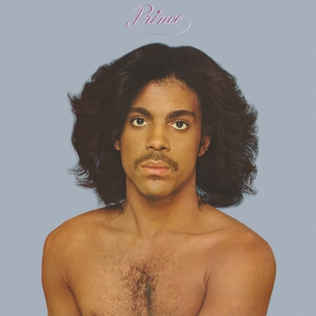
The inner sleeve of his debut album depicted Prince in triptych, shirtless and possibly pantsless, with a guitar for modesty. For his self-titled follow-up, we get to see his hairy chest in living color, life size on the front cover, and riding a winged white horse on the back.

The lyrics are not only more suggestive, but more blatant. The music is much the same, made for dancing, but he’s been working on his hooks. One of those kicks off the proceedings, and “I Wanna Be Your Lover” became his first real hit. (The album cut contains another two minutes of synth and clavinet.) “Why You Wanna Treat Me So Bad” is in the same mode, but he lets loose with a ripping guitar solo that’s unmistakably him. “Sexy Dancer” is a throwaway dance number, except that the musical interplay (again, all him) is excellent. That trifle to one side, “When We’re Dancing Close And Slow” is a seduction over two chords, with a lot of melodic variations to keep it from being monotonous.

In the same slow jam vein, “With You” could almost be a Bee Gees ballad from the same period. Then, with heavy fuzzed guitars and even a cowbell, “Bambi” approaches rock, and appears to be an angry lament for a woman who spurned him for—wait for it—another woman. The piano and acoustic guitar on “Still Waiting” sound both R&B and country, giving more spectrum to his sound. If you listen carefully to “I Feel For You”, you can hear the basis of the arrangement Chaka Khan made a hit five years on. The album ends with “It’s Gonna Be Lonely”, another slow jam that at least tries to stay out of lyrical clichés.

While more diverse than his first album, Prince relies too much on the falsetto. But it starts strong, and the rock elements scattered throughout are a good sign. Plus, it’s always nice to hear real drums when machines are handy.

Prince Prince (1979)—2½

Friday, February 5, 2016

Frank Zappa 28: Joe’s Garage

Like many of Frank’s grand statements, Joe’s Garage has a lot to say, but its message is spoiled by his overall delivery. It didn’t take too much of a stretch of his own imagination to take the seed idea of a garage band playing simple music into a dystopian future where music was banned, and record executives sodomized each other as well as anyone or anything in the vicinity of the internment camp where they were housed. And Frank’s view was that if you couldn’t handle the story, then you’re part of the problem.

Anyone who reads this blog will likely agree with Frank that music is the best, just as they would agree that suppression of music is a tragedy, particularly when enforced by so-called elected officials. We also use music to escape reality, and you can’t always do that when listening to the vocalization of “a cross between an industrial vacuum cleaner and a chrome piggy bank with marital aids stuck all over its body” subjected to urophilia. But we’re getting ahead of ourselves, as that doesn’t happen until Act II. Huh? Let us explain.

Joe’s Garage was issued in two parts: Act I, a single disc followed a few months later by a double album, Acts II & III. Since the dawn of the digital era, they’ve been packaged in a two-CD set, with the only notation of where successive acts begin found in the liner notes, so the story can be ingested all at once.

“The Central Scrutinizer” makes his entrance in something of an overture, delivering the first of many commentaries in a loud accented whisper through a megaphone. The title track stands very well on its own, not just for the wonderful illustration of the repetitive limitations of a garage band, but for the debut of Ike Willis, who would voice many of Frank’s lyrics for the rest of the man’s life, and quite soulfully, too. Speaking of which, Dale Bozzio (later of Missing Persons) makes her tuneless debut on “Catholic Girls”, a dirty joke that would have fit in the context of Sheik Yerbouti, musically even. Here, it’s a setup for “Crew Slut”, essentially an update of “Road Ladies” but with more descriptive directions and a lot nastier overall. It’s an ordinary blues shuffle, contrasted with the disco pop of “Fembot In A Wet T-Shirt”, featuring Frank at his most lecherous. (In case you were wondering about the plot, Joe’s girlfriend Mary stood him up at the CYO dance, ended up with the roadies of a band in town, who used her up and left her at a bar where a wet T-shirt contest could potentially earn her money to get “home”. Because, in Frank’s world, that’s what girls do.) What was originally called “Toad-O-Line” on the LP has been changed to “On The Bus” since, though the first three notes of this extended solo still seem to quote “Hold The Line” by Toto. The Scrutinizer informs us that news of Mary’s adventures upset Joe so much that he responded in kind, his experience leading him to ask the immortal question, “Why Does It Hurt When I Pee?”, which otherwise taints a decent backing. This gave Frank an excuse to finally include “Lucille Has Messed My Mind Up” on an album, albeit in an inferior reggae version.

Act II begins in the Church of Appliantology, led by L. Ron Hoover, which is still pretty clever. Hoover and Joe’s dialogue makes up the lyrics of “A Token Of My Extreme”, which had been an instrumental piece for about five years. While he’s at it, Frank revives “Stick It Out”, an old Flo & Eddie routine sung in German, then in English, and just as obscene in both languages. He also introduces Sy Borg, the appliance mentioned in the second paragraph above, whose demise comes at the end of a nine-minute jazz-reggae groove. Slightly less excruciating is “Dong Work For Yuda”, an inside joke about a Zappa roadie who mangled the English language. Here it’s used to illustrate the type of deviants Joe met in the prison where he was sent for destroying Sy, and sets up “Keep It Greasey”, the furthest thing from vague, but ending in a fantastic five-minute solo. In the realm of Joe’s story, these guitar solos are the only things that keep him going while he finishes his sentence, looking forward to life “Outside Now”.

Act III is arguably the best portion, consisting of four long tracks and a lot of soloing. “He Used To Cut The Grass” informs us that Joe is out of prison, but music is now illegal so he can only continue imagining the sounds in his head. Luckily for us, not only are the solos worthy of posterity, but the band, which now included Vinnie Colaiuta on drums, could keep with Frank. They get a lot of room to stretch on “Packard Goose”, an angry diatribe against journalists (with a couple of birds flipped to “Joe” and “Mo”, who we read as two of the executives who’d signed him to Reprise Records way back when). Now we have arrived at perhaps the greatest nine minutes in Frank’s career, the positively gorgeous “Watermelon In Easter Hay”. Over a sleepy 9/4 rhythm, trilling vibraphones, sitar-like guitar and strolling bass, Frank bends his strings in a way that’s alternately crying and triumphant. The album could have ended there, but he needs a “stupid song” for the closing credits; hence “A Little Green Rosetta” is the literal icing on this cake.

Obviously, Joe’s story was very important to Frank, who felt sodomized (symbolically, anyway) by a cruel world where his music was misunderstood and censored. What sinks Joe’s Garage and keeps it from regular rotation are the lyrics. Most of his guitar solos were transferred in via xenochrony, which helps boost the second half of the program considerably, were it not for the story. If he had only let the songs he had stand alone, without stringing them together with a theme and narration, there’s a chance it would have been better than it is, and worthy of the praise people heap on it.

Still, we do crack up every time that canned police siren appears in the mix.

Frank Zappa Joe’s Garage Act I (1979)—2
Frank Zappa
Joe’s Garage Acts II & III (1979)—2
Tuesday, September 29, 2015

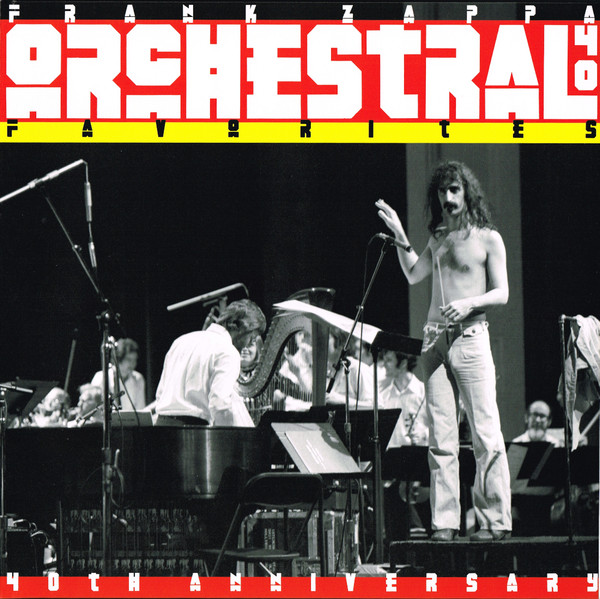
Frank Zappa 27: Orchestral Favorites

Throughout his lifetime, and towards the end of it, Zappa often went on at length about all the problems he had with “real” musicians, and how people in the classical field ignored him, ripped him off, or otherwise disrespected him. (Can’t imagine why they didn’t hit it off right away.) Insult added to injury anytime he financed an orchestral performance himself, paying for the copying, rehearsing and sundry. But that was usually the only way he could get the dots on the paper to be played.

The final album of music owed to his old label, Orchestral Favorites presents most of the rest of the material originally recorded in 1975 for a larger project, then siphoned off, re-edited and shelved. Timing being everything, it was seemingly rush-released in the wake of Sheik Yerbouti; those looking for more of the same humor would have been disappointed. Instead, they’d get a well-recorded representation of Zappa’s composing abilities.

As the title suggests, this is an orchestral album, with no vocals, which alone makes it an improvement on his last released orchestral experiment, 200 Motels, even repeating some themes. “Strictly Genteel” and “Bogus Pomp” bookend the set and take up the most space, striking a balance between grand themes and avant-garde expressionism. “Pedro’s Dowry” was written specifically for the project, and recalls elements of Lumpy Gravy and “Holiday In Berlin”. “Naval Aviation In Art?” is a brief, suspenseful violin piece, and the old standby “Duke Of Prunes” reappears with a ‘70s shuffle and overdubbed guitar solo.

Throughout Orchestral Favorites, horns and strings rub up against percussion, a standard drum kit, harmonicas, electric violins and electronic keyboards. Together, it provides an alternative to the standard menu of filthiness.

As was common throughout his career, the album as released didn’t sound right to Frank’s ears, and four decades went by before the technology (and tapes) appeared to rectify this. Orchestral Favorites: 40th Anniversary presented the new and improved original sequence on one disc, bolstered by an unused version of “Strictly Genteel” with jaunty keyboard overdubs. Two further discs presented one of the concerts staged for the project in its entirety. In addition to including Frank’s narration of the pieces performed, it turns out there were several other contenders for the original album. Highlights include the rare “Rollo” as well as the first performance of “Black Napkins” actually taught to the players on the spot since he hadn’t transcribed it yet, both with live guitar solos, a sizable chunk of “Greggary Peccary”, and suites of music derived from themes heard on Lumpy Gravy and Uncle Meat.

Frank Zappa Orchestral Favorites (1979)—3
2019 40th Anniversary: same as 1979, plus 21 extra tracks

Tuesday, June 9, 2015

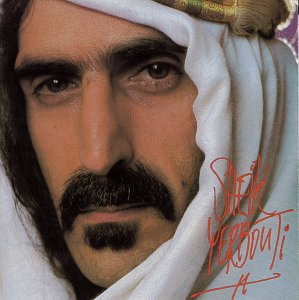
Frank Zappa 26: Sheik Yerbouti

His legal issues had subsided, so Frank was now recording and releasing music on his own label, albeit with major distribution. That corporate umbrella must have been relieved when the first LP—a double, no less—under the deal became a mild hit thanks to an unlikely hit single.

Sheik Yerbouti—the title capitalizing both on the current disco craze and the ongoing conflicts in the Mideast—kicks off Zappa’s phase of recording the tracks live before subjecting them to multiple overdubs, edits and what he called xenochrony, which pits recordings from different sources against each other to make a new whole. All this attention to the musical detail was naturally sabotaged from the inside by the lyrics.

Right off the bat, “I Have Been In You” begins as modern doo-wop, but Frank’s greasy lead vocal turns it into a lyrical parody of Peter Frampton’s “I’m In You”. “Flakes” is a complaint about incompetence mostly notable for the lengthy overdone Bob Dylan impression courtesy of guitarist Adrian Belew (complete with harmonica blasts). Six minutes of this will realize that the melody and structure would later show up in Adam Sandler’s “Hanukah Song”. The sentiment of “Broken Hearts Are For Assholes” is pretty straightforward, but it’s incidental to the asides about gay culture and coda endorsing sodomy. “I’m So Cute”, histrionically vocalized by heartthrob Terry Bozzio is a parody of early New Wave (the ending restored on the current CD).

Adrian Belew does a similar vocal to “Jones Crusher”, in the same vein too, and then we have two Lumpy Gravy-style interludes of impenetrable conversation and musique concrete given their own titles (“Whatever Happened To All The Fun In The World” and what’s now called “Wait A Minute”) bookending “Rat Tomago”, a guitar solo from a performance of “The Torture Never Stops”, excerpted here for your pleasure and soon to spawn a series of similar albums. Released as a single everywhere but the U.S., where there’s no way it would get past the FCC for airplay, “Bobby Brown” is by far one of his most offensive lyrics, and funny despite itself. The rest of side two is instrumental, via the xenchronous bass-drums duet of “Rubber Shirt” and “The Sheik Yerbouti Tango”, another wild guitar solo.

“Baby Snakes” is best known as the title of one of the few films he actually finished, but a closer inspection suggests a reference to genitalia. Terry returns to sing the teenage anthem “Trying To Grow A Chin”, which improves at the closing chant (“please kill me ‘cos that would thrill me”), and Adrian sings the synth effect-heavy “City Of Tiny Lights”, where you can clearly hear the audience for the first time on the album. The song that sold the album was easily “Dancin’ Fool”, a disco parody destined for replays on the Dr. Demento show. But the song that really made people mad was “Jewish Princess”; apparently it’s bad enough to be a chauvinist, and worse to court anti-Semitism.

Side four has only two songs. “Wild Love” is musically ambitious with meticulously arranged vocals given the same puerile content to harmonize over, but “Yo’ Mama” makes much better use of its time, with an easier rhythm, silly rhymes and ten minutes of soloing, going from slinky to majestic.

Juvenile as it is, Sheik Yerbouti sounds good, and has a good balance of music vs. comedy. Using technology to create his albums from live performances was nothing new, but creating something seamless wasn’t successful until this one.

Frank Zappa Sheik Yerbouti (1979)—3

Tuesday, May 19, 2015

Joni Mitchell 11: Mingus

Joni’s quest to be taken seriously as a musician hit a personal high when she began collaborating with legendary jazz bassist and composer Charles Mingus. Although he died before their joint album could be finished, the irascible legend did provide her some music to embellish with lyrics and arrangements, resulting in the album named for him.

Mingus is as challenging as any post-Blue Joni album, leaning heavily on the contributions of players more commonly associated with the likes of Weather Report. The album begins with an audio-verité snippet from a birthday party, and various Mingus “raps” are inserted as transitions throughout the album (also transcribed verbatim throughout the packaging, alongside several of Joni’s paintings of the man). They do provide some context, his spirited conversation contrasting with the mostly low-key atmospheric jazz.

“God Must Be A Boogie Man” is the first real song, written shortly after he’d died. Jaco Pastorius is on bass with Joni’s guitar providing the rhythm, though the nasal group holler of the title sullies the mood a tad. “A Chair In The Sky” is dominated at first by Herbie Hancock’s electric piano, but soon Wayne Shorter on sax joins the combo as the players (and singer) fill up the sound picture. At this point she can still hit those high notes too. “The Wolf That Lives In Lindsay” is percussively played on her acoustic, but the sound of actual wolves howling through it (credited, of course, as “Wolves”) distracts from her vocals. It does provide something of an effect of playing your guitar out on the lonesome prairie.

“Sweet Sucker Dance” is a lengthy poetic rumination, with a slightly torchy delivery, and the festivities finally pick up on “The Dry Cleaner From Des Moines”, with a spirited horn arrangement by Jaco and Joni’s scat-style vocals. Arguably the most daring piece is the last, the now-standard “Goodbye Pork Pie Hat” given new lyrics by Joni, presumably with Charlie’s blessing, sticking to the original melody.

“Dry Cleaner”, “The Wolf”, and some of the raps aside, Mingus is an easy album to listen to, but difficult to retain. While nothing will have you reaching for the skip button (or tone arm), it demands patience, and sometimes that’s not possible.

Joni Mitchell Mingus (1979)—3

Tuesday, May 5, 2015

Journey 3: Evolution

The only evolution on the album called Evolution is that Journey had a new drummer in jazz cat Steve Smith, Aynsley Dunbar having moved across San Francisco to pound the skins for Jefferson Starship. Otherwise, it’s the same formula that saved the band on the last album: arena-friendly anthems produced by Roy Thomas Baker.

There’s something of an overture in “Majestic”, a flutter of acoustic strings beaten aside by heavy chords and wordless vocals. “Too Late” is the requisite cautionary tale for one living too fast, too free, not to be confused with the dire warnings in “Lovin’, Touchin’, Squeezin’”. On the original LP and some CDs the a cappella ending segues immediately to the similar opening for “City Of The Angels” (hey, it worked for the last album). “When You’re Alone (It Ain’t Easy)” says all it needs to say within and without the parentheses. Luckily, Steve Perry knew the importance of keeping things “Sweet And Simple”, and that song is a better use for his pen and high octaves.

As they were apparently paid by the apostrophe, “Lovin’ You Is Easy” doesn’t seem like much at first, but there are some good changes in the chorus, continued under the solo, and there’s a nice piano break too. “Just The Same Way” lets Gregg Rolie take a lead vocal, supported prominently by Perry until he elbows him aside for the bridge. “Do You Recall” doesn’t sound like it took that long to write, but just like side two of the last album we have a crossfade into the next track. “Daydream” is slower than the rest of the album, so it’s longer, and some of the synth patterns are more jarring than evocative. Finally, “Lady Luck” is a heavy track that’s better than its lyrics.

So again, Evolution is more of an affirmation, as Journey knew what would keep the cash rolling in. The singles were good, and some of the more boneheaded tracks don't hold water, but as long as they kept to the script they’d be fine. And they were.

Journey Evolution (1979)—3