Showing posts with label lou reed. Show all posts

Tuesday, November 29, 2022

Lou Reed 33: I’m So Free and Words & Music

Neither the labels nor the estate of Lou Reed immediately plundered their vaults for saleable archival material; rather, both waited several years. When “new” music did arrive, there was a similar theme, although different periods in the man’s development as a songwriter were addressed.

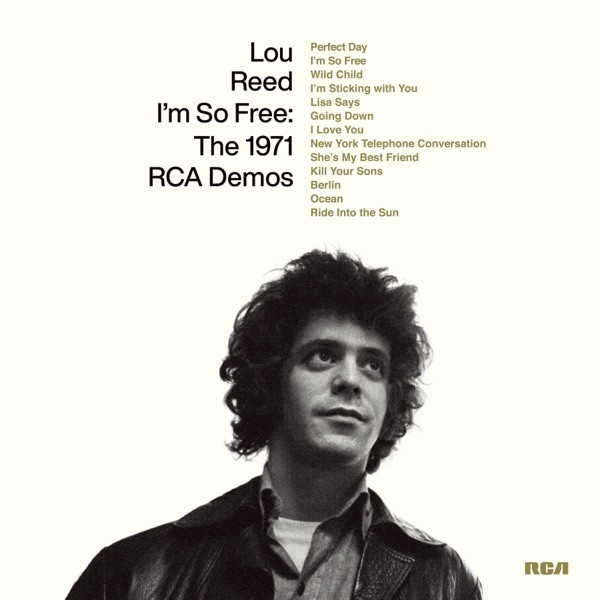
I’m So Free: The 1971 RCA Demos was one of those fifty-year copyright dumps that collectors trawl the file-sharing sites for every December, but then RCA put it out as a Record Store Day exclusive with an eye-catching cover and liner notes, and eventually for streaming with four more songs. These are basic acoustic guitar and vocal run-throughs, recorded professionally, of songs that would be considered for his first solo album. Every song that would appear there is auditioned here, including the leftovers from the last days of the Velvet Underground. We also get previews of later album cuts, including “Perfect Day”, “New York Telephone Conversation”, “Kill Your Sons” (with war-protest lyrics), and “She’s My Best Friend”, as well as a charming “I’m Sticking With You”. Throughout he’s immersed in each performance, laughing at any lyrical flubs, and instructing the engineer where the breaks are and when to fade.
This snapshot of the artist stepping out is particularly interesting when compared to the album that followed soon afterwards. As the first release in the projected Lou Reed Archive Series, Words & Music, May 1965 presented the contents of a demo tape he recorded then mailed himself to preserve its authenticity. Dating from before the recordings heard in the Peel Slowly And See box, he’s still firmly in the thrall of Bob Dylan, from the delivery to the fingerpicking, even on songs we’d get to know via the Velvets. John Cale helps out on several songs, including the immortal “Buttercup Song”, which was teased for decades as “Never Get Emotionally Involved With A Man, Woman, Beast Or Child”, and takes the lead vocal on “Wrap Your Troubles In Dreams”, which features that same maddening single beat on a sarinda as on the box. “Men Of Good Fortune” would be a title he’d use eventually, but not with these words, sung from the point of few of a fair maiden. The other “new” songs are of varying interest, though “Stockpile” has rocking promise. And the early version of “Pale Blue Eyes” is lovely. (As a bonus for some editions of the album, six cuts go even further back, as for as 1958 for his own doo-wop composition “Gee Whiz”, then up to 1963 or 1964 for two Dylan covers—an instrumental “Baby Let Me Follow You Down” and “Don’t Think Twice, It’s All Right” with new words, both with harmonica—plus a run through “Michael, Row The Boat Ashore” and two nondescript blues.)

Together these albums are certainly essential for collectors. For the rest of the world, they actually show a kinder, gentler Lou who just wanted to write catchy songs, rather than the grouch determined to shock and upset.

Lou Reed I’m So Free: The 1971 RCA Demos (2022)—3
Lou Reed
Words & Music, May 1965 (2022)—3
Friday, July 8, 2022

Lou Reed 32: Lulu

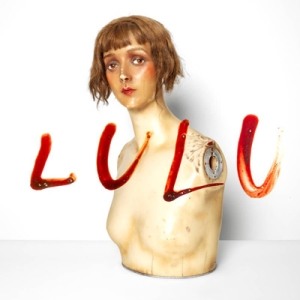
While he’d been mildly active, and certainly visible, Lou Reed wasn’t celebrated for any new innovations in the 21st century. Most of his musical adventures involved reviving earlier triumphs; his last album of new material was just plain ugly. But despite finding true love with Laurie Anderson, he wasn’t about to turn softer or gentler, and was happy to explore the worst aspects of the human condition via yet another pile of songs designed to accompany yet another obscure German play being directed by Robert Wilson. (The original playwright also wrote the text that would become the modern musical Spring Awakening.) Since the source material concerned a seductress turned prostitute, it naturally behooved Lou to go out of his way to load up the libretto with scatological references and violent sexual imagery. Adding to the carnage was his decision to record the songs with Metallica, who hadn’t exactly been relevant for a couple of decades themselves.

On paper, the idea of Lou Reed backed by Metallica sounds like a really terrible idea, and the audio evidence doesn’t contradict. It wasn’t enough to just knock out a few songs—Lulu is a double album, running nearly 90 minutes. Don’t be fooled: this is not art. It’s not even decent noise.

“Brandenburg Gate” starts okay, with a few strums of an acoustic and Lou singing on pitch, but then three power chords crash in and James Hetfield starts yelling “small town girl” at the end of each phrase and Lou’s grasp on melody goes out the window. This is the shortest track on the album. “The View” would be a hilarious theme song for the talk show of the same name, as it’s built on doom-soaked chords for Lou to rant over. Hetfield offers a chorus of sorts as small respite, and there’s a decent solo, so perhaps the band could rework it on their own. What sounds like a viola opens “Pumping Blood”, soon melded and overtaken by feedback and another crunching riff that deserves better than Lou yelling the title over it. This gives way to a moodier section while Lou talks about, you guessed it, pumping blood, then a completely different riff takes over, then another. The same feedback leads to the speed metal of “Mistress Dread”, providing at least a consistent tempo for headbanging. “Iced Honey” repeats the same two chords, and is shorter than it seems; the dueling vocals when they start do not favor either singer. “Cheat On Me” opens with three minutes of a near-ambient drone that will turn to feedback when Lou cuts in, and a drum pattern right out of the Moe Tucker playbook starts up. But Lars Ulrich can’t play that simple that long, so around the time Lou and James start yelling at each other he’s hitting more and more drums and adding cymbals. This continues for another six minutes.

“Frustration”—too easy a target for a song title—begins with a minute or so of metallic scraping and stabs at an organ, like something used as percussion on a Tom Waits album, then the most basic metal riff of all time provides another bed for Lou to rant over. Everything comes to a halt, and then he decides to sing a melody over the tuneless scraping. The most listenable track isn’t exactly a relief, as “Little Dog” sports minor-key acoustic strumming in one channel and electric feedback in the other and also in the center, the lyrics lamenting the existence of the subject. (Lou loved dogs, and he and Laurie had lost Lolabelle to pancreatic cancer just a few years before.) “Dragon” goes back to the established template of ambient noise eventually taken over by riffing that, again, deserves a better lyric and vocal than the eleven minutes of ranting here. “Junior Dad” finally combines a melody with a sentimental backing, with a drone not unlike a John Cale viola, but more like what’s used on an Eno album. It also runs over nineteen minutes, the last nine of which consist solely of that drone.

It’s mostly too bad that there are some decent metal riffs throughout Lulu, doomed to exist only for Lou to yell over. His voice is ragged but not in a method acting way. He doesn’t sound scary; he just sounds weak. The few times Hetfield gets to let loose with his yowl just jar with Lou’s bleating, to the point where they don’t even sound like they’re on the same album. (Frankly, we’d love to know how many times during the sessions Lou glared at Lars or ordered him to just shut up already.)

David Bowie allegedly loved this album. And there is music on Lulu, really. It’s just not worth waiting for. It would also be the last new music Lou Reed would release in his lifetime.

Lou Reed & Metallica Lulu (2011)—2

Tuesday, October 26, 2021

Lou Reed 31: The Creation Of The Universe

Shortly after reviving one of the more reviled albums of his career, Lou Reed happily scampered off with a couple of avant-garde musicians who were enamored with both the structure and the possibilities of Metal Machine Music, to the point where they actually arranged it for orchestra. Naturally, Lou was thrilled, and wanted to collaborate further. Dubbed the Metal Machine Trio, they improvised their way through a few concerts in L.A. art installations, two of which were released as The Creation Of The Universe.

These tracks don’t have titles outside of “Night 1” and “Night 2”, each in two parts. Mostly there’s the hum of feedback and some guitar distortion, with keyboards emulating different sounds, and an occasional saxophone skronking amid the din. Sometimes Lou will start with quiet picking, or play power chords. While not completely atonal, it occasionally approximates music. The audience even applauds at the end of each “Night”. Nonetheless, Fripp & Eno did it better, and with only two people.

Lou Reed’s Metal Machine Trio The Creation Of The Universe (2008)—2

Tuesday, July 6, 2021

Lou Reed 30: Berlin Live

In hindsight, it didn’t take very long for Lou Reed’s Berlin album to shed its status as a grand failure to emerge as a tortured masterpiece, but its author was always defensive about it. So he was very game when his buddy Hal Willner suggested staging a series of concerts presenting the album in its entirety, with accompanying films by Julian Schnabel, as a template, if not an audition, for the Broadway musical Lou always hoped to make out of it.

The concerts in Brooklyn were filmed and released on DVD, and the soundtrack released as Berlin: Live At St. Ann’s Warehouse. The band featured his most recent rhythm section of Fernando Saunders and Tony “Thunder” Smith; an on-stage orchestra, directed by original album producer Bob Ezrin and including the ubiquitous Jane Scarpantoni on cello. provided the necessary baroque touches, but the real draw is Steve Hunter, returning on lead guitar. One might have hoped that, given the opportunity, Lou would finally restore some of those lost segments deleted from the original album, but no. Except for some extended solos, the album is presented the way it’s always been, start to finish.

A choir quietly sings the chorus of “Sad Song” as an introduction before the sound effects begin for the album’s title track. Steve Hunter provides plenty of fire during “Lady Day”, more so than the previous live version, while the choir helps with the chorus. Fernando on electric and Rob Wasserman on double do their best to channel Jack Bruce on “Men Of Good Fortune”, spurring the band to turn it up. “Caroline Says Pt. I” and “How Do You Think It Feels” proceed as expected, though Lou adds his own rhythm guitar for crunch. Similarly, “Oh Jim” gets stretched between the two sections by some underwhelming fret dueling, but is enlivened by some scatting from Sharon Jones (of the Dap-Kings).

The performances of the songs on side two are faithful, though Lou emotes more in “Caroline Says Pt. II” (and the backup singers join in to accentuate “so cold”) and “The Kids” (for which tapes of the crying kids are used rather than drag toddlers onstage to provide the audio-verité. The choir adds natural ambience to “The Bed” and leads exactly into the full-blown “Sad Song”, with more crunch from Lou’s guitar under Steve Hunter’s note-perfect reproduction of his original solos. The crowd politely waits until the last note has died away before cheering. (There is, of course, an encore: Antony provides another reading of “Candy Says”, then Lou offers “Rock Minuet” and ends with “Sweet Jane”, as bound by law, but without the Steve Hunter intro, sadly.)

Live recreations of classic albums, unless drastically reimagined, are often best appreciated in person, most listeners would be better off sticking with the original Berlin album. This new version is fronted by swaggering Lou, who was MIA in 1973, but the suite’s legacy is still respected as well as revered.

Lou Reed Berlin: Live At St. Ann’s Warehouse (2008)—3

Tuesday, March 16, 2021

Lou Reed 29: Hudson River Wind Meditations

As further proof that nobody could pin him down, Lou Reed ended an extended break from recording with another baffling album release. If the liner notes are to be believed, and why wouldn’t they, Hudson River Wind Meditations is a collection of ambient music he recorded solely to accompany his own tai chi regimen. The source is supposedly the wind coming into his loft from the nearby titular river, treated electronically for an even less busy listen than Brian Eno’s static experiments. In other words, the polar opposite of Metal Machine Music.

The first two tracks run about a half hour each; he even titled them. “Move Your Heart” sounds like a basic loop mirroring breathing and movement, whereas “Find Your Note” sounds like fingers on wine glass rims, occasionally approaching the sound of an amp feeding back. “Hudson River Wind (Blend The Ambiance)” turns the volume way up for two minutes to the point where the wind is deafening and a car horn can be heard just over the fade, and “Wind Coda” combines elements of the previous three tracks for a five-minute finale.

Our research has failed to find any endorsement or otherwise from the tai chi enthusiast community. As our exercise regimen consists solely of walking a dog, we can’t speak to its practicality. Nonetheless, Hudson River Wind Meditations is not unpleasant, only occasionally jarring, and easy to ignore.

Lou Reed Hudson River Wind Meditations (2007)—2

Monday, December 16, 2013

Lou Reed 28: Le Bataclan

One of those gray-area releases that always seemed to turn up over the years was a one-off performance for French television that reunited the first three people to leave the Velvet Underground. Le Bataclan ‘72 spotlights Lou Reed, John Cale and Nico at a time when none of them were particularly visible, and certainly not commercially viable.

Lou had just recorded his first solo album, and had yet to fall into the Bowie circle, so he delivers some sleepy acoustic renditions of his old and new material—“Black Angel’s Death Song” is particularly striking in this format—before stepping aside to shakily strum behind the other two. Cale does three songs, two of which were never otherwise recorded, and then Nico sings a serviceable “Femme Fatale” before dragging her harmonium out to accompany her unique brand of lieder.

This can be startling if you’ve never heard it before, but basically, after the chamber pop of her Chelsea Girls album in 1967, the Teutonic titwillow started writing her own songs to the seesawing accompaniment of the aforementioned harmonium, which were then helped onto wax by Cale. And while they may seem to be simple two-finger noodlings, she still manages to sound convincing. Whatever these songs are about, they mean something to her.

For the sake of preserving history, a full minute of Nico coughing is not edited out, perhaps to excuse whatever might go wrong with “I’ll Be Your Mirror”, which is good because nothing does. She even comes back to sing lead on a jaunty rendition of “All Tomorrow’s Parties”.

Amazingly, for all the time spent tuning between songs, they never seem to find the right pitch. This is even sadly apparent on the snippets of “rehearsals” stuck on the end of the disc. Both happen to be songs from the third VU album, so perhaps this was the first Cale and Nico had heard them.

As with many bootlegs gone official, this doesn’t quite live up to the hype. Still, it’s a fascinating snapshot of Lou the troubadour, with giant hair and less attitude. YouTube clips abound, for easy sampling, teasing and/or repelling, depending on where you stand or sit.

Lou Reed, John Cale & Nico Le Bataclan ‘72 (2004)—2½

Saturday, August 31, 2013

Lou Reed 27: Animal Serenade

At first one balks at the idea of yet another Lou Reed live album, particularly after the trial that was The Raven, the odor of “contractual obligation”, and the double-CD, two-hour length. However, Animal Serenade emerges as one of the more striking and enjoyable installments in his catalog.

The band consists, again, of Mike Rathke on guitar and guitar synthesizer—which replicates many of the piano parts familiar from the albums—and Fernando Saunders on bass and vocals, as well as some electronic drums. Jane Scarpantoni plays cello, of course, and the artist then known as Antony provides ethereal vocals. (Unfortunately missing from the listening experience are the demonstrations of Lou’s tai chi master, who appeared alongside the band on stage.)

He sounds a little drunk at first, teasing the crowd with the correct way to play “Sweet Jane” before switching abruptly to “Small Town”, peppering the lyrics with asides about Long Island, despite the show happening in L.A. But he soon hits his stride, and stays almost conversational over a subdued backing. The setlist runs a wide gamut, pulling out such deep cuts as “Tell It To Your Heart”, “The Day John Kennedy Died”, and the title tracks from Set The Twilight Reeling and Ecstasy. Three songs from Berlin predict that album’s revival a few years away. “Vanishing Act” and “Call On Me”, two of the better tracks from The Raven, are welcome, and after a brief history lesson, he recites his own version of the title poem in a different but still unsettling approach to Willem Dafoe’s take. Fernando gets the spotlight for his own lovely composition “Revien Cherie”.

Velvet Underground songs are mostly reserved to the later part of the show, and given vibrant readings thanks to the performers and their respective technologies. “Venus In Furs” is stretched to ten minutes via a harrowing cello solo, while “All Tomorrow’s Parties” is more rock than baroque. “Candy Says” is wisely handed over to Antony, who gives it a reading exponentially greater than Lou admits he could himself. Rather than the usual “hits”, more familiar tracks include “Dirty Blvd.” and “Street Hassle”, wherein all three parts are condensed to about two-thirds its original length.

All in all, it’s something of an “intimate evening with Lou,” though we wish he’d’ve shouted down those of the audience who hoot during quiet sections, or at least the pinhead who requests “Rock ‘N Roll Animal!” As there are other examples of angry Lou available for your listening pleasure, Animal Serenade is a recommended alternative.

Lou Reed Animal Serenade (2004)—3½

Saturday, June 8, 2013

Lou Reed 26: The Raven

The idea that Lou Reed might be a fan of the work of Edgar Allen Poe isn’t such a stretch. Whether or not Lou saw himself in the same caliber as a writer is open to debate, but when occasional collaborator Robert Wilson approached him with the idea of a theater piece based on Poe’s work, he took the bold step of adapting some of it to music, rewriting other pieces, adding his own scatological touches, and even weaving in two of his own songs. Just to be extreme, The Raven was an ambitious double-CD set, released simultaneously as a single-CD condensation that’s heavier on the musical portions. It is not a fun listen in either incarnation.

It’s recorded well, of course, with support from trusty sidekicks Mike Rathke, Fernando Saunders, and Tony “Thunder” Smith, with a beefy horn section and Jane Scarpantoni on cello. Much of the program is spoken, sometimes effectively, usually overacted, from such stereotypical creepy voices as Willem Dafoe, Steve Buscemi, Elizabeth Ashley, and Amanda Plummer, among others. Various famous musicians turn up too. (Incidentally, co-producer Hal Willner had spearheaded a similar star-studded tribute to Poe a few years earlier.)

Musically, it’s so-so. The “Overture” is a blast of guitar and drums a la “Dorita” from Magic And Loss, but “Edgar Allan Poe” (said to be “not exactly the boy next do’”) sounds like a parody. “A Thousand Departed Friends” pits a distorted guitar against a honking sax over a martial drumbeat for five minutes, which is approximately when a melody surfaces. “Change” is barked from the point of view of Death, while “Blind Rage” is used to illustrate the old man in “The Tell-Tale Heart”. “Balloon” is an a cappella duet by the McGarrigle Sisters, though if you wanted to hear Steve Buscemi do a Sinatra impression, listen no further than “Broadway Song”. Lou himself unwisely changes his voice to take on a character in “Burning Embers”; a version sung straight might actually be worth it. After the unsettling dialogue of “Guilty”, Lou sings it again while Ornette Coleman improvises. “I Wanna Know” is supposed to illustrate “The Pit And The Pendulum”, but merely has Lou emoting a monologue with the Blind Boys of Alabama. The too-brief “Hop-Frog” barely delivers the promise of another collaboration with David Bowie, but the feedback and electronics that illustrate “Fire Music” are frighteningly vivid.

It’s not all horrible. “The Bed” from Berlin is used to comment on “The Fall Of The House Of Usher”, while “Perfect Day” (sung by Anohni, when she was still known as Antony Hegarty) sets up his rewrite of “The Raven”. “Call On Me” is a very pretty dialogue of sorts, Lou singing a mournful part and Laurie Anderson responding in prose before adding her own unaccompanied melody at the end. “Vanishing Act” is a lovely reverie set over the barest piano followed by beautiful strings, and “Science Of The Mind” is even more stark, with Anohni harmonizing just right. “Who Am I? (Tripetina’s Song)” builds from a simple set of chords to a wonderfully orchestrated epic, and “Guardian Angel” manages to quietly close the proceedings with something akin to peace. Taken together, these highlights present more of Lou’s softer, more vulnerable side.

If The Raven brings the work of Poe to modern audiences, then that mostly fulfills Lou’s hope for it. As an album, it’s a vanity project and should be approached with caution. The better musical moments are on the single disc, if that helps.

Lou Reed The Raven (2003)—2

Saturday, September 1, 2012

Lou Reed 25: Ecstasy

Capping a decade that basically returned him to more actual than mythical status, Lou hit the studio with the same team that been in place for the last album and tours. Ecstasy combines new songs about troubled relationships with ideas left over from the Time Rocker project for a difficult listen, dark even for him.

The mood isn’t immediately obvious. “Paranoia Key Of E” is based on a catchy riff, and just about when the words start to ramble, horns kick in and he begins to have fun with the different keys of emotions. The same two chords drive “Mystic Child”, and he didn’t write a melody past the title. At first “Mad” would seem like a slower version of the same structure, except that he actually changes chords and takes the character of an a-hole pissed off that his partner was caught cheating. The horns come back for a nice counterpoint. Jazzy chords provide inspiration for the title track, though Fernando Saunders’ bass is more intriguing than the lyrics.

Things start to go off the rails in “Modern Dance”, wherein he actually rhymes moon and June in a litany of a love letter despite the decent backing. “Tatters” is in the same melancholy mood, but doesn’t feel like you’re reading somebody’s mail. So it’s a big jolt to switch over to “Future Farmers Of America”, a novel, shall we say, view of slavery in American history, before going back to the conversational “Turning Time Around”. “White Prism” (rhymes with “jism”) starts furiously, but then settles back into the same basic beat, cramming “indentured servant” into a lyric alternate submissive and domineering.

The final stretch is a test of endurance. “Rock Minuet” has promise, a lilting waltz of imagery out of Burroughs and the opening section of “Street Hassle”, while Lou overdubs dissonant guitar and Laurie Anderson adds more musically sympathetic violin. Driven by an acoustic guitar for a change, “Baton Rouge” concocts an apocryphal autobiography of one (or both) of his divorces, redeemed by the “so helpless” chorus. Then there’s “Like A Possum”, eighteen minutes of the same two chords as slow as anything on the album while Lou repeats the same “shocking” lyrics. Critics compared it to “Sister Ray”, but at least that evolved and stayed interesting due to the interplay. This one builds too, but only in terms of the drums; many will reach for the skip button, while others will opt for eject. However, they’d miss out on “Rouge”, a brief instrumental interlude for electric violin (guess who) and the almost triumphant closer “Big Sky”.

That tune especially recalls the similar summation on The Blue Mask, which dealt with similar themes and balanced tender moods with assault. But even without “Like A Possum”, Ecstasy is way too long and way too monotonous. Every writer needs an editor, and woe betide anyone who dares to tell Lou what to change.

Lou Reed Ecstasy (2000)—2½

Monday, May 14, 2012

Lou Reed 24: Perfect Night

It’s safe to say that the ‘90s were going pretty well for Lou Reed, coming off a series of well-received albums. His appearance at 1997’s Meltdown Festival in London, backed by his stalwart combo of Mike Rathke on the other guitar, Fernando Saunders on bass and Tony “Thunder” Smith on drums, was recorded and released the following year as Perfect Night: Live In London. (Of course, it helped that that year’s event was curated by Laurie Anderson, Lou’s significant other.)

The set is fairly low-key, traveling through Lou’s entire catalog, starting with “I’ll Be Your Mirror”. “Perfect Day” follows, having recently been featured in Trainspotting. “The Kids” is played straight, with a little extra emotion on the choruses, but no screaming children. “Vicious” is very low-key, hanging mostly on one chord a la “Kicks” (which follows directly from “Busload Of Faith”, which comes next). “Riptide” is given a much calmer setting than its album version, while “Sex With Your Parents” is just as effective, particularly after a surprising top-speed delivery of “The Original Wrapper”. Three songs from Time Rocker, a little-seen collaboration with playwright Robert Wilson, make their debut here. “Talking Book” is pensive and wistful; “Into The Divine” is a little heavier love song of sorts, on two chords; “Why Do You Talk” is stark and accusatory.

As usual, the publicity for the album centered on his latest “perfect” guitar sound, in this case an acoustic that didn’t feed back. Perfect Night doesn’t have the ferocity of Rock ‘N Roll Animal or the comedy of Take No Prisoners, so for that reason it’s a nice alternative. But it still rocks.

Lou Reed Perfect Night: Live In London (1998)—3

Friday, April 6, 2012

Lou Reed 23: Set The Twilight Reeling

What with the Velvet Underground reunion, subsequent implosion, box set and hall of fame induction, Lou managed to keep busy. It was another relatively long stretch before he did an album on his own again, and when he did, it was something of a departure in that unlike his previous three, there wasn’t much of a theme. Instead, Set The Twilight Reeling has songs about about egg creams, dead underrated guitarists and patriphilia (if that’s a real word). Foul language abounds. Oh, and having also divorced his wife, the much-celebrated Sylvia, he fell headlong into a romance with performance artist and occasional musician Laurie Anderson.

A lovely hum of amp heralds that first two-chord ode to the “Egg Cream”, the chocolate soda with milk indigenous to Brooklyn. (Note the sly reference to “White Light/White Heat” on the final chords.) “NYC Man” could be a love letter to either the city or the citizen who took his heart, but the horns are a nice subtle touch throughout, and don’t overpower even when they get louder near the end. “Finish Line” is pointedly dedicated to the departed Sterling Morrison, and crams a lot of obscure references into the two-chord motif. He reserves one of the more complicated chord sequences (for him, anyway) for “Trade In”, an overt declaration of love that somehow manages to come off as sincere, perhaps because of the shaky grasp of what little melody there is, and within such unlikely rhymes as “book” and “schnook”. The woman in question turns up to add vocoded vocals to “Hang On To Your Emotions”, which otherwise hangs on the bassline. The tenderness is punctured by “Sex With Your Parents”, a tirade against Republicans whom, he suspects, have fulfilled a Oedipal precedent, resulting in the literal translation of a certain twelve-letter epithet.

On the CD, it’s an immediate jump to “Hookywooky”, a joyous stupid song in the vein of “I Love You Suzanne” that manages to hold on even through his tenuous hold on the concept not throwing an ex-boyfriend “off a roof… to die under the wheels of a car on Canal Street.” (He’s just a big softie after all.) “The Proposition” has an intriguing riff that the song struggles to live up to, while “Adventurer” follows a tasty 12-string intro to reveal itself as a distant cousin of “Fly By Night” by Rush. The volume goes up again for “Riptide”, about as close as Lou will ever get to Hendrix, with a portrait of a woman “out of her mind” suffering from some affliction or condition. The title track is another slowish poetic meditation, before building up at the end.

The liner notes say the album was recorded live with a power trio (presumably with overdubs on the basic tracks) so many of the vocals are sloppy, rushed and screaming for polish. But he’s all about the moment, so to suggest that he try to clean things up would go against his ethos, particularly when, like most of his albums, he spent the press junket crowing about how this time he finally was able to achieve the optimal guitar sound.

As a Lou album, Set The Twilight Reeling is catchy and memorable, right down the packaging, which utilized a dark blue jewel case and different typography throughout. In a career riddled with so-so albums, it’s one of the better ones.

Lou Reed Set The Twilight Reeling (1996)—3½

Wednesday, February 8, 2012

Velvet Underground 9: Peel Slowly And See

The catalog department at PolyGram was especially fond of the Velvet Underground, and just in time for their induction into the Rock and Roll Hall of Fame came the box set. Peel Slowly And See attempts to present the most complete portrait possible of the band, and does a pretty good job at it. Each of their four albums are included in their entirety—the third album in its alternate “closet” mix, and Loaded, licensed from Atlantic and featuring, for the first time, the full-length takes of “Sweet Jane” and “New Age”. A few of the more important selections from VU and Another View appear in context, as do two tracks from Nico’s Chelsea Girl.

Naturally, it wouldn’t be a box set without unreleased rarities. Of immediate historical significance is the entire first disc, a distillation of a recorded rehearsal held around 1965 by Lou, Sterling and Cale. It consists of several takes each of “Venus In Furs”, “Heroin”, “Waiting For The Man” and a hootenanny-style “All Tomorrow’s Parties”, along with the tedious “Wrap Your Troubles In Dreams” (later given to Nico) and the Dylanesque “Prominent Men”. It’s not exactly fascinating, but gives an idea of what they sounded like before meeting Maureen and Andy Warhol.

Other demos scattered throughout the set include “Here She Comes Now”, “Countess From Hong Kong” and a few pre-White Light songs that sound downright folky. Seven outtakes from Loaded were a big deal (until Rhino’s expanded version of the album went even deeper), being mostly songs Lou would later rerecord on his own.

The set also includes a few live recordings, such as the experimental “Melody Laughter” and “Booker T”, both edited from longer improvisations and both of which led to “Sister Ray”. “What Goes On” comes from Doug Yule’s first appearance with the band.

While it’s not absolutely complete, Peel Slowly And See is an excellent, comprehensive overview of the band. By including all four albums, it saves the trouble of having to buy each of the albums on their own. (Unless, of course, you need all the alternate versions on the expanded Nico and Loaded CDs, and later anniversary expansions.) It even featured a peelable banana on the box top. Hence the name.

The Velvet Underground Peel Slowly And See (1995)—4

Monday, January 30, 2012

Velvet Underground 8: Live MCMXCIII

Following Lou and John’s collaboration on the Andy Warhol tribute, one of the more improbable reunions occurred in 1993 when the original band, including Sterling Morrison and Maureen Tucker, got together for a tour. Unfortunately, it didn’t last long enough to make it out of Europe intact. (John blamed Lou, Lou blamed everyone else, and the other two had the class to keep their mouths shut about it all.)

Thankfully for those of us who missed out, their shows at L’Olympia in Paris were recorded by Lou’s team, and released later that year as a double-disc set (and a single disc distillation, also available in a limited edition covered in tiny peelable bananas). Their set pretty much stuck to the “hits”, with Cale taking the lead on two songs generally associated with Nico, as well as “I’m Waiting For The Man” and a giddy recitation of “The Gift”. Ever the professional, he even gamely learned the parts for the later songs they’d recorded without him. Maureen gets the spotlight for her two showpieces, to raves from the crowd, but the two new songs—the jokey “Velvet Nursery Rhyme” to introduce the band and the closing “Coyote”—don’t impress. In reflection of his career renaissance, Lou dominates Sterling on guitar, and peppers several of the songs with his more current vocal inflections. Still, the band sounded pretty good. “Hey Mr. Rain”, which hadn’t been played since they recorded in 1968, and had only resurfaced in 1986, gets a lengthy workout, beginning with nine minutes of Reed and Cale playing at each other, while Moe keeps the beat going like nobody else on the planet.

Live MCMXCIII also had a video counterpart, which is perhaps the best way to experience these four older, craggier figures interacting like jazz virtuosi. They’re very tight, if occasionally stiff, and we can be happy this particular moment was captured.

Sterling Morrison died two years later, and given Lou’s hamfisted control of the band’s legacy, as well as Cale and Maureen’s exasperation with him, the band was basically, finally over. But interest in the Velvets would continue to grow, just as it had in the ‘70s and ‘80s, and there would be more product to follow.

The Velvet Underground Live MCMXCIII (1993)—3

Monday, January 16, 2012

Lou Reed 22: Between Thought And Expression

Now that Lou was making money for another label, his former homes took the opportunity to cash in. Conveniently, RCA and Arista were both under the same corporate umbrella, so compiling a box set was a fairly complication-free process, as long as they only went up to 1986.

Between Thought And Expression gets its title from a Velvet Underground song, and was also the title of a recent collection of Lou’s lyrics in book form. Here it simply traces his solo career from the first album up through Mistrial, with a sampling from each album along the way. This was a big deal in 1992, because many of his lesser-selling albums wouldn’t make it to CD for some time. Even Metal Machine Music is represented, in a 90-second snippet.

Most of the “hits” are here—“Walk On The Wild Side”, “Coney Island Baby”, the live “Sweet Jane”—though such singles as “I Love You Suzanne” and “No Money Down” aren’t. As for rarities, there are only a few: a live version of “Heroin” with Don Cherry on trumpet; a dull rave-up of the national anthem; a couple of early versions of later songs.

Lou was actually involved with compiling the set, and his reticence to open the vaults never jibes with his complaints about how the labels tampered with his work over the years. Here was a perfect opportunity to reveal his original intentions, and he passed.

As an introduction, Between Thought And Expression does the job of most box sets, so it succeeds on that level. But in an era when everybody was getting boxed, its usefulness would soon wane. Those seeking an introduction to the man’s work would have even more compilations to ponder in the racks as time went on.

Lou Reed Between Thought And Expression: The Lou Reed Anthology (1992)—3½

Wednesday, December 21, 2011

Lou Reed 21: Magic And Loss

Following on from the elegy for Andy Warhol, Lou began to be more consumed by thoughts of death. This was nothing new to a man who chronicled drug disasters his entire career, but now people he loved were succumbing to the vagaries of age. The main impetuses for Magic And Loss were songwriter Doc Pomus and someone named Rita. (It has been suggested that the latter was Rotten Rita, one of the Warhol crowd, except that she was still alive; more likely it was actually Rachel, the transgender woman who was Lou’s partner for much of the ‘70s, who even graced some of his album covers.) Rob Wasserman (bass) and Mike Rathke (guitar) return from New York, but here the drums are supplied by Michael Blair, who’s better known as a percussionist and a noisy one at that, as evidenced by his work with Tom Waits and Elvis Costello. Still, that minimal approach keeps the sound clean and direct.

“Dorita” provides something of an overture before “What’s Good” provides a litany of observations of life and the lack thereof. “Power And Glory” appears twice—first as a lowkey track featuring the voice of the Legendary Little Jimmy Scott, and again as an out-and-out rocker. Both songs provide strange allegories and the horror at watching the effects of chemotherapy. “Magician” provides something of a contrast, sung from the point of view of the patient. Lou’s perspective returns on “Sword Of Damocles”, but he didn’t figure out what the melody was supposed to be before singing it, which is probably why Billy Corgan thought he could steal it for “Disarm”. “Goodby Mass” is pretty straightforward, capturing the sadness and futility one might feel at a funeral, while “Cremation” reiterates the usual metaphors about death.

“Dreamin’” sports one of his better developed melodies, to the point where the simple chorus doesn’t deflate the emotion of the memories within the words. Using all three chords, “No Chance” is another song from the hospital waiting room, but “Warrior King” needs only two chords to wish for the power to choose who lives and who dies. The most striking track is “Harry’s Circumcision”, a black monologue in the vein of “The Gift”, this one detailing a failed suicide. “Gassed And Stoked” takes the music down to one chord with the quickest change to A, only the title doesn’t match with the idea in the lyrics. By the time the title track closes the program, we’re just a little weary.

Lou saw Magic And Loss as a major work, giving each song title a descriptive literary subtitle (“The Thesis”, “Regret”, “Revenge” etc.) and promoting the album with performances of the songs in order. It’s not as catchy as New York, which is understandable considering the subject matter, nor is it a go-to party album, but at the cusp of the grunge era, it stands out as a cerebral effort in an otherwise non-cerebral field.

Lou Reed Magic And Loss (1992)—3

Wednesday, November 30, 2011

Lou Reed 20: Songs For Drella

Lou was on a career high with New York from the year before, so a reunion with John Cale was certain to get attention. The excuse was a piece commissioned to celebrate the life of Andy Warhol, so they jumped at it. Songs For Drella got excellent reviews from the usual arty quarters, but would it translate to an album? More to the point, how would it be received as a Lou album, since Cale wasn’t exactly a sales magnet?

The album is a song cycle, mostly sung from “Andy’s” point of view. He starts out trying to escape his “Small Town”, then going to The Big City to establish an “Open House” policy. “Style It Takes” is sung by John, with sympathetic vocals from Lou at the very end, and it’s one of the more successful descriptions of Andy’s approach. The two of them battle on guitar and piano to demonstrate “Work”, wherein Lou recounts some of their conversations. “Trouble With Classicists” frames a quiet rant, and Lou follows it with the more obvious “Starlight”, wherein he delivers an intensity we wouldn’t expect from Andy. “Faces And Names” is much quieter, and we’re starting to think John understood Andy better than Lou.

Indeed, “Images” is relentless, to express the idea of repetition, but “Slip Away” (helpfully subtitled “A Warning”) demonstrates the foreboding that is explained away in “It Wasn’t Me”, where the blame is pushed to others. Something of a plot arrives in “I Believe”, a fairly frank description of Andy getting shot (an event overshadowed in the news by the same thing happening to Bobby Kennedy). This is also where Lou’s guilt over not visiting him in the hospital begins to dominate the lyrics. “Nobody But You” features Lou on acoustic for the first time in a long while, but it’s a three-chord song with Cale playing a percolating bassline on the keyboard. The abrupt ending is an excellent a setup for “A Dream”, a monologue composed by Lou and recited by John in an emulation of Andy’s infamous diaries. This piece is mesmerizing, as the longer it goes the more it perfectly expresses his perceived loneliness, particularly in his anger at Lou. The despair intensifies as the piece comes to a close, so it’s a jarring switch to “Forever Changed”, based around the metaphor of a train, one that actually appears to slow down at the song’s end. After all that, “Hello It’s Me” seems more like the kind of song that would sit by itself on an album. Some of the rhymes seem a little forced, but the closing “goodbye Andy” never fails to catch in your throat.

The idea of these two guys working together for the first time in over twenty years was very enticing, and Songs For Drella delivers very stark listening, with a few great songs amidst some real cringers. But if you’re expecting a Velvet Underground album, you’ll be disappointed. It really is an art piece, conceived as a theater presentation. It’s the sound of a guy with a guitar looking at a guy on keyboards talking about a guy they knew. Lou gets to shred here and there, but even he knows that his chops are merely window dressing to Cale’s fingers. It’s a curio, not likely to be appreciated outside the fan base. (To appeal to them a limited edition was packaged like a jewel case-sized book with a fuzzy cover. Like velvet. Get it?) At least Lou lost the mullet in the process.

Lou Reed & John Cale Songs For Drella (1990)—3½

Friday, October 21, 2011

Lou Reed 19: New York

Lou had spent much of the ‘80s mostly underwhelming listeners with so-so albums, to the point where by the end of the decade, the average person would have best associated him with a TV ad for Honda scooters.

Therefore, it was easy to be skeptical of New York—until you heard it. It was an especially big deal on a radio station like the late great WNEW-FM, who played it cut by cut with the man in the studio one night, even taking calls from listeners. (The lucky few who tuned in for the whole broadcast may recall hearing the last caller they took on the air, nervously gushing about Lou’s work, stumbling through a question about Lester Bangs and thanking him for writing “Sad Song”. “Oh, thanks, that’s one I like too,” said Lou.)

Following the lead of previous returns to form, the music consisted of his guitar in one speaker, another in the other, plus bass and drums. The lyrics read like the Op-Ed page of The New York Times and are still as clever as they were timely. It’s allegedly sequenced in the order the songs were recorded, and designed to be listened to in one sitting. It helps, of course, that the songs are so good that they don’t merely combine for an onslaught of negativity. Much of it sports the grime and grit of the city’s streets, but there’s some tenderness in there too.

With a couple of chords captured mid-strum, “Romeo Had Juliette” mixes a street romance with criminal commentary, then it’s off to the “Halloween Parade”, which explicitly points out the effects of AIDS on the city. “Dirty Blvd.” was the single, and includes the album’s first reference to “the Statue of Bigotry”; the poetry is continued on the metronomic “Endless Cycle”. He finally turns it up for “There Is No Time”, a call for revolution. (Another highlight of his radio visit was his suggestion that reviving public hangings in Central Park would be an excellent crime deterrent.) Environmental concerns dominate the quieter “Last Great American Whale”, complete with Moe Tucker on percussion. And the frightening concept of Lou as a dad is broached for “Beginning Of A Great Adventure”.

Generally a list is a lazy lyric, but “Busload Of Faith” works as both a song and a message. “Sick Of You” is a twisted look at the news that’s not as outlandish as it could be, particularly in comparison to the tensions chronicled in “Hold On”. “Good Evening Mr. Waldheim” covers the hypocrisy of racism, not only from the gentleman in the title but from the Pope and Jesse Jackson. The plight of the homeless Vietnam vet is raised for “Xmas In February”, and he summons all his anger for “Strawman”. “Dime Store Mystery” provides a striking finale, comparing the last thoughts of Andy Warhol to those of Jesus Christ as depicted in a recent Scorsese film.

Any summary of the album will fall short of the sensory experience, of course. A lot of rock legends put out albums in 1989 that re-established them commercially and critically, but not only was New York one of the first albums released that year, it was also one of the best. He kept it simple and he kept it real. Amazingly—and sadly—the lyrical content doesn’t seem dated at all. His new label was pretty pleased with it too; maybe he just needed to get away from RCA.

Over two decades later, the first commercial project to arise from the Lou Reed Archive team (housed at the New York Public Library, and containing documents covering his entire musical career and beyond) was a deluxe expansion of New York, and rightfully so. Alongside a fresh remastering of the original CD, two further discs offered “works in progress”, rough mixes, single mixes, the instrumental B-side “The Room”, and live performances of every track on the album. The latter were all transferred from good old Maxell XL-II 90-minute cassettes mixed live by the sound crew on the tour supporting the album. These are strong versions, stretched out and enhanced by backing vocals. Maureen Tucker, who was the opener for part of the tour, joins on drums for “Dime Store Mystery”. Because the tapes would occasionally run out mid-song, this one fades at the end. Despite the subject matter—which again, includes namedrops of people still making headlines in this century—Lou sounds confident, even cordial. (The live VHS and laserdisc of one of the concerts was included on a DVD, with bad graphics and worse mullets intact, as well as the audio from a promo interview and the album in hi-res. Also, because it had become the trend, the album appeared split over two vinyl LPs—the original was crammed onto a single disc—for maximum sound quality.)

Lou Reed New York (1989)—5
2020 Deluxe Edition: same as 1989, plus 28 extra tracks (plus DVD)

Tuesday, October 11, 2011

Lou Reed 18: Mistrial

After a mild hit single with “I Love You Suzanne” and even a track on the fairly commercial White Nights soundtrack (the just-okay-but-still-cool “My Love Is Chemical”), compounded by the mild increase of interest in the Velvet Underground, one would think Lou Reed would be poised for a smash hit album. But that’s just not how Lou rolled.

Mistrial had a funky-fresh sound for 1986, with big programmed drums, popping bass and yes, lots of guitar. The title track is promising, but it foretells the sameness in most of the arrangements, compounded by his failure to find melodies for each of the songs. “No Money Down” was a single, not helped by a Godley & Crème video depicting an animatronic Lou tearing his face off. (I mean, we always suspected he was a robot, but…) “Outside” is merely a list of conditions contrasted with those on the “inside”, and could use some editing, a melody, and less monotony. The sentiment of “Don’t Hurt A Woman” is sincere, but it comes off as an assignment for an anger management class; the same could be said for the much more aggressive “Spit It Out”.

“Video Violence” and “The Original Wrapper” are early stabs at what would one day be astute comments on the state of America eventually, but that was a way’s away. The former is as ugly as the scenes he describes, while the latter, besides beating the joke to death, simply goes by to fast for us to comprehend what the hell he’s saying. “Mama’s Got A Lover” is a clever scenario for a change, and deserves a more sympathetic arrangement. “I Remember You” is even less convincing than Bob Dylan’s underwhelming song of a year before, and the quasi-“Sweet Jane” chords that don’t change at all don’t help.

Not until the last track is the album nearly redeemed. “Tell It To Your Heart” is a tender love song, with vocal help from new buddy Rúben Blades. But ultimately, Mistrial is a misfire. He kept his profile high by joining Amnesty International’s Conspiracy of Hope tour, alongside the likes of U2, Sting, and Peter Gabriel, but he was about to take his longest vacation yet.

Lou Reed Mistrial (1986)—2

Saturday, October 8, 2011

Velvet Underground 7: VU and Another View

In an early clue to the reissue trend of the CD era, Bill Levenson at PolyGram started taking advantage of the latest remastering technology to explore some of the lost treasures in the company’s vaults. Having acquired the rights to the Verve and MGM labels, he was able to coordinate the reissues of the first three Velvet Underground albums, which had long been out of print. (Loaded was still owned by Atlantic, and had stayed in their catalog on the strength of “Sweet Jane” and “Rock & Roll”.) Glowing press items and the budget price helped push each album, but just as interesting to newcomers and old fans alike was the cool collection of unreleased tracks Levenson found in the same vaults and spruced up nicely, even adding a more contemporary snap to the drums.

While most of the tracks were recorded in the space between the third album and Loaded, the notes took pains to insist that VU was in no way a rumored lost album; it was still a testament to Lou Reed’s ability to write great songs and the band’s ability to deliver them. “I Can’t Stand It”, “Ocean” and “Lisa Says” were of course familiar to the seven people who’d bought Lou’s first solo album. These versions rock as good as any; “Lisa Says” in particular benefits from not having the “why am I so shy” interlude. Likewise, “She’s My Best Friend” and “Andy’s Chest” are run at faster paces than Lou’s sluggish solo takes. Just as revelatory is “Stephanie Says”, which would be redone on Berlin and here features a wonderful arpeggiated guitar part plus John Cale’s fittingly sympathetic viola.

Then there are the completely new tracks. “Foggy Notion” chugs along like a train (particularly on the LP version, which has a false start available nowhere else), but the more ordinary “One Of These Days” was best left aside. “Temptation Inside Your Heart” sounds like they didn’t want to bother mixing the vocal parts, but it’s still nice to hear the boys banter in the booth. And good old Moe Tucker gets the last word with the exceptionally sweet “I’m Sticking With You”.

VU must have been something of a success, as nothing else could explain how a second volume, with the phonetically clever title Another View, snuck into stores with no fanfare and the same inner sleeve that had graced its brother reissues. This one was definitely for obsessives, as the multiple takes and backing tracks are more indicative of a bootleg. While the sound is excellent and up to major-label standards, one longs to hear the lyrics that would have graced such songs as “Guess I’m Falling In Love” and “Ride Into The Sun”; at the same time, “I’m Gonna Move Right In” isn’t much more than a jam. “We’re Gonna Have A Real Good Time Together” was familiar to longtime fans, though “Ferryboat Bill” and “Coney Island Steeplechase” could have spent more time being honed before recording. The first recorded version of “Rock & Roll” is nice from a historical standpoint, but you’d be hard-pressed to decide which version of “Hey Mr. Rain” is better. Both feature John Cale, and both are stunning. If you like that sort of thing.

The Velvet Underground VU (1985)—3½
The Velvet Underground Another View (1986)—3

Wednesday, September 28, 2011

Lou Reed 17: New Sensations

There’s something so joyous about an incredibly stupid song, particularly when it comes from someone with loftier ambitions. (Think “Happy Jack” and “Bang On The Drum All Day”.) That’s why, after years of preaching to a small choir, Lou Reed suddenly had a huge radio hit with a three-chord trifle called “I Love You, Suzanne”, with an opening couplet that stole the hook from “Do You Love Me” by the Contours and even spawned a music video complete with stunt double.

The tune opened New Sensations, a somewhat modern-sounding album that actually charted. Backup singers, some part of Jim Steinman’s go-to crew, add touches, making it sound a little too modern. The production is bright, as are the guitars, all but a few of which are played by Lou. The rhythm section of Fernando Saunders and Fred Maher remain in place, but Robert Quine was long gone.

The simplicity of the band keeps the album fresh, even if it doesn’t break much ground. “Endlessly Jealous” follows “Suzanne”, making up in chords what it repeats in the lyrics. “My Red Joystick” ties in with his strange pose on the cover, though it doesn’t mesh in the kiss-off to an ex-lover and various postulations about Adam and Eve; better to concentrate on the continual soloing over the single chord. “Turn To Me” is built on an archetypical Lou riff, and stacks a series of odd verses pledging devotion to unnamed individuals going through all kinds of unfortunate events. The title track ends up an homage to his motorcycle, which was also reflected in his endorsement deal for Honda scooters all over TV that year.

L. Shankar’s violin provides an exotic bent to “Doin’ The Things That We Want To”, which forces rhymes out of his appreciation for Sam Shepard plays and Martin Scorsese movies. The New York theme continues on “What Becomes A Legend Most”, pairing the tagline from a well-known pro-fur coat campaign with the type of chamber pop recalled from Transformer and Berlin. “Fly Into The Sun” embraces nihilism, while “My Friend George” discusses a friend who apparently did the same to violent ends. “High In The City” goes back to celebrating the simple pleasures of Manhattan, as does “Down At The Arcade” (or “The Great Defender”, depending on which pressing you have) in its own way. We can get Lou being fascinated by video games, but the delivery here comes off as pointedly cartoonish.

So while “I Love You, Suzanne” is definitely the high point to which the other songs fail to match, New Sensations still sounds like he put some effort into it. Again, not a classic, but not embarrassing.

Lou Reed New Sensations (1984)—3