Showing posts with label 1977. Show all posts

Tuesday, August 18, 2026

Roger McGuinn 5: Thunderbyrd

Given his higher profile from the Rolling Thunder Revue and the success of his Cardiff Rose album, one might think Roger McGuinn would build on that momentum. Well, he didn’t. He put together a touring band dubbed Thunderbyrd, named after the two most direct connotations of his brand. It was also the title of his next album, another mix of covers and cowrites with Jacques Levy.

While “All Night Long” has a gentle, dreamy opening, the chorus crashes in for a reach at arena rock—and sure enough, it’s a Peter Frampton cover, only a year after he Came Alive. “It’s Gone” has a little of that trademark Rickenbacker, but is drowned out by the mix, just as “Dixie Highway” is a fairly pedestrian driving song with the barest hook. As much as Tom Petty’s “American Girl” sounded like the Byrds to many people, Roger unfortunately takes the energy out of it, even at the same tempo, changing some of the words and blowing the phrasing. Tom Scott’s sax solo doesn’t do any favors either. “We Can Do It All Over Again” is a collaboration between white blues legend Barry Goldberg and the guy who wrote “Drift Away”, and a somewhat cloying plea to stand by this constantly working musician.

Continuing the journey through the history of American music, “Why Baby Why” is a cover of George Jones’ first hit single, with prominent steel guitar over a honky-tonk backing. “I’m Not Lonely Anymore” isn’t completely convincing, especially when he says he can “sing like a bird”, and the electric piano reminds you it was the late ‘70s. “Golden Loom” is the album’s token Dylan cover, this one a Desire outtake, dominated by Rick Vito’s bluesy harmonica and not very Dylanesque at all. But the song that nearly all that has gone before is the closing “Russian Hill”, a reverie on lost love, lost youth, lost everything, with its poetic lyrics given a sympathetic backing—or to put it another way, restraint. And unlike the bulk of the album, you can actually understand the words.

Thunderbyrd would benefit from more musical variety like that. Instead, it’s a grab bag of styles assaulted by a band trying to get attention in a loud bar. If you listen closely enough, you can almost hear the potential.

Roger McGuinn Thunderbyrd (1977)—

Tuesday, November 4, 2025

Steve Winwood 1: Steve Winwood

Not long after appearing in Stomu Yamashta’s Go project, Steve Winwood finally put out his first album under his own name. The songs on the album are very much of the time, soundwise; Jim Capaldi is still a songwriting collaborator, and Reebop appears here and there, but the tunes aren’t really any more exciting than the ones on the last Traffic album. He plays all the keyboards and most of the guitars, and Willie Weeks and Andy Newmark are the rhythm section for most of it, which lends to some of the blandness.

The tone is set by “Hold On”, which but for his distinctive voice sounds like something off a contemporary Boz Scaggs album. The groove picks up a bit for “Time Is Running Out”, a wordy slice of social commentary that crams a lot of words, images, and rhymes into a mix that obscures them, even over the chanted coda, so any intended statement is lost in a reason to dance, which one would think defeats the purpose. “Midland Maniac” stands out because it’s performed entirely by the auteur. Unfortunately, it’s also eight-and-a-half minutes long. It does have distinct, not always cohesive sections, and the changes keep the ear’s attention, but there’s no reason to drag it out.

While it sports a different rhythm section and Junior Marvin of the Wailers on guitar, “Vacant Chair” isn’t that different from the rest of the album, but it’s simply a better, more developed song with an arrangement that belies its somber subject matter, that being the death of a friend. (We had to look up the meaning of the repeated African phrase; it translates as “the dead are weeping for the dead”.) “Luck’s In” begins promisingly, but turns its back on Latin jazz for more standard funk, albeit with an odd meter in the verses. The romantic lyrics don’t gel with the backing, and whatever hope lies therein has disappeared on “Let Me Make Something Of Your Life”. With echoes of “No Time To Live” and “(Sometimes I Feel So) Uninspired”, it certainly sounds like the obvious choice for a closer.

Steve Winwood isn’t bad, but it doesn’t really stick. We always forget what a good guitarist he could be, but we’re guessing the songs are all on the long side because that’s all he had, and they needed to fill up the sides somehow. If anything, it’s very much a harbinger for the solo career he would soon nurture and develop—in other words, safe adult-contemporary pop without much bite. Which is fine if you like that sort of thing.

Steve Winwood Steve Winwood (1977)—

Friday, April 25, 2025

Neil Young 73: Oceanside Countryside

Accepted Neil lore is that he once prepared an album of mostly solo acoustic songs to be called Oceanside Countryside, to which the label execs suggested he add more instrumentation. Rather than be offended, he did exactly that, resulting in what would be eventually released as Comes A Time.

Decades later, one of the discs in the massive Archives Vol. III box was titled Oceanside Countryside. Because there was no documentation saying otherwise, it could be inferred that the disc of that title presents the original sequence, which is not the case. Such is the confusing nature of Neil’s Archives, and the thankless task of organizing things that evolved regularly and often without reason. Enough people asked about it, and he eventually confirmed that the original Oceanside Countryside sequence would indeed be its own entity, kicking off the Analog Originals Series, but also designated as Special Release Series #7. (Adding further to the confusion is the cover photo, which had already been seen on the inner sleeve of American Stars ‘N Bars, which had been released before most of the songs on this album had been recorded.)

Keen listeners will notice that this rejected album includes three songs that would end up on side one of Hawks & Doves, one of which was also one of two songs rescued from the Chrome Dreams miscarriage. Then again, Comes A Time itself ended up using two older songs from a Crazy Horse session, so it’s all fluid.

Side one, or “Oceanside”, presents five songs with only the slightest overdubs by the man himself. That means those harmonies on “Sail Away” are his, and using Nicolette Larson for the final version (eventually released on Rust Never Sleeps) was a good idea. “Lost In Space” doesn’t seem quite as weird in this context, and look! There’s “Captain Kennedy” again, making its third appearance on a shelved album. Even without the rhythm section, harmonies, and strings that would be added, “Goin’ Back” is still lovely, and “Human Highway” is also just fine without the extras.

As with Comes A Time, side two (or “Countryside”, natch) is more overtly country. It also features additional musicians on most of the tracks, though he harmonizes with himself again on “Field Of Opportunity”, and not always well, so this was definitely improved when Nicolette was overdubbed. Rufus Thibodeaux continues to saw his fiddle on “Dance Dance Dance”, which would have been a bold choice now that “Love Is A Rose” was out on Decade. “The Old Homestead” is brought forward from the Homegrown era, and is here shorter by 31 seconds than the released version, thanks to two couplets being excised for no reason we can determine. His old favorite “It Might Have Been” gets another treatment; frankly, “Four Strong Winds” was a better substitution. The familiar version of “Pocahontas” closes us out, and it’s all Neil with no other players, bringing us full circle for another spin.

So while it’s not as “lost” an album to the extent that Homegrown and Chrome Dreams were, Oceanside Countryside would have been just fine, if considered a little slight, had it come out as originally envisioned. Today it’s a nice little side view, and still predicts his more overtly country moves in just a few years’ time, and not just because these were the first recordings he made with Rufus. People may well be miffed at the idea of so many repeats in their collections, but that’s why Neil streams it on his website.

Neil Young Oceanside Countryside (2025)—

Tuesday, January 28, 2025

Yes 10: Going For The One

Whether or not their self-imposed break did them any good, Yes was back after a nearly three-year gap in a musical climate that had little patience for prog. They did some kickstarting, first booting Patrick Moraz in order to get Rick Wakeman back in, and ran off to Switzerland like good tax exiles to record there without Eddy Offord. Once Going For The One appeared in stores, fans would likely have been shocked to find that Roger Dean didn’t do the elaborate triptych cover, his sci-fi landscapes replaced by skyscrapers courtesy of Hipgnosis. (Their Gill Sans typeface contrasts with his logo.)

The music was a little different, too. After an audible count-in, the title track just plain rocks, with lots of slide guitar but enough Jon Anderson and keyboards to keep it sounding like Yes. His words go by too fast to discern at times, but listen closely and you’ll hear a sense of humor about himself in the third verse. All the while, Steve Howe goes nuts on the slide. “Turn Of The Century” is more like what people would expect, Jon singing wistful mystical lyrics over layered acoustic guitars. A piano solo threatens to drive the whole band into gear, but that doesn’t happen, and it just fades away. Then “Parallels” rocks almost as hard as the title track, even with the prominent church organ, and we can hear Chris Squire letting loose on his while singing (this being a leftover from his own solo album). Most of it drives in four-four, but by the end everybody’s accents—especially Steve’s constant soloing—are competing with Alan White’s busy meter.

We hear Beatlesque touches in the verse of “Wonderous Stories”, a happy hymn along the lines of “And You And I” and “Your Move”. It’s even short enough to be a hit single. But just in case you thought they’d forgotten their roots, “Awaken” runs for 15 minutes, almost as if to prove they could still do complex epics. It begins with a grandiose Wakeman piano part, then Jon wafts in before the rest of the band appears at another brisk (for them) tempo. If anything, the band sounds a little bit like recent Zeppelin. That church organ returns in the mid-section, not as grandiose as on “Parallels” but augmented by Jon’s new harp and even two real choirs (as opposed to voices from a Mellotron) as the band fills in the space. And just when you think it’s all ending on a grand major chord, Jon comes back for a coda that we think resembles post-Gabriel Genesis.

So while it had every reason to be awful, Going For The One isn’t, seeing as it contributes two standbys of Classic Rock radio and uses everyone’s strengths without being a retread. In fact, the only thing really wrong with the album is Alan White’s mustache. (The eventual expanded CD was packed to the gills, with three interesting albeit previously released outtakes, plus extended rehearsals of four of the album’s tracks, including an electric take of “Turn Of The Century”.)

Yes Going For The One (1977)—3
2003 remastered CD: same as 1977, plus 7 extra tracks

Friday, August 11, 2023

Neil Young 69: Chrome Dreams

If you’ve read this far, you would be aware that lost or otherwise abandoned albums dot Neil Young’s career. Depending on whom you believe, Chrome Dreams was either a work in progress that made it to an acetate or a full-fledged album that was yanked at the last minute in favor of American Stars ‘N Bars. At any rate, the acetate was bootlegged sometime in the ‘90s, becoming one of those “why the hell did he bury this?” touchstones for fans.

Some 46 years after its original sequencing, he put it out as part of his Archives’ Special Release Series. At fifty minutes, it’s longer than most contemporary Neil albums, which averaged 35 in those days. Selected from sessions stretching over two and a half years, it’s just as much of a mixed bag as the album that did come out, and just as down as Homegrown was, which was supposedly why he didn’t put that out. Up until the appearances of Hitchhiker and Archives Vol. II, half of the tracks were unique alternate versions to standard ones that were eventually released. So while the album has become slightly redundant at this late date, it’s still arguably superior to Stars ‘N Bars.

The unadorned “Pocahontas” starts us off, just as it did Hitchhiker, followed by the canon versions of “Will To Love” (for a real mindwarp), “Star Of Bethlehem” (which of course was part of Homegrown), and “Like A Hurricane” (to blow your ears out); these three were also on side two of Stars ‘N Bars, but with the first two swapped in order. “Too Far Gone” comes from the Zuma sessions, as delivered on Archives Vol. II, played by Neil with Poncho Sampedro on mandolin in an identical if more delicate arrangement than the one that would finally turn up on Freedom a decade later.

“Hold Back The Tears” is a wholly different recording finally making its official appearance. It’s a lot starker than the Stars ‘N Bars take, with Neil’s own harmonies and overdubs as well as an extra verse making it superior. The familiar Crazy Horse trash version of “Homegrown” is followed by “Captain Kennedy”, of all things, which was part of Hitchhiker and had first snuck out on Hawks & Doves. The piano-based “Stringman” was recorded live in London with overdubs added later, and is beautiful (which made it so welcome on Unplugged, and on Archives Vol. II). “Sedan Delivery” is another terrific surprise. An earlier take with Crazy Horse, it’s still loud but slower, with only one unchanging tempo compared to the stop-start of the established arrangement, but it’s almost more punk, with extra words, too. “Powderfinger” is the acoustic one from Hitchhiker, twice as paranoid as the one we know and just as effective, and it all ends with the Comes A Time take of “Look Out For My Love”.

Chrome Dreams is a hell of an album, and an intriguing demonstration of album sequencing. Had it come out back then it likely would have confused people and sold poorly, and just as likely be heralded today. It would also have irrevocably changed the course of time, as we would then live in a world that never had Comes A Time or Rust Never Sleeps. Hearing all these alternate versions for the first time was game-changing, to be sure. For all its retroactive redundancy, it still deserves to be heard, if only for “Hold Back The Tears” and “Sedan Delivery”. (Footnotes: The original drawing that allegedly inspired the album title was lost in a warehouse fire, but fate managed to provide artwork of a similar vintage by none other than Ron Wood for this official release. Also, the album straddles his second and third Archives volumes, making organizing and navigating even crazier.)

Neil Young Chrome Dreams (2023)—

Friday, April 21, 2023

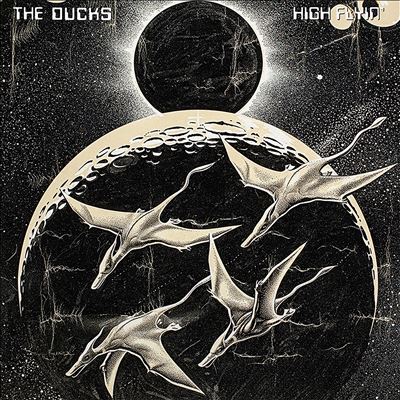
Neil Young 68: High Flyin’

In the summer of 1977, Neil took up with one of the guys who used to be in Moby Grape, who’d found a singer-songwriter and a drummer who could sing, and the quartet played several gigs around the Santa Cruz area billed as the Ducks. This was not Neil’s band; his job here was mostly as guitar player, supporting the other guys and their original songs, except when they played one of his. As quickly as the combo started, they were done, and Neil went off to start work on what would become Comes A Time.

It only took 45 years, but an official Ducks album finally came out as part of the Neil Young Archives Official Bootleg Series. High Flyin’ presents two discs of the band in their element: a bar. Three such venues are represented here, including Neil favorite The Catalyst, along with a recorded “live rehearsal” and an appearance at a local auditorium. The songs were recorded well enough—by Neil’s own team, of course—to the point where you can almost smell the spilt beer and urinal cakes.

Just as in every scene across America and most of Canada throughout the rock ‘n roll era up through today, The Ducks were a decent bar band, with accomplished if pedestrian vocalists. If anything, they were faster than Crazy Horse, and certainly funkier. Overall, pretty solid rock ‘n roll, as would be expected of any other bar band with a hotshot guitarist.

The draw here, obviously, is anytime Neil rips off a stinging lead, blows into a harmonica, adds a harmony, or steps forward to sing one of his own songs. “Are You Ready For The Country?” is a fun stomper as ever, while “Sail Away” and “Human Highway” get nice electric treatments with energetic harmonies. The band’s treatment of “Little Wing” is especially moving, as Neil gives it something of a riff missing from the acoustic take, and “Mr. Soul” is delivered with pure Springfield energy. (Sadly, Duck takes on “Comes A Time” and “Cryin’ Eyes”, both common to other bootlegs, do not appear here.)

But that’s a small portion of nearly two hours of music. For the most part the songs alternate between originals written by bass player Bob Mosley or Jeff Blackburn, the other guitar player, plus drummer Johnny Craviotto gets to bellow some obscure R&B nuggets. “Truckin’ Man” is indicative of their lyrical depth; “Car Tune” shows that they had more in common with Neil than just music. The instrumental “Windward Passage” has become somewhat legendary over the years, being a two-guitar dueling jam, with Neil on one and Blackburn with a chorus pedal on the other. Each disc closes with a version of “Silver Wings”, arguably the band’s best (non-Neil) tune, unless you count “Hey Now”, which features even fewer lyrics than “T-Bone”. One surprise is a furious “Gone Dead Train”, which Crazy Horse covered on their first (Neil-less) album. Throughout, Neil happily lets loose, content with being part of the backdrop in a way he hadn’t been since the Squires.

High Flyin’ isn’t essential except for us Neil completists, and even that’s pushing it, but it does beg one question. Since this technically was never an actual bootleg, shouldn’t it be part of the Performance Series?

The Ducks High Flyin’ (2023)—3

Friday, February 10, 2023

Queen 6: News Of The World

With every album, Queen had always strived for being bigger. This would be something of a stumbling block in the UK, where punk was all about tearing down pomposity (in others, anyway). In America, loud and heavy music still ruled the high school parking lot, so News Of The World was not only welcomed, but expanded the group’s popularity.

Still, they throw a curve at the start. Rather than another rococo fanfare, the stamping feet and clapping hands of “We Will Rock You” take a football chant worldwide, and Brian May’s guitar solo is one of his best. On the radio stations we listened to, the song went right into “We Are The Champions”, which anyone else would have put at the end of the album. It only took us a zillion listens to realize that the melody under “no time for losers” is the same as the schoolyard “nyeah nah na-nah nah” taunt. For another curve ball, “Sheer Heart Attack” isn’t just the long lost title track from a previous album, but a solid punk track that doesn’t take the piss in the slightest. For another whiplash-inducing switch, “All Dead, All Dead” is more morbid lyrically than musically, and it turns out Brian never got over the death of his pet cat. While “Spread Your Wings” could be read as a suicide note, it’s actually a strong message advocating survival, and another songwriting success for John Deacon. (We wonder if Sammy ever got to compare life lessons and melody with Anthony from Billy Joel’s “Movin’ Out”.) “Fight From The Inside” was recorded almost completely by Roger Taylor, and is more of the dirty and stupid rock and roll he usually delivered.

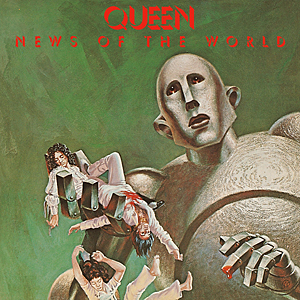
If parents weren’t already disturbed by the album’s gory cover art, they would have had major conniptions over the content of “Get Down, Make Love”, where the extremely minimalist accompaniment leaves plenty of room for the lyrics to be heard and understood as intended. The effects-laden interlude provides a link between Led Zeppelin and Frankie Goes To Hollywood. Brian sings the bluesy “Sleeping On The Sidewalk” in a nice Bad Company pastiche; John’s bassline is particularly deft. Deacon’s also responsible for “Who Needs You”, and its overly Spanish samba mélange unfortunately only predicts George Michael today. The severe stereo mix obscures the lyrics. While using very simple chords and the most basic of riffs, “It’s Late” is this album’s version of a suite—indeed, the lyric sheet even splits the verses up into stage “scenes”—but without the piano that earlier ones sported. We also hear echoes of Meat Loaf and Asia in here, and the double-time sections are particularly welcome. Just in case you thought Freddie wasn’t camp anymore, “My Melancholy Blues” put paid to that, bringing the album squarely back to where they left off the last time.

Being so popular, it was natural that the album would be expanded for reissues, but this didn’t happen right away. The 1991 CD added merely a “bonus remix ruined by Rick Rubin” that extended the final guitar figure over bass and drums from Flea and Chad of the Red Hot Chili Peppers. This was eschewed on the later remaster for the rockin’ outtake “Feelings, Feelings”, two songs from a BBC session, “Sheer Heart Attack” live in 1979, and a revved-up “We Will Rock You” three years after that. The album’s 40th anniversary gained the most, kinda, with two full CDs—one dedicated to so-called Raw Sessions, comprising alternate takes and rough mixes save for a live “Sleeping On The Sidewalk”, and the other containing the 2011 bonus tracks, previously released BBC sessions and live versions, “karaoke” tracks, and one radio edit. (By that time box sets like this included the original album on vinyl as well, which this did, plus a DVD and a book, yanking up the price and further angering fans who already had most of the material already.)

Queen News Of The World (1977)—
1991 Hollywood reissue: same as 1977, plus 1 extra track
2011 remaster: same as 1977, plus 5 extra tracks
2017 40th Anniversary Edition: same as 2011, plus 25 extra tracks (and DVD)

Friday, November 26, 2021

Kiss 8: Alive II

Three studio albums since the last live album meant it was time for another celebration of what the announcer calls “the hottest band in the world.” Alive II was another double album, once again festooned with shots of Kiss in action, with a lovely full-color shot of Gene Simmons dribbling fake blood right on the front cover.

At the risk of too much repetition, the songs are taken from only those three most recent albums, delivered just as you remembered them but louder and with more pyrotechnics and more Paul Stanley stage banter. Ace Frehley is allowed to sing “Shock Me” and play his spotlight solo, then Peter Criss gets his first vocal on “Hard Luck Woman”. As with the rest of the album, reports conflict as to how much of this album was recorded in front of an actual Kiss audience, and how much was tweaked during mixing. When “Beth” comes up in the setlist, there’s no subterfuge: Peter simply grabbed a mike and sang over the backing track. (We’re assuming his drum solo on “God Of Thunder” is authentic.) Since they couldn’t repeat “Rock And Roll All Nite”, “Shout It Out Loud” must serve as the closing anthem, after which the crowd chants “We want Kiss” into the dead wax.

With only enough live material to cover three shortish sides, side four offered a grab bag of five new studio tracks. Bicentennial patriotism may have inspired “All-American Man” and the dopey “Rockin’ In The U.S.A.”, but the braggadocio of “Larger Than Life” isn’t anywhere as cerebral. If the lead guitar sounds different on those tunes, you’re right: studio gun Bob Kulick filled in for Ace, who only appears on “Rocket Ride”, wherein he plays everything but the drums. Finally, Paul turns up the fuzz for a cover of the Dave Clark Five’s “Any Way You Want It”, wherein the production gets the echo right, but the main “it’s all right” vocal sounds like he’s singing along with his car speaker.

Like most sequels, Alive II had more style than substance. As for extra packaging, a booklet entitled “The Evolution Of Kiss” told the story in words and pictures, and an order form for the latest Kiss merchandise was eclipsed by the set of 18 temporary tattoos. Even these made it to the remastered CD twenty years later, small compensation for a double-disc set that could have fit on a single by several minutes. At least the new liner notes copped to Ace’s absence on side four.

Kiss Alive II (1977)—3

Friday, August 6, 2021

Kiss 7: Love Gun

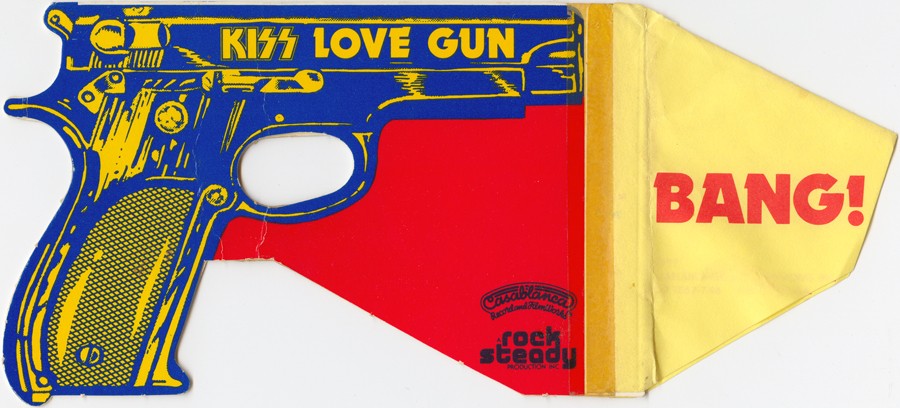
The boys couldn’t be stopped, and just in time for a summer tour came yet another Kiss album. While it seems impossible that they could keep up any measure of quality, much less a pace, Love Gun was the band’s third solid album in a row. They even included a cardboard cut-out gun as a bonus insert, along with the usual shill for the Kiss Army and an order form for the first official Kiss comic book, which incorporated the band members’ actual blood in the ink.

Keeping with the assaultive nature of the album title, there’s nary a ballad here, with even the “romantic” songs delivered with beats and speed. “I Stole Your Love” barely lets up its hook in the verses, and doesn’t bother to expand on the title in the chorus. “Christine Sixteen” begins with a wonderfully off-tempo riff with producer Eddie Kramer bashing the same two chords on the piano, and that turnaround given a different life 12 years later via “Funky Cold Medina”. As for the lyrics, the danger of felony is compounded by Gene’s lecherous monologue after the first verse. Clearly, he’s got to have her and can’t even wait until after the bridge or even the solo. She must not have been convinced, because in the next trick he’s insisting he’s “Got Love For Sale”, presumably to recoup any losses spent hanging around high school parking lots. Ace Frehley makes his lead vocal debut on “Shock Me”, which was supposedly inspired by an actual onstage electrocution, but apparently it only zapped his sense of pitch. Nice cymbal work by Peter Criss, by the way. “Tomorrow And Tonight” is another arena anthem, wherein the title is masterfully rhymed with “oh yeah, uh huh, all right.”

The title track rat-a-tats out of the speakers with little subtlety, but one would think that such a powerful weapon would be designed to make its object feel more than “okay”. Speaking of rhymes, Peter rocks rather than wimps out on “Hooligan” (who “won’t go to school again”) while Gene sticks to type for “Almost Human”, except now the demon is a werewolf. That sentiment has nothing on “Plaster Caster”, a blatant ode to one of the more notorious groupies in rock history, and certainly one reason why Gene wanted to become a rock star in the first place. With all the apparent decadence, maybe that’s why they decided to close the album with a gender-modified cover of the Ronettes’ “Then She Kissed Me”, complete with castanets and booming snare. In hindsight, Paul Stanley says it was a dumb idea, but then they couldn’t risk an album running under 30 minutes.

One of the better sounding Kiss albums yet, Love Gun not only shipped platinum, but it would be the first of the band’s catalogue to get the expanded Deluxe Edition treatment. This entailed an appreciation by Def Leppard’s Joe Elliott, quotes from the band, and a bonus disc of extra tracks, which still could have fit on the main disc. These include four demos from Gene, including the rather sophisticated yet unreleased “Much Too Soon”, two eternal minutes of Paul demonstrating how to play “Love Gun”, a seven-minute radio interview with Gene, and three songs recorded live on the tour supporting their next album.

Kiss Love Gun (1977)—
2014 Deluxe Edition: same as 1977, plus 11 extra tracks

Tuesday, July 20, 2021

Kinks 22: Sleepwalker

With the promise of financial reward dangled in front of him, Ray Davies took the mandate of a new contract with Arista Records to heart and wrote an entire Kinks album devoid of any overwrought concept. That’s not to say Sleepwalker didn’t have any theme at all—he was still writing about the travails of being a working musician and skewering hypocrites and sycophants, but at least folks could enjoy the songs without having to follow a plot. (More to the point, there was no horn section or backing choir, just lots of guitar and plenty of keyboards.)

In case anyone hadn’t heard yet, it’s not easy living “Life On The Road”, but this variation is one of Ray’s catchier ones. “Mr. Big Man” builds to something particularly nasty, with brother Dave given free rein to solo throughout. With a drum intro straight from a Steve Miller record, the title track is one of the most deceptively catchy songs ever about creepy obsession. By contrast, “Brother” begins almost dreamily, as befits a heartfelt ballad, but this one is sung to humanity in general, and certainly not Dave.

Another anthem of sorts kicks off side two in “Juke Box Music”, which both celebrates and minimizes the art, complete with some wonderful Townshend-like strumming throughout. After singing lots of high parts, Dave gets the lead vocal on “Sleepless Night”, which becomes more desperate once you realize the narrator is being kept awake by the nocturnal exploits of his ex next door. “Stormy Sky” begins kinda wimpy, but a tempo change on the coda makes it a lot better, while “Full Moon” touches on the werewolf metaphor without sinking into horror cliché. Somehow “Life Goes On” manages to eulogize a suicide while poking fun at those who fail at it, until it emerges as a song of hope.

Just as the Who and the Stones met the challenge of being relevant in the punk era, Sleepwalker shows the Kinks had already figured out how to give the people what they want, well before that became a statement of purpose. It’s still firmly lodged in the ‘70s, but some things can’t be helped. (The extras on the eventual expanded CD show they weren’t exactly grasping at straws for material given what came out later as B-sides—the decent but ordinary “Artificial Light”, and the more pointed “Prince Of The Punks”, with its clever Beach Boys vocal tag. Despite their promise, two outtakes were left in the can: “The Poseur”, aged by its Latin disco approach, and “On The Outside” in both its original mix and one done in the ‘90s when it snuck out on an EP.)

The Kinks Sleepwalker (1977)—3
1998 Konk CD reissue: same as 1977, plus 5 extra tracks

Tuesday, June 22, 2021

Grateful Dead 15: Terrapin Station

It had seemingly been an eternity since the last Dead album, and now they’d signed with Clive Davis’ new Arista label, which had already scooped up such daring legacy artists as the Kinks, Lou Reed, Patti Smith, and Barry Manilow. They were also tasked with using an outside producer, which is how Terrapin Station ended up with Keith Olsen in the booth, on his way from Fleetwood Mac to Foreigner.

Bob Weir dominates side one, beginning with the confusing time signature on the mildly reggaefied “Estimated Prophet”, unfortunately featuring the ubiquitious Tom Scott on sax. While the band had played “Dancin’ In The Streets” at several points in their career thus far, the disco arrangement of it here is just plain horrible. Bob and Donna Godchaux get a better chance to shine harmonically on Phil Lesh’s “Passenger”, which injects some needed rock and roll into the proceedings, particularly when followed by another disco mistake, this time on the traditional “Samson & Delilah”. Then Donna takes center stage for “Sunrise”, which she wrote all by herself. Between her performance and the orchestration, this could have been a very well received adult contemporary hit; it just doesn’t sound like the Dead at all.

The centerpiece of the album, of course, was the entirety of side two, entitled “Terrapin Part 1”. (The Dead apparently never completed music for Part 2, although lyricist Robert Hunter played portions of it over the years.) Besides presenting Jerry Garcia on vocals for the first time on the album, it challenges the listener not merely because it’s a multipart suite, but because it incorporates orchestration by Paul Buckmaster, and even the English Choral choir.

It starts innocently enough with “Lady With A Fan”, which evokes an image of scarlet begonias and such, but takes a minor key turn before morphing to “Terrapin Station” proper. The “Terrapin” theme is based around a not-too-intricate guitar part, part riffing and part chords, that is unfortunately matched and ultimately overshadowed by the orchestration. Following a crescendo, “Terrapin Transit”, credited to the two drummers in the band, recalls some of the Eastern influences of the “Blues For Allah” suite, and nicely folds into the “At A Siding” vocal portion, which features an uncredited trumpet a la Miles Davis. The drummers also drive “Terrapin Flyer” and its quickly syncopated beats under Jerry’s high-speed (sped up?) soloing, though the orchestration veers dangerously close to calypso. After another crescendo, the main theme returns as “Refrain”, this time with the choir intoning the title with different affectation.

Despite the overall success of the suite, the dated production as well as the clunkers on side one do not serve Terrapin Station well, rendering it sub-par. Luckily, there are better versions of these songs in the Dead archives, which continues to expand in general availability. (The cover has its charm, too.)

The eventual expanded CD would have been a perfect opportunity to concoct a stripped-back mix of the “Terrapin” suite, but apparently nobody thought of that. Still, it did offer some interesting rarities, including the otherwise unrecorded Lesh track “Equinox”, a Dead rendition of “Catfish John”, which had already appeared on Jerry’s most recent solo album, an early studio take of “Fire On The Mountain”, and a lengthy “Dancin’ In The Street” from their fan-favorite 1977 show at Cornell University.

Grateful Dead Terrapin Station (1977)—
2006 expanded CD: same as 1977, plus 6 extra tracks

Friday, February 26, 2021

Elton John 16: Greatest Hits Volume II

Maybe Elton (or his record company) knew his streak was over, as another “hits” package was pushed out to maximize any sales. Unlike the first installment, Elton John’s Greatest Hits Volume II ran all over the place, even including songs that predated that previous mop-up—never a good sign. It did have a nice booklet with lyrics and photos, which was nice.

After establishing the thesis yet again with “The Bitch Is Back”, his cover of “Lucy In The Sky With Diamonds” graduates from single to album track, and yes, that would be John Lennon himself playing “reggae guitars” on the break. “Sorry Seems To Be The Hardest Word” is still heartbreaking, just as “Don’t Go Breaking My Heart” his single duet with protégée Kiki Dee is all but irresistible. “Someone Saved My Life Tonight” brings the seesaw back to close the side.

Another non-album single, “Philadelphia Freedom” was all over the radio as America geared up for its bicentennial, and we still can’t figure out what it has to do with Billie Jean King’s tennis team outside the title. “Island Girl” and “Grow Some Funk Of Your Own” are good and bad choices, respectively, from Rock Of The Westies, and then we go all the way back to 1971 for “Levon”. Finally, “Pinball Wizard” reminded folks of one of the cooler sequences in the Tommy film, and showcases the Elton John Band at their best.

There’s no question that Greatest Hits Volume II delivers the goods. Back then, it did offer value for money by collecting songs from various sources, and there’s no denying how much he had dominated the charts, the jukeboxes, and the airwaves in those days.

Nothing is simple with Elton, of course; outside the U.S., “Bennie And The Jets” replaced “Levon” in the lineup. Then, when his catalog was standardized worldwide in the ‘90s, the remaster swapped out “Sorry Seems To Be The Hardest Word” and “Don’t Go Breaking My Heart” for “Tiny Dancer” and “I Feel Like A Bullet (In The Gun Of Robert Ford)”—not exactly an even swap—though it kept “Levon”. Future hits collections would be more comprehensive in including the necessary hits, just as upgraded and expanded albums have collected various of the standalone singles.

Elton John Elton John’s Greatest Hits Volume II (1977)—
1992 CD reissue: same as 1977, plus 2 extra tracks (and minus 2 tracks)

Friday, January 1, 2021

Clash 1: The Clash

Possibly the best and certainly one of the smartest bands of the original punk era was the Clash. Besides looking good, they had the chops to back up their lyrics, most of which began as indictments of contemporary society. But they didn’t happen organically; Joe Strummer was the chosen name of a former folkie who called himself Woody, and Mick Jones was an unabashed Stones fan, right down to his Keith Richard style. Every punk band needed an incompetent bass player, and Paul Simonon—who just reeked of cool—learned his instrument while they were recording their eponymous debut. (Drummer Terry Chimes quit before the album was released; he’s credited as “Tory Crimes” on the sleeve.)

The energy starts immediately on side one, with “Janie Jones” establishing Joe Strummer’s voice. “Remote Control” is sung nearly unison with Mick Jones, but it’s the power chords you notice. “I’m So Bored With The U.S.A.” fits the Sex Pistols mode, but cleverly changes key for the chorus. Speaking of clever, “White Riot” is a different recording of their first single, the lyrics going by so fast the social comment isn’t clear. “Hate And War” presents some of the power pop The Jam were trafficking in, while these ears hear “Deny” as a clear influence on the Pistols’ “Liar”. Former band member Keith Levene gets co-writing credit on “What’s My Name”; he would go on to join the former Johnny Rotten in PiL. And despite the title, “London’s Burning” mostly complains about traffic congestion.

“Career Opportunities” gets back to the concern of standard employment, with the armed forces as a lousy choice. “Cheat” amps up the anger with a lot of four-letter words and oddly flanged guitars, while “Protex Blue” is a sensitive recount of buying condoms. Just to show how well they stood out from the rest, their cover of the reggae hit “Police & Thieves” runs for six minutes, shows how far Paul Simonon had come on the bass, and points to their future. “48 Hours” goes by fairly quickly, and “Garageland” is a rather melodic riposte to those who questioned their talent.

Despite racking up huge sales as an import, The Clash wasn’t officially released in America until after the band’s second album. Even then, Epic had to tamper with it, rejigging the lineup, dropping five tracks, and adding six, some of which were recorded after that second album. The recent “Clash City Rockers” single now kicks off the very different side one, sending “Janie Jones” to start side two. In a perverse move, “Remote Control” is followed by “Complete Control”, written as an angry response to record company interference. The original single version of “White Riot” is followed by the more recent “(White Man In) Hammersmith Palais”, another excellent exercise in reggae. Their cover of Bobby Fuller’s “I Fought The Law” would become even bigger than the original, and “Jail Guitar Doors” demonstrates Joe’s knowledge of rock trivia, at least when it came to drug use.

The changes make the US release of The Clash slightly more musically diverse than the mostly straight punk of the UK version, but even with the repetition, both are key. When the catalog was remastered in 2000, both versions were reissued on CD; today, the UK version has become the worldwide standard.

The Clash The Clash (1977)—
The Clash
The Clash (US version) (1979)—

Friday, November 27, 2020

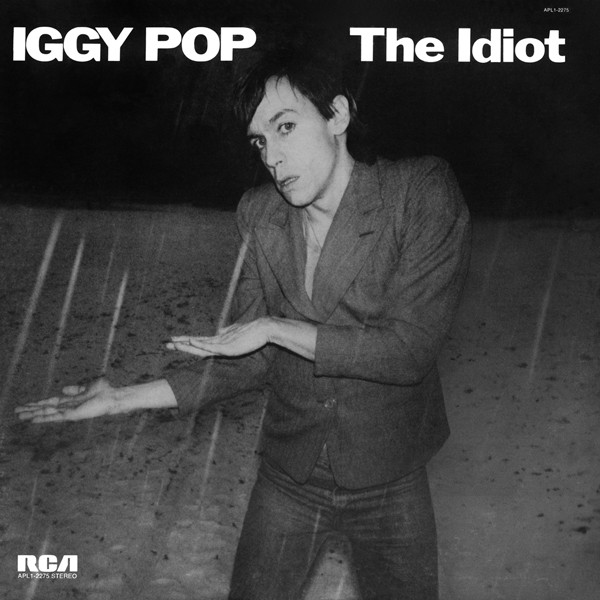
Iggy Pop: The Bowie Years

David Bowie used his cachet to help—for lack of a better word—some artists who might have remained cult figures had he not championed them. In some cases, like Dana Gillespie and Ava Cherry, it didn’t exactly work, but Lou Reed and Mott The Hoople could certainly attribute some of their longevity to his patronage.

Then there was Iggy Pop. Bowie loved the garage anarchy of the Stooges, and helped get their Raw Power album onto shelves. (He also appropriated Iggy’s croon into his own vocal styles.) A few years later, both Bowie and Iggy were trying to get off drugs, so they went to France and then Germany to work as artists. Between them they completed four albums that were all released in 1977, and all remain high points of their respective catalogs.

Everything on The Idiot was written by the pair, backed by Carlos Alomar and the rhythm section of George Murray and Dennis Davis. While still trashy (“Funtime” and “Baby”), Bowie’s arty tendencies took over to slow the music down and find grooves. “Sister Midnight” and “Nightclubbing” paint vivid pictures of their lifestyle, while “China Girl” would one day get a new lease on life. “Dum Dum Boys” is something of a lament for old bandmates, “Tiny Girls” sports a doo-wop saxophone, and “Mass Production” turns the drone of “Station To Station” into something more robotic. Besides being removed from the assault of the Stooges albums, The Idiot is a startling album, but now we can hear it as very much a blueprint for bands like Joy Division, as well as what would become side one of Low.

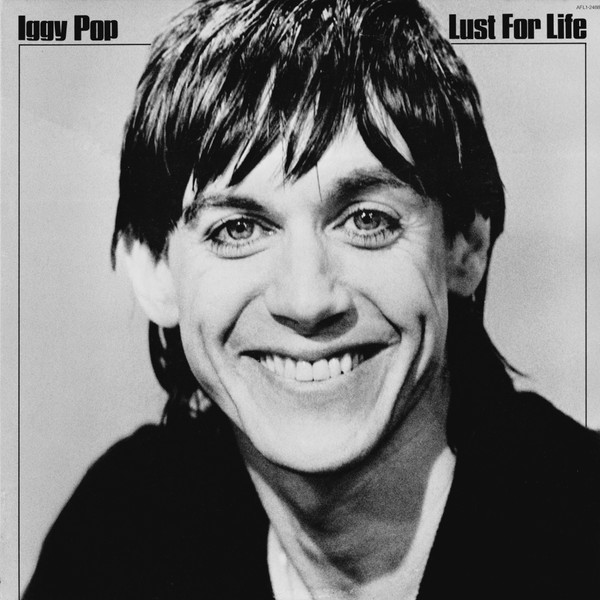
To promote the album, Bowie actually went on tour with Iggy, playing keyboards and adding vocals alongside the Sales brothers (Tony on bass and Hunt on drums and vocals) and guitarist Ricky Gardiner. Then the band went right back into the studio to record Lust For Life. This time Iggy was more in charge, relying less on Bowie to provide music and scenarios, and it works. It also rocks, from the Motown-derived pounding of the title track through “Sixteen” and “Some Weird Sin”, the latter of which sports some wonderful backing Bowie vocals. Ricky Gardiner’s chords drive “The Passenger”, but “Tonight” is most striking if you’ve only heard Bowie’s tame cover, which doesn’t include the prelude. The call-and-response of “Success” is just plain hilarious, making the pleas in “Turn Blue” even more arresting. “Neighborhood Threat” would also get a Bowie remake one day, while the band swapped instruments for the trashy “Fall In Love With Me”.

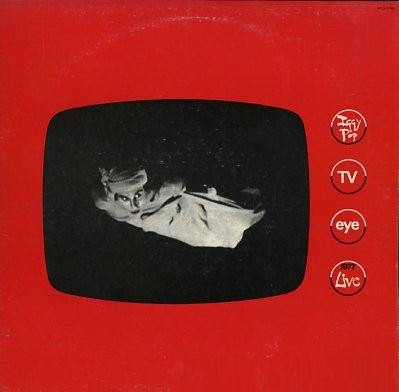
By the time Lust For Life came out, Bowie was busy recording his own “Heroes” album, so Iggy ended up touring the album with future Heartbreaker Scott Thurston and Stacey Heydon replacing Bowie and Gardiner augmenting the Sales brothers. TV Eye 1977 Live, released a year later, was split between shows played by the two bands, and for the longest time was the only evidence of Bowie’s onstage work with Iggy. The sound is bootleg quality, recorded and mixed on the cheap to get out of his label contract, but still crackles with energy—or at least power when the songs slow to a crawl—particularly on the Stooge classics “T.V. Eye”, “Dirt”, and “I Wanna Be Your Dog” and the rare “I Got A Right”.

All three albums would become cult classics despite low sales, and all three were included on 2020’s comprehensive The Bowie Years box set. A disc of negligible single mixes and alternate takes is capped by the Bowie-produced “I Got A Right” single and an recent interview with Iggy, while three discs present three live performances with mostly identical setlists and Bowie on board, from London’s Rainbow, Cleveland’s Agora, and a Chicago radio station. These vary in quality, but we do hear pre-studio renditions of “Turn Blue”, “Tonight”, and “Some Weird Sin”, as well as further Stooge favorites. (Meanwhile, Deluxe Editions of The Idiot and Lust For Life were each bolstered by a live disc: the Rainbow show from the box for the former, and TV Eye for the latter.)

Iggy Pop The Idiot (1977)—
2020 Deluxe Edition: same as 1977, plus 15 extra tracks
Iggy Pop Lust For Life (1977)—4
2020 Deluxe Edition: same as 1977, plus TV Eye 1977 Live
Iggy Pop TV Eye 1977 Live (1978)—3
Iggy Pop
The Bowie Years (2020)—3

Tuesday, September 8, 2020

Bryan Ferry 4: In Your Mind

Seemingly freed from the shackles of Roxy Music, Bryan Ferry’s next solo album found him… writing original songs and recording them with various members of the band. There’s not a single wacky cover tune on In Your Mind, nor is there a single trace of camp or irony.

“This Is Tomorrow” is a fairly ordinary track, except for the instrumental bridges that hit other chords, while “All Night Operator” is proto-pub rock. “One Kiss” fades out on a drum pattern much like that which opens Bowie’s “Five Years”. With its prominent electric piano, “Love Me Madly Again” recalls the dirty skank of “Editions Of You”. It’s also the longest track, at over seven minutes. “Tokyo Joe” continues the vibe, though the “Oriental” touches in the strings are little overdone. “Party Doll” keeps up the dancing beat, and it’s not until “Rock Of Ages” that some transitory ambience, but even that gives way to another upbeat track. The title tracks provides a similar tease.

Except for the wall of saxophones—not provided by Andy Mackay, by the way—In Your Mind might as well be a Roxy Music album, following as well as it does from the more mainstream track they’d started to find. While it’s fairly ordinary, without a lot of variety, it’s also harmless.

Bryan Ferry In Your Mind (1977)—3

Tuesday, March 24, 2020

Dwight Twilley 2: Twilley Don’t Mind

The Dwight Twilley Band’s debut was a mélange of tracks created in studios on different continents over a few years, but Twilley Don’t Mind was made in one place, and somewhat quickly. While a little more uniform and streamlined, it’s just as solid as Sincerely.

The straightforward rock of “Here She Comes” is a good place as any to start, especially when driving with the top down in search of young girls in wet T-shirts and tight blue jeans. “Looking For The Magic” has Dwight’s terrific natural tremolo vocals with verses that sound like they were made up on the spot. Oh mercy indeed. (Cool trivia: Tom Petty is credited with guitar on this track, but in the clip you can find of them miming the song for TV, he’s holding a bass.) “That I Remember” brings a welcome swagger despite the lonesome lyrics, while “Rock And Roll 47” is another in-joke we don’t get. But then Phil Seymour takes the lead vocal on “Trying To Find My Baby”, possibly our favorite song of the oeuvre.

Perversely, Phil also sings lead on the title track, which almost adds insult to injury, since he’s the band’s entire rhythm section. This comparative trifle of a number is nicely forgotten by the almost grandiose “Sleeping”, which isn’t just the longest track, but even sports a string arrangement by James Newton Howard, who’d been busy the previous couple of years with Elton John. Lest one think the boys were too ambitious, “Chance To Get Away” is a terrific close harmony gold nugget. And while “Invasion” may seem a trifle along the lines of “England” or “TV”, the lyrics reveal some pointed commentary on their professional ties.

By the time the album came out, the Shelter label had been swallowed up by relative upstart Arista, so one could assume Twilley Don’t Mind would have gotten some more legs, even after three singles were released from the album. It still makes a wonderful companion to the debut, and should be sought out post haste. (Sometime in the ‘90s it was decided to swap the opening tracks of each side, which does the favor of getting the title track out of the way early. Also, some but not all CDs also included “Fallin’ In Love”, a lost gem that fell off the original sequence, as a bonus track.)

Dwight Twilley Band Twilley Don’t Mind (1977)—

Friday, July 26, 2019

Grateful Dead 11: Skeletons From The Closet

Now that the Dead had ran off and started their own label, Warner Bros. did the smart thing and put together a hits album. Skeletons From The Closet purported to present the “best” of the band’s albums, and while the band didn’t have a lot of hit singles per se, most of the tracks here have since become staples on Classic Rock radio. The usual suspects are here: “Truckin’”, “Sugar Magnolia”, “Uncle John’s Band”, “Casey Jones”, “Friend Of The Devil”. There are a few curveballs, such as “The Golden Road”, which opened the debut and sounded incredibly dated then even then; “Rosemary” seems a little odd too. An edit of “Turn On Your Love Light” and “One More Saturday Night” give a glimpse at the band onstage, and while “Mexicali Blues” from Bob Weir’s solo album does have the band playing on it, those horns will harsh your mellow.

It’s a solid set, and likely one that will lead a newbie deep into the catalog. A decade after its release, next-generation high school Deadheads were required to have a Skeletons From The Closet cassette with them at all times; the tape itself was usually on constant autoplay in the car, and the case was sized right to stash a joint.

One record’s worth of tunes wasn’t enough to sum up the band, of course, so three years later—just in time for their next label switch—Warner put out a double LP, also incorporating “best of” in the subtitle. What A Long Strange Trip It's Been used the extra space to further explore their work onstage as well as in the studio. As before, Workingman’s Dead and American Beauty get the most dipping. “Truckin’” is repeated from Skeletons, likely because it was the source of the set’s title, but they kindly included the rare single versions of “Born Cross-Eyed” and “Dark Star”. The “studio” half also includes the Bear’s Choice version of “Black Peter”, and along with an edit of “St. Stephen” from Live/Dead, sides three and four sample the “Skull & Roses” album and Europe ‘72.

It’s hard to determine the audience for this; diehards had to have it for the two rare tracks, while we’d assume that the recently converted might have already delved into the original albums too. Still, the cassette version crammed it all onto a single tape, for further convenience.

Grateful Dead The Best Of Grateful Dead: Skeletons From The Closet (1974)—4
The Grateful Dead
What A Long Strange Trip It's Been: The Best Of The Grateful Dead (1977)—

Tuesday, April 2, 2019

Jeff Beck 8: With The Jan Hammer Group Live

This album has been much maligned over the years, likely because it was (at the time of release, anyway) the furthest out Jeff Beck had gone from what people expected of him. While it’s his picture on the cover, since he made the money for the label, Live is double-billed with the Jan Hammer Group, who at this time consisted of all former members of fusion pioneers Mahavishnu Orchestra. Hammer himself had made his impression on Beck all over Wired, while the rhythm section of Fernando Saunders and Tony “Thunder” Smith would one day make Lou Reed very happy. Without question, this is a fusion album, and a true collaboration, Beck’s role being that of the guitarist in the band. Therefore, half the program is given over to material from earlier Hammer albums.

Car horn sound effects not only set up “Freeway Jam”, but recur throughout—a novelty when guitars and synths didn’t commonly make those noises with ease, but mostly annoying today. “Earth (Still Our Only Home)” is funky, but Hammer’s not a vocalist, and the lyrics are unintelligible. Beck takes over the vocoder for “She’s A Woman”, and soon ends up parroting some of Peter Frampton’s clichés from his own live album from the year before. He even exhorts the crowd to “put those hands together” for “Full Moon Boogie”, sung well by Tony Smith with lots of electric violin from Steve Kindler.

Side two has no vocals, thankfully. Crazy space noises open “Darkness/Earth In Search Of A Sun”, moving into a more ambitious groove. “Scatterbrain” translates well to the stage, with the orchestral parts covered by Hammer and Kindler, while the rhythm section travels at the speed of light. “Blue Wind” is an excellent display of precision, and takes a surprising yet apt detour into “Train Kept A-Rollin’”, proving he still had rock in him. And with a “God bless, ya,” they’re gone.

Assuming they’re authentic from the performances, the crowd dug the show, as will anyone into jazz fusion. Therefore it’s recommended, but you’ve been warned.

Jeff Beck With The Jan Hammer Group Live (1977)—3

Tuesday, October 2, 2018

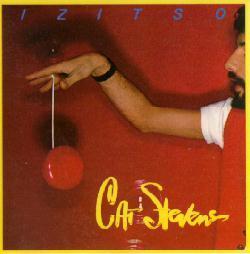
Cat Stevens 10: Izitso

With his concepts failing to connect with the world at large, Cat Stevens went back to writing just plain songs. While Izitso finds him even closer to chucking it all for a simpler life and enlightenment, he was still finding inspiration from modern synthesizers and contemporary rhythms.

But while some synthesizer experiments of the era still sound fresh, the Cat isn’t so lucky. The needlessly parenthetical “(Remember The Days Of The) Old Schoolyard” is designed to conjure memories of a more innocent youth, screaming children and all, but the keyboard colorings dump way too much color on those old snaps. Interestingly, the song uses a melody line like that theme from the “Foreigner Suite” that sounds like Coldplay, and while Elkie Brooks may be a worthy duet partner, she’s no Kiki Dee. “Life” uses the keyboards better, a more understated musing closer to his classic sound, complete with bouzoukis. And while that establishes a better mood, we’re off to Muscle Shoals for “Killin’ Time”, squarely in the now, but coming off like Bachman-Turner Overdrive playing “Shakedown Street”. And as he says, “You really miss the point.” “Kypros” is a harmless instrumental based around a rhythm box that’s not much more of a demo, and would be ideal background music for any number of ‘80s video games. Shackled to a forced metaphor, “Bonfire” sounds awkward today, even with Chick Corea noodling on piano. The salacious lyrics are more suited to Barry White, especially considering the path he was about to take, but we’re getting ahead of ourselves again.

Speaking of blatant, parentheses strike again on “(I Never Wanted) To Be A Star”, a clever track that weaves in references to his earliest hits soon after he left the old schoolyard. However, the lament is misplaced on an album seemingly designed to top the charts, given the yacht-rock qualities of “Crazy” and “Sweet Jamaica”. Then there’s “Was Dog A Doughnut?”, another windup instrumental that people will insist predicts techno. We’re not sure where the doughnut falls in, but the barking dog effects may indeed have influenced “Rockit”. One of the better songs, “Child For A Day”, ends the album, and while it’s possibly the most archetypical Cat Stevens song here, it turns out his brother wrote it.

At the time, Izitso would have been considered a comeback, and it would have been welcomed. As should be clear, it has not aged well, and while it’s definitely a step up from the last handful of albums, it’s still less than memorable.

Cat Stevens Izitso (1977)—

Tuesday, May 8, 2018

Frank Zappa 34: Baby Snakes

Frank had lots of grand ambitions, and often spoke of big projects and productions that would inevitably evolve as time went on and money ran out, and would almost as inevitably go unfinished. One of the few that did happen was Baby Snakes, filmed during the Halloween run in 1977 at New York’s Palladium, released about two years later with claymation segments and other hijinks edited in. The soundtrack companion appeared about four years after that, on a picture disc via mail order.

Basically we have about 36 minutes of music from a film that ran over four times as long, fitting chronologically just before Sheik Yerbouti. In fact, the title song is merely an edit of the album track. “Titties & Beer” gets a mild edge over its previously heard version due to the modified exchange between Frank and Terry Bozzio—to wit, Frank says he’s been through hell already, having been “signed with Warner Bros. for eight f—kin’ years!” “The Black Page #2” (sans drum solo) provides a transition to “Jones Crusher”, well sung by Adrian Belew.

“Dinah-Moe-Humm” was always a crowd-pleaser, yet this version follows Zappa’s wearying trend of inviting excitable audience members up to dance and be ridiculed, and loses a lot without the visuals. “Punky’s Whips”, though familiar from the Zappa In New York CD, was not included on the album, so it makes its first appearance here. So we get even more vocalizing from Terry Bozzio, in between some decent musical interludes (including the quote from “Isn’t It Romantic”, but somehow not “Sunshine Of Your Love”, which pops up repeatedly elsewhere).

Due to its length and despite its relative obscurity, Baby Snakes was always something of a minor but not disposable album. 1988’s CD added a minute or so of dialogue at the top, and removed the gap between the two album sides, and that was it for extras. The film itself was available on VHS in both its full version and a 90-minute edit, and many years later, for one of their periodic birthday tributes, the Zappa Family Trust offered all 164 minutes of the audio as Baby Snakes—The Compleat Soundtrack for download. If that wasn’t enough, the fortieth anniversary of the concerts brought forth Halloween 77, offered in a package with a Zappa costume and mask and a USB stick with all six shows from the run. The October 31 show, from which much of the original Baby Snakes album was compiled, was simultaneously released as a three-CD set, with bonus tracks from the show the night before.

Frank Zappa Baby Snakes (1983)—3