Showing posts with label buffalo springfield. Show all posts

Monday, October 26, 2009

Buffalo Springfield 4: Box Set

Buffalo Springfield was only around long enough to put out three albums, followed a year later by the Retrospective collection. Once Stephen Stills, Richie Furay, and Neil Young had become successful with their further adventures, the label dug deeper into each of the albums for a two-record set that has since become a collector’s item due to the inclusion of an extended version of “Bluebird”, which eschews the banjo section for an lengthy electric jam that manages to incorporate “Leave”.

Fast-forward to this century, and something of the first fruits of Neil’s long-awaited Archives project became reality with the Buffalo Springfield Box Set (after a few years of teasing and delays of its own). First of all, it sounds great — Neil being such a stickler for authentic fidelity, giving that as his main excuse for waiting so long. The first three discs follow the band’s evolution from the first demo recordings through the last sessions. Not counting bootlegs, there’s about 90 minutes of what falls into the category of “never-heard-before” material from Neil, Stephen, and Richie.

Handfuls of guitar-and-vocal demos abound, some of which turned into later classics for the Springfield, CSN (and Y) and Poco, and some of which weren’t explored further. The first disc is loaded with these, some with harmonies, heavy on Stephen and Neil, but Richie’s “Sad Memory” predates the debut and is the best by far of his other tentative drafts. Stephen’s “We’ll See” and “Neighbor Don’t You Worry” both appear as demos as well as decent band takes, while “So You’ve Got A Lover” is a heartbreaking little tune heard nowhere else, and “My Angel” would evolve quite a bit before it made it to an album. “Four Days Gone” is sung slowly and quietly with just piano.

Neil’s songs don’t show any of the shyness he professed to have had before he found his way. His own take on “Flying On The Ground Is Wrong” is a treat, but “Your Kind Of Guy” is a vaudeville tune that should have stayed undiscovered. “Down, Down, Down” appears twice—once with just Neil and another time in an appealing full band take, and both strengthen the line from “Broken Arrow” to “Country Girl”. “One More Sign” is a gentle surprise, as is “The Rent Is Always Due”, which mutated melodically into “I Am A Child”. Then there’s “Whatever Happened To Saturday Night?”, which is full of big production and sung by Richie, but Neil wrote it all by himself. “Falcon Lake (Ash On The Floor)”, with Buddy Miles, sounds very much like his first solo album, and even has a nod to “Here We Are In The Years” in the bridge, as well as an echo of “One More Sign”.

Long-booted outtakes, including the instrumentals “Kahuna Sunset” and “Buffalo Stomp” and Stephen’s vocal on “Down To The Wire”, make their official appearances, although the extended “Bluebird”, which both Neil and Stephen had long denounced as crap, was omitted. Stephen also takes the lead vocal on the future Poco track “What A Day”. In a unique example of using outside writers, the frothy “No Sun Today” was contributed by one Eric Eisner.

However, the fourth disc consists of Buffalo Springfield in mono and Buffalo Springfield Again in stereo. As some of these tracks are represented elsewhere in the full-priced four-disc set, one is justified in crying foul at the value for the money. But it’s obvious from everything here, from the packaging and the booklet to the overall sound, that Neil spearheaded this box set out of respect, reverence and real love for the guys in the band who put him on the map. That he gave more of his own vault jewels to this project than he had for the CSN box ten years earlier shows how much the Springfield means to him.

Still, rabid students of rock history have at the very least read about how this band, along with the Byrds, was responsible for a lot of what came after it, for good or bad. It only makes sense that the first two albums should be heard back-to-back and in order. (Besides, there’s all that unreleased stuff. They didn’t have to include any, you know.)

A couple of decades later, once his own archives had become an online entity, Neil took the opportunity to remaster and repackage the original albums yet again. On five discs, What’s That Sound? offered the debut in mono (with “For What It’s Worth” stuck on the end), the revised version in stereo, Again in mono and again in stereo, and Last Time Around in stereo. Even with all the extra space, none of the rarities from the first box were included, nor was the extended “Bluebird”.

Buffalo Springfield Retrospective: The Best Of Buffalo Springfield (1969)—
Buffalo Springfield
Neil Young, Stephen Stills, Richie Furay, Jim Messina, Bruce Palmer, Dewey Martin (1973)—
Buffalo Springfield
Box Set (2001)—4
Buffalo Springfield
What’s That Sound? Complete Albums Collection (2018)—

Wednesday, September 10, 2008

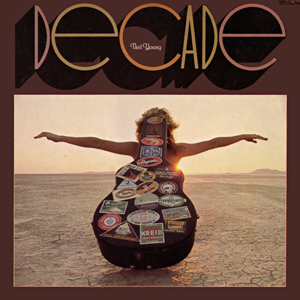
Neil Young 12: Decade

Proof that he was a bear for detail, Decade is an ambitious, sprawling retrospective that got pushed around a year while Neil sorted out the Stars Bars/Chrome Dreams mess. Originally a three-record set, it anticipates the box set genre by including rare and unreleased tracks, the big hits, album cuts, and artist-penned notes for each track. Every album is represented (with the notable exclusion of Time Fades Away) along with tracks by Buffalo Springfield, CSNY and even the Stills-Young band for balance. The sequencing is more or less chronological, and flows nicely through all six sides. For brevity’s sake we’ll discuss just the rare tracks here.

The set begins with “Down To The Wire”, a Springfield outtake that loomed large in their legend. “Sugar Mountain” was a B-side to about 12 of his singles before finally being albumized here. It’s still great, and a good teaser for the hours of live acoustic performances he’s sitting on in his vaults. While previously available on the CSNY So Far compilation, “Ohio” is included here in its original and best single version. “Winterlong” had been around since 1969, was recorded in the On The Beach era, and inexplicably left aside until now. It’s still one of his most enduring tracks. “Deep Forbidden Lake” comes from the same cloth as “Star Of Bethlehem”; from the Homegrown era, it’s very pleasant soft country, but not so “Love Is A Rose”, an unnecessary rewrite of “Dance, Dance, Dance”, which he used to do in his acoustic shows and recorded by Crazy Horse for their album. It’s easily surpassed by “Campaigner”, a sympathetic look at the deposed Nixon by a man who had a lot to do with taking him out not much earlier.

Decade is an excellent place for anyone to start, giving a generous sampling from each of his albums while leaving some gems to be uncovered by those willing to dig for them. He would not be quite as prolific over the next ten years, which is one reason why a proposed Decade II turned into the Archives project, which took another three decades and then some.

Neil Young Decade (1977)—4

Friday, July 4, 2008

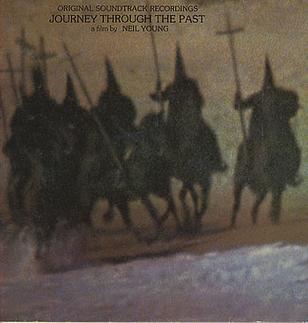
Neil Young 5: Journey Through The Past

While Everybody’s Dummy has only screened the film but once, has yet to meet anyone else who has nor read any reasonable synopsis, it has been affirmed that the Journey Through The Past album has little to do with said film, despite its classification as a soundtrack. The album doesn’t lend itself to repeated listening, except as a reminder of what’s on it.

It starts out as a kind of retrospective, with television performances by Buffalo Springfield that sound as if they were recorded by pointing a microphone at a TV speaker. We hear CSN telling an audience to listen to their “wooden music”, followed by a lackluster live rendition of “Ohio”. Another tedious “Southern Man” starts side two, then half of “Are You Ready For The Country?” fades into a version of “Let Me Call You Sweetheart” performed by what appears like a dance school. That is followed by a studio meld of “Alabama”, going into the control room so Neil can teach the harmonies to Crosby. The side ends with soundbites of a TV preacher, Nixon, and Crosby ranting about something.

The sidelong rehearsal of “Words” can be pretty taxing, but side four is really odd, even compared to all that has gone before. Outside of Neil talking to a Jesus freak and the slightly meandering “Soldier” (which was recorded in a foundry), everything else is music by other people, including selections from Handel’s Messiah and the movie King Of Kings. One gets the feeling that even if the connection between “Let’s Go Away For A While” from the Beach Boys’ Pet Sounds and the movie could be determined, it wouldn’t have been worth the effort.

The film was shown on Neil’s official website during an online film festival, followed by a few years in the form of grainy YouTube clips and bootleg DVDs. When the Archives actually surfaced in 2009, it was included in the DVD and Blu-Ray packages. The album itself is out of print, and unavailable on CD; an edited mix of “Soldier” is on Decade, and the side three take of “Words” is on the first Archives box, along with a different edit of “Soldier”. Neil finally made the whole thing—dialogue and Beach Boys and all—available for streaming and download from his official website in 2023. Strangely enough, but par for his course, the “title track” wouldn’t appear until his next album, even though he’d been performing it onstage for the better part of two years.

Neil Young Journey Through The Past (1972)—2
Current CD equivalent: none

Monday, May 12, 2008

Buffalo Springfield 3: Last Time Around

By the time their third album came out, Buffalo Springfield had finally finished for good, the songwriters already looking for greener pastures. Last Time Around was spearheaded by engineer Jim Messina—who was also one of the rotating bass players in the band’s final days—and culled from over a year’s worth of scattered sessions.

Neil Young seems to barely appear on the album; in the telling photo on the cover, he’s pointedly facing away from the other guys. Yet the first two songs come from his pen. “On The Way Home” would be revisited to much better effect in his acoustic sets over the years; here Richie Furay sings it over a dated pop arrangement with bad horns. “It’s So Hard To Wait” is co-written with Richie, with a lot of jazz blues chords and a horn arrangement that would suit Billie Holiday. Stephen Stills is mostly improving, with “Pretty Girl Why” another jazzy gem, followed strongly by “Four Days Gone”, a poignant monologue by someone trying to escape the draft. Messina’s “Carefree Country Day” is the first sore thumb, but Stephen comes back strong with “Special Care”, a one-man collaboration with Buddy Miles on drums.

The other sore thumb is “The Hour Of Not Quite Rain”, which was the winning poem in a contest run by an LA radio station, the prize being that it was set to music by the Springfield. Richie does his best with it; who else would? “Questions” is another strong Stills tune, which would evolve into another classic a few years later. “I Am A Child” is Neil’s only lead vocal here, and foreshadows the country sound of his first real solo album. (He was still finding his voice.) It seems lots of folks were writing songs called “Merry-Go-Round” in those days, and Richie’s is a good try except for the trite waltz segue that always reminds us of bad Blood, Sweat & Tears. While Stephen’s other contributions demonstrate the sublime aspects of his style, one annoying trait comes through on “Uno Mundo”, merely the first of many misguided Latin excursions over the decades. But “Kind Woman”, which features future Poco bandmate Rusty Young on steel guitar, points a clear direction to Richie’s next step.

Last Time Around isn’t as obvious a title as Cream’s Goodbye, even if the gatefold design included the cover photo scattered into tiny sections. We’d’ve preferred the band had a better finale. But as already mentioned, the story of the Buffalo Springfield was merely a prelude to so much else.

Buffalo Springfield Last Time Around (1968)—3

Monday, May 5, 2008

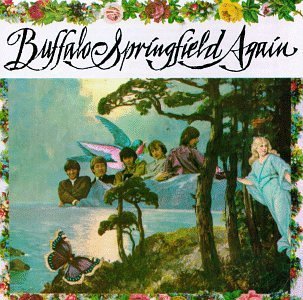
Buffalo Springfield 2: Again

By the time of their second album, the core of Buffalo Springfield was already cracking. Bassist Bruce Palmer was unreliable, to say the least, and Stephen Stills and Neil Young became as competitive as they were prolific. Plus, Richie Furay had started writing his own songs, and good ones, too. The songwriters were also taking control of their creations in the studio, each developing their personalities by leaps and bounds. Buffalo Springfield Again showed what they could do, together and apart.

Neil gets the first shot in with “Mr. Soul”, a paranoid trip through the clubs on Sunset Blvd., with a wonderful riff turning “Satisfaction” upside down and dueling solos. “A Child’s Claim To Fame” is a strong writing debut from Richie, even more so because the lyrics refer to his irritation over Neil’s wavering dedication to the band. (That would be James Burton on the dobro.) Stephen revives the buzz that opened “Baby Don’t Scold Me” and extends it into a feedback drone base for the jazzy “Everydays”, followed by “Expecting To Fly”, Neil’s first really pretty, really sad song, all lush orchestration from Jack Nietzsche. But it’s “Bluebird” that hints at the power of the band as a unit, all those drop-D guitars intertwining, though this studio version detours into a banjo-led coda.

“Hung Upside Down” keeps it going on side two, the verses sung by Richie and Stephen answering with the choruses. This album’s hidden gem is “Sad Memory”, a heartbreaker from Richie, unfortunately derailed by Dewey Martin’s misplaced Stax soul workout “Good Time Boy”. Things get back on track for “Rock & Roll Woman”, which sports an “inspiration” credit to David Crosby, in a wonderful case of foreshadowing. For the finale, what sounds like a live recording of “Mr. Soul” with Dewey soul-scatting the vocal shifts into the first of several multi-structured verses of Neil’s experimental “Broken Arrow”. The poetic verses are separated by such sound effects as a ballgame organ, military drums, a jazz combo, and a disappearing heartbeat. Heavy stuff.

Even with the band members mostly working separately under the guise of unity, much like the Monkees and even the Beatles would become, Buffalo Springfield Again deserves to be called seminal. It’s a solid step forward, showing great potential for all concerned.

Buffalo Springfield Buffalo Springfield Again (1967)—4

Monday, April 28, 2008

Buffalo Springfield 1: Buffalo Springfield

They were together for approximately two years, during which they released three albums and Neil Young quit twice. But the moderate success of Buffalo Springfield led to the emergence of Crosby, Stills & Nash, Poco, country-rock in general, and Neil’s own dizzying career.

They were something of a counterpart to the Byrds in that they had something of a vocal blend, but were more rounded as musicians. Rather than a distinct single instrument a la the 12-string Rickenbacker, the Springfield sported the dueling lead guitars of Stephen Stills and Neil Young, who both wrote their own songs as well. Richie Furay was the best singer of the three, resulting in great harmonies, and bassist Bruce Palmer and drummer Dewey Martin provided a powerful rhythm section.

However, while the music on their self-titled debut is certainly catchy and influential, the songs only hint at each writer’s potential. The production throughout is shackled to a fairly typical mid-‘60s California sound not unlike the first Monkees LPs, but a lot of albums sounded like that then, and considering the two “producers” were also Sonny & Cher’s managers, the boys would have to wait until their next album to really stretch. (And boy, did they.)

Stephen dominates side one, showing his knack for catchy pop songs off the bat with “Go And Say Goodbye” and “Sit Down, I Think I Love You”. “Leave” is almost punk garage (Velvet Underground, anyone?) with lots of manic soloing. “Hot Dusty Roads” is an awkward attempt at wordplay filling empty lyrics, done much better with “Everybody’s Wrong” and “Pay The Price”. Despite a menacing intro, “Baby Don’t Scold Me” is more garage pop, with a cute quote from “Day Tripper”.

Neil provides the balance, and the two he sings aren’t overtly indicative of where he’d go. “Burned” is average, with a honky-tonk piano that wasn’t on too many pop songs in those days, while “Out Of My Mind” illustrates his discomfort with this whole fame thing. Of the rest, Richie sings the sweet “Flying On The Ground Is Wrong” and “Do I Have To Come Right Out And Say It”, which sound more like his eventual style than Neil’s. The hidden gem here is “Nowadays Clancy Can’t Even Sing”; also sung by Richie, it’s an early example of Neil’s tendency towards major 7th chords and 4/4 against 6/8 time.

Not long after the album was released, Stephen wrote a single called “For What It’s Worth”, which immediately became a huge hit and established his legacy as a songwriter. With no follow-up album close to being ready, the label simply reissued Buffalo Springfield with the single as the lead track, rejigging the track order slightly and dropping “Baby Don’t Scold Me” altogether. (It wouldn’t reappear until 1997, when the album was reissued with both the mono and stereo versions on a single disc.)

Buffalo Springfield Buffalo Springfield (1966)—