Showing posts with label syd barrett. Show all posts

Friday, April 7, 2017

Pink Floyd 19: The Early Years

As they’d promised, each of the volumes (save the bonus mop-up set) in Pink Floyd’s massive The Early Years 1967-1972 box set were made available individually, making it a little easier for fans on a budget to not only acquire the sets, but make time to ingest them. In addition to the music, the DVD and Blu-ray portions of each provide tons of audio-visual material, performance footage and the like, as well as some rare quad mixes and (supposedly) a 5.1 surround mix of Meddle. As we’re all about audio here, that’s what interests us most.

1965-1967: Cambridge St/ation: This is the set for Syd Barrett fanatics, as most of the tunes began in his head. Opening with six tracks recorded at the start of 1965, we can hear the early R&B influence not very well translated by the players, Syd’s voice sounding more like intentional parody. (Roger Waters’ songwriting contribution is certainly intended to be humorous.) All the non-LP single sides are here, along with the alternate of “Matilda Mother”, “Jugband Blues”, the previously unreleased “In The Beechwoods”, and (finally) “Vegetable Man” and “Scream Thy Last Scream”. The second disc is devoted to a live performance in Sweden (historic for hearing Syd in concert; demerits for nearly inaudible vocals) and a half-hour of experimental noodling for an avant-garde film project.

1968: Germin/ation: This transitional period, breaking in David Gilmour, is somewhat limited in unheard music, except to put the two singles and their B-sides in context. There are two incomplete tracks from a mid-summer session, one of which sounds like a prototype for “Cymbaline” but for the wacky time changes, the other a Waters piece that seems to have a nativity influence. The bulk of the disc is made up of two BBC radio appearances, including an early take of “Embryo” and one of six live performances of “Careful With That Axe, Eugene” scattered throughout the audio portions of the volumes.

1969: Dramatis/ation: The band still finding their way, we get some outtakes from the More soundtrack, including a piece called “Hollywood” that bridges the gap from the untitled piece on the 1968 set with “Cymbaline”. The lone studio take of “Embryo” leads to a BBC session featuring a three-minute “Eugene” and songs that would end up on Ummagumma, followed by four tracks recorded live in Amsterdam, heavy on the slow jamming (“Eugene” now ten minutes), light on vocals. A slightly later performance in Amsterdam makes up the second disc; this is the much-bootlegged performance of two suites, The Man and The Journey, that dominated that summer’s tour. Most of the songs were from already-released albums, and bridged with further jamming and sound effects. It’s more historic than groundbreaking, particularly considering David’s failure to hit the high notes on “The Narrow Way”.

1970: Devi/ation: The “Atom Heart Mother” suite took over the sets at this time, and it appears here in three lengthy but discrete versions in reverse chronological order spaced throughout: a band-only live performance in Switzerland; a BBC performance with orchestra and choir; and a “studio runthrough” from before the orchestra and voices had been added. The balance of the first disc is dedicated to the rest of that radio appearance, with another long “Embryo”, another long “Eugene”, another “Green Is The Colour”, and two songs from side two of Atom Heart Mother. Most of the second disc is devoted to outtakes from their work on the Zabriskie Point soundtrack. Predominantly instrumental, a little spacey, the standouts are the Laurel Canyon folkie pastiche “Crumbling Land” and “The Riot Scene”, which is more familiar now as the chords to “Us And Them”.

1971: Reverber/ation: While only five songs, this isn’t the shortest audio installment in the set, but it could be the most solid. Following the “Nothing” work-in-progress excerpt is a full hour-long BBC concert, with lengthy versions of “Embryo” (again, but no kiddie effects) and “Fat Old Sun”, faithful reproductions of “One Of These Days” and “Echoes”, and those wonderful John Peel intros. The band was tight, having shed much of the meandering that dominated the preceding years.

1972: Obfusc/ation: The CD portion of the announced package was to consist solely of the remixed Obscured By Clouds, but thanks to a “mistake”, audio from the fabled filmed performance in Pompeii was included as well. That’s a nice surprise bonus, particularly if you don’t mind two more versions of “Eugene”. In addition to sounding great, it shows how earlier “freeform” jams like “Set The Controls For The Heart Of The Sun” and “Saucerful Of Secrets” still made sense among the newer explorations from Meddle.

In theory, fans could benefit from the piecemeal availability depending on how they feel about certain phases of the band, e.g. pro- or anti-Syd, or a strong preference or hatred for a particular album. Between sound quality and performance, some volumes are simply more palatable than others. Chances are, for most Floyd heads, if they’re in for one, they’re in for all.

Pink Floyd The Early Years 1965-1967: Cambridge St/ation (2017)—3
Pink Floyd
The Early Years 1968: Germin/ation (2017)—3
Pink Floyd
The Early Years 1969: Dramatis/ation (2017)—3
Pink Floyd
The Early Years 1970: Devi/ation (2017)—
Pink Floyd
The Early Years 1971: Reverber/ation (2017)—4
Pink Floyd
The Early Years 1972: Obfusc/ation (2017)—4

Friday, February 10, 2017

Pink Floyd 18: Creation

After grandly expanded versions of three of their biggest albums appeared, diehard Floyd heads wondered whether the same treatment would be given to the rest of the catalog. Wisely, the band knew that the market for a multi-disc version of Saucerful Of Secrets would be limited, they took the possibilities to the extreme. The Early Years 1967-1972 offers eleven CDs of mostly rare material, along with nine DVDs and eight Blu-rays of audio-visual artifacts, all divided into years and uniquely titled along the lines of “/ation”, plus replicas of their first handful of singles and tons of printed materials. (It was supposed to be ten CDs, but a disc of their Pompeii concert was included by mistake, requiring a supplement.)

Naturally, this investment entails $500 the consumer may not have handy; each of the volumes within the set would eventually be available separately eventually, with the exception of the bonus Continu/ation volume, dominated by grainy BBC sessions, a live “Echoes” from 1974, and the movies for which More and Obscured By Clouds were recorded. Of much easier consumption is the two-disc distillation of the music from the set, subtitled Cre/ation. Beginning, as required by law, with “Arnold Layne” and “See Emily Play”, it moves forward, past early singles and radio performances, through recent remasters of some tracks. An alternate version of “Matilda Mother” with different lyrics pays tribute to both Syd Barrett and Richard Wright, just as “Point Me At The Sky” seems to predict “Learning To Fly”. Then there’s “In The Beechwoods”, a wonderful performance of an unreleased Syd tune, sadly without lyrics.

Once Syd was out of the band, we can hear the other guys develop into their spacey image, with some moments to contrast and compare. “Careful With That Axe, Eugene” appears in both its single version and a shorter one live on the BBC, both of similar length. “Embryo” is also heard as a studio track, and again in a ten-minute BBC rendition. “Atom Heart Mother” is laid out in its entirety, without the orchestra or choir. “Grantchester Meadows”, Roger solo on Ummagumma, is performed for the radio with help from David Gilmour and Rick. Several excerpts from the Zabriskie Point soundtrack provide variety, and a precursor to “Us And Them”, while “Nothing, Pt. 14” is merely seven minutes of jamming that would better develop in the completed “Echoes”. The set ends with a few selections from the remastered Obscured By Clouds, but choosing to close with “Stay” seems more a tribute to Rick Wright than a wise finale.

Cre/ation is very much a teaser for the larger product, as it merely touches on the sheer volume of stuff to be found there. At the same time, it does provide an excellent lead-in to the era that began with Dark Side Of The Moon, giving plenty of exposure to Syd and some of the better moments from the albums, albeit in alternate but still tight versions.

Pink Floyd The Early Years 1967-1972: Cre/ation (2016)—4

Monday, January 10, 2011

Pink Floyd 13: Great Dance Songs, Works, Echoes

The chronology thus far makes this a good place to discuss the various Pink Floyd collections that have cropped up over the years. For a band who thrived as much as they did in the album format, one could be forgiven for thinking that a “greatest hits” album may not be the easiest thing to compile, but compile they did. And did. And did again.

Following the success of The Wall, the Floyd’s current label decided to put out a hits album of sorts. Cheekily titled A Collection Of Great Dance Songs, it’s something of an arbitrary collection of album tracks that may have been familiar to FM radio listeners. Starting with “One Of These Days” from Meddle, it sports a re-recording of “Money” and the complete “Sheep” from Animals. An excellent edit of “Shine On You Crazy Diamond” covers most of the first half to include all the verses before fading into “Wish You Were Here”. And “Another Brick In The Wall (Part II)” features the clean opening plus the schoolmaster’s coda. Yet despite the alternate mixes, it’s basically a sampler, and not a replacement for the LPs.

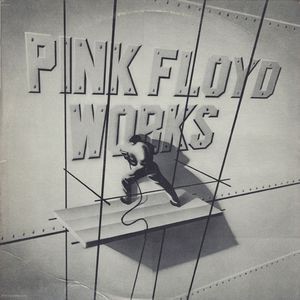
Not to be outdone, the band’s former American label soon put out Works, which also begins with “One Of These Days” before traveling back to the Syd days of “See Emily Play” and “Arnold Layne”. “Fearless” and “Free Four” show off their jaunty acoustic side, while “Set The Controls For The Heart Of The Sun” and “Several Species Of Furry Animals” appeal to the freaks. “Brain Damage” and “Eclipse” oddly end the first side, and the true rarity “Embryo” closes the set. That, plus various crossfades and alternate mixes make it interesting for fans, while newcomers will enjoy the earlier, lesser-known tracks.

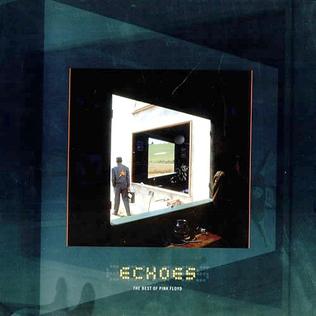
While the band members fought with each other through the nineties, their entry in the box set category was simply Shine On, which offered seven of their thirteen albums to date, plus the exclusive Early Singles, half of which had appeared on Relics. A much better overview of the band came in 2001 with the release of Echoes, offering over two-and-a-half hours of Floyd classics and deep cuts, some edited and/or crossfaded, covering nearly all the bases. Syd is featured on five tracks (as well as opening and closing the set), there are a few cuts from the two post-Roger albums, and there’s even the first CD appearance of “When The Tigers Broke Free” from the film of The Wall.

When the band started reissuing the albums again—and in some cases, expanding them—ten years later, a single-disc best of was commissioned, cheekily titled A Foot In The Door. Naturally it leans heavily on Dark Side, Wish You Were Here and The Wall, plus “See Emily Play” and a track each from the two non-Waters albums. The strangest inclusion is “The Fletcher Memorial Home”; a great song, but hardly a radio-friendly toe-tapper. Of all the compilations, Echoes is still the best place to start. (Of course, you could also go whole hog with either of two box sets of all fourteen studio albums, released only four years apart.)

Pink Floyd A Collection Of Great Dance Songs (1981)—3
Pink Floyd
Works (1983)—4
Pink Floyd
Shine On (1992)—4
Pink Floyd
Echoes: The Best Of Pink Floyd (2001)—4
Pink Floyd
The Best Of Pink Floyd: A Foot In The Door (2011)—

Monday, August 30, 2010

Pink Floyd 6: Relics

Something of a stopgap release appeared before the Floyd completed their next album, with the intention of promoting their earlier, less commercial work. Relics combined old singles and album tracks without any real attempt at completeness. Its subtitle, “A Bizarre Collection of Antiques and Curios”, couldn’t have been more apt.

Syd gets plenty of exposure here, with his classic singles “Arnold Layne” and “See Emily Play”, plus “Bike” and all ten minutes of “Interstellar Overdrive”. “Remember A Day” represents A Saucerful Of Secrets, and Rick gets another vocal with the B-side “Paintbox”. Roger’s “Julia Dream” and “Careful With That Axe, Eugene” (a studio version, with a great scream) were both B-sides as well. The opening and contrasting one-two from More nearly brings us up to date, and there is a true rarity with the inclusion of “Biding My Time”, which had been a centerpiece of various live performances but makes its only album appearance here.

Relics offered the same track listing on both sides of the pond, but while the British got an intricately handsome cover drawing by Nick Mason, Americans were treated to hideous photos of two four-eyed bottle openers. (At least there was helpful recording information on the back cover, for those of us who care about such things.)

When Relics was grandly unveiled on CD in 1996—with new artwork—it missed a perfect opportunity by not including four singles that would certainly have added value, if only to accompany their flipsides. As it is, “Candy And A Currant Bun” and “Apples And Oranges” are currently available on the 40th Anniversary Edition of Piper At The Gates Of Dawn, while “It Would Be So Nice” and “Point Me At The Sky”, briefly available in the Shine On box, are now accessible in the Early Years sets.

Pink Floyd Relics (1971)—3

Friday, August 6, 2010

Syd Barrett: Crazy Diamond

Whether or not he was really truly an acid casualty, Syd Barrett’s stilted potential has been the cause of much debate since his virtual disappearance from the music scene. He left a fairly finite set of completed (read: recorded) songs behind, and it’s likely that if anything else of value were out there, it would have been discovered by now. As it is, his body of work is a matter of personal taste, and in some cases needs to be taken within a certain context.

Despite having kicked him out of the band, the other members of Pink Floyd felt a certain responsibility for Syd, not least making sure his royalty checks kept arriving. When he went back to the studio to record his own albums, they were on hand to help out, along with some other musical friends.

The Madcap Laughs contains some catchy songs mixed with more chaotic tracks and some mesmerizing if sad acoustic performances of demo quality. In most cases, Syd played and sang by himself, and the tracks were augmented by the likes of David Gilmour, Roger Waters, Jerry Shirley of Humble Pie and three guys from Soft Machine, who did their best to accompany Syd’s prerecorded idiosyncrasies.

The opening “Terrapin” is the slowest song he’d put his name to yet, an easy lope that doesn’t predict the more chaotic “No Good Trying”. “Love You” is catchier but still nutty, as is the rhythmically challenged “No Man’s Land”. “Dark Globe” is good enough to leave simple, while “Here I Go” is utterly charming. Even with the acoustic guitar driving it, “Octopus” is a decent Floyd coulda-been, and his casting of the rare James Joyce poem “Golden Hair” is very inspired. The mild menace of “Long Gone” leads into the stretch from “She Took A Long Cold Look” through “Feel” and “If It’s In You”, depicting the sounds of a man barely able to keep up with himself. That leaves only “Late Night” to spin towards an uncertain end.

Soon after the release of The Madcap Laughs, Syd was back in the studio, this time with Gilmour and Rick Wright, plus Jerry Shirley on drums. Together they tried to work more quickly and cohesively, and sometimes it works. As a whole Barrett is a bit heavier, but some of the whimsy has been lost in the process.

“Baby Lemonade” is another excellent opener, and “Love Song” has a lot of Wright’s fingerprints on it, just as “Dominoes” benefits from the jam. But “It Is Obvious”, “Rats”, and “Maisie” are aimless, each of the latter using just a single chord. “Gigolo Aunt” has gained enough status to become a deserving favorite, then “Waving My Arms In The Air” and “I Never Lied To You” repeat the wandering of “It Is Obvious”. “Wined And Dined” isn’t quite finished, and “Wolfpack” is another challenging listen, leaving only “Effervescing Elephant” and its tuba to make us smile.

Despite occasional sightings and attempts, Syd’s musical career had all but finished before the band that left him behind achieved worldwide superstardom. But they were always quick to credit his influence, and the rerelease of his two solo albums in a single two-record set in 1974 kept his work on the shelves. The albums were duly issued on CD in the late ‘80s, and the new trend of vault-digging resulted in more product. His one solo BBC session—all five songs of it—was reissued several times, but Capitol, who owned the studio tapes, did their best to offer quantity and quality with Opel, an LP’s worth of alternates and even some outtakes, anchored by the soaring title track, which is one of his best. The other “new” songs range from early experiments (“Swan Lee” and “Lanky”) to acoustic studio demos (“Dolly Rocker”, “Word Song”, “Birdie Hop”, “Let’s Split”, “Milky Way”) which are mostly frustrating because they’re just not quite there. Still, it’s essential for the story, and sequenced well, ending with an early instrumental sketch of “Golden Hair”.

Since everybody got their own box set soon enough, Crazy Diamond offered The Madcap Laughs, Barrett, and Opel, each bolstered by several extras, mostly first takes with no overdubs. For more casual fans, the single-disc compilation Wouldn’t You Miss Me? delivered the cream of his solo work, plus “Two Of A Kind” from the BBC session and the long-rumored “Bob Dylan Blues”. To play it even safer, 2010’s An Introduction To Syd Barrett added six Floyd tracks, including an alternate of “Matilda Mother”, to a dozen remastered solo selections—some of which included new bass overdubs by Gilmour—plus a download of the unreleased twenty-minute “Rhamadan” jam.

Syd Barrett The Madcap Laughs (1970)—
Syd Barrett
Barrett (1970)—
Syd Barrett
Opel (1988)—3
Syd Barrett
Crazy Diamond (1993)—3
Syd Barrett
The Best of Syd Barrett: Wouldn’t You Miss Me? (2001)—4
Syd Barrett
An Introduction To Syd Barrett (2010)—4

Wednesday, July 21, 2010

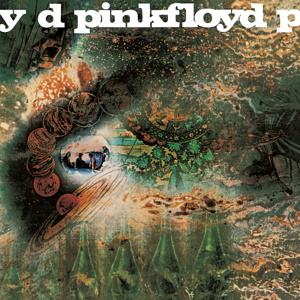
Pink Floyd 2: A Saucerful Of Secrets

Syd was on the way out, figuratively and literally, by the time the Floyd’s second album was completed. A Saucerful Of Secrets suffers in comparison to its predecessor, if only because he’s not really there—with one key exception.
Rick Wright seems to dominate the album, with two of the better songs—“Remember A Day”, which was a single, and “See-Saw”, which wasn’t. Both seem to reflect nostalgia for childhood, or at least the past.

Roger’s songwriting hasn’t really caught fire yet. “Let There Be More Light” is an attempt at being spacey, contrasting the quiet but foreboding verse section with the louder chorus sung by newcomer David Gilmour. “Set The Controls For The Heart Of The Sun” is a better experiment, its minimalist structure giving the band plenty of room to improvise, and did they. The title track is even more free-form, giving everyone a chance to stretch. “Corporal Clegg” is the first instance of his lifelong obsession with the casualties of war.

The highlight of the album, however, is all Syd’s. “Jugband Blues” is his farewell, with sardonic lyrics about his station in the band and uncertainty about his future. The structure of the song is typically stilted, winding up into a Salvation Army band solo that gets sucked into emptiness, leaving only Syd and his acoustic. It’s a remarkable recording.

A Saucerful Of Secrets shows Pink Floyd finding their way, both between old and new guitarists and trying to figure out just what kind of band they were. Its inclusion in 1973’s A Nice Pair guaranteed well-deserved exposure, but ultimately kept it in competition with The Piper At The Gates Of Dawn. While there are some great moments, it remains a transitional work.

Pink Floyd A Saucerful Of Secrets (1968)—3

Monday, July 19, 2010

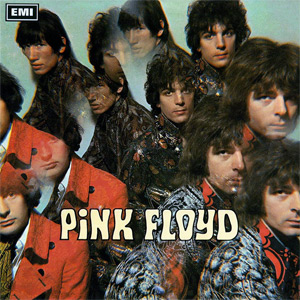
Pink Floyd 1: The Piper At The Gates Of Dawn

Pink Floyd holds the distinction of being one of exactly two bands of the post-Beatlemania rock era that ended up sounding nothing like their first LP. (The other one is the Moody Blues, who went from a typical R&B combo to spearheading a prog-pop style, but once again, we’re getting ahead of ourselves.)

Even Roger Waters will admit that the band began as an outlet for Syd Barrett’s guitar and surreal lyrics, and his unique vision truly dominates The Piper At The Gates Of Dawn. He established their status as a “space” band, thanks to “Astronomy Domine” and the lengthy freakout “Interstellar Overdrive”. But more than anything he drew his lyrical influences from a wide variety of literary sources, as displayed in “Matilda Mother”, “The Gnome” and “Chapter 24”. Syd’s sadly nostalgic views of bucolic childhood would dominate his life. (Roger’s first recorded composition, “Take Up Thy Stethoscope And Walk”, pales in comparison.)

Still, despite his dominance, it’s obvious that the band knew how to keep up with him. Rick Wright’s swirling Farfisa organ helps paint fitting backdrops throughout, supported by Nick Mason’s drums and Roger’s exploration of the bass fretboard. The space songs utilize incredible dynamics, and “Lucifer Sam”, “Pow R. Toc H.” and “Bike” are pretty solid rock.

Because of typical (for the time) transatlantic record company surgery, most Americans heard a truncated and reshuffled version of the album upon its initial release. Seven years later, when it was reissued as one of the two LPs in A Nice Pair, the sequence was restored, but a later Syd-less live version of “Astronomy Domine” was substituted for the original studio track. The CD version finally made the British LP the standard, re-established by the 40th Anniversary Edition, which has the mono and stereo mixes on their own discs, plus an extra disc of contemporary singles and alternates. Four of those singles were written by Syd, and include such tracks essential to the story as “See Emily Play” (included on the original American LP) and “Arnold Layne”.

Pink Floyd The Piper At The Gates Of Dawn (1967)—4
40th Anniversary Edition: same as 1967, plus 20 extra tracks