Showing posts with label 2024. Show all posts

Friday, December 5, 2025

Brian Eno 31: Eno Soundtrack

Look at streaming services like Amazon Prime, and you’ll see a handful of documentaries about Brian Eno, some more quickie than others. Yet the only one that had his active participation can’t be found online. What’s more, there’s a chance that if you have seen it—and we haven’t—you won’t be seeing the same production that was screened somewhere or some time else. In a direct reflection of its subject’s aim when creating art, Eno uses generative software so that every showing has a unique, almost random sequence.

Luckily its companion soundtrack compilation does have a standard tracklist. It begins with “All I Remember”, a new song with vocals and introspective lyrics. From there it cherry-picks from throughout his career, split between vocal and instrumental, loud and quiet, with an emphasis on collaborations with the likes of Cluster, David Byrne, John Cale, and up to Fred again… These, however, only scratch the surface, both of the people he’s worked with as well as the music he’s release over fifty years.

Rare tracks don’t appear again until the end of the program. The noisy, clattering “Lighthouse #349” is one of hundreds of instrumental tracks uploaded to his Sonos radio station from his vaults, Finally, “By This River” comes from a live performance in 2018 with his brother Roger at the Acropolis in Athens, and it is simply stunning.

Brian Eno Eno (Original Motion Picture Soundtrack) (2024)—3

Tuesday, September 23, 2025

Crowded House 9: Gravity Stairs

The most recent lineup of Crowded House stayed intact for a second album in a row. But while the cover of Gravity Stairs emulates that of Revolver, the Beatlesque pop of nearly forty years earlier has long since mutated into the Finn family brand. The hooks are there, but they’re usually buried in atmosphere.

“Magic Piano” is another tentative beginning, a love song to the joy of playing that breaks open for the chorus. “Life’s Imitation” (retitled “Teenage Summer” for the streaming editions) also has a catchy chorus, but the repetitive lyrics make the song seem unfinished, despite the production. Liam Finn is responsible for “The Howl”—his lyrics are more impressionistic than Dad’s—and we’re getting steadily closer to rock. “All That I Can Ever Own” is another love song, this time to family, with the perspective of age, and somewhat obscured amid a very busy mix. “Oh Hi” is equally herky-jerky, but as it was inspired by and intended to benefit an African education charity, it’s fine. If the harmony on the Neapolitan-inspired “Some Greater Plan (For Claire)” sounds familiar, it should, because it’s Tim Finn. Once again, it’s related to the healing power of music.

“Black Water, White Circle” comes from another dreamy place, perhaps somewhere on open water. If anything sounds like Crowded House of an earlier decade, it’s the electric guitars dominating “Blurry Grass”, written with Elroy, who provides a nice little drum break. The energy stays up for “I Can’t Keep Up With You”, an apt title for a song loaded with electronic flourishes that once again hide the decent song in there. Most of these layers are peeled away by the end of the track, which makes a nice segue into the fingerpicked backing for “Thirsty”. It’s even nicer once “Night Song” starts, beginning as something of a lullaby but chases tangents down effects and time signatures, with the sort of disembodied voices that jar you awake when you’re trying to go to sleep.

Gravity Stairs is certainly of a piece, so it’s successful as an album, but we’ve always depended on Neil Finn to give us tunes we can hum. As we’ve said too many times, the production takes away from the enjoyment of close listening, and we shouldn’t have to work so hard for the songs to stick. A lot of people had their hands on the mixing board, making for a more democratic vision than a unified one. We still like it.

Crowded House Gravity Stairs (2024)—3

Tuesday, July 1, 2025

Tears For Fears 10: Songs For A Nervous Planet

The promotional success of The Tipping Point saw Tears For Fears touring behind it over two consecutive summers, and a show from near the end of the second leg was the basis of the double live album Songs For A Nervous Planet, as well as a matching film. Stuff from the new album is mixed with the expected hits and older favorites, all impeccably performed to replicate the records, with little variation (such as the blatant quote from “Hello Goodbye” at the end of “Sowing The Seeds Of Love”). There’s a wonderful shift when Lauren Adams sings a stripped-back “Suffer The Children”, followed by the duets of “Woman In Chains” and “Badman’s Song”. We do find it interesting to hear “Break It Down Again”, the only song in the set from an album Curt Smith wasn’t on. “Shout” is the closing number, of course; you can just barely hear the crowd singing it before the first verse.

Perhaps to give the consumer a little more, the first disc begins with four new studio tracks. “Say Goodbye To Mum And Dad” mixes somber messaging with a jaunty whistled tune, while “The Girl I Call Home” starts out techno and ends anthemic. “Emily Said” is downright cheery, and blatantly personal, given the titular character speaks Roland Orzabal’s first name, and is also the name of his new bride. The children’s choir overdoes the sugar, however, and the false ending with a different coda suggests there’s another version of it somewhere in a vault. But the opposite emotion is “Astronaut”, another wish to hide from the world. (Target stores got an exclusive track in “Landlocked”.) In some ways the live portion seems like a bonus to an EP.

Tears For Fears Songs For A Nervous Planet (2024)—3

Friday, March 7, 2025

CSN 14: Live At Fillmore East

The big question wasn’t so much why this came out when it did as what took them so long. Crosby, Stills, Nash & Young had been playing gigs for only a few months when they did a stint at New York’s Fillmore East. (Ten days after these shows, Crosby’s live-in girlfriend would be dead in a car accident, just as they began recording what would become Déjà Vu.)

For decades, 4 Way Street was the only comprehensive live document, captured just as they were starting to fray and splinter. Culled from the two shows on the second night of the stand, Live At Fillmore East is structured the same way, but goes back to the beginning, with the original rhythm section of Dallas Taylor and Greg Reeves still on board.

The debut album was still new at these shows, and the joy of singing “Suite: Judy Blue Eyes” is as fresh as their excitement over what they could do with the Beatles’ “Blackbird”. They can’t help but giggle their way through “Helplessly Hoping”, but calm down a bit for “Guinnevere”. “Lady Of The Island” nicely highlights the Crosby-Nash blend, then Stephen previews “Go Back Home” and “4+20”, with Neil coming out for “On The Way Home” in between. (Only Stephen knows the words, as the other two haven’t figured out what to add yet.) Graham plays “Our House” at the organ—you can just hear the slightest high-hat in the back—and it’s cute, but a little jarring. A few people in the crowd recognize “I’ve Loved Her So Long”, and Graham adds a nice part before they all join in on “You Don’t Have To Cry”.

The wooden portion over, it’s time to rock. “Long Time Gone” and “Wooden Ships” are duly played with Neil and Stephen goading each other. After a drop in volume, “Bluebird Revisited” is a nice surprise from a 55-year perspective. “Sea Of Madness” should be familiar from its strange appearance on the Woodstock 2 compilation, and “Down By The River” runs over 16 minutes, in an initially more intricate version, for lack of a better word than any Crazy Horse rendition. And since you can’t end a CSNY concert without “Find The Cost Of Freedom”, that’s how the disc ends.

The album is dedicated to David Crosby, and brings the listener as well as the artists back to a time when they could still get lost in the wonder of music without too much of the egos getting in the way. In addition to hearing Graham yell “yeah!” after nearly every song, the other three each contribute paragraphs of appreciation to help drive it home. Given the potential, it’s just a shame they didn’t include both shows, complete.

Crosby, Stills, Nash & Young Live At Fillmore East, 1969 (2024)—

Friday, December 20, 2024

Elvis Costello 38: The Coward Brothers

In the summer of 1984, Elvis Costello’s career found another path when he embarked on a solo tour and got along with his opening act, T Bone Burnett, like a house on fire. They bonded over their love of all American music and related arcana, and created wacky alternate egos called the Coward Brothers to play covers together. A collaborative single, “The People’s Limousine”, was their only credited output, though T Bone would go on to produce a handful of albums for and with Elvis over the years, beginning with King Of America.

Forty years later, right on the heels of an expanded reissue spurred by that album, an official Coward Brothers album finally appeared, billed as the soundtrack to an EC-penned radio play. Directed by Christopher Guest and available exclusively on the Audible platform, The True Story Of The Coward Brothers is full of forced wordplay and inside jokes in the guise of a documentary about the mythical duo. T Bone exaggerates his Texan accent, while Elvis leans so much on his Scouse origins that he often sounds like a raspy John Lennon caricature. Even reading his own words, the man is still no actor.

Unfortunately, the storyline does little to illuminate the 20 songs on The Coward Brothers, and vice versa. Most were written by Elvis alone, four are collaborations with T Bone (who’s solely credited on just one), and three were written with Guest, who also adds vocals and instrumentation here and there. The production has T Bone’s stamp all over it, and not just on the tracks featuring Burnett regulars Dennis Crouch and Jay Bellarose. But what works very well for Robert Plant and Alison Krauss just sounds here like they spent a lot of money making the recordings sound cheap and distorted, like the primitive tapes they’re purported to be. This wouldn’t be such a big deal if the songs were stellar, but they’re not.

“Always” is a wonderful opener, a gentle duet, shoved aside by the dotty piano and wheezy organ of “Like Licorice”. “My Baby Just Squeals (You Heel)” may have been their mythical smash single, but the pointedly amateurish production and female interjections don’t do the track any favors, nor does the steal from the Stones’ “Connection”. “Devil Doll” would have promise, except that T Bone recites the verses; apparently they couldn’t find a melody worthy of the choruses. “Tipsy Woman”, however, has all the hallmarks of a future classic, with not too clever wordplay and a compelling delivery.

The story would have us believe that “My Baby Just Purrs (You’re Mine, Not Hers)” was the cash-in follow-up to that earlier alleged hit, but it’s better song and recording, worthy of early Attractions. However, “My Baby Just Whistles (Here Come The Missiles)” pushes the gag too far. Past the opening line (“Eating ice chrome at the spaceball game”) “World Serious” has inscrutable lyrics about something we can’t discern but it’s still one of the better tracks, whatever it’s about. “Early Shirley” has a pleasing rockabilly skiffle quality, but “Yesteryear Is Near” is an obnoxious parody of wartime music hall. Elvis’s affected Cockney delivery doesn’t help.

He keeps the Scouse going for “Birkenhead Girl”, mostly a distorted litany of local landmarks. “Smoke Ring Angel” is one of the ones with Guest, and we’ll give him credit for its success. “Wooden Woman” is another one not sunk by its own cleverness, but “(I Don’t Want Your) Lyndon Johnson” doesn’t have any; plus, we’re getting tired of the clunky sound. “Lotta Money” doubles down on it, and there’s that dotty piano again. (Guest was also partly responsible, but he already encapsulated the subject decades before.)

“Pure Bubblegum” is an Elvis solo experiment; these don’t usually work under his own name, and this one is just plain obnoxious. The apparent Vietnam protest of “Cathy Come Home” sinks under the weight of its ambition; he’s written better songs on the same theme without relying on effects. All this makes T Bone’s “Bygones” very welcome, musically as well as literally. Despite the forced calypso party atmosphere, “Row Me Once” is a fun singalong, and also the third Guest contribution. The simply tuneful “Clown Around Town” finally ends the album, albeit on a hoarse note.

Maybe this is a case of good songs produced badly, or maybe we should treat it as a lark and not a Major Statement. At any rate, The Coward Brothers is about as anticlimactic as such planned sequels as Little Village was to John Hiatt’s Bring The Family, or the second Traveling Wilburys album. The brothers should have stuck to acoustic duets.

The Coward Brothers The Coward Brothers (2024)—2

Friday, December 13, 2024

Mark Knopfler 13: One Deep River

It seems that whenever Mark Knopfler has amassed a pile of new songs, he records all of them, then releases them in bulk. One wonders whether the songs on One Deep River all arrived at once, explaining the six-year gap since his last album.

Whatever the story is, it’s pretty much more of what we’ve come to expect. “Two Pairs Of Hands” shuffles into play on mostly one chord. “Ahead Of The Game” has a more striking backing and hooks, and succeeds on those. The first two verses seem to be a reminiscence of the days before “Sultans Of Swing”, while the final draws a line to anyone trying to get by. “Smart Money” can’t decide if it’s country or Caribbean, while “Scavengers Yard” is suitably clanky, with a processed break that veers dangerously close to techno before escaping. “Black Tie Jobs” is almost stately, with canned chamber pop strings. “Tunnel 13” tells the true-life tale of a train robbery turned tragic, but as with much of his solo material, the loping backing doesn’t necessarily keep you riveted to the story.

Another scene is set for “Janine”, but it works better as a love song without context. “Watch Me Gone” is more mournful, with surprising female voices on the choruses. Beginning with a spooky, wintry atmosphere, “Sweeter Than The Rain” uses his already craggy yet aging voice to good effect, and “Before My Train Comes” is nice, even if it sounds too much like too many of his other songs. The somewhat plodding “This One’s Not Going To End Well” may or may not be social commentary on any political situation, but it is lifted by two brief fiddle solos. And the understated yet majestic title track does rank with his best.

His usual crack band backs him throughout One Deep River, and to the album’s credit, most of the tracks hover around four minutes each. But a further four tracks were added to the vinyl: “Dolly Shop Man”, an allegory about a pawn shop; the mildly romantic “Your Leading Man”; “Wrong ‘Un”, a good lyric in search of a better tune; and “Chess”, loaded with metaphors and resembling late-‘80s Chris Rea. And five others made it to deluxe CD and Blu-ray editions. The portrait of a has-been in “The Living End” is sunk by “shoop shoop” backing vocals, whereas “Fat Chance Dupree” has guys sounding like the Jordainaires. Celtic pipes finally make an appearance on “Along A Foreign Coast”, and the one-sided conversation in “What I’m Gonna Need” doesn’t go anywhere despite the nice melody. “Nothing But Rain” would have been welcome on the album, bluesy as it is.

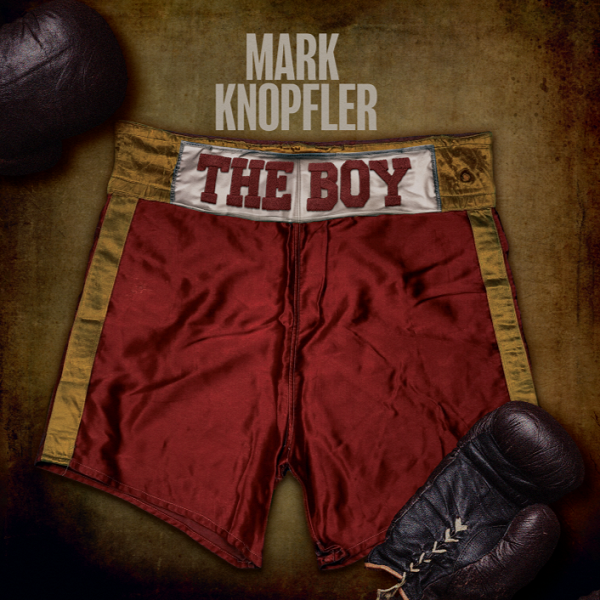
Further proof that good editing makes good listening, less than a month after the album’s release came The Boy, an EP of four thematically related songs inspired (so Knopfler said) by the fairgrounds of his youth, complete with ambient effects. Lyrically we can see that, but the music could accompany any story, and not just one about a boxer. “Mr. Solomons Said” is the cool jazzy setup, and the title track explores the character from another perspective. “All Comers” is strong enough to stand outside the framework, and so does “Bad Day For A Knife Thrower”, but it doesn’t roll as easy. Unlike most of the other bonus tracks, any of these tracks are as good as what made the album, deluxe or otherwise. It surprises us that he wasn’t able to expand the concept; surely other songs on One Deep River could have been revised to fit the story?

Mark Knopfler One Deep River (2024)—3
Mark Knopfler
The Boy (2024)—3

Friday, December 6, 2024

Ben Folds 16: Sleigher

For the longest time, Ben Folds had exactly two Christmas songs in his catalog: “Lonely Christmas Eve” from the live-action film version of How The Grinch Stole Christmas, and the profane “Bizarre Christmas Incident”, written for said film when all he knew about the project was that it was to be a comedy about Christmas directed by Ron Howard and starring Jim Carrey. (We don’t count “Brick” for the same reason that Die Hard is not a Christmas movie.) Still, we always suspected that the king of piano snark would be sentimental around the holidays, and he finally got to explore it with an album cleverly titled Sleigher, which mixes originals with three covers.

We still can’t find the melody of “Little Drummer Bolero”—it doesn’t sound like the “pa rum-pum pum pum” song—but it’s a lovely instrumental. “Sleepwalking Through Christmas” has just a twinge of melancholy, but it’s not as lonesome nor as touching as “Me And Maurice” (the pair is even depicted in the cover cartoon, complete with “full green bag of shame”). “Christmas Time Rhyme” does a nice job of stringing together images from the perspective of kids of all ages, with just one eff-bomb. Another instrumental, “Waiting For Snow” is brief but still pretty.

“We Could Have This” finally inserts some romance and the promise of a happy future, sung as a duet with the mildly chirpy Lindsey Kraft. The most obvious and least daring tune is “The Christmas Song”, as his rendition of chestnuts roasting is accompanied by guitar, piano, and harmonica. He heard Burt Bacharach’s “The Bell That Couldn’t Jingle” (with lyrics by the same guy who wrote the lyrics for “Speak Softly Love” from The Godfather and other movie themes) from a Herb Alpert album, and it’s very evocative of that style, but “Xmas Aye Eye” (as in AI) is a complete shift, grating electro-pop with lyrics provided by ChatGPT and peppered with sound effects. Finally, “You Don’t Have To Be A Santa Claus” is all Mills Brothers, and good advice any day.

At just under 35 minutes, Sleigher certainly doesn’t wear out its welcome, even if the harmonica does. But given the beauty of the instrumentals, we would certainly welcome more tracks like that. Maybe next year.

Ben Folds Sleigher (2024)—3

Friday, October 18, 2024

Joni Mitchell 29: Further Asylum Years

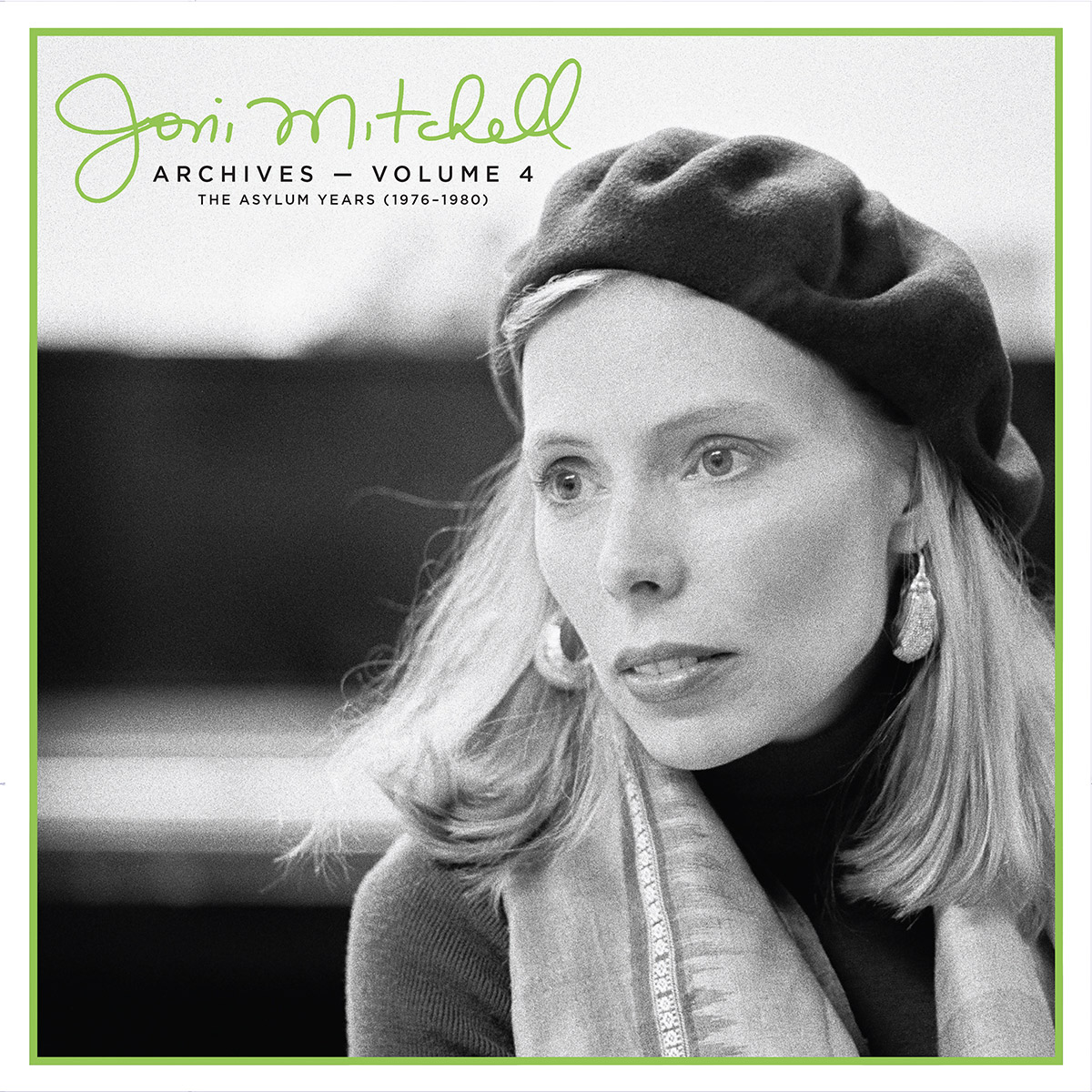
With excellent regularity, the Joni Mitchell Archive series stayed on a mostly consistent schedule, with the fourth box of unreleased material arriving roughly a year after the third (and a few months after a remastered set of the albums that mostly correspond to what’s covered here). Interestingly—or perversely—while the title says it encompasses the years 1976 through 1980, the music begins in November 1975 and ends in September 1979.

A good deal of the contents of the six discs consists of live recordings, beginning with her tagging along on Bob Dylan’s Rolling Thunder Revue, then continuing on her own tour to promote The Hissing Of Summer Lawns. She tries out some new material, including “Coyote”, on its own and in a medley with what would become the title track of Don Juan’s Reckless Daughter. (Rather than the now-familiar clip of her playing it at Gordon Lightfoot’s house, or even at The Last Waltz, she pulls out “Woman Of Heart And Mind”.) Most of a Boston show with the L.A. Express takes up the second disc, continued from the first, with performances pulled in from other stops on the aborted tour, and it’s most interesting when she plays on her own. Nearly unplugged arrangements of “Shadows And Light” and “Harry’s House” are very nice, as are early performances of “Hejira” and “Talk To Me”. (Apparently the chicken noises were entrenched from the beginning.)

Fans of Hejira will drool over disc three, which begins with acoustic demos of seven of the album’s songs (Chaka Khan helps out on “Black Crow”) and three that would end up on the next. It goes on to include an intro and two songs from a stop on the second leg of the Rolling Thunder Revue, and ends with two rough mixes from the album sessions: “Refuge Of The Roads” with more horns (and without Jaco Pastorius) and “Don Juan’s Reckless Daughter”.

There are only two outtakes from the Don Juan sessions: a rough mix of “Otis And Marlena” and a 12-minute piano improvisation titled “Save Magic” that would form the basis of “Paprika Plains”. Then she was off to work with Charles Mingus, and we finally get to hear some lost sessions with such jazz legends as Tony Williams, Gerry Mulligan, Stanley Clarke, and John McLaughlin. One version of “Sweet Sucker Dance” is just drums and her layered vocals, while “A Good Suit And A Good Haircut” incorporates more of the man’s “raps”, and “Sue And The Holy River” is a lovely piano exploration. We also get to hear excerpts from a festival show where she played some of her new Mingus-infused compositions and collaborations in the occasional company of Herbie Hancock on grand as opposed to electric piano. “The Dry Cleaner From Des Moines” is a cappella and wonderful, and she encourages the audience to provide wolf noises to “The Wolf That Lives In Lindsay” while she tunes her guitar mid-performance, and they howl along with the tape too. (A session outtake provides a mix without the wolves.)

Most of the last two discs are devoted to a Forest Hills show in 1979, augmented by other appearances from the same tour, presenting something of an alternate Shadows And Light, but with a few songs that weren’t on that album. (“Jaco’s Solo” was one of those, probably because it took a cacophonous, effects-laden trip to Hendrix’s “Third Stone From The Sun”.)

This was Joni’s most challenging era yet for fans, certainly compared to the previous eight years of her public career, and the music within this set reflects that, as well as her descending range. Still, for those willing to dive further in, there are indeed gems to be found, as well as takes on more familiar material (two versions each of “Free Man In Paris” and “Help Me”, but three of “Big Yellow Taxi”). It’s fascinating to hear her create.

Joni Mitchell Archives—Volume 4: The Asylum Years (1976-1980) (2024)—3

Friday, October 11, 2024

Jimi Hendrix 31: Electric Lady Studios

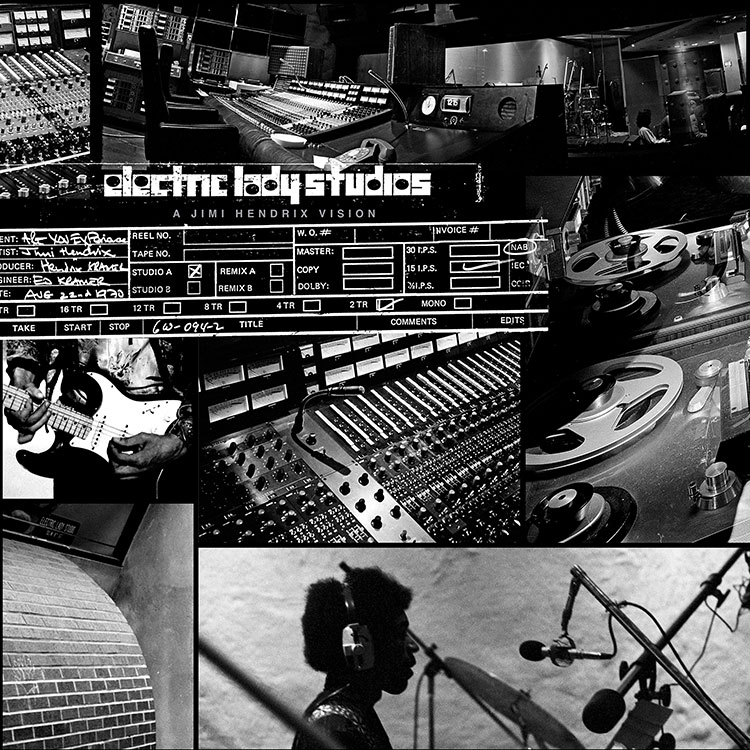
Along with trying to complete a fourth studio album, Jimi Hendrix was consumed with designing and opening a recording studio to his specifications, beck, and call. Once Electric Lady Studios opened in the early summer of 1970, he got to recording with Billy Cox and Mitch Mitchell in between live gigs. Designed to accompany the documentary of the same name, Electric Lady Studios: A Jimi Hendrix Vision presents three discs’ worth of alternate takes and mixes from the last four months or so of his life, in somewhat chronological recording order, with some shuffling here and there to prevent redundancy, which happens anyway.

Some of this had been out before in alternate mixes, or overdubbed after his death. On a lot of the earliest tracks here, it’s just Jimi, Billy, and Mitch working through the arrangements, live to tape, so we get to hear the bare bones of the songs before they were layered with vocals and other embellishments. The first albeit instrumental take of “Belly Button Window” is interesting as it includes bass and drums. There’s a brief stab at “Further On Up The Road”, followed by a seamless 26-minute exploration of “Astro Man”, “Beginnings”, “Hey Baby (New Rising Sun)”, “Midnight Lightning”, and “Freedom”; the rhythm section stays with him at every turn. A full band take of “Midnight Lightning” eventually goes into “Beginnings”, a galloping “Bolero” opens the familiar take of “Hey Baby”, and we can trace the development of “In From The Storm” from two early takes titled “Tune X/Just Came In”. One wonders what might have become of “Valleys Of Neptune” had he had the chance to develop it further—one of the takes is just him, Steve Winwood, and a rhythm machine—and he sure seemed fond of “Drifter’s Escape”. “Heaven Has No Sorrow” is just a demo with bass, and somehow there were 17 takes of something called “Messing Around” (only the last is included). A few posthumous mixes end the set; “Drifting” and “Room Full Of Mirrors” are okay, but “Angel” is way too awash in phasing and other obtrusive effects.

Focusing as it does on a distinct period, Electric Lady Studios: A Jimi Hendrix Vision is still less disjointed than the previous three collections of outtakes. But because of its breadth, this is designed for Hendrix scholars, particularly those still not convinced that either The Cry Of Love or First Rays Of The New Rising Sun present anything approximating his final vision. (A 5.1 mix of the latter album, with previously released takes of “Pali Gap”, “Lover Man”, and “Valleys Of Neptune” as bonus tracks inserted into an alternate sequence, is included along with the documentary on a Blu-ray packaged with the box.) Clearly he was teeming with ideas, and it’s always going to be a shame that he didn’t get to see them through himself.

Jimi Hendrix Electric Lady Studios: A Jimi Hendrix Vision (2024)—3

Friday, October 4, 2024

Neil Young 72: Archives Vol. III

At least it only took the Neil Young Archives team a little under four years after the release of the second box to put out the third. Perhaps in an attempt to dwarf quality with quantity, Archives Vol. III covered the widest period yet—eleven years—on 17 CDs, with five Blu-ray discs containing eleven films in the deluxe edition. Granted, that means the ten or so albums released in that period are represented here, and usually liberally, with more of an emphasis on the first recorded and/or performed versions of songs among the previously unreleased selections. Also, various “raps” pop up on the discs, these being more or less contemporary snippets of Neil explaining things to put the recordings in context. As the other two boxes didn’t have these, they’re unnecessary. (Also, the customary book of photos and credits doesn’t include a tape log, a maddening exclusion to us curmudgeonly chroniclers, and the page numbers are pretty screwy.)

The first two discs are collectively titled Across The Water and basically expand on the Odeon Budokan disc of the second box, even overlapping chronologically with it and including alternate mixes of two of its tracks. There’s some repetition of songs already available in excellent takes on Songs For Judy, but we are assured that these are different performances. The acoustic tunes aren’t any great improvements over other versions, but when Crazy Horse plugs in, we get unique runs at “Country Home”, “The Losing End”, a sloppy “Homegrown”, and a lengthy “Southern Man”. We also get two versions of “Cortez The Killer”, for no apparent reason other than that they were recorded 20 days and two continents apart. (Across The Water is also one of the Blu-ray offerings, a concert film with color footage from Japan, and black-and-white footage on and offstage from the UK. The viewer can now determine whether Poncho and Billy were indeed tripping onstage, as the former has insisted.)

The other boxes were criticized for including previously released Archives titles, such as Fillmore East and Homegrown, because people don’t like buying things twice. This set sidesteps that thorny issue, sort of, by combining selections from Hitchhiker and Songs For Judy on a disc called—what else?—Hitchhikin’ Judy. His two songs from the Band’s Last Waltz show plus “Will To Love” (the album version, not the unadorned original) and “Lost In Space” on piano—with Ron Wood on acoustic guitar—round out the disc. (While selections do appear throughout the box, the Chrome Dreams album is not duplicated as one of the discs either.)

After the alternate take of “Hold Back The Tears”, Snapshot In Time presents portions of a cassette recorded at Linda Ronstadt’s kitchen table, going through some mostly unreleased songs while she and Nicolette Larson extemporaneously harmonize. Some of these would be recorded for American Stars ‘N Bars and Comes A Time; one of the more interesting moments is when “Peace Of Mind” segues into “Sweet Lara Larue”, an update of “Come Along And Say You Will”. The standard “Hey Babe” precedes—finally—the first official release of “Barefoot Floors”, which was a glaring omission in Vol. II. If we are to take the preceding rap at his word, it’s a recording of them listening to the song in a car.

Windward Passage is a 35-minute condensation of the official Ducks bootleg, plus unique versions of “Sail Away” and “Cryin’ Eyes”. We get some of the other guys’ tunes as well as Neil’s, so the selection is very curious. And brief. Did this really need its own dedicated disc? Well, he warned us.

Despite its cover art, Oceanside Countryside does not present the unreleased first draft of the album that would eventually morph into Comes A Time. For one thing, the selections are sequenced in strict recorded order. At any rate, there are some nice stripped-back mixes of Comes A Time songs, plus the familiar “Pocahontas” and “Lost In Space”, unreleased takes of “It Might Have Been” and “Dance Dance Dance”, a rightfully rejected “Comes A Time”, and a mix of “Peace Of Mind” with a lost verse. (The album itself would eventually get an official release, including eight of the songs on this disc.)

The sessions to complete Comes A Time—which also included outtakes of “We’re Having Some Fun Now”, an unreleased version of “Love/Art Blues”, and a cover of the oldie “Please Help Me, I’m Falling”—bookend a one-off benefit performance performed by Neil with Nicolette, the session players, and the Gone With The Wind Orchestra. That show is not in the box, but the rehearsal for it makes up the bulk of the Union Hall disc. It’s a mix of old and new songs, including a pointed medley of “Dance Dance Dance” and “Love Is A Rose”, a strings-laden “Alabama” with a “Sweet Home Alabama” tag, and the mega-rare “Lady Wingshot”.

The double-disc Boarding House presents recordings for what would become side one of Rust Never Sleeps. The alternates aren’t better than what he chose to release then, but it’s a striking acoustic journey, with the first versions of “Shots” and “The Ways Of Love”, and “Out Of My Mind” on piano is particularly striking. There is some sloppy editing; his announcement of “Sugar Mountain” appears about seven songs before he plays it, and he talks about going “way back” in time before a splice into “Comes A Time”, which wouldn’t be out for another five months. Meanwhile, in the middle of the shows he spent an afternoon jamming with Devo, recording the odd version of “Hey Hey, My My (Into The Black)”, sung by Booji Boy, used in the Human Highway movie (also included on the Blu-rays), and which opens the second disc. Why not push the Devo track onto the next, still short disc so Boarding House could stay under 80 minutes and fit onto one? (The Boarding House film on the Blu-rays presents one of the shows in full.)

Instead, the 49-minute Sedan Delivery disc begins with a studio take of “Bright Sunny Day” with Crazy Horse, but the rest consists of side two of Rust Never Sleeps assorted with tracks from Live Rust, rather than any alternate performances or song selections. (For one, “Come On Baby Let’s Go Downtown” was played every night, and not included here. That said, both the new Boarding House film and a restored Rust Never Sleeps film are included on the Blu-rays.) Yes, the tracks chosen are presented in chronological order, recorded from four different concerts, but there’s no flow to the disc, save for ending with “Hey Hey, My My”.

Once we get into the ‘80s, the discs focus on contrasts. Coastline offers side two of Hawks & Doves, plus the “Winter Winds” outtake, then a smattering from Re-ac-tor. There’s no “T-Bone”—at 38 minutes, there’s room on the disc—but we do get an early “Sunny Inside” (why didn’t he play this with when he toured with Booker T and the MG’s?) and the otherwise unheard “Get Up”, an odd-metered tune that predicts the next album.

After the Vocoder tracks recorded alone and with Crazy Horse, Trans/Johnny’s Island offers more songs by the band initially dubbed Royal Pineapples but eventually just called The Trans Band, eschewing most of the ones they did for the album for unreleased songs and versions. The influence of Hawaii is more prominent, or maybe that’s just the constant congas and pedal steel. “If You Got Love”, left off Trans at the last minute, is included, and we weren’t missing much, though “Soul Of A Woman” stomps live and “Love Hotel”—played exactly once—finally gets an airing. The early version of “Silver & Gold” is nice, but it wouldn’t be captured correctly for another 15 or so years. In hindsight, these songs would have meshed well with CSN’s of that era. (This era gets a lot of coverage in the Blu-rays: the Berlin and Solo Trans concert films, and a new animated film by Micah Nelson, once of Promise Of The Real and occasionally Crazy Horse, to accompany the Trans Vocoder tracks.)

Evolution tackles the first Old Ways sessions and Everybody’s Rockin’ detour, beginning with live “gitjo” performances of “California Sunset” and “My Boy”. Back on his own, he used the Synclavier and drum machines for early versions of “I Got A Problem”, “Hard Luck Stories”, and “Razor Love”, the latter of which also wouldn’t be recorded right for another 15 years. “Your Love” isn’t bad, mostly because it’s simple and not attempting to sound too modern, and there’s another stab at “If You Got Love” that’s not awful.

Around the time that Geffen sued him for making records that didn’t sound like Neil Young, he hooked up briefly with Crazy Horse—plus Ben Keith tooting along on sax occasionally—to play four sets at their usual haunt, the Catalyst in Santa Cruz. Touch The Night presents most of the last show, which features songs that would emerge without the Horse on Landing On Water (including the 11-minute “title track”), another “Your Love”, the unreleased piledrivers “Rock” and “So Tired”, plus “Barstool Blues” and “Welfare Mothers” to please the crowd. (The sound is muddy as befits a cassette source; the video feed is on one of the Blu-rays as Catalyst.)

But then he was back to playing country music with a vengeance and the International Harvesters, which is the focus of Grey Riders. This era was already well-covered on A Treasure; in addition to seven songs from that set, there are a few alternate versions, like a rockin’, rearranged “Misfits” (now subtitled “Dakota”, and performed with a brief detour called Crazy Harvesters), plus an early “This Old House”, “Time Off For Good Behavior”, and finally “Interstate”, but not the previously bootlegged version. (It should be noted that not a single track is duplicated from the official Old Ways, which says something about Neil’s own estimation of it. Also, the video content on the now-rare Blu-ray version of A Treasure is included on the Blu-rays.)

Road Of Plenty recycles six tracks from Landing On Water, then continues with three rarities from the Rusted Out Garage tour. The “title track” is an early version of what would become “Eldorado”, and the first recorded performances of “We Never Danced” (a studio track on Life) and “When Your Lonely Heart Breaks” are mostly of historic interest. (Oddly, nothing from Life is included anywhere among the CDs, despite there being plenty of room, but the In A Rusted-Out Garage pay-per-view concert film as well as the rarer Muddy Track documentary are among the Blu-ray offerings.)

The final CD in the box is devoted to Summer Songs, an eight-song demo recorded in 1987 and forgotten for decades, then uploaded to the Archives site for streaming on Christmas Day in 2021 in a different order than presented here. Beginning with a superior “American Dream” he runs through songs that would end up on three future albums. “Someday” and “Wrecking Ball” have slightly different lyrics, and “Hangin’ On A Limb” could well be the unadorned track we already know. “For The Love Of Man” wouldn’t make an album for a quarter-century, while “Last Of His Kind” would be played live that year and thereafter saved mostly for Farm Aid appearances. At 38 minutes it’s another short disc, but apparently that was all he had in the tank that day. (We recommend inserting “This Old House” and “Feel Your Love” into the sequence to fill it out.)

Were we in charge of things—and obviously we’re not, despite having repeatedly offering our proofreading and organizing skills—Vol. II would have ended in 1978, but that would have stretched that set to 20 discs (not counting Blu-rays). But then, arguably, what was left wouldn’t have been as strong or exciting. At the very least, the Across The Water discs could have been in there, in place of Odeon Budokan, which would then be saved as the standalone Special Release Series volume it became anyway, and with a better cover. Hitchhiker and Songs For Judy would have sat between the boxes alongside Chrome Dreams, shaving the first three discs out of this one. (There is plenty of room in Vol. II for the last four songs on the Hitchhikin’ Judy disc, which would have brought that box neatly to the end of 1976.) What’s more, plenty is left out, particularly from the International Harvesters era (“Leaving The Top 40 Behind”, “Silver & Gold”, “Beautiful Bluebird”, “Your Love Again”). And still no “Evening Coconut”?

The fact of the matter is that the 14 hours of music in Archives Vol. III runs the gamut from the sublime to the ridiculous, as his journey was affected by changes in the industry as well as with technology and his personal life. As it is, it’s a daunting collection of music that at least follows his original stated intention of releasing everything, good and bad. And hearing things in context does fill out the picture in ways that the albums as originally released couldn’t. But we didn’t expect to be blown away to the extent we were with the first two boxes, and we weren’t.

Footnote: the box was preceded by a promo disc called Archives Vol. III Takes, which offered a song each from 16 of the 17 discs in the set. As a sampler it’s alternately entertaining and frustrating; while it was a treat to hear “Lady Wingshot”, “Winter Winds”, and “If You Got Love” in decent quality, “Bright Sunny Day” and “Razor Love” were frankly underwhelming and the live versions not that unique. Plus, “Hitchhiker” came from the Hitchhikin’ Judy disc, which consisted of previously released material. Therefore, it accurately previewed the set as a whole.

Neil Young Archives Vol. III: 1976-1987 (2024)—3

Friday, September 27, 2024

Robyn Hitchcock 35: Vacations In The Past

Some of his album sleeves over the years had boasted the occasional surreal short story, but not until he passed the age of 70 did Robyn Hitchcock endeavor to write a memoir. Composed entirely on his iPhone in the wee hours, 1967: How I Got There And Why I Never Left is an engrossing look back a formative year in his life, shaped by his entry into boarding school and the music that dominated the year.

It was only natural that a companion album would materialize, and one did. Recorded much like his other post-Covid work, 1967: Vacations In The Past was pieced together over the wires with the aid of frequent collaborator Charlie Francis, and featuring contributions from fellow Soft Boy Kimberley Rew and prominent but not overused sitar by Kelley Stoltz. It’s predominantly acoustic with only the occasional bongo for percussion and, with one exception, all covers.

He begins “A Whiter Shade Of Pale” in a lower register, then adding an octave harmony on the second verse, but “Itchycoo Park” is just as jaunty as the original. “Burning Of The Midnight Lamp” is particularly striking without any electricity, but it’s still got wah-wah. The Move’s “I Can Hear The Grass Grow” is nice and trippy, but then there’s Scott McKenzie’s “San Francisco (Be Sure To Wear Flowers In Your Hair)”, a moldy oldie if there ever was one. Trite as it may be to Americans, it must have meant something to that impressionable British boy an ocean and a contintent way, but we can’t condemn anyone for their guilty pleasures. Anyway, it’s wholly redeemed by “Waterloo Sunset”, a song that’s nearly impossible to ruin, and he doesn’t.

A Syd Barrett song should be no surprise, and he tackles “See Emily Play” nearly solo but for Kimberley’s slide effects. Tomorrow’s original recording of “My White Bicycle”—besides being the first appearance by Steve Howe—was loaded with backwards instruments, and there are just enough of those effects here to keep the production faithful. “No Face, No Name, No Number” has long been a personal favorite, but while the most obscure track might be the Incredible String Band’s “Way Back In The 1960s”, it’s also the one that sounds the most like him. The title track is the lone original, and sounds like it could have been recorded at any time over the previous 40 years. It’s a wonderful bit of music, complete with references to tentacles and whatnot, that the cover of “A Day In The Life” is anticlimactic. He’d played this live many times over the years, and while this recording doesn’t attempt to replicate the original, it still gets a busy mix, with a backwards loop we can’t discern over the final sustained piano chord that doesn’t dissipate but stops.

As he said on Robyn Sings, 2002’s compilation of Dylan covers, he didn’t write these songs, but they wrote him. His deft playing style and wide-eyed approach resonates throughout, and illuminates the rest of his catalog in the process.

Robyn Hitchcock 1967: Vacations In The Past (2024)—

Friday, September 20, 2024

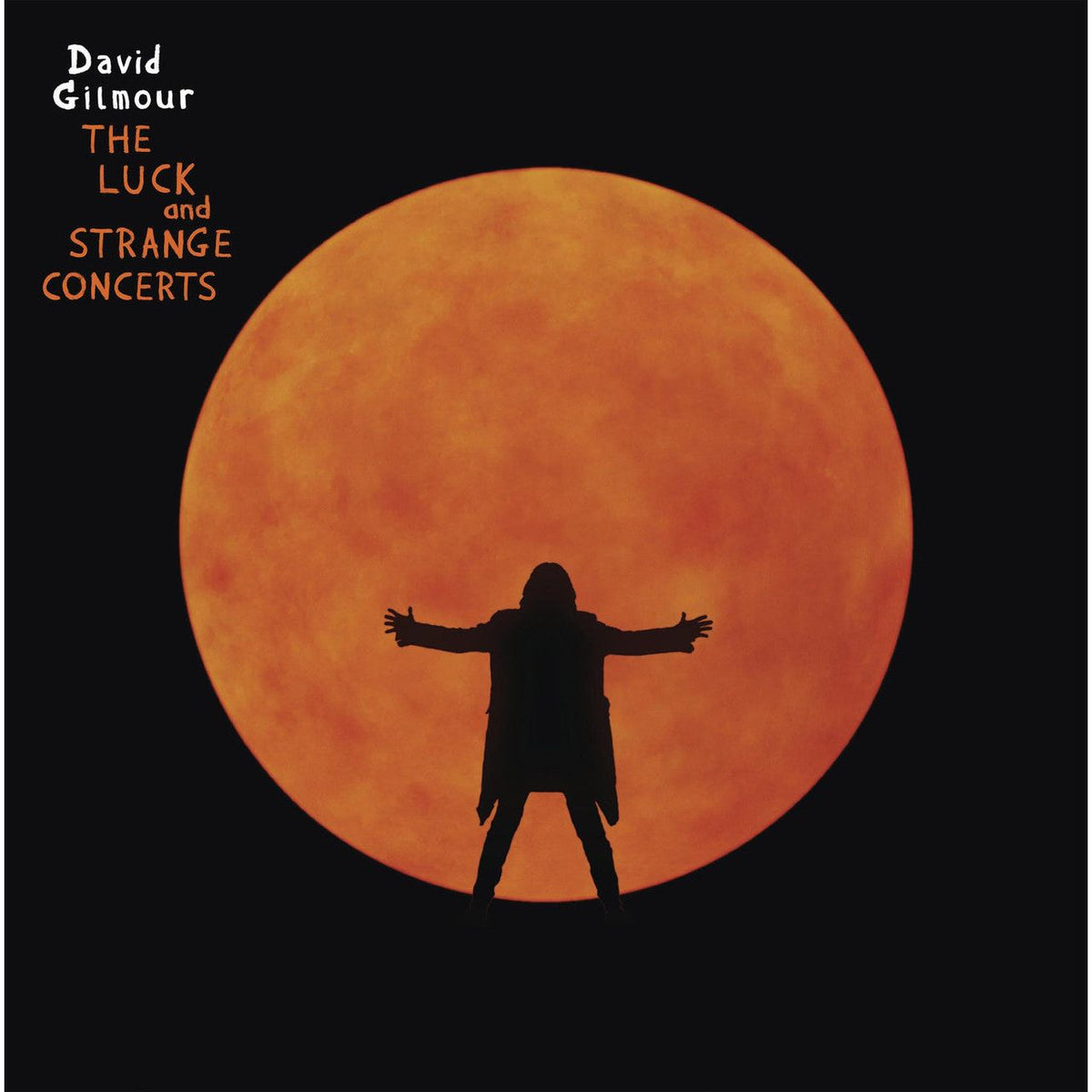
David Gilmour 5: Luck And Strange

Seemingly on something of a nine-year plan, David Gilmour emerged post-pandemic with only his fifth solo album. Luck And Strange apparently came together very quickly, for him, and he’s settled into his older voice, which we feared was on its way out last time. In co-producer Charlie Andrew he gained a foil who kept him on track, and didn’t let him fall back on old habits or tropes. That’s a tall order when the lyric, which focus on the familiar themes of aging and mortality, provided as ever by wife Polly Samson. Some familiar sidemen appear in the credits, and his now-adult children contribute to several tracks, but the biggest surprise is the legendary Steve Gadd drumming on half the album. Orchestra and choirs appear, but not excessively.

“Black Cat” is a haunting instrumental, Gilmour playing his signature tone over Roger Eno’s piano. If anything, it’s too short. The title track stemmed from a jam with Richard Wright a year before his death, and his distinctive electric piano adds all the color. If the verses seem a little simple musically, wait for the choruses and bridge, and daughter Romany’s harmonies are lovely. “The Piper’s Call” begins with a plaintive ukulele strum but soon builds, with another soaring chorus, then almost imperceptibly into a funky stomper with a solid solo taking it out. It’s a stark contrast into “A Single Spark”, which almost seems like a throwback to Beth Orton trip-pop, with some wonderful layers. “Vita Brevis” is all too brief for an instrumental, the title of which translates as “life is short”.

Romany plays the harp on that, and her voice is front and center on “Between Two Points”, a cover of an obscure (to us) song from 1999 originally written and recorded by the Montgolfier Brothers duo. It’s a haunting performance, and her take is exquisite. At this point the relative heaviness of “Dark And Velvet Nights” sticks out, opening with feedback and a bombastic fanfare. He spends a lot of time wailing on this, supported by another throwback in the ‘70s, almost Philly soul strings. Then it’s back to being pensive on “Sings”; after albums full of imagery and near-poetry, it’s striking to hear him sing of such things as “Portobello Road”. (Near the end we hear a snatch of his original hummed sketch for the tune, with his then-toddler son adding encouragement. It’s very sweet.) As “Scattered” crawls in, a Leslied piano recalls the effect on “Echoes”. A more successful version of the ruminating that slowed down Rattle That Lock, it all builds via some crazy cocktail piano to first an acoustic solo then a more archetypal electric one, but he’s wise enough to calm things down for a subdued coda.

As usual, the album was released in various permutations with extra material. The so-called deluxe CD added the one-off, gypsy-flavored single “Yes, I Have Ghosts” from 2020, sung with Romany and originally released on the audiobook of the novel Polly published that year, and the original 14-minute “barn jam” from 2007 with Richard Wright that was the genesis of the title track. (Vinyl and Blu-ray boxes also added two alternate “orchestral” mixes and sometimes a demo of “A Single Spark”.)

Possibly the best thing about Luck And Strange is that it doesn’t pointedly sound like Pink Floyd, yet it sounds completely like David Gilmour. It may not be, as he’s stated, his best work since The Dark Side Of The Moon—he’s certainly had several high points since then—but it is very strong, and perfectly timed for a fall release. Though we still don’t know what Ozzy Osbourne is doing on the cover.

He toured behind the album, kinda, playing residencies in five cities, and just as with the last two, a live album followed. But rather than spotlight a single show, The Luck And Strange Concerts was culled from the entire run. The band is solid as usual, with the stalwart Guy Pratt on bass, Greg Phillinganes on keys, and a few of the supporting players from the album. Romany gets her spotlight on “Between Two Points”, as well as part of the backing vocalists who tackle a subdued “Great Gig In The Sky”. Following the intros of “5 A.M.” and “Black Cat”, the title track kicks off the vocal portion. The “Breathe” into “Time” sequence is back at the top of the set, and the rest of the program goes between songs from the album and the usual cherry-picked oldies from his and the Floyd catalog. Only “A Great Day For Freedom” hadn’t been played on the last tour. David’s in great voice throughout, and taking breaks to play lead helps. (The shows in Rome were filmed and released on DVD and Blu-ray as Live At The Circus Maximus, as well as in a box set that also had the live album on CD and LP. And a book. And postcards. And stickers. And a poster.)

David Gilmour Luck And Strange (2024)—
David Gilmour
The Luck And Strange Concerts (2025)—3

Friday, September 13, 2024

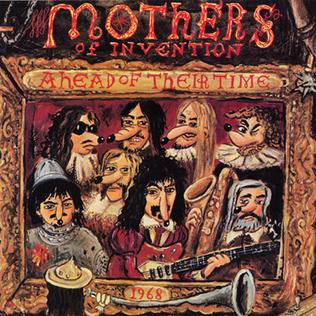
Frank Zappa 53: Ahead Of Their Time

Back in 1968, once the Mothers of Invention included trained individuals—or at least people who could read increasingly intricate music—Frank Zappa began introducing more complicated, almost classical pieces in the band’s sets. Some of this he called chamber music that he wrote himself, some were arrangements of Stravinsky and Zappa idol Edgard Varèse. Either to appeal to the less adept members of the band or with the excuse that audiences needed things dumbed down, silly skits involving scripts and in-jokes would accompany these performances.

Two such performances at London’s Festival Hall included contributions from an actual orchestra alongside the Mothers. Excerpts from the “dramatic” portion emerged in the ‘80s, and the visuals were included as part of the perennially incomplete Uncle Meat film (on VHS), but the shows appeared in more or less a complete form as Ahead Of Their Time.

Because the audio can’t adequately demonstrate the dramatic portion, the first half of the disc is an acquired taste. Much of the music would end up incorporated into “Bogus Pomp”, while the content detailing struggle between “serious music” and its opposite would recur in 200 Motels. Luckily, the guys sound into it, so it’s not too tedious.

The political rarity “Agency Man” is followed by the dramatic “Epilogue”, and the remainder of the disc is pretty much non-stop Mothers rock ‘n roll. “King Kong” eventually segues into “Help, I’m A Rock” and “Transylvania Boogie”, “Pound For A Brown” begets “Sleeping In A Jar”, and the “Orange County Lumber Truck” suite is heard nearly complete, and more than the excerpt already used on Weasels Ripped My Flesh. Being abridged to fit on a single disc, it’s a shame that to date the album hasn’t been expanded to provide at least the equivalent of a full set.

Nearly thirty years went by before the era was revisited. The inaugural release of the Road Tapes series presented a concert in a Vancouver hockey arena (a.k.a. “the local electric icebox”) two months before the Festival Hall show. Obviously there’s no play to perform, so they start right in with improvisations; others dot the setlist. Along with material also heard at the London show, this performance includes a piece introduced as “Shortly” and said to be released on an upcoming album; the music is better known now as “Holiday In Berlin”, and said album was reduced to two records from three, and without this piece. Other highlights include the first album appearance of the doo-wop parody “Oh, In The Sky” and their arrangement of “Octandre” by Varèse. Thanks to some apparently exhaustive restoration work by Vaultmeister Joe Travers, the mono sound is excellent.

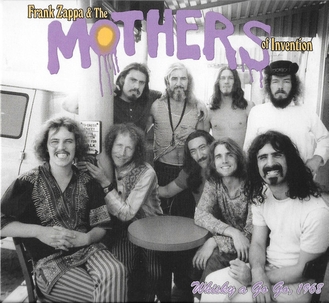
A little over a decade later, another relic from the era emerged. Whisky A Go Go, 1968 was recorded about a month before the Vancouver gig, and just before Ray Collins quit the band for the fourth and last time. The reason for this lengthy occasion was the intention of getting decent live performances from the nine-piece band on tape for future purposes that didn’t exactly develop.

A ten-minute improvisation leads perversely into “America Drinks And Goes Home”. Self-styled impresario (and accused sexual predator) Kim Fowley is brought up help shriek his way through “My Boyfriend’s Back”, followed by the original response of “[I’m Gonna] Bust His Head” and a lengthy “Tiny Sick Tears Jam”. Another improvisation goes into “Status Back Baby”, followed by some doo-wop, original and otherwise. “King Kong” is indexed as two parts, the second of which stops halfway through so the GTO’s [sic] can yell along with “Getting To Know You” and the Bugs Bunny Show theme. (Other guests on the evening included affiliated acts Alice Cooper and Wild Man Fischer; some of the Turtles were supposedly in the audience in a bit of foreshadowing.)

“The Duke” is played twice so they could get a decent usable take; this would eventually form part of “The Little House I Used To Live In”, but here’s it’s mostly Frank soloing over drums. Then there’s “Khaki Sack”, a more structured R&B jam that would be properly recorded in 1970 and shelved for half a century. “The Whip” and “Whisky Chouflée” run together for twenty minutes of mostly one-chord jamming, and the “world premiere” of “Brown Shoes Don’t Make It” for the first time on stage leads into an extended shuffle on the main theme and further improvisation.

In the end, only one segment from the evening was released at the time (“God Bless America” on Uncle Meat), though at least two other songs were mixed by Frank; one snippet made it to YCDTOSA #5, and more finally emerged on 2021’s Zappa documentary soundtrack. As the first full-length concert made available with Ray singing (save a few Beat The Boots), it’s about time.

Zappa/Mothers Ahead Of Their Time (1993)—3
Frank Zappa
Road Tapes, Venue #1 (2012)—
Frank Zappa & The Mothers Of Invention
Whisky A Go Go, 1968 (2024)—3

Friday, July 5, 2024

Neil Young 71: Early Daze

Way back in 2017, when the Neil Young Archives launched as an interactive streaming website, the timeline feature included virtual Post-It notes as placeholders for various projects that would, we would presume, be someday released. One of those notes read simply Early Daze, which we knew from his 2012 memoir Waging Heavy Peace was a collection of recordings made with Crazy Horse in 1969. This is basically what Neil was up to after Everybody Knows This Is Nowhere came out, and right around the time Ahmet Ertegun suggested that Crosby, Stills & Nash add him as a second guitarist, which was only one reason why the project changed. And it only took him twelve years to get it out of the pipeline and into the world.

All of these songs have been heard before, but not all in these versions. For starters, “Dance Dance Dance” was already on the first Archives box, as was “Everybody’s Alone”, said to be an alternate mix, but that’s negligible. “Come On Baby Let’s Go Downtown” doesn’t quite have the bite of the live version, just as “Winterlong” would be improved onstage as well as in a later recording. Both still sound excellent here. Yet another stab at “Wonderin’” was likely left aside because Neil botched the lyrics. “Cinnamon Girl” is the mono single mix, which favors Danny Whitten’s vocal, but has the familiar guitar coda tagged on.

The biggest surprise is Danny’s “Look At All The Things”, with Neil harmonizing and not quite at the level of the perfect take on the first Crazy Horse album two years later. It turns out “Helpless” was tried first with the Horse before CSNY got it, and has a slightly faster but still laid-back lope. “Birds” is the same take as the alternate B-side version, but here includes the second verse skipped on the 45. Then it’s back to the beginning of the year for the first take of “Down By The River”, this time with supposedly the original scratch vocal.

The music on Early Daze is not incendiary; there are a lot of acoustic guitars, some country influence, and Jack Nitzsche on electric piano. While everything has been freshly mixed—as opposed to done and dusted in 1969—there’s a rehearsal vibe to a lot of it, as opposed to sounding like polished album tracks. But if you take these songs, and replace “Down By The River” and “Cinnamon Girl” with “Oh Lonesome Me” and “I Believe In You”, you’d have a pretty decent second Neil Young and Crazy Horse album. (You can even leave the studio chatter in.) But then we wouldn’t have Déjà Vu and After The Gold Rush as we know them. Of course if Danny had lived, things would have been completely different. This album is a testament to him, as he sings with Neil on nearly every track.

Neil Young With Crazy Horse Early Daze (2024)—

Friday, June 21, 2024

Paul McCartney 38: One Hand Clapping

In 1974, it was safe to say that Paul McCartney had recaptured the stature that had been lost since he announced he was leaving the Beatles. His fifth album was a smash hit, and he was able to replenish the Wings lineup with lead guitarist Jimmy McCulloch and drummer Geoff Britton with an eye on getting back on the road. Having just recorded the soon-to-be hit single “Junior’s Farm”, and not quite ready to start on the next album, the band went into Abbey Road Studios for a few days to be filmed, in conversation and performing songs destined for their live shows, for a TV special to be titled One Hand Clapping. And like similar projects Paul started in the ‘70s, it was completed and promptly shelved. (For one reason, Geoff Britton barely lasted past the end of the year, given personal conflicts with members not surnamed McCartney.)

As would often happen, the audio and visuals were widely bootlegged over the years. It wasn’t until the second decade of this century that Paul officially released any of it, with some songs parceled out to bonus discs in various Archive Collection reissues, and the full film in grainy quality on the DVD in the 2010 edition of Band On The Run. Fourteen years later, that album was expanded for the umpteenth time for its 50th anniversary with a rough mix of the album in an alternate sequence without orchestrations. Then a few months after that, One Hand Clapping was finally released as an official album, remastered from the original multitracks, without the dialogue that was alternately pompous, drunk, or tedious.

The title track—or theme song, if you will—isn’t much more than a simple jam, but from there, the band goes through some very good selections from the catalog, some of which would soon be making their onstage debuts. “Jet” is always terrific, and “Soily” is very close to how it would sound in 1976. After the strange medley of “C Moon” and “Little Woman Love”, “Maybe I’m Amazed” isn’t there yet, but would always sound better on a grand piano than the electric piano used here. The film only had a snippet of “My Love”; here we get the full take, with orchestra added, Jimmy almost copping his almost-namesake Henry McCullough’s solo. “Bluebird” is slightly more electric, and Howie Casey comes in to play his sax part.

One segment of the film showed Paul in tie and tails playing solo at the (grand) piano; these included brief renditions of “Let’s Love”, which he wrote for Peggy Lee, the otherwise unreleased “All Of You”, and even “I’ll Give You A Ring”, which would emerge as a B-side in 1982. Both “Band On The Run” and “Live And Let Die” get a boost from the overdubbed orchestra, and we should mention somewhere that Linda knows her keyboard parts well. “Nineteen Hundred And Eighty Five” [sic] would not make it to a live setlist until well after that year, but this partially karaoke’d version over the album track is still pretty cool. McCartney favorite “Baby Face”, from the piano segment and with horns added in New Orleans, accompanies what would be the credits if you were watching instead of listening.

Of course there were plenty of other songs recorded during the course of the project, and the second disc of the set includes a pile of those, including some that hadn’t been bootlegged. “Let Me Roll It” would go on to be played on nearly every McCartney tour going forward to this day. “Blue Moon Of Kentucky” was in the Wings set before they had enough of their own songs, and here gives Denny Laine a chance to shine on harmonica. (He also gets to do “Go Now” towards the end of the disc.) “Junior’s Farm” and “Hi, Hi, Hi” each pack a wallop, but “Wild Life” would be thankfully retired.

More bits from Paul’s solo segment include “Power Cut” (of all things) on organ, upcoming B-side “Sally G” on acoustic, the seemingly impromptu “Love My Baby” on celeste, “Let It Be” on harmonium, and a verse each of “The Long And Winding Road” and “Lady Madonna” on piano. Most striking perhaps is a slow, torchy run through “Tomorrow”.

Another portion of the filming had Paul playing acoustic in the garden behind the studio, for a featurette titled The Backyard. This too had been bootlegged, but in the end eleven minutes of the performance were included only on a 7-inch shipped with the vinyl version of the album ordered direct from his official online store. Especially irritating is that there was plenty of room for it—and then some—on the second CD. At any rate, he plays the inscrutable “Blackpool”, “Blackbird”, “Country Dreamer”, and three covers: “Twenty Flight Rock”, and Buddy Holly’s “Peggy Sue” and “I’m Gonna Love You Too”. (This portion was made available for streaming about a month after the album’s release.)

Still, One Hand Clapping is a fascinating look at a brief stage of McCartney’s career. Given the prolonged, inexplicable absence of two later Wings albums from expansion, it makes for a nice tribute to Denny, who died in December 2023. (The album was also dedicated to the memories of Linda, Jimmy, and engineer Geoff Emerick.)

Paul McCartney & Wings One Hand Clapping (2024)—

Tuesday, May 28, 2024

Dire Straits 10: Live 1978-1992

Despite million-dollar offers and the continued longevity of most of the players, Dire Straits has never reformed since the On The Night tour ended in 1993. Since then various members have played together in schizoid tribute bands, and Guy Fletcher has worked regularly with Mark Knopfler, but the auteur was a no-show at their induction into the Rock & Roll Hall of Fame.

The decades since had seen a handful of compilations, but no expanded remasters. Even when the box set The Studio Albums 1978-1991 repackaged the vinyl in 2013, it didn’t include the Twisting By The Pool EP or anything else from the handful of non-album B-sides sitting all alone. The outcry that followed didn’t change the contents of the set any seven years later when the same title was released as a CD set. (Each album was in a simple replica sleeve, each with an insert approximating the inner sleeve with lyrics where applicable.)

Still, the studio albums only told part of the story, so the people in charge of these things had a chance to throw the fans a bone with Live 1978-1992, which collected—and, in some cases, expanded—the band’s official live albums, bolstered by a show from the vault. (The packaging was a little more elaborate than the studio box, with sturdier gatefold replica sleeves and a booklet with photos and a fawning essay.) Alchemy, which was already longer on CD than the cassette and LP, gained three songs to fill nearly two hours. (They did chop a minute of the “Going Home” intro, which was a shame.) On The Night was expanded by an hour to spread across two discs with the addition of seven tracks. The British Encores EP was also included in the box, unnecessarily repeating “Your Latest Trick” and not folding the other three songs into the On The Night discs, where they could have fit.

Live At The BBC was the same as ever—though it did gain about a minute to accommodate a DJ’s introduction of the band members—but the big draw was the first-ever release of Live At The Rainbow, recorded at the legendary London theater at the end of the Communiqué tour. It’s a bigger show than what’s heard on the BBC—not the members, just the size of the room and the ambience—and they seem a little tired, but still engaged.

Luckily, they improve as the set goes on. They play most of the first album and half of the second, and still close to the album arrangements at this juncture; having yet to hire a keyboard player, “Portobello Belle” hasn’t been tarted up yet. Oddly, despite the presence of “Lady Writer” in the set, they’re still playing “What’s The Matter Baby?” The crowd does get to hear early versions of “Les Boys” (prefaced by an almost apologetic intro), “Solid Rock” (not yet there), and most surprisingly and satisfyingly, “Twisting By The Pool” three years early. That last one sets up an encore of four oldies, where they’re joined by Thin Lizzy’s Phil Lynott and Tony de Meur of The Fabulous Poodles.

Dire Straits Live 1978-1992 (2024)—3

Saturday, April 4, 2009

Who 17: Who’s Last and Shea Stadium

Following Pete Townshend’s statement saying the band was done, there were rumors of a live album in the works that would encompass The Who’s entire career. Instead, the following Xmas saw the release of Who’s Last. Instead of a retrospective, the album consisted solely of performances taken from the 1982 farewell tour. And since it was on MCA, nothing from the ‘80s was included.

This is the showbiz Who, going through the motions, delivering the hits, with Pete playing the Schecter Telecaster copy that always sounded like his chorus pedal was jammed in the full position. It takes balls to include songs already perfected on Live At Leeds, and superior versions of “Baba O’Riley” and “Won’t Get Fooled Again” were on The Kids Are Alright. Most of the tracks are padded front and back with audience noise. At least John Entwistle gets the last word with his shredding vocal on “Twist And Shout”, and Kenney Jones plays with more fire throughout the album than he demonstrated on any of his Who studio recordings. Except for the backing tapes to “Who Are You” and the Who’s Next tunes, any keyboards heard are provided by Tim Gorman, cruelly called “Jim Gorman” in the liner notes, adding to the shoddiness of the package. Despite occasional moments—such as the rockabilly coda to “Long Live Rock”—Who’s Last proved to be about as inspired as its title.

It took forty years, but they finally got around to releasing a complete show from this tour, but only after it had been released on DVD and Blu-ray that went out of print. They weren’t the first band to play Shea Stadium since the Beatles, but they were certainly the biggest, cramming the field over two nights. As it was about three weeks into the tour, they were up to speed and not yet worn out. (The final show from Toronto has been on video for years, and throughout that Pete looks as uncomfortable as his haircut.)

Live At Shea Stadium 1982 is taken from the second night, and being able to hear a complete set already puts it above Who’s Last. The mix is good, making the keyboards more audible, especially when they pan across the stereo spectrum. Roger’s in good voice as ever, Pete and John less so, but Pete’s sobriety kept him on track. And since they weren’t just playing the hits, but promoting the new album, the setlist is more balanced. Once they get the newer songs out of the way, they start dipping into the past. Pete does a verse of “I’m One” solo before the band crashes in for “The Punk And The Godfather”, and “Drowned” jams for nine minutes. They even play “Tattoo” for some reason, though Pete blows the first chorus, and include “I Saw Her Standing There” in the encores. It’s a long two hours, and not stellar, but better than what we had.

The Who Who’s Last (1984)—2
The Who
Live At Shea Stadium 1982 (2024)—3