Showing posts with label 2010. Show all posts

Tuesday, June 13, 2023

Phil Collins 13: Going Back

Decades of onstage antics had taken their toll, and Phil Collins decided he might as well cap his performing career with an album celebrating the music he loved as a kid—specifically, Motown, and other ‘60s R&B nuggets often performed by mod bands at the Marquee Club in London and the like. Going Back was comprised of meticulous recreations of classic tracks, from the arrangements to the mixing, even getting some of the original Funk Brothers involved. Most of the tunes are from the Holland-Dozier-Holland team, with a few Stevie Wonder collaborations, some Curtis Mayfield, Goffin-King selections popularized by Dusty Springfield (including the title track), and one best associated with the Ronettes.

This was no big stretch for a guy who’d had one of his first solo hits with a carbon copy of “You Can’t Hurry Love”; his work on the Buster soundtrack was in the same spirit. His choices range from the obvious—“Uptight”, “Heatwave”, “Going To A Go-Go”—to not-so familiar ones we had to look up. “Papa Was A Rolling Stone” and “Never Dreamed You’d Leave In Summer” are both distinctly ‘70s, but fit. Most run around the standard two minutes and fifty seconds, cramming 18 songs into just under an hour. (An “Ultimate Edition” added seven more songs, including “Ain’t To Proud To Beg”, “Dancing In The Street”, and “You Really Got A Hold On Me”—plus “Ain’t That Peculiar”, which Peter Garbriel covered on his first solo tour back in 1977)—as well as a DVD chronicling the making of the album with four further downloadable tracks.)

It’s a fun listen, well capturing the spirit of the originals. But it does suggest that his creative well had run dry, just as his voice sounds thinner and weaker than ever, underlining his intention to make this his last album. The attention to detail is admirable, but the average listener is better off digging up those original Motown records, or finding a way to get some royalties directly to the artists.

When the album wrapped up his “Take A Look At Me Now” reissue campaign a few years later, the revision didn’t just update the cover art. Now called The Essential Going Back, the original album was pared back to 13 songs from the original 18, plus “Too Many Fish In The Sea” from the DVD. The Extras Live disc contained 16 songs recorded on the brief summer tour supporting the album, repeating some from the main program but substituting others, performed with nary a break between tunes, and thankfully not in the same order. His voice sounds better here too.

Phil Collins Going Back (2010)—3
2016 “Take A Look At Me Now” edition: “same” as 2010, plus 17 extra tracks (and minus 5 or 12 tracks)

Tuesday, March 14, 2023

Peter Gabriel 12: Scratch My Back

The good news was that fans didn’t have to wait another decade for a new Peter Gabriel album. Unfortunately, it wasn’t the long-promised I/O, said to have been derived from the pre-Up period. First, he finally released the Big Blue Ball compilation, derived from several weeks of recording in a fantasy camp scenario in the early ‘90s. Then, he recorded an album of covers, with orchestral backing.

The earliest hint of what would be Scratch My Back came with his version of The Magnetic Fields’ “The Book Of Love”, recorded for a movie nobody saw, but soon became ubiquitous on TV soundtracks. From there he chose songs from established and newer artists, and gave each an impassioned vocal reading over stark arrangements.

By choosing from such a big pool, he risks blasphemy by screwing with songs people already know and love, but may also introduced the uninitiated to music they might have otherwise never heard. The “standards” arguably come first; “Heroes” takes the drums out of the Bowie song, leaving the strings to drive everything, while “Boy In The Bubble” is far removed from Paul Simon’s African groove. He’s about the 80th person to tackle Randy Newman’s “I Think It’s Going To Rain Today”, but interestingly redoes Neil Young’s “Philadelphia”, from the movie soundtrack to which he’d also contributed. However, his interest in deep catalog unearths lesser-known tracks, like Talking Heads’ “Listening Wind” and Lou Reed’s mega-obscure “The Power Of The Heart”. He can thank his kids for exposing him to bands like Elbow, Regina Spektor, Arcade Fire, and Bon Iver, and his takes make us almost want to explore the originals. (A so-called “special edition” added alternate versions of three songs, plus a version of the Kinks’ “Waterloo Sunset”.)

Scratch My Back was supposed to inspire a songwriters’ exchange called And I’ll Scratch Yours (get it?), wherein each of the artist Peter covered would in turn record a version of one of his songs. Not surprisingly, this was easier said than done; only six new recordings appeared, and as iTunes exclusives. Apparently, Radiohead were not pleased with his overhaul of their song. (A completed album, with a few substitutions, finally appeared in late 2013; oddly, it was the veteran performers, like David Byrne, Brian Eno, Lou Reed, and Paul Simon, who made his songs their own, while most of the younger artists stuck far too close to the originals to delivery any unique interpretations.) While his delivery throughout certainly displays his enthusiasm and devotion to this music, one ultimately wishes he could get the same inspiration from his own personal muse, and come up with something as simple and pure.

Peter Gabriel Scratch My Back (2010)—3

Tuesday, September 13, 2022

Jeff Beck 17: Emotion & Commotion

After another layoff between albums, Jeff Beck decided to leave techno behind and get back to just playing. Emotion & Commotion combines songs featuring female vocals—thankfully, not the all-star route that made Carlos Santana really rich in this century—with unexpected covers, most accompanied by an orchestra. The focus is on melody.

We see the title is apt, as following his interpretation of Jeff Buckley’s version of Benjamin Britten’s “Corpus Christie Carol”, the “Hammerhead” riff comes tearing through. “Never Alone” is quieter, closer to his ‘80s fusion style underscored by the Steve Lipson and Trevor Horn production. The classic “Over The Rainbow” would be a lovely lullaby except that it’s followed by an “I Put A Spell On You” that sticks mostly to the Screamin’ Jay Hawkins original, with Joss Stone restraining herself just enough.

That ‘80s Trevor Horn sound returns on “Serene”, which wanders through dentist office territory but still lives up to its title, then Imelda May tackles the vocal on Jeff Buckley’s version of Nina Simone’s version of “Lilac Wine”. Lovely as that is, it’s no competition for his treatment of “Nessun Dorma” that to these ears is just as tearjerking as Luciano Pavarotti’s. Vinnie Colaiuta’s complicated rhythms bring in another Joss Stone vocal on “There’s No Other Me”, and we go out on a soft note with “Elegy For Dunkirk”, plucked from the Atonement soundtrack and featuring the classical vocals of one Olivia Safe.

Emotion & Commotion isn’t Jeff Beck’s most innovative album, but it’s a nice listen, and that helps a lot. Truth be told, we kept up with his catalog through all those middling albums just so we could crow about “Nessun Dorma”. We’re going to go listen to it again.

Jeff Beck Emotion & Commotion (2010)—3

Friday, August 14, 2020

Chrissie Hynde 1: Fidelity

While the Pretenders have been more of a conceptual band than a cohesive unit for the vast majority of their existence, it’s always surprising when Chrissie Hynde emerges with music under her own name than in the guise of the collective that propelled her to notoriety. While Fidelity! is credited to the unwieldy JP, Chrissie & The Fairground Boys, it’s easily as good a Pretenders album as anything released under that name.

That said, this outfit grew out of an unlikely collaboration with a Welsh folksinger half her age named John-Paul Jones, a.k.a. JP. Supposedly they both knew their animal attraction couldn’t sustain the generational difference, so they put at least a portion of that energy into songwriting. Their conundrum is laid out immediately in “Perfect Lover”, wherein she lists her detriments while he rasps his devotion notwithstanding.

The rest of the album provides further ruminations on romance and the futility thereof, and plenty of opportunities for us to get what she saw in him musically. His yowl dominates “If You Let Me”, an otherwise outstanding rocker. The symbol of the fairground looms large here, in two song titles as well as the band name, and we can’t figure out why. JP handles “Leave Me If You Must” all his own (if he hasn’t listened to Leonard Cohen yet, he probably should) but most of the tracks fall into the conversation trope, as in “Australia” and “Courage”. “Misty Valleys” is just Chrissie, and it’s lovely in its catchy melancholy, while “Meanwhile” presents a different balance, and “Never Drink Again” and the title track suggest she regrets the circumstances of their fabled first meeting.

This is all conjecture, but the listener gets an overwhelming feeling of voyeurism throughout Fidelity! Still, a crack band of unknowns anchors each track, although JP’s constant presence is an acquired taste, and very much why this shouldn’t be called a Pretenders album. Chrissie sounds as alluring as ever, and that’s what makes it all click. One would think it was the beginning of a beautiful friendship, but she’s yet to work with any of the players since.

JP, Chrissie & The Fairground Boys Fidelity! (2010)—3

Friday, February 3, 2017

Suzanne Vega 9: Close-Up

It’s common for musicians to release re-recorded versions of songs. It happened all the time in the standards era, so connoisseurs could compare how Frank Sinatra delivered a tune in his twenties to his approach decades later. Many live albums offer straight reproductions of hit singles and album tracks to adoring audiences. However, in an age when music can be shared and distributed faster, wider, and easier than ever, anytime an artist redoes his or her own music the cynical eyebrow is raised.

Suzanne Vega was very straightforward when she began her Close-Up series, which presented new recordings of her songs, chosen from her entire catalog, released in four thematic volumes. Her reasons were that some of her albums were out of print, and mass consolidation across the music industry didn’t guarantee future royalties from them. Therefore, new, mostly stripped-down renditions of songs she still liked playing would bring another opportunity to gets paid, yo.

We adore her voice, and wish we could hear her sing from the kitchen when it’s her turn to do the dishes, so we admit to a bias. Unlike other singers, her range is the same as it always was, though some of those high notes have been lost to a quarter-century. While some songs sound the same as ever, whether acoustic (“Small Blue Thing”, “Gypsy”) or electrically embellished (“Marlene On The Wall”), it’s more interesting to hear the ones rescued from busy production (“When Heroes Go Down”, everything from Nine Objects Of Desire). But she also keeps “(If You Were) In My Movie” and “Fat Man And Dancing Girl” close to their original clattering arrangements, and not exactly “stripped down”.

Each of the volumes has something to offer, and even had different bonus tracks, depending on where you bought them. Love Songs is the most successful; because it’s the first one, the novelty is new, but it also offers some of her prettiest tunes. People & Places, with its observations and speculations, is a little more embellished, and also has her two most famous songs in “Luka” and “Tom’s Diner”, the latter delivered closer to the style of the bootleg remix. The big draw is a version of “The Man Who Played God”, originally part of a collaboration with Danger Mouse and the late Mark Linkous of Sparklehorse. States Of Being covers “emotional turmoil”, and deviates least from the originals, with such embellishments as a string quartet and a new song in the way of the then-unreleased “Instant Of The Hour After”. Songs Of Family would appear to be her most personal songs, being inspired by her daughter, her divorce, her childhood, and her lineage. Mostly back to the original sparse brief, it includes three more produced “new” tracks, two of which were among the first songs she ever wrote.

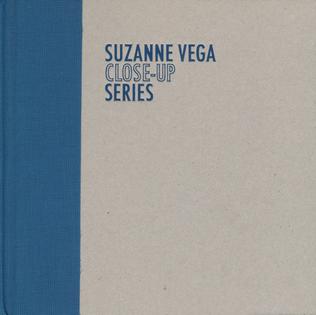
That’s four albums that revisit most of her previous seven albums, with Days Of Open Hand being the least represented. The way to get it all would be Close-Up Series, a book-style package that includes each volume, plus another disc containing another album’s worth of the bonus tracks offered up on various digital platforms (including a version of “Luka” sung in Spanish), lyrics for every song, and a live DVD. Being a box set it’s on the pricey side, but that’s to be expected.

Suzanne Vega Close-Up Vol. 1, Love Songs (2010)—
Suzanne Vega
Close-Up Vol. 2, People & Places (2010)—
Suzanne Vega
Close-Up Vol. 3, States Of Being (2011)—3
Suzanne Vega
Close-Up Vol. 4, Songs Of Family (2012)—
Suzanne Vega
Close-Up Series (2014)—

Tuesday, December 20, 2016

Bruce Springsteen 21: The Promise

Maybe it was only isolated to one corner of the country, but up in the northeast, one of rock ‘n roll’s most bootlegged artists of a certain decade was Bruce Springsteen. Part of that was due to his legal troubles in the late ‘70s, wherein he was prohibited from releasing his big follow-up to Born To Run. He was allowed to record, and he played an enviable roster of shows, but all that free time encouraged him to write at least three albums’ worth of material, so that when his next album did arrive (to unquestionable acclaim amongst the already converted) it barely scratched the surface of what had been on his mind.

For the better part of 30 years, fans clung to concert tapes and illicitly acquired dubs of the stuff he was working on then, so it was very surprising (and welcome) when he eventually signed off on The Promise, released not only as an adjunct to an anniversary edition of Darkness At The Edge Of Town, but allowed to stand on its own as its own entity, separate from the setup. (Which is why we’re talking about it here, rather than in the context of that album’s reissue.) It was the smart move, because it’s a terrific pile of tunes. These aren’t just siphoned tracks scattered across a larger collection of cast-offs from a disparate career; these recordings all come from the same singular era, with the same defined band members trying to help him concoct his next attempt at the Great American Novel on wax.

And that’s why The Promise is an excellent package, as it presents not one but two LPs’ worth of tunes that would have gone a long way to establishing Bruce as a force to be reckoned with. Go into it blind and ask yourself: this stuff wasn’t as good as what he did end up releasing in 1978? Once you get past that, higher thumbs up to the kid who was so focused on the message he wanted his fourth album to present that he could nudge aside two dozen other songs that anybody else of that era would’ve killed to write, much less record. These are all tunes worthy of that time, and if he had just thrown them on the first pile of plastic that went past the conveyor belt, whatever he called it would have been hailed by Rolling Stone, WNEW-FM and the rest of the usual suspects as a deeply crafted work of amazing import, with maybe only that week’s Graham Parker or Steve Forbert albums to suggest an opponent, but hardly enough to stick in the long run.

Scholars can pinpoint the exact spots, but even we can hear elements that would surface on things that actually did emerge at the time. The set begins with an alternate arrangement of “Racing In The Street”, and continues through what amounts to full-band demos of “Because The Night” and “Fire”, which would have brought him piles of money if he’d released them himself rather than pawn them off on others. Truly, if deejays had gotten their hands on “Rendezvous” back then, you’d still be hearing it today. “Ain’t Good Enough For You” would soon get retooled as “This Little Girl” and donated to Gary U.S. Bonds for his 1981 comeback album. The set gets its title from a legendary outtake that finally appears in a full band take, right up there with his other epic ballads, but without the engine. (And really, quoting “Thunder Road” so soon after the song of that title? That just wasn’t done in ’78.)

They’re not all gems; “Talk To Me” and “It’s A Shame” would have been much better served by Southside Johnny. And nice as it is, listen to “Candy’s Boy” and try to convince yourself that this trip to the beach beats the ball of tension it would eventually evolve into. It’s particularly odd that the last track listed is the underwhelming and hardly enjoyed “City Of Night”, particularly when “The Way” is more what we’d expect from him. Slight as it is, it’s got Clarence, and he wouldn’t be around for much longer.

Everything sounds crisp and clean, and unlike the post-production that rankled fans on Tracks, the songs crackle like the analog of 1977. Nearly all of the tracks have had modern sweetening—mostly horns but even some lead vocals—but not to the point of rendering the songs anachronistic. We’re going to go out on a limb and suggest that these songs are to the Bruce pantheon as any of Dylan’s 1965-66 leftovers are to his. Here was a guy firing on all cylinders, and right in the middle of it, he’d figured out how he wanted his albums to sound. It’s clear he knew how to write hits; he wanted to write songs that would last. Good for him.

Bruce Springsteen The Promise (2010)—

Friday, September 26, 2014

Robyn Hitchcock 27: Propellor Time

Robyn’s work with the collective dubbed the Venus 3 was productive, in that a short amount of time together spawned three complete albums over a period of five years. As is usual with following the guy, the third (and to date, final) installment was released on the same tiny British label, run by a guy from the Higsons, that put out Shadow Cat.

Of the three, Propellor Time is the least interesting, despite who’s on it—Nick Lowe and John Paul Jones being just two of the contributors. It doesn’t help that Robyn is still trying to write songs with as few chords as possible, letting his quirky two-liners carry interest from one stanza to the next. But he still manages, usually, to make them sound pleasing, and he does right off with “Star Of Venus”. With Morris Windsor on harmonies, one drools at how it could have sounded as an Egyptians track. “The Afterlight” previously appeared on a live EP; here its studio version mostly seesaws between two chords in an inadvertent stylistic homage to Dylan’s “Tiny Montgomery”, lifting for the bridge. “Luckiness” trots along under a prominent mandolin, ending with applause, but the first real eyebrow-raiser is “Ordinary Millionaire”, featuring contributions from Johnny Marr, who is also credited with composing the music. What the CD still calls side one (and indeed, it was available in a limited release on cassette) ends with “John In The Air”, a somewhat psychedelic sea chant that truly grows.

The title track provides further inspiration for our hero, with an excellent arrangement of music composed by Peter Buck that reminds us of Eno’s “Julie With...” Contrarily, “Primitive” goes back to a three-chord vamp, but the set culminates in “Sickie Boy”, whjch (like the title track) ranks up with the best of his career, catchy and joyful, ending with recited credits and, again, applause. A lengthy pause precedes the harmonica-heavy “Born On The Wind”, which is a pale shadow of “Serpent At The Gates Of Wisdom”, just as “Evolove” seems like another tacked-on bonus.

In what’s become a trend, Propellor Time is worth playing a few times, and it certainly isn’t bad, but we still get the feeling these are leftovers. Sometimes those are worth sweeping up, but not all of these are.

Robyn Hitchcock & The Venus 3 Propellor Time (2010)—

Friday, August 15, 2014

Crowded House 7: Intriguer

The second Crowded House album of the 21st century was another one in name only. While Intriguer does feature the core quartet established by the previous album (and tour) on all tracks, it’s still more in the style of Neil Finn’s solo work, hermetically sealed and lacking the wackiness that made their ‘80s work so addictive.

“Saturday Sun” is terrific, and the best track to start the album. The verses and choruses are equally catchy, and slightly akin to some of the better U2 tracks from this century. Things gradually revert from there. Both “Archer’s Arrows” and “Amsterdam” plod along between their inevitably catchy choruses. “Either Side Of The World” is toe-tapping yet soft, and just when you think the song’s over it goes to outer space for a minute and returns for a reprise of sorts. “Falling Dove” is a pleasant, pensive strum, but there are already too many of those on the album.

The second half is just as tentative, beginning with “Isolation”. This features Neil’s wife Sharon on a few verses, and switches abruptly to a chaotic finish. That makes a good setup for “Twice If You’re Lucky”, a highly welcome pop anthem, and the straight-ahead simplicity of “Inside Out”. “Even If” returns to the melancholy musing, while “Elephants” gets its spacy feel from guest Greg Leisz on pedal steel. (iTunes purchasers got the option of a deluxe edition with “Turn It Around” as a slightly snappier finale, along with a pile of videos. That song was included in the eventual Deluxe Edition, along with some live tracks, including the excellent “The Only Way To Go Is Forwards”, demos, alternates, and B-sides.)

The general consensus on Intriguer is that repeat listens are ultimately rewarding, and that is true, but wouldn’t you rather not have to live with something until the point where you can appreciate it? Its relative brevity at 40 minutes does help with the familiarity. We were even shocked to find ourselves wishing brother Tim had been included for some counterpoint. Its place in the Crowded House canon is iffy, but at least it doesn’t take anything away from those first few poppy gems.

Crowded House Intriguer (2010)—3
2016 Deluxe Edition: same as 2010, plus 16 extra tracks

Friday, July 25, 2014

Jimi Hendrix 25: West Coast Seattle Boy

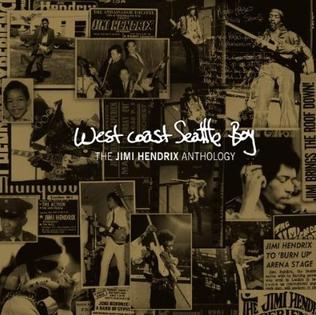
Collectors were still acquainting themselves with whatever bounty they could take from Valleys Of Neptune when, hold and below, another four-CD Jimi box appeared. Rather than repeat the 2000 box, which had been part of the previous MCA deal, West Coast Seattle Boy prefaced three discs of unreleased music with a disc devoted to the session work he’d done before the Experience, for the likes of the Isley Brothers, King Curtis and Little Richard. This stuff had been clogging up gray-area records and tapes since Jimi was alive, and while there are some who will welcome these things in best-ever quality, the real story doesn’t begin until disc two, after he’d hooked up with those two English guys and truly became the Jimi Hendrix of legend. (Perhaps to make up for it, the set included a DVD, and was also available in a single-disc distillation, which was the style at the time.)

So, just like the 2000 box, we travel chronologically through studio alternates and a handful of live tracks, some of which were on since-deleted box sets, others further songs from the Berkeley concert and Band of Gypsys shows. Pay close enough attention and you’ll hear some pretty interesting things.

Many of the outtakes and rarities are instrumental, allowing us to focus on his playing. The best include “Little One” from the Electric Ladyland era, featuring some Indian drones likely contributed by Dave Mason. “Cat Talking To Me” is also pretty decent, particularly without the Mitch Mitchell vocal heard previously. “New Rising Sun” is a longer mix of the dreamy piece that opened Voodoo Soup. “Calling All Devil’s Children” follows a terrific riff unfortunately mixed down to allow a “political rally” to take over the track. “Young/Hendrix” is a 21-minute jam previously excerpted on Nine To The Universe, notable for a five-second riff that Lenny Kravitz stole for “Are You Gonna Go My Way”. Then there’s “Messenger”, a jam on chromatic riffs with Jimi’s overdubbed piano on top. And “Peter Gunn/Catastrophe” is rescued from oblivion, or more accurately, War Heroes.

Of course, there are some actual songs here. “Mr. Bad Luck” purports to be the original mix of the track that sported 1987 overdubs on Valleys Of Neptune; the later version that now opens South Saturn Delta as “Look Over Yonder” is still the one to have. A handful of home recordings preview songs destined for Electric Ladyland and Cry Of Love, including a solo “My Friend”, plus “Tears Of Rage”, not yet widely known outside the Dylan circle. “The Everlasting First” is one of his final guest sessions, with Arthur Lee’s second incarnation of Love. The last piece on the disc is the acoustic “Suddenly November Morning”, from a longer suite of unfinished ideas.

While good, West Coast Seattle Boy was another missed opportunity. Considering all the distinct eras and bands of Jimi’s short career, the grab-bag approach ultimately gives short shrift to the story, distorting it, and making his official catalog even harder to navigate. And the Estate wasn’t done yet.

Jimi Hendrix West Coast Seattle Boy: The Jimi Hendrix Anthology (2010)—3

Friday, April 18, 2014

Jimi Hendrix 24: Valleys Of Neptune

Jimi had been dead nearly forty years when the family switched up their licensing yet again. A new deal with Sony Legacy worldwide meant snazzy new digipack editions of the three Experience albums, plus several of the MCA titles from the ‘90s. And of course, they also offered something “new”.

Valleys Of Neptune attempts to present a possible follow-up to Electric Ladyland, focusing mostly on material recorded in 1969 with the original Experience. Because technology had advanced to perform all kinds of magic, and because the Experience was splintering at the seams, such an album would not have existed in this form. Several tracks are re-recordings of earlier material, showing off how they’d developed on stage over time, and three even include overdubs added by Noel and Mitch in 1987. That means we have further variations on “Stone Free”, “Hear My Train A-Comin’” (both previously cannibalized in the mid-‘70s), “Fire” and “Red House”—each with their own charms, but “definitive”? Hardly, especially when they fade mid-song. “Bleeding Heart” was tried several times that year, and this one is tight and funky.

The title track promises buried treasure, being an unreleased song, and it’s pretty good. However, it matches a 1970 Billy-and-Mitch take with a vocal from nine months earlier. Still, this is what purists call an “out-fake”. “Mr. Bad Luck” is an earlier version of “Look Over Yonder”, just as “Lover Man” doesn’t have its “Here He Comes” subtitle. (Both were overdubbed in 1987; negligibly superior versions are on South Saturn Delta.) A lengthy instrumental version of “Sunshine Of Your Love” includes a conga break and a bass solo to fill up the better part of seven minutes. A title like “Lullaby For The Summer” suggests something entirely different to the raucous riffing it actually contains, while “Ships Passing In The Night” is a sloppy precursor to “Night Bird Flying”. Finally, “Crying Blue Rain” begins like another slow blues, with some “amen” vocalizing along the lines of “Power Of Soul”, eventually picking up speed and fading out. (If you bought the CD at Target, you also got a de-Douglased “Trash Man”, plus an Experience jam titled “Slow Version”.)

Thanks to the aforementioned technological magic, everything on Valleys Of Neptune sounds terrific. But each installment of release-worthy studio tracks only muddies the picture further, ultimately sinking the attempt to create a hypothetical “lost album”. The world will never know what he might have done with all these recordings; luckily the above-average quality of it all makes it worth hearing.

Jimi Hendrix Valleys Of Neptune (2010)—3

Saturday, April 14, 2012

Keith Richards 3: Vintage Vinos

One of the more enjoyable rock ‘n roll memoirs of any era was Life by Keith Richards, wherein he frankly rambled about all the years most people were surprised he could remember so well, much less at all. Alternately defiant and humble, it reminded everyone who already agreed that he was and would always be cooler than Mick.

A retrospective album was released as a tie-in, but rather than simply collect all his lead vocals from various Stones album, Vintage Vinos concentrates on the two studio albums by his X-Pensive Winos side band, with a few from the live album to split the program. To say the set leans heavily on Talk Is Cheap is putting it mildly, with all but one song from side one, and one from side two. By contrast, three songs come from Main Offender, and the live songs provide a sideways nod to the Stones via “Too Rude”, “Time Is On My Side”, “Happy”, and “Connection”. The big draw and only rarity is “Hurricane”, a short acoustic tune credited to Jagger/Richards and performed with Ron Wood, supposedly from the Forty Licks era, previously available as a giveaway.

Musically, of course, it’s solid; the photos are nice and the booklet even includes lyrics. Still, it’s a missed opportunity. By now diehard fans have compiled their own “Keith Sings” mix tapes and CDs covering his best lead vocals on Stones albums, but certainly any “best of Keith” should include his cover of Chuck Berry’s “Run Rudolph Run”, as well as its B-sides “Pressure Drop” and “The Harder They Come”. Then there’s “Key To The Highway”, which was a Japanese bonus track for Main Offender and B-side elsewhere, and “Oh Lord, Don't Let Them Drop That Atomic Bomb On Me” from a Charles Mingus tribute. Operators are standing by.

Keith Richards Vintage Vinos (2010)—

Monday, March 19, 2012

Ben Folds 10: Lonely Avenue

Outside of the usual promotion for his previous, disappointing album, Ben seemed more interested in new projects. His interest in college a cappella groups led to his stint as a judge on a televised talent show series, and the stopgap in the form of University A Cappella!, wherein songs from his catalog were interpreted by fourteen college groups. (He added two performances of his own.)

A more adventurous departure came with his full collaboration with British author Nick Hornby, whose books Juliet, Naked and High Fidelity (the latter even better than the John Cusack film based on it) are must-reads for any record-collecting obsessive. For Lonely Avenue, Nick wrote the words and Ben wrote the music, communicating via e-mail. The results were then recorded by Ben with help from his band. Paul Buckmaster contributes several string arrangements, paving a further path from Elton John.

The best songs tend to be the pretty ones, or at least where he’s not trying to be too clever. “A Working Day” is a brief one-man-band that sounds too much like Way To Normal, but at least it’s over quickly. Then it’s a visit to a terminal spouse at a hospital—not an uncommon destination for a Ben Folds album. “Levi Johnston’s Blues” was dated even before it was recorded, and seems to exist solely to give Ben another excuse to exercise his patented potty mouth. The thing is, the chorus is kinda catchy. Equally catchy, despite itself is the tribute to “Doc Pomus”, wherein our unlikely duo pinpoints their ideal comparison of the type of songwriting team to which they aspire. “Your Dogs” uses the animal in another Folds song title, in another glimpse at the travails of modern suburbia, while “Practical Amanda” turns out to be a thank-you note for the yin a spouse provides the narrator’s yang.

The rest of the album is strong for the duration. The most developed story (and arrangement) might be “Claire’s Ninth”; much like the character studies from Rockin’ The Suburbs, it’s an excellent glimpse inside the effects of divorce and estrangement—subjects these guys know and cover well. “Password” puts the age-old conundrum of jealousy and perceived infidelity squarely in the present, with a distinctly ‘70s slow jam arrangement to nudge the plot along. “From Above” was a good choice for a lead single, a tense yet infectious reflection on relationships that never happened. The momentum carries through the crush a “teenage poetry nerd” has for “Saskia Hamilton”, before the grand finale of “Belinda”. This brilliant song looks at any singer-songwriter who had a huge hit with a song written for someone he hasn’t been with in years, but still has to sing the song onstage (think Billy Joel, Eric Clapton, or Ben anytime someone requests “The Luckiest”). The music for the imaginary song is perfect, and we struggle to feel sorry for the guy—just like a character from a Nick Hornby novel. Just make sure to stop the disc before it actually ends, as there’s a minute of silence before a surprise snippet from an outtake version obliterates the arrangement.

Lonely Avenue see-saws between being good and very good. Ultimately it’s not fair to criticize the subject matter, since again, Ben only supplied the music. It’s still a step in the right direction, and suggests that at the very least, his musical ear will always triumph over his lyrical shortcomings.

Ben Folds/Nick Hornby Lonely Avenue (2010)—

Thursday, November 24, 2011

Brian Eno 19: Small Craft On A Milk Sea

If anyone understands the power of branding in packaging modern music, it’s Brian Eno. Case in point: Jon Hopkins and Leo Abrahams were already busy musicians in the electronic field before meeting Eno, and worked with him on various projects throughout the first decade of the century, for such artists as Paul Simon and Coldplay. Yet when their first full-length collaboration was released as Small Craft On A Milk Sea, Eno’s name came first. Meanwhile, the liner notes show the other two as contributing keyboards and guitars, while Eno is credited with “computers”. Granted, that’s not to suggest he didn’t do anything musical with said machines, but still.

This would be more of a big deal if the album was wholly somebody else’s work, or worse, not very good. But somehow these relatively short pieces, designed with the familiar idea of creating imaginary soundtracks, hang together very well. Some cuts, such as “Complex Heaven”, “Calcium Needles”, and the title track, recall the spacescapes of Apollo; others, like “Flint March”, “Bone Jump”, and “Dust Shuffle”, bring to mind the “juju space jazz” of The Drop, but with more purpose than noodling. A guitar finally shows up in “Horse”, which sounds like a remix of certain Music For Films and the Passengers project, while “2 Forms Of Anger” bashes out a single chord right out of Joy Division.

Overall, there’s enough variety in between that makes it easy to sink into it as ambient music, or even put on shuffle and enjoy from a completely random standpoint. Again, the brevity and purpose of each of the tracks on Small Craft On A Milk Sea combine for success. (The Japanese pressing got an extra track in the closing, near-ambient “Invisible”, while a pricey limited collector’s edition added a bonus disc with four more tracks, plus an exclusive silkscreen print. All these, save the print, were eventually made available for streaming.)

Brian Eno with Jon Hopkins & Leo Abrahams Small Craft On A Milk Sea (2010)—3

Monday, October 10, 2011

Robert Plant 11: Band Of Joy

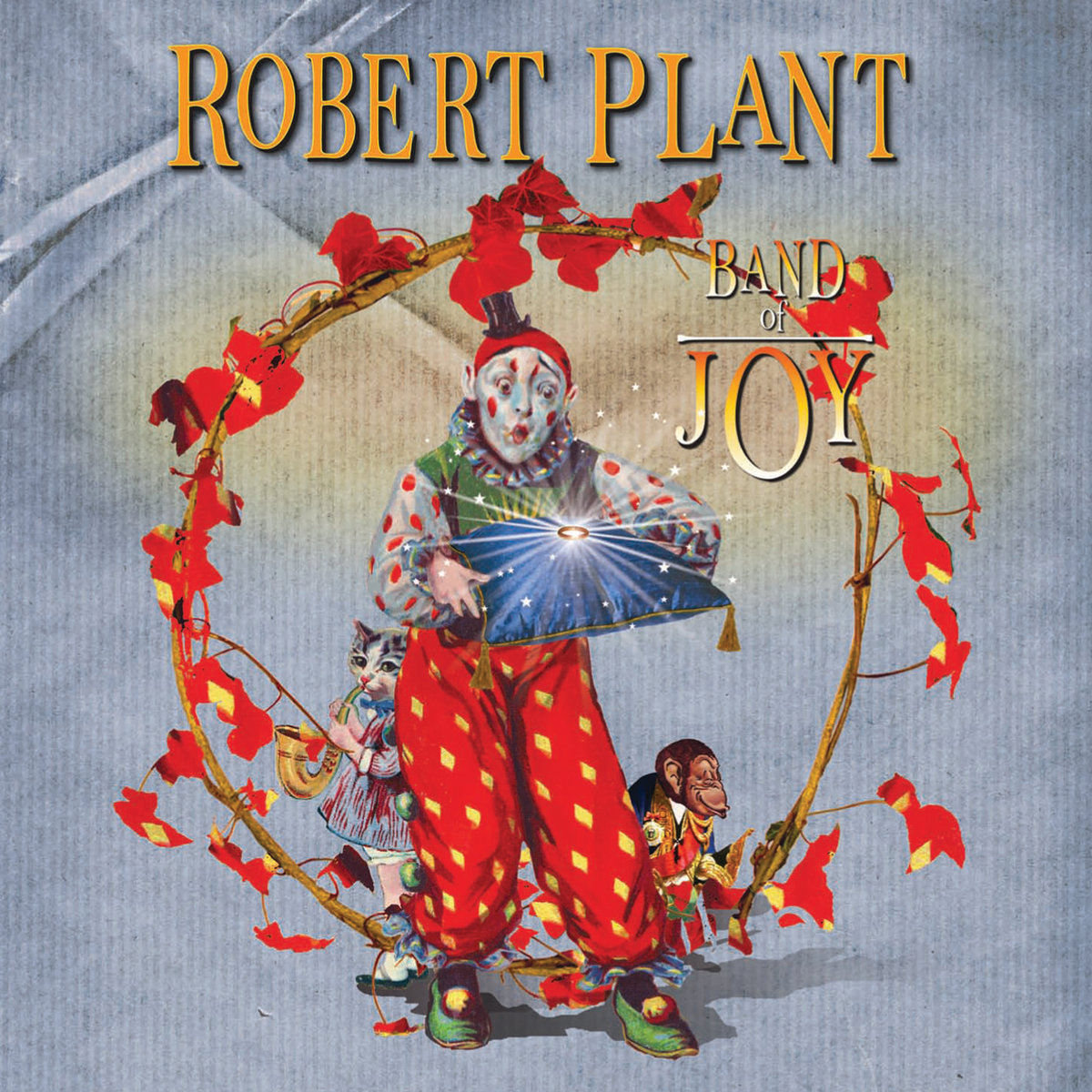
Never one to go for a surefire cash cow, Robert didn’t push a second collaboration with Alison Krauss, but kept his interest in Americana fresh with an album named after one of his pre-Zeppelin bands. Band Of Joy even keeps his old Es Paranza imprint afloat; has anyone else had that label? Such luminaries as Patty Griffin and Buddy Miller round out the band for a sound closer to Dreamland than Raising Sand.

For the most part, he’s content to reinterpret other people’s material here, starting with Los Lobos’ “Angel Dance” and an older Richard Thompson songsong, “House Of Cards”. “Central Two-O-Nine” continues the Americana fascination, but while it’s credited as an original, it sounds awfully derivative. There are two, count ‘em, two songs by Minnesota slowcore pioneers Low—“Silver Rider” features Patty cooing just like Alison might have, and “Monkey” is even more brooding and scary. “You Can’t Buy My Love” has a nice Merseybeat guitar part in between all the drums, which makes sense since the song dates from about 1964, while “Falling In Love Again” manages to straddle country, gospel and doo-wop.

“The Only Sound That Matters” is a recent tune by the defunct Dallas band Milton Mapes, and good for Robert for finding it. If somebody’s watching out for Townes Van Zandt’s estate, they’ll likely be pleased by the rendition of “Harm’s Swift Way” here. The balance of the tracks are new arrangements of traditional songs, and with titles to match: “Cindy I’ll Marry You Someday” and “Satan Your Kingdom Must Come Down” are fairly swampy, but “Even This Shall Pass Away” is given a trip-hop treatment.

Once again Robert made a decent album, and even got critical kudos for it. Band Of Joy isn’t remotely annoying, but it doesn’t exactly leap out of the speakers. It can be enjoyed, and filed.

Robert Plant Band Of Joy (2010)—3

Sunday, October 9, 2011

John Lennon 17: Signature Box

While it seemed we had been through this already, Yoko and an eager EMI decided to celebrate what would have been John Lennon’s 70th birthday with a small pile of new catalog items. Power To The People: The Hits was supposed to replace Lennon Legend, apparently, while offering a more affordable option to 2005’s Working Class Hero: The Definitive Lennon double-CD package. Those who wanted to tread a little further were invited to enjoy Gimme Some Truth, which evenly divided 72 songs across four thematic CDs. And Double Fantasy Stripped Down applied the “naked” philosophy to the last album he released in his lifetime.

The big deal of the program was Signature Box which offered up the eight studio albums from Plastic Ono Band through Milk And Honey, remastered from the original mixes (unlike the batch everyone had picked up over the previous decade) with new liner notes but no extras that weren’t on the original LPs. A six-track CD entitled “Singles” covers “Give Peace A Chance”, “Cold Turkey”, “Instant Karma”, “Power To The People”, “Happy Xmas” and “Move Over Ms. L”, and to further entice the completist, “Home Tapes” presents 13 demos and outtakes, some familiar but legally purchasable for the first time ever. Most of the studio alternates come from Plastic Ono Band, except for a radically different “I Don’t Wanna Be A Soldier”. Of the demos, it’s nice to have clean copies of “One Of The Boys”, “India” and another “Serve Yourself” variation.

Since we’re fans of (most of) the original albums, we’re always happy to have an excuse to listen to them. The packaging is slim and sleek, with full lyrics and extra photos (though Yoko seemed to think Some Time In New York City needed more mid-1969 shots). Naturally, the biggest complaints concerned what was left out of the set. Besides ignoring most of the bonus tracks from the earlier CDs, previous Yoko-approved sets, like Menlove Ave. and Live In New York City were missing in action, although a handful of songs from those albums (as well as Live Peace In Toronto) did find their way to Gimme Some Truth. And if you wanted the Stripped Down version of Double Fantasy, that meant you ended up with two copies of that album.

If it were truly all-encompassing, we might be more inclined to rate it higher, yet at the same time, we don’t know if we’d be able to stand having (to buy) everything all over again. We wouldn’t have put it past them to have something will emerge to commemorate his 75th birthday in 2015, and therefore inspire further gnashing of teeth. But we’d also much rather have had the opportunity to hear what other music he might have created beyond that ten-year window.

John Lennon Signature Box (2010)—

Wednesday, March 30, 2011

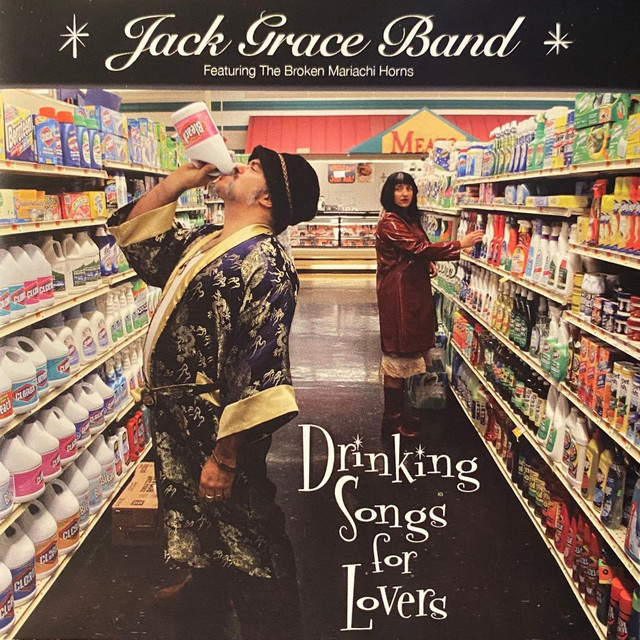
Jack Grace 2: Drinking Songs For Lovers

Still one of the hardest working men in the business, Jack Grace’s latest album confirms his deserved title as reigning Martini Cowboy. Drinking Songs For Lovers was quietly released last year, as might be expected for an indie release, but was immediately hailed by legendary New York City deejay Vin Scelsa for its excellence. Not bad for a year full of sensory overload.

The production is crisp and the musicianship is tight, from Jack’s multitude of guitars to Daria’s bass; she even gets to do a smooth lead vocal on “Drank Yourself Into A Corner”. The Broken Mariachi Horns (so-billed) build on the Tex-Mex flavor of his last album, particularly on “So Ugly” and “Haven’t Had A Birthday”, and even provide a soulful Stax feel on “True Tonight”. (You want legends? How about John Sebastian and Earl Poole Ball, both on this album?)

As the title would suggest, the songs continue the tradition of country songs about drinking, but without ever sounding redundant. Music is supposed to be fun, so the many songs about overindulgence provide clever wordplay designed to incite whoops and hollers. And it’s amazing that nobody else—country, Western or otherwise—has attempted to write a song about “The Worst Truck Driver”. (At the risk of spoiling it, here’s the best line: “Your stuff would get there faster if you left it on the street.”)

But despite the fun and games, reality hits on the last track, a sentimental tribute the sadly departed Drew Glackin, whose pedal steel can be heard just as the album ends. The sentiment is heartfelt, and the message is universal.

You need a sense of humor to enjoy Drinking Songs For Lovers, so if the lyrics bug you, concentrate on the music instead. That said, the cover is a scream.

Jack Grace Band Drinking Songs For Lovers (2010)—3

Monday, March 14, 2011

Elvis Costello 29: National Ransom

Elvis’s flirtation with bluegrass on Secret, Profane & Sugarcane proved to be much more than that once he took the show on the road. Several new songs came to fruition, and having taken the newly christened Sugarcanes back to the studio with T Bone Burnett at the helm, he emerged with National Ransom, a much more cohesive work than its predecessor.

The sheer variety of sound and style certainly makes it more interesting, with lots of nooks and crannies to hide the details. He hasn’t put out an album this, dare we say, eclectic since Spike. While that album—also a T Bone Burnett production—flirted with Celtic and New Orleans influences, much of National Ransom is colored by country and bluegrass instruments, with “pre-war” and Western swing being the predominant genres.

Thankfully, any and all drums are provided by Pete Thomas, and Steve Nieve is allowed to contribute some piano and organ here and there. The raveup title track has some new alt.country elements, as does “Five Small Words” and the truly catchy “I Lost You”, yet it’s not a stretch to hear these played by the Imposters. And good luck not getting swept up by the twisted Merseybeat of “The Spell That You Cast”.

“Bullets For The New-Born King” shows off his guitar prowess, those little hands of concrete finding gentle parts to play. Even more effective is the moving “One Bell Ringing”, with its horn parts reminiscent of Joni Mitchell’s jazzier albums. Other tracks seem familiar; “Stations Of The Cross” borrows heavily from “My Dark Life”, while “Church Underground” appears to be a development of what started in “Just Another Mystery”. “That’s Not The Part Of Him You’re Leaving” follows in the R&B/soul tradition of The Delivery Man and The River In Reverse, while “My Lovely Jezebel”, despite the presence of Leon Russell and Marc Ribot, doesn’t quite make it.

Then there are songs that sound like they come from another time or place, like “Jimmie Standing In The Rain”, which would have fit on Spike, and the charming “A Slow Drag With Josephine”, with its closing whistle that reminds us of the Star Wars cantina scene. He’s been trying to write the big send-off of “A Voice in The Dark” for years, and he’s finally nailed it. Meanwhile, “You Hung The Moon” is a lovely crooner, even despite the subject matter.

In fact, some of these lyrics are so dense it’s not always clear what he’s on about, while others, like the clunkily-titled “Dr. Watson I Presume” are a little too obvious, but at least that one has a decent chorus. “All These Strangers” has potential, but takes so long to navigate the twists and turns of the melody following all the words.

At over an hour long, National Ransom was considered a bona fide double album, but he wasn’t done yet. Those who ordered it directly via his website had the option to receive the four-song National Ransack EP, later issued only on vinyl. Along with two excellent originals, a cover of “Big Boys Cry” by Bobby Charles and a surprising remake of his own “I Don’t Want To Go Home”, previously heard only in demo format on one of the My Aim Is True reissues, make it an essential companion to the album proper.

Elvis Costello National Ransom (2010)—3

Friday, March 11, 2011

Neil Young 43: Le Noise

Recorded live in a big room, mistakes and all, Le Noise gets its title from producer and fellow native Canadian Daniel Lanois—a man whose production style is a matter of taste for people, so that much of the album’s success or lack thereof is dictated by their opinion of him.

This is about as “solo” as a Neil album can be, for it consists only of his voice and guitar, subsequently run through a variety of effects. There are no drums or bass; any rhythm comes solely from his Gretsch or whatever loops have been dictated in the mixing process.

“Walk With Me” sets the tone, musically and lyrically, his slashing modal D chords providing the base for a plea or a dare. “Sign Of Love” comes from the same mold, something of a musical sequel to “Cinnamon Girl”, with an equally mysterious object of affection. The mood slows a bit for “Someone’s Gonna Rescue You” without being redundant, but a true departure comes in “Love And War”, a pretty straightforward statement of purpose as he’s ever done, performed on an acoustic.

One of the more challenging tracks is “Angry World”, starting with its sampled vocal snippet that brings to mind “One Of Our Submarines” by Thomas Dolby. The performance is incredibly rough, and a little dissonant—even for Neil—but it soon wins over. “Hitchhiker” provides another piece of autobiography, a daring litany of his past drug use, set to a melody previously heard in “Like An Inca” on Trans. An acknowledgement of his family and lost friends underscores how many of his peers and collaborators he’s survived. The acoustic returns for “Peaceful Valley Boulevard”, the track most typical of the Lanois sound, with a mysterious mythology to match. A cross between ecological concerns and personal improvement is the theme behind the oddly effective “Rumblin’”.

Like many Lanois projects, the album seems to be best suited for listening on cold, dark nights, or maybe accompanied by the full moon under which Neil tends to record. (The sessions were also filmed, giving an intimate glimpse into the creation of each track. Unfortunately, the occasional glimpse of Neil at a piano or his pump organ only has us wondering how many outtakes are in his growing vault.) Le Noise is not the easiest listen, but like most of his darker material, it is ultimately rewarding, and we can be happy that this old man is still in touch with his personal muse.

Neil Young Le Noise (2010)—4

Wednesday, March 9, 2011

David Bowie 33: Reality

Almost as quickly as ever before, Bowie was back with another new one, with much of the same band and production crew as on the satisfying Heathen. But while some have hailed Reality as a masterpiece, these ears were not nearly as wowed. The ingredients generally don’t add up and the covers—an unrecognizable “Pablo Picasso” by Jonathan Richman and “Try Some Buy Some” by George Harrison via Ronnie Spector—don’t seem to fit anywhere.

Something about “New Killer Star” manages to sound like a typical Bowie album opener, its jaunty meter belying the lyrics that seem to reference the recent attack on the World Trade Center. “Never Get Old” crosses the moods of Never Let Me Down and Outside, and it’s an odd transition into the depressing but touching lament of “The Loneliest Guy”. “Looking For Water” portends a doom that also may or may not be inspired by the aftermath of 9/11, while the tension in the opening verses of “She’ll Drive The Big Car” doesn’t last through the different chorus sections.

“Days” isn’t the Ray Davies song, which is a shame, since he could probably nail it. One of the more teasing tracks is “Fall Dog Bombs The Moon”, with its straightforward guitars, bass, and drums riding a stop-and-start rhythm. The title track piles a lot of heavy sounds into a small space, making the lengthy closer “Bring Me The Disco King”, with its quieter jazz backing, easier to swallow. (As with Heathen, the initial release included a bonus disc, this time with three extra tracks: the very synth-pop “Fly”, the basically unfinished “Queen Of All The Tarts (Overture)”, and a re-arrangement of “Rebel Rebel” apparently recorded for a Charlie’s Angels sequel. Along with some remixes, these were included on the expanded CD along with two covers: the Kinks’ “Waterloo Sunset” and “Love Missile F1-11” by Sigue Sigue Sputnik.)

Reality isn’t very exciting, no pun intended, but ultimately the good outweighs the bad. But Bowie was a trouper, so when he was excited about something he promoted it. First, he performed the album start to finish live, and broadcast via satellite the week before its release. A DVD of the event was added to an overseas “tour edition” of the album the following year, and became a Record Store Day album of its own sans visuals two decades later. Ready, Set, Go! presented the entire show, bolstered the encore of “Hallo Spaceboy”, “Afraid”, and “Cactus”.

The subsequent tour was one of his better ones, covering all the highlights of his nearly forty-year career, until a health scare forced him to cut it short. The CD version of A Reality Tour (which had already been a DVD) shows off a terrific band, good sound, and an extremely cheerful singer—particularly in the stellar duet with Gail Ann Dorsey on “Under Pressure” and a mesmerizing acoustic arrangement of “Loving The Alien”—yet suggested something of a finale for such a wild career. It was just as well; outside of a few guest appearances and the occasional catalog update, he stayed silent for his longest stretch in decades. Nine-plus years without new music had us thinking that he really had retired, yet, as much as we’d missed his input, something told us he was happy where he was. Finally.

David Bowie Reality (2003)—3
2007 limited 2CD edition: same as 2003, plus 8 extra tracks
David Bowie A Reality Tour (2010)—
David Bowie
Ready, Set, Go! (Live, Riverside Studios ‘03) (2025)—3

Monday, February 7, 2011

Bob Dylan 51: The Witmark Demos

Perhaps not to follow any release pattern except to accompany the box set of the mono versions of his albums, the next Bootleg Series came from a specific yet fruitful early period in Bob’s career. Recorded largely as publishing demos to ensure proper royalty payments, The Witmark Demos presents a variety of Dylan originals played simply to get them copyrighted. And since he was coming out with new material faster than he could put them on his albums, this enabled other singers—fellow folkies, mostly—to borrow an otherwise unknown Dylan composition for their own releases.

With the exception of the handful of tracks that had appeared on previous Bootleg Series volumes, these are not merely carbon copies of songs on his albums. Words change and arrangements are simpler, to the point where they could be considered alternate takes. He throws in the occasional aside and isn’t careful about precise tuning, as these are performances, not sessions, and certainly up until the last 1964 recordings, were merely “official” versions of the latest additions to his coffeehouse setlists.

Obviously not everything was recorded for the express purpose of having people cover them. A song like “I Shall Be Free” (different from the version heard on Freewheelin’) was most likely laid down so that no other basket-passer could take the song and make it his or her own. (Bob knew all too well how easy it was to appropriate somebody else’s song.) “Boots Of Spanish Leather” shows how close he was to its inspiration, and “Girl From The North Country”, which immediately follows, demonstrates how he was able to dilute his true feelings into two different songs based on the same borrowed melody.

Many of these tracks had indeed snuck out as bootlegs over the years, so it’s nice to have some of them placed in the canon within context. But alternate takes of familiar songs aren’t enough to guarantee sales, so the inclusion of fifteen songs making their first official debut makes The Witmark Demos even more exciting. A few of these fall into the “protest” category, such as “The Death Of Emmett Till”, but it’s always interesting to hear “Tomorrow Is A Long Time” and “I’ll Keep It With Mine”, two songs that were never really captured in the studio to the composer’s taste. (Or maybe he was too close to them.) Even “Baby Let Me Follow You Down”, which he didn’t write, had evolved from its original recording to include new verses. One song that stands out is “Gypsy Lou”, simply because it’s the type of thing he’d already left behind. It could be that by recording it, he was hoping for some of that publishing bling. Which only confirms what people have said all along: he’s a pretty smart guy.

Bob Dylan The Witmark Demos: 1962-1964—The Bootleg Series Vol. 9 (2010)—