 It’s hard to talk about Tommy. The album, songs and concept were a big gamble that paid off thanks to the power of the performance, making the band stars. The newly converted shouldn’t be surprised to find themselves drawn into the murky plot, sympathizing for the poor boy. They would do well to avoid the 1975 film; despite full involvement from the band, the lurid images and sheer ugliness of the characters will permeate your thoughts to the point that subsequent plays of the album will be tainted.
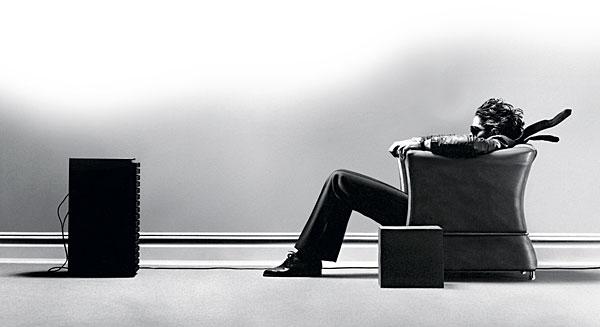
 Nonetheless, the first notes of the “Overture” bring to mind the old Maxell tape commercial with the guy blown back in his chair. It’s an incredible, impressive piece of music for a 23-year-old kid to have put together. “1921”, called “You Didn’t Hear It” on the US release, is a very pretty song, even if we don’t know who’s talking which line. (Even the libretto doesn’t help matters much.) With “Amazing Journey” we finally hear Roger’s voice. The song serves as more commentary than plot development, then “Sparks” crashes in before sliding into the familiar theme first heard on “Rael” from Sell Out. “Eyesight To The Blind” is a pretty sneaky way to get one of Pete’s favorite Mose Allison blues covers into the plot, and becomes a Who song in the process. (It sets up “Acid Queen”, which for some reason doesn’t follow until the next side.)
“Christmas” crashes into side two, redeemed by the “Tommy, can you hear me?” section and the arrival of the “See Me Feel Me” theme. “Cousin Kevin” is just as frightening as we’d expect from John, and the mood darkens with the further abuse of the “Acid Queen”. “Underture” is basically a ten-minute extension of “Sparks”, and if you can listen past the first four minutes without zoning out, it’s quite rewarding. (Pete’s original sketch sequence listed several links to illustrate Tommy’s experiences via pinball, his frustrated parents’ violence and familial abuse; more than likely these tracks would have been excerpted from “Underture”.)
Side three begins with Tommy’s night under the sick supervision of Uncle Ernie, an experience that’s thankfully wiped away by “Pinball Wizard”. Written as a joke, without any artistic impetus outside of getting a good review, it may be one of the best songs on the album. “There’s A Doctor” is a 20-second pause to the next great song, “Go To The Mirror”. It works on several levels—good dialogue, powerful backing track and fantastic dynamics. The faster stroll through “See Me Feel Me” and the first appearance of “Listening To You” keep it moving. “Tommy Can You Hear Me” goes on far too long, on the way to “Smash The Mirror”, a jazzy composition that teasingly ends just as it gets interesting. “Sensation” combines flower power and Meher Baba into a song that he’d rewrite much better down the road.
“Miracle Cure” kicks off side four, possibly the least satisfying portion of the album. “Sally Simpson” works as a morality tale outside of Tommy, while “I’m Free” would eventually move up to better illustrate the cure. “Welcome” comes out of the same hippy-dippy cloth as “Sensation”, with some interesting ambience along the way. But just as we’re settling in, “Tommy’s Holiday Camp” blasts everything with color, followed by the epic but ultimately anticlimactic ending in “We’re Not Gonna Take It”: his audience revolts, Tommy regresses, but then what?
Due to varying CD standards and tape availability, it wasn’t until 2003’s Deluxe Edition — the fourth CD reissue in the history of the format — that a “definitive” reproduction was available, yet people still argue about it. Disc One presents the album in its original 1969 mix, and the 5.1 SACD surround mix includes some extra elements, like a slightly longer “Sparks” and an extended “Pinball Wizard”. “See Me Feel Me/Listening To You” is finally indexed as the final track, though Pete had to be persuaded not to swap “Welcome” and “Tommy’s Holiday Camp”. The short second disc includes negligible instrumental outtakes and some (but not enough) of Pete’s demos, but gets points for including the long-missing “Dogs Part Two” B-side and a superior studio version of “Young Man Blues”. “Tommy Can You Hear Me” appears as an electric instrumental with an ending that seems to fit the “violent” plot point; the otherwise discarded “Trying To Get Through” has a similar ending. Most of the demo choices used here are odd, being either short or ones that had been available before. “Amazing Journey” appears stripped of the futuristic effects and backwards loops, as heard on the bootlegs, that truly illustrate both the journey and Pete’s interest in electronics.
Ten years later, having already given the “Super Deluxe” treatment to a couple of their other albums, Tommy got a fifth rollout, with yet another remaster of the original LP, a 5.1 version on Blu-ray, a disc with all of Pete’s demos (finally, plus “Trying To Get Through” and “Young Man Blues”) and another disc presenting so-called “live bootleg” performances of the album, mostly from 1969, but some from 1976. (A two-disc version was also released, containing the album and the bootleg disc.) Because a thick book and poster were involved, fans had to shell out $100 and rising for it.
All of this activity detracts from the original story, which grew out of the band to have a life of its own. Tommy is still an incredible album, without which Pete couldn’t have gone on to write some of his absolutely finest songs. (We can’t stress this enough: you’re better off without the movie. Stick to the album.)
The Who Tommy (1969)—4
2003 Deluxe Edition: same as 1969, plus 17 extra tracks
2013 Super Deluxe Edition: same as 1969, plus 46 extra tracks
how would you compare and contrast tommy to american idiot?
ReplyDeletenot in regard to music/ability of the musicians, because that is really up to the listener.
but in how the concept worked, how truly reflective each album was for it's time.
dick
I've only heard the Green Day album once, around the time it came out, though I do have a copy of it somewhere. I remember being impressed by the dynamics (despite how much I thought "Boulevard" sounded like bad Avril Lavigne) and thinking I needed to listen closer. So eventually I will.
ReplyDeleteAs for comparing it to Tommy, I'm at a disadvantage because I first heard Tommy while reading the libretto, and I didn't have that opportunity with the Green Day, so I don't know what the story is there. But while GD couldn't have done their album without the Who to do it first, they also couldn't have done it without a few albums' worth of experience under their belt. It's obvious they've matured, for lack of a better word.
I agree with what you say about the movie. But one thing the movie does have going for it is that it explains -- with no dialogue, as I remember, only images -- the backstory of Tommy's father. For that reason, it helped me better understand the plot of the record.
ReplyDeleteEvidently, the band ran out of time and money before the album could be completed to Pete’s satisfaction. For me, at least, that was an advantage. I enjoyed filling the gaps with my own imagination. We know that Tommy encountered the acid queen, his sadistic cousin and his pedophiliac uncle, but what were the results? What is happening during the “Underture”? Without any access to Pete’s description, it was up to the listener. It also helps that the music is catchy, accessible and rocks hard. Daltrey’s studio vocals improved a great deal. The one thing that bothers me a bit is Townshend making pinball the “sacrament” of Tommy’s healing, which cheapens the idea. My interpretation of the ending is not that Tommy regresses. At the end, having lost all, he finds God.
ReplyDeleteAs I’ve said elsewhere, I also agree that the movie is to be avoided. I saw it at the age of 18 in the theater. It was overwhelming at that time. The choice of Ken Russell to script and direct (not Townshend’s idea) resulted in the gaudy luridness of the film (based on a peek of a few stills, his next project, “Lisztomania”, makes “Tommy” look subtle and tasteful). The “Acid Queen” sequence with Tina Turner is appropriately scary and Elton’s “Pinball Wizard” is a lot of fun. One thing I did think was clever was Russell’s use of different colors to symbolize each of Tommy’s traumatic experiences, then merging them into white upon his healing. His ending of the film corresponds with mine.
I just realized that this year is the 50th anniversary of the film. No one seems to be rushing to do a special remastered Blu-Ray 5.1 super deluxe reissue.
As for the soundtrack, also avoid. Everyone did a good job, except for one guy. Russell cast his pal Oliver Reed. That would have been fine if he had chosen someone else to dub his vocals. The man COULD NOT SING WORTH A DAMN. His bellowing destroys the movie. My personal version of hell would be me trapped with him and Pierce Brosnan singing duets for all eternity. It’s not like you can skip over his songs, so just forget it. I read somewhere that Pete got so burned out by working on the soundtrack that he relapsed into the angst and alcoholism that led to the songs on the “By Numbers” album. It’s tempting to blame Reed.
I also saw the play on Broadway. It WAS entertaining, especially the flashy “Pinball Wizard” sequence. The storyline was altered. The one thing they did get right was the character of Uncle Ernie. Both Moon and Phil Collins played the character for laughs, which was so wrong. In the play, he’s a darker, tortured figure. In the second act, Townshend uses Tommy to satirize his own arrogance and callowness as a twenty-something rising rock star. I got that and was amused, but someone not knowing anything about Pete might not have. I really didn’t like the ending. Townshend changed it from a spiritual experience to something akin to a soap opera finale.
Musically, fans of the original album might not be happy. For one thing, Townshend included a new song, a horrible, stereotypically “Broadway” duet called "I Believe My Own Eyes". This serves the same purpose as "Could We Start Again, Please?" does in the stage version of “Jesus Christ, Superstar” – something that could be taken out of context and made a hit single on adult contemporary radio. The biggest change, of course, was the sound. Hearing The Who’s music played by a Broadway pit band was going to inevitably be disconcerting to old fans. All the power was wimped out. Of course, one couldn’t have booming arena rock in the intimate setting of a Broadway theater. I think that a happier medium could have been found. I enjoy seeing musicals. However, with the exceptions of “..Superstar” and “Godspell”, I don’t like listening to the music independently. I especially recommend not doing that here.