Friday, December 12, 2008

Beatles 19: Rock ‘N’ Roll Music and Love Songs

While the Beatles’ individual recording contracts expired in 1976, EMI retained the rights to the band’s recordings, and so began the next wave of sporadic catalog raidings. But now they had the added marketing challenge of getting fans to buy songs they had already. So each of the original singles—which had never been deleted—got a shiny new picture sleeve, and the Rock ‘N’ Roll Music collection came out with “Got To Get You Into My Life” backed with “Helter Skelter” as a single, just in time to cash in on a TV movie about the Manson trials.

In a year where Paul was defending his tendency toward silly love songs all the way to #1, here was a two-record set designed to prove that the boys could rock. Funnily enough, the bulk of the songs come from 1963 and 1964, when they were considered a “pop combo”, with a handful of much “heavier” songs on side four coming from the later years. Moreover, many of the songs were covers. For collectors, only a few songs were repeated from the Red and Blue albums, plus this was the very first LP appearance of “I’m Down”; British fans might have appreciated the inclusion of the entire Long Tall Sally EP. Purists cried foul at the contemporary mix by George Martin, but the real crime was the artwork, which leaned too close to ‘50s Happy Days nostalgia. John had supposedly offered to do a cover, yet Capitol declined, which is a shame. (The album was later split up into two budget LPs with new but nearly identical covers, and sold pretty well in the wake of John’s murder.)
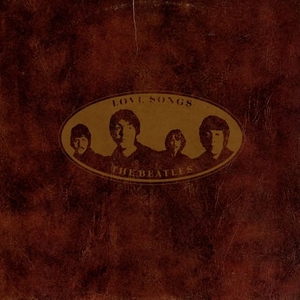
Another two-record rehash appeared in 1977, and just in time for Christmas too. Love Songs was to serve as the other side to the rock ‘n roll, but the novelty was starting to wane. Eight out of 25 tracks were on the Red or Blue albums; for the Brits, “Yes It Is” and “This Boy” were making their LP debuts. The selection was incredibly random-seeming, and come to think of it, picking out specific Beatle tunes as examples of love songs is about as logical as picking rock ‘n roll songs. The packaging had a faux-leather motif, and a thick book with all the lyrics in calligraphy added to the candy bar/photo album idea that had been beaten into the ground already by Chicago. The famous Richard Avedon photo on the emblem, gatefold and poster was retouched so Paul’s head is bigger than the others (he being the only Beatle still signed to EMI in 1977).

Both albums garner a satisfactory rating solely on the basis of the music within. Neither of these collections has been retooled for CD, though each could fit onto a single disc, and probably never will be. Nor should they be.

The Beatles Rock ‘N’ Roll Music (1976)—3
Current CD equivalent: none
The Beatles Love Songs (1977)—3
Current CD equivalent: none

Wednesday, December 10, 2008

Paul McCartney 7: Wings At The Speed Of Sound

Somehow Paul managed to throw together another album in between touring various countries around the world. The packaging on Wings At The Speed Of Sound wasn’t as lavish as on its predecessors, except for the custom labels, and he gave half the space on the rest of the album to the other band members. He’d been trying to prove to the world that Wings was a band for five years, and now he had the clout to do it.

“Let ‘Em In” is an awfully tedious song that managed to be a hit anyway, and we’re still not sure why it works. Most of the people mentioned are McCartney family members. Denny Laine sings “The Note You Never Wrote”, a spooky tale that is interesting despite itself. The jaunty “She’s My Baby” follows, and it’s also grown over the years. “Beware My Love” fades up from this, with an early acoustic vocal section as a diversion, then wham! This one was made for the stage. It’s got a relentless, driving power to it, and the band sounds great. “Wino Junko” is Jimmy McCulloch’s second, and ultimately, last writing contribution to Wings. Both songs warned against drug abuse; considering he would die of an overdose within two years it’s odd he didn’t take his own advice.

“Silly Love Songs” has 1976 slathered all over it, and is one of those songs you can’t help liking. The bass line pulls you right along, and all the sections weave nicely at the end. This is Paul sticking his tongue out at the critics, and getting a blockbuster #1 hit in the process. Linda sings “Cook Of The House” to nobody’s pleasure but Paul’s, followed by Denny’s own “Time To Hide”, which would also work well on stage; another stomper with heavy wah-wah guitar. Joe English gets to sing “Must Do Something About It”; he’s about as unique a singer as he is a drummer. (It’s interesting to see which songs Paul kept for himself, isn’t it?) “San Ferry Anne” is insignificant, and simply refuses. But “Warm And Beautiful” is another sneaky underrated one, extending the “Maybe I’m Amazed” theme both musically and lyrically. An elegant if anticlimactic end to a schizophrenic album.

A world tour was underway when this hit the stores, and the setlist leaned heavily on this and Venus And Mars. The best songs on stage were also used well as hit singles. Wings At The Speed Of Sound was a monster hit, but was also an obvious rush job, and has not improved with age as a whole. Paul had started to follow trends instead of setting them, so that increasingly his albums didn’t transcend eras or genres as they depended so much on contemporary production styles.

The first CD version of the album included three anachronistic bonuses: the B-side “Sally G” and both sides of the Country Hams single, all recorded in Nashville in 1974 and originally released the same year. These have since been appended to Venus And Mars, so the bonus audio on 2014’s Speed Of Sound Archive Collection is entirely previously unreleased. At 21 minutes, it’s also too short, but we get piano demos of four songs, Paul’s guide vocal for “Must Do Something About It” and, most interestingly, a take of “Beware My Love” with John Bonham on drums. At first he seems restrained, but once that foot starts going you know it’s him.

Wings Wings At The Speed Of Sound (1976)—3
1989 CD reissue: same as 1976, plus 3 extra tracks
2014 Archive Collection: same as 1976, plus 7 extra tracks (Deluxe Edition adds DVD)

Tuesday, December 9, 2008

Ringo Starr 5: Blast From Your Past

Just as John saw out his Apple contract with a hits collection, so did Ringo. After all, he had a lot of hits, and some hadn’t even been on albums—yet.

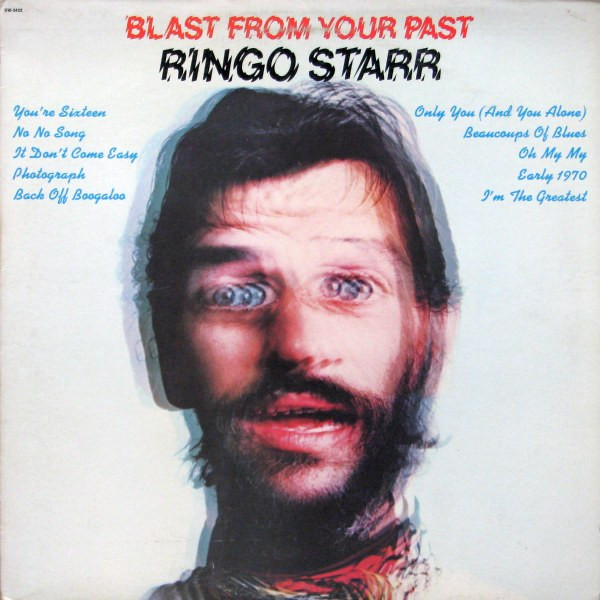
Blast From Your Past is pretty solid, starting with “You’re Sixteen” and “No No Song”. “It Don’t Come Easy” sports a terrific George Harrison production, and if you listen closely you can hear the backup singers chant “Hare Krishna” under the guitar solo. “Photograph” is the perfect follow-up, right before the noisy, goofy, and still impenetrable “Back Off Boogaloo”, which may or may not be about Paul.

Side two starts oddly, with “Only You”, a song we never remember hearing on the radio ever despite it hitting #6 on the charts. “Beaucoups Of Blues” was an American single as well, and the best song from that album. “Oh My My” was indeed all over the radio in those days, and somebody did the right thing by including “Early 1970”, the B-side to “It Don’t Comes Easy” which presents a fairly accurate State of the Beatles address that year. Finally, “I’m The Greatest” should have been a hit, or at least a single, and works just as well as a closer as it did an opener on Ringo.

If you really couldn’t live without any Ringo albums in your collection, Blast From Your Past would do just fine, though it was just over half an hour long to begin with. Even the packaging stood out, with a bright red apple on both labels and full lyrics on the inner sleeve. However, the originally standalone singles have since been added as bonus tracks to two of the albums when they were released on CD, making this less worth the dough or effort. But everything on this album was eventually included in 2007’s more expansive Photograph, which purported to be “The Very Best Of Ringo Starr”, bolstered by “Snookeroo” and “Goodnight Vienna” from that album and a further handful of tracks from three decades’ worth of his post-Apple albums. Liner notes attempted to provide info about who played what, along with Ringo’s commentary on each track, whether he remembered anything about them or not. (It was also released in a set with a DVD containing promo videos of six songs, and one rare commercial.) Only collectors need grab 2014’s Icon collection, part of Universal Music’s ongoing series of generally unnecessary compilations.

Ringo Starr Blast From Your Past (1975)—3½
Ringo Starr
Photograph: The Very Best Of Ringo Starr (2007)—3

Monday, December 8, 2008

John Lennon 8: Shaved Fish

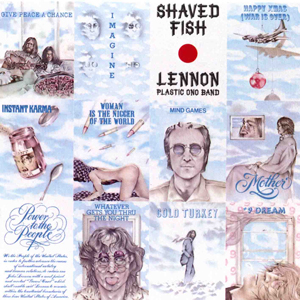
John had made some mutterings about a new album in 1975, but never got around to recording anything. Instead, he stayed home and let his contract finish with a hits collection. Shaved Fish was the first gap-filling Lennon compilation, and the one that is still the model for all the others that have come since. What we have here is a very well-rounded look at John’s solo career, which at the time of original release was only six years long. (Each of the songs had been singles, although “Stand By Me” was not included.)

The idea of bookending the album with short, different excerpts of “Give Peace A Chance” is interesting, but most of us would prefer to have the complete single version. After an almost pastoral opening, it’s jarring to have “Cold Turkey” blast through one’s head. John was irritated that the Beatles didn’t want this to be their single—and can you blame them?—but it’s still a key document of his autobiography in song. “Instant Karma!”, distorted as it is, is still a joyful number, and a strong candidate for anyone’s fantasy late-1970 Beatle album. “Power To The People” always seemed out of place, though it’s intriguing to hear him change his mind about revolution yet again. Side one ends with the single edits of “Mother” and “Woman Is The…”, while side two is all album tracks with the exception of “Happy Xmas (War Is Over)”. Since 1980 this, like “Imagine”, has come close to wearing out its welcome every December, but it’s still such a nice song with such a neat production (listen for the stings playing “Silent Night” over the second chorus). Several folks have recorded their own carbon copy versions, but there’s no beating the original. The fade here is smothered by a cacophonous segment of “Give Peace A Chance” from the 1972 One-to-One concerts. (And if you’re keeping score, “Whatever Gets You Thru The Night” appears in a slightly shorter single edit.)

In 1975 we had no idea this would be his last release for five years, nor would we imagine it would be the second to last release in John’s lifetime, which only adds to its stature. It is very convenient to have these singles here, for they add to the flow of the running order. Other compilations since released are more complete, but this still was the first. (It fits comfortably on one side of a 90-minute blank tape too, which is also convenient.)

John Lennon Shaved Fish (1975)—4

Friday, December 5, 2008

George Harrison 6: Extra Texture

Arriving barely ten months after the Dark Horse album and tour, it was almost a shock to hear from George so soon. Extra Texture came complete with two grinning photos (one of which was knowingly captioned “OHNOTHIMAGEN”) and a cover designed to resemble the feel of a basketball, suggesting that he was enjoying this cockamamie business after all. However, that’s not the impression one gets listening to the actual album.

Easily, the best track is “You”, left over from the same Ronnie Spector sessions that had spawned “Try Some Buy Some”. This is an incredibly simple song, but it’s so pretty and such a great production it’s a success. (And he knew this too, which is why he added another thirty seconds of it at the start of side two.) From there, it’s straight downhill, hitting tree trunks and rocks along the way. “The Answer’s At The End” is another Frankie Crisp-inspired plea for understanding that is buried, like the rest of the album, underneath a plodding arrangement. “This Guitar (Can’t Keep From Crying)” is the first of his occasional rewrites. It’s very similar to the far superior “While My Guitar Gently Weeps”, but pales in its shadow, being much more forced with a burping Moog bass part borrowed from “Jive Talkin’”. “Ooh Baby (You Know That I Love You)” is an inaudible salute to Smokey Robinson, and while “World Of Stone” aspires to emulate the Spectorisms of All Things Must Pass, it misses widely.

The aforementioned “A Bit More Of You” fades into “Can’t Stop Thinking About You”. Perhaps he was so consumed by the one of whom he was thinking that he couldn’t write better lyrics. “Tired Of Midnight Blue” is a step in the right direction, but its arrangement sounds so much like the rest of the clinkers here that it’s too late. “Grey Cloudy Lies” also can’t get us out of the driveway, so we’re stuck with the in-joke of “His Name Is Legs (Ladies & Gentlemen)”. The protagonist—and guest vocalist—is supposed to be one hilarious fellow, but this does nothing to illustrate it, taking six minutes to boot.

Most of the songs on Extra Texture are upbeat in a smooth soul manner, with a lot of romance on his mind. But outside of “You”, there is little of any lasting value on this collection. He neatly finished off his obligation to Apple, and said goodbye with an eaten-away logo. Despite its occasional subtitle (“Read All About It”), the album doesn’t inspire much interest today. When the Harrison estate finally got around to reissuing it in the next century, the only value-add even they could find was an unreleased re-recording of “This Guitar (Can’t Keep From Crying) produced by the poor man’s Jeff Lynne, Dave Stewart.

George Harrison Extra Texture (1975)—2
2014 Apple Years reissue: same as 1975, plus 1 extra track

Wednesday, December 3, 2008

Paul McCartney 6: Venus And Mars

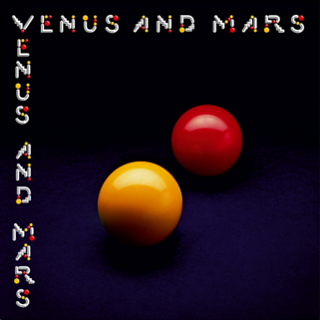
His confidence restored (and Capitol’s too, as they re-signed him with a pile of cash they didn’t offer the Other Three after Apple folded), Paul picked up a lead guitarist with a similar name to the last one and two drummers in rapid succession. Venus And Mars is more of a rock album, and had a little more input from the new members. (He also reverted the band name to just Wings and racked up a pile of 45-only tracks that would be welcome in an album context.)

The proceedings start like his concerts would, with the almost pastoral title track colliding into the stomping “Rock Show”. Can you name any other song that mentions Jimmy Page? The “oi” section, silly as it is, still brings a smile and the piano part at the end almost makes up for the voiceover. “Love In Song” sneaks up on you, and it’s achingly gorgeous. It’s one of those underrated classics that he manages to put on every album. “You Gave Me The Answer” fits in with his music hall tunes from ‘67 and ‘68, and is real sweet. From there we go to the Marvel Comics world of “Magneto And Titanium Man”, and one of his best album sides ends with the FM rock of “Letting Go” (there’s that Rickenbacker bass).

Side two isn’t nearly as strong. “Venus And Mars (Reprise)” puts us in space with the “Spirits Of Ancient Egypt”. Denny Laine sings this one, and it makes absolutely no sense, but it was designed to Rock so that will have to do. Jimmy McCulloch sings his own “Medicine Jar” (more on that topic later), a very heavy tune. “Call Me Back Again” tries in vain to recapture the “Oh! Darling” sound; the production makes up for it. If he wrote it just to play it on stage, that makes sense, since he was doing all he could to avoid the Beatles songs as much as he could. After an interminable fadeout, what sounds like a Wolfman Jack impression but probably isn’t goes from speaker to speaker right into “Listen To What The Man Said”. This is another classic McCartney song, though to this day we still don’t know who the man is or what he’s telling us. The saxophone is a lot of fun, and coming from someone who hates saxophones and Tom Scott as a rule, that means something. The panoramic ending takes us right into “Treat Her Gently/Lonely Old People”, yet another example of Paul fitting two unrelated songs together because he can. The joke at the end of this album is the theme to the British soap opera “Crossroads”, which sounds like it might as well be a McCartney melody. “And that’s basically it.”

Venus And Mars set out to Rock, so it succeeds on that score. Putting all the pieces together it makes mathematical sense, but doesn’t seem to inspire many listens these days. Paul now had enough tunes and a heavy-hitting band to take on the road for the sole purpose of ruling the coliseums for the next 18 months. Also, following the lead of Band On The Run, this one upped the ante with two posters, stickers, gatefold and lyrics; the CD didn’t have those but added some later B-sides recorded around the same time.

The Archive Collection filled in a lot of the extra work and music that led up to the eventual album, starting with the excellent “Junior’s Farm”/“Sally G” single. Both had been recorded in Nashville, along with an instrumental single released under the moniker The Country Hams. Other B-sides and single mixes are mingled with demos of “Let’s Love” and “4th Of July”, both given away to other singers, and a rocking take of “Soily”.

Wings Venus And Mars (1975)—3½
1988 CD reissue: same as 1975, plus 3 extra tracks
2014 Archive Collection: same as 1975, plus 13 extra tracks (Deluxe Edition adds DVD)

Monday, December 1, 2008

John Lennon 7: Rock ‘N’ Roll

The existence of this album necessitates some background. By the time Mind Games had come out, John was already in LA drinking heavily and trying to record his favorite moldy oldies with Phil Spector. After that went badly, he wrote the songs that became Walls And Bridges and moved back to New York. The oldies project was more or less in limbo, and this album probably wouldn’t have come out when it did if not for some further odd turns of events. But once he’d decided to finish it for good, the remainder of the recordings went relatively quickly. The result was a surprisingly cohesive mix of the LA debacle and the NY fix-it job.

“Be-Bop-A-Lula” kicks us off fairly simply. (It also happens to be one of the songs John was singing the day he met Paul.) “Stand By Me” follows; it’s this version of that has become the pop standard most people know and love. His trademark reggae-strumming style (see “A Day In The Life”) sets the pace, and he turns in one of his greatest vocals ever, cementing his as one of the best voices in rock. “Ain’t That A Shame” and “Slippin’ And Slidin’” are fantastic, and the two medleys are effective yet faithful juxtapositions, but it’s the other twisty ones that still raise eyebrows. Most, but not all, of these tracks can be blamed on Spector, who thought it would be a good idea to slow down these tunes to dirge tempo. The percussion effects, like the cowbells and that thudding sound straight out of “Rock On” by David Essex, may have worked in the ‘70s, but only annoy ears today. “Do You Want To Dance” sounds like Bette Midler, and that’s not meant kindly. “Bony Moronie” just doesn’t work at anything less than top speed. “Just Because” was Phil’s idea (John hadn’t heard it before the first sessions), but John finished it at the New York sessions, effectively saying goodbye to that crazy show business.

Rock ‘N’ Roll doesn’t get as much play as his others, mostly because it’s so disjointed and partly because it’s not insightful lyrically. But his heart is in every note, which makes it above average. He probably could have recorded five more albums’ worth of his favorite songs from his youth, but again, this didn’t turn out like he’d envisioned it, and was essentially released to combat a marginally legal bootleg. (The 2004 CD reissue boasts improved sound, a handful of photos, nothing more in the way of liner notes, and dubious extra tracks: three songs from side one of the 1986 compilation Menlove Ave. and a faded-in reprise of “Just Because” seemingly included for name-checking the Other Three.)

John Lennon Rock ‘N’ Roll (1975)—3
2004 remaster: same as 1975, plus 4 extra tracks