Tuesday, December 23, 2008

Ringo Starr 8: Bad Boy

In America, Ringo Starr was on a new record label, but they offered him a tie-in TV special, so maybe that was why barely seven months had passed before another album followed. Vini Poncia was in charge, and each band member was credited under pseudonyms, despite including Dr. John, Jimmy Webb, and Dee Murray from Elton John’s band. Beyond that, Bad Boy did not sport superstar input, nor did it sell. Nor was it very good.

Most of the album was recycled songs other people had already recorded, though “Who Needs A Heart” was one of two tunes written by Ringo and Vini. It’s fairly generic, but if Ringo had an established sound, this is it. The title track is not a cover of the Beatles cover, but another sad-sack lament of even earlier vintage, sunk further by Ringo’s insistence on singing “boy-yoy-yoy-yoy-yoy-yoy” every time. “Lipstick Traces (On A Cigarette)” is best known for being the A-side of “Fortune Teller”, both written by Allen Toussaint for Benny Spellman. “Heart On My Sleeve” had already been covered by Bryan Ferry, but it doesn’t exactly stand out. And while the contemporary remake of “Where Did Our Love Go” isn’t exactly disco, it’s still awful.

“Hard Times” continues the Ringo-by-numbers template, while “Tonight” came from a recent Small Faces reunion album (which also did not sell) and beats the tagline into the ground. “Monkey See—Monkey Do” was courtesy of schlock jazz man Michael Franks, but we should be relieved Ringo didn’t try tackle “Popsicle Toes”. “Old Time Relovin’” was the other Starkey-Poncia opus, and it has some pleasant changes and touches throughout, but it there’s a clever turn of phrase in the title, we can’t figure it out. Finally, “A Man Like Me” was a mild rewrite of a song from a children’s album written by Donald Pleasance, of all people, wherein Ringo had voiced and sung the main character of Scouse The Mouse. It’s actually kinda sweet, if syrupy.

It could be assumed that the glass of brandy on the cover tells us all we need to know. Bad Boy was about as exciting as its predecessor, and equally ignored. The TV special didn’t help a whit, being a mildly star-studded retelling of The Prince And The Pauper, mostly notable for a cameo by George Harrison. His new perm was about as ill-advised as what he was tasked with narrating.

Ringo Starr Bad Boy (1978)—2

Monday, December 22, 2008

Paul McCartney 9: London Town

Just when we were getting used to this new lineup of Wings, Paul and Linda didn’t make it through the sessions before being pared back to three. Denny Laine had been the only constant thus far, and they kindly rewarded him by including his picture on the cover and letting him sing and write more.

Much of London Town was recorded on a boat in the Caribbean where they could presumably smoke pot in peace, yet the bulk of the music still has a more continental flair to it. The title track has been described as the lost song from a Broadway show. It’s not unpleasant. One would think this has the other two guys on it, since the drums and screaming lead guitars sound too, well, polished. “Café On The Left Bank” takes us to Paris for some more foreign intrigue. “I’m Carrying” is too sweet for its own damn good. “Backwards Traveller” doesn’t do anything, and neither does the “Cuff Link” that’s about as clever as its title. “Children Children” is a nice kids’ song, but sits too close to the Michael Jackson homage “Girlfriend”. Paul wrote it for him, let him use it and began an acquaintance that would bite him in the ass in ten short years. The midsection with its nasty guitar solo salvages the tune. “I’ve Had Enough” is the first rocker here that would have worked onstage; it’s pretty pointless, but welcome.

“With A Little Luck” is too long, despite the creative use of the synthesizers. This was classic McCartney tailor-made for AM radio, except for his insistence on including the word “damn”. At the same time, “Famous Groupies” went right over most kids’ heads. It seems odd that Paul would sing about groupies at this stage in his career, not having seen one in over a decade; maybe the roadies had good stories. “Deliver Your Children” was a mild radio hit, another folk departure for Denny. “Name And Address” has a Sun rockabilly flavor to it, and though it was recorded before the death of Elvis Presley, it’s a fitting tribute. It also winds down to a halt right when it should and after the album has already worn thin. “Don’t Let It Bring You Down” does just that, sadly, and “Morse Moose And The Grey Goose” is his most pointless song since “Loup”. The first minute or so is good in a “Beware My Love” kind of way, but it just leaves the listener stranded in the middle of the sea.

With its poster, lyrics and custom labels, fans were getting spoiled with the packaging. Too bad the album doesn’t stand up to repeated listening. London Town was his longest album yet, so we get a lot of music packed into the grooves, but the recipe doesn’t seem prepared correctly. Not enough salt? The good moments were starting to become farther between, if not necessarily fewer. (The CD includes the rocking and risqué “Girls’ School”, a contemporary B-side. We will discuss the A-side shortly.)

Wings London Town (1978)—3
1989 CD reissue: same as 1978, plus 1 extra track

Sunday, December 21, 2008

Ringo Starr 7: Ringo The 4th

The regal title was supposed to be punny—this was Ringo’s fourth album of modern material, suggesting that Sentimental Journey and Beaucoups Of Blues (and of course, Blast From Your Past) didn’t count. But Ringo The 4th was actually a departure, as he eschewed the all-star (read: ex-Beatle or related) help and let producer Arif Mardin run the proceedings. There are still tons of top-line session players, though he did play the drums, augmented by Steve Gadd. He even co-wrote six of the songs with buddy Vini Poncia. But it was 1977, and that’s how we got a disco album.

“Drowning In The Sea Of Love”, a six-year-old hit for Joe Simon, gets the Philly soul approach, with the backing vocalists mixed as high as Ringo. They also dominate “Tango All Night”, which was actually released as a single in Argentina; when he intones “I-yi-yi,” you’ll be inclined to agree with the sentiment. “Wings” is one of the originals, and while it kinda rocks, we wonder whether Paul McCartney’s band had any influence on the title. His mopey delivery is just too much for “Gave It All Up”, a litany of life’s disappointments that somehow still has a happy ending. The line about sitting “with a couple of beers” is unfortunately believable, and the coda sports a motif stolen from a Bee Gees song from the year before. “Out On The Streets” manages to pick up the pace, but it’s still faceless, up until the very odd closing rap.

He gives his all for “Can She Do It Like She Dances”, but it’s still embarrassing to endure. While “Sneaking Sally Through The Alley” has nothing on Robert Palmer’s version, it actually fits Ringo okay, again, until he starts extemporizing over the fade. “It’s No Secret” is an inoffensive slice of yacht rock, and “Gypsies In Flight” is an even slower variation on the same melody. Finally, “Simple Love Song” wouldn’t be so bad if it didn’t sound so much like “Philadelphia Freedom”.

Truly, if Ringo was his best album, Ringo The 4th is barely 25% as good, or as successful. It’s a faceless album, with none of his personality, and that used to go a long way. His cachet was sinking fast, and the label didn’t pick up his option. And to think only three years before he was the hottest ex-Beatle on the charts.

Ringo Starr Ringo The 4th (1977)—2

Friday, December 19, 2008

Beatles 20: Hollywood Bowl

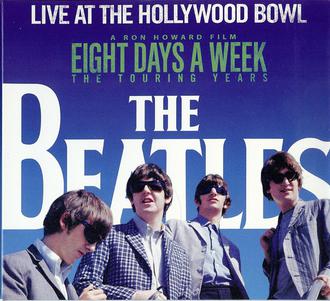
It had been common knowledge for years that the boys’ concerts at the Hollywood Bowl were professionally recorded, yet had sat in the can due to the equivalent sound levels of Beatle vocals (when the mikes worked), instruments and several thousand fans. By 1977, great strides had been made in sound separation, so George Martin sat down with tapes from one 1964 show and two 1965 shows, and managed to combine them into a fairly cohesive unit just over half an hour. Although the result of the combination was something of a compromise, thanks of the quality of the recording compared to audience tapes of other shows, The Beatles At The Hollywood Bowl has endured as a definitive document of a time long past.

Of course, there were plenty of other live performances captured for posterity, at the very least visually. The 1965 Shea Stadium concert and a few 1966 Tokyo concerts were expertly filmed and broadcast, and most of their final show from Candlestick Park in 1966 has been circulating for years. But for reasons known only to Apple, none of these have been cleared for official release, either on audio or video. (There is another entity of live recordings that have managed to sneak into the racks of legitimate record dealers. The 1962 Hamburg tapes began their interminable saturation around the same time as the Hollywood Bowl set. The first release on the Lingasong label usually gets mentioned in the official discographies; the music itself is nothing special, while it has its moments, again, as a historical artifact.)

It took nearly four full decades for the Hollywood Bowl album to be re-released, and then as a tie-in with a major motion picture helmed by Opie Cunningham. Decent-sounding bootlegs had demonstrated the occasional sloppy performance, repetition and equipment malfunction throughout each of the performances, though only the most naïve of Beatlemaniacs would expect Apple to issue a complete show from either year, at any price. Instead, the 1977 album was reissued in its original hodgepodge sequence, remixed from better quality tapes to bring out more of the music, with four extra songs tacked on at the end (one of which had already appeared on a CD single in the Anthology era). Even the original cover, with its understated charm, was changed to hype the movie, which itself was something of a misfire. (What’s more, it was released in theaters in a double feature with an audio-visual upgrade of the Shea Stadium concert film, which still remains unavailable commercially in any format.)

Nitpicking aside, the music is great, right from the abbreviated blast through “Twist And Shout”. Six of the songs are covers, songs they’d been playing for years. We can already hear waning enthusiasm on the parts of John and George, but their attitude didn’t dilute their strumming capabilities. George’s 12-string Rickenbacker dominates the 1964 tracks, and boy, does it shimmer. John always seemed to screw up the lyrics to “Help!”, but listen to Paul’s bass while he’s singing “All My Loving”, and marvel at the power of “Things We Said Today”. To this day we don’t know why, of all the songs they could’ve chosen, “Baby’s In Black” was a staple of their set, but there it is and there the new album ends—much too quickly, just like their concerts.

The Beatles The Beatles At The Hollywood Bowl (1977)—3½
2016 Live At The Hollywood Bowl: same as 1977, plus 4 extra tracks

Wednesday, December 17, 2008

Paul McCartney 8: Wings Over America

By now Paul had truly emerged as the champion, to the point where younger fans might not have been aware he was in a band before Wings. Just in time for Christmas, Wings Over America contained a blemish-free version of every song performed on Paul’s first American visit in ten years. And the crowds went wild. (Supposedly there was some studio tinkering between the recording and mixing stages, but this has not been authenticated.) It’s a good package, even if most of the songs sound identical to the album versions. The original six sides are neatly divided, with piano sections, acoustic sections, Beatle detours and “our new album”.

Appropriately the “Venus And Mars/Rock Show” medley starts it all, going directly into “Jet” when we least expect it. It’s a good rocking start to the set. Side two starts with the version of “Maybe I’m Amazed” that was released as a single, complete with extended ending. It was the best choice. “Lady Madonna” and “The Long And Winding Road” excite the crowds, before the pyrotechnics of “Live And Let Die”.

Side three is acoustic. “Picasso’s Last Words” is started, going into Simon and Garfunkel’s “Richard Cory” sung by Denny for some reason. A few more Beatle hits round out the side. Denny also gets to sing his Moody Blues hit “Go Now”, amidst some more piano songs on side four.

Side five is devoted to the new album, with four strong choices for the crowd: the hits “Let ‘Em In” and “Silly Love Songs”, Denny’s “Time To Hide” and a blistering “Beware My Love”. Side six is back to the rocking encores. “Hi Hi Hi” makes its first album appearance, as does “Soily”, a Wings live staple for years, never included on any other album.

The packaging of Wings Over America was quite complex, with custom sleeves, labels and posters, and the album as a whole is a good souvenir of a good night out. One truly gets a sense of the excitement of seeing one of the biggest bands of the Seventies that also happened to feature a Beatle. And the official Wings horn section doesn’t get in the way at all.

Its popularity among fans probably had something to do with why it was unveiled as part of the ongoing Paul McCartney Archive Collection in 2013. This time there was only a standard two-CD package with no extras, unless you bought it from Best Buy, where you got a third disc with eight slightly shaky songs recorded on the tour at the Cow Palace. That was also an extra in the Deluxe Edition box, which also added the Wings Over The World TV special on a DVD, three thick books and other ephemera. (Meanwhile, the Rockshow feature film was concurrently issued as a separate DVD.) Interestingly, after all that effort to establish Wings as an entity unto itself, the spine for the CD now plainly lists the artist as Paul McCartney and Wings.

Wings Wings Over America (1976)—3½
2013 Archive Collection: same as 1976 (Deluxe Edition adds 8 extra tracks and DVD)

Monday, December 15, 2008

George Harrison 7: Best Of and Thirty-Three & ⅓

Capitol had just begun the repackaging campaign, plus George was on his way to Warner Bros. by way of A&M. So they decided to seize the moment and exploit George’s continuing commercial status. In their minds, The Best Of George Harrison would include Beatles songs so they put seven of them on side one, none of them rare, some already repackaged. Side two includes all of his solo A-sides save “Ding Dong”, though it did include the studio version of “Bangla Desh”. Even Ringo got a full (albeit short) two sides to himself, but he’d actually had more hits. This was obviously just a quick holiday cash-in to compete with his next “real” album.

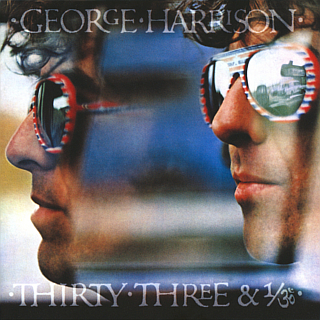
Originally intended to coincide with his 33⅓rd birthday, Thirty-Three & ⅓ was trumpeted at the time as his best album since his first. Today, it’s hard to see why. Granted, the songs are back to a tempo that gets your toes tapping, but several years on it has dated badly, just as Paul’s contemporary disco arrangements have.

“Woman Don’t You Cry For Me” may have been started in 1969, but the recording is all 1976 thump. “Dear One” is a more pleasant hymn, but the synthesizer torpedoes it. “Beautiful Girl” was intended for All Things Must Pass, and gives support for the idea that he really ought to consider the other songs he never finished for that album. “This Song” is one of his best, a fantastic defense of his writing process that, at the time, had been costing him money and leaving him in litigation. Here again is the humor that had been so lacking of late. “See Yourself” also dates from the Maharishi era, but stumbles around too much to be appreciated.

“It’s What You Value” is filled with hooks and a very enthusiastic vocal, but goes nowhere. “True Love” is soaked in what had become George’s trademark sound, but is actually a Cole Porter tune. (In all seriousness, George should be commended for exposing his listeners to all kinds of music they’d otherwise ignore.) “Pure Smokey” is a retread of the last album’s “Ooh Baby”, literally thanking God for Smokey Robinson. “Crackerbox Palace” is the other hit, and a catchy one; the arrangement for once actually enhances the song. (Notice the reference to Young Frankenstein at the end of the chorus before the third verse.) “Learning How To Love You” closes us out, and he finally gets the sound he wanted on the last album right. The jazz chords fit the vocal, and the guitar solo is virtuosic without showboating. But do you really feel like hearing the whole album again?

Besides producing others and helping out friends, George stayed busy for most of the ‘70s, and had let the public hear quite a bit of music. But the promise he seemed to exude when finally allowed to shine on his own six short years earlier seemed to dim. Despite his continued success, his laissez-faire attitude towards the pop business was about to take serious root. (The eventual expanded CD included an extra track in “Tears Of The World”, which was not only written but recorded for—and subsequently rejected from—an album four years in the future. Why it’s here and not on the expansion of that album is anyone’s guess.)

George Harrison The Best Of George Harrison (1976)—4
Current CD availability: none
George Harrison Thirty-Three & ⅓ (1976)—2½
2004 Dark Horse Years reissue: same as 1976, plus 1 extra track

Sunday, December 14, 2008

Ringo Starr 6: Ringo’s Rotogravure

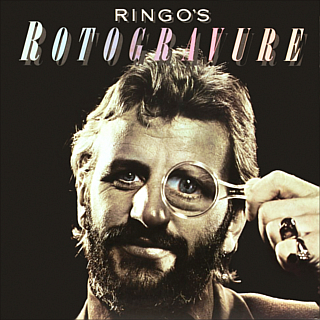
The end of the Apple label didn’t keep Ringo out of the studio for long. Taking a hint from George, he launched the Ring O’ Records imprint, which even featured a clever logo, to wean and promote new talent. But he himself preferred to sign new deals with majors instead—Atlantic in America and Polydor everywhere else—and recorded Ringo’s Rotogravure with his all-star buddies in a matter of weeks.

After a promisingly raucous blast of energy, “A Dose Of Rock ‘N Roll” limps into place with a lot of Peter Frampton wah-wah. There’s a clever quote of Bruce Channel’s “Hey Baby” at the end, but then the next track is a full-fledged cover of the tune. By now Paul McCartney was a hot ticket again, yet “Pure Gold” is hardly one of his hidden treasures. He and Linda add superfluous backing vocals, but the highlight of the track is Klaus Voormann’s bass playing. A song that does work is Ringo’s own “Cryin’”, written naturally with Vini Poncia, and sounding like an excellent distillation of Beaucoups Of Blues. (Sneaky Pete Kleinow also makes his second appearance on a solo Beatle album.) Producer Arif Mardin’s touch is most obvious on the slightly disco-fied “You Don’t Know Me At All”.

“Cookin’ (In The Kitchen Of Love)” is notable for being the only new Lennon composition (and performance) released in the second half of the ‘70s, and it’s positively flimsy. Still, we like hearing his “two thee fo” before the coda. George was represented by “I’ll Still Love You”, a slightly syrupy but still pretty ballad that dated from 1970. (He was apparently not happy with either the mix or Lon Von Eaton’s guitar solos, and added another lawsuit to the intra-Beatle pile.) Meanwhile, Eric Clapton donated the leftover “This Be Called A Song” as well as his noodling throughout, fighting for space in the mix with steel drums. As if that exotic sound wasn’t enough, a mariachi band features on “Las Brisas”, which Ringo wrote with then-paramour Nancy Andrews. “Lady Gaye” is curious, being co-written with one Clifford T. Ward, who’d had a mild hit somewhere with an unrelated song called “Gaye” and had another song called “Birmingham”, which was the musical inspiration for this. All in all, a lot of work for a piece of fluff. For no apparent reason other than to stretch the album further past a half-hour, a closing 90-second ramble called “Spooky Weirdness” isn’t exactly false advertising, but it’s also unnecessary.

Just as Goodnight Vienna wasn’t as good as Ringo, so does Ringo’s Rotogravure suffer from the Xeroxing. It wasn’t enough for Ringo to get by on his personality, and without decent songs he was lost, no matter how many of his famous friends contributed their talents.

Ringo Starr Ringo’s Rotogravure (1976)—2½