Monday, January 5, 2009

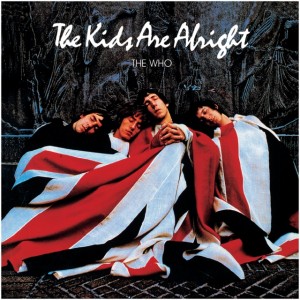
Who 13: The Kids Are Alright

Released to accompany the chaotic film, which was mostly completed before Keith died, The Kids Are Alright works as a hits album of sorts. Many of the songs have subtle differences from the album versions, and the album does bear repeat listening, making it a fan favorite since its release, as well as a great place to start.

The first thing we hear on the album is also the first thing we see in the movie—the infamous Smothers Brothers introduction to “My Generation”, complete with the explosion at the end. The screams kick in for “I Can’t Explain” from Shindig. Then we go, surprisingly, to Leeds for “Happy Jack” (which would not be revealed for many years, as the original album notes called it a Swedish TV performance, and the film used the promotional clip for the studio version). “I Can See For Miles” purports to be from the Smothers Brothers, but is really the standard mix. “Magic Bus” is listed as from the German Beat Club show; the video clip is that, but the track is the standard short version. “Long Live Rock” is a different mix to the Odds & Sods version and became the single.

“Anyway Anyhow Anywhere” is a pretty tinny but powerful showcase from Ready Steady Go. “Young Man Blues” is from the London Coliseum, and as good as the one from Leeds, with different solos. “My Wife” is John’s only contribution to the album, and an okay live version. (They never finished it as well as they started, which bugged him no end. It’s not featured in the film, and wouldn’t be seen by the public until 2008.) “Baba O’Riley” is from Keith’s last gig, and the movie reveals all the parts Pete screwed up, drunk as he was.

“A Quick One” is the best version of the song, and for years the only thing available from the Rolling Stones Rock And Roll Circus. The rest of side three is dedicated to Tommy—“Tommy Can You Hear Me”, with an extra surprise at the end, and three selections from Woodstock. “Sparks” absolutely burns, as does “Pinball Wizard”, and this “See Me Feel Me” is the only time Roger nailed it on stage. Having heard the rest of that set, these are still the best moments.

Half of side four is taken up by a meandering medley from the end of 1975. “Join Together” is unrecognizable, “Roadrunner” barely touches it and “My Generation Blues” is plodding. (The first CD version omitted this for space reasons; it was restored for the 2001 reissue.) “Won’t Get Fooled Again” is the last moment of greatness, and Keith’s last moments on stage. It takes a long time to get there.

Oddly, nothing was included either in the film or on the album from Quadrophenia; perhaps because that film was up next? Whatever the case, both film and album succeeded on giving fans lavish packages reminding them why they cared in the first place.

The Who The Kids Are Alright (1979)—4

Friday, January 2, 2009

Who 12: Who Are You

Who Are You was the last Who album Keith Moon played on; he would die two weeks after the album finally came out. Listening to the songs, one gets the impression that Pete had already used some of his better ideas on Rough Mix. Many of the songs deal with the importance of music, the result of yet another stab at Lifehouse. Pete doesn’t seem to reach any conclusions, positive or negative, and the album—while admittedly successful—is disjointed.

“New Song” crashes in with a good start, but soon ends up in a wash of synthesizers. “Had Enough” is John’s, a little too close to the Quadrophenia title. At least Roger was happy to sing one of John’s songs for a change, even if he wasn’t thrilled about the string arrangement, courtesy of Pete’s father-in-law. (This song would be ripped off in four years’ time by Asia on their first album.) “905” is also from a futuristic opera John was writing that fits just barely into whatever the Lifehouse plot was this time. “Sister Disco” has some great movements, with clever use of synthesizer with classical overtones, but to this day nobody seems to possibly understand what it’s supposed to be about. “Music Must Change” is the big statement, somewhat related to the opening track, but spread around a jazzy idea that helps set it apart from the rest of the album.

“Trick Of The Light” is one of John’s best, and perhaps the best on the album. Again sung by Roger, it appears to concern the aftermath with a hired escort, and almost poignant now considering John’s last night on earth. However, “Guitar And Pen” is easily the worst. It careens around an annoying Gilbert & Sullivan arrangement that takes too long to finish, with obnxoious vocals to match. “Love Is Coming Down” is the token pretty ballad that doesn’t quite fit Roger’s voice or the audience. Still, it’s a guilty pleasure around these parts. The title track is still classic after all these years, though if you’ve gotten used to hearing it daily on Classic Rock radio, you may have long tired of it.

As an album Who Are You hasn’t aged well, and the bonus tracks on the first reissue weren’t very revealing. “No Road Romance” is a stark Pete demo that sounds of a type with his 1975 material. An early runthrough of “Empty Glass” shows promise, yet it’s doubtful Roger would ever have sung it. The rest are alternate mixes or versions of the last three songs on side two, none very exciting.

It would have been a shame to end the band on this note, and fans still argue about whether The Who should have kept going. But they did.

About 47 years after Who Are You was first released, it made an odd selection for a Super Deluxe Edition, but even odder was what they chose to fill up six more discs and a Blu-ray with the standard assortment of hi-res mixes. (A two-CD distillation non-super deluxe edition offered the album plus a smattering of extras from the big box for those who want to spend even more money.) Glyn Johns’ original mixes (which Roger apparently hated) of seven songs appear on the second disc, along with new Steven Wilson mixes of some tracks, using Pete’s vocals in some cases and removing the orchestra on others. The third disc includes all the extras from 1996, single edits, and a pile of Entwistle demos, two of which had already appeared on a reissue of his 1972 solo album. Unlike every other Super Deluxe set from the band, none of Pete’s demos were included, which is even more maddening once you’ve sat through four more versions of “Guitar And Pen” and six of the title track. After a bootleg recording from a 1976 show where Pete noodled over the framework of that song for the first time, we hear a disc’s worth of the mostly sloppy rehearsals for their filmed appearance in The Kids Are Alright, including a not-bad version of “Run Run Run”, along with “Baba O’Riley” and “Won’t Get Fooled Again” from the film itself, plus other songs from that final performance with Keith.

However, the balance of the remainder—including two full discs—are devoted to recordings from their 1979 tour, when Kenney Jones had taken over the drums. At this point they weren’t so much promoting the album as they breaking in the new guy; plus, with The Kids Are Alright and Quadrophenia in theaters, interest in the band was high. Most of the recordings come from a show in Michigan, with some excerpts from Philadelphia. Both of these were within a week after the concert in Cincinnati where eleven fans were trampled to death, which is one reason why Roger and Pete keep asking the crowd to make more room. They play well, and Kenney has more fire than he’d show on the albums. Rabbit Bundrick covered keyboards, and they even had an unobtrusive horn section. A lengthy “Music Must Change” is an unexpected highlight, and they jam on songs that would eventually become “How Can You Do It Alone” and “Dance It Away”. These discs probably should have been a standalone release, but apparently it made more financial sense to fill up the box with it.

The Who Who Are You (1978)—3
1996 remaster: same as 1978, plus 5 extra tracks
2025 Super Deluxe Edition: same as 1996, plus 75 extra tracks (and Blu-ray)

Thursday, January 1, 2009

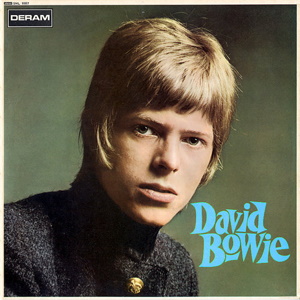
David Bowie 1: David Bowie

David Bowie has recorded many albums, to be sure, but those who began following him early in his ascent would doubtless find their reflections tinted by the man’s extravagant concert tours and public appearances. But today, outside of the grainy clips on YouTube, it’s the albums themselves that are the artifacts of a fascinating career, and that’s what we’re going to explore here.

Bowie’s career began in Mod London when he was still Davie Jones, taking him through several bands and styles before he found the right mix of his influences to stick. And even when he did find something he liked, he’d abandon it for his next album, confounding fans and irritating critics for the duration of his career.

Once he became a superstar, the work he did on his way there would be repackaged constantly, more for commercial reasons than to preserve some early glimpse of genius. Much of the Mod stuff—flop singles and demos mostly—can be found on a Rhino collection called Early On (1964-1966), but it wasn’t until he signed with the “progressive” Deram label that he started writing his own songs and trying to carve out an identity not immediately recognizable as somebody else’s image, unless you were familiar with Anthony Newley.

As it was the beginning of the Summer of Love, the contents of David Bowie are placed firmly within the genres of chamber pop and Kinksy character studies. The arrangements are loaded with oboes, bassoons, trombones, and tubas, heavy handed even for the wartime nostalgia in “Rubber Band” (soldier loses his girlfriend to the conductor), “Little Bombardier” (a lonely veteran is suspected of pedophilia), and “She’s Got Medals” (gender-switching set to the rhythm of Love’s “7 And 7 Is”). “Join The Gang” seems to poke fun at the very people he hoped would buy his records, with a manic sitar passage and even a quote from “Gimme Some Lovin’”. Chances are they weren’t impressed by “Love You Till Tuesday”, an unconvincing campaign for free love sung overly Cockney and too close to that other Davy Jones.

“Silly Boy Blue” stands out for being a decent melody and unironic lyric, as does “Come And Buy My Toys”, played simply over acoustic and bass. (Both also illustrated his interest in Buddhism.) But “We Are Hungry Men”, a sci-fi satire encouraging cannibalism to combat overpopulation, sits uncomfortably next to the more romantic “When I Live My Dream”. (The former was not included on the US LP, and neither was the overworked “Maid Of Bond Street”.) “Please Mr. Gravedigger”, a sneezy monologue in prose over rainy sound effects, closes the album; clearly, he was hoping to be remembered as provocative.

While his voice is recognizable as pure Bowie, it’s obvious why this album was not a huge hit. Of course, once he did become big, the labels would regularly cash in. In 1973, the U.S. got Images 1966-1967, an hour-long double LP that included everything from the first album—including the two songs left out—and a handful of B-sides and single tracks, including “The Laughing Gnome”, notorious for being extremely silly to the point of being unlistenable, as well as some of his earliest work with producer Tony Visconti where he started to find himself. Illustrations by Neon Park for each song made for a quirky package. (Three decades later Bowie himself would revisit some of the songs for an an album that was shelved for another twenty years before finally getting an official release.)

Of the dozens of compilations covering the original material, there are two decent options for those who must have everything. 1997’s The Deram Anthology 1966-1968 was a chronological single disc overview, including all the Images tracks plus a few more, ending with an early version of “Space Oddity”. Save that last track, this collection was surpassed by 2010’s David Bowie Deluxe Edition, which presented the original LP in stereo and mono on one disc, and a pile of stereo and mono singles plus various BBC sessions on another. Unfortunately, fourteen years later another so-called Deluxe Edition contained only the stereo mix on one disc, and 14 of the 2010 bonuses on the other, with rare versions of “Space Oddity” and “The Laughing Gnome” to rope in completists.

David Bowie David Bowie (1967)—2
2010 Deluxe Edition: same as 1967, plus 39 extra tracks
2024 Deluxe Edition: same as 1967, plus 16 extra tracks
David Bowie Images 1966-1967 (1973)—2½
David Bowie
The Deram Anthology 1966-1968 (1997)—2½

Wednesday, December 31, 2008

Paul McCartney 11: Back To The Egg

It was a new label for Paul in the States—is that why there was no poster or lyrics?—and two new Wings joined up just in time to help out. In the days when punk was still a fresh news item, Back To The Egg was designed for progressive FM radio, with an emphasis on the Rock, and an edge that had seemed to be missing from his sillier love songs. (Despite the success of the disco-flavored single “Goodnight Tonight”, it wasn’t included.)

The opening track, “Reception”, is bound to bewilder American ears that aren’t familiar with all the sounds from the different countries fading in and out of British radio. But the bass line is funky, and those keyboards are pretty sci-fi as well. “Getting Closer” continues the rock feel, and like most of his recent heavy singles, sank on the charts. “We’re Open Tonight” repeats the same theme over and over, but is done soon enough. (If you’ve been listening exceptionally closely, you may discern a theme to the album: that of getting back to basics and back on the road. It’s not obvious.) “Spin It On” is Paul’s salute to speed metal. Good luck trying to understand the words. “Again And Again And Again” is Denny’s, while it could have been Paul writing for all we knew. “Old Siam, Sir” is also impenetrable, but has enough attitude to make it good, especially those breaks. (Also released as a single, it too tanked.) “Arrow Through Me” has a smooth funk sheen to nicely end the side.

“Rockestra Theme” is performed en masse by two dozen all-star invitees set up around the studio like an orchestra. It was a good idea, and the tunes he wrote fit like a glove, even if you couldn’t pick out anyone’s particular style. “To You” gets major demerits for these lyrics: “What if it happened to you/Get it out of my shoes/You’re stepping on my toes/Get it out of my nose”. But it does rock, particular the synthed-up guitar solo. A couple more ‘look! It’s a medley!’s follow. “After The Ball” is half-finished, while “Million Miles” has us standing at the side of a fjord with a concertina. “Winter Rose” has you checking your needle, as his voice sounds so scratchy. It’s nice by itself, but when added to “Love Awake” it gets lifted. There’s even a “snow” reference to hearken back too. Very nice. “The Broadcast” is a lovely classical melody that’s about as repetitive as “We’re Open Tonight”, only with poems on top of it, apropos of nothing. (Has the “theme” revealed itself yet? Don’t worry, it won’t.) “So Glad To See You Here” has the Rockestra again, with yet another reference to “We’re Open Tonight”. “Baby’s Request” is another music hall saloon song, and while it doesn’t Rock, ends it all neatly and as a nice add-on as the big show’s encore.

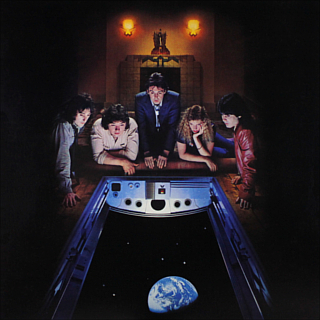
Back To The Egg got lambasted at the time. America’s record-buying market had long succumbed to the idea that singles promote albums, so the public didn’t know what to expect. Columbia didn’t know what to do with it either, and they didn’t promote it further than they had to. (One nasty review even says the cover depicts Paulie staring glumly at his career having fallen through a hole in the floor into the vacuum of outer space.) While it should have appeased those of his ready-made consumers who said he’d been getting soft, it just confused the public as a whole. What some call diversity, others call bandwagon jumping. It’s held up just fine for those willing to give it a chance. (The CD adds the excellent B-side “Daytime Nightime Suffering”, plus both sides of the most annoying Xmas single in music history: the execrable “Wonderful Christmastime” and the instrumental “Rudolph The Red-Nosed Reggae”.)

Wings Back To The Egg (1979)—3½
1989 CD reissue: same as 1979, plus 3 extra tracks

Monday, December 29, 2008

George Harrison 8: George Harrison

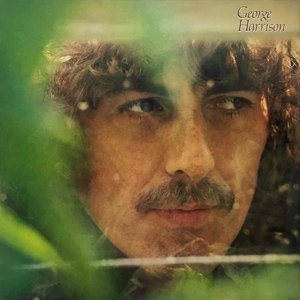
Don’t be alarmed by his poodle perm on the cover, disturbing as it is. George Harrison surfaced what seemed like ages after his last album, in an era when only Paul seemed to be worthy of our wallets. It turned out George was worth our time and money this go-round.

The opening notes of “Love Comes To Everyone” are encouraging, and the rest of the song is just as good. There’s lots of guitars, and he found a decent synth sound in Steve Winwood’s Oberheim. A fantastic start. “Not Guilty” is a softer, nearly note-for-note version of one of the more famous Beatles outtakes. Its slow fade at the end sets us up for another rewrite, the slightly successful “Here Comes The Moon”. While nowhere near as universal as its predecessor, it uses a sinuous electric piano bed to support the upside-down acoustic guitar line. On its own, it’s right on target. “Soft-Hearted Hana” starts with the atmosphere of his favorite local pub before leading us on a lysergic trip visa Maui through vaudeville, complete with fluctuating tape speed towards the end of the song. The side closes with the charming “Blow Away”, proving he could really write a hit single when he wanted to. It’s also a very happy song for a change.

A racing car revs up in the left channel and zooms over to the right to start “Faster”, a tribute to his new buddies at Brands Hatch. “Dark Sweet Lady” is a fairly overt song for his new wife, with Hawaiian undercurrents aplenty. “Your Love Is Forever” is just gorgeous all over: an open tuning that doesn’t drone, with melodies and harmonies just packed with real emotion. George has always layered his own backing vocals on his albums, and always in such an unobtrusive manner that they’re often ignored. This is another one of his love songs that could apply to any object you wish. “Soft Touch” may not necessarily be about his young son, but it’s still catchy. The album ends on a strong, upbeat level with “If You Believe”, co-written with Dream Weaver and longtime Harrison session rat Gary Wright.

On its own, it’s not much, but coming after the last few, it has endured. From start to finish George Harrison is an enjoyable listen, and doesn’t embarrass even in the slightest. At the time it didn’t get any respect—it was a really bad hairdo—but it’s certainly aged the best out of any of his mid-to-late ‘70s albums. Overall, it’s a genuinely enjoyable listen, since he seems so content with his current situation. Coming from Paul, this mood would have started to grate. Coming from George, it was a welcome sensation. (25 years later, the only bonus on the expanded CD was an acoustic demo of “Here Comes The Moon”, but it’s lovely.)

George Harrison George Harrison (1979)—3½
2004 Dark Horse Years reissue: same as 1979, plus 1 extra track

Friday, December 26, 2008

Paul McCartney 10: Wings Greatest

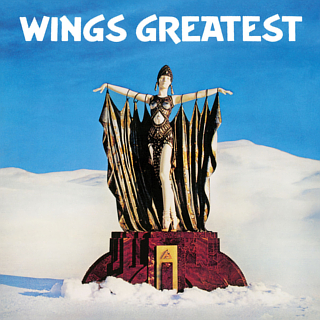
Since he was about to jump ship to Columbia for a lot of money, EMI put out a Wings hits album. Even though not all of the tracks are technically Wings songs, Wings Greatest proves Paul’s point that he’d moved on from his previous band. And with otherwise unalbumized singles adding up to nearly an hour of music, it was a worthy purchase for its time.

One of those singles kicks off the set. “Another Day” was originally a teaser from the Ram sessions, a portrait of Eleanor Rigby as a modern lonely secretary. It may not have been that exciting on the first listen, but hasn’t grown too annoying in the meantime. “Live And Let Die” was a big deal both as a movie theme when James Bond films were really big deals, and also as Paul’s first collaboration with George Martin in over three years. It’s another case of Paul writing a song quickly without worrying about the words. (“And in this ever-changing world in which we’re livin’”? Yeesh.) “Junior’s Farm” is a great rocker about a card game or something; all those guitars, that ending—another of his more underrated tracks. This was Jimmy McCulloch’s first appearance on a Wings record, and listening to it now just shows off what a great guitarist he was. “Hi Hi Hi” was an early attempt of Paul’s trying to come off as a rebel, and it worked, suggestive lyrics and all. “Mull Of Kintyre” did nothing in the States, but managed to break the record for the most copies sold in the UK. (The previous champion? “She Loves You”. Paul’s record would stand until “Do They Know It’s Christmas?”, which features his voice on its B-side.) It’s a nice three-chord pub singalong, complete with bagpipes. As for the rest, not all of the hits are here, but the ones that do appear in their longer album tracks. And while there were no lyrics in the package, he did include yet another two-sided poster.

For telling the story up to this point, Wings Greatest succeeds. It’s since been surpassed by other compilations, but it’s still a nice artifact from the days before McCartney could be accused of shilling empty “product”.

Wings Wings Greatest (1978)—4

Wednesday, December 24, 2008

Beatles 21: Christmas Album

Every Christmas from 1963 to 1969, the official Beatles Fan Club sent its members a specially recorded flexi-disc, consisting of dialogue, comedy, and exclusive music from the boys. Ranging from four to eight minutes, they were always a nice holiday surprise for the fans every year, along with the hit single and new album they hoped to find underneath their trees. In 1970, after the group had splintered for good, members received an actual LP, consisting of all those flexi-discs, with a clever retrospective cover to boot.

In addition to being a lot of fun, The Beatles’ Christmas Album provides a fairly descriptive arc of their career. 1963’s message is excited and fresh, with the boys breathlessly thanking their fans for making them famous. 1964’s greeting is similar, but with a bit more wry humor sneaking in between the songs and speeches. By 1965, they’re just as exhausted as they are restless to do something new, making the humor even more pointed (doubtlessly helped by all the pot they were smoking). The turning point arrives in 1966, where the straight talk is replaced with a collection of short skits, bookended by the original “Everywhere It’s Christmas” and featuring the unique performance of “Please Don’t Bring Your Banjo Back”.

1967’s message takes the idea further, combining a Monty Python-esque sendup of BBC programming with the slightly psychedelic group original “Christmas Time Is Here Again!” interspersed in and out, along with such other jingles as “Plenty Of Jam Jars” and “Get Wonderlust For Your Trousers”. It was the last of the collaborative fan greetings; 1968’s disc—complete with an appearance by Tiny Tim—was recorded by each Beatle separately and edited together after the fact, as was the John-and-Yoko-heavy 1969 message. Even so, their personalities are consistent: Paul is musical; Ringo is a clown; George thanks their closest friends for sticking with them; and John is consumed with his public personal life.

Since EMI has the rights to holiday-themed songs by John, Paul, and George, logic would suggest that an official Beatles Christmas CD, expanded or not, would be a perennial holiday best seller. These seven tracks, a continuously entertaining 45 minutes of speech, skits, and song, led the short list of Beatle recordings fans would like to see officially released, and their continual non-appearance remained a mystery. Except for a three-minute montage based around “Christmas Time Is Here Again!” included on a mid-‘90s CD single, a severe edit of the 1963 message that snuck out on iTunes in 2010, and two further minutes buried on Spotify five years after that, none of these messages had been in print or distributed since 1970. In 2017 they were finally reissued—as a box set of seven replica vinyl discs retailing for about eighty bucks, with no CD, digital, or even streaming equivalent. Meanwhile, its continual absence from legitimate shelves meant The Beatles’ Christmas Album was endlessly counterfeited and pirated over the years. Some of the better-packaged bootlegs contain all of the messages in pristine sound, with various relevant outtakes to fill up the disc. With just a little digging around cyberspace, these can be heard and enjoyed all year long.

(Footnote: even if the Fabs didn’t have much use for each other in the new decade, they retained fond memories of these little gestures for the fans. John and Yoko prepared a segment for a possible 1970 message just in case, followed a year later by the original “Happy Xmas (War Is Over)”, which is probably being played on a radio station somewhere at this very moment. Also doubtlessly saturating the airwaves today is “Wonderful Christmastime”, Paul’s contribution to the genre, which has been wearing out its welcome since 1979. George’s “Ding Dong, Ding Dong” was a 1974 single, and Ringo recorded a whole album of rock ‘n roll holiday tunes in 1999.)

The Beatles The Beatles’ Christmas Album (1970)—4
Current CD equivalent: none