Wednesday, May 6, 2009

Bob Dylan 7: Blonde On Blonde

Blonde On Blonde was the first major double LP by an established rock artist, and also one of the best. It was the pinnacle of Dylan’s electric period, taking the New York white blues influence to Nashville for a change of scenery, ending up with a mix he later dubbed “that thin, wild mercury sound”.

Right off the bat it offers something different. Punctuated by a drunken brass band encouraging choruses of “everybody must get stoned”, “Rainy Day Women #12 & 35” is still a great recording, and one that doesn’t sound right any other way. “Pledging My Time” is a plodding rewrite of “It Hurts Me Too”, featuring lots of harmonica. One of his absolute best, “Visions Of Johanna” is a wonderful late night portrait. While still something of a journey into the absurd, it seems more real than most somehow. “One Of Us Must Know (Sooner Or Later)” is a single that sounds like it was recorded with most of what would become The Band, and winds the side down to nothing.

Side two starts with another hit single in “I Want You”, which spits out a lot of lines before resting on the repetition of the title. “Stuck Inside Of Mobile With The Memphis Blues Again” is another lengthy trip to Desolation Row, but with more humor and first-person involvement. “Leopard-Skin Pill-Box Hat” picks on Miss Lonely some more, and doesn’t let her get away with anything. (The sleeve credits Bob with lead guitar, and it must have been him, since it’s not very good.) “Just Like A Woman” is a deceptively kinder sounding reflection, but we’re convinced he shortened the line from “takes drugs”, which rhymes with “makes love”, to the less controversial “takes”.

That’s a lot of great music already, but side three is just as strong. “Most Likely You Go Your Way (And I’ll Go Mine)” brings a trumpet back alongside the harmonica. “Temporary Like Achilles” is another sleepy tune with some subtle dynamics, while its sister “Absolutely Sweet Marie” is more of a country song with an equally effective bridge. “4th Time Around” is something of a hash of “Norwegian Wood” sans sitar, only funnier. (The repartee is nastier, and instead of being abandoned, the singer gets kicked out, though he has to go back for his shirt.) “Obviously 5 Believers” probably didn’t take long to write, but it’s still a great side-closer with a driving arrangement.

Side four is pointedly devoted to a single song, “Sad Eyed Lady Of The Lowlands”. Exactly two seconds longer than the previous album’s 11-minute closer, it probably didn’t need to take up all of one side, but it’s still a good one, and must have meant a lot to its author. Now we can look back and realize that the bulk of the album has to do with women, either goddess figures or spent jet-trash. At any rate, that’s where he was spending his language.

Released in the midst of Dylan’s tumultuous British tour, Blonde On Blonde is an undisputed classic, and some of its fans are still waiting for him to get that magical sound back. The record company thought well enough of it to keep releasing singles from it, particularly after the motorcycle accident that put him onto the sabbatical that probably saved his life.

Bob Dylan Blonde On Blonde (1966)—5
Monday, May 4, 2009

Who 18: Who’s Missing and Two’s Missing

A few months after The Who played what they said was their final show, MCA cobbled together a slapdash Who’s Greatest Hits, mostly notable for including the inferior edited single versions of “Love Reign O’er Me” and “Won’t Get Fooled Again”, but a longer “Relay”. Meanwhile, in the UK Polydor complied two LPs of rare singles and B-sides, simply titled Rarities Volume I 1966-1968 and Rarities Volume II 1970-1973. While neither set was strictly chronological, both did a good job of mopping up several non-album tracks. Of course, since it wasn’t released in the U.S., imports were pricey. MCA could have used the excuse that some of the songs were already available on Magic Bus and Hooligans, but that assumed someone was paying attention to such things. The disappointment of Who’s Last only added insult to injury.

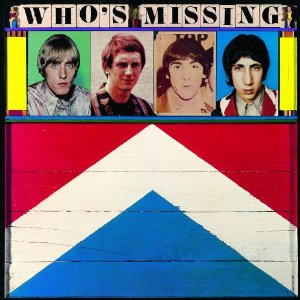
A couple of years later, Who’s Missing arrived with little fanfare, but actually did collectors a favor. Most of the songs had not been released in the US, and the rest were truly rare. A quarter of so-so songs from the earliest Shel Talmy sessions start it off, followed by “Barbara Ann” and the original single versions of “I’m A Boy” and “Mary Anne With The Shakey Hand”. Side two is the keeper, with four key B-sides from the Who’s Next period—two of which (“When I Was A Boy” and “Here For More”) shamefully did not appear anywhere in the ‘90s reissue program—and a blistering live “Bargain”. Pete Townshend’s notes were typically pensive, though not exactly illuminating.

Two’s Missing followed with even less fanfare within 18 months. Where its predecessor was somewhat chronological, this was in more of a crazy order, but boasted more in-depth and humorous notes, this time from John Entwistle. More tracks from the Shel Talmy sessions are balanced by such nuggets as the Stones covers “Under My Thumb” and “The Last Time”, the rare singles “Dogs” and its “Part Two”, and a couple more B-sides. Some ponderous live tracks made for weird listening, but it still rated a spot in the rack. (Like its predecessor, it arrived in the wake of a Townshend solo release. MCA may have been dumb, but they weren’t stupid.)

With the advent of Classic Rock radio in the ‘80s, the Who were still a commercial entity, and while these mopping-up efforts were convenient, they also underscored how confusing the catalog had been all along. Meanwhile, fans old and new who started purchasing the MCA albums on shiny new compact discs weren’t very impressed by the sound quality. The Who’s legacy deserved better—and, some would argue, so did the fans.

The Who Who’s Missing (1985)—3
The Who
Two’s Missing (1987)—

Friday, May 1, 2009

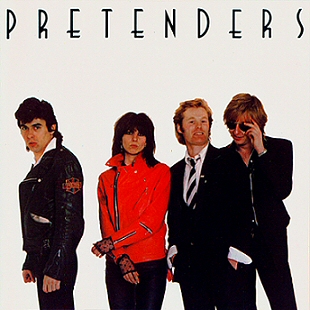
Pretenders 1: Pretenders

This is one of the best debut albums of all time. From start to finish Pretenders delivers on the promise of Chrissie Hynde, who’d left Akron to be a rock critic in London and formed the Pretenders as an outlet for her unique energy and Kinks fixation. These songs are alternatively angry and tender, giving girl guitar players an icon to emulate, and giving the guys reason to keep up their chops. From Mariah to Sheryl to Shania and even Madonna and Gwen, today’s so-called divas and artists need to appreciate the doors Chrissie kicked down for them. She’s as important a female rock influence as Joni Mitchell.

The band was incredible. James Honeyman-Scott was an incredibly lyrical, inventive guitarist and songwriter, taking the best elements of English punk and Townshend windmilling. Plus, he wore great cowboy shirts.

Pete Farndon kept the bottom on a Rickenbacker (or Fender) bass, throwing in a melody here and there to work right off the other guys. Plus, he had a pompadour to put the Stray Cats to shame, and he’d probably glass you in a pub brawl.

Martin Chambers was—and still is—capable of playing everything from rimshot ballads to careening locomotives, and few other drummers could keep up with Chrissie’s 7/4 and 9/4 changes. Plus, he had great sideburns. (Note the use of past tense with the exception of the drummer; after only the second album Farndon would be kicked out for his heroin use, and Honeyman-Scott died two days later from his own. Farndon lived another ten months.)

And the songs: “Precious” is a classic kick-off (and kiss-off), and there’s barely a moment to breathe before “The Phone Call”, one of several songs with garbled words and stumbly meter. “Up The Neck” seems to be about bondage or an overdose, but “Tattooed Love Boys” is almost definitely about bondage. “Space Invader” is an instrumental complete with Atari effects at the end, crashing right into “The Wait”. “Stop Your Sobbing” was their first single, and the definitive version of the Kinks song.

After all that side two is almost relaxing. “Kid” will forever be linked with the video clip on the merry-go-round, to go along with the low guitar line that anchors the song and the daring key change in the middle. “Private Life” is pretty good spooky reggae for a bunch of white kids. “Brass In Pocket” is probably their most famous song, and if you don’t think you know it, that’s because you think it’s called “I’m Special”. “Lovers Of Today” seems tame at first, but those guitars at the end paint on several layers of ache. The big payoff comes at the end, with the pounding drums, driving bass, machine gun guitars and echoey vocals on “Mystery Achievement”.

Some of these songs had already been issued as singles, and it’s another testament to the power of Pretenders that it holds together nonetheless. While they had their moments, none of the later albums lived up to the promise of the first. Once Chrissie was the only Pretender left, the band’s name became all too apt. Though she did the right thing by getting Martin back behind the kit in the ‘90s, the debut is still the reason why you care in the first place.

Rhino kindly remastered and expanded the album to two discs in the 21st century, with a pile of demos, live tracks and such key B-sides as “Cuban Slide” and “Porcelain”. Most but not all of these extras made to the deluxe three-disc expansion fifteen years later. This time the five B-sides were added to first disc after the album proper, while the second disc was loaded with demos, including some previously unreleased songs, and the performances from two BBC appearances. (One surprise is “Do I Love You”, a pre-Pretenders Ronettes cover recorded with Steve Jones and Paul Cook of the Sex Pistols.) A live BBC performance kicks off the third disc, followed by a more complete recording of a Boston show that had been a promo disc and Record Store Day extra. All in all, a stellar album made that much better. Unless this was your third or fourth time buying it.

Pretenders Pretenders (1980)—5
2006 expanded, remastered CD: same as 1980, plus 16 extra tracks
2021 40th Anniversary Deluxe Edition: same as 1980, plus 43 extra tracks

Thursday, April 30, 2009

David Bowie 9: David Live

The ambitious tour that followed Diamond Dogs was soon overtaken by the Philly sound, epitomized by the backing vocalists, squealing sax and wah-wah guitars all over David Live. There are a few good renditions here, but the overall effect is about as seasick as his pallor on the jacket photos. The visuals of the stage don’t translate to vinyl, and the Spiders are sorely missed.

Mike Garson’s tinkling piano brings in “1984”, supposedly the overture for the production. “Rebel Rebel” is dominated by the “yi-yi” backing vocals from that odd single mix, but then it’s a detour through “Moonage Daydream”; Earl Slick’s good, but he’s no Mick Ronson, and David Sanborn’s sax dominates. The complete “Sweet Thing” suite is a highlight of the side, assuming you already like that song.

The piano outro leads into “Changes”, wherein the children are no longer spit on, but something that rhymes with it. “Suffragette City” is a crowd-pleaser, but the Latin twist on “Aladdin Sane” makes the piano solo even more out of place. “All The Young Dudes” makes its first appearance on a Bowie album; Mott the Hoople’s version still wins. Once again, a side closes with a winner, this time in “Cracked Actor”.

“Rock ‘N Roll With Me” proves its concert potential, and even “Watch That Man” sounds good with this band. A cover of “Knock On Wood” today brings to mind either Amii Stewart’s disco version or the one from Road House; amazingly, this was the single. “Diamond Dogs” has that same flutter effect from the album; the sleeve acknowledged that some post-production sweetening was applied to beef up the sound, and this is one obvious example.

“Big Brother” keeps the concept going, complete with a reprise “Chant Of The Ever-Circling Skeletal Family”. He’s pretty hoarse by the time of “Width Of A Circle”, a bold addition to the setlist, and “The Jean Genie” is basically removed of its strut. Finally, and most likely because he didn’t know how else to end, “Rock ‘N Roll Suicide” is the finale.

It’s been suggested that the release of David Live was enforced by the label simply to make some of their cash back from the tour. As a current snapshot of Bowie’s image it was accurate, but one wishes the portrait were more flattering. Subsequent reissues haven’t changed that opinion. Rykodisc added two tracks plus band intros to the set; these included the obscure cover “Here Today, Gone Tomorrow” and “Time”, which gives Mike Garson another showcase for stumbling over the piano. The 2005 reissue added two more songs (“Space Oddity” sung through a telephone and the live take of “Panic In Detroit” used as a B-side) and placed everything in the original setlist order. These additions admittedly beef up the second half of the show, but only just.

By the time he’d left the planet for good, the Record Store Day phenomenon enabled the labels to release a dizzyingly increasing variety of rare material, most of which was rare simply because they hadn’t existed yet. Perhaps not to have too much similar live material in the box set commemorating the period between Ziggy and Berlin, the estate authorized a standalone release of Cracked Actor, which presented an oft-booted show from two months after the ones used for David Live. On its way to evolving into the “Philly Dogs” era, the rhythm section is different and much busier, Mike Garson is the only pianist, and Carlos Alomar has joined on rhythm guitar, as have several singers from the sessions for the next studio album. The band’s a little tighter, the recording’s a little hotter, and two new songs take the place of four that were dropped. “It’s Gonna Be Me” ultimately would not make said album in progress, while “John I’m Only Dancing (Again)” (eventually issued as a single after he was past it) now closes the show, coming after “Rock ‘N Roll Suicide” and leaving the proceedings completely amped up.

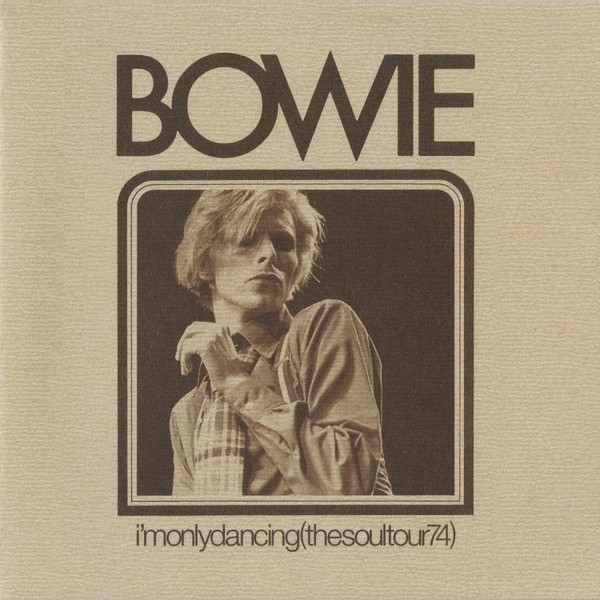
Three years later, another Record Store Day release presented yet another glimpse of his transformation in this period. By the time I’m Only Dancing (The Soul Tour 74) was recorded, the Diamond Dogs stage and concept had been jettisoned, and he was pushing the new songs, plus his “Footstompin’/Shimmy Like My Sister Kate” medley. The overall vibe is more dirty than slick, and he’s fairly hoarse throughout, but the sound is impeccable and it’s interesting to hear “Young Americans” before it became a rock staple.

David Bowie David Live (1974)—2
1991 Rykodisc: same as 1974, plus 3 extra tracks
2005 Virgin: same as 1991, plus 2 extra tracks
Bowie Cracked Actor (Live Los Angeles ’74) (2017)—
Bowie
I’m Only Dancing (The Soul Tour 74) (2020)—

Wednesday, April 29, 2009

Bob Dylan 6: Highway 61 Revisited

Once upon a time, recording artists were expected to put out two albums within a calendar year, along with a couple of unrelated singles. So it’s astonishing to consider that something as solid as Highway 61 Revisited arrived within months of his first “electric” album, helped along by a hit single at the unprecedented length of six minutes.

Our favorite story about “Like A Rolling Stone” is from John Hiatt, who said he heard the song for the first time on the car radio while his mother was in the store. It was such an experience, he says, that he was afraid she wouldn’t recognize him when she got back to the car. The intro remains unparalleled, starting from that dangerous snare crack. But if you’re tired of that, “Tombstone Blues” is a fantastic driving song with an insistent F# chord and stinging lead line all the way through. The lyrics make no sense, but his snotty vocal is infectious. “It Takes A Lot To Laugh, It Takes A Train To Cry” is a deceptive title for a sleepy song. While it started life as a driving rocker, here it’s got a loping beat that makes good use of those long-held notes. “From A Buick 6” fits the same useless task as “Outlaw Blues” on the previous album, and the side ends with “Ballad Of A Thin Man” (better known as “you know something’s happening, but you don’t know what it is, do you, Mr. Jones?”), a nasty putdown built on a tack piano. Obviously this was a man you did not want to annoy.

Side two gets off to a shaky start with “Queen Jane Approximately”, which would have a lot more to recommend if he’d bothered to tune the guitars first. It’s too bad, as the performance doesn’t go justice to the words and chords. The title track is a scream, and gets points for replacing the harmonica with a police whistle right out of Looney Tunes. Truly hysterical. “Just Like Tom Thumb’s Blues” is not as entrenched in the theater of the absurd as the rest of the album, but fills the slower verses with some pretty impenetrable imagery. Then it’s time for the grand finale, the litany of “Desolation Row”. Its Mexican guitar part gives no hint how long it will go on, and there’s only a harmonica break before the very last verse. (Another favorite story: Dylan gave an “interview” to Playboy in 1966 where he conspired with the writer to come up with incredibly obscure and outlandish answers to the questions. One of the gems involved his desire to change the national anthem from “The Star-Spangled Banner” to “Desolation Row”. We have a wonderful mental image of people rising for eleven minutes to sing it at the start of every baseball game: “They’re selling postcards of the hanging…”)

We will be lambasted for not giving this album five stars; it was decided to downgrade it because of “Buick” and “Queen Jane”. But they do fit in the bigger picture, and all together Highway 61 Revisited gives you an idea how this 24-year-old kid changed the face of pop music. He was clearly on a roll.

Bob Dylan Highway 61 Revisited (1965)—

Monday, April 27, 2009

Bob Dylan 5: Bringing It All Back Home

For those of you keeping score, this is the album where Dylan went electric, as the pundits like to say. But if you’re not ready for that, take comfort in this: Lyrically Bringing It All Back Home continues his progression from folksinger to poet, underscored by the use of a full rock combo on the first side, with slight accents on the second.

The acoustic guitar strums alone for a split second, then the band comes crashing in. “Subterranean Homesick Blues” is still remarkable after forty-plus years, a proud son of “Too Much Monkey Business” and father of “Pump It Up” (and, unfortunately, “Wild Wild West” by Escape Club). The volume goes down for “She Belongs To Me”, a deceptive portrait of a lady in the blues structure but with a twist. “Maggie’s Farm” is a protest song for those who want one, via the theater of the absurd. “Love Minus Zero/No Limit” is an underrated gem. The vocal is lovely, matching the words, and a good example to use for people who think all Dylan did was whine. “Outlaw Blues” pushes its luck, noisy for the sake of it, but “On The Road Again” is an improvement, with a great punch line on each verse. “Bob Dylan’s 115th Dream” takes the melody from “Motorpsycho Nitemare” on the previous album, and tells another story of a man lost in a new world. The laughter at the start makes the track succeed.

It’s been said that side two continues the “electric” idea in the songs, which leap forward to parts uncharted. “Mr. Tambourine Man” would be done better by the Byrds, as would become common, but they only used one verse. (And of course, William Shatner recorded the definitive version himself, based on the Byrds arrangement.) “Gates Of Eden” is never sure what key it should be in, but it’s just a setup for the epic “It’s All Right, Ma (I’m Only Bleeding)”. There’s always something new to discover in these verses, constituting an angry torrent of disappointment against all kinds of ugliness. After all that, “It’s All Over Now, Baby Blue” is almost pleasant. While still a classic Dylan kiss-off, it’s a great end to an amazing journey.

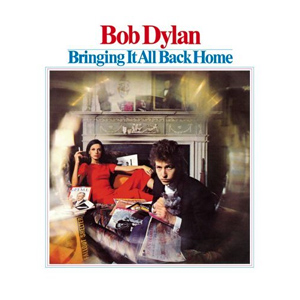
Bringing It All Back Home may have upset the folkies, but it brought him to the level of pop idol, and encouraged the direction of the next eighteen months. Even the cover was pretty cool.

Bob Dylan Bringing It All Back Home (1965)—

Friday, April 24, 2009

Neil Young 28: Sleeps With Angels

After meeting them at Bobfest, Neil toured with Booker T & The MGs while the Unplugged set sold somewhat like hotcakes but more like eggs. The grunge movement rose and fell, and took Kurt Cobain with it. Neil’s only public response was the Sleeps With Angels album. He did not tour, did no interviews, and certainly didn’t answer when people asked how it felt to have your lyrics quoted in a suicide note. The music would just have to speak for itself.

The hour-long journey through the dark begins with the frailty of “My Heart”, the tack piano plinking along while the wind outside blows open the doors of the saloon. “Prime Of Life” nearly derails the mood with the flute (real, not synthesized) but the effects and some of the voices help keep it afloat. “Driveby” is incredibly slow and sad. It’s great. The title track is all distortion and doom, supposedly written directly about the Cobains and not even trying to make sense of it all. “Western Hero” recalls Harvest Moon, and it’s classic Neil. It’s not clear who or what the hero represents, or when he walked the earth. “Change Your Mind” takes its direction from “Cowgirl In The Sand” and “Like A Hurricane”, but while the ten-minute Ragged Glory songs and “Touch The Night” failed, this gets the recipe exactly right. For 14½ minutes he warns us not to let another day go by without the magic power of love.

“Blue Eden” starts the second half of the album with a spooky back alley rattle that sounds like part of Arc. It reflects and repeats some of the lyrics in “Change Your Mind” without redundancy. “Safeway Cart” occupies the same desolate space with the despair of “Driveby” thrown in. You can see and hear the shopping cart rolling across the dirty lot. “Train Of Love” is the same tune (and possibly the same backing track) as “Western Hero”. The way he sings “I’ll always be a part of you” is just heartbreaking. “Piece Of Crap” exists just to blow the dust off the tombstones before we can leave. Having forced Crazy Horse to follow him as virtual pallbearers for the previous fifty minutes, he gives them free rein to bash away, yelling “Piece of crap!” with and at him. Hysterical. “A Dream That Can Last” neatly bookends the set with similar instrumentation to that of “My Heart”. The slow dance in this song sounds like a perfect bed to the closing credits to a movie or a Rankin-Bass holiday cartoon, and the harmonica at the end is perfect. And then it’s over.

In years to come Sleeps With Angels may well emerge as one of his absolute best works. There is a bad mood set, but it’s not tedious. He probably wouldn’t want us to listen to this at 10:30 in the morning either.

Neil Young & Crazy Horse Sleeps With Angels (1994)—4